Year: 2020

13 Oct 2020

Discuss the unbundling of early-stage VC with Unusual Ventures’ Sarah Leary & John Vrionis

This year has been everything but business as usual for the venture and tech community. And we still have a presidential election ahead of us.

So, why not listen to the aptly-named experts over at Unusual Ventures? Partners Sarah Leary (co-founder of Nextdoor) and John Vrionis, formerly of Lightspeed Ventures Partners, will join us on Tuesday, October 20 on the Extra Crunch Live virtual stage.

Thanks to all of you who have joined us for our series of live discussions that has included tech leaders like Sydney Sykes, Alexia von Tobel, Mark Cuban and many others (all recordings are still accessible for Extra Crunch subscribers to watch and learn from).

If you’re new, welcome! You’ll have a chance to participate in the live discussion if you have an Extra Crunch subscription.

Unusual Ventures’ investments span the consumer and enterprise space, including companies like Robinhood, AppDynamics, Mulesoft and Winnie.

For this chat, I plan to spend some time talking to Leary and Vrionis about how early-stage venture capital has changed with the rise of rolling funds, community funds and syndicates. Unusual Ventures claims “there’s an enormous opportunity to raise the bar on what seed-stage investors provide for early-stage founders,” so we’ll get into that opportunity as well.

And if we have time, we’ll discuss remote work, building in public and the U.S. presidential election.

So, what are you waiting for? Add the deets to your calendar (below the jump!) and join me next Tuesday.

Details

13 Oct 2020

Two Screens For Teachers will outfit all educators in Seattle Public Schools with a second monitor

The admirable effort Two Screens For Teachers, which as you may guess is about getting teachers a second screen to use at home, has put together enough funds to get every educator in the Seattle Public School system a new monitor who needs one. They’re hoping it will spur others to pony up for a similar treatment at their local schools.

The idea of running a class with 30 kids while also juggling teaching materials and administrative stuff all on a single laptop screen is anxiety-inducing just to think about, and thousands of teachers have been doing just that for months.

Two Screens For Teachers was announced in September as a way to connect those educators who need a second monitor (which is to say, most of them) with people who want to pay for it — it’s that simple. Thousands of monitors have already been distributed, but the waiting list is more than 20,000 people long, the kind of scale where the needle only gets moved over time — which teachers have little of — or generosity.

Fortunately there are enough generous people with a bit of cash on hand in Seattle that the organization has enough to give a new monitor to all of the 3,000 or so teachers in Seattle public schools..

Walk Score co-founders Matt Lerner and Mike Mathieu put the thing together in the first place, but a bunch of Seattle-based investors and entrepreneurs came together to raise the ~$430K needed to cover the costs of covering the whole district: “a matching grant from the Mark Torrance Foundation, a collection of early Amazon, Microsoft, and Redfin employees, and venture capitalists from the Madrona Venture Group and Pioneer Square Labs,” as the organization put it.

He’s hoping that the success in Seattle will activate similar communities all over the country where there are thousands more teachers in need.

“We’re asking our fellow techies in the Bay Area, Los Angeles, New York, Chicago, Denver, Salt Lake City, Atlanta, Austin, Dallas, Pittsburgh and Raleigh-Durham to show teachers they matter and keep students connected across the country,” said Lerner in a press release. Naturally other cities are welcome to join in as well, but those on the list have been challenged directly.

Lerner confirmed to me that Two Screens For Teachers would happily act as an intermediary, doing discounted bulk purchases of monitors (as opposed to matching individual donors with individual teachers, which was how it got started) and having regional leaders raise cash to cover the distribution to their local educators.

In the spirit of friendly competition, here’s hoping other cities, and the people in them looking for a way to give back tangibly in these hard times, will take up the gauntlet and get their educators this hugely helpful resource. You can learn more (or donate) at twoscreensforteachers.com.

13 Oct 2020

Apple’s iPhone 12 Pro camera upgrades sharpen focus on serious photographers

Apple’s iPhone 12 Pro heaps improvements on the already-formidable power of its camera system, adding features that will be prized by “serious” photographers — that is to say, the type who like to really mess around with their shots after the fact. Of course the upgrades will also be noticeable for us “fire and forget” shooters as well.

The most tangible change is the redesign of two of the three lens systems on the rear camera assembly. The Pro Max comes with a new, deeper telephoto camera: a 65 mm-equivalent rather than the 52 mm found on previous phones. This closer optical zoom will be prized by many; after all, 52 mm is still quite wide for portrait shots.

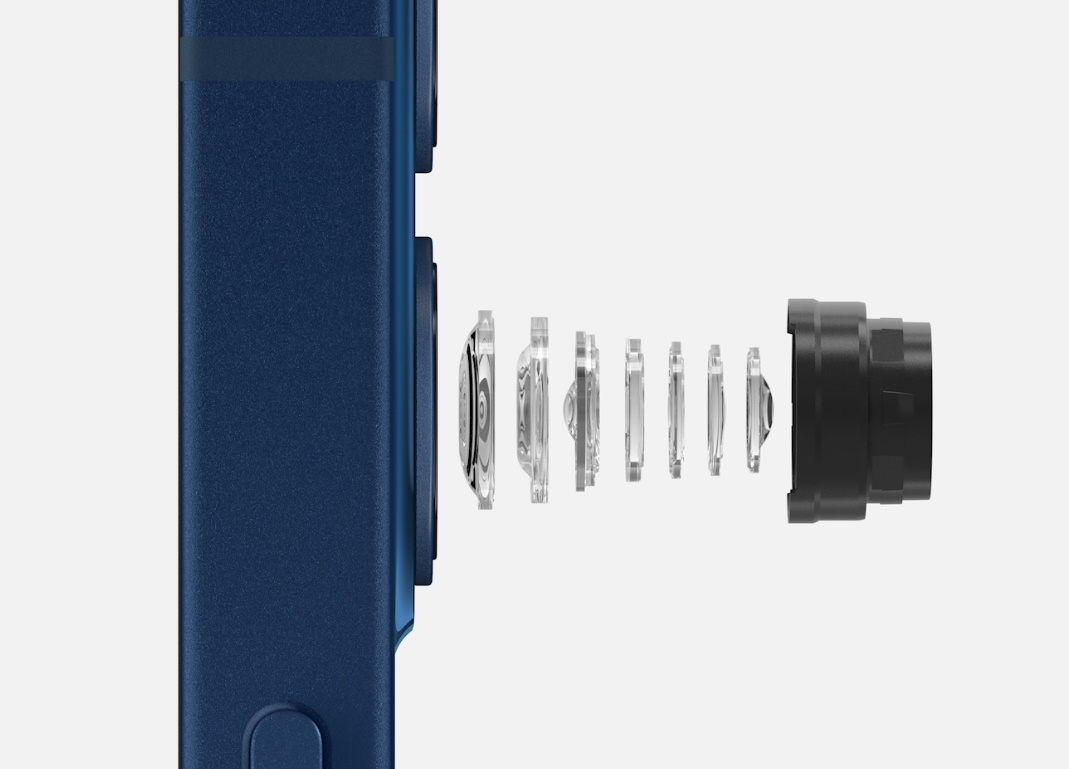
The improved wide-angle lens, common to all the new iPhone 12 models, has had its lens assembly simplified down to seven elements, improving light transmission and getting its equivalent aperture to F/1.6. At this scale practically every photon counts, especially for the revamped Night Mode.

A disassembled iPhone camera.Perhaps a more consequential (and portentous) hardware change is the introduction of sensor-level image stabilization to the wide camera. This system, first used in DSLRs, detects motion and shifts the sensor a tiny bit to compensate for it, thousands of times per second. It’s a simpler, lighter-weight alternative to solutions that shift the lens itself.

Practically every flagship phone out there has some form of image stabilization, but implementations matter, so hands-on testing will determine whether this one is, in Apple’s words, “a game changer.” At any rate it suggests that this is going to be a feature of the iPhone camera system going forward, and gains we see from it are here to stay; The presenter suggested a full F-stop, allowing two-second handheld exposures, but I’d take that with a grain of salt.

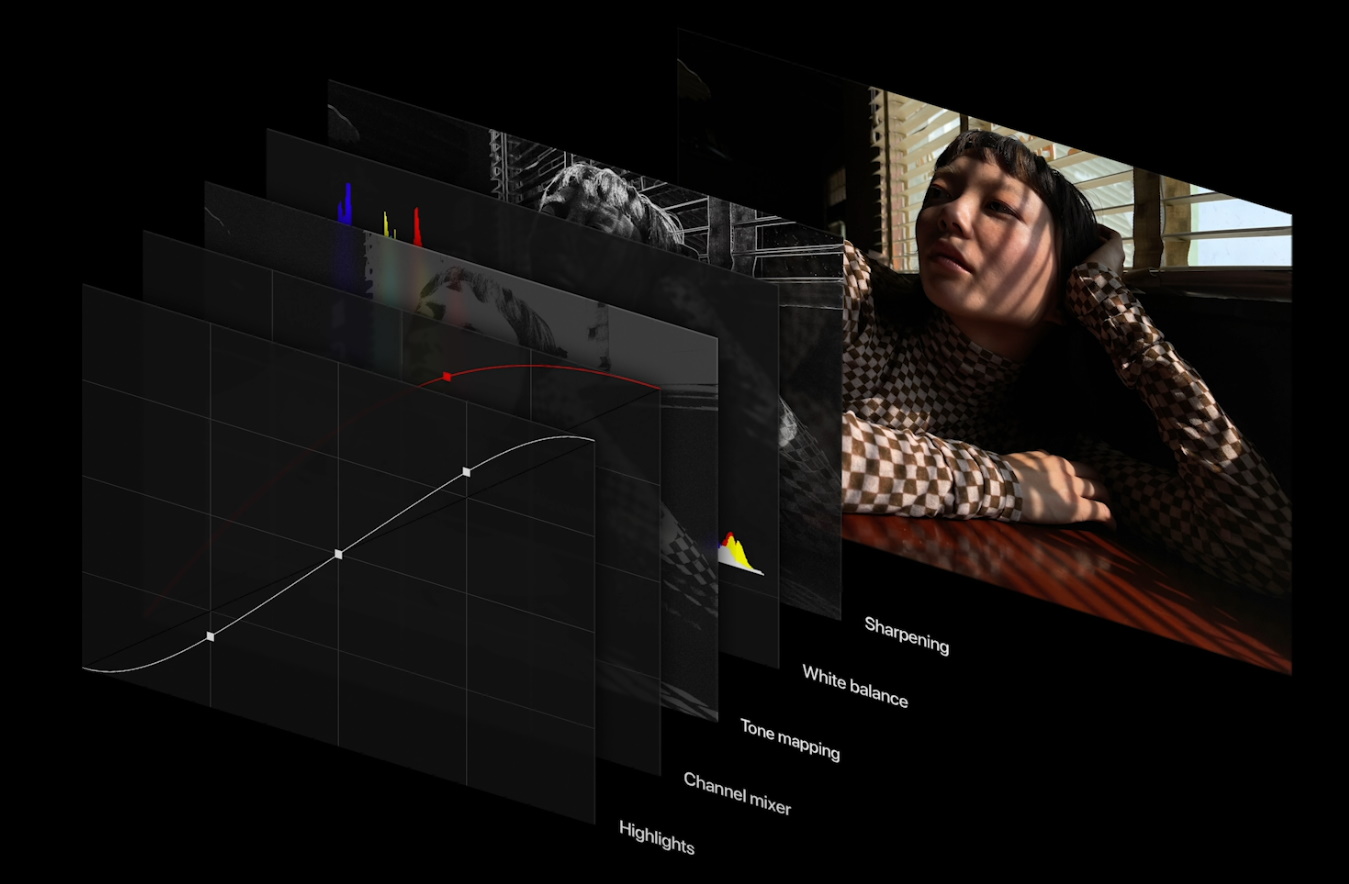
An image showing the layers of a picture processed by an iPhone.

Image Credits: Apple

On the software side, the introduction of Apple ProRAW will be a godsend to photographers who use the iPhone either as a primary or secondary camera. When you take a photo, only a fraction of the information the sensor collects ends up on your screen — a huge amount of processing goes into removing redundant data, punching up colors, finding a good tone curve, and so on. This produces a good-looking image at the cost of customizability; Once you throw away that “extra” information, the colors and tone are restricted to a much narrower range of adjustment.

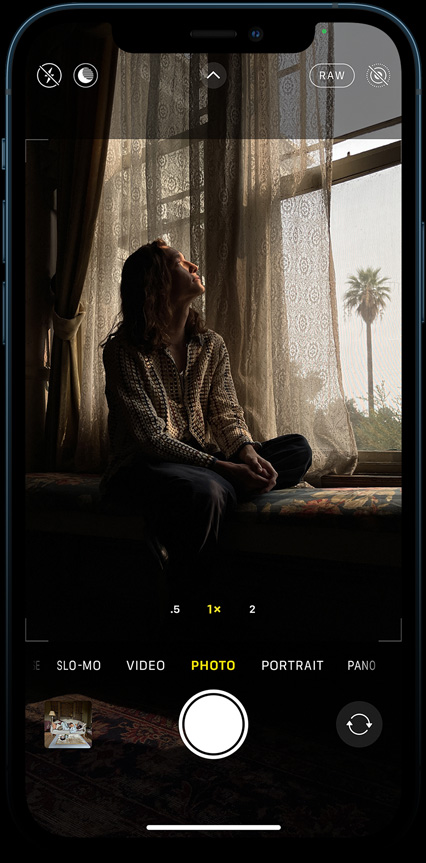
An iPhone showing the camera app shooting in RAW mode.

Image Credits: Apple

RAW files are the answer to this, as DSLR photographers know — they’re a minimally processed representation of what the sensor collects, letting the user do all the work to make the photo look good. Being able to shoot to a RAW format (or RAW-adjacent; We’ll know more with hands-on testing) frees up photographers who may have felt hemmed in by the iPhone’s default image processing. There were ways of getting around this before, but Apple has an advantage over third-party apps with its low-level access to the camera architecture, so this format will probably be the new standard.

This newfound elasticity at the image format level also enables the iPhone Pros to shoot in Dolby Vision, a grading standard usually applied in editing suites after you shoot your movie or commercial on a digital cinema camera. Shooting directly to it may be helpful to people planning to use the format but shooting with iPhones as B cameras. If cinematographer Emmanuel Lubezki approves, it’s good enough for pretty much everyone else on Earth. I sincerely doubt anyone will cut their work together on the phone, though.

These two advances, ProRAW and Dolby, suggest that Apple’s improved silicon has left a lot of wiggle room in the photography backend. As I’ve written before, this is the most important segment of the imaging workflow right now and the company is probably coming up with all kinds of ways to take advantage of the power offered by the latest chips.

Though larger cameras and lenses still offer advantages that the iPhone can never hope to match, the reverse is true as well. And the closer the iPhone gets to offering cinema-like quality — even if it’s simulated — the greater its advantages of portability and ease of use grow in proportion. Apple has been ruthlessly targeting the enthusiast photographer crowd who aren’t quite sure if they want to buy a DSLR or mirrorless system in addition to a phone with a nice camera. By sweetening the deal on the phone side, Apple surely rakes in more of these users every generation.

Of course the Pro phones come at a significant premium over the normal range of iPhone devices (the Max starts at $1099), but these improvements aren’t impossible or really even difficult to bring to lower-end models — most of them will probably trickle down next year. Of course by then a whole new set of features will have been cooked up for the Pro devices. For photographers, however, planned obsolescence is part of the lifestyle.

13 Oct 2020

Snapchat among first to leverage iPhone 12 Pro’s LiDAR Scanner for AR

Apple introduced its latest flagship iPhone models, the iPhone 12 Pro and 12 Pro Max, at its iPhone event on Tuesday. Among other things, the devices sport a new LiDAR Scanner designed to allow for more immersive augmented reality (AR) experiences. Snapchat today confirms it will be among the first to put the new technology to use in its iOS app for a LiDAR-powered Lens.

As Apple explained during the event, the LiDAR (Light Detection And Ranging) Scanner measures how long it takes for light to reach an object and reflect back.

Along with iPhone’s machine learning capabilities and dev frameworks, LiDAR helps the iPhone understand the world around you.

Apple adapted this technology for its iPhone 12 Pro models, where it’s helping to improve low-light photography, thanks to its ability to “see in the dark.”

Image Credits: Apple presentation, screenshot via TechCrunch

The technology can also be used by app developers to build a precise depth map of the scene, and help speed up AR so it feels more instantaneous, while enabling new app experiences that use AR.


In practice, what this means for app developers is the ability to use LiDAR to enable things like object and room scanning — think, better AR shopping apps, home design tools, or AR games, for example.

It can also enable photo and video effects and a more exact placement of AR objects, as the iPhone is actually able to “see” a depth map of the room.

Image Credits: Apple presentation, screenshot via TechCrunch

That can lead to new AR experiences like what Snapchat is prepared to introduce. Already known for some best-in-class AR photo filters, the company says it will soon launch a LiDAR-powered Lens specifically for the iPhone 12 Pro models.

Apple gave a brief peek at Snapchat’s LiDAR-powered feature during the LiDAR portion of the iPhone event today.

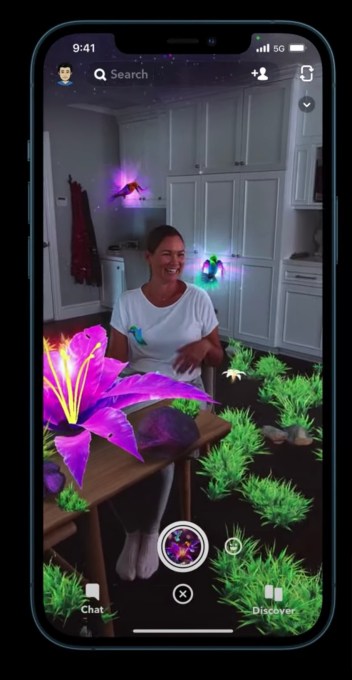
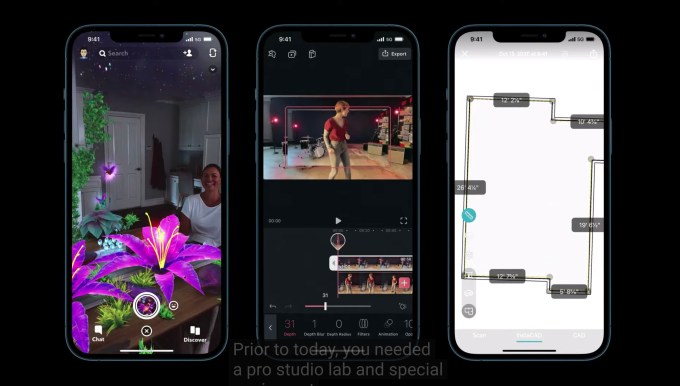
Here, you can see an AR Lens in the Snapchat app where flowers and grasses cover the table and floor, and birds fly towards the user’s face. The grasses towards the back of the room looked as if they were further away than those closer to the user, and vegetation was even climbing up and around the kitchen cabinets — an indication that it saw where those objects were in the physical space.

The birds in the Snapchat Lens disappear as they move behind the person, out of view, and even land precisely in the person’s hand.

It’s not clear if this is the exact Lens Snapchat has in the works, as the company is holding details for the time being. But it shows what an LiDAR-enabled Snapchat experience would feel like.

You can see the Snapchat filter in action at 59:41 in the Apple iPhone Event video.


13 Oct 2020

Apple’s stock dips and Verizon’s recovers during iPhone event

Earlier today Apple announced a slew of new hardware. In case you’ve not yet caught up, there’s a $99 HomePod Mini coming, new iPhones, a new method for shouting at your electronics, the return of MagSafe, some cost-cutting masquerading as environmentalism and, of course, new flagship phones.

And in a move that caused telecom investors to sit up straight and pay attention, Apple trotted out Verizon CEO Hans Vestberg for part of the presentation — which is why we add our parent company’s parent company to our usual post-Apple-event share price reaction roundup.

Market reaction

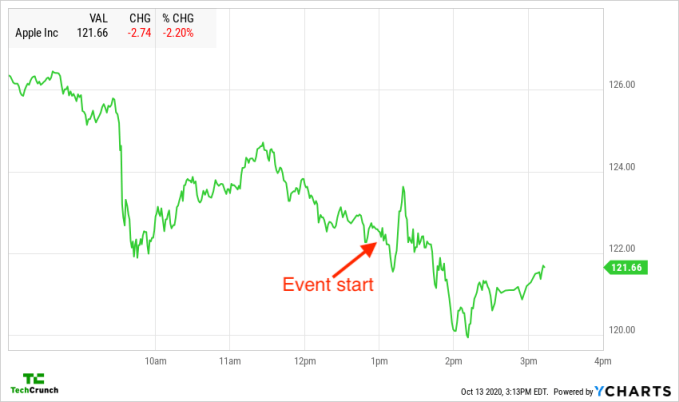
Shares of Apple were mixed before the event, managing to work their way back to flat during morning trading ahead of the event. Down before Apple kicked off its iPhone shebang, equity in the phone giant dipped and then rallied as the event got underway.

But the partial erasure of losses were short-lived, and Apple wound up losing ground during the presentation (chart via YCharts, annotations via TechCrunch):

For Apple shareholders then, not a day worth writing home about.

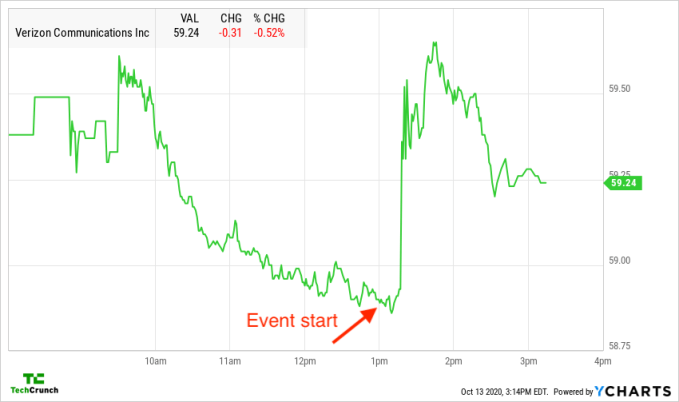
The Apple event appeared to have a more electric impact on my employer. See if you can spot the point at which Verizon appeared as part of the event (chart via YCharts, annotations via TechCrunch):

Now that is the sort of reaction that we hope to see from events of this sort. Why? Because it implies that the company on stage has managed to do something so notable that its share price moved; this is another way of saying that investors were surprised by what they learned.

Apple events tend to leak in advance these days, so perhaps the usual lack of share price movement from the company’s equity is to be expected.

Verizon’s news, in contrast, was more of a surprise. The company “announce[d] its nationwide 5G network” in the words of The Verge. Investors liked that, but later sold the company’s shares back down a bit.

13 Oct 2020

Apple’s iPhone 12, 12 mini, 12 Pro and 12 Pro Max: what’s the difference?

Gone are the days a company like Apple could simply roll out a single flagship handset or two. Consumer demands have evolved quite a bit in the more than 13 years since the company released its first smartphone, and its offerings have had to evolve with it. That means now, more than ever, offering a broad range of choice in terms of feature set, size and price.

Apple actually announced four phones at today’s event: the iPhone 12, 12 mini, 12 Pro and 12 Pro Max. Add to that the fact that the company is keeping the 11 around at a lower price point, and that leaves iOS devotees with more options than ever when it comes to purchasing a new handset, with starting prices ranging from $599 to $1,099. And, of course, configurations go up from there.

All of the new devices announced today share some key common features: 5G connectivity, the new magnetic MagSafe connector, OLED displays and the A14 chip, for starters. They also get the new iPad Pro-style design, complete with straight edges that allow for the placement of additional antennas for the next-gen wireless connectivity. From there, however, things get more complicated. There’s a range here in size, cameras and capacity for starters.

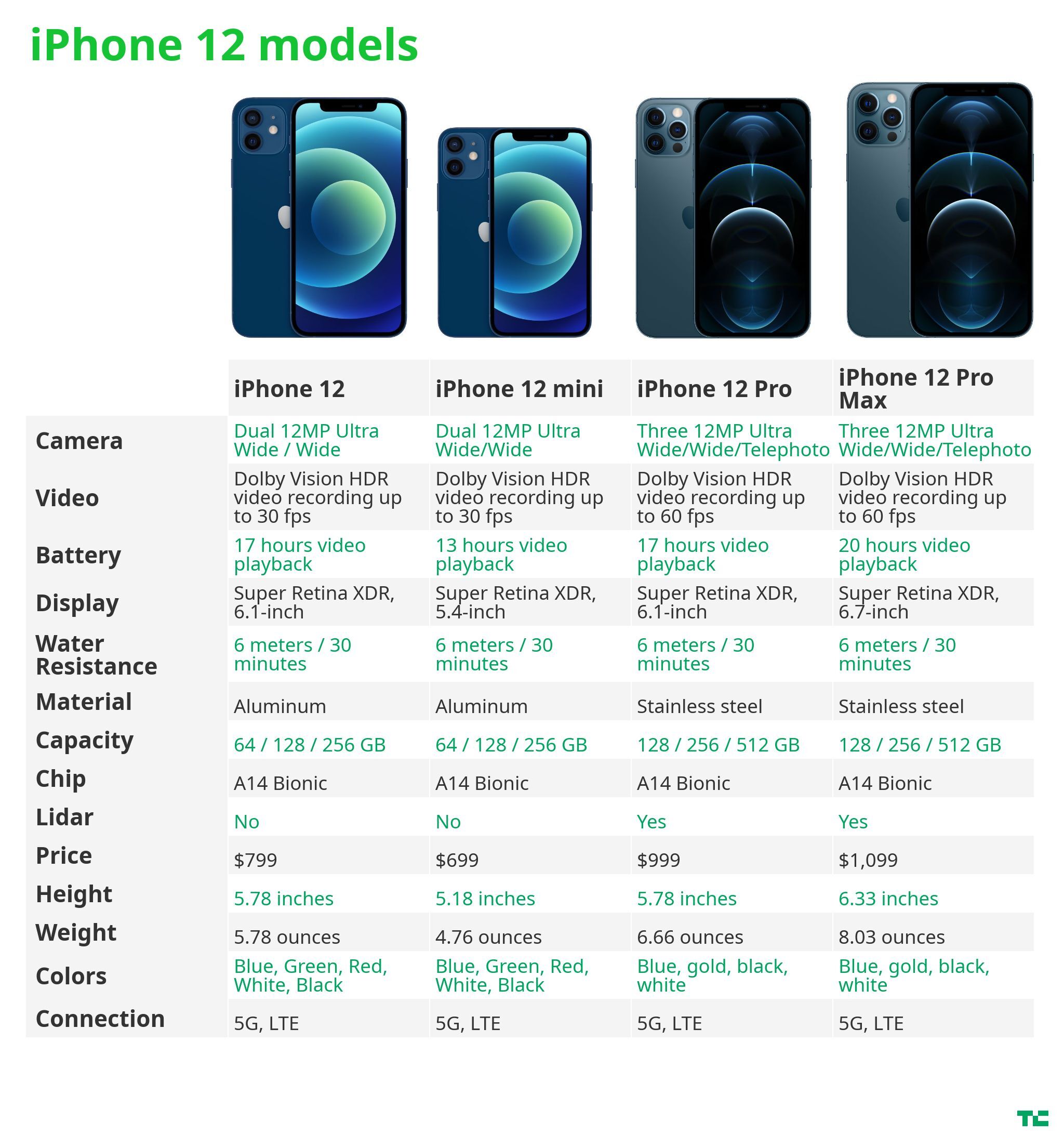
Here’s a handy chart to keep it all straight:

13 Oct 2020

Apple unveils its flagship 5G phones, the iPhone 12 Pro and Pro Max

At Apple’s iPhone event on Tuesday, the company introduced a range of new phones, led by the just-announced flagships: the iPhone 12 Pro, starting at $999, and iPhone 12 Pro Max, starting at $1099. The new 5G-ready devices sport an all-screen Super Retina XDR display, the A14 Bionic chip, a Ceramic Shield front cover, LiDAR Scanner, and of course, the iPhone line’s best camera system.

iPhone 12 Pro and iPhone 12 Pro Max will be available in 128GB, 256GB, and 512GB configurations and four stainless steel finishes, including graphite, silver, gold, and pacific blue.

5G, of course, will be one of the bigger selling points for the devices as the new technology will boost speeds, meaning faster downloads and uploads, higher quality streaming, more responsive gaming and faster responses in apps, among other things.
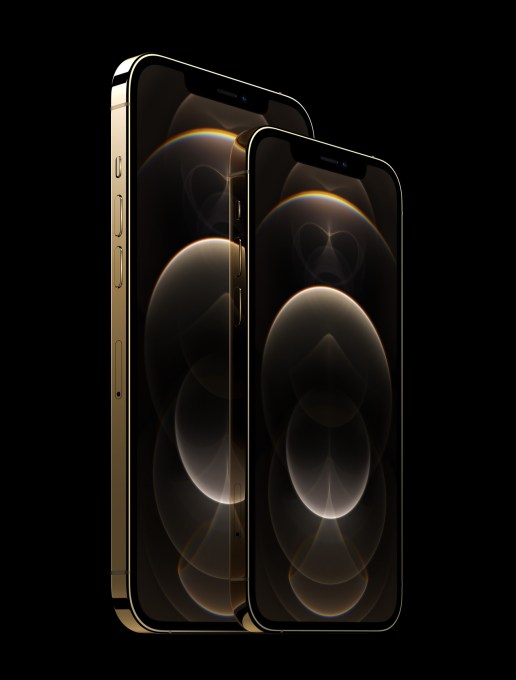
Image Credits: Apple

In the U.S., Apple says the iPhone 12 Pro models will be able to reach speeds of up to 4Gbps, even in densely populated areas. A “Smart Data” feature will also help with the transition to faster speeds, by intelligently balancing data usage and battery power in real-time.

Inside, the new devices also include the A14 Bionic chip, featuring a 16-core Neural Engine — for an 80% increase in performance, Apple claims. It’s capable of completing 11 trillion operations per second, and is faster and more efficient than prior iterations.

Aesthetically, the new iPhones will look somewhat different too.

The 6.1-inch iPhone 12 Pro and 6.7-inch iPhone 12 Pro Max will now have a flat-edge design and an edge-to-edge OLED display with reduced borders. On the Pro Max, iPhone gets its biggest-ever screen and the highest resolution, at neary 3.5M pixels.

The back is matte glass and the phone sports at stainless steel band, but what’s new is something Apple is calling “Ceramic Shield.” This new, tougher front cover aims to improve the “shatterability,” so to speak, which Apple claims improves drop performance by 4x compared with iPhone 11 Pro.
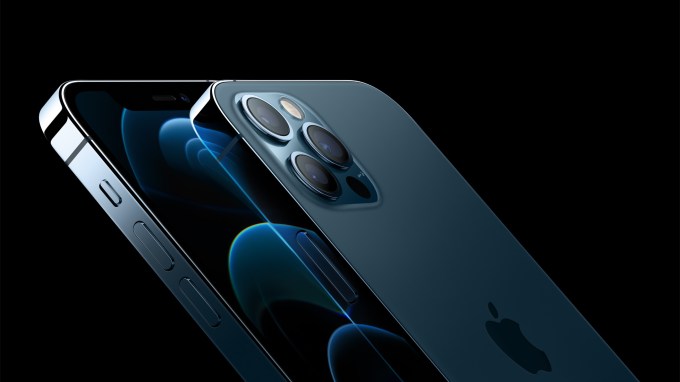
Image Credits: Apple

The iPhone 12 Pro models are also water resistant for up to 6 meters for 30 minutes, or the IP68 rating, as it’s known.

Another key reason people opt for the high-end models is the camera.

Apple says, this time around, it’s aided by a new image signal processor (ISP), the A14 Bionic, and the models will feature “Apple ProRAW” later this year. This combines Apple’s multiframe image processing and computational photography capabilities with the versatility of the RAW format, Apple explains. In practice, this means users will be able to exert creative control over color, detail and dynamic range both natively on the iPhone and using third-party photo editing tools.

The iPhone 12 Pro features also a new 7-element lens Wide camera with an ƒ/1.6 aperture, the fastest now available in the iPhone line, and promising improvements in low-light video and photos. The Ultra Wide camera has a 12-degree field of view, while the Telephoto camera has a 52 mm focal length, bringing the optical zoom range to 4x.

The iPhone 12 Max ups things further with a 47% larger sensor with 1.7μm pixels for a 87% improvement in low-light conditions, Appe claims. It also has the Ultra Wide camera and a Telephoto camera with a 65 mm focal length, for a 5x optical zoom range.

Night mode has also now been expanded the to TrueDepth and Ultra Wide cameras, and Night mode Time-Lapse promises sharper videos, better light trails, and smoother exposure when used with a tripod.

Deep Fusion is also now faster, and Smart HDR 3 is an update for more true-to-life images, says Apple.
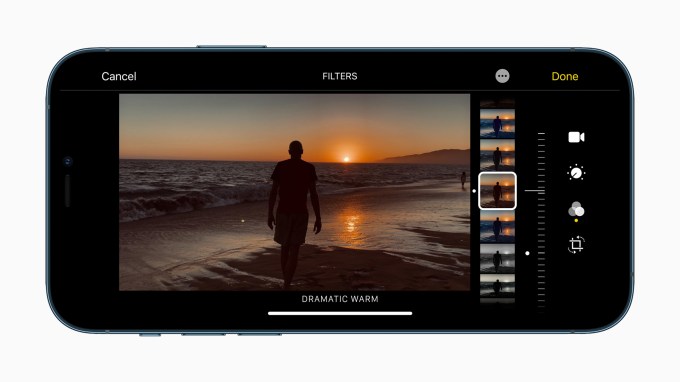
Image Credits: Apple

For video, the new models offer HDR video with Dolby Vision, up to 60 fps, and improved video stabilization. Users can even share their 4K Dolby Vision videos on AirPlay.

Also new is the LiDAR Scanner, which matters for AR.

The improvement means faster and more realistic AR with an improved autofocus by 6x in low-light scenes.

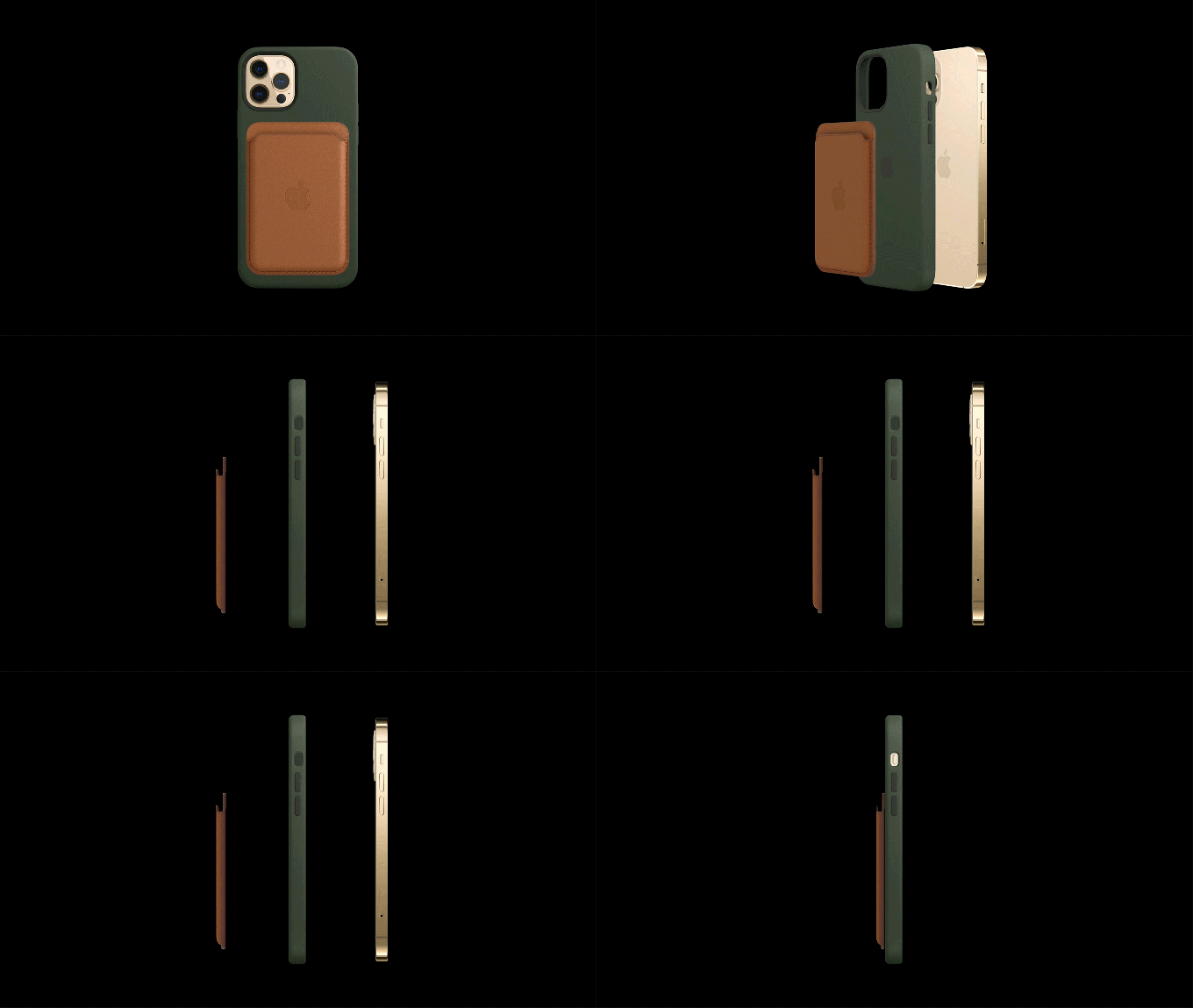
A consumer-friendly feature coming to the new iPhone models is MagSafe, which helps with wirelessly charging as well as allowing users to snap on magnetic accessories, like Apple’s new Leather Wallet with MagSafe. These will go on sale along with the MagSafe Charger and iPhone 12 Pro Silicone Case and Clear Case on Oct. 16. Leather Cases will go on sale Nov. 6. A MagSafe Duo Charger and Leather Sleeve will later follow.
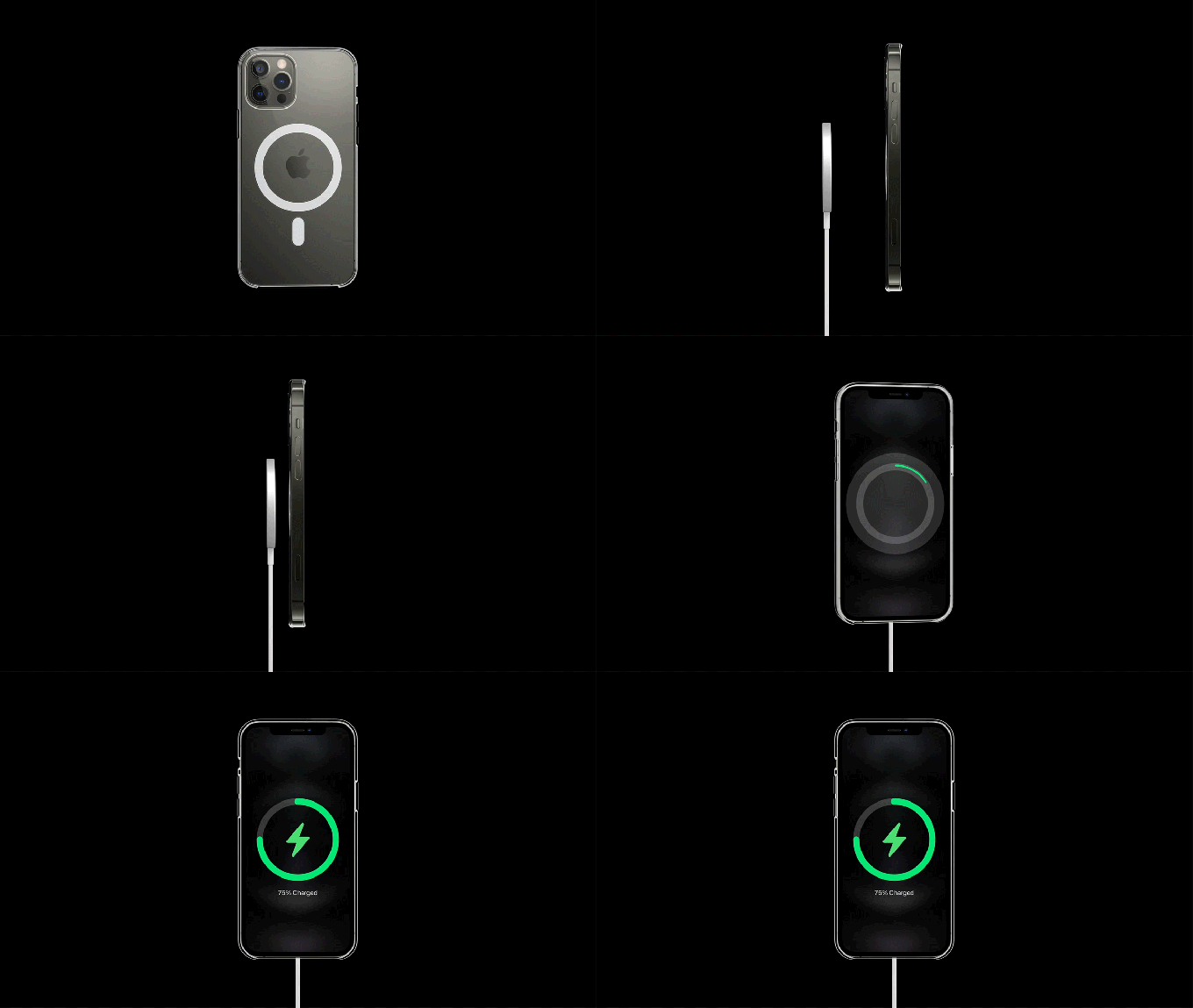
Image Credits: Apple

Pre-orders for iPhone 12 Pro begin Friday, October 16, with availability beginning Friday, October 23. iPhone 12 Pro Max will be available for pre-order Friday, November 6, and in stores beginning Friday, November 13.


13 Oct 2020

Here’s everything Apple announced at its “Hi, Speed” iPhone event today

Just shy of one month after their last event, Apple was back today with another one. Everyone had a pretty good feeling this would be the one where they announced this year’s new iPhone… instead, Apple announced four new iPhones, plus a new HomePod for good measure.

Didn’t have time to follow along live? Here are the highlights:

HomePod Mini

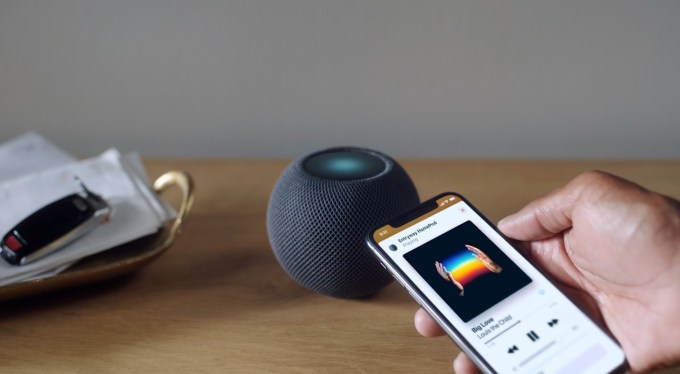
Apple kicked things off by announcing the HomePod Mini — which, as you’ve probably gathered from the name, is a smaller version of its HomePod speaker.

Apple’s focus with the HomePod Mini definitely seems to be getting you to buy a bunch and spread them around your house — they started off by recapping Siri’s smart home capabilities, then introduced a new feature called “Intercom” which lets you broadcast a message to all of your HomePods from your iPhone, Apple Watch, CarPlay, or another HomePod. Put two HomePods in the same room, Apple says, and they’ll automatically become a stereo pair.

HomePod Mini will cost $99, and, like its bigger counterpart, will come in two colors: white and space grey. Pre-orders will start on November 6th, with the first units shipping “the week of November 16th.”

Four new iPhones

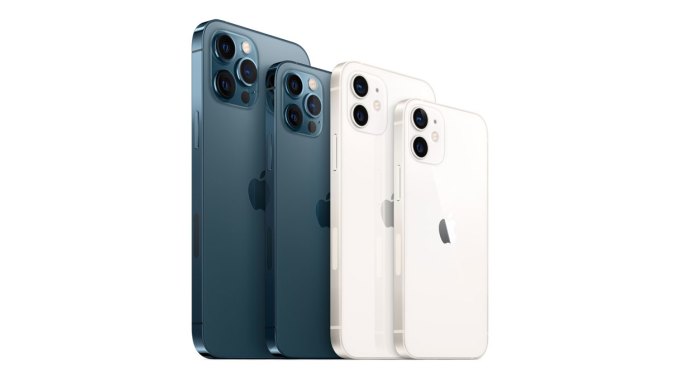
iPhone 12 family lineup

Image Credits: Apple

Why would Apple announce one new iPhone when they could announce four?

With a lineup that will probably lead to a bit of confusion, Apple today announced the iPhone 12 Mini, iPhone 12, iPhone 12 Pro, and iPhone 12 Pro Max. The devices get a little bigger, a little fancier, and a bit more expensive as you go down the line.

The big focuses here are on improved displays, improved cameras (night mode on the wide and ultra wide cameras!), and the introduction of 5G across the lineup. The form factor borrows some angles from iPhones of yesteryear, with flat sides that’ll probably remind you of the iPhone 4 or 5.

The iPhone 12 Mini will start at $699 and come with a 5.4″ display, while the iPhone 12 will start at $799 with a 6.1″ display. The iPhone 12 Pro will start at $999 with a 6.1″ display, but polishes up the spec sheet with stainless steel body (versus Aluminum on the non-pro models) and the addition of a 12MP telephoto lens. The iPhone 12 Pro Max will start at $1099, but packs a massive 6.7″ display. The Pro models also pack LiDAR sensors, allowing them to do things like ultra fast focusing in low light situations, or 3D room scanning.

The displays on all of the new iPhones will feature a new “Ceramic Shield” technology that Apple built in partnership with Corning, which the company says improves the odds of your device surviving a fall by 4x. The iPhone 12 and 12 Mini will come in blue, green, red, white, and black; the 12 Pro and 12 Pro Max, meanwhile, will come in blue, gold, black, and white.

All four phones will run on Apple’s A14 Bionic chip — the same one that powers the iPad Air the company just announced last month.

(Apple also noted that it will continue to sell the iPhone 11, dropping the base price by $100 down to $599.)

MagSafe

iPhone 12 Pro Silicone Case_Leather Wallet with MagSafe

Image Credits: Apple

“MagSafe” is back! Sort of. Well, in name, at least.

Borrowing a name from the charging system of Apple laptops past, the new iPhone’s MagSafe system allows it to automatically snap into the optimal place on a wireless charger, while also allowing for snap-on accessories like magnetic cases or credit card holders.

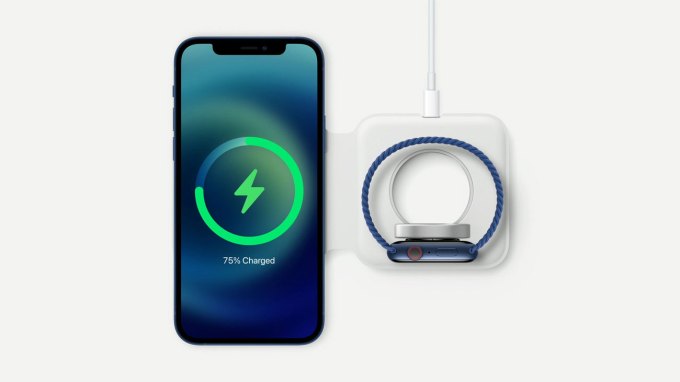
The company also announced the MagSafe Duo Charger (a folding setup meant to allow you to charge both an iPhone and an Apple Watch) and noted that MagSafe-compatible accessories from third parties like Belkin were on the way.

MagSafe Duo Charger

Image Credits: Apple

No more power adapter or headphones in the box

It’s been rumored for months, but now it’s official: Apple will no longer be including headphones or a wall power adapter with the iPhone. The company cites the potential environmental impact as their reasoning, noting that there are already “billions” of compatible chargers out in the world. The new iPhones will ship with a USB-C to Lightning cable — just not the bit that plugs into the wall.

13 Oct 2020

iPhones won’t come with headphones or power adapters in the box from now on

That drawer full of bad headphones and extra power adapters for your phone won’t get any more cluttered if you decide to pick up a new iPhone 12. Apple will no longer include those items in the box, part of a redoubled effort to reduce its environmental footprint.

In a segment of its iPhone-centric event today, Apple’s Lisa Jackson explained that the company is hoping to have “net zero climate impact” globally by 2030, meaning everything from manufacturing and assembly to packaging and device recycling will be carbon neutral. Achieving that means relying more on solar power and efficient operations, of course, but also reducing waste.

To that end the company will no longer include the familiar white headphones that have come in the box since the early days of the iPhone, nor the standard outlet adapter for the power cable.

“Customers already have over 700 million Lightning headphones, and many customers have moved to a wireless experience,” said Jackson. “There are also over 2 billion Apple power adapter out in the world, and that’s not counting the billions of third party adapters.”

Thankfully there will be a power cable in the box: a standard USB-C to Lightning cable that you can plug into your old wall adapter or a laptop.

The result is not just fewer things in the box, but a smaller actual box, letting the company fit more of them into a pallet. That may sound like a bit of a stretch for effect — “really, you’re saving the world by making the box smaller?” — but at the scales Apple operates at, fitting half again as many devices into a shipment means saving thousands of trips. It’s the equivalent, Apple notes, of taking some 450,000 cars off the road per year.

Apple didn’t mention its part in creating an endless yearly cycle of questionably necessary replacements of perfectly good devices, or in making millions of accessories obsolete with choices like removing the headphone jack, but that’s to be expected. They may be part of the problem there, but so is every other major consumer electronics manufacturer, and at least Apple is trying to balance things out a bit.

13 Oct 2020

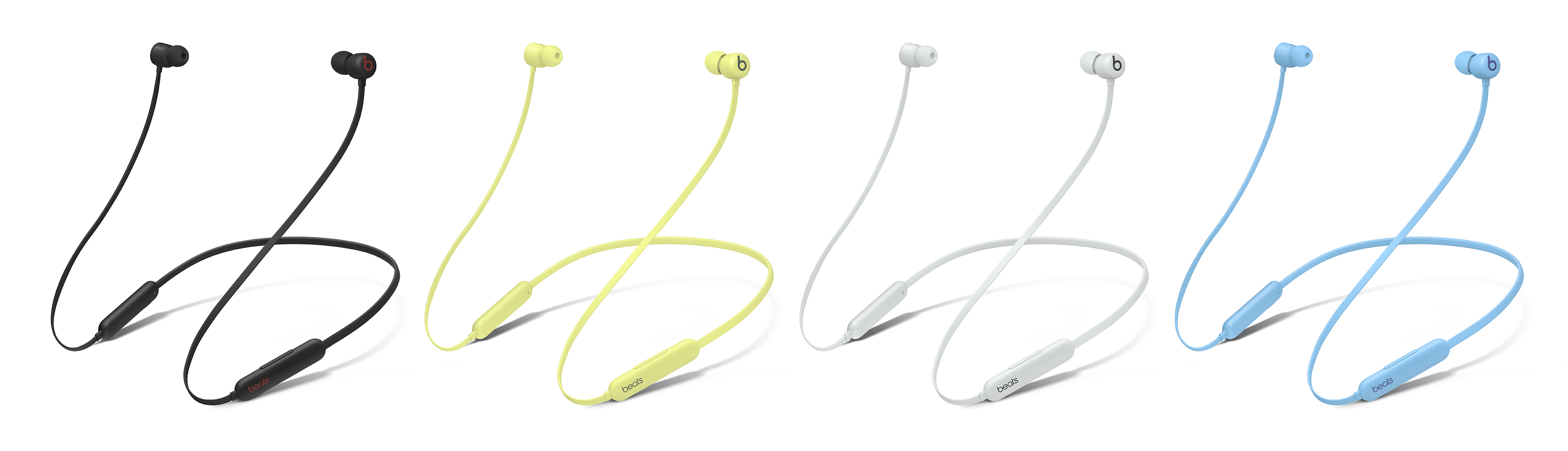
Beats announces $50 Bluetooth earbuds

Apple clearly has plenty to announce during today’s big iPhone event. That means, as usual, its Beats line didn’t really get any love. The company is much more content to focus on its own audio offerings, instead. But the Apple-owned brand had some news to share today, as well.

In contrast to Apple’s offerings, the new Beats are pretty firmly focused on price. At $50, the Beats Flex are about a third the launch price of their predecessors, the similarly named BeatsX. It makes sense, certainly; as pricing has come down pretty significantly on wireless earbuds in the last few years, Beats is trying to carve out space well below $100.

The headphones feature a similar yoke form factor, dangling around the wearer’s neck when not in use. A magnetic mechanism pauses the music when the buds snap together — a different approach than the ambient sensors more expensive models use to pause playback when the wearer removes a bud from their ear.

Audio has been improved courtesy of a new acoustic driver and a microphone that’s been improved from the BeatsX. The battery, too, gets a major upgrade. It’s now rated at a healthy 12 hours — meaning you’ll get through a day without needing a charging case. Good news, since there’s no charging case here, to speak of. There’s quick charging, as well, courtesy of the USB-C port. You should get about an hour and a half of playback with 10 minutes of charging.

The headphones are up for pre-order today and come in four colors.