Year: 2020

28 Aug 2020

Boeing and NASA target December for second try at uncrewed orbital demonstration flight

NASA and Boeing have provided some updates around their Commercial Crew plans, which aim to get Boeing’s CST-100 spacecraft certified for regular human flight. The CST-100 and Boeing’s Commercial Crew aspirations hit a snag last year with a first attempt an an uncrewed orbital flight test, which did not go to plan thanks to a couple of software errors that led to an early mission ending, and a failure to reach the International Space Station as intended.

In a blog post on Friday, NASA said that it and partner Boeing were aiming to fly the re-do of that uncrewed test no earlier than December 2020. This will involve flying the fully reusable Starliner CST-100 without anyone on board, in a live, fully automated simulation of how a launch with crew would go, including a rendez-vous and docking with the ISS on orbit, and a return trip and controlled landing and capsule recovery.

During the original OFT last December, the spacecraft took off from Cape Canaveral in Florida atop a United Launch Alliance (ULA) Atlas V as planned, but encountered an issue with its onboard mission timer shortly after disengaging from the launch vehicle. That caused it to misfire its thrusters and expend fuel, and a communication error meant that NASA was not able to correct the issue until it had used too much fuel to allow it to continue to the Space Station as planned. The capsule did safely return to Earth, however, and provided valuable test data on the way.

NASA and Boeing subsequently undertook a comprehensive review of Boeing’s software development program, as well as the agency’s own practices surrounding the public-private partnership, and determined a number of corrective actions. That review ended in July, and the partners have now been working to get back to a second demonstration flight.

Boeing has a lot riding on this re-do, since NASA’s other partner in the Commercial Crew program, SpaceX, is now at least a year ahead in terms of its qualification program. SpaceX recently successfully completed its first crewed demonstration mission of its Dragon spacecraft, and could launch its first operational astronaut mission to the International Space Station as early as October.

Provided OFT-2 goes as intended for Boeing, Starliner could be ferrying its first passengers for a crewed demonstration launch as early as June 2021, with plans for a first operational mission now set for December 2021. All these dates or subject to change, of course.

28 Aug 2020

Boeing and NASA target December for second try at uncrewed orbital demonstration flight

NASA and Boeing have provided some updates around their Commercial Crew plans, which aim to get Boeing’s CST-100 spacecraft certified for regular human flight. The CST-100 and Boeing’s Commercial Crew aspirations hit a snag last year with a first attempt an an uncrewed orbital flight test, which did not go to plan thanks to a couple of software errors that led to an early mission ending, and a failure to reach the International Space Station as intended.

In a blog post on Friday, NASA said that it and partner Boeing were aiming to fly the re-do of that uncrewed test no earlier than December 2020. This will involve flying the fully reusable Starliner CST-100 without anyone on board, in a live, fully automated simulation of how a launch with crew would go, including a rendez-vous and docking with the ISS on orbit, and a return trip and controlled landing and capsule recovery.

During the original OFT last December, the spacecraft took off from Cape Canaveral in Florida atop a United Launch Alliance (ULA) Atlas V as planned, but encountered an issue with its onboard mission timer shortly after disengaging from the launch vehicle. That caused it to misfire its thrusters and expend fuel, and a communication error meant that NASA was not able to correct the issue until it had used too much fuel to allow it to continue to the Space Station as planned. The capsule did safely return to Earth, however, and provided valuable test data on the way.

NASA and Boeing subsequently undertook a comprehensive review of Boeing’s software development program, as well as the agency’s own practices surrounding the public-private partnership, and determined a number of corrective actions. That review ended in July, and the partners have now been working to get back to a second demonstration flight.

Boeing has a lot riding on this re-do, since NASA’s other partner in the Commercial Crew program, SpaceX, is now at least a year ahead in terms of its qualification program. SpaceX recently successfully completed its first crewed demonstration mission of its Dragon spacecraft, and could launch its first operational astronaut mission to the International Space Station as early as October.

Provided OFT-2 goes as intended for Boeing, Starliner could be ferrying its first passengers for a crewed demonstration launch as early as June 2021, with plans for a first operational mission now set for December 2021. All these dates or subject to change, of course.

28 Aug 2020

GM shifts Corvette engineering team to its electric and autonomous vehicle programs

GM is moving the engineering team responsible for the mid-engine Chevrolet Corvette to the company’s electric and autonomous vehicle programs to “push the boundaries” on what its future EV battery systems and components can deliver, according to an internal memo.

The memo sent by Doug Parks, GM’s executive vice president of global product development, purchasing and supply chain, announced that the Corvette team would move from the automaker’s global product team to the autonomous and electric vehicles program that is led by Ken Morris. The shift will go into effect September 1, according to the memo. The change was first reported by InsideEVs.

“General Motors is committed to an all-electric future. I’m excited to be putting the team that redefined supercar performance, design and attainability in key roles to help us integrate and execute our EVs to those same high standards,” Morris said in an emailed statement.

In the memo, Parks said the move will “help this already dynamic team further push the boundaries on what our future EV battery systems and components can deliver when it comes to excitement and thrilling performance for our customers. The Corvette team is familiar with delighting customers and critics alike, having launched the mid-engine Corvette to world acclaim and becoming one of the most awarded cars in automotive history.”

The change won’t disrupt the entire Corvette team. Tadge Juechter, will remain executive chief engineer for Global Corvette and will continue to lead the team as new variants hit the market. Corvette’s chief engineer Ed Piatek will now be chief engineer of “future product” and will continue to report to Tadge. Under this new role, Piatek will work across the organization on future EV programs, according to the memo. Josh Holder, who has been Corvette’s program engineering manager, will be promoted to chief engineer for Global Corvette replacing Piatek.

The organizational change follows a series of announcements and investments from GM into electric vehicles and automated vehicle technology. In January, the automaker said it would invest $2.2 billion into its Detroit-Hamtramck assembly plant to produce all-electric trucks and SUVs, as well as a self-driving vehicle unveiled by its subsidiary Cruise. GM will invest an additional $800 million in supplier tooling and other projects related to the launch of the new electric trucks.

GM will kick off this new program with an all-electric pickup truck that will go into production in late 2021. The Cruise Origin, the electric self-driving shuttle designed for ridesharing, will be the second vehicle to go into production at the Detroit area plant. Last month, GM said it was on track to deliver 20 electric vehicles by 2023, most of which will use the company’s new modular EV architecture, called Ultium. 

GM is already building a nearly 3-million-square-foot factory that will mass produce Ultium battery cells and packs, the cornerstone of the company’s strategy to bring those electric vehicles to market in the next three years. The Ultium Cells LLC battery cell manufacturing facility in Lordstown, Ohio is part of a joint venture between GM and LG Chem that was announced in December.

28 Aug 2020

Podcast is social: How China’s Lizhi makes audio interactive

For Marco Lai, the founder of Chinese podcast network Lizhi, radio has always been social.

Twenty years ago, the entrepreneur was a host at a radio station in southern China. He ran a late-night program where listeners could call in and chat about anything as they wished, often riffing on feelings, relationships or other intimate subjects. Those who couldn’t get through the phone line sent text messages that Lai would then read on air. At the time, it was a popular and promising model for radio stations, which divided the revenue earned from messaging fees with network carriers.

Now, Lai manages one of China’s largest podcast companies. Lizhi means “lychee” in Chinese, the aromatic tropical fruit from his hometown in the southern province of Guangdong. He picked up one of the red-shell fruits from a tea table in his office as he began telling me Lizhi’s story.

“I learned from my days working in radio that interaction is the best monetization model in the audio business. For years in China, the main revenue source for radio stations was these text messages,” Lai reminisced, speaking at a relaxed, slow pace that is uncharacteristic in China’s dog-eat-dog entrepreneurial world.

Marco Lai, founder and CEO of Lizhi (Photo: Lizhi)

The headquarters itself felt more like a giant, inviting coffee shop than a high-strung workplace of a Nasdaq-listed firm. Tugged away in a low-rise warehouse-turned-office in Guangzhou, the place is dotted with well-tended bonsai and staff sitting on bean bags behind glass meeting rooms.

Lai built the app for podcast production as well as consumption, capturing both the supply and demand sides. As of June, 56 million people used Lizhi monthly. Over 6 million of them were creators, and the cumulative number of podcasts uploaded to the platform hit a new record high of 215 million.

28 Aug 2020

Hear from Lyft, Cruise, Nuro and Aurora about the road ahead for driverless vehicles

Autonomous vehicles have yet to become mainstream, but companies like Lyft, Cruise, Nuro and Aurora are still fighting the good fight. The AV space has always faced its share of regulatory and development hurdles, but this year brought a new set of hurdles with the COVID-19 pandemic.

At TechCrunch Sessions: Mobility, we’ll hear from Cruise, Lyft, Nuro and Aurora about where they’re at in their respective journeys to public deployment and how they’ve navigated the year.

Cruise Director of Government Affairs Prashanthi Raman 

Earlier this year, before the world blew up, Cruise received a permit in California to begin transporting passengers. Cruise also began focusing more on hardware earlier this year. That all came after Cruise had already scrapped its plans to launch a robotaxi service in 2019. In the throws of the COVID-19 pandemic, Cruise laid off 8% of its workforce in May in an attempt to cut costs. As part of the restructuring, Cruise said it would double down on its engineering efforts.

Meanwhile, Cruise still has its eyes set on public deployment, which is where the expertise of Raman comes in. It’s her job to help Cruise navigate the murky regulatory waters of autonomous vehicles.

Nuro Chief Legal & Policy Officer David Estrada 

Nuro, an autonomous delivery startup, takes a slightly different approach to autonomous vehicles. Instead of transporting people, Nuro transports goods. In April, Nuro received a permit to begin driverless testing in California. The startup, which raised $940 million from SoftBank’s Vision Fund last year, aims to deliver groceries and other goods to customers at scale.

Estrada, who previously led legal and policy operations at Bird and government relations at Lyft, is no stranger to playing ball with regulatory agencies. It’s up to him to ensure Nuro gains the trust of the public by proving the company’s commitment to safety and the law.

Lyft Self-Driving Platform Director Jody Kelman

Lyft first began testing its autonomous vehicles in California in late 2018. The company had to pause those operations earlier this year as a result of the pandemic, but resumed testing in late June.

That same month, Lyft began using data from its ride-hailing app to build 3D maps, better understand human driving patterns and improve simulation tests for the company’s autonomous vehicle program.

As part of Lyft’s go-to-market strategy, it has partnered with a number of companies. A key partner for Lyft has been Aptiv, which as of February, provided 100,000 paid rides on the Lyft app.

“We’ve got something here,” Kelman said at the time to TechCrunch’s Kirsten Korosec. “This is really a blueprint for what future mobility partnerships can look like.”

Aurora Senior Manager of Government Relations Melissa Froelich

Aurora, which launched back in 2017, had been developing a full-stack solution for self-driving vehicles that prioritized robotaxis. That changed in October 2019, when Aurora began focusing more on trucks and logistics and declared trucks would be the company’s first commercial product.

Trucking comes with its own bag of worms, but folks seem to believe that AV trucking has a clearer path to profitability. In July, Aurora expanded into Texas to test commercial routes. At TC Sessions: Mobility, Froelich will discuss how Aurora is navigating the autonomous trucking space and the challenges it faces.

Get your tickets for TC Sessions: Mobility to hear from these thought-leaders from Nuro, Lyft, Cruise and Lyft, along with several other fantastic speakers from Porsche, Waymo, Lyft and more. Tickets are just $145 for a limited time, with discounts for groups, students and exhibiting startups. We hope to see you there!

28 Aug 2020

What does GPT-3 mean for the future of the legal profession?

One doesn’t have to dig too deep into legal organizations to find people who are skeptical about artificial intelligence.

AI is getting tremendous attention and significant venture capital, but AI tools frequently underwhelm in the trenches. Here are a few reasons why that is and why I believe GPT-3, a beta version of which was recently released by the OpenAI Foundation, might be a game changer in legal and other knowledge-focused organizations.

GPT-3 is getting a lot of oxygen lately because of its size, scope and capabilities. However, it should be recognized that a significant amount of that attention is due to its association with Elon Musk. The OpenAI Foundation that created GPT-3 was founded by heavy hitters Musk and Sam Altman and is supported by Mark Benioff, Peter Thiel and Microsoft, among others. Arthur C. Clarke once observed that great innovations happen after everyone stops laughing.

Musk has made the world stop laughing in so many ambitious areas that the world is inclined to give a project in which he’s had a hand a second look. GPT-3 is getting the benefit of that spotlight. I suggest, however, that the attention might be warranted on its merits.

Why have some AI-based tools struggled in the legal profession, and how might GPT-3 be different?

1. Not every problem is a nail

It is said that when you’re a hammer, every problem is a nail. The networks and algorithms that power AI are quite good at drawing correlations across enormous datasets that would not be obvious to humans. One of my favorite examples of this is a loan-underwriting AI that determined that the charge level of the battery on your phone at the time of application is correlated to your underwriting risk. Who knows why that is? A human would not have surmised that connection. Those things are not rationally related, just statistically related.

28 Aug 2020

Laura Deming, Frederik Groce, Amish Jani, Jessica Verilli, and Vanessa Larco are coming to Disrupt

At TechCrunch Disrupt, our Startup Battlefield competition this year looks to be fiercer than ever, judging by the applicants. That’s actually saying something, considering the game-changing brands to emerge from our stage over the years, including Cloudflare, Dropbox, Vurb, Mint, GetAround, Fitbit, Yammer and more. Altogether, Startup Battlefield participants have gone on to raise $9 billion from investors and to generate 115 exits over the history of TechCrunch Disrupt, now in its tenth year.

It’s a track record about which we’re proud — and that we want to maintain — so it’s crucial that we get the exact right mix of judges. Toward that end, we are thrilled to be spotlighting five of this year’s Startup Battlefield judges — each with very different and complementary skill sets and expertise — and all of whom will be key in deciding who wins the coveted title of Startup Battlefield winner.

New Zealand native Laura Deming was home schooled, developing a love of math and physics along the way, as well as a deep interest in the biology of aging. In fact, she became so preoccupied with the last that at age 11, Deming wrote to renowned molecular biologist Cynthia Kenyon, asking if she could visit Kenyon’s San Francisco lab during a family trip. Kenyon said yes, a decision that ultimately sent Deming down the path she continues on today as a venture capitalist focused on life extension and biological research that’s used to reduce or reverse the effects of aging. Unity Biotechnology, which has developed an osteoarthritis treatment, and Celevity, focused on dog life extension, are just two of the interesting bets in the portfolio of the former Thiel Fellow.

Frederik Groce grew up in the Bay Area and studied political science at Stanford before becoming an investor with Storm Ventures and soon after, cofounding BLCK VC, an organization formed to connect, engage, and advance Black venture capitalists. Before joining Storm, Groce had spent two years as the CEO and financial manager of Stanford Student Enterprises, a non-profit organization that oversees a handful of business and is run by and for Stanford students and which includes an accelerator program and a consulting group. Today, Groce is again involved in numerous companies — this time on behalf of Storm — including the roommate- and real estate-matching platform Room8, on whose board he sits. He’s also a mentor with the East Bay College Fund, which works with minority college students coming from underprivileged communities.

Amish Jani has been a VC for nearly 20 years, cofounding FirstMark in New York back in 2008 after logging eight years with the firm Pequot Ventures. He pretty much invests across the cloud and internet landscape, including leading deals in SaaS applications, e-commerce companies, and infrastructure startups. One deal that may be his most lucrative — though we’re merely guessing —  is Shopify, which is now Canada’s most valuable corporation with a market cap of $130 billion. Founded in 2004, it went public in 2015, but not before raising four venture rounds first, including from FirstMark and Jani, who was there at the A round, B round and the company’s last private funding event, its C round.

Jessica Verilli, a sometimes marathoner, is an investor and operator who is on the board of Digits, Lambda School and The Wing, among others. A general partner with GV for the past two-and-a-half years, Verilli also cofounded  #ANGELS, an investment collective she launched with five women who, like Verilli, built their earlier careers at Twitter. In Verilli’s case, she spent nearly a decade helping scale Twitter from a startup to a social media giant as its VP of corporate development and strategy (she oversaw its purchase of Vine, Periscope, and Tweetdeck). Among her #ANGELS cofounders: Katie Jacobs Stanton, who today manages her own fund, and Jana Messerschmidt, who joined Lightspeed Venture Partners as a partner in late 2018.

Last but not least, we’ll be joined this year by Vanessa Larco, a partner at the powerhouse venture firm NEA since 2016. Larco was previously the director of product management at Box and earlier in her career, was a program manager at Microsoft, where she led the speech recognition experience team at Xbox Kinect v1. Today, the Georgia Tech grad says her passion for design and analytics stems from those days spent in both the gaming industry and focused on productivity apps. Certainly, she’s very actively investing in both, with bets that include Cleo, Rocket.Chat, Mejuri, EvidentID, Greenlight Card, Feather, and Lily AI. (She’s also a board observer at Robinhood, Willow Pump, Forethought AI and OmniSci.)

We’re exceedingly thankful all of our judges, who we don’t doubt will have their work cut out for them at this year’s must-see event.

Disrupt 2020 runs from September 14-18 and will be virtual this year.

Get your front row seat to the Startup Battlefield competition and much more with a Disrupt Digital Pro Pass or a Digital Startup Alley Exhibitor Package. (Prices increase in a few short weeks.)


28 Aug 2020

Facebook tests linking your FB account to your news subscriptions

Facebook is testing out a new feature that could help news publishers create a better experience for paying subscribers on the social network.

The idea is that when Facebook identifies a subscriber from one of its publisher partners, that subscriber will be invited to link their news account to their Facebook account. Once they’re linked, if they encounter a paywalled article on Facebook, they’ll be able to read it without hitting the paywall or having to log-in again.

Facebook also says that when subscribers link their accounts, it will show them more content from that publisher, and that it’s “developing and [plans] to introduce additional subscriber experiences over time.”

The Atlanta Journal-Constitution, The Athletic and the Winnipeg Free Press have already been testing the feature out. Facebook says subscribers who linked their accounts made an average of 111% more article clicks compared to those who weren’t part of the test group, and that those subscribers increased their rate of following a publisher from 34% to 97%.

“Account linking with Facebook has offered a convenient, easy way for The Athletic’s subscribers to access our in-depth storytelling while they are spending time on their favorite social media platform,” said The Athletic’s vice president of product marketing Charlotte Winthrop in a statement. “This enhances the experience for our subscribers, keeping them engaged with The Athletic and up-to-date on their favorite teams, leagues and players.”

Facebook has had a complicated relationship with news publishers, many of whom have gotten burned by the company’s shifting strategy in the past.

When news organizations rely on outside platforms for distribution, one of the big issues is who owns the subscriber. So Facebook’s approach here may be more acceptable to publishers, since it still requires readers to subscribe to a given publication (rather than subscribing through Facebook itself).

The social network’s current news strategy is focused on Facebook News, a separate tab for journalism in the main Facebook app that has only recently begun to expand internationally. The company also offers support for subscriptions in Instant Articles, and s part of its broader efforts to fund journalism, Facebook also launched a Local News Subscription Accelerator.

28 Aug 2020

Xiaomi plans to bring under-screen cameras to its smartphones next year

The front-facing camera has been a pretty constant bugbear for phone makers for a number of years now. Xiaomi certainly isn’t the first to offer a clever technological solution to the problem — and it’s also certainly not the only company to have show off under-screen camera tech — but next year, it’s committed to bringing that technology to market.

The manufacturer noted its plans today as part of its earnings report, stating that it will begin manufacturing handsets using the latest version of the technology it’s been working on for a number of years now. This actually represents the third generation of the tech. The first didn’t exist outside of the lab and the second was shown off to the public but never made it into production.

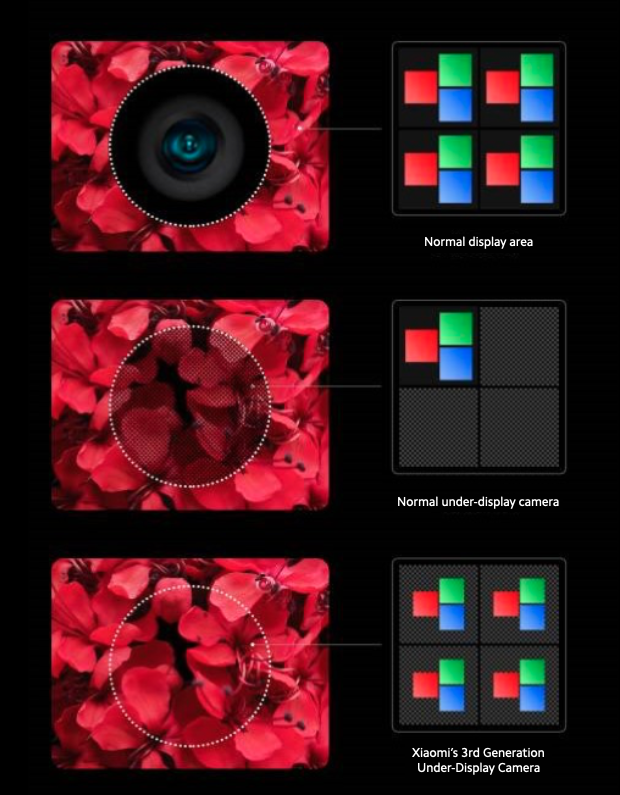
There are no doubt all sorts of practical reasons for that. Among them seems to be the issue of pixel density. For reasons that ought to be pretty obvious, there’s a big question of how to maintain a consistent pixel density in the area of the screen that sits on top of the front-facing camera. Xiaomi claims to have solved the problem, however.

“The self-developed pixel arrangement used in Xiaomi’s 3rd Generation Under-Display Camera Technology allows the screen to pass light through the gap area of ​​sub-pixels, allowing each single pixel to retain a complete RGB subpixel layout without sacrificing pixel density,” it writes in a blog post.

Xiaomi says it’s been able to effectively double the pixel density of competing technology, letting light through to the camera, without sacrificing the uniformity of the screen. It looks good in the side-by-side videos the company has released, but obviously it’s worth reserving judgement until mass production starts next year.

28 Aug 2020

SaaS stocks survive earnings, keeping the market warm for software startups, exits

We’re on the other end of nearly every single SaaS earnings report that you can name, with the exception of Slack, and shares of software companies are holding onto their year’s gains. Which means SaaS and cloud companies have made it through a somewhat steep gauntlet largely unscathed.

There were exceptions, of course, but when we consider public software and cloud companies, the tale of the tape is somewhat clear. And it appears to indicate that today’s huge revenue multiples will stick around for a while yet.


The Exchange explores startups, markets and money. You can read it every morning on Extra Crunch, or get The Exchange newsletter every Saturday.


This is great news for startups, given that delivering software as a managed service (SaaS) has become the most popular business model for upstart tech companies. If the set of public SaaS companies are richly valued, it reflects well on their private peers. Warm public markets can help with exit valuations and provide encouragement to private investors to keep investing in SaaS startups.

The most recent earnings reports tell a somewhat simple story: Generally strong growth, and generally good forecasts. A few weeks back, Appian beat on revenue growth and profitability and guided a bit above market expectations. Given the nearly 50% run company’s stock that it has enjoyed in 2020, the results were welcome.