Year: 2020

27 Aug 2020

Here’s how you can get a second shot at Startup Battlefield

We’re big believers in second chances here at TechCrunch, and that’s great news for early-stage founders who didn’t apply to compete in the Startup Battlefield during Disrupt 2020 (September 14-18). Your second chance comes in the form of two Wild Card entries to the world’s most legendary startup competition.

Want a shot to head-to-head with some of the best new startups from around the world? Go buy a Digital Startup Alley Package and exhibit your standout startup to thousands of Disrupt 2020 attendees. TechCrunch editors will designate two outstanding early-stage startups from Digital Startup Alley as Wild Card entries.

You’ll have just a few days to prepare before you join the other Startup Battlefield competitors and deliver a six-minute pitch and demo to a panel of judges — top-name VCs and technologists. You’ll also answer a Q&A after your pitch. If you make it through to round two, you’ll do it all again to a fresh set of experts.

The prize? Massive exposure to media and investors (whether you win or not), glory in the form of the Disrupt Cup and $100,000 in sweet, equity-free cash.

Pro tip: Exhibit in Digital Startup Alley and you’re eligible for a Wild Card slot — even if you applied to Startup Battlefield but didn’t make it into the final cohort. You came so close — don’t pass up your second chance!

Exhibiting in Digital Startup Alley by itself is a win-win proposition. Introduce your tech and talent to thousands of people around the world, expand your network, build partnerships, attract investors, build your customer base and increase your brand recognition.

“I met so many industry experts — manufacturers, marketers, engineers — I even met people interested in investing in my company. Fostering these relationships over the long term will help my company scale and help me grow as an innovator.” — Felicia Jackson, inventor and founder of CPRWrap.

Buy a Digital Startup Alley Package, hang your shingle in Startup Alley and get ready to connect with the influential people who can help you build your business. Believe in second chances — you just might earn a Wild Card entry to Startup Battlefield and take a page out of RecordGram’s playbook. They rode the Wild Card to total victory as Battlefield champs. Go for it!

Is your company interested in sponsoring or exhibiting at Disrupt 2020? Contact our sponsorship sales team by filling out this form.

27 Aug 2020

How Salesforce beat its own target to reach $20B run rate ahead of schedule

Salesforce launched in 1999, one of the early adherents to what would eventually be called SaaS and cloud computing. On Tuesday, the company reached a huge milestone when it surpassed $5 billion in revenue, putting the SaaS giant on a $20 billion run rate for the first time.

Salesforce revenue has been on a firm upward trajectory for years now, but when the company reached $10 billion in revenue in November 2017, CEO Marc Benioff set the goal for $20 billion right then and there, and five years hence the company beat that goal pretty easily. Here’s what he said at the time:

“In fact as the fastest growing enterprise software company ever to reach $10 billion, we are now targeting to grow the company organically to more than $20 billion by fiscal year 2022 and we plan to do that to be the fastest enterprise software company ever to get to $20 billion,” Benioff said at the time.

There are lots of elements that have led to that success. As the Salesforce platform evolved, the company has also had an aggressive acquisition strategy, and companies are moving to the cloud faster than ever before. Yet Salesforce has been able to meet that lofty 2017 goal early, while practicing his own unique form of responsible capitalism in the midst of a pandemic.

The platform play

While there are many factors contributing to the company’s revenue growth, one big part of it is the platform. As a platform, it’s not only about providing a set of software tools like CRM, marketing automation and customer service, it’s also giving customers the ability to build solutions to meet their needs on top of that, taking advantage of the work that Salesforce has done to build its own software stack.

Bret Taylor, president and chief operating officer at Salesforce says the platform has played a huge role in the company’s success. “Actually our platform is behind a huge part of Salesforce’s momentum in multiple ways. One, which is one thing we’ve talked a lot about, is just the technology characteristics of the platform, namely that it’s low code and fast time to value,” he
said.

He added, “I would say that these low code platforms and the ability to stand up solutions quickly is more relevant than ever before because our customers are going to have to respond to changes in their business faster than ever before,” he said.

He pointed to nCino, a company built on top of Salesforce that went public last month as a prime example of this. The company was built on Salesforce, sold in the AppExchange marketplace and provides a way for banking customers to do business online, taking advantage of all that Salesforce has built to do that.

The acquisition strategy

Another big contributing factor to the company’s success is that beyond the core CRM product, it brought to the table way back in 1999, it has built a broad set of marketing, sales and service tools and as it has done that, it has acquired many companies along the way to accelerate the product road map.

The biggest of those acquisitions by far was the $15.7 billion Tableau deal, which closed just about a year ago. Taylor sees data fueling the push to digital we are seeing during the pandemic, and Tableau is a key part of that.

“Tableau is so strategic, both from a revenue and also from a technology strategy perspective,” he said. That’s because as companies make the shift to digital, it becomes more important than ever to help them visualize and understand that data in order to understand their customer’s requirements better.

“Fundamentally when you look at what a company needs to do to thrive in an all-digital world, it needs to be able respond to [rapid] changes, which means creating a culture around that data,” he said. This enables companies to respond more quickly to changes like new customer demands or shifts in the supply chain.

“All of that is about data, and I think the reason why Tableau grew so much this past quarter is that I think that the conversation around data when you’re digitizing your entire company and digitizing the entire economy, data is more strategic than it ever was,” he said.

With that purchase, combined with the $6.5 billion MuleSoft acquisition in 2018, the company feels like it has a way to capture and visualize data wherever it lives in the enterprise. “It’s worth noting how complementary MuleSoft and Tableau are together. I think of MuleSoft as unlocking all your enterprise data, whether it’s on a legacy system or a modern system, and Tableau enables us to understand it, and so it’s a really strategic overall value proposition because we can come up with a really complete solution around data,” Taylor said.

Capitalism with some heart

Benioff was happy to point out in an appearance on Mad Money Tuesday that even as he has made charity and volunteerism a core part of his organization, he has still delivered solid returns for his shareholders. He told Mad Money host Jim Cramer, “This is a victory for stakeholder capitalism. It shows you can do good and do well.” This is a statement he has made frequently in the past to show that you can be a good corporate citizen and give back to your community, while still making money.

Those values are what separates the company from the pack says Paul Greenberg, founder and principal analyst at 56 Group and author of CRM at the Speed of Light. “Salesforce’s genius, and a large part of the reason I don’t expect any serious slowdown in that extraordinary growth, is that they manage to align the technology business with corporate social responsibility in a way that makes them stand out from any other company,” Greenberg told TechCrunch.

Yesterday’s numbers come after Q12021 in which the company offered softer guidance as it was giving some of its customers, suffering from the impact of the pandemic, more financial flexibility. As it turns out, that didn’t seem to hurt them, and the guidance for next quarter is looking good too: $5.24 billion to $5.25 billion, up approximately 16% year over year, according to the company.

It’s worth noting that while Benioff pledged no new layoffs for 90 days at the start of the pandemic, with that time now ending, the Wall Street Journal reported yesterday that the company was planning to eliminate 1000 roles out of the organization’s 54,000 total employees, while giving those workers 60 days to find other roles in the company.

Getting to $20 billion

Certainly getting to that $20 billion run rate is significant, as is the speed with which they were able to achieve that goal, but Taylor sees an evolving company, one that is different than the one it was in 2017 when Benioff set that goal.

“I would say the reason we’ve been able to accelerate is through organic [growth], innovation and acquisitions to really build out this vision of a complete customer [picture]. I think it’s more important than ever before,” he said.

He says that when you look at the way the platform has changed, it’s been about bringing multiple customer experience capabilities together under a single umbrella, and giving customers the tools they need to build these out.

“I think we as a company have constantly redefined what customer relationship management means. It’s not just opportunity management for sales teams. It’s customer service, it’s eCommerce, it’s digital marketing, it’s B2B, it’s B2C. It’s. all of the above,” he said.


27 Aug 2020

Restream raises $50M to help creators program and stream to multiple platforms

Live streaming of video has come into its own during the coronavirus pandemic, with services like Zoom, YouTube, Twitch, Facebook and many others giving people a way to stay connected with each other, run events and continue working even when they can not be in the same physical spaces together.

Now, a startup called Restream, which has built a platform to help those who want to stream to more than one place simultaneously, is announcing a big round of funding on the heels of seeng its business boom 300% in the last eight months. The Austin-based startup has raised $50 million, a Series A co-led by Sapphire Ventures and Insight Partners.

Alex Khuda, CEO and co-founder, told TechCrunch in an interview that Restream is not disclosing its valuation with this round, except to note that it is definitely higher than the modest $17.8 million (per pitch book) valuation it reached when it announced a seed round in 2018.

The startup was bootstrapped for several years before that and has been profitable almost from the start. Khuda said that this latest, large round of funding was raised in fact not for current operations, but to take the business into newer areas.

Specifically, it will be used to help fuel the launch of Restream Studio, a platform for creators to do more production around their videos: for example, writing captions and lower-thirds, adding watermarks, managing chats, and editing and repurposing excerpts of streams on other channels, and managing analytics. Think of it as the Hootsuite of video streaming.

It will also go towards expanding with more localised servers in a wider set of markets to manage the content that it carries.

Restream today covers some 30 streaming platforms, including Facebook, LinkedIn, Twitch, Twitter, and YouTube, and lets people also take video from platforms like Zoom and rebroadcast it to platforms for bigger audiences. It operates on a freemium model, with the majority of customers using the free tier and others paying between $19 and $299 per month depending on the level of service.

The company had its start in the world of gaming but today also caters to a wider range of creators, musicians and businesses that use the service both to manage internal and B2B communications as well as their wider marketing efforts. Some of the high profile organizations that have used it include the World Health Organization, which ran its One World: Together at Home charity concert on the platform to shore up spirits at the start of the Covid-19 pandemic and had some 270 million viewers.

Indeed, for all the negative aspects of the pandemic, it’s been a boost to the streaming industry’s business, and no less so Restream’s business: the company hit 750 million monthly views in July. Other big-name customers include Dr. Phil, Deepak Chopra, Microsoft, Redhat, SalesForce and Ubisoft.

And what’s particularly interesting is how the company — which numbers just 45 people — has been managing all of that work remotely: no one is going into the office at the moment. And I have to point out it looked like Khuda’s interview with me was being done in a closet (a large closet, I should add).

“We all sleep less,” Khuda, who is originally from Ukraine but now lives in Austin, said with a smile. “All of the team works remotely because we want to try to keep everyone safe. When it comes to tech our people who are responsible for dev ops and reliability, they have always been remote.” He said that the aim is to build tech to automate as much as possible, “so that they never come back to the same thing.”

While live-streaming was shaping up to be a big business already — and companies like Vimeo were also offering a route to rebroadcasting — we’re seeing ever more companies moving deeper in to the space to meet the demand and opportunity from the market today. Just yesterday, we reported on how Spotify is also preparing a virtual event streaming service at the same time that a number of other music services are also launching their own live event streaming platforms.

The big question will be whether longer term we continue to see a proliferation of content across multiple places, or whether streaming companies — hoping to bring more viewers to their own platforms and to further differentiate themselves — push for more exclusivity rather than something that everyone can see anywhere. While this might happen, Khuda said he believes there will always be a market for those who want to be everywhere, and that this ultimately is a better business model for most people, not the select few.

“Mixer was an example of where exclusivity was applied but then suddenly those who used it had to find a new place to broadcast and build audience,” he said referring to the closure of Microsoft’s streaming service for gamers. “It’s a good lesson to not keep all your eggs in one basket.”

But the other big opportunity is also in how Restream is widening out to more than just gaming and entertainment.

“Restream’s 300% growth since January illustrates the value of their software for Fortune 500 companies to be able to communicate directly to their audiences in today’s virtual world,” said Teddie Wardi, MD at Insight Partners, in a statement. “Starting with the gaming community, Alex and Andrew quickly recognized the potential for Restream’s technology to engage audiences in a variety of settings and scale their platform globally. Now, with their suite of leading-edge streaming tools such as schedule, chat, and analytics, global brands and content creators are able to seamlessly connect and communicate with their audiences. We are excited to partner with Restream at this exciting time as they launch Restream Studio and continue to expand their product offerings.”

And while it’s not always the case that early movers are winners, in the case of Restream it helped them carve out a market position that they are able to keep by continuing to innovate on their technology.

“Long before remote work and life became the norm, Restream’s multistreaming platform had become essential to many creators, companies, entertainers, influencers and anyone that needs to broadcast to wide audiences across social channels such as Twitch, Facebook, Twitter, YouTube, LinkedIn and more,” said Paul Levine, a partner at Sapphire Ventures. “In just a few years, co-founders Alex Khuda and Andrew Surzynskyi built a product that’s become a valuable tool for content creators and marketers to maximize the audience for their live video. Accelerated by COVID, I believe Restream has a significant market opportunity, and I’m excited to partner together on the journey ahead.”

Both VCs are joining the board with this round.

27 Aug 2020

LA gets a big SAAS exit as Fastly nabs the Culver City-based Signal Sciences for $775M

Los Angeles was always more than a one industry town, even when it comes to technology startups, but media and entertainment (and social networking) were always the big draws in tinseltown.

Now the city’s enterprise tech scene can claim a really big winner with Signal Sciences, the security monitoring and management company that is getting bought by Fastly, a provider of content delivery networking services, for $775 million.

“Our team couldn’t be more excited about the opportunity to join Fastly to continue to drive forward security protections that empower developers. But we also believe this is a great moment to showcase the diversity of the LA technology scene,” wrote Signal Sciences chief executive, Andrew Peterson, in a direct message. “Being the largest enterprise tech outcome ever here, we’re just one of so many great deep technology companies who are paving the way for the next generation of SoCal based start ups. We’re thrilled to help lead the way for the broader tech community in Los Angeles.”

Content delivery and security go hand-in-hand and some of the biggest companies online use businesses like Fastly and its competitor, Cloudflare, to ensure that their online presence doesn’t go offline — and that browsers can quickly download and deliver websites.

Fastly said that the acquisition of Signal Sciences’ business will boost its ability to provide better security for applications and APIs — the connective fabric between different services that knit different technologies together behind the scenes.

With the acquisition, Fastly is planting a flag as a new competitor in the cybersecurity market, even as companies like Amazon, Microsoft, and Google offer a wider array of services under their Internet as a service business lines.

Application security is a higher value piece of the services stack and it takes advantage of the natural position that a company like Fastly has as a content distribution network.

“Fastly was founded to meet developers’ need for greater visibility and control. Now, as the digital transformation movement continues to accelerate, DevOps teams are struggling with inadequate and inflexible security tools,” said Joshua Bixby, Chief Executive Officer of Fastly, in a statement. “Together with Signal Sciences, we will give developers modern security tools designed for the way they work.”

Under the terms of the agreement Fastly is buying Signal Sciences for $200 million in cash and approximately $575 million worth of stock, subject to customary adjustments for transactions, according to a statement.

Fastly is also setting up a $50 million retention pool of restricted stock units to give out to Signal Sciences employees.

Signal Sciences employees aren’t the only winners in the deal. The company raised $63 million in venture financing from investors including CRV, Harrison Metal, Index Ventures, Oreilly Alphatech Ventures, Lead Edge Capital, and individual investors including former Facebook security officer Alex Stamos, and Etsy chief executive Chad Dickerson.

The company’s last round was a $35 million investment raised about two years ago, and one investor with knowledge of the company’s cap table called it a “pretty efficient exit” for its backers.

Morgan Stanley & Co. and Union Square Advisors are acting as financial advisors to Fastly, and Cooley LLP is acting as its legal advisor with regard to the transaction, according to a statement. Qatalyst Partners is acting as financial advisor to Signal Sciences, while Goodwin Procter was the company’s lawyer.

27 Aug 2020

5 steps for building a thriving developer community

Every API or platform that has been successful long term owes a large part of their success to a thriving developer community — including Slack. As the lead of our Developer Relations team and a senior marketing manager, we oversee the Slack Platform Community. The community has grown quickly, so we’re both often asked how to successfully build a similar group.

At Slack, our app ecosystem has expanded alongside the product. The Slack App Directory contains 2,200 apps and over 600,000 custom apps (apps people build just for their teams) are used every week. No technology company creates its ecosystem alone. The growth in ours is part of a wider trend, as the total number of APIs has increased by 30% over the last few years. We’re also currently experiencing a surge in app submissions as more workforces operate entirely at home, and companies need tools to support remote operations. In early April, we saw a 100% increase in app submissions week-over-week.

As more developers try a platform, community support is critical to everyone — the platform company, new developers and those who have been developing for years. If your platform doesn’t have a developer community yet, creating one takes a few purposeful steps. Here are some of the best practices we’ve learned over nearly three decades’ worth of combined work in developer communities.

Start (and continue) listening

You can’t build a community without participating in one first. If you already have people developing on your platform, and they’re open to receiving contact from you, reach out! Get to know the people behind the integrations you’re seeing built.

27 Aug 2020

After early-COVID layoffs, Hipcamp is buying competition, hiring

When shelter-in-place was first announced in the United States, most companies in the travel space saw bookings drop. Some shuttered. Hipcamp, a San Francisco-based startup that provides private land for people who want to go glamping or camping, found itself in a similar spot. (even though its entire sell is about getting you away from crowds).

“Bookings took a precipitous drop as people sheltered-in-place, and we actually encouraged people to cancel,” founder Alyssa Ravasio said in an interview. The startup conducted a round of layoffs back in April, citing ‘economic uncertainties.’ One employee tells TechCrunch that 60% of the company was laid off in two weeks. Hipcamp did not comment directly on the number of layoffs.

Months later, Hipcamp is in a far better spot. When stay-at-home orders lifted, bookings spiked with people eager to get outside, which the CDC says is a safer activity than being inside a place with less ventilation. Ravasio says that Hipcamp has even brought back some employees it originally laid off. The startup is currently hiring.

Off this new momentum, Hipcamp today announced that it has acquired Australia-based landsharing startup Youcamp, marking its first expansion into an international market. With the new business, Hipcamp will acquire Youcamp’s existing 50,000 listings, bringing its total to 420,000 listings.

Hipcamp declined to disclose the financials of the deal at this time.

Youcamp, founded by James Woodford, was born in New South Wales in 2013. Similar to Hipcamp, Youcamp worked to draw urban-based adults to the great outdoors. For its 7 years as an independent company, Youcamp racked up listings by working directly with private landowners.

Ravasio says she made her first big international bet in Australia partly because of revenue predictability.

“Expanding to the Southern Hemisphere also helps us account for natural seasonality with outdoor recreation. Between the US and Australia, it’s an endless summer,” the founder said.

The entire team at Youcamp will join Hipcamp, adding five to Hipcamp’s staff, bringing its employee base to a total of 35

Along with the acquisition announcement, Hipcamp shared that it is officially launching in Canada . The startup already had a number of Canadian hosts, but it will now increase the total by partnering directly with private landowners.

The company declined to share profitability or growth statistics, but instead pointing to aggregate usage numbers as some sort of cumulative revenue parallel. To date, Hipcamp has helped people spend 2.5 million nights outside across 6,000 hosts in the United States. Australia, and Canada.

In July 2019, Hipcamp got a tranche of new capital from investors, including but not limited to Andreessen Horowitz, Benchmark, Slow Ventures, Marcy Ventures (co-founded by Shawn Carter, or Jay-Z) and Dreamers Fund (co-founded by Will Smith). The round valued the startup at $127 million.

Hipcamp, which has been dubbed by the New Yorker the ‘Airbnb of the outdoors’, is more optimistic than it was in March, as shown by this appetite for acquisition. The progress mirrors what we’re seeing out of the actual Airbnb, which has found bookings increasing year over year as people look to stay at properties for local holidays.

27 Aug 2020

Flipboard brings its ad-supported ‘Flipboard TV’ video service to all users

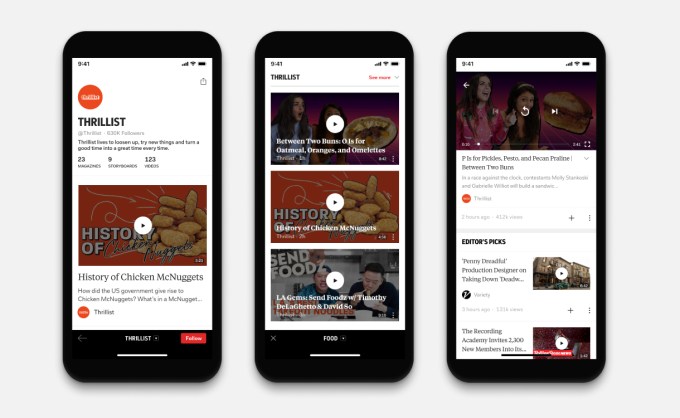
News app Flipboard is further expanding into video with Flipboard TV. The company’s curated video service first launched earlier this year as a Samsung exclusive, and is now making its way to all Flipboard users in the U.S. With today’s launch, the service will offer users access to video from hundreds of publishers, including global publishers, local news publishers and, now, select independent video producers, too.

Samsung Galaxy device owners will continue to have exclusive access to upgrade to the premium, ad-free version of Flipboard TV. For everyone else, the service will be ad-supported.

As of today’s expansion, Flipboard has also lined up a number of media partnerships who will provide their video feeds to Flipboard’s app. This list includes Complex Networks, Minute Media, A360 Media, Group Nine Media, The Recount, Bonnier Corp, Refinery29, Dow Jones, Hearst Magazines, Gannett, Vice Media Group, and Penske Media Corporation, with brands such as Rolling Stone and Variety. Video from Euronews, Tribune Publishing, and dozens of others will also be available through a new partnership with VideoElephant, the company says.

Image Credits: Flipboard

In addition, Flipboard is bringing independent publishers on board for the first time, like filmmaker Gene Nagata (aka Potato Jet) and video journalist Johnny Harris. These have been onboarded through Flipboard’s partnership with the influencer agency, Spacestation Integrations. Other independents include Gary Vaynerchuk, AudPop’s filmmakers, and Underknown, producer of video series such as “What If” and “How To Survive.”

Despite its expansion beyond traditional news publications, Flipboard says it’s making careful choices when it comes to its video lineup, in terms of quality.

“It’s not a free-for-all,” says Flipboard VP of Global Growth and Biz Dev, Claus Enevoldsen. “We have been very conscious about the whole ecosystem and making sure that what shows up for you in ‘For You’ is stuff that we know is not fake news. It’s trusted sources. That’s always been our MO, and we extend that to the video space, as well,” he explains.

Image Credits: Flipboard

The new video feeds will be available within a dedicated Video Tab in Flipboard’s Content Guide. The company says users will be able to more easily find videos to watch within the app due to improved discovery features and deeper integrations. In addition to its Content Guide, 20 top-level topics will now offer video-only feeds alongside articles, including travel, politics, local, lifestyle, sports, news, and more. The videos will also be more prominent in users’ “For You” feeds, which is a mix of editorial and algorithmic curation.

Users will be able to add video-only feeds to their own magazines, too, if they prefer.

These videos, for the first time, will play natively within Flipboard. This helps to power Flipboard’s recommendation engine that directs you to related videos, the company says. This change also means users will be able to use additional video controls, like those that let them skip to the next video, for example.

Image Credits: Flipboard

The new video effort additionally ties into Flipboard’s recent expansions into local news that began at the start of 2020. As of this June, Flipboard’s local news coverage reached 50 cities across the U.S. and Canada.  Today, that number is 61. Now, Flipboard users will be able to follow their favorite local news outlets’ video content, as well, directly in Flipboard.

This presents what’s often a much cleaner experience that visiting the news publishers’ own app or website. Flipboard, meanwhile, offers an undisclosed revenue-share with its news partners, derived from the advertising that runs in their videos.

These ads play both as pre-rolls and mid-rolls, Flipboard says. This is the first time it’s run pre-roll ads on its platform — something that the company believes will help to address demand from publishers for high-quality, brand-safe digital video experiences on mobile.

At launch, Flipboard is selling the ad inventory for the videos. But the company says its intent is to allow publishers to sell the inventory themselves, further down the road. (If the publisher already has an ad sales team that can sell into this, however, they can continue.)

To promote their video content, publishers can also opt to use Flipboard’s recently launched Storyboards feature which, instead of being algorithmic feeds are static collections of content they want to highlight.

“Today’s launch builds on the publisher ecosystem we’ve been fostering for almost a decade, our foundational vision for content discovery, as well as our recent work around Flipboard TV,” said Mike McCue, Flipboard’s co-founder and CEO, about the launch. “The new native video player opens up new opportunities for new user experiences, partnerships and monetization. I expect us to partner with more creators and independent producers in the near future.”

The new features are rolling out today within the Flipboard app in the U.S.


27 Aug 2020

COVID-19 is driving demand for low-code apps

Now that the great Y Combinator rush is behind us, we’re returning to a topic many of you really seem to care about: no-code and low-code apps and their development.

We’ve explored the theme a few times recently, once from a venture-capital perspective, and another time building from a chat with the CEO of Claris, an Apple subsidiary and an early proponent of low-code work.

Today we’re adding notes from a call with Appian CEO Matt Calkins that took place yesterday shortly after the company released its most recent earnings report.


The Exchange explores startups, markets and money. You can read it every morning on Extra Crunch, or get The Exchange newsletter every Saturday.


Appian is built on low-code development. And, having gone public back in 2017, it is the first low-code IPO we can think of. With its Q2 results reported on August 6, we wanted to dig a bit more into what Calkins is seeing in today’s market so we can better understand what is driving demand for low, and no-code development specifically, and demand for business apps more generally in 2020.

As you can imagine, COVID-19 and the accelerating digital transformation are going to come up in our notes. But, first, let’s take a look at Appian’s quarter quickly before digging into how its low-code-focused CEO sees the world.

Results, expectations

Appian had a pretty good Q2. The company reported $66.8 million in revenue for the three-month period, ahead of market expectations that it would report around $61 million, though collected analyst estimates varied. The low-code platform also beat on per-share profit, reporting a $0.12 per-share loss after adjustments. Analysts had expected a far worse $0.25 per-share deficit.

The period was better than expected, certainly, but it was not a quarter that showed sharp year-over-year growth. There’s a reason for that: Appian is currently shedding professional services revenue (lower-margin, human-powered stuff) for subscription incomes (higher-margin, software-powered stuff). So, as it exchanges one type of revenue for another with total subscription revenue rising a little over 12% in Q2 2020 compared to the year-ago quarter, and professional services revenue falling around 10%, the company’s growth will be slow but the resulting revenue mix improvement is material.

And most importantly, inside of its larger subscription result for the quarter ($41.4 million) were its cloud subscription revenues, worth $29.6 million for the quarter and up 30% compared to the year-ago period. Summing, the company’s least lucrative revenues are falling as its most lucrative accelerate at the fastest clip of any of its cohorts. That’s what you’d want to see if you are an Appian bull.

Shares in the technology company are up around 45% this year. And with that, we can get started.

27 Aug 2020

Salesforce confirms it’s laying off around 1000 people in spite of monster quarter

In what felt like strange timing, Salesforce has confirmed a report in yesterday’s Wall Street Journal that it was laying off around 1000 people or approximately 1.9% of the company’s 54,000 strong workforce. This news came in spite of the company reporting a monster quarter on Tuesday in which it passed $5 billion in quarterly revenue for the first time.

In fact, Wall Street was so thrilled with Salesforce’s results, the company’s stock closed up an astonishing 26% yesterday, adding great wealth to the company’s coffers. It seemed hard to reconcile such amazing financial success with this news.

Yet it was actually something that president and chief financial officer Mark Hawkins telegraphed in Tuesday’s earnings call with industry analysts, although he didn’t come right and use the L (layoff) word. Instead he couched that impending change as a reallocation of resources.

And he talked about strategically shifting investments over the next 12-24 months. “This means we’ll be redirecting some of our resources to fuel growth in areas that are no longer as aligned with the business priority will be now deemphasized,” Hawkins said in the call.

This is precisely how a Salesforce spokesperson put it when asked by TechCrunch to confirm the story. “We’re reallocating resources to position the company for continued growth. This includes continuing to hire and redirecting some employees to fuel our strategic areas, and eliminating some positions that no longer map to our business priorities. For affected employees, we are helping them find the next step in their careers, whether within our company or a new opportunity,” the spokesperson said.

It’s worth noting that earlier this year, Salesforce CEO Marc Benioff pledged there would be no significant layoffs for 90 days.

The 90 day period has long since passed and the company has decided the time is right to make some adjustments to the workforce.

It’s worth contrasting this with the pledge that ServiceNow CEO Bill McDermott made a few weeks after the Benioff tweet, promising not to lay off a single employee for the rest of this year, while also pledging to hire 1000 people worldwide the remainder of this year, while bringing in 360 summer interns.

27 Aug 2020

Calling Warsaw VCs: Be featured in The Great TechCrunch Survey of European VC

TechCrunch is embarking on a major new project to survey the venture capital investors of Europe.

Our <a href=”https://forms.gle/k4Ji2Ch7zdrn7o2p6”>survey of VCs in Warsaw will capture how the city is faring, and what changes are being wrought amongst investors by the coronavirus pandemic.

We’d like to know how the Warsaw startup scene is evolving, how the tech sector is being impacted by COVID-19 and, generally, how your thinking will evolve from here.

Our survey will only be about investors, and only the contributions of VC investors will be included.

The shortlist of questions will require only brief responses, but the more you want to add, the better.

You can fill out the survey here.

Obviously, investors who contribute will be featured in the final surveys, with links to their profiles.

What kinds of things do we want to know? Questions will include which trends are you most excited by? What startup do you wish someone would create? Where are the overlooked opportunities? What are you looking for in your next investment, in general? How is your local ecosystem going? And how has COVID-19 impacted your investment strategy?

Over the next few weeks, we will be “zeroing-in” on Europe’s major cities.

It’s part of a broader series of surveys we’re doing to help founders find the right investors. For example, here is the recent survey of London.

Not in Warsaw? All European VC investors can STILL fill out the survey, as we will be putting a call out to your city next anyway! The survey will cover almost every European country on the continent of Europe (not just EU members, btw), so just look for your country in the menu on the survey and please participate (if you’re a venture capital investor).

Thank you for participating. If you have questions you can email mike@techcrunch.com