Year: 2020

22 Aug 2020

Startups Weekly: Will future unicorns go public sooner?

The public markets are staying receptive to tech IPOs, and tech unicorns are trying to recover from pandemic damage, polish up their financials, and head back towards the starting gates. This week, it’s Airbnb and Palantir, finally. Both have been startup icons of the past decade, and literally helped define the term “unicorn.” Now, both are illustrating the challenges that can come from sticking to private funding for years when going public was feasible.

First up, the travel rental company filed confidentially on Wednesday for a public offering, which means we’ll probably get a look at the numbers after Q3 is accounted for, as Alex Wilhelm has been covering. It had eventually decided to go public this year, then the pandemic reshaped its business and forced a down-round and mass layoffs. Now, it says its business has been booming again, and at the expense of some incumbents. The cost-savings plus the fresh growth potential could prove an exciting combo to public markets.

Palantir, meanwhile, appears headed to an IPO soonish judging by the S-1 screenshots that Danny Crichton scooped yesterday. However, the oldest unicorn (17 years) is still losing hundreds of millions every year, it still has a concentrated group of customers for its data and consultancy products, and its commercial business is still relatively smaller than government. The more positive financial news it has to offer? Government revenue lines have been up this year, apparently related to more pandemic demand, and the commercial side had been growing since before then. It is also working to manage its stock price, Danny hears, by doing a direct listing that unusually comes with a lock-up period for employees.

There were many reasons for unicorns to stay private this past decade, including huge checks, exciting growth, often-friendly terms and a general lack of scrutiny. Almost nobody actually thought a pandemic would affect everything like this. And without the pandemic, maybe the easy hindsight would be that the slow pace to IPO was the right one? Instead, each company is having to make decisions that damage its precious pool of talented employees and carefully nurtured culture.

In this scary new decade, founders who aspire to succeed on the scale of Airbnb and Palantir may see public markets as a less risky way to reward shareholders and fund future growth?

Or maybe more startups will be less interested in big equity rounds in the first place? Danny talked to one founder for Extra Crunch who has gone this route successfully with SaaS securitization.

Finally, check out Alex’s overview of what other companies are on the IPO track now over on Extra Crunch. These include: Asana, Qualtrics, ThredUp, Ant Financial, Affirm and once you get past this calendar year, many many more. 

Facade of the Creamery

(Photo by Smith Collection/Gado/Getty Images)

Farewell to The Creamery

In another sign of the changing times, a prominent local coffee shop for startups in San Francisco has closed up. Yes, The Creamery is done, sooner or later to be bulldozed for a development that has been years in the works. My former TechCrunch colleague Ryan Lawler came back to write a guest requiem for us. Here’s the start, but I suggest reading to the end to fully experience throat-lumping nostalgia about a certain time you didn’t know you were going to miss:

I don’t remember the first time I went to The Creamery,  probably sometime in early 2012.

I don’t remember the last time, either, although undoubtedly it was sometime last year, on a day when I had an extra five minutes to spare before boarding the Caltrain for my morning commute.

And I barely remember any of the other hundreds of times I stopped in to grab a coffee, have lunch with a friend or meet a possible source during my years at TechCrunch, which conveniently had an office just over a block away.

The Creamery was not a place you went for the memories. It was located firmly at the apex of convenience and comfort — which is why, for a certain period of about five years from the early to mid-teens of the third millennium, it was the perfect place for the SF technorati to see and be seen.

It’s also why, after 12 years of operating from one global recession to another, it’s shutting its doors for good….

Image Credits: Dennis Lane / Getty Images

Five investors talk about the real no-code opportunities

In our latest Extra Crunch investor survey, Alex teamed up with Lucas Matney to find where no-code concepts are actually having a big impact (versus just sounding exciting, which they do already). Here’s Laela Sturdy with CapitalG:

I don’t think it’s over-hyped, but I believe it’s often misunderstood. No code/low code has been around for a long time. Many of us have been using Microsoft Excel as a low-code tool for decades, but the market has caught fire recently due to an increase in applicable use cases and a ton of innovation in the capabilities of these new low-code/no-code platforms, specifically around their ease of use, the level and type of abstractions they can perform and their extensibility/connectivity into other parts of a company’s tech stack. On the demand side, the need for digital transformation is at an all-time high and cannot be met with incumbent tech platforms, especially given the shortage of technical workers. Low-code/no-code tools have stepped in to fill this void by enabling knowledge workers — who are 10x more populous than technical workers — to configure software without having to code. This has the potential to save significant time and money and to enable end-to-end digital experiences inside of enterprises faster….

If you look at large businesses today, IT departments and business units are perpetually out of alignment because IT teams are resource constrained and unable to address core business needs quickly enough. There just isn’t enough IT talent out there to meet demand, and issues like security and maintenance take up most of the IT department’s time. If business users want to create new systems, they have to wait months or in most cases years to see their needs met. No-code changes the equation because it empowers business users to take change into their own hands and to accomplish goals themselves. The rapid state of digital transformation — which has only been expedited by the pandemic — requires more business logic to be encoded into automations and applications. No code is making this transition possible for many enterprises.

(Photo by Michael Kovac/Getty Images for Vanity Fair)

Chamath Palihapitiya’s latest act is a tech holding company empire

After being early to the modern SPAC trend, long-time investor and former Facebook executive Palihapitiya has an additional master plan in the works. It is sort of like the SPAC plan but with even fewer other investors to disagree with. Natasha Mascarenhas has the details:

Hustle is Social Capital’s third acquisition in the past three years. In 2018, Social Capital bought a healthcare business that has a repository of data around human physiology. Last year, the firm scooped up a mental health startup that’s centered around software-based treatments and tracks how users progress. Palihapitiya declined to disclose the names of either investment, citing competitive advantages in keeping them out of the press for now.

“I like businesses that build non-obvious data links,” he said, noting that it is unlike AI, machine learning and other futuristic technologies. Although his SPAC returns could fuel acquisitions, he says that his deals have been funded through personal capital.

Palihapitiya’s long-term strategy for Hustle is to create an empire around it. He plans to acquire auxiliary businesses that see $5 to $15 million in ARR, consolidate them, and “now all of a sudden, you can see us getting to hundreds of millions of ARR.”

The Hustle deal closed in about a week. He says that investing out of a permanent balance sheet of his own capital lets him underwrite decisions faster than a traditional venture capital firm, which lines up with the investor’s general anti-VC sentiment. He pointed to Credit Karma and Intuit’s merger that is yet to close. “We’re still waiting for that deal,” Palihapitiya said. “You know, I couldn’t write an $8.8 billion acquisition myself. But I could write a $5 billion one.”
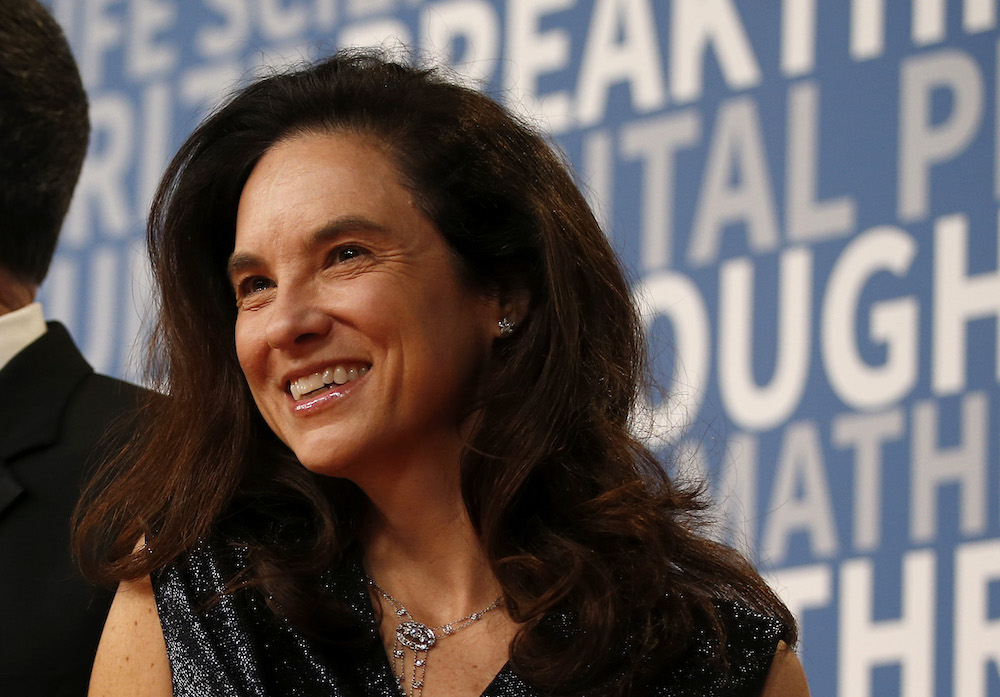
Caryn Marooney, right, vice president of technology communications at Facebook, poses for a picture on the red carpet for the 6th annual 2018 Breakthrough Prizes at Moffett Federal Airfield, Hangar One in Mountain View, Calif., on Sunday, Dec. 3, 2017. (N

(Nhat V. Meyer/Bay Area News Group)

Caryn Marooney explains how to get people caring about your startup

The problem is not new, of course, but Lucas got fresh insights from former Facebook PR leader Caryn Marooney about the right strategies to solve the problem, and put together an explainer for Extra Crunch. Here’s an excerpt:

Getting someone to care first depends on proving your relevance. When founders are forming their messaging to address this, they should ask themselves three questions about their strategy, she recommends:

  • Why should anyone care?
  • Is there a purchase order existing for this?
  • Who loses if you win?

These questions get to the root of what you’re providing, whether there’s a customer and who you’re up against. From there they can also help companies identify how to broaden their relevance in the face of new developments in the market.

“As a startup you start with no relevance,” she says. “So your relevance comes from: you’re a founder people know, you’ve come from a company people care about or you’re in a space that’s already relevant and people want to know about, or you’re about to kill a competitor that people really care about, or you have customers where you sort of get the relevance from the customers.”

Around TechCrunch

Cloudflare’s Michelle Zatlyn to discuss building a company with a bold idea at TechCrunch Disrupt

Submit your pitch deck to Disrupt 2020’s Pitch Deck Teardown

The founders of Blavity and The Shade Room are coming to Disrupt 2020

Sign up to interview with accelerators before Disrupt 2020

Students get 60% off passes to Disrupt 2020

Get a free annual Extra Crunch membership when you buy a Disrupt 2020 pass

Announcing the all new, virtual agenda for TC Sessions: Mobility

Investors Reilly Brennan, Amy Gu and Olaf Sakkers coming to TC Sessions: Mobility 2020

CrunchMatch supercharges virtual networking at TC Sessions: Mobility 2020

Join Twilio’s Jeff Lawson for a live Q&A August 25 at 2:30 pm EDT/11:30 am PDT

Across the week

TechCrunch

Private space industrialization is here

China is building a GitHub alternative called Gitee

There’s no frontrunner to be found among the TikTok alternatives

If Oracle buys TikTok I’ll go to Danny’s house and eat his annoying Stanford sweatshirt

Here are four areas the $311 billion CPPIB investment fund thinks will be impacted by COVID-19

Extra Crunch

Founders can raise funding before launching a product

Max Levchin is looking ahead to fintech’s next big opportunities

How tech can build more resilient supply chains

Dear Sophie: How can I transfer my H-1B to my startup?

PopSugar co-founder says pandemic will create ‘a huge windfall’ for digital mediate

#EquityPod

From Alex:

Hello and welcome back to Equity, TechCrunch’s venture capital-focused podcast (now on Twitter!), where we unpack the numbers behind the headlines.

What happens when the entire podcast crew is a bit tired from, you know, everything, and does its very best? This episode, apparently. A big thanks to Chris Gates for helping us trim the fat and make something good for you.

Before we get into the topics of the week, don’t forget that Equity is not back on YouTube  most weeks, so if you wanted to see us do the talking with some fun extra from the production team, you can do so here. More to come once I get my new external camera to work.

That done, here’s what Natasha and Danny and I got into this week:

Whew! We’re doing a lot over at TechCrunch.com, so, stay tuned and know that if we were a bit frazzled this week it’s because we’re working our backends off to bring you neat things. You will dig ’em.

OK, chat Monday, a show that we’re already planning. Stay cool!

Equity drops every Monday at 7:00 a.m. PT and Friday at 6:00 a.m. PT, so subscribe to us on Apple PodcastsOvercastSpotify and all the casts.

22 Aug 2020

Startups Weekly: Will future unicorns go public sooner?

The public markets are staying receptive to tech IPOs, and tech unicorns are trying to recover from pandemic damage, polish up their financials, and head back towards the starting gates. This week, it’s Airbnb and Palantir, finally. Both have been startup icons of the past decade, and literally helped define the term “unicorn.” Now, both are illustrating the challenges that can come from sticking to private funding for years when going public was feasible.

First up, the travel rental company filed confidentially on Wednesday for a public offering, which means we’ll probably get a look at the numbers after Q3 is accounted for, as Alex Wilhelm has been covering. It had eventually decided to go public this year, then the pandemic reshaped its business and forced a down-round and mass layoffs. Now, it says its business has been booming again, and at the expense of some incumbents. The cost-savings plus the fresh growth potential could prove an exciting combo to public markets.

Palantir, meanwhile, appears headed to an IPO soonish judging by the S-1 screenshots that Danny Crichton scooped yesterday. However, the oldest unicorn (17 years) is still losing hundreds of millions every year, it still has a concentrated group of customers for its data and consultancy products, and its commercial business is still relatively smaller than government. The more positive financial news it has to offer? Government revenue lines have been up this year, apparently related to more pandemic demand, and the commercial side had been growing since before then. It is also working to manage its stock price, Danny hears, by doing a direct listing that unusually comes with a lock-up period for employees.

There were many reasons for unicorns to stay private this past decade, including huge checks, exciting growth, often-friendly terms and a general lack of scrutiny. Almost nobody actually thought a pandemic would affect everything like this. And without the pandemic, maybe the easy hindsight would be that the slow pace to IPO was the right one? Instead, each company is having to make decisions that damage its precious pool of talented employees and carefully nurtured culture.

In this scary new decade, founders who aspire to succeed on the scale of Airbnb and Palantir may see public markets as a less risky way to reward shareholders and fund future growth?

Or maybe more startups will be less interested in big equity rounds in the first place? Danny talked to one founder for Extra Crunch who has gone this route successfully with SaaS securitization.

Finally, check out Alex’s overview of what other companies are on the IPO track now over on Extra Crunch. These include: Asana, Qualtrics, ThredUp, Ant Financial, Affirm and once you get past this calendar year, many many more. 

Facade of the Creamery

(Photo by Smith Collection/Gado/Getty Images)

Farewell to The Creamery

In another sign of the changing times, a prominent local coffee shop for startups in San Francisco has closed up. Yes, The Creamery is done, sooner or later to be bulldozed for a development that has been years in the works. My former TechCrunch colleague Ryan Lawler came back to write a guest requiem for us. Here’s the start, but I suggest reading to the end to fully experience throat-lumping nostalgia about a certain time you didn’t know you were going to miss:

I don’t remember the first time I went to The Creamery,  probably sometime in early 2012.

I don’t remember the last time, either, although undoubtedly it was sometime last year, on a day when I had an extra five minutes to spare before boarding the Caltrain for my morning commute.

And I barely remember any of the other hundreds of times I stopped in to grab a coffee, have lunch with a friend or meet a possible source during my years at TechCrunch, which conveniently had an office just over a block away.

The Creamery was not a place you went for the memories. It was located firmly at the apex of convenience and comfort — which is why, for a certain period of about five years from the early to mid-teens of the third millennium, it was the perfect place for the SF technorati to see and be seen.

It’s also why, after 12 years of operating from one global recession to another, it’s shutting its doors for good….

Image Credits: Dennis Lane / Getty Images

Five investors talk about the real no-code opportunities

In our latest Extra Crunch investor survey, Alex teamed up with Lucas Matney to find where no-code concepts are actually having a big impact (versus just sounding exciting, which they do already). Here’s Laela Sturdy with CapitalG:

I don’t think it’s over-hyped, but I believe it’s often misunderstood. No code/low code has been around for a long time. Many of us have been using Microsoft Excel as a low-code tool for decades, but the market has caught fire recently due to an increase in applicable use cases and a ton of innovation in the capabilities of these new low-code/no-code platforms, specifically around their ease of use, the level and type of abstractions they can perform and their extensibility/connectivity into other parts of a company’s tech stack. On the demand side, the need for digital transformation is at an all-time high and cannot be met with incumbent tech platforms, especially given the shortage of technical workers. Low-code/no-code tools have stepped in to fill this void by enabling knowledge workers — who are 10x more populous than technical workers — to configure software without having to code. This has the potential to save significant time and money and to enable end-to-end digital experiences inside of enterprises faster….

If you look at large businesses today, IT departments and business units are perpetually out of alignment because IT teams are resource constrained and unable to address core business needs quickly enough. There just isn’t enough IT talent out there to meet demand, and issues like security and maintenance take up most of the IT department’s time. If business users want to create new systems, they have to wait months or in most cases years to see their needs met. No-code changes the equation because it empowers business users to take change into their own hands and to accomplish goals themselves. The rapid state of digital transformation — which has only been expedited by the pandemic — requires more business logic to be encoded into automations and applications. No code is making this transition possible for many enterprises.

(Photo by Michael Kovac/Getty Images for Vanity Fair)

Chamath Palihapitiya’s latest act is a tech holding company empire

After being early to the modern SPAC trend, long-time investor and former Facebook executive Palihapitiya has an additional master plan in the works. It is sort of like the SPAC plan but with even fewer other investors to disagree with. Natasha Mascarenhas has the details:

Hustle is Social Capital’s third acquisition in the past three years. In 2018, Social Capital bought a healthcare business that has a repository of data around human physiology. Last year, the firm scooped up a mental health startup that’s centered around software-based treatments and tracks how users progress. Palihapitiya declined to disclose the names of either investment, citing competitive advantages in keeping them out of the press for now.

“I like businesses that build non-obvious data links,” he said, noting that it is unlike AI, machine learning and other futuristic technologies. Although his SPAC returns could fuel acquisitions, he says that his deals have been funded through personal capital.

Palihapitiya’s long-term strategy for Hustle is to create an empire around it. He plans to acquire auxiliary businesses that see $5 to $15 million in ARR, consolidate them, and “now all of a sudden, you can see us getting to hundreds of millions of ARR.”

The Hustle deal closed in about a week. He says that investing out of a permanent balance sheet of his own capital lets him underwrite decisions faster than a traditional venture capital firm, which lines up with the investor’s general anti-VC sentiment. He pointed to Credit Karma and Intuit’s merger that is yet to close. “We’re still waiting for that deal,” Palihapitiya said. “You know, I couldn’t write an $8.8 billion acquisition myself. But I could write a $5 billion one.”

Caryn Marooney, right, vice president of technology communications at Facebook, poses for a picture on the red carpet for the 6th annual 2018 Breakthrough Prizes at Moffett Federal Airfield, Hangar One in Mountain View, Calif., on Sunday, Dec. 3, 2017. (N

(Nhat V. Meyer/Bay Area News Group)

Caryn Marooney explains how to get people caring about your startup

The problem is not new, of course, but Lucas got fresh insights from former Facebook PR leader Caryn Marooney about the right strategies to solve the problem, and put together an explainer for Extra Crunch. Here’s an excerpt:

Getting someone to care first depends on proving your relevance. When founders are forming their messaging to address this, they should ask themselves three questions about their strategy, she recommends:

  • Why should anyone care?
  • Is there a purchase order existing for this?
  • Who loses if you win?

These questions get to the root of what you’re providing, whether there’s a customer and who you’re up against. From there they can also help companies identify how to broaden their relevance in the face of new developments in the market.

“As a startup you start with no relevance,” she says. “So your relevance comes from: you’re a founder people know, you’ve come from a company people care about or you’re in a space that’s already relevant and people want to know about, or you’re about to kill a competitor that people really care about, or you have customers where you sort of get the relevance from the customers.”

Around TechCrunch

Cloudflare’s Michelle Zatlyn to discuss building a company with a bold idea at TechCrunch Disrupt

Submit your pitch deck to Disrupt 2020’s Pitch Deck Teardown

The founders of Blavity and The Shade Room are coming to Disrupt 2020

Sign up to interview with accelerators before Disrupt 2020

Students get 60% off passes to Disrupt 2020

Get a free annual Extra Crunch membership when you buy a Disrupt 2020 pass

Announcing the all new, virtual agenda for TC Sessions: Mobility

Investors Reilly Brennan, Amy Gu and Olaf Sakkers coming to TC Sessions: Mobility 2020

CrunchMatch supercharges virtual networking at TC Sessions: Mobility 2020

Join Twilio’s Jeff Lawson for a live Q&A August 25 at 2:30 pm EDT/11:30 am PDT

Across the week

TechCrunch

Private space industrialization is here

China is building a GitHub alternative called Gitee

There’s no frontrunner to be found among the TikTok alternatives

If Oracle buys TikTok I’ll go to Danny’s house and eat his annoying Stanford sweatshirt

Here are four areas the $311 billion CPPIB investment fund thinks will be impacted by COVID-19

Extra Crunch

Founders can raise funding before launching a product

Max Levchin is looking ahead to fintech’s next big opportunities

How tech can build more resilient supply chains

Dear Sophie: How can I transfer my H-1B to my startup?

PopSugar co-founder says pandemic will create ‘a huge windfall’ for digital mediate

#EquityPod

From Alex:

Hello and welcome back to Equity, TechCrunch’s venture capital-focused podcast (now on Twitter!), where we unpack the numbers behind the headlines.

What happens when the entire podcast crew is a bit tired from, you know, everything, and does its very best? This episode, apparently. A big thanks to Chris Gates for helping us trim the fat and make something good for you.

Before we get into the topics of the week, don’t forget that Equity is not back on YouTube  most weeks, so if you wanted to see us do the talking with some fun extra from the production team, you can do so here. More to come once I get my new external camera to work.

That done, here’s what Natasha and Danny and I got into this week:

Whew! We’re doing a lot over at TechCrunch.com, so, stay tuned and know that if we were a bit frazzled this week it’s because we’re working our backends off to bring you neat things. You will dig ’em.

OK, chat Monday, a show that we’re already planning. Stay cool!

Equity drops every Monday at 7:00 a.m. PT and Friday at 6:00 a.m. PT, so subscribe to us on Apple PodcastsOvercastSpotify and all the casts.

22 Aug 2020

Launched with $17 million by two former Norwest investors, Tau Ventures is ready for its closeup

Amit Garg and Sanjay Rao have spent the bulk of their professional lives developing technology, founding startups and investing in startups at places like Google and Microsoft, HealthIQ, and Norwest Venture Partners.

Over their decade-long friendship the two men discussed working together on a venture fund, but the time was never right — until now. Since last August, the two men have been raising capital for their inaugural fund, Tau Ventures.

The name, like the two partners, is a bit wonky. Tau is two times pi and Garg and Rao chose it as the name for the partnership because it symbolizes their analytical approach to very early stage investing.

It’s a strange thing to launch a venture fund in a pandemic, but for Garg and Rao, the opportunity to provide very early stage investment capital into startups working on machine learning applications in healthcare, automation and business was too good to pass up.

Garg had spent twenty years in Silicon Valley working at Google and launching companies including HealthIQ. Over the years he’d amassed an investment portfolio that included the autonomous vehicle company, Nutonomy, BioBeatsGlookoCohero HealthTerapedeFigure1HealthifyMe,  Healthy.io and RapidDeploy.

Meanwhile, Rao, a Palo Alto, Calif. native, MIT alum, Microsoft product manager and founder of the Accelerate Labs accelerator in Palo Alto, Calif., said that it was important to give back to entrepreneurs after decades in the Valley honing skills as an operator.

Image credit: Tau Ventures

Both Rao and Garg acknowledge that there are a number of funds that have emerged focused on machine learning including Basis Set Ventures, SignalFire, Two Sigma Ventures, but these investors lack the direct company building experience that the two new investors have.

Garg, for instance, has actually built a hospital in India and has a deep background in healthcare. As an investor, he’s already seen an exit through his investment in Nutonomy, and both men have a deep understanding of the enterprise market — especially around security.

So far, the company has made three investments automation, another three in enterprise software, and five in healthcare.

The firm currently has $17 million in capital under management raised from institutional investors like the law firm Wilson Sonsini and a number of undisclosed family offices and individuals, according to Garg.

Much of that capital was committed after the pandemic hit, Garg said. “We started August 29th… and did the final close May 29th.”

The idea was to close the fund and start putting capital to work — especially in an environment where other investors were burdened with sorting out their existing portfolios, and not able to put capital to work as quickly.

“Our last investment was done entirely over Zoom and Google Meet,” said Rao.

That virtual environment extends to the firm’s shareholder meetings and conferences, some of which have attracted over 1,000 attendees, according to the partners.

22 Aug 2020

Hey Apple, how about a MacBook SE?

Apple’s a hard company to like these days. Their glory days behind them, they have relentlessly pursued a misguided concept of optimization that has alienated their user base and compromised their products. A MacBook SE would go a long way toward smoothing the wake they’ve left behind them.

I was excited that this would be a possibility years ago when the iPhone SE came out. “Here,” I thought, “is a company that has come to recognize the value of its legacy products.”

Although the (old) SE is indeed the best phone Apple has ever made, it’s clear now that it was little more than a way to squeeze a bit more money out of some leftover components. (The new SE seems to serve the new purpose, but I’ve embraced it nevertheless as the old model is increasingly left behind in design decisions.)

That one of its most popular products was an accident should come as no surprise, since Apple doesn’t seem to know or care what its customers want. The last few years have seen it either copying its competitors or compromising usability to skim an extra millimeter or two off devices’ thickness.

Image Credits: TechCrunch

The philosophy of telling people what they should want is a longstanding one at Apple, but one that only works if you have someone who knows those people better than they know themselves. Apple seems to no longer have anyone like that, and so they have continued, like a car with no driver and no destination, to mindlessly chase the horizon.

Of course they’re not the only company doing so. Get big enough and cruise control is the safest option. You can go a long way without touching the wheel. But those of us along for the ride may eventually pipe up.

So here’s me piping up: Apple, I’d really love a MacBook SE. And I think a couple million others would, too.

The iPhone SE appealed to the surprisingly (to Apple) large group of people who disliked the direction iPhone design was headed. They disliked the new larger size, the shift away from TouchID and towards a creepy new authentication technique, the notch, the fragility, the lack of a headphone jack that made their device backwards-compatible out of the box with decades of hardware and software.

A MacBook SE would, in a similar way, appeal to the people who dislike the direction notebook design has progressed. They dislike the uncomfortable, difficult to service keyboard, the removal of the beloved and practical MagSafe, the decision to commit entirely to USB-C ports, the tacky and underutilized Touch Bar.

Image Credits: TechCrunch

These are people who know what they want and have no option to purchase it from a company that used to provide it. There’s a good trade in 2015-era MacBook Pros (pictured above) and Airs because they were the best notebooks Apple ever made.

To be clear, here’s what I imagine an SE would be: a 13-inch notebook with a MagSafe power connection, USB-C ports and a headphone jack on one side, plus one old-school USB-A, HDMI out, and an SD card reader on the other. Oh, and though I suppose it goes without saying, let’s just be clear: The old keyboard, please.

Obviously it’s a bit presumptuous of me to tell one of the world’s largest and most successful companies that they’re doing it wrong and I’ve got the answer. But I don’t mean to say they should abandon all forward momentum and experimentation. I just want them to throw a bone to those of us who don’t want to be their guinea pigs.

And yes, I hear you all out there — get a Pinebook! A ThinkPad! And so on. Listen, I’m not some kind of Mac-only elitist, especially since years ago their products stopped being worth the premium one always paid for them — and that premium has only increased. I build my own Windows PCs and like it. I just happen to prefer the synergy of Apple’s hardware and software in the notebook form factor. And it’s not just the aesthetic, though Windows is certainly ugly.

That’s why it’s so disappointing to me that Apple seems to have forgotten the reasons its laptops became legendary. Because those same reasons were impediments to Apple’s misguided idea of what it might call elegance. Thinness and “simplicity” at all costs — even when the thinness is imperceptible and the simplicity is strictly on the side of the computer itself, not in how the user interacts with it.

Image Credits: TechCrunch

Every owner of an “elegant” new Mac notebook I’ve met — and that’s most of my colleagues at TechCrunch — has to carry around a menagerie of dongles, or borrow them, in order to work effectively across generations and industries. Perhaps a USB-A port looks ugly next to a USB-C one, or the MagSafe connector disrupts the symmetry of the device, but it can’t be worse than the tentacular disaster I see whenever anyone has to do anything on a new Mac laptop but type.

It’s as if Apple made pocket knives, and transitioned over the years from making a Swiss Army knife to a folding knife to a ceramic fixed-blade. Yes, the latter is simpler, more elegant in a certain way. But it sure isn’t any help when you need to open a can or bottle of wine.

Funnily enough, I made the opposite complaint 7 years ago when I felt mobile phones were becoming overstuffed with features. Keep it simple, stupid!

But in a way it was the same problem, just a mirror image. In that case I felt that increasingly bloated Android phones had gone from doing a few things well to doing many things poorly — things no one asked them to do. The real problem isn’t simply too much or too little, but not having the option to choose how much or how little for oneself.

I’m disappointed with Apple because the approach that made their laptops attractive to me in the first place has gone by the wayside. Perhaps that’s just a difference in philosophy, but I feel confident I’m not some kind of extreme outlier. As Apple found when it launched the iPhone SE that there were millions of people who wanted what had come before, I think they will likewise find it so with a MacBook SE. Sure, it’ll eat into the sales of the newer, more “elegant” devices, but it’ll open and maintain a market of people who have held off buying a new device for years because they, like me, have been waiting for Apple to do right by them again.

So please, Apple, grant my wish. Oh, and if you want to guarantee a few extra sales, let me offer one last tip: rainbow logo.

22 Aug 2020

Bletchley Park, birth-place of the computer, faces uncertain future after pandemic hits income

Bletchley Park is an English country house that became the principal centre of Allied code-breaking during the Second World War. It built the world’s first programmable digital electronic computer, cracking the Enigma Machine and thus helping turn the tide of the war against Nazi Germany. But now the institution that preserves that history is in trouble.

The Bletchley Park Trust which runs the site today, which also houses the UK’s National Museum of Computing, has been hit by the financial impact of the coronavirus crisis. It’s now lost over 95% of its income leaving a large gap in its annual budget.

Without any action or external aid, the organization will lose £2m this year as a result of the pandemic and be forced to make a possible 35 redundancies (approximately a third of its workforce) in order to survive.

In a statement Bletchley Park CEO Iain Standen said: “It is with deep regret that I am informing you today that the Trust needs to cut jobs. We have built a very successful heritage attraction and museum at Bletchley Park and its principal strength is its people. However, the economic impact of the current crisis is having a profound effect on the Trust’s ability to survive. We have exhausted all other avenues, and we need to act now to ensure that the Trust survives and is sustainable in the future.”

Bletchley Park closed to the public on 19 March 2020, but reopened 4 July 2020 but with vastly fewer paying visitors.

22 Aug 2020

Hear from experienced edtech investors on the market’s overnight boom

Edtech’s reputation has been revitalized due to the coronavirus pandemic, which forced millions of students to adopt remote education overnight. But behind the scramble is a crop of investors who have long invested in the space — before it became cool.

To better understand what’s ahead, what’s hot, and what’s not, I’m talking to a trio of top investors in edtech: Ian Chiu of Owl Ventures, Mercedes Bent from Lightspeed, and Jennifer Carolan from Reach Capital. Between the three of them, they have stakes in category-defining upstarts like Byju, Masterclass, Quizlet, Newsela, Labster, Winnie, and Outschool.

While we’ll most definitely get into the billions at stake between the three, I’m most excited about how these three individuals have welcome and contrasting synergies at play. As we all play catch up, their intentional focus on the sector before it was hot will bring a fantastic level of depth that’s impossible to manufacture.

Mercedes Bent, for example, has worked in almost every startup role that exits out here: operations, customer service, talent and recruiting, product management, design, sales, marketing, strategy, and general management, according to Lightspeed. She spent the last eight years working in or around the career mobility space, including nearly five years at General Assembly. Bent tells me her love for education is the personal role it played in her life, from her grandparents to parents teaching the importance of invention and learning starting at an early age.

“Given the coronavirus’ effect on education, I’m spending more time here than normal. Prior to March, I spent about a third of my time in edtech, and now I am spending almost all my time here,” she tells TechCrunch.

Ian Chiu is the child of immigrant parents who came to the United States and pursued education degrees, a move he says has made the sector a focus early on for him.

His record shows the early commitment. Chiu was the lead author on a book about scholarships and rising college costs, published nearly two decades ago. Before joining Owl, Chiu worked at Bain & Company, Silver Lake Partners, and Warburg and Pincus.

“We find ourselves in a watershed moment for the $6 trillion education market as the rising digital penetration in the sector that had already been taking place has surged in these unprecedented times,” he said.

Finally, Jennifer Carolan will bring an on the ground perspective to the Extra Crunch stage. Carolan worked in Chicago’s public school for 7 years before going to Stanford and eventually breaking into venture.

“There is no doubt that schools will look different post-virus. This pandemic has made parents/guardians acutely aware of just how challenging and technical the role of the teacher is. It has also highlighted the custodial function of our schools — 92% of our nation’s 50 million school children attend our public schools,” she said.

Carolan’s notes shed light on a common balance within edtech: how to get venture-scale returns with companies that are creating solutions for all families, not just rich and privileged ones.

For the first time, TechCrunch’s big yearly event, Disrupt, is going fully virtual in 2020, allowing more people to attend and interact with speakers, investors and founders. And Disrupt will stretch over five days — September 14-18 — in order to make it easier for everyone to take in all the amazing programming. Prices increase soon, so get your pass now and then submit your pitch deck for invaluable feedback from our panel of VCs.

22 Aug 2020

This Week in Apps: Apple’s antitrust war, TikTok ban, alt app ecosystems

Welcome back to This Week in Apps, the TechCrunch series* that recaps the latest OS news, the applications they support and the money that flows through it all.

The app industry is as hot as ever, with a record 204 billion downloads and $120 billion in consumer spending in 2019. People are now spending three hours and 40 minutes per day using apps, rivaling TV. Apps aren’t just a way to pass idle hours — they’re a big business. In 2019, mobile-first companies had a combined $544 billion valuation, 6.5x higher than those without a mobile focus.

In this series, we help you keep up with the latest news from the world of apps, delivered on a weekly basis.

* This Week in Apps was previously available only to Extra Crunch subscribers. We’re now making these reports available to all TechCrunch readers.

We missed some Epic news while This Week in Apps was on vacation, but this week the backlash against the App Store continues.

Top Stories

Apple at war with developers 

Fortnite maker Epic may be one of the few companies with pockets deep enough to fund a battle with Apple over its App Store policies. And Google, while it’s at it. But it’s not the only company that would benefit from a change to App Store policy.

Critics call Epic a hypocrite because it’s not fighting console makers who take the same 30% cut of revenues, just app stores. They say that the move is anti-consumer, because it hurts the end user when Epic’s top game is removed. (And it may potentially impact other games made with Epic’s Unreal Engine, as well, when Apple bans Epic’s developer accounts.)

Image Credits: Epic

But, clearly, Epic is looking at these App Store issues from a long-term perspective. Gaming is shifting to mobile and that makes it a market to fight for: 2.7 billion gamers will spend $159.3 billion on games in 2020, and mobile will account for $77.2 billion of that, up 13.3% year-over-year. Mobile gaming is growing faster than PC and consoles, as well. This is also why Apple is swatting down alternative gaming platforms like Facebook Gaming, Microsoft’s xCloud and Google Stadia from running their businesses on its App Store.

At this point, the argument about whether Apple is entitled to its 30% cut or not is becoming secondary to the concern that Apple is now dictating what type of businesses are being allowed to operate on Apple mobile devices, period. The company may eventually be forced to allow developers a way to install apps directly on iOS/iPad OS, with the App Store as an option, not a must. You know, like on Mac.

At the antitrust drama continues, this week Epic announced a #FreeFortnite tournament will be held on August 23, where it will dole out prizes like #FreeFortnite hats and non-Apple hardware, like gaming laptops, Android phones and tablets, and other gaming consoles. News publishers also banded together to complain that they deserve the same sort of sweetheart deal that Apple gave Amazon (a 15% commission from day 1, Congress’ antitrust investigation revealed.)

One has to wonder how Apple would have handled such a problem in years past. Maybe it would have just lowered its commission a bit and moved on — knowing that eventually the growth in mobile gaming would help to make up for the near-term losses. Or that an all-in-one subscription could drive services revenue in other ways.

More Opinions: How Apple’s and Google’s defenses to Fortnite maker Epic Games’ antitrust lawsuits over their app store policies will likely differ (FOSS Patents); Apple might win the battle with Epic Games but it’s losing the war (Pando); App stores, trust and anti-trust (Benedict Evans).

TikTok ban could have big repercussions for Apple 

The Trump administration’s decision to ban TikTok and WeChat due to national security concerns could have further impacts beyond just the loss of the apps themselves. According to The Information, Chinese regulators are closing loopholes that allows the App Store and other services to operate without government licenses and local partners in China. Already, Apple removed thousands of unlicensed mobile games from the App Store in China. As pressure tenses between the U.S. and China, Apple could be required to partner with a local business to run the App Store as a joint venture — a Chinese law it had managed to skirt. This would give China editorial control over the China App Store, and they would likely find a large number of apps were non-compliant. Apple also operates other services in China that could be threatened by a tit-for-tat battle with the U.S. Apple Music, for example, is the only music service owned by a foreign company that operates in China without a Chinese partner.

There’s an alt App Store outside the App Store, powered by TestFlight 

A fascinating report from Protocol dug into the growing ecosystem of non-App Store apps. A Square product designer couldn’t get his minimally functional “lil apps” published on the App Store, so they’re now distributed through TestFlight instead. TestFlight is meant to serve as an app beta testing platform, but it’s turning into an alternative app store platform of sorts. This lets users try out pre-release apps from developers big and small. Some will remain in TestFlight indefinitely, with no need to serve a user base of more than the TestFlight limit of 10,000 users. But not all TestFlight apps are meant to forever live outside the App Store. The buzzy voice-based networking app Clubhouse, for example, has been leveraging the power of its invite-only status for building clout and a core user base before a public release.

There are even online communities popping up to help connect users with unreleased apps. One, called Departures, has several big-name apps listed as well. People also find links through social media to TestFlight builds.

This alt app universe isn’t only about testing. It’s about building things that don’t — for whatever reason — fit the App Store paradigm. Maybe it’s an app that serves a niche user need or one that will only work for a large audience once the app’s core community gets built first. Or maybe it’s more experimental in nature. Maybe it’s evolving as users offer feedback. Maybe the app was built for fun, not for longevity. The App Store limits these different types of ideas by declaring every app has to be ready for the millions of users its ecosystem could potentially deliver.

The alt app community’s existence represents another argument for allowing developers to distribute apps outside the App Store and through their own websites. TestFlight, after all, has limits that a more open ecosystem would not.

Other News

  • Massive Adobe gaffe wiped out Lightroom app users’ photos and presets that weren’t synced to the cloud. There’s no way to get them back. What ever happened to no single point of failure? Redundant backups? Maybe they should have used iCloud sync instead?
  • Did you hear the one about the Michigan college that forced students to use a contact-tracing app that tracks the students’ real-time locations around the clock? When people fear and reject contact-tracing technology designed with privacy in mind, it’s because of incidents like these. Nice work, Albion College.
  • David Dobrik wants to turn his gimmicky disposable camera app into a social network. I’d joke, but maybe the world needs a new Instagram now that Instagram has become Facebook’s junk drawer instead of the photo-focused social network it once was. So sure, why not go try to build whatever Disposable 2.0 is.
  • The Hidden Album toggle switch you’ve always needed has arrived in iOS 14, public beta 5.
  • Pure Sweat Basketball is the latest developer to leverage tech giants’ antitrust investigations for its own legal battle. The company filed a suit against Google over its 30% app store fees on Google Play and wants others to join.
  • Android 11 removes the option to choose your preferred third-party camera app in the camera picker. Google says it’s to prevent geotag hijacking and protect user privacy. Fans says this is a good move that doesn’t impact most of the ways users leverage third-party camera apps. Critics say the reason many buy Android phones is for broader choice — and limiting apps to only opening the default camera impacts their experience.
  • Apple and Google’s coronavirus contact-tracing tech is coming to Pennsylvania. But will anyone use it?
  • Samsung is bringing its promise of at least 3 Android updates to low-end phones too.

Funding and M&A

  • Take-Two Interactive acquires Two Dots game developer, Playdots, for $192 million ($90 million is cash). Playdots spun out of betaworks in 2014. Its games include Dots, Two Dots and Dots & Co.
  • Restaurant rewards booking app Seated raised $30 million and acquired VenueBook to add events.
  • Conversational commerce platform Yalochat raised $15 million Series B led by B Capital Group, co-founded by Facebook’s Eduardo Saverin. Existing investor Sierra Ventures participated. The tech allows businesses to manage sales and customer service over messaging apps, like WhatsApp, Messenger and iMessage.
  • Apple acquired Israel’s Camerai, formerly Tipit, an AR and camera tech specialist. The deal took place quietly sometime between 2018 and 2019 but has only just been discovered.
  • Robinhood raised $200 million more at a $11.2 billion valuation for its mobile investing app. The company has raised capital multiple times this year, including an initial $280 million round at an $8.3 billion valuation, and a later $320 million addition that brought its valuation to $8.6 billion.
  • U.K.-based Hammock raised £1 million in seed funding for its fintech app for landlords and property managers.

Downloads

Google Kormo Jobs (India)

Image Credits: Kormo Jobs/Google

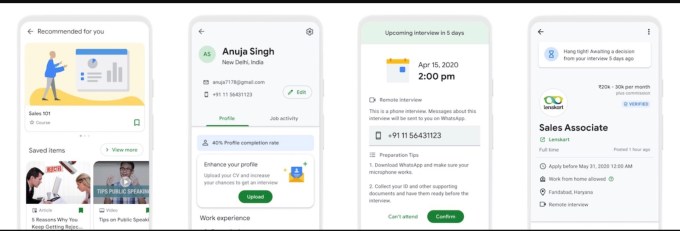
Google’s latest app helps people in India find entry-level jobs. The app first launched Kormo Jobs in Bangladesh in 2018 and expanded it to Indonesia last year. The app highlights the different approach Google is taking in emerging markets, where the company sees an opportunity to build services outside of just an ad business.

Reface

Image Credits: Reface

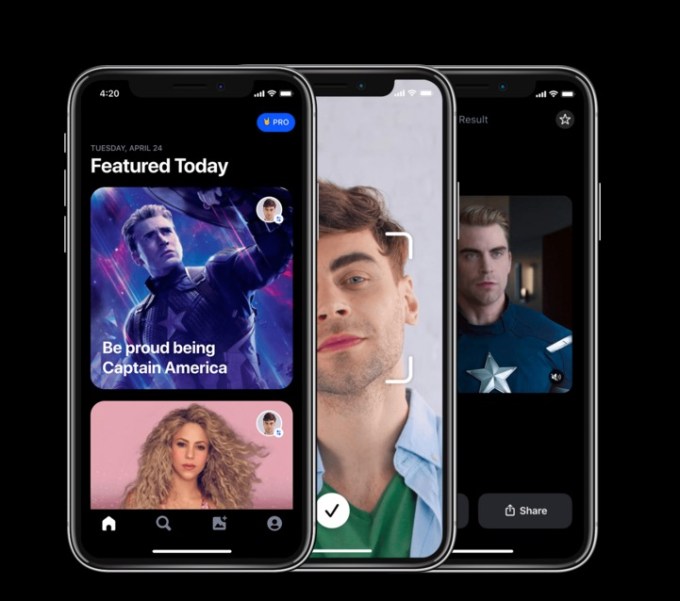
The AI-powered deep fake app Reface, previously known as Doublicat, makes face-swapping tech easily accessible. Whether that’s a good thing or not remains to be seen. In the meantime, the app is worth a look from a pure tech perspective as to how far we’ve come. You can read a TC profile about Reface here.

22 Aug 2020

Five proven ways to attract and hire more diverse talent

A few years ago, I came to the realization that my company, an HR consulting firm, was not as diverse as I wanted it to be. I value diversity because I know it makes teams better — more creative, more productive and more nimble. It helps my firm represent our community and serve our clients.

Though I tried to be inclusive in the language and the images I used on my website, in social media and when posting job openings, clearly something wasn’t working. I’m fortunate to know many talented diversity, equity and inclusion (DEI) experts. I asked them what I needed to do differently to attract a broader and more diverse pool of candidates. Here’s what they told me.

Define what diversity means to you

This may seem obvious, but it’s actually something many companies don’t do. When we talk about diversity, people tend to think only of race and gender. Our definition of diversity can be narrow, and we fail not only to include physical ability, gender identity and a host of other underestimated groups, but to recognize that even within a company, who is well represented versus underrepresented can vary by team or department.

I noticed a lack of diversity among my team of coaches; it was all women, but there were few women of color. The gender imbalance is not a surprise; according to the International Coaching Federation (ICF), approximately two-thirds of coaches are women. It would have been all too easy to throw up my hands and say “Well, there just aren’t enough qualified male coaches.” But blaming the pipeline is not a valid excuse and doesn’t fix the problem.

If I told people, “I’m trying to increase diversity on my team,” they would not have known what I meant; they would have been left to assume. Instead, I reached out to a small group of coaches who I know and trust, and told them “I’m looking for more coaches. Specifically, I would like to add women of color and I’d also like to have more men on the team.”

In the U.S., where we’ve been taught for so long not to talk about race or gender while hiring, this felt awkward. I had to push past that, and I’m thankful I did. The result was that I was not only able to add a number of experienced coaches to my team, I also built a whole new network of talented, diverse coaches from whom I continue to learn.

Write more inclusive job descriptions

When you want to appeal to the most diverse candidates, language matters. It is (hopefully) obvious that terms like rock star, stud and ninja, which have been used all too frequently in job descriptions, are exclusive and off-putting to many candidates. But other words and phrases to use or avoid aren’t always common sense. The most appealing language can vary by job level, title and even geography.

Using a tool like Textio will help you create a job description that welcomes the most candidates to apply. Textio uses machine learning and algorithms from millions of job descriptions to help you spot and remove language that can unintentionally narrow your pool. Pop in your job description and you’ll get recommendations about the optimal length of your JD, word choices that skew masculine or feminine, sentence length and even whether your job suggests a fixed or growth mindset.

Personalize your equal opportunity hiring statement

We’ve all seen the old equal employment opportunity (EEO) statement at the end of a job posting, which reads: “We’re an equal opportunity employer. All applicants will be considered for employment without attention to race, color, religion, sex, sexual orientation, gender identity, national origin, veteran or disability status.” It sounds like it came right off the government website, which it probably did. And that’s exactly how it comes across to candidates — like a canned message that you’ve added just to make sure you’re in compliance.

Did you know that you can customize your EEO statement? People do read it, and sticking with the legal jargon can be off-putting. A generic statement doesn’t say anything positive about your brand, and it doesn’t demonstrate a true commitment to diversity. If you haven’t already, now is the perfect time to update your statement, making it more reflective of your culture and values. For example:

“SurveyMonkey is an equal opportunity employer. We celebrate diversity and are committed to creating an inclusive environment for all employees.”

Is it worth the effort? According to FairyGodboss, these personalized EEO statements “…communicate an employer’s dedication to unbiased recruiting, hiring and employment practices, which may encourage traditionally marginalized groups to seek employment within the organization.”

Conduct blind resume reviews

Most people are familiar with unconscious bias, and how it can negatively impact every step of the hiring process. Even as early as the resume review, bias causes recruiters and hiring managers to favor resumes of candidates who are in the majority. Bias can result from information ranging from a candidate’s name to which college they attended or which sports they played.

For instance, those with white-sounding names receive preference. The National Bureau of Economic Research found that “Job applicants with white names needed to send about 10 resumes to get one callback; those with African-American names needed to send around 15 resumes to get one callback.” I have a friend from India who received similar treatment. Even though she had worked with well-known companies, including Google and Deloitte, she had difficulty landing a job when she first came to the U.S. When she was ready to change employers, she adopted an American nickname on her resume and LinkedIn profile, and promptly got five callbacks.

In a blind resume review, identity cues that indicate race or gender are hidden. Tools like TalVista do this automatically, or your team can do it manually by hiding the information. While this helps increase the number of diverse candidates who make it to the next step, it does not address bias that occurs during interviews or later in your hiring process. That’s going to require training.

Assemble diverse interview panels

People from underestimated groups are all too familiar with the phrase “you have to see it to be it.” If I can’t see myself as someone who will be welcome and included in your company, I’m far less likely to join it. Yet too often even when a candidate meets with multiple interviewers, none of those interviewers reflect the candidate’s race or gender.

Imagine a woman of color spending the better part of a day meeting with a potential employer. Over the course of several hours, she meets a number of leaders but she doesn’t meet a single woman of color. She might think there are no women of color in the company, or wonder why they are not included in important decisions like interviewing and hiring.

When Karenga Ross interviewed at Intel after meeting them at a National Society of Black Engineers conference, she was pleasantly surprised to meet two African American women on the interview panel — these were women who looked like her. “It’s nice to be able to look across that table and see someone whom I can aspire to be. I can see someone who looks like me. It was refreshing. It was inspiring.”

One question I get from small companies is how to assemble a diverse interview panel if they don’t yet have diversity within their organization. I encourage them to cast a wide net. Think about who’s affiliated with your company, even if they’re not employees. If you have diverse advisors, investors or board members who are willing to help, invite them to join your panel. It will improve the candidate experience and help eliminate bias from your decision making.

Increasing diversity is an important investment that takes commitment, and a willingness to learn and experiment. You’ll have to try out some new things, and perhaps have conversations that make you uncomfortable. Remember to take one step at a time, and measure your progress and results.

Diverse hiring is one important step toward increasing diversity in your organization. Retention, however, depends on all employees feeling a sense of belonging. Remember to review your internal practices and policies to make sure they too meet the test of inclusion.

22 Aug 2020

Original Content podcast: On Netflix’s ‘Selling Sunset’, everyone’s a villain

“Selling Sunset” is the kind reality TV show that doesn’t bother with things like sympathetic or relatable characters.

The Netflix series recently released its third season — which, like the seasons before it, follows the efforts of the largely female staff at a Los Angeles brokerage to sell high-end real estate.

As we explain on the latest episode of the Original Content podcast, “Selling Sunset” does make the occasional, perfunctory effort to tug at the heartstrings, but its attention is clearly elsewhere: on the glamorous Hollywood Hills houses up for sale, the ups and downs of the luxury real estate business and especially on the feuds between different factions at the brokerage.

It’s the kind of show where the most compelling and memorable characters are the ones who fully embrace their devilish and dramatic side, denouncing their coworkers at every opportunity and adopting tactics like holding a “Burgers and Botox” event to promote their listings.

For some of us, these superficial delights were enough to make us like the show; for others, it wasn’t. In addition to discussing the series, we also debated Netflix’s new test of a Shuffle Play feature.

You can listen to our review in the player below, subscribe using Apple Podcasts or find us in your podcast player of choice. If you like the show, please let us know by leaving a review on Apple. You can also follow us on Twitter or send us feedback directly. (Or suggest shows and movies for us to review!)

If you’d like to skip ahead, here’s how the episode breaks down:
0:00 Intro
0:46 Netflix shuffle discussion
6:46 “Selling Sunset” review

22 Aug 2020

Original Content podcast: On Netflix’s ‘Selling Sunset’, everyone’s a villain

“Selling Sunset” is the kind reality TV show that doesn’t bother with things like sympathetic or relatable characters.

The Netflix series recently released its third season — which, like the seasons before it, follows the efforts of the largely female staff at a Los Angeles brokerage to sell high-end real estate.

As we explain on the latest episode of the Original Content podcast, “Selling Sunset” does make the occasional, perfunctory effort to tug at the heartstrings, but its attention is clearly elsewhere: on the glamorous Hollywood Hills houses up for sale, the ups and downs of the luxury real estate business and especially on the feuds between different factions at the brokerage.

It’s the kind of show where the most compelling and memorable characters are the ones who fully embrace their devilish and dramatic side, denouncing their coworkers at every opportunity and adopting tactics like holding a “Burgers and Botox” event to promote their listings.

For some of us, these superficial delights were enough to make us like the show; for others, it wasn’t. In addition to discussing the series, we also debated Netflix’s new test of a Shuffle Play feature.

You can listen to our review in the player below, subscribe using Apple Podcasts or find us in your podcast player of choice. If you like the show, please let us know by leaving a review on Apple. You can also follow us on Twitter or send us feedback directly. (Or suggest shows and movies for us to review!)

If you’d like to skip ahead, here’s how the episode breaks down:
0:00 Intro
0:46 Netflix shuffle discussion
6:46 “Selling Sunset” review