Year: 2020

18 Aug 2020

The journey of a kids book startup that tackles topics like racism, cancer and divorce

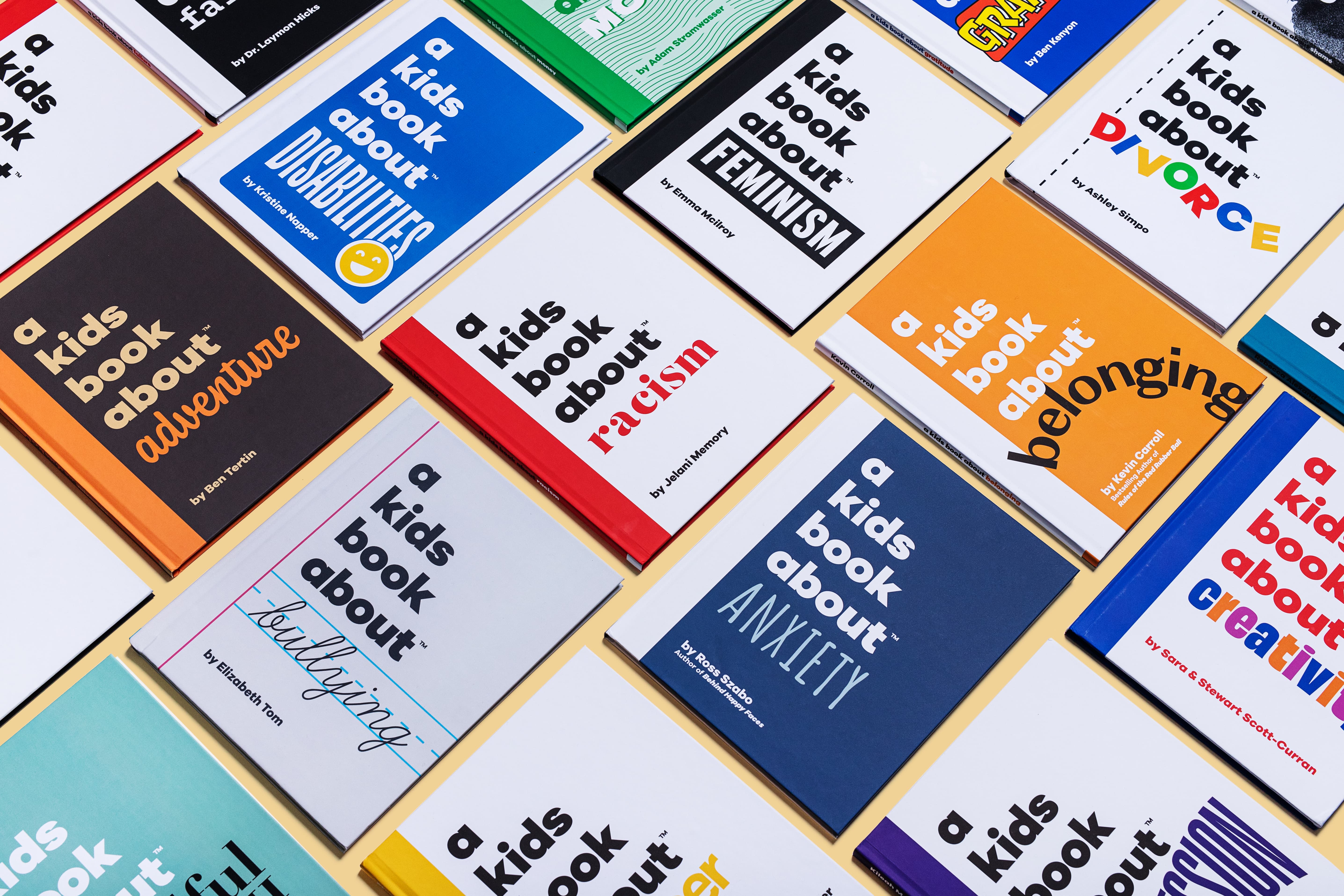
Jelani Memory, an entrepreneur and father, had been wanting to write a kids book for years. While in the midst of raising a Series B round for his startup Circle Media, he started to feel burned out and wanted to start doing something more creatively fulfilling, Memory told me. That’s what led Memory to create A Kids Book About, a book publishing platform to help parents tackle tough topics and conversations with their kids. Its first book was A Kids Book About Racism.

“It was really me as a dad trying to keep that conversation going with my kids, and my kids thought the book was cool,” Memory said. “And it caused them to ask all sorts of new questions that I hadn’t heard them ask before around the topic of racism.”

Memory then shared that book with friends and colleagues, who suggested he write more books about other topics.

“So that’s really when the seed was planted,” he said. “When you find yourself waking up in the morning thinking about something and going to bed at night thinking about it, and in the middle of your workday, when you’re supposed to be doing work, sort of obsessing over it, I just sort of intuitively knew that these books needed to exist — at the very least for my own kids — because I knew that some conversations really are too hard to have. And while I consider myself a pretty open dad and talk about a lot with my kids, some of those conversations are just too hard to bring up, or if you’re ready to bring them up, you don’t know what to say.”

That seems to have struck a chord with the masses. The day after George Floyd was killed by police, A Kids Book About did as much in sales at it had the whole previous month. And it didn’t slow down, Memory said. The following day, sales went up 2x and the day after, went up another 2x and held steady. So, within the span of 10 days, A Kids Book About saw north of $1 million in revenue.

“And to be quite honest, we had enough inventory that was supposed to last us the rest of the year,” Memory said. But we sold out of every single one of our titles except for two.”

At a certain point in June, there were abut 50,000 books on backorder.

“Grownups were really stepping up to have these meaningful conversations with their kids,” Memory said. “And while our book on racism did really well, our customers are just remarkable and they were snagging our book on cancer and feminism and empathy and mindfulness. It was really cool to watch.”

A Kids Book About officially launched in 2019 with 12 titles released in October. Today, there are 25 titles available with plans for more on the way. The startup is primarily a direct to consumer business with a “fairly unique and novel publishing model,” Memory said.

A Kids Book About writes all of its books via a workshop in a single day. The company brings in an author, talks through the vision and mission as a company, and then co-writes the book with that author. A Kids Book About intentionally looks for folks who have not yet published books, though, there are authors on the platform who have previously published books.

“It just tends to be that if you’ve already published, you almost always are certainly a straight white male,” Memory said. “So for us, we look for folks with a deep personal story and someone who knows their topic inside and out through their lived experience.”

a kids book about books

Image Credits: A Kids Book About

On the publishing side, A Kids Book About gives authors no less than 10% of the revenue from book sales, while traditional publishers may give around 6%, Memory said. It also takes, on average, 45 days to go to market, as opposed to 18 months in the traditional publishing world, Memory said.

When the COVID-19 pandemic hit, A Kids Book About realized it needed to tackle this topic. So it green-lit and created a book within four days with a social epidemiologist as a free e-book. The physical book is available on pre-order for next month.

Meanwhile, amid the massive social movement sparked by Floyd’s death, the company realized it needed additional books on the topic of race.

“While my book is a great conversation starter on racism, we realized there are a couple of others books we really need to make,” Memory said. “So we’re fast-tracking a book about white privilege that will come out this fall and a book about systemic racism as a way to sort of round out that conversation.”

Another untraditional aspect of the business is A Kids Book About’s approach to fundraising. Part of that process meant choosing his investors as much as they chose him, Memory said.

“That means avoiding a lot of conversations, it meant saying no to some checks,” Memory said. “But it really meant going out and finding more Black and brown investors.”

Memory also sought out investors where this deal would be its first investment in a startup.

“That was really important that I wasn’t just taking accredited investors but making room for unaccredited investors as well, knowing that if the wealth loop just keeps going the way that it is, only people with money get to make more money,” he said.

A Kids Book About raised $1 million from a handful of seed funds, including Cascade Seed Fund, Color Capital and Black Founders Matter.

“And I can tell you, pitching a direct consumer kids book startup that tackles topics like cancer and racism is not super hot in the venture,” Memory said. “And being a founder of color, even as a second-time founder, you know, I can’t tell you how many folks recommended that I should talk to impact investors. And I was like, ‘I don’t think you understand what I’m doing here. This isn’t a charity.’ But it was very easy to avoid and say no to those investors.”

Overall, Memory said his business resonated pretty well with investors with the exception of e-commerce or consumer-focused funds. Sometimes it came down to the investors not having a strong grasp on the publishing industry or to how new the business was, he said.

“I think most investors fancy themselves as risk takers, but I think investors are the most risk-averse on the planet,” Memory said. “And also, the game of fundraising really is about finding those true believers who really get what you’re up to. I am still a little bit amazed we raised $1 million for this business knowing that half of the money was raised right smack dab in the middle of quarantine lockdown in the pandemic. But, you know, I don’t think it hurt that we started to post just remarkable numbers. And a lot of those folks we were already in conversation with at the time. And by the time we were doing half a million every few days, I ended up saying no to quite a few investors who I either thought weren’t a fit for us or simply we didn’t have the allocation for.”

18 Aug 2020

Private space industrialization is here

The universal glee that surrounded the launch of the crewed Dragon spacecraft made it easy to overlook that the Falcon rocket’s red glare marked the advent of a new era — that of private space industrialization. For the first time in human history, we are not merely exploring a new landmass. We, as a biological species, are advancing to a new element — the cosmos.

The whole history of humanity is the story of our struggle with space and time. Mastering new horizons, moving ever farther; driven by the desire for a better life or for profit, out of fear or out of sheer curiosity, people found ever faster, easier, cheaper and safer ways to conquer the space between here and there. When, at the beginning of the 19th century, Thomas Jefferson bought Louisiana from Napoleon, actually having doubled the territory of the United States at that time, he believed it would take thousands of years for settlers to populate these spaces in the center of the continent.

But after just a few decades, the discovery of gold in California mobilized huge masses of industrious people, created incentives for capital and demanded new technologies. As countless wagons of newcomers moved through the land, threads of railways were stretched coast to coast, cities and settlements arose, and what Jefferson envisioned more than 200 years ago was actualized — and in the span of just one human life.

Growing up in a small Mongolian village near where Genghis Khan began the 13th-century journey that resulted in the largest contiguous land empire in history, I acquired an early interest in the history of explorers. Spending many long Siberian winter twilights reading books about great geographical discoveries, I bemoaned fate for placing me in a dull era in which all new lands had been discovered and all frontiers had been mapped.

Little did I know that only a few decades later, I would be living through the most exciting time for human exploration the world had ever seen.

The next space race

In recent years, the entire space industry has been waiting and looking for what will serve as the gold rush of space. One could talk endlessly about the importance of space for humanity and how technologies developed by and for space activity help to solve problems on Earth: satellite imagery, weather, television, communications. But without a real “space fever” — without the short-term insanity that will pour enormous financial resources, entrepreneurial energy and engineering talent into the space industry, it will not be possible to spark a new “space race.”

Presently, the entire space economy — including rockets, communications, imagery, satellites and crewed flights — does not exceed $100 billion, which is less than 0.1% of the global economy. For comparison: during the dot-com bubble in the late 1990s, the total capitalization of companies in this sector amounted to more than 5% of global GDP. The influence of the California Gold Rush in the 1850s was so significant that it changed the entire U.S. economy, essentially creating a new economic center on the West Coast.

The current size of the space economy is not enough to cause truly tectonic shifts in the global economy. What candidates do we have for this place in the 21st century? We are all witnesses to the deployment of space internet megaconstellations, such as Starlink from SpaceX, Kuiper from Amazon and a few other smaller players. But is this market enough to create a real gold rush? The size of the global telecommunications market is an impressive $1.5 trillion (or almost 1.5% of the global economy).

If a number of factors coincide — a sharp increase in the consumption of multimedia content by unmanned car passengers, rapid growth in the Internet of Things segment — satellite telecommunications services can grow in the medium term to 1 trillion or more. Then, there is reason to believe that this segment may be the driver of the growth when it comes to the space economy. This, of course, is not 5% (as was the case during the dot-com era), but it is already an impressive 1% of the world economy.

But despite all the importance of telecommunications, satellite imagery and navigation, these are the traditional space applications that have been used for many decades since the beginning of the space era. What they have in common is that these are high value-added applications, often with no substitutes on the ground. Earth surveillance and global communications are difficult to do from anywhere but space.

Therefore, the high cost of space assets, caused primarily by the high cost of launch and historically amounting to tens of thousands of dollars per kilogram, was the main obstacle to space applications of the past. For the true industrialization of space and for the emergence of new space services and products (many of which will replace ones that are currently produced on Earth), a revolution is needed in the cost of launching and transporting cargo in space.

Space transports

The mastering of new territories is impossible to imagine without transport. The invention and proliferation of new means of moving people and goods — such as railways, aviation, containers — has created the modern economy that we know. Space exploration is not an exception. But the physical nature of this territory creates enormous challenges. Here on Earth, we are at the bottom of a huge gravity well.

To deliver the cargo into orbit and defeat gravity, you need to accelerate things to the prodigious velocity of 8 km/s — 10-20 times faster than a bullet. Less than 5% of a rocket’s starting mass reaches orbit. The answer, then, lies in reusability and in mass production. The tyranny of rocket science’s Tsiolkovsky equation also contributes to the large rocket sizes that are necessary. It drives the strategies for companies like SpaceX and Blue Origin, who are developing large, even gigantic, reusable rockets such as Starship or New Glenn. We’ll soon see that the cost of launching into space will be even less than a few hundred U.S. dollars per kg.

But rockets are effective only for launching huge masses into low-Earth orbits. If you need to distribute cargo into different orbits or deliver it to the very top of the gravity well — high orbits, such as GEO, HEO, Lagrange points or moon orbit — you need to add even more delta velocity. It is another 3-6 km/sec or more. If you use conventional rockets for this, the proportion of the mass removed is reduced from 5% to less than 1%. In many cases, if the delivered mass is much less than the capabilities of huge low-cost rockets, you need to use much more expensive (per kg of transported cargo) small and medium launchers.

This requires multimodal transportation, with huge cheap rockets delivering cargo to low-Earth orbits and then last-mile space tugs distributing cargo between target orbits, to higher orbits, to the moon and to other planets in our solar system. This is why Momentus, the company I founded in 2017 developing space tugs for “hub-and-spoke” multimodal transportation to space, is flying its first commercial mission in December 2020 on a Falcon 9 ride-share flight.

Initially, space tugs can use propellant delivered from Earth. But an increase in the scale of transportation in space, as well as demand to move cargo far from low-Earth orbit, creates the need to use a propellant that we can get not from the Earth’s surface but from the moon, from Mars or from asteroids — including near-Earth ones. Fortunately, we have a gift given to us by the solar system’s process of evolution — water. Among probable rocket fuel candidates, water is the most widely spread in the solar system.

Water has been found on the moon; in craters in the vicinity of the poles, there are huge reserves of ice. On Mars, under the ground, there is a huge ocean of frozen water. We have a vast asteroid belt between the orbits of Mars and Jupiter. At the dawn of the formation of the solar system, the gravitational might of Jupiter prevented one planet from forming, scattering fragments in the form of billions of asteroids, most of which contain water. The same gravity power of Jupiter periodically “throws out” asteroids into the inner part of the solar system, forming a group of near-Earth asteroids. Tens of thousands of near-Earth asteroids are known, of which almost a thousand are more than 1 km in diameter.

From the point of view of celestial mechanics, it is much easier to deliver water from asteroids or from the moon than from Earth. Since Earth has a powerful gravitational field, the payload-to-initial-mass ratio delivered to the very top of the gravitational well (geostationary orbit, Lagrange points or the lunar orbit) is less than 1%; whereas from the surface of the moon you can deliver 70% of the original mass, and from an asteroid 99%.

This is one of the reasons why at Momentus we’re using water as a propellant for our space tugs. We developed a novel plasma microwave propulsion system that can use solar power as an energy source and water as a propellant (simply as a reaction mass) to propel our vehicle in space. The choice of water also makes our space vehicles extremely cost-effective and simple.

The proliferation of large, reusable, low-cost rockets and in-space last-mile delivery opens up opportunities that were not possible within the old transportation price range. We assume that the price to deliver cargo to almost any point in cislunar space, from low-Earth orbit to low-lunar orbit will be well below $1,000/kg within 5-10 years. What is most exciting is that it opens up an opportunity to introduce an entirely new class of space applications, beyond traditional communication, observation and navigation; applications that will start the true industrialization of space and catalyze the process of Earth industry migration into space.

Now, let’s become space futurists, and try to predict future candidates for a space gold rush in the next 5-10 years. What will be the next frontier’s applications, enabled by low-cost space transportation? There are several candidates for trillion-dollar businesses in space.

Energy generation

Energy generation is the first and largest candidate for the gold rush, as the energy share of the global economy is about 8.2%. Power generation in space has several fantastic advantages. First, it is a continuity of power generation. In space, our sun is a large thermonuclear reactor that runs 24/7. There’s no need to store electricity at night and in bad weather. As a result, the same surface collects 10 times more energy per 24 hours than on Earth.

This is not intuitively obvious, but the absence of twilights or nighttime, and the lack of clouds, atmosphere or accumulating dust create unique conditions for the production of electricity. Due to microgravity, space power plants with much lighter structures can eventually be much less costly than terrestrial plants. The energy can be beamed to the ground via microwaves or lasers. There are, however, at least two major challenges to building space power stations that still need to be resolved. The first is the cost of launching into space, and then the cost of transportation within space.

The combination of huge rockets and reusable space tugs will reduce the cost of transporting goods from Earth to optimal orbits up to several hundred dollars per kilogram, which will make the share of transportation less than one cent per kilowatt-hour. The second problem is the amount of propellant you’ll need to stabilize vast panels that will be pushed away by solar radiation pressure. For every 1 gigawatt of power generation capacity, you’ll need 500-1,000 tons of propellant per year. So to have the same generation capacity as the U.S. (1,200 GW), you’ll need up to 1 million tons of propellant per year (eight launches of Falcon 9 per hour or one launch of Starship per hour).

Power generation will be the largest consumer of the propellant in cislunar space, but the delivery of propellant from Earth will be too economically inefficient. The answer lies on the moon, where 40 permanently darkened craters near the north pole contain an estimated 600 million metric tonnes of ice. That alone will be enough for many hundreds of years of space power operations.

Data processing

Centers for data computation and processing are one of the largest and fastest-growing consumers of energy on Earth. Efficiency improvements implemented over the last decade have only increased the demand for large cloud-based server farms. The United States’ data centers alone consume about 70 billion kilowatt-hours of electricity annually. Aside from the power required to operate the systems that process and store data, there is an enormous cost in energy and environmental impact to cool those systems, which translates directly to dollars spent both by governments and private industry.

Regardless of how efficiently they are operated, the expansion of data centers alongside demands for increased power consumption is not sustainable, economically or environmentally. Instead of beaming energy to the ground via microwaves or lasers, energy can be used for data processing in space. It is much easier to stream terabytes and petabytes from space than gigawatts. Power-hungry applications like AI can be easily moved to space because most of them are tolerant of latency.

Space mining

Eventually, asteroids and the moon will be the main mining provinces for humanity as a space species. Rare and precious metals, construction materials, and even regolith will be used in the building of the new space economy, space industrialization and space habitats. But the first resource that will be mined from the moon or asteroids will be water — it will be the “oil” of the future space economy.

In addition to the fact that water can be found on asteroids and other celestial bodies, it is quite easy to extract. You simply need heat to melt ice or extract water from hydrates. Water can be easily stored without cryogenic systems (like liquid oxygen or hydrogen), and it doesn’t need high-pressure tanks (like noble gases — propellant for ion engines).

At the same time, water is a unique propellant for different propulsion technologies. It can be used as water in electrothermal rocket engines (like Momentus’ microwave electrothermal engines) or can be separated into hydrogen and oxygen for chemical rocket engines.

Manufacturing

The disruption of in-space transportation costs can make space a new industrial belt for humanity. Microgravity can support creating new materials for terrestrial applications like optical fiber, without the tiny flaws that inevitably emerge during production in a strong gravity field. These flaws increase signal loss and cause large attenuation of the transmitted light. Also, microgravity can be used in the future space economy to build megastructures for power generation, space hotels for tourists and eventually human habitats. In space, you can easily have a vacuum that would be impossible to achieve on Earth. This vacuum will be extremely valuable for the production of ultrapure materials like crystals, wafers and entirely new materials. The reign of in-space manufacturing will have begun when the main source of raw materials is not Earth, but asteroids or the moon, and the main consumers are in-space industry.

The future market opportunities enabled by the disruption in space transportation are enormous. Even without space tourism, space habitats will be almost a two trillion dollar market in 10-15 years. Undoubtedly, it will lead to a space gold rush that will drive human civilization’s development for generations to come.

The final frontier

I studied in high school during the last years of the Soviet Union. The Soviet economy was collapsing, we had no sanitation in the house, and quite often we had no electricity. During those dark evenings, I studied physics and mathematics books by the light of a kerosene lamp. We had a good community library, and I could order books and magazines from larger libraries in the big cities, like Novosibirsk or Moscow. It was my window into the world. It was awesome.

I was reading about the flights of the Voyager spacecraft, and about the exploration of the solar system, and I was thinking about my future. That was the time when I realized that I both love and excel in science and math, and I decided then to become a space engineer. In an interview with a local newspaper back in 1993, I told the reporter, “I want to study advanced propulsion technologies. I dream about the future, where I can be part of space exploration and may even fly to Mars … .”

And now that future is coming.

18 Aug 2020

Netflix test puts a ‘Shuffle Play’ button right on your home screen

Don’t know what you’re in the mood to watch? Netflix’s new “Shuffle” feature could help. The company confirms it’s currently testing a feature that puts a big button labeled “Shuffle Play” right on the Netflix home screen, beneath your user profile icon. When pressed, Netflix will randomly play content it thinks you’ll like. This could be a movie or show you’re currently watching, something you’ve saved to your list, or a title that’s similar to something you’ve already watched, the company says.

The new button is currently showing up on the Netflix app for TV devices, much to many users’ surprise. Some users thought the addition could be fun or useful, while others just seem confused.

The company tells TechCrunch the idea behind the feature is to help its members quickly and easily find content that’s tailored to their tastes. This is a challenge Netflix has addressed over the years through a variety of features and tests, like screensavers on its TV apps, pre-roll videos, and even promotional content showcased on the home screen. Ultimately, the company wants the experience of using Netflix to feel more like watching traditional TV — meaning you can just turn it on and something starts playing. (Of course, that’s also what gave us the annoying auto-playing feature, which Netflix finally allowed users to disable with an update earlier this year.)

The new “Shuffle Play” button is the latest in a long series of tests where Netflix has tried to make a shuffle concept work. Last year, for example, Netflix tried out a shuffle mode that let you click on a popular show to start playing a random episode. This may have worked well when users wanted to play a random episode of their default pick, like the “The Office” or “Friends,” but Netflix is losing the former in 2021 and it has already lost the latter.

More recently, some Netflix users discovered a shuffle option called “Play Something” in their TV app’s sidebar navigation. (See below)

Netflix confirmed these are all variations on the general “shuffle mode” concept, which it’s been trying out across surfaces, including what it calls the “profile gate,” as well as the side menu and the main screen. Currently, the “Shuffle Play” button on the profile screen is the only test that’s still underway, we’re told.

The company said it started to roll out the new test to members worldwide last month and only on TV devices. Netflix has yet to make a decision about if or when it will launch a shuffle feature publicly, as it needs to first collect feedback from each different test and compare the results.

18 Aug 2020

If Oracle buys TikTok I’ll go to Danny’s house and eat his annoying Stanford sweatshirt

Hey everyone, how are you? Are you doing well? Great. Or, condolences, depending.

Anyway, last week the Equity crew was discussing bankers, and how they love to talk up stuff.

The topic matters as there is a big impending transaction out there in the world, namely the shotgun sale of TikTok. And all sorts of folks are nattering about who might just be interested in making a bid for the Facebook competitor.

Danny did a blog about the situation. He said that TikTok is possibly worth “tens of billions of dollars,” but only if the social giant can “find a number of deep-pocketed buyers who are willing to bid the price up.” In short if only Microsoft rocks up with checkbook, TikTok could go on the cheap given that there would be precisely no one to counter-bid.

Danny then made an interesting point. What might a grievance of bankers do when they want to sell an asset, say, not for $5 billion, but for $10 billion? Astroturf some FOMO by adding more chatter and names to the mix, of course: (bolding: TechCrunch):

So what do the investment bankers at the heart of the deal do? They run the deal around to every corporate development department in the country, and they leak the information to reporters to try to drum up FOMO in other departments, all in the hope that a board member somewhere starts asking, “Hey, why aren’t we taking a deep look at this?” Heck, I’m sure even Oracle  is taking a look — they have data centers and “synergy” potential, and its CEO Safra Catz is a major Trump supporter as well, and could navigate the coming policy shenanigans.

And then later on CNBC reported that “Oracle is in talks to acquire TikTok’s U.S. operations, challenging Microsoft” according to a source. And the FT wrote a piece entitled “Oracle enters race to buy TikTok’s US operations.”

So it’s time to put our little theory to the test with a wager. If Oracle buys TikTok then I, Alex Wilhelm, will convince my partner to let me take a train to New York, where I will eat Danny’s annoying Stanford sweatshirt that he always wears when we record the podcast.

Here’s Danny wearing it earlier today:

Photo via Danny “I Hate You” Crichton, and his lovely partner.

If Oracle does not buy TikTok, then, well, nothing. Good job Microsoft, we guess. But here’s a marker in the sand.

And just to be clear, this is nothing against Alex Sherman (whom I like and read) or the CNBC tech crew (which is is stacked with great folks). The FT was also great, back when I could read it.

The wager is good until TikTok gets the boot or sells to someone. Let’s go.

18 Aug 2020

Xos Trucks raises $20M to put more of its electric commercial trucks on the road

Commercial electric vehicle startup Xos Trucks has raised $20 million, funding it will use to ramp up production ahead of potential new demand fueled by a landmark emissions rule adopted by California that will require more than half of all trucks sold in the state to be zero-emissions by 2035.

The startup, which was formerly known as Thor Trucking, raised the funds from a group of investors including Proeza Ventures, a mobility-focused VC firm backed by Metalsa’s holding company, and BUILD Capital Group. Xos also gained a few new board members along with the capital. Rodolfo Elias Dieck of Proeza Ventures and Mark Lampert, a former Daimler executive who is now at Build Capital, have joined the board. Xos has beefed up its executive ranks as well, including hiring Kingsley Afemikhe as its CFO and Rob Ferber, employee number one and science director at Tesla, as its CTO.

“We’re excited to continue growing our operations to provide best-in-class last-mile electric vehicles for our customers,” said Dakota Semler, co-founder and CEO of Xos Trucks. “It’s our goal to provide reliable, affordable, and sustainable transportation as the volume of e-commerce demands are increasing, and have accelerated during the pandemic.”

Funding will be used to expand operations and scale up production of its electric skateboard chassis that is designed for Class 6 trucks, the medium-duty commercial vehicles that are often used in last-mile delivery in dense urban areas. This skateboard, known as the X-Platform, was designed to accommodate a variety of medium-duty bodies, wheelbases and range requirements up to 200 miles. Metalsa, the Mexico-based automotive supplier, helped Xos with the design and is providing components to the chassis.

Xos vehicles have been used by UPS on customer routes in the Los Angeles area for the past eight months, according to the company. Loomis, an existing customer of Xos, has order another 20 trucks following a pilot program in 2019.

18 Aug 2020

TikTok’s big UnitedMasters deal is the way forward for creators looking to secure their bag

TikTok is right in the jaws of a thorny situation with the U.S. Government regarding its ownership, but it’s sending a clear message today that it is not sitting on its heels with big deals. Yesterday, it announced a deal with UnitedMasters to allow artists on TikTok to distribute their songs directly to streaming services and other partners directly.

UnitedMasters is the un-record-label label — in fact a direct distribution company founded by former president of Interscope Records, Steve Stoute. The firm allows musicians (especially budding ones) to pay a competitive distribution rate to get access to Spotify, YouTube, SoundCloud, Apple Music and other services. It also gets them access to analytics, retargeting, CRM tools and individual deals that UM makes with brands like ESPN and the NBA.

Normally, the path between an artist being able to go viral on TikTok and be included in the next NBA 2k or before an official game on the air would be a long one involving a lot of knives out for pieces of the pie. UnitedMasters shortcuts all of this.

The simple scenario is this:

  • An aspiring artist or songwriter puts out a song or riff on TikTok (likely one of many).
  • This one has something and it catches on the algorithm and generates numbers.
  • The creator opts in to participating in UnitedMasters’ program.
  • They give up a cut close to 10% but get direct distribution into the major streaming buckets and potential A-grade partners.
  • They can also market things like tickets, merch and more directly to fans using UM’s customer tools.

Which is why a tie up with TikTok makes a hell of a lot of sense. One of the biggest issues with viral social platforms has been the way that they reward creators. Twitter’s Vine, of course, squandered their opportunity there. Even YouTube has had major problems providing consistent revenue to many of its top creators, with a long trend towards big hitters monetizing off platform in order to earn consistent, durable money.

TikTok has already announced a creators fund with a significant purse, but it needs to go beyond that. We’ve seen over and over how young creators on the platform create viral waves of attention for TikTok and millions of re-enactments and remixes. Often, though, those creators are offered little recourse to monetize or benefit from their creations. Dance creators and musical talents, often young Black women, are literally crafting culture in real-time on TikTok and the pathways for them to benefit materially are very rare. Sure, it’s great when an originator gets called out by a Times reporter willing to do the work to trace the source, but what about the thousands of others being minted as a real voice on the platform every month?

It’s beyond time for the creators of The Culture to benefit from that culture. That’s why I find this UnitedMasters deal so interesting. Offering a direct pipeline to audiences without the attendant vulture-ism of the recording industry apparatus is really well aligned with a platform like TikTok, which encourages and enables ‘viral sounds’ with collaborative performances. Traditional deal structures are not well suited to capturing viral hype, which can rise and fall within weeks without additional fuel.

In terms of overall platforms, TikTok clearly has the highest concentration of incredible and un-tapped musical talent on the market. It’s just wild how many creators I see on there that are just flat out as good if not better than what you hear on the radio. Opera, rap, soul, folk, comedy, songwriting, it runs the gamut.

TikTok CEO Kevin Mayer came to the company after a long stint at Disney ending with a very successful Disney+ launch. Almost immediately, he was dropped into a political firestorm between China and the U.S. government. Parent company ByteDance must sell within 90 days, says Trump, or get shut down. Microsoft might buy them. Other tech companies are circling. This deal is a pretty crisp forward-looking signal that TikTok sees a way through this and is not waiting to innovate on one of the trickier components of this era of user generated businesses.

And on top of that, it charts a course for how user generated platforms should look to service creators and keep them in their universe. All UGC plays garner significant value from the creative energies of their users, but few have found a way to make that relationship reciprocal in a way that feels sustainable.

This UnitedMasters deal feels different, and the start of a larger trend that could pay big dividends to platforms and, finally, creators.

18 Aug 2020

Radio Flyer teams up with Tesla to launch a tyke-sized Tesla Model Y

If, like me, you can’t afford a full-sized Tesla because your life has been a series of bad investments (one day my early Fyre Festival backing will pay off) then Radio Flyer’s newest product might be just the thing for you. It’s a scaled down Model Y, designed for use by kids aged 18 months to four years old – but I can play pretend and yell ‘vroooommm’ just as well, if not better, than they can.

Dubbed ‘My First Model Y,’ this is a collaborative effort between the Tesla Design Studio and Radio Flyer’s product team. It’s a ride-on version, which is not true of the standard Model Y, and it includes a honking horn, as well as black induction wheels (an upgrade option on the real car) and a functional steering wheel, with a price point of $99. There’s only one trim level.

[gallery ids="2033122,2033123,2033125,2033126,2033128,2033130,2033131,2033133,2033134,2033135,2033136,2033137,2033138,2033140,2033141,2033143,2033144"]

Unlike the first collaboration between Radio Flyer and Tesla, the Tesla Model S for Kids, this one doesn’t have a built-in battery – it requires kid power to function. That means a lot more affordability, and makes it suitable for much younger kids.

I might pick up one of these instead of just continuing to scrawl “Tesla” in block letters on the rear window of my 1998 Toyota Camry in grease pencil.

18 Aug 2020

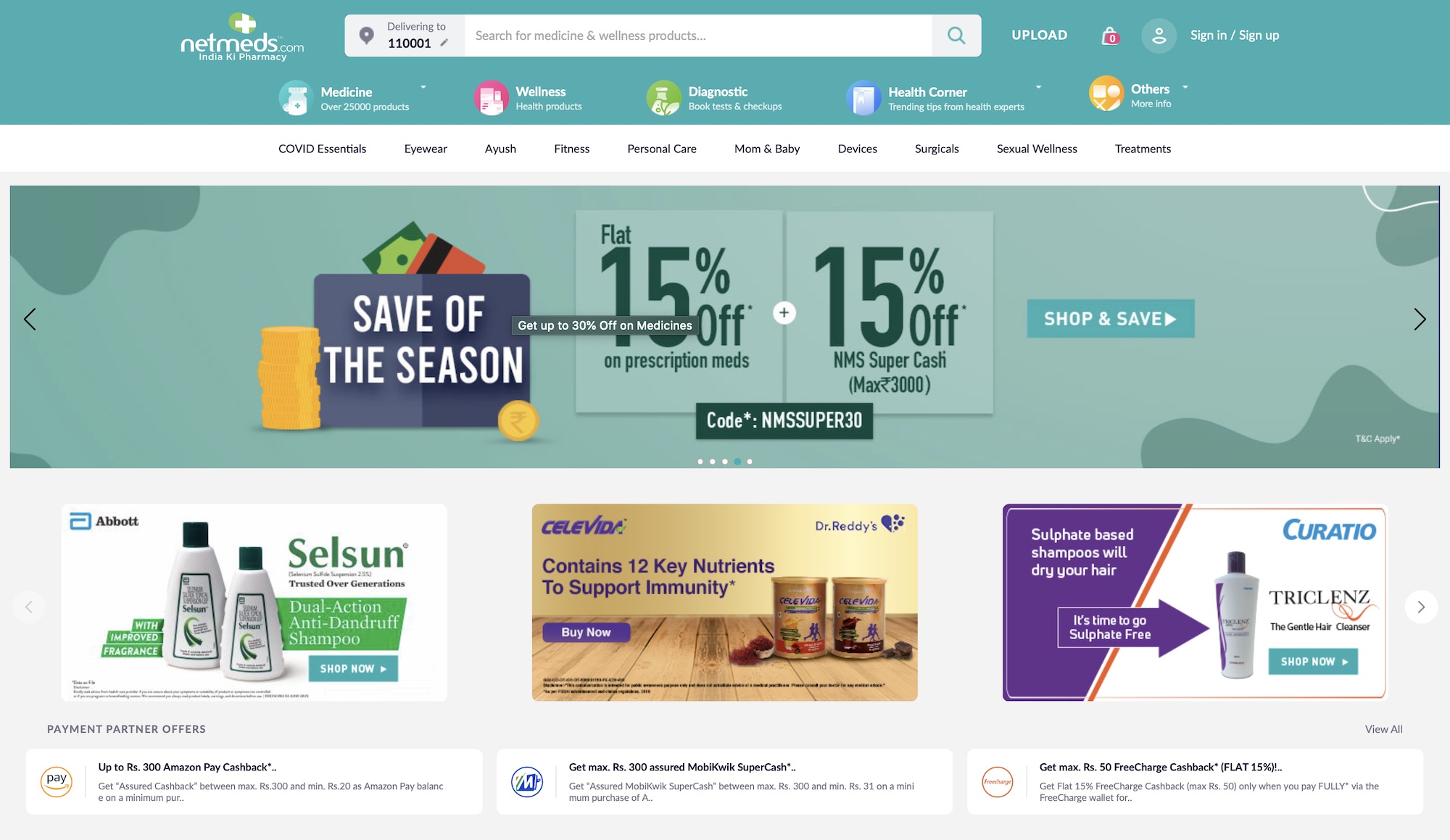
India’s Reliance Retail acquires a majority stake in online pharmacy Nedmeds for $83.2M

Reliance Retail has bought a 60% stake in pharma marketplace Netmeds for about $83.2 million, it said today as India’s largest retail chain looks to expand into new categories and compete more closely with American e-commerce group Amazon.

The all-cash deal valued Netmeds, which serves 5.7 million customers in more than 670 cities and towns and online, at about $134 million. Consumers get access to more than 70,000 prescription drugs for chronic and recurring ailments as well as enhanced lifestyle drugs and thousands of non-prescription goods for wellness, health, and personal care through Netmeds.

“This investment is aligned with our commitment to provide digital access for everyone in India. The addition of Netmeds enhances Reliance Retail’s ability to provide good quality and affordable health care products and services, and also broadens its digital commerce proposition to include most daily essential needs of consumers,” said Isha Ambani, Director of Reliance Retail, in a statement.

Reliance Retail, like its sister telecom venture Jio Platforms, is a subsidiary of Reliance Industries, the most valued firm in India. Reliance Industries is run by Mukesh Ambani, Asia’s richest man.

The announcement late Tuesday evening (local time) comes days after Amazon struck a deal with NetMeds, 1mg, PharmEasy and Medlife to sell medicines online in Bangalore. It was the first time Amazon had expanded into this category, it said. The coronavirus pandemic has accelerated the adoption of telemedicine and pharma marketplaces in the country, analysts said.

Online sales of medicine in India, for which New Delhi currently does not have clear regulations, presents yet another major opportunity for Reliance Retail, which has expanded its new e-commerce venture to more than 200 cities and towns in the recent quarters.

More to follow…

18 Aug 2020

Google Maps adds street-level details in select cities, more colorful imagery worldwide

Google Maps is getting a significant update that will bring more detail and granularity to its map, with changes that encompass both natural features and city-level details alike. For the former, Google says it’s leveraged computer vision techniques to analyze natural features from satellite imagery, then color-coded those features for easier visual reference. Meanwhile, select cities including New York, San Francisco and London, will gain more detailed street information, like the location of sidewalks, crosswalk and pedestrian islands, for example.

These additions will help people better navigate their cities on foot or via alternative modes of solo transportation, like bikes and scooters, which some have opted for amid the pandemic in greater numbers. The supported cities will also show the accurate shape and width of a road to scale to offer a better sense of how wide or narrow a street is, in relation to its surroundings.

Image Credits: Google (before: left, after: right)

While the added granularity won’t include more accessibility features, like curb cuts for example, Google says that having the crosswalks detailed on the map will help in that area. The company also notes that Google Maps today displays wheelchair accessible routes in transit and wheelchair attributes on business pages.

The updated city maps won’t show up immediately in the Google Maps app, we understand. Instead, Google says the new maps will roll out to NY, SF and London in the “coming months.” The vague time frame is due to the staged nature of the release — something that’s often necessary for larger apps. Google Maps reaches over a billion users worldwide, so changes can take time to scale.

The company notes that after the first three cities receive the update, it plans to roll out more detailed city maps to additional markets, including those outside the U.S.

Meanwhile, users both inside and outside big cities around the world will benefit from the changes to how natural features are presented in Google Maps.

Image Credits: Google

Google utilized a color-mapping technique to identify natural features from its satellite imagery, looking specifically at arid, ciy, forested, and mountainous regions. These features were then assigned a range of colors on the HSV color model. For instance, a dense forest will now appear as a dark green while patchier shrubs may appear as a lighter green. You’ll be able to differentiate between beaches and greenery, see where deserts begin and end, see how much land is covered by ice caps, see where snowcapped mountain peaks appear, or view national park borders more easily, among other things.

These changes will reach all 220 countries and territories that Google Maps supports — over 100M square kilometers of land, from bigger metros to rural areas and small towns.

Image Credits: Google

The update comes at a time when Google’s lead as everyone’s default mapping app is being challenged on iOS. While Apple Maps started out rough, a 2018 redesign and subsequent updates have made it a somewhat more worthy rival. It even took on Google’s Street View with its higher-resolution 3D feature Look Around that particularly targets big city users. More recently, it introduced a clever feature that allows you to raise your phone and scan the skyline to refine your location. It’s also battling Google Maps’ explore and discovery features through curated guides.

Google says the updates will roll out across Android, iOS and desktop in the months ahead.

18 Aug 2020

Piggyback on popular Tweets to get brand awareness