
Year: 2020

20 Jul 2020

After numerous rejections, Struck’s dating app for the Co-Star crowd hits the App Store

Founded by former Apple engineers, a new app called Struck wants to be the Tinder for the Co-Star crowd. In other words, it’s an astrology-based matchmaker. But it took close to 10 attempts over several months for the startup to get its app approved by Apple for inclusion in the App Store. In nearly every rejection, app reviewers flagged the app as “spam” either due to its use of astrology or, once, simply because it was designed for online dating.

Apple continually cited section 4.3 of its App Store Review Guidelines in the majority of Struck’s rejections, with the exception of two that were unrelated to the app’s purpose. (Once, it was rejected for use of a broken API. Another rejection was over text that needed correction. It had still called itself a “beta.”)

The 4.3 guideline is something Apple wields to keep the App Store free from what it considers to be clutter and spam. In spirit, the guideline makes sense, as it gives Apple permission to make more subjective calls over low-quality apps.

Today, the guideline states that developers should “avoid piling on to a category that is already saturated,” and reminds developers that the App Store has “enough fart, burp, flashlight, fortune telling, dating, and Kama Sutra apps, etc. already.”

In the document, Apple promises to reject anything that “doesn’t offer a high-quality experience.”
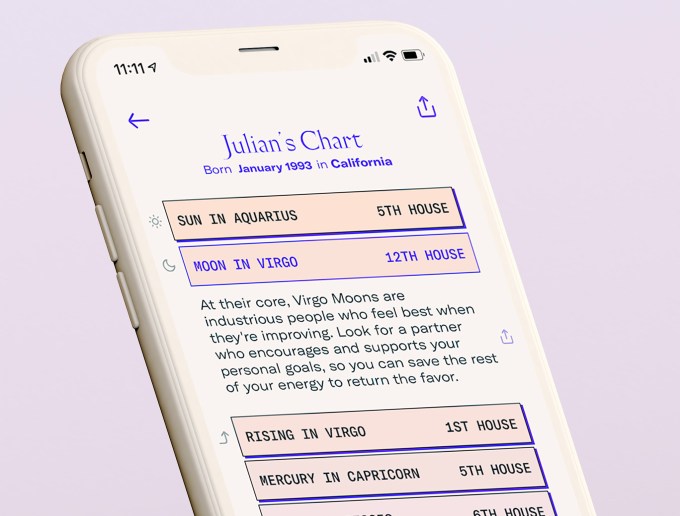
Image Credits: Struck

This guideline was also updated in March to further raise the bar on dating apps and create stricter rules around “fortune-telling” apps, among other things.

Struck, unfortunately, found itself in the crosshairs of this new enforcement. But while its app may use astrology in a matchmaking process, its overall design and business model is nowhere close to resembling that of a shady “fortune-telling” app.

In fact, Struck hasn’t even implemented its monetization model, which may involve subscriptions and à la carte features at a later date.

Rather, Struck has been carefully and thoughtfully designed to provide an alternative to market leaders like Tinder. Built by a team of mostly women, including two people of color and one LGBTQ+ team member, the app is everything mainstream dating apps are not.
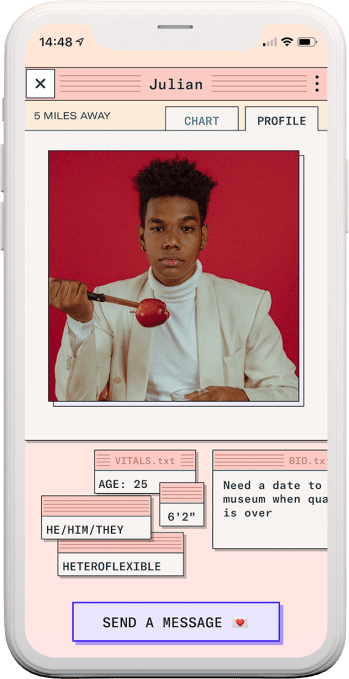
Image Credits: Struck

Struck doesn’t, for example, turn online dating into a Hot-or-Not style game. It works by first recommending matches by way of its understanding of users’ detailed birth charts and aspects. But you don’t have to be a true believer in astrology to enjoy the experience. You can use the app just for fun if you’re open-minded, the company website says. “Skeptics welcome,” the website advertises.

And while Tinder and others tend to leverage psychological tricks to make their apps more addictive, Struck aims to slow things down in order to allow users to once again focus on romance and conversations. There are no endless catalogs of head shots to swipe upon in Struck. Instead, it sends you no more than four matches per day and you can message only one of the four.
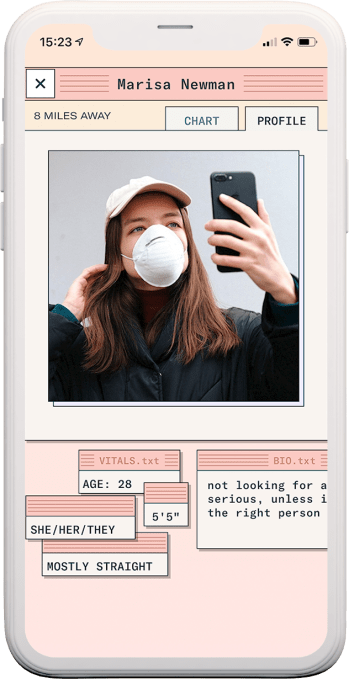
Image Credits: Struck

The app’s overall goal is to give users time to analyze their matches’ priorities and values, not just how they appear in photos.

If anything, this is precisely the kind of unique, thoughtfully crafted app the App Store should cater to, not the kind it should ban.

“We come from an Apple background. We come from a tech background. We were very insistent on having a good, quality user interface and user experience,” explains Struck co-founder and CEO Rachel Lo. “That was a big focus for us in our beta testing. We honestly didn’t expect any pushback when we submitted to the App Store,” she says.
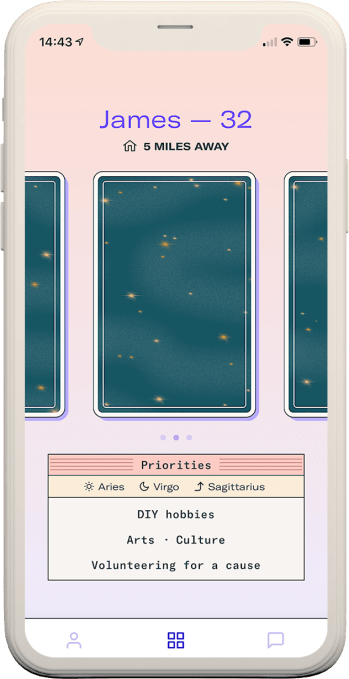
Image Credits: Struck

But Apple did push back. After first submitting the app in May, Struck went through around nine rounds of rejections where reviewers continued to claim it was spam simply for being an astrology-based dating application. The team would then pull out astrology features hoping to get the app approved… with no luck. Finally, one reviewer told them Struck was being rejected for being a dating app.

“I remember thinking, we’re going to have to shut down this project. There’s not really a way through,” recounts Lo. The Struck team, in a last resort, posted to their Instagram page about their struggles and how they felt Apple’s rejections were unfair given the app’s quality. Plus, as Lo points out, the rejection had a tinge of sexism associated with it.

“Obviously, astrology is a heavily female-dominated category,” she says. “I took issue with the guideline that says ‘burps, farts and fortune-telling apps.’ I made a fuss about that verbiage and how offensive it is for people in most of the world who actually observe astrology.”
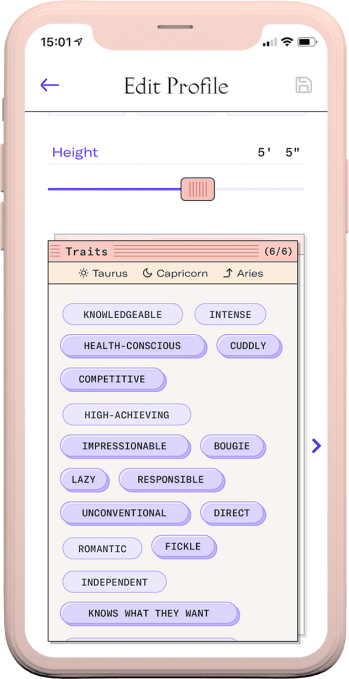
Image Credits: Struck

Despite the founders’ connections within the technology industry, thanks to their ex-Apple status and relationships with journalists who would go on to plead their case, Struck was not getting approved.

Finally, after several supporters left comments on Lisa Jackson’s Instagram where she had posted about WWDC, the app was — for unknown reasons — suddenly given the green light. It’s unclear if the Instagram posts made a difference. Even the app reviewer couldn’t explain why the app was now approved, when asked.

The whole debacle has soured the founders on the way Apple today runs its App Store, and sees them supportive of the government’s antitrust investigations into Apple’s business, which could result in new regulations.

“We had no course of action. And it felt really, really wrong for this giant company to basically be squashing small developers, says Lo. “I don’t know what’s going to become of our app — we hope it’s successful and we hope we can build a good, diverse business from it,” she continues. “But the point was that we weren’t even being given the opportunity to distribute our app that we had spent nine months building.”
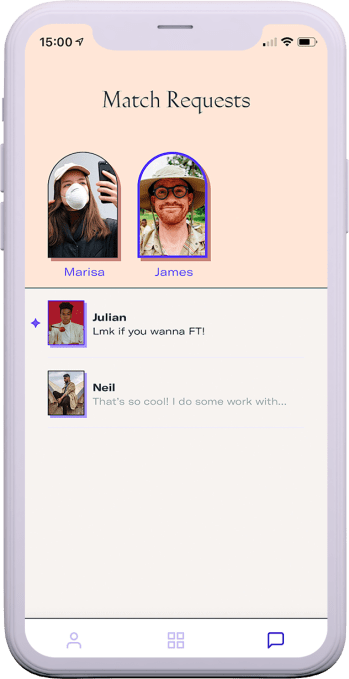
Image Credits: Struck

Though Apple is turning its nose up at astrology apps, apparently, you don’t have to take astrology to heart to have fun with apps like Struck or those that inspired it, such as Co-Star. These newer Zodiac apps aren’t as obsessed with predicting your future as they are with offering a framework to examine your emotions, your place in the world and your interpersonal relationships. That led Co-Star to snag a $5 million seed round in 2019, one of many astrology apps investors were chasing last year as consumer spend among the top 10 in this space jumped 65% over 2018.

Struck, ultimately, wants to give the market something different from Tinder, and that has value.

“We want to challenge straight men since it is — quote unquote — a traditionally feminine-looking app,” says Lo. “For us, it’s 2020. It’s shocking to us that every dating app looks like a slot machine. We want to make something that has a voice and makes women feel comfortable. And I think our usership split between the genders kind of proved that.”

Struck is live today on the App Store — well, for who knows how long.

It initially caters to users in the Bay Area and LA and will arrive in New York on Friday. Based on user feedback, it will slowly roll out to more markets where it sees demand.


20 Jul 2020

SpaceX successfully catches both fairing halves for the first time on its latest launch

SpaceX has managed a first – catching both halves of the fairing used on one of its Falcon 9 rocket launches, according to CEO and founder Elon Musk. The fairing is a two-piece protective cover that surrounds the cargo on the launch vehicle as it ascends through Earth’s atmosphere on its way to space. SpaceX has been attempting to recover the fairing using two ships equipped with special nets designed to catch them as they fall, but this is the first time that the company has managed to actually catch both, rather than just one.

SpaceX attempts to reduce the cost of its launches by building In as much reusability as it can, which is why it has engineered a way to propulsively land its first stage rocket boosters back on Earth for refurbishment post launch. That part has been refined and is now fairly reliable, with SpaceX having landed a total of 57 of its spent first stages so far, including the one from today’s launch.

The fairing recovery attempts have not been as successful so far. While the company has recovered fairing halves from the ocean, and even reused them it after retrieving them from the ocean, it has only caught single fairing halves previously using the ships at sea, with a first catch on the STP-2 mission last June, and another in January.

SpaceX estimates that it can save as much as $6 million per launch by recovering and reusing the fairing halves – another considerable savings on top of the reused boosters. Catching them using the nets rather than retrieving them from the ocean after a controlled soft landing saves them a lot of time, effort, cost and risk to personnel, making it a much more effective way to reuse that component provided they can ensure the ships are able to reliably catch the fairings as they descend.

The fairing halves don’t have any propellant systems to control their landing like the Falcon 9 first stages do – instead, they’re slowed via parachutes, meaning there’s a bigger reliance on the ships to actually be positioned correctly to anticipate their fall, since it’s not specifically programmed. But there’s another big reason Musk and SpaceX want to get this aspect of the launch system right: Musk has said previously that he’d potentially consider adapting the fairing catching ships to also catch Crew Dragon capsules as they return to Earth, reducing risk for astronauts and recovery crews who currently have to collect them from the Ocean.

20 Jul 2020

Daily Crunch: COVID-19 vaccine trials show promise

Vaccine researchers have some good news, Google Maps adds end-to-end bikesharing directions and Roblox launches a new virtual event platform. Here’s your Daily Crunch for July 20, 2020.

The big story: COVID-19 vaccine trials show promise

Two vaccine trials — one conducted at the University of Oxford, and another by researchers in Wuhan — both had promising results, with a vaccine leading to an increased antibody response, while also appearing to be safe for human use.

The Oxford team is now ready to move on to phase three trials — these are the large-scale human trials that come before approval. However, my colleague Darrell Etherington warns against getting prematurely excited about these results:

It is very early to make too many assumptions about what these early trials indicate, however. For instance, we still don’t really know how effective antibodies are in patients that have recovered from having COVID-19 once, so a lot more investigation is required by scientists in better understanding the efficacy of antibodies, and potentially vaccines, over the long term.

The tech giants

Snap turns on Minis, bite-sized third-party apps in Snapchat — Unveiled last month, Snap Minis are lightweight, simplified versions of apps that live within Snap’s Chat section.

Google Maps rolls out end-to-end directions for bikeshare users — Google Maps has long offered cycling directions, and it could already point users to bikesharing locations. The new update makes things even simpler, combining both walking and biking directions for end-to-end navigation.

GM details 12 upcoming electric vehicles from Cadillac, GMC, Chevrolet and Buick — In its latest sustainability report, General Motors said it’s on track to deliver 20 electric vehicles by 2023.

Startups, funding and venture capital

TC Early Stage is covering every aspect of operations, from legal to recruiting to finding product market fit — The event starts tomorrow!

Dumpling launches to make anyone become their own Instacart — The startup connects shoppers to all the resources they need to migrate off the Instacart platform and start their own personal-shopping business.

Roblox launches Party Place, a private venue for virtual birthday parties and other meetups — Party Place is based on the technology Roblox uses to host its own virtual events.

Advice and analysis from Extra Crunch

‘Edtech is no longer optional’: Investors’ deep dive into the future of the market — In our latest survey, VCs look at the larger impact of rapid change on edtech.

From farm to phone: A paradigm shift in grocery — Signia Ventures’ Sunny Dhillon discusses how the grocery business has changed dramatically in recent months.

Despite Tesla-led hype, private investment in EV startups appears steady — In the latest edition of The Exchange, Alex Wilhelm investigates the latest data on electric vehicle investment.

(Reminder: Extra Crunch is our subscription membership program, which aims to democratize information about startups. You can sign up here.)

Everything else

So long, TechCrunch — Our longtime COO Ned Desmond says goodbye.

Original Content podcast: ‘The Old Guard’ is extremely dumb fun — This Netflix action movie is soooo dumb, but my podcast co-host Darrell Etherington really liked it.

The Daily Crunch is TechCrunch’s roundup of our biggest and most important stories. If you’d like to get this delivered to your inbox every day at around 3pm Pacific, you can subscribe here.

20 Jul 2020

Treasure8 adds Chris Cowart to its executive team as it renews pushing its tech to reduce food waste

Chris Cowart, the longtime IDEO product designer, Singularity University faculty member, and consultant to a variety of venture firms and tech projects, is joining the food preservation technology developer Treasure8 as its new chief innovation and strategy officer, according to a post on LinkedIn.

“In the last three years food has come to the fore as a theme,” said Cowart in an interview with TechCrunch. Cowart, who previously spent the majority of his time consulting on healthcare companies became interested in food through a year spent as an advisor to X, the Alphabet subsidiary that develops technologies and companies focused on sustainability, connectivity, and new computing paradigms.

At X, Cowart was looking at projects that would use artificial intelligence to accelerate circular economy projects and it was there that he began to focus on food waste. The gravity of the situation around America’s food waste and food insecurity in the country was driven home through Cowart’s research, he said. “We overproduce by double and we throw away 30 percent of our food,” said Cowart. “And in Santa Clara county one-in-six families are food insecure.”

After completing his project at X, Cowart went to Treasure8 and was immediately pulled into strategy conversations which led to him coming on board in June.

Unlike Apeel Sciences or Hazel Technologies, which have developed new preservative technologies to keep food fresh on store shelves (and raised several hundred million dollars), Treasure8’s technology is a new spin on freeze-drying, which lets perishable foods hold their nutritional value while they’re used as ingredients, supplements, or powders.

Brands can reform it with dehydration, or put it into their products or reuse pieces of the vegetables and fruits in their products. “There are byproducts that you can break down and start to use to pull out their nutrients into probiotics and nutraceuticals,” said Cowart.

He also thinks that Treasure8 could use its process to become a provider of biochar that can be applied in more sustainable agriculture techniques.

Treasure8 initially launched with a focus on food preservation, but quickly pivoted into working with cannabis companies that wanted to work with the company to use more parts of the cannabis plant in products. For now, Treasure8 is operating off of its pilot facility on Treasure Island, the manmade island in the San Francisco Bay which is currently the site of a multi-billion dollar development project.

With its new innovation officer in tow, Treasure8 is now heading to market to raise a new round of financing, Cowart said. Targeting under $50 million, the new round could help the company as Cowart starts to think longer term about ways that Treasure8’s treatment process could contribute to the development of more functional foods.

“Taking food waste streams to make products and ingredients and letting it be something useful rather than something that harms the environment, that’s the interesting part,” Cowart said of his role at the company. “[And] if you’re able to go from food securty to nutritional security… If you can powder vegetables, and make them into bits and food that are stable and affordable.. All of this nutrition feeds into the food as medicine and functional food. We’re going to want to fight immunity and recover from viruses and we’re going to have to rebuild our food supply.”


20 Jul 2020

SpaceX successfully launches ANASIS-II satellite and breaks booster turnaround record

SpaceX has completed another successful launch, this time on behalf of Lockheed Martin and its client South Korea. The payload is ANASIS-II, a dedicated military communications satellite (South Korea’s first), which the nation will use to help safeguard its national security.

The Falcon 9 carrying the ANASIS-II lifted off from Cape Canaveral in Florida at 5:30 PM EDT (2:30 PM PDT) on Monday, using a first stage booster that SpaceX flew under two months ago – on the Demo-2 mission that carried NASA astronauts Bob Behnken and Doug Hurley to the International Space Station. This is a record in terms of the time required to recover a booster and turn it around for re-use – breaking the 63 day time of the booster used for Starlink’s fourth production launch in February.

Today’s booster only went 51 days between flights, beating the existing record by nearly two weeks. It’s especially impressive when you consider that the first time this first stage was used, it was for what is easily SpaceX’s most critical launch to date – the first carrying actual human beings on board. Just a few years ago, SpaceX typically configured its boosters in expendable mode for especially large and critical payloads, but it could conceivable even refurbish boosters for future crewed flights.

The launch for this mission included a re-entry attempt, which involved a controlled burn of the booster after it returned into the atmosphere for a landing on SpaceX’s drone ship. That also went to plan, meaning this booster has now flown two missions and can potentially be flown yet again. This is the 57th successful booster landing for SpaceX.

Today’s mission will also include an attempt to recover the fairing halves used to protect the satellite during launch, which are jettisoned once the payload reaches space. SpaceX isn’t detailing that part of the mission live, but will provide an update about its status later.

The ANASIS-II payload will now spend some time reaching its target orbit, at which point SpaceX will report whether or not that step was also successful, completing the overall mission.

20 Jul 2020

SpaceX successfully launches ANASIS-II satellite and breaks booster turnaround record

SpaceX has completed another successful launch, this time on behalf of Lockheed Martin and its client South Korea. The payload is ANASIS-II, a dedicated military communications satellite (South Korea’s first), which the nation will use to help safeguard its national security.

The Falcon 9 carrying the ANASIS-II lifted off from Cape Canaveral in Florida at 5:30 PM EDT (2:30 PM PDT) on Monday, using a first stage booster that SpaceX flew under two months ago – on the Demo-2 mission that carried NASA astronauts Bob Behnken and Doug Hurley to the International Space Station. This is a record in terms of the time required to recover a booster and turn it around for re-use – breaking the 63 day time of the booster used for Starlink’s fourth production launch in February.

Today’s booster only went 51 days between flights, beating the existing record by nearly two weeks. It’s especially impressive when you consider that the first time this first stage was used, it was for what is easily SpaceX’s most critical launch to date – the first carrying actual human beings on board. Just a few years ago, SpaceX typically configured its boosters in expendable mode for especially large and critical payloads, but it could conceivable even refurbish boosters for future crewed flights.

The launch for this mission included a re-entry attempt, which involved a controlled burn of the booster after it returned into the atmosphere for a landing on SpaceX’s drone ship. That also went to plan, meaning this booster has now flown two missions and can potentially be flown yet again. This is the 57th successful booster landing for SpaceX.

Today’s mission will also include an attempt to recover the fairing halves used to protect the satellite during launch, which are jettisoned once the payload reaches space. SpaceX isn’t detailing that part of the mission live, but will provide an update about its status later.

The ANASIS-II payload will now spend some time reaching its target orbit, at which point SpaceX will report whether or not that step was also successful, completing the overall mission.

20 Jul 2020

Zuckerberg says there’s ‘no deal of any kind’ between Facebook and Trump

In an interview with Axios, Mark Zuckerberg shot down suspicions that Facebook is giving President Trump lenient treatment on the platform as part of a closed-door agreement.

“I’ve heard this speculation, too, so let me be clear: There’s no deal of any kind,” Zuckerberg told Axios. “Actually, the whole idea of a deal is pretty ridiculous.”

While Trump faces increasing scrutiny for rule violations on other social platforms—most notably Twitter—the president’s activity on Facebook has largely remained untouched. In October, Zuckerberg faced criticism for attending an undisclosed dinner at the White House with the president and Facebook board member and close Trump ally Peter Thiel.

“I accepted the invite for dinner because I was in town and he is the president of the United States,” Zuckerberg said, noting that he’d done the same during the Obama administration. “The fact that I met with a head of state should not be surprising, and does not suggest we have some kind of deal.”

In a company Q and A last week, the Facebook CEO defended his relationship with President Trump to employees.

“One specific critique that I’ve seen is that there are a lot of people who’ve said that maybe we’re too sympathetic or too close in some way to the Trump administration,” Zuckerberg said, arguing that “giving people some space for discourse” was not the same as agreeing with their beliefs

While there’s certainly a notably friendly dynamic between Facebook and the Trump administration, an explicit agreement designed to benefit Facebook isn’t that likely, if only because the firestorm it would ignite were it to come to light. The idea that Facebook could extract a deal from the president, say for less regulatory scrutiny, is also hard to imagine due the fact that any change to regulations governing Facebook would also apply to other online platforms. When President Trump signed an executive order designed to punish Twitter for taking action against his tweets, that threat applied across the board to all social media sites, including Facebook.

Still, the Justice Department, which often works closely with Trump’s White House to pursue the president’s own agenda, can choose which fights to pick in its antitrust pursuits. And Trump’s ability to mobilize his political allies in Congress against enemies of his choosing could create headaches for a company like Facebook around claims of political bias. Facebook’s seemingly conciliatory stance toward the White House and the Trump campaign isn’t likely to have gone unnoticed.

Zuckerberg’s reluctance to criticize Trump is well-documented, but he has been slightly more critical of the administration in recent days. Last week, he held a livestreamed chat with Anthony Fauci, a key voice for the scientific community’s pandemic response — and one currently on the outs with Trump. In the chat, Zuckerberg didn’t name Trump explicitly, but criticized the U.S. government’s failure to scale up national testing and the refusal for some parts of the administration to recommend mask-wearing as a protective measure.

20 Jul 2020

From farm to phone: A paradigm shift in grocery

In the blink of an eye, millennials, moms and grandparents alike have abandoned the decades-old practice of wandering dusty grocery aisles for the convenient and novel use of online grocery. While Instacart, Amazon Fresh and others have been offering an alternative to brick-and-mortar grocery for years, it is the pandemic that has classified them as essential businesses and more than ever afforded them a clear competitive advantage.

But these past couple months have seen not only drastic changes in consumer behavior, but also fundamental shifts in the business models adopted by grocers worldwide. These shifts are not temporary — indeed, they are here to stay, corona-catalyzed and permanent.

Fulfillment innovation can drive efficiency and cost savings

For the consumer, online grocery generally starts and ends the same way: They place their order on an app or website, and hours later it shows up at their door. But the ways those orders are being fulfilled run the gamut.

The most widely known approach comes from Instacart, which relies on hundreds of thousands of human shoppers fulfilling customers’ online grocery orders by shopping side-by-side with regular brick-and-mortar customers. The model clearly works for Instacart, which is valued at nearly $14 billion after its latest raise.

However, this model is far from ideal. Even pre-COVID, shoppers were known to crowd out regular customers, not to mention introduce high delivery costs and the element of human error to the fulfillment process.

One obvious solution has become the central fulfillment center, or CFC. CFCs are large, standalone warehouses — often serving distinct geographies — that can supply both brick-and-mortar stores and online grocery deliveries. As order volumes rise and consumers demand faster and faster delivery times, innovation has already been infused into the CFC model.

Some grocers, notably Kroger, believe that introducing robotic automation into CFCs via solutions such as Ocado can create economies of scale for fulfillment. These CFCs deploy fulfillment robots, controlled by air-traffic control tech, that run along a grid system and move goods via categorized crates. Kroger is continuing its investment in the model, recently announcing three new Ocado-automated CFCs in the West, Pacific Northwest and Great Lakes regions of the United States. The smallest location is over 150,000 square feet.

While Kroger remains uniquely attached to the CFC model, Albertsons/Safeway, Walmart and many others prefer the microfulfillment center (MFC). MFCs, typically far smaller in size (think ~10,000 square feet), are automated warehouses carved out of the back of existing stores that drive faster fulfillment times in a smaller geographic area, allowing chain stores to use their numerous geographic locations to act as effective fulfillment/delivery hubs for e-grocery coverage.

20 Jul 2020

CMU and Facebook AI Research use machine learning to teach robots to navigate by recognizing objects

Carnegie Mellon today showed off new research into the world of robotic navigation. With help from the team at Facebook AI Research (FAIR), the university has designed a semantic navigation that helps robots navigate around by recognizing familiar objects.

The SemExp system, which beat out Samsung to take first place in a recent Habitat ObjectNav Challenge, utilizes machine learning to train the system to recognize objects. That goes beyond simple superficial traits, however. In the example given by CMU, the robot is able to distinguish an end table from a kitchen table, and thus extrapolate in which room it’s located. That should be more straightforward, however, with a fridge, which is both pretty distinct and is largely restricted to a singe room.

“Common sense says that if you’re looking for a refrigerator, you’d better go to the kitchen,” Machine Learning PhD student Devendra S. Chaplot said in a release. “Classical robotic navigation systems, by contrast, explore a space by building a map showing obstacles. The robot eventually gets to where it needs to go, but the route can be circuitous.”

CMU notes that this isn’t the first attempt to apply semantic navigation to robotics, but previous efforts have relied too heavily on having to memorize where objects were in specific areas, rather than tying an object to where it was likely to be.

20 Jul 2020

Clover Health expands its coverage to eight states and triples its footprint

Clover Health, the medicare advantage health insurance provider for older Americans said it will triple its geographic coverage through an expansion to eight states.

The company is adding Mississippi to its roster of states covered under its insurance plans and will expand its footprint in a number of states it already operates within. The company said it would be adding 74 new counties in Arizona, Georgia, Mississippi, New Jersey, Pennsylvania, South Carolina, Tennessee, and Texas.

Clover touts its ability to offer care recommendations to physicians and ensure that primary care providers are receiving the latest evidence-based protocols, the company said.

“We knew that if we wanted to successfully bring great healthcare to every senior, including those in traditionally underserved communities, it was essential for us to actively provide value to the system, and we couldn’t play the same games as other insurers who shuffle risk and exploit flaws in the MA program,” says Andrew Toy, President and Chief Technology Officer of Clover Health, in a statement. “Through our unique ability to power two-way conversations with clinicians at the point of care, Clover Assistant gathers and shares the most accurate data on a member’s disease burden, which is critical to developing and validating care plans.”

Clover focuses on rural communities where insurance coverage is sparse.

Individuals eligible for Medicare in these new counties can sign up for Clover’s plans during the Annual Election Period, which runs from October 15 to December 7, with coverage starting on January 1, 2021, the company said.