Welcome to The Exchange, an upcoming weekly newsletter featuring TechCrunch and Extra Crunch reporting on startups, money and markets. You can sign up for it here to receive it regularly when it launches on July 25th, and catch up on prior editions of the column and newsletter here.
It’s Saturday, July 18, and this is The Exchange. Today we’re wrapping our look at second-quarter VC, capping off the recent IPOs of some venture-backed startups, and digging into the hottest VCs while peeking at a new startup trend.
Venture capital activity by the numbers
As July rubs along we’re getting deeper into the third quarter of 2020, meaning it’s time to close the books on Q2. To that end The Exchange combed through all the second-quarter VC data that we could this week.
Keeping brief as we are a bit charted-out, New York City-based venture capital group Work-Bench released a grip of numbers detailing the city’s enterprise-focused startups’ Q2 VC results. Given that Work-Bench invests in enterprise tech, the data’s focus was not a surprise.
Those quarterly results were the best recorded, according to a Work-Bench historical analysis of enterprise tech deals since at least the start of 2014
Q1 and Q2 2020 were so active in the sector and city that the first half of this year saw nearly as many deals and dollars ($2.7 billion in 95 total deals) than the same cohort and metropolis managed in all of 2019 ($3.3 billion in 114 total deals).
The data is not surprising. B2B startups are raking in a larger share of venture capital rounds as time goes along, so to see NYC’s own enterprise-focused startups doing well is not shocking. (And if you add in the recent $225 million UIPath round, the Big Apple’s enterprise startups are even closer to their 2019 venture dollar benchmark, though the UIPath deal came in Q3.)
One last bit of data and we are done. Fenwick & West, a law firm that works with startups, released a report this week concerning Silicon Valley’s own May VC results. Two data points in particular from the digest stood out. Chew on these (emphasis TechCrunch):
The percentage of up-rounds declined modestly from 71% in April to 67% in May, but continued [to be] noticeably lower than the 83% up-rounds on average in 2019. […] The average share price increase of May financings weakened noticeably, declining from 63% in April to 43% in May. The results for both April and May were significantly below the 2019 average increase of 93%.
The Q2 data mix then shakes out to be better than I would have expected with plenty of highlights. But if you look, it isn’t hard to find weaker points, either. We are, after all, in the midst of a pandemic.
Going public in a pandemic
nCino and GoHealth went public this week. TechCrunch got on the blower afterwards with nCino CEO Pierre Naudé and GoHealth CEO Clint Jones. By now you’ve seen the pricing pieces and notes on their companies’ early performance, so let’s instead talk about why they chose to pursue traditional IPOs.
Our goal was to understand why CEOs are going public through initial public offerings when some players in the venture space have soured on traditional IPOs. Here’s what we gleaned from the leaders of the week’s new offerings:
nCino: Naudé didn’t want to dig into nCino’s IPO process, but did note that he read TechCrunch’s coverage of his company’s IPO march. The CEO said that his firm was going to have an all-hands this Friday, and then get back to work. Naudé also said that becoming a public company could help the nCino brand by helping others understand the company’s financial stability. The company’s larger-than-expected IPO haul (one point for the old-fashion public offering, we suppose) could provide it with more options, we learned, including possibly upping its sales and marketing spend.
The Exchange’s take: It’s very hard to get a CEO to say on the record that a different approach to the public markets than the one they took was enticing. Nothing that Naudé was off-script for a newly public company.
GoHealth: Jones told TechCrunch that GoHealth’s IPO was oversubscribed, implying good pre-IPO demand. When it came to pricing, GoHealth worked through a number of scenarios according to the CEO, who didn’t have anything negative to share about how his company finally set its IPO valuation. He did bring up the importance of collecting long-term investors.
The Exchange’s take: GoHealth shares dipped after the company went public, so its offering won’t engender the usual complaints about mispricing. nCino, in contrast, shot higher, making it a better poster child for the direct-listing fans out there.
The method by which a company goes public is only a piece of the public-markets saga that companies spin. Once public, either through a direct listing or SPAC-led reverse-IPO, all companies become lashed to the quarterly reporting cycle. Even more common than complaints about the IPO process among Silicon Valley is the refrain that public investors are too short-term-focused to let really innovative companies do well once they stop being private.
Is that true? TechCrunch spoke with Medallia CEO Leslie Stretch this week to get notes on the current level of patience that public investors have for growing tech companies; are public markets as impatient as some claim?
According to Stretch, there can be enough space in the public markets for tech shops to maneuver. At least that was his take a year after Medallia’s own 2019 IPO (transcript edited by TechCrunch for clarity; additions denoted by brackets):
[Our] partnership with public investors has been phenomenal. They really test you, you know? They really test your proposition, [and] they test your operational resilience in a way that just makes you better. And they give you feedback. Our philosophy is feedback always makes you better.
What people want to do is they want to crest the really big growth rate [that] is unassailable, it can’t be challenged. And then you come out in public, and it’s a no brainer. And some companies managed to do that. But of the [thousands of Series] A rounds that took place in early 2000s, you know, only 75 companies made it public. Right? We’re one of them.
I’m not fearful. I don’t think people should be fearful of [going public]. They should partner with public investors. The stock price, and the quarter-to-quarter, will be what it will be. Don’t worry about that. It’s what are you building for the long term, and make sure you have enough cash, of course, to meet your ambitions. [But] also a bit of fiscal discipline actually makes your products better, because you think how about how you invest, and harder about your priorities. That’s my view on [the] public piece.
Who wants to bet that unicorns keep putting off their IPOs anyways?
Odds & Ends: Popular VCs, extensions, and more
Let’s wrap with some fun stuff, kicking off with the TechCrunch List, a dataset that set out to figure out which VCs were the most likely to cut first checks. I’ve already used it to help put together an investor survey (stay tuned). It’s in front of the Extra Crunch paywall, so give it a whirl.
And I have two trends for you to think on. First, a wave of startups are trying to make our new, video-chatting based world a better place to be. It will be super interesting to see how much space is left in the market by the incumbent players currently battling for market leadership.
Second, some startups are raising extension rounds not only because they need defensive capital, but because they’ve caught a tailwind in the COVID era and want to go even faster. So, from a somewhat safe move, some extension rounds these days are more weapons than shields.
And that’s all we have. Say hi on Twitter if there’s something you want The Exchange to explore. Chat soon!
Welcome back to This Week in Apps, the TechCrunch series* that recaps the latest OS news, the applications they support and the money that flows through it all.
The app industry is as hot as ever, with a record 204 billion downloads and $120 billion in consumer spending in 2019. People are now spending three hours and 40 minutes per day using apps, rivaling TV. Apps aren’t just a way to pass idle hours — they’re a big business. In 2019, mobile-first companies had a combined $544 billion valuation, 6.5x higher than those without a mobile focus.
In this series, we help you keep up with the latest news from the world of apps, delivered on a weekly basis.
This week, we’re looking at the political intersections between the app stores and international relations, with news of app censorship in Hong Kong and the potential for a TikTok ban in the U.S. and how rivals are preparing their alternatives. There’s other big news around regulations and lawsuits hitting this week, including one over Firebase-powered app tracking and another that changes how app marketplaces have to operate in the EU. For a bit of fun, we’re also taking a look at some of the new emoji shipping in iOS and Android later this year.
* This Week in Apps was previously available only to Extra Crunch subscribers. Starting this week, we’re making these reports available to all TechCrunch readers.
Headlines
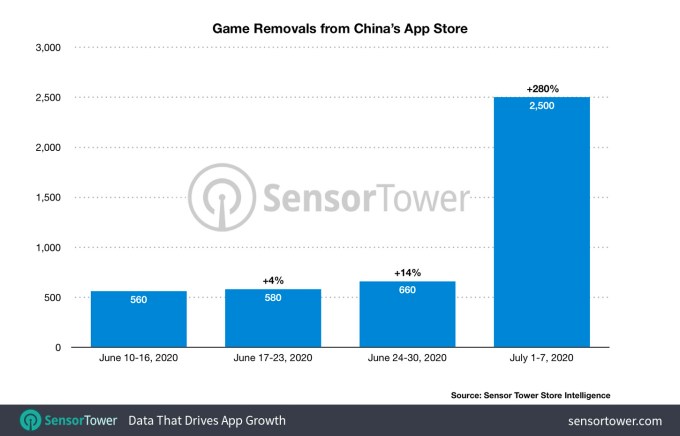
Over 2,500 games removed from China’s App Store in early July
Image Credits: Sensor Tower
More than 2,500 mobile games have been removed from China’s App Store during the first week of July, according to a new report from app store intelligence firm Sensor Tower. The removals were expected due to a planned crackdown on unlicensed games, but this data is the first to demonstrate the impact on the app economy. For comparison, the July figure is four times the number of games that were delisted during the first week of April, five times higher than the first week of May and more than four times higher than the first week of June. Combined, the removed games generated $34.7 million in lifetime gross revenue, with one game accounting for more than $10 million and six that earned more than $1 million. More details are on TechCrunch here.
Longer-term, the fallout from the crackdown may show up in Apple’s bottom line as China has been the most lucrative mobile games market in the world. In 2019, games on China’s App Store generated an estimated $12.6 billion, or 33.2% of all global games spending on the Apple App Store.
Snap launches a developer program for app makers
Snap this week debuted a 13-week remote program, Yellow Collabs, focused on helping developers create deeper Snap Kit integrations. The company wants more developers to integrate its technology into their own apps. Through the new program, companies can choose to work with Snap to integrate the full Snap Kit platform, or they can narrow in on verticals like Snap Minis, Dynamic Lenses, Scan or Snap ML features. The program will run September 21-December 18 this year. Snap had earlier tried to get its technology in front of smaller startups by way of its Yellow accelerator. But this program hadn’t required integrations. The new effort puts a more direct focus on finding developers who want to build in partnership with Snap.
Microsoft xCloud to launch in September with 100+ titles
Image Credits: Microsoft
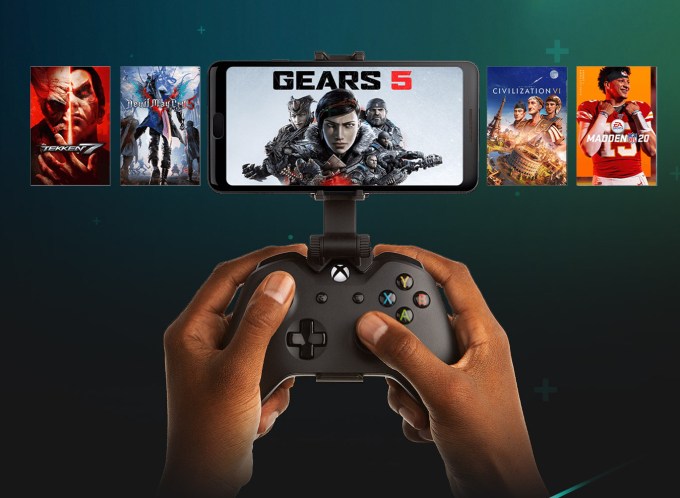
Microsoft’s xCloud — a cross-platform game streaming service and a competitor to Google’s Stadia — is arriving in September. The company this week announced a round of updates for the new service, which allows Xbox users to play their games on mobile devices or even move between consoles and mobile as they continue a game. The blog post says xCloud will first be offered to Xbox Game Pass Ultimate subscribers, a $15/mo service, and will include more than 100 Game Pass titles at launch. Over time, the service will become more broadly available.
The growing trend of moving between devices to play favorite games has already led to mobile hits like Fortnite, Minecraft, Roblox and others. For game developers, this trend matters to the bottom line, as mobile gaming’s lead over consoles and PC has been growing in recent years.
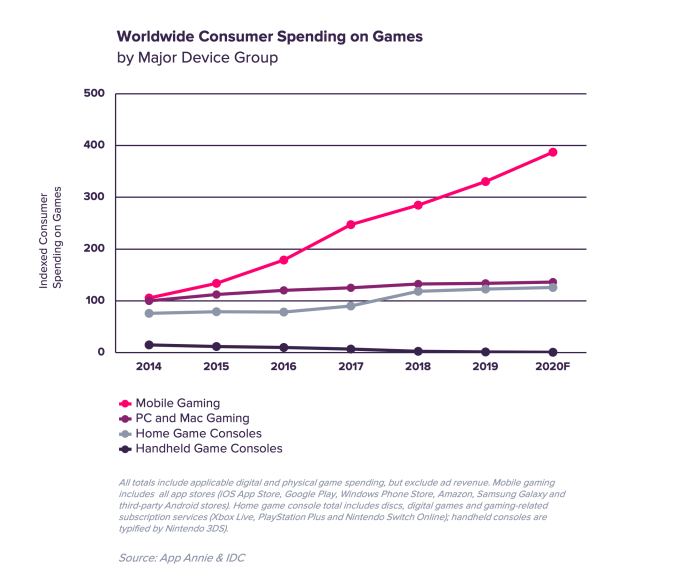
Data from App Annie and IDC indicates that mobile gaming first overtook both home game consoles and PC and Mac gaming for consumer spend in 2014. But in 2020, mobile is extending its lead to more than 2.8x over desktop gaming and 3.1x more than home game consoles. In other words, console makers have to figure out how to bring the mobile market into the fold because that’s where consumers are spending the majority of their money.
Image Credits: App Annie/IDCApple updates coding technology to replace non-inclusive language
Apple on Thursday announced it’s now working to remove and replace non-inclusive language across their developer ecosystem, including within Xcode, platform APIs, documentation and open source projects. The changes began on June 22 with its beta software, including iOS 14, and related developer documentation. For example, it will now replace words like “whitelist” and “blacklist” with “allow list” and “deny list.” The word “main” will take the place of “master” in the default SCM branch in Xcode 12. The word “Black,” when referring to ethnicity or cultural identity, will now be capitalized. These and other changes are available in Apple’s updated Style Guide.
New regulations in EU limit Apple’s and Google’s power over apps
On July 12, a new EU regulation came into effect that creates more rules around why and when apps are removed from their marketplaces, and more. The platforms will now have to provide 30 days notice to publishers before removing apps and terminating services, allowing developers the time to appeal or make changes to their software to come into compliance with the violation or violations in question. That means the platforms won’t be able to just ban apps and pull them down with no warning or explanation — unless the app involves illicit or inappropriate content, safety concerns, counterfeiting, fraud, malware, spam or it has suffered a data breach, MacRumors reported.
Highlights:
• Mandatory 30 days notice before app can be removed from the App Store by Apple • Apple needs to disclose any preferential treatment it gives to big developers & publishers • Apple must have an external mediator for disputes that can't be resolved by App Review https://t.co/vC2aCyCPzu
— Steve Troughton-Smith (@stroughtonsmith) July 14, 2020
The platforms also have to provide more insight into rankings and explain how “trending” apps are chosen, disclose any differentiated treatment between sellers (like better deals that large publishers receive) and share information about their rules and terms in “plain and intelligible language.” Platforms will also have to offer third-party mediation for disputes that can’t be resolved through an app review process.
The regulations apply to platform owners who cater to businesses that sell products through their marketplaces. Apple and Google are large examples of this, but the rules could also apply to Amazon and Valve, notes Macworld.
The regulation goes into effect as both Apple and Google are under scrutiny in the U.S. for anti-competitive behavior. Apple, in particular, has been increasingly held accountable for the way it wields power over its App Store where it takes commissions on businesses — including those it competes with — and forces developers to offer Apple’s own in-app purchase system, when the developers have something to sell.
Microsoft and Google team up on PWAs
Image Credits: PWABuilder
Microsoft’s PWABuilder, an open-source developer tool for building PWAs and Google’s Bubblewrap, a command line and utility for generating Play Store packages from PWAs announced this week they’re working together to help developers publish PWAs in the Google Play Store. Now, PWAs packaged for Google Play via PWABuilder will support the new web shortcuts standard. In addition, PWABuilder now supports the full range of trusted web activity options to make apps better on Android devices. From the PWABuilder, developers can customize the appearance of the Android status bar and nav bar in a PWA, customize the Android splash screen, change their launcher name, use an existing signing key, utilize deeper push notification support, configure their package’s ID and versioning, fallback behavior and more.
Google launches new Kotlin Basics course
Apple isn’t the only one rolling out free educational training for would-be mobile developers. This week, Google announced the launch of Android Basics in Kotlin, a new online course for people without programming experience to learn how to build Android apps. Today, 60% of professional Android developers use Kotlin, and Kotlin powers 70% of Google Play’s top 1,000 apps. The course complements Google’s existing Android Basics curriculum, launched in 2016, which aims to teach programming to non-developers.
U.S. beat China on App Store downloads for first time since 2014, due to coronavirus impacts
Image Credits: Sensor Tower
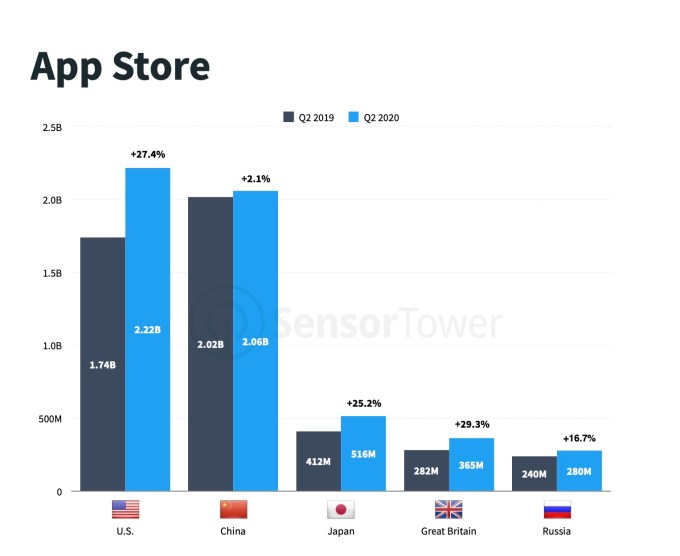
The U.S. App Store’s downloads surpassed China’s downloads for the first time since 2014. According to data from Sensor Tower’s Q2 2020 report, the U.S. App Store saw 27.4% year-over-year growth in the quarter, compared to the 2.1% growth for the China App Store. During the quarter, the U.S. App Store generated 2.22 billion new installs compared with China’s 2.06 billion downloads, to regain the top position. This then translated to the U.S. beating China on App Store consumer spend, as well.
The shift was attributed to the surge in downloads for mobile apps that came as U.S. consumers were forced to stay home under shelter-in-place orders. Leading the downloads were education and business apps, as mobile users and their families had to shift to remote work and online learning. More details are here on TechCrunch.
U.S. Federal court rules Facebook can sue mobile surveillance software makers
A federal court ruled this week that WhatsApp and its parent, Facebook, could proceed with a lawsuit against Israeli mobile surveillance software company NSO Group. Facebook last October had filed a complaint alleging that NSO Group exploited an audio-calling vulnerability in WhatsApp to send malware to about 1,400 mobile devices, which then extracted messages, browser history and contacts from phones. NSO Group argues it has previously been granted immunity from U.S. lawsuits about its dealings with foreign governments, which uses its technology to fight terrorism, under the Foreign Sovereign Immunity Act (FSIA).
Messenger adds Screen-Sharing feature
Image Credits: Facebook
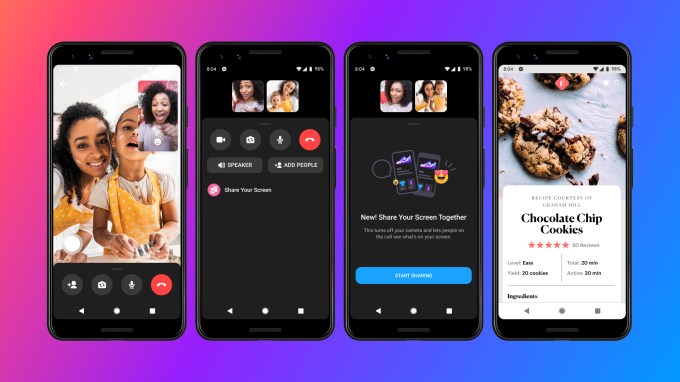
Facebook Messenger may be better known for casual conversations among friends and family, but its latest feature borrows from more professional business communication apps. The mobile messenger this week introduced screen-sharing on iOS and Android — meaning you no longer need a desktop or web app to share your screen. Instead, in a video call, you can use screen-sharing to do things like scroll through your photos, use social media apps together (like Instagram, of course) or go online shopping (which you can also do in Instagram — see below). Screen-sharing will also now support up to 16 users in Messenger Rooms on web and desktop, as well.
Instagram launches new Shop, nears U.S. launch of Reels
Image Credits: Instagram
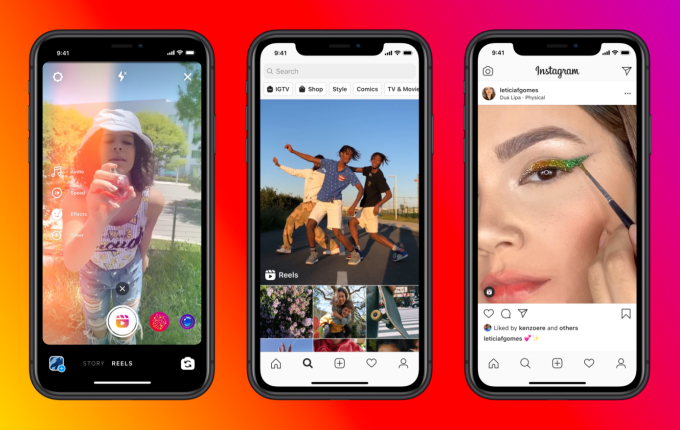
Instagram is making some changes. The company had already begun testing swapping the Activity tab for a Shopping icon. Now, it’s rolling out its newly redesigned Instagram Shop, too. The Instagram Shop is described as a place to browse products from favorite brands and creators, as well as curated collections published by the Instagram-run @shop account. Users can also now check out directly with Facebook Pay on their purchases.
In addition, Instagram confirmed on Thursday it will bring its TikTok rival, Reels, to the U.S. next month.
The company expects to bring the new video feature — which is designed specifically for short-form, creative content — to its platform in early August, a spokesperson said. The U.S. launch comes shortly after Reels’ arrival in India this month, following a ban of TikTok in that market. Reels has also been tested in Brazil, France and Germany. The U.S. won’t be the only country to see Reels’ arrival, but Instagram didn’t say which other markets are on the list.
Image Credits: Instagram
The move to more quickly roll out Reels to more markets comes as TikTok has come under intense scrutiny for its ties to China. India banned the app, along with 58 other mobile applications designed by Chinese firms, in June. The Trump administration more recently said it was considering a similar ban on TikTok, for reasons related to national security. This week, it said such a decision could be just weeks away.
Meanwhile, Rep. Stephen Lynch, chairman of the subcommittee on national security, sought assurances from both Apple and Google this week that they would warn users about applications that are developed, operated or owned by foreign entities and could pose privacy risks to Americans.
Instagram has a real chance at scooping up millions of users around the world if TikTok is removed in more markets outside of India. Already, India’s Roposo, a TikTok rival, says it has seen as many as 500,000 new users joining its app every hour since the ban, and expects to have 100 million by month’s end. Meanwhile in the U.S., Snapchat is testing out a more TikTok-like way to scroll videos.
Apple accused of censorship over Hong Kong pro-democracy app
Apple is accused of denying an App Store release to a pro-democracy app PopVote, a voting platform designed by protest organizers, which also works on Android. While Google Play quickly approved the release, Apple rejected the app for issues with the code. The issues were fixed and the app was resubmitted, but never approved. Developers were unable to reach anyone at Apple about the delay, either.
Hong Kong is still fighting back against the draconian national security law imposed last month by Beijing. Over the past weekend, more than 600,000 voted in the opposition’s primaries, according to Quartz, which broke news of the censored app. The unofficial election had served as a protest against the new law. Local officials had warned that the democratic polls could be illegal, which is why PopVote believes it has been censored and not merely delayed.
Google sued for tracking users in apps via Firebase
Google is being sued for tracking user activity through hundreds of thousands of apps, even after users opted out of information sharing. The suit specifically complains that Google tracks users’ app activity through the Firebase SDK, which can log “the user’s interactions with the app, including viewing content, creating new content, or sharing content.”
App Annie launches ad analytics
Image Credits: App Annie
App Annie is building on last year’s acquisition of analytics company Libring with this week’s launch of a new version of Libring, TechCrunch reported this week. The new product is rebranded as App Annie Ascend and aims to reach a different market, including game publishers and others on the supply side of the ad industry, for example. The launch arrives just as Apple introduced a new way for users to limit ad tracking, which opens up a market for third-party providers of this data. Ascend uses hundreds of connectors to pull data from platforms like AdColony, Unity and Chartboost, allowing customers to see these data sets “side by side.” Reddit and Jam City are among Ascend’s early adopters.
Nextdoor makes it easier to donate to local nonprofits
Neighborhood social networking app Nextdoor has made it easier to donate to local nonprofits with the launch of its new “Sell for Good” feature. The option allows users to sell items on the platform, for example on the For Sale and Free section, then donate the proceeds. The option gives community members other ways to raise funds and saves them a trip to Goodwill, too.
New emoji are on the way
Image Credits: Google
New emoji are arriving on iOS and Android in 2020. For World Emoji Day on Friday, Apple and Google showed off how their respective platforms have designed the new characters. Emojipedia has a first look at Apple’s new emoji, like the ninja, boomerang, piñata and bubble tea, among others. Tim Cook also tweeted a video of the new Memoji. Google shared its plan to bring 117 new emoji to Android 11 this fall, as well as an update to its Gboard app that makes it easier to pick an emoji.
Istanbul and Berlin-based startup Meditopia, which has become a top meditation app in non-English speaking markets, raised$15 million in Series A funding co-led by Creandum and Highland Europe.
Lo-fi, text-based social app for queer women, Lex, raised $1.5 million from in seed funding from Corigin Ventures, X-Factor Ventures, Tusk Ventures and various angels. The app offers text-based personal ads as an alternative to mainstream dating apps.
Google invests $4.5 billion in India’s Reliance Jio Platforms, India’s largest telco, in order to develop a low-cost smartphone to bring new mobile users online. The phone will run a modified version of Android OS and the Play Store. The deal is unusual for the fact that Google and Facebook have invested in the same business. Facebook is the largest minority stakeholder, with a 9.99% share.
Robinhood raised $320 million more for its stock trading app, bringing its latest round to $600 million. The app is now valued at $8.6 billion.
SiriusXM bought podcast app Stitcher from E.W. Scripps in a deal worth up to $325 million. SiriusXM previously acquired Pandora for $3 billion.
Downloads
Mozilla’s VPN for Android
Image Credits: Mozilla
Mozilla’s new VPN app has launched on both Windows and Android this week, after having previously run a pilot program to test the software. The cross-platform app has since been rebranded as Mozilla VPN and is available for $4.99/mo in the U.S., Canada, the U.K., Singapore, Malaysia and New Zealand, to start. iOS, Mac and Linux aren’t yet available, but the latter two are in development. The iOS app was included in the pilot but didn’t launch. Unlike many VPN apps, Mozilla’s generates revenue only through its subscriptions — not selling user data, it claims. However, because of its requirement to signup with a Firefox account, users will have to share their email, location and IP address with the service.
Brief
Image Credits: Brief
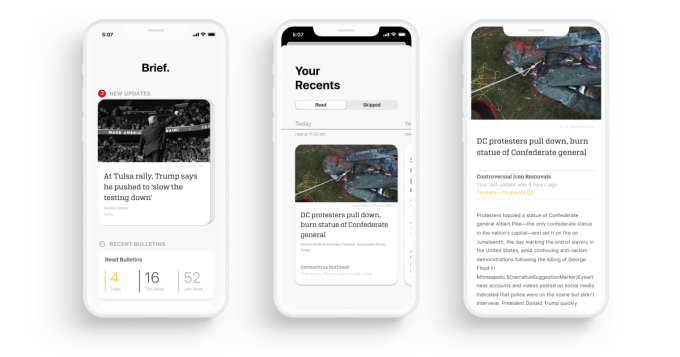
Founded by former Google engineers, Brief is a newly launched news app that aggregates and summarizes the news in hopes of tackling a number of problems with today’s news cycle, including information overload, burnout, media bias and algorithms that prioritize engagement over news accuracy. The app uses a format that involves short summaries, timelines and key quotes to balance reporting from both sides, while keeping the information flow minimal and the data un-personalized so as not to cater to the reader’s bias.
Welcome back to This Week in Apps, the TechCrunch series* that recaps the latest OS news, the applications they support and the money that flows through it all.
The app industry is as hot as ever, with a record 204 billion downloads and $120 billion in consumer spending in 2019. People are now spending three hours and 40 minutes per day using apps, rivaling TV. Apps aren’t just a way to pass idle hours — they’re a big business. In 2019, mobile-first companies had a combined $544 billion valuation, 6.5x higher than those without a mobile focus.
In this series, we help you keep up with the latest news from the world of apps, delivered on a weekly basis.
This week, we’re looking at the political intersections between the app stores and international relations, with news of app censorship in Hong Kong and the potential for a TikTok ban in the U.S. and how rivals are preparing their alternatives. There’s other big news around regulations and lawsuits hitting this week, including one over Firebase-powered app tracking and another that changes how app marketplaces have to operate in the EU. For a bit of fun, we’re also taking a look at some of the new emoji shipping in iOS and Android later this year.
* This Week in Apps was previously available only to Extra Crunch subscribers. Starting this week, we’re making these reports available to all TechCrunch readers.
Headlines
Over 2,500 games removed from China’s App Store in early July
Image Credits: Sensor Tower
More than 2,500 mobile games have been removed from China’s App Store during the first week of July, according to a new report from app store intelligence firm Sensor Tower. The removals were expected due to a planned crackdown on unlicensed games, but this data is the first to demonstrate the impact on the app economy. For comparison, the July figure is four times the number of games that were delisted during the first week of April, five times higher than the first week of May and more than four times higher than the first week of June. Combined, the removed games generated $34.7 million in lifetime gross revenue, with one game accounting for more than $10 million and six that earned more than $1 million. More details are on TechCrunch here.
Longer-term, the fallout from the crackdown may show up in Apple’s bottom line as China has been the most lucrative mobile games market in the world. In 2019, games on China’s App Store generated an estimated $12.6 billion, or 33.2% of all global games spending on the Apple App Store.
Snap launches a developer program for app makers
Snap this week debuted a 13-week remote program, Yellow Collabs, focused on helping developers create deeper Snap Kit integrations. The company wants more developers to integrate its technology into their own apps. Through the new program, companies can choose to work with Snap to integrate the full Snap Kit platform, or they can narrow in on verticals like Snap Minis, Dynamic Lenses, Scan or Snap ML features. The program will run September 21-December 18 this year. Snap had earlier tried to get its technology in front of smaller startups by way of its Yellow accelerator. But this program hadn’t required integrations. The new effort puts a more direct focus on finding developers who want to build in partnership with Snap.
Microsoft xCloud to launch in September with 100+ titles
Image Credits: Microsoft
Microsoft’s xCloud — a cross-platform game streaming service and a competitor to Google’s Stadia — is arriving in September. The company this week announced a round of updates for the new service, which allows Xbox users to play their games on mobile devices or even move between consoles and mobile as they continue a game. The blog post says xCloud will first be offered to Xbox Game Pass Ultimate subscribers, a $15/mo service, and will include more than 100 Game Pass titles at launch. Over time, the service will become more broadly available.
The growing trend of moving between devices to play favorite games has already led to mobile hits like Fortnite, Minecraft, Roblox and others. For game developers, this trend matters to the bottom line, as mobile gaming’s lead over consoles and PC has been growing in recent years.
Data from App Annie and IDC indicates that mobile gaming first overtook both home game consoles and PC and Mac gaming for consumer spend in 2014. But in 2020, mobile is extending its lead to more than 2.8x over desktop gaming and 3.1x more than home game consoles. In other words, console makers have to figure out how to bring the mobile market into the fold because that’s where consumers are spending the majority of their money.
Image Credits: App Annie/IDCApple updates coding technology to replace non-inclusive language
Apple on Thursday announced it’s now working to remove and replace non-inclusive language across their developer ecosystem, including within Xcode, platform APIs, documentation and open source projects. The changes began on June 22 with its beta software, including iOS 14, and related developer documentation. For example, it will now replace words like “whitelist” and “blacklist” with “allow list” and “deny list.” The word “main” will take the place of “master” in the default SCM branch in Xcode 12. The word “Black,” when referring to ethnicity or cultural identity, will now be capitalized. These and other changes are available in Apple’s updated Style Guide.
New regulations in EU limit Apple’s and Google’s power over apps
On July 12, a new EU regulation came into effect that creates more rules around why and when apps are removed from their marketplaces, and more. The platforms will now have to provide 30 days notice to publishers before removing apps and terminating services, allowing developers the time to appeal or make changes to their software to come into compliance with the violation or violations in question. That means the platforms won’t be able to just ban apps and pull them down with no warning or explanation — unless the app involves illicit or inappropriate content, safety concerns, counterfeiting, fraud, malware, spam or it has suffered a data breach, MacRumors reported.
Highlights:
• Mandatory 30 days notice before app can be removed from the App Store by Apple • Apple needs to disclose any preferential treatment it gives to big developers & publishers • Apple must have an external mediator for disputes that can't be resolved by App Review https://t.co/vC2aCyCPzu
— Steve Troughton-Smith (@stroughtonsmith) July 14, 2020
The platforms also have to provide more insight into rankings and explain how “trending” apps are chosen, disclose any differentiated treatment between sellers (like better deals that large publishers receive) and share information about their rules and terms in “plain and intelligible language.” Platforms will also have to offer third-party mediation for disputes that can’t be resolved through an app review process.
The regulations apply to platform owners who cater to businesses that sell products through their marketplaces. Apple and Google are large examples of this, but the rules could also apply to Amazon and Valve, notes Macworld.
The regulation goes into effect as both Apple and Google are under scrutiny in the U.S. for anti-competitive behavior. Apple, in particular, has been increasingly held accountable for the way it wields power over its App Store where it takes commissions on businesses — including those it competes with — and forces developers to offer Apple’s own in-app purchase system, when the developers have something to sell.
Microsoft and Google team up on PWAs
Image Credits: PWABuilder
Microsoft’s PWABuilder, an open-source developer tool for building PWAs and Google’s Bubblewrap, a command line and utility for generating Play Store packages from PWAs announced this week they’re working together to help developers publish PWAs in the Google Play Store. Now, PWAs packaged for Google Play via PWABuilder will support the new web shortcuts standard. In addition, PWABuilder now supports the full range of trusted web activity options to make apps better on Android devices. From the PWABuilder, developers can customize the appearance of the Android status bar and nav bar in a PWA, customize the Android splash screen, change their launcher name, use an existing signing key, utilize deeper push notification support, configure their package’s ID and versioning, fallback behavior and more.
Google launches new Kotlin Basics course
Apple isn’t the only one rolling out free educational training for would-be mobile developers. This week, Google announced the launch of Android Basics in Kotlin, a new online course for people without programming experience to learn how to build Android apps. Today, 60% of professional Android developers use Kotlin, and Kotlin powers 70% of Google Play’s top 1,000 apps. The course complements Google’s existing Android Basics curriculum, launched in 2016, which aims to teach programming to non-developers.
U.S. beat China on App Store downloads for first time since 2014, due to coronavirus impacts
Image Credits: Sensor Tower
The U.S. App Store’s downloads surpassed China’s downloads for the first time since 2014. According to data from Sensor Tower’s Q2 2020 report, the U.S. App Store saw 27.4% year-over-year growth in the quarter, compared to the 2.1% growth for the China App Store. During the quarter, the U.S. App Store generated 2.22 billion new installs compared with China’s 2.06 billion downloads, to regain the top position. This then translated to the U.S. beating China on App Store consumer spend, as well.
The shift was attributed to the surge in downloads for mobile apps that came as U.S. consumers were forced to stay home under shelter-in-place orders. Leading the downloads were education and business apps, as mobile users and their families had to shift to remote work and online learning. More details are here on TechCrunch.
U.S. Federal court rules Facebook can sue mobile surveillance software makers
A federal court ruled this week that WhatsApp and its parent, Facebook, could proceed with a lawsuit against Israeli mobile surveillance software company NSO Group. Facebook last October had filed a complaint alleging that NSO Group exploited an audio-calling vulnerability in WhatsApp to send malware to about 1,400 mobile devices, which then extracted messages, browser history and contacts from phones. NSO Group argues it has previously been granted immunity from U.S. lawsuits about its dealings with foreign governments, which uses its technology to fight terrorism, under the Foreign Sovereign Immunity Act (FSIA).
Messenger adds Screen-Sharing feature
Image Credits: Facebook
Facebook Messenger may be better known for casual conversations among friends and family, but its latest feature borrows from more professional business communication apps. The mobile messenger this week introduced screen-sharing on iOS and Android — meaning you no longer need a desktop or web app to share your screen. Instead, in a video call, you can use screen-sharing to do things like scroll through your photos, use social media apps together (like Instagram, of course) or go online shopping (which you can also do in Instagram — see below). Screen-sharing will also now support up to 16 users in Messenger Rooms on web and desktop, as well.
Instagram launches new Shop, nears U.S. launch of Reels
Image Credits: Instagram
Instagram is making some changes. The company had already begun testing swapping the Activity tab for a Shopping icon. Now, it’s rolling out its newly redesigned Instagram Shop, too. The Instagram Shop is described as a place to browse products from favorite brands and creators, as well as curated collections published by the Instagram-run @shop account. Users can also now check out directly with Facebook Pay on their purchases.
In addition, Instagram confirmed on Thursday it will bring its TikTok rival, Reels, to the U.S. next month.
The company expects to bring the new video feature — which is designed specifically for short-form, creative content — to its platform in early August, a spokesperson said. The U.S. launch comes shortly after Reels’ arrival in India this month, following a ban of TikTok in that market. Reels has also been tested in Brazil, France and Germany. The U.S. won’t be the only country to see Reels’ arrival, but Instagram didn’t say which other markets are on the list.
Image Credits: Instagram
The move to more quickly roll out Reels to more markets comes as TikTok has come under intense scrutiny for its ties to China. India banned the app, along with 58 other mobile applications designed by Chinese firms, in June. The Trump administration more recently said it was considering a similar ban on TikTok, for reasons related to national security. This week, it said such a decision could be just weeks away.
Meanwhile, Rep. Stephen Lynch, chairman of the subcommittee on national security, sought assurances from both Apple and Google this week that they would warn users about applications that are developed, operated or owned by foreign entities and could pose privacy risks to Americans.
Instagram has a real chance at scooping up millions of users around the world if TikTok is removed in more markets outside of India. Already, India’s Roposo, a TikTok rival, says it has seen as many as 500,000 new users joining its app every hour since the ban, and expects to have 100 million by month’s end. Meanwhile in the U.S., Snapchat is testing out a more TikTok-like way to scroll videos.
Apple accused of censorship over Hong Kong pro-democracy app
Apple is accused of denying an App Store release to a pro-democracy app PopVote, a voting platform designed by protest organizers, which also works on Android. While Google Play quickly approved the release, Apple rejected the app for issues with the code. The issues were fixed and the app was resubmitted, but never approved. Developers were unable to reach anyone at Apple about the delay, either.
Hong Kong is still fighting back against the draconian national security law imposed last month by Beijing. Over the past weekend, more than 600,000 voted in the opposition’s primaries, according to Quartz, which broke news of the censored app. The unofficial election had served as a protest against the new law. Local officials had warned that the democratic polls could be illegal, which is why PopVote believes it has been censored and not merely delayed.
Google sued for tracking users in apps via Firebase
Google is being sued for tracking user activity through hundreds of thousands of apps, even after users opted out of information sharing. The suit specifically complains that Google tracks users’ app activity through the Firebase SDK, which can log “the user’s interactions with the app, including viewing content, creating new content, or sharing content.”
App Annie launches ad analytics
Image Credits: App Annie
App Annie is building on last year’s acquisition of analytics company Libring with this week’s launch of a new version of Libring, TechCrunch reported this week. The new product is rebranded as App Annie Ascend and aims to reach a different market, including game publishers and others on the supply side of the ad industry, for example. The launch arrives just as Apple introduced a new way for users to limit ad tracking, which opens up a market for third-party providers of this data. Ascend uses hundreds of connectors to pull data from platforms like AdColony, Unity and Chartboost, allowing customers to see these data sets “side by side.” Reddit and Jam City are among Ascend’s early adopters.
Nextdoor makes it easier to donate to local nonprofits
Neighborhood social networking app Nextdoor has made it easier to donate to local nonprofits with the launch of its new “Sell for Good” feature. The option allows users to sell items on the platform, for example on the For Sale and Free section, then donate the proceeds. The option gives community members other ways to raise funds and saves them a trip to Goodwill, too.
New emoji are on the way
Image Credits: Google
New emoji are arriving on iOS and Android in 2020. For World Emoji Day on Friday, Apple and Google showed off how their respective platforms have designed the new characters. Emojipedia has a first look at Apple’s new emoji, like the ninja, boomerang, piñata and bubble tea, among others. Tim Cook also tweeted a video of the new Memoji. Google shared its plan to bring 117 new emoji to Android 11 this fall, as well as an update to its Gboard app that makes it easier to pick an emoji.
Istanbul and Berlin-based startup Meditopia, which has become a top meditation app in non-English speaking markets, raised$15 million in Series A funding co-led by Creandum and Highland Europe.
Lo-fi, text-based social app for queer women, Lex, raised $1.5 million from in seed funding from Corigin Ventures, X-Factor Ventures, Tusk Ventures and various angels. The app offers text-based personal ads as an alternative to mainstream dating apps.
Google invests $4.5 billion in India’s Reliance Jio Platforms, India’s largest telco, in order to develop a low-cost smartphone to bring new mobile users online. The phone will run a modified version of Android OS and the Play Store. The deal is unusual for the fact that Google and Facebook have invested in the same business. Facebook is the largest minority stakeholder, with a 9.99% share.
Robinhood raised $320 million more for its stock trading app, bringing its latest round to $600 million. The app is now valued at $8.6 billion.
SiriusXM bought podcast app Stitcher from E.W. Scripps in a deal worth up to $325 million. SiriusXM previously acquired Pandora for $3 billion.
Downloads
Mozilla’s VPN for Android
Image Credits: Mozilla
Mozilla’s new VPN app has launched on both Windows and Android this week, after having previously run a pilot program to test the software. The cross-platform app has since been rebranded as Mozilla VPN and is available for $4.99/mo in the U.S., Canada, the U.K., Singapore, Malaysia and New Zealand, to start. iOS, Mac and Linux aren’t yet available, but the latter two are in development. The iOS app was included in the pilot but didn’t launch. Unlike many VPN apps, Mozilla’s generates revenue only through its subscriptions — not selling user data, it claims. However, because of its requirement to signup with a Firefox account, users will have to share their email, location and IP address with the service.
Brief
Image Credits: Brief
Founded by former Google engineers, Brief is a newly launched news app that aggregates and summarizes the news in hopes of tackling a number of problems with today’s news cycle, including information overload, burnout, media bias and algorithms that prioritize engagement over news accuracy. The app uses a format that involves short summaries, timelines and key quotes to balance reporting from both sides, while keeping the information flow minimal and the data un-personalized so as not to cater to the reader’s bias.
Ilse Calderon is an investor at OVO Fund where she specializes in pre-seed investments across capital-efficient markets. Prior to OVO, Ilse spent a year at Silicon Valley Bank rotating across consumer and software teams.
While it’s no secret Hispanics represent unparalleled growth opportunities for the U.S. economy, most startups don’t realize Hispanic youth means an abundance of prime spending years (translation: dollars for businesses). The average age of a Hispanic living in the U.S. is 28. Meanwhile, the average age of their white counterpart is 42. Nearly one in every five people in the U.S. identifies as Hispanic.
Those few companies that do notice Hispanics and their massive purchasing power (~$1.5 trillion) tend to be legacy companies doing a subpar job at capturing the Hispanic consumer. Furthermore, they don’t target the most valuable member of the Hispanic community — what I call, the “Hypercultural Latinx.” They are where tons of unspent dollars lie.
As an investor and member of the Hispanic community, I’m confident the startups solving problems for this Hypercultural Latinx member will have the potential to create companies with venture-like returns.
Who is the Hypercultural Latinx?
The Hypercultural Latinx is a second-generation Hispanic who is 100% Hispanic and 100% American. And while that might sometimes lead to misunderstandings and conflicts with her white counterparts, it also means she excels by creating a pseudo culture where she can thrive best. She brings her unique characteristics to this self-created culture — a culture where her customs, language and values shine through. Furthermore, this person, who often identifies as a Gen Zer or young millennial, is a fanatic of mobile. After all, across socioeconomic classes, their disposable income is disproportionately going to screens (of all types) and tech toys.
I mean, just go into your Hispanic friend’s home: They are likely to have more TV screens than people residing in that household. In fact, a bewildering 29% of U.S. Hispanics planned to purchase a new TV set just ahead of the Super Bowl (guilty as charged). For reference, of the 30% of overall Americans that planned to buy a TV in 2017, only 2.8% purchased in the days before the Super Bowl. Heck, when my family moved, we bought TV screens for every room even before the living room was furnished. Technology — especially newer tech, is significantly more tempting to Hispanics.
The Hypercultural Latinx should be top of mind for venture investors and founders. She desires to test the untested, and thus, is likely to cross the chasm before the early majority. This makes her an ideal customer segment for consumer startups.
Image Credits: Ilsa Calderon
Startup founders and VCs alike are missing out. As an investor, I often find myself reduced to frustration with the lack of founders and investors committed to exploring audience segments outside cookie-cutter ones. We might not need another consumer vertical product solving a half-felt pain point for the highly educated, white female with a $100,000+ salary living in NYC, SF or LA. However, we do need more products catered toward the Hypercultural Latinx who, by the way, outspend their white counterparts across most categories. In the same way Fenty Beauty exists to solve the make-up needs of primarily Black women, we need that for the Hypercultural Latinx population.
Numbers aside, investors should care about Hypercultural Latinx because they are tech-forward trendsetters who adopt social media at higher rates than their white peers. For example, a Hispanic youth is 87% more likely to use WhatsApp. Additionally, they produce an exorbitant amount of videos on Tik Tok. Several Tik Tok Hispanic-centric hashtags, such as #hispanicmom, are wildly popular and boost over 44 million views. For reference, the most followed Tik Tok stars, like Addison Rae, have just over 47 million followers. In fact, one Hispanic Tik Tok queen, Rosa, has already reached pop culture peak.
Facebook ad experiment
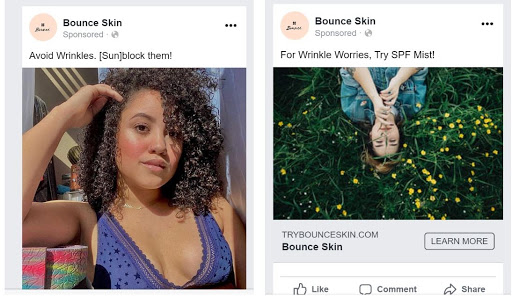
Examples of ads I ran. (Image Credits: Ilse Calderon )
If you are more driven by quantitative data, know that paid spend targeting this Hypercultural Latinx could result in lower click cost rates and higher engagement. I ran a two-week experiment on Facebook to prove out this hypothesis. I created a landing page for a fake sunscreen brand, Bounce Skin, with a fake first product, an SPF mist. I created a couple of ads. Then, I ran ads on Facebook targeting two audiences: young Hispanic girls (the Hypercultural Latinx audience) and white girls. The average click cost for the young Hispanic girl audience was $0.06 per click; for white girls, it was $0.33 per click. Of course, my experiment was limited, but it did demonstrate that the Hypercultural Latinx is out there and craving content that tells the narrative of her life. (For more details, please check out this Medium post).
Why is the tech community decades behind when it comes to this Hispanic segment?
Three key reasons: fear, the subpar state of Hispanic marketing and white men cannot relate to the Hypercultural Latinx.
Fear. There’s always risk associated with offending the same audience you are trying to captivate. Just take a look at the beauty industry and its frequently associated race problem. The world is not white, and beauty brands that think it is have lived through PR nightmares. Even beyond beauty, tech startups fear negative press cutting short the life of their business. However, it is this gap that creates opportunity.
I encourage the right set of up and coming startups to authentically pursue the Hypercultural Latinx. Even though legacy companies might have heavier balance sheets, they don’t have the clout to lure this young, bicultural consumer. Let’s just say, no 18-year-old is going to be rushing to the Walmarts of the world looking for aspirational goods. They are even less likely to browse Walmart.com for content.
The state of U.S. Hispanic marketing is ridiculous. In fact, there’s a graveyard of failed marketing attempts to the Hispanic community. Most recently, there was a Mother’s Day Kmart ad that blended two Spanish words (Mama + Namaste) to accidentally create a word translating into a very vulgar and offensive word. Furthermore, given most businesses’ “one size fits all” approach to Hispanic marketing, it’s no surprise they keep getting it wrong. However, if anyone is best positioned to take Hispanic marketing out of the 20th century, it’s small, nimble startups with no history of bad marketing or image problems.
Perhaps the biggest reason the tech community isn’t approaching the Hypercultural Latinx is because most venture-backed founders and investors are white men. These white men cannot possibly relate to the life experiences of young, biracial teenagers and young adults living in white America. Last year, a measly less than 2% of venture funding went to Hispanic founders — those are the founders best suited to be able to genuinely capture the eyeballs and wallets of this Hispanic youth. On the investor side, it’s even worse with only 1% of venture investors identifying as Hispanic.
The solution is complex, and frankly, I can’t provide a solution with clarity. However, we can start by building goodwill and non-transactional relationships with those role models Hypercultural Latinx admire. I’ve found that these role models are usually under-the-radar influencers, like Glenda. We as investors can also diversify our top of funnel deal flow to include more underrepresented founders. Lastly, founders with a reach and network of Hispanic youth should consider diving deep into the pain points of Hypercultural Latinx lives.
The new darling of the VC world will be solving problems for the Hypercultural Latinx
In order to become this new VC darling, founders approaching the Hypercultural Latinx should consider two suggestions: a platform play and an army of social guides.
The platform approach entails creating an organization of brands that later spew out new brands horizontally or vertically. An example of this is the company behind my favorite over-priced lemon drink, Iris Nova, or Glossier-team spin-off, Arfa.
The second approach, an army of social guides, means combining elements of affiliate marketing with a kick-ass referral program to create loyal fans that are financially incentivized to sell your products. Sequoia-backed Stella & Dot built out their version of social guides that ultimately became its most defensible strategy. Additionally, in a post-coronavirus world, this strategy is a way for an ever-increasing labor force to get back on their feet.
At the end of the day, the Hypercultural Latinx demographic is only increasing, and so are its needs. For founders who truly care about the U.S. Hispanic market, pay attention to this hidden generation. For investors, look beyond solutions for your own problems. Winning over the multi-faceted Hypercultural Latinx is not easy, but startups that successfully do so attract my attention and my investment dollars.
Ilse Calderon is an investor at OVO Fund where she specializes in pre-seed investments across capital-efficient markets. Prior to OVO, Ilse spent a year at Silicon Valley Bank rotating across consumer and software teams.
While it’s no secret Hispanics represent unparalleled growth opportunities for the U.S. economy, most startups don’t realize Hispanic youth means an abundance of prime spending years (translation: dollars for businesses). The average age of a Hispanic living in the U.S. is 28. Meanwhile, the average age of their white counterpart is 42. Nearly one in every five people in the U.S. identifies as Hispanic.
Those few companies that do notice Hispanics and their massive purchasing power (~$1.5 trillion) tend to be legacy companies doing a subpar job at capturing the Hispanic consumer. Furthermore, they don’t target the most valuable member of the Hispanic community — what I call, the “Hypercultural Latinx.” They are where tons of unspent dollars lie.
As an investor and member of the Hispanic community, I’m confident the startups solving problems for this Hypercultural Latinx member will have the potential to create companies with venture-like returns.
Who is the Hypercultural Latinx?
The Hypercultural Latinx is a second-generation Hispanic who is 100% Hispanic and 100% American. And while that might sometimes lead to misunderstandings and conflicts with her white counterparts, it also means she excels by creating a pseudo culture where she can thrive best. She brings her unique characteristics to this self-created culture — a culture where her customs, language and values shine through. Furthermore, this person, who often identifies as a Gen Zer or young millennial, is a fanatic of mobile. After all, across socioeconomic classes, their disposable income is disproportionately going to screens (of all types) and tech toys.
I mean, just go into your Hispanic friend’s home: They are likely to have more TV screens than people residing in that household. In fact, a bewildering 29% of U.S. Hispanics planned to purchase a new TV set just ahead of the Super Bowl (guilty as charged). For reference, of the 30% of overall Americans that planned to buy a TV in 2017, only 2.8% purchased in the days before the Super Bowl. Heck, when my family moved, we bought TV screens for every room even before the living room was furnished. Technology — especially newer tech, is significantly more tempting to Hispanics.
The Hypercultural Latinx should be top of mind for venture investors and founders. She desires to test the untested, and thus, is likely to cross the chasm before the early majority. This makes her an ideal customer segment for consumer startups.
Image Credits: Ilsa Calderon
Startup founders and VCs alike are missing out. As an investor, I often find myself reduced to frustration with the lack of founders and investors committed to exploring audience segments outside cookie-cutter ones. We might not need another consumer vertical product solving a half-felt pain point for the highly educated, white female with a $100,000+ salary living in NYC, SF or LA. However, we do need more products catered toward the Hypercultural Latinx who, by the way, outspend their white counterparts across most categories. In the same way Fenty Beauty exists to solve the make-up needs of primarily Black women, we need that for the Hypercultural Latinx population.
Numbers aside, investors should care about Hypercultural Latinx because they are tech-forward trendsetters who adopt social media at higher rates than their white peers. For example, a Hispanic youth is 87% more likely to use WhatsApp. Additionally, they produce an exorbitant amount of videos on Tik Tok. Several Tik Tok Hispanic-centric hashtags, such as #hispanicmom, are wildly popular and boost over 44 million views. For reference, the most followed Tik Tok stars, like Addison Rae, have just over 47 million followers. In fact, one Hispanic Tik Tok queen, Rosa, has already reached pop culture peak.
Facebook ad experiment
Examples of ads I ran. (Image Credits: Ilse Calderon )
If you are more driven by quantitative data, know that paid spend targeting this Hypercultural Latinx could result in lower click cost rates and higher engagement. I ran a two-week experiment on Facebook to prove out this hypothesis. I created a landing page for a fake sunscreen brand, Bounce Skin, with a fake first product, an SPF mist. I created a couple of ads. Then, I ran ads on Facebook targeting two audiences: young Hispanic girls (the Hypercultural Latinx audience) and white girls. The average click cost for the young Hispanic girl audience was $0.06 per click; for white girls, it was $0.33 per click. Of course, my experiment was limited, but it did demonstrate that the Hypercultural Latinx is out there and craving content that tells the narrative of her life. (For more details, please check out this Medium post).
Why is the tech community decades behind when it comes to this Hispanic segment?
Three key reasons: fear, the subpar state of Hispanic marketing and white men cannot relate to the Hypercultural Latinx.
Fear. There’s always risk associated with offending the same audience you are trying to captivate. Just take a look at the beauty industry and its frequently associated race problem. The world is not white, and beauty brands that think it is have lived through PR nightmares. Even beyond beauty, tech startups fear negative press cutting short the life of their business. However, it is this gap that creates opportunity.
I encourage the right set of up and coming startups to authentically pursue the Hypercultural Latinx. Even though legacy companies might have heavier balance sheets, they don’t have the clout to lure this young, bicultural consumer. Let’s just say, no 18-year-old is going to be rushing to the Walmarts of the world looking for aspirational goods. They are even less likely to browse Walmart.com for content.
The state of U.S. Hispanic marketing is ridiculous. In fact, there’s a graveyard of failed marketing attempts to the Hispanic community. Most recently, there was a Mother’s Day Kmart ad that blended two Spanish words (Mama + Namaste) to accidentally create a word translating into a very vulgar and offensive word. Furthermore, given most businesses’ “one size fits all” approach to Hispanic marketing, it’s no surprise they keep getting it wrong. However, if anyone is best positioned to take Hispanic marketing out of the 20th century, it’s small, nimble startups with no history of bad marketing or image problems.
Perhaps the biggest reason the tech community isn’t approaching the Hypercultural Latinx is because most venture-backed founders and investors are white men. These white men cannot possibly relate to the life experiences of young, biracial teenagers and young adults living in white America. Last year, a measly less than 2% of venture funding went to Hispanic founders — those are the founders best suited to be able to genuinely capture the eyeballs and wallets of this Hispanic youth. On the investor side, it’s even worse with only 1% of venture investors identifying as Hispanic.
The solution is complex, and frankly, I can’t provide a solution with clarity. However, we can start by building goodwill and non-transactional relationships with those role models Hypercultural Latinx admire. I’ve found that these role models are usually under-the-radar influencers, like Glenda. We as investors can also diversify our top of funnel deal flow to include more underrepresented founders. Lastly, founders with a reach and network of Hispanic youth should consider diving deep into the pain points of Hypercultural Latinx lives.
The new darling of the VC world will be solving problems for the Hypercultural Latinx
In order to become this new VC darling, founders approaching the Hypercultural Latinx should consider two suggestions: a platform play and an army of social guides.
The platform approach entails creating an organization of brands that later spew out new brands horizontally or vertically. An example of this is the company behind my favorite over-priced lemon drink, Iris Nova, or Glossier-team spin-off, Arfa.
The second approach, an army of social guides, means combining elements of affiliate marketing with a kick-ass referral program to create loyal fans that are financially incentivized to sell your products. Sequoia-backed Stella & Dot built out their version of social guides that ultimately became its most defensible strategy. Additionally, in a post-coronavirus world, this strategy is a way for an ever-increasing labor force to get back on their feet.
At the end of the day, the Hypercultural Latinx demographic is only increasing, and so are its needs. For founders who truly care about the U.S. Hispanic market, pay attention to this hidden generation. For investors, look beyond solutions for your own problems. Winning over the multi-faceted Hypercultural Latinx is not easy, but startups that successfully do so attract my attention and my investment dollars.
Kaiser Hwang is a longtime member of the games community and a vice president at Forte, an organization building an open economic platform for games.
“Animal Crossing: New Horizons” is a bonafide wonder. The game has been setting new records for Nintendo, is adored by players and critics alike and provides millions of players a peaceful escape during these unprecedented times.
But there’s been something even more extraordinary happening on the fringe: Players are finding ways to augment the game experience through community-organized activities and tools. These include free weed-pulling services (tips welcome!) from virtual Samaritans, and custom-designed items for sale — for real-world money, via WeChat Pay and AliPay.
Well-known personalities and companies are also contributing, with “Rogue One: A Star Wars Story” scribe Gary Whitta hosting an A-list celebrity talk show using the game, and luxury fashion brand Marc Jacobs providing some of its popular clothing designs to players. 100 Thieves, the white-hot esports and apparel company, even created and gave away digital versions of its entire collection of impossible-to-find clothes.
This community-based phenomenon gives us a pithy glimpse into not only where games are inevitably going, but what their true potential is as a form of creative, technical and economic expression. It also exemplifies what we at Forte call “community economics,” a system that lies at the heart of our aim in bringing new creative and economic opportunities to billions of people around the world.
What is community economics?
Formally, community economics is the synthesis of economic activity that takes place inside, and emerges outside, virtual game worlds. It is rooted in a cooperative economic relationship between all participants in a game’s network, and characterized by an economic pluralism that is unified by open technology owned by no single party. And notably, it results in increased autonomy for players, better business models for game creators, and new economic and creative opportunities for both.
The fundamental shift that underlies community economics is the evolution of games from centralized entertainment experiences to open economic platforms. We believe this is where things are heading.
Fallout continues from this week’s big Twitter hack, podcaster Harry Stebbings launches a small VC fund and robots help with sorting the mail. Here’s your Daily Crunch for July 17, 2020.
The big story: More details emerge in Twitter hack
As we recapped in yesterday’s newsletter, a number of high-profile Twitter accounts were hacked earlier this week as part of what appeared to be a cryptocurrency scam. So how bad was it?
“We have no evidence that attackers accessed passwords,” the company said. “Currently, we don’t believe resetting your password is necessary.”
However, Twitter did not comment on whether hackers were able to access users’ direct messages. Senator Ron Wyden criticized the company for failing to end-to-end encrypt DMs: “While it still isn’t clear if the hackers behind yesterday’s incident gained access to Twitter direct messages, this is a vulnerability that has lasted for far too long, and one that is not present in other, competing platforms.”
The Daily Crunch is TechCrunch’s roundup of our biggest and most important stories. If you’d like to get this delivered to your inbox every day at around 3pm Pacific, you can subscribe here.
We continue to be stuck inside, and video games continue to sell well. It’s pretty much as simple as that, honestly. I mean, there’s more nuance than that, obviously, but that’s really the top line takeaway from NPD’s June gaming numbers.
More specifically, last month saw $1.2 billion total spent on gaming, up 26% from the year prior. That marks the highest figure for June since 2009. With June included, the first half of the year saw $6.6 billion total spent for the industry, the highest figure for that time frame since 2010, when it hit $7.0 billion. Not too shabby, considering the extremely tenuous economic situation the world finds itself in.
Gaming software spending hit $570 for the month, up a full 49% from 2019. TheLast of Us: Part II took the top spot for June, making it the third-best-selling title for the year and marking the highest launch month sales figure for the year so far.
Also notable is the success of the Nintendo Switch exercise title Ring Fit Adventure, which shot to No. 7 after only hitting No. 835 in May. The game’s success is no doubt due in part to the lack of access to gyms and other more traditional workouts. The figure was previously skewed by a depletion of stock for the game — something that has also impacted Switch sales.
Even so, the Nintendo console was once again the best-selling system for the month.
Many major websites and services were unreachable for a period Friday afternoon due to issues at Cloudflare’s 1.1.1.1 DNS service. The outage seems to have started at about 2:15 Pacific time and lasted for about 25 minutes before connections began to be restored. Google DNS may also have been affected.
Update: Cloudflare at 2:46 says “the issue has been identified and a fix is being implemented.”
Discord, Feedly, Politico, Shopify and League of Legends were all affected, giving an idea of the breadth of the issue. Not only were websites down but also some status pages meant to provide warnings and track outages.
The DNS, or Domain Name System, is an integral part of the web, connecting domains (like TechCrunch.com) to their IP addresses (such as 152.195.50.33). If it goes down, it doesn’t matter whether a website’s servers are working or not — users can’t even reach the site or service in the first place. Internet providers usually have their own, but Google’s has existed for many years, and Cloudflare launched its own in late 2018.
Cloudflare wrote in a tweet and an update to its own status page (which thankfully remained available) that it was “investigating issues with Cloudflare Resolver and our edge network in certain locations. Customers using Cloudflare services in certain regions are impacted as requests might fail and/or errors may be displayed.”
We are aware that some regions may be experiencing issues with some Cloudflare services. We are currently investigating.
Some of the services and sites also relied on Google’s Public DNS service (8.8.8.8), which appeared to be having simultaneous issues, but TechCrunch has not been able to directly confirm this. Google shows no interruption to services on its status dashboard.
This story is developing — check back for updates.
From a partnership with the Russian company 3D Bioprinting Solutions to make chicken meat replacements using plant material and lab cultured chicken cells to an expansion of its Beyond Fried Chicken pilots to Southern California, KFC is aggressively pushing forward with its experiments around the future of food.
In Russia, that means providing 3D Bioprinting with breading and spices to see if the company’s chicken replacements can match the KFC taste, according to a statement from the company. As the company said, there are no other methods available on the market that can allow for the creation of complex products from animal cells.
“3D bioprinting technologies, initially widely recognized in medicine, are nowadays gaining popularity in producing foods such as meat,” said Yusef Khesuani, co-founder and Managing Partner of 3D Bioprinting Solutions, in a statement. “In the future, the rapid development of such technologies will allow us to make 3D-printed meat products more accessible and we are hoping that the technology created as a result of our cooperation with KFC will help accelerate the launch of cell-based meat products on the market.”
Image: Beyond Meat
Closer to its home base in the US, KFC is working with the publicly traded plant-based meat substitute developer Beyond Meat on an expansion of their recent trials for KFC’s Beyond Fried Chicken.
Continuing its wildly successful limited trials in Atlanta, Nashville, and Charlotte, KFC is now setting its sights on the bigger markets in Southern California, near Beyond Meat’s headquarters in Los Angeles.
Beginning on July 20, KFC will be selling Beyond Fried Chicken at 50 stores the Los Angeles, Orange County and San Diego areas, while supplies last, the company said.
Unlike the 3D bioprinting process used by its Russian partner, Beyond Meat uses plant-based products exclusively to make its faux chicken meat.
Beyond Fried Chicken first appeared on the market last year in Atlanta and was made available in additional markets in the South earlier this year. The menu item — first available in a one-day consumer test in Atlanta — sold out in less than five hours, the company said.
“I’ve said it before: despite many imitations, the flavor of Kentucky Fried Chicken is one that has never been replicated, until Beyond Fried Chicken,” said Andrea Zahumensky, chief marketing officer, KFC U.S. “We know the east coast loved it, so we thought we’d give those on the west coast a chance to tell us what they think in an exclusive sneak peek.
Beyond Fried Chicken nuggets will be available as a six or 12-piece à la carte or as part of a combo, complete with a side and medium drink starting at $6.99, plus tax.
Meanwhile, KFC’s Russian project aims to create the world’s first lab-made chicken nuggets, and plans to release them this fall in Moscow.
Popularizing lab-grown meat could have a significant impact on climate change according to reports. The company cited statistics indicating that growing meat from cells could half the energy consumption involved in meat production and reduce greenhouse gas emissions while dramatically cutting land use.
“Crafted meat products are the next step in the development of our ‘restaurant of the future’ concept,” said Raisa Polyakova, General Manager of KFC Russia & CIS, in a statement. “Our experiment in testing 3D bioprinting technology to create chicken products can also help address several looming global problems. We are glad to contribute to its development and are working to make it available to thousands of people in Russia and, if possible, around the world.”