
Year: 2020

13 Jul 2020

Apple allocates its first $400M from $2.5B commitment to address California’s housing crisis

Apple announced this morning it’s allocating more than $400 million toward affordable housing projects and other homeowner assistance programs in California, as a part of its earlier multi-year pledge of $2.5 billion to address the state’s housing crisis and homelessness issues.

The funding is expected to support thousands of Californians with first-time homebuyer assistance or new, affordable housing units, Apple says.

Projects launching in 2020 include 250 new units of affordable housing across the Bay Area — the first affordable housing developments funded in a private-public partnership with Housing Trust Silicon Valley. The units will span the North, East, and South Bay regions, and will include many units reserved for veterans, the homeless or formerly homeless, and residents with developmental disabilities.
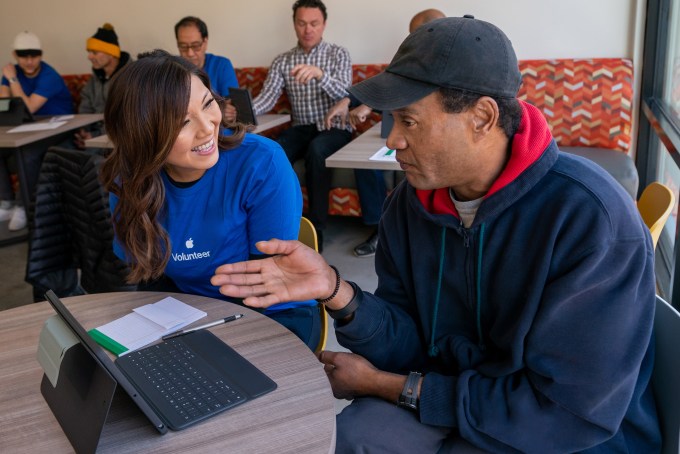
Image Credits: Apple


Apple is also offering a mortgage and down payment assistance fund and an affordable housing investment support program, both created in conjunction with the California Housing Finance Agency (CalHFA). Apple has provided mortgage and down payment assistance to hundreds of first-time home buyers to date, it says, with additional benefits reserved for teachers, veterans, and firefighters. The CalHFA’s assistance program is typically diverse, as well, with over 65% of borrowers identifying as Hispanic, Black, Asian, Pacific Islander, or American Indian.

This month, Apple will launch an affordable housing investment support program with CalHFA, aimed at funding the development of new, very low to moderate-income housing at a lower costs. The program is expected to produce a number of affordable housing units in California over the next five years.

In addition, Apple is supporting the construction of affordable housing units through a partnership with Destination: Home, which supports the homeless in the Silicon Valley area. This initiative will help fund the construction of over 1,000 new units of deeply-affordable and supportive housing, including 80 units in a project in Santa Clara for seniors who are homeless or nearing homelessness.

Apple says its support has helped Destination: Home keep 1,500 families annually from losing their homes, up 67% over a year ago.

Charities Housing Development Corporation project in San Jose, financed in partnership with Housing Trust Silicon Valley; Image Credits: Apple

“At a time when so many members of our community are facing unprecedented challenges, we believe it’s critical to make sure that their hopes for the future are supported through tangible programs and results,” said Kristina Raspe, Apple’s vice president for Global Real Estate and Facilities, in an announcement. “As cities and states have been forced to pause many of their long-term affordable housing investments amidst the current public health crisis, Apple is proud to continue moving forward with our comprehensive plan to combat the housing crisis in California,” she added.

Apple in November 2019 first announced its plans to commit funds to address the housing and homelessness crisis. It’s not the only major tech firm to do so. Amazon, Facebook, and Google are also spending money to address these problems. But these moves aren’t just about charity and good works. Apple, Amazon, Facebook and Google are partially responsible for the housing crisis to begin with, as their expansions in the region have displaced long-time residents from their homes. Over the years, tech companies have been increasingly criticized for the negative impacts they’ve had on communities, as residents that make cities function — like firefighters, nurses and teachers, for example — had to move out due to rising housing prices.

Of course, like most complexities, a number of other factors also contributed to the housing crisis, outside of tech’s impact. There are also the area’s local laws, zoning regulations, protests against building vertically, NIMBY-ism, rental control’s impact on the market, the restricted housing supply, scarcity of available land, and more.

The additional funds toward affordable housing arrive at a time when some of the Bay Area’s wealthier residents and tech employees are fleeing the city, amid the coronavirus pandemic and its related impacts, such as layoffs. According to a recently released report from Zumper in July, one-bedroom rent prices in San Francisco fell 11.8% year-over-year — the largest drop in the U.S. and beating the prior month’s record. Two-bedroom rents fell nearly 10% year-over-year.

But even a double-digit decline won’t help solve the housing crisis, as rents and home prices were already so high as to be unattainable for many of the city’s residents. Plus, the pandemic’s longer-term impacts on the region’s housing market are yet to be seen. For example, it’s unclear to what extent companies will continue to embrace remote work if a vaccine were to emerge, making it safe to return to offices.

Apple’s initiatives in the $2.5 billion commitment remain unchanged, despite the pandemic. They include $1 billion affordable housing investment fund with the state of California, $1 billion first-time homebuyer mortgage assistance fund, $300 million in Apple-owned land made available for affordable housing, a $150 million Bay Area housing fund, and $50 million to support Destination: Home’s efforts.


13 Jul 2020

India seeks new regulator for non-personal data

India should set up a data regulator to oversee how companies collect, process, store, monetize and even destroy non-personal data (or data that has been anonymized), a panel tasked by New Delhi has recommended in a draft report.

The eight-person panel said that companies such as Google, Facebook, Amazon, and Uber have benefited from a combination of “first mover advantage,” “sizable network effect” and “enormous data” that they have collected over the years.

This dominance has “left many new entrants and startups being squeezed and faced with significant entry barriers,” said the draft report, which has been made available to industry players for consultation before it is submitted to the nation’s IT ministry next month.

New Delhi, which appointed the aforementioned committee last year, has in recent years moved to better understand and control how technology companies make use of data and devise new guidelines for several sectors including e-commerce.

India has emerged as battleground for global giants such as Google, Facebook, Amazon, and ByteDance that are looking to court hundreds of millions of first-time internet users in Asia’s third-largest economy.

Last month, New Delhi banned 59 apps and services developed by Chinese firms citing security and privacy concerns. On Monday, Google announced it plans to invest $10 billion in India to help accelerate the adoption of digital services.

In the draft report, obtained by TechCrunch and embedded below, the panel said that a data authority that provides centralized regulations for all non-personal data exchanges is required to closely evaluate and oversee the aforementioned aspects.

“Market transactions and market forces on their own will not bring about the maximum social and economic benefits from data for the society. Appropriate institutional and regulatory structures are essential for a thriving data economy and a well-functioning data society,” the report said.

The proposed regulator will have “integration” with “raw data pipes” of tech companies, and will be able to exercise its legal power to make data sharing requests.

The draft report also recommends that companies provide their users with metadata of information they are collecting or processing from them so that “users may identify opportunities for combining data from multiple data businesses and/or governments to develop innovative solutions, products and services.”

“Every data business must declare what they do and what data they collect, process and use, in which manner, and for what purposes. This is similar to disclosures required by pharma industry and in food products,” the draft report recommends.

13 Jul 2020

Equity Monday: India’s digital economy attracts ample attention, three funding rounds, and earnings season

Hello and welcome back to Equity, TechCrunch’s venture capital-focused podcast where we unpack the numbers behind the headlines.

This is Equity Monday, our week-starting primer in which we go over the latest news, dig into the week ahead, talk about some neat funding rounds and dive into the latest big news from the startup world. (You can follow the show on Twitter here, and myself here, if you are so inclined! Don’t forget to check out last Friday’s episode as well. All the cool kids are doing it.)

Some weekends are slow. This weekend was not. Here’s the round-up of news that we had to talk about:

Up ahead we have a fascinating earnings season, one that the media doesn’t expect to go very well. Stocks were up as we wrote the show, so it appears that Wall Street is more bullish than worried. We’ll see. Netflix reports later this week. Then, next week, we really get underway with Snap, IBM, Microsoft, and others.

We also touched on three funding rounds: More money for cancer-focusedAI startup Paige, $6.3 million for FitXR to keep working on its fitness VR work, and this small round from Russia, which reminded us that you can build a startup even in a failing democracy.

Wrapping, this earnings season is a big deal. Lots of tech investors are betting that an accelerated digital transformation is going to push most tech shops into a growth curve that makes their equity attractive, even at elevated prices. Quite a lot of capital has been sunk in this idea. We’ll see what happens when the numbers come in.

Equity drops every Monday at 7:00 a.m. PT and Friday at 6:00 a.m. PT, so subscribe to us on Apple PodcastsOvercastSpotify and all the casts.

13 Jul 2020

SiriusXM buys Stitcher for $325 million, steps up its march into podcasts

Less than a month after picking up Simplecast for its podcast distribution and analytics tools, SiriusXM today is announcing an even bigger acquisition to raise its game in the realm of streamed spoken-word content. The satellite radio company said it has reached a deal to acquire Stitcher from E.W. Scripps for $325 million, a return of  more than double Scripps’ investment in podcasting, the companies reported this morning. Stitcher is a podcast pioneer that provides a popular one-stop platform to create, monetize (via advertising) and distribute podcasts to listen to via its app and on multiple platforms.

Rumors of the acquisition started to surface at the end of June, and earlier this month the Wall Street Journal reported that it was worth $300 million.

Stitcher brings to SiriusXM its own mobile listening app, acquired for $4.5 million in 2016. It also operates the Midroll Media network for podcast advertising, acquired for $55 million in 2015. And it creates original podcasts and runs multiple content networks, via Earworlf. The deal means thousands of podcasts will move to the SiriusXM stable, including popular titles like Freakonomics Radio, How Did This Get Made?, SuperSoul Sunday from The Oprah Winfrey Network, Office Ladies, Conan O’Brien Needs a Friend, Literally! with Rob Lowe, LeVar Burton Reads, Comedy Bang! Bang!, and WTF with Marc Maron.

Combining Stitcher with SiriusXM’s satellite radio audience and Pandora (which SiriusXM acquired in 2018), the company now have the largest addressable audience in the United States for digital audio, including music, sports, talk and podcasts, covering 150 million listeners.

“This sale is consistent with Scripps’ track record of growing businesses that capitalize on the evolution of consumers’ media habits and then unlocking shareholder value through spinoffs, exits and continued organic growth,” said Scripps President and CEO Adam Symson, in a statement. “Over and over, this strategy has proven effective as well as profitable for the company and its shareholders,” he added.

The sale price of $325 million includes $265 million of cash upfront with an earnout of up to $30 million based on 2020 financial results and paid in 2021, noted Scripps. It also includes an earnout of up to $30 million based on 2021 financial results and paid in 2022. All Stitcher employees will join SiriusXM as a part of the deal.

“The addition of Stitcher is an important next step as we continue to develop and strengthen our offering in the fast-growing podcasting market,” said Jim Meyer, Chief Executive Officer of SiriusXM, in a statement. “With Stitcher, we will expand our digital audio advertising presence and look to generate new ways for creators to find and connect with their audiences. Stitcher has a talented team with deep experience in the podcast space, and we look forward to working with them to better meet the needs of creators, advertisers, and listeners,” he said.

The deal underscores some key trends in the area of podcasting.

The first is that companies that are operating streaming businesses based around music are doubling down on the growing popularity of podcasting content to complement those businesses, both to expand their audiences, and their audience engagement.

Sirius — which, in addition to its subscription-based satellite radio service and Pandora, is also a shareholder of SoundCloud — joins its peers in that strategy: both Spotify and iHeartMedia have made notable acquisitions to acquire original podcasting content, as well as tools for podcasters to help run their businesses.

That strategy, in turn, has led to another shift: a previously open podcast ecosystem, where you can listen to any podcast on the app of your choice, has evolved into a world where platforms aim to have exclusive content. (A consequence, you might argue, of having companies that generate revenues from walled gardens, which essentially contain the same troves of music, getting involved in the business of podcasts.)

Thirdly, it’s not easy to build podcasting, even with all its popularity and future potential, into a big and profitable business.

SiriusXM is no less than Stitcher’s third owner, not counting the period it was an independent company. It was founded in 2008, then Deezer acquired it in 2014 for an unknown sum, and then Scripps acquired it less than two years later for about $4.5 million.

Under Scripps, Stitcher may have been one of the company’s fastest-growing businesses, but it was also unprofitable. And so, as Scripps faces investor pressure of its own — its losses widened in the last quarter, and that was with COVID-19 coming in only at the tail end of the period, meaning the impact may well be significantly more severe in its Q2 reported later this summer — parting with its valuable podcasting asset at a time when it is in hot M&A demand may have seemed like the right choice.

Deloitte estimated (in December 2019, pre-COVID) that podcasting will break $1.1 billion in revenues this year, but frankly we’re still in the early rounds of the podcasting industry. And today, it was SiriusXM’s turn to throw its hat into the ring.

The transaction is expected to close in the third quarter, pending Hart-Scott-Rodino clearance. LionTree Advisors acted as exclusive advisor to Scripps in the sale process, and BakerHostetler is serving as legal counsel.

13 Jul 2020

Emily Heyward will teach you how to make your brand awesome at TC Early Stage

If you’re currently building a startup, you know what product you want to build. But do you know if people are actually going to notice you? Emily Heyward from Red Antler can tell you how to get people obsessed with your brand.

Join us at TC Early Stage online to understand what makes a specific brand stand out from the crowd. And if you pay attention to her advice, your first customers could become your best assets to reach your next big wave of users.

Red Antler works with founders to help them define the vision for their startups. As the co-founder and Chief Brand Officer of Red Antler, Emily Heyward has worked with some of the most iconic brands of the past decade, such as Casper, Allbirds, Brandless and Prose.

She knows her topic so well that she just wrote a book on branding called Obsessed. But if you want to hear from her directly, TC Early Stage gives you an opportunity to go through the modern rules of brand building.

With this session, you’ll know how a modern brand is supposed to look, feel and behave. Heyward will also go through a few case studies and outline the best practices to build a solid brand from the early days of your startup to the later stage.

TC Early Stage is our brand-new, all-virtual event that focuses on helping new founders get exactly the information they need, straight from the experienced founders, executives, investors and lawyers that know it best. It’ll run from July 21 to July 22 and will feature over 50 breakout sessions on topics on everything from fundraising, to hiring your first engineers, to the tech stack you build your product on.

And because it’s a virtual event, you can stay right where you are and join the show from your home. Each of the 50+ breakout sessions is limited to around 100 attendees so that you can ask your questions directly to the experts who have agreed to join the event. If you’re an attendee and miss a breakout session, you will be able to view the video on demand for all sessions exclusively.

You can grab your ticket to TC Early Stage right now and find more details on our event page.

13 Jul 2020

Paige, the computational pathology startup targeting cancer, closes Series B at $70M

Paige, the startup that spun out of the Memorial Sloan Kettering Cancer Center and launched in 2018 to help advance cancer research and care by applying AI to better understand cancer pathology, is today announcing a milestone in its growth story: it has raised a further $20 million from Goldman Sachs and Healthcare Venture Partners, closing out its Series B at $70 million.

Leo Grady, Paige’s CEO, says the funding will go towards several areas.

It will be used for hiring; to continue expanding its partnerships with biopharmaceutical companies (deals that have not yet been made public); and to continue investing in clinical work, based around algorithms it has built and trained using more than 25 million pathology slides in MSK’s archive, plus IP related to the AI-based computational pathology that underpins Paige’s work. It will also be used to help it expand to the UK and Europe. Paige has a CE mark to be used clinically in both regions and the startup already has beta sites in the UK and EU, but it hasn’t had a fully commercial launch in either region, Grady said.

Paige — which has now raised more than $95 million with other investors including Breyer Capital, MSK and Kenan Turnacioglu — is keeping quiet about its valuation. But for some context, we noted that it was around $208 million when the first tranche of the round was announced — $45 million in December 2019, with a further $5 million in April. It attracted this latest $20 million in part because business has been strong, Grady noted. As a result, despite it being a generally tough climate for raising money right now, Paige didn’t face those challenges.

“The climate in which Goldman made its initial investment” — the $5 million round in April — “was when COVID-19 had hit hard and they were realising the magnitude,” Grady said. “They wanted to see how things played out for Paige in the economy. But the way it has been going has been encouraging.”

Indeed, a lot of attention these days is focused around the current public health crisis making its way around the world in the form of COVID-19, and the knock-on effects that it is having across the economy and socially. Paige’s growth in that context has been interesting.

We’re still in the early stages of understanding COVID-19 and how it interacts with other conditions (such as cancer) — and it’s not an area that Paige is directly exploring in its work. But in the meantime, its platform — based around digitised slides — has come into its own for clinicians and others who can no longer regularly physically visit laboratories.

Paige’s enterprise imaging system — the company was co-founded by Dr Thomas Fuchs, known as the “father of computational pathology” and is the director of Computational Pathology in The Warren Alpert Center for Digital and Computational Pathology at Memorial Sloan Kettering, as well as a professor of machine learning at the Weill Cornell Graduate School of Medical Sciences; and Dr David Klimstra, chairman of the department of pathology at MSK — allows users to view digital slides remotely, and while all hardware manufacturers today have digital viewers, these are proprietary, tied to those scanners and “not built for high performance,” Grady noted.

Paige’s platform allows its users not only to share research and primary data without physically sending slides around, but to use high performance software built to “read” the data in a more comprehensive way than clinicians and researchers would otherwise be able to do. That initially has been applied to work in prostrate and breast cancers but is now also being explored around other cancers as well, Grady said. “We’re adding in information to the workflow, boosting the confidence and quality of data. The first piece [the platform and the slides] enables the second piece.”

The Goldman Sachs investment is coming from the financial services giant’s merchant banking division, and as part of it, David Castelblanco, MD at Goldman Sachs, has joined Paige’s Board of Directors.

“We have been very impressed with the company and its pace of development,” he said in a statement. “We are excited to increase our commitment to support Leo, Thomas and the Paige team’s transformative work with artificial intelligence and machine learning in the cancer field.”

“We initially invested in Paige recognizing the potential of their products to add significant value to the industry and impact the future of cancer care,” added Jeffrey C. Lightcap, senior MD of Healthcare Venture Partners. “After seeing Paige make tremendous progress in such a short period, we added to our investment to further accelerate their growth.”  

13 Jul 2020

Google signs up Verizon for its AI-powered contact center services

Google today announced that it has signed up Verizon as the newest customer of its Google Cloud Contact Center AI service, which aims to bring natural language recognition to the often inscrutable phone menus that many companies still use today (disclaimer: TechCrunch is part of the Verizon Media Group). For Google, that’s a major win, but it’s also a chance for the Google Cloud team to highlight some of the work it has done in this area. It’s also worth noting that the Contact Center AI product is a good example of Google Cloud’s strategy of packaging up many of its disparate technologies into products that solve specific problems.

“A big part of our approach is that machine learning has enormous power but it’s hard for people,” Google Cloud CEO Thomas Kurian told me in an interview ahead of today’s announcement. “Instead of telling people, ‘well, ‘here’s our natural language processing tools, here is speech recognition, here is text-to-speech and speech-to-text — and why don’t you just write a big neural network of your own to process all that?’ Very few companies can do that well. We thought that we can take the collection of these things and bring that as a solution to people to solve a business problem. And it’s much easier for them when we do that and […] that it’s a big part of our strategy to take our expertise in machine intelligence and artificial intelligence and build domain-specific solutions for a number of customers.”

The company first announced Contact Center AI at its Cloud Next conference two years ago and it became generally available last November. The promise here is that it will allow businesses to build smarter contact center solutions that rely on speech recognition to provide customers with personalized support while it also allows human agents to focus on more complex issues. A lot of this is driven by Google Cloud’s Dialogflow tool for building conversational experiences across multiple channels.

“Our view is that AI technology has reached a stage of maturity where it can be meaningfully applied to solving business problems that customers face,” he said. “One of the most important things that companies need is to differentiate the customer experience through helpful and convenient service — and it has never been more important, especially during the period we’re all in.”

Not too long ago, bots — and especially text-based bots — went through the trough of disillusionment, but Kurian argues that we’ve reached a very different stage now and that these tools can now provide real business value. What’s different now is that a tool like Contact Center AI has more advanced natural language processing capabilities and is able to handle multiple questions at the same time and maintain the context of the conversation.

“The first generation of something called chatbots — they kind of did something but they didn’t really do much because they thought that all questions can be answered with one sentence and that human beings don’t have a conversation,” he noted and also added that Google’s tools are able to automatically create dialogs using a company’s existing database of voice calls and chats that have happened in the past.

When necessary, the Contact Center AI can automatically hand the call off to a human agent when it isn’t able to solve a problem but another interesting feature is its ability to essentially shadow the human agent and automatically provide real-time assistance.

“We have a capability called Agent Assist, where the technology is assisting the agent and that’s the central premise that we built — not to replace the agent but assist the agent.”

Because of the COVID-19 pandemic, more companies are now accelerating their digital transformation projects. Kurian said that this is also true for companies that want to modernize their contact centers, given that for many businesses, this has now become their main way to interact with their customers.

As for Verizon, Kurian noted that this was a very large project that has to handle very high call volumes and a large variety of incoming questions.

“We have worked with Verizon for many, many years in different contexts as Alphabet and so we’ve known the customer for a long time,” said Kurian. “They have started using our cloud. They also experimented with other technologies and so we sort of went in three phases. Phase One is to get a discussion with the customer around the use of our technology for chat, then the focus is on saying you shouldn’t just do chat, you should do chat and voice on a common platform to avoid the kind of thing where you get one response online and a different response when you call. And then we’ve had our engineers working with them — virtually obviously, not physically.”

He noted that Google has seen quite a bit of success with Contact Center AI in the telco space, but also among government agencies, for example, especially in Europe and Asia. In some verticals like retail, he noted, Google Cloud’s customers are mostly focused on chat, while the company is seeing more voice usage among banks, for example. In the telco business, Google sees both across its customers, so it probably made sense for Verizon to bet on both voice and chat with its implementation.

“Verizon’s commitment to innovation extends to all aspects of the customer experience,” said Verizon global CIO and SVP Shankar Arumugavelu in today’s announcement. “These customer service enhancements, powered by the Verizon collaboration with Google Cloud, offer a faster and more personalized digital experience for our customers while empowering our customer support agents to provide a higher level of service.”

13 Jul 2020

MIT creates a soft-fingered robotic gripper than could eventually tie knots and sew stitches

MIT’s Computer Science and Artificial Intelligence Lab (CSAIL) has shared the results of a new project in which it built a two-fingered robotic gripper, which has soft pads for dedicated and fine manipulation of objects like cables, sheets and more. The robot’s design is based on how humans use their fingers to do things like untangle wires and tie knots.

To do this, the CSAIL research team equipped their robotic gripper with fingertips that are not only made out of a soft material, but that also have embedded sensors which help it continually detect the position of a cable between the grippers to better control holding and manipulating them while performing simple tasks like detangling.

The fingertip sensors provide high-resolution tactile information, using so-called “GelSight” technology that embeds tiny cameras in soft rubber. These sensors provide data on how the cable is situated between the two ‘fingers’ of the gripper, and on how much force is being exerted on the cable in terms of friction as it moves between the pads. This allows it to change its pose and grip depending on what’s needed to get the cable into the position you want – an approximated version of what we’re doing when we work with cables or cords.

The CSAIL team, led by MIT post-doc student Yu She, was able to demonstrate the gripper following a USB cable along its length from any random starting holding position, and could also work its way down the length of a cable with a ‘hand-over-hand’ motion when working in tandem with a second gripper, in order to find the end of the cable. The system demonstrated its ability to work across different types of cables, including different materials and lengths.

CSAIL’s system managed to perform a task that is very commonplace for us, but that poses a significant challenge or a robot – plugging a set of earbuds into a phone’s stereo headphone jack. It may not seem like much, but it opens the door for building out the technology to perform ever more sophisticated tasks, including doing things like folding cloth, tying knots, and ultimately even potentially sewing sutures to close wounds during medical procedures.

The goal, according to She, is to create a robot that can handle this delicate work in order to provide a safe alternative when having a human do the same would be potentially dangerous, as well as “repetitive” or “dull.” Like many robotics endeavors, you can see how creating a robot that can handle this kind of work could free up human time to focus on more complex or advanced tasks.

The team intends to look at applications in the auto industry first – a good target not only because automation is already a key part of automotive manufacture, but also because wiring and threading cables represents a significant portion of remaining manual work in car production.

13 Jul 2020

Analog Devices to acquire rival chipmaker Maxim Integrated for $21 billion

Analog Devices didn’t waste any time kicking off the week with a bang when it announced this morning it was acquiring rival chipmaker Maxim Integrated Products for $20.91 billion (according to multiple reports). The company had a market cap of $17.09 billion as of Friday’s close.

The deal, which has already been approved by both company’s boards, would create a chip making behemoth worth $68 billion, according to the Analog. The idea behind the transaction is that bigger is better and the combined companies will increase Analog’s revenue by $8.2 billion.

What’s more, the two companies should combine well together in that there isn’t much overlap in their businesses. Maxim’s strength is in the automotive and datacenter spaces, while Analog is more concentrated in industrial and healthcare.

Vincent Roche, President and CEO of ADI was enthusiastic about the potential of the combined organizations. “ADI and Maxim share a passion for solving our customers’ most complex problems, and with the increased breadth and depth of our combined technology and talent, we will be able to develop more complete, cutting-edge solutions,” he said in a statement.

Maxim was founded back in 1983 and went public in 1988. It made 9 acquisitions between 2002 and 2013 with the most recent being Voltera in 2013, according to Crunchbase data.

As with all deals of this sort, it needs to pass regulator muster first, but the companies expect the deal to close by next summer.

13 Jul 2020

Rapid Huawei rip-out could cause outages and security risks, warns UK telco

The chief executive of UK incumbent telco BT has warned any government move to require a rapid rip-out of Huawei kit from existing mobile infrastructure could cause network outages for mobile users and generate its own set of security risks.

Huawei has been the focus of concern for Western governments including the US and its allies because of the scale of its role in supplying international networks and next-gen 5G, and its close ties to the Chinese government — leading to fears that relying on its equipment could expose nations to cybersecurity threats and weaken national security.

The UK government is widely expected to announce a policy shift tomorrow, following reports earlier this year that it would reverse course on so called “high risk” vendors and mandate a phase out of use of such kit in 5G networks by 2023.

Speaking to BBC Radio 4’s Today program this morning, BT CEO Philip Jansen said he was not aware of the detail of any new government policy but warned too rapid a removal of Huawei equipment would carry its own risks.

“Security and safety in the short term could be put at risk. This is really critical — because if you’re not able to buy or transact with Huawei that would mean you wouldn’t be able to get software upgrades if you take it to that specificity,” he said.

“Over the next five years we’d expect 15-20 big software upgrades. If you don’t have those you’re running gaps in critical software that could have security implications far bigger than anything we’re talking about in terms of managing to a 35% cap in the access network of a mobile operator.”

“If we get a situation where things need to go very, very fast then you’re in a situation where potentially service for 24M BT Group mobile customers is put into question,” he added, warning that “outages would be possible”.

Back in January the government issued a much delayed policy announcement setting out an approach to what it dubbed “high risk” 5G vendors — detailing a package of restrictions it said were intended to mitigate any risk, including capping their involvement at 35% of the access network. Such vendors would also be entirely barred them from the sensitive “core” of 5G networks. However the UK has faced continued international and domestic opposition to the compromise policy, including from within its own political party.

Wider geopolitical developments — such as additional US sanctions on Huawei and China’s approach to Hong Kong, a former British colony — appear to have worked to shift the political weather in Number 10 Downing Street against allowing even a limited role for Huawei.

Asked about the feasibility of BT removing all Huawei kit, not just equipment used for 5G, Jansen suggested the company would need at least a decade to do so.

“It’s all about timing and balance,” he told the BBC. “If you wanted to have no Huawei in the whole telecoms infrastructure across the whole of the UK I think that’s impossible to do in under ten years.”

If the government policy is limited to only removing such kit from 5G networks Jansen said “ideally” BT would want seven years to carry out the work — though he conceded it “could probably do it in five”.

“The current policy announced in January was to cap the use of Huawei or any high risk vendor to 35% in the access network. We’re working towards that 35% cap by 2023 — which I think we can make although it has implications in terms of roll out costs,” he went on. “If the government makes a policy decision which effectively heralds a change from that announced in January then we just need to understand the potential implications and consequences of that.

“Again we always — at BT and in discussions with GCHQ — we always take the approach that security is absolutely paramount. It’s the number one priority. But we need to make sure that any change of direction doesn’t lead to more risk in the short term. That’s where the detail really matters.”

Jansen fired a further warning shot at Johnson’s government, which has made a major push to accelerate the roll out of fiber wired broadband across the country as part of a pledge to “upgrade” the UK, saying too tight a timeline to remove Huawei kit would jeopardize this “build out for the future”. Instead, he urged that “common sense” prevail.

“There is huge opportunity for the economy, for the country and for all of us from 5G and from full fiber to the home and if you accelerate the rip out obviously you’re not building either so we’ve got to understand all those implications and try and steer a course and find the right balance to managing this complicated issue.

“It’s really important that we very carefully weigh up all the different considerations and find the right way through this — depending on what the policy is and what’s driving the policy. BT will obviously and is talking directly with all parts of government, [the National] Cyber Security Center, GCHQ, to make sure that everybody understands all the information and a sensible decision is made. I’m confident that in the end common sense will prevail and we will head down the right direction.”

Asked whether it agrees there are security risks attached to an accelerated removal of Huawei kit, the UK’s National Cyber Security Centre declined to comment. But a spokesperson for the NCSC pointed us to an earlier statement in which it said: “The security and resilience of our networks is of paramount importance. Following the US announcement of additional sanctions against Huawei, the NCSC is looking carefully at any impact they could have to the U.K.’s networks.”

We’ve also reached out to DCMS for comment.