Year: 2020

09 Jul 2020

Data brokers track everywhere you go, but their days may be numbered

Everywhere you go, you are being followed. Not by some creep in a raincoat, but by the advertisers wanting to sell you things.

The more advertisers know about you — where you go, which shops you visit, and what purchases you make — the more they can profile you, understand your tastes, your hobbies and interests, and use that information to target you with ads. You can thank the phone in your pocket — the apps on it, to be more accurate — that invisibly spits out gobs of data about you as you go about your day.

Your location, chief among the data, is by far the most revealing.

Apps, just like websites, are filled with trackers that send your real-time location to data brokers. In return, these data brokers sell on that data to advertisers, while the app maker gets a cut of the money. If you let your weather app know your location to serve you the forecast, you’re also giving your location to data brokers.

Don’t be too surprised. It’s all explained in the privacy policy that you didn’t read.

By collecting your location data, these data brokers have access to intensely personal aspects of your life and can easily build a map of everywhere you go. This data isn’t just for advertising. Immigration authorities have bought access to users’ location data to help catch the undocumented. In one case, a marketing firm used location data harvested from phones to predict the race, age, and gender of Black Lives Matter protesters. It’s an enormous industry, said to be worth at least $200 billion.

It’s only been in recent years that it was possible to learn what these data brokers know about us. But the law is slowly catching up. Anyone in Europe can request access to obtain or delete their data  under the GDPR rules. California’s new consumer privacy law grants California residents access to their data.

But because so many data brokers collect and resell that data, the data marketplace is a fragmented mess, making it impossible to know which companies have your data. That can make requesting it a nightmare.

Jordan Wright, a senior security architect at Duo Security, requested his data from some of the biggest data brokers in the industry, citing California’s new consumer privacy law. Not all went to plan. As an out-of-state resident, only one of the 14 data brokers approved his request and sent him his data.

What came back was a year’s worth of location data.

Wright works in cybersecurity and knows better than most how much data spills out of his phone. But he takes precautions, and is careful about the apps he puts on his phone. Yet the data he got back knew where he lives, where he works, and where he took his family on holiday before the pandemic hit.

“It’s frustrating not fully knowing what data has been collected or shared and by whom,” he wrote in a blog post. “The reality is that dozens of companies are monitoring the location of hundreds of millions of unsuspecting people every single day.”

Avoiding this invasive tracking is nearly impossible. Just like with web ad tracking, you have little choice but to accept the app’s terms. Allow the tracking, or don’t use the app.

But the winds are changing and there is an increasing appetite to rein in the data brokers and advertising giants by kneecapping their data collection efforts. As privacy became a more prominent selling point for phone consumers, the two largest smartphone makers, Apple and Google, in recent years began to curb the growing power of data brokers.

Both iPhones and Android devices now let you opt-out of ad tracking, a move that doesn’t reduce the ads that appear but prevents advertisers from tracking you across the web or between apps.

Apple threw down the gauntlet last month when it said its next software update, iOS 14, would let users opt-out of app tracking altogether, serving a severe blow to data brokers and advertisers by reducing the amount of data that these ad giants collect on millions without their explicit and direct consent. That prompted an angry letter from the Interactive Advertising Bureau, an industry trade group that represents online advertisers, expressed its “strong concerns” and effectively asked it to back down from the plans.

Google also plans to roll out new app controls for location data in its next Android release.

It’s not the only effort taking on data brokers but it’s been the most effective — so far. Lawmakers are scrambling to find bipartisan support for a proposed federal data protection agency before the end of the year, when Congress resets and enters a legislative session.

Shy of an unlikely fix by Washington, it’s up to the tech giants to keep pushing back.

09 Jul 2020

Twilio acquires Electric Imp to bolster its growing IoT business

While you may mostly think about Twilio in the context of its voice and text messaging platform, the company has recently made a number of moves to bolster its IoT platform, which is already one of its fastest-growing business units. To accelerate this push, the company today announced that it quietly acquired IoT platform Electric Imp a few months ago.

Before the acquisition, Electric Imp, which was one of the earlier IoT startups, had raised about $44 million from firms like Ramparts Capital, which led its 2016 Series C round, with participation from Redpoint, Foxconn, Lowercase Capital and PTI Ventures. The two companies did not disclose the price of the acquisition.

Electric Imp makes it easier for businesses to securely connect their IoT devices with their data centers and third-party services. The company was co-founded by Hugo Fiennes, who was the engineering manager for the hardware team at Apple that launched the first iPhone. After managing four phone launches at Apple, he briefly went to Google to work on IoT projects there, but quickly realized that Google had already built the idea he wanted to work on in the company with Android for Things. He also turned down a job at Nest — though he did the design and architecture of their first thermostat, too. His, interest, and that of his co-founders (which include Gmail designer Kevin Fox, who left the company in 2013, and software architect Peter Hartley), was elsewhere, though.

“My worry for IoT was, I didn’t want to be spending many years building something which was just going to be a thermostat,” he said. “Not that a thermostat is not an important thing — it does save lots of energy — but it was more like, ‘oh my God, this technology — IoT, connecting a business service to the real world — allows you to optimize the real world.”

So the idea behind Electric Imp was to build a flexible, architecture-agnostic platform that would take care of all the plumbing to build an IoT system and then manage its life cycle throughout the years. Most businesses struggle with things like updates and, related to that, security, Fiennes argues. That’s what Electric Imp aims to essentially abstract away for its customers.

Image Credits: Twilio

“We always wanted it to be really accessible,” Fiennes said. “We don’t know all the applications. It’s not like ‘this is gonna be for us to tracking, let’s just chase asset tracking.’ If we know it’s for general purpose, has to be available to anyone, they just buy a dev kit and sign up, whatever, just try it. And a lot of our marketing, for better or for worse, was really just, ‘hey, it’s a great product, right?’ ”

As Fiennes noted, in that respect Electric Imp wasn’t that different from Twilio — and the company actually used Twilio when it demoed its product to potential Series A investors.

Twilio CEO and co-founder Jeff Lawson also noted that the IoT space hasn’t been innovating at the pace of software. “It’s been fun watching Twilio customers invent new connected experiences like shared scooters, and wearables that enable kids to communicate with their parents,” he said. “It reminds me of the explosion of customer engagement use cases Twilio customers invented using our Programmable Voice and SMS APIs. But overall, the IoT industry doesn’t seem to attract innovation at the same rate as software. One possible reason is that experimentation — real experimentation — that is, testing real business models in the wild — remains difficult.  By democratizing access to cellular IoT connectivity, we’ve been able to help move things along, but many of the hardest infrastructure problems remain unsolved. With the Electric Imp acquisition, we gain the team and technology needed to make a bigger dent in the problems facing future IoT developers.”

Image Credits: Electric Imp

It’s worth noting that Electric Imp isn’t meant to be a platform for high-bandwidth use cases, like streaming video, but more for connecting sensors that produce a more manageable amount of data to the cloud. One of Electric Imp’s customers is Pitney Bowes, which makes postage meters, but you can also think smart grids, river-level monitoring etc. And while Electric Imp’s technology can also be found in smart devices for consumers, Fiennes believes that the real value of the platform isn’t necessary in high-volume products.

“I think it’s kind of like, a lot of those [consumer use cases are] are just like, ‘you can connect it, yes. But why?’ But there’s really a lot of things like, river-level monitoring and a whole load of things which are very hard to deal with without IoT. And they’re not necessarily hugely high volume, which is why a repeatable platform that can be sold to many customers without change is really important because you get to target the niches where there’s a lot of value.”

With this acquisition, Twilio is not just buying a product but also a lot of expertise in building an IoT infrastructure. While the company doesn’t disclose the size of its IoT team, Twilio’s Evan Cummack, the GM of Twilio IT, and Chetan Chaudhary, the VP of Sales for IoT, who together founded the IoT business unit, tell me that a lot of early Twilio employees now work on the IoT side, including Twilio’s very first architect and the company’s first sales rep.

Cummack and Chaudhary told me that after a few years of working at Twilio, the realized there was a lot of untapped potential in IoT for the company.

In the early days of Twilio, both worked on building out Twilio’s strategy for selling to enterprise companies — and to some degree, they are now aiming to use a similar playbook to build out Twilio’s IoT business, though the idea is actually quite a bit older and pre-dates Twilio’s 2016 IPO.

“What I realized was that it was the combination of a really strong go to market with the technical prowess that allowed us to get to the early big wins [for Twilio],” Chaudhary said. “And we had this idea around doing the same thing for cellular connectivity for IoT devices because we were already buying wholesale voice and messaging. And I got to work with some of our carrier relations folks and helping them close some of the connectivity deals. And I was like: ‘Why can’t we sell SIM cards?’ ”

Twilio launched its IoT business in partnership with T-Mobile in 2016. The first product was its programmable wireless service. It then acquired Berlin’s Core Network Dynamics in 2018 to solve another set of problems that IoT developers were facing around connecting their IoT devices.

“What we saw once we started playing in connectivity was that there’s still just a tremendous amount of plumbing that’s not solved for,” Cummack noted. “So you have a tremendous amount of customers having to build their own security stacks, over-the-air update capabilities, secure boot, manufacturing tools, testing, manufacturer, even just things like getting connected to wireless networks, cellular networks and Wi-Fi networks was way too high. And all of this stuff is what I would consider to be platform stuff. It’s all kind of plumbing.”

In its early days Twilio though of the IoT group as a bit of a startup within the company. But that seems to be changing. “Twilio IoT evolved from an internal experiment into a fully fledged business unit with a thriving connectivity business,” Lawson told me. “It has the potential to evolve again into a market-leading platform for the emerging IoT developer community.”

Twilio has already integrated a lot of Electric Imp’s services into its go-to-market strategy, Chaudhary noted. “They’ve already brought […] a lot of credibility in a couple of deals because of their DNA and because of the things that they were able to solve, especially around the embedded design and hardware design, we were able to see some really good synergies early on  and now we’ll start to see some net new customers, I think, come from it.”

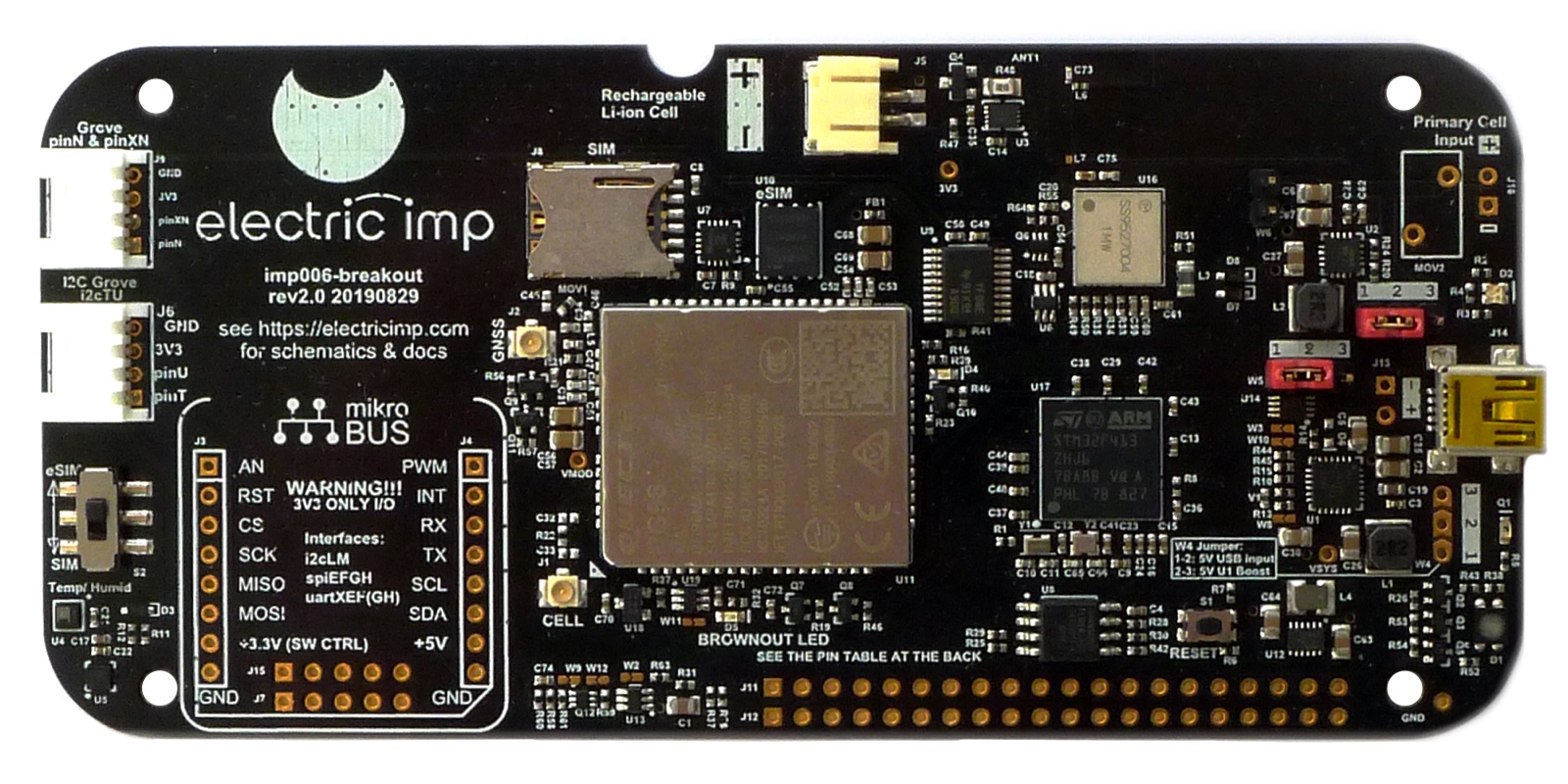
Fiennes will continue at Twilio as a Senior Product Architect, working on IoT and Electric Imp is actually releasing its newest product today: the imp006 breakout board for prototyping IoT products, which — no surprise there — comes with Twilio’s Super SIM for global connectivity already pre-installed.

09 Jul 2020

Elon Musk sets update on brain-computer interface company Neuralink for August 28

Elon Musk said on Twitter this week that Neuralink, the company he founded in 2016 to develop computer-brain interfaces for the explicit purpose of helping humans keep pace with advanced artificial intelligence, will provide an update on its progress on August 28. The last major update from Neuralink came roughly a year ago, when it shared that it will be using a surgical robot to implant gossamer-thin wires into a person’s brain, connected to an external computer processing unit, and that ultimately it hopes to make the connection between the two wireless for maximum freedom and flexibility.

Neuralink revealed in July 2019 that it had already performed successful tests of its technology on mice and even apes, and that it would be pursuing testing on its first human subjects starting as early as the following year – which is this year, 2020, if you’re keeping track.

C-founded by Musk and led by CEO Jared Birchall, Neuralink is headquartered in San Francisco and has been conducting research in partnership with UC Davis. The company’s goal initially is to use its technology to help mitigate the effects of neurological disorders in patients with severe impacts to mobility and other daily functioning, but ultimately the company also hopes to use its technology to essentially ‘upgrade’ humans to be able to interact with computing devices at the speed of thought.

Musk has consistently pointed out how ‘lossy’ the process of translating thought to input via conventional means including keyboard and mouse is, and believes that a tighter, more high-fidelity bond between people and computers can help decrease the risk that advanced AI surpasses the capabilities of human intelligence. Musk has stated on a number of occasions that he believes uncontrolled, unregulated advanced general artificial intelligence poses an existential risk to humanity, and Neuralink is intended to be a means of protection against that threat.

We don’t yet know what Musk and Neuralink will be sharing about the company’s progress since its last update in 2019, but hopefully we’re hear something about its plans to begin human trials. Musk also shared what he calls Neuralink’s “mission statement” alongside the date of the company update: “If you can’t beat em, join em.”

09 Jul 2020

Kernel raises $53 million for its non-invasive ‘Neuroscience as a Service’ technology

LA-based bio science startup Kernel has raised $53 million from investors including General Catalyst, Khosla Ventures, Eldridge, Manta Ray Ventures, Tiny Blue Dot and more. The funding is the first outside money that Kernel has taken in, though it’s a Series C round, because founder and CEO Bryan Johnson has provided $54 million in investment for Kernel to date. Johnson also participated in this latest round alongside external investors.

The funding will go towards further scaling “on-demand” access to its non-invasive technology for recording brain activity, which consists of two main approaches. Kernel has distinguished these as two separate products: Flow, which detects magnetic fields created by the collective activity of neutrons in the brain; and Flux, which measures blood through through the brain. These are both key signals that researchers and medical practitioners monitor when working with the brain, but typically they require use of invasive, expensive hardware – or even brain surgery.

Kernel’s goal is to make this much more broadly available, offering access via a ‘Neuroscience as a Service’ (NaaS) model that can provide paying clients access to its brain imaging devices even remotely. Earlier this year, Kernel announced that this platform was available generally to commercial customers.

The technology sounds like sci-fi – but it’s really an attempt to take what has been a relatively closed and prohibitively costly, expert and potentially dangerous to its subjects tech, and make it available as an on-demand capability – in much the same way that many human genome companies have emerged to take advantage of the advances in the speed and availability of human genome sequencing to do the same, for the business and research community.

Johnson’s ambitious long-term goal with the company is to ultimately develop a much deeper understanding in the field of neuroscience.

“If we can quantify thoughts and emotions, conscious and subconscious, a new era of understanding, wellness, and human improvement will emerge,” Johnson writes in a press release.

It’s true that the brain’s inner workings are still largely a mystery to most researchers, especially in terms of how they translate to our cognition, feelings and actions. Kernel’s platform could mean significantly more people studying the

09 Jul 2020

TikTok saw a rise in government demands for user data

Earlier this year, TikTok’s parent company ByteDance joined the raft of American tech giants that publish the number of government demands for user data and takedown requests by releasing its own numbers. The move was met with heavy skepticism, amid concerns about the app maker’s links to China, and accusations that it poses a threat to U.S. national security, a claim it has repeatedly denied.

In its second and most recent transparency report, published today, TikTok said it received 500 total legal demands, including emergency requests, from governments in the first half of the year, up 67% on the previous half. Most of the demands came from the United States.

TikTok also received 45 government demands to remove contents. India, which submitted the most takedown requests, earlier this month banned TikTok from the country, citing security concerns.

But noticeably absent from the report is China, where TikTok is not available but where its parent, ByteDance, is headquartered. That’s not an uncommon occurrence: Facebook or Twitter, neither of which are available in China, have not received or complied with a demand from the Chinese government. Instead, ByteDance has a separate video app, Douyin, for users in mainland China.

TikTok spokesperson Hilary McQuaide told TechCrunch: “We have never provided user data to the Chinese government, nor would we do so if asked.”

“We do not and have not removed any content at the request of the Chinese government, and would not do so if asked,” the spokesperson said.

But the company’s efforts to fall in line with the rest of the U.S. tech scene’s transparency efforts is not likely to quell long-held fears held by the company’s critics, including lawmakers, which last year called on U.S. intelligence to investigate the firm.

TikTok continues to contend that it’s not a threat and that it’s firmly rooted in the United States.

Earlier this week, the company said it was withdrawing from Hong Kong in response to the new Beijing-imposed national security law.

09 Jul 2020

Review: Handsome and nippy, new VanMoof e-bikes could be the shape of cities to come

I have to admit, I was an e-bike virgin. Sure, I’d tried out Uber’s Jump bikes and similar e-bikes, but these are more like normal bikes “with a little extra help.” So when I was offered the chance to try out the new VanMoof S3, an e-bike that has literally been built from the ground up, I was excited at how different the experience might be.

Perhaps more significantly, I had a particular task in mind for it. In the current COVID-19 pandemic much has been made of cities being transformed into proverbial deserts, as traffic and pedestrians disappeared. Now, with many cities coming out of lockdown, governments have advised their citizens to go back to work, desperate to get their economies moving. And they are pushing cycling as a viable alternative to public transport, where the virus is more likely to be found. So what better time would there be to try out an e-bike as a viable alternative to commuting to and from the suburbs of a large city?

Indeed, the U.K. government has unleashed a £2 billion package to create a new era for cycling and walking.

In the U.S., New York City recently committed to adding protected bike lanes across Manhattan and Brooklyn. Berlin is extending some of its already extensive bike lanes. And Milan will introduce a five-mile cycle lane to cut car use after the lockdown. New York City has reported a 50% increase in cycling compared to this time last year, and cycling in Philadelphia has increased by more than 150% during the COVID-19 outbreak.

But much of the official advice is to avoid public transport where possible, due to the near-impossibility of social distancing.

So with cycling a viable option in many cities, but distance still the old adversary, many consumers are looking to e-bikes as a way to kill two birds with one stone. Not only can you socially distance, but you can also take the bikes on much longer commutes than is possible with traditional bikes and, dare I say it, traditional legs.

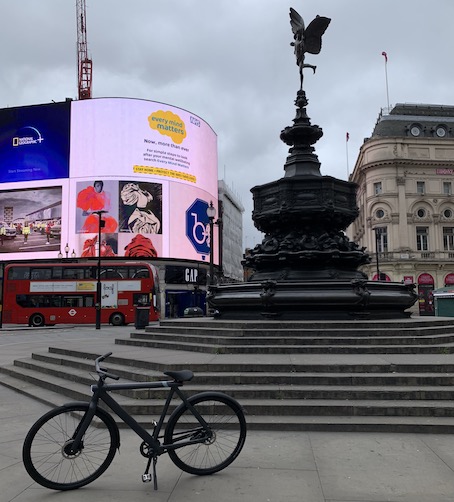
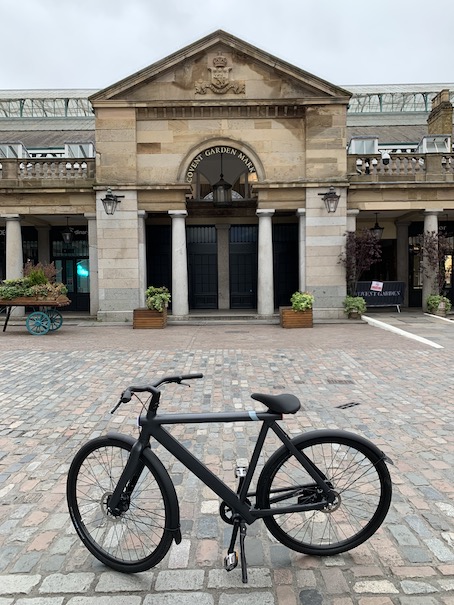
With London still on lockdown recently, I decided to try out the new VanMoof S3 on the deserted streets, cycling from the deep London suburbs right into the empty center of the city.

The bike
For starters, it’s worth saying that the VanMoof S3 is a handsome bike. As a significant upgrade to its previous version, it is similar in its good looks, but what’s “under the bonnet” is what counts.

The S3 is a full-size bike with 28-inch wheels. It has a 24-inch wheeled sister called the X3, which is more compact and it therefore technically “nippier” in the city; however, I found the S3 perfectly suited to London. In fact, its “chopper-like” handling felt very reassuring over London’s bumpy and often unkempt roads.

The S3 and X3 both cost $2,000. Both also come with four-speed automatic shifting and hydraulic brakes. They are cheaper than the previous S2 and X2 models, which only had two-speed automatic shifting and cable brakes. Although the frame construction is unchanged, VanMoof says it has achieved savings by making production more efficient. The bikes weigh about 41 pounds, which is very acceptable for an electric bike. You can get front and rear racks as accessories for pannier bags, cargo boxes or a child seat.

The range per charge varies somewhere between 37 and 93 miles, depending which power level you select on the smartphone app. Level 0 turns off the electric pedal assist, leaving the bike quite heavy to pedal, and level 4 boosts the bike continuously. For my jaunt around London I used Level 4 all the time and managed to get a full, and quick, 45 miles out of the bike without even breaking a sweat, showing that even the heaviest users would be well served by the S3. If you are concerned about your battery charge level, this is displayed on top of the cross-bar, which also shows you current speed. It takes four hours to charge the bike to 100%, but just under an hour and a half to get to 50%.

The VanMoof is driven by a front hub motor and in “European mode” gives a continuous power of 250 watts. But to get more speed you can select the U.S. setting, tick a disclaimer and get 350W of continuous power, with peak power-hitting 500W via the Boost button on the right handlebar. That means you can take off at the lights very easily and quickly get ahead of the traffic, while the normal pedal assist will suffice for most needs. The Boost is particularly useful when going up hills, which the S3 seemed to devour on my ride through London.

Thieves will find this bike frustrating. The rear brake locks when you tap the button near the rear hub. All parts apart from the handlebars and seat post require a special tool to undo. The headlight and taillight are integrated into the frame. The tires are large and puncture-resistant and covered by large metal fenders with integrated mud flaps.

If a thief tries to wheel away the bike when it’s locked it will immobilize the rear wheel and belt out a loud alarm. If the thief persists, a more shrill alarm will sound, the headlights and taillight will flash, a notification will appear on your phone and the bike will refuse to work at all. Only VanMoof can then re-enable the bike using the bike’s built-in cellular data connection and Bluetooth. The bike will sense the phone in your pocket as you approach, allowing you to unlock the rear wheel — and the app always shows the bike’s current location.

VanMoof’s three-year, $340 “Peace of Mind” plan means that it guarantees to find or replace your bike if it gets stolen (assuming it was locked). In the meantime, you will get a bike on loan, although this plan is only available in cities where VanMoof has a presence.

One possible drawback of having the battery welded inside the bike is the necessity of needing to be near a power outlet every time it needs charging. This drawback will be limited to those who are unable to take the bike up to an apartment, or fear for the bike’s safety if it has to charge outside a house. Yes, the hard-wired battery might well be a security “feature,” but this may well be a deal breaker for many, forcing them to look to other bikes which have removable batteries. That said, you are likely to pay more for the bike in the first place.

The journey
As for my test around London, to put the bike through its paces I cycled from the deep suburbs right into the heart of the West End. I’d like to say people asked me about the bike, but no one was around to impress! At the time of the test, London was in full lockdown and eerily quiet.

Hitting the Boost button felt like the “Punch it, Chewy” moment form Star Wars, as I pulled away from traffic. I unwittingly rode the bike at Level 4 all the way there and back, which meant that after about four hours and about 45 miles I ran out of charge on the last mile home. However, this was not a problem as I could cycle the last leg, despite it being a bit of a strain without any electrical assistance. Level 2 or 3 would probably have been a more ideal combination of power and range.

When you drive a Tesla you drive differently, zipping in and out of lanes. Similarly with this bike I realized I could overtake “normal” bikes effortlessly. Overall I’d say this is an excellent electric bike.

VanMoof, which was was founded in 2009 by Taco and Ties Carlier, two Dutch brothers, has now attracted a €12.5 million ($13.5 million) investment from London VC Balderton Capital and SINBON Electronics, the Taiwan-based electronics manufacturer which is VanMoof’s bike assembly partner. So expect to see this company ramp up its presence across Europe and the U.S.

Admittedly they are not the only VC-backed e-bike on the market. Brussels-based Cowboy is an e-bike startup which only appeared in 2017 but which has since raised $19.5 million from Tiger Global and London’s Index Ventures.

It looks like the e-bike wars have begun, they have.

[All pictures by Mike Butcher]

09 Jul 2020

14 VCs discuss COVID-19 and London’s future as a tech hub

The UK has created 63 tech unicorns in the past decade (according to Dealroom), and it almost goes without saying that the vast majority of those companies were based out of London, the country’s largest tech hub.

Famously, London’s DeepMind, an AI startup, was acquired by Google in 2014 for $500 million, but it has resolutely refused to move to Silicon Valley; founder Demis Hassabis says the city’s diversity of talent meant the powerhouse needed to stay put.

London has produced fintech upstarts like Revolut, Monzo and Starling and attracted early Skype team members who went on to create TransferWise. In 2019, London’s startups received $9.7 billion in venture capital funding, more than Berlin, Paris, Amsterdam and Madrid combined.

Furthermore, last year Pitchbook found that up to $4.4 billion worth of deals had involved at least one U.S.-based investor, with London receiving over $12.5 billion from American investors in the previous five years – almost twice as much as Berlin (on $6.5 billion of investment from U.S. VC firms).

Brexit uncertainty may impact startups’ ability to recruit and sale, and the UK government’s points-based system for immigration is unlikely to satisfy the industry’s voracious appetite for talent. But London is a tech supertanker that other European cities are unlikely to be able to match any time soon, Brexit or no Brexit.

But in the era of COVID-19, will major hubs like London still be able to attract future tech unicorns, and will these be in the same sectors as before? Will geography be replaced by mere time zones?

We surveyed many of London’s top VCs to get their insights. Here’s who we heard from:

  • Ruth Foxe-Blader, partner, Anthemis Capital
  • Yana Abramova, partner, Pretiosum Capital
  • Leila Zegna, co-founding partner, Kindred Capital
  • Rob Moffat, partner, Balderton Capital
  • Nic Brisbourne, managing partner, Forward Partners
  • Sean Seton-Rogers, general partner, PROfounders Capital
  • Simon Murdoch, managing partner, Episode 1 Ventures
  • Nenad Marovac, founder and managing partner, DN Capital
  • Andrei Brasoveanu, partner, Accel Partners
  • Jan Lynn-Matern, founder and partner, Emerge Education
  • Rob Kniaz, founding partner, Hoxton Ventures
  • Harry Briggs, partner, OMERS Ventures
  • Hussein Kanji, partner, Hoxton Ventures
  • Eileen Burbidge, partner, Passion Capital

Ruth Foxe-Blader, Anthemis Capital

How much is local investing even a focus for you now? If you are investing remotely in general now, are you filtering for local founders?

Neither our investment thesis, nor our geographic focus has changed: we are a global investor, focused on the US, UK and Europe. We are filtering, even more, for the best founders, as geography feels less important in lockdown.

From that, what do you expect to happen to the startup climate in London longer term, with the shift to more remote work (post COVID-19), possibly from more remote areas. Will London stay a tech hub or will the ecosystem become more dispersed across the country?

As a global financial hub with substantial infrastructure (including capital) designed to support emerging technology, London will remain a critical node in the fintech ecosystem.

Long-term, do you expect to be more or less locally focused, especially in light of COVID-19 or in other ways?

We’re anticipating a pretty substantial change to working norms, at least over the near term (6-12 months). The long-term impact is likely to level the playing field for great founders operating outside of established tech hubs. Remote assessment of companies, while challenging, has the potential to create more equitable investment practices.

From that, what do you expect to happen to the startup climate in London longer term, with the shift to more remote work (post COVID-19), possibly from more remote areas. Will London stay a tech hub or will the ecosystem become more dispersed across the country?

As a global financial hub with substantial infrastructure (including capital) designed to support emerging technology, London will remain a critical node in the fintech ecosystem.

Will there be tech hubs post-COVID-19? What is a tech hub now, by your definition?

To the extent that culture, regulation and capital play a large role in favoring certain types of economic activity, I expect existing tech hubs to remain important bastions of innovation. That said, I think we will see the rise of complementary tech hubs, as well as teams “in the middle of nowhere” emboldened to start great companies.

Are there particular industry sectors that you expect to do uniquely well or poorly, locally?

Given the proximity to the City and the heritage in financial technology innovation, the London tech ecosystem will continue to produce great fintech and insurtech companies.

09 Jul 2020

WhatsApp Business, now with 50m MAUs, adds QR codes and catalog sharing

The global COVID-19 health pandemic has raised the stakes for businesses when it comes to using digital channels to connect with customers, and today WhatsApp unveiled its latest tools to help businesses use its platform to do just that.

The Facebook-owned messaging behemoth is expanding the reach and use of QR codes to let customers easily connect with businesses on the platform, providing them also with a series of stickers to kick off “we’re open for business” campaigns; and it’s made it possible for businesses to start sharing WhatsApp-based catalogs — dynamic lists of items that can in turn be ordered by users — as links outside of the WhatsApp platform itself.

The moves come at WhatsApp’s business efforts pass some significant milestones.

WhatsApps’ profile as a formal platform for doing business is growing, albeit slowly. The WhatsApp Business app — used by merchants to interface with customers over WhatsApp and use the platform to market themselves — now has 50 million monthly active users, with its two biggest markets for the service India at over 15 million MAUs and Brazil at over 5 million MAUs. Catalogs specifically has 40 million users.

On the other hand, WhatsApp has hit some stumbling blocks with features it’s tried to put into place to grow those numbers faster and boost usage among businesses.

Specifically, last month WhatsApp launched payments in Brazil, its first market, aimed not just at users sending each other money but merchants selling goods and services over the platform. But just nine days later, Brazilian regulators blocked the service over competition concerns, and it has yet to be restored pending further review. (India, which many had thought would be the first market for payments, is now part of a bigger global roadmap for rolling out payments.)

To put WhatsApp Business app’s usage numbers into some context, WhatsApp itself passed 2 billion users in February of this year. In that regard, hitting 50 million MAUs of the WhatsApp business app in the two years since it’s launched doesn’t sound like a whole lot (and in particular considering that it has competitors like Google offering payment services to merchants). Still, there has always been a lot of informal usage of the app, especially by smaller merchants, and that speaks to monetising potential if they can be lured into more of WhatsApps’ — and Facebook’s — products.

All the more reason that Facebook is expanding other features to make WhatsApp more useful for businesses, and especially smaller businesses — capitalising on a moment when many of them are turning to numerous digital channels (some for the first time ever) like social media, messaging services, websites and third-party delivery platforms to get their products and services out to the masses, in a period when visiting physical storefronts has been severely curtailed because of the health pandemic.

QR codes got a little boost last week from WhatsApp on the consumer side, with the company introducing a way for contacts to swap details for the first time by sharing codes rather than manually entering phone numbers — not unlike Snap Codes and shortcuts for adding contacts created on other social apps. That is now getting the business treatment.

Now, if you need to reach a business for customer support, to ask a question or order something, instead of manually entering a business phone number, you can scan a QR code from a receipt, a business display at the storefront, a product, or even posted on the web, in order to connect with the company. Businesses that are using these can also set up welcome messages to start conversations once they’ve been added by a user. (They will have to use the WhatsApp Business app or the WhatsApp Business API to do this, of course.)

The catalog sharing feature, meanwhile, is an expansion on a feature that the company first launched in November 2019, which will now allow businesses to create and share links to their catalogs to post elsewhere. To be frank, the lack of ability to share catalogs at launch felt like a feature omission, considering that businesses often use multiple channels to market themselves, although it might have been an intentional move: there has long been questions about how tight links are between Facebook and WhatsApp, so slowly introducing features that share and cross-market from the start might be the preferred route for the company.

The idea now will be the those links can now be shared on Facebook, Instagram and other places.

Although all of these services, and WhatsApp Business remain free to use, they continue to lay the groundwork for how Facebook might monetise the features in the future, not least through payments but also through stronger pushes to advertise on Facebook, now with more ways of linking a company’s WhatsApp profile to those ads.

09 Jul 2020

Flipkart invests $35 million in Indian giant Arvind Fashion’s unit

Flipkart on Thursday announced it is investing $35 million in Arvind Fashions for a significant minority stake in one the decades-old Indian firm’s subsidiaries as the Walmart-owned firm looks to widen its hold on fashion e-commerce in the world’s second largest internet market.

The e-commerce firm, which operates market-leading fashion e-commerce firm Myntra, said it was acquiring a stake in Arvind Fashions’ Arvind Youth Brands, which operates Flying Machine brand in India. The two companies said today the new investment strengthens their partnership as they look to serve demands and needs of the “fashion-conscious youth” in India.

91-year-old Arvind Fashions runs of the nation’s largest fashion brands, carrying apparels from Polo Assn., Arrow, GAP, Tommy Hilfiger, Calvin Klein, Aeropostale, The Children’s Place and Ed Hardy among other local and international firms.

“Flying Machine is a brand that is known in households across India, popular with the youth and synonymous with value and style. Through this investment, we look forward to partnering with the team at Arvind Youth Brands to continue to grow the market for its portfolio of products and enhance the strong brand equity that has been built over the last few decades,” said Kalyan Krishnamurthy, chief executive officer of Flipkart Group, in a statement.

More to follow…

09 Jul 2020

LocalGlobe and TransferWise’s Taavet Hinrikus back ‘frictionless finance’ startup Radix

Radix, a U.K. startup that’s building a decentralised finance protocol on which new financial apps can connect and be built on top of, has raised $4.1 million in new funding.

Backing the company, which counts the Ethereum network and a number of other “DeFi” projects as competitors, is London-based seed-stage VC LocalGlobe and TransferWise co-founder Taavet Hinrikus.

Radix DLT Ltd. — separate from the non-profit Radix Foundation — had previously raised $1.9 million in equity funding in the form of a SAFE note and will be issued 2.4 billion tokens by the Radix Foundation (see below).

In its own words, Radix DLT is building a decentralised finance protocol that aims to provide “frictionless access, liquidity and programmability of any asset in the world”. The Radix team also claims it has overcome the scalability issue that typically plagues decentralised finance and blockchain-based ledgers.

In a public test of the Radix network last year, it claims to have achieved over 1 million transactions per second, a throughput over 5x higher than the NASDAQ at its peak.

It also positions itself as different from other distributed ledgers and decentralised protocols. Radix is “not trying to be a general purpose platform,” says CEO Piers Ridyard. “Decentralised finance, and by extension, the financial industry is a highly specialised sector that requires a highly specialised set of tools and incentives. Unlike the general purpose protocols that came before it, such as Ethereum, Radix is building a layer 1 protocol specifically for decentralised finance”.

Benefiting from over 7 years of R&D carried out by founder Dan Hughes, a self taught coder from the North of England, Ridyard says that Radix’s sole focus on DeFi from the get-go means Redix is lowering the barriers to adoption via integrations with payment rails and consumer applications, increasing on-ledger liquidity, and by making it as easy as possible for developers to build new DeFi apps. The latter consists of the Radix Engine, a developer interface that claims to enable quick public ledger deployments using a “secure-by-design” environment.

But what’s the problem DeFi potentially solves?

At the highest level, proponents of so-called DeFi point to the fact that every system in finance is essentially built on its own, proprietary, non-compatible technology stack that still has far too many human processes behind it. For example, the London Stock Exchange, the U.S. NASDAQ, the Shanghai Stock Exchange are all built as “islands”. To trade across them requires centralised technology, protocol and legal integrations with each.

“That is because finance, lending, borrowing, swapping, and issuance are all done in these little islands of technology that require legal contracts and excel spreadsheets sent over email as the connective tissue,” says Ridyard. “APIs are improving this process, but there is no such thing as a standard API; Plaid became a $5.3 billion company for essentially this reason”.

By being decentralised and interoperable from day one, it’s this ability to trade across ledgers and asset classes programatically that DeFi systems such as Radix want to provide.

“This is the core and key difference for assets and services that are built on public ledgers,” explains Ridyard. “As soon as they are built on Radix, they become interoperable. I can seamlessly and programmatically move my assets from the services of one application, built by one company and team, to that of another, built by a different company and team, but issued and launched on the same decentralised public ledger. The public ledger acts as an interoperable platform for many startups to experiment and build better versions of existing products (such as stock exchanges) or entirely new products (such as continuous function market makers) that are just not possible with the current systems”.

Worth noting, Ridyard says that from a consumer point of view, the products and services aren’t likely to change much in their appearance — they’ll still be accessed via mobile apps and will probably be offered via regulated companies as they are today. Instead, he says the consumer-facing upsides will be speed, higher rates on deposits and the seamless ability to swap between asset types without needing to go into cash as the interim asset.

Adds the Radix CEO: “I should also stress that decentralised finance is not about moving existing banks onto public ledgers. It is about unbundling of banking services (borrowing, lending, investment) into applications that can all interoperate on a single public network. Banks are like newspapers coming into the internet age, some will make the transition, but not all”.

Cue statement from LocalGlobe’s Saul Klein (for posterity, if nothing else): “I see the same revolutionary potential in the Radix team as I did with the Skype and Netscape teams at the birth of the internet. We’re excited to join them at the start of a new decentralised network revolution”.

*Radix has two main legal entities: Radix DLT Ltd and the Radix Foundation. Since inception, both have received funding in different forms. The Radix Foundation is a not-for-profit company limited by guarantee, registered in the U.K., and was created to promote the long term interests of the Radix Public Network as well as help manage the Radix community and ecosystem. Between 2013 and 2017, people from the Radix Community contributed 3,000 BTC in exchange for 3 billion RADIX tokens issued by the Radix Foundation. These tokens arguably have value as they’re needed to pay the transaction fees to use the Radix protocol.