Year: 2020

02 Jul 2020

Top LA investors discuss the city’s post-COVID-19 prospects

When it comes to venture capital, Los Angeles is a city on the rise.

In the past year, it’s seen one of the most profitable venture-backed exits of any tech ecosystem (with the $4 billion sale of Honey to PayPal) and investors are minting billion-dollar companies in the region at a torrid pace. It’s also the city where investors are spending the most money outside of venture capital’s big major hubs: San Francisco, Boston and New York.

While Los Angeles has a lot going for it, that also means it potentially has a lot to lose in the current economic downturn. California continues to be hard-hit by COVID-19, despite local and state officials working to reopen businesses.

TechCrunch surveyed some of the city’s leading investors in sectors like property technology and cannabis to get their take on how the city may survive — and potentially thrive — in a new era ushered in by the response to the pandemic.

From larger fund investors like Mark Suster and Kara Nortman at Upfront Ventures to Dana Settle at Greycroft Partners; to early-stage investors like Will Hsu at Mucker Capital; TX Zhuo at Fika Ventures, the responses were generally upbeat about the future opportunities for Los Angeles startups.

Even specialist fund investors like Karan Wadhera of the cannabis-focused investment firm Casa Verde Capital and Brendan Wallace at the real estate-focused firm Fifth Wall believe that Los Angeles will thrive in the post-COVID world.

As Mucker Capital co-founder Hsu writes, “There are far more great companies than there are venture dollars here in LA. Investors in other cities should continue to see LA as an underserved ecosystem with huge opportunities.”

  • Mark Suster, managing partner, Upfront Ventures
  • Kara Nortman, partner, Upfront Ventures
  • Will Hsu, Mucker Capital
  • Dana Settle, Greycroft Partners
  • Karan Wadhera, Casa Verde Capital
  • Brendan Wallace, Fifth Wall
  • TX Zhuo, Fika Ventures

LA Traffic

Image Credits: Getty Images/ROBYN BECK/AFP

Mark Suster, managing partner, Upfront Ventures

How much is Upfront focused on investing in the local LA ecosystem versus less geographically focused? 

Upfront invests about 40% of its investment dollars in the great LA market and invests about 40% split between the Bay Area and NYC. Upfront has always invested nationally and internationally with the final 20% and we have produced significant exits in Chicago, Baltimore, Paris, London and Las Vegas to name a few.

Where we do invest outside of LA of course we bring all of our contacts and relationships to bear, which makes us a logical choice for any startup raising capital where having access to the biggest influencers, media companies, academic institutions and medical professionals can help propel the company’s success.

How do you think COVID-19 will change entrepreneurial activity in Los Angeles?

It’s true that some startup businesses have been impacted by this pandemic but as we’re learning a few short months in, there has been much more acceleration of the trends leading toward technology growth that were already in place.

Specifically addressing some LA-based companies we can share with you the trends we see directly with demand data:

We already knew that telemedicine made sense for doctors and patients and now this trend has accelerated, regulations being lessened and cultural barriers overcome. We see a huge growth in food production and preservation (Apeel Sciences, for example) and food distribution (such as ChowNow). The need to reduce people in warehouses has propelled demand for robotics/automation for companies like inVia Robotics and the need for remote monitoring has helped LA-based DroneBase.

02 Jul 2020

DoubleVerify names adtech exec Mark Zagorski as new CEO

Ad measurement company DoubleVerify announced this morning that it has a new: CEO Mark Zagorski, who was most recently president and COO of adtech company Rubicon Project.

DoubleVerify’s previous CEO Wayne Gattinella stepped down earlier this year following a troubling New York Post report claiming that he had been engaged in an extramarital affair with a woman who was found dead in 2018. (Gattinella accused The Post of making “factually false and defamatory statements.”)

Since then, board member Laura Desmond has served as the company’s interim CEO.

In addition to his roles at Rubicon, Zagorski has also served as CEO of Telaria, where he led the merger with Rubicon, and as CEO of eXelate, where he led the company’s sale to Nielsen. He’ll be based in DoubleVerify’s New York office (at least, whenever that office reopens) and will lead a workforce of more than 550 employees.

DoubleVerify is the industry leader in powering media quality and performance – giving global brands the confidence and clarity needed to make advertising investments on every digital platform,” he said in a statement. “Through their innovative service and solutions, DV has developed deep customer relationships and an outstanding market reputation. There is a huge opportunity to continue to grow the business, and I am energized and excited to leverage my experience in CTV, data and analytics to make this happen.”

DoubleVerify’s technology is supposed to help advertisers eliminate fraud and ensure brand safety. The company launched a product earlier this year that was more focused on measuring ad effectiveness.

02 Jul 2020

Tesla delivered 90,650 vehicles in second quarter, a smaller than expected decline

Tesla said Thursday that it delivered 90,650 vehicles in the second quarter, a 3.7% decline from the same period last year prompted by challenges caused by the COVID-19 pandemic that included suspending production for weeks at its main U.S. factory.

Tesla still managed to beat expectations despite the headwinds.

The vast majority of deliveries — some 80,050 — were Model 3 and Model Y vehicles. The remaining 10,600 were its more expensive Model S and Model X vehicles. Tesla doesn’t provide break downs of each model separately nor does it give information about regional deliveries.

Analysts, who had anticipated lower numbers due to the COVID-19 pandemic, had varying forecasts with some predicting as few as 39,000 deliveries and as many as 83,000. A consensus of analysts surveyed by FaceSet expected Tesla to deliver 72,000 vehicles in the second quarter.

The results pushed shares up nearly 10% in pre-market trading $1,221.85 Thursday morning.

Here’s a quick breakdown:

  • Tesla delivered 90,650 vehicles in Q2 compared to 88,400 in Q1 and 95,200 in Q2 2019)
  • Tesla produced 82,272 vehicles in Q2 compared to 103,000 in Q1 and 87,048 in Q2 2019)

In the weeks leading up to the end of the second quarter, new sales goals were placed on employees, according to several sources who work for the company. Tesla also reduced the prices of its vehicles in China and North America. Both strategies aimed to spur demand for its electric vehicles.

The scheme appears to have worked in the second quarter, which could prompt analysts to place loftier expectations on Tesla for the remainder of the year.

Tesla shares popped Wednesday after the market opened and pushed the company’s market capitalization to nearly $208 billion, surpassing Toyota  to become the world’s most valuable automaker by market value. The shares rose in part on reports of a companywide email from CEO Elon Musk congratulating employees on reaching its sales and production goals.

02 Jul 2020

SEC filing indicates big data provider Palantir is raising $961M, $550M of it already secured

Palantir, the secretive big data and analytics provider that works with governments and other public and private organizations to power national security, health and a variety of other services, has reportedly been eyeing up a public listing this autumn. But in the meantime it’s also continuing to push ahead in the private markets.

The company has filed a Form D indicating that it is in the process of raising nearly $1 billion — $961,099,010, to be exact — with $549,727,437 of that already sold, and a further $411,371,573 remaining to be raised.

The filing appears to confirm a report from back in September 2019 that the company was seeking to raise between $1 billion and $3 billion, its first fundraising in four years. That report noted Palantir was targeting a $26 billion valuation, up from $20 billion four years ago. A Reuters article from June put its valuation on secondary market trades at between $10 billion and $14 billion.

The bigger story of that Reuters report was that Palantir confirmed two fundraises from strategic investors that both work with the company: $500 million in funding from Japanese insurance company Sompo Holdings, and $50 million from Fujitsu. Together, it seems like these might account for $550 million already sold on the Form D.

It’s not clear if this fundraise would essentially mean a delay to a public listing, or if it would complement it.

To date Palantir has raised $3.3 billion in funding, according to PitchBook data, with no less than 108 investors on its cap table. But if you dig into the PitchBook data (some of which is behind a paywall) it also seems that Palantir has raised a number of other rounds of undisclosed amounts. Confusingly (but probably apt for a company famous for being secretive) some of that might also be part of this Form D amount.

We have reached out to Palantir to ask about the Form D and will update this post as we learn more.

While Palantir was last valued at $20 billion when it last raised money four years ago, there are some data points that point to a bigger valuation today.

In April, according to a Bloomberg report, the company briefed investors with documents showing that it expects to make $1 billion in revenues this year, up 38% on 2019, and breaking even in the first time since being founded 16 years ago by Peter Thiel, Nathan Gettings, Joe Lonsdale, Stephen Cohen, and current CEO, Alex Karp.

(The Bloomberg report didn’t explain why Palantir was briefing investors, whether for a potential public listing, or for the fundraise we’re reporting on here, or something else.)

On top of that, the company has been in the news a lot around the global novel coronavirus pandemic. Specifically, it’s been winning business, in the form of projects in major markets like the UK (where it’s part of a consortium of companies working with the NHS on a COVID-19 data trove) and the US (where it’s been working on a COVID-19 tracker for the federal government and a project with the CDC), and possibly others. Those projects will presumably need a lot of upfront capital to set up and run, possibly one reason raising money now.

02 Jul 2020

SEC filing indicates big data provider Palantir is raising $961M, $550M of it already secured

Palantir, the secretive big data and analytics provider that works with governments and other public and private organizations to power national security, health and a variety of other services, has reportedly been eyeing up a public listing this autumn. But in the meantime it’s also continuing to push ahead in the private markets.

The company has filed a Form D indicating that it is in the process of raising nearly $1 billion — $961,099,010, to be exact — with $549,727,437 of that already sold, and a further $411,371,573 remaining to be raised.

The filing appears to confirm a report from back in September 2019 that the company was seeking to raise between $1 billion and $3 billion, its first fundraising in four years. That report noted Palantir was targeting a $26 billion valuation, up from $20 billion four years ago. A Reuters article from June put its valuation on secondary market trades at between $10 billion and $14 billion.

The bigger story of that Reuters report was that Palantir confirmed two fundraises from strategic investors that both work with the company: $500 million in funding from Japanese insurance company Sompo Holdings, and $50 million from Fujitsu. Together, it seems like these might account for $550 million already sold on the Form D.

It’s not clear if this fundraise would essentially mean a delay to a public listing, or if it would complement it.

To date Palantir has raised $3.3 billion in funding, according to PitchBook data, with no less than 108 investors on its cap table. But if you dig into the PitchBook data (some of which is behind a paywall) it also seems that Palantir has raised a number of other rounds of undisclosed amounts. Confusingly (but probably apt for a company famous for being secretive) some of that might also be part of this Form D amount.

We have reached out to Palantir to ask about the Form D and will update this post as we learn more.

While Palantir was last valued at $20 billion when it last raised money four years ago, there are some data points that point to a bigger valuation today.

In April, according to a Bloomberg report, the company briefed investors with documents showing that it expects to make $1 billion in revenues this year, up 38% on 2019, and breaking even in the first time since being founded 16 years ago by Peter Thiel, Nathan Gettings, Joe Lonsdale, Stephen Cohen, and current CEO, Alex Karp.

(The Bloomberg report didn’t explain why Palantir was briefing investors, whether for a potential public listing, or for the fundraise we’re reporting on here, or something else.)

On top of that, the company has been in the news a lot around the global novel coronavirus pandemic. Specifically, it’s been winning business, in the form of projects in major markets like the UK (where it’s part of a consortium of companies working with the NHS on a COVID-19 data trove) and the US (where it’s been working on a COVID-19 tracker for the federal government and a project with the CDC), and possibly others. Those projects will presumably need a lot of upfront capital to set up and run, possibly one reason raising money now.

02 Jul 2020

Meet BukuWarung, the bookkeeping app built for Indonesia’s 60 million “micro-merchants”

In Indonesia, there are about 60 million “micro-merchants,” typically small store owners who sell food and other staple items, and have close relationships with their customers. Many often extend informal lines of credit to shoppers, but much of their financial tracking is still done with pen and paper ledgers. Chinmay Chauhan and Abhinay Peddisetty, the co-founders of BukuWarung, want to digitize the process with a financial platform designed especially for small Indonesian businesses. Their goal is to start with bookkeeping tools, before expanding into services including access to working capital.

The startup is currently taking part in Y Combinator’s startup accelerator program. BukuWarung has also raised seed funding from East Ventures, AC Ventures, Golden Gate Ventures, Tanglin Ventures, Samporna, as well as strategic angel investors from Grab, Gojek, Flipkart, PayPal, Xendit, Rapyd, Alterra, ZEN Rooms and other companies.

Chauhan and Peddisetty met while working together at Singapore-based peer-to-peer marketplace Carousell, where they focused on developing monetization products for sellers. Chauhan also worked on products for merchants at Grab, the largest ride-sharing and on-demand delivery company in Southeast Asia. But the inspiration behind BukuWarung is also personal, because both Chauhan and Peddisetty’s families run small neighborhood stores.

“We can look at this more deeply given the experience we have monetizing merchants at Grab and Carousell,” Chauhan said. “We also know good potential exists in Indonesia, where we can help 60 million micro-merchants come online and digitize. From a macro-level, we felt this would be a huge opportunity, and there is also the personal element of being potentially being able to impact millions of merchants.”

Paper records not only make tracking finances a labor-intensive process, but also means it is harder for merchants to gain access to lines of credit. Chauhan and Peddisetty told TechCrunch that their goal is to expand the company to financial services as well, doing for Indonesian merchants what KhataBook and OKCredit have done in India. Since launching last year, BukuWarung has signed up 600,000 merchants across 750 cities and towns in Indonesia and currently has about 200,000 monthly average users. The founders say their goal is to reach all 60 million micro-, small- and medium-sized businesses in Indonesia. It has already made its first acquisition: Lunasbos, one of the first Indonesian credit tracking apps.

BukuWarung founders Chinmay Chauhan and Abhinay Peddisetty

While preparing to launch BukuWarung, the founders traveled through Indonesia, speaking to almost 400 merchants about their challenges with bookkeeping, credit tracing and accounting. Based on those conversations, the two decided to start by focusing on a bookkeeping app, which launched 10 months ago.

Despite a partial lockdown in Indonesia from April to June, BukuWarung continued to grow because most of its users sell daily necessities, like groceries. In smaller cities and villages, merchants often offer credit lines because their customers’ cash flow is very tight, and many do not have a regular monthly paycheck, Chauhan said. “Everyone is buying and selling on credit, that is something we validated in our research.”

Then there is the community aspect, where many merchants are close to their customers.

“This changes depending on the location of the business, but business owners have often known a lot of people in their neighborhoods for a long time, and when it comes to credit, they typically offer 500 Indonesian rupiah all the way up to about one million rupiah [about USD $70.56],” Chauhan said. But when it’s time to settle bills, which often means going to customers’ homes and asking for payment, many merchants feel hesitant, he added.

“They will never chase or call the person. The app we built sends automatic reminders to customers, and this ‘soft message’ really helps merchants not feel shy while at the same time professionally giving customer reminders.”

While talking to merchants, BukuWarung’s founders also realized that many were using pay-as-you-go data plans and lower-end smartphones. Therefore, their app needed to be as lightweight as possible, and work offline so users could access and update their records anytime. This focus on making their app take up as little data and space as possible differentiates them from other bookkeeping apps, the founders said, and helps them sign up and retain users in Indonesia.

Chauhan and Peddisetty said the company will partner with financial tech companies as it grows  to give users access to online payment systems, including digital wallets, and financing.

In a statement to TechCrunch, Y Combinator partner Gustaf Alströmer said, “Building digital infrastructure for emerging economies is a huge opportunity, especially in the post-COVID world. And we believe BukuWarung is a team that can take on this challenge. We have seen this journey before with Khatabook and OkCredit in India and see that BukuWarung is on a similar growth trajectory to empower micro-businesses in Indonesia.”


02 Jul 2020

OurPeople, the team communication and engagement platform, raises $2M

OurPeople, the U.K. startup that’s built a team communication and engagement platform for desk-less workers, has raised $2 million in Series A funding.

Leading the round is Alpine Meridian, an investment firm that specialises in digital media, e-commerce and healthcare, and entrepreneur Robert Neveu, who also joins OurPeople as managing partner. It brings total funding to $3 million.

Founded in 2016 by Ross McCaw, Bristol-based OurPeople offers a secure mobile platform to let businesses communicate digitally with employees, ensuring teams can stay connected. The startup primarily works in industries with large numbers of desk-less workers, such as fitness and leisure. Clients currently include West Ham United Foundation, Virgin Active UK, Paulton’s Park and Serco Leisure.

McCaw — who used to be a part-time lifeguard and swim teacher — previously founded CoursePro to improve the way swim lessons were administered in the U.K. and other countries. At the time the company was fully acquired by Jonas Software in 2014, over a million swimmers had enrolled. After the success of CoursePro, he spotted another opportunity and launched OurPeople.

“I saw first-hand how companies struggled to communicate with their employees,” says McCaw. “Specifically their remote, desk-less team members who, more often than not, do not have access to a company email but who are the people with the most direct exposure to their customers”.

What really stood out was how many of the trainers were not engaging with company news and announcements. “This was bad for both the company and them. I looked at a number of other sectors and saw that this was a wider issue amongst many industries with high numbers of desk-less workers”.

McCaw describes the OurPeople solution as a “highly-sophisticated yet simple to use” messaging service that ensures the right people in an organisation receive the information they need when they need it. He reckons it’s this targeted nature and being mobile-first that sets the communication platform apart from competitors.

“Generally our competitors come in one of two categories: the workplace social network or the consumer-style workplace chat groups. Both, in our opinion, create too much noise and chatter. They are not targeted enough,” says McCaw.

“Employees want to see content that is relevant to them and incredibly quick to read or watch. The employer, on the other hand, wants to know that the communication has been seen and acknowledged. To achieve this we have a ‘tagging’ system so that only the people that absolutely need to see that message receive it”.

Furthermore, the OurPeople founder says the platform is different because the startup is not attempting to create a workplace social network “where vital information can get lost in all the typical noise”.

“OurPeople is about crucial, relevant information at the right time that engages those hard to reach employees and won’t slow them down as they carry out their customer-facing duties. We make internal communications, especially with remote and desk-less colleagues, effective and efficient”.

02 Jul 2020

Zetwerk, an Indian B2B marketplace for manufacturing items, raises $21 million

Zetwerk, an Indian business-to-business marketplace for manufacturing items, has raised $21 million in a new financing round as it looks to scale its operations in the nation and help local businesses find customers overseas.

San Francisco-based investment firm Greenoaks led the two-year-old Indian startup’s Series C financing round. Existing investors Accel, Kae Capital, Lightspeed and Sequoia Capital India also participated in the round, which brings Zetwerk’s to-date raise to $62 million.

Founded by Amrit Acharya, Srinath Ramakkrushnan, Rahul Sharma and Vishal Chaudhary in 2018, Zetwerk connects OEMs (original equipment manufacturers) and EPC (engineering procurement construction) customers with manufacturing small-businesses and enterprises.

Unlike the more typical e-commerce firms, Zetwerk sells goods such as parts of a crane, doors, chassis of different machines and ladders. The startup operates to serve customers in fabrication, machining, casting and forging businesses.

These are all custom-made products. “Nobody has a stock of such inventories. You get the order, you find manufacturers and workshops that make them. Our customers are companies that are in the business of building infrastructure,” said Acharya, who serves as Zetwerk’s chief executive.

“We index these small workshops and understand the kinds of products they have built before. These indexes help bigger companies discover and work with them,” he added. Once a firm has placed an order, Zetwerk allows them to track the progress of manufacturing and then its shipping. In this line of business, this “hand-holding” is crucial as manufacturing and shipping of these items typically take more than two to three months.

Currently, Zetwerk works with more than 150 enterprises and 2,500 small and medium-sized businesses, it told TechCrunch. The startup delivers more than 30,000 parts each month, up 50% since December last year, and has enabled several manufacturers in India to discover clients overseas.

“Zetwerk is bringing Indian manufacturing to the global stage, and I’m proud to be part of their story,” said Prayank Swaroop of Accel.

Zetwerk has developed “unique software to enable an enormous global manufacturing marketplace connecting OEMs and EPCs with industrial suppliers,” said Neil Shah of Greenoaks Capital.

“Increasingly, companies are looking to diversify their supply chain globally and Zetwerk’s platform allows them to identify and collaborate with supplier partners to deliver projects on-time and with high quality. We are thrilled to continue to partner with the Zetwerk team,” he said.

Manufacturing contributes to 14% of India’s GDP, but the nation lacks a supporting ecosystem to execute projects more efficiently, said Acharya. The startup will deploy the fresh capital to fund its international expansion and launch new categories, he said.

02 Jul 2020

Apple and Google block dozens of Chinese apps in India

Two days after India blocked 59 apps developed by Chinese firms, Google and Apple have started to comply with New Delhi’s order and are preventing users in the world’s second largest internet market from accessing those apps.

UC Browser, Shareit, and Club Factory and other apps that India has blocked are no longer listed on Apple’s App Store and Google Play Store. In a statement, a Google spokesperson said that the company had “temporarily blocked access to the apps”on Google Play Store as it reviews New Delhi’s interim order.

Apple, which has taken a similar approach as Google in complying with New Delhi, did not respond to a request for comment. Some developers including ByteDance have voluntarily made their apps inaccessible in India, a person familiar with the matter told TechCrunch.

On Thursday, Indian Prime Minister Narendra Modi also shut his Weibo account.

More to follow…


02 Jul 2020

A vulnerability in some bitcoin wallets leads to double spend attacks and inflated balance

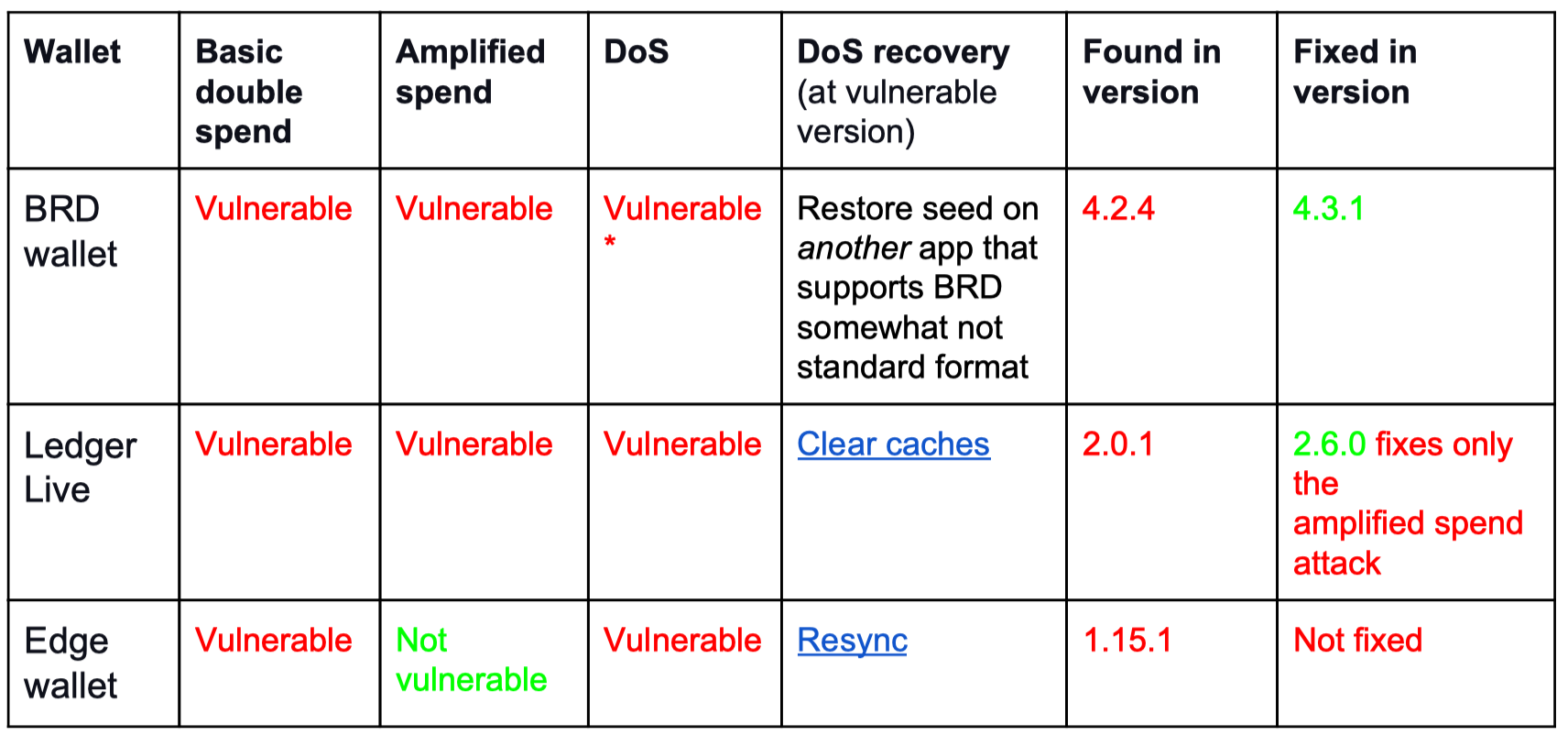
ZenGo, a startup that is building a mobile cryptocurrency wallet, has discovered a vulnerability in some of the most popular cryptocurrency wallets, such as hardware wallet Ledger, BRD and Edge.

Named BigSpender, the vulnerability might lead to an incorrect balance on your wallet as unconfirmed transactions are taken into account in your total balance. The attacker could revoke the transaction before it is confirmed, which could lead to some confusion.

Even if you’re not familiar with cryptocurrencies, that type of attacks is quite popular on peer-to-peer marketplaces, such as Craigslist. Let’s say you’re trying to sell a phone. Somebody might tell you that they want to buy your device and send you a fake PayPal transaction email. If you just look at the email, you might think the buyer has already sent you the money. But if you load your PayPal account, you might notice that the buyer never sent you anything — it was a fake payment notification email.

BigSpender could be used in the same way, but with cryptocurrencies. The potential attacker leverages a feature in the bitcoin protocol called Replace-by-Fee. This feature lets you send some bitcoins with a low transaction fee and then send the same crypto assets but with a higher transaction fee.

The original transaction is canceled and replaced with the new one. This way, the new transaction should be confirmed more quickly as miners process transactions with higher transaction fees first.

But some cryptocurrency wallets take unconfirmed transactions for granted a bit too quickly. When you check your balance, it looks like you’ve receive some bitcoins, but the sender may have canceled it to replace that transaction with another one to another wallet — a wallet that they control. Even though the transaction has been canceled, the balance still reflects those fake transactions.

If the attacker is trying to fake-buy something really expensive, they can use the BigSpender attack multiple times even if they don’t have a lot of money. For instance, they could initiate ten transactions each worth 0.1 BTC, the recipient would see a balance of 1 BTC even though they received 0 BTC.

And because the wallet has miscalculated the balance, attackers could also leverage the BigSpender vulnerability to freeze your crypto assets using with a “denial-of-service” attack. When the victim tries to send some bitcoins after receiving a ton of fake transactions, the wallet might try to send crypto assets that never arrived. The transaction fails.

To be clear, your existing bitcoins remain safe. Usually, clearing the app cache and resyncing your wallet with the bitcoin blockchain solves that issue. But you might not understand why you can’t use your crypto assets.

BigSpender isn’t a vulnerability in the bitcoin protocol — it doesn’t let you steal bitcoins. But it can be used to confuse users. Going forward, wallets should clearly mark unconfirmed transactions with a big “pending” label without increasing the balance of the wallet. Transactions that have been replaced using Replace-by-Fee should also be identified as failed.

ZenGo has disclosed the vulnerability with Ledger, Edge and BRD 90 days ago. Ledger and BRD have handed bug bounty awards to ZenGo. BRD has released a fix already while BRD and Ledger are working on fixes. ZenGo also released an open-source tool to test your wallet against BigSpender to see the behavior.