Year: 2020

30 Jun 2020

Indian ride-hailing giant Ola adds tipping option to its app globally

You can now tip your Ola driver. The Indian ride-hailing giant said on Tuesday that it has rolled out this feature to its users in India, Australia, New Zealand, and the United Kingdom — all the nations where it currently operates.

Ola said riders in each market will see a range of denominations they can pick as the amount they wish to tip digitally. It plans to allow riders to pay a custom amount of their choice in a few weeks, a spokesperson told TechCrunch.

All of Ola’s 2.5 million driver partners globally — from those who operate two-wheelers to four — can receive tips, the nine-year-old ride-hailing giant said.

The addition of this feature comes as Ola looks to broaden its efforts to help its driver partners who have been financially hit in recent weeks after New Delhi and several other governments across the globe enforced a lockdown to contain the spread of the coronavirus.

Uber first introduced the tipping feature in some states in the U.S. in 2017 and has since expanded to it many more states and nations. It rolled out the tipping feature to its users in India early this year.

Driver partners on both the platforms have long expressed the need for a tipping feature to supplement their incomes after both the companies gradually reduced the incentives they had bandied out in the early years.

“Since the beginning of the pandemic, our driver-partners have worked tirelessly to enable essential travel for all those in need, despite facing their own challenges. As services resume, they continue to personally invest in ensuring the safety of their customers and deliver a comfortable ride experience,” said Anand Subramanian, a spokesperson at Ola.

“Linking rewards to higher-quality services, we invite our customers to join us in sharing our appreciation and supporting them during these trying times. Not only will the new functionality provide an opportunity for drivers to increase their earnings but will also showcase how a small gesture of solidarity and support from customers will drive our driver-partner community to go a long way,” he said.

In recent months, Ola has announced a range of relief packages including exempting lease rental to assist its driver partners. It has also committed to provide driver partners with a few hundred dollars if they or their family members test positive for Covid-19. Uber has yet to offer any significant aid to its driver partners in India.

Like their driver partners, both Ola and Uber have been hit with the global pandemic as well. Ola said last month it was cutting 1,400 jobs, or 35% of its workforce in India. Days later, Uber said it was eliminating 600 jobs, or 25% of its local workforce, in the nation. India is a key overseas market for Uber.

30 Jun 2020

Strap in — a virtual Tour de France kicks off this weekend on the online racing platform Zwift

The pandemic has wreaked havoc on all manner of professional sports this year, and cycling has not been immune. For example, the best-known race on the planet, the Tour de France, normally staged in July, has had to be pushed back to August 29 through September 20.

That doesn’t mean that the world — and professional cyclists — can’t enjoy world-class racing this summer. In fact, beginning this coming weekend, 23 top men’s teams and 17 women’s teams will participate in a virtual version of the event that’s being hosted by six-year-old Zwift, after it was chosen by the official race organizer of the real tour, Amaury Sport Organization (ASO), as its partner on the event.

It’s a coup for the Long Beach, Calif.-based, venture-backed company whose multiplayer video game technology is used by both amateur and pro cyclists and that, according to Outside magazine, is now the biggest player in the growing online racing world.

Investors have noticed, funding the company to the tune of $170 million so far, says cofounder and CEO Eric Min.

This Tour has the potential to drive many more users its way, too.

For one thing, the virtual version of the event — which will feature six stages that last roughly hour over the next three weekends beginning this Saturday, getting underway with the first women’s stage, followed immediately by the men — will be broadcast in more than 130 countries, including on NBC Sports here in the U.S.. It’s hard to imagine another way for a company like Zwift to get so much exposure, so quickly.

The race is also open to any cyclists on its platform who want to race on the same roads as the professionals, meaning anyone who wants to “compete” in this virtual tour needs to sign up for an account, though it’s worth noting a few things. First, mere mortals won’t be racing at the same time as the cyclists in the Tour but during mass participation events that will ostensibly provide them the chance to experience exactly what the pros went through and actually compare their power, heart rate, cadence and other data to their pro rider heroes.

Also, signing up isn’t free. Users can check out the platform for a free, seven-day trial, but after that, Zwift costs $15 per month (though even the pros hit the pause button on their accounts when they’re spending more time outdoors, says Min.)

Riders also need a smart trainer, which costs around $300. Zwift doesn’t make its own trainers — yet — but its software works with the hardware of a dozen or so companies.

Unsurprisingly, Min sounded both excited and terrified when we caught up with him last week to talk about the race, whose first two stages will be held in Zwift’s existing game world, Watopia, with the other stages orchestrated in virtual versions of real courses from the race.

Though Zwift has staged virtual races before —  including the Giro d’Italia, which is basically the Tour de France for Italy, and the Vuelta a Espana, an annual multi-stage race in Spain — it “doesn’t get any bigger than this,” said Min, who told us the idea was hatched six weeks ago with ASO and that Zwift has been working furiously to prepare for the race ever since.

It could prove a turning point for the outfit. It already has nearly two million accounts, and while subscribers ebb and flow, depending on the time of year, the virtual Tour is an opportunity for some of those riders to “reengage,” Min says, adding that Zwift has been growing 50 percent year over year, and has unsurprisingly seen pick-up accelerate throughout the pandemic.

Zwift doesn’t just cater to competitive athletes, Min stresses, saying that more than half the company’s customers are overweight and that, unlike Peleton, its customers are drawn less to particular instructors and more to the idea of being part of a club where they can train, take part in events, and compete with one another another, either in a public way or by via private rides wherein users share maps with friends, for example. (“Zwifters,” as they are called, also engage with each other over the tracking tool Strava, which they use to capture their real-world and virtual rides, says Min.)

Either way, both amateur rider and professional racers will undoubtedly have high expectations of the Tour itself, even while it comes with more inherent challenges, including less time to break away from fellow riders than in the real-world tour, where each stage can take five or six hours.

Min thinks Zwift is ready. On our call, he talked about Zwift convincingly creates drag, for example, walking through the software’s calculations, including a rider’s weight and body mass and the terrain they’re on and whether a rider is receiving draft from riders in front. Apply resistance to the machine  or easing it, is what gives riders a sense of motion, and inertia, and of going downhill — fast.

“It’s not exactly like outdoor riding,” said Min, but combined with the software’s visual tools, meant to fool the mind, “it gets pretty darn close.

At least the software, including the Tour maps, is now largely done, Min said. Now, Zwift is ensuring its broadcast tools work as well as possible, among other last-minute priorities. “We’ll do some dry runs [this] week. Then it’s showtime,” he said, before acknowledging that the “stakes are pretty high. It has to be rock solid.”

30 Jun 2020

After losing Grubhub, Uber reportedly hails Postmates

Uber has reportedly made an offer to buy food delivery service Postmates, according to The New York Times.

According to the Times, the talks are still ongoing and the deal could fall through.

For those that have been paying attention to Uber, this appetite is not new, albeit consistent. A little over a month ago, the ride-hailing company was reportedly pursuing an acquisition of Grubhub,  another food delivery company. Grubhub was ultimately acquired by Just Eat Takeaway in a $7.3 billion deal, but only after the deal with Uber fell through over a variety of concerns.

Food delivery market has set to benefit largely from the COVID-19 pandemic, as stores remain shuttered or switch operations to takeout only. Latest earnings from the public ride-hailing company show that its ride-hailing business is slowing while its food delivery service is growing like hell. Gross bookings for Uber Eats last quarter were $4.68 billion.

So even though Uber still loses a ton of money ($2.94 billion including all costs), its Uber Eats growth is staggering. And the green shoots might be fueling some of this interest in other competitors.

Sources close to Uber told TechCrunch that regulatory concerns scuttled the company’s bid for GrubHub, but its chief executive later said the JustEat deal was better.

If regulatory concerns were an issue, Postmates may make a better fit.

With a valuation of $2.4 billion, Postmates is significantly smaller than Grubhub. And while the company filed to go public nearly 16 months ago, it held off eventually citing “choppy market” conditions.

So if Uber Eats and Postmates combined, the result would still be smaller than Doordash’s market hold, but would be competitive nonetheless. DoorDash, last valued at $13 billion, confidentially filed for an IPO nearly four months ago. 

Also, Postmates delivers more than just food.

If the merger goes through, the food delivery race would get refueled in an interesting way: Uber Eats and Postmates versus Grubhub and Takeaway versus DoorDash .

Postmates declined to comment on rumors or speculation. Uber did not immediately respond to a request for comment.

30 Jun 2020

U.S. suspends export of sensitive tech to Hong Kong as China passes new national security law

The United States government began measures today to end its special status with Hong Kong, one month after Secretary of State Michael Pompeo told Congress that Hong Kong should no longer be considered autonomous from China. These include suspending export license exceptions for sensitive U.S. technology and ending the export of defense equipment to Hong Kong. Both the Commerce and State Departments also said further restrictions are being evaluated.

The U.S. government’s announcements were made a few hours before news broke that China had passed a new national security law that will give it greater control over Hong Kong. It is expected to take effect on July 1, according to the South China Morning Post.

The term “special status” refers to arrangements that recognized the difference between Hong Kong and mainland China under the “one country, two systems” policy put into place when the United Kingdom handed control of Hong Kong back to Beijing in 1997. These included different export controls, immigration policies and lower tariffs. But that preferential treatment was put into jeopardy after China proposed the new national security law, which many Hong Kong residents fear will end the region’s judicial independence from Beijing.

The U.S Commerce Department and State Department issued separate statements today detailing the new restrictions on Hong Kong. Secretary of Commerce Wilbur Ross said the Commerce Department will suspend export license exceptions for sensitive U.S. technology, and that “further actions to eliminate differential treatment are also being evaluated.”

The State Department said that it will end exports of U.S. defense equipment and also “take steps toward imposing the same restrictions on U.S. defense and dual-use technologies to Hong Kong as it does for China.”

In a statement to Reuters, Kurt Tong, a former U.S. consul general in Hong Kong, said that the U.S. government’s decisions today would not impact a large amount of trade between the U.S. and Hong Kong because the territory is not a major manufacturing center and its economy is mostly services.

According to figures from the Office of the United States Trade Representative, Hong Kong accounted for 2.2% of overall U.S. exports in 2018, totaling $37.3 billion, with the top export categories being electrical machinery, precious metal and stones, art and antiques, and beef. But the new restrictions could make more difficult for U.S. semiconductor and other technology companies to do business with Hong Kong clients.

Other restrictions proposed by the United States including ending its extradition treaty with Hong Kong.

Both the State and Commerce departments said that the restrictions were put into place for national security reasons. “We can no longer distinguish between the export of controlled items to Hong Kong or to mainland China,” Pompeo wrote. “We cannot risk these items falling into the hands of the People’s Liberation Army, whose primary purpose is to uphold the dictatorship of the CCP by any means necessary.”

In his statement, Ross said, “With the Chinese Communist Party’s imposition of new security measures on Hong Kong, the risk that sensitive U.S. technology will be diverted to the People’s Liberation Army or Ministry of State Security has increased, all while undermining the territory’s autonomy.”

30 Jun 2020

Banking platform solarisBank raises $67.5 million at $360 million valuation

Despite the Wirecard fallout, German fintech startup solarisBank has raised a Series C funding round of $67.5 million (€60 million). Following today’s funding round, solarisBank is now valued at $360 million (€320 million). solarisBank doesn't have any consumer product directly. Instead, it offers financial services to other fintech companies through a set of APIs.

With solarisBank, you can build a fintech startup and leverage solarisBank’s line of products to do the heavy lifting. It’s an infrastructure company in the banking space.

While solarisBank might not be a familiar name, some of its clients have become quite popular. They include challenger banks, such as Tomorrow, Insha and a newcomer called Vivid, business banking startups, such as Penta and Kontist, trading app Trade Republic, cryptocurrency startups Bison and Bitwala, etc.

Overall, solarisBank works with 70 companies that have attracted 400,000 clients in total.

HV Holtzbrinck Ventures is leading the round with existing investor yabeo committing a substantial follow-on investment. Other new investors include Vulcan Capital, Samsung Catalyst Fund and Storm Ventures. Existing investors BBVA, SBI Group, ABN AMRO Ventures, Global Brain, Hegus and Lakestar are investing again.

The company started the fundraising process back in December. Due to the economic prospects, it has been a mixed process. “A lot of investors looked at their portfolio companies and the appetite to look at something new was not there,” solarisBank CEO Roland Folz told me. But everything worked out eventually as around half of the funding comes from existing investors.

“We originally were looking for €40 million but we were overwhelmed by the interest of investors in spite of Covid,” solarisBank Head of Strategy and Shareholder Relations Layla Qassim told me.

solarisBank’s vision could be summed up in two words — regulation and modularity. The company is a fully licensed bank, which means that its clients don’t have to apply to a banking license themselves.

And the startup lets you pick the modules that you want to use for your product. Maybe you’re building a mobile cryptocurrency wallet and you just want to be able to give an IBAN and a debit card to your users. Maybe you’re building a used car marketplace like CarNext and you want to offer credit. Maybe you want to build a challenger bank but address a specific vertical.

With solarisBank, you can open bank accounts and issue payment cards attached to those accounts. You can also issue cards and attach them to a different account in case you’re integrating with existing bank accounts. The startup also offers various services around payments, vouchers, cross-border transactions and more.

More recently, the company launched a new feature called Splitpay with American Express. When customers check out on an e-commerce platform in Germany, American Express customers will be able to choose a repayment plan to pay over multiple months.

solarisBank generates revenue from its clients as they pay to use the company’s APIs and enable accounts and cards. solarisBank also collects the interchange fees on card transactions and share revenue with its clients. Similarly, solarisBank can offer to share revenue on credit interests with its clients.

In the future, solarisBank plans to make its portfolio of financial services even more compelling by introducing local IBANs in the most important European markets. It should make it easier to convince potential clients outside of Germany to use solarisBank as their banking infrastructure.

29 Jun 2020

Amazon Prime Video introduces ‘Watch Party,’ a social coviewing experience included with Prime

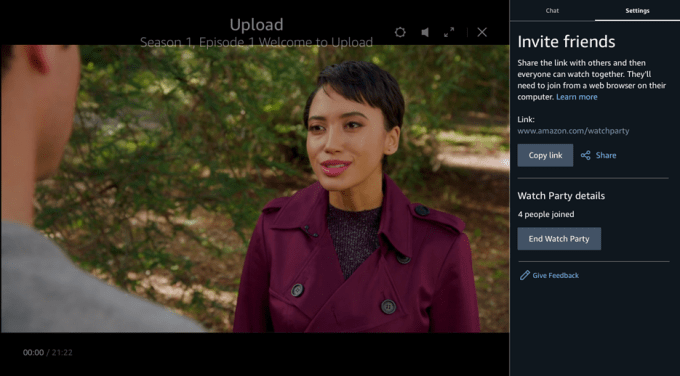
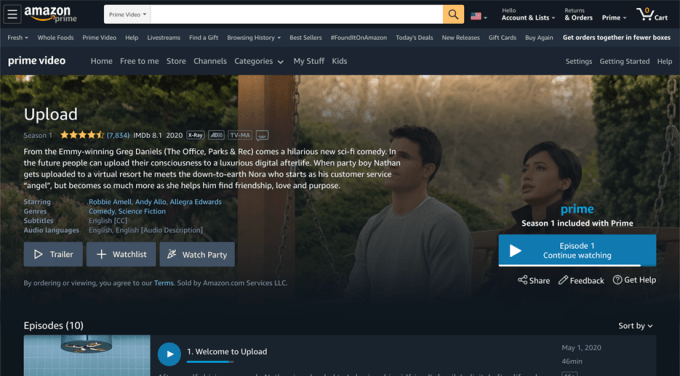
Amazon Prime Video is beginning to roll out a coviewing feature to Amazon Prime members in the U.S., the company announced today. The “Watch Party” feature, which is included at no extra cost with a Prime membership, allows participants to watch video content together at the same time with the playback synchronized to the host’s account.

The host of the cowatching session will be able to start, stop and pause the Watch Party as needed throughout the session, and those changes will also be synced to all participants’ devices instantly.

Each session can also support up to 100 participants — as long as those participants also have a Prime membership (or a Prime Video subscription) and are are watching from within the U.S.

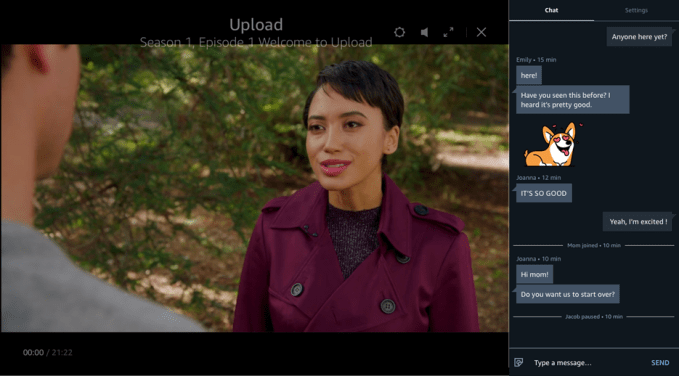
While the video is playing, users can socialize with other participants through a built-in chat feature that supports both text and built-in emojis.

At launch, Watch Party is offered via Prime Video on the desktop and is supported across thousands of titles in the Prime Video SVOD (subscription video on demand) catalog. This includes the third-party content that comes with Prime as well as Amazon Originals like “Fleabag,” “The Marvelous Mrs. Maisel,” “Tom Clancy’s Jack Ryan,” “HANNA,” “Mindy Kaling’s Late Night,” “Donald Glover’s Guava Island,” “Troop Zero,” “The Big Sick,””The Boys,” “Homecoming,” “My Spy,” and others.

Titles available only for rent or purchase are not available within Watch Party at this time, Amazon says.

To get started with Watch Party, customers will click on the new Watch Party icon on the movie or show’s page on Prime Video desktop website. They’re then given a link they can share with friends and family however they want. Recipients who click the link will then join the session and be able to chat with others.

Amazon says the new feature was built as a native experience for Prime Video.

The company is the latest streaming service to roll out bulit-in support for coviewing — something that’s become a popular activity during the coronavirus pandemic as people are spending more time at home.

While the U.S. was sheltering in place under coronavirus lockdowns, a browser extension called Netflix Party went viral. Soon, all the streamers wanted in on this action. HBO, for example, partnered with the browser extension maker Scener to offer a “virtual theater” experience for cowatching that supports up to 20 people.

Hulu more recently launched its own native Watch Party feature for its “No Ads” subscribers on Hulu.com. Media software maker Plexa also rolled out cowatching support around the same time.

Amazon, however, had already offered a way to cowatch some of its Prime Video titles before today. Its game-streaming site Twitch had introduced Watch Parties this spring across over 70 Amazon Prime Video titles. The new native experience rolling out now offers a broader selection and has the potential to expand to more markets in the future.

If you don’t see Watch Party yet, you will have it soon as the feature is just now beginning to roll out more broadly.

Amazon wouldn’t comment on its future plans for Watch Party. When asked about the roadmap ahead, the company would only say that it introduces features when they’re ready for customers.

29 Jun 2020

CodeGuru, AWS’s AI code reviewer and performance profiler, is now generally available

AWS today announced that CodeGuru, a set of tools that use machine learning to automatically review code for bugs and suggest potential optimizations, is now generally available. The tool launched into preview at AWS re:Invent last December.

CodeGuru consists of two tools, Reviewer and Profiler, and those names pretty much describe exactly what they do. To build Reviewer, the AWS team actually trained its algorithm with the help of code from over 10,000 open source projects on GitHub, as well as reviews from Amazon’s own internal codebase.

“Even for a large organization like Amazon, it’s challenging to have enough experienced developers with enough free time to do code reviews, given the amount of code that gets written every day,” the company notes in today’s announcement. “And even the most experienced reviewers miss problems before they impact customer-facing applications, resulting in bugs and performance issues.”

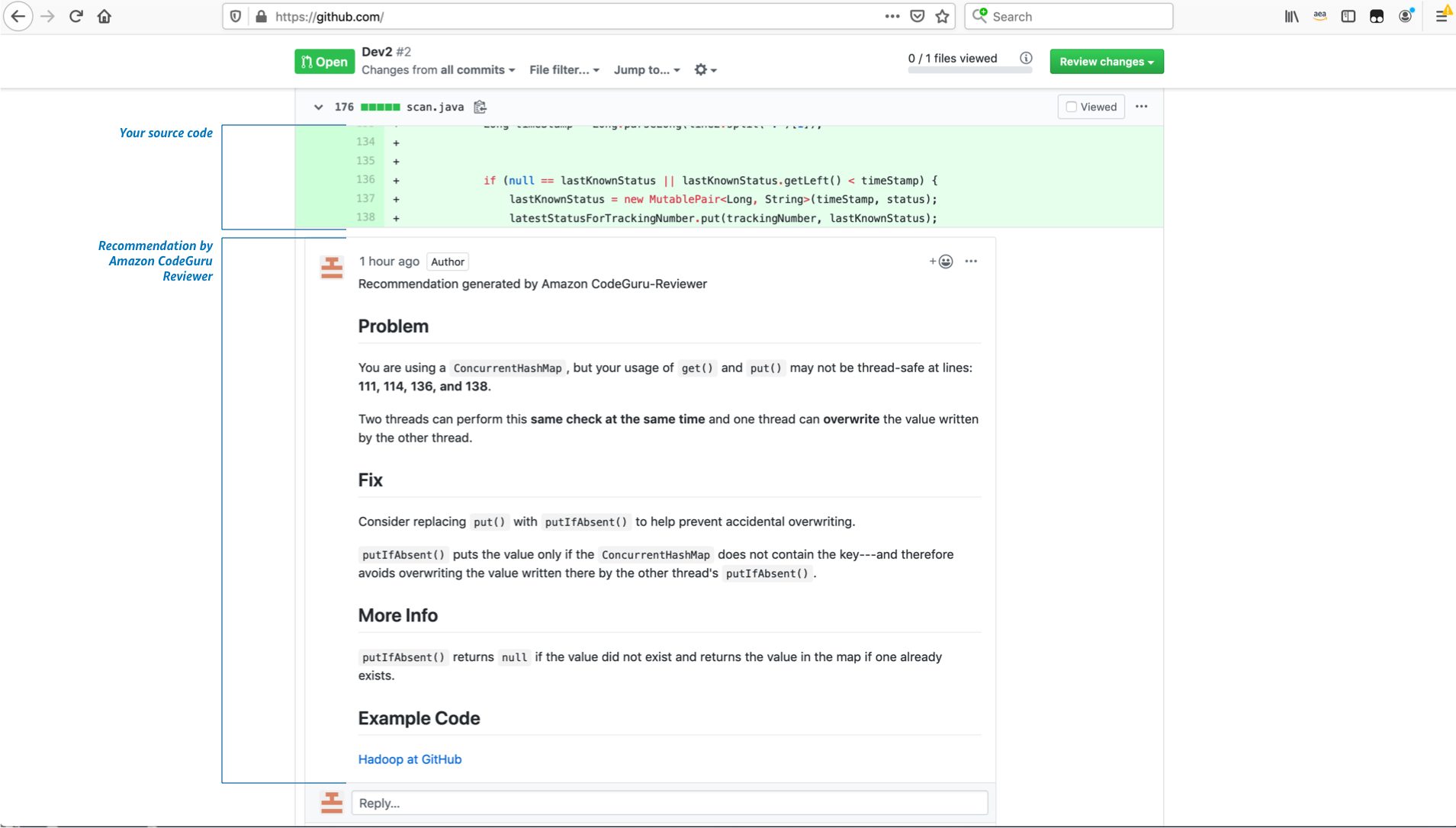
To use CodeGuru, developers continue to commit their code to their repository of choice, no matter whether that’s GitHub, Bitbucket Cloud, AWS’s own CodeCommit or another service. CodeGuru Reviewer than analyzes that code, tries to find bugs and if it does, it will also offer potential fixes. All of this is done within the context of the code repository, so CodeGuru will create a GitHub pull request, for example, and add a comment to that pull request with some more info about the bug and potential fixes.

To train the machine learning model, users can also provide CodeGuru with some basic feedback, though we’re mostly talking ‘thumbs up’ and ‘thumbs down’ here.

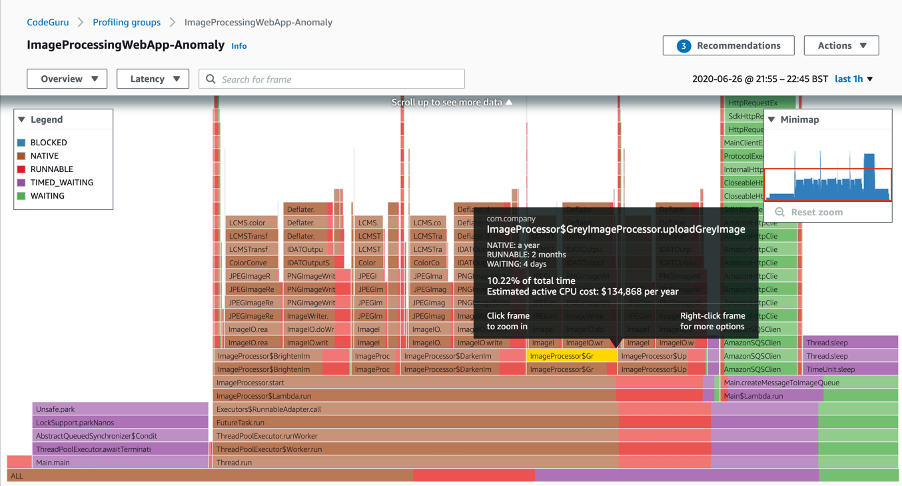
The CodeGuru Application Profiler has a somewhat different mission. It is meant to help developers figure out where there might be some inefficiencies in their code and to identify the most expensive lines of code. This includes support for serverless platforms like AWS Lambda and Fargate.

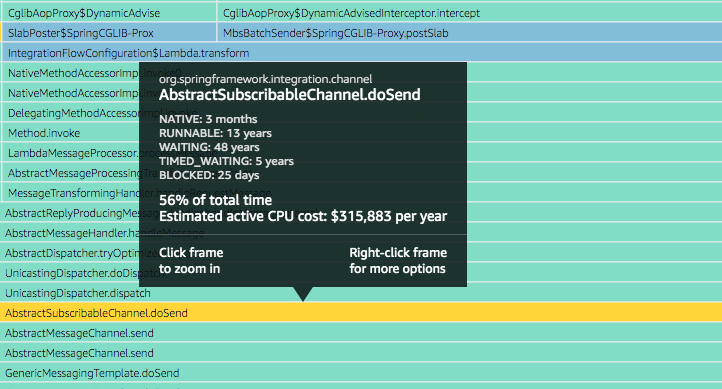
One feature the team added since it first announced CodeGuru is that Profiler now attaches an estimated dollar amount to the lines of unoptimized code.

“Our customers develop and run a lot of applications that include millions and millions of lines of code. Ensuring the quality and efficiency of that code is incredibly important, as bugs and inefficiencies in even a few lines of code can be very costly. Today, the methods for identifying code quality issues are time-consuming, manual, and error-prone, especially at scale,” said Swami Sivasubramanian, Vice President, Amazon Machine Learning, in today’s announcement. “CodeGuru combines Amazon’s decades of experience developing and deploying applications at scale with considerable machine learning expertise to give customers a service that improves software quality, delights their customers with better application performance, and eliminates their most expensive lines of code.”

AWS says a number of companies started using CodeGuru during the preview period. These include the likes of Atlassian, EagleDream and DevFactory.

“While code reviews from our development team do a great job of preventing bugs from reaching production, it’s not always possible to predict how systems will behave under stress or manage complex data shapes, especially as we have multiple deployments per day,” said Zak Islam, Head of Engineering, Tech Teams, at Atlassian. “When we detect anomalies in production, we have been able to reduce the investigation time from days to hours and sometimes minutes thanks to Amazon CodeGuru’s continuous profiling feature. Our developers now focus more of their energy on delivering differentiated capabilities and less time investigating problems in our production environment.”

Image Credits: AWS

29 Jun 2020

The virtual state of corporate venture capital today

When the going gets tough, it’s common for some corporate VCs to head for the hills.

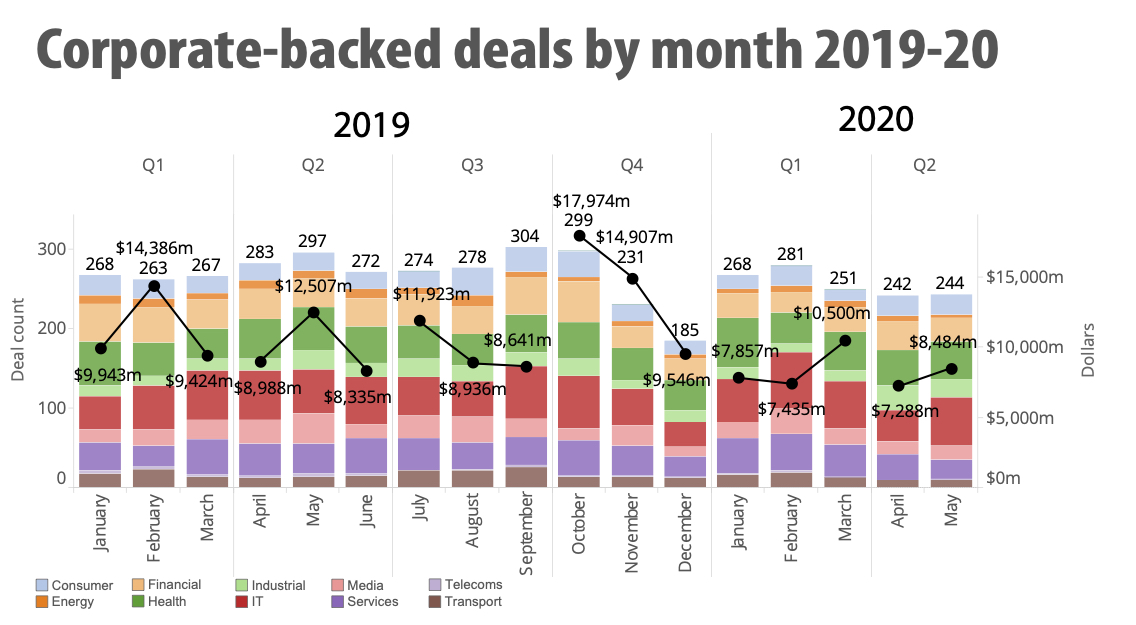
Today, it’s a narrative that’s emerging again amid the COVID-19 crisis. Global corporate venture deals fell from a total of 580 in April/May of 2019 to 486 in the same period this year, according to Global Corporate Venturing.

However, institutional VC deals are also headed for a decline, with PitchBook anticipating a drop in transaction volume over the next several quarters, as well as a downturn in valuations.

It remains to be seen how it will play out this time, but I believe corporate venture capital (CVC) will not only stick around, but also be a vital part of the innovation ecosystem going forward.

I know that Merck Global Health Innovation Fund (MGHIF) remains fully committed to “doing” venture. Now, more than ever, health innovation is vital. Second, we understand that many of today’s most successful companies were funded in times of uncertainty. In fact, to put our money where our mouth is, we’ve recently completed two spinouts, three follow-on investments, and two new deals in 2020 — all since COVID hit. We intend to increase that pace going forward in 2020 and beyond.

It hasn’t been easy. It’s hard to do venture when you can’t venture out into the world, meet founders and do diligence the way we did in the past. But it is possible, if you do some innovating of your own and set up a smoothly functioning system to do CVC virtually.

Here’s how we’ve done it.

Finding real benefits in virtual CVC

29 Jun 2020

From napkin notes to term sheets: A chat with Inspired Capital’s Alexa von Tobel

The next iteration of fintech is upon us, according to Inspired Capital’s Alexandra von Tobel.

“Fintech 1.0 was very much, ‘Let’s take what already exists and let’s do it better,’” she said in a recent appearance on Extra Crunch Live. Consumers are shifting away from Chase Bank and migrating to no-fee trading platforms like Robinhood; instead of booking an appointment with a tax advisor, people are registering with TurboTax.

Von Tobel, who founded financial-planning service LearnVest before joining Inspired Capital, said fintech’s future involves bringing infrastructure and support into ecosystems created by services like Robinhood and Betterment. It’s one of the many sectors that her generalist firm, which closed a $200 million debut fund last year, is interested in.

Our hour-long chat included tips on how (and when) to pitch her, breaking into VC and using vulnerability as a competitive advantage. Don’t just take it from us: Watch or listen to the entire conversation after the jump, or read some of the highlights below.

29 Jun 2020

YouTube bans David Duke, Richard Spencer and other white nationalist accounts

YouTube just took action against a collection of controversial figures synonymous with race-based hate, kicking six major channels off its platform for violating its rules.

The company deleted six channels on Monday: white supremacist outlet American Renaissance and an affiliated channel AmRenPodcasts, Richard Spencer’s own channel and the affiliated channel for the National Policy Institute/Radix Journal, far right figure Stefan Molyneux and white supremacist and longtime Ku Klux Klan leader David Duke.

“We have strict policies prohibiting hate speech on YouTube, and terminate any channel that repeatedly or egregiously violates those policies. After updating our guidelines to better address supremacist content, we saw a 5x spike in video removals and have terminated over 25,000 channels for violating our hate speech policies,” a YouTube spokesperson said in a statement provided to TechCrunch.

The company says that the channels it removed were repeat or “egregious” violators of the platform’s rules against leveraging YouTube videos to link to off-platform hate content and rules prohibiting users from making claims of inferiority about a protected group.

YouTube’s latest house-cleaning of far-right and white nationalist figures follows the suspension of Proud Boys founder Gavin McInnes earlier this month. Some of the newly-booted YouTube account owners turned to still-active Twitter accounts to complain about losing their YouTube channels Monday afternoon.

The same day that YouTube enforced its rules against a high-profile set of far-right accounts, both Twitch and Reddit took their own actions against content that violated their respective rules around hate. The Amazon-owned gaming streaming service suspended President Trump’s account Monday, citing comments made in two Trump rallies that aired there, one years-old and one from the campaign’s recent Tulsa rally. And after years of criticism for its failure to stem harassment and racism on, Reddit announced that it would purge 2,000 subreddits, including r/The_Donald, the infamously hate-filled forum founded as Trump announced his candidacy.