Year: 2020

26 May 2020

Cathay Innovation’s first investment in Germany is healthcare startup Medwing

Medwing, a German startup with an ambition to tackle Europe’s shortage of healthcare workers, said on Tuesday that it has secured €28 million ($30 million) in a Series B financing round. Global venture capital firm Cathay Innovation led the round, marking its first investment in a German company. Other participating investors include Northzone, Cherry Ventures and Atlantic Labs.

The World Bank forecasted a worldwide shortage of 15 million health professionals by 2030, with demand being highest in affluent regions like Europe with an aging labor force and an aging population in need of care.

The pressing issue inspired Johannes Roggendorf, who previously worked at Rocket Internet and Bain & Company, to launch Medwing in 2017 and later brought on his co-founder Dr. Timo Fischer. The entrepreneurs discovered that, contrary to conventional wisdom, many healthcare workers in Europe wanted to work more, not less. Part of the reason why jobs were not filled was information asymmetry that led to a mismatch between supply and demand.

“There is a group of people who are willing to work more if they can manage their schedule,” Roggendorf told TechCrunch over a phone interview. “There are many qualified workers who left the healthcare system often because of inflexible working hours.”

In a survey that Medwing conducted, 50% of those who left the healthcare system said they would return if they were given more flexible working conditions.

Medwing’s solution is an automatic job matching system connecting workers with hospitals, nursing homes and other medical institutions. Focusing on Europe, the startup has so far registered more than 200,000 workers and 2,500 partner employers — including 80% hospitals in Berlin . Employers pay Medwing a commission every time a candidate is successfully placed. Each month, the platform is adding 15,000 new applicants, placing over 100 health experts in permanent positions and filling some 2,000 individual shifts. 20% of its users are looking for non-permanent jobs, according to Roggendorf.

The platform strives to differentiate itself by “starting with the candidates,” asserted the founder. Unlike traditional staffing sites, which search for applicants based on recruiters’ criteria, Medwing does the opposite and filters recruiters according to candidates’ preferences on whether the position is flexible or permanent, part-time or full-time. It’s an approach that the founder believes can optimize worker satisfaction. In addition to matchmaking, the platform also provides career consulting services to job seekers.

To Jacky Abitbol, who oversaw the deal for Cathay Innovation, Medwing is addressing two kinds of technological innovation his fund hunts for. For one, Medwing is driving “the future of work” by giving employees more autonomy and freedom. Terminal, which lets companies build out remote engineering teams overseas, is another startup in this category that has attracted financing from Cathay Innovation.

“Medwing is also bringing digital to a more traditional sector,” Abitbol told TechCrunch on the phone. That means streamlining the recruiting process by eliminating agencies or middlemen, saving time and costs for both workers and employers.

“What sounds very logical was not done this way until today,” the investor added.

Medwing operates a team of over 200 employees from over 30 countries, many of which have been hit hard by COVID-19. The startup is providing some of its services pro bono to fight the virus, placing professionals and volunteers in hospitals, nursing homes and private households that need support. Abitbol said the impact of the health crisis on the startup’s revenue remains “slight”, as only certain facilities are designated as coronavirus hospitals and demand will return to normal as the pandemic starts to ease.

26 May 2020

China’s food delivery giant Meituan hits $100B valuation amid pandemic

Meituan’s shares hit a record high on Tuesday, bringing its valuation to over $100 billion.

The Hong Kong-listed giant, which focuses on food delivery with smaller segments in travel and transportation, is the third Chinese firm to reach the landmark valuation. Tencent and Alibaba respectively topped the number back in 2013 and 2014.

Tencent-backed Meituan saw shares rally to HK$138 ($17.8) on Tuesday after it earmarked a smaller-than-projected decrease in revenue during Q1 and a net loss of 1.58 billion yuan ($220 million) after three consecutive profitable quarters.

While nationwide lockdowns might have increased the need for food delivery, Chinese consumers have been tightening their belt amid a worsening economy triggered by COVID-19. Overall food delivery transactions slid as a result. Meituan also had to pay incentives to delivery riders who work during the pandemic and subsidies to merchants to keep their heads above the water.

There’s one silver lining: While Meituan’s daily average number of transactions dropped by 18.2% to 15.1 million, the average value per order jumped by 14.4% as delivered meals, which were conventionally seen as a habit for office workers, became normalized among families that stayed at home. In the first quarter, a large number of premium restaurants joined Meituan’s food delivery services, and they could continue to attract bigger ticket purchases in the post-pandemic era.

All in all, though, Meituan executives warned of the uncertainties brought by COVID-19. “Moving on to the remaining of 2020, we expect that factors including the ongoing pandemic precautions, consumers’ insufficient confidence in offline consumption activities and the risk of merchants’ closure would continue to have a potential impact on our business performance.”

26 May 2020

Uber cuts 600 jobs in India

Uber is cutting 600 jobs in India, or 25% of its workforce in the country, it said on Tuesday as it looks to cut costs to steer through the coronavirus pandemic.

The job cuts, which affect teams across customer and driver support, business development, legal, policy, marketing, and finance, are part of the company’s global restructuring that eliminated 6,700 jobs this month.

The American giant, which claimed to be the top cab hailing service in India earlier this year, said it was providing 10 to 12 weeks of salary to the employees who are being let go, in addition to medical insurance for the next six months.

“The impact of Covid-19 and the unpredictable nature of the recovery has left Uber India with no choice but to reduce the size of its workforce. Around 600 full time positions across driver and rider support, as well as other functions, are being impacted. These reductions are part of previously announced global job cuts this month. Today is an incredibly sad day for colleagues leaving the Uber family and all of us at the company. We made the decision now so that we can look to the future with confidence,” said Pradeep Parameswaran, President for Uber’s India and South Asia businesses, in a statement through a spokesperson.

“I want to apologise to departing colleagues and extend my heartfelt thanks to them for their contributions to Uber, the riders, and the driver partners we serve in India,” he added.

Uber’s announcement follows similar cost cutting measures employed by its local rival Ola, which eliminated 4,000 jobs, or 35% of its workforce last week. Ola said its food delivery business was one of the key teams to be affected by the job cuts. Uber sold its Indian food delivery business to Zomato earlier this year.

More to follow…

25 May 2020

NASA and SpaceX confirm SpaceX’s first ever astronaut launch is a ‘go’

NASA and SpaceX are closer than ever to a moment both have been preparing for since the beginning of the Commercial Crew program in 2010. SpaceX’s Falcon 9 and Crew Dragon spacecraft are now set to fly with NASA astronauts Doug Hurley and Bob Behnken onboard, making a trip to the International Space Station, and both the agency and SpaceX announced today that they have officially passed the final flight readiness review, meaning everything is now a ‘go’ for launch.

According to NASA Commercial Crew Program manager Kathy Leuders during a press conference on Monday, everything went well with all pre-launch flight checks thus far, including a full-length static test fire of the Falcon 9’s engines, and a dress rehearsal of all launch preparation including strapping Hurley and Behnken into the rocket.

The only remaining major hurdle for SpaceX and NASA now is the weather, which is currently only looking around 40% favorable for a launch attempt on schedule for Wednesday, May 27 at 4:33 PM EDT, though during today’s press conference officials noted it is actually trending upwards as of today.

SpaceX and NASA will be paying close attention to the weather between now and Wednesday, and since this is a highly sensitive mission with actual astronauts on board the spacecraft, you can bet that they’ll err on the side of caution for scrubbing the launch if weather isn’t looking good. That said, they do have a backup opportunity of May 30 in case they need to make use of that.

Hans Koenigsmann, VP of Mission Assurance at SpaceX, noted that there were “no showstoppers” during the static test fire on Friday, and also commented that seeing the actual astronauts climb aboard the Crew Dragon during the dry dress rehearsal really drove home the seriousness and impact of this moment. It will mark the first ever human spaceflight for SpaceX, and the first time astronauts have launched from U.S. soil since the end of the Space Shuttle program in 2011.

Koenigsmann went through the schedule for launch day, which include Behnken and Hurley getting ready and suited up around 4 hours before, be drive over in the custom Tesla Model X astronaut transit vehicle at around 3 hours prior, and get into the capsule at around 2.5 hours before launch time. The rest from there is somewhat similar to other Falcon 9 launches, he said, with the exception of the escape system arming at 45 minutes prior to launch, and the arm retracting 10 minutes later, at which point the automated launch system takes over just like it does for other Falcon 9 flights.

Post-launch, Behnken and Hurley will spend 19 hours on orbit, with orbit-raising burns and also a manual flight test (the rest of the time Crew Dragon should be under fully automated control) for around 30 minutes just prior to docking. Then, it’ll dock and open the hatch around 2 hours later.

The departure schedule for Behnken and Hurley to leave the ISS is in flux – NASA will provide that date, sometime between 6 weeks and 16 weeks from launch. The astronauts will then back into Dragon, suit up, undock from the station, and land in the Atlantic around two hours later for recovery.

This is the culmination of many years’ work, and will be the first human flight for the Commercial Crew program. If all goes well, SpaceX could then begin flying astronauts during regular operational missions for ferrying astronauts to and from the Space Station as early as later this year.

25 May 2020

Virgin Orbit’s first orbital test flight cut short after rocket released from carrier aircraft

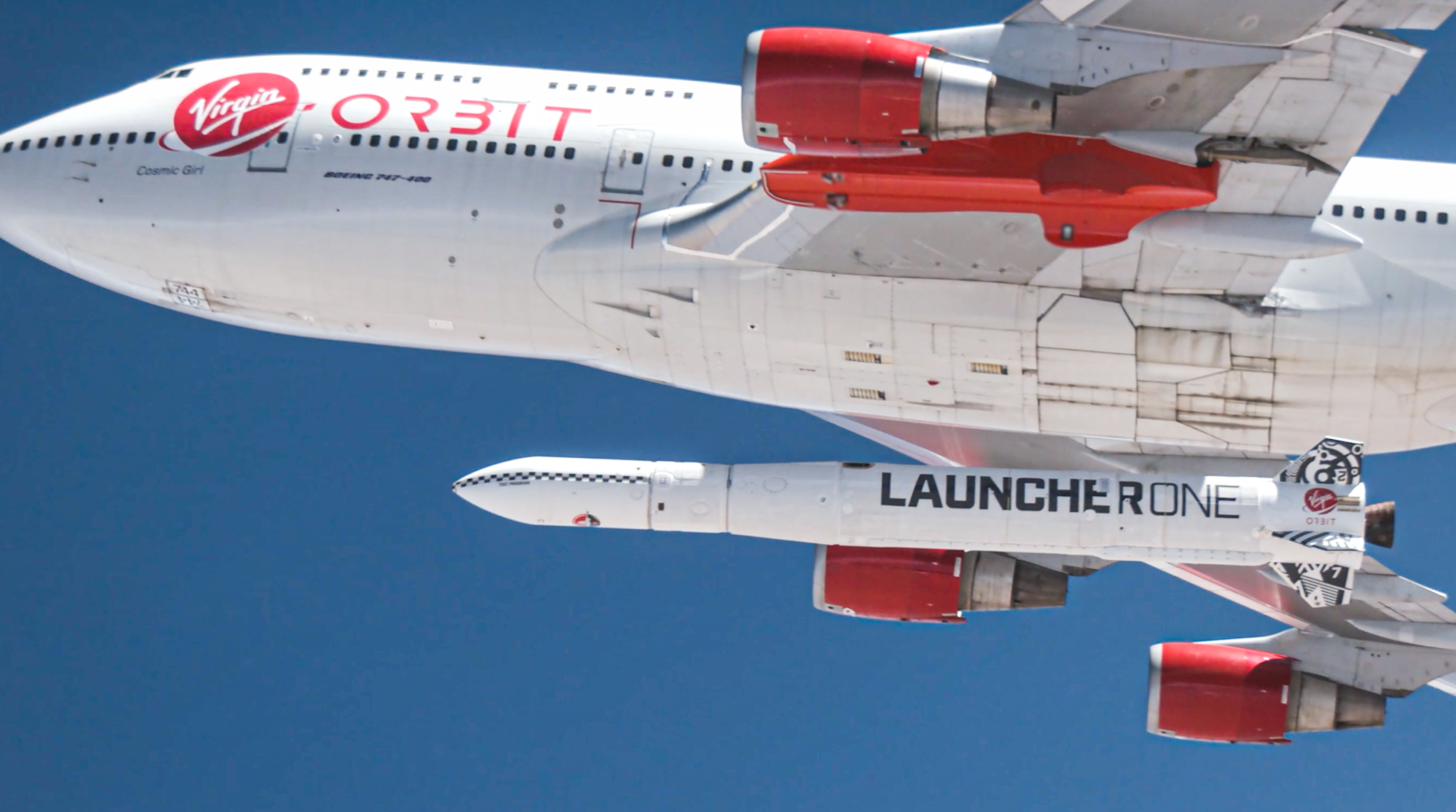
On Monday, Virgin Orbit attempted the first full flight of its orbital payload launch system, which includes a modified Boeing 747 called ‘Cosmic Girl’ that acts as a carrier aircraft for its air-launched rocket LauncherOne. While Virgin Orbit has flown Cosmic Girl and LauncherOne previously for different tests and demonstrations, this was the first end-to-end system test. Unfortunately, that test ended much earlier than planned – just shortly after the LauncherOne rocket was released from Cosmic Girl.

Cosmic Girl took off just before 12 PM PT (3 PM ET) from Mojave Air and Spaceport in California. The aircraft was piloted by Chief Test Pilot Kelly Latimer, along with her co-pilot Todd Ericson. The aircraft then flew to its target release point, where LauncherOne did manage a “clean release” from the carrier craft as planned at around 12:50 PM PT (3:50 PM ET), but Virgin noted just a few minutes later that the mission was subsequently “terminated.”

While the Cosmic Girl crew and all other employees are confirmed safe by the company, this is likely to be a disappointing test. Still, Virgin Orbit’s CEO Dan Hart and VP Will Pomerantz cautioned that many first test missions for new launch systems don’t go quite as planned – which is why you test, after all.

The full planned flight map today for Virgin One’s orbital test.

The company will still likely be able to collect a lot of valuable data from this mission, which should provide insight into what went wrong. We’ll also be reaching out to the company to seek details of what caused the early ending to today’s mission. Once the company addresses the problems, it’s likely to set another attempt, and that might not be as far away as you might expect because Virgin has been very active on its launch vehicle pipeline and has backup craft nearly ready to fly.

25 May 2020

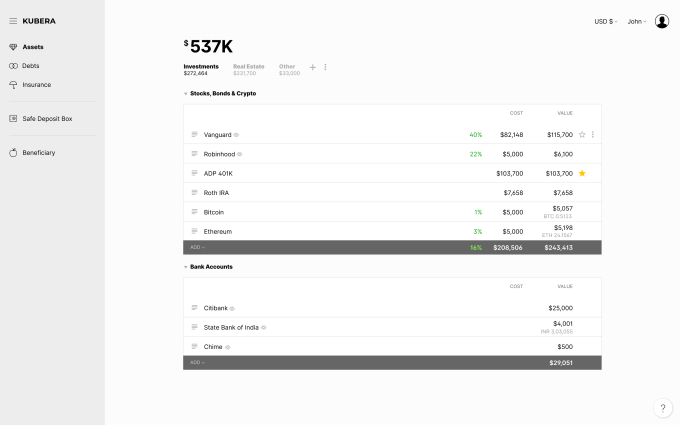
Newton Mail founder returns with launch of personal net worth tracker, Kubera

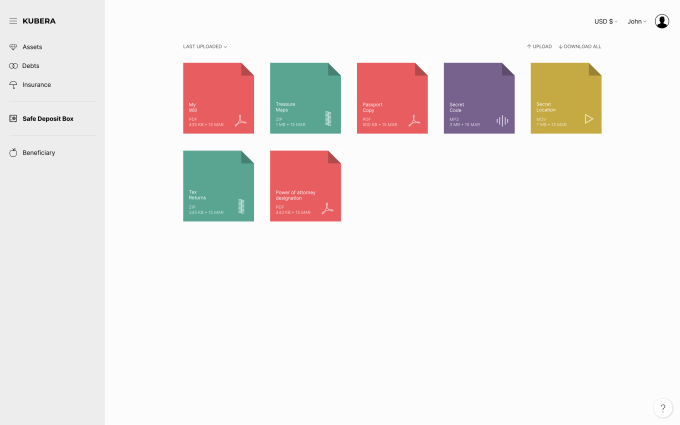
Serial entrepreneur Rohit Nadhani, who last sold his Newton email app to Essential in 2018— an app so popular it’s been saved from shutting down multiple times — is today launching a new startup, Kubera. The service aims to offer an alternative to using a spreadsheet to keep track of your assets, investments, cryptocurrencies, debts, insurance, and other important documents that would need to be transferred to a loved one in the event of your death.

The founder was inspired to create Kubera — a reference to the Indian “lord of wealth” — due to a traumatic personal experience. While swimming in Costa Rica, he was caught in a riptide and had to be rescued. After coming home, the first thing he did was to start putting together a list of all his assets to share with his wife in the event of his death.

The task was fairly difficult, as it turned out, as that list now included more than just real estate, stocks and bonds, retirement accounts, and insurance.

Nadhani realized he also wanted to list other assets like crypto investments, collectibles, precious metals, private and foreign investments, trademarks and other digital assets, as well as debts owed him — like loans he had made to family and friends.

Plus, he wanted a few more features that a simple spreadsheet could provide — like the ability to automatically update the value of the assets, similar to Intuit’s Mint, and basic reporting. More importantly, he didn’t want to share access to his personal net worth data and accounts unless it was absolutely necessary.

Existing solutions didn’t meet Nadhani’s needs, he said, as they used outdated technology, lacked the features he wanted, or used users’ data to make budgeting or investment recommendations. That, along with feedback from friends who said they were also stuck using spreadsheets for this task, prompted the founder to create his own solution with Kubera.

To do so, he reached out to former colleague Manoj Marathayil, the founding engineer at Nadhani’s two prior companies, CloudMagic (Newton) and Webyog, which exited to IDERA in 2018. Also joining Kubera is the former Head of Product & Design from Newton Mail at CloudMagic, Umesh Gopinath.

Kubera is launching today as a custom-built solution for the task of listing your assets, both traditional and non-traditional alike.

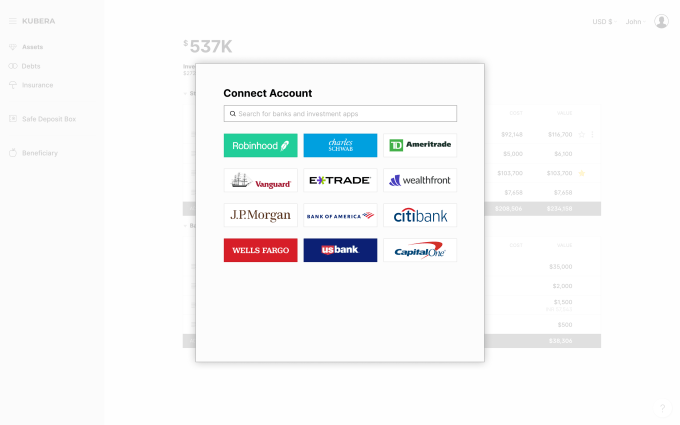
To use the service, you begin by listing your assets in a simple table, then add details like cost, value, or the documents associated with them, if available. You can either opt to update the values in the table as you go, or you can connect assets to your online accounts to update their value automatically.


The service uses trusted financial data aggregation services like Plaid and Yodlee to make the connections, which means it has “read-only” access to your financial data — Kubera cannot make transactions on your behalf. This also allows it to support connections to over 10,000 banks across the world.

The service also uses the open standard AES-256 encryption algorithm to encrypt user data, requires HTTPS on all web pages, uses HSTS to require browsers use only secure connections, and supports 2-step verification through Google Sign-in with other 2-step options launching soon.

The company’s business model is a subscription service, which allows it to generate revenue without having to share data with a third-party or advertiser. The basic service is free to use if you don’t want to automatically update your asset values. If you do, it’s $10 per month.

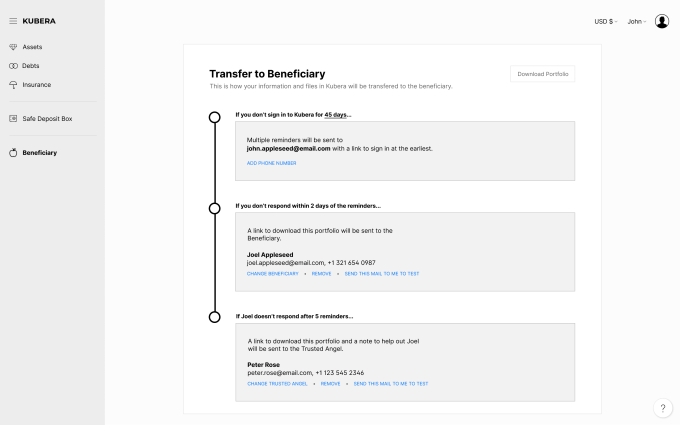
Once the initial entry has been done, Kubera will periodically remind you to update asset values and check in. Its “life beat” check will track if you’ve been inactive for a certain number of days (specified by you during setup) and try to reach you.

If you don’t respond to Kubera’s attempts to reach you, it will then try to reach your beneficiary by way of email and text, if provided. The service sends an email with all the information you’ve provided in a downloadable format to your beneficiary. If they don’t respond after several reminders, Kubera will then reach out to your backup contact, a “Trusted Angel.”

Kubera to some extent competes with services like Mint, YNAB and other online budgeting tools. But these services don’t offer the same extensive net worth tracking and have a different focus. It also competes with financial advisor and wealth management companies, like Personal Capital. But instead of pushing you to connect with a financial advisor or other paid services, Kubera isn’t doling out investing advice.

Further down the road, Kubera may expand into estate planning — like helping with wills or trusts, or connecting you to partners who can provide these services. But for the time being, the service is meant to be used in conjunction with users’ existing wills and trusts.

The bootstrapped startup is a five-person team. At launch, Kubera is offering 100-day free trials, allowing you the time to organize assets before making a decision on subscribing to the service.


25 May 2020

Max Q: Huge week ahead for SpaceX and Virgin Orbit

This week could be the biggest week to date for private spaceflight, with landmark launch attempts coming from both Virgin Orbit and SpaceX .

Virgin Orbit is looking to join the elite club of private launch companies that have actually made it to space, with a full flight test of its combined Cosmic Girl and LauncherOne system. Meanwhile, SpaceX is looking to launch its Crew Dragon spacecraft with people on board – achieving a number of milestones, including returning U.S. crew launch capabilities, and human-rating its Falcon 9 rocket.

Here’s what Virgin Orbit hopes their first flight will do

Virgin Orbit 87Virgin Orbit was supposed to launch its first full demonstration flight on Sunday, but a sensor bug that showed up during pre-launch checkouts means that it’s now pushing things back to at least Monday to check that out.

Extra precaution is hardly surprising since this milestone mission could help the company become an operational satellite launch provider – one of only a small handful of private companies that can make that claim.

SpaceX cleared to proceed for historic crew flight Wednesday

SpaceX passed its first crucial flight readiness review (FRR) on Friday for its first ever crewed astronaut launch, setting it up for a full rehearsal of the mission on Saturday leading up to the actual launch Now it’s set for another FRR with partner NASA on Monday, and then the launch should take place on Wednesday – weather and checkouts permitting. This will definitely be one to watch.

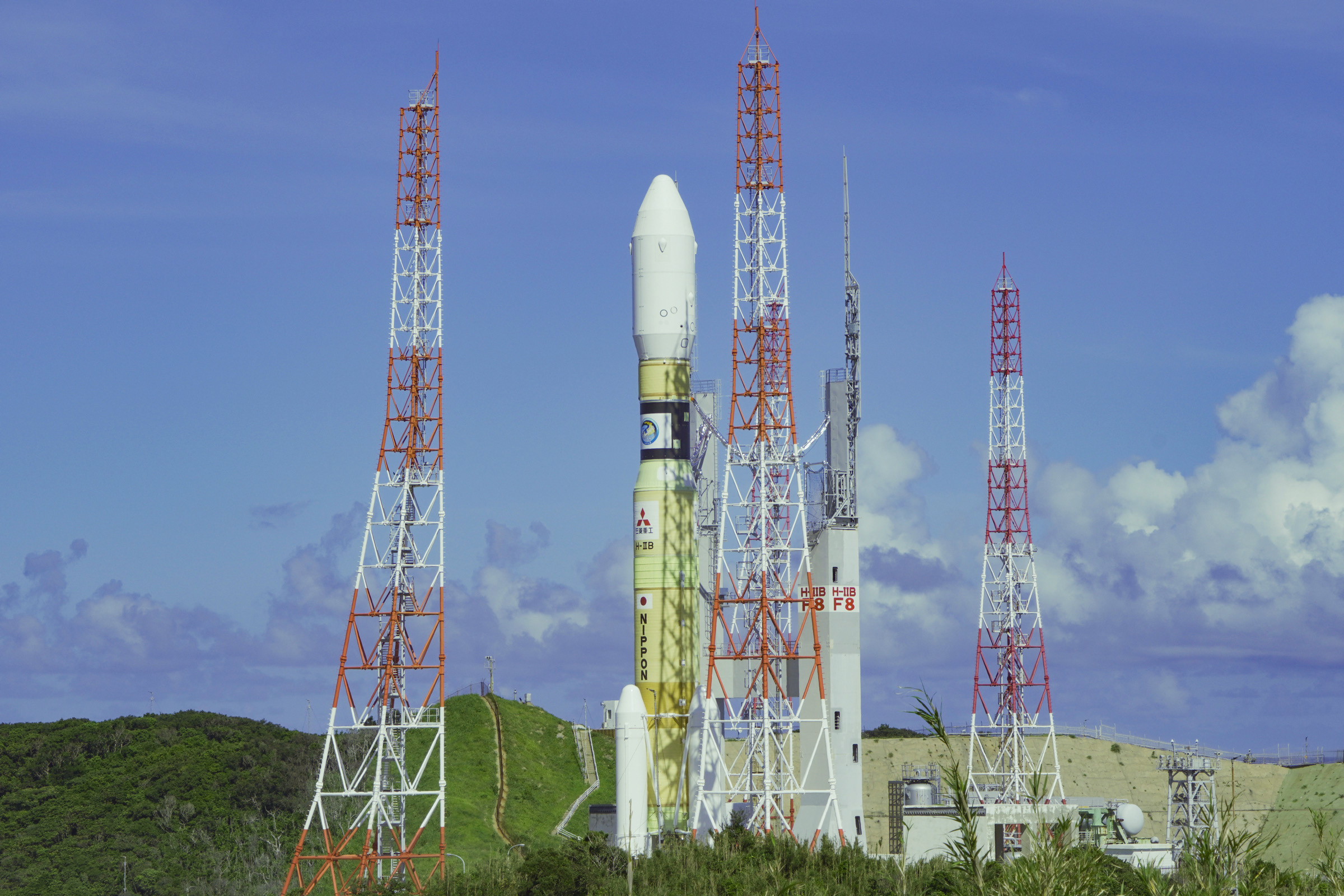
MHI retires a space workhorse

MHI H IIB HTV8 10 1

Mitsubishi Heavy Industries flew its last mission with its H-II series rocket, and the space transfer vehicle it carries to deliver supplies to the International Space Station. The company is readying a successor to this highly successful and consistent rocket, the H3, which is set to make its launch debut sometime in 2022 if all goes to plan.

NASA human spaceflight chief abruptly resigns

While SpaceX is aiming to make history with NASA and two of its astronauts, the person in charge of the agency’s human spaceflight endeavors made a surprising and abrupt exit from the agency last week. Doug Loverro resigned from his position, reportedly over some kind of inappropriate activity he engaged in with a prospective agency business partner ahead of the contract awards for NASA’s commercial human lander program.

Xilinx debuts a new chip made for machine learning in space

Xilinx specializes in building processors that are designed to withstand the rigors of use in space, which include heavy radiation exposure, extreme temperatures and plenty more. The company just debuted a new FPGA for space-based applications that is the first 20nm-based processor for space, and the first with dedicated machine-learning capabilities built in for edge computing that truly redefines the term.
NASA’s ‘Artemis Accords’ look to redefine international space cooperation

Space has enjoyed a period of being relatively uncontested when it comes to international squabbles – mostly because it’s hard and expensive to reach, and the benefits of doing so weren’t exactly clear 30 to 40 years ago when most of those rules were set up. NASA’s new rules include a lot of the old ones, but also set up some modernizations that are sure to begin a lot of debate and discussion in the space policy community.

ULA launches first U.S. Space Force spaceplane mission

100330 O 1234S 001

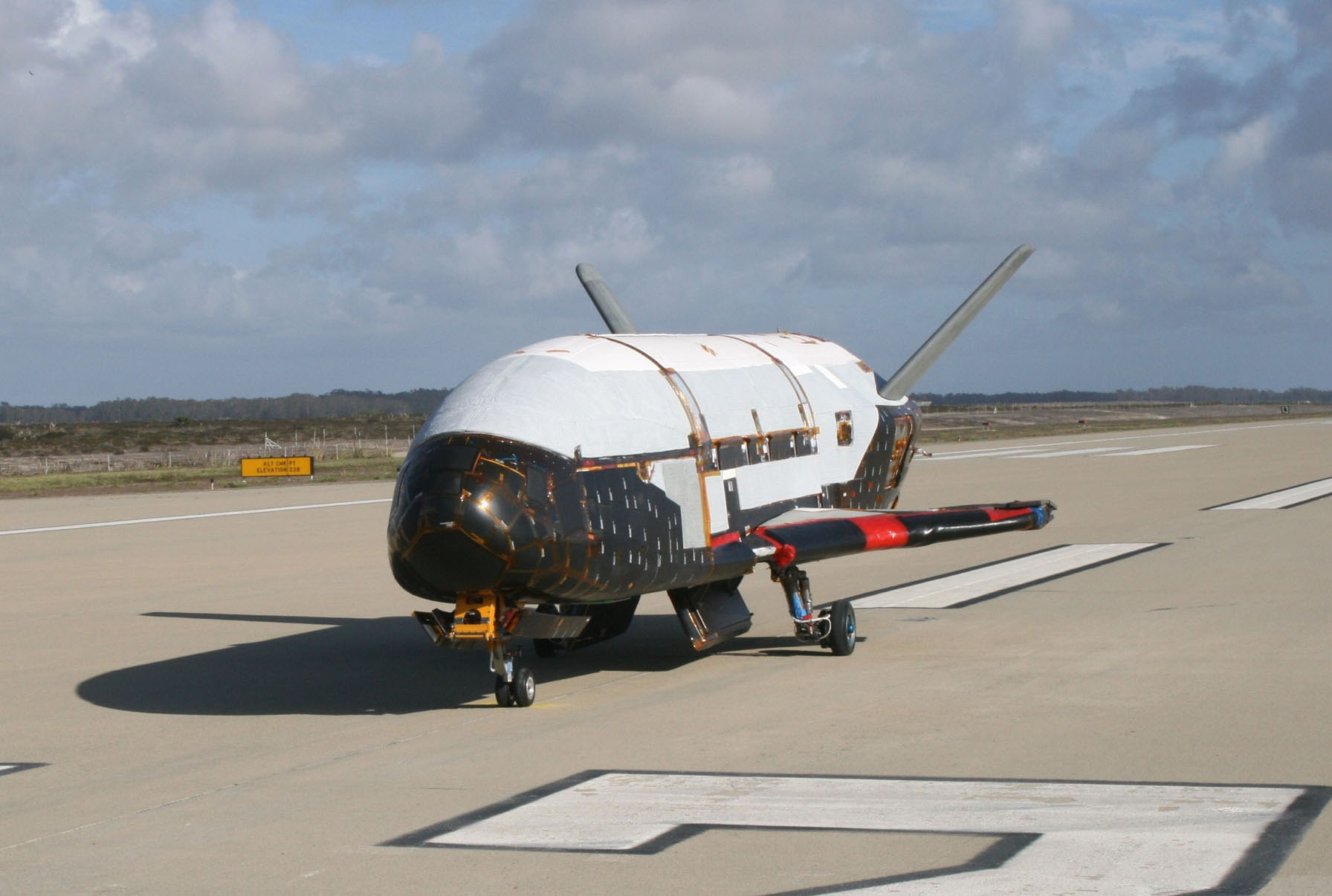
In a testing procedure, the X-37B Orbital Test Vehicle taxis on the flightline March 30, 2010, at the Astrotech facility in Titusville, FLa. (Courtesy photo)

The United Launch Alliance launched the X-37B last week on behalf of the U.S. Space Force – marking the first time the mysterious experimental unscrewed space plane has launched for that newly-formed agency. The X-37B has flown plenty before, of course – but previously it was doing so under the authority of the U.S. Air Force, since the Space Force hadn’t been formed yet.

25 May 2020

Jabra’s Elite Active 75t earbuds offer great value and sound for both workouts and workdays

Technology improvements over the past few years mean that most fully wireless earbuds are a lot better than they used to be. That has led to something of a narrowing of the field among competitors in this arena, but some of the players still stand out – and Jabra have definitely delivered a standout performer with its newest Elite Active 75t fully wireless earbuds.

Basics

Jabra’s Elite Active 75t is a successor to its very popular 65t line, with added moisture resistance designed specifically for exercise use, as indicated by the ‘Active’ in the name. At $199.99, these are definitely premium-priced – but they’re a lot more affordable than many of the other offerings in the category, especially with their IP57-water and sweat resistance rating.

The Elite Active 75t also feature an esteemed 7.5 hours of battery life on a single charge, and their compact charging case carries backup power that adds up to a total of 28 hours potential run time across a single charge for both. The case charges via USB-C and also offers a fast-charge capability that provides 60 minutes of use from just 15 minutes of charging.

While they don’t offer active noise cancellation, they do have passive noise blocking, and an adjustable passthrough mode so that you can tune how much of the sound of the world around you you want to let in – a great safety feature for running or other activities.
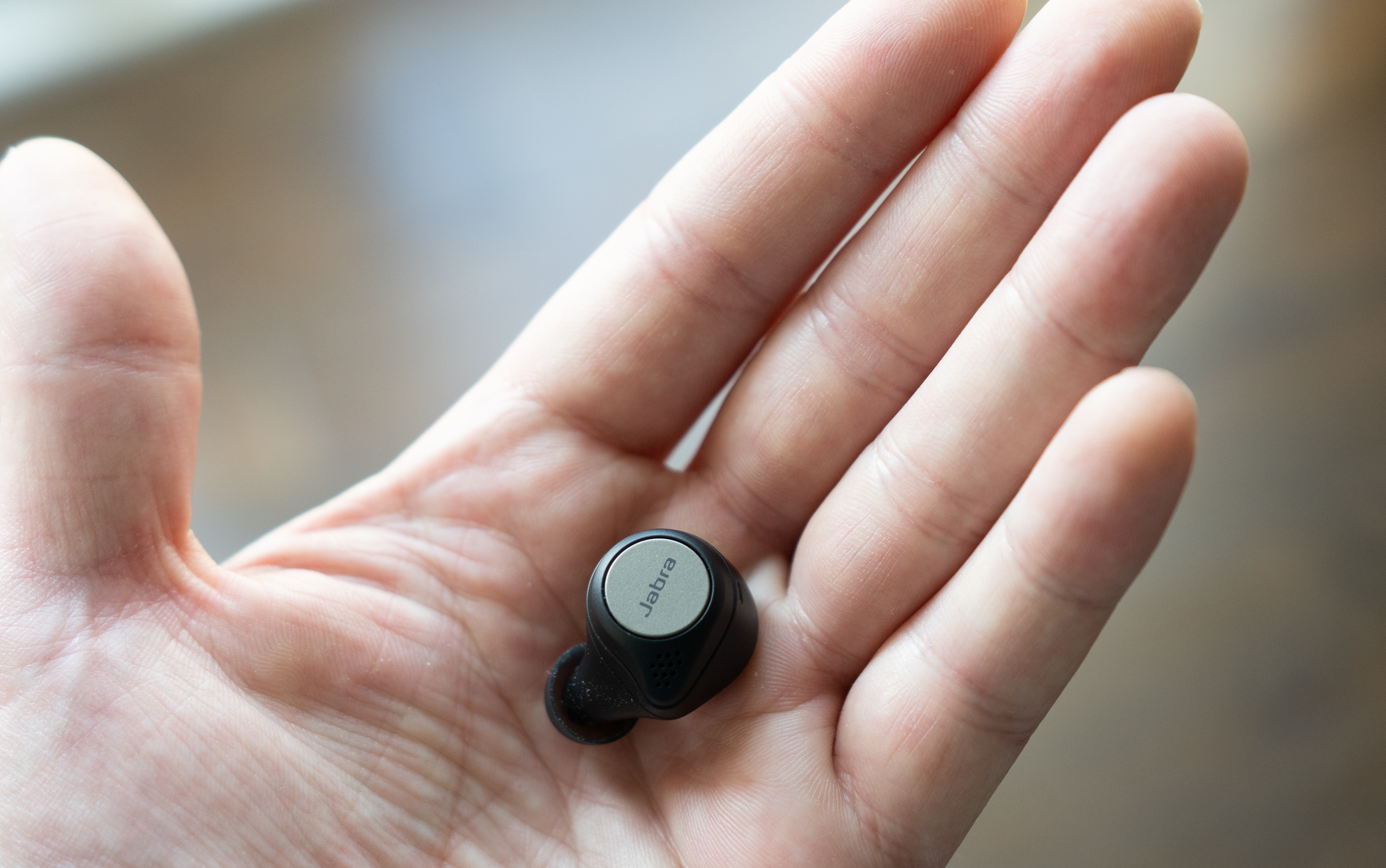
They use Bluetooth 5.0 for low power consumption and extended connection range, have an auto-pause and resume feature for when you take out one earbud, and include a 4-mic array to optimize audio quality during calls.

Design

Jabra has accomplished a lot on the design front with the Elite Active 75t. Their predecessor was already among the most compact and low-profile in-ear wireless buds on the market, and the Elite Active 75t is even smaller. These are extremely lightweight and comfortable, too, and their design ensures that they stay put even during running or other active pursuits. In my testing, they didn’t even require adjustment once during a 30-minute outdoor run.

Their comfort makes them a great choice for both active use and for all-day wear at the desk – and the 7.5 hours of battery life doesn’t seem to be a boast, either, based on my use, which is also good for workday wear.

Another key design feature that Jabra included on the Elite Active 75t is that both earbuds feature a large, physical button for controls. This is much better and easier to use than the touch-based controls found on a lot of other headsets, and makes learning the various on-device control features a lot easier.
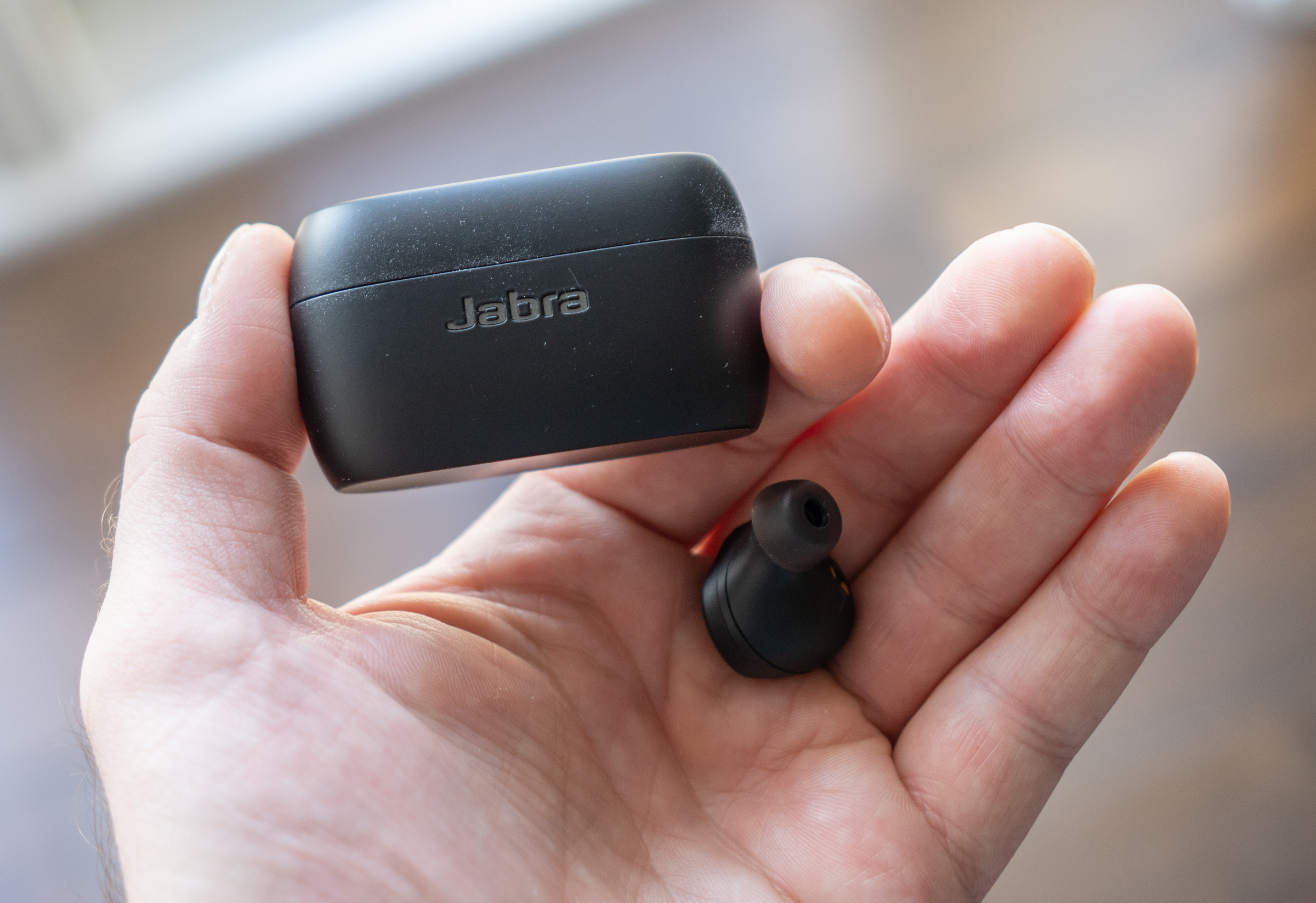
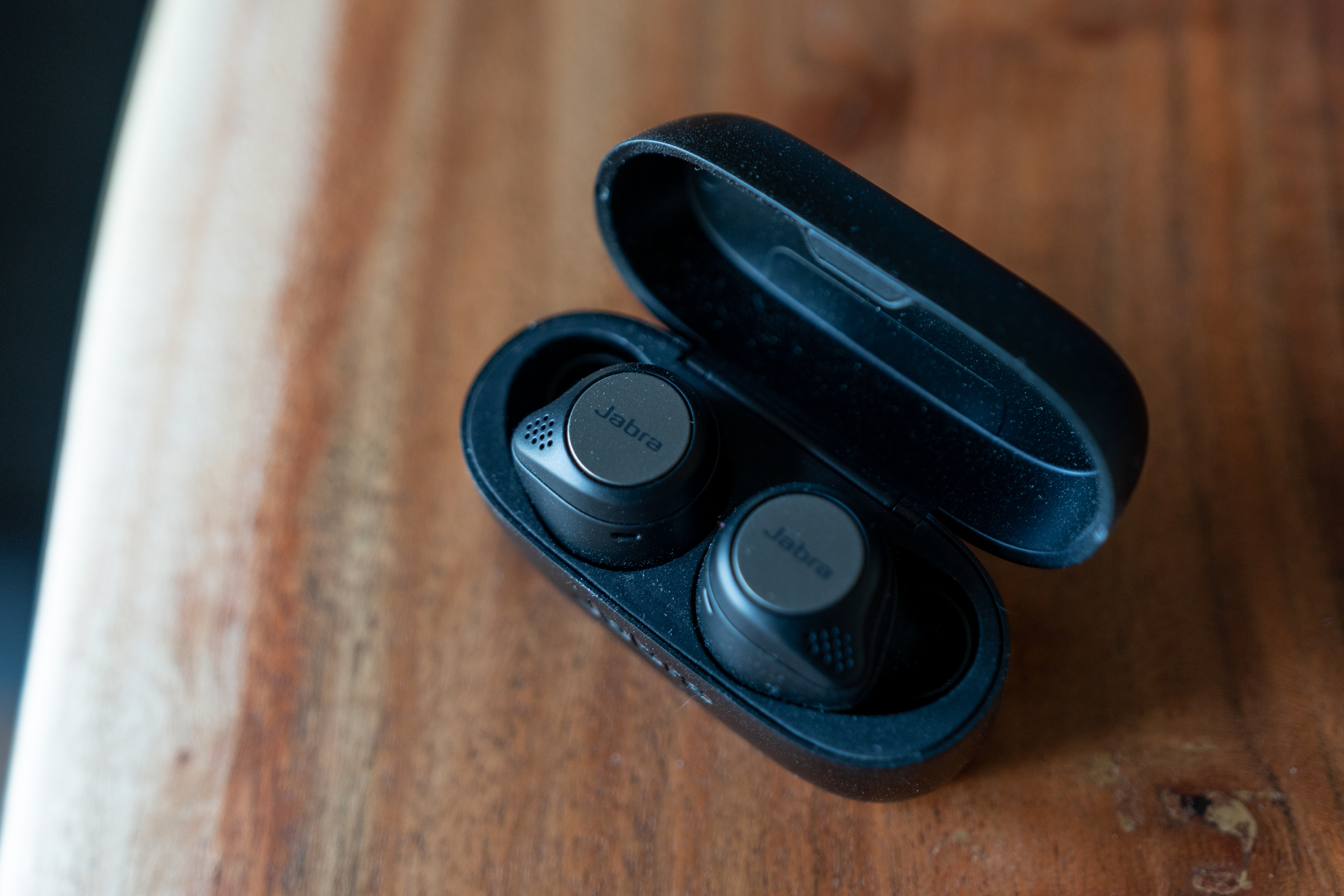
Finally in terms of design, the charging case for the Elite Active 75t is also among the most svelte on the market. It’s about the size of two stacked matchboxes, and easily slides into any available pockets. Like the earbuds themselves, the case features a very slightly rubberized outer texture, which is great for grip but, as you can see from the photos, is also a dust magnet. That doesn’t really matter unless you happen to be tasked with photographing them, however.

One final note on the case design – magnetic snaps in the earbud pockets mean you can be sure that your headset buds are seated correctly for charging when you put them back, which is a great bit of user experience thoughtfulness.

Performance

It’s easy to see why the Jabra Elite Active 75t is already a favorite among users – they provide a rich, pleasant sound profile that’s also easily tuned through the Jabra Sound+ mobile app. Especially for a pair of earbuds designed specifically for active use, these provide sound quality that goes above and beyond.

Their battery life appears to line up with manufacturer estimates, which also makes them class-leading in terms of single charge battery life. That’s a big advantage when using these for longer outdoor activities, or, as mentioned, when relying on them for all-day desk work. Their built-in mic is also clear and easy to understand for people on the other side of voice and video calls, and the built-in voice isolation seems to work very well according to my testing.

In my experience, their fit is also fantastic. Jabra really seems to have figured out how to build a bud that stays in place, regardless of how much you’re moving around or sweating. It’s really refreshing to find a pair of fully wireless buds that you never have to even think about readjusting them during a workout.

Bottom Line

Jabra has done an excellent job setting their offering apart from an increasingly crowded fully wireless earbud market, and the Elite Active 75t is another distinctive success. Size, comfort and battery life all help put this above its peers, and it also boasts great sound quality as well as excellent call quality. You can get better sounding fully wireless earbuds, but not without spending quite a bit more money and sacrificing some of those other advantages.

25 May 2020

China set to launch Mars probe and rover mission in July

China’s space program will launch a Mars mission in July, according to its current plans. This will include deploying an orbital probe to study the red planet, and a robotic, remotely-controlled rover for surface exploration. The U.S. has also been planning another robotic rover mission for Mars, and it’s set to take off this summer, too – peak time for an optimal transit from Earth to Mars thanks to their relative orbits around the Sun.

This will be the first rover mission to Mars for China’s space program, and is one of the many ways that it’s aiming to better compete with NASA’s space exploration efforts. NASA has flown four previous Mars rover missions, and its fifth, with an updated rover called ‘Perseverance,’ is set to take place this years with a goal of making a rendezvous with Mars sometime in February 2021.

NASA’s mission also includes an ambitious rock sample return plan, which will include the first powered spacecraft launch from the red planet to bring that back. The U.S. space agency is also sending the first atmospheric aerial vehicle to Mars on this mission, a helicopter drone that will be used for short flights to collect additional data from above the planet’s surface.

China has a number of plans to expand its space exploration efforts, including development and launch of an orbital research platform, its own space station above Earth, by 2022. The nation’s space program also recently test-launched a new crew spacecraft, which will eventually be used in its mission to land Chinese astronauts on the surface of the Moon.

Meanwhile, NASA has issued a new set of draft rules that it is proposing for continued international cooperation in space, particularly as they related to reaching the Moon and setting up a more permanent human presence on Earth’s natural satellite. The agency is also hoping to return human space launch capabilities to the U.S. this week with a first demonstration launch of astronauts aboard SpaceX’s Crew Dragon spacecraft on Wednesday.

25 May 2020

Work collaboration unicorn Notion is blocked in China

Notion, the fast-growing work collaboration tool that recently hit a $2 billion valuation, said on Twitter Monday that its service is blocked in China.

The productivity app has attracted waves of startups and tech workers around the world — including those in China — to adopt its all-in-one platform that blends notes, wikis, to-dos, and team collaboration. The four-year-old San Francisco-based app is widely seen as a serious rival to Evernote, which started out in 2004.

Notion said it is “monitoring the situation and will continue to post updates,” but the timing of the ban noticeably coincides with China’s annual parliament meeting, which began last week after a two-month delay due to the COVID-19 pandemic. Internet regulation and censorship normally toughen around key political meetings in the country.

Notion could not be immediately reached for comment.

For Notion and other apps that have entered the public eye in China but remained beyond the arm of local laws, a looming crackdown is almost certain. The country’s cybersecurity watchdog could find Notion’s free flow of note-sharing problematic. Some users have even conveniently turned the tool’s friendly desktop version into personal websites. If Notion were to keep its China presence, it would have to bow to the same set of regulations that rule all content creation platforms in China.

Its predecessor Evernote, for example, established a Chinese joint venture in 2018 and released a local edition under the brand Yinxiang Biji, which comes with compromised features and stores user data within China.

Rivalry in work collaboration

Just before its ban in China, Notion surged on May 21 to become the most-downloaded productivity app in the domestic Android stores, according to third-party data from App Annie. The sudden rise appears to be linked to its Chinese copycat Hanzhou (寒舟), which stirred up controversy within the developer community over its striking resemblance to Notion.

In an apologetic post published on May 22, Xu Haihao, the brain behind Hanzhou and a former employee of ByteDance-backed document collaboration app Shimo, admitted to “developing the project based on Notion.”

“We are wrong from the beginning,” wrote Xu. “But I intended to offend nobody. My intention was to learn from [Notion’s] technology.” As a resolution, the developer said he would suspend Hanzou’s development and user registration.

Some of the largest tech firms in China are gunning for the workplace productivity industry, which received a recent boost during the coronavirus crisis. Alibaba’s Dingtalk claimed last August that more than 10 million enterprises and over 200 million individual users had registered on its platform. By comparison, Tencent’s WeChat Work said it had logged more than 2.5 million enterprises and some 60 million active users by December.