Year: 2020

21 May 2020

Mapbox and SoftBank form joint venture to provide mapping tech to Japanese developers

SoftBank Corp. and Mapbox, the mapping data company that competes with Google and Here, announced that they have established a joint venture called Mapbox Japan.

The JV will provide Mapbox’s mapping platform, including APIs and data services, to developers in Japan. Between June 1 and September 30, Mapbox Japan will also provide up to three months of free support for organizations building COVID-19 related mapping services, including infection cases and statistical data, for developers in the country, which has relied on tracking virus clusters to limit the spread of infections.

Mapbox collects data from sources including government and commercial databases, and uses them in customizable AI-based APIs, SDKs and other products. Its clients have included Facebook, Snap, the New York Times, the Federal Communications Commission and automotive companies like Land Rover and Rimac.

Founded in 2010 by Eric Gunderson, Mapbox says its tech now reaches more than 600 million monthly users. SoftBank Vision Fund led Mapbox’s $164 million Series C in 2017. At the time, Gunderson told TechCrunch that part of the funding would be used to expand in Asia through SoftBank’s presence in regions including Southeast Asia and China.

Mapbox has operated in Japan since July 2019, though that was through partnerships with Yahoo! Japan and Zenrin, one of the country’s biggest mapping software companies. Zenrin also has a partnership with Google Maps, but early last year Google began reducing the amount of mapping data it uses from Zenrin, possibly to focus on building its own trove of mapping data in Japan.

Working closely with Zenrin opens potential new opportunities for Mapbox in Japan. Last year, Gunderson told Nikkei Asian Review that “we are going to be the number one mapping provider in all of Japan and we’ll be able to do this because we have the best data in all of Japan through our partnership with Zenrin.” The company plans to develop products for the Japanese market that include mapping services for industrial automation.

In SoftBank’s announcement, Eric Gan, SoftBank Corp. head of business development, said, “I am very excited to bring Mapbox’s technology to Japan to help enterprises enhance their existing mapping services while also creating new customizable location-based services and management tools. We are seeing a significant rise in demand for Mapbox’s products from retail, ride-share, hotel, office-sharing, payment, mobility and manufacturing industries.”

21 May 2020

Founder Collective barrels forward, closing its fourth and newest fund with $85 million

Founder Collective, a seed-stage fund formed 11 years ago in Cambridge, Ma., has closed its newest fund with $85 million.

Earlier today, we talked with the firm’s general partners — Eric Paley, David Frankel, Micah Rosenbloom — to learn more about it. Among our first questions: whether the three are themselves the largest investors in the new vehicle, as was the case with the firm’s third fund, which closed with $75 million in capital commitments four years ago. (The three have long prided themselves on their ability to tell founders who they take the firm’s money that they are truly are taking investors’ money.)

We also talked exits, geography, and investing through the coronavirus, a time when a lot of personal investors are being more cautious with their dollars.

TC: Eric, you wrote a seed check to Uber and I spied you on the Midas list this year. Still, it’s a scary time to be investing one’s capital aggressively. Are you and David and Micah again the biggest investors in this new fund?

EP:  The three of us were the largest investors in [our third fund] and we’re significantly bigger investors in Fund IV. While we’re fortunate to have some of the best LPs in the world, we believe that being our own largest investor allows us to make decisions that better align with our founders.  We also hope it sends a signal to founders that we’re honest brokers. When we were running our startups, it frustrated us when VCs would add a punitive clause to a term sheet citing “fiduciary responsibilities” to their LPs as the justification. We’re principals and stewards of our capital, not agents of LPs.

TC: How many investors are now involved in the day-to-day of the firm and how has this changed at all in the past years? 

DF: We have ten people full-time with offices in Soho in New York and Harvard Square in Cambridge. There are three partners and a principal on the investment team. We also have a Founder Partner program with some of the best entrepreneurs covering a variety of geographies and domains. [Editor’s note: some of these include Raj DeDatta of Bloomreach, Jack Groetzinger of SeatGeek, Andy Palmer of Tamr, Zach Klein of DIY, James Tamplin of Firebase, Nadia Boujarwah of Dia&Co, Elliot Cohen of PillPack and Noah Glass  of Olo.

Caterina [Fake], who was a Founder Partner with us for 10 years, recently founded Yes.vc, and our first principal, Gaurav Jain, started Afore, a pre-seed VC.

TC: What are some of the most recent exits for the firm?

DF: Over the last couple of years, we’ve been fortunate to see Uber go public and PillPack join Amazon. CoverWallet and Hotel Tonight were another pair of outstanding outcomes. We were fortune to have backed ten companies that have either exited or been valued at more than $1 billion in our first two funds, but we’re also proud of $100 million M&A events. They often go unreported, but because of our fund size, they make a material impact to us – and, more importantly, the founders.

Have seed-stage check sizes changed? I imagine they were getting bigger and now I’d guess they might get smaller again?

EP: From the beginning of Founder Collective, we’ve done two kinds of investing, $1 million to $2 million checks, where we lead and take a board seat, and around $400,000 investments, where we participate. We’ve seen the average valuations rise over the last five years, but we’ve tried to stay disciplined.

MR: So far in the COVID era, check sizes aren’t that different. It’s been more of a binary situation where startups that are deemed as “on-trend” can still command healthy valuations. The companies that are pre-market, or in an out-of-favor category that might have gotten funded in February are having a hard time getting funded. But we try not to be influenced by thematic trends.

DF: One pleasant surprise has been how quickly most of our companies have responded to the “new normal.” Some have reopened rounds to put a little more capital on the balance sheet, while others have found strategic investors to help tide them over. By and large, they’re acting responsibly.

TC: Remind me of where Founder Collective invests — does it have a focus mostly on the Northeast?

MR: We invest primarily in four geographies: New York, Boston, the Bay Area, and Southern California. That said, we’ve invested in startups as far afield as Nigeria, South Korea, and Israel, and genuinely unusual and fun places like Wisconsin, Winnipeg, and Boise.

EP: The reality is that startup geography is changing. For example, the most valuable software startup in the Western world to launch after Facebook is Shopify, which currently has a $90 billion market cap and is based in Ottawa. It would be foolhardy for investors not to broaden their view on where great startups can be built.

That said, there are powerful network effects around startup centers. It’s absolutely possible to build a multi-billion dollar tech business anywhere; it’s orders of magnitude easier when there’s a deep talent pool to hire from, local mentors who have seen scale before, and a broad ecosystem of knowledgeable service providers that can provide guidance.

DF: Also, while we invest globally, we feel the East Coast is an undervalued startup hub. Over the past 20 years, Boston has had more billion-dollar exits than any Western city aside from San Francisco, and New York has produced multiple $10 billion-plus startups in spaces as diverse as consumer hardware, SaaS, dev tools, and craft marketplaces.

TC: How has the pandemic changed your outlook for the next year?

EP: Over the years, we’ve written a lot about capital efficiency for entrepreneurs and even made warning labels that we send to founders alerting them to the dangers of too much money, too soon. Historically, we’ve pushed this message because capital was overabundant, and it damaged startups. The principles of capital efficiency are even more critical in a tight capital market. We’ll be increasingly focused on helping founders understand efficient entrepreneurship and how to build models that are tuned to scale without burning capital.

We’ll also put a premium on founders who have demonstrated the flexibility to operate amid unprecedented levels of uncertainty. In this environment, companies need to focus on their customers’ needs as they are now and not fixate on their pre-existing strategy. For instance, our portfolio company Formlabs sells 3D printers mostly to engineers and designers. After they started printing a novel nasal swab design for COVID tests, hospitals became an important new customer category. The world is changing rapidly, and founders need to keep pace.

TC: What are a few of the firm’s most recent bets and what do they say about Founder Collective’s investing style?

MR: A few recent examples are TrueWork [which sells HR-focused software-as-a-service), Trusted Health [a nursing marketplace], Lovevery [which makes learning toys] and ULesson [which makes consumer education software for African students].

On the surface, it’s a diverse group of companies, but the common thread is a founding team that is all over it. The founders were obsessed with the problems they were solving, had spent meaningful time in these industries, and proved out a lot before seeking funding. There’s no way we can be experts in all those fields, but we do think we know how to spot the founders who are.

TC: Presumably, you’ve already sorted your startups into these red, yellow, and green groups that VCs like to talk about. What are happening to the startups in the red group? Are you helping them to unwind their businesses? 

MR: It’s still so early, it’s hard to say what the ultimate impact will be, and the longer it goes, the worse it will likely get. So far, COVID was the nail in the coffin for a few of our startups, and we’ve tried to help the founders find soft landings for the teams and assets. Some of our distance-learning companies and our health-oriented companies have benefited due to the growing need for their products.

Most of our startups are somewhere in the middle. We try to help entrepreneurs on a case-by-case basis, sometimes that means organizing peer discussion groups about cash management in a time of crisis. Other times, it takes the form of making introductions to potential acquirers. When possible, we help to catalyze new rounds of funding.

TC: What’s one new area of interest for founder collective and why?

DF: One of our core beliefs is that the best startups are built by founders approaching weird and wonderful spaces.We’ve backed ad tech for the flooring industry, IoT-based offshore oyster farming robots, crypto, cologne, doggy DNA tests, data management tools. We’re proudly anti-thematic, and historically, that’s led to good outcomes.


20 May 2020

The NTWRK, the Live Nation-backed shopping app for Gen Z, is launching a virtual festival

SXSW may be cancelled, but the commodification and commingling of multinational corporations and youth and street culture is assured to be alive and well in the COVID-19 era thanks to events like TRANSFER, the new virtual festival from NTWRK — GenZ’s answer to the Home Shopping Network.

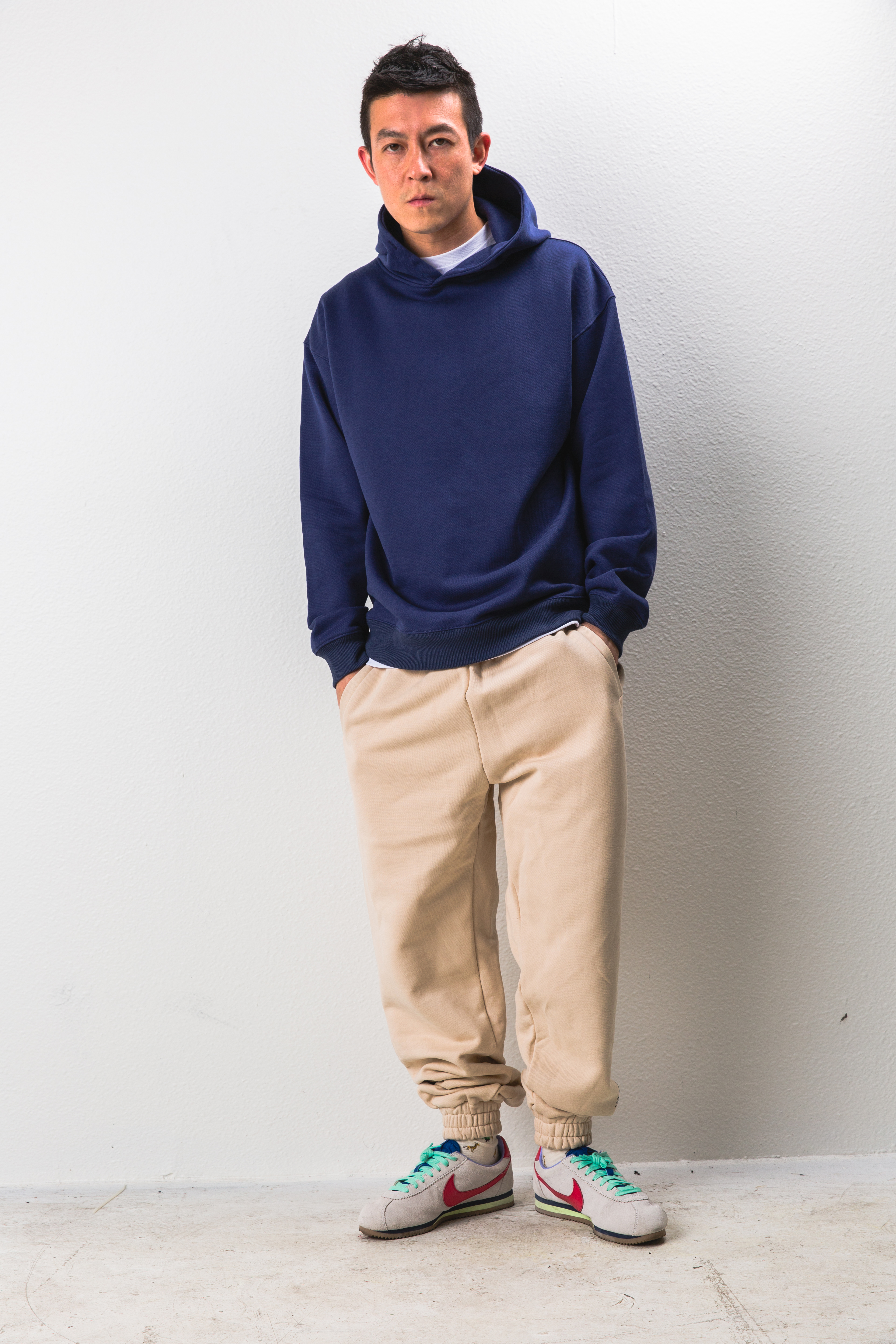
The FootLocker, Live Nation, and Main Street Advisors-backed company is working with Edison Chen and his 3125c agency on styling the event. Street artists Futura 2000 is going to serve as the artistic director for the virtual festival slated to take place July 28 and 29, according to a statement from the company.

Image Credits: Futura 2000/Image courtesy of The NTWRK (opens in a new window)

The festival will feature 30 brands and artists pitching exclusive products across NTWRK’s distribution channels. The company is hoping as many 240,000 shoppers and 10 million viewers will show up for the event.

But NTWRK’s virtual festival is more than just a chance to shop til consumers virtually drop, it’s also going to be a conference featuring panels and interviews, along with virtual DJ sets and musical performances.

Futura 2000 will architect the visual experience and his business will sell branded merchandise in a virtual gift shop while Zack Bia will be the musical director and perform multimedia DJ sets as part of the event.

“I am excited to present TRANSFER alongside partner Aaron Levant [NTWRK CEO],” said Edison Chen.

“We will work together to curate a menu of moments, objects, and vibes to inspire and touch the many corners and pillars of our culture. Creatives from east and west will be selected to bring memories and excitement to touch all corners of youth culture lifestyle. We are happy to have a mix of the old school and new school with our artistic and musical directors, Futura 2000 and Zach Bia. We promise to bring you drops and content to blow minds,” Chen said.

20 May 2020

Scribd announces a perks program, giving its subscribers access to Pandora Plus, TuneIn Premium and more

E-book and audiobook subscrition service Scribd has been actively embracing and experimenting with bundling over the past couple years, creating joint offers with The New York Times and with Spotify and Hulu.

Today it announced a slightly different take on the idea with Scribd Perks. These perks gives Scribd’s paying subscribers (the service costs $8.99 per month) access to a number of additional services at no extra change.

The initial lineup includes Pandora Plus (ad-free music and podcasts), TuneIn Premium (live sports, news, music and podcasts), Peak (brain training), CuriosityStream (documentaries and series), CONtv + Comics (movies and digital comics), FarFaria (illustrated children’s books that are read aloud) and MUBI (hand-picked films).

Many of these services are relatively niche — at least compared to Scribd’s previous bundling partners — but they all normally cost between $2.99 and $10.99 per month, so there are some real savings here. It’s an extra incentive for someone to sign up for Scribd, and for existing subscribers to stick around. Meanwhile, these partners presumably get new users and additional revenue.

In a statement, Scribd CEO Trip Adler said:

With millions of people around the world continuing to shelter in place, having access to different forms of enrichment is more important than ever before. We’re thrilled to be partnering with leading consumer brands to offer a more accessible way for consumers to easily stay informed, entertained, and connected. Scribd is designed to help people explore the world’s best content, and now, with the launch of our new Scribd Perks platform, there is even more premium content to discover.


20 May 2020

Hims & Hers launch Spanish language telemedicine services

Hims & Hers, the startup focused on providing access to elective treatments for things like hair loss, skin care, and erectile disfunction and online telemedicine services, is expanding its services to include a Spanish language option, the company said.

After Mexico, the U.S. has the second-largest Spanish speaking population in the world, with an estimated 41 million U.S. residents speaking Spanish at home. The population also prefers to receive healthcare information and frequent facilities that offer resources in Spanish.

Now, with a shortage looming in primary care physicians for rural areas and inner cities and a sky-high rate of Hispanics living without any form of healthcare coverage (roughly 15.1 percent, according to data provided by the company), Hims & Hers is pitching its telemedicine offering as an option.

“Language, cost, and location should not be barriers to receiving quality care, which is why we are launching a Spanish offering on our telemedicine platform,” the company said in a statement.

The company’s $39 primary care consultations at its Hims and its Hers websites will be in Spanish. That will include everything from communications like the patient intake form and instructions to prepare for an online consultation along with a connection to Spanish-speaking healthcare provider.

“The reason we created Hims & Hers was to break down barriers and provide more people with access to quality and convenient care,” the company’s co-founder and chief executive, Andrew Dudum, said in a statement. “As a telemedicine company, we recognize the need and understand the importance of serving the Spanish-speaking population. We hope those seeking access to care in Spanish find our platform to be a welcoming, inclusive, quality experience.”

20 May 2020

Democratic senators flag Uber’s possible Grubhub deal over antitrust concerns

In a new letter to the U.S. Federal Trade Commission and the Department of Justice, a group of Democrats in the Senate urge regulators to “closely monitor the negotiations” between Uber and Grubhub and to initiate an antitrust investigation if a rumored deal between the two companies comes to pass.

In a letter signed by Senators Amy Klobuchar, Patrick Leahy, Richard Blumenthal and Cory Booker, the lawmakers caution that a merger between Uber’s food delivery service Uber Eats and its competitor Grubhub would lead to “serious competition issues” and a market dominated by only two remaining players. They also called attention to the unique leverage food delivery companies have over gig workers and restaurants right now as those services see explosive growth from new users seeking to get food safely during the crisis.

“As our country grapples with the many health and safety challenges brought about by the coronavirus (COVID-19) pandemic, many consumers have turned to food delivery apps to order meals online, and many restaurants have come to rely on the business they get through these apps to stay afloat,” the group of lawmakers wrote.

Following a Wall Street Journal report on the potential merger last week, House antitrust subcommittee chair Rep. David Cicilline called it “a new low in pandemic profiteering.”


20 May 2020

With BuzzFeed’s new feature, you can take a Quiz Party with friends

It’s been a rough couple months for BuzzFeed (and media in general), but the company is still releasing fun new features.

Today’s addition offers a new, more social take on the quizzes that the site is known for. Instead of taking a quiz on your own and then sharing the results on social media (or simply thinking to yourself, “That’s right, I am a total Samantha” and moving on with your life), you can now that quiz with friends.

With BuzzFeed Quiz Party, when you start a quiz, you’ll be given a link that you can share with anyone you want. Once everyone’s signed on, the actual quiz-taking isn’t dramatically different, but you’re all answering questions in parallel (little icons indicate how much progress everyone has made) and you receive your results together.

BuzzFeed CTO Peter Wang (who joined the company earlier this year) told me that the pandemic and related stay-at-home orders seem to be increasing interest in quizzes; traffic was already up — doubling year-over-year in January — before tripling YOY in March, and then continuing to grow since then.

Wang also suggested that Quiz Party ties into a broader theme of building more social experiences on BuzzFeed and “driving real-world actions beyond consumption … and give the world something fun and joyful.”

For this initial set of quizzes, Wang said BuzzFeed took popular solo quizzes and redid them for groups, but it will continue to expand the Quiz Party library. In the future, the company could also introduce sponsorships and enliven the social experience by adding things like music and chat, he said.

20 May 2020

Virgin Orbit sets first orbital launch for May 24

Virgin Orbit has been preparing for this moment for years, but it’s now officially ready to launch its small satellite delivery vehicle to orbit for the first time. This key demonstration mission, taking off from Mojave Air and Space Port in California, will replicate the actual operational launch experience that Virgin Orbit hopes to provide its customers going forward.

The company is targeting Sunday May 24 at 10 AM PT (1 PM ET) for this historic launch, with a four-hour window on the day during which the actual take-off could occur. The mission will include flying its modified Boeing 747 carrier craft with its LauncherOne to that vehicles launch altitude, where it’ll detach from the 747 and use its own rocket engines to make the rest of the trip to space. There’s a backup opportunity on Monday, should weather interfere.

Virgin Orbit’s approach differs from traditional vertical rocket launches, and use of the carrier aircraft means it can take off from traditional runways. The LauncherOne rocket is a two-stage expendable launch vehicle that can carry around 660 lbs or 1,100 lbs to orbit, depending on the orbit required. That puts it at more payload capacity than Rocket Lab’s Electron, but less than SpaceX’s Falcon 9.

The concept behind Virgin Orbit’s approach is designed to reduce costs to make small satellite launches more affordable. Estimates put launch costs at around $12 million per flight, which is a considerable savings vs. traditional launch costs and even the price of SpaceX missions.

Virgin Orbit has been performing a number of tests and flights to ready for this final full demonstration mission, including a captive carry test last month. If all goes well with this demo mission, the company could begin launching for commercial clients as early as July.

20 May 2020

Tesla drops lawsuit against Alameda County over Fremont factory reopening

Tesla has officially dismissed a lawsuit filed earlier this month against Alameda County that sought to force the reopening of its factory in Fremont, California.

The dismissal, which was granted Wednesday, closes the loop on a battle between Tesla CEO Elon Musk and county health and law enforcement officials. The lawsuit filed May 9, hours after Musk threatened to sue and move operations out of state, sought injunctive and declaratory relief against Alameda County. Reuters was the first to report the dismissal.

The lawsuit was filed after Tesla’s plans to resume production at the Fremont factory were thwarted by the county’s decision to extend a stay-at-home order issued to curb the spread of COVID-19, the disease caused by coronavirus.

Musk had based the reopening on new guidance issued by California Gov. Gavin Newsom that allows manufacturers to resume operations. However, the governor’s guidance included a warning that local governments could keep more restrictive rules in place. Alameda County, along with several other Bay Area counties and cities, extended the stay-at-home orders through the end of May. The orders were revised and did ease some of the restrictions. However, it did not lift the order for manufacturing.

After several days of Twitter rants and negotiations with the county, Tesla was allowed to begin to reopen its factory as long as it adhered to approved safety measures.

20 May 2020

HBO Max will release Zack Snyder’s cut of ‘Justice League’

WarnerMedia announced today that director Zack Snyder’s version of “Justice League” will be released on HBO Max in 2021.

Snyder is the only credited director on the 2017 superhero film, but he left the film during post-production, after his daughter’s suicide, with “Avengers” director Joss Whedon stepping in to write and shoot new material.

The resulting film received mixed reviews and underperformed at the box office, leading to corporate shakeups at DC Entertainment and pushing the studio to focus standalone films, rather than big crossovers.

At the same time, #ReleaseTheSnyderCut has become a popular hashtag on social media, with many of the movie’s stars joining in, so WarnerMedia is finally responding. It’s also probably happy to find a fresh source of already-filmed content for HBO Max while COVID-19 has forced a pause on film and TV production. (The HBO-and-more streaming service launches next week.)

It’s not clear what form the release will take — according to The Hollywood Reporter, it might be a single film of nearly four hours, or it might be broken up into six chapters. And apparently the estimated cost is somewhere between $20 and $30 million.

“I want to thank HBO Max and Warner Brothers for this brave gesture of supporting artists and allowing their true visions to be realized,” Snyder said in a statement. “Also a special thank you to all of those involved in the SnyderCut movement for making this a reality.”

Personally, I’ve been a bit skeptical of the social media uproar, partly because I liked the existing version of “Justice League” just fine, despite its obvious flaws; partly because Snyder’s previous film “Batman v. Superman: Dawn of Justice” was almost unwatchably bad; and partly because it’s become tediously predictable for indignant fans to demand a new version of a movie or TV show they didn’t like.

Still, it’s hard not to feel sympathetic for a director who just wants present his vision, particularly when the work was derailed by tragedy. And I can’t deny that I’m curious. So bring on the Snyder Cut.