Year: 2020

20 May 2020

China’s Geek+ brings warehouse robots to US via Conveyco partnership

Chinese robots will soon be seen roaming a number of warehouse floors across North America. Geek+, a well-funded Chinese robotics company that specializes in logistics automation for factories, warehouses and supply chains, furthers its expansion in North America after striking a strategic partnership with Conveyco, an order fulfillment and distribution center system integrator with operations across the continent.

Geek+ is seizing a massive opportunity in replacing repetitive warehouse work with unmanned robots, a demand that has surged during the coronavirus outbreak as logistics services around the world face labor shortage, respond to an uptick in e-commerce sales, and undertake disease prevention methods.

The partnership will bring Geek+’s autonomous mobile robots, or ARMs, to Conveyco’s clients in retail, ecommerce, omnichannel and logistics across North America. The deal will give a substantial boost to Geek’s overseas distribution while helping Conveyco to “improve efficiency, provide flexibility, and reduce costs associated with warehouse and logistics operations in various industries,” the partners said in a statement.

Beijing-based Geek+ so far operates 10,000 robots worldwide and employs some 800 employees, with offices in China, Germany, the U.K, the U.S., Japan, Hong Kong and Singapore. Some of its clients include Nike, Decathlon, Walmart and Dell.

Since founding in 2015, the company has raised about $390 million through five funding rounds, according to public data collected by Crunchbase, including a colossal $150 million round back in 2018 which it claimed was the largest-ever funding round for a logistics robotics startup. It counts Warburg Pincus, Vertex Ventures and GGV Capital among its list of investors.

20 May 2020

Indian ride-hailing firm Ola cuts 1,400 jobs

Ola said on Wednesday it is cutting 1,400 jobs in India, or 35% of its workforce in the home market, as the ride-hailing firm works to reduce its expense to steer through the coronavirus pandemic that has severely impacted mobility companies in the country.

Bhavish Aggarwal, co-founder and chief executive of Ola, shared the job elimination update with the team in an email today, in which he also revealed that the company’s revenue had dropped by 95% in the last two months as India enforced a stay-at-home order for its 1.3 billion citizens in late March.

An Ola spokesperson told TechCrunch that only employees working in mobility and food operations were impacted and that the job cuts were limited to teams in India. Ola Electric, a separate entity of the ride-hailing firm, remains unaffected of the layoffs.

“We had all hoped in the beginning that this would be a short-lived crisis and that its impact would be temporary. Over the past couple of months, all members of our extended leadership team have taken significant salary cuts to be able to help the organization delay tougher people decisions as we waited for the situation to evolve. But unfortunately, it’s not been a short crisis,” he wrote in the email, which the company has since published on its blog.

“And the prognosis ahead for our business is very unclear and uncertain. It is going to take a long time for people to go out and about like before. With more companies preferring to have a large number of employees work from home, air travel limited to essential trips and vacations being put off for better times, the impact of this crisis is definitely going to be long-drawn for us. The world is not going to revert to the pre-COVID era anytime soon,” he added.

The employees who are being let go will be provided with three months of salary as well as insurance coverage for them and their parents, healthcare and emotional support until the end of the year, said Aggarwal.

India announced a lockdown in late March that shut all public transportation services across the country. In recent weeks, New Delhi has eased some restrictions and both Ola and Uber have resumed their services in most parts of the country except those where concentration of coronavirus cases is very high. As of today, Ola is operational in more than 160 cities across the country.

Ola is the latest company in India to enforce reduction in its workforce. Uber let go about 500 employees in India as part of its first wave of job cuts earlier this month, as first reported by Indian news outlet Entrackr. It’s unclear how its most recent layoffs announcement impacts its teams in India.

Food delivery startups Swiggy and Zomato, both of which are also facing severe disruptions due to the spread of the infectious disease, have together eliminated about 2,600 jobs (with 2,100 in Swiggy alone) in their companies in recent weeks.

Travel and hospital firms such as Ixigo, MakeMyTrip, and Oyo have also cut several jobs in recent months as their revenues drop significantly.

More to follow…

20 May 2020

Big Sky Health raises $8 million to nurture its intermittent fasting, meditation, and alcohol consumption apps

Mike Maser, a serial entrepreneur, has been focused on longevity since well before being diagnosed with stage 4 non-Hodgkins lymphoma a little over five years ago. But he understandably took much greater interest in the potential role of fasting as a life-extending measure when it was was convinced by friends to try it while undergoing cancer treatments.

While his care team “wasn’t so excited about it,” Maser recalls now, he was relatively young at the time, he hadn’t lost a lot of weight as do some people when battling cancer, and to him, fasting made more sense than taking an experimental drug, so he tried it and he liked it. Indeed, while he largely credits an autologous bone marrow transplant for saving his life, he has become a student of —  and advocate for — intermittent fasting in the ensuing years.

Perhaps it’s no surprise that Maser, who earlier sold a coaching app called Fitstar to Fitbit for around $25 million, would ultimately end up overseeing a fasting app that he says is growing at an accelerated clip. Called Zero, he acquired it from designer and friend Kevin Rose in 2018, a hand-off that we discussed with Rose last week.

It’s no surprise, either, given Maser’s track record, combined with growing interest in fasting, that investors would want to get involved with him. In fact, today, his Montana-based startup, Big Sky Health —   it oversees Zero, along with a mediation app, Oak (also acquired from Rose), and a newer app called Less that helps users track their alcohol consumption — is announcing it has raised $8 million in Series A funding.

Greycroft led the round with participation from earlier investors, including True Ventures and Trinity Ventures. The company has now raised $12.2 million altogether.

Certainly, Big Sky Health seems positioned well for the times. Not only is fasting taking off — with Zero enjoying upwards of 25,000 new downloads every day, says Maser — but more people are trying to meditate their way through pandemic-related anxiety. They’re also drinking a lot, so much that the World Health Organization has begun warning against alcohol altogether, so that “you do not undermine your own immune system and health and do not risk the health of others.”

Now, Big Sky — which employs just 15 people and whose team has been fully distributed from its founding days two years ago — just needs to keep its momentum going.

Toward that end, it has created a premium offering of Zero called Zero Plus, which provides custom fasting plans and what it describes as “custom, science-backed content to help guide users on their health journeys.” (The non-premium offering has more of a choose-your-own adventure vibe.) “We kept hearing that users want more guidance,” said Maser in a call yesterday. The premium offering will “adapt to you based on your own personal journey,” including taking into account whether a user is new to intermittent fasting.

Big Sky’s team is also using tools like Zoom, Slack, Google Docs and Notion to create a roadmap of what’s next, which includes more social features for Zero. “We already have 800,000 people fasting together each night on the app and users have a strong desire to encourage and interact with each other.”

As for Oak and Less, they are also getting more attention. Though Less is “not about going sober, it’s more about being mindful about how much you’re drinking,” says Maser, one can imagine it focusing increasingly on alcohol’s effects on the body and mind as Big Sky builds its wellness empire. As for Oak, one need only to look at bigger rivals Calm and Headspace to appreciate the size of the opportunity.

Calm has raised at least $143 million from investors to date, shows Crunchbase. Headspace has raise an estimated $168.2 million.

20 May 2020

Tier brings integrated helmets to electric scooters

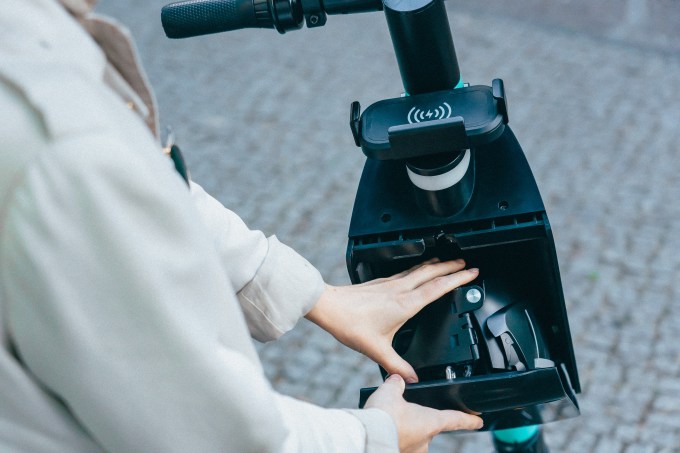
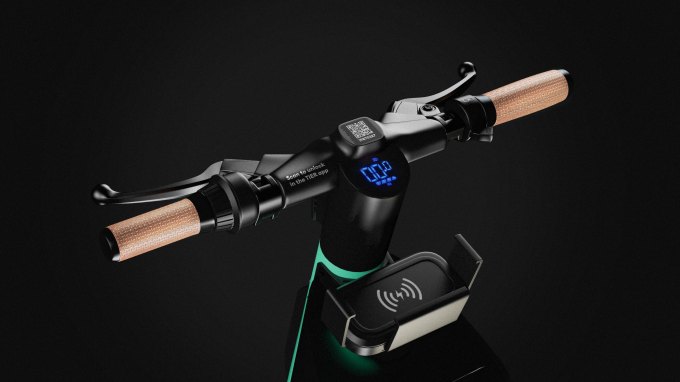
European mobility operator Tier has become the first major electric scooter company to integrate helmets into vehicles. The foldable helmets fit inside a box attached to the scooter below the handlebars.

This month, Tier plans to deploy 200 scooters equipped with helmets in Paris and Berlin. Over the summer, Tier will deploy an additional 5,000 helmet-equipped scooters.

Earlier this year, JAMA Surgery published a study showing electric scooter injuries have nearly tripled in the last four years. Of those who participated in the study, less than 5% of riders were wearing a helmet, which led to one-third of those surveyed suffering a head injury.

Additionally, given concerns about COVID-19, Tier is experimenting with an anti-bacterial, self-disinfecting handlebar technology from Protexus. Tier is testing these handlebars in Paris and Bordeaux.

It’s worth noting that Wheels, a pedal-less e-bike operator, has implemented both of these features. Though, it’s for the good of the public for as many operators as possible to use this playbook. In December, Wheels deployed a smart helmet system for its bikes that lock into the rear fender and can sense when riders are wearing a helmet. In March, Wheels began making e-bikes with self-cleaning handlebars and brake levers available to consumers for weekly or monthly rentals.

Tier, founded in 2018, has raised $131 million in funding to date. In February, the startup extended its Series B round to over $100 million. Days later, Tier announced the acquisition of Coup’s electric moped scooters in order to start its own shared moped service. Tier, which is based in Berlin, currently operates in 55 cities across 11 countries.

20 May 2020

Kenya’s Apollo Agriculture raises $6M Series A led by Anthemis

Apollo Agriculture believes it can attain profits by helping Kenya’s smallholder farmers maximize theirs.

That’s the mission of the Nairobi based startup that raised $6 million in Series A funding led by Anthemis.

Founded in 2016, Apollo Agriculture offers a mobile based product suit for farmers that includes working capital, data analysis for higher crop yields, and options to purchase key inputs and equipment.

“It’s everything a farmer needs to succeed. It’s the seeds and fertilizer they need to plant, the advice they need to manage that product over the course of the season. The insurance they need to protect themselves in case of a bad year…and then ultimately, the financing,” Apollo Agriculture CEO Eli Pollak told TechCrunch on a call.

Apollo’s addressable market includes the many smallholder farmers across Kenya’s population of 53 million. The problem it’s helping them solve is a lack of access to the tech and resources to achieve better results on their plots.

The startup has engineered its own app, platform and outreach program to connect with Kenya’s farmers. Apollo uses M-Pesa mobile money, machine learning and satellite data to guide the credit and products it offers them.

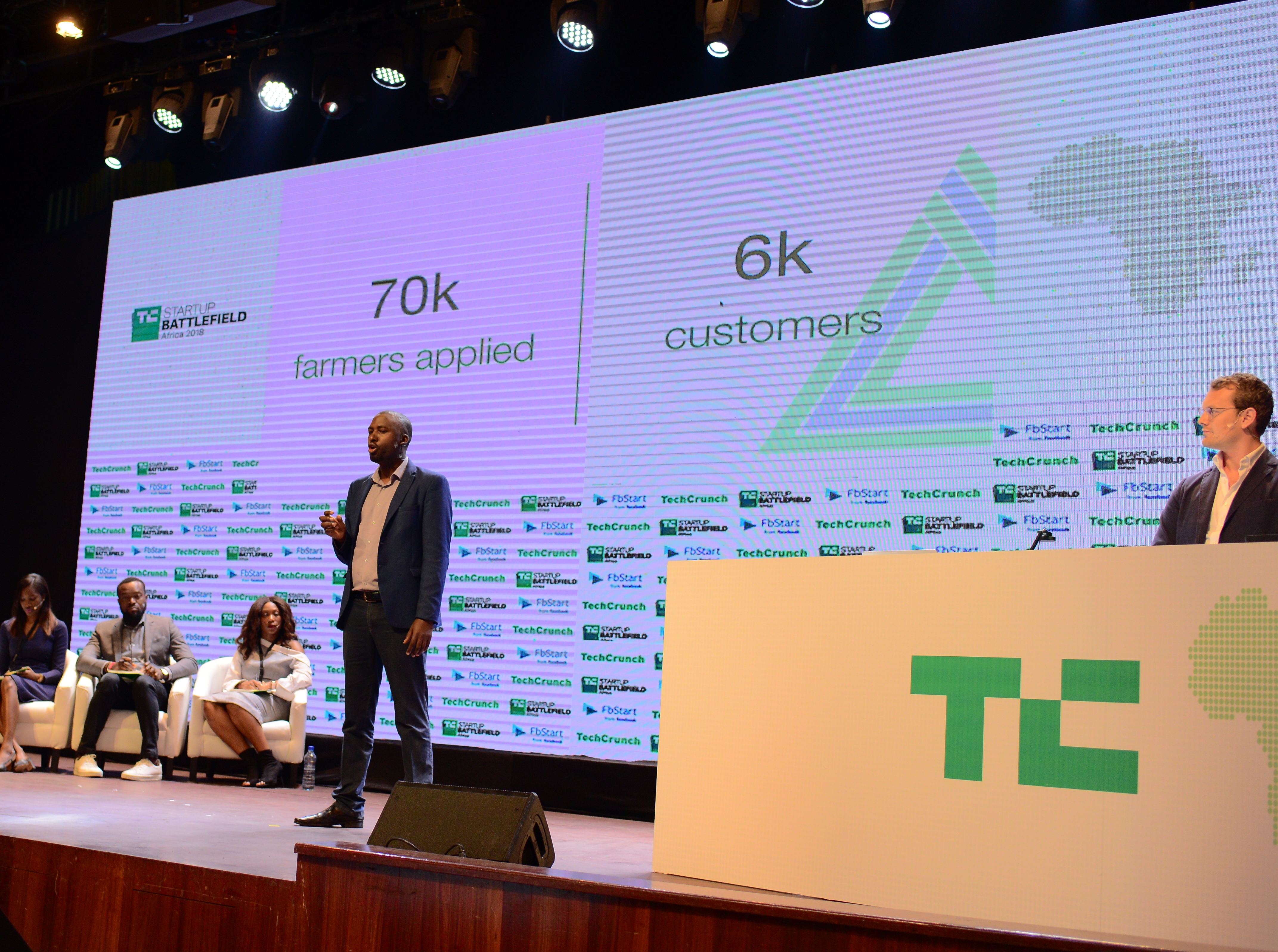
The company — which was a TechCrunch Startup Battlefield Africa 2018 finalist — has served over 40,000 farmers since inception, with 25,000 of those paying relationships coming in 2020, according to Pollak.
Apollo Agriculture Start

Apollo Agriculture co-founders Benjamin Njenga and Eli Pollack

Apollo Agriculture generates revenues on the sale of farm products and earning margins on financing. “The farm pays a fixed price for the package, which comes due at harvest…that includes everything and there’s no hidden fees,” said Pollak.

On deploying the $6 million in Series A financing, “It’s really about continuing to invest in growth. We feel like we’ve got a great product. We’ve got great reviews by customers and want to just keep scaling it,” he said. That means hiring, investing in Apollo’s tech, and growing the startup’s sales and marketing efforts.

“Number two is really strengthening our balance sheet to be able to continue raising the working capital that we need to lend to customers,” Pollak said.

For the moment, expansion in Africa beyond Kenya is in the cards but not in the near-term. “That’s absolutely on the roadmap,” said Pollak. “But like all businesses, everything is a bit in flux right now. So some of our plans for immediate expansion are on a temporary pause as we wait to see things shake out with with COVID.”

Apollo Agriculture’s drive to boost the output and earnings of Africa’s smallholder farmers is born out of the common interests of its co-founders.

Pollak is an American who who studied engineering at Stanford University and went to work in agronomy in the U.S. with The Climate Corporation. “That was how I got excited about Apollo. I would look at other markets and say “wow, they’re farming 20% more acres of maize, or corn across Africa but farmers are producing dramatically less than U.S. farmers,” said Pollak.

Pollak’s colleague, Benjamin Njenga, found inspiration in his experience in his upbringing. “I grew up on a farm in a Kenyan village. My mother, a smallholder farmer, used to plant with low quality seeds and no fertilizer and harvested only five bags per acre each year,” he told the audience at Startup Battlefield in Africa in Lagos in 2018.

Image Credits: Apollo Agriculture

“We knew if she’d used fertilizer and hybrid seeds her production would double, making it easier to pay my school fees.” Njenga went on to explain that she couldn’t access the credit to buy those tools, which prompted the motivation for Apollo Agriculture.

Anthemis Exponential Ventures’ Vica Manos confirmed its lead on Apollo’s latest raise. The UK based VC firm — which invests mostly in the Europe and the U.S. — has also backed South African fintech company Jumo and will continue to consider investments in African startups, Manos told TechCrunch.

Additional investors in Apollo Agriculture’s Series A round included Accion Venture Lab, Leaps by Bayer, and Flourish Ventures.

While agriculture is the leading employer in Africa, it hasn’t attracted the same attention from venture firms or founders as fintech, logistics, or e-commerce. The continent’s agtech startups lagged those sectors in investment, according to Disrupt Africa and WeeTracker’s 2019 funding reports.

Some notable agtech ventures that have gained VC include Nigeria’s Farmcrowdy, Hello Tractor — which has partnered with IBM and Twiga Foods, a Goldman backed B2B agriculture supply chain startup based in Nairobi.

On whether Apollo Agriculture sees Twiga as a competitor, CEO Eli Pollak suggested collaboration. “Twiga could be a company that in the future we could potential partner with,” he said.

“We’re partnering with farmers to produce lots of high quality crops, and they could potentially be a great partner in helping those farmers access stable prices for those…yields.”


20 May 2020

AngelList India head Utsav Somani launches micro VC fund to back 30 early-stage startups

As investors get cautious about writing new checks to early stage startups in India amid the coronavirus outbreak, AngelList’s head in India is betting that this is the right time to back young firms.

On Wednesday, Utsav Somani announced iSeed, a micro VC fund to back up at least 30 startups over the course of two years. iSeed, which is not affiliated with AngelList, is Somani’s maiden venture fund.

In an interview with TechCrunch, Somani said he would write checks of $150,000 each to up to 36 early-stage startups in any tech category and enable his portfolio firms’ access to global investors and their knowledge pool. The fund will not participate in a startup’s follow-on rounds.

iSeed counts a range of high-profile investors, including Naval Ravikant and Babak Nivi, co-founders of AngelList, who are some of the biggest backers of the fund.

Others include founders of Xiaomi, Jake Zeller, a partner at AngelList and Spearhead, Sheel Mohnot, general partner at 500 Fintech, Brian Tubergen of CoinList, Deepak Shahdadpuri, managing director at DST Global, and Kavin Bharti Mittal of Hike.

AngelList launched syndicates program in India in 2018. The platform has been used for 140 investments in India since, including over 20 follow-ons in which firms such as Tiger Global, Sequoia Capital, Ribbit Capital participated.

Somani has also been an angel investor in more than a dozen startups including BharatPe, a firm that it is helping small businesses accept online payments and access working capital, and Jupiter, a neo-bank.

“I like the work AngelList India and Utsav have done since the launch. He brings energy, access and judgement to the table — the things to look for in a first-time fund manager,” said Ravikant in a statement.

Micro VCs is becoming a popular trend in the United States. Ryan Hoover of ProductHunt, for instance, maintains Weekend Fund. Somani said he has appreciated how others have been able to institutionalize the angel investing practice. According to Crunchbase, U.S. investors raised 148 sub-$100 million VC funds in 2018.

Running a micro-fund by leveraging AngelList’s infrastructure has also eased the burden starting such a venture creates for an investor, he said.

Indian startups could use any fund that backs early startups. Early-stage firms have consistently struggled to find enough backers in India, according to data from research firm Tracxn .

And that struggle is now common across the industry. More than two-thirds of startups in the country today are on the verge of running out of all their money in less than three months, according to a survey conducted by industry body Nasscom.

Somani said he is optimistic that great companies will continue to be born out of tough times. He said even his investors were aware of the pandemic and still stood by the fund.

“If you look at the market, we are seeing a number of layoffs. These are the people who would be creating jobs for others in the years to come. Entrepreneurship might be the only option for them.

20 May 2020

India’s Khatabook raises $60 million to help merchants digitize bookkeeping and accept payments online

Khatabook, a startup that is helping small businesses in India record financial transactions digitally and accept payments online with an app, has raised $60 million in a new financing round as it looks to gain more ground in the world’s second most populous nation.

The new financing round, Series B, was led by Facebook co-founder Eduardo Saverin’s B Capital. A range of other new and existing investors, including Sequoia India, Partners of DST Global, Tencent, GGV Capital, RTP Global, Hummingbird Ventures, Falcon Edge Capital, Rocketship.vc and Unilever Ventures, also participated in the round, as did Facebook’s Kevin Weil, Calm’s Alexander Will, CRED’s Kunal Shah and Snapdeal co-founders Kunal Bahl and Rohit Bansal.

The one-and-a-half-year-old startup, which closed its Series A financing round in October last year and has raised $87 million to date, is now valued between $275 million to $300 million, a person familiar with the matter told TechCrunch.

Hundreds of millions of Indians came online in the last decade, but most merchants — think of neighborhood stores — are still offline in the country. They continue to rely on long notebooks to keep a log of their financial transactions. The process is also time-consuming and prone to errors, which could result in substantial losses.

Khatabook, as well as a handful of young and established players in the country, is attempting to change that by using apps to allow merchants to digitize their bookkeeping and also accept payments.

Today more than 8 million merchants from over 700 districts actively use Khatabook, its co-founder and chief executive Ravish Naresh told TechCrunch in an interview.

“We spent most of last year growing our user base,” said Naresh. And that bet has worked for Khatabook, which today competes with Lightspeed -backed OkCredit, Ribbit Capital-backed BharatPe, Walmart’s PhonePe and Paytm, all of which have raised more money than Khatabook.

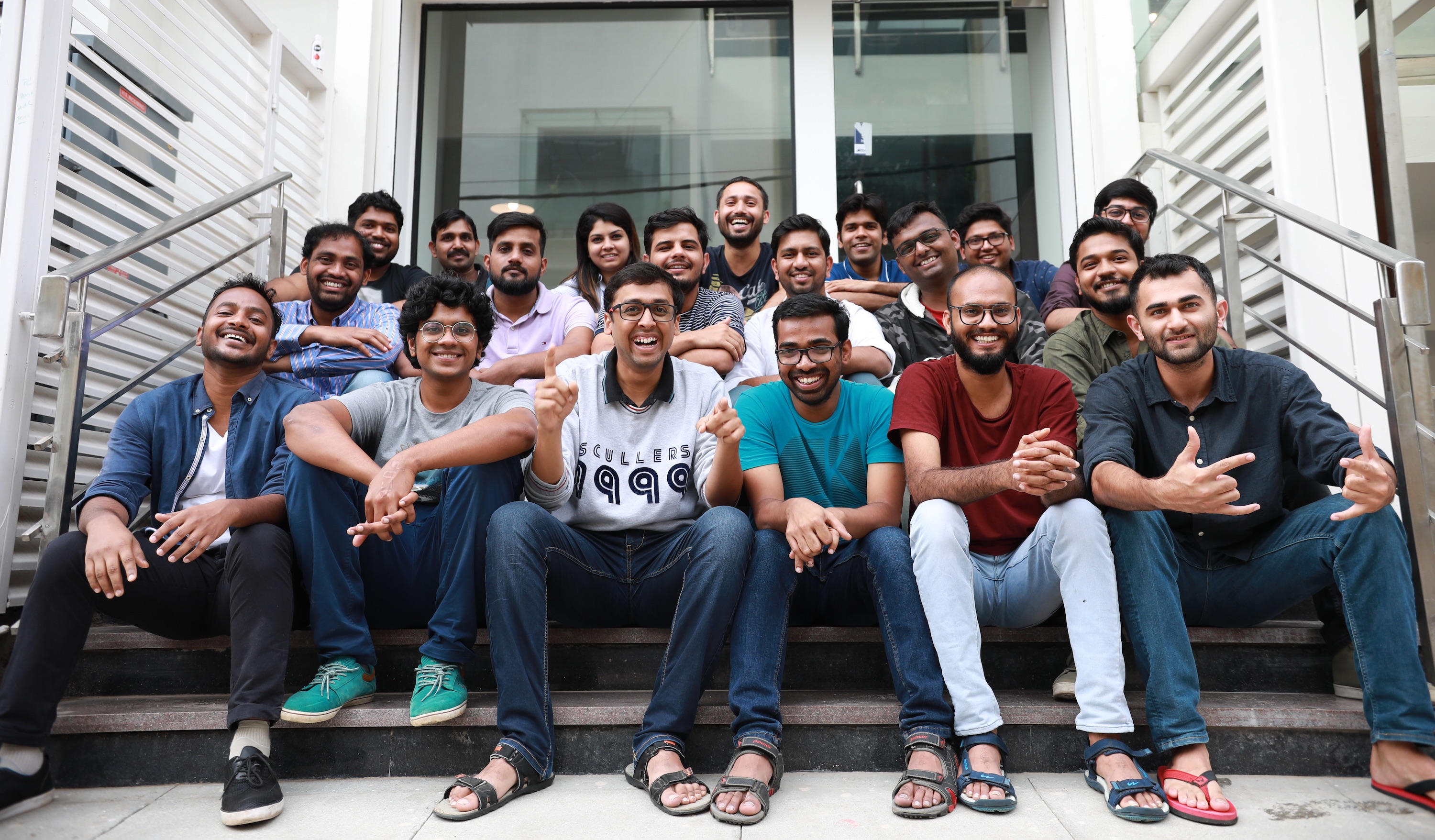
khatabook team

The Khatabook team poses for a picture (Khatabook)

According to mobile insight firm AppAnnie, Khatabook had more than 910,000 daily active users as of earlier this month, ahead of Paytm’s merchant app, which is used each day by about 520,000 users, OkCredit with 352,000 users, PhonePe with 231,000 users and BharatPe, with some 120,000 users.

All of these firms have seen a decline in their daily active users base in recent months as India enforced a stay-at-home order for all its citizens and shut most stores and public places. But most of the aforementioned firms have only seen about 10-20% decline in their usage, according to AppAnnie.

Because most of Khatabook’s merchants stay in smaller cities and towns that are away from large cities and operate in grocery stores or work in agritech — areas that are exempted from New Delhi’s stay-at-home orders, they have been less impacted by the coronavirus outbreak, said Naresh.

Naresh declined to comment on AppAnnie’s data, but said merchants on the platform were adding $200 million worth of transactions on the Khatabook app each day.

In a statement, Kabir Narang, a general partner at B Capital who also co-heads the firm’s Asia business, said, “we expect the number of digitally sophisticated MSMEs to double over the next three to five years. Small and medium-sized businesses will drive the Indian economy in the era of COVID-19 and they need digital tools to make their businesses efficient and to grow.”

Khatabook will deploy the new capital to expand the size of its technology team as it looks to build more products. One such product could be online lending for these merchants, Naresh said, with some others exploring to solve other challenges these small businesses face.

Amit Jain, former head of Uber in India and now a partner at Sequoia Capital, said more than 50% of these small businesses are yet to get online. According to government data, there are more than 60 million small and micro-sized businesses in India.

India’s payments market could reach $1 trillion by 2023, according to a report by Credit Suisse .

19 May 2020

Polestar to open first U.S. stores in the second half of 2020

Polestar’s first U.S. retail stores will open in Los Angeles, New York City and two locations in San Francisco later this year — the latest milestone for the automaker as it gets closer to bringing its all-electric vehicle to market.

Polestar, which is jointly owned by Volvo Car Group and Zhejiang Geely Holding of China, was once a high-performance brand under Volvo Cars. The 2021 Polestar 2 is the first EV to come out of Polestar since it was recast as an electric performance brand in 2017.

The company has had plans to open physical retail showrooms called “Polestar Spaces.” Those plans have been delayed by stay-at-home orders prompted by the COVID-19 pandemic. The stores are expected to open the second half of 2020.

Polestars plans to expand its retail footprint in the first half of 2021 with locations in Boston, Denver, Texas, Washington D.C. and Florida regions. More than 80% of Polestar 2 reservation holders reside within a 150-mile range of the stores scheduled to open by mid 2021, according to Gregor Hembrough, head of Polestar USA.

Unlike the traditional dealership model, Polestar will sell or lease its cars online to customers in all 50 states. The physical stores, which will be in partnership with retailers such as Manhattan Motorcars, Galpin Motors and Price-Simms Automotive Group, are meant to supplement its digital strategy.

19 May 2020

NASA’s Chief of Human Spaceflight Doug Loverro resigns days before historic crewed mission

Doug Loverro, NASA’s Associate Administrator for Human Exploration and Operations, has abruptly and unexpectedly resigned from his post, just days before a historic launch. Commercial Crew Demo-2 will take astronauts to the ISS aboard an American spacecraft for the first time since the Space Shuttle was retired, and Loverro was deeply involved.

The reasons for Loverro’s departure are not clear, but they must be very compelling for him to leave at this crucial moment when a program he oversaw is entering its final stages. Loverro came in as head of HEO in October, following the reassignment last summer of Bill Gersteinmaier, who led it for many years and reportedly left after clashing with NASA Administrator Jim Bridenstine.

Ken Bowersox, a NASA veteran who briefly served as acting administrator between the tenure of the two, will take over the role for the present.

Loverro was careful to tamp down any rumors of discord surrounding his resignation, though he did not get specific. In an ominous note reportedly sent to colleagues, he wrote:

The risks we take, whether technical, political, or personal, all have potential consequences if we judge them incorrectly. I took such a risk earlier in the year because I judged it necessary to fulfill our mission. Now, over the balance of time, it is clear that I made a mistake in that choice for which I alone must bear the consequences.

What exactly that risk was is as yet unknown; There is no choice he made that has obviously gone sour in the last few days. Programs related to the Artemis mission, specifically the Space Launch System development process, have received pointed criticism for overspending and delays, but they predate Loverro.

The immediate effect of Loverro’s departure is difficult to calculate. His immediate duties, including issuing final OKs for the upcoming Demo-2 mission putting two astronauts aboard a SpaceX Crew Dragon capsule, will be fulfilled by Bowersox. Demo-2 is scheduled for a May 27 launch.

This story is developing and updates are expected as the details of Loverro’s misjudgment emerge.

19 May 2020

Facebook, YouTube, Netflix and more get eye-tracking apps from Tobii

Modern apps and services are a mixed bag when it comes to accessibility, and people with conditions that prevent them from using the usual smartphone or mouse and keyboard don’t often have good alternatives. Eye-tracking tech leader Tobii has engineered a solution with a set of popular apps that are built for navigation through gaze alone.

Working with a third party developer that specializes in accessibility development, the company’s new suite of apps includes: Facebook, FB Messenger, WhatsApp, Instagram, Google, Google Calendar, Google Translate, Netflix, Spotify, YouTube, MSN, and Android Messages.

These custom apps are for Tobii’s eye-tracking I-Series tablets or Windows PCs usingTobii peripherals and software.

Previously, users would generally have to use the generic web interfaces for those services, or some kind of extra layer on top of the native apps. It can work, but the buttons and menus are generally not designed for use via eye tracking, and may be small or finicky.

The new versions are still based on the web apps, but designed with gaze tracking in mind, with large, clear controls on one side and the app’s normal interface on the right. There are simple directional controls, of course, but also context- and app-specific ones, like “genre” when browsing Netflix.

The company highlights one user, Delaina Parrish (in the lead image), who relies on apps like Instagram to build her Fearless Independence brand but has been limited in how easily she could use them due to her cerebral palsy. “These accessible apps have improved my daily productivity, my channels of communicating personally and for business, and my overall independence,” she said in the Tobii press release.

It’s hard to overestimate the difference between a tool or interface that’s “good enough” and able to be used by people with disabilities, and one that’s built with accessibility as a goal from the start. The new apps should be available on compatible devices now.