Month: August 2021

13 Aug 2021

Lawmakers ask Amazon what it plans to do with palm print biometric data

A group of senators sent new Amazon CEO Andy Jassy a letter Friday pressing the company for more information about how it scans and stores customer palm prints for use in some of its retail stores.

The company rolled out the palm print scanners through a program it calls Amazon One, encouraging people to make contactless payments in its brick and mortar stores without the use of a card. Amazon introduced its Amazon One scanners late last year, and they can now be found in Amazon Go convenience and grocery stores, Amazon Books and Amazon 4-star stores across the U.S. The scanners are also installed in eight Washington state-based Whole Foods locations.

In the new letter, Senators Amy Klobuchar (D-MN), Bill Cassidy (R-LA) and Jon Ossoff (D-GA) press Jassy for details about how Amazon plans to expand its biometric payment system and if the data collected will help the company target ads.

“Amazon’s expansion of biometric data collection through Amazon One raises serious questions about Amazon’s plans for this data and its respect for user privacy, including about how Amazon may use the data for advertising and tracking purposes,” the senators wrote in the letter, embedded below.

The lawmakers also requested information on how many people have enrolled in Amazon One to date, how Amazon will secure the sensitive data and if the company has ever paired the palm prints with facial recognition data it collects elsewhere.

“In contrast with biometric systems like Apple’s Face ID and Touch ID or Samsung Pass, which store biometric information on a user’s device, Amazon One reportedly uploads biometric information to the cloud, raising unique security risks,” the senators wrote. “… Data security is particularly important when it comes to immutable customer data, like palm prints.”

The company controversially introduced a $10 credit for new users who enroll their palm prints in the program, prompting an outcry from privacy advocates who see it as a cheap tactic to coerce people to hand over sensitive personal data.

There’s plenty of reason to be skeptical. Amazon has faced fierce criticism for its other big biometric data project, the AI facial recognition software known as Rekognition, which the company provided to U.S. law enforcement agencies before eventually backtracking with a moratorium on policing applications for the software last year.

13 Aug 2021

YC-backed Tablevibe’s customer surveys help restaurants reduce their reliance on delivery apps

Food delivery apps offer convenience for customers, but a host of headaches for restaurants, like commissions as high as 40% and very few tools to build customer loyalty. Based in Singapore, Tablevibe wants to help restaurants reduce their reliance on third-party delivery apps and help them get more direct orders and returning customers. The startup is part of Y Combinator’s current batch, which will hold its Demo Day at the end of this month.

Tablevibe’s founding team includes two former Googlers: Jeroen Rutten, formerly head of Google Search’s product strategy in APAC and Sneep, who was responsible for its app development go-to-market strategy and led large sales teams. They are joined by Guido Caldara, a lead teacher at coding bootcamp Le Wagon and Tablevibe’s chief technology officer.

The idea for Tablevibe came after Rutten, its chief executive officer, visited a restaurant in Singapore that used paper feedback forms.

“We thought, if they use a paper feedback form, it actually creates a lot of hassle, like entering all the data into an Excel spreadsheet,” he told TechCrunch. “How’s the restaurant owner going to get actionable feedback based on data in an Excel spreadsheet?”

The team began working on the first version of Tablevibe, with simple Google Forms for dine-in customers and Google Data Studio dashboards, and tested it with three restaurants a few months before COVID-19 emerged. They found that using Tablevibe instead of paper forms increased response rates by up to 26x and also had the benefit of creating more repeat customers, since they are given an incentive for filling out surveys.

Then the pandemic hit and restaurants had to suddenly pivot to deliveries. The team kept the same idea behind their feedback forms, but started using QR codes affixed to takeout packaging. The QR codes (usually in the form of stickers so food and beverage businesses don’t need to order new packaging) also offer an incentive if customers scan it and fill out a survey—but the discount or free item can’t be redeemed through third-party delivery apps, only through direct orders with the restaurant.

Restaurants can customize surveys, but about 80% use Tablevibe’s templates, which are quick to fill out, since most questions just ask for a rating from one to five stars (there’s also an optional form for customers to write their opinions). Customers fill out their name, email addresses, and then rank the food and atmosphere (for dine-in). For delivery, customers are also asked what app they used.

Tablevibe is integrated with Google Reviews, so if someone gives the restaurant a high rating, they are asked if they want to make it public. They also have the option to follow its Facebook or Instagram profile.

For dine-in customers, Tablevibe primarily works with F&B businesses that have multiple venues, including Merci Marcel and Lo and Behold Group. For its delivery survey, most users are smaller restaurants that have one location. It also serves cloud kitchens, like CloudEats in the Philippines.

“As a restaurant, you want to own and grow your customer relationships,” said Sneep, Tablevibe’s chief operating officer. “The first part is actually knowing who your customers are, what they experienced and how you can contact them, which is how we can help. The second piece is growing a customer relationship, which we do by giving a reward, but only if a customer reorders directly with a restaurant.”

Customers have generated over 25,000 reviews through Tablevibe so far, which gives the company data to help determine what kind of incentives will convince someone to scan a restaurant’s QR code and take a survey.

Tablevibe’s founders say it can deliver more than 100x return on investment to its clients. For example, Merci Marcel did an evaluation and determined that it got a 103x ROI, based on the number of customers who claimed incentives, average order value, how many people left a five-star Google Review and how much more business those reviews drove to their venues.

The startup plans to expand into other English-speaking markets, focusing first on Northern Europe and then North America later this year. Aside from Singapore, it’s already used by customers in the Philippines, the Netherlands, Belgium, the United Kingdom and Portugal.

Rutten said that Tablevibe plans to build its development team, with the goal of becoming a “Salesforce for restaurants” that can help them build engagement through delivery or dine-ins, capture data and turn them into useful insights.

“Our roadmap has two levers—one is to get more data and the other is to provide more intelligence,” he said. “We’re working on API integrations so Tablevibe can integrate with point-of-sale systems. The second thing is to pull in more publicly available data from sources like Google Reviews. We will also build out more marketing features to leverage customer databases so businesses can send out emails about new restaurant launches, etc.” Eventually, Tablevibe also plans to use AI to help restaurants determine exactly what they need to do to improve customer experience, like change a menu item.


12 Aug 2021

Disney+ beats expectations to reach 116 million subscribers in Q3

Disney’s streaming service is seeing improved growth, after initially seeing slower numbers of subscriber additions in Q2 as Covid lockdowns and mask mandates came to an end. Today, Disney+ beat analyst expectations for subscriber growth in Disney’s blowout third quarter, reaching 116 million paid subscribers — above the 114.5 million Wall Street had expected — and up over 100% year-over-year.

Disney also topped expectations across the board, with $17.02 billion in revenue versus the $16.76 billion expected, and earnings per share of 80 cents, above analysts’ expectations of 55 cents. Even Disney Parks were back in business. 

The pandemic had thrown a wrench in forecasting growth metrics across a number of industries, streaming included. Although Disney+ has well-established itself as one of the few competitors capable of challenging Netflix in an increasingly crowded market, it has seen some ups and downs due to Covid impacts. In the earlier days of the pandemic, streaming was on the rise. This March, Disney+ passed 100 million subscribers after just 16 months of operation. At the time, Disney execs said the service was on track to meet its projections of 260 million subscribers by 2024.

But in Disney’s second quarter earnings, the economy’s re-opening impacted Disney+ numbers, as people finally had more to do than just sit at home, and vaccinations become more widely available. Then, Disney+ only reached 103.6 million subscribers, when analysts were expecting 109.3 million, and the stock slipped as a result.

Disney wasn’t alone in feeling the impacts of Covid-induced lumpiness in subscriber additions. Netflix had also seen slower subscriber growth earlier in the year due to Covid and its far-reaching effects on things like production delays and release schedules.

But Netflix’s most recent quarter, where it once again topped subscriber estimates, had hinted that Disney+ may see a similar boost. Aiding in that growth, was Disney+’s recent market expansions in Asia. Disney+ Hotstar, arrived in Malaysia and Thailand in June, after prior launches in India and Indonesia last year.

The Hotstar version of Disney+, however, led to lowered average monthly revenue per user (ARPU) in the quarter due to its lower price points. In Q3, ARPU declined from $4.62 to $4.16 due to a higher mix of Disney+ Hotstar subscribers compared with the prior-year quarter, Disney said.

Disney’s other streaming services, Hulu and ESPN+, didn’t see the same trend.

Hulu’s subscription video service jumped from $11.39 to $13.15 year-over-year and its Live TV service (+SVOD) grew from $68.11 to $84.09. ESPN+ also grew from $4.18 to $4.47.

Subscriber growth also increased across the services, with ESPN+ growing 75% year-over-year to reach 14.9 million customers and total Hulu subscribers growing 21% to reach 42.8 million.

“…Our direct-to-consumer business is performing very well, with a total of nearly 174 million subscriptions across Disney+, ESPN+ and Hulu at the end of the quarter, and a host of new content coming to the platform,” noted Disney CEO Bob Chapek in a press release.

Across Disney’s direct-to-consumer business, revenues grew 57% to $4.3 billion and its operating loss declined from $0.6 billion to $0.3 billion, thanks to improved results from Hulu, including subscription growth and higher ad revenues.

These gains were offset by a higher loss at Disney+ attributed to programming, production, marketing and technology costs that were somewhat mitigated by increases in subscription revenues and success of the Disney+ Premier Access release of “Cruella.” (Disney’s fiscal quarter ended July 3, so the impacts of the massive haul that “Black Widow” saw — nor the resulting lawsuit from star Scarlett Johansson, for that matter — have yet to be included in these figures.)


12 Aug 2021

Daily Crunch: Tiger Global leads $33M Series B for construction tech platform Agora

To get a roundup of TechCrunch’s biggest and most important stories delivered to your inbox every day at 3 p.m. PDT, subscribe here.

Hello and welcome to Daily Crunch for August 12, 2021. A few things to kick us off: First, the worlds of politics and technology are increasingly butting heads. We’re not talking about China or India (more here on the latter), though both countries have picked fights in recent months with tech firms foreign and domestic. This time it’s Zambia, which is restricting WhatsApp and other services within its borders. A trend to watch.

Also, Seth Rogen is coming to Disrupt!Alex

The TechCrunch Top 3

  • Governments challenge app stores: The United States Senate, the upper chamber of our bicameral Congress, is chewing on a new bill that would “require companies that control operating systems to allow third-party apps and app stores,” per TechCrunch. The chances that this bill passes as-is are low, but the fact that it exists details the regulatory climate that tech finds itself in today.
  • Box v. Investors: The saga of former startup-darling Box taking on an activist shareholder group took a new turn today with the enterprise productivity company releasing its earnings early. Why? Box had some reasonably good news to report, and there’s a vote underway. It wanted its results out to help control the narrative. We have the numbers for you.
  • Reddit is raising $700M: Social giant Reddit has put together $410 million of a larger round to help fuel its long-term ambitions. The company did around $100 million in Q2 revenue and will be worth $6 billion after it closes its latest round. It’s a lot of capital for an internet property that was once sold to Conde Nast for a sum that we are 99.99% sure was but a fraction of its current worth.

Startups/VC

Kicking off our startup news, a note for students out there. You can get an inexpensive ticket to our upcoming SaaS event in case you are hoping to brush up ahead of founding your first company. I actually went to my first TechCrunch event on a student pass 1,000 years ago.

  • Aalto wants you to sell your house directly: Sure, Opendoor just reported blowout earnings, but startups are still hammering away at what the future of home buying and selling may be. Aalto just landed $13 million from Sequoia to help folks sell their properties directly to buyers. That’s one way to cut costs.
  • Crypto tax startup raises $130M: How to intelligently tax cryptocurrency transactions is a matter of national policy in the U.S. But TaxBit is forging ahead with its software solution to the problem, not waiting for the government to get its House (and Senate) in order. The company is now worth $1.33 billion after its latest round, implying a pre-money valuation of $1.2 billion. Crypto is big business, don’t forget.
  • AI for chip designs? My first read of this news item? Hell yeah. Motivo, a startup that wants to improve microchip designs using AI, just raised a $12 million Series A. Why is this cool? Because what I want are better chips, faster. My work Macbook Pro can barely run Chrome. There has to be a better way. Perhaps Motivo will accelerate the development of better chips.
  • Contact raises $1.9M for better creative business management: If you work in anything related to the entertainment business, be it acting, modeling, or the work that goes into making acting and modeling folks look show-ready, Contact wants to be your software hub. The Maisie Williams-involved startup now has more cash to pursue its vision. Founders Fund led the modest round.
  • Agora raises $33M on the back of rapid ARR growth: Closing out our funding round coverage today, contractor-focused “materials management platform” Agora has closed a large Series B from Tiger. The company has now raised $45 million in total. In metrics terms, Agora saw its customers scale by 6x in the last year while its annual recurring revenue, or ARR, expand 766% over the same timeframe.
  • To wrap up our startup coverage today, we have a robot roundup! Yep, Brian Heater’s latest is here for your enjoyment!

Disaster recovery can be an effective way to ease into the cloud

Given the rapid pace of digital transformation, nearly every business will eventually migrate some — or most — aspects of their operations to the cloud.

Before making the wholesale shift to digital, companies can start getting comfortable by using disaster recovery as a service (DRaaS). Even a partially managed DRaaS can make an organization more resilient and lighten the load for its IT team.

Plus, it’s a savvy way for tech leaders to get shot-callers inside their companies to get on board the cloud bandwagon.

(Extra Crunch is our membership program, which helps founders and startup teams get ahead. You can sign up here.)

Big Tech Inc.

  • Foxconn is going to build U.S. plants: Maybe for real this time? That’s our first read of the news, but the latest is that well-known manufacturing giant Foxconn may build EV plants in the U.S. and Thailand next year. Rubber, roads and meeting, but this is still encouraging.
  • Arrival to begin EV production next year: London-based commercial EV company Arrival told investors that it is on track to meet production targets. Though, as with all EV companies, there are some moving parts to consider. Notably, Arrival also has aspirations to build some hardware in the United States. Call it a trend?
  • TikTok to tinker with its app to protect teenagers: Per TechCrunch, social giant TikTok will roll out app changes for users in their teenage years to make its service “more private, safer and less addictive.” Which sounds like “less used,” frankly. Given that TikTok is owned by ByteDance, which is taking body blows from its domestic government, the changes aren’t entirely a surprise.

TechCrunch Experts: Growth Marketing

Illustration montage based on education and knowledge in blue

Image Credits: SEAN GLADWELL (opens in a new window) / Getty Images

TechCrunch wants to help startups find the right expert for their needs. To do this, we’re building a shortlist of the top growth marketers. We’ve received great recommendations for growth marketers in the startup industry since we launched our survey.

We’re excited to read more responses as they come in! Fill out the survey here.

12 Aug 2021

Airbnb, DoorDash report earnings as COVID threatens to slow the IRL economy (again)

Home-stay giant Airbnb and on-demand delivery concern DoorDash reported their quarterly results today after the bell.

Both companies were heavily impacted by the onset of COVID-19. Airbnb saw its revenues collapse in 2020 during early lockdowns, leading the company to raise expensive capital and batten its hatches. The company recovered as the year continued, leading to its eventual IPO.

DoorDash, in contrast, managed a simply incredible 2020 as folks stayed home and ordered in. Given that we got both reports on the same day, let’s digest ’em and see how COVID has — and may — impact their results.

Airbnb’s Q2

In the second quarter, Airbnb reported revenues of $1.3 billion, which compares favorably with its Q2 2020 result of $335 million and its 2019 Q2 revenue total of $1.21 billion. In percentage terms, Airbnb’s revenue grew 299% from its Q2 2020 level and 10% from what the company managed during the same period of 2019.

Analysts had expected $1.23 billion in revenue for the period.

Airbnb lost $68 million in the quarter when counting all costs. The company’s adjusted EBITDA, a heavily modified profit metric, came to $217 million in the quarter. Cash from operations in Q2 2021 was $791 million. Looking ahead, here’s what Airbnb had to say regarding its revenue outlook:

[We] expect Q3 2021 revenue to be our strongest quarterly revenue on record and to deliver the highest Adjusted EBITDA dollars and margin ever.

How did the market digest Airbnb’s better-than-expected growth, rising adjusted profit, falling net losses, massive cash generation and expectations of record Q3 revenue? By bidding its shares lower. Airbnb is off around 4.5% in after-hours trading.

Confused? Investors may be worried about the following note from the company, also from the guidance section of its earnings letter:

In the near term, we anticipate that the impact of COVID-19 and the introduction and spread of new variants of the virus, including the Delta variant, will continue to affect overall travel behavior, including how often and when guests book and cancel. As a result, year-over-year comparisons for Nights and Experiences Booked and GBV will continue to be more volatile and non-linear.

While Q3 2021 is looking great for Airbnb, it appears that its future growth could be lumpy or delayed thanks to the ongoing pandemic. There are public indicators pointing to travel rates declining, which could impact Airbnb.

The company’s Q2 results and Q3 anticipations are impressive when compared to where Airbnb was a year ago. But that doesn’t mean that it is entirely out of the COVID woods.

DoorDash’s Q2

Despite generally lower COVID friction in its market during Q2 2021, DoorDash managed to set records for orders and the value of those orders. In the three-month period concluding June 30, 2021, the on-demand food delivery company turned $10.46 billion in order value (marketplace GOV) into $1.24 billion in total revenue. The marketplace GOV number was 70% greater than the Q2 2020 result, while DoorDash’s revenues expanded by 83%.

Investors had expected the company to post $1.08 billion in total revenues, so DoorDash handily bested expectations.

How profitable was DoorDash during the quarter? DoorDash was unprofitable overall, with a net loss of $102 million. In adjusted EBITDA terms, DoorDash saw $113 million in profit during Q2 2021. That’s not too bad, given that Uber cannot manage the same feat with its own food delivery business. DoorDash’s net income was worse than what it managed in Q2 2020, while its adjusted EBITDA improved.

Shares of DoorDash are off around 3.5% in after-hours trading.

Why? It’s not entirely clear. DoorDash said that it expects “Q3 Marketplace GOV to be in a range of $9.3 billion to $9.8 billion, with Q3 Adjusted EBITDA in a range of $0 million to $100 million.” Sure, that’s down a smidgen from its Q2 GOV number, but investors were anticipating DoorDash to post less revenue in Q3 than Q2, so you would think that GOV expectations were also more modest.

Is COVID the answer? Mentions of COVID-19 in the company’s earnings document tend to deal with trailing results and historical efforts to provide relief to restaurants that use DoorDash for orders or delivery. So, there’s not a lot of juice to squeeze there. However, the company did say the following toward the end of its report:

We believe the broad secular shift toward omni-channel local commerce remains nascent. However, the scale and fragmentation of local commerce suggests the problems to be solved will get more difficult, coordination between internal and external stakeholders will become more complex, and vectors for competitive threats will increase. At the same time, we expect the pace of consumer behavioral shifts to slow compared to the extraordinary pace of change in recent quarters.

Simplifying that for us: DoorDash expects slower growth in the future, a more complex business climate and rising competition as it enters new markets. That’s not a mix that would make any investor more excited, we don’t think.

12 Aug 2021

Samsung Galaxy Buds 2 review: Getting out of their own way

Earlier this year, Nothing launched the Ear (1) with a grand idea: earbuds as fashion accessories. Sure, the company talked a lot about the non-invasiveness of transparent design, but at the end of the day, the product’s launch on StockX betrayed a focus on the fashion forward.

In that respect, Samsung’s new Galaxy Buds 2 are the anti-Nothing. They’re almost aggressively unassuming in their approach. It’s in keeping with previous generations of Buds, but still in stark — and refreshing — contrast for a company that prides itself on creating some of the world’s most ostentatious smartphones. Look no further than the two (!) new foldables launched along with the headphones at the Unpacked event.

Samsung’s almost casual approach to its headphones is something of a mixed blessing. The company could certainly be clearer with the branding of what seems to be an ever-shifting lineup of models. I asked for clarification of how things break down ahead of this week’s launch, and the company responded thusly:

As our premium offering, the Galaxy Buds Pro leverage cutting-edge technology to deliver immersive audio, intelligent Active noise cancelling, and effortless connectivity. For those looking to show off their unique style, the Galaxy Buds Live combine high quality sound with an eye-catching design.

Image Credits: Brian Heater

So, the short answer is there are three versions of Galaxy Buds on the market: Buds 2, Buds Pro and Buds Live. The above quote should confirm any suspicion you may have had that the new $149 version of the entry-level Buds make the $170 Buds Live Buds more or less redundant. Barring some major upgrade, they’re probably not long for this world, leaving a clearer two-level offering of the Buds 2 and the higher-end Buds Pro.

I’ve mentioned this before — the world of wireless earbuds were quick to reach a consensus of “pretty good.” Frankly, you’d have to go out of your way to find a bad pair for over $100. And for many or most intents and purposes, I’m inclined to recommend people go with a pair made by the company that made their phone. There’s a definite market advantage in having direct access to a device’s hardware and software.

That, of course, is a decided advantage for a company with as massive a global market share as Samsung. And the Galaxy Buds 2 are the epitome of “pretty good” in the pretty good way. They’re not flashy, and with a design that’s 15% smaller and 20% lighter than the already compact original Galaxy Buds, they’re designed to practically disappear, with minimal surface area exposed.

Image Credits: Brian Heater

The size and shape makes for an extremely comfortable pair of buds. I’m not sure why I’m blessed with the gift of ear pain with roughly half of the earbuds I try out, but these are ergonomic and designed for the long haul. There’s enough surface area to access the touch control on the exposed side. The biggest downside to the small size is there’s really no way to adjust them in your ear without accidentally triggering that touch. That became a nuisance when I constantly found myself adjusting them to deal with sweaty ears during a run — a bad time to have to worry about dealing with music controls.

The sound is solid, courtesy of Samsung subsidiary AKG. Not exceptional, but pretty much exactly what you need/want out of a pair of $149 buds. I was impressed with the active noise canceling, as well. A perfectly good, totally unexceptional experience — utilitarian, really. Again: in a good way. If better sound is a must, the Pros are an easy upgrade — or else, there’s Nura’s new buds or Sony’s, depending on how lavish you want get. The Buds Pro also bring features like 360 Audio — which is likely only a make-or-break for an exceedingly small number of potential buyers.

Image Credits: Brian Heater

Wireless charging for the case is a welcome touch, which along with ANC, catapults them above a number of other entry-level pairs. The battery is rated five hours with ANC and 7.5 with it off. The glassy little case bumps that up to a respectable 20 hours. The IPX2 water resistance, meanwhile, is good for sweat, but otherwise can be added to the list of things the company can improve next around.

All in all, it’s a pretty short list, however. The Galaxy Buds 2 are solid, unassuming and an easy addition for those in the Samsung Galaxy ecosystem.


12 Aug 2021

Disaster recovery can be an effective way to ease into the cloud

Operating in the cloud is soon going to be a reality for many businesses whether they like it or not. Points of contention with this shift often arise from unfamiliarity and discomfort with cloud operations. However, cloud migrations don’t have to be a full lift and shift.

Instead, leaders unfamiliar with the cloud should start by moving over their disaster recovery program to the cloud, which helps to gain familiarity and understanding before a full migration of production workloads.

What is DRaaS?

Disaster recovery as a service (DRaaS) is cloud-based disaster recovery delivered as a service to organizations in a self-service, partially managed or fully managed service model. The agility of DR in the cloud affords businesses a geographically diverse location to failover operations and run as close to normal as possible following a disruptive event. DRaaS emphasizes speed of recovery so that this failover is as seamless as possible. Plus, technology teams can offload some of the more burdensome aspects of maintaining and testing their disaster recovery.

When it comes to disaster recovery testing, allow for extra time to let your IT staff learn the ins and outs of the cloud environment.

DRaaS is a perfect candidate for a first step into the cloud for five main reasons:

  • Using DRaaS helps leaders get accustomed to the ins and outs of cloud before conducting a full production shift.
  • Testing cycles of the DRaaS solution allows IT teams to see firsthand how their applications will operate in a cloud environment, enabling them to identify the applications that will need a full or partial refactor before migrating to the cloud.
  • With DRaaS, technology leaders can demonstrate an early win in the cloud without risking full production.
  • DRaaS success helps gain full buy-in from stakeholders, board members and executives.
  • The replication tools that DRaaS uses are sometimes the same tools used to migrate workloads for production environments — this helps the technology team practice their cloud migration strategy.

Steps to start your DRaaS journey to the cloud

Define your strategy

Do your research to determine if DRaaS is right for you given your long-term organizational goals. You don’t want to start down a path to one cloud environment if that cloud isn’t aligned with your company’s objectives, both for the short and long term. Having cross-functional conversations among business units and with company executives will assist in defining and iterating your strategy.

12 Aug 2021

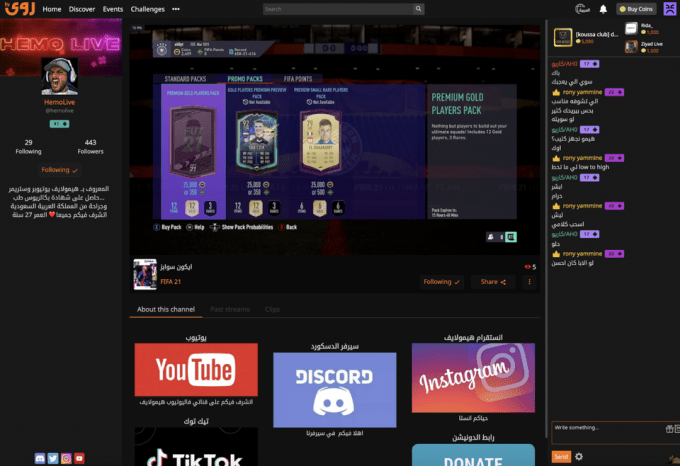
Medal.tv, a video clipping service for gamers, enters the livestreaming market with Rawa.tv acquisition

Medal.tv, a short-form video clipping service and social network for gamers, is entering the live streaming market with the acquisition of Rawa.tv, a Twitch rival based in Dubai, which had raised around $1 million to date. The seven-figure, all cash deal will see two of Rawa’s founders, Raya Dadah and Phil Jammal, now joining Medal and further integrations between the two platforms going forward.

The Middle East and North African region (MENA) is one of the fastest-growing markets in gaming and still one that’s mostly un-catered to, explained Medal.tv CEO Pim de Witte, as to his company’s interest in Rawa.

“Most companies that target that market don’t really understand the nuances and try to replicate existing Western or Far-Eastern models that are doomed to fail,” he said. “Absorbing a local team will increase Medal’s chances of success here. Overall, we believe that MENA is an underserved market without a clear leader in the livestreaming space, and Rawa brings to Medal the local market expertise that we need to capitalize on this opportunity,” de Witte added.

Medal.tv’s community had been asking for the ability to do livestreaming for some time, the exec also noted, but the technology would have been too expensive for the startup to build using off-the-shelf services at its scale, de Witte said.

“People increasingly connect around live and real-time experiences, and this is something our platform has lacked to date,” he noted.

But Rawa, as the first livestreaming platform dedicated to Arab gaming, had built out its own proprietary live and network streaming technology that’s now used in all its products. That technology is now coming to Medal.tv.

Image Credits: Medal.tv

The two companies were already connected before today, as Rawa users have been able to upload their gaming clips to Medal.tv, and some Rawa partners had joined Medal’s skilled player program. Going forward, Rawa will continue to operate as a separate platform, but it will become more tightly integrated with Medal, the company says. Currently, Rawa sees around 100,000 active users on its service.

The remaining Rawa team will continue to operate the livestreaming platform under co-founder Jammal’s leadership following the deal’s close, and the Rawa HQ will remain based in Dubai. However, Rawa’s employees have been working remotely since the start of the pandemic, and it’s unclear if that will change in the future, given the uncertainty of Covid-19’s spread.

Medal.tv detailed its further plans for Rawa on its site, where the company explained it doesn’t aim to build a “general-purpose” livestreaming platform where the majority of viewers don’t pay — a call-out that clearly seems aimed at Twitch. Instead, it says it will focus on matching content with viewers who would be interested in subscribing to the creators. This addresses on of the challenges that has faced larger platforms like Twitch in the past, where it’s been difficult for smaller streamers to get off the ground.

The company also said it will remain narrowly focused on serving the gaming community as opposed to venturing into non-gaming content, as others have done. Again, this differentiates itself from Twitch which, over the years, expanded into vlogs and even streaming old TV shows. And it’s much different from YouTube or Facebook Watch, where gaming is only a subcategory of a broader video network.

The acquisition follows Medal.tv’s $9 million Series A led by Horizons Ventures in 2019, after the startup had grown to 5 million registered users and “hundreds of thousands” of daily active users. Today, the company says over 200,000 people create content every day on Medal, and 3 million users are actively viewing that content every month.

12 Aug 2021

Medal.tv, a video clipping service for gamers, enters the livestreaming market with Rawa.tv acquisition

Medal.tv, a short-form video clipping service and social network for gamers, is entering the live streaming market with the acquisition of Rawa.tv, a Twitch rival based in Dubai, which had raised around $1 million to date. The seven-figure, all cash deal will see two of Rawa’s founders, Raya Dadah and Phil Jammal, now joining Medal and further integrations between the two platforms going forward.

The Middle East and North African region (MENA) is one of the fastest-growing markets in gaming and still one that’s mostly un-catered to, explained Medal.tv CEO Pim de Witte, as to his company’s interest in Rawa.

“Most companies that target that market don’t really understand the nuances and try to replicate existing Western or Far-Eastern models that are doomed to fail,” he said. “Absorbing a local team will increase Medal’s chances of success here. Overall, we believe that MENA is an underserved market without a clear leader in the livestreaming space, and Rawa brings to Medal the local market expertise that we need to capitalize on this opportunity,” de Witte added.

Medal.tv’s community had been asking for the ability to do livestreaming for some time, the exec also noted, but the technology would have been too expensive for the startup to build using off-the-shelf services at its scale, de Witte said.

“People increasingly connect around live and real-time experiences, and this is something our platform has lacked to date,” he noted.

But Rawa, as the first livestreaming platform dedicated to Arab gaming, had built out its own proprietary live and network streaming technology that’s now used in all its products. That technology is now coming to Medal.tv.

Image Credits: Medal.tv

The two companies were already connected before today, as Rawa users have been able to upload their gaming clips to Medal.tv, and some Rawa partners had joined Medal’s skilled player program. Going forward, Rawa will continue to operate as a separate platform, but it will become more tightly integrated with Medal, the company says. Currently, Rawa sees around 100,000 active users on its service.

The remaining Rawa team will continue to operate the livestreaming platform under co-founder Jammal’s leadership following the deal’s close, and the Rawa HQ will remain based in Dubai. However, Rawa’s employees have been working remotely since the start of the pandemic, and it’s unclear if that will change in the future, given the uncertainty of Covid-19’s spread.

Medal.tv detailed its further plans for Rawa on its site, where the company explained it doesn’t aim to build a “general-purpose” livestreaming platform where the majority of viewers don’t pay — a call-out that clearly seems aimed at Twitch. Instead, it says it will focus on matching content with viewers who would be interested in subscribing to the creators. This addresses on of the challenges that has faced larger platforms like Twitch in the past, where it’s been difficult for smaller streamers to get off the ground.

The company also said it will remain narrowly focused on serving the gaming community as opposed to venturing into non-gaming content, as others have done. Again, this differentiates itself from Twitch which, over the years, expanded into vlogs and even streaming old TV shows. And it’s much different from YouTube or Facebook Watch, where gaming is only a subcategory of a broader video network.

The acquisition follows Medal.tv’s $9 million Series A led by Horizons Ventures in 2019, after the startup had grown to 5 million registered users and “hundreds of thousands” of daily active users. Today, the company says over 200,000 people create content every day on Medal, and 3 million users are actively viewing that content every month.

12 Aug 2021

‘The tortoise and the hare’ story is playing out right now in VC

The unprecedented liquidity that has entered the venture market in the past year has spurred several trends that require VCs to adapt to a more competitive environment where startup founders have far more leverage than they did in the past.

Structurally, there are only so many startups looking to raise capital, and even though some founders may be opportunistically pursuing deals they wouldn’t have previously, the supply of capital into venture funds has nonetheless outpaced the demand for those dollars.

This means VCs are in an unusual environment of increasing competition to get in on deals with startups, and as they jockey to win spots on cap tables they’re moving faster than ever to close deals.

The best early-stage VCs take the time to find the founders they believe in and who need their expertise, because they’ll be right there working with them for the long haul.

What’s more, newcomers in the VC market like Tiger Global as well as a number of non-VC investment funds like PE firms with much larger pools of capital than the market has seen are aggressively pursuing enormous deals in an effort to drive faster exits and returns on their investments.

With so many investors vying for their attention, many founders are taking the opportunity to raise bigger rounds and coming back for additional funding faster than ever, which is apparent in the constant drumbeat of funding news as well as the 250 unicorns and the record $288 billion invested in startups in the first half of this year.

How can VCs adapt and be competitive?

For some, the answer may be moving faster to get in on deals. Strategies like doing more due diligence in advance of ever meeting startups and leveraging technologies like AI to supplement investors’ ability to evaluate companies can help with this. For others, it may be making larger investments and accepting smaller ownership stakes in startups than they’re accustomed to.