Month: August 2021

11 Aug 2021

Samsung’s latest Galaxy Z Flip starts at $1,000

The Galaxy Z Flip is probably destined to forever play second fiddle to the Fold. And with its older and larger sibling now ascending to the ranks of “flagship” with a slew of new features like S-Pen functionality, the designation is probably all but inevitable.

But for those seriously considering the world of foldables, there’s something to be said for the clamshell devices. It has always been the more compact and — dare I say — accessible member of the Galaxy Z family. Of course, at $1,380 — well, let’s just say “accessibility” is relative.” At today’s Unpacked event, however, Samsung announced that the Galaxy Z Flip 3 is getting an even larger price drop than the Fold.

At $999.99, again, we’re speaking relatively here. But at the very least, a nearly $400 price drop brings the Flip into the realm of mainstream flagship pricing (the Fold 3, while cheaper than its predecessor, is still $1,799). Add onto that the learnings that come with a third-generation device, and there’s a case to be made that this is Samsung’s (and, probably the industry’s) most mainstream foldable to date. I mean, anything beats the original Razr foldable, right?
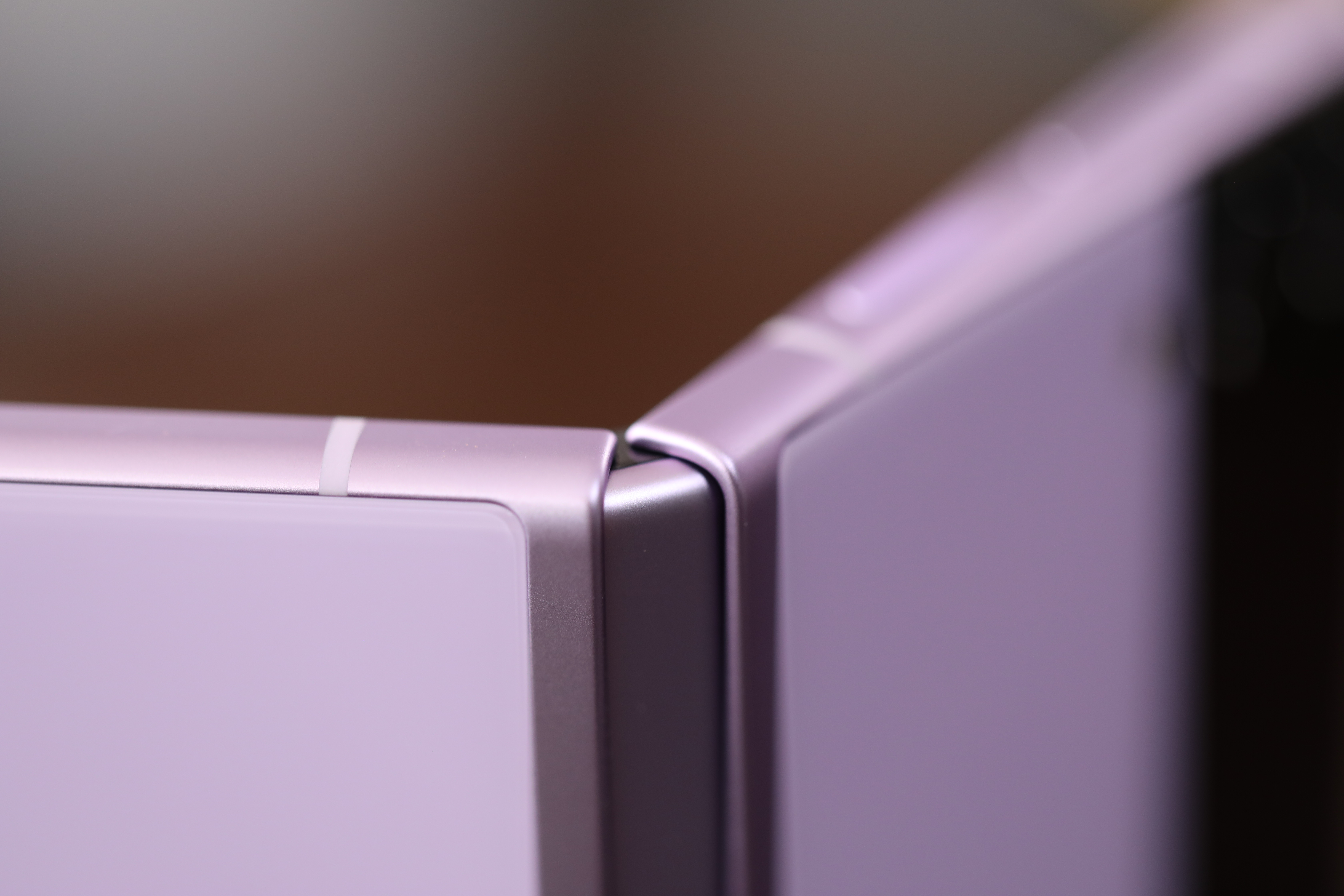
Image Credits: Brian Heater

Obviously we’re going to hold out for a review unit until we’re able to say something more definitive on the matter. But while Samsung continues to lead with the Fold, don’t sleep on the alternative. Both devices have (understandably) prioritized durability among their new features. That includes a stronger protective film made of PET plastic, coupled with a reconfiguration of the display panels aimed at reinforcing what has traditionally been the weak link on these products.

Also on board is Samsung’s new proprietary Armor Aluminum for the body, Gorilla Glass Victus for the exterior of the device and IPX8 water resistance. That means the new foldables can withstand significantly more water than their predecessors. The “X” in the rating means it’s not rated against debris, due to the nature of the hinges, but Samsung believes the sweeping mechanism it introduced on previous models can make quick work of particulate matter that could potentially fall behind the screen and damage it in the process of pressing.
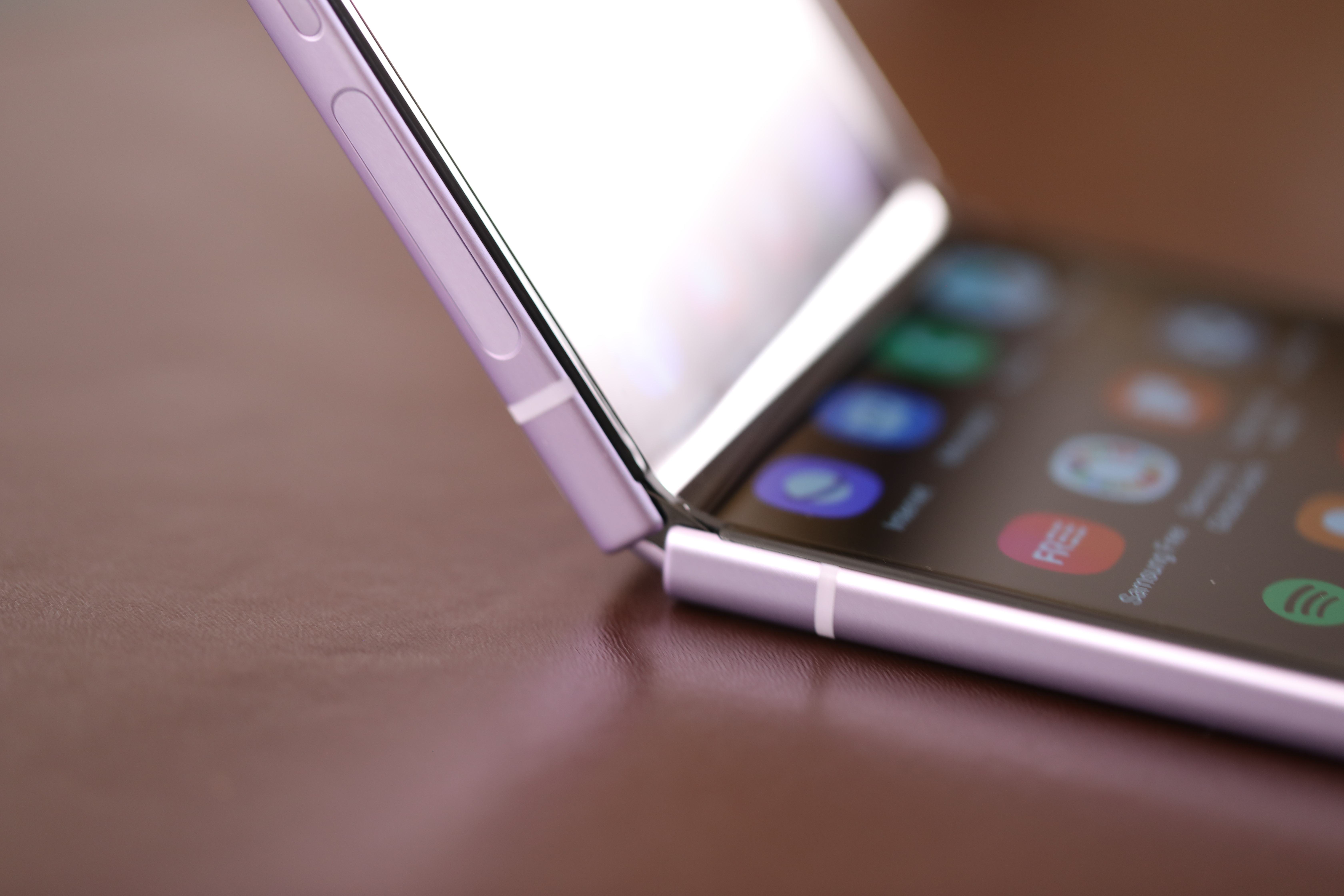
Image Credits: Brian Heater

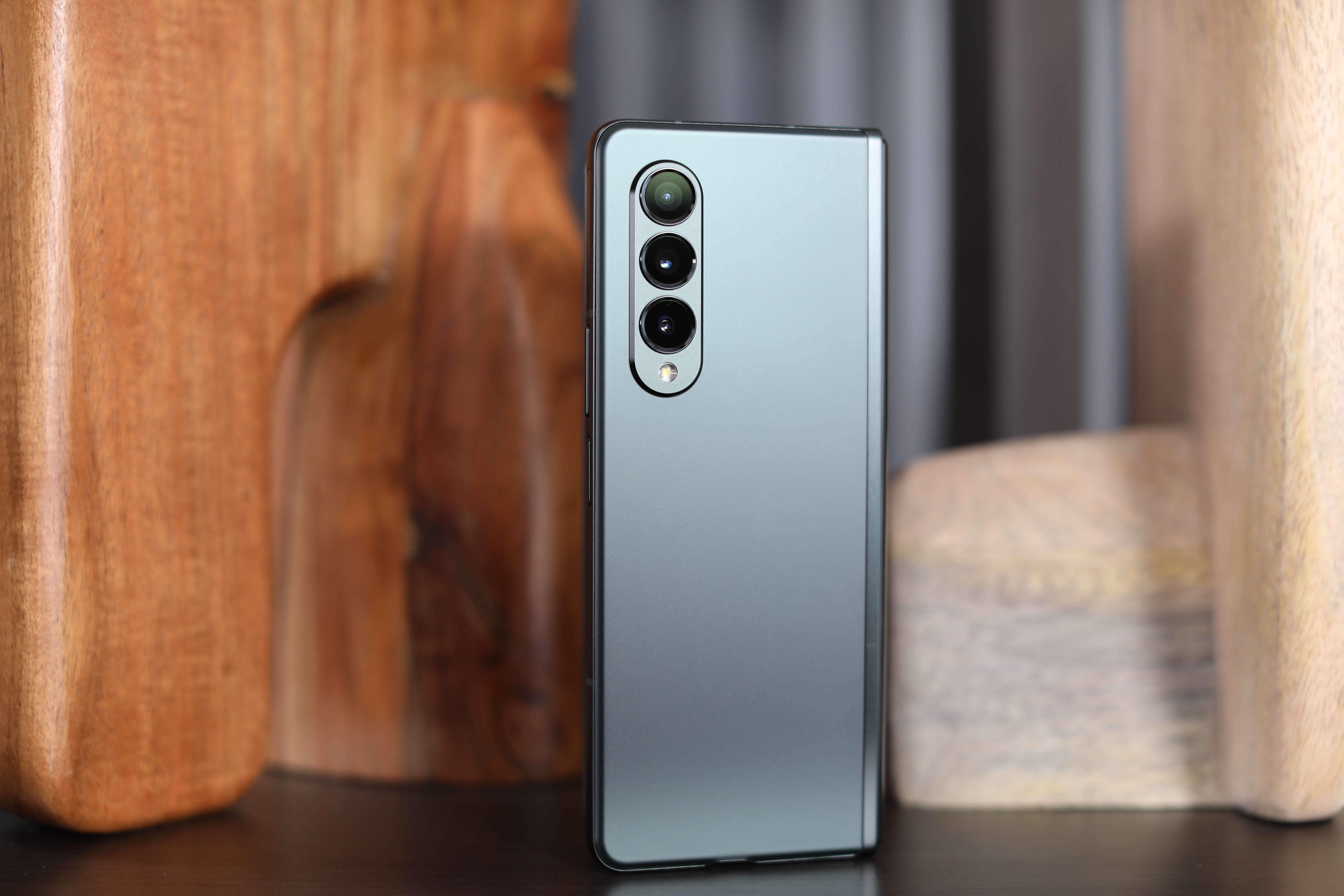
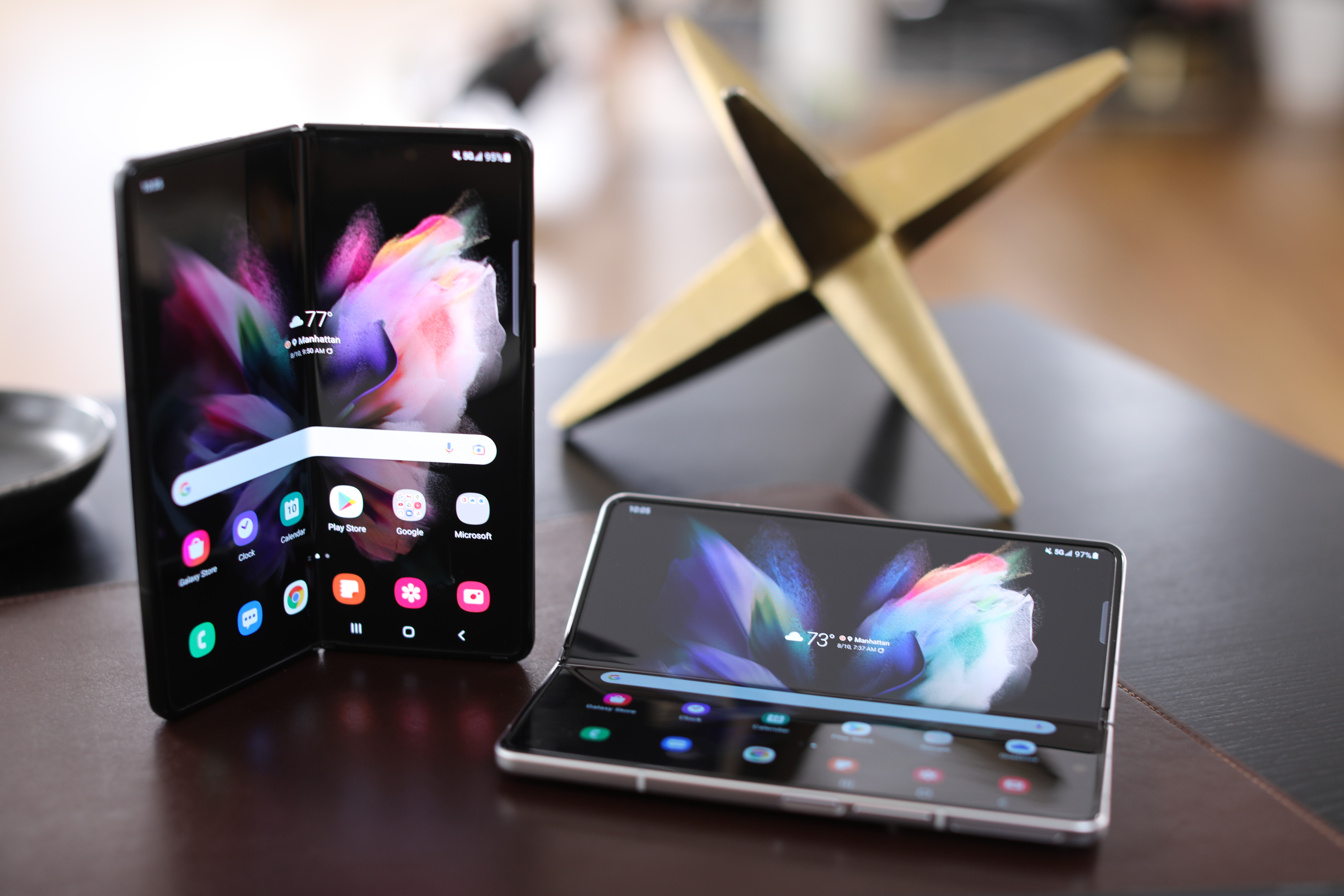
The phone has also gotten a striking redesign. When closed, I’d say it’s a considerably better-looking device than the Fold — not to mention significantly easier to port around in your pocket. The device now comes in Cream, Green, Lavender and Black, coupled with a variety of different grips and straps. If you get it online, you can also choose a Gray, Pink or White version. The internal display is effectively the same as its predecessor at 6.7 inches (2640 x 1080), but the front screen has been further increasing from 1.1 to 1.9 inches — a not insignificant bump when we’re dealing with those sizes.

The cameras remain roughly the same as the Flip 2:

  1. Front: 10MP Selfie. F2.4, Pixel size: 1.22μm, FOV: 80-degree
  2. Rear: 12MP Ultra Wide. F2.2, Pixel size: 1.12μm, FOV: 123-degree
  3. Rear 2: 12MP Wide-angle. Dual Pixel AF, OIS, F1.8 Pixel size: 1.4μm, FOV: 78-degree
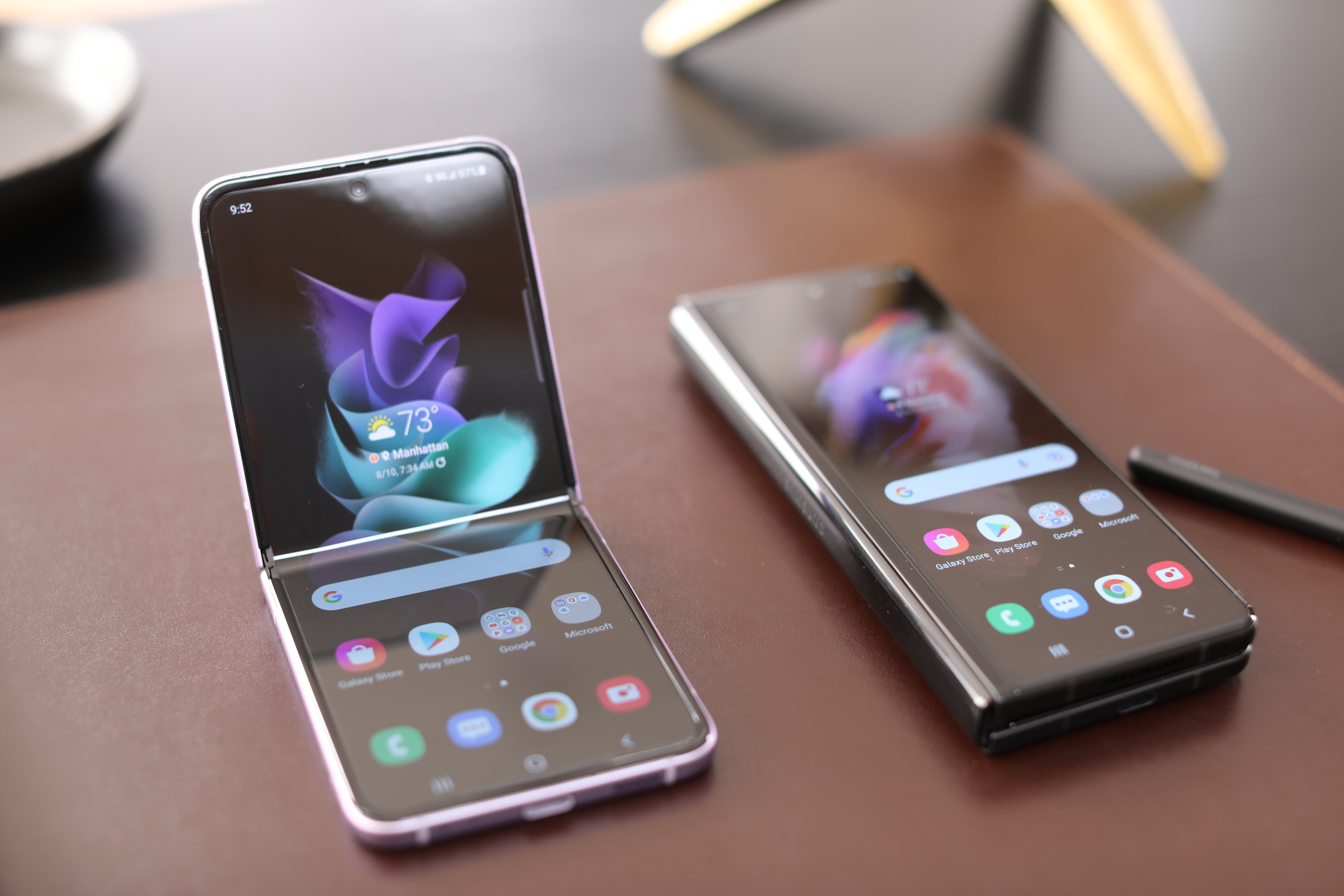
Image Credits: Brian Heater

The battery is (understandably) a fair bit smaller than the Fold’s at 3,300mAh, split over two modules (because, folding). It supports fast-wired and wireless charging, as well as Samsung’s Wireless PowerShare for giving some juice back to your other devices. Like the Fold, the new flip is powered by the Snapdragon 888. Here that’s coupled with 8GB of RAM and either 128 or 256GB of storage.

Like the other devices announced today, the Flip is now up for preorder and starts shipping August 26. Preordering will get you a $150 Samsung Credit.
11 Aug 2021

Samsung’s latest Galaxy Fold adds stylus support, waterproofing and an under-display camera

Behold, Samsung’s latest flagship. With the Galaxy Note out of the way — for this year, at least — the company used today’s Unpacked event to breathe added legitimacy into its foldable line. The original Galaxy Fold, introduced in 2019, represent a sort of experiment for the company (along with all the hiccups that entailed), as the first foldable from a major hardware manufacture, whereas last year’s Galaxy Z Fold 2 found the company correcting some of the glaring issues with its predecessor.

Today’s event finds the company making the case for Galaxy Z Fold 3 as something beyond an experiment or a curiosity. The task will almost certainly be an uphill battle for the next few generations. Unlike the latest version of the Flip, which starts at a price reduced considerably from its predecessor, the new Fold drops the entry price $200, down to $1,800. Any price reduction is a step in the right direction — and something that should be increasingly feasible as the technology continues to scale. But even in the world of premium flagships, that will continue to be a tough pill to swallow.

Image Credits: Brian Heater

What the upgraded Fold truly brings to the table, however, is a continued refinement to build materials that make the foldable screen a feasible option for day to day usage. This, of course, is precisely what hamstrung the original. Sure, the company did a lot of testing in controlled rooms, but once the product got out into the world (and into the hands of non-Samsung employees), problems of durability began cropping up, resulting in displays that were unintentionally damaged in a variety of imaginative ways.

The Galaxy Z Fold features a stronger frame made of “Armor Aluminum,” new protective film for the foldable display, Gorilla Glass Victus on the front-facing screen and an IPX8 rating — representing the first waterproof rating for the company’s foldable. Waterproofing has, of course, become something of an industry standard, but obviously things complicate quickly when you add folding mechanisms into the equation.

In fact, that’s why the rating has an “X” stuck in the middle of it. It’s effectively protected from accidental dunks in water, but not dust and debris. This is due to the hinge mechanism created for earlier models that allows some particulate matter through, but sweeps it away with a built in brush that moves as the device opens. That effectively protects it from getting behind the screen, where it could damage the phone with a finger press on the other side.

Image Credits: Brian Heater

Of course, the stronger protective film is the thing. It’s what’s (hopefully) standing between you and damaging your phone’s biggest selling point with an overzealous finger press — or, for that matter, a stylus. The Fold, after all, is following in the footsteps of Samsung’s S series by blurring the line with the Note (which handily opted to sit this round out).

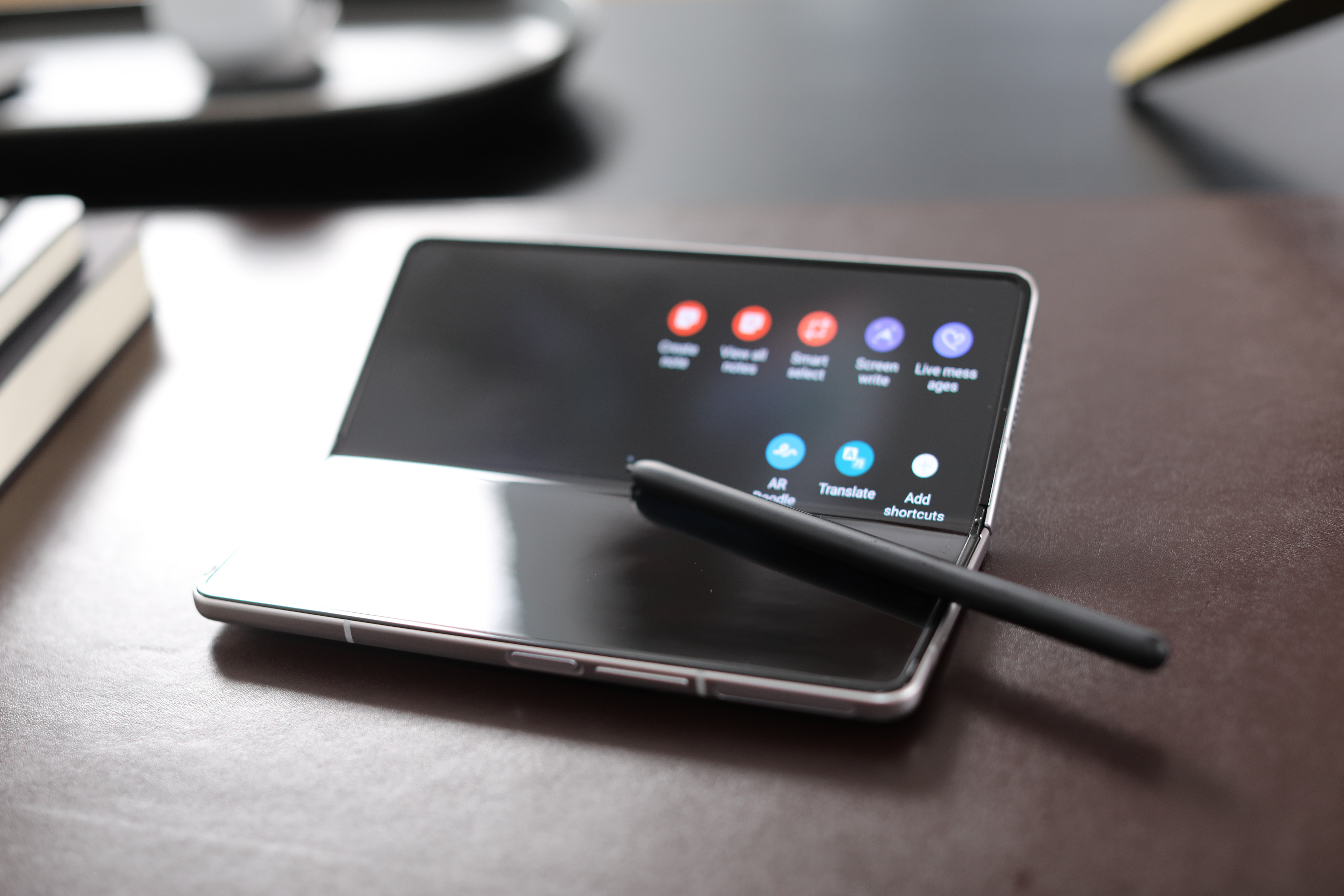
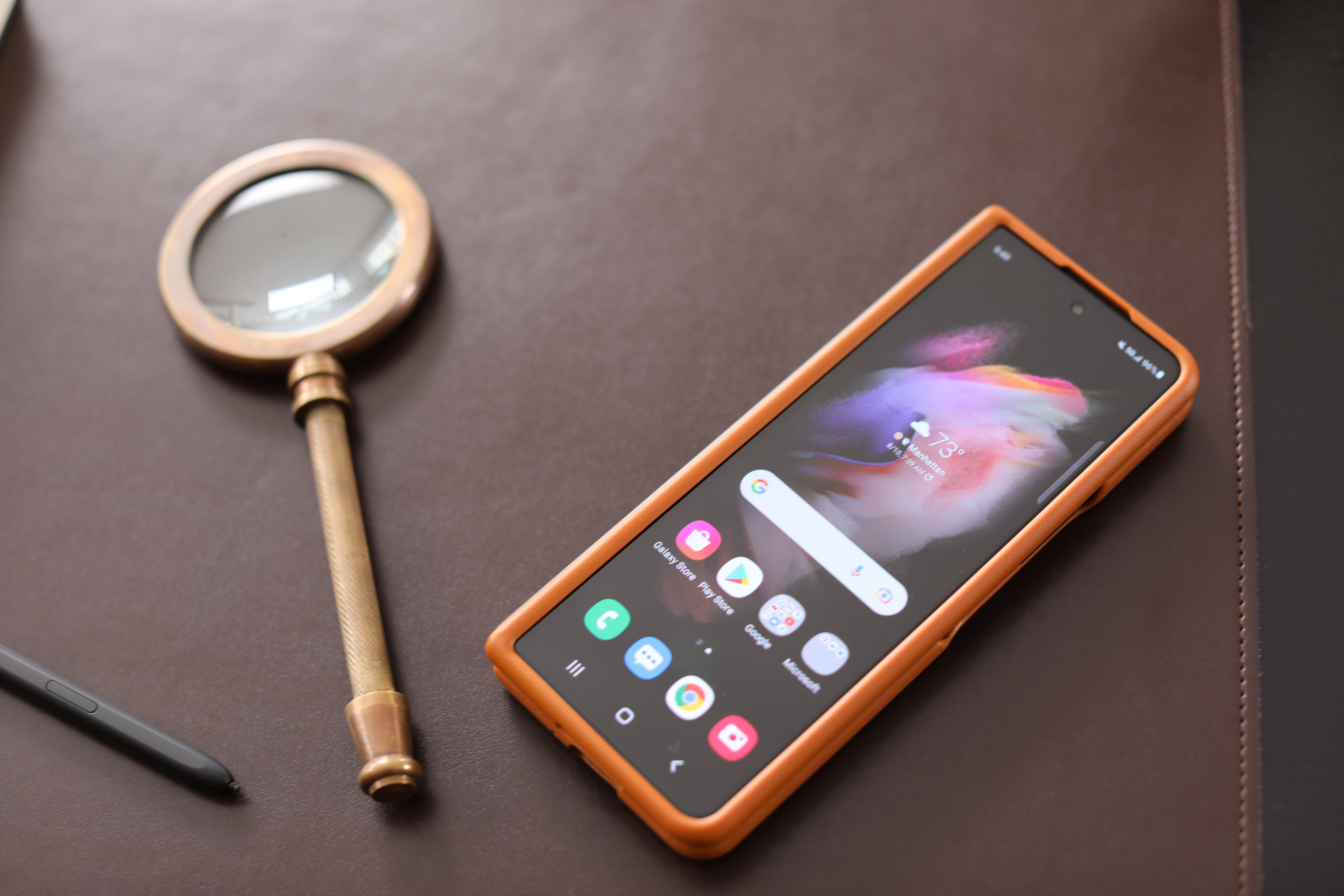
In fact, Samsung actually went out of its way to create a special Fold Edition of the S-Pen specially designed to not damage the Fold display. It’s optional, of course, and as with the S21, there’s slot for the stylus in the handset — that’s to be expected, given the relatively fragility of the product. There will, of course, be a case with a built-in S-Pen holster.

The Fold Edition S-Pen is smaller and features a spring-loaded tip designed to retract so you don’t damage the screen by writing/drawing too hard. Certainly the Fold is a clear candidate for stylus functionality, given its 7.6-inch canvas that puts even the Note Ultra’s 6.9-inch screen to shame. Of course, the feasibility of this combination has been severely hampered by structural integrity issues with the screen. It will be interesting to see how the company has managed to navigate that.

At 7.6 inches (2208 x 1768, 374 ppi), the primary screen is largely unchanged. The cover screen, too, is about the same, at 6.2 inches — though it now joins the main screen with a 120 Hz refresh rate. 

Image Credits: Brian Heater

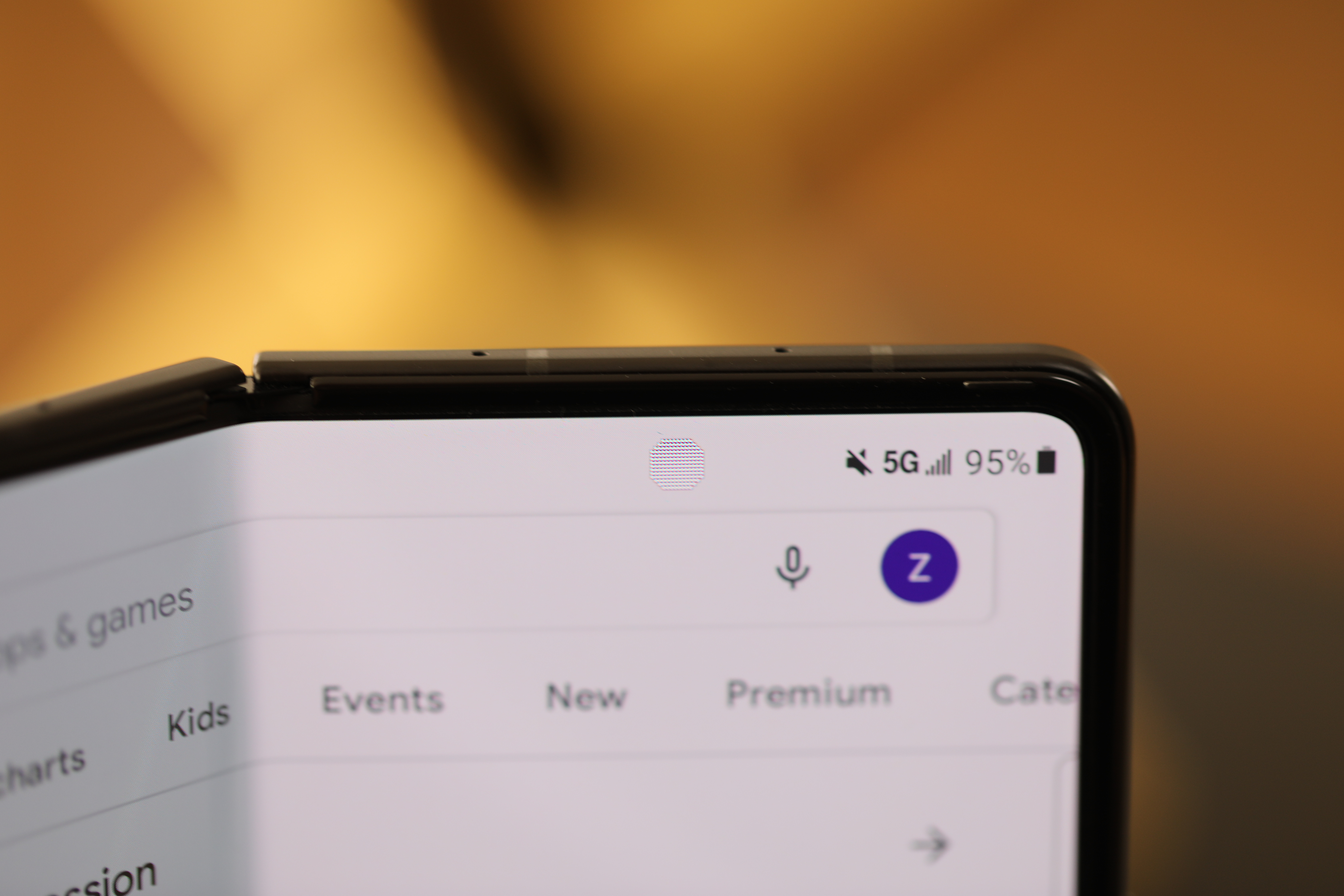
Notably, the Galaxy Z Fold 3 is the first Samsung device to add an under-display camera. That, along with foldable displays, has been one of the biggest holy grails in the smartphone category for the past several years. Samsung’s not the first to introduce the technology. A handful of Chinese manufacturers, including Xiaomi and Oppo, have either released or plan to release devices sporting the technology.

It’s telling that the company opted to test the water with the Fold. Aside from the obvious aspect of creating a contiguous display, it gives the company the opportunity to test out another mainstream technology. The dirty little secret about the first generation of under-screen cameras is that the picture quality tends to suck. Samsung surely knows this and has opted to stick it on a device that already has a selfie camera above its front display.

The company describes new tech as follows, “the minimum pixels applied on top of the camera hole, Z Fold 3 features an increased viewable area so users get an unbroken canvas for their favorite apps.” The thinking here is that the internal camera simply doesn’t get as much use, save for things like teleconferencing (which is, granted, something we’ve been doing a lot more of in the past year). As currently configured, it’s a bit of a compromise on both ends. Picture quality takes a hit and the camera hole is still semi-visible. So, either the best or worst of both worlds, depending on what you’re looking for.

Image Credits: Brian Heater

The under-display camera is four megapixels (when was the last time you saw one of those?), verses the 10-megapixel front/cover camera. The rear camera setup is virtually identical to its predecessor:

  • 12MP Ultra Wide. F2.2, Pixel size: 1.12μm, FOV: 123-degree
  • 12MP Wide-angle. Dual Pixel AF, OIS, F1.8, Pixel size: 1.8μm, FOV: 83-degree
  • 12MP Telephoto. PDAF, F2.4, OIS, Pixel size: 1.0μm, FOV: 45-degree

The battery has taken a bit of a hit, down from 4,500 to 4,400mAh (spread out over two modules, as is the foldable way). The Fold also supports fast charge/fast wireless and Wireless Powershare to use that 4,400mAh battery to power other gadgets. Samsung generally doesn’t offer battery estimates for phones prior to release, so wait on the review for that. The whole thing is powered by a Snapdragon 888 chip (market depending), coupled with 12GB of RAM and either 256 or 512GB of storage.

Image Credits: Brian Heater

Like the rest of the devices announced today, the Galaxy Z Fold 3 is up for preorder now and starts shipping on the 26th. The $1,800 price tag continues to be a roadblock toward more mainstream adoption, though the company has moved a number of these devices to early adopters already. Preorders get a $200 Samsung Credit.

11 Aug 2021

No-code is code

Today, the release of OpenAI Codex, a new Al system that translates natural language to code, marks the beginning of a shift in how computer software is written.

Over the past few years, there’s been growing talk about “no code” platforms, but this is no new phenomenon. The reality is, ever since the first programmable devices, computer scientists have regularly developed breakthroughs in how we “code” computer software.

The first computers were programmed with switches or punch cards, until the keyboard was invented. Coding became a matter of typing numbers or machine language, until Grace Hopper invented the modern compiler and the COBOL language, ushering in decades of innovation in programming languages and platforms. Languages like Fortran, Pascal, C, Java and Python evolved in a progression, where the newest language (built using an older language) enabled programmers to “code” using increasingly more human language.

Alongside languages, we’ve seen the evolution of “no-code” platforms — including Microsoft Excel, the 1980s granddaddy of no-code — that empower people to program computers in a visual interface, whether in school or in the workplace. Anytime you write a formula in a spreadsheet, or when you drag a block of code on Code.org or Scratch, you’re programming, or “coding,” a computer. “No code” is code. Every decade, a breakthrough innovation makes it easier to write code so that the old way of coding is replaced by the new.

Does this mean coding is dead? No! It doesn’t replace the need for a programmer to understand code. It means coding just got much easier, higher impact and thus more important.

This brings us to today’s announcement. Today, OpenAl announced OpenAI Codex, an entirely new way to “write code” in the natural English language. A computer programmer can now use English to describe what they want their software to do, and OpenAl’s generative Al model will automatically generate the corresponding computer code, in your choice of programming language. This is what we’ve always wanted — for computers to understand what we want them to do, and then do it, without having to go through a complex intermediary like a programming language.

But this is not an end, it is a beginning. With Al-generated code, one can imagine an evolution in every programming tool, in every programming class, and a Cambrian explosion of new software. Does this mean coding is dead? No! It doesn’t replace the need for a programmer to understand code. It means coding just got much easier, higher impact and thus more important, just as when punch cards were replaced by keyboards, or when Grace Hopper invented the compiler.

In fact, the demand for software today is greater than ever and will only continue to grow. As this technology evolves, Al will play a greater role in generating code, which will multiply the productivity and impact of computer scientists, and will make this field accessible to more and more computer programmers.

There are already tools that let you program using only drag-and-drop, or to write code using your voice. Improvements in these technologies and new tools, like OpenAI Codex, will increasingly democratize the ability to create software. As a result, the amount of code — and the number of coders — in the world will increase.

This also means that learning how to program — in a new way — is more important than ever. Learning to code can unlock doors to opportunity and also help solve global problems. As it becomes easier and more accessible to create software, we should give every student in every school the fundamental knowledge to not only be a user of technology but also a creator.

11 Aug 2021

Samsung brings active noise cancellation to its entry-level Galaxy Buds

In what has quickly become the busiest Unpacked of the virtual era, Samsung just dropped a new version of its wireless earbuds. The Galaxy Buds 2 add active noise canceling to the entry-level model, while retaining the $149 price point.

For those keeping track, the current Galaxy Buds offerings are Buds 2 ($149), Buds Live ($170) and Buds Pro ($200). The addition pretty clearly blurs the line between the first two. Asked for clarification on how the offerings now shake out, Samsung tells TechCrunch:

As our premium offering, the Galaxy Buds Pro leverage cutting-edge technology to deliver immersive audio, intelligent Active noise cancelling, and effortless connectivity. For those looking to show off their unique style, the Galaxy Buds Live combine high quality sound with an eye-catching design.

So, design and sound are the differentiators. The Buds Live were, of course, introduced during a time when ANC was more of an exception than a rule for nonpremium-priced earbuds, so I wouldn’t be too surprised to see them start to be phased out.

As I’ve said in the past, Samsung’s earbuds have always been quietly solid. They don’t get the love of Apple or Sony in that department, but the company has consistently produced solid buds, and I don’t see any reason to expect these will be any different. Of course, the Pros still sit at the high end, in terms of sound quality, 360 audio, etc.

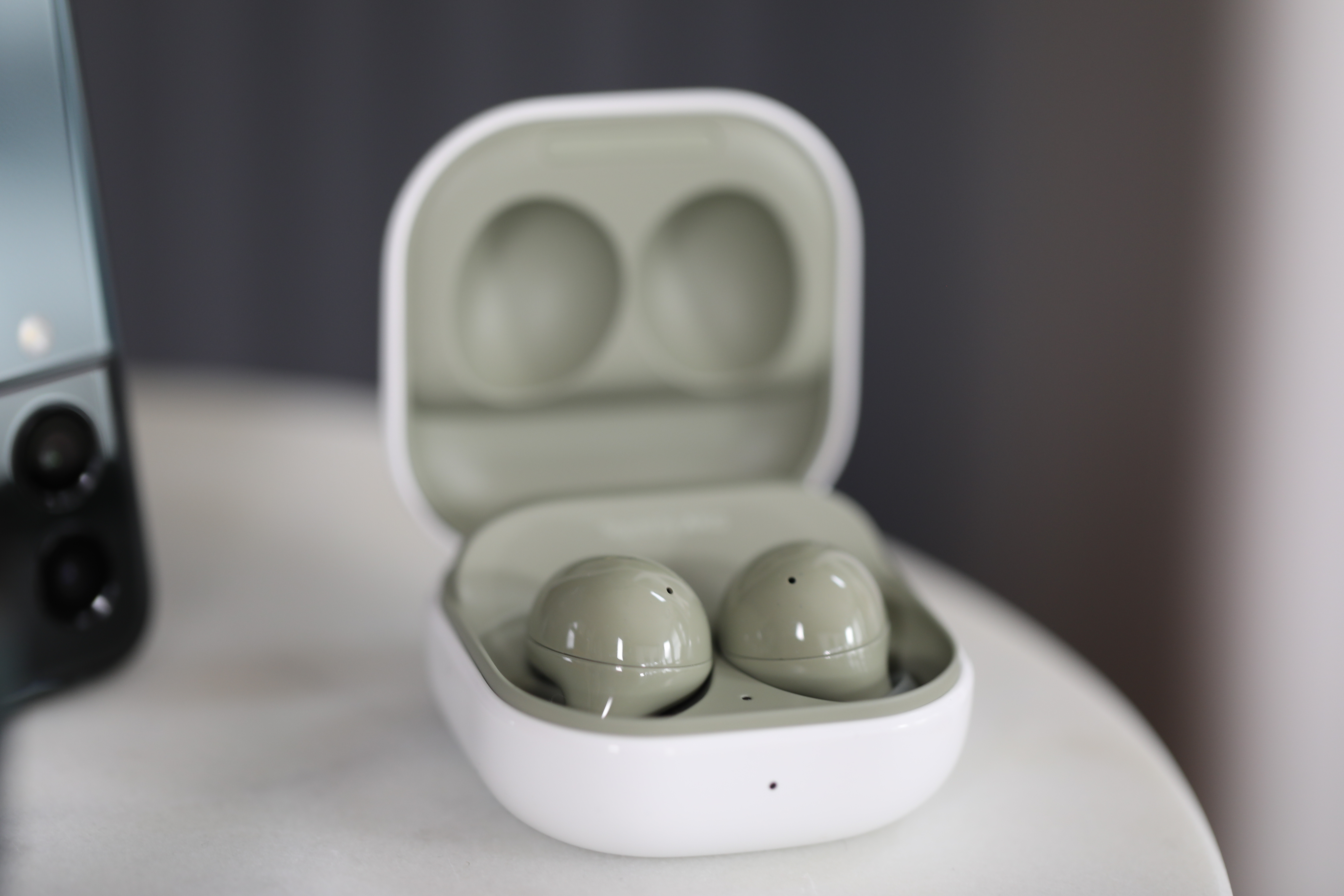
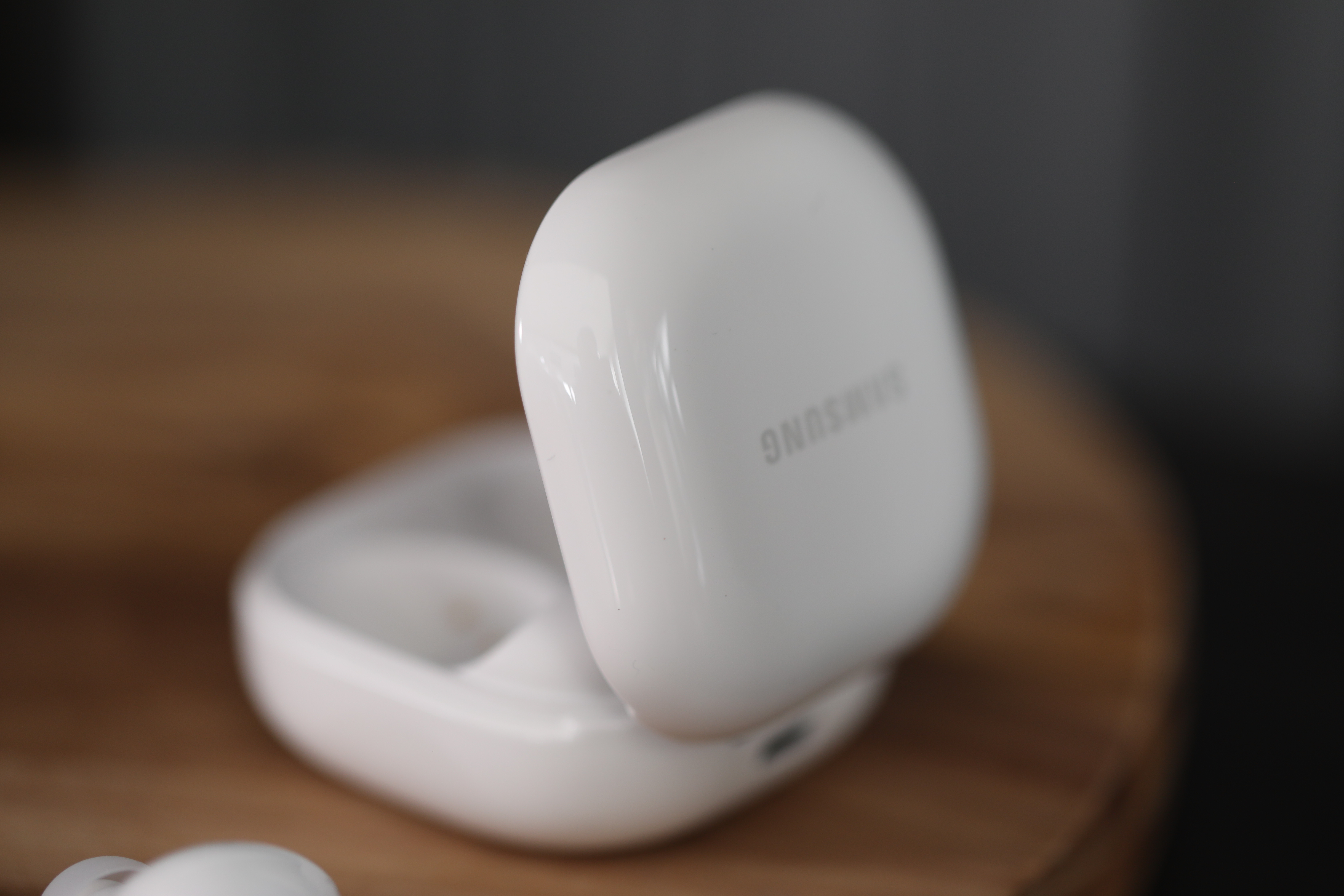
Samsung says the new Buds are their smallest and lightest to date. Indeed, the Buds, the case and everything are quite compact (and surprisingly glossy!). They retain the familiar ovular shape that sits up against the wearer’s ear. They’re built specifically to pair with the company’s mobile devices, but you should be able to connect them to any Bluetooth device.

Image Credits: Brian Heater

Like the rest of today’s devices, the Buds 2 are now up for preorder and start shipping on August 26. Look for a review in the not too distant future.

11 Aug 2021

Gamified home rowing machine Aviron raises $4.5M

Along with a surge in connected fitness funding, it seems that rowing machines are really having their moment. In April, Ergatta announced a $30 million raise, last month, CityRow announced a $12 million round for its studios and home machines, and today, Aviron is announcing a $4.5 million round. A rising tide and all that good stuff.

The round, which includes Samsung Next, Formic Ventures, GFC and Y Combinator, follows $750,000 in early-stage funding. As we noted in January, the Toronto-based startup spent much of the pandemic (understandably) pivoting from gym equipment to connected home fitness. As more people look to rowing as a full-body alternative to cycling that’s much kinder on your knees than running, the company’s looking to differentiate itself through gamification.

Image Credits: Aviron

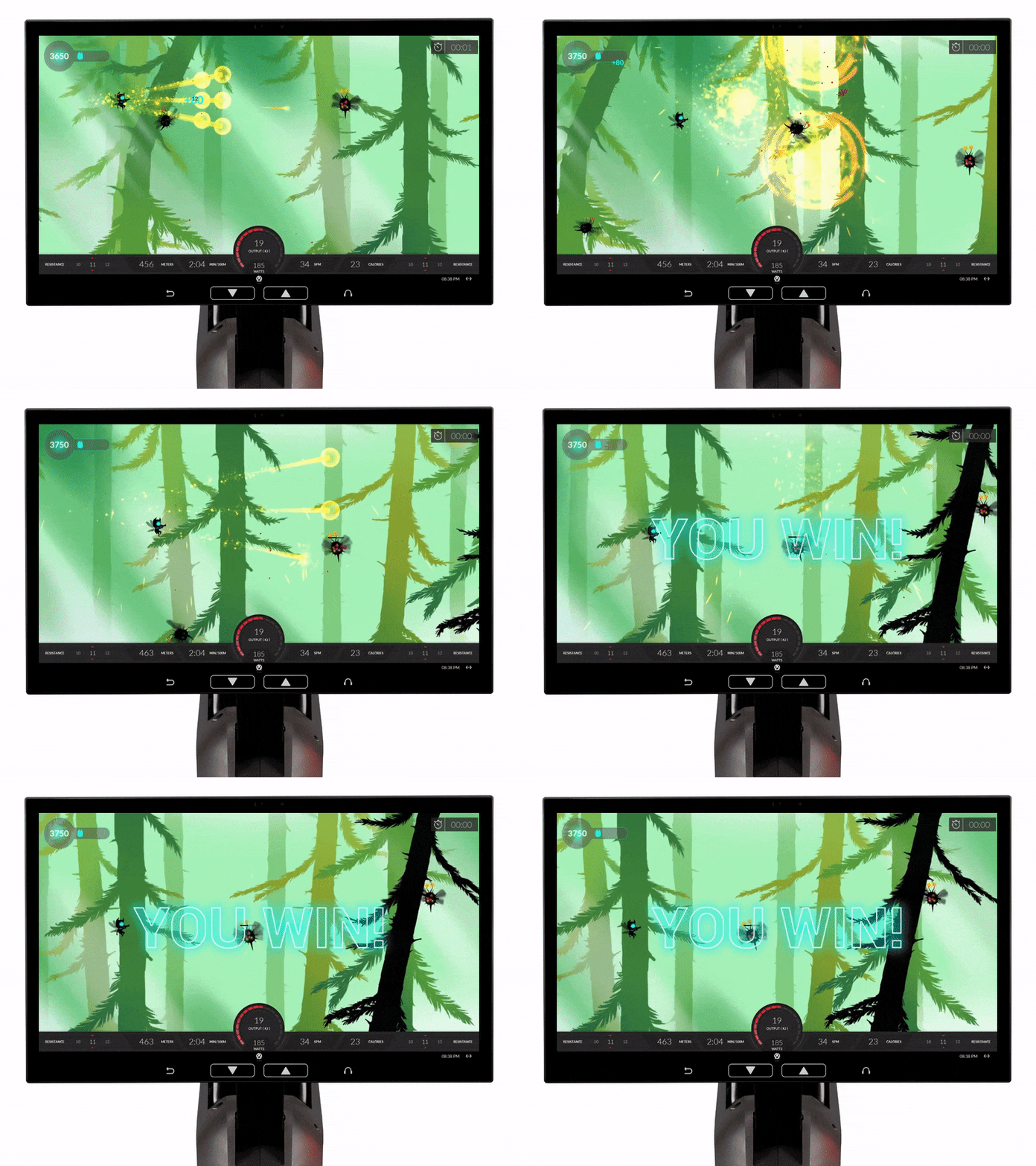
“We’re going a lot harder on the gamification side of things,” founder and CEO Andy Hoang tells TechCrunch. “And that’s the biggest differentiator between, say, us and a Peloton or a Hydro. They focus almost exclusively on instructor-led classes, while we focus on these high-intensity races and fully animated games, where you’re shooting bugs or running away from zombies.”

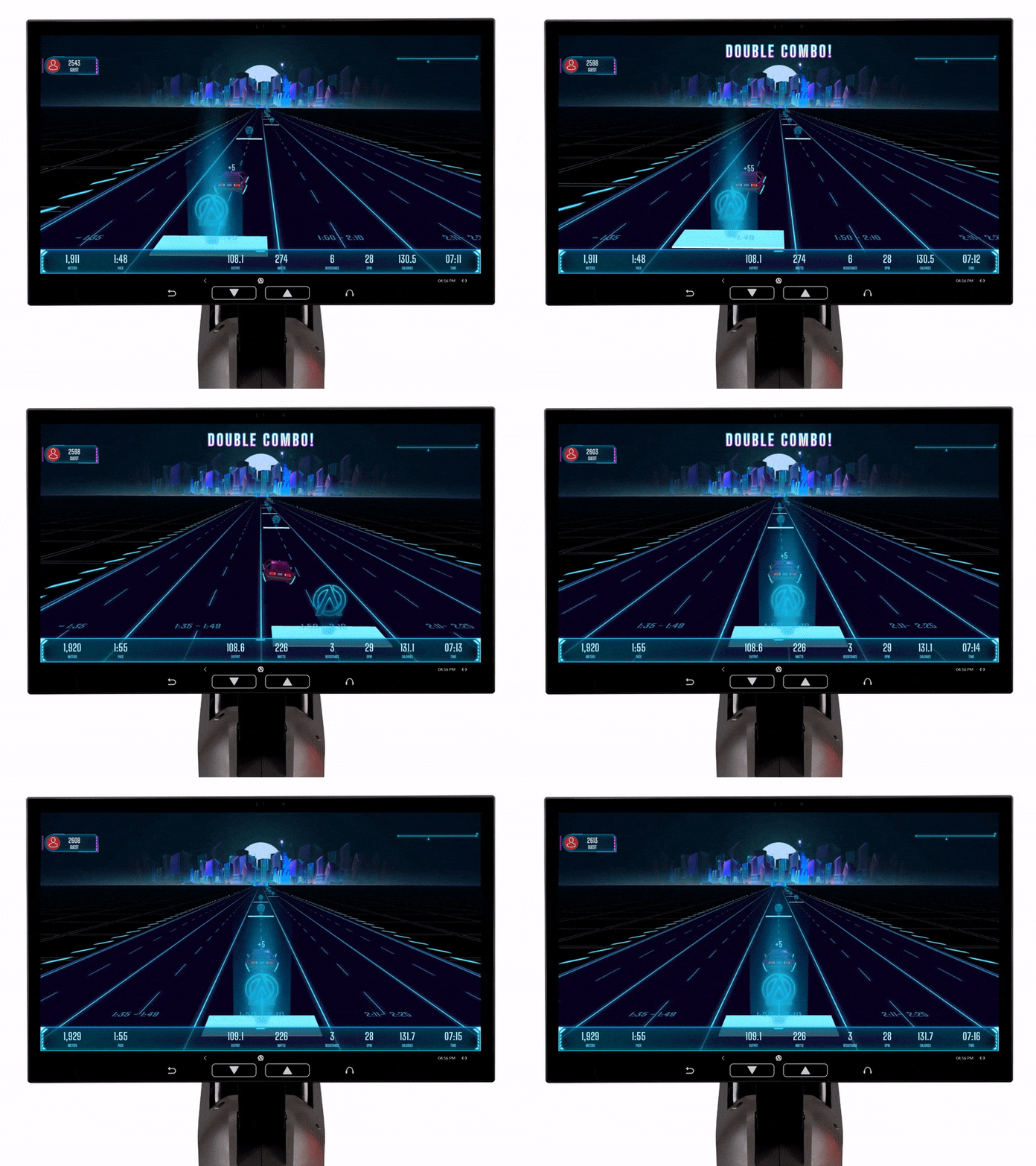
Last month, however, Peloton announced plans to compete more directly on the game side of things, with plans to roll out in late-2021/early 2022. The first product is a Tron-esque racing game. “Peloton created Lanebreak to complement instructor-led classes with a fresh new experience for members, giving them more ways to stay engaged and motivated with their workouts,” the company wrote in a release last month. Aviron says it’s trying to add something deeper.

“What makes Aviron really different is we’re not gamifying the fitness experience by added new graphics or achievements to the end of your workout,” says Hoang. “What we’re doing is gaming the fitness experience. What makes games really fun and exciting isn’t the bells and whistles. It’s the characters, it’s the story, discovering new things and unlocking them.”

Image Credits: Aviron

The company has already begun to increase headcount. Last time we checked in, Aviron was at 10 full-time employees. The company has increased to 25, roughly half of whom are involved in its game development team.

“We’re constantly looking for people. Content is our focus, and we’re hiring the right people for marketing and branding,” adds Hoang. “We’re doing a whole new rebrand.”


11 Aug 2021

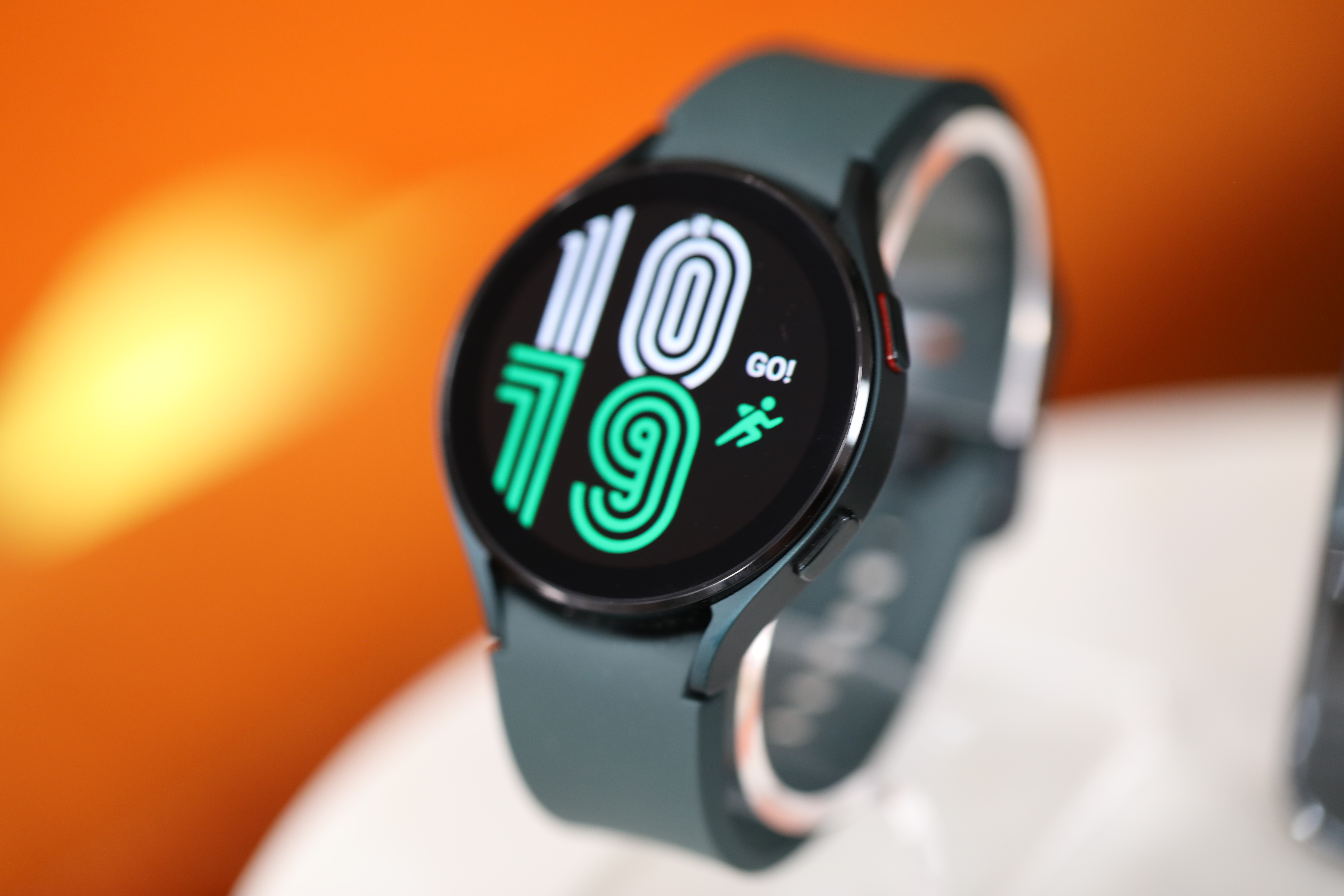
Samsung returns to Wear OS with the Galaxy Watch 4

Samsung’s watches have long been something of an anomaly. While the company embraced Wear OS (then Android Wear) in its earliest days with the massive Gear Live, the company quickly shifted to Tizen, an open-source operating system largely used by Samsung for wearables and smart TVs.

That’s no doubt been a kind of bugbear for Google, which has long struggled to crack a significant portion of the smartwatch market. Samsung, meanwhile, has had its share of success with its products while doing its own thing. But there’s always more market share to be grabbed.

Third-party apps have long been an issue for basically every smartwatch maker but Apple (it’s the main reason Fitbit bought Pebble, if you’ll recall), and clearly Samsung saw the opportunity in reigniting its partnership with Google. The deal — first mentioned at I/O and discussed more recently at MWC — is now seeing the light of day on the brand new Galaxy Watch 4 and Galaxy Watch 4 Classic.

Image Credits: Brian Heater

The companies refer to it as “the new Wear OS Powered by Samsung.” What that means, practically, is that Wear OS serves as the code base. Design and other elements of Tizen exist in here, but for all practical intents and purposes, it’s a custom built version of Google’s wearable operating system, which Samsung helped build out.

The company will stress that latter bit as an important bit of clarification — that it didn’t just slap a new coat of paint on the OS here. The company’s One UI Watch sits atop all of that, in a bid to create a unified user experience across Samsung’s mobile devices and wearable line.

Per a release:

Galaxy Watch 4 Series is also the first generation of smartwatches to feature Wear OS Powered by Samsung — a new platform that elevates every aspect of the smartwatch experience. Built by Samsung and Google, this cutting-edge platform lets you tap into an expansive ecosystem right from your wrist — with popular Google apps like Google Maps, and beloved Galaxy services, like Samsung Pay, SmartThings and Bixby. The new platform also includes support for leading third-party apps, like Adidas Running, Calm, Strava and Spotify.

In a blog post this morning, Google breaks down its end of the partnership thusly,

We’re taking what we’ve learned from Wear OS and Tizen to jointly build what smartwatch users need. Compared to previous Wear OS smartwatches, the Galaxy Watch4 features a 2.5x shorter set up experience, up to 40 hours of battery life, optimized performance with app launch times 30 percent faster than before and access to a huge ecosystem of apps and services.

And there are more ways to get more done from your wrist with Wear OS. We’re introducing more capabilities and a fresh new look based on Material You design language for Google Maps, Messages by Google and Google Pay apps as well as launching a YouTube Music app. There are also new apps and Tiles coming to Wear OS for quicker access to your favorites.

The software giant singles out turn-by-turn directions on Google Maps, the ability to download and listen to songs on YouTube Music and improved app discovery via Google Play. The news also finds Google Pay on Wear OS coming to 16 additional countries, including Belgium, Brazil, Chile, Croatia, Czech Republic, Denmark, Finland, Hong Kong, Ireland, New Zealand, Norway, Slovakia, Sweden, Taiwan, Ukraine and United Arab Emirates.

The other key focus on the line continues to be health — it’s the field on which all smartwatches are currently competing. The monitoring is built around a smaller version of the company’s BioActive Sensor, which measures optical heart rate, electrical heart (ECG) and Bioelectrical Impedance Analysis. The trio of sensors measure a bunch of different metrics, including blood pressure, AFib monitoring, blood oxygen and now body composition/BMI. So now, for better or worse, your watch will tell you your body fat percentage [post-pandemic grimace face emoji]. Says Samsung, “In about 15 seconds, your watch’s sensor will capture 2,400 data points.”

Image Credits: Brian Heater

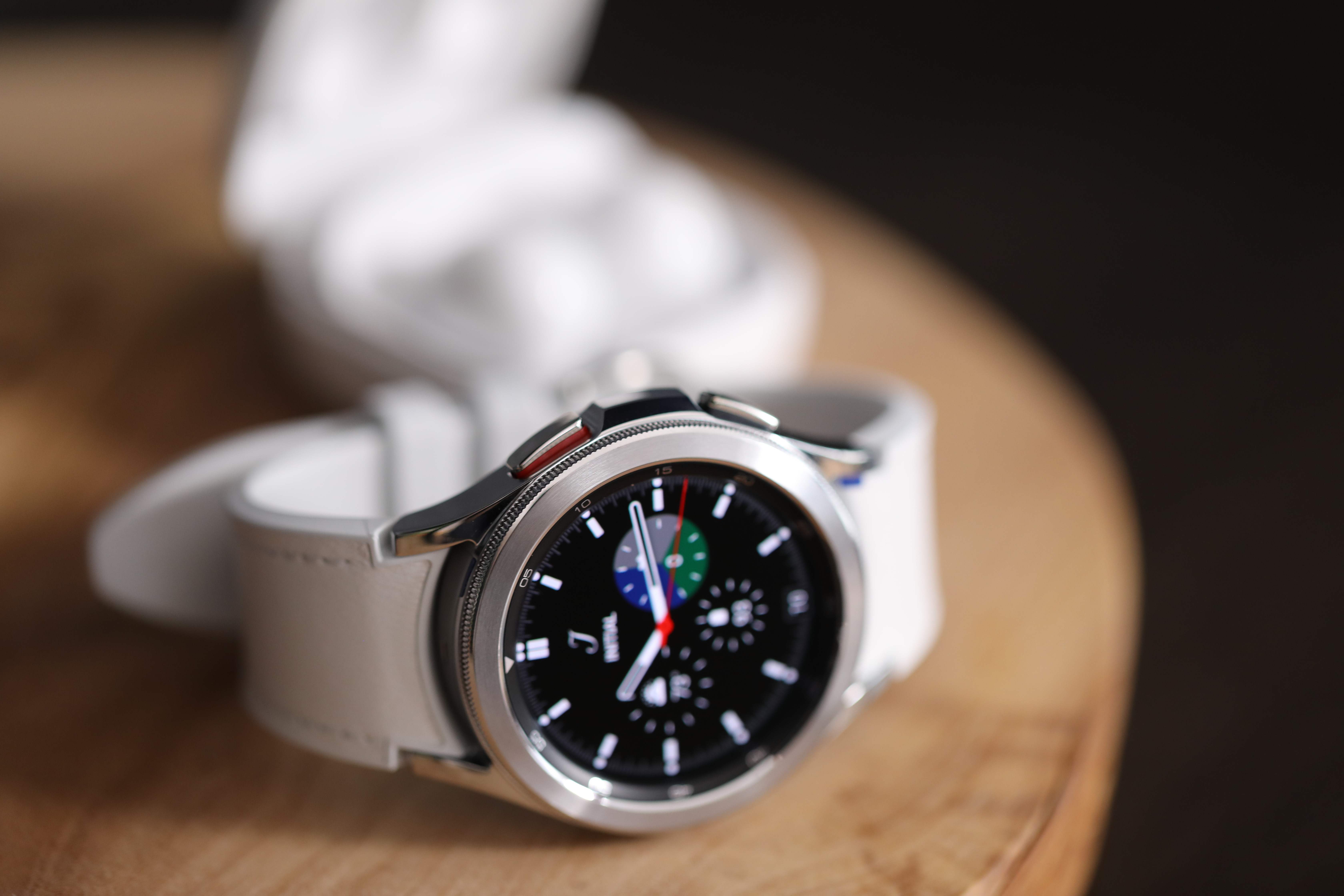
Design is the primary distinction between the two models. The Galaxy Watch 4 is the thinner and lighter of the two — more in line with the Galaxy Watch Active. It sports a touch bezel, versus the Classic’s physical spinning bezel — arguably Samsung’s best innovation in the category.

Also, of note: Both models come in two sizes. That’s always been a bit of a sticking point for me on Samsung Watches. If your devices are large and only come in the one size, you’re essentially knocking out a sizable portion of your customer base right off the bat. The Watch 4 comes in 40mm and 44mm and the Classic is available in 42mm and 46mm. The models start at $250 and $350, respectively. Another $50 will get you LTE connectivity.

The watches go up for preorder today and start shipping on August 26. Preordering will get you a $50 Samsung Credit. The company is also launching a limited-edition Thom Browne version of the Classic in September, which will almost certainly cost an arm and/or leg.

11 Aug 2021

Apple drops its lawsuit against maker of iPhone emulation software

Apple has settled its 2019 lawsuit with Corellium, a company that builds virtual iOS devices used by security researchers to find bugs in iPhones and other iOS devices, the Washington Post has reported. The terms of the settlement weren’t disclosed, but the agreement comes after Apple suffered a major court loss in the dispute in late 2020.

Corellium’s software allows users to run virtual iPhones on a computer browser, giving them deep access to iOS without the need for a physical device. In addition to accusing Corellium of infringing on its copyright, Apple said the company was selling its product indiscriminately, thereby compromising the platform’s security.

Specifically, Apple accused the company of selling its products to governments that could have probed its products for flaws. When he was employed by another company, Corellium co-founder David Wang helped the FBI unlock an iPhone used by a terrorist responsible for the San Bernardino attacks. 

However, a judge dismissed the copyright claims, calling them “puzzling, if not disingenuous.” He wrote in his ruling that “the Court finds that Corellium has met its burden of establishing fair use,” adding that its use of iOS in that context was permissible.

Corellium started offering its platform to individual subscribers earlier this year, after previously only making it available to enterprise users. Each request for access is vetted individually so that it won’t fall into the wrong hands for malicious purposes, according to the company.

Editor’s note: This post originally appeared on Engadget.

11 Aug 2021

VCs unfazed by Chinese regulatory shakeups (so far)

China’s technology scene has been in the news for all the wrong reasons in recent months. In the wake of the scuttling of Ant Group’s IPO, the Chinese government has gone on a regulatory offensive against a host of technology companies. Edtech got hit. On-demand companies took incoming fire. Ride-hailing? Check. Gaming? You bet.

The result of the government fusillade against some of the best-known companies in China was falling share prices. The damage topped $1 trillion among just public Chinese companies listed abroad.


The Exchange explores startups, markets and money.

Read it every morning on Extra Crunch or get The Exchange newsletter every Saturday.


What about startups in sectors that were reformed overnight? If their public comps are any indication, even more wealth was deleted in the recent wave of crackdowns.

The Exchange was curious about the impact of the Chinese government’s actions on the venture capital market. The Chinese startup economy has produced a number of world-leading companies. Tencent and Alibaba, yes, and even Baidu have become well-known for a reason. Could regulatory changes shake up the venture model that helped grow the country’s largest tech concerns?

After we checked in on the same question this Monday, SoftBank provided a partial answer, noting yesterday that it is pausing investments in China. The Japanese teleco, conglomerate and investing powerhouse has been deploying capital at a rapid pace in recent weeks. That will slow, at least in China. Here’s the WSJ:

The regulatory initiative in China has become so unpredictable and widespread that SoftBank and its funds are planning to hold off on investing much more there until the risks become clearer, [SoftBank CEO Masayoshi Son] said at an earnings press conference in Tokyo.

Is SoftBank early to its decision to shake up its investing strategy, missing Chinese deals for some time? Or is it late? We secured data from PitchBook and Traxcn that paints a somewhat surprising picture of venture capital activity at least thus far in Q3 2021.

But first, a reminder of how well China’s venture capital market was performing as 2020 eased its way into 2021.

Before the shakeup

China had a reasonably good Q2 2021 despite the turmoil.

Sure, funding flowing into Chinese startups was down 18% compared to Q4 2020, per CB Insights, but that quarter had recorded an all-time high of $27.7 billion. With $22.8 billion raised, Q2 2021 still did better than every other quarter since Q2 2016 with the exception of Q2 2018, Q4 2020 and Q1 2021. Indeed, the ecosystem had started to cool down in late 2018 before picking up pace again at the end of 2020.

However, that’s only one way to look at the numbers. If you compare recent Chinese venture results with other regions, it underperformed. During Q2 2021, U.S. funding reached a new high of $70.4 billion, with places like Latin America, Canada and India also establishing new records.

This also means that China lost ground as to its share of global startup dealmaking, and the same goes for unicorn creation. According to Tech Buzz China’s summary of CB Insights data, the U.S. accounted for 132 unicorn births between January 1 and June 16, 2021, compared with just three in China.

Slightly falling quarterly venture capital totals and a notable decline in unicorn formation does not a startup winter make. So let’s look at what’s happened more recently.

So, what about Q3?

The thesis that there would be an instantly obvious slowdown in Chinese venture capital activity is not supported by the data we secured.

11 Aug 2021

Watch Samsung introduce its latest foldables live

Samsung is set to introduce a whole bunch of new products, starting today at 7 AM PT/10 AM ET. I wrote a whole bunch of words about what to expect from the company’s latest Unpacked event. It’s a long list and a kind of return to the pre-pandemic days, back before companies started taking liberties by holding separate events for all their new products.

You can stream the proceedings here:

Here’s the short bulleted version, based on a deluge of leaks over the past several weeks and months:

  • Galaxy Z Fold 3
  • Galaxy Z Flip 3
  • Galaxy Watch 4
  • Galaxy Buds 2

Samsung has more or less confirmed the first three already. The company gave some substantial details on its forthcoming foldables. We’ve also heard a good deal about the new smartwatch — from a software standpoint, at least. Both Samsung and Google have been discussing their upcoming joint software platform.

More info on all of the above, soon. And perhaps even a surprise or two? Perhaps. We’ll be following along with the latest.

11 Aug 2021

Former Snap employees raise $9M for Trust, emerging from beta to level marketing playing field

Trust wants to give smaller businesses the same advantages that large enterprises have when marketing on digital and social media platforms. It came out of beta with $9 million in seed funding from Lerer Hippeau, Lightspeed Venture Partners, Upfront Ventures and Upper90.

The Los Angeles-based company was started in 2019 by a group of five Snap alums working in various roles within Snap’s revenue product strategy business. They were building tools for businesses to fund success with digital marketing, but kept hearing from customers about the advantage big advertisers had over smaller ones — the ability to receive good payment terms, credit lines, as well as data and advice.

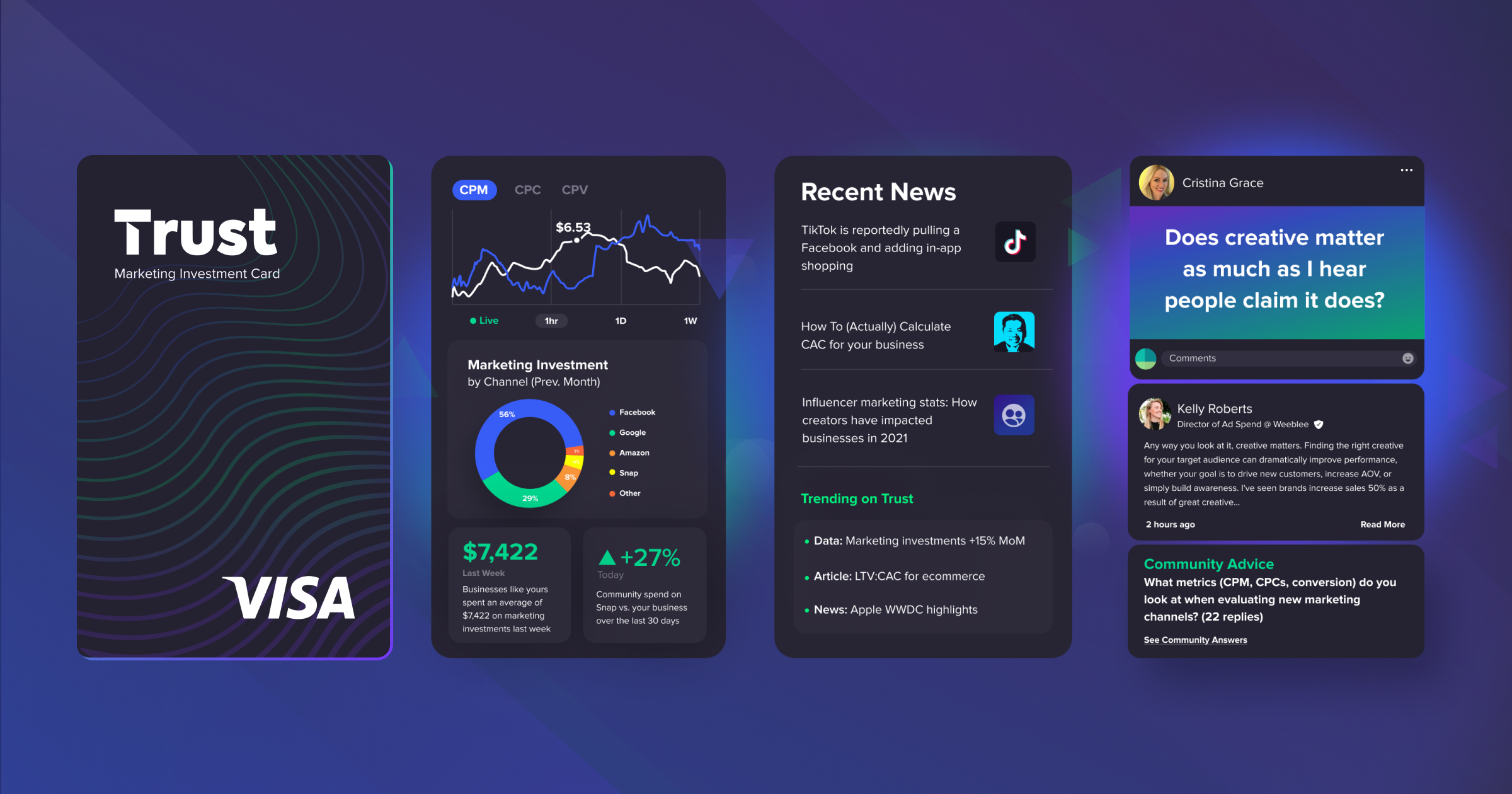
Aiming to flip the script on that, the group created Trust, which is a card and business community to help digital businesses navigate the ever-changing pricing models to market online, receive the same incentives larger advertisers get and make the best decision of where their marketing dollars will reach the furthest.

Trust dashboard

Trust does this in a few ways: Its card, built in partnership with Stripe, enables businesses to increase their buying power by up to 20 times and have 45 days to make payments on their marketing investments, CEO James Borow told TechCrunch. Then as part of its community, companies share knowledge of marketing buys and data insights typically reserved for larger advertisers. Users even receive news via their dashboard around their specific marketing strategy, he added.

“The ad platforms are a wall of gardens, and most people don’t know what is going on inside, so our customers work together to see what is going on,” Borow said.

The growth of e-commerce is pushing more digital marketing investments, providing opportunity for Trust to be a huge business, Borow said. E-commerce sales in the U.S. grew by 39% in the first quarter, while digital advertising spend is forecasted to increase 25% this year to $191 billion. Meanwhile, Google, Facebook, Snapchat and Twitter all recently reported rapid growth in their year-over-year advertising revenues, Borow said.

The new funding will go toward increasing the company’s headcount.

“We have active customers on the platform, so we wanted to ramp up hiring as soon as we went into general release,” he added. “We are leaving beta with 25 businesses and a few hundred on our waitlist.”

That list will soon grow. In addition to the funding round, Trust announced a strategic partnership with social shopping e-commerce platform Verishop. The company’s 3,500 merchants will receive priority access to the Trust card and community, Borow said.

Andrea Hippeau, partner at Lerer Hippeau, said she knew Borow from being an investor in his previous advertising company Shift, which was acquired by Brand Networks in 2015.

When Borow contacted Lerer about Trust, Hippeau said this was the kind of offering that would be applicable to the firm’s portfolio, which has many direct-to-consumer brands, and knew marketing was a huge pain point for them.

“Digital marketing is important to all brands, but it is also a black box that you put marketing dollars into, but don’t know what you get,” she said. “We hear this across our portfolio — they spend a lot of money on ad platforms, yet are treated like mom-and-pop companies in terms of credit. When in reality Casper is outspending other companies by five times. Trust understands how important marketing dollars are and gives them terms that are financially better.”