Month: August 2021

10 Aug 2021

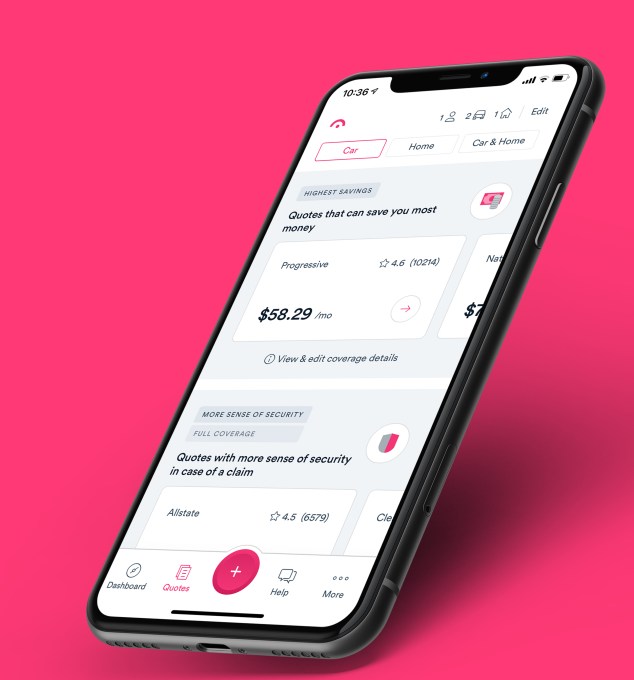
Jerry raises $75M at a $450M valuation to build a car ownership ‘super app’

Just months after raising $28 million, Jerry announced today that it has raised $75 million in a Series C round that values the company at $450 million.

Existing backer Goodwater Capital doubled down on its investment in Jerry, leading the “oversubscribed” round. Bow Capital, Kamerra, Highland Capital Partners and Park West Asset Management also participated in the financing, which brings Jerry’s total raised to $132 million since its 2017 inception. Goodwater Capital also led the startup’s Series B earlier this year. Jerry’s new valuation is about “4x” that of the company at its Series B round, according to co-founder and CEO Art Agrawal

“What factored into the current valuation is our annual recurring revenue, growing customer base and total addressable market,” he told TechCrunch, declining to be more specific about ARR other than to say it is growing “at a very fast rate.” He also said the company “continues to meet and exceed growth and revenue targets” with its first product, a service for comparing and buying car insurance. At the time of the company’s last raise, Agrawal said Jerry saw its revenue surge by “10x” in 2020 compared to 2019.

Jerry, which says it has evolved its model to a mobile-first car ownership “super app,” aims to save its customers time and money on car expenses. The Palo Alto-based startup launched its car insurance comparison service using artificial intelligence and machine learning in January 2019. It has quietly since amassed nearly 1 million customers across the United States as a licensed insurance broker.

“Today as a consumer, you have to go to multiple different places to deal with different things,” Agrawal said at the time of the company’s last raise. “Jerry is out to change that.”

The new funding round fuels the launch of the company’s “compare-and-buy” marketplaces in new verticals, including financing, repair, warranties, parking, maintenance and “additional money-saving services.” Although Jerry also offers a similar product for home insurance, its focus is on car ownership.

Agrawal told TechCrunch that the company is on track to triple last year’s policy sales, and that its policy sales volume makes Jerry the number one broker for a few of the top 10 insurance carriers.
“The U.S. auto insurance industry is an at least $250 billion market,” he added. “The market opportunity for our first auto financing service is $260 billion. As we enter more car expense categories, our total addressable market continues to grow.”

Image Credits: Jerry

“Access to reliable and affordable transportation is critical to economic empowerment,” said Rafi Syed, Jerry board member and general partner at Bow Capital, which also doubled down on its investment in the company. “Jerry is helping car owners make the most of every dollar they earn. While we see Jerry as an excellent technology investment showcasing the power of data in financial services, it’s also a high-performing investment in terms of the financial inclusion it supports.” 

Goodwater Capital Partner Chi-Hua Chien said the firm’s recurring revenue model makes it stand out from lead generation-based car insurance comparison sites.

CEO Agrawal agrees, noting that Jerry’s high-performing annual recurring revenue model has made the company “attractive to investors” in addition to the fact that the startup “straddles” the auto, e-commerce, fintech and insurtech industries.

“We recognized those investment opportunities could drive our business faster and led to raising the round earlier than expected,” he told TechCrunch. “We’re eager to launch new categories to save customers time and money on auto expenses and the new investment shortens our time to market.”

Agrawal also believes Jerry is different from other auto-related marketplaces out there in that it aims to help consumers with various aspects of car ownership (from repair to maintenance to insurance to warranties), rather than just one. The company also believes it is set apart from competitors in that it doesn’t refer a consumer to an insurance carrier’s site so that they still have to do the work of signing up with them separately, for example. Rather, Jerry uses automation to give consumers customized quotes from more than 45 insurance carriers “in 45 seconds.” The consumers can then sign on to the new carrier via Jerry, which can then cancel former policies on their behalf.

Jerry makes recurring revenue from earning a percentage of the premium when a consumer purchases a policy on its site from carriers such as Progressive.

10 Aug 2021

Motional to begin testing autonomous vehicles in LA as part of California expansion plan

Motional, the autonomous vehicle company born out of a $4 billion joint venture with Aptiv and Hyundai, is expanding its presence in California by opening a new operations facility in Los Angeles to support testing on public roads, hiring more engineers and adding an office in Silicon Valley.

The investment into the area follows a hiring spree that has pushed Motional’s total headcount to more than 1,000 people, an expansion into Seoul and its announcement last December to launch fully driverless robotaxi services in major U.S. cities in 2023 using the Lyft ride-hailing network.

While Motional declined to disclose its investment into the California expansion, the company is clearly putting its capital to work with plans to hire dozens of people and scale up operations in Los Angeles and the San Francisco Bay Area.

Motional has had an office in Los Angeles since 2016. The LA office is where some of the company’s machine learning and hardware engineers are based. As part of its expansion plan, Motional has moved the team into a larger location in Santa Monica near the Santa Monica Pier.

Mortional is also opening a new operations facility located a few miles away and plans to more than double the number of employees based in Los Angeles to more than 100 people. The operations facility will support Motional’s plans to begin mapping roads and eventually testing its autonomous vehicles on public roads. Testing routes will initially be centered in and around the Santa Monica area, near its office and operations facility.

Motional said it will use the all-electric Hyundai IONIQ 5, the vehicle that will be the cornerstone of its eventual commercial robotaxi service, in its testing there. The Hyundai IONIQ 5, which was revealed in February 2021 with a consumer release date expected later this year, will be fully integrated with Motional’s driverless system. The vehicles will be equipped with the hardware and software needed for Level 4 autonomous driving capabilities such as lidar, radar and cameras. Level 4, is a designation by SAE, that means the vehicle will handle all driving operations in certain conditions and environments.

For now, the testing will involve autonomous vehicles with a safety driver behind the wheel. The company does not yet have a permit in the state to test its AVs without a human operator behind the wheel. That permit issued by the California Department of Motor Vehicles,

This is first time the company has tested on public roads in Los Angeles. Motional already tests its AVs in Boston, Las Vegas, Pittsburgh and Singapore.

Motional’s President and CEO Karl Iagnemma described this as a “doubling down” of its West Coast footprint. “This expansion is the latest in our growth trajectory and will position Motional with the talent, testing capabilities, and R&D resources we need to deliver on our commercialization roadmap, Iagnemma said, adding that Los Angeles has long been an important part of its global operations.

Motional has also opened an office in Milpitas, a Silicon Valley town located in the southern section of the San Francisco Bay. The company’s compute design team will be based out of this office, Motional said in its announcement.

10 Aug 2021

Oh hey, Xiaomi has its own creepy robot dog now

Xiaomi has today announced the CyberDog, an open-source quadruped robot intended for developers to “build upon” and create applications for. The machine, which resembles a beefier version of Boston Dynamics’ Spot, is a showcase for Xiaomi’s engineering know-how, including its proprietary servo motors.

Xiaomi CyberDog
Xiaomi

Running the show is a version of NVIDIA’s Jetson Xavier NX, which has been dubbed the world’s smallest AI supercomputer. In terms of being able to experience the world, CyberDog has 11 sensors over its body, including touch and ultrasonic sensors, cameras and GPS to help it “interact with its environment.”

Xiaomi says that this technology is good enough to enable CyberDog to follow its owner and navigate around obstacles. It is also capable of identifying posture and tracking human faces, enabling it to pick out and track individuals in a group.

Render of the Xiaomi CyberDog in all of its terrifying glory.
Xiaomi

Rather than selling this as a general-sale product, the company is for now going to release 1,000 of these things to “Xiaomi fans, engineers and robotics enthusiasts to jointly explore the immense possibility of CyberDog.” This will be facilitated by an open-source community, hosted by Xiaomi, which may be followed by the construction of a robotics laboratory to lay a pathway for “future innovations.”

Of course, this thing isn’t cheap, and those folks willing to get involved will need to shell out 9,999 yuan or around $1,540 to get one of these for themselves.

Editor’s note: This post first appeared on Engadget.

10 Aug 2021

With liberty and privacy for some: Widening inequality on the digital frontier

Privacy is emotional — we often value privacy the most when we feel vulnerable or powerless when confronted with creepy data practices. But in the eyes of the court, emotions don’t always constitute harm or a reason for structural change in how privacy is legally codified.

It might take a material perspective on widening privacy disparities — and their implication in broader social inequality — to catalyze the privacy improvements the U.S. desperately needs.

Apple’s leaders announced their plans for the App Tracking Transparency (ATT) update in 2020. In short, iOS users can refuse an app’s ability to track their activity on other apps and websites. The ATT update has led to a sweeping three-quarters of iOS users opting out of cross-app tracking.

Whenever one user base gears up with privacy protections, companies simply redirect their data practices along the path of least resistance.

With less data available to advertisers looking to develop individual profiles for targeted advertising, targeted ads for iOS users look less effective and appealing to ad agencies. As a result, new findings show that advertisers are spending one-third less in advertising spending on iOS devices.

They are redirecting that capital into advertising on Android systems, which account for just over 42.06% of the mobile OS market share, compared to iOS at 57.62%.

Beyond a vague sense of creepiness, privacy disparities increasingly pose risks of material harm: emotional, reputational, economic and otherwise. If privacy belongs to all of us, as many tech companies say, then why does it cost so much? Whenever one user base gears up with privacy protections, companies simply redirect their data practices along the path of least resistance, toward the populations with fewer resources, legal or technical, to control their data.

More than just ads

As more money goes into Android ads, we could expect advertising techniques to become more sophisticated, or at least more aggressive. It is not illegal for companies to engage in targeted advertising, so long as it is done in compliance with users’ legal rights to opt out under relevant laws like CCPA in California.

This raises two immediate issues. First, residents of every state except California currently lack such opt-out rights. Second, granting some users the right to opt out of targeted advertising strongly implies that there are harms, or at least risks, to targeted advertising. And indeed, there can be.

Targeted advertising involves third parties building and maintaining behind-the-scenes profiles of users based on their behavior. Gathering data on app activity, such as fitness habits or shopping patterns, could lead to further inferences about sensitive aspects of a user’s life.

At this point, a representation of a user exists in an under-regulated data system containing — whether correctly or incorrectly inferenced — data that the user did not consent to sharing. (Unless the user lives in California, but let’s suppose they live anywhere else in the U.S.)

Further, research finds that targeted advertising, in building detailed profiles of users, can enact discrimination in housing and employment opportunities, sometimes in violation of federal law. And targeted advertising can impede individuals’ autonomy, preemptively narrowing their window of purchasing options, even when they don’t want to. On the other hand, targeted advertising can support niche or grassroots organizations in connecting them directly with interested audiences. Regardless of a stance on targeted advertising, the underlying problem is when users have no say in whether they are subject to it.

Targeted advertising is a massive and booming practice, but it is only one practice within a broader web of business activities that do not prioritize respect for users’ data. And these practices are not illegal in much of the U.S. Instead of the law, your pocketbook can keep you clear of data disrespect.

Privacy as a luxury

Prominent tech companies, particularly Apple, declare privacy a human right, which makes complete sense from a business standpoint. In the absence of the U.S. federal government codifying privacy rights for all consumers, a bold privacy commitment from a private company sounds pretty appealing.

If the government isn’t going to set a privacy standard, at least my phone manufacturer will. Even though only 6% of Americans claim to understand how companies use their data, it is companies that are making the broad privacy moves.

But if those declaring privacy as a human right only make products affordable to some, what does that say about our human rights? Apple products skew toward wealthier, more educated consumers compared to competitors’ products. This projects a troubling future of increasingly exacerbated privacy disparities between the haves and the have-nots, where a feedback loop is established: Those with fewer resources to acquire privacy protections may have fewer resources to navigate the technical and legal challenges that come with a practice as convoluted as targeted advertising.

Don’t take this as me siding with Facebook in its feud with Apple about privacy versus affordability (see: systemic access control issues recently coming to light). In my view, neither side of that battle is winning.

We deserve meaningful privacy protections that everyone can afford. In fact, to turn the phrase on its head, we deserve meaningful privacy protections that no company can afford to omit from their products. We deserve a both/and approach: privacy that is both meaningful and widely available.

Our next steps forward

Looking ahead, there are two key areas for privacy progress: privacy legislation and privacy tooling for developers. I again invoke the both/and approach. We need lawmakers, rather than tech companies, setting reliable privacy standards for consumers. And we need widely available developer tools that give developers no reason — financially, logistically or otherwise — to implement privacy at the product level.

On privacy legislation, I believe that policy professionals are already raising some excellent points, so I’ll direct you to some of my favorite recent writing from them.

Stacey Gray and her team at the Future of Privacy Forum have begun an excellent blog series on how a federal privacy law could interact with the emerging patchwork of state laws.

Joe Jerome published an outstanding recap of the 2021 state-level privacy landscape and the routes toward widespread privacy protections for all Americans. A key takeaway: The effectiveness of privacy regulation hinges on how well it harmonizes among individuals and businesses. That’s not to say that regulation should be business-friendly, but rather that businesses should be able to reference clear privacy standards so they can confidently and respectfully handle everyday folks’ data.

On privacy tooling, if we make privacy tools readily accessible and affordable for all developers, we really leave tech with zero excuses to meet privacy standards. Take the issue of access control, for instance. Engineers attempt to build manual controls over which personnel and end users can access various data in a complex data ecosystem already populated with sensitive personal information.

The challenge is twofold. First, the horse has already bolted. Technical debt accumulates rapidly, while privacy has remained outside of software development. Engineers need tools that enable them to build privacy features like nuanced access control prior to production.

This leads into the second aspect of the challenge: Even if the engineers overcame all of the technical debt and could make structural privacy improvements at the code level, what standards and widely available tools are available to use?

As a June 2021 report from the Future of Privacy Forum makes clear, privacy technology is in dire need of consistent definitions, which are required for widespread adoption of trustworthy privacy tools. With more consistent definitions and widely available developer tools for privacy, these technical transformations translate into material improvements in how tech at large — not just tech of Brand XYZ — gives users control over their data.

We need privacy rules set by an institution that is not itself playing the game. Regulation alone cannot save us from modern privacy perils, but it is a vital ingredient in any viable solution.

Alongside regulation, every software engineering team should have privacy tools immediately available. When civil engineers are building a bridge, they cannot make it safe for a subset of the population; it must work for all who cross it. The same must hold for our data infrastructure, lest we exacerbate disparities within and beyond the digital realm.


10 Aug 2021

Robinhood buys Say Technologies for $140M to improve shareholder-company relations

U.S. consumer investing and trading service Robinhood announced this morning that it will acquire Say Technologies in a $140 million cash deal.

Say Technologies is a venture-backed startup, having raised $8 million in 2018, per Crunchbase data. PitchBook data indicates that the company was worth $28 million on a post-money basis following the investment, implying that the company’s backers managed a roughly 5x return on their investment.

Say was backed by Point72 Ventures, among other investors.

The deal is notable because it is Robinhood’s first major purchase since going public in late July, and because it illustrates where Robinhood may look to invest some of its newly liquid equity wealth; when a company goes public, it can more easily purchase other companies thanks to recharged cash balances and a floating stock.

In a blog post, Robinhood wrote that “Say was built on the belief that everyone should have the same access to the financial markets as Wall Street insiders.” What does that mean? In practice, Say has built a communications platform that allows even smaller shareholders to pose questions to the companies in which they invest. Sure, some companies are including retail questions in their earnings calls, but what Say has in mind is broader.

You can see how Say and Robinhood might fit together. Robinhood has a huge user pool of retail investors who like to trade and invest. Say has the technology to connect retail investors to the companies that they own. With Robinhood’s database of which retail investor owns what, and Say’s communications tech, the trading platform may be able to offer a better shareholder experience than what rival platforms can offer.

By offering a service like what Say has built to its user base, Robinhood can offer a unique twist on retail investing. This feels somewhat analogous to Spotify spending heavily to procure exclusive rights to certain podcasts; such efforts differentiate Spotify from rivals despite having a commoditized core offering. Trading is now free in many places, so Robinhood layering specialized services on top of its investing service makes good sense, perhaps helping drive user loyalty and net new-user adds.

Shares of Robinhood are off around 1.2% today, despite generally higher markets. We might say that investors were selling lightly in wake of the news, but that would be a somewhat bold read of the day’s trading.

10 Aug 2021

Venmo to allow credit cardholders to automatically buy cryptocurrency with their cash back

PayPal-owned Venmo is expanding its support for cryptocurrency with today’s launch of a new feature that will allow users to automatically buy cryptocurrency using the cash back they earned from their Venmo credit card purchases. Unlike when buying cryptocurrency directly, these automated purchases will have no transaction fees associated with them — a feature Venmo says is not a promotion, but how the system will work long term. Instead, a cryptocurrency conversion spread is built into each monthly transaction.

Cardholders will be able to purchase Bitcoin, Ethereum, Litecoin and Bitcoin Cash through the new “Cash Back to Crypto” option, rolling out now to the Venmo app.

Venmo had first introduced the ability for customers to buy, hold and sell cryptocurrency in April of this year, as part of a larger investment in cryptocurrency led by parent company, PayPal. In partnership with Paxos Trust Company, a regulated provider of cryptocurrency products and services, Venmo’s over 70 million users are now able to access cryptocurrency from within the Venmo app. 

The cash back feature, meanwhile, could help drive sign-ups for the Venmo Credit Card, by interlinking it with the cryptocurrency functionality. Currently, Venmo cardholders can earn monthly cash back across eight different spending categories, with up to 3% back on their top eligible spending category, then 2% and 1% back on the second highest and all other purchases, respectively. The top two categories are adjusted monthly, based on where consumers are spending the most.

To enable Cash Back to Crypto, Venmo customers will navigate to the Venmo Credit Card home screen in the app, select the Rewards tab, then “Get Started.” From here, they’ll agree to the terms, select the crypto of their choice, and confirm their selection. Once enabled, when the cash back funds hit the customer’s Venmo balance, the money is immediately used to make a crypto purchase — no interaction on the user’s part is required.

The feature will not include any transaction fees, as a cryptocurrency conversion spread is built into each monthly transaction. This is similar to how PayPal is handling Checkout with Crypto, which allows online shoppers to make purchases using their cryptocurrency. The cryptocurrency is converted to fiat, but there are not transaction fees.

The feature can also be turned on or off at any time, Venmo notes.

The company views Cash Back to Crypto as a way for newcomers to cryptocurrency to enter the market, without having to worry about the process of making crypto purchases. It’s more of a set-it-and-forget-it type of feature. However, unless users make regular and frequent transactions with their Venmo Credit Card, these cash back-enabled crypto purchases will likely be fairly small.

The company has yet to offer details on how many Venmo credit cardholders are active in the market. So far, PayPal CEO Dan Schulman has only said, during Q1 earnings, that the card “is outpacing our expectations for both new accounts and transactions.” This past quarter, the exec noted that the company was also seeing “strong adoption and trading of crypto on Venmo.”

“The introduction of the Cash Back to Crypto feature for the Venmo Credit Card offers customers a new way to start exploring the world of crypto, using their cash back earned each month to automatically and seamlessly purchase one of four cryptocurrencies on Venmo,” noted Darrell Esch, SVP and GM at Venmo, in a statement. “We’re excited to bring this new level of feature interconnectivity on the Venmo platform, linking our Venmo Credit Card and crypto experiences to provide another way for our customers to spend and manage their money with Venmo,” he added.

The new option will begin rolling out starting today to Venmo Credit Cardholders.

10 Aug 2021

Surfside, a marketing technology for the cannabis space, inhales $4 million

Surfside, a data and marketing platform aimed directly at the Cannabis industry, has today announced the close of a $4 million seed round led by Casa Verde. The firm’s managing partner, Karan Wadhera, will join the Surfside board.

The startup is relatively new, but helmed by two founders experienced in the marketing and data space. Jon Lowen and Michael Blanche both hail from SITO Mobile, where they worked on location-based advertising and marketing via mobile devices.

The duo has built a platform that uses many of the same principles to bring better marketing acumen and strategies to bbusinesses in the cannabis space.

One of the major marketing challenges for dispensaries and cannabis brands is that the usual channels through which small brands advertise — Facebook and Google — are not available to them. Not only are those powerful marketing channels, but they also provide valuable analytics about potential and existing customers.

Surfside looks to fill that gap in the cannabis space, offering businesses data around their customers using a combination of existing data, publicly available data, loyalty program data, etc. to help these brands better understand their customers.

The startup creates profiles of customers, looking to understand their location, their other interests, and other important details that can help brands and businesses market and advertise to both existing and new customers.

But Surfside actually goes a step further and develops campaigns for these businesses, allowing them to work one-on-one with a marketing expert to develop and activate these campaigns.

Originally, Surfside generated revenue via the campaign itself, taking a cut of the spend.

“We’re almost an extension of the marketing departments at a dispensary,” said Lowen. “Small dispensaries don’t necessarily have the bandwidth to run these campaigns or log into extra software. Our team can help plan, execute and get the most value out of the data for them. Now, we want to start empowering brands, retailers, dispensaries as they progress to be able to have ownership of the data, with these consumer insights and research at their fingertips, and give them the ability to decide if they want to activate on their own or continue using the experts we have here.”

With this new financing, the company is adding another revenue stream through its data platform, allowing cannabis businesses to purchase a SaaS license. This way, businesses who’d like to use the data but develop their own campaigns and marketing strategies have the option to do so.

Surfside believes that their technology can expand well beyond cannabis and into other verticals, but see an opportunity in the cannabis space to grow and build alongside the burgeoning industry.

Moreover, the complicated regulatory landscape in the cannabis space allows Surfside to become a compliance monitor, as well, which may end up being yet another revenue stream for the company.

10 Aug 2021

Salesforce’s Kathy Baxter is coming to TC Sessions: SaaS to talk AI

As the use of AI has grown and developed over the last several years, companies like Salesforce have tried to tap into it to improve their software and help customers operate faster and more efficiently. Kathy Baxter, principal architect for the ethical AI practice at Salesforce will be joining us at TechCrunch Sessions: SaaS on October 27th to talk about the impact of AI on SaaS.

Baxter, who has more than 20 years of experience as a software architect, joined Salesforce in 2017 after more than a decade at Google in a similar role. We’re going to tap into her expertise on a panel discussing AI’s growing role in software.

Salesforce was one of the earlier SaaS adherents to AI, announcing its artificial intelligence tooling, which the company dubbed Einstein, in 2016. While the positioning makes it sound like a product, it’s actually much more than a single entity. It’s a platform component, which the various pieces of the Salesforce platform can tap into to take advantage of various types of AI to help improve the user experience.

That could involve feeding information to customer service reps on Service Cloud to make the call move along more efficiently, helping salespeople find the customers most likely to close a deal soon in the Sales Cloud or helping marketing understand the optimal time to send an email in the Marketing Cloud.

The company began building out its AI tooling early on with the help of 175 data scientists and has been expanding on that initial idea since. Other companies, both startups and established companies like SAP, Oracle and Microsoft have continued to build AI into their platforms as Salesforce has. Today, many SaaS companies have some underlying AI built into their service.

Baxter will join us to discuss the role of AI in software today and how that helps improve the operations of the service itself, and what the implications are of using AI in your software service as it becomes a mainstream part of the SaaS development process.

In addition to our discussion with Baxter, the conference will also include Databricks’ Ali Ghodsi, UiPath’s Daniel Dines, Puppet’s Abby Kearns, and investors Casey Aylward and Sarah Guo, among others. We hope you’ll join us. It’s going to be a stimulating day.

Buy your pass now to save up to $100, and use CrunchMatch to make expanding your empire quick, easy and efficient. We can’t wait to see you in October!

Is your company interested in sponsoring or exhibiting at TC Sessions: SaaS 2021? Contact our sponsorship sales team by filling out this form.

10 Aug 2021

Jumia’s Q2 results show moderate growth, rising spend, and continued losses

African e-commerce giant Jumia today reported its second-quarter financial performance. In the wake of its earnings reports, Jumia’s shares climbed 3.38% to $21.99 per share with a market cap of $2.168 billion.

Before we get into the company’s results, Jumia historically reported in its financial data in Euros. This was the case until April 1, when the company swapped for the American dollar.  Jumia cites increases in cash balances from equity fundraising as the main reason backing this outcome. The company adds that although the Dollar will be used going forward, starting from Q2 2021, comparative numbers from previous quarters “have been modified to reflect the change in presentation currency.” That will help us keep all the math straight.

Now, back to business. In the second quarter of 2021, Jumia reported revenues of $40.2 million, up 4.6% on a year-over-year basis.

Wall Street was optimistic that Jumia would report revenue of $43.34 million, up from the $38.5 million it recorded in Q2 2020. Although the company did not meet revenue expectations, it did surpass investor expectations of a loss worth $0.43 a share by reporting a more modest $0.41 per-share loss in the second quarter. For reference, Jumia lost $0.61 per share in the year-ago period.

While the African e-commerce company has shifted away from first-party sales to being a marketplace for third parties, its first-party revenue increased 7% year-over-year in the second quarter. Jumia’s marketplace revenue, on the other hand, grew a smaller 0.6% to $26.2 million.

The revenue mix-shift helped Jumia’s gross profit grow 4% to $26.8 million in the most recent quarter compared to its year-ago comparable. Gross profit after fulfillment expense also expanded 16.3% to $7.7 million.

Continued losses

While Jumia’s operating losses and adjusted EBITDA declined in Q1 2021, they increased this past quarter. Operating losses were $51.6 million in Q2 2021, up 24.7%, while adjusted EBITDA came in at -$41.6 million, worsening 15.1% compared to Q2 2020.

The sharp losses were driven in part by how the African e-commerce juggernaut spent in the quarter. Jumia’s sales and marketing expenses rose 115% to $17.1 million. In the year-ago quarter the number was a far-smaller $7.9 million. The huge gain in sales and marketing spend may indicate that the company is back to its old method of executing aggressive advertising, something the pandemic initially slowed. 

The company’s rising costs and declining profitability are not encouraging regarding its chances for near-term profitability. However, the company stressed long-term investments in its business in its earnings report that Jumia expects to leverage in the coming quarters and years. Given that Jumia’s shares rose following its earnings report, it appears that investors are at least amenable to the argument. Still, the company’s metrics paint a mixed picture of its efforts.

For instance, Jumia’s active customers only grew by 3.3% to 7 million in the second quarter, while orders grew by a stronger 12.8% to 7.6 million. In contrast, gross merchandise volume (GMV) fell 11% to $223.5 million in the second quarter.

Jumia’s falling GMV impacted the total payment volume (TPV) of its payment arm, JumiaPay, in the quarter. That figure fell 4% to $56.6 million, compared to the year-ago quarter.

That said, on other fronts JumiaPay’s recent results are impressive. The payment service’s “on-platform penetration” as a portion of GMV grew to 23.5% in the second quarter. And transactions made on the platform grew 12.1% to 2.7 million — the fastest transaction growth rate Jumia has witnessed in the past four quarters, mostly supported by the company’s food delivery category.

In the space of five months, from October 2020 to February 2021, Jumia’s share price spiked over 700% to $65, mostly due to the pandemic increasing appetite for e-commerce stocks globally. But the company’s share price has dropped by more than 60% from those highs to a close at $21.27 last Friday.

Jumia closed its most recent quarter with $637.7 million in cash. Which means that it has a good amount of runway ahead of itself to sort if growth, and profitability.

10 Aug 2021

Everyone wants to fund the next Coinbase

In celebration of Coinbase’s earnings report today, investors poured a mountain of cash into one of the company’s global competitors.

I’m kidding, of course, but today really is Coinbase’s earnings day, and private investors really did just push $210 million into another exchange.

The company, FalconX, is now worth $3.75 billion. As Bloomberg notes, that’s a 5x valuation jump in less than half a year. FalconX raised a smaller $50 million round in March, notably in part from Coinbase Ventures.

The FalconX news should not surprise. Indian crypto exchange CoinDCX just raised $90 million, reaching a $1 billion valuation in the process. This past weekend, Indonesian cryptocurrency exchange Pintu raised $35 million. And earlier this year, Hong Kong-based crypto exchange FTX raised $900 million at an $18 billion valuation. There are other examples.


The Exchange explores startups, markets and money.

Read it every morning on Extra Crunch or get The Exchange newsletter every Saturday.


It’s a lot of capital in a global race to fund the next Coinbase, I reckon.

And you can’t fault investors in their hunt. After all, Coinbase has proven to be an incredibly powerful business when crypto interest is high; trading revenues at the U.S. crypto exchange rose to $1.80 billion in the first quarter of 2021, per its most recent 10-Q filing. Coinbase managed to juice its revenue haul for $771.5 million in net income. In per-share terms, Coinbase earned $3.05 per diluted piece of equity.

It was an impressive result. Today, investors are expecting Coinbase to report $1.77 billion to $1.83 billion in revenue, depending on which analyst summary you prefer, and earnings per share of around $2.57. You can somewhat easily puzzle out what sort of net income that EPS figure represents, given the company’s Q1 results.

I’d normally argue that Coinbase’s results today would help set the tone for venture investment in the private sector and valuations for other crypto exchanges. But given the sheer amount of money that has recently flowed into a coterie of startups around the globe hoping to build the Coinbase of their market, the concept seems somewhat moot.

Instead, Coinbase’s earnings and comments about the market will simply help us understand the playground in which other crypto exchanges are currently playing, admittedly from a decidedly U.S.-centric perspective. Coinbase’s last quarter saw it generate some 81% of its revenues from its domestic market, as a data point.

But that doesn’t mean that there’s no fun to be had. We can do some math regarding trading volumes and valuations. Since we have Coinbase’s trading volume data, we can parse other exchanges for their own shared data and see which seem expensive — or cheap. So, let’s do just that. Into the numbers!

Trading volume as revenue proxy

Per its 10-Q filing concerning the quarter ended March 31, 2021, Coinbase reported that it saw trading volume of $334.74 billion, up 1,022% from its Q1 2020 number of $29.83 billion. The company also reported that its transaction — trading — revenues for the period were $1.54 billion. So, Coinbase generated around $0.0046 per dollar of traded crypto on its platform in the period.

It goes without saying, but we’re wandering into the realm of speculative math, which means that everything we’re doing today is directional rather than absolute. Our goal of seeing how other exchanges are valued based on their trading volumes will be useful, but not definitive. We’ll have to wait for more S-1s and similar filings to get to full confidence.