Year: 2021

05 Sep 2021

Gamestry gets $5M to give games video creators a sweeter deal

Barcelona-based gaming video platform Gamestry has snatched up $5 million in seed funding, led by Goodwater Capital, Target Global and Kibo Ventures — turning investors’ heads with a 175x growth rate over the past 12 months.

While the (for now) Spanish-language gaming video platform launched a few years back, in 2018, last year the founders decided to shift away from an initial focus on curating purely learning content around gaming — allowing creators to upload and share entertainment-focused games videos, too.

The switch looks to have paid off as a growth tactic. Gamestry says it now has 4M monthly active users (MAUs) and 2,000 active creators in Spain and Latin America (its main markets so far) — and is gunning to hit 20M MAUs by the end of the year.

While Twitch continues to dominate the market for live-streaming games — catering to the esports boom — Gamestry, which says it’s focused on “non-live video content”, reckons there’s a gap for a dedicated on-demand video platform that better supports games-focused video creators and provides games fans with a more streamlined discovery experience than catch-all user-generated content giants like YouTube.

For games video creators, it’s dangling the carrot of a better revenue share than other UGC video platforms — talking about having “a fair ads revenue share model”, and a plan to add more revenue streams for creators “soon”. It also pledges “full transparency on how the monetization structure works”, and a focus on supporting creators if they have technical issues.

So, basically, the sorts of issues creators have often complained that YouTube fails them on.

For viewers, the pitch is a one-stop-shop for finding and watching videos about games and connecting with others with the same passion (gaming chat) — so the platform structures content around individual games titles.

The startup also claims to present viewers with better info about a video to help them decide whether or not to click on it (aka, tools to help them find “quality instead of clickbait”), beyond basics like title, thumbnail and videos. (Albeit to my admittedly unseasoned eye for assessing the calibre of games video content, there is no shortage of clickbaity-looking stuff on Gamestry. But I am definitely not the target audience here…). So the viewer pitch also sounds like another little dig at YouTube.

“Despite being the de-facto place for uploading content, YouTube is a generic platform that is not optimized for gaming and therefore doesn’t cater to the needs of gaming creators,” argue founders — brothers Alejo and Guillermo Torrens — adding: “Vertical or specialized platforms emerge whenever markets become large enough that current platforms can’t serve their users’ needs and we believe that’s exactly what’s happening today.”

Target Global’s Lina Chong led the international fund’s investment in Gamestry. Asked what piqued her interest here, she flagged the recent growth spurt and the platform having onboarded scores of highly engaged games content creators in short order.

“The problem Gamestry is addressing is that the vast majority of creators don’t make much money on those platforms because they are ads/eyeball driven businesses,” she told TechCrunch. “Gamestry provides a space where creators, despite audience size, can find new ways to engage with their audience and make a living. This problem among creators is so big that Gamestry now has over 2k highly engaged creators uploading multiple content pieces and millions of their viewers on the platform every month.”

It will surely surprise no one to learn that the typical Gamestry user is a male, aged between 18 and 24.

The startup also told us the “most trending” games on its platform are Minecraft, Free Fire, and Fortnite, adding that “IRL (In Real Life) content is also very successful”.

As well as YouTube Gaming, other platforms competing for similar games-mad eyeballs include Facebook Gaming and Booyah.

05 Sep 2021

Gamestry gets $5M to give games video creators a sweeter deal

Barcelona-based gaming video platform Gamestry has snatched up $5 million in seed funding, led by Goodwater Capital, Target Global and Kibo Ventures — turning investors’ heads with a 175x growth rate over the past 12 months.

While the (for now) Spanish-language gaming video platform launched a few years back, in 2018, last year the founders decided to shift away from an initial focus on curating purely learning content around gaming — allowing creators to upload and share entertainment-focused games videos, too.

The switch looks to have paid off as a growth tactic. Gamestry says it now has 4M monthly active users (MAUs) and 2,000 active creators in Spain and Latin America (its main markets so far) — and is gunning to hit 20M MAUs by the end of the year.

While Twitch continues to dominate the market for live-streaming games — catering to the esports boom — Gamestry, which says it’s focused on “non-live video content”, reckons there’s a gap for a dedicated on-demand video platform that better supports games-focused video creators and provides games fans with a more streamlined discovery experience than catch-all user-generated content giants like YouTube.

For games video creators, it’s dangling the carrot of a better revenue share than other UGC video platforms — talking about having “a fair ads revenue share model”, and a plan to add more revenue streams for creators “soon”. It also pledges “full transparency on how the monetization structure works”, and a focus on supporting creators if they have technical issues.

So, basically, the sorts of issues creators have often complained that YouTube fails them on.

For viewers, the pitch is a one-stop-shop for finding and watching videos about games and connecting with others with the same passion (gaming chat) — so the platform structures content around individual games titles.

The startup also claims to present viewers with better info about a video to help them decide whether or not to click on it (aka, tools to help them find “quality instead of clickbait”), beyond basics like title, thumbnail and videos. (Albeit to my admittedly unseasoned eye for assessing the calibre of games video content, there is no shortage of clickbaity-looking stuff on Gamestry. But I am definitely not the target audience here…). So the viewer pitch also sounds like another little dig at YouTube.

“Despite being the de-facto place for uploading content, YouTube is a generic platform that is not optimized for gaming and therefore doesn’t cater to the needs of gaming creators,” argue founders — brothers Alejo and Guillermo Torrens — adding: “Vertical or specialized platforms emerge whenever markets become large enough that current platforms can’t serve their users’ needs and we believe that’s exactly what’s happening today.”

Target Global’s Lina Chong led the international fund’s investment in Gamestry. Asked what piqued her interest here, she flagged the recent growth spurt and the platform having onboarded scores of highly engaged games content creators in short order.

“The problem Gamestry is addressing is that the vast majority of creators don’t make much money on those platforms because they are ads/eyeball driven businesses,” she told TechCrunch. “Gamestry provides a space where creators, despite audience size, can find new ways to engage with their audience and make a living. This problem among creators is so big that Gamestry now has over 2k highly engaged creators uploading multiple content pieces and millions of their viewers on the platform every month.”

It will surely surprise no one to learn that the typical Gamestry user is a male, aged between 18 and 24.

The startup also told us the “most trending” games on its platform are Minecraft, Free Fire, and Fortnite, adding that “IRL (In Real Life) content is also very successful”.

As well as YouTube Gaming, other platforms competing for similar games-mad eyeballs include Facebook Gaming and Booyah.

05 Sep 2021

The time Animoto almost brought AWS to its knees

Today, Amazon Web Services is a mainstay in the cloud infrastructure services market, a $60 billion juggernaut of a business. But in 2008, it was still new, working to keep its head above water and handle growing demand for its cloud servers. In fact, 15 years ago last week, the company launched Amazon EC2 in beta. From that point forward, AWS offered startups unlimited compute power, a primary selling point at the time.

EC2 was one of the first real attempts to sell elastic computing at scale — that is, server resources that would scale up as you needed them and go away when you didn’t. As Jeff Bezos said in an early sales presentation to startups back in 2008, “you want to be prepared for lightning to strike, […] because if you’re not that will really generate a big regret. If lightning strikes, and you weren’t ready for it, that’s kind of hard to live with. At the same time you don’t want to prepare your physical infrastructure, to kind of hubris levels either in case that lightning doesn’t strike. So, [AWS] kind of helps with that tough situation.”

An early test of that value proposition occurred when one of their startup customers, Animoto, scaled from 25,000 to 250,000 users in a 4-day period in 2008 shortly after launching the company’s Facebook app at South by Southwest.

At the time, Animoto was an app aimed at consumers that allowed users to upload photos and turn them into a video with a backing music track. While that product may sound tame today, it was state of the art back in those days, and it used up a fair amount of computing resources to build each video. It was an early representation of not only Web 2.0 user-generated content, but also the marriage of mobile computing with the cloud, something we take for granted today.

For Animoto, launched in 2006, choosing AWS was a risky proposition, but the company found trying to run its own infrastructure was even more of a gamble because of the dynamic nature of the demand for its service. To spin up its own servers would have involved huge capital expenditures. Animoto initially went that route before turning its attention to AWS because it was building prior to attracting initial funding, Brad Jefferson, co-founder and CEO at the company explained.

“We started building our own servers, thinking that we had to prove out the concept with something. And as we started to do that and got more traction from a proof-of-concept perspective and started to let certain people use the product, we took a step back, and were like, well it’s easy to prepare for failure, but what we need to prepare for success,” Jefferson told me.

Going with AWS may seem like an easy decision knowing what we know today, but in 2007 the company was really putting its fate in the hands of a mostly unproven concept.

“It’s pretty interesting just to see how far AWS has gone and EC2 has come, but back then it really was a gamble. I mean we were talking to an e-commerce company [about running our infrastructure]. And they’re trying to convince us that they’re going to have these servers and it’s going to be fully dynamic and so it was pretty [risky]. Now in hindsight, it seems obvious but it was a risk for a company like us to bet on them back then,” Jefferson told me.

Animoto had to not only trust that AWS could do what it claimed, but also had to spend six months rearchitecting its software to run on Amazon’s cloud. But as Jefferson crunched the numbers, the choice made sense. At the time, Animoto’s business model was for free for a 30 second video, $5 for a longer clip, or $30 for a year. As he tried to model the level of resources his company would need to make its model work, it got really difficult, so he and his co-founders decided to bet on AWS and hope it worked when and if a surge of usage arrived.

That test came the following year at South by Southwest when the company launched a Facebook app, which led to a surge in demand, in turn pushing the limits of AWS’s capabilities at the time. A couple of weeks after the startup launched its new app, interest exploded and Amazon was left scrambling to find the appropriate resources to keep Animoto up and running.

Dave Brown, who today is Amazon’s VP of EC2 and was an engineer on the team back in 2008, said that “every [Animoto] video would initiate, utilize and terminate a separate EC2 instance. For the prior month they had been using between 50 and 100 instances [per day]. On Tuesday their usage peaked at around 400, Wednesday it was 900, and then 3,400 instances as of Friday morning.” Animoto was able to keep up with the surge of demand, and AWS was able to provide the necessary resources to do so. Its usage eventually peaked at 5000 instances before it settled back down, proving in the process that elastic computing could actually work.

At that point though, Jefferson said his company wasn’t merely trusting EC2’s marketing. It was on the phone regularly with AWS executives making sure their service wouldn’t collapse under this increasing demand. “And the biggest thing was, can you get us more servers, we need more servers. To their credit, I don’t know how they did it — if they took away processing power from their own website or others — but they were able to get us where we needed to be. And then we were able to get through that spike and then sort of things naturally calmed down,” he said.

The story of keeping Animoto online became a main selling point for the company, and Amazon was actually the first company to invest in the startup besides friends and family. It raised a total of $30 million along the way, with its last funding coming in 2011. Today, the company is more of a B2B operation, helping marketing departments easily create videos.

While Jefferson didn’t discuss specifics concerning costs, he pointed out that the price of trying to maintain servers that would sit dormant much of the time was not a tenable approach for his company. Cloud computing turned out to be the perfect model and Jefferson says that his company is still an AWS customer to this day.

While the goal of cloud computing has always been to provide as much computing as you need on demand whenever you need it, this particular set of circumstances put that notion to the test in a big way.

Today the idea of having trouble generating 3,400 instances seems quaint, especially when you consider that Amazon processes 60 million instances every day now, but back then it was a huge challenge and helped show startups that the idea of elastic computing was more than theory.

05 Sep 2021

China roundup: Beijing wants tech giants to shoulder more social responsibilities

Hello and welcome back to TechCrunch’s China roundup, a digest of recent events shaping the Chinese tech landscape and what they mean to people in the rest of the world.

This week, the gaming industry again became a target of Beijing, which imposed arguably the world’s strictest limits on underage players. On the other hand, China’s tech titans are hastily answering Beijing’s call for them to take on more social responsibilities and take a break from unfettered expansion.

Gaming curfew

China dropped a bombshell on the country’s young gamers. As of September 1, users under the age of 18 are limited to only one hour of online gaming time: on Fridays, Saturdays and Sundays between 8-9 p.m.

The stringent rule adds to already tightening gaming policies for minors, as the government blames video games for causing myopia, as well as deteriorating mental and physical health. Remember China recently announced a suite of restrictions on after-school tutoring? The joke going around is that working parents will have an even harder time keeping their kids occupied.

A few aspects of the new regulation are worth unpacking. For one, the new rule was instituted by the National Press and Publication Administration (NPPA), the regulatory body that approves gaming titles in China and that in 2019 froze the approval process for nine months, which led to plunges in gaming stocks like Tencent.

It’s curious that the directive on playtime came from the NPPA, which reviews gaming content and issues publishing licenses. Like other industries in China, video games are subject to regulations by multiple authorities: NPPA; the Cyberspace Administration of China (CAC), the country’s top internet watchdog; and the Ministry of Industry and Information Technology, which oversees the country’s industrial standards and telecommunications infrastructure.

As analysts long observe, the mighty CAC, which sits under the Central Cyberspace Affairs Commission chaired by President Xi Jinping, has run into “bureaucratic struggles” with other ministries unwilling to relinquish power. This may well be the case for regulating the lucrative gaming industry.

For Tencent and other major gaming companies, the impact of the new rule on their balance sheet may be trifling. Following the news, several listed Chinese gaming firms, including NetEase and 37 Games, hurried to announce that underage players made up less than 1% of their gaming revenues.

Tencent saw the change coming and disclosed in its Q2 earnings that “under-16-year-olds accounted for only 2.6% of its China-based grossing receipts for games and under-12-year-olds accounted for just 0.3%.”

These numbers may not reflect the reality, as minors have long found ways around gaming restrictions, such as using an adult’s ID for user registration (just as the previous generation borrowed IDs from adult friends to sneak into internet cafes). Tencent and other gaming firms have vowed to clamp down on these workarounds, forcing kids to seek even more sophisticated tricks, including using VPNs to access foreign versions of gaming titles. The cat and mouse game continues. 

Prosper together

While China curtails the power of its tech behemoths, it has also pressured them to take on more social responsibilities, which include respecting the worker’s rights in the gig economy.

Last week, the Supreme People’s Court of China declared the “996” schedule, working 9 a.m. to 9 p.m. six days a week, illegal. The declaration followed years of worker resistance against the tech industry’s burnout culture, which has manifested in actions like a GitHub project listing companies practicing “996.”

Meanwhile, hardworking and compliant employees have often been cited as a competitive advantage of China’s tech industry. It’s in part why some Silicon Valley companies, especially those run by people familiar with China, often set up branches in the country to tap its pool of tech talent.

The days when overworking is glorified and tolerated seem to be drawing to an end. Both ByteDance and its short video rival Kuaishou recently scrapped their weekend overtime policies.

Similarly, Meituan announced that it will introduce compulsory break time for its food delivery riders. The on-demand services giant has been slammed for “inhumane” algorithms that force riders into brutal hours or dangerous driving.

In groundbreaking moves, ride-hailing giant Didi and Alibaba’s e-commerce rival JD.com have set up unions for their staff, though it’s still unclear what tangible impact the organizations will have on safeguarding employee rights.

Tencent and Alibaba have also acted. On August 17, President Xi Jinping delivered a speech calling for “common prosperity,” which caught widespread attention from the country’s ultra-rich.

“As China marches towards its second centenary goal, the focus of promoting people’s well-being should be put on boosting common prosperity to strengthen the foundation for the Party’s long-term governance.”

This week, both Tencent and Alibaba pledged to invest 100 billion yuan ($15.5 billion) in support of “common prosperity.” The purposes of their funds are similar and align neatly with Beijing’s national development goals, from growing the rural economy to improving the healthcare system.

04 Sep 2021

Apple’s dangerous path

Hello friends, and welcome back to Week in Review.

Last week, we dove into the truly bizarre machinations of the NFT market. This week, we’re talking about something that’s a little bit more impactful on the current state of the web — Apple’s NeuralHash kerfuffle.

If you’re reading this on the TechCrunch site, you can get this in your inbox from the newsletter page, and follow my tweets @lucasmtny


the big thing

In the past month, Apple did something it generally has done an exceptional job avoiding — the company made what seemed to be an entirely unforced error.

In early August — seemingly out of nowhere** — the company announced that by the end of the year they would be rolling out a technology called NeuralHash that actively scanned the libraries of all iCloud Photos users, seeking out image hashes that matched known images of child sexual abuse material (CSAM). For obvious reasons, the on-device scanning could not be opted out of.

This announcement was not coordinated with other major consumer tech giants, Apple pushed forward on the announcement alone.

Researchers and advocacy groups had almost unilaterally negative feedback for the effort, raising concerns that this could create new abuse channels for actors like governments to detect on-device information that they regarded as objectionable. As my colleague Zach noted in a recent story, “The Electronic Frontier Foundation said this week it had amassed more than 25,000 signatures from consumers. On top of that, close to 100 policy and rights groups, including the American Civil Liberties Union, also called on Apple to abandon plans to roll out the technology.”

(The announcement also reportedly generated some controversy inside of Apple.)

The issue — of course — wasn’t that Apple was looking at find ways that prevented the proliferation of CSAM while making as few device security concessions as possible. The issue was that Apple was unilaterally making a massive choice that would affect billions of customers (while likely pushing competitors towards similar solutions), and was doing so without external public input about possible ramifications or necessary safeguards.

A long story short, over the past month researchers discovered Apple’s NeuralHash wasn’t as air tight as hoped and the company announced Friday that it was delaying the rollout “to take additional time over the coming months to collect input and make improvements before releasing these critically important child safety features.”

Having spent several years in the tech media, I will say that the only reason to release news on a Friday morning ahead of a long weekend is to ensure that the announcement is read and seen by as few people as possible, and it’s clear why they’d want that. It’s a major embarrassment for Apple, and as with any delayed rollout like this, it’s a sign that their internal teams weren’t adequately prepared and lacked the ideological diversity to gauge the scope of the issue that they were tackling. This isn’t really a dig at Apple’s team building this so much as it’s a dig on Apple trying to solve a problem like this inside the Apple Park vacuum while adhering to its annual iOS release schedule.

illustration of key over cloud icon

Image Credits: Bryce Durbin / TechCrunch /

Apple is increasingly looking to make privacy a key selling point for the iOS ecosystem, and as a result of this productization, has pushed development of privacy-centric features towards the same secrecy its surface-level design changes command. In June, Apple announced iCloud+ and raised some eyebrows when they shared that certain new privacy-centric features would only be available to iPhone users who paid for additional subscription services.

You obviously can’t tap public opinion for every product update, but perhaps wide-ranging and trail-blazing security and privacy features should be treated a bit differently than the average product update. Apple’s lack of engagement with research and advocacy groups on NeuralHash was pretty egregious and certainly raises some questions about whether the company fully respects how the choices they make for iOS affect the broader internet.

Delaying the feature’s rollout is a good thing, but let’s all hope they take that time to reflect more broadly as well.

** Though the announcement was a surprise to many, Apple’s development of this feature wasn’t coming completely out of nowhere. Those at the top of Apple likely felt that the winds of global tech regulation might be shifting towards outright bans of some methods of encryption in some of its biggest markets.

Back in October of 2020, then United States AG Bill Barr joined representatives from the UK, New Zealand, Australia, Canada, India and Japan in signing a letter raising major concerns about how implementations of encryption tech posed “significant challenges to public safety, including to highly vulnerable members of our societies like sexually exploited children.” The letter effectively called on tech industry companies to get creative in how they tackled this problem.


other things

Here are the TechCrunch news stories that especially caught my eye this week:

LinkedIn kills Stories
You may be shocked to hear that LinkedIn even had a Stories-like product on their platform, but if you did already know that they were testing Stories, you likely won’t be so surprised to hear that the test didn’t pan out too well. The company announced this week that they’ll be suspending the feature at the end of the month. RIP.

FAA grounds Virgin Galactic over questions about Branson flight
While all appeared to go swimmingly for Richard Branson’s trip to space last month, the FAA has some questions regarding why the flight seemed to unexpectedly veer so far off the cleared route. The FAA is preventing the company from further launches until they find out what the deal is.

Apple buys a classical music streaming service
While Spotify makes news every month or two for spending a massive amount acquiring a popular podcast, Apple seems to have eyes on a different market for Apple Music, announcing this week that they’re bringing the classical music streaming service Primephonic onto the Apple Music team.

TikTok parent company buys a VR startup
It isn’t a huge secret that ByteDance and Facebook have been trying to copy each other’s success at times, but many probably weren’t expecting TikTok’s parent company to wander into the virtual reality game. The Chinese company bought the startup Pico which makes consumer VR headsets for China and enterprise VR products for North American customers.

Twitter tests an anti-abuse ‘Safety Mode’
The same features that make Twitter an incredibly cool product for some users can also make the experience awful for others, a realization that Twitter has seemingly been very slow to make. Their latest solution is more individual user controls, which Twitter is testing out with a new “safety mode” which pairs algorithmic intelligence with new user inputs.


extra things

Some of my favorite reads from our Extra Crunch subscription service this week:

Our favorite startups from YC’s Demo Day, Part 1 
“Y Combinator kicked off its fourth-ever virtual Demo Day today, revealing the first half of its nearly 400-company batch. The presentation, YC’s biggest yet, offers a snapshot into where innovation is heading, from not-so-simple seaweed to a Clearco for creators….”

…Part 2
“…Yesterday, the TechCrunch team covered the first half of this batch, as well as the startups with one-minute pitches that stood out to us. We even podcasted about it! Today, we’re doing it all over again. Here’s our full list of all startups that presented on the record today, and below, you’ll find our votes for the best Y Combinator pitches of Day Two. The ones that, as people who sift through a few hundred pitches a day, made us go ‘oh wait, what’s this?’

All the reasons why you should launch a credit card
“… if your company somehow hasn’t yet found its way to launch a debit or credit card, we have good news: It’s easier than ever to do so and there’s actual money to be made. Just know that if you do, you’ve got plenty of competition and that actual customer usage will probably depend on how sticky your service is and how valuable the rewards are that you offer to your most active users….”


Thanks for reading, and again, if you’re reading this on the TechCrunch site, you can get this in your inbox from the newsletter page, and follow my tweets @lucasmtny

Lucas Matney

04 Sep 2021

What 377 Y Combinator pitches will teach you about startups

Along with a cadre of other TechCrunch folks, I spent this week extremely focused on one event: Y Combinator. The elite accelerator announced a staggering 377 startups as its Summer 2021 cohort. We covered every single on-the-record startup that presented and plucked out some favorites:

There’s something quite earnest and magical about spending literally hours hearing founder after founder pitch their ideas, with one minute, a single slide and a whole lot of optimism. It’s why I like covering demo days: I get tunnel vision into where innovation is going next, what behemoths are ripe for disruption and what founders think is a witty competitive edge versus a simple baseline.

That said, I will share one caveat. While YC is an ambitious snapshot, it’s not entirely illustrative of the next wave of decision-makers and leaders within startups — from a diversity perspective. The accelerator posted small gains in the number of women and LatinX founders in its batch, but dropped in the number of Black founders participating. The need for more diverse accelerators has never been more obvious, and as some in the tech community argue, is Y Combinator’s biggest blind spot.

This in mind, I want to leave you with a few takeaways I had after listening to hundreds of pitches. Here’s what 377 Y Combinator pitches taught me about startups:

  1. Instacart walked so YC startups could stroll. Instacart, last valued at $39 billion, is one of Y Combinator’s most successful graduates — which makes it even more spicier that a number of startups within this summer’s batch want to take on the behemoth. Instead of going after the obvious — speed — startups are looking to enhance the grocery delivery experience through premium produce, local recipes and even ugly vegetables. It suggests that there may be a new chapter in grocery delivery, one in which ease isn’t the only competitive advantage.
  2. Crypto’s pre-seed world is quieter than fintech. YC feels more like a fintech accelerator than ever before, but when it comes to crypto, there weren’t as many moonshots as I’d expect. We discussed this a bit in the Equity podcast, but if anyone has theories as to why, I’m game to hear ‘em.
  3. Edtech wants to disrupt artsy subjects. It’s common to see edtech founders flock to subjects like science and mathematics when it comes to disruption. Why? Well, from a pure pedagogical perspective, it’s easier to scale a service that answers questions that only have one right answer. While math may fit into a box that works for a tech-powered AI tutoring bot, arts, on the other hand, may require a little bit more human touch. This is why I was excited to see a number of edtech startups, from Spark Studio to Litnerd, focusing on humanities in their pitches. As shocking as it sounds, to rethink how a bookclub is read is definitely a refreshing milestone for edtech.
  4. Sometimes, the best pitch is no pitch at all. One pitch stood out simply because it addressed the elephant in the room: We’re all stressed. Jupe sells glamping-in-a-box and the profitable business likely benefited from COVID-19. I remember that because the founder used a portion of his pitch to tell investors to breathe, because it’s been a long two days. Being human, and more importantly, speaking like one, is what it takes to stand out these days.

On that note, exhale. Let’s move on to the rest of this newsletter, which includes nostalgic nods to Wall Street, public filings and my favorite new podcast. As always, you can find and support me on Twitter @nmasc_ or send me tips at natasha.m@techcrunch.com.

A return to old school Wall Street

With so many new funds, solo-GPs and alternative capital sources on the market these days, founders are confused. Funding may have moved away from three dudes on Sand Hill Road, but it’s also become more fragmented, which means entrepreneurs need to be even more sophisticated in how they fill up their cap tables. This week, I interviewed one recently venture-backed startup that proposed a solution: a return to old school Wall Street. 

Here’s what to know: Hum Capital wants to help investors allocate their resources to ambitious businesses, perfectly. The startup seeks to emulate the world of old school Wall Street, which helped ambitious business owners find the best financing option for their goal, instead of today’s dance of startups trying to prove worthiness for one type of capital. In my story, I explained more about the business.

At this stage, Hum Capital’s product is easy to explain:

It uses artificial intelligence and data to connect businesses to the available funders on the platform. The startup connects with a capital-hungry startup, ingests financial data from over 100 SaaS systems, including QuickBooks, NetSuite and Google Analytics, and then translates them to the some 250 institutional investors on its platform.

From Hum to mmhmm:       

IPO filings & other hubbub

Image Credits: ansonmiao / Getty Images

When the pandemic began to impact startups, Toast was top of the list. The restaurant tech startup had a series of deep layoffs as many of its clients in the hospitality industry had to shut down. Months later, Toast reentered headlines with a dramatically different message: It’s going public, and here’s all of our financial data.

Here’s what you need to know: This week, Toast published its S-1, offering a portrait into how the startup was impacted by the COVID-19 pandemic and answering questions on why it’s going public now. After ripping apart the Warby Parker S-1, Alex had five takeaways from the Toast S-1. My favorite excerpt? Toast was smart to diversify beyond its hardware, hand-held payment processors:

Toast’s two largest revenue sources — software and fintech incomes — have posted constant growth on a quarter-over-quarter basis. Hardware revenues have proved slightly less consistent, although they are also moving in a positive direction this year and set what appears to be an all-time record result in Q2 2021.

Toast would have had a much worse second quarter last year if it didn’t have software revenues. And since then, its growth would not have been as impressive without payments revenues (its fintech line item, speaking loosely). The broad revenue mix that Toast built has proved to limit downside while opening lots of room for growth.

Butter or jam:

Around TC

You already bought your tickets to Disrupt right? If not, here’s the link, with a fancy discount from yours truly.

Now that that’s out of the way, I want you to listen to Found, TechCrunch’s newest podcast that focuses on talking to early-stage founders about building and launching their companies. Recent episodes include:

Across the week

Seen on TechCrunch

Seen on Extra Crunch

Talk next week,

N

04 Sep 2021

This Week in Apps: Another App Store settlement, Apple asks to personalize ads, Twitter launches Super Follows

Welcome back to This Week in Apps, the weekly TechCrunch series that recaps the latest in mobile OS news, mobile applications and the overall app economy.

The app industry continues to grow, with a record 218 billion downloads and $143 billion in global consumer spend in 2020. Consumers last year also spent 3.5 trillion minutes using apps on Android devices alone. And in the U.S., app usage surged ahead of the time spent watching live TV. Currently, the average American watches 3.7 hours of live TV per day, but now spends four hours per day on their mobile devices.

Apps aren’t just a way to pass idle hours — they’re also a big business. In 2019, mobile-first companies had a combined $544 billion valuation, 6.5x higher than those without a mobile focus. In 2020, investors poured $73 billion in capital into mobile companies — a figure that’s up 27% year-over-year.

This Week in Apps offers a way to keep up with this fast-moving industry in one place with the latest from the world of apps, including news, updates, startup fundings, mergers and acquisitions… and suggestions about new apps and games to try, too!

Do you want This Week in Apps in your inbox every Saturday? Sign up here: techcrunch.com/newsletters

Top Story

Apple settles another App Store antitrust case…but it’s still winning the war with developers
Netflix app icon iOS

Photo: TechCrunch

Another day, another App Store settlement announced late at night in the hopes that reporters will miss it. (Apparently, publishing press releases after 8 PM ET is a good time to try to hide the news, huh?)

PR theatrics aside, this week’s settlement is only a minor concession on Apple’s part that its aggressive anti-steering guidelines could be considered anticompetitive. The company said it reached a settlement with Japanese regulator, the Japan Fair Trade Commission (JFTC), to change its policies for “reader apps” that would allow them to point users to their own website. Yes, Apple literally had to be drug through an antitrust investigation to agree to allow a subgroup of developers the ability to add a link to a website inside their app.

Anyone celebrating this as a major win for developers needs to think again. Apple is still winning this war.

The rule change, which kicks in globally in early 2022, will only apply to “reader” apps, Apple says. Reader apps provide access to purchased content, like books or audiobooks, or content subscriptions, like streaming music and video. The rule could also apply to apps that provide access to digital magazines or newspapers. Think: Spotify, Netflix, Kindle and others. Of course, “reader apps” is a sort of made-up category Apple invented years ago in hopes of forcing a revenue share, but instead forced some smaller apps out of business. But now, having this category allows Apple to make up rules that only apply to a subgroup of apps. That is some forward thinking.

Historically, reader apps that have not wanted to share subscription revenue with Apple (or that got big enough to no longer need the in-app purchase option) have offered only a sign-in form for existing subscribers on the home screen that appears at first launch. Some also don’t offer any way to buy their content through the app itself, forcing users to figure out how to purchase the content they want through the company’s website. Now they can finally say, “here is our website.” Big whoop, we knew where Netflix.com was.

Overall, the iOS reader app experience from a consumer perspective has been a crappy one. It doesn’t “just work,” it’s a hassle. It’s an annoyance.

Now, Apple says these apps will be able to offer users a link to a website that launches inside their app so users can “set up and manage their account.” Presumably, that could include entering in payment information — after all, once the website is open, it would seem users could navigate it freely, right? But Apple hints that it will have specific rules about these links to come, saying the company “will also help developers of reader apps protect users when they link them to an external website to make purchases.” (Hopefully, Apple just means something like https is required, not that it’s planning to tell developers how to design their own websites and payment processing.)

Apple critics largely panned the settlement, saying they want better rules for everyone.

“This is a step in the right direction, but it doesn’t solve the problem,” said Spotify CEO Daniel Ek. “App developers want clear, fair rules that apply to all apps. Our goal is to restore competition once and for all, not one arbitrary, self-serving step at a time. We will continue to push for a real solution.”

For whatever reason, Apple appears to want to battle App Store antitrust complaints on a case-by-case basis, instead of just rewriting its rules to even the playing field. That decision seems pretty obstinate, not to mention expensive. But, so far, it’s working. The changes emerging from these settlements so far (including last week’s) are the very smallest of updates to App Store guidelines. Apple is ceding very little ground here.

But the fight is far from over. As soon as the JFTC ruling hit, news broke that Apple is facing another antitrust challenge in India over in-app payments. There are similar cases underway in the EU, too, and U.S. lawmakers have been pursuing their own legislation, as well. Time will tell.

Apple asks users to opt-in to its personalized ads

Does this seem fair?

Today, developers have to show their users a pop-up box that asks if they can track their users, with options like “Ask App not to Track” or “Allow.” Most users decline tracking. After Apple introduced this new policy, aka App Tracking Transparency (ATT), there was some pushback around the fact that Apple didn’t have to follow its own rules — even though it had an ads business of its own where personalized ads were switched on by default.

While Apple, to be clear, is only sharing its data in-house — and not, say, with a third-party data broker — it also was doing so without any sort of opt-out screen presented to users who would prefer that data wasn’t gathered by anyone, you know, at all. 

Image Credits: iOS 15 screenshot

Now, things are changing. In iOS 15, Apple has begun popping up a message that allows users to turn off personalized ads in the App Store and other Apple apps. But wow, does it have a lot of screen space to make its case. Not only does Apple explain the many ways its personalized ads are beneficial to users, it also says its ad platform “does not track you” because it doesn’t link the data it collects with other data, nor does it share any personally identifiable information with third parties.

But there is an argument to be made here that Apple’s distinction between data-gathering across a set of first-party apps (Apple News, App Store and Stocks) and what it calls “tracking” — where app data is shared externally, or combined with others — is a line in the sand that is not only about Apple’s user privacy mission, but also about harming other ad-dependent businesses (like Facebook’s, naturally) in order to boost its own.

Weekly News

Apple updates

  • Apple delays plans to roll out CSAM detection in iOS 15. Apple says it will delay its CSAM detection tech in light of the feedback from customers and policy groups. While everyone agrees that a system to discover and report CSAM is overall a good thing, critics are concerned about how the system itself was built. They’re worried that it could be abused by authoritarian governments in the future, who would use it to implicate innocent victims or to detect non-CSAM materials they find objectionable. (China comes to mind here.) Apple says it will now take the time to make improvements before releasing these “critically important child safety features.”
  • Apple’s Wallet app will soon be able to hold your ID. The company said it now secured two states, Arizona and Georgia, to bring digital driver’s license and state IDs to the app. Connecticut, Iowa, Kentucky, Maryland, Oklahoma and Utah are expected to follow. The TSA will allow you to present your digital wallet by tapping it on an identity reader, similar to how Apple Pay works.

Android updates

  • Android apps will not run on Windows 11 when the new OS launches on October 5. Although support for Android apps was touted as one of Windows’ biggest new features, Microsoft said it will only start previewing the feature in the “coming months.”

E-commerce

Image Credits: Instagram

  • Instagram is kicking off a live shopping event on September 1. Instagram’s 10+ Days of Live Shopping will feature events with Selena Gomez, Kacey Musgraves, Lil Yachty and other surprise guests, and will be found in the “Live” section in the Shop tab. Participating brands include Outdoor Voice, Hologear, Peloton, DragunBeauty, Aveda and others.
  • Time spent in shopping apps grew 49% year-over-year in the first quarter of 2021, reports App Annie. The typical mobile consumer is currently spending $88 every time they order from a shopping app. By May 2021, Android users averaged 2 billion shopping hours per week — up 51% from pre-pandemic levels.

Fintech

  • China’s Twitter-like app Weibo bans stock-tip accounts with millions of followers in an effort to comply with Beijing’s new rules focused on removing content that bad-mouths China’s financial markets or misinterprets domestic policies or economic data.
  • Indian digital payments company launched Pulse, a free product that offers insights into the digital payments market across Indian states, districts and over 19,000 postal codes.
  • PayPal is exploring a stock-trading service for U.S. customers, according to a CNBC report. The company hired Rich Hagen, previously of Ally Invest, to lead the new division. It’s unlikely that the service will launch this year, CNBC said, citing undisclosed sources.

Social
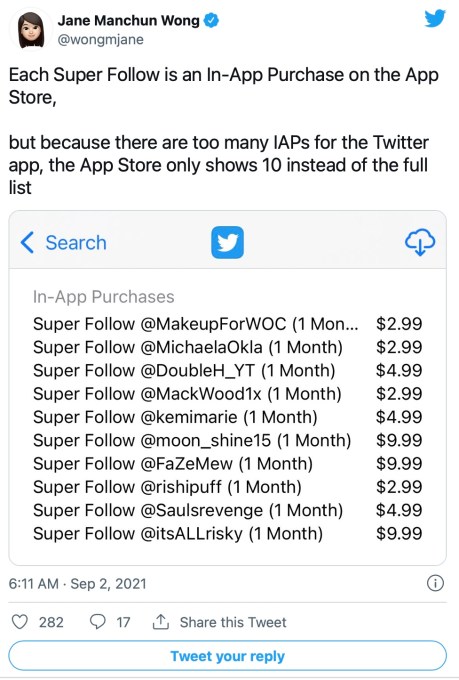
  • Twitter launched Super Follows, allowing users to subscribe to favorite creators via in-app purchases for exclusive content. But the system is chaotic on the App Store, as each Super Follow is listed as an individual IAP. The App Store can only show 10 IAPs, because there are too many options available. There’s got to be a better way to do this.
  • Twitter also launched Safety Mode to a small group on iOS for feedback and testing. The feature lets users protect themselves from harassment by temporarily blocking accounts for seven days that send harmful language or send repetitive, uninvited replies.
  • LinkedIn is shutting down Stories. The Microsoft-owned business networking platform informed advertisers they will need to adjust their ad campaigns when the format leaves the platform on September 30. Instead of Stories, LinkedIn will pursue short-form videos instead, it says.
  • TikTok added educational resources to its app to help parents using its Family Pairing parental control feature better understand how to help teens navigate their digital life.
  • TikTok launched a new Creator Marketplace API that allows influencer marketing companies the ability to tap into first-party data from the social video app, including things like audience demographics, growth trends, best-performing videos and real-time campaign reporting (e.g. views, likes, shares, comments, engagement, etc.) Alpha testers include Captiv8, Influential, Whalar and INCA.
  • Facebook said a glitch in its ad platform caused it to send faulty campaign data to advertisers — an example of how Apple’s privacy rules have impacted the adtech industry.
  • Instagram is requiring users to share their birthday with the company. The app will now start popping up a notification that asks you to add your birthday to “personalize your experience.” But the prompt can only be dismissed a handful of times before becoming a requirement. Instagram says it needs this information to aid with its new safety features aimed at younger users, including the teen privacy protections it recently added.
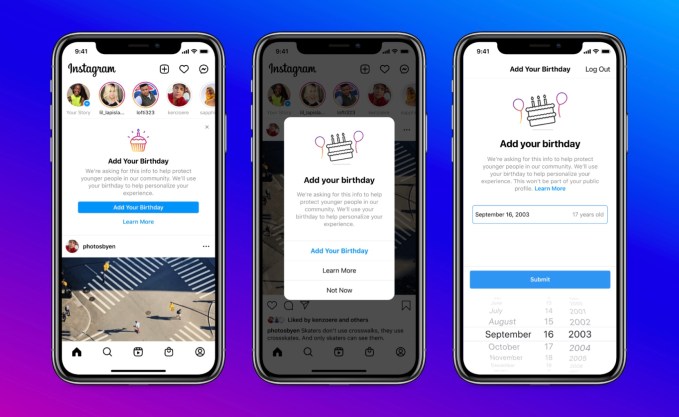
Image Credits: Instagram

Messaging

  • Mobile messaging app Telegram has topped 1 billion downloads, according to data from Sensor Tower. The app, launched in 2013, passed the milestone last Friday. India makes up 22% of Telegram installs, followed by Russia (10%) and Indonesia (8%). In the first half of 2021, the app saw 214.7 million installs, up from 133 million in H1 2020.
  • Telegram also expanded its livestream feature to support an unlimited number of viewers, up from the prior limit of 1,000.
  • Google’s Messages app is redesigning its attachment menu’s UI, which previously opened a scrollable list with several carousels. It now shows a four-wide grid that expands to take up more space as you scroll, with buttons for GIFs, stickers, files, location, contacts and more.

Streaming & Entertainment

  • Clubhouse added support for spatial audio to give listeners a feeling that they’re really hanging out live with a group of people. To make this possible, the company is integrating licensed code from Second Life creator Philip Rosedale’s spatial audio company High Fidelity and blending it with its own custom audio processing.
  • YouTube Music says it has surpassed 50 million Music and Premium subscribers, including those on trials.

Dating

  • Tinder says daily swipe activity this summer was up 13% and messages were up 12%. Conversations were also 38% longer, compared with April, May and June 2020. And 76% of survey respondents went on more dates compared to last summer.

Health & Fitness

  • Meditation and mindfulness app Calm has topped 100 million downloads, solidifying its spot as the world’s most downloaded meditation app. The app was also the No. 1 Health and Fitness app on iOS (July 1, 2010-August 21, 2021) and Android (January 1, 2012-August 2021).
  • Strava’s iOS fitness app makes its Beacon location-sharing safety feature available to all users for free, instead of only to paid subscribers. Launched in 2016, Beacon allows users to share their live location with up to three people who can track you until you’re finished with your activity.

News/Reading
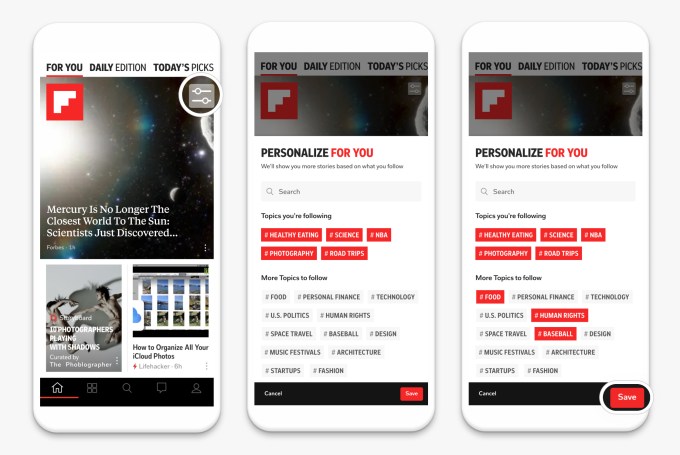
Image Credits: Flipboard

  • Flipboard added newsfeed personalization tools that help you personalize your home feed, aka the “For You” page, to your own interests. This has been a top request from users, who wanted to dial down the level of politics and other bad news about current events in their feeds.

Government & Policy

  • WhatsApp was fined $267 million for breaching Europe’s GDPR. The messaging app had been under investigation by the Irish DPC, a leading data supervisor in the EU, since December 2018. The regulator found that WhatsApp failed to fully inform its users what it does with their data, and gave the company three months to come into compliance with several provisions of Europe’s privacy law. A WhatsApp spokesperson said the decision would be appealed.
  • The grace period for compliance with the Age Appropriate Design Code (aka the “Children’s Code”) has ended. App makers offering digital services that are likely to be accessed by children now need to ensure that a high level of privacy is applied by default to users’ accounts, and geolocation and profiling should be off by default. The code also says app makers should provide parental controls while kids receive age-appropriate information about those tools. “Dark patterns” are also now forbidden.

Security & Privacy

  • The FTC bans spyware maker SpyFone, an Android stalkerware app that was marketed under the guise of parental control, but was often used by adults to spy on their partners. SpyFone secretly gathered data on people’s physical movements, phone use and online activities. The company will also be required to notify victims where the app had been installed on their devices.
  • Mozilla VPN, its private VPN that works across desktop and mobile devices, completed a security audit from cybersecurity firm Cure53 in Berlin. The audit found two medium and one high-severity issue, all of which have now been addressed.
  • A WhatsApp vulnerability discovered by Check Point could have allowed a hacker to read sensitive info from WhatsApp’s memory. The exploit, however, was complex and has now been fixed.

Funding and M&A

? Neobank Point raised $46.5 million in Series B funding, led by existing investor Peter Thiel’s Valar Ventures. Point offers an online account, debit card and banking app for $49 per year.

? Callin, a new “social podcasting” app from former PayPal COO and Yammer CEO David Sacks, raised $12 million in Series A funding, co-led by Sequoia, Goldcrest and Craft Ventures, where Sacks is a founder and partner. The app competes with Clubhouse and Twitter Spaces, but allows users to download a recording that can be edited into a podcast.

? French grocery delivery service Cajoo raised $40 million in a Series A round led by supermarket giant Carrefour. The deal allows Cajoo to take advantage of Carrefour’s purchasing organization, making more products available to Cajoo customers. Cajoo currently has more than 100,000 customers across 10 cities in France and operates 20 dark stores.

? Social commerce app Flip raised $28 million in Series A funding led by Streamlined Ventures for its app that combines live commerce and real customer reviews. The company claims 1 million downloads and shipped out 30,000 orders in the last quarter.

?  Playtika Holding Corp., the maker of games like Bingo Blitz and Slotomania, is buying 80% of Finland’s Reworks Oy, the maker of a home-decorating game, Redecor. The $400 million deal allows Playtika to acquire the balance for as much as $200 million more in 2023, if earnings meet an agreed-on target. If not, Playtika can buy the remaining portion for $1. This is Playtika’s first acquisition as a public company and eighth overall, and will bring ~$30 million in sales to Playtika this year.

? U.K. diet and lifestyle coaching app Oviva raised $80 million in Series C funding, co-led by Sofina and Temasek, for its service that aims to empower users to change their diet habits and improve their health, with a particular focus on treating obesity and health conditions like Type 2 diabetes. The company sells to health insurance companies or publicly funded health services, which then refer or provide Oviva to their own customers.

? Amsterdam-based delivery startup Borzo (previously Dostavista), which focuses on emerging markets, has raised $35 million in Series C funding in a round led by UAE-based investor, Mubadala. The service, accessible via a mobile app, has 2 million users, 2.5 million couriers and operates in 10 countries, including Brazil, India, Indonesia, Korea, Malaysia, Mexico, the Philippines, Russia, Turkey and Vietnam.

? No-code tool Anima raised $10 million in Series A funding. The service lets designers upload from Figma to have their work turned into code, including support for React, Vue.js, HTML, CSS and Sass. The platform now has 600,000 users, up from 300,000 last October.

? Family safety and communication app Life360 completed its acquisition of wearable maker Jiobit on September 1. The company plans to integrate Jiobit into its offerings, and allow family members to track Jiobit users (or pets), through the mobile app.

Downloads

Clay

Image Credits: Clay

Clay is a new cross-platform app (web, mobile and desktop) that allows you to better manage your relationships, both business and personal. The service is something of a consumer-grade CRM. That is, it’s not about a sales pipeline, it’s about better recalling who you met, how and when, and other important details. This information can be useful to you ahead of meetings and other networking events, business appointments or many other situations. The system is designed to be flexible enough that it can work for a variety of use cases — so far, it’s been used by teachers, veterinarians, political candidates and others. The company, backed by $8 million in seed funding, is encrypting data, but ultimately plans to allow the data to be housed locally on users’ machines, more like the Apple model. The app, however, is pricey — it’s $20/month for the time being, but the company hopes to bring that down to a freemium model over time.

Read the full review here on TechCrunch.

Playbyte
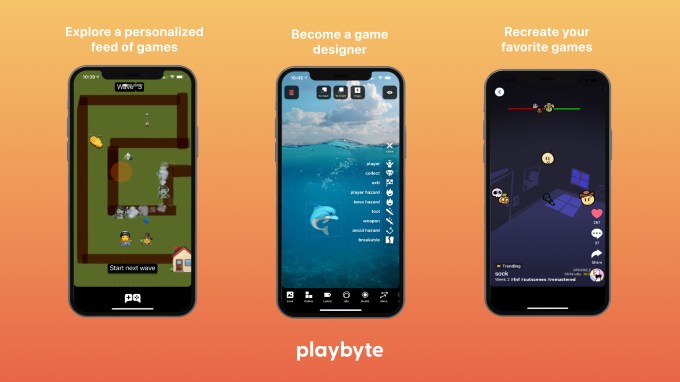
Image Credits: Playbyte

A startup called Playbyte wants to become the TikTok for games. The company’s newly launched iOS app offers tools that allow users to make and share simple games on their phone, as well as a vertically scrollable, full-screen feed where you can play the games created by others. Also like TikTok, the feed becomes more personalized over time to serve up more of the kinds of games you like to play. At its core, Playbyte’s game creation is powered by its lightweight 2D game engine built on web frameworks, which lets users create games that can be quickly loaded and played even on slow connections and older devices. After you play a game, you can like and comment using buttons on the right side of the screen, which also greatly resembles the TikTok look-and-feel.

At launch, users have already made a variety of games using Playbyte’s tools — including simulators, tower defense games, combat challenges, obbys, murder mystery games and more. The app is a free download on iOS.

Read full review here on TechCrunch.

04 Sep 2021

From passion to hobby to startup

Welcome back to The TechCrunch Exchange, a weekly startups-and-markets newsletter. It’s inspired by what the weekday Exchange column digs into, but free, and made for your weekend reading. Want it in your inbox every Saturday? Sign up here.

Hey team! Alex here. I am off next week. Anna, my regular co-pilot on the weekday column, will be handling next week’s newsletter. It will be beyond good. Enjoy!

A few weeks back we took a look at some startup results, with a focus on growth. Today we’re narrowing our focus to a single company from the collection of startups that wrote in: Water Cooler Trivia.

Many startups begin life as a solution to a problem. A developer finds a flaw in their workflow, codes up a solution for it and later builds that hack into a product that scales. That sort of thing.

Collin Waldoch did something different, turning a hobby of his into a business.

Coming from a family of six kids in what he called a competitive family, Waldoch hosted bar trivia during college, and later sent around weekly trivia questions at his workplace after he completed his schooling. He kept the habit up during his early career, which included a stint at Lyft.

It was during his corporate life that Waldoch realized that companies were willing to spend heavily on team activities. Like a soccer team that he joined during one job that his employer spent a few grand on, but which struggled to find enough regular players. If companies would drop that much money on a group sport that few of its denizens wanted, he thought, perhaps there was some budget he could attack with a trivia product.

So Waldoch started Water Cooler Trivia, building it as a corporate product that he and some friends scaled to around $20,000 in ARR as a side project. The founder described its level of success at the time as pretty good beer money. Helping the project bring in revenue was a super-low churn rate, something that helped Waldoch decide to quit his day job at Lyft and take his side project full time.

Today Water Cooler Trivia has reached $300,000 worth of ARR and sports a collection of workers around the globe that help it run. Companies can select difficulty levels for their weekly trivia questions and track employee scores with longitudinal leaderboards.

Part of the idea’s success in Waldoch’s view is that it is built for the end user — employees — instead of HR. Which means that it’s actually fun. Today the company has experienced some churn, but still sports net retention rates of just under 100%. That’s great for a product that doesn’t feature enterprise-SaaS level upsells.

And the service is cheap. Probably too cheap frankly. At $100 per month for 100 seats, Water Cooler could likely boost what it charges and push its revenues higher in short order. Waldoch said that his company might start raising its rates in Q4 of this year. But even without that, Water Cooler thinks that it has a huge amount of growth open to it from its core product.

I dig it. Long live software making life a bit more fun.

Drift, Xometry, Carrot

It was a busy week with infinite IPO filings and eight billion YC startups pitching, but other things did happen that we need to talk about:

I’m curious about Drift’s sale to private equity: Boston’s Drift sold the majority of its shares to Vista Equity Partners, it announced this week. I’ve been to the Drift offices, as the company once lent us a room to record a podcast in. The folks there were nice. But with the company reporting 70% ARR growth in 2020, I am dead curious why Drift didn’t just raise more capital and keep growing. The company was able to raise lots of private money in the past, including, say, a $60 million round back in 2018. Exiting the bulk of the company early feels a little weird, similar to how the Gainsight sale to PE was a bit of a head scratcher. For Boston, the exit is good news as it may help mint new angel investors. But it still feels like an exit for which we’re missing a key detail.

Xometry: This one has been in the notes folder for too long, and since I’m off next week we’re including it here. I spoke with Xometry CEO Randy Altschuler after his company reported earnings a few weeks back. Recall that Xometry went public earlier this year. Altschuler reported generally bullish views on the process of going public during the COVID-19 era, calling his company’s Zoom roadshow efficient in a manner that allowed his company to chat to more folks while also saving on travel-related exhaustion.

Xometry, continued: But past the standard post-IPO chit chat, Altschuler had a few notes that stood out in my memory. The first being that inflation can impact technology businesses. Rising costs are impacting companies like Root, who have to deal with used car prices impacting claims costs. Inflation also crops up in Xometry’s business connecting manufacturing demand with manufacturing supply. It’s a good reminder that macro market conditions really do matter in the technology world, just not in ways that we can always easily see.

Xometry, even more: Altschuler also said that he thinks that a carbon tax at some point is inevitable. This came up in our discussion of onshoring manufacturing in the United States over time. Shipping stuff is expensive today and would prove even more costly if we added in the price of carbon emissions via a tax. That could make local manufacturing more competitive, notably. Perhaps that will prove a boon to folks in favor of more industrial production in post-industrial societies. For tech companies that deal with physical-world goods, it’s something to keep in mind.

And, finally, Carrot: Another entry from the notes archive, let’s talk about Carrot. The startup raised a $75 million round a few weeks back, so I asked the company about its growth history and a few other things. Carrot sells a product to employers so that they can offer their workers fertility benefits. Given falling human fertility rates, coverage of this sort is, in my view, likely to become more popular over time.

Other factors are at work, of course, but the last 18 months have proved accelerative for Carrot’s business. Per the company, it has seen “nearly 5x overall growth” in the last six quarters. The startup expects to reach 450 customers by the end of 2021, which will add up to around one million covered folks.

Carrot declined to share a valuation differential from its Series B to its Series C. Happily PitchBook has data on the matter, so we can report that per its dataset, Carrot’s valuation rose from around $66 million (post-money) following its $21 million Series B to around $260 million after its Series C. That’s a good markup for the company’s employees and founders.

My general bullishness around rising needs for fertility support matches the company’s ethos, which it described in an email by saying that it thinks fertility and “family-forming care could and should be the fourth pillar of employee benefits and health care more broadly, much like medical or dental or vision.” A hard yes to that one.

OK, that’s all from me for a few weeks. Stay safe, get vaccinated, and let’s be kind to one another. — Alex

04 Sep 2021

Catching up with Twitter’s most recent head of corp dev — and new VC — Seksom Suriyapa

Seksom Suriyapa was seemingly destined to land at a venture firm. A Stanford Law graduate, he began his career at two blue-chip investment banks before joining the cybersecurity company McAfee as a senior corp dev employee, later logging six years at the human resources software company SuccessFactors and in 2018, landing at Twitter, where until several months ago, he headed up its 12-person corporate development team.

The bigger surprise is that Suriyapa — who just joined the L.A.-based venture firm Upfront Ventures — didn’t make the leap sooner. “The catalyst was finding a firm that felt like the exact right fit for me,” says Suriyapa.

We talked earlier today with Suriyapa — who lives and will remain in the Bay Area — about his new role at Upfront, where he will be leading its expanding growth-stage practice with firm founder Yves Sisteron. He also shed light on how Twitter — which has been on a bit of buying spree — thinks about acquisitions these days.

Our chat has been edited lightly for length.

TC: How did you wind up joining Upfront?

SS: [Longtime partner] Mark Suster and I were introduced through a mutual business acquaintance in the venture world, and I got to know him over a period of time and really came to find him to be a remarkable individual. He’s solid, he’s thoughtful about the business itself, he’s an incredible brand builder. I think you could argue that [Upfront] put L.A. on the venture map.

TC: It was also, for a long time, an early-stage firm, but now it has a ‘barbell’ strategy. Is your new job to make sure it can maintain its stake in its portfolio companies as they grow? Can you shop outside of that portfolio?

SS: The mission for me will be supporting the best of Upfront’s hundred-plus existing portfolio companies that are poised to scale, and also to invest in companies not currency on the platform, and I anticipate [the latter] will happen more and more over time.

TC: Twitter was a lot more active on the corp dev front during the years when you were there. Why?

SS: When i joined in 2018, Jack Dorsey had been CEO for about three years, and really his focus was on the core mission of driving the public conversation, and in doing that, Twitter shrunk itself out of a lot of businesses and [shrunk] people wise as well.

TC: I remember it laid people off in 2016.

SS: And one of the offshoots of that was way less in the way of newer products, so there were no new acquisitions in the three years prior to me joining, and that muscle atrophies if you don’t exercise it. So [ahead of me] Jack had transformed the management team, which had been, relatively speaking, a revolving door of executives until that point, and I was brought in with a specific mandate of reviving a corporate development practice that had been quiet for a few years. I’d known [CFO] Ned Segal when he was a banker at Goldman Sachs and [while] I was at SuccessFactors, so when I heard about the role through the grapevine, I reached out.

TC: And Twitter starts shopping, buying up the news reader service Scroll, the newsletter platform Revue. Were these decisions coming down from the top or vice versa?

SS: The best way to describe it would be that it was product-need driven. The company had a few different objectives. One was to diversify Twitter from its dependency on being an ad-driven business. Something like 80% of revenue comes from ads.

Second, there’s an incredible need to ramp up its machine learning and artificial intelligence as a company. If you’re looking for toxicity in conversation, it’s not scalable to hire tens of thousands of people to do that. You need machine learning to find it. Twitter done well is also able to show you the conversations that are most interesting to you, and to do that, it has to take signals from what you follow and spend time reading and what you interact with, and that, at its core, is ML AI.  [Relatedly] Jack has a vision that anybody who tweets in whatever their native tongue is should be able to talk with someone else in their native tongue as part of a global conversation, and to do that, you need [natural language processing] techniques galore.

TC: There’s also this focus on consumer applications.

SS: That’s the third objective. What are the tools that followers and creators can use in conversation with each other? So [Twitter] added audio [via its Clubhouse rival Spaces]. We bought Revue, which is a competitor to Substack. So there’s a lot of innovation happening around the type of content that someone should expect to see or create on Twitter.

TC: Would you describe these acquisitions as proactive or reactive?

SS: From the outside it would seem reactive, but the reality is we’d been thinking a lot about something like Spaces even before Clubhouse took off. I think what’s noticeable to me is [Spaces] is one of the first times you’ve seen a company like Twitter build up a capability and a new product area that’s going head-to-head going against a company that’s focused only on that realm, and it’s competitive from day one. Twitter beat Clubhouse in [offering an] Android version because it poured resources into it, and I’d argue that a lot of the mechanics of Twitter and the fact that creators are on Twitter puts it in an awesome spot to win this segment.

Twitter also just has a huge amount of expertise in finding toxicity and things you want to be wary of when you’re a social media play, and a company of Clubhouse’s size, at least in its initial days, will have a hard time getting there.

TC: Twitter has so many interests, including around cryptocurrencies and decentralization. 

SS: In terms of priorities at Twitter,  a lot is under wraps in terms of the technologies that we expect [will rise up over] the next five  to 10 years, but [a lot of thought is being given to] the impact of cryptocurrency and the underlying protocols around it and how Twitter participates in a trustless, permissionless [world] where there’s a decentralized internet that can protect people’s privacy and allow people not to worry where their content is stored. People think of Twitter as a consumer app but there’s amazing and considerable diversity under the hood.

TC: Do you think because of the current regulatory environment that it has a better shot at working with companies and projects that might have gotten snapped up by Facebook and Google?

In terms of the regulatory environment, the reality is that even if you take the Facebooks and Googles out of the equation, there are acquirers that are competitive that would step up and buy things, so it’s a little short-sighted to think of just those two. But even when they were active, we were winning [deals]. A lot of the companies we acquired self-selected to be at Twitter because they like what it stands for, they like the way that Jack Dorsey leads the organization, and they believe in the stands that he takes and the positions that he and his leadership espouse.

TC: You’re now representing a very different brand. How will your work at Twitter help you compete for deals on behalf of Upfront?

SS: I have this network of incredible entrepreneurs around the world because of companies across my career that I’ve helped acquire or tried to acquire or who are running businesses; I also [have relationships with] VCs at different stages who actively spot businesses around the world [and introduce them to corp dev teams]. You might also know that Twitter has a diversity and inclusion program where they intend to have 25% of leadership be diverse over the next several years, so my team was often involved in finding the best ways to find diverse targets to buy. I also led a series of LP investments into newly emerging funds, some LatinX-founded, some women-founded, some Black-founded, some that were diverse from a geographic standpoint that are scouting companies in far flung places . . .

TC: Does Twitter also make direct investments?

SS: We did direct investments but [backing fund managers] is a more leveraged approach. Most of them are seed funds and they’ll in turn invest in 30 to 60 companies each. But yes, I scouted companies in far flung places, including [India’s] ShareChat where I served on the board for two years. [Editor’s note: TechCrunch reported earlier this year that Twitter explored buying ShareChat at an earlier point; the company has since raised numerous rounds of funding and was most recently valued by its investors at nearly $3 billion.]

TC: You have a lot of relationships, but it would still seem really hard to compete for growth-stage deals when so many other outfits are now investing there, too. How do you plan to compete?

SS: I will clearly be drawing on those networks to find deals. I’ll be investing in sectors where Upfront has already invested in, but initially I’ll be double-clicking that ihave a strong interest in, including around creator economy ecosystem, because I did o much of that at Twitter. And w3b 3.0, ow this permissionless comes togerh, edge computing ML AI and shared date that goes across a number of disciplines that i’ve workedin, i think one of strong points that will cinterdiscplianry areas, also in sustainability are but I won’t kid myself. You compete by learning what your value proposition is. At Twitter, my strategy was winning on speed, knowing people earlier, and [underscoring] Twitter’s value proposition [to close deals]. I can’t talk about my [VC] strategy without having implemented yet; I’ll have to figure out what’s most interesting to entrepreneurs that the megafunds don’t offer.

03 Sep 2021

Daily Crunch: Fintech startup Jeeves snags $500M valuation after $57M Series B

To get a roundup of TechCrunch’s biggest and most important stories delivered to your inbox every day at 3 p.m. PDT, subscribe here.

Hello and welcome to Daily Crunch for September 3, 2021. As noted yesterday, most of TechCrunch has the day off so today’s newsletter is a little bit different than usual.

Up top let’s chat early-stage startups. The TechCrunch team spent an age this week cataloging a host of startups from Y Combinator’s marathon demo day, with our notes covering all presentations from day one and day two. We also yanked our favorites in two batches, in case you wanted to avoid the full download and want to skip straight to the highlights.

But that’s not all. We also dug into trends from the group and hopped on Twitter Spaces to chat about what we saw. Of course, Y Combinator is a single accelerator, but given its mammoth cohort sizes we pay extra attention to the trends that its startups detail.

That behind us, let’s take a moment to highlight some great stuff from newer TechCrunch reporters:

Finally, Disrupt is coming up. So make sure that you have a ticket. As it’s a virtual event they are cheaper than they have been in years past, despite the event having perhaps its strongest content lineup ever. We’re excited!

With that, let’s head into the weekend — a long one here in the United States — and get some rest. What a week in the world at large and in our startup-focused niche. I’ll be taking all next week off, but I will leave the Daily Crunch in the very capable hands of one Greg Kumparak. — Alex

Use cohort analysis to drive smarter startup growth

Cohort analysis is a basic tool for startups that need to better understand customer behavior, but many early-stage companies let it slide.

Grouping users into “buckets” is common practice at most startups, but robust cohort analysis uncovers trends and missed opportunities that young companies can pounce on.

Don’t wait to hire a senior marketing person or a consultant to start this critical work: In a guest column, Jonathan Metrick, chief growth officer at Sagard & Portage Ventures, offers a detailed example explaining the value of this type of analysis.

If you have questions after reading this comprehensive step-by-step, please join us for a Twitter Spaces chat with Metrick on Tuesday, September 7, at 3 p.m. PDT/6 p.m. EDT. For details and a reminder, follow @TechCrunch on Twitter.

(Extra Crunch is our membership program, which helps founders and startup teams get ahead. You can sign up here.)

TechCrunch Experts: Growth Marketing

Illustration montage based on education and knowledge in blue

Image Credits: SEAN GLADWELL (opens in a new window) / Getty Images

TechCrunch wants to help startups find the right expert for their needs. To do this, we’re building a shortlist of the top growth marketers. We’ve received great recommendations for growth marketers in the startup industry since we launched our survey.

We’re excited to read more responses as they come in! Fill out the survey here.

Community

Jonathan Metrick

Image Credits: Jonathan Metrick

Join Danny Crichton and Mary Ann Azevedo Tuesday, September 7, at 3 p.m. PDT/6 p.m. EDT on Twitter Spaces as they talk with Jonathan Metrick about fintech and growth marketing.