Year: 2021

31 Aug 2021

LoftyInc Capital launches third fund at $10M for a more diverse portfolio of African startups

LoftyInc Capital, a pan-African VC firm, announced today that it is launching its third fund — LoftyInc Afropreneurs Fund 3 — at $10 million for tech startups in Africa.

The firm has reached the first close of $5.5 million. Some of the limited partners in the vehicle include those from its second fund, FBNQuest Funds, Camac, syndicates from The Green Investment Club, HNIs from multinationals like Google, Facebook, and ExxonMobil; and Andela CEO Jeremy Johnson, among others.

So far, LoftyInc has written checks to over 20 startups since it began raising money for the fund. They cut across various industries like e-commerce, fintech, healthcare, logistics, and media in different regions within and outside Africa.

In Francophone Africa, the company has invested in Afrikrea and Star News Mobile. Then in Omnibiz, RXAll, Sudo Africa, Tech Advance, Aladdin, Flex Finance, Star Kitchens Group, and EPump across West Africa.

For LoftyInc’s portfolio in North Africa, there’s Odiggo, Illa, Tagaddod, and Instadiet. Akiba Digital, Beamm, and Zazu Africa make up LoftyInc’s portfolio in South Africa, while Cashback and Dash are the startups funded in East Africa. LoftyInc also has Diasporan interests in OjaExpress and FitMatch.

LoftyInc runs three funds simultaneously. The second fund, which is its first formal VC fund, is largely focused on Nigeria. On the other hand, this third fund follows the thesis of LoftyInc’s first fund: investing in startups across different markets and sectors in Africa and the diaspora.

The fund says it wants to take big bets on markets outside the Big Four — Nigeria, Kenya, South Africa, and Egypt.

Operating three funds

A month ago, TechCrunch covered one of Africa’s most important angel investors Olumide Soyombo. He is one of the few giants in a game that includes LoftyInc founder and general partner Idris Bello.

Bello likes to describe his 12-year venture into technology and entrepreneurship as an “Afropreneurship journey.” While in business school in the U.S, he realized that the next wave of innovation that Africa as a continent needed rested on the shoulders’ of up-and-coming founders.

With that in mind, Bello started LoftyInc Allied Partners alongside other entrepreneurs as an enterprise development company. It spun off a technology hub and venture accelerator called Wennovation Hub and also the venture arm called LoftyInc Capital.

In 2012, the firm launched the first fund — LoftyInc Afropreneurs Fund 1 — as its pre-seed stage investment vehicle. The fund act more like a syndicate or an angel group of which investors includes senior executives in key industries across Africa.
LoftyInc Capital

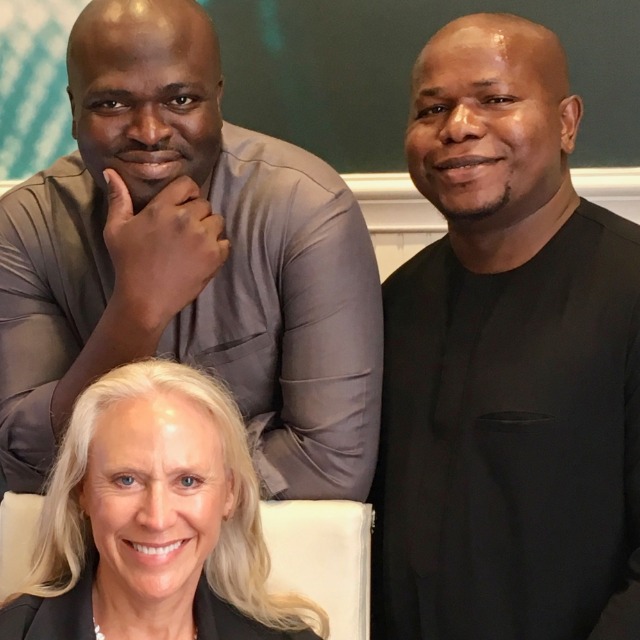
L-R: General partners [Marsha Wulff (sitting), Michael Oluwagbemi (standing), and Idris Bello (right)

Over 180 business angels are investing via the first fund and have collectively put more than $4 million into 40-plus startups across the continent. Some big names from Nigeria and Egypt origins include unicorn Flutterwave (pre-seed), soonicorn Andela, Trella, Chefaa, and Koniku.

Five years later, as the founding partner, Bello teamed up with a long-time advisor Marsha Wulff, an early investor in healthtech company Teladoc. They launched the second fund, LoftyInc Afropreneurs Fund 2, alongside Michael Oluwagbemi, who also acts as a general partner at the firm

From 2017 to 2020, LoftyInc wrote checks worth over $1.2 million in nine rounds to six Nigerian startups — Printivo, RelianceHMO, Epump, YouVerify, Shyft Power Solutions, and Flutterwave (at pre-Series A).

Flutterwave serves as LoftyInc’s first exit, one which Bello said returned 3x to its LPs. It was this successful exit that laid the foundation for the third fund.

“When we exited our Flutterwave stake in February, our LPs wanted us to raise and put together another fund because we made returns for them. At first, we wanted to do a $2.5 million fund but after making enquiries from LPs, it rose to $4 million. Then eventually we just decided to make it $10 million, so we could invest in more startups,” Bello said to TechCrunch.

But when you look at Bello’s status in the African tech ecosystem and what similar Africa-focused funds are raising these days, one may wonder why the investor isn’t raising more.

His answer to that:

“I always say this — my approach is very different. I’m quite organic which is evident in how we moved from a group of angels to LPs. I feel once you get up to $50m to $100m, your problem becomes good deployment, especially in Africa. And what I’m doing is to build a smaller base to a pyramid so when I’m raising a large fund, it won’t be a problem deploying the funds.”

Another point he makes has to do with the limited partners involved. Most of the firm’s LPs in this third fund hold C-suite and managerial positions in banks and other multinationals. Bello argues that if Fund 3 can make good on its promise to make fantastic returns for these individual LPs, it will be a no brainer to onboard the institutions they work with for a bigger fund.

“We want to build an ecosystem of African investors. After that, we’ll start building up the institutions to also partake in making investments.”

LoftyInc has a robust deal flow and views about 30 decks per week, according to Bello. He says the fund receives this much flow because the founders of portfolio startups are the firm’s strongest source of proprietary deals. And that’s what he thinks differentiates LoftyInc from other VC firms.

For instance, in a brief chat with TechCrunch, Andela CEO Jeremy Johnson mentioned that before anyone knew about his startup, LoftyInc already backed him. And to him, it only makes sense to do the same by sourcing deals and investing in the fund.

In addition, the firm, via its first fund, also has an extensive investor base of African origin who live in and outside the continent. Per Bello, this angel network double as venture scouts for the firm.

“We usually invest before any major investor does, hold the hand of new founders, source their initial clients within our large portfolio of over 65 African startups and our large African-based angel and LP network.

“We also provide meaningful introductions to regulators, partners, mentors, top hires and experienced board directors. Also, founders want us in their deals because they have seen us attract both early and later-stage investors to prior ventures.”

In terms of what LoftyInc looks for in companies it invests in, there’s a bias towards those who go for a large market with little or no competition, a product that users love, and execution.

As with most VC firms out there, LoftyInc claims to be sector agnostic. However, there’s some affinity towards startups playing in the IoT, fintech and healthtech space, Bello said. 

LoftyInc’s first fund, mostly catered to by angel investors, is most bullish at the pre-seed stage. This year alone, the group has done over 50 pre-seed deals. For the others, the focus is on seed to Series A deals with an average ticket size of $250,000. 

While LoftyInc’s target for Fund 3 is $10 million, Bello tells TechCrunch that the firm is hoping to achieve a final close above that figure before the end of Q4 2021.  

31 Aug 2021

LoftyInc Capital launches third fund at $10M for a more diverse portfolio of African startups

LoftyInc Capital, a pan-African VC firm, announced today that it is launching its third fund — LoftyInc Afropreneurs Fund 3 — at $10 million for tech startups in Africa.

The firm has reached the first close of $5.5 million. Some of the limited partners in the vehicle include those from its second fund, FBNQuest Funds, Camac, syndicates from The Green Investment Club, HNIs from multinationals like Google, Facebook, and ExxonMobil; and Andela CEO Jeremy Johnson, among others.

So far, LoftyInc has written checks to over 20 startups since it began raising money for the fund. They cut across various industries like e-commerce, fintech, healthcare, logistics, and media in different regions within and outside Africa.

In Francophone Africa, the company has invested in Afrikrea and Star News Mobile. Then in Omnibiz, RXAll, Sudo Africa, Tech Advance, Aladdin, Flex Finance, Star Kitchens Group, and EPump across West Africa.

For LoftyInc’s portfolio in North Africa, there’s Odiggo, Illa, Tagaddod, and Instadiet. Akiba Digital, Beamm, and Zazu Africa make up LoftyInc’s portfolio in South Africa, while Cashback and Dash are the startups funded in East Africa. LoftyInc also has Diasporan interests in OjaExpress and FitMatch.

LoftyInc runs three funds simultaneously. The second fund, which is its first formal VC fund, is largely focused on Nigeria. On the other hand, this third fund follows the thesis of LoftyInc’s first fund: investing in startups across different markets and sectors in Africa and the diaspora.

The fund says it wants to take big bets on markets outside the Big Four — Nigeria, Kenya, South Africa, and Egypt.

Operating three funds

A month ago, TechCrunch covered one of Africa’s most important angel investors Olumide Soyombo. He is one of the few giants in a game that includes LoftyInc founder and general partner Idris Bello.

Bello likes to describe his 12-year venture into technology and entrepreneurship as an “Afropreneurship journey.” While in business school in the U.S, he realized that the next wave of innovation that Africa as a continent needed rested on the shoulders’ of up-and-coming founders.

With that in mind, Bello started LoftyInc Allied Partners alongside other entrepreneurs as an enterprise development company. It spun off a technology hub and venture accelerator called Wennovation Hub and also the venture arm called LoftyInc Capital.

In 2012, the firm launched the first fund — LoftyInc Afropreneurs Fund 1 — as its pre-seed stage investment vehicle. The fund act more like a syndicate or an angel group of which investors includes senior executives in key industries across Africa.

LoftyInc Capital

L-R: General partners [Marsha Wulff (sitting), Michael Oluwagbemi (standing), and Idris Bello (right)

Over 180 business angels are investing via the first fund and have collectively put more than $4 million into 40-plus startups across the continent. Some big names from Nigeria and Egypt origins include unicorn Flutterwave (pre-seed), soonicorn Andela, Trella, Chefaa, and Koniku.

Five years later, as the founding partner, Bello teamed up with a long-time advisor Marsha Wulff, an early investor in healthtech company Teladoc. They launched the second fund, LoftyInc Afropreneurs Fund 2, alongside Michael Oluwagbemi, who also acts as a general partner at the firm

From 2017 to 2020, LoftyInc wrote checks worth over $1.2 million in nine rounds to six Nigerian startups — Printivo, RelianceHMO, Epump, YouVerify, Shyft Power Solutions, and Flutterwave (at pre-Series A).

Flutterwave serves as LoftyInc’s first exit, one which Bello said returned 3x to its LPs. It was this successful exit that laid the foundation for the third fund.

“When we exited our Flutterwave stake in February, our LPs wanted us to raise and put together another fund because we made returns for them. At first, we wanted to do a $2.5 million fund but after making enquiries from LPs, it rose to $4 million. Then eventually we just decided to make it $10 million, so we could invest in more startups,” Bello said to TechCrunch.

But when you look at Bello’s status in the African tech ecosystem and what similar Africa-focused funds are raising these days, one may wonder why the investor isn’t raising more.

His answer to that:

“I always say this — my approach is very different. I’m quite organic which is evident in how we moved from a group of angels to LPs. I feel once you get up to $50m to $100m, your problem becomes good deployment, especially in Africa. And what I’m doing is to build a smaller base to a pyramid so when I’m raising a large fund, it won’t be a problem deploying the funds.”

Another point he makes has to do with the limited partners involved. Most of the firm’s LPs in this third fund hold C-suite and managerial positions in banks and other multinationals. Bello argues that if Fund 3 can make good on its promise to make fantastic returns for these individual LPs, it will be a no brainer to onboard the institutions they work with for a bigger fund.

“We want to build an ecosystem of African investors. After that, we’ll start building up the institutions to also partake in making investments.”

LoftyInc has a robust deal flow and views about 30 decks per week, according to Bello. He says the fund receives this much flow because the founders of portfolio startups are the firm’s strongest source of proprietary deals. And that’s what he thinks differentiates LoftyInc from other VC firms.

For instance, in a brief chat with TechCrunch, Andela CEO Jeremy Johnson mentioned that before anyone knew about his startup, LoftyInc already backed him. And to him, it only makes sense to do the same by sourcing deals and investing in the fund.

In addition, the firm, via its first fund, also has an extensive investor base of African origin who live in and outside the continent. Per Bello, this angel network double as venture scouts for the firm.

“We usually invest before any major investor does, hold the hand of new founders, source their initial clients within our large portfolio of over 65 African startups and our large African-based angel and LP network.

“We also provide meaningful introductions to regulators, partners, mentors, top hires and experienced board directors. Also, founders want us in their deals because they have seen us attract both early and later-stage investors to prior ventures.”

In terms of what LoftyInc looks for in companies it invests in, there’s a bias towards those who go for a large market with little or no competition, a product that users love, and execution.

As with most VC firms out there, LoftyInc claims to be sector agnostic. However, there’s some affinity towards startups playing in the IoT, fintech and healthtech space, Bello said. 

LoftyInc’s first fund, mostly catered to by angel investors, is most bullish at the pre-seed stage. This year alone, the group has done over 50 pre-seed deals. For the others, the focus is on seed to Series A deals with an average ticket size of $250,000. 

While LoftyInc’s target for Fund 3 is $10 million, Bello tells TechCrunch that the firm is hoping to achieve a final close above that figure before the end of Q4 2021.  

31 Aug 2021

Motional reveals its Hyundai Ioniq 5 electric robotaxi

Motional revealed Tuesday the first images of its planned robotaxi, a Hyundai all-electric Ioniq 5 SUV that will be the centerpiece of a driverless ride-hailing service the company wants customers to be able to access starting in 2023 through the Lyft app.

The purpose-built vehicle, which will be assembled by Hyundai, is integrated with Motional’s autonomous vehicle technology, including a suite of more than 30 sensors including lidar, radar and cameras that can be seen throughout the interior and exterior. That sensing system provides 360 degrees of vision, and the ability to see up to 300 meters away, according to Motional.

The company, which was born out of a $4 billion joint venture with Aptiv and Hyundai, intentionally showcases the numerous sensors, president and CEO Karl Iagnemma said in a recent interview.

“We see so many competitors bending over backwards to try to hide this sensor suite and conceal it in these big plastic casings,” Iagnemma told TechCrunch. “And the fact is, you can’t hide the sensors. They need to be where they need to be and they’re an important part of the car and a key part of the technology. So our strategy was to celebrate the sensors, and to adapt the design language of the vehicle and carry that through the design of the integrated sensor suite.”

Motional has not announced where it will launch its first driverless robotaxi service. It’s likely that it will be in one of the cities it currently is testing and validating its technology, a list that includes Boston, Las Vegas, Los Angeles and Pittsburgh.

Motional-Hyundai robotaxi Ioniq 5

Image credit: Motional

The base of Motional’s robotaxi is the Hyundai Ioniq 5, an electric vehicle revealed in February with a consumer release date expected later this year. The consumer version will not be equipped with Motional’s autonomous vehicle technology. Unlike some AV developers, Motional didn’t chose a  shuttle design or even a larger van for its first robotaxi.

Iagnemma said that the company’s research shows the vast majority of taxi or ride-hailing trips are for two or fewer passengers. The Ioniq 5 is the right size vehicle for Motional’s use case, he added.

The Hyundai Ioniq 5 is the first vehicle based off the automaker’s dedicated battery electric vehicle platform called the Electric Global Modular Platform (E-GMP). The vehicle — both the consumer and robotaxi version — is equipped with an 800-volt electrical system. This higher voltage system is able to supply the same amount of power as the more common 400-volt with less current. The 800-volt system, which debuted in the all-electric Porsche Taycan, is lighter, more efficient and allows the vehicle to charge at a faster rate.

That fast charging rate will be an important benefit for Motional’s robotaxi service.

Motional-Hyundai IONIQ 5 Robotaxi

Image Credits: Motional

The robotaxi version of the Ioniq 5 will be assembled by Hyundai, a noteworthy detail, Iagnemma said.

“This is vehicle that will come off the assembly line looking, as you see it in the pictures,” Iagnemma said. “This is not a scenario where we’ll take a base vehicle, move it to a different line, take the components off and then reintegrate or retrofit it.

Inside the robotaxi are displays to allow riders to interact with the vehicle during their ride, such as directing the robotaxi to make an extra stop, according to the company.

The robotaxi still has a steering wheel and other features found in traditional vehicles operated by a human driver. Riders will not be permitted to sit in the driver seat.

31 Aug 2021

Motional reveals its Hyundai Ioniq 5 electric robotaxi

Motional revealed Tuesday the first images of its planned robotaxi, a Hyundai all-electric Ioniq 5 SUV that will be the centerpiece of a driverless ride-hailing service the company wants customers to be able to access starting in 2023 through the Lyft app.

The purpose-built vehicle, which will be assembled by Hyundai, is integrated with Motional’s autonomous vehicle technology, including a suite of more than 30 sensors including lidar, radar and cameras that can be seen throughout the interior and exterior. That sensing system provides 360 degrees of vision, and the ability to see up to 300 meters away, according to Motional.

The company, which was born out of a $4 billion joint venture with Aptiv and Hyundai, intentionally showcases the numerous sensors, president and CEO Karl Iagnemma said in a recent interview.

“We see so many competitors bending over backwards to try to hide this sensor suite and conceal it in these big plastic casings,” Iagnemma told TechCrunch. “And the fact is, you can’t hide the sensors. They need to be where they need to be and they’re an important part of the car and a key part of the technology. So our strategy was to celebrate the sensors, and to adapt the design language of the vehicle and carry that through the design of the integrated sensor suite.”

Motional has not announced where it will launch its first driverless robotaxi service. It’s likely that it will be in one of the cities it currently is testing and validating its technology, a list that includes Boston, Las Vegas, Los Angeles and Pittsburgh.

Motional-Hyundai robotaxi Ioniq 5

Image credit: Motional

The base of Motional’s robotaxi is the Hyundai Ioniq 5, an electric vehicle revealed in February with a consumer release date expected later this year. The consumer version will not be equipped with Motional’s autonomous vehicle technology. Unlike some AV developers, Motional didn’t chose a  shuttle design or even a larger van for its first robotaxi.

Iagnemma said that the company’s research shows the vast majority of taxi or ride-hailing trips are for two or fewer passengers. The Ioniq 5 is the right size vehicle for Motional’s use case, he added.

The Hyundai Ioniq 5 is the first vehicle based off the automaker’s dedicated battery electric vehicle platform called the Electric Global Modular Platform (E-GMP). The vehicle — both the consumer and robotaxi version — is equipped with an 800-volt electrical system. This higher voltage system is able to supply the same amount of power as the more common 400-volt with less current. The 800-volt system, which debuted in the all-electric Porsche Taycan, is lighter, more efficient and allows the vehicle to charge at a faster rate.

That fast charging rate will be an important benefit for Motional’s robotaxi service.

Motional-Hyundai IONIQ 5 Robotaxi

Image Credits: Motional

The robotaxi version of the Ioniq 5 will be assembled by Hyundai, a noteworthy detail, Iagnemma said.

“This is vehicle that will come off the assembly line looking, as you see it in the pictures,” Iagnemma said. “This is not a scenario where we’ll take a base vehicle, move it to a different line, take the components off and then reintegrate or retrofit it.

Inside the robotaxi are displays to allow riders to interact with the vehicle during their ride, such as directing the robotaxi to make an extra stop, according to the company.

The robotaxi still has a steering wheel and other features found in traditional vehicles operated by a human driver. Riders will not be permitted to sit in the driver seat.

31 Aug 2021

Prosus acquires Indian payments giant BillDesk for $4.7B, will merge with its PayU fintech group

More major consolidation underway in the world of payments: Prosus — the Dutch tech giant that bundles together Naspers’ fintech, e-commerce and other international investments and businesses outside of South Africa — today announced that it would pay $4.7 billion to acquire BillDesk, a payments provider out of India. Prosus plans to combine BillDesk with PayU, its existing global fintech and payments business, which already has a strong presence in India, a deal that has been rumored to be in the works since about July.

The acquisition will make PayU one of the bigger online payment providers globally with some $147 billion in payment volume annually. But the acquisition is not only a significant consolidation move in the world of payments: it also underscores Prosus’ continuing focus on developing markets and specifically India. Prosus said that the deal — one of the biggest ever made by Prosus, and one of the biggest M&A moves in India — will give its fintech holdings in India a cumulative investment value of $10 billion.

That is part of a long-term strategy for Prosus (and Naspers) that stretches back nearly a decade involving a number of other acquisitions and investments in startups in the region.

“Payments and fintech is a core segment for Prosus and India remains our number one investment destination,” said Bob van Dijk, group CEO of Prosus, in a statement. PayU — formed out a combination of various interests in fintech and payments that Naspers (and then Prosus) had acquired over several years, is currently active in some 20 markets.

India represents a huge market for financial services, with a digitally-savvy consumer base with a rapidly expanding middle class with disposable income.

Within that, PayU has positioned itself as a strong player. Specifically, it has been highly competitive in the Indian online merchant acquiring market – both on price and in-field sales effort. PayU India has a dominant share in the payments gateway business where it traditionally competed with BillDesk and CCAvenue (owned in part by Infibeam).

BillDesk has been around since 2000 and is among the firms that has applied for the license of NUE, a new retail payments networks proposed for India that is expected to compete with established UPI railroads. BillDesk has teamed with Amazon, ICICI Bank, Axis Bank, Pine Labs, and Visa for the license.

“We believe this transaction will stimulate both innovation and competition within India’s digital payments industry,” said Laurent Le Moal, CEO of PayU, in a statement. “This will not only help to strengthen India’s digital economy, but also bring financial services to those who may have historically been excluded. This ambition is fully aligned with the Government of India’s vision of ‘Digital India’ and is a key objective for PayU across all the communities we serve globally.”

PayU today said that its domestic and cross-border payments business as of March 2021 was up 51% year-on-year across its operations in India, Latin America and EMEA, a mark of the overall boom that we have seen in the global digital payments market in the wake of the Covid-19 pandemic.

Other businesses PayU operates include credit solutions across India and five other markets. Prosus itself is also an active investor, with stakes in remittance company Remitly and others — representing a pipeline for strategic partnerships, but also potentially future acquisitions.

31 Aug 2021

Dance launches its e-bike subscription service in Berlin

German startup Dance is launching its subscription service in its hometown Berlin. For a flat monthly fee of €79 (around $93 at today’s exchange rate), users will get a custom-designed electric bike as well as access to an on-demand repair and maintenance service.

Founded by the former founders of SoundCloud and Jimdo, the company managed to raise some significant funding before launching its service. BlueYard led the startup’s seed round while HV Capital (formerly known as HV Holtzbrinck Ventures) led Dance’s €15 million Series A round, which represented $17.7 million at the time.


The reason why Dance needed so much capital is that the company has designed its own e-bike internally. Called the Dance One, it features an aluminum frame and weighs around 22kg (48.5lb). It has a single speed and it relies on its electric motor to help you go from 0 to 25kmph.

And the best part is that you can remove the lithium battery and plug it at home — something that is desperately lacking in VanMoof’s e-bikes. This way, you don’t have to carry your entire bike up the stairs. People living in apartments will appreciate that feature. Users can expect to charge the battery after riding for 55km.

Image Credits: Dance

The Dance One uses a carbon belt so that it doesn’t require much maintenance. At the front of the bike, there’s an integrated smartphone mount that should be compatible with popular cases designed for this type of mounts. You can control the level of electric assistance with buttons of the handlebar. There are three different modes: high assistance, low assistance or no assistance at all.

The bike comes with a front and rear lights that you can activate with a button as well. When it comes to brakes, Dance has opted for hydraulic discs. You can optionally add a basket or saddle bags at the back of the bike.

Like other popular e-bikes from VanMoof or Cowboy, you can lock and unlock the Dance bike from a mobile app. The company has integrated GPS and Bluetooth chips in the frame of the bike. Of course, you should also use a traditional lock in addition to the smart lock.

On paper, it looks like a nice e-bike for city rides. Users will have to pay €79 per month to get access to a bike. There are no time commitment or upfront fees. If you want to subscribe just for the summer, you can do that. If you have an issue with your bike, the company will send a mechanic to fix it for you.

Dance has been trying out the service with hundreds of beta users and “thousands” of bikes are now available for new users. While the company is focusing on Berlin for now, it plans to expand to other German and European cities in the future.

Dance will compete with a handful of other services around Europe, such as Swapfiets, or Véligo in Paris. It’ll also indirectly compete with on-demand shared bikes, such as Lime and all the various city-led public-private bike-sharing services around Europe. And of course, some people will end up buying their own e-bike.

But Dance seems like a well-designed offering with a nice-looking bike and a lot of flexibility for the end user. I’m sure the startup will have no issue finding customers who are looking for a seamless end-to-end experience.

Image Credits: Dance

31 Aug 2021

This Sequoia- and Henry Kravis-backed prediction market wants to turn opinions into money

More than 15 years ago, the Philadelphia Stock Exchange, which was acquired by Nasdaq in 2008, and another since-sold exchange called HedgeStreet, both announced they intended to offer something called event contracts to investors. The idea was to allow people to bet “yes” or “no” on questions about future events that were structured as all-or-nothing options, and to pay a fixed amount when an outcome either occurred or did not.

At the time, it was a novel but controversial idea; it also failed to generate enough interest from investors to succeed. Now, Kalshi, a young, New York-based, 33-person startup is testing the waters anew and it’s doing so with the help of some heavyweight investors that include Sequoia Capital, Henry Kravis, Charles Schwab and SV Angel that have collectively provided the company with $36 million in funding to date.

Their enthusiasm ties in part to one major hurdle that Kalshi — founded by former MIT classmates and researchers Tarek Mansour and Luana Lopes Lara — overcame last year by winning approval from the Commodity Futures Trading Commission to run a derivatives exchange.

Mansour says Kalshi’s small team worked closely with the agency at every turn to ensure it would pass muster. “This was quite the process, as the more problems you face, the more problems emerge,” he says now of the process. Bringing aboard a former head of clearing at the CFTC as Kalshi’s head of regulation also helped, he says.

Kalshi is also emerging during a time when people are consuming more, and sometimes narrower, news stories through their social media feeds and elsewhere.

That matters, suggests Lopes Lara, because the “contracts are pretty much tied to news and things that are going on in the world and relevant in the world right now.” Indeed, though a tie-up with a social media platform would probably be ideal, one way the startup is getting in front of information junkies is advertising on the question-and-answer site Quora. (Other, more “partnership-based” tie-ups are coming, add the founders.)

In the meantime, Kalshi is on a mission to prove it can entice a new generation of traders — both retail and institutional, accredited and unaccredited — to bet on all kinds of possible outcomes, like whether or not Turkey will join the European Union by June of next year (which is one contract on the platform currently).

It is seeing some traction. Since launching in March, the platform has attracted 4,000 users who have agreed to its “yes” or “no” contracts that have just two outcomes and that pay either 100% if an investor bets correctly and zilch if the investor bets wrong. It’s a respectable but conservative amount of users.

The founders suggest things will begin to pick up at a faster clip this fall, given that Kalshi has a “few avenues for acquiring users and growing our user base,” says Mansour. One if these is its consumer product, for anyone who wants to enter into a contract at its website.

More significantly perhaps, Kalshi also has “a few brokers that we’re going to partner with . . . to allow people to trade event contracts the same way they trade stocks, or commodities, or options on their preferred brokerage app,” says Mansour, adding that “by brokers, I mean the Fidelities and Charles Schwabs of the world.”

Adds Lopes Lara, “People who use Robinhood or Coinbase or other brokers are our first target, given how much they already understand about investing and are interested in these types of questions and event-based thinking for their investments.”

What interested parties should know not to expect are event contracts around sports outcomes (“that’s very much like gambling, and we don’t [facilitate] that,” says Lopes Lara.)

Owing to federal regulations, certain other areas are also very much off limits, including events contracts tied to geopolitical events, like whether a war will breakout, and political events. (For example, though users might be tempted to bet on whether or not California Governor Gavin Newsom will be recalled in September, they’d have to drum up that action elsewhere.)

As for what happens if Kalshi takes off  and other brokerages or other large financial institutions attempt to create their own event contract offerings, Mansour insists that it wouldn’t be so easy for them. “A lot of the work that we’ve done over the last two-and-a-half years is [intellectual property]. Every single detail of operations was built for event contracts. It would take a bit of time — especially for some of these bigger institutions — to really get into the space.”

Only time will tell.

Other investors in Kalshi include Y Combinator and Tinder cofounder Justin Mateen, a co-founder of dating app Tinder. Alfred Lin, the former Zappos executive turned Sequoia Capital investor, sits on the company’s board.

31 Aug 2021

Coral Capital closes third fund with $128M for startups in Japan

Coral Capital, a Tokyo-based venture capital firm, announced today that it has closed its third fund, Coral Capital III, raising $128 million (14 billion yen). Coral Capital’s total assets under management (AUM) is now $275 million.

Limited partners in the vehicle include Mizuho Bank, Mitsubishi Estate, Shinsei Bank, Pavilion Capital, Founders Found, Dai-ichi Life Insurance, GREE, and undisclosed domestic and international institutional investors.

Coral Capital, founded by two partners James Riney and Yohei Sawayama, will continue to invest in seed and early-stage companies in Japan, deploying first checks from $500,000 to $5 million, and follow-on funding, CEO and founding partner Riney told TechCrunch.

“We have made a few large follow-on investments – $20 million into SmartHR and $17 million into Graffer. we also allocated a significant portion of our latest fund for follow-on investment,” Riney said. About 30% of its third fund is from global investors including the US, Asia and Europe, and Coral Capital wants to be a bridge between its Japan-based portfolio companies and global venture capital community for reaching international scale, Riney continued.

What makes the latest fund unique is that it has a longer fund life that can be extended to 14 years, Riney said. “We want our founders to focus on building without the pressure of a VC looking for a quick exit,” Riney told TechCrunch. Its previous two funds had about 10 years of fund life, Riney noted.

Riney and Sawayama, who were co-founders of 500 Startups Japan, launched their first fund in partnership with 500 Startups in February 2016. Coral Capital has set up its $45 million second fund, Capital Fund II under their own brand name, in February 2019.

Coral Capital has invested in over 80 companies in Japan and exited 7 companies so far, according to Riney. It has made a raft of investments including SmartHR, Graffer, GITAI, and Kyoto Fusioneering.

The company will focus on investing digital transformation in areas including SaaS, insurance, fintech, healthcare, deep tech, fusion engineering companies, robotic companies, Riney told TechCrunch.

The Japanese startup ecosystem is striking its stride now compared to 9 years ago, Riney said. As Riney and Sawayama started investing in seed and early-stage startup companies back in 2012, the startup world was a black box in the country, according to Riney. There was less than a billion invested into startups every year and hardly any unicorns in Japan, and there was not enough information available in Japanese on building companies, he said.

Many startups in Japan are now forgoing an early IPO and raising larger amounts in later stage rounds, Riney said.

Japan’s annual startup investment is estimated at $5 billion, with six unicorns including Coral Capital’s portfolio company, up from just about $600 million in 2012. The $5 billion in annual startup investment is nothing when you consider that the U.S. and China attract tens of billions, and even neighboring country Korea attracts about $4 billion and produced Coupang, a decacorn, Riney said.  “We can do better, and we will” and Coral Capital will continue to support and play an important role in driving the ecosystem forward in Japan, Riney added.

Coral Capital also plans to double down on its media outlet, Coral Insights, and recruit staff for building its community. Many startup founders, employees, and investors publish content on their learnings, raising the bar for everyone in the ecosystem and Japan is starting to look a lot more like Silicon Valley, Riney said.

31 Aug 2021

Southeast Asia “omnichannel” health startup Doctor Anywhere gets $88M SGD

Doctor Anywhere, a startup that takes an “omnichannel” approach to healthcare, announced today it has raised $88 million SGD (about $65.7 million USD) in Series C funding. The round was led by Asia Partners, with participation from Novo Holdings, Philips and OSK-SBI Partners. It also included returning investors EDBI, Square Peg, IHH Healthcare, Kamet Capital and Pavilion Capital. 

As part of the round, Asia Partners co-founder Oliver Rippel and Novo Holdings Equity Asia senior partner Dr. Amit Kakar will join Doctor Anywhere’s board of directors. The company’s Series C, which it claims is one of the largest private rounds raised by a Southeast Asian healthtech company, brings its total funding to more than $140 million SGD. 

Doctor Anywhere’s omnichannel approach means that in addition to online consultations, it runs in-person clinics, provides home visits, medication deliveries and operates an in-app marketplace for health and wellness products. 

Founded in 2017 by Lim Wai Mun, Doctor Anywhere claims it now serves more than 1.5 million users. It is available in Singapore, Malaysia, Thailand, Vietnam and the Philippines, and recently established tech hubs in Bangalore and Ho Chi Minh City. 

Lim told TechCrunch in an email that when he started working on Doctor Anywhere, there were already successful telemedicine platforms in the United States, the United Kingdom and China, but the model was still nascent in Southeast Asia. A former investor, Lim began Doctor Anywhere as a side project because he had older relatives who could not leave their homes for medical visits. 

Doctor Anywhere launched as an online-only telehealth platform, but “we quickly realized that physical presence is very important in order to build trust with users,” Lim said. As a result, the company started its home care services and physical clinics. 

According to Doctor Anywhere’s estimates, the COVID-19 pandemic fast-tracked the adoption of telehealth services in Southeast Asia by at least five years. The company saw more demand for online medical consultations, medication deliveries and marketplace purchases. 

“In the past year, we have more than doubled the size of our network, from around 1,000 providers at the start of 2020 to currently close to 2,500 medical professionals across Southeast Asia,” Lim said. 

In response to the pandemic, Doctor Anywhere launched an online COVID-19 Medical Advisory Clinic last year to provide on-demand consultations for people with suspected symptoms. It also created an online mental wellness module with psychologists. Lim said the company has seen an increase in demand for mental health-related services, like insomnia and anxiety. 

Other telehealth startups in the region include WhiteCoat, Speedoc and Doctor World. Lim said Doctor Anywhere wants to differentiate by quickly launching new products in response to user inquiries, and “cultivating a balance between technology and human touch.” 

The funding will be used to deepen Doctor Anywhere’s presence in its current markets and expand into new ones. It also plans to scale its tech infrastructure and big data capabilities for a better online-to-offline user experience, and will introduce new medical specialty modules, shorten medication delivery times and develop personalized healthcare plans. 

30 Aug 2021

Rugged showcases its layout-printing construction robots

Few robotics categories are poised to benefit more from the events of the past year than construction. It’s a booming field that could benefit massively from automaton, a fact that’s only been amplified as the pandemic brought many nonessential businesses to a standstill. We’ve seen a number of players in the category raise notable rounds over the past year or so, including Toggle, Dusty, Scaled and SkyMul.

Founded in 2018, Houston-based Rugged Robotics raised a $2.5 million seed round back in 2019. While the company isn’t actively raising at the moment, it has already begun to roll out its technology in early pilots, including a partnership with Massachusetts-based construction-firm Consigli.

Image Credits: Rugged Robotics

“We had a client that was pretty progressive looking,” said Consigli’s Jack Moran. “It’s a building where we were controlling the core shell of the project, as well as the fit-out, which was pretty complex — lots of odd shapes that would be a challenge for us.”

Rugged’s self-described “layout Roomba” was used to help build a 10-story building in Cambridge, Massachusetts, effectively drawing blueprints on the ground of the space that amounted to around 40,000 square feet per floor. The partnership effectively finds Rugged taking a key step from its early research and development mode to commercialize.

“The layout process is the most important task in the construction process,” Rugged founder and CEO Derrick Morse said in an interview with TechCrunch. “Marking where things are installed defines where things are built. A mistake made during layout trickles into the overall construction process and it results in rework, delays and additional expenses.”

The team is still small, with a headcount of around six full-time employees, including co-founders with backgrounds at NASA and Samsung. The team currently has three robots, with plans to expand to five. They print dot matrix ink patterns on the ground to give construction teams a real-world orientation for the buildings they’re creating.

Image Credits: Rugged Robotics

A member of the Rugged team travels to the site with the robot to supervise the robot as it executes on its plans, with the startup charging the construction company through a RaaS (robotics as a service) model.

“We have insatiable customer demand,” said Morse. “We have several multibillion-dollar contractors that are excited to do pilots and demos with us. We’ll be growing the organization and fleet in the upcoming 12 months, and we’ll likely be bringing in additional capital to enable that growth.”