Year: 2021

06 Aug 2021

Stage 2 Capital launches $80M Fund II targeting B2B software startups

Boston go-to-market venture capital firm Stage 2 Capital kicks off its second fund with plans to invest $80 million into B2B software companies.

The firm’s approach combines venture capital expertise with a diverse community of over 250 limited partners and go-to-market experts who work with portfolio companies to accelerate revenue growth.

Firm co-founders Jay Po, a former investor at Bessemer Venture Partners, and Mark Roberge, former chief revenue officer at HubSpot, started Stage 2 Capital in 2018.

While at Bessemer, Po told TechCrunch he met startup founders who were not sure how to scale revenue or build a sustainable sales machine. He saw how big the skills gap was in go-to-market (GtM), so on nights and weekends he took classes on sales development to better understand what was going on.

At the same time, Roberge was on faculty at Harvard Business School and was consulting startups. He, too, saw founders struggle to build out their GtM function, so much so that gathered a bunch of data points and put them all together in a book, “The Sales Acceleration Formula: Using Data, Technology and Inbound Selling to go from $0 to $100 million.”

Stage 2 Capital team. Image Credits: Stage 2 Capital

Po said the firm “was virtual before it was cool,” which is how it has been able to invest in diverse geographies and set its own pace in terms of curating its network and making introductions.

Their goal is to educate startups on the right time to scale. While startups should be growing 100% or 200%, many startups scale prematurely because they see certain companies experience massive growth all at once and assume that is the way to do it, Roberge said.

“We find companies jump into that set of goals prematurely and are not ready for it,” he added. “We help them to understand when and how fast they can go. They are often looking at that prior success, but are not appreciating the context, like who the other company was selling to and the environment at that time.”

Po and Roberge launched their first fund in 2018, raising $15 million, and ended up making 11 investments in late-seed stage to Series A companies and amassed a network of 97 LPs from companies like Gong, Procore, Atlassian, Asana and Drift. The firm wants to assist companies in changing the world, but Roberge said that will take a while, and that peers were impressed with the early signals of the investment thesis.

Investments from the first fund include companies hailing from across the United States, including Sendoso, Ocrolus, Gosite and Reibus.

“Stage 2 Capital stands out from all other VCs because of the expertise and partnership Jay, Mark and the LPs bring,” said Kris Rudeegraap, founder and CEO of Sendoso, in a written statement. “They’ve exceeded expectations on delivering what they promised and we’ve increased our revenue almost 10 times in the short time since they invested.”

The firm’s second fund represents a five-time increase in investment capital, Po said. He expects to be able to invest in another 20 companies with an average check size of $250,000. The pair have already made seven investments so far, including DeepScribe, Arcade, QuotaPath and Sales Impact Academy.


06 Aug 2021

Bulk payments startup Comma raises $6M Seed round led by Octopus and Connect

UK-based open banking bulk payment startup Comma has raised £4.34 million ($6m) in a Seed round of funding led by Octopus Ventures and Connect Ventures. They were joined by investors Village Global, and the founders of Wagestream, Peter Briffet and Portman Wills.

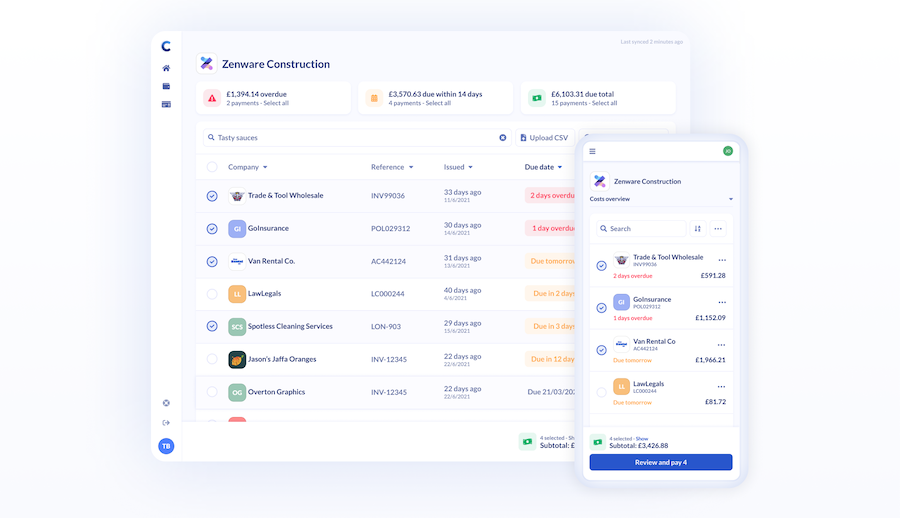
The company says it enables small and micro businesses to bulk pay bills, salaries, and taxes using existing high street small business bank accounts, saving them a lot of time and money in administration. This is because BACS is difficult to obtain and costly and virtual accounts require KYC to setup and add complexity to bookkeeping.

Comma says that during the pandemic, there was a large increase in outsourced financial operations. The availability of open banking bulk payment APIs from several of the High St banks made the product possible, which led to the startup picking up a great deal more business.

The Comma app connects to accounting systems (Xero, Quickbooks, Sage) and allows a business or their accountant to enter and manage supplier bank details without needing bank access. They can pay between 15 – 50 payees at once and the system posts payments against bills back to the accounting system to mark what has been paid.

Founder Tom Beckenham said: “I worked as COO of a business that was billing across continents and paying hundreds of staff. It was a very manual process. It occurred to me that larger businesses had corporate banking and systems that managed payments. Small businesses did not and were largely ignored. I noticed that traditional methods of solving the problem for small businesses had high setup costs – eliminating most of the market.”

He said he saw an opportunity to use new open banking technology to get to this long tail of businesses and solve payments holistically: “We have just got past the £1,000,000 in payments so far. We will get to £1m per week by the end of the quarter.”

In the UK the startup competes to some extent with Credec, Telleroo, and BACS bureaus such as ADP. Internationally, Melio in the US is the closest comparison. Libeo in France is also offering something similar.

Comma payments dashboard

Comma payments dashboard

06 Aug 2021

Nigeria’s Decagon raises millions to finance and train software engineers

This past decade, Nigeria has seen several companies cater to the development and growth of software engineers and tech talent in general. It’s a space many in the Nigerian ecosystem like to think is budding yet overcrowded.

So when Chika Nwobi started Decagon in 2018, the perception was generally “here comes another tech talent accelerator.” Two years on, the entrepreneur who is a household name has significantly scaled the company to new heights.

Today, Decagon is announcing its $1.5 million seed round and a student loan financing facility of $25 million from Nigerian financial institution Sterling Bank.

As a serial founder, Nwobi ran a couple of tech businesses, most notably mobile internet company MTech in the early 2000s. With Decagon, Nwobi is charting new territory in the fast-paced startup world after years of investing via his seed-stage firm called L5Lab.

Nwobi says Decagon aims to address the underrepresentation of black people in tech globally, starting with Nigeria. The West African country is the most populous on the continent and the most populous black nation globally.

The dire need for tech talent in Nigeria has become more evident these days, where startups are raising venture capital at a ridiculous pace. Youth unemployment in the country is at a staggering 50%, and while tech has presented an avenue to create jobs, supply isn’t catching up with demand. And more worrisome is the fact that the country’s best talents are leaving in droves to foreign companies in the U.S, Canada, the U.K., and Germany.

So the issue really is supply. If supply is fixed, everyone is happy. That’s what Decagon hopes for by training and connecting engineers to work remotely with both local and international companies. “Microsoft, Facebook and Google have all invested in building engineering offices in Nigeria, but most other companies can’t afford to do that, so we help them access top talent to work as remote engineers,” Nwobi said.

Decagon runs a six-month software engineering program and selects its candidates based on merit. It’s a paid program, and the software engineers are expected to pay about N2 million (~$4,000) tuition to get in. Then, the company employs an income-sharing model when the engineers find work and start earning upon graduation.

But what if the trainees can not afford the program in the first place? The student loan financing takes care of that, and students who take that option are expected to repay N3 million (~$6,000) in the space of three years.

The company claims to be the first to create such merit-based loan financing for students in Nigeria. The financing is in partnership with the financier Sterling Bank and Nigeria’s apex bank, the Central Bank of Nigeria (CBN). It allows Decagon to offer a Pay-After-Learning plan that provides the trainees with laptops, accommodation, internet, meal allowance and a stipend. No upfront payment is expected, says the company.

Decagon says while more than 80,000 people have applied to partake in its program, it has accepted only 440 candidates. That’s a 0.55% acceptance rate. However, Nwobi discloses three figures to show the company is on the right track: the company has recorded a 100% placement rate for its trainees, a 100% loan repayment rate, and a 410% salary increment made by its software engineers after getting placement.

Global tech talent company Andela employed this model before pivoting, and while it didn’t work for them, it seems to be working for Decagon. The reason is likely because Andela used equity financing to carry out these operations, whereas Decagon uses debt

Obinna Ukachukwu, the divisional head of Sterling Bank, commenting on the student loan financing, said, “We got involved to support alternative education by providing loans for Nigerian students complemented with financial literacy training. Based on the excellent performance of the current portfolio, it made sense to scale our support to Decagon.”

For its equity financing, Decagon raised money from Kepple Africa and Timon Capital. Some angel investors like Paul Kokoricha, managing partner of the private equity business of ACA, and Tokyo-based UNITED Inc., also took part.

Nwobi says Decagon operates at the intersection of edtech, fintech and the future of work, and the funds will be used to scale its efforts on the three fronts. The company will also be looking to deepen gender inclusion by increasing female participation in its cohorts from 25% (its current stats) to 50% in the next three years.

The CEO adds that the company which he refers to as a “tech talent catalyst” is profitable and growing at 500% per annum. “We see this capital as fuel to accelerate our mission to transform exceptional people, often from under-represented backgrounds, into world-class engineers by connecting them with financing, in-demand skills and their dream jobs.”

“We’re thrilled to work with Decagon to build up the top 0.5% of vetted engineering talent in Africa and help connect them to global tech opportunities. The frequency of engineering leaders from US and European companies in our network ask about sourcing African and Nigerian technical talent has increased at a rapid clip, and we’re excited to lean into that and help Decagon on their mission,” partner at Timon Capital, Chris Muscarella, said in a statement.

Decagon’s raise comes when there is general skepticism about the viability of tech talent accelerators on the continent despite their apparent need.

Before Andela changed its model, it was a clear market leader with over $180 million in its arsenal. Since it’s pivot, funding has relatively stalled for most of these companies. Maybe Decagon’s student loan financing method will be the new trendsetter in a space that desperately needs investment to solve Africa’s talent problem.

06 Aug 2021

India’s Vedantu not in talks to sell to Byju’s, top exec says

Indian online learning platform Vedantu is not in talks to sell the firm to edtech giant Byju’s, a top executive said on Friday.

A report on Friday by Indian news outlet Entrackr said Byju’s had offered $700 million to $800 million to acquire Bangalore-based Vedantu, which counts Accel and GGV Capital among its investors.

In a conversation with TechCrunch, Vedantu co-founder and chief executive Vamsi Krishna said any speculation around the firm engaging with Byju’s for an acquisition or merger is “absolutely 100% inaccurate.”

Byju’s, which has acquired over half a dozen startups, declined to comment.

India’s most valuable startup, Byju’s, has held conversations with multiple education firms in recent quarters as the Bangalore-headquartered giant looks to expand its footprint and broaden its product offerings.

The startup did reach out to both Unacademy and Vedantu last year and offered them both roughly $1 billion, according to four people familiar with the matter. But Byju’s and Vedantu haven’t re-engaged this year, the people said.

Vedantu is separately in advanced stages to close a new financing round that would value it over $1 billion, two sources familiar with the matter told TechCrunch. The round is expected to close within weeks, they added.

06 Aug 2021

The first Zambian startup to get into YC is developing Africa’s first card-issuing API

More than 40 African startups from a handful of countries have gone through YC over the past decade. Zambia joins that list today, and its entrant, Union54, is a worthy first entry.

Union54 (54 is a nod to the number of African countries) is a fintech company founded by Perseus Mlambo and Alessandra Martini. The startup claims to be Africa’s first card-issuing API and only just launched this year. But to paint the picture, Union54 didn’t come out of thin air; it is a project from the couple’s earlier startup Zazu.

Zazu was launched in 2015 as a challenger bank in Zambia. As with any fintech on the continent, Zazu had to create its own debit cards that users could connect to a wallet. Most times, Zazu would have to wait months for partner banks in the country to issue these cards. Mlambo tells me that at one point they had to wait for 18 months.

All this while the founders began to work with banks around the region to start issuing cards themselves. But the banks were lethargic in their approaches. “We just realized that either the processor or the bank was not necessarily well equipped to be able to answer our questions or to be able to give us the product that we’re looking for,” Mlambo said to TechCrunch in an interview.

The startup decided to go for the bullseye and meet with Mastercard. I mean, why wait for banks when you can bag those who issue these cards in the first place, right? Ultimately, the company got a Mastercard Principle membership, the first fintech from Africa, it claims.

As a principal member, Zazu became authorized to act as an “issuing bank.” In other words, they can provide debit cards and as “acquirers,” which means they can provide transaction processing services.

Along the way, the founders realized that to really advance African fintech, it was imperative to make it easier for any African country’s fintech to issue virtual or physical debit cards. So the team spun out Union54 from Zazu. The platform now has several APIs that make it simple for any fintech to issue programmable debit cards.

“We’ve now used our membership to be able to help other companies, any African fintech who wants to issue their own cards. They can just come to us, plug into our APIs, and move quickly, without needing to spend a long time negotiating,” Mlambo said about providing the service for other African fintechs.

The CEO adds that the company targets fintechs that don’t want to spend hundreds of thousands of dollars in setup fees to get virtual or physical cards. Union54 claims to issue cards in weeks via an API that does BIN sponsorship, program management and settlement, among other features.

Being able to do this gives Union54 bragging rights as Africa’s first card-issuing API. Fintechs have rarely looked at this opportunity; most are focused on other segments from payment gateways to wallets. It’s an interesting point to note because somehow, all the big players in these segments end up trying to create virtual and physical cards for their customers and face complications doing so. That’s the void Union54 wants to fill, and although it’s currently in beta, the company boasts of an impressive unnamed clientele signed up on its wait list and currently using the platform.

“The fascinating thing about these companies is that they are not B or C players. They are in the top 5% of African fintech. And for me, I always tell people, we’re now in the golden generation of African fintech. So it’s really the perfect time for a card-issuing product to be able to work with all of these guys considered leaders in their space. It means we really do have something that people want to use every day,” the CEO added.

On the company’s site, there are eight use cases for its API: ledger-based, acquirers/gateways, buy now, pay later, credit union, delivery companies, digital banking, credit card management and corporate cards.

Fintechs using Union54 are also allowed to design the cards and set the currency in which they want the cards to be charged, and set an extensive catalog of who will use them, what they will be used for, when they will be used and how they will be used.

Union54 charges fintechs on a pay-as-you-go basis for every API call. If a fintech company wants to create a physical card, they are charged a flat fee between $7-9 and an undisclosed flat fee when a transaction is made.

Mlambo says getting into the summer batch of YC 2021 has allowed the company to sign up its first set of customers, as most of them have come from YC’s network. He calls YC a program that has been “worth it from day one.”

“I am really excited and proud that Union54 has become the first Zambian fintech to get accepted into Y Combinator. And the second in Southern Africa. As you will know, when global investors look at Africa, they often do so from a West African perspective and our getting into Y Combinator validates a small part of our broader hypothesis: it is possible to service Africa from friendly jurisdictions such as Zambia.”

06 Aug 2021

Micromobility startup Voi raises $45 million to end sidewalk riding, improve safety

Micromobility startup Voi has raised $45 million, funds it says will be used to research and develop technology that will improve safety, keep users from riding on sidewalks and ensure scooters are properly parked.

The funding comes a month after Voi launched a pilot in Northhampton, UK with Irish startup Luna to test how computer vision technology might be used to solve parking and sidewalk riding issues. The R&D spending will include “pioneering the use of computer vision software to prevent pavement riding,” according to a statement released by the company.

“We are leading the way in that technology – we want to embrace that technology, like Luna, to make available next year on our fleet for the masses,” a spokesperson for Voi told TechCrunch, who also noted the company is open outfitting its e-bikes with computer vision technology.

The Voi spokesperson told TechCrunch the company is happy with the progress it’s made to date and is exploring its own proprietary technology, which could include acquiring Luna. No decisions or acquisitions have been made so far, but Voi is also investing in its next generation scooter. It’s possible that the next vehicle comes with computer vision built in, rather than retro-fitted to the stem.

Voi, which already has scooters in 70 cities across the U.K. and Europe, is aiming to expand. And technology that solves parking, safety and sidewalk clutter is viewed by Voi as key to winning city partnerships and maintaining the ones it already has.

Voi is also using the funds to work on the sidewalk parking problem by adding physical parking racks. On Wednesday, Voi installed 100 parking racks in Stockholm in agreement with the city. Voi already has over 300 physical parking racks in the UK.

Voi uses a swappable battery system that’s popular with other operators like Lime and Spin, which means the racks are just there for keeping scooters out of the public right of way. Voi says having physical racks will help “create a sustainable service for cities and the people living in them.”

This latest round brings Voi’s total funding to $205 million. The round was led by The Raine Group and existing investors like VNV Global participated alongside new investors. The company did not specify who those new investors are.

06 Aug 2021

Dutch startup hub Utrecht emerges from Amsterdam’s shadow

While Amsterdam garners the lion’s share of attention in the Netherlands tech ecosystem, the not-so-far-away region around Utrecht has its fair share of tech startups and investors, as is evidenced by our latest survey of locals, below.

Area ecosystem wranglers such as StartupUtrecht, UtrechtInc, Holland Startup, Utrecht Community and others bring startups, scaleups, corporates, angels, VCs, local government, banks and universities together to build the local startup ecosystem. They also benefit from the formidable Netherlands tech advocate initiative StartupDelta and The Netherlands Enterprise Agency, which promote the Netherlands more widely.

Utrecht is the fourth-largest city in the Netherlands, with 350,000 inhabitants. Its offices and co-working spaces include Dotslash Utrecht, De Stadstuin, MindSpace and Tribes; as well as accelerator programs like Startupbootcamp and Techleap.

Notable startups from the region include Distimo (acquired by AppAnnie), unicorn GitLab, MoneyMonk and StuComm. Plus there are newer ones such as SnappCar, Blendle, Merus, Nibblr, United Wardrobe, Näpp, Lalaland, 2DAYSMOOD and Remind2Change.

Our survey respondents think the ecosystem is strong in sustainable energy, medtech, food tech, life sciences, marketplaces, deep tech, gaming and media. However, they seem to think it’s weaker in design, hardware, fintech, robotics and agritech.

Notable startups named by our respondents include Channable, Pepscope, Goin’ Connect, Fundsup, Tover, Faqta, Sensorfact, SODAQ, Picnic, Neurolytics, De Clique, Solease, BikeFlip, Packaly, DiManEx, Trunkrs, DialogueTrainer, EatMyRide, CART-Tech, Prolira, among many, many others. It just goes to show the region has a strong and growing ecosystem.

The investment scene is described variously as focusing on software, clean tech, life sciences, biotech, organoids, 3D bioprinting, AI and VR/AR. One says: “In Amsterdam it’s ok. Utrecht is a bit lagging.” Another said, “The investor scene focuses on early-stage, scalable tech in healthcare, sustainability and education. [There are] many local informal investors and nationally operating VCs.”

With the shift to remote working, many respondents think people will “preferably move out of the city center toward the villages nearby” as there is “a lot of nature/space around.” That said, Utrecht is “a growing hub” and many will “stay in the city. But fewer people will move in, and remote working is there to stay.” It’s also easy to work remotely in the Netherlands given its proximity to other big European cities, so it may attract new digital nomads, “thanks to the central position of Utrecht in the middle of the country and the attractiveness of the ecosystem.”

We surveyed:


Jorg Kop, investment manager, ROM Utrecht Region

What industry sectors is your tech ecosystem strong in? What are you most excited by? What is it weak in?
Digital, gaming, e-health, edtech, sustainability.

Which are the most interesting startups in your city?
Channable, Pandora Intelligence, Sensorfact, SnappCar, Faqta, StuComm, DiManEx, Prolira, CART-Tech.

What are the tech investors like? What is the investment scene like in your city? What’s their focus?
Many local informal investors and national operating VCs.

With the shift to remote working during the COVID-19 pandemic, will people stay in your city, move out, or will others move in?
Others will be moving in, thanks to the central position of Utrecht in the middle of the country and the attractiveness of the ecosystem.

Who are the key startup people in your city (e.g., investors, founders, lawyers, designers, etc.)? 
Sjoerd Mol (Benvalor), Erik Stam (Utrecht University), Robbert-Jan Hanse (Holland Startup), Heerd Jan Hoogeveen (Startup Utrecht), Jorg Kop (UtrechtInc and ROM), Edgard Creemers (ROM).

Where do you see your city’s tech scene in five years’ time?
Part of the greater Amsterdam region from an international brand perspective, closely working together with all other key startup regions in NL.

Stefan Braam, incubation lead, UtrechtInc

What industry sectors is your tech ecosystem strong in? What are you most excited by? What is it weak in?
Strong: AI, health, sustainability and learning. Weak: robotics, engineering, ag.

Which are the most interesting startups in your city?
Solease, SnappCar, BikeFlip, Packaly, Sensorfact, DiManEx, Näpp, Trunkrs, StuComm, Faqta, DialogueTrainer, EatMyRide, CART-Tech, Prolira, MRIguidance, Redgrasp, SyncVR, DigiDok, Learned.io, 2DAYSMOOD, Hooray and Goin’ Connect.

What are the tech investors like? What is the investment scene like in your city? What’s their focus?
Good access to funding. Investor scene focuses on early-stage, scalable tech in healthcare, sustainability and education.

With the shift to remote working during the COVID-19 pandemic, will people stay in your city, move out, or will others move in?
We see an increase in startups coming to the city, due to livability in the lovely city and the facilities for flex working.

Who are the key startup people in your city (e.g., investors, founders, lawyers, designers, etc.)? 
Jorg Kop (director of UtrechtInc startup incubator), Heerd Jan Hoogeveen (director of StartupUtrecht), Arjan Van Den Born (director, ROM Utrecht).

Where do you see your city’s tech scene in five years’ time?
Growing fast, in top five in Europe in five years.

Irene Van de Poll, investment manager, ROM Utrecht Region

What industry sectors is your tech ecosystem strong in? What are you most excited by? What is it weak in?
The Utrecht region is strong in life sciences, medtech, software (smart services), gaming and media.

Which are the most interesting startups in your city?
Channable, Faqta, Sensorfact, SODAQ, Picnic, Neurolytics, De Clique.

What are the tech investors like? What is the investment scene like in your city? What’s their focus?
A lot of focus is on life sciences, biotech, as there is a lot of research at the Utrecht science park and also spin-offs. At the science park, organoids, 3D bioprinting, organ on a chip, medtech are areas of interest. Also a number of the VCs in the area are health focused. IT/software/data/AI and VR/AR are also important focus areas for investors.

With the shift to remote working during the COVID-19 pandemic, will people stay in your city, move out, or will others move in?
I think they will stay as Utrecht is very centrally located in the Netherlands and Europe. It’s easy to work remotely in the Netherlands, internet speed is no problem.

Who are the key startup people in your city (e.g., investors, founders, lawyers, designers, etc.)? 
Jorg Kop, director of UtrechtInc; Bas van Abel, founder De Clique and Fairphone; Michiel Muller, CEO Picnic; Robbert Jan Hanse, founder Holland Startup; and Heerd Jan Hoogeveen, director StartupUtrecht.

Where do you see your city’s tech scene in five years’ time?
More startups that have evolved into successful scaleups. More money invested in general in innovative new companies. International talent sees Utrecht as the place to be beside Amsterdam. At the forefront of green and sustainable solutions.

Arthur Tolsma, co-founder and CEO, Codean

What industry sectors is your tech ecosystem strong in? What are you most excited by? What is it weak in?
Strong: tech development in general, specifically software, clean tech, marketplace, deep tech. Less in large scale commercialization.

Which are the most interesting startups in your city?
Channable, Tover.

What are the tech investors like? What is the investment scene like in your city? What’s their focus?
Focus on software and clean tech.

With the shift to remote working during the COVID-19 pandemic, will people stay in your city, move out, or will others move in?
Stay in the city. But less people will move in, and remote working is there to stay.

Who are the key startup people in your city (e.g., investors, founders, lawyers, designers, etc.)? 
UtrechtInc.

Where do you see your city’s tech scene in five years’ time?
Improving step by step.

Paul Mignot, founder and CEO, Withthegrid

What industry sectors is your tech ecosystem strong in? What are you most excited by? What is it weak in?
Clean tech.

Which are the most interesting startups in your city?
iwell.

What are the tech investors like? What is the investment scene like in your city? What’s their focus?
Clean tech focus. Growing in momentum.

With the shift to remote working during the COVID-19 pandemic, will people stay in your city, move out, or will others move in?
Move in.

Where do you see your city’s tech scene in five years’ time?
Grown significantly. Amsterdam is pricing itself out and becoming too expensive to live in.

Marcel Merkx, founder and CEO, CargoSnap

What industry sectors is your tech ecosystem strong in? What are you most excited by? What is it weak in?
Strong universities in the marketing and medical space. We could do with a bit stronger IT education (developers!).

Which are the most interesting startups in your city?
SnappCar.

With the shift to remote working during the COVID-19 pandemic, will people stay in your city, move out, or will others move in?
Stay and move in. Utrecht is a growing hub.

Who are the key startup people in your city (e.g., investors, founders, lawyers, designers, etc.)? 
StartupUtrecht — the team.

Where do you see your city’s tech scene in five years’ time?
Well … still lagging Amsterdam, but leveraging the central place in the Netherlands (easy to get to), it will be a good runner-up in terms of attracting talent interested in joining this scene.

Jasper Voorendonk, marketer/founder, AgnostiPay

What industry sectors is your tech ecosystem strong in? What are you most excited by? What is it weak in?
Health tech/edtech — most exited: the DLT/blockchain/fintech/open-source space in Utrecht.  Weak: Hardware-based startups (better in Delft/Eindhoven).

Which are the most interesting startups in your city?
GitLab, Channable, Pepscope, Goin’ Connect, Fundsup.

What are the tech investors like? What is the investment scene like in your city? What’s their focus?
Focus on health tech.

With the shift to remote working during the COVID-19 pandemic, will people stay in your city, move out, or will others move in?
Stay: a lot of nature/space around.

Who are the key startup people in your city (e.g., investors, founders, lawyers, designers, etc.)? 
Jorg Kop, Stefan Braam, Jasper Voorendonk.

Where do you see your city’s tech scene in five years’ time?
Utrecht, as the Dutch vibrant hub for early-stage, highly scalable tech startups.

Menno Vergeer, co-founder and CEO, Redgrasp

What industry sectors is your tech ecosystem strong in? What are you most excited by? What is it weak in?
Strong in life sciences.

Which are the most interesting startups in your city?
Channable, Redgrasp, Trunkrs.

With the shift to remote working during the COVID-19 pandemic, will people stay in your city, move out, or will others move in?
People will preferably move out of the city center toward the villages nearby (all within a range of 10-20 km).

Where do you see your city’s tech scene in five years’ time?
It will grow at a rate similar to the global tech scene.

Roelof Reineman, entrepreneur

What industry sectors is your tech ecosystem strong in? What are you most excited by? What is it weak in?
Strong: IT, digital, sustainable energy, medical, food. Weaker: design, hardware, fintech.

Which are the most interesting startups in your city?
KokeRoo.

What are the tech investors like? What is the investment scene like in your city? What’s their focus?
A focus on building a better world and a profit, not just the profit.

With the shift to remote working during the COVID-19 pandemic, will people stay in your city, move out, or will others move in?
Stay. Tt is a lush, green city with plenty of room to live and breathe.

Who are the key startup people in your city (e.g., investors, founders, lawyers, designers, etc.)? 
Utrecht Inc (Jasper Voorendonk). Dotslash (Jelle Drijver). StartupUtrecht (Heerd Jan Hoogeveen).

Where do you see your city’s tech scene in five years’ time?
Thriving and still growing.

Luuk Post, partner, De Contentkalender

What industry sectors is your tech ecosystem strong in? What are you most excited by? What is it weak in?

We’re strong in public affairs. We’re weak in the for-profit sector.

Which are the most interesting startups in your city?
Moveshelf.

With the shift to remote working during the COVID-19 pandemic, will people stay in your city, move out, or will others move in?
The city of Utrecht is ever-expanding; people will always move in.

Leon Brunenberg, managing partner, Arches Capital

What industry sectors is your tech ecosystem strong in? What are you most excited by? What is it weak in?
SAAS, software, B2B.

What are the tech investors like? What is the investment scene like in your city? What’s their focus?
In Amsterdam it’s ok. Utrecht is a bit lagging.

With the shift to remote working during the COVID-19 pandemic, will people stay in your city, move out, or will others move in?
Stay.

Where do you see your city’s tech scene in five years’ time?
In Holland, second after Amsterdam.

Erik Stam, co-founder, Stichting Entrepreneurial Ecosystem Observatory

What industry sectors is your tech ecosystem strong in? What are you most excited by? What is it weak in?
Strong: health, edtech, IT.

Which are the most interesting startups in your city?
Channable, Tover, De Clique, Bittiq, Neurolytics.

What are the tech investors like? What is the investment scene like in your city? What’s their focus?
IT, health, edtech, travel.

With the shift to remote working during the COVID-19 pandemic, will people stay in your city, move out, or will others move in?
Stay.

Who are the key startup people in your city (e.g., investors, founders, lawyers, designers, etc.)? 
Jorg Kop, Heerd Jan Hoogeveen, Robbert Jan Hanse.

Where do you see your city’s tech scene in five years’ time?
Expanding.

06 Aug 2021

India’s Supreme Court rules in favor of Amazon to stall $3.4B Future and Reliance deal

India’s apex court on Friday ruled in favor of Amazon to stall the sale of Future Group to Reliance Industries in a major victory for the American e-commerce giant in the key overseas market.

The Indian Supreme Court said the order by a Singapore arbitration court last year — which had ruled to stall the deal between the two Indian giants — is enforceable in India.

Reliance Retail said a year ago it had reached an agreement with Future Group to acquire the latter’s retail and wholesaler business, as well as its logistics and warehousing business, for $3.4 billion.

Amazon, which had invested in one of Future Group’s units, accused the Indian firm of violating its terms and reached a Singapore arbitrator to halt the deal. The Indian firms had argued at the time that a Singapore’s court order wasn’t valid in the South Asian market.

Shares of Future Retail dropped 6% on the order, while Reliance Industries — the conglomerate that runs Reliance Retail — were down 1.3%.

More to follow…

05 Aug 2021

Fisker-Foxconn EV partnership ‘moving faster than expected,’ CEO Henrik Fisker says

U.S. electric automaker Fisker expects operating expenses to reach between $490 million and $530 million this year, a slight increase in its business outlook for the year that is driven by R&D spending on prototypes for its Ocean SUV, testing and validation of advanced technology, hiring and its “accelerating” partnership with Foxconn.

The company, which reported its second-quarter earnings Thursday after market close, raised its business outlook for expectations for key non-GAAP operating expenses and capital expenditures for the full year up from its previous guidance of $450 million to $510 million. The earnings report pointed to R&D spending on prototype activities in 2021 driven by testing and validation on advanced driver assistance systems, powertrain and user interface. The company also noted an increase in spending on in-house costs, such as virtual validation software tools, hiring and virtual and physical testing to account for recently tightened Euro NCAP and IIHS safety regulations.

Co-founder, CFO and COO Geeta Gupta Fisker added during an investor call that the company made a strategic decision to develop internal capabilities to test and validate, instead of relying solely on third parties.

Co-founder and CEO Henrik Fisker said in an interview Thursday its partnership with Foxconn, which is “moving faster than expected,” also is contributing to an increase in spending.

“We were really aligned,” Fisker said in an interview Thursday. “I mean it’s a very unique business deal because we are both investing into this program; it’s not like we just hired Foxconn to make a car.”

Fisker has two vehicle programs in the works. Its first electric vehicle, the Fisker Ocean SUV, will be assembled by automotive contract manufacturer Magna Steyr in Europe. The start of production is still on track to begin in November 2022, the company reiterated Thursday. Deliveries will begin in Europe and the United States in late 2022, with a plan to reach production capacity of more than 5,000 vehicles per month during 2023. Deliveries to customers in China are also expected to begin in 2023.

In May, Fisker signed an agreement with Foxconn, the Taiwanese company that assembles iPhones, to co-develop and manufacture a new electric vehicle. Henrik Fisker said the two companies moved on the design “fairly quickly,” and are now diving into the engineering and technical details that include working on a patent for a new way of opening a trunk and other technological innovations.

“We have accelerated really quite fast and we probably will have some early prototypes already by the end of this year,” he said.

The companies have also decided that this EV will be designed for the urban lifestyle.

“You can’t make a car for everybody,” he said. “You can’t make a car for a farmer and for somebody who lives in an apartment; those are two different vehicles, so we chose the urban lifestyle for this vehicle.”

Production on the Project PEAR car, which stands for Personal Electric Automotive Revolution, will be sold under the Fisker brand name in North America, Europe, China and India. Pre-production is expected begin in the U.S. by the end of 2023, and will then ramp up into the following year, Fisker said Thursday.

Henrik Fisker didn’t reveal the U.S. manufacturing location. He did make a recent visit to Foxconn’s manufacturing facility in Wisconsin, noting it was an “impressive” facility, as was the region’s supply chain. The final decision is Foxconn’s, Fisker noted. However, Fisker wants to produce the electric vehicle in a state that allows automakers to sell directly to customers. Wisconsin currently prohibits this practice.

“That’s going to be one of the main things that has to change for us to go to the store and sell our electric vehicle,” he noted.

Earnings results

Here are the basics from the company’s second-quarter earnings. Keep in mind two important factors: Fisker wasn’t publicly traded at this time last year, there are no year-over-year comparisons available yet; and this company is essentially pre-revenue, although they did bring in $27,000 from merchandise sales.

Fisker reported it generated $27,000 in revenue, a 22% bump up from the previous quarter. The automaker reported a net loss of $46.2 million, or $0.16 per share, compared to a net loss of $176.8 million in the previous quarter. That large net loss in the first quarter comes from changes in how the SEC treated non-cash items and resulted in warrants liability of $138 million in Q1. The public warrants are now retired and the company says will no longer have these impacts on future earnings.

Loss from operations were $53.1 million in the second quarter compared to a loss of $33 million in the first quarter. Importantly, the company has held onto its cash using what it describes as an “asset light” approach, which means it’s not building a factory, instead relying on partners. Cash and cash equivalents were $962 million as of the quarter ended June 30, slightly lower than the $985.1 million in the first quarter.

05 Aug 2021

Best Buy investing millions in Brown Venture Group, a firm exclusively backing BIPOC founders

Last summer, in the wake of George Floyd’s murder, Best Buy committed to “do better” when it came to supporting communities of color. As part of the retail giant’s self-proclaimed mission to better address underrepresentation and technology inequities, the company announced today that it is investing up to $10 million in Brown Venture Group.

Minnesota-based Brown Venture Group is a three-year-old venture capital firm that has pledged to exclusively back Black, Latino and Indigenous technology startups in “emerging technologies.” Black and Latin communities were the recipients of just 2.6% of total funding in 2020, according to Crunchbase data. 

Brown Venture Group is in the process of fundraising for its targeted inaugural $50 million fund, 75% of which has been committed, according to its principals. This means that Minneapolis-based Best Buy’s pledge to invest “up to $10 million” could represent as much as 20% of the total capital raised, making it a lead LP in the fund.

Brown Venture Group co-founder and managing partner Dr. Paul Campbell said that in the early days of forming the firm, he and co-founder Dr. Chris Brooks were told by “multiple people locally” that they should leave the Twin Cities metro area because “all the capital was on the coasts.”

“We just made a firm decision in the very early stages to stay put in the Twin Cities and that we wanted this to be a Twin City story,” Campbell told TechCrunch. “So when we thought about our Twin Cities ecosystem and who we wanted to be leading partners with, Best Buy was at the top of the list. So we are just more than excited to have Best Buy as a lead LP in our fund.” 

For its part, Best Buy — which notched $47 billion in revenue last year — said the move is aimed at helping “break down the systemic barriers often faced by Black, Indigenous and people of color (BIPOC) entrepreneurs — including lack of access to funding — and empowering the next generation within the tech industry.

The company added: “The partnership with Brown Venture Group will work toward making the technology startup landscape more inclusive and creating a stronger community of diverse suppliers.”

In conjunction with announcing Best Buy’s commitment to the fund, the company and venture firm said they would jointly launch an entrepreneurship program at Best Buy Teen Tech Centers to help develop young entrepreneurs through education, mentorship, networking and funding access.

Brown Venture Group — whose name was chosen to represent an “inclusive” skin color of the groups it represents — has so far invested in five companies, including clean energy startup Ecolution kwh.

Ten million dollars seems like a drop in the bucket for a company that generated sales of $47 billion last year. Best Buy said this initiative is just one of several that it has underway to support BIPOC businesses, including plans to provide $44 million to expand college prep and career opportunities for BIPOC students and a pledge to spend at least $1.2 billion with BIPOC and diverse businesses by 2025. The company has also said that by 2025 it will fill one out of three new non-hourly corporate positions with BIPOC employees and hire 1,000 new employees to its technology team, with 30% of them being diverse, specifically Black, Latinx, Indigenous and women.

“We’re committed to taking meaningful action to address the challenges faced by BIPOC entrepreneurs,” Best Buy CEO Corie Barry said in a written statement. “Through partnerships like this, we believe we can begin to do this by helping to build a stronger, more vibrant community of diverse innovators in the tech industry, some of whom we hope will become partners of Best Buy in the future.”