Year: 2021

10 Oct 2021

Shang-Chi Passes $400M at Global Box Office Even Without China

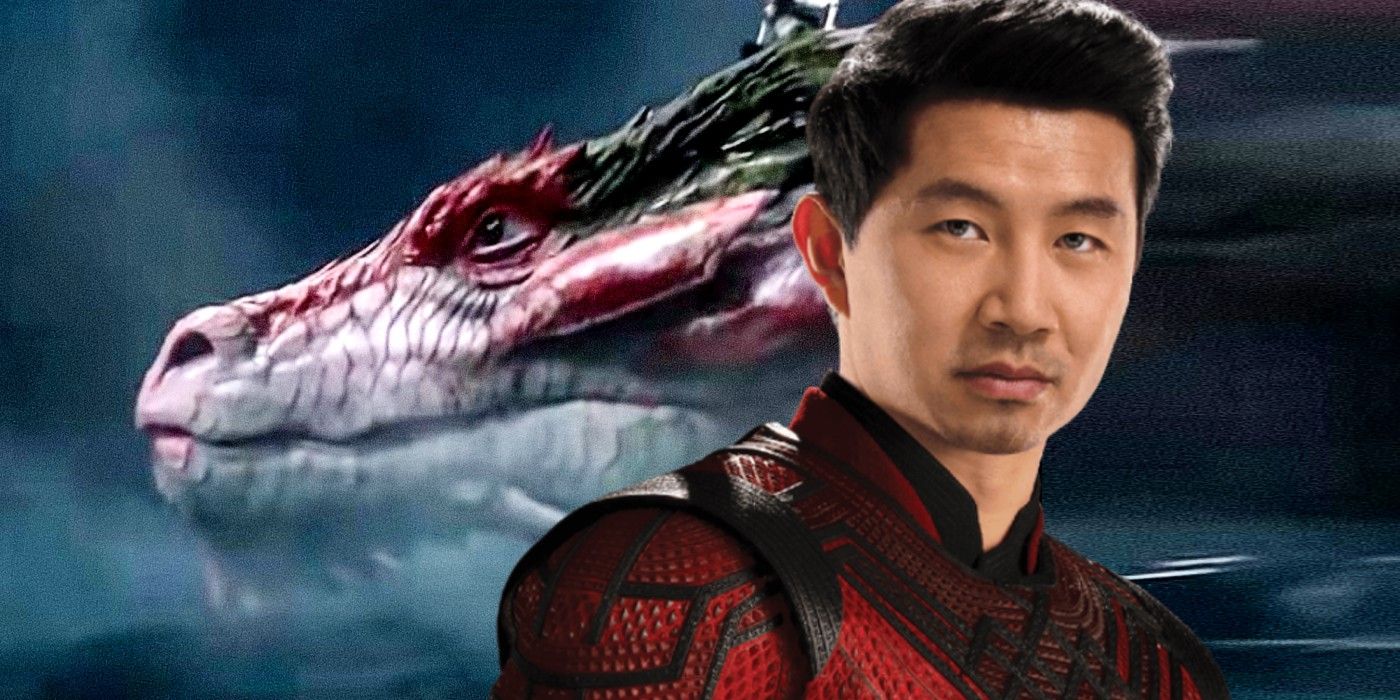
Disney and Marvel's Shang-Chi and the Legend of the Ten Rings continues to outperform expectations at the box office, sailing past $400 million worldwide. The Phase 4 MCU movie is in its sixth weekend since its release, which was back on September 3. Shang-Chi was an immediate success upon release, grossing $29.6 million at the box office on its opening day, which was the third-best opening day during the COVID-19 pandemic.

Shang-Chi would go on to take the crown of the largest Labor Day weekend opening ever. The Disney film earned over $94 million at the box office during the 4-day weekend, far surpassing Rob Zombie's 2007 Halloween reboot which previously held the Labor Day opening weekend crown at $30.6 million. Shang-Chi ended up earning $100 million in just five days, making it the fastest to film to reach such a milestone since Star Wars: The Rise of Skywalker. The film held the number one spot at the box office for four consecutive weekends, marking it as the third MCU movie to pull off such a feat behind Guardians of the Galaxy and Black Panther. By September 30, Shang-Chi hit another box office record by becoming the first pandemic era movie to achieve the $200 million box office milestone, and it seems the film has just surpassed another one.

Related: Shang-Chi May Have Set Up The MCU's Real Iron Fist

Forbes reports that Marvel's Shang-Chi sailed past the $400 million milestone at the global box office in the sixth weekend since its release. During the past weekend, the film grossed an additional $4.2 million for a domestic total of over $212 million, setting it up for a final domestic gross between $220 million and $225 million. The film has also earned over $189 million in other territories, including the United Kingdom, South Korea, and France.
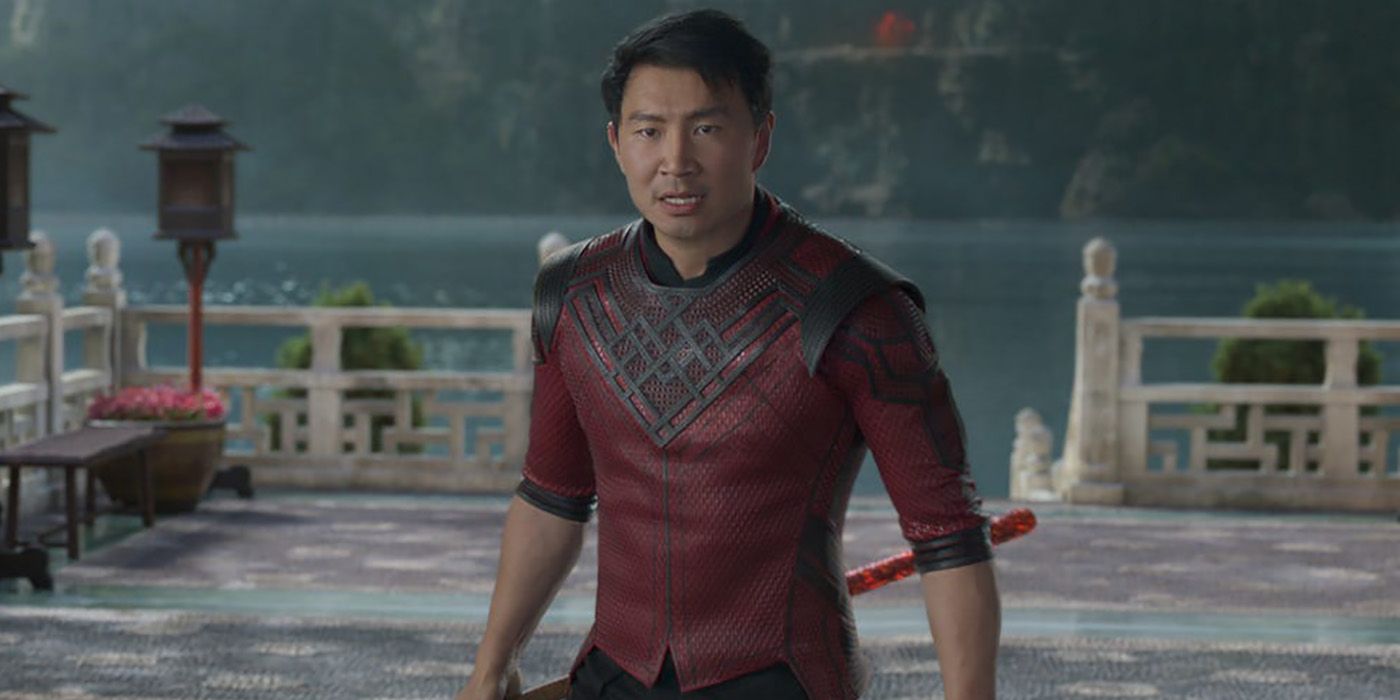
One of the reasons Shang-Chi's performance is so notable is the fact that its international box office does not include China, since the movie has yet to release in the Middle Kingdom. Owing to comments the film's star, Simu Liu, made in a CBC 2017 interview that referenced negative aspects about his parents living in China, the Chinese government excluded Shang-Chi from their list of upcoming MCU movies scheduled to release in its territories. This is particularly noteworthy because Disney's latest film passed the $400 million global box office milestone without the help of a Chinese release, making it the first pandemic-era Hollywood movie to do so. This has led many to speculate on how well Shang-Chi could have performed if it was allowed to release in China.

While Disney was a little reluctant in releasing Black Widow, releasing the movie to both theaters and Disney+, they went all in on Shang-Chi and the Legend of the Ten Rings, allowing for an in-theater only debut. The film has clearly been a success, outperforming all expectations, signaling that audiences may be ready to head back to the movies. The movie's success not only ensures a sequel is in the works, but it will be interesting to see how a follow-up film performs when it releases in a post-pandemic era.

Next: Shang-Chi Unintentionally Calls Out The Oldest Star Wars Plot Hole

Source: Forbes


from ScreenRant - Feed https://ift.tt/3iO9Owk https://ift.tt/3aFkOYB

10 Oct 2021

Astronomers ‘Stumped’ Over Images Of Bizarre Double Galaxy

It's not too often that astronomers are at a loss for words when making a space-related discovery, but the above image from NASA's Hubble telescope managed to do precisely that. Of all the tools at our disposal for exploring outer space, Hubble has repeatedly proven to be one of the best. The 31-year-old telescope has made countless discoveries over the years, whether it be answering questions about our own Solar System or investigating galaxies millions of light-years away.


In 2021 alone, Hubble has been up to a lot. It's captured a large 'eye' in the middle of a constellation, learned new information about Jupiter's Great Red Spot, and even identified a 'ghost' galaxy utterly devoid of dark matter. All of this has happened despite a scare earlier this year — one that caused Hubble to go offline for a month due to a nasty computer glitch.


NASA just shared one of Hubble's latest discoveries, and it may be one of the most head-scratching of the entire year. Looking at the photo above, all seems pretty normal at first. The picture shows a large cluster of galaxies deep in space, with Hubble focusing on two of them. The first one, labeled 'single image,' is a run-of-the-mill galaxy with a bright center and numerous stars surrounding it. Where things get interesting is with the galaxy labeled 'mirrored image.' Not only does it look like a galaxy mirroring itself, but it's also a copy of the 'single image' galaxy above it. In other words, there are three sightings of the same galaxy for no apparent reason. After first spotting the 'double' galaxy in 2013, astronomer Timothy Hamilton admitted he and his team "were really stumped."


If it sounds impossible for there to be three instances of the exact same galaxy, that's because it is. What's really happening here is something called 'gravitational lensing'  — a visual trick that occurs when a large amount of matter distorts light from other galaxies. Gravitational lensing is a fairly well-known thing today, but in 2013 when Hamilton discovered these perplexing galaxies, that wasn't the case.

In this particular situation, NASA explains the lensing as follows: "A precise alignment between a background galaxy and a foreground galaxy cluster produces twin magnified copies of the same image of the remote galaxy. This rare phenomenon occurs because the background galaxy straddles a ripple in the fabric of space." Another way to think about it is like wavy reflections present in a swimming pool. When the afternoon sun is shining bright on an outdoor pool, the light from the sun appears on the bottom of it with swirling, wavy reflections. As Richard Griffiths from the University of Hawaii explains, "The ripples on the surface act as partial lenses and focus sunlight into bright squiggly patterns on the bottom."

This is essentially what's happening in the image at the top of this article, albeit on a much larger scale. A ripple in space is taking light from the single image galaxy, magnifying and distorting it, and that's what's seen with the mirrored image galaxy. That's a great oversimplification of all the science and research that went into getting to this answer, but that's ultimately how the photo is explained. If anything, it's a great reminder of how much we still have to learn about space. In just 8 years, astronomers went from not understanding this photo to having a logical explanation for it. In the next 8, 16, or 32 years, who knows what other mysteries we'll also have answers to.


Source: NASA


10 Oct 2021

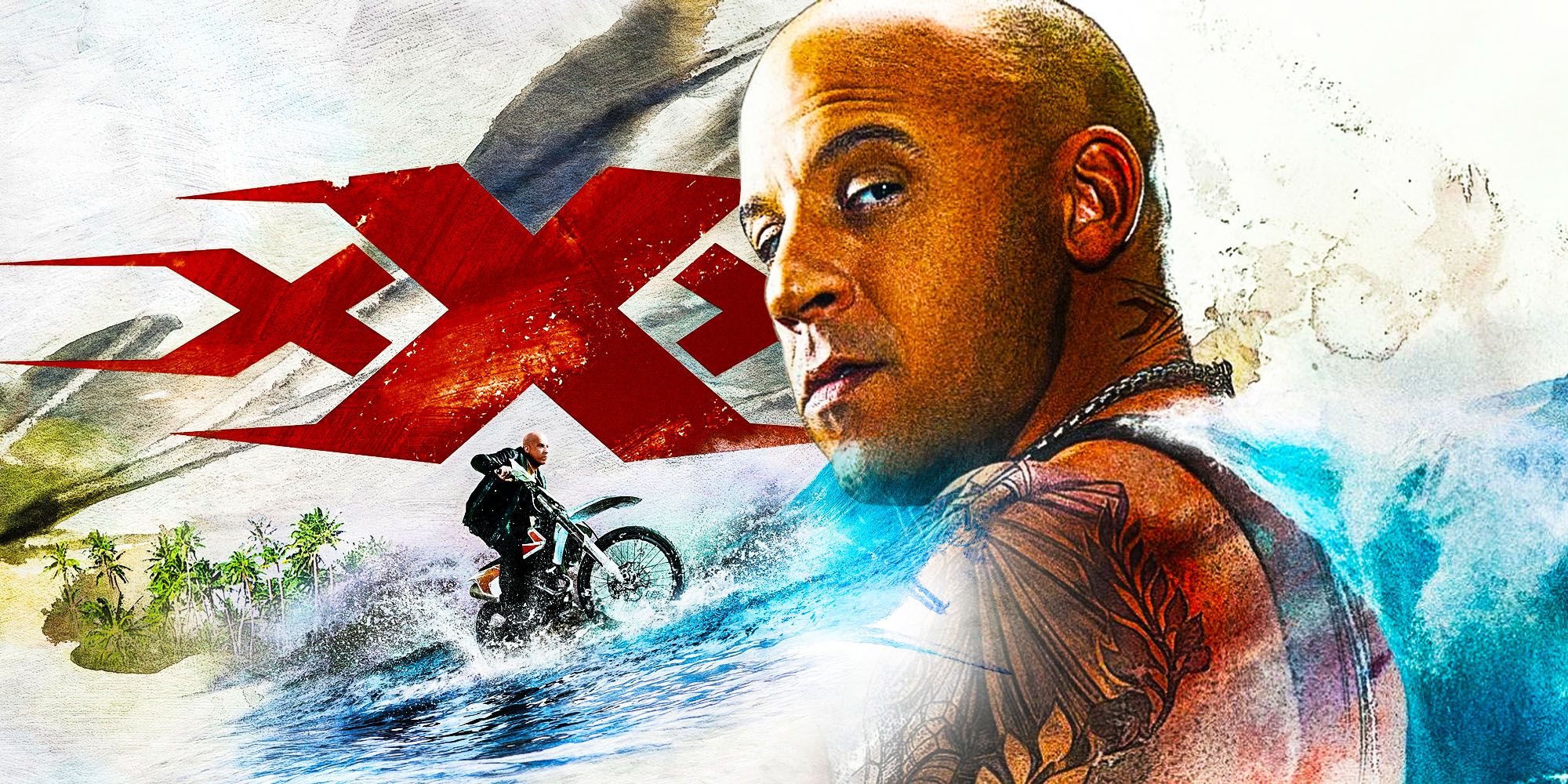
xXx 4 Should Borrow From Fast & Furious And Introduce Xander Cage’s Family

If xXx 4 wants to evolve the series, it should take a page out of The Fast And The Furious playbook and bring in some of Xander Cage's family. The original xXx was custom built for Vin Diesel as a star vehicle, following the surprise success of 2001's The Fast And The Furious. Plans to turn it into a James Bond-style series came to halt when the star passed on a sequel, with Ice Cube taking over for State Of The Union in 2005. This follow-up was a box-office dud, but Diesel was later lured back for 2017's The Return Of Xander Cage.

While that appeared to right the ship, xXx 4 has been delayed due to lawsuits. Despite being one of Diesel's most well-known franchises, he's only played Cage twice over a 20-year span. Compared to his run as Dom in the Fast & Furious movies - who throughout that series has evolved from street racer to saving the world multiple times - has barely scratched the surface of Cage as a character. Outside of his fondness for tattoos and extreme sports, there's not much depth to Xander.

Related: Why xXx 2 Almost Dropped Samuel L. Jackson's Gibbons Complete

xXx 4 doesn't have to go to Shakespearian depths to get under Cage's skin, but he could use some fleshing out. Given the popularity of the ongoing Fast And Furious saga, the next xXx could dig into his past and explore some of his family ties. Outside of briefly mentioning an aunt in the original movie, the xXx series hasn't revealed much about Cage's clan and a sequel that sees him connect with his family could bring some emotional heft to the movies.

Given that F9 focused on Dom going head to head - and eventually somewhat reconciling - with his estranged brother Jakob (John Cena), maybe that's too familiar a beat for xXx 4. That said, a younger brother or sister he barely knows, or even a son or daughter he's never met, could be one direction to explore. Given that Xander's taste for mayhem is one of his defining traits, a xXx 4 where he has to connect with or somewhat keep a child of his own under control has potential.

xXx 4 will likely carry on from the events of The Return Of Xander Cage and see the title spy working with his fellow former agents like Cube's Darius Stone. The series is ultimately going for more over the top thrills than the more recent James Bond movies, but it wouldn't hurt to have a little bit of heart mixed in. The next sequel doesn't have to be a straight rip of the Fast And Furious formula, but a Xander Cage family member or two could give some more stakes to the saga.

Next: xXx 4 Movie Updates: Everything We Know About The Vin Diesel Sequel


from ScreenRant - Feed https://ift.tt/2YGeD3Y https://ift.tt/3mEHk9w
10 Oct 2021

Dead By Daylight Survivor Guide: Mikaela Reid (Perks, Tips, & Strategies)

The latest Dead by Daylight survivor in need of a strategy guide, Mikaela Reid, will be arriving in the game on October 19 along with the update for chapter 21.5. The next chapter in Dead by Daylight, Hour of the Witch, is predictably based around a Halloween theme.

Mikaela Reid looks like a character plucked straight out of a Halloween movie: black attire, long, red hair, funky glasses, and a hat fit for a witch. Mikaela’s backstory involves her father dying when she was 16, leading her down a path of witchcraft and the occult.

Related: Silent Hill 2's James Sunderland Leaks As Dead by Daylight Cheryl Mason Skin

Mikaela has three perks unique to her character in Dead by Daylight. Like all the characters in the game, Mikaela’s survivor perks can be used to gain an advantage over the killer. Mikaela’s perks are all centered around totems, similar to the Killer The Hag's Hex Totems when she was released. Traditionally, only Killers could use Totems to make survival more difficult. Hex Totem effects remain until a Survivor cleanses the totem. Mikaela's abilities allow her to bless and use totems, including Hex Totems, turning them into Boon Totems that benefit the whole Survivor team.

The following perks will be available for Mikaela Reid upon the character’s release in Dead By Daylight:

Clairvoyance: This is an intrinsic energy in a Survivor that sees beyond their vision. Clairvoyance activates whenever a Survivor cleanses a Totem. When empty-handed, hold the Ability button to unlock full aura-reading potential. For up to 10 seconds, Survivors can see the auras of exit gate switches, generators, hooks, and chests within a 64-meter range. Teachable at Level 30.

Boon: Circle of Healing: A boon that offers comfort amidst the terror. Press and hold the Ability button near a Dull or Hex Totem to bless it and create a Boon Totem. Soft chimes ring out in a 28-meter range. Any Survivors within the Boon Totem’s range gain a 100% healing speed bonus and can heal themselves without needing a Med-Kit or Perk. Survivors can only bless one Totem at a time. All equipped boon Perks are active on each Boon Totem. Teachable at Level 35.

Boon: Shadow Step: A boon that conceals the truth. Press and hold the Ability button near a Dull or Hex Totem to bless it and create a Boon Totem. Soft chimes ring out in a 28-meter range. Any Survivors within the Boon Totem’s range will have their scratch marks and auras hidden to the Killer. This effect lingers for 4 seconds after leaving the Boon Totem’s range. Survivors can only bless one Totem at a time. All equipped boon Perks are active on each Boon Totem. Teachable at Level 40.

Boon: Circle of Healing and Boon: Shadow Step are immensely useful for group play. If players are near a Circle of Healing Boon Totem, they can all heal themselves at 200% healing speed without a Med-Kit. Using this ability after unhooking a teammate and losing the killer can make the getaway much smoother.

Using Boon: Shadow Step can also make a getaway smoother. Players’ scratch marks and auras become hidden near this totem, which conceals fleeing players’ movements. Lastly, Clairvoyance is a straightforward ability. Players should use Clairvoyance when they have an opportunity and keep moving afterward. Seeking out a totem for Clairvoyance is not particularly useful, so Survivors can instead simply activate it when the opportunity arises. Whether players are playing Dead By Daylight solo or with friends, Mikaela is a great addition to the Survivor team.

More: How Dead By Daylight's Pinhead Is Different From Other Killers

Dead by Daylight is available on PC, Xbox One, Xbox Series X/S, PlayStation 4, PlayStation 5, Nintendo Switch, and mobile devices.


from ScreenRant - Feed https://ift.tt/2WYJx6K https://ift.tt/3CXXlOq
10 Oct 2021

School warns parents of allowing children to watch ‘graphic’ Squid Game


squid game

While Squid Game has become Netflix’s latest hit, it has sparked worry over kids potentially replicating the survival game.

A primary school in England issued a letter to parents expressing concern that children that have watched the brutal show are pretending to shoot other children in the playground as a way of re-enacting the show.

The letter states: "Dear Parents/Carers, It has come to our attention that a number of our children are watching Squid Game on Netflix.

"We have noticed an increased number of children starting to play their own versions of this game in the playground - which in turn is causing conflict within friendship groups.

"Children who are watching this are being exposed to graphic realistic scenes of violence and sadly children are acting out this behaviours in the playground which will not be TOLERATED.


"I would like to make you aware that this programme is rated a 15 for a reason.

"IT IS NOT APPROPRIATE FOR PRIMARY SCHOOL AGED CHILDREN. Any child who mimics or demonstrates these behaviours, parents will be called upon and sanctions applied. Please be aware of the dangers of this TV programme for your children and reinforce positive behaviours.

"Also please explicitly share that pretending to shoot one another is not appropriate - nor acceptable. Please support us in keeping your children safe," the letter concluded.

10 Oct 2021

Who Bought $1.6B in Bitcoin Wednesday, and Why?

crypto


last week the cryptocurrency market persistently asked the gnawing and annoying question, “Why?”

Specifically, why did someone make a massive purchase of $1.6 billion worth of bitcoin on Wednesday in a couple of minutes?

While many see this huge buy as a signal of bullishness, there may be more complex answers when one zooms out and looks at the overall picture, one that involves capital markets beyond the relatively small world of crypto.

Some of the clues about why – and who – may be found in what, where, when and how this enormous bitcoin trade happened.

What?

As CoinDesk’s Muyao Shen reported Wednesday, a buyer or a group of buyers entered an order on a centralized exchange to buy $1.6 billion worth of bitcoin. That’s not nothing – to put it in perspective, that’s roughly 4.5% of the average daily volume in the bitcoin spot market over the past two months.

That much supply hitting the market in under five minutes (13:11 to 13:16 UTC Wednesday) is a lot to jam into any one exchange (or three). It almost immediately sent bitcoin prices skyrocketing 5% to roughly $55,500.


Bitcoin/USDT prices on Binance, midday Wednesday (TradingView)

A buyer with a long-term perspective would be more careful if the goal was to get in at the best possible price to mitigate the risk of that rascal known as slippage.

Slippage is more than what happens when a bartender fills your glass to the brim and you walk it over to your table while George Thorogood is blaring in the background. It’s the difference between the execution price and the midpoint between the bid and ask price that got you to take on the trade in the first place. With a big buy, filling every offer eventually pushes the transaction price (and thus the average execution price) higher and higher. But do it in dribs and drabs and you give new sellers time to place orders that can be filled slowly but at a potentially lower price than if it were to be done all at once.


Here’s an example, albeit on a bigger scale, of how one firm handled a major buy of bitcoin: Last year, when MicroStrategy purchased $450 million in bitcoin, the company did so in smaller clips from Coinbase over the course of five months, not five minutes. While the price eventually moved up over the course of those several months, each trade didn’t cause it to shoot up with the same kind of ferocity seen this past Wednesday, thus keeping CEO Michael Saylor’s costs from, well, slipping away from him as he bought.

That wasn’t the case this past week with whoever plunked down the equivalent of $1.6 billion for bitcoin. It seems Wednesday’s big buyer was in a big hurry to get the trade done.

Where?

Trying to pin down the exchange that took on this trade offers some hints about the buyer’s motivation.

The price of bitcoin on Coinbase relative to other exchanges rose sharply as the trade was underway, leading some to speculate that the regulated U.S. exchange was the platform where the transaction happened. However, a little more digging into the data places the trade in Asia.

Three exchanges saw particularly large volumes in their perpetual futures contracts, according to Ki Young Ju, CEO of data provider CryptoQuant. Those three – Binance, Huobi and ByBit – while not technically based in China, have long had ties to the country, where yet another crackdown on crypto was recently announced.

Bitcoin perpetual futures trading volume, Oct. 6, 2021 (CryptoQuant)

“Whales bought up $BTC in the perpetual futures markets yesterday mostly at @binance, @HuobiGlobal and @Bybit_Official. Basis ratio says it was futures-driven, and they punted long positions as open interest skyrocketed at that time. These guys know something,” Ki tweeted Thursday.

Ki hypothesized that one possible explanation could be traders taking on huge positions ahead of a rumored approval by the U.S. Securities and Exchange Commission of a futures-based bitcoin exchange-traded fund (ETF). The buzz hit the market after the regulator’s chairman, Gary Gensler, merely reiterated his previously stated preference for a futures-based ETF should one ever get launched.

“If this move was the ETF front-running from US whales, they are likely to use non-US exchanges to avoid blame for insider trading IMO,” Ki tweeted, shooting down the idea that the trade came from an order on Coinbase. “Spot trading volume dominance for Coinbase is increasing lately, but not that high compared to early this year.”

Again, that doesn’t explain the trader’s willingness to accept slippage. After all, front-running a regulatory action a full week after speculation began by piling all in with one big order wouldn’t be prudent or rational. That doesn’t mean irrational exuberance doesn’t exist in crypto markets; for many participants it’s a feature, not a bug. But that’s not something usually characteristic of an entity with the resources to take on a billion-dollar trade.

Rather, the fact these three perpetual futures exchanges originated in China (though no longer based there) may be more significant than just their relative liquidity.

When?

It’s an eerie coincidence a trade of this magnitude happened on exchanges with ties to Chinese customers in the middle of a week beset by capital market woes in that country.

Two days before the transaction took place, Fantasia, a real estate developer based in China, missed a bond payment of $206 million. That led to the company getting downgraded by ratings agency Fitch. The situation isn’t just limited to one company as Standard & Poor’s downgraded fellow Chinese developer Sinic. Of course, the two pale in comparison to Evergrande, the overleveraged real estate behemoth that has been teetering on default. Shares of Evergrande were halted from trading Monday as well.

Another large real estate developer, Chinese Estates Holdings, decided to go private Thursday after the market slammed its stock by more than 40%. Chinese Estate Holdings is a major investor in Evergrande.

This is a roundabout way of saying there’s some serious contagion going on in the Chinese real estate market. That’s not good for the country’s economy given that roughly one-third of its economic activity is related to the real estate sector, whereas it’s only one-sixth or so for the U.S.

Real estate-related activities’ share of GDP by country (KLEMS via National Bureau of Economic Research)

How?

But wait, there’s more!

While the purchase is denominated in the press as $1.6 billion, it wasn’t actually $1.6 billion in greenbacks paid for bitcoin.

For one, if CryptoQuant’s Ki is correct, this was first done in the perpetual futures market, not the cash market. That means actual bitcoin may not have gone to the initial buyer. Nonetheless, it will have an effect on the cash market because the two move in tandem.

Also, dollars themselves were most likely not the currency used but instead the transaction appears to have been largely done using the stablecoin USDT, issued by Tether, which was an on-ramp for many in China to trade on exchanges like Binance or Huobi.

“Most trading volume was from BTC/USDT,” Ki told CoinDesk regarding Wednesday’s trade, “which means buyers already had USDT coins.”

A look at trading volumes on data site CryptoCompare.com shows that at the time the trade occurred, the pair of BTC/USDT outpaced BTC/USD (bitcoin for the U.S. dollar) by roughly 2-to-1.

That means someone with significant USDT holdings – even if a fraction of the actual transaction since leverage could have been involved – converted their stablecoin holding to bitcoin exposure, if not the actual coin itself.

Another odd coincidence?

Remember a minute ago when we talked about Chinese corporate debt? Here’s something interesting: On Thursday, BloombergBusinessWeek released its cover story, “Anyone Seen Tether’s Billions?” Toward the end, author Zeke Faux writes, curiously:

“After I returned to the U.S., I obtained a document showing a detailed account of Tether Holdings’ reserves. It said they include billions of dollars of short-term loans to large Chinese companies – something money-market funds avoid. And that was before one of the country’s largest property developers, China Evergrande Group, started to collapse.”

He goes on to say:

“Tether has denied holding any Evergrande debt, but [Stuart] Hoegner, Tether’s lawyer, declined to say whether Tether had other Chinese commercial paper. He said the vast majority of its commercial paper has high grades from credit ratings firms.”

What is on Tether’s books remains hidden to the outside world. But if the mystery buyer saw the same document as Bloomberg’s Faux, or other compelling evidence that Tether is indeed exposed to China’s credit market, then they would have a strong motivation to unload USDT. Even $1.6 billion in one fell swoop.

Again, that’s just conjecture. Unless and until we know who did it, we may never know the trader’s motivation.

Nor will we know if it was the right move, especially if the contagion spreads to crypto.

Source:Coindesk

10 Oct 2021

Instagram to introduce “take a break” feature and “nudge” teens away from harmful content

Instagram to introduce new features to nudge teams away from harmful content | Illustration by Alex Castro / The Verge

Instagram will introduce new measures to nudge teenagers away from harmful content and encourage them to “take a break,” from the platform, Facebook vice president of global affairs Nick Clegg said on Sunday. Clegg made the remarks on CNN’s State of the Union show less than a week after whistleblower Frances Haugen testified before Congress about internal research that showed Instagram can have a negative effect on the mental health of young people.

“We’re going to introduce something which I think will make a considerable difference, which is where our systems see that a teenagers is looking at the same content over and over again, and it’s content which may not be conducive to their well being, we will nudge them to look at other...

Continue reading…


from The Verge - Tech Posts https://ift.tt/2Yzszgf https://ift.tt/3DuIQSa
10 Oct 2021

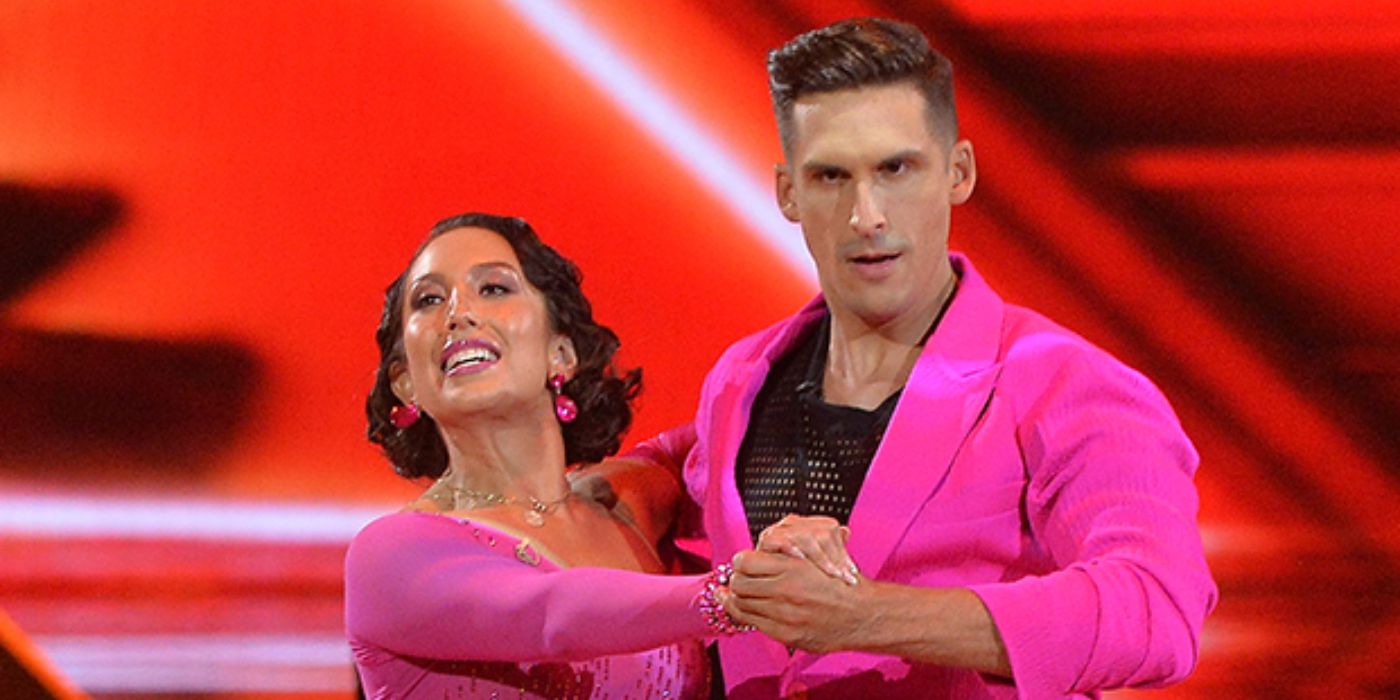
DWTS: Cheryl Burke & Cody Rigsby Reunite Following COVID-19 Diagnosis

Cheryl Burke and Cody Rigsby have reunited inside the Dancing With The Stars rehearsal studio following their COVID-19 diagnosis. Within the last two weeks, both Cheryl and Cody tested positive for COVID-19, forcing them to rehearsal and perform virtually and individually. In doing so, they were allowed to remain in the competition despite not being physically present for the live shows.

Cheryl was the first to test positive between the dancing duo. Just days before the second live show of DWTS season 30, Cheryl tested positive for COVID-19. In place of their live performance for that week, the four judges based the couple's scores off of a prerecorded rehearsal from before Cheryl's diagnosis. Then just a few short days later, Cody tested positive as well. As the duo continued to rehearse via Zoom, their third performance took place virtually from inside their individual homes. This was the first time ever on the show a couple has performed in such a way.


Now as the dancing competition nears its fourth week, Cheryl and Cody are preparing to head back to the ballroom together. Over the weekend, Cheryl took to Instagram to share photos of herself and Cody back inside the rehearsal studio together after being apart for nearly two weeks. In preparation for the upcoming two-part Disney Night on DWTS, Cheryl and Cody posed in their best Disney attire. Cheryl wore a pair of Minnie Mouse ears while Cody rocked a Goofy hat as they prepared for not one but two brand-new dances. Cheryl captioned the post, "Reunited and it feels so good!" Take a look at the post below:

Fans were excited to hear that Cheryl and Cody will be rejoining the other remaining couples in the ballroom this week, especially in time for Disney Night. Some referred to them as the "dream team" while others admitted how happy this news made them. Fellow professional dancer Daniella Karagach shared her excitement for their return in the comments section as well, writing, "YAAASSSSSSSS." One user noted, "The judges better be fair for once!!!!" Following Cheryl and Cody's virtual dance last week, many felt the judges were too harsh with their scores. Even Cody admitted their low scores hurt.


Since Cheryl and Cody have been quarantined at home for nearly two weeks, this will only be their second live performance together inside the ballroom. In addition to that, they have not one but two dances to prepare for this week. Monday night's episode will feature a Disney-themed Heroes Night. Then on Tuesday night, the couples will take on performances based off of Disney villains. Here's hoping Cody and Cheryl can earn some higher scores now that they are back in the ballroom together.


Source: Cheryl Burke/Instagram


10 Oct 2021

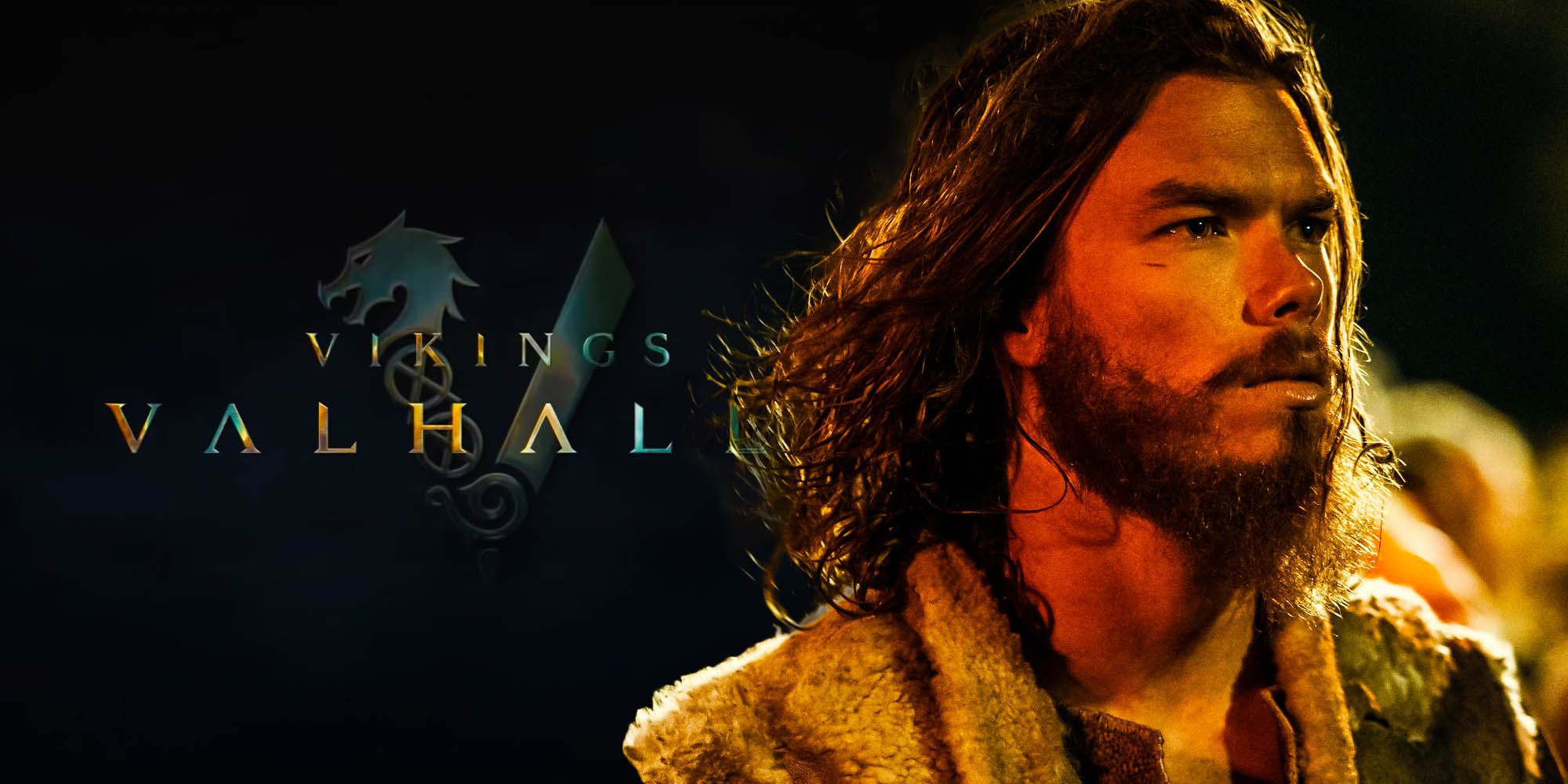
Vikings: Valhalla Explained – What The Spinoff Title Really Means

The world of Vikings will continue expanding with the sequel series Vikings: Valhalla, but what does the title really mean? Historical drama has become one of the most popular genres on TV, and among the most successful projects in recent years is Vikings, created by Michael Hirst (The Tudors). Although it was originally planned to be a miniseries, the first episodes of Vikings were so well-received by both critics and viewers that it was quickly renewed for a second season, and it lived on for a total of six seasons, coming to an end in December 2020.

Vikings covered the first years of the Viking Age, from the Lindisfarne raid (as seen in season 1) onward, and the main focus of the first seasons was legendary Norse figure Ragnar Lothbrok (Travis Fimmel) and his travels and raids alongside his Viking brothers. However, as the series progressed, it changed its focus to Ragnar’s sons (Björn, Ubbe, Hvitserk, Sigurd, and Ivar), who ended up becoming the protagonists of the show, carrying the story after Ragnar’s death in season 4. The final season of Vikings brought the arcs of its main characters to an end, but the stories from the Viking Age don’t end there, and a spinoff series, titled Vikings: Valhalla, will be released on Netflix in 2022.


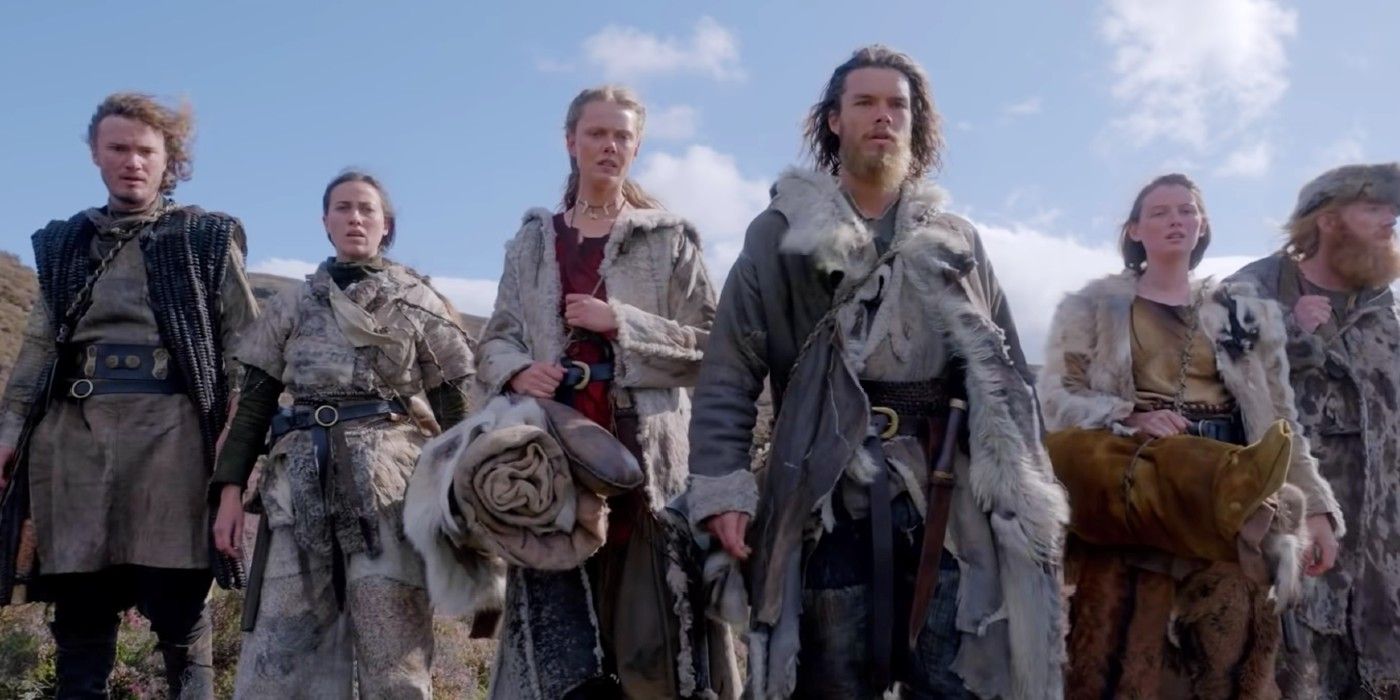
Vikings: Valhalla is set a century after the events of Vikings, so characters from the main series won’t appear (unless in flashbacks), yet there will be connections between the characters of both shows. Now, while Vikings covered the beginning of the Viking Age, Valhalla will explore the final years of it, focusing on different stories that will eventually converge. Following the death of King Edward the Confessor, three lords make claim to the English throne, and meanwhile, Leif Erikson (Sam Corlett) leads Greenlanders across the North Atlantic. His half-sister, Freydís Eiríksdóttir (Frida Gustavsson), has become an anti-Christian following a traumatic event and becomes the leader of the Old Norse religion against rising Christianity in Scandinavia, and starts looking for a new home for her people. Now, “Valhalla” isn’t a new name for fans of Vikings, but it being the title of the spinoff series has surely raised some questions about what it really means for the show.


In Norse mythology, Valhalla is a majestic and enormous hall in Asgard ruled by Odin. Before the hall, there’s the golden tree Glasir and the hall’s ceiling is thatched with golden shields, but not everyone can have the privilege of seeing these and entering Valhalla. Only those who die in combat and are chosen by Odin can travel to Valhalla led by the valkyries, while the others go to Freyja’s field Fólkvangr. Once in Valhalla, the dead warriors join the rest as they prepare to aid Odin during the events of Ragnarök (the equivalent to the end of the world). With that in mind, and taking into account that Vikings: Valhalla will cover the final years of the Viking Age (and possibly the battle that ended it), the title is very fitting, as many warriors will make their way to the great hall and join Odin’s army. The topic of Christianity vs Paganism might also be reflected in the title, as their different ideas and concepts of the afterlife and more will surely clash at some point, even more than they did in Vikings.

With the final years of the Viking Age and thus the final battles being shown in Vikings: Valhalla, the series will see the last Viking warriors that will enter Valhalla, joining many others before them, including Lagertha, Björn, Ivar, and quite possibly Ragnar as well, so the title takes a lot more meaning. Vikings: Valhalla already has some connections to the main series, and there could be more through Valhalla and the characters who made their way to the great hall.

10 Oct 2021

What Dungeons & Dragons Rules Could Be Updated For D&D 5.5

Revised versions of the core Dungeons & Dragons rulebooks are coming in 2024, which fans are already referring to as the 5.5 version of the game. This will give Wizards of the Coast the chance to alter the existing D&D rules, in order to improve them, following years of fan feedback and online discourse.

The new books were revealed during D&D Celebration 2021. The new D&D books will launch in 2024, to mark the 50th anniversary of the game. All that has been revealed is that the Player's Handbook, the Dungeon Master's Guide, and the Monster Manual will receive new versions. The rules in these books will be backward compatible with those in the existing 5th edition, so fans won't need to trash their current library of tomes. The content in the D&D 5.5 books will be developed with the aid of fan feedback, which will be conducted via surveys over the next few years.


The fifth edition rules are solid and contain fewer exploits than previous editions of D&D. This is due to the developers having decades worth of playtesting information to work from, as well as a vocal fanbase that is more than willing to let its opinions be known about the game. The D&D 5.5 books have the chance to smooth out the remaining issues with 5th edition, in order to improve the game for all.

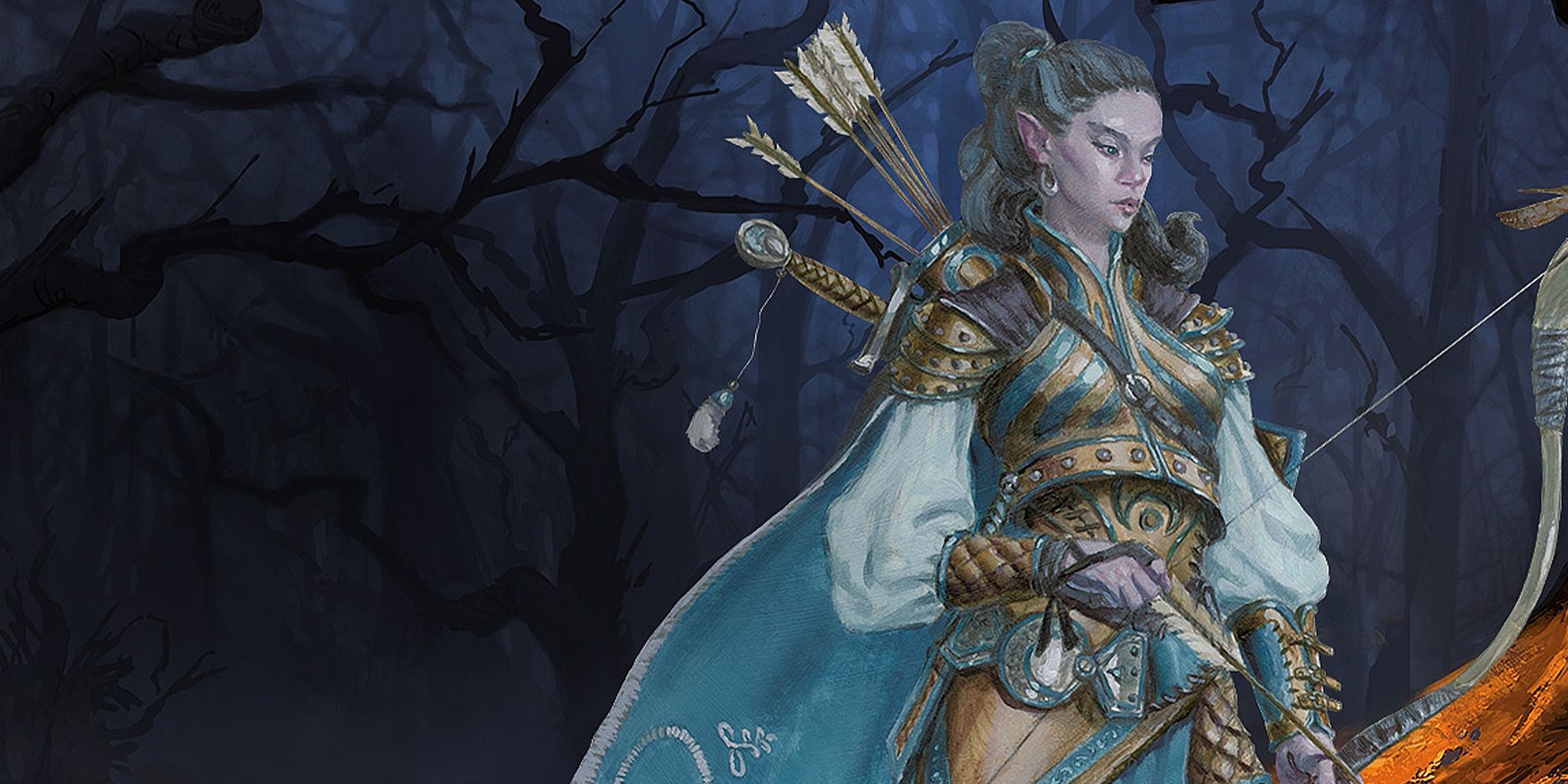
Even before it was confirmed that the fifth edition rules were being updated, there was talk of changing the Ranger class. This was discussed when Baldur's Gate 3 changed the Ranger, which came with confirmation that plans were in motion for the class to be changed in D&D. The Ranger has already received a minor overhaul, with the Beast Master archetype being changed in an Unearthed Arcana article, as it was considered to be the weakest subclass in the game.

The changes made to the Ranger in Baldur's Gate 3 were the result of many of its class features not gelling with the video game format, as many of them were tied to exploration, and were situational. The Ranger in D&D is overdue for a total rehaul and for it to be cemented in the Player's Handbook. This would likely mean strengthening Favored Enemy, in order to bring it in line with the older editions of the game; changing Natural Explorer, so that it applies to more terrain types; and giving them a better level eight ability than Land's Stride.

The history of multiclassing in D&D is varied, with it being more viable in some editions than others. Multiclassing is notably weaker in 5e, barring a few powerful combinations. The primary spellcasters in the game especially suffer when they try to multiclass, as diluting their access to high-level magic is a major downside that is hard to overcome. The current edition of D&D is focused on campaigns that are shorter, as the developers and players alike realized that not everyone can pull off a lengthy campaign. As such, the 5.5 rules surrounding multiclassing shouldn't be so strict, or there should at least be an alternate option that is more forgiving. If storylines are going to be shorter, then why not make it easier for players to experiment and play the kinds of characters they want, without diminishing their effectiveness in combat.


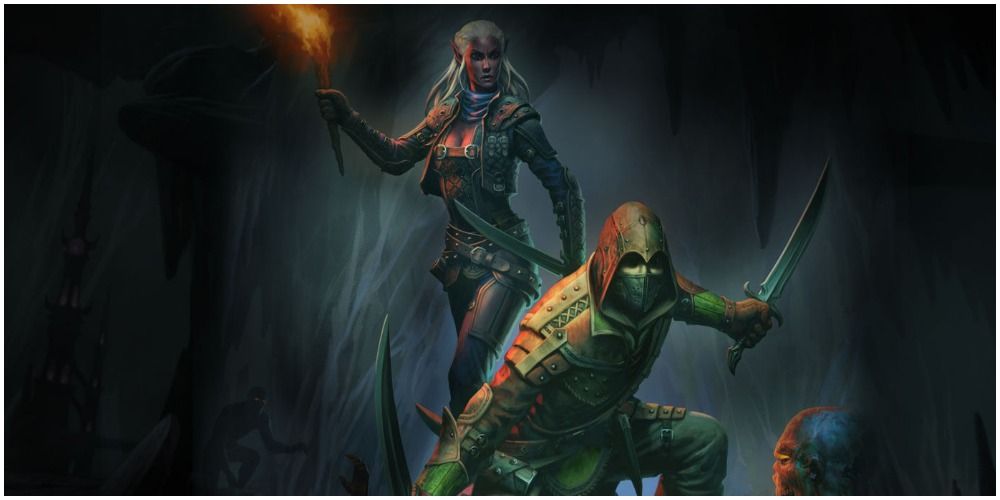
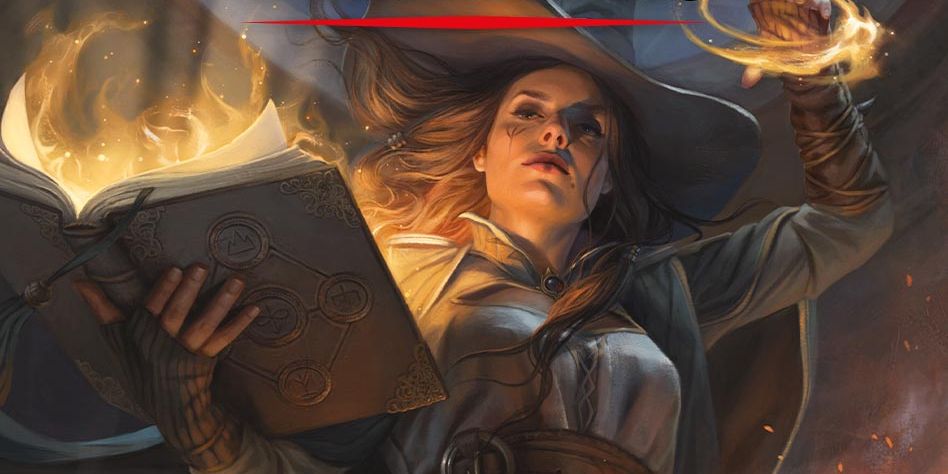
Tasha's Cauldron of Everything introduced race rules that offered new options for players. This was the book that introduced lineages and origins. The origin rules allowed players to ignore the stat bonuses in the Player's Handbook and select ones of their choosing, as well as starting languages and certain skill and weapon proficiencies. The lineage rules allowed a player to create a race of their own creation, which came with +2 to a stat, a Feat, and a choice between darkvision or a skill proficiency.


It wouldn't be surprising to see the origin rules incorporated fully into the revised 5.5 Player's Handbook, with the original stat bonuses being offered as suggestions, rather than being set in stone. The D&D Adventurers League already uses these rules for organized play, so it would make sense to fully add them into the game when D&D 5.5 releases.

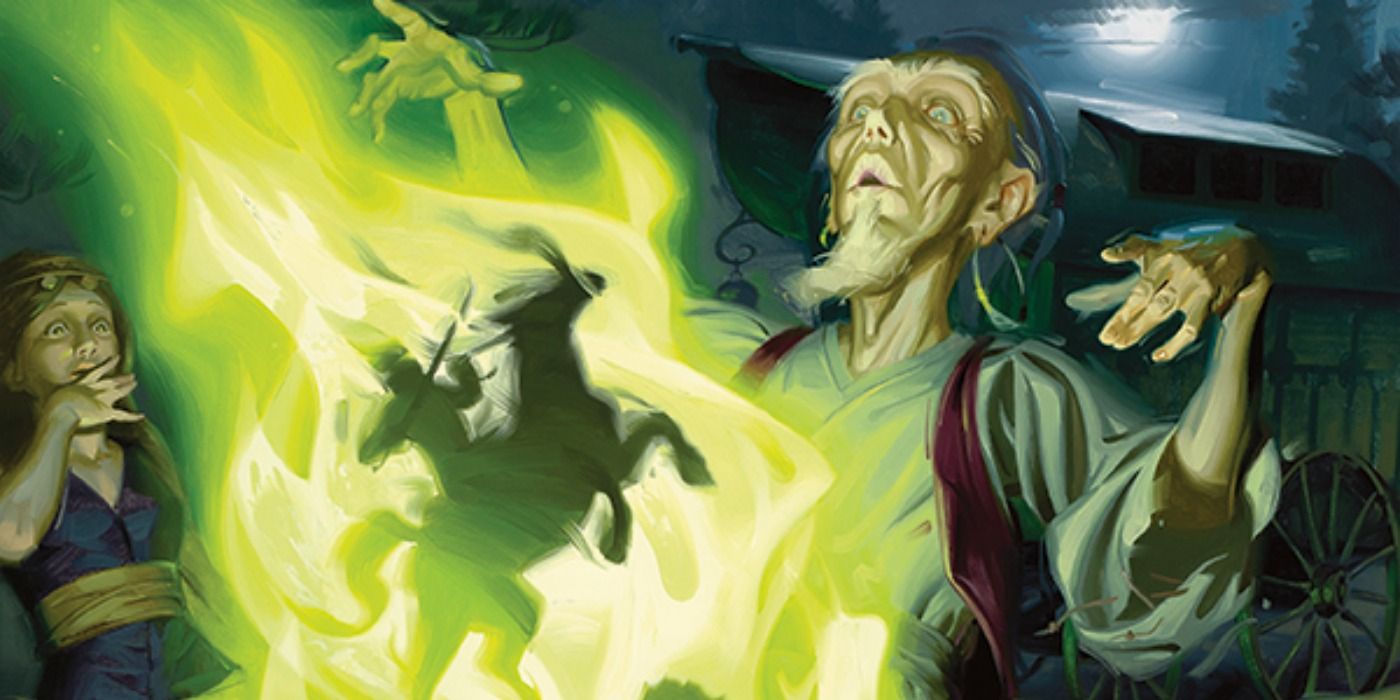
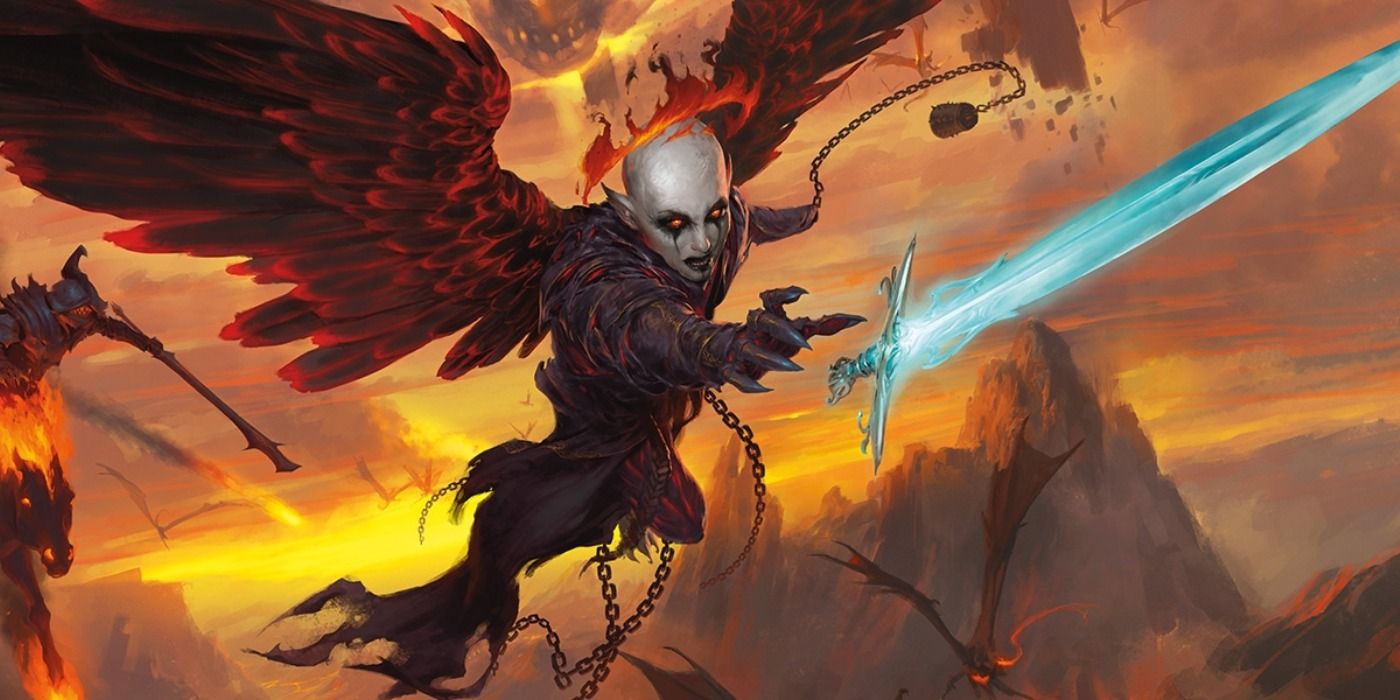
In 2020, Wizards of the Coast released a D&D book called Mythic Odysseys of Theros, which turned the Theros plane from Magic: The Gathering into a campaign setting. One of the most exciting new rule additions in Mythic Odysseys of Theros was Mythic traits, which made the strongest monsters in the game even more powerful. A monster with a Mythic trait essentially has two health bars.

Once the player kills a monster with a Mythic trait, it returns to full health and gains new powers. The Mythic trait has since been used in different campaigns, including Icewind Dale: Rime of the Frostmaiden, but it was used with new monsters. If a revised version of the Monster Manual is released, then it's likely that the Mythic trait will be added to some of the existing monsters in the game. It's likely that the Tarrasque will become a Mythic monster, turning the most terrifying creature in the game into even more of a threat.

The revised rulebooks have a chance to fix a lot of the smaller issues that have plagued 5e over the years. This is the perfect opportunity to alter the falling damage rules, which have never made sense in D&D fifth edition. The reason for this is that there is a cap on falling damage. A creature takes 1d6 bludgeoning damage for every ten feet they fall, for a maximum of 20d6 damage. 20d6 is a surprisingly survivable amount of damage for a mid-level character to take, especially the melee fighters of the group. This means that a character can fall from orbit and walk it off. The damage cap exists to stop players from abusing the falling rules, by dropping enemies from a great height and trying to instakill them with gravity. A 5.5 revised version of the Player's Handbook is the best place to change the falling rules so that they make more sense.