Year: 2021

02 Aug 2021

Amazon will pay you $10 in credit for your palm print biometrics

How much is your palm print worth? If you ask Amazon, it’s about $10 in promotional credit if you enroll your palm prints in its checkout-free stores and link it to your Amazon account.

Last year, Amazon introduced its new biometric palm print scanners, Amazon One, so customers can pay for goods in some stores by waving their palm prints over one of these scanners. By February, the company expanded its palm scanners to other Amazon grocery, book and 4-star stores across Seattle.

Amazon has since expanded its biometric scanning technology to its stores across the U.S., including New York, New Jersey, Maryland, and Texas.

The retail and cloud giant says its palm scanning hardware “captures the minute characteristics of your palm — both surface-area details like lines and ridges as well as subcutaneous features such as vein patterns — to create your palm signature,” which is then stored in the cloud and used to confirm your identity when you’re in one of its stores.

Amazon’s latest promotion: $10 promotional credit in exchange for your palm print. (Image: Amazon)

What’s Amazon doing with this data exactly? Your palm print on its own might not do much — though Amazon says it uses an unspecified “subset” of anonymous palm data to improve the technology. But by linking it to your Amazon account, Amazon can use the data it collects, like shopping history, to target ads, offers, and recommendations to you over time.

Amazon also says it stores palm data indefinitely, unless you choose to delete the data once there are no outstanding transactions left, or if you don’t use the feature for two years.

While the idea of contactlessly scanning your palm print to pay for goods during a pandemic might seem like a novel idea, it’s one to be met with caution and skepticism given Amazon’s past efforts in developing biometric technology. Amazon’s controversial facial recognition technology, which it historically sold to police and law enforcement, was the subject of lawsuits that allege the company violated state laws that bar the use of personal biometric data without permission.

“The dystopian future of science fiction is now. It’s horrifying that Amazon is asking people to sell their bodies, but it’s even worse that people are doing it for such a low price,” said Albert Fox Cahn, the executive director of the New York-based Surveillance Technology Oversight Project, in an email to TechCrunch.

“Biometric data is one of the only ways that companies and governments can track us permanently. You can change your name, you can change your Social Security number, but you can’t change your palm print. The more we normalize these tactics, the harder they will be coming to escape. If we don’t try to line in the sand here, I am very fearful what our future will look like,” said Cahn.

When reached, an Amazon spokesperson declined to comment.

02 Aug 2021

Can your startup support a research-based workflow?

The President’s Council of Advisors on Science and Technology predicts that U.S. companies will spend upward of $100 billion on AI R&D per year by 2025. Much of this spending today is done by six tech companies — Microsoft, Google, Amazon, IBM, Facebook and Apple, according to a recent study from CSET at Georgetown University. But what if you’re a startup whose product relies on AI at its core?

Can early-stage companies support a research-based workflow? At a startup or scaleup, the focus is often more on concrete product development than research. For obvious reasons, companies want to make things that matter to their customers, investors and stakeholders. Ideally, there’s a way to do both.

Before investing in staffing an AI research lab, consider this advice to determine whether you’re ready to get started.

Compile the right research team

Assuming it’s your organization’s priority to do innovative AI research, the first step is to hire one or two researchers. At Unbabel, we did this early by hiring Ph.D.s and getting started quickly with research for a product that hadn’t been developed yet. Some researchers will build from scratch and others will take your data and try to find a pre-existing model that fits your needs.

While Google’s X division may have the capital to focus on moonshots, most startups can only invest in innovation that provides them a competitive advantage or improves their product.

From there, you’ll need to hire research engineers or machine learning operations professionals. Research is only a small part of using AI in production. Research engineers will then release your research into production, monitor your model’s results and refine the model if it stops predicting well (or otherwise is not operating as planned). Often they’ll use automation to simplify monitoring and deployment procedures as opposed to doing everything manually.

None of this falls within the scope of a research scientist — they’re most used to working with the data sets and models in training. That said, researchers and engineers will need to work together in a continuous feedback loop to refine and retrain models based on actual performance in inference.

Choose the problems you want to solve

The CSET research cited above shows that 85% of AI labs in North America and Europe do some form of basic AI research, and less than 15% focus on development. The rest of the world is different: A majority of labs in other countries, such as India and Israel, focus on development.

02 Aug 2021

Google is building its own chip for the Pixel 6

Google just dumped a whole bunch of news about its upcoming Pixel 6 smartphone. Maybe the company was looking to get out in front of August 11’s big Samsung event — or perhaps it’s just hoping to keep people interested in the months leading up to a big fall announcement (and beat additional leaks to the punch).

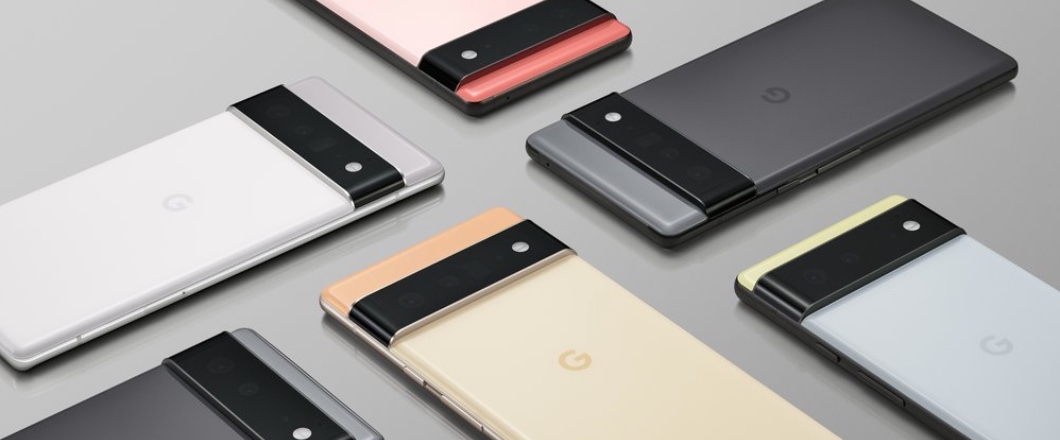
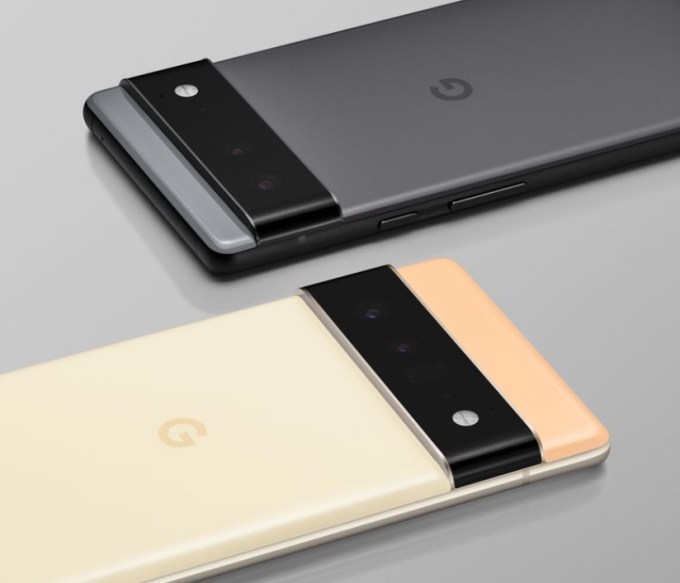
In either case, we got the first look at the upcoming Android smartphone, including a fairly massive redesign of the camera system on the rear. The company has traded its square configuration for a big, black bar that appears to indicate an even larger push into upgraded hardware after a couple of generations spent insisting that software/AI are the grounds on which it has chosen to fight.

More interesting, however, is the arrival of Tensor, a new custom SoC (system on a chip) that will debut on the Pixel 6 and Pixel 6 Pro. It’s an important step from the company, as it looks to differentiate itself in a crowded smartphone field — something the company has admittedly struggled with in the past.

That means moving away from Qualcomm chips on these higher-end systems, following in Apple’s path of creating custom silicon. That said, the chips will be based on the same ARM architecture that Qualcomm uses to create its otherwise ubiquitous Snapdragon chips, and Google will still rely on the San Diego company to supply components for its budget-minded A Series.

Image Credits: Google

The Tensor name is a clear homage to Google’s TensorFlow ML, which has driven a number of its projects. And unsurprisingly, the company sites AI/ML as foundational to the chip’s place in the forthcoming phones. The Pixel team has long pushed software-based solutions, such as computational photography, as a differentiator.

“The team that designed our silicon wanted to make Pixel even more capable. For example, with Tensor we thought about every piece of the chip and customized it to run Google’s computational photography models,” Google writes. “For users, this means entirely new features, plus improvements to existing ones.”

Beyond the upgraded camera system, Tensor will be central to improving things such as speech recognition and language learning. Details are understandably still thin (the full reveal is happening in the fall, mind), but today’s announcement seems geared toward laying out what the future looks like for a revamped Pixel team — and certainly these sorts of focuses play into precisely what Google ought to be doing in the smartphone space: focusing on its smarts in AI and software.

In May of last year, key members of the Pixel team left Google, pointing to what looked to be a transition for the team. Hardware head Rick Osterloh was reported to have had harsh words at the time.

“AI is the future of our innovation work, but the problem is we’ve run into computing limitations that prevented us from fully pursuing our mission,” Osterloh wrote in today’s post. “So we set about building a technology platform built for mobile that enabled us to bring our most innovative AI and machine learning (ML) to our Pixel users.”

02 Aug 2021

Salesforce steps into RPA buying Servicetrace and teaming it with Mulesoft

Over the last couple of years, Robotic Process Automation or RPA has been red hot with tons of investor activity and M&A from companies like SAP, IBM and ServiceNow. UIPath had a major IPO in April and has a market cap over $30 billion. I wondered when Salesforce would get involved and today the company dipped its toe into the RPA pool, announcing its intent to buy German RPA company Servicetrace.

Salesforce intends to make Servicetrace part of Mulesoft, the company it bought in 2018 for $6.5 billion. The companies aren’t divulging the purchase price, suggesting it’s a much smaller deal. When Servicetrace is in the fold, it should fit in well with Mulesoft’s API integration, helping to add an automation layer to Mulesoft’s tool kit.

“With the addition of Servicetrace, MuleSoft will be able to deliver a leading unified integration, API management, and RPA platform, which will further enrich the Salesforce Customer 360 — empowering organizations to deliver connected experiences from anywhere. The new RPA capabilities will enhance Salesforce’s Einstein Automate solution, enabling end-to-end workflow automation across any system for Service, Sales, Industries, and more,” Mulesoft CEO Brent Hayward wrote in a blog post announcing the deal.

While Einstein, Salesforce’s artificial intelligence layer, gives companies with more modern tooling the ability to automate certain tasks, RPA is suited to more legacy operations, and this acquisition could be another step in helping Salesforce bridge the gap between older on-prem tools and more modern cloud software.

Brent Leary, founder and principal analyst at CRM Essentials says that it brings another dimension to Salesforce’s digital transformation tools. “It didn’t take Salesforce long to move to the next acquisition after closing their biggest purchase with Slack. But automation of processes and workflows fueled by realtime data coming from a growing variety sources is becoming a key to finding success with digital transformation. And this adds a critical piece to that puzzle for Salesforce/MulseSoft,” he said.

While it feels like Salesforce is joining the market late, in an investor survey we published in May Laela Sturdy, general partner at CapitalG told us that we are just skimming the surface so far when it comes to RPA’s potential.

“We’re a long way from needing to think about the space maturing. In fact, RPA adoption is still in its early infancy when you consider its immense potential. Most companies are only now just beginning to explore the numerous use cases that exist across industries. The more enterprises dip their toes into RPA, the more use cases they envision,” Sturdy responded in the survey.

Servicetrace was founded in 2004, long before the notion of RPA even existed. Neither Crunchbase nor Pitchbook shows any money raised, but the website suggests a mature company with a rich product set. Customers include Fujitsu, Siemens, Merck and Deutsche Telekom.

02 Aug 2021

All-electric 2022 Audi e-tron GT and RS e-tron GT provide a pop of tech in understated packaging

Luxury, technology and a whole lot of flash often go hand in hand. In the age of space-faring billionaires, we all expect the latest wiz-bang gadget to look like something from the future, right?

Not in Audi’s view. The 2022 Audi e-tron GT and RS e-tron GT are a pair of all-electric grand touring halo cars that don’t look like something from 2060. They look just like sleek gasoline-powered GTs, but beneath the skin, there’s a whole lot more power, technological pop and panache than the design implies at first glance.

The 2022 Audi e-tron GT and RS e-tron GT get a low-slung roofline, wide track and long wheelbase like those grand tourers of the past, with the addition of a few design flourishes to bring it in line with Audi’s subtle, yet luxurious aesthetic. While the e-tron GT and the RS e-tron GT were both produced alongside the Audi R8 (its roofline is lower than the R8) and borrow a few things from that iconic design, these electric grand tourers are a pair of beasts all their own.

Nuts and bolts

Based on the same 800-volt architecture as the Porsche Taycan, the e-tron GT makes 469 combined horsepower (up to 522 hp with overboost) from a pair of dual, permanent-magnet motors powering the front and rear wheels. The RS e-tron GT makes 590 (637 hp with overboost) horsepower from those same motors and Audi says it can do 0-60 in 3.1 seconds.

Both vehicles are capable, confident and quick and don’t tarry on mountain roads or long highway stretches. Acceleration is almost seamless, as it is in most electric vehicles.

Thanks to Audi’s electric quattro all-wheel drive with torque vectoring system, both vehicles are sure-footed and well sorted, even when the wheels start to squeal. This system allows a variable amount of power to be sent to wheels that slip when cornering hard, making a sudden lane change, or driving in slippery conditions.

The vehicles I drove were outfitted with summer tires, and I got to test a bit of this out on a closed slalom course with a sudden lane change at the end at the Agua Dulce Airpark about 50 miles northeast of downtown Los Angeles. I ran the RS e-tron GT through the cones three consecutive times to get a feel for the system and each time the car felt secure, planted and under control.

Steering, speed and range

Audi RS e-tron GT Tango Red_03

2022 Audi RS e-tron GT. Image Credits: Audi

Both the e-tron GT and the RS e-tron GT also get optional rear-wheel steering. Under 30 mph, the rear wheels can turn up to 2.8 degrees in the opposite direction to the front wheels to help make the turning radius of the e-tron GT and the RS e-tron GT smaller. Above 30 mph the rear wheels turn in the same direction as the front. This system is similar (with fewer degrees of rotation) to that in the Porsche Taycan.

While I did not get to try out overboost in either vehicle on the smooth tarmac at the airpark, I did run a series of back-to-back 0 to 100 mph accelerations using launch control in the RS e-tron GT. Amongst the cohort of journalists there, I came in second, doing 0-60 in 3.24 seconds and 0-100 in 7.29 seconds. In 102-degree heat, on cold tires, those numbers are plenty impressive. By the end of the runway, I saw speeds approaching 120 mph, 32 mph short of the electronically limited 155 mph, (152 mph in the e-tron GT) before hitting the brakes. After three back-to-back runs, the fully charged RS e-tron GT had only lost 20 miles of range.

The EPA-estimated range for the RS e-tron GT is 232 miles while the e-tron GT is estimated to get 239 miles of range.

Charging up

2022 Audi e-tron GT Ascari Blue_54

2022 Audi e-tron GT. Image Credits: Audi

Those estimated EPA ranges are a result of the low-slung 93 kWh battery pack (the same in both vehicles) that Audi says can charge up to 80% in 23 minutes on 270-volt chargers (DC fast charging).

The e-tron GT starts at $99,900 and the RS e-tron GT pops to a higher $139,900 (both excluding the $1,045 destination charge). That price tag does come with one-time limited benefit.

Audi paired up with Electrify America to offer free, unlimited public charging for three years (without time restrictions). They also offer at-home charging stations set up through Qmerit. Both the e-tron GT and the RS e-tron GT come with standard dual charging ports and a 9.6 kW charging system with 240-volt capability so that owners can charge anywhere. Electrify America was launched by the Volkswagen Group, which owns Audi, following the Dieselgate scandal.

Finding any charger is available through the infotainment system, known as the MMI, and the 10.1-inch touchscreen in the center console. Head to navigation and then hit the icon marked with a plug and a list of chargers near you will populate.

While I didn’t get the opportunity to try to find chargers on the one-day drive, Audi says that finding EA chargers and their status and availability is easy through both Audi’s MyAudi app (available via smartphone and desktop), and through the MMI.  Audi says that drivers can sort by their preferred charging level (Level 1 through DC fast chargers) and navigate to the charger all without leaving Audi’s in-vehicle interface.

Drivers can also perform the search on their phone through EA’s app or through the MyAudi app and send directions to the car either via wireless CarPlay, which is currently available or wireless Android Auto, which is coming on production models, though it wasn’t available in the e-tron GT or the RS e-tron GT that I drove. Drivers can also connect their smartphone through a USB-C port located in the center armrest.

I didn’t get to try the MyAudi app since I am not an owner (it requires tying the vehicle’s VIN to the app to ensure that privacy is maintained), but Audi says that drivers can plan a route on their MyAudi app, and the system will automatically include charge stops along the way to ensure that they arrive with plenty of battery in reserve.

For those luxury buyers who want a bit more support to make a seamless transition to an all-electric luxury car, Audi is launching what they call Audi Care for EVs with the e-tron GT and RS e-tron GT. At participating dealers, owners can pay an additional $999 plus tax to get vehicle servicing for four years that includes high-wear items like wipers and brake pads, available valet pick-up and drop-off for service appointments, mobile service (tire changes, basic maintenance) and, if an owner needs it, up to 10 free tows to an Audi center per year. Audi is also offering seven free days of rentals from Audi by Silvercar with the purchase of an e-tron GT or a RS e-tron.

That virtual cockpit, though
Audi-e-tron GT Ascari Blue

2022 Audi e-tron GT. Image Credits: Audi

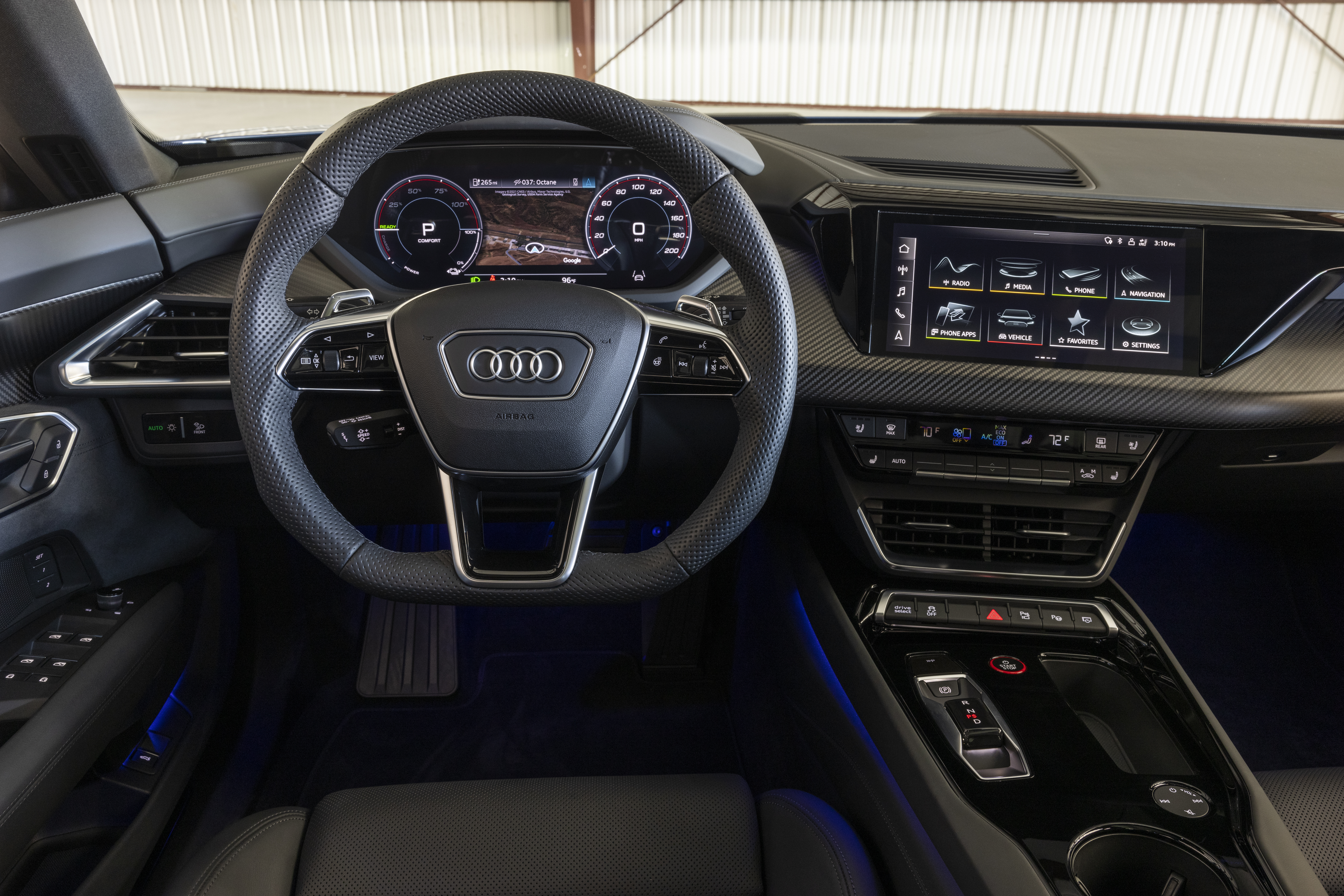
The e-tron GT and the RS e-tron GT blend features from both the e-tron (the SUV) and the Audi R8, and both GTs get dual screens that offer tons of features for drivers and passengers. The 12.3-inch virtual cockpit in front of the driver is highly customizable, like it is on most modern Audis today, offering everything from map views to battery status access with few simple inputs on the steering wheel.

The system makes navigating a breeze and drivers or passengers can use voice control to set destinations by simply pressing the button on the steering wheel and giving the car an address, point of interest or city.

The voice system is surprisingly robust and while it was a bit laggy when I used it, it recognizes natural language inputs and verbally prompts the speaker to use specific terms when choosing between two options — say canceling a route and putting in a new destination versus making a stopover. Never once did I have to try multiple times to get the system to recognize what I wanted to do.

The 10.1-inch infotainment system in the center console offers everything from drive mode selection to specific Audi apps, navigation options, optional massage, heat and cooled seats, and much more.

The Audi MMI center screen is touch capacitive and users can drag and drop icons around, allowing owners and their passengers to customize the home screen in any way. The seat heater, cooler and the massage can all be run at the same time, should someone so desire (and have the right equipment), all from the MMI.

Maybe just a little flash?

2022 Audi RS e-tron GT Tango Red_23

2022 Audi RS e-tron GT. Image Credits: Audi

Both GTs are pushing $100,000, and for that, some buyers may want just a little bit more razzle dazzle.

For the launch year, Audi is offering one pricey, but special option on the RS e-tron GT: the Year One package. For $20,350, owners get the “carbon performance” package with features like carbon-fiber trim, illuminated door sills, black badges and rear-wheel steering, along with special 21-inch wheels, red ceramic brake calipers, red seatbelts and red stitching inside.

For those who want the prestige, power and advanced technology of a luxury brand, in an electric halo grand tourer that doesn’t (necessarily) come with all the flash, the 2022 Audi e-tron GT and Audi RS e-tron GT fit the bill. Both are on sale now.


02 Aug 2021

Google gives the world its first official glimpse of the Pixel 6

While the company isn’t revealing everything about it just yet, this morning Google gave the world its first official peek at its next flagship phone: the Pixel 6.

Here’s what we know so far:

  • It’ll come in two forms: Pixel 6 and Pixel 6 Pro.
  • The base 6 will have a matte aluminum finish with a 6.4″ display, while the Pro has a shinier polished aluminum finish with a 6.7″.
  • If you were hoping the increasingly common “camera bump” trend was on the way out… not quite. The bump has now evolved into the “camera bar”, with Google’s Rick Osterloh noting that better sensors and lenses just won’t fit in a smaller package.
  • These will be the first phones to run Tensor, Google’s first entirely custom system-on-a-chip. Previous Pixels have run on Qualcomm’s Snapdragon platform. Google CEO Sundar Pichai says they’ve been working on the chip for 4+ years. In a blog post announcing the devices, Osterloh suggests that the focus here is making a chip tuned for on-device AI and ML.
  • They’ll ship sometime “this fall.”

Lots of details, including pricing and much of the spec sheet (CPU, RAM, etc.) are still a mystery for now — though earlier leaks seem to be spot on, so far.

02 Aug 2021

Pokémon GO influencers threaten a boycott after Niantic removes COVID safety measures

The creators of Pokémon GO, Niantic developed one of the first mainstream augmented reality games, boasting 166 million users and over a billion dollars in revenue last year. Taking inspiration from the main series Pokémon games, Pokémon GO uses in-game incentives to encourage users to explore their surroundings, team up with other users to fight legendary beasts, and travel to places they’ve never been before.

Before the pandemic, this posed an accessibility issue — when certain tasks could only be completed by walking a certain distance, for example, it alienated users with physical conditions and disabilities that prevent them from easily taking a walk around the neighborhood. Plus, for players in wheelchairs, it might be impossible to access certain PokéStops and Gyms. It’s necessary to interact with these real-world landmarks to play the game to its fullest.

When much of the world entered lockdown March 2020, Pokémon Go doubled the size of the radius that players can be within to interact with a PokéStop or Gym, widening the radius from 40 meters to 80 meters. So, you could now be further away from a landmark but still reap its rewards. This made it easier for users to play from home, or play outside while social distancing — but it also made the game much more accessible. Plus, for a game that still gets a bad rep for causing traffic accidents, the increased radius helped pedestrian players access landmarks without brazenly jay-walking across the street (to be fair, it’s on users to make smart decisions while gaming in augmented reality — but, Niantic has responsibility here too). And for businesses that happened to be located in a prime location for raid battles, which require players to gather in-person within a Gym’s radius to defeat rare monsters, this meant that Pokémon players could maintain a respectful distance from store fronts while playing the game (later in the pandemic, it became possible to join raid battles remotely — this feature will remain in the game, probably because it proved profitable).

These pandemic incentives were always framed as temporary bonuses, but players embraced the changes — in 2020, Pokémon GO had its highest-earning year yet. Now, the increased landmark radius has been removed “as a test” in the U.S. and New Zealand.

“As we return to the outside world again, these changes are aimed at restoring the focus of Pokémon GO on movement and exploration in the real world,” the company wrote in a blog post. “These changes will be introduced slowly and carefully to make it more exciting to explore the world around you.”

One new incentive gives users 10x XP for visiting a new PokéStop for the first time (or, in real-world terms, visiting a new place). But as the Delta variant spreads in the U.S., players find these changes to be frustrating and misguided. Why roll back features that made the game more accessible while also netting the company more money?

The Pokémon Go YouTuber, Reversal, who has created sponsored content for Niantic, wrote that he will quit the game if changes aren’t being made ASAP. Other players launched a petition with over 130,000 signatures to keep increased PokéStop and Gym interaction distance. Prominent Pokémon Go content creators like ZoëTwoDots and The Trainer Club have referenced a potential boycott of the game in videos they uploaded today, citing Niantic’s refusal to listen to community concerns after they announced the impending end of pandemic bonuses in June.

“I’m more than down to boycott the game with everyone if we’re vibing that,” ZoëTwoDots, who has also worked as an influencer for Niantic, told her 212,000 subscribers. “I know for myself personally, I’m just straight up not spending money in the game going forward until they address it publicly.”

As the game celebrates its five year anniversary, the conflict it now faces isn’t about players wishing for the game to be easier. Rather, this represents a failure by Niantic to listen to its user base, prioritize accessibility, and incentivize users to stay home as COVID-19 cases rise again in the U.S.

02 Aug 2021

The next generation of global payments: Afterpay + Square

Sunday was a big day in fintech: Afterpay has agreed to merge with Square. This agreement sets two of the most admired financial technology companies in recent history on a path to becoming one.

Afterpay and Square have the potential to build one of the world’s most important payments networks. Square has built a very significant merchant payment network, and, via Cash App, a thriving high-growth consumer payment service. However, these two lines of business have historically not been integrated. Together, Square and Afterpay will be able to weave all of these services together into a single integrated experience.

Afterpay and Cash App each have double-digit millions of consumers, and Square’s seller ecosystem and Afterpay’s merchant network both record double-digit billions of payment volume per year. From the offline register and the online checkout flow to sending money in just a few taps, Square and Afterpay will tell a complete story of next-generation economic empowerment.

As Afterpay’s only institutional venture investor, I wanted to share some perspective on how we got here and what this merger means for the future of consumer finance and the payments industry.

Afterpay and Square have the potential to build one of the world’s most important payments networks.

Critical innovations in fintech

Every five to 10 years, the global payments industry undergoes a critical innovation cycle that determines the winners and losers for the next several decades. The last major transition was the shift to NFC-based mobile payments, which I wrote about in 2015. The major mobile OS vendors (Apple and Google) cemented their position in the global payments stack by deftly bridging the needs of the networks (Visa, Mastercard, etc.) and consumers by way of the mobile devices in their pockets.

Afterpay sparked the latest critical innovation cycle. Conceived in a living room in Sydney by a millennial, Nick Molnar, for millennials, Afterpay had a key insight: Millennials don’t like credit.

Millennials came of age during the global mortgage crisis of 2008. As young adults, they watched their friends and family lose their homes by overextending on mortgage debt, bolstering their already lower trust for banks. They also have record levels of student debt. Therefore, it’s no surprise that millennials (and Gen Z right behind them) strongly prefer debit cards over credit cards.

But it’s one thing to recognize the paradigm shift and quite another to do something about it. Nick Molnar and Anthony Eisen did something, ultimately building one of the fastest-growing payments startups in history on their core product: Buy now, pay later … and never any interest.

Afterpay’s product is simple. If you have $100 in your cart and choose to pay with Afterpay, it will charge your bank card (typically a debit card) $25 every two weeks in four installments. No interest, no revolving debt and no fees with on-time payments. For the millennial consumer, this meant they could get the primary benefit of a credit card (the ability to pay later) with their debit card, without the need to worry about all the bad things that come with credit cards — high interest rates and revolving debt.

All upside, no downside. Who could resist? For the early merchants, virtually all of whom relied on millennials as their key growth segment, they got a fair trade: Pay a small fee above payment processing to Afterpay, get significantly higher average order values and conversions to purchase. It was a win-win proposition and, with lots of execution, a new payment network was born.

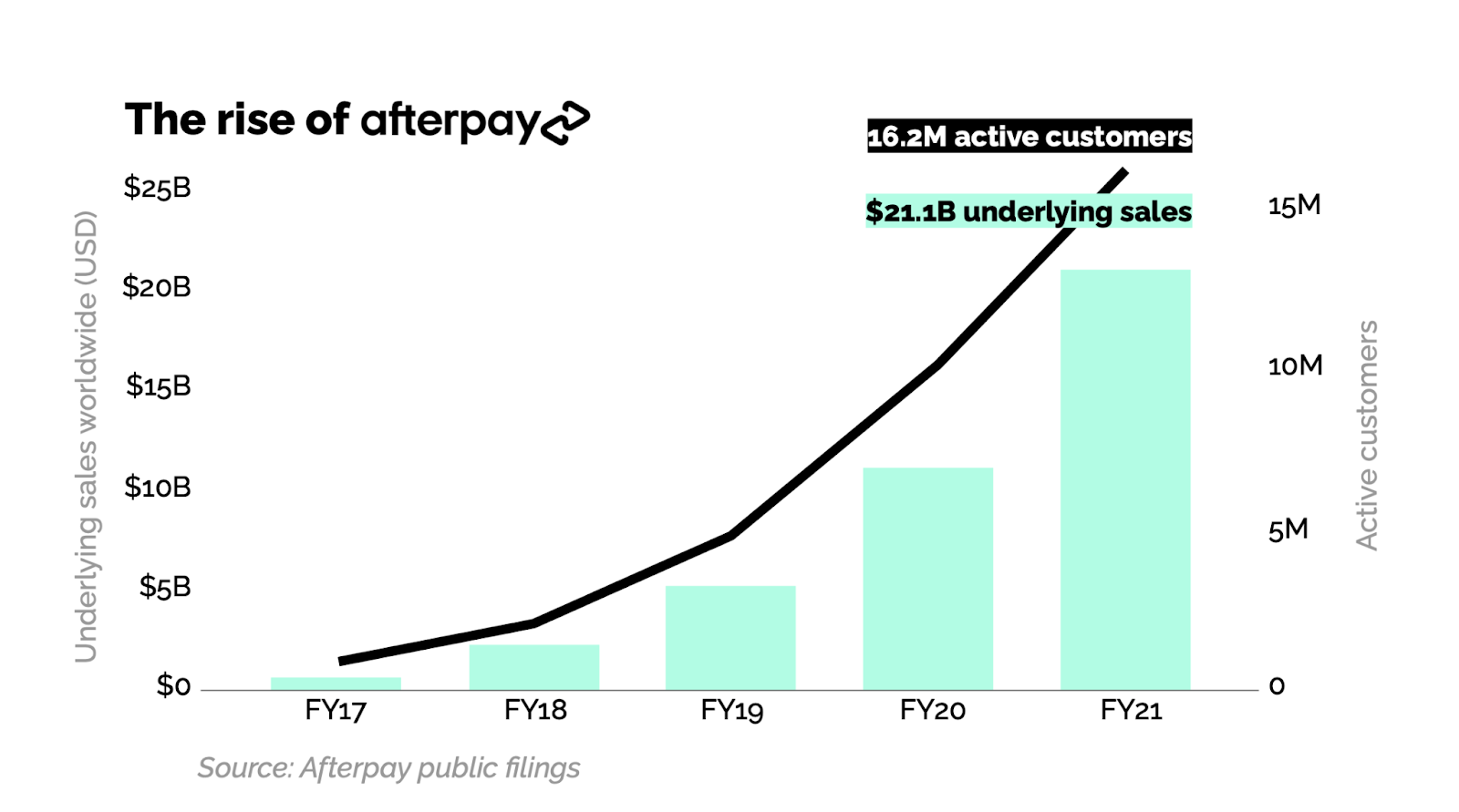
The rise of Afterpay

Image Credits: Matrix Partners

Imitation is the greatest form of flattery

Afterpay went somewhat unnoticed outside Australia in 2016 and 2017, but once it came to the U.S. in 2018 and built a business there that broke $100 million net revenues in only its second year, it got attention.

Klarna, which had struggled with product-market fit in the U.S., pivoted their business to emulate Afterpay. And Affirm, which had always been about traditional credit — generating a significant portion of their revenue from consumer interest — also noticed and introduced their own BNPL offering. Then came PayPal with “Pay in 4,” and just a few weeks ago, there has been news that Apple is expected to enter the space.

Afterpay created a global phenomenon that has now become a category embraced by mainstream players across the industry — a category that is on track to take a meaningful share of global retail payments over the next 10 years.

Afterpay stands apart. It has always been the BNPL leader by virtually every measure, and it has done it by staying true to their customers’ needs. The company is great at understanding the millennial and Gen Z consumer. It’s evident in the voice, tone and lifestyle brand you experience as an Afterpay user, and in the merchant network it continues to build strategically. It’s also evident in the simple fact that it doesn’t try to cross-sell users revolving debt products.

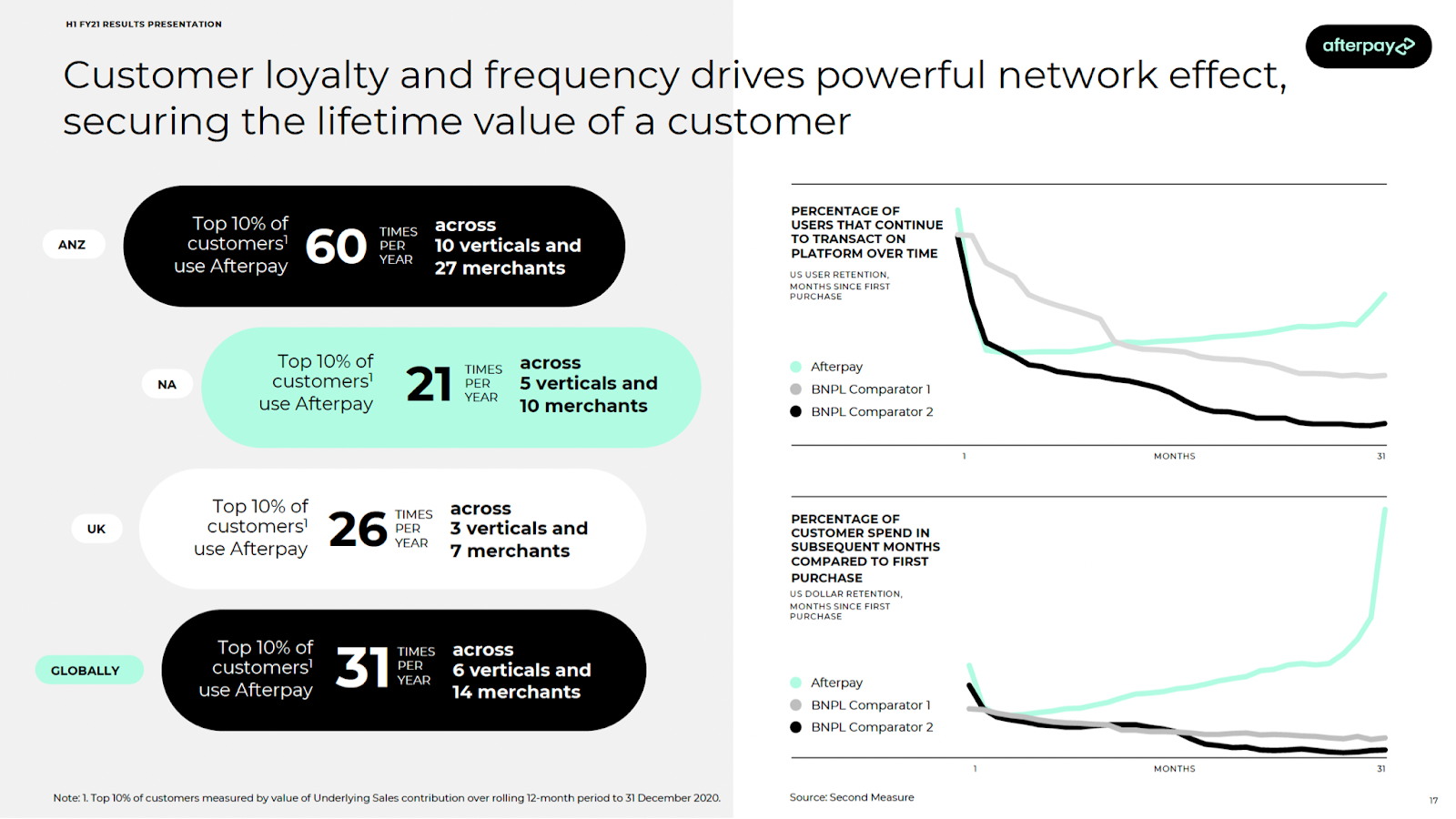
Most importantly, it’s evident in the usage metrics relative to competition. This is a product that people love, use and have come to rely on, all with better, fairer terms than were ever available to them than with traditional consumer credit.

Consumer loyalty and frequency drives powerful network effect, securing the lifetime value of a consumer

Image Credits: Afterpay H1 FY21 results presentation

Square + Afterpay: The perfect fit

I’ve been building payment companies for over 15 years now, initially in the early days of PayPal and more recently as a venture investor at Matrix Partners. I’ve never seen a combination that has such potential to deliver extraordinary value to consumers and merchants. Even more so than eBay + PayPal.

Beyond the clear product and network complementarity, what’s most exciting to me and my partners is the alignment of values and culture. Square and Afterpay share a vision of a future with more opportunity and fewer economic hurdles for all. As they build toward that future together, I’m confident that this combination is a winner. Square and Afterpay together will become the world’s next generation payment provider.

02 Aug 2021

Lilium in talks with Brazilian airline for $1B order

German electric aircraft startup Lilium is negotiating the terms for a 220-aircraft, $1 billion order with one of Brazil’s largest domestic airlines, the companies said Monday. Should the deal with Azul move forward, it would mark the largest order in Lilium’s history and its first foray into South American markets.

“A term sheet has been signed and we will move towards a final agreement in the coming months,” a Lilium spokesperson told TechCrunch.

The 220 aircraft would fly as part of a new, co-branded airline network that would operate in Brazil. Should the two companies come to an agreement, Azul would operate and maintain the fleet of the flagship 7-seater aircraft, and Lilium would provide custom spare parts, including replacement batteries, and an aircraft health monitoring platform.

Deliveries would commence in 2025, a year after Lilium has said it plans to begin commercial operations in Europe and the United States. These timelines are dependent upon Lilium receiving key certification approvals from each country’s requisite aerospace regulator. Azul said in a statement it would “support Lilium with the necessary regulatory approval processes in Brazil” as part of the agreement.

Even if a deal is reached, it would likely be subject to Lilium hitting certain performance standards and benchmarks, similar to the conditions of Archer Aviation’s $1 billion order with United Airlines. Still, orders of this value are seen as a positive signal to markets and investors that an electric vertical take-off and landing aircraft is more than smoke and mirrors.

Also like Archer, Lilium is planning on taking the SPAC route to going public. The company in March announced its intention to merge with Qell Acquisition Corp. and list on Nasdaq under ticker symbol “LILM.” SPACs have become a popular vehicle for public listing across the transportation sector, but they’ve become especially popular with capital-intensive eVTOL startups.

The merger may be necessary for the company’s continued operations. According to the German news website Welt, Lilium added a risk warning to its 2019 balance sheet noting that it will run out of money in December 2022 should the SPAC merger not be completed.

02 Aug 2021

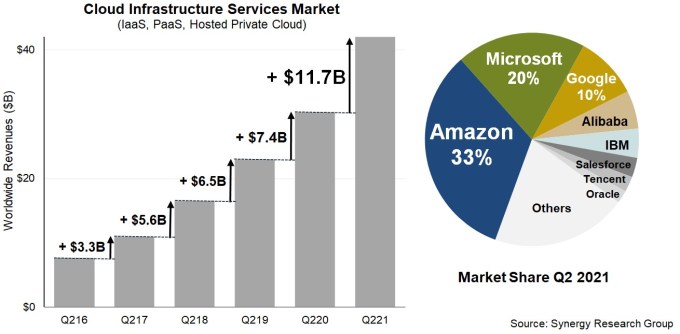
Cloud infrastructure market kept growing in Q2 reaching $42B

It’s often said in baseball that a prospect has a high ceiling, reflecting the tremendous potential of a young player with plenty of room to get better. The same could be said for the cloud infrastructure market, which just keeps growing with little sign of slowing down any time soon. The market hit $42 billion in total revenue with all major vendors reporting, up $2 billion from Q1.

Synergy Research reports that the revenue grew at a speedy 39% clip, the fourth consecutive quarter that it has increased. AWS led the way per usual, but Microsoft continued growing at a rapid pace and Google also kept the momentum going.

AWS continues to defy market logic, actually increasing growth by 5% over the previous quarter at 37%, an amazing feat for a company with the market maturity of AWS. That accounted for $14.81 billion in revenue for Amazon’s cloud division, putting it close to a $60 billion run rate, good for a market leading 33% share. While that share has remained fairly steady for a number of years, the revenue continues to grow as the market pie grows ever larger.

Microsoft grew even faster at 51%, and while Microsoft cloud infrastructure data isn’t always easy to nail down, with 20% of market share according to Synergy Research, that puts it at $8.4 billion as it continues to push upward with revenue up from $7.8 billion last quarter.

Google too continued its slow and steady progress under the leadership of Thomas Kurian, leading the growth numbers with a 54% increase in cloud revenue in Q2 on revenue of $4.2 billion, good for 10% market share, the first time Google Cloud has reached double figures in Synergy’s quarterly tracking data. That’s up from $3.5 billion last quarter.

Synergy Research cloud infrastructure market share chart.

Image Credits: Synergy Research

After the Big 3, Alibaba held steady over Q1 at 6% (but will only report this week) with IBM falling a point from Q1 to 4% as Big Blue continues to struggle in pure infrastructure as it makes the transition to more of a hybrid cloud management player.

John Dinsdale, chief analyst at Synergy, says that the big three are spending big to help fuel this growth. “Amazon, Microsoft and Google in aggregate are typically investing over $25 billion in capex per quarter, much of which is going towards building and equipping their fleet of over 340 hyperscale data centers,” he said in a statement.

Meanwhile Canalys had similar numbers, but saw the overall market slightly higher at $47 billion. Their market share broke down to Amazon with 31%, Microsoft with 22% and Google with 8% of that total number.

Canalys analyst Blake Murray says that part of the reason companies are shifting workloads to the clouds is to help achieve environmental sustainability goals as the cloud vendors are working toward using more renewable energy to run their massive data centers.

“The best practices and technology utilized by these companies will filter to the rest of the industry, while customers will increasingly use cloud services to relieve some of their environmental responsibilities and meet sustainability goals,” Murray said in a statement.

Regardless of whether companies are moving to the cloud to get out of the data center business or because they hope to piggyback on the sustainability efforts of the big 3, companies are continuing a steady march to the cloud. With some estimates of worldwide cloud usage at around 25%, the potential for continued growth remains strong, especially with many markets still untapped outside the U.S.

That bodes well for the big three and for other smaller operators who can find a way to tap into slices of market share that add up to big revenue. “There remains a wealth of opportunity for smaller, more focused cloud providers, but it can be hard to look away from the eye-popping numbers coming out of the big three,” Dinsdale said.

In fact, it’s hard to see the ceiling for these companies any time in the foreseeable future.