Year: 2021

06 Jul 2021

Nintendo’s OLED Switch arrives October 8, priced at $350

So much for the big E3 reveal. Weeks after the big gaming show, Nintendo has finally taking the wraps off the latest iteration of its wildly popular hybrid gaming console. The Nintendo Switch (OLED model) [parentheses theirs] will arrive on October 8, priced at $350. That is, the company’s quick to note, the same day it launches Metroid Dread, the long-awaited latest side scrolling entry in the long-standing franchise.

The system sports a 7-inch OLED, improved audio and 64 GB of internal storage. The hybrid dock sports a wired LAN port, and the system ships with an adjustable port for playing in tabletop mode. The company will also be offering a separate carrying case, because you don’t want to get the fancy screen on your new $350 system scratched.


From the sound of it, the two existing Switch models are sticking around, as lower cost alternatives. Those models run $299 and $199, respectively, though it seems reasonable to expect there may be some price drops as the new model arrives, ahead of the holidays.

“The new Nintendo Switch (OLED model) is a great option for players who want to experience the new vibrant screen when playing in handheld and tabletop mode,” Nintendo of America President Doug Bowser said in a press release. “With the addition of this new model to the Nintendo Switch family of systems, people have an additional choice of a system that best fits the gaming experience they desire – whether it’s Nintendo Switch (OLED model), Nintendo Switch or Nintendo Switch Lite.”

Developing….

06 Jul 2021

Today is Day 1 for Andy Jassy as former AWS CEO moves to Amazon corner office

Amazon founder and CEO Jeff Bezos has always liked to motivate his employees by saying every day is Day 1. Well, it is actually Day 1 for his successor Andy Jassy, who officially moves into the corner office at Amazon today.

Bezos announced that he would be stepping down as CEO in February to focus on other interests including his charities Day 1 Fund and the Bezos Earth Fund, Blue Origin, the billionaire’s space company and The Washington Post, the newspaper he bought in 2013.

As he steps away, he will remain as executive chairman, but it will be Jassy, who up until now has spent most of his career at Amazon building the tremendously successful AWS cloud infrastructure arm, to keep a good thing going.

Jassy joined Amazon in 1997 and spent some time working as Bezos executive assistant and helped formulate the idea that would become Amazon Web Services, a series of integrated web services. He has been at AWS since its earliest days, helping build it from the initial idea to a $50 billion juggernaut. He was promoted to AWS CEO in 2016.

The Wall Street journal reported the other day that AWS would be ranked 69th on The Fortune 500 if it were a stand-alone company with the cloud unit currently on a $54 billion run rate. While that’s impressive he is taking over the full company, which itself ranks #2 on the same list, and which generated $386 billion in revenue last year as the pandemic pushed shopping online and Amazon was able to increase sales dramatically.

Jassy will face a number of challenges as he takes over including keeping that growth going as COVID slows down and people can begin to shop in person again. He also needs to deal with a federal government antitrust movement in the U.S. and the EU, a push to unionize Amazon warehouses and a general fear of Amazon’s growing market clout.

As part of the executive musical chairs such a shift in leadership tends to force, former Tableau CEO Adam Selipsky, who spent over a decade with Jassy helping to build the unit before moving to run Tableau in 2016, will take over as AWS CEO replacing Jassy.

In pre-market trading, Amazon stock was up 0.42% suggesting perhaps that Wall Street expects a smooth leadership transition at the company. Jassy has been a key member of the executive team for a number of years, and highly successful in his own right as he built AWS from humble beginnings to its current status, but now Amazon is his company to run and he will need to prove that he is up to the task.

06 Jul 2021

Italy’s DPA fines Glovo-owned Foodinho $3M, orders changes to algorithmic management of riders

Algorithmic management of gig workers has landed Glovo-owned on-demand delivery firm Foodinho in trouble in Italy where the country’s data protection authority issued a €2.6 million penalty (~$3M) yesterday after an investigation found a laundry list of problems.

The delivery company has been ordered to make a number of changes to how it operates in the market, with the Garante’s order giving it two months to correct the most serious violations found, and a further month (so three months total) to amend how its algorithms function — to ensure compliance with privacy legislation, Italy’s workers’ statute and recent legislation protecting platform workers.

One of the issues of concern to the data watchdog is the risk of discrimination arising from a rider rating system operated by Foodinho — which had some 19,000 riders operating on its platform in Italy at the time of the Garante’s investigation.

Likely of relevance here is a long running litigation brought by riders gigging for another food delivery brand in Italy, Foodora, which culminated in a ruling by the country’s Supreme Court last year that asserted riders should be treated as having workers rights, regardless of whether they are employed or self-employed — bolstering the case for challenges against delivery apps that apply algorithms to opaquely micromanage platform workers’ labor.

In the injunction against Foodinho, Italy’s DPA says it found numerous violations of privacy legislation, as well as a risk of discrimination against gig workers based on how Foodinho’s booking and assignments algorithms function, in addition to flagging concerns over how the system uses ratings and reputational mechanisms as further levers of labor control.

Article 22 of the European Union’s General Data Protection Regulation (GDPR) provides protections for individuals against being solely subject to automated decision-making including profiling where such decisions produce a legal or similarly substantial effect (and access to paid work would meet that bar) — giving them the right to get information on a specific decision and object to it and/or ask for human review.

But it does not appear that Foodinho provided riders with such rights, per the Garante’s assessment.

In a press release about the injunction (which we’ve translated from Italian with Google Translate), the watchdog writes:

“The Authority found a series of serious offences, in particular with regard to the algorithms used for the management of workers. The company, for example, had not adequately informed the workers on the functioning of the system and did not guarantee the accuracy and correctness of the results of the algorithmic systems used for the evaluation of the riders. Nor did it guarantee procedures to protect the right to obtain human intervention, express one’s opinion and contest the decisions adopted through the use of the algorithms in question, including the exclusion of a part of the riders from job opportunities.

“The Guarantor has therefore required the company to identify measures to protect the rights and freedoms of riders in the face of automated decisions, including profiling.

The watchdog also says it has asked Foodinho to verify the “accuracy and relevance” of data that feeds the algorithmic management system — listing a wide variety of signals that are factored in (such as chats, emails and phone calls between riders and customer care; geolocation data captured every 15 seconds and displayed on the app map; estimated and actual delivery times; details of the management of the order in progress and those already made; customer and partner feedback; remaining battery level of device etc).

“This is also in order to minimize the risk of errors and distortions which could, for example, lead to the limitation of the deliveries assigned to each rider or to the exclusion itself from the platform. These risks also arise from the rating system,” it goes on, adding: “The company will also need to identify measures that prevent improper or discriminatory use of reputational mechanisms based on customer and business partner feedback.”

Glovo, Foodinho’s parent entity — which is named as the owner of the platform in the Garante’s injunction — was contacted for comment on the injunction.

A company spokesperson told us they were discussing a response — so we’ll update this report if we get one.

Glovo acquired the Italian food delivery company Foodinho back in 2016, making its first foray into international expansion. The Barcelona-based business went on to try to build out a business in the Middle East and LatAm — before retrenching back to largely focus on Southern and Eastern Europe. (In 2018 Glovo also picked up the Foodora brand in Italy, which had been owned by German rival Delivery Hero.)

The Garante says it collaborated with Spain’s privacy watchdog, the AEDP — which is Glovo’s lead data protection supervisor under the GDPR — on the investigation into Foodinho and the platform tech provided to it by Glovo.

Its press release also notes that Glovo is the subject of “an independent procedure” carried out by the AEPD, which it says it’s also assisting with.

The Spanish watchdog confirmed to TechCrunch that joint working between the AEPD and the Garante had resulted in the resolution against the Glovo-owned company, Foodinho.

The AEPD also said it has undertaken its own procedures against Glovo — pointing to a 2019 sanction related to the latter not appointing a data protection officer, as is required by the GDPR. The watchdog later issued Glovo with a fined of €25,000 for that compliance failure.

However it’s not clear why the AEDP has — seemingly — not taken a deep dive look at Glovo’s own compliance with the Article 22 of the GDPR. (We’ve asked it for more on this and will update if we get a response.)

It did point us to recently published guidance on data protection and labor relations, which it worked on with Spain’s Ministry of Labor and the employers and trade union organizations, and which it said includes information on the right of a works council to be informed by a platform company of the parameters on which the algorithms or artificial intelligence systems are based — including “the elaboration of profiles, which may affect the conditions, access and maintenance of employment”.

Earlier this year the Spanish government agreed upon a labor reform to expand the protections available to platform workers by recognizing platform couriers as employees.

The amendments to the Spanish Workers Statute Law were approved by Royal Decree in May — but aren’t due to start being applied until the middle of next month, per El Pais.

Notably, the reform also contains a provision that requires workers’ legal representatives to be informed of the criteria powering any algorithms or AI systems that are used to manage them and which may affect their working conditions — such as those affecting access to employment or rating systems that monitor performance or profile workers. And that additional incoming algorithmic transparency provision has evidently been factored into the AEPD’s guidance.

So it may be that the watchdog is giving affected platforms like Glovo a few months’ grace to allow them to get their systems in order for the new rules.

Spanish labor law also of course remains distinct to Italian law, so there will be ongoing differences of application related to elements that concern delivery apps, regardless of what appears to be a similar trajectory on the issue of expanding platform workers rights.

Back in January, for example, an Italian court found that a reputation-ranking algorithm that had been used by another on-demand delivery app, Deliveroo, had discriminated against riders because it had failed to distinguish between legally protected reasons for withholding labour (e.g., because a rider was sick; or exercising their protected right to strike) and other reasons for not being as productive as they’d indicated they would be.

In that case, Deliveroo said the judgement referred to a historic booking system that it said was no longer used in Italy or any other markets.

More recently a tribunal ruling in Bologna — found a Collective Bargaining Agreement signed by, AssoDelivery, a trade association that represents a number of delivery platforms in the market (including Deliveroo and Glovo), and a minority union with far right affiliations, the UGL trade union, to be unlawful.

Deliveroo told us it planned to appeal that ruling.

The agreement attracted controversy because it seeks to derogate unfavorably from Italian law that protects workers and the signing trade body is not representative enough in the sector.

Zooming out, EU lawmakers are also looking at the issue of platform workers rights — kicking off a consultation in February on how to improve working conditions for gig workers, with the possibility that Brussels could propose legislation later this year.

However platform giants have seen the exercise as an opportunity to lobby for deregulation — pushing to reduce employment standards for gig workers across the EU. The strategy looks intended to circumvent or at least try to limit momentum for beefed up rules coming a national level, such as Spain’s labor reform.

06 Jul 2021

FabricNano raises $12.5M to help scale its cell-free fossil fuel alternative technology

It’s not often that you hear DNA described as a wafer – but that’s the analogy that Grant Aarons, the founder of FabricNano, a cell-free biomanufacturing company uses to describe his company’s major product. That DNA, the company hopes, will make a dent in a growing global petrochemical industry that currently relies on fossil fuels and their byproducts. 

FabricNano is a London based company founded in 2018 through Entrepreneur First, a technology startup accelerator. FabricNano is invested in the creation of cell-free biomanufacturing. Biomanufacturing, simply, uses the enzymes within a cell or microbe to produce an end-product. FabricNano’s approach is to place those enzymes on the DNA wafer instead (that process is called enzyme immobilization). 

Those enzymes, Aarons argues, can produce chemicals, like those used to make drugs or plastics, with higher efficiency compared to cell-based systems, and without the reliance on fossil fuels that are currently used to make those chemicals en masse.The heart of the company is the DNA scaffold, which can house enough enzymes to scale up those reactions. 

This week, FabricNano announced $12.5 million in Series A funding this week complete with a cadre of high profile angel investors. The round was led by Atomico, and included investment from Twitter co-founder Biz Stone, actress, UN Sustainability Ambassador Emma Watson, and former Bayer CEO Alexander Moscho. 

“We went out and actively tried to get the right angels for the company,” says Aarons. “We also looked at a few different technology angels. Because at the end of the day what we’re manufacturing is an enabling technology for manufacturers. 

“We’re not looking to manufacture bio-based plastics or bio-based monomers, at any sufficient scale,” he continues. “We’re looking to provide [manufacturers] with the technology that they can then use to manufacture at scale and at a low enough cost. It is a scalable and sustainable way to make low-value molecules, like bioplastics.”

Part of FabricNano’s identity hinges on creating a bio-based alternative within the growing petrochemical sector. 

At the moment, about 14 percent of global oil demand goes towards making plastics. Petrochemicals, or chemicals obtained from oil and gas that can be used to make plastics or other materials, are expected to drive about half of the world’s oil demand by 2050, according to The International Energy Agency’s 2018 projections

Plastics, a major end-product of the petrochemical industry, contribute to climate change at nearly every point in their life cycles – when they’re manufactured by heating up oil or ethane or when they’re burned as waste. If both plastic production and use continue at their current pace, emissions are projected to reach 1.34 gigatons by 2030 (the equivalent of 295 coal fired power plants), according to the Center for International Environmental Law

Naturally, making more plastic, no matter how it is made, will contribute to ecological catastrophe in its own way (scientists have called for phase out of “virgin” plastic production by 2040). 

Additionally, the nebulous term “bioplastic” can refer to anything from a biodegradable plastic to a plastic created without the use of fossil fuels (even one that is not biodegradable), That makes the world of environmentally-friendly plastics highly susceptible to greenwashing. 

The question that remains is how big an impact biomanufacturing can make on reducing petrochemicals’ contribution to climate change? At this point that’s unclear. Aarons argues that part of the appeal of cell-free manufacturing can pull the industry away from using petroleum (or in the US, ethanol) to make plastics or other commodity chemicals.

“We’re really talking about a new technology to take over a lot of the commodities sector, and pull a lot of those petroleum-based products away from petroleum and into the biological realm,” says Aarons. 

That said, there are also clear concerns with the production of plastics as-is, leaving room for alternatives to emerge if they prove to be scalable and cost-effective enough to supplant the existing petrochemical industry.

There is some evidence that cell-free manufacturing has already scaled well. For instance, high fructose corn syrup is made when corn starch is broken down by enzymes into glucose. The final step requires one enzyme, glucose isomerase. Aarons calls high fructose corn syrup production “the largest implementation of cell-free in the world.” 

FabricNano is partially looking to build upon that concept to offer a greater suite of available chemicals. At the moment, FabricNano can already create chemicals like 1,3 propanediol, an ingredient that can be used to replace polyethylene glycol in toothpaste or shampoo. The input needed to create that product is glycerin, a major waste product of biodiesel manufacturing, which may help keep costs down and provide an alternative feedstock to fossil fuels.  

Aarons says that FabricNano has proved capable of making four additional products, but didn’t disclose what kinds. He says FabricNano is “interested in the pharmaceutical space”, and in commodity chemicals. “There are a lot of commodity chemicals we can manufacture. 1,3 propanediol is just the tip of the iceberg,” he says. 

Still, FabricNano’s distinguishing approach probably isn’t the commodity chemicals it has made so far, but the actual DNA scaffold. If the enzymes that stick to that DNA wafer and help produce chemicals are software, the DNA scaffold is FabricNano’s hardware. 

That hardware is a major way the company hopes to bring cell-free into the world of commodity chemicals.

“The real missing piece, and why [cell-free manufacturing] has been a niche technology for a long time is that there has been no generalizable technology to immobilize all of these proteins,” he says. 

With the newest round of funding FabricNano plans to increase its employee workforce from 12 to thirty people, and move into a new London-based office. Total investment in the company stands at $16 million. 

06 Jul 2021

MAGIC Fund raises $30M to scale its global founders-backing-founders fund

Influential entrepreneurs like Paul Graham and Naval Ravikant always preach the need for startups to have founders-turned-investors on their cap table. As Ravikant puts it, “founders want to know that the people they are taking money from have first-hand experience.” 

His platform AngelList has helped individual founders-cum-investors source and participate in deals via collectives. However, some venture firms have taken this up a notch by bringing founders to create a fund and invest together.

Today, one of such, MAGIC Fund, a global collective of founders, is announcing that it has raised a second fund of $30 million to continue backing early-stage startups across Africa, Latin America, and Southeast Asia.

Since the firm’s first fund which launched in 2017, MAGIC has invested in 70 companies at pre-seed and seed stages across these emerging markets. Some of these companies include Nigerian fintech Mono, Novo, Payfazz, and Retool, a startup nearly valued at a billion dollars.

MAGIC Fund has 12 founders who act as general partners. TechCrunch caught up with managing partner Adegoke Olubusi and operating partner Matt Greenleaf about the fund’s thesis and activities.

Olubusi, who had built and exited a couple of startups over the years, also dabbled with angel investing for some time. In 2017, Olubusi’s current startup Helium Health got accepted into Y Combinator. It was there he met more founders like him who were angel investors with impressive portfolios. The interesting bit? Each founder wanted to invest in other companies during YC’s Demo Day.

“So about three years ago, I was at YC, and I was going to invest in my own batch. I was pitching on the day, but I was also listening to other pitches. However, it wasn’t just me; there were many other founders as well,” Olubusi said.

After building and exiting multiple startups, some founders turn into angel investing to support startups and respective their ecosystems. The problem is they tend to go alone and are stuck in cutting checks in their local markets, which limits opportunities.
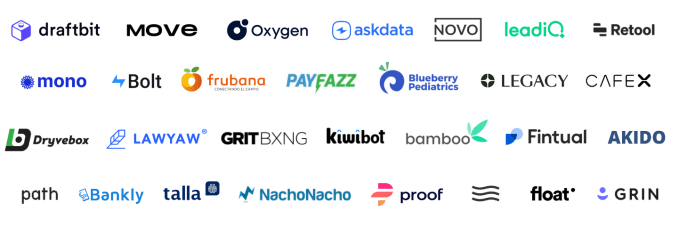
Some MAGIC portfolio companies

Here’s a scenario. In 2016, when unicorns Flutterwave and Kavak raised their seed rounds in Nigeria and Mexico respectively, an African biotech founder who knew about Kavak and a Latin American edtech founder interested in African fintech would not have had the capacity to evaluate those deals even if they wanted; the reason being a lack of reach and experience in both the industry or geography

Olubusi and the other founders knew this would be a limitation in the long run if they went solo. Thus, they decided to create MAGIC. The idea was to bring global founders together with diverse skillsets in diverse industries and geographies to evaluate deals better and drive value for each other. Hence, they can participate in two unicorns instead of one.

“Instead of us investing individually because obviously, we have somewhat limited capacity in terms of how much time we have as founders because of our respective companies, why don’t we collaborate on a strategy together, and co-invest together?”

“The way we thought of MAGIC was a fund of micro funds built by founders for founders,” Greenleaf continued.

Fund of micro funds but more than money

In some of the personal conversations I’ve had with founders about their investors, a recurring theme has been that the most useful investors didn’t necessarily sign the biggest checks. It’s a theme Olubusi also relates to all too well.

“It was like every time we think about it, everyone who gave the most money rarely had time for us. It was so frequent that we all identified this as an actual thing. What actually drove value for us were other investors who were founders and operators, and other experienced people who were able to help us find product-market fit and fight regulators. These were actually the people in the trenches with us.”

Olubusi believes the early-stage part of investing particularly in pre-seed and seed is where VCs who are founder-operators find their sweet spot. They are extremely valuable when startups are trying to figure out product-market fit. And unlike traditional investors who are looking to get multiples on investments, Olubusi argues that for founders-investors, what matters is how much value they can drive.
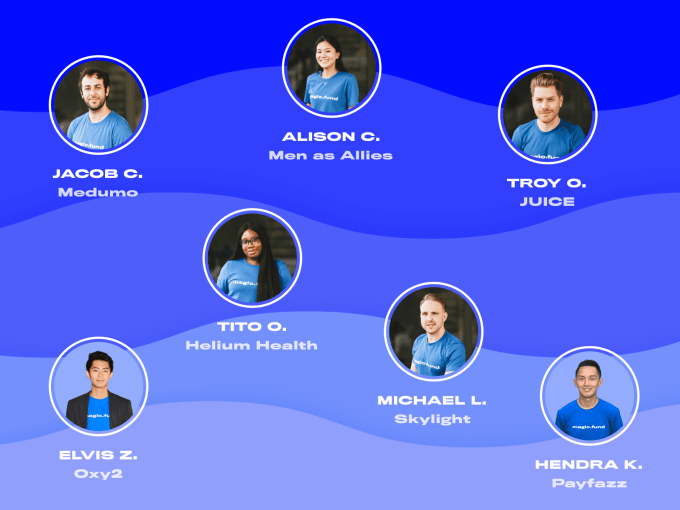
Image Credits: MAGIC Fund

MAGIC’s play is even more essential considering that it plays in emerging markets where on-the-ground operational help is needed in industries with numerous unknowns and uncertainties.

“There is so much money in the market now and early-stage decision making at pre-seed and seed should be left in the hands of founders. Because think about it really, in order to make an evaluation of whether I should invest in a healthcare or fintech company in Africa, it makes sense to have those who’ve spent years battling through it in the trenches, make those decisions. And what we’re trying to do with the fund is publish as much information as possible and keep performing at the 100 percentile and say this is still the best strategy and is very scalable.”

MAGIC Fund 1 was $1.5 million which came from the pockets of all 12 GPs. Olubusi says the investments performed 5x over the period of three years. As some of these companies exited, their founders invested in MAGIC and came on board as Fund 2 partners. 

MAGIC has also enlisted additional investors who, according to Olubusi, are respected for their investing abilities and ecosystem support. For instance, Olugbenga Agboola, CEO of Nigerian fintech unicorn Flutterwave is known across the African tech ecosystem as a founder who goes out of his way to help established and up and coming fintech companies. Hendra Kwik of Payfazz has such a reputation in Southeast Asia as well. They, alongside other founders, join MAGIC as limited partners.

Per the firm’s statement, one-third of the entire fund was contributed by the founder GPs. For its LPs, diversity play is taken into consideration as 50% of them are black while 33% are women. Some of them include Michael Seibel, Tim Draper, Rappi’s Andres Bilbao, Paystack’s Shola Akinlade, Katie Lewis, Octopus Ventures’ Kirsten Connell, among others.

Magic Fund 2 will be writing $100k to 300k checks in pre-seed and seed stages with a focus on fintech, healthcare, SaaS and enterprise, crypto, developer tools, and emerging markets.

What does the fund look for in founders? Olubusi gives two answers. One, MAGIC wants to back founders that have incentives to stick through the hard times of a company.

“At pre-seed and seed, you don’t have enough data about a company to make an investment decision. Your bet is entirely on the founder and the founding team. What we know, having done this several times, is that things get harder. So when we’re looking at the founder, we’re evaluating whether or not the founder has the grit to stick through the toughest times which are going to come up.”

The second indicator factors if the founder has the willingness, openness, the flexibility to learn and use that knowledge to succeed. Greenleaf believes these strategies have incredibly helped the firm fund exceptional companies and maintain good relationships with founders.

“Most of these founders don’t view us as their investors. They view us as fellow founders who are helping them along their journey. I think that also ties into them keeping it real with us and allows us through that relationship as see how they are as a person, and not just as a founder. That’s kind of one of the things that have worked in our favor,” he said.


06 Jul 2021

Nothing’s Ear 1 earbuds will feature noise cancelling and run $99

Fittingly, we don’t know a lot about Nothing. The young hardware startup has, however, done a stellar job building hype around precisely that fact. In the lead up to the July 27 launch of the company’s first product, the Ear 1, the Nothing marketing machine has released information in drabs and drabs.

Ahead of the event, we sat down with founder Carl Pei for a wide ranging interview about launching his latest hardware company. During the conversation, he revealed some additional information about the upcoming fully wireless earbuds.

“It’s going to have leading features like noise cancellation and great build quality,” Pei told TechCrunch. “Because we’re primarily going to be focused on online sales channels, we are going to be able to [make it] — I wouldn’t say ‘affordable,’ but quite a fair price to consumers. With the Ear One, it’s a much more costly design to realize than a standard, non-transparent design. I think it’s going to be a good price at $99 USD, €99 Euros and £99. Feature-wise, it’s similar to the AirPods Pro, but the AirPods Pro is $249.”

Image Credits: Nothing

Pricing in the earbud market is all over the place at the moment, of course. Apple is holding up the high end of the mainstream with its AirPods Pro. Sony’s latest manage to edge that out into truly premium pricing at $280. At the other end of the spectrum, meanwhile, it’s easy to snag a pair of buds for well under $50, though at the low end of the market, your mileage will vary.

Image Credits: Nothing

The Ear 1s are aggressively priced at $99 – putting them in the same pricing category as the Samsung Galaxy Buds and the recently released Google Pixel Buds-A. Though Pei promises Nothing’s product will have the upper hand with an AirPods Pro-like feature set, including active noise cancelling. In an email to TechCrunch, the company says the ANC will arrive via three “high definition” mics. Pei added that the IP purchased from Essential won’t appear in this first product.

“[B]efore we were called Nothing, ‘Essential’ was one of the names we were brainstorming, internally,” said Pei. “So that’s why we’ve acquired the trademark. We don’t have any plans to do anything with Essential.”

Still, he stresses that it’s not a features race for Nothing. “If you look at what kids want to become today, they want to be TikTokers, or YouTubers,” Pei tells TechCrunch. “Maybe it’s because technology isn’t as inspiring as before. We talked to consumers, and they don’t care as much as a couple of years ago, either. If you look at what brands are doing in their communication, it’s all about features and specs. There’s nobody in this space trying to like with a higher purpose.”

The ‘higher purpose’ here is Nothing’s broader ecosystem play, connectivity and making users’ “digital lives more seamless.” It’s also, as the name implies, an attempt to make tech that gets out of its own way. That’s, in part, is the job of the aesthetics. We do know that the buds will be transparent – a design decision that contributed to the delayed launch.

“It turns out, there’s a reason why there’s not a lot of transparent consumer tech products out there,” Pei said. “It’s really, really hard to make it high quality. You need to ensure that everything inside looks just as good as the outside. So that’s where the team has been iterating. You probably wouldn’t notice the differences between each iteration. It could be getting the right magnets — as magnets are usually designed to go inside of a product and not be seen by the consumer — to figuring out the best type of gluing. You never have to solved that problem if you have a non-transparent product, but what kind of glue will keep the industrial design intact?”

Nothing is relying on direct sales to drive down costs, with an initial focus on U.K., India, Europe and North America, followed by Japan, Korea and other countries. Pei says the company is still in process of negotiating additional markets. The Ear 1 are the first of three products the company currently has in its pipeline.


06 Jul 2021

Nothing founder Carl Pei on Ear 1 and building a hardware startup from scratch

On July 27, hardware maker Nothing will debut its first product, wireless earbuds dubbed Ear 1. Despite releasing almost no tangible information about the product, the company has managed to generate substantial buzz around the launch — especially for an entry into the already-crowded wireless earbud market.

The hype, however, is real — and somewhat understandable. Nothing founder Carl Pei has a good track record in the industry — he was just 24 when he co-founded OnePlus in 2013. The company has done a canny job capitalizing on heightened expectations, meting out information about the product like pieces in a puzzle.

We spoke to Pei ahead of the upcoming launch to get some insight into Ear 1 and the story behind Nothing.

TC: I know there was a timing delay with the launch. Was that related to COVID-19 and supply chain issues?

CP: Actually, it was due to our design. Maybe you’ve seen the concept image of this transparent design. It turns out there’s a reason why there aren’t many transparent consumer tech products out there. It’s really, really hard to make it high quality. You need to ensure that everything inside looks just as good as the outside. So that’s where the team has been iterating, [but] you probably wouldn’t notice the differences between each iteration.

It could be getting the right magnets — as magnets are usually designed to go inside of a product and not be seen by the consumer — to figuring out the best type of gluing. You never have to solve that problem if you have a non-transparent product, but what kind of glue will keep the industrial design intact? I think the main issue has been getting the design ready. And we’re super, super close. Hopefully, it will be a product that people are really excited about when we launch.

So, there were no major supply chain issues?

Not for this product category. With true wireless earbuds, I think we’re pretty fine. No major issues. I mean, we had the issue that we started from zero — so no team and no partners. But step by step, we finally got here.

That seems to imply that you’re at least thinking ahead towards the other products. Have you already started developing them?

We have a lot of products in the pipeline. Earlier this year, we did a community crowdfunding round where we allocated $1.5 million to our community. That got bought up really quickly. But as part of that funding round, we had a deck with some of the products in development. Our products are code-named as Pokemon, so there are a lot of Pokemon on that slide [Editor’s note: The Ear 1 was “Aipom.”]. We have multiple categories that we’re looking at, but we haven’t really announced what those are.

Why were earbuds the right first step?

I think this market is really screaming for differentiation. If you look at true wireless today, I think after Apple came out with the AirPods, the entire market kind of followed. Everybody wears different clothes. This is something we wear for a large part of the day. Why wouldn’t people want different designs?

We’re working with Teenage Engineering — they’re super, super strong designers. I think true wireless is a place where we can really leverage that strength. Also, from a more rational business perspective, wireless earbuds is a super-fast growing product category. I think we’re going to reach 300 million units shipped worldwide this year for this category. And your first product category should be one with good business potential.

“Screaming for differentiation” is an interesting way to put it. When you look at AirPods and the rest of the industry, are aesthetics what the market primarily lacks? Is it features or is it purely stylistic?

If we take a take a step back and think about it from a consumer perspective, we feel like, as a whole, consumer tech is quite, quite boring. Kids used to want to become engineers and astronauts and all that. But if you look at what kids want to become today, they want to be TikTokers or YouTubers. Maybe it’s because technology isn’t as inspiring as before. We talked to consumers, and they don’t care as much as a couple of years ago either. If you look at what what brands are doing in their communication, it’s all about features and specs.

06 Jul 2021

White label fintech platform Toqio secures $9.4M Seed led by Seaya and Speedinvest

The upside of the Open Banking regulations which have swept jurisdictions like the UK and the EU is that many more challenger banks have appeared. The headache for either incumbent banks or for upstart startups is the very proliferation of these new banks and financial tech products. But as we know, in gold rushes, the people selling the picks and shovels usually win. Thus, startups have turned their attention, not to launching full-stack banks, but to full-stack platforms that other people can launch their fintech startups and products upon.

The latest to join this brigade is Toqio, a fintech platform with a white label digital finance SaaS that allows anyone to launch a new fintech product.

The London-based startup has now secured an €8M / $9.4M seed round of funding led by Seaya Ventures and Speedinvest, with SIX FinTech Ventures participating.

Founded in 2019 by Eduardo Martínez and Michael Galvin, the teams behind Toqio previously built a small business SaaS startup, Geniac, which was acquired by Grant Thornton.

Eduardo Martínez, co-Founder and CEO, of Toqio, said: “Businesses and banks are looking to innovate in the FinTech sector, but to date, they have had to create and maintain complex software solutions to do this. This has also kept smaller niche businesses out of the market. We don’t want FinTech to end up like banking just with a new set of big incumbents trying to take control of financial services. We want to level the playing field.”

Toqio says its customers get access to pre-built products to create applications that can go to market quickly. Products include digital banking, card, and financing solutions, and a marketplace, aimed at financial institutions, FinTech startups, banks, and corporate brands.

Headquartered in London and Madrid, Toqio says it already has customers across Europe, including new Spanish bank Crealsa, business banking service Wamo in Malta, and alternative business lender Just Cash Flow in the UK.

Aristotelis Xenofontos, Principal at Seaya Ventures, said: ”We have spent many years following the Embedded Finance space and finally found the missing piece, a seamless enabler that glues everything together. Toqio is a truly end-to-end platform that provides a complete plug-and-play bank and allows any organization to offer a full suite of digital financial services in a rapid, painless, future-proof, and low-cost way.”

Stefan Klestil, General Partner at Speedinvest, added: “We’ve seen the rise of neo-banks, the change of regulations across multiple markets, and now we’re starting to see traditional businesses and big brands looking to embed financial products within their existing offerings. Financial services are going to change and expand at an unprecedented rate, and Toqio will be instrumental in enabling it.”

06 Jul 2021

Byrd raises $19M to expand Amazon-style fulfillment and logistics to more e-commerce merchants in Europe

E-commerce in Europe is set to grow 30% percent this year, with the online shopping surge that started at the rise of Covid-19 showing little sign of abating. Today, a startup that’s building infrastructure in the region to help merchants fill and deliver those orders — and present an alternative to using Amazon for fulfillment — is announcing funding to expand its footprint to meet that demand.

Byrd, which builds software to manage warehouses and logistics operations, and also runs a service to help online merchants store, pick and deliver their orders, has picked up €16 million ($19 million), a Series B that it will be using to expand to five more markets in eastern, northern and southern Europe in addition to the five countries where it’s already active. Founded in Vienna, Austria in 2016, Byrd is also in the UK, Germany, the Netherlands, and France, where together it has some 15 fulfillment centers and 200 customers, including Durex, Freeletics, Scholl, Your Superfoods and other D2C brands in health and wellness, consumer packaged goods, cosmetics and fashion.

Mouro Capital — a strategic fintech/e-commerce VC that was spun out from banking giant Santander last year — led the round, with Speedinvest, Verve Ventures, Rider Global and VentureFriends also participating. Byrd isn’t disclosing its valuation but has raised some €26 million to date.

The gap in the market that Byrd is going after is a growing one, not just in terms of size but in terms of retailers’ demand, and what they are looking for in a fulfillment partner.

E-commerce is a deceptively complex business — deceptive, because as consumers all we ever really see or care about is the ability to find what we are looking for at a decent price, click on it, buy it without too much fuss and have it appear at our doors, ideally asap.

But the steps needed behind the scenes to make all of that possible are many, and mostly complex, and not usually in the core competency of a typical small retailer, who may have identified a product it thinks the world wants, but not how to get it to them. They include marketing, payments, user interface designs, personalization, manufacturing and other supply chain concerns, and yes, the logistics and fulfillment to get orders to customers. As e-commerce continues to become a bigger channel, all of these segments in the chain represent ever-growing opportunities.

Typically, retailers will look to third-party tech companies to provide these different services, and this is where Byrd comes in, as an outsourced partner to handle companies’ logistics and fulfillment. The company has built a set of APIs that let retailers essentially plug in and shift the whole fulfillment operation to Byrd.

That includes integrating with Byrd’s warehouses to receive, store and pick items; and it also includes connecting with a company’s merchant network, which could include a merchant’s own online storefront, but also Amazon and other marketplaces where items are sold. When an order comes in and it is time to pick and ship an item, Byrd also uses its tech to taps into a network of different shipping companies — the list includes the likes of UPS, DHL, Amazon, postNL and others — to find the cheapest and easiest way of getting an item to the buyer.

To be totally clear, Byrd is not the only one doing this. But alongside other independent companies that compete with Byrd — one of the biggest, ShipBob, last week raised a big round of $200 million on a $1 billion valuation — is a big elephant in the room in the form of Amazon. The e-commerce giant has positioned itself as something of a one-stop shop for merchants, providing not just fulfillment (via FBA), but storefront visibility, marketing and much more.

The size of Amazon is such that it typically accounts for a large market share, and many merchants can’t not have a presence there even if it’s primarily as a customer acquisition channel, said Petra Dobrocka, co-founder and CCO of Byrd, in an interview.

But the problem is that the Amazon option, and some of the other third-party providers, don’t leave much to personalization. Indeed, as e-retailers continue to mature, and find themselves facing their own stiff competition, they are looking for more ways of getting an edge, and to stand out from the crowd. Byrd provides something here for them, too, giving them the option to customize packaging so that customers are essentially experiencing a direct service, even when it’s actually coming from Byrd, and to give them options to go for more sustainable delivery and more if they choose.

That has possibly meant a slower rate of scaling for the startup, but it comes as a quality option, and that counts for something in a world that is teetering on very poor quality control, and definitely lack of distinct identity, in some marketplaces particularly as they continue to scale.

“You could say we are an alternative to Amazon, but also quite different. Our sellers are very brand-focused and want to provide a total experience total to customers,” Dobrocka said. “We also have smaller customers who appreciate this.” Indeed, as is so often the case, smaller businesses get short-changed on service levels compared to bigger businesses, so having a fulfillment service that treats even smaller retailers like bigger ones is a plus.

This is also part of a bigger trend, where a wave of tech companies are emerging to help those retailers build more distinct online presence and personalization, too. (The online storefront design platform Shogun, which also announced funding last week, is another example of a startup playing into this trend.)

All of this has led to Byrd seeing some very strong growth — revenues are up 300% compared to a year ago — with “hundreds of thousands of parcels per month” being handled, the company said.

Although its primary business is in catering to the very big B2C opportunity one obvious adjacent area where Byrd could work is in B2B, and Dobrocka said that will also be coming online in the coming months. Alongside that, while the company hasn’t specified which countries it will build out its fulfillment in next, given Mouro’s involvement, I’m guessing that Spain might be one of the next countries on the list.

“We are delighted to be leading Byrd’s Series B funding round, particularly as the pandemic has brought the need for flexible, digital e-commerce fulfilment solutions into sharp relief,” said Manuel Silva Martínez, general partner at Mouro Capital, in a statement. “Byrd’s end-to-end capabilities, focus on sustainability, and household brand customers set it apart from its competitors, and we look forward to seeing the successes that the geographic expansion enabled by this investment will bring.”

06 Jul 2021

Free Extra Crunch membership included with TC Early Stage tickets

TechCrunch Early Stage is coming up soon, and all attendees can get 3 months of free access to Extra Crunch as a part of a ticket purchase. Extra Crunch is our members-only community focused on founders and startup teams. 

Head here to buy your ticket to TC Early Stage

Extra Crunch unlocks access to our investor surveys, private market analysis, and in-depth interviews with experts on fundraising, growth, monetization and other core startup topics. Get feedback on your pitch deck through Extra Crunch Live, and stay informed with our members-only Extra Crunch newsletter. Other benefits include an improved TechCrunch.com experience and savings on software services from AWS, Crunchbase, and more.

Learn more about Extra Crunch benefits here, and buy your TC Early Stage tickets here

What is TC Early Stage? 

TC Early Stage is a two-day virtual event where early-stage founders can take part in highly interactive group sessions with top investors and ecosystem experts. This particular Early Stage event has a focus on marketing and fundraising.

The event will take place July 8-9, and we’d love to have you join. 

View the event agenda here, and purchase tickets here

Once you buy your TC Early Stage pass, you will be emailed a link and unique code you can use to claim the free 3 months of Extra Crunch.

Already bought your TC Early Stage ticket?

Existing pass holders will be emailed with information on how to claim the free 3 months of Extra Crunch membership. All new ticket purchases will receive information over email immediately after the purchase is complete.

Already an Extra Crunch member?

We’re happy to extend a free 3 months of access to existing users. Please contact extracrunch@techcrunch.com, and mention that you are an existing Extra Crunch member who bought a ticket to TC Early Stage 2021: Marketing and Fundraising.