Year: 2021

30 Jun 2021

Tiger Global leads $31.5M investment in interactive edtech Quizizz

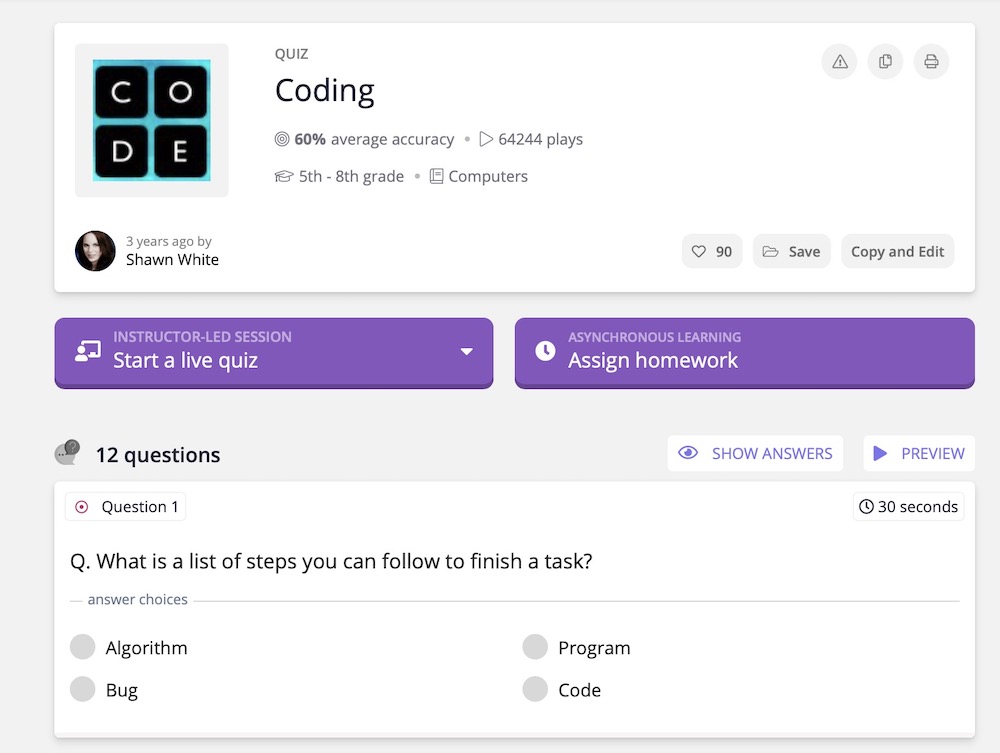
Quizizz, an Indian startup that is making learning more interactive so that students find it compelling to spend more hours studying, said on Wednesday it has raised $31.5 million in a new financing round.

Tiger Global led the Series B financing round in the five-and-a-half-year-old startup. Yahoo co-founder Jerry Yang and existing investors Eight Roads Ventures, GSV Ventures, Nexus Venture Partners also participated in the new round.

Quizizz, which concluded its previous financing round in March this year, has raised $47 million to-date.

“When we were kids, it was so difficult to focus on studies. Our thesis has been that with kids now living in a world with so much distraction, there’s a need to make learning more interesting,” said Ankit Gupta, co-founder and chief executive of Quizizz, in an interview with TechCrunch.

Along with Deepak Cheenath, Quizizz’s other co-founder, Gupta started the startup’s journey in a non-profit school in Bangalore, where they built several prototypes. The same year — 2015 — the duo engaged closely with teachers and students in the U.S., and pivoted to Quizizz, said Gupta.

On Quizizz, teachers and the community develop gamified lessons for students. (Teachers don’t have to build these lessons. For the concepts that they want to explain to students, if lessons exist, many just use those instead. The platform has over 20 million quizzes today.)

These lessons have enabled students to find learning more engaging, said Gupta. The platform also enables teachers to identify in real-time students who are struggling with grasping any concept and then to address those gaps, he said.

The platform covers a range of subjects including computer science, english, mathematics, science, social studies, world languages, and creative arts.

Over the years, Quizizz has grown organically across the globe with many classrooms today using the platform, said Gupta. The platform is used by teachers in over 120 nations today with students answering more than 300 million questions on Quizizz each week. In the U.S., which is Quizizz’s largest market now, over 80% of K-12 schools use the platform, he said.

“During the pandemic, Quizziz made the transition to teaching online seamless. Now that we’re back in the building, I’ve used it almost exclusively. Making, finding, and altering lessons using Quizizz has become almost a hobby for me,” said Rory Roberts, a math teacher at Brigantine Community School, in a prepared statement.

“This week, we conducted user-testing with teachers in California, saw a video of students cheering on their classmates in an auditorium in Kenya, and got a thank you note from a group of teachers wearing Quizizz branded t-shirts in Indonesia. We’re incredibly proud of the role our growing team, and teacher community, have played in this movement,” said Quizizz’s Cheenath.

The startup plans to deploy the fresh capital to expand its team across both the U.S. and India to keep up with its growth. It is also looking to form partnerships to accelerate its international expansion.

29 Jun 2021

Toca Football raises $40 million to fuel its budding chain of giant soccer and entertainment facilities

Toca Football, a nine-year-old, Costa Mesa, Ca.-based company that operates 14 sports centers across the U.S. that are focused on soccer training, has raised $40 million in Series E funding to roughly double the number of facilities that are now up and running in the U.S., as well as to open a site in the U.K. that CEO Yoshi Maruyama describes as a “highly themed game-experiences-based dining and entertainment facility focused on soccer training.”

Maruyama knows a thing or two about building destinations to which people gravitate. Before joining Toca — which was founded by the American former soccer player Eddie Lewis (“toca” refers to the first touch of the ball in soccer) — Maruyama spent six years as the global head of location-based entertainment for Dreamworks. He spent 14 years before that as an SVP with Universal Parks & Resorts.

Indeed, he was brought into Toca in 2019 to transform it from a manufacturing business that sells Major League Soccer teams a ball-tossing machine that Lewis had developed, to the services business it has become.

On its face, its new model seems like a pretty smart one, given soccer’s growing popularity in the U.S. According to Statista, the number of participants in U.S. high school soccer programs recorded an all-time high in the 2018/19 season, with more than 850,000 playing the sport across the country.

But Toca isn’t built just for kids, even if kids — and their parents –are its primary customers. According to Maruyama, there are several populations that are coming to its various centers throughout the day. In the morning, the centers feature a curriculum for children up to age six to introduce them to soccer; the afternoons feature largely one-on-one soccer training programs where Toca is able to employ its touch trainer; and during the evenings, Toca operates a leagues business for both children and adults.

Some of the centers are huge, by the way. Among Toca’s newest sites, for example, in Naperville, Illinois, outside of Chicago, it has built a 95,000-square-foot facility that features four indoor, full-size soccer fields, as well as one-on-one individual training spaces. (Maruyama suggests the company has been able to take advantage of a depressed commercial real estate market over the last year or so.)

Little wonder that investors see a big opportunity potentially.

The newest round of funding for Toca comes from earlier investors WestRiver Group, RNS TOCA Partners, and D2 Futbol Investors; they were joined by new investors, including angel investor Jared Smith, the co-founder and former COO of Qualtrics.

The company — which plans to expand into Asia as quickly as possible (China has been mandated by the country’s leadership to become “a first-class football superpower” by 2050) —  has now raised $105 million in total funding.

29 Jun 2021

Lollipop AI launches online grocery marketplace where you can build your own recipes

As I’ve taken to online grocery shopping over the pandemic, I’ve always wondered why supermarkets didn’t offer simple ‘recipe’ features that would have automatically collected items for a homemade meal. It seemed an opportunity missed. But it is missed no more.

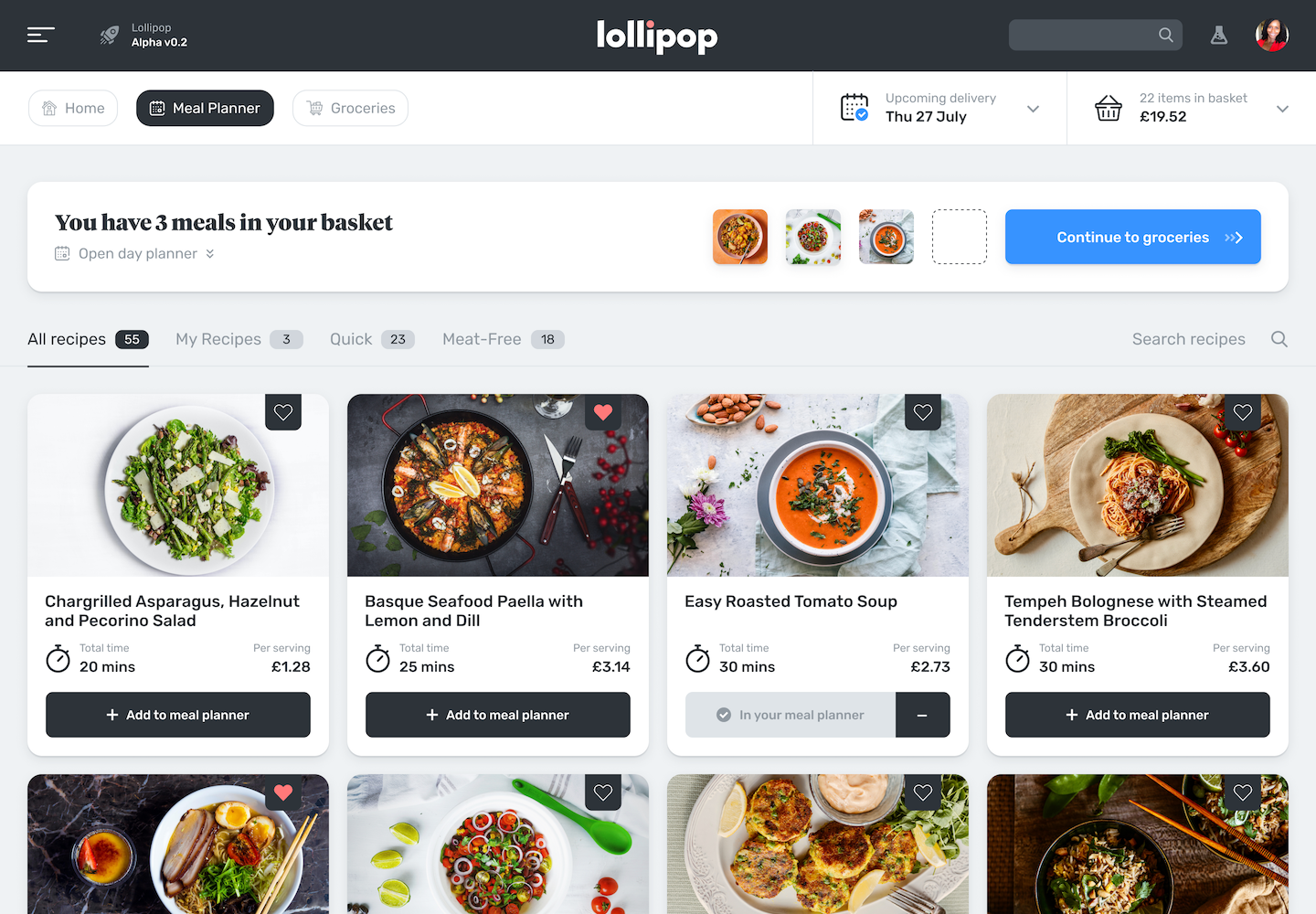
Lollipop AI, the new British online grocery marketplace, is launching its public beta today to do that, and it’s been created by a serial UK entrepreneur who was there at the start of successful UK startups Osper, Monzo and Curve.

Founder and CEO Tom Foster-Carter has envisaged a platform allowing people to build meal plans from recipes, assembling the ingredients automatically into their shopping basket, and suggesting remaining household essentials. He says could well help with health goals, improve culinary skills and minimize food waste. Built as a marketplace, it will be partnering with Sainsbury’s and BBC Good Food with more partners and fulfillment will be completed by retail partners. The business model will be taking a small commission from retail partners, allowing selected advertising, e.g. from CPG brand owners, and a Paid Premium tier later this year.

The site will be free to use, while a premium tier is planned. The first ten thousand Beta testers to sign up to the waitlist will be offered access to premium features “for life”, says the startup, which will offer prices at the same rate as normal supermarkets.

Foster-Carter, who had the idea after having a baby and realizing he was spending hours trying to use a normal supermarket, says the approach will save several hours a week for the average household. (We will briefly overlook the fact that a man had to create a site like this after doing the weekly shop…). Lollipop claims 80% of households spend over an hour a week meal-planning and online grocery shopping.

Lollipop MealPlanner

Lollipop MealPlanner

The founding team includes former employees of Monzo, Farmdrop, Amazon, Sainsbury’s and HelloFresh, such as cofounders Chris Parsons and Ib Warnerbring.

Although Foster-Carter is coy about how much he has raised for this approach, he says he has raised a pre-seed round backed by JamJar Investments, Speedinvest, and a “raft of grocery/technology big hitters” including Ian Marsh (former UK GM of HelloFresh) and former leadership and founders of online grocers in the UK and abroad plus ‘super-angels’ Charles Songhurst and Ed Lando.

In particular, the site is likely to appeal to people looking to lose weight, as meal planning would be simpler, and may even have an impact on recipe-box startups.

Lollipop is not alone in its ambitions. Jupiter.co in the US bills itself as “groceries on autopilot”; Jow is recipe-led shopping, as is Side Chef; while Cooklist is a meal-planner + cooking support, also in the US.

Foster-Carter told me: “It’s a marketplace so we could partner with traditional supermarkets (Sainbury’s, Tescos, Waitrose etc) + online retailers (Ocado, Amazon), direct to farm / organic (Riverford, Farmdrop), mission-led single component (Oddbox, Milk & More, etc); recipe boxes (Gousto, Hello Fresh, Mindful Chef etc); and rapid delivery (Gorillas, Getir, Weezy, etc).”

He said: “This is just the start… The plan is to be the single place you go to for all your food needs – we’ll enable you to order your Deliveroo or restaurant kit (e.g. Dishpatch) from us. Groceries are delivered by our partners and then when it’s time to cook you’ll be able to use a cooking companion app (due out next month). In the future you’ll be able to improve your cooking skills through Lollipop.”

Few players have nailed the ability to buy a lot of items (50-100+) really fast, not even Amazon – this might be Lollipop’s USP, if it can crack it.


29 Jun 2021

MWC 2021 day two: Is this thing on?

Listen, it’s probably not the best sign when a show feels like it’s running out of steam on its first day. Mobile World Congress’ opening salvo was headlined by Samsung in an event that touched on some partnerships and spent equal time teasing an upcoming event where it will actually launch some hardware. It’s hard to get too down on the GSMA, and I really ought to preface all of these by reiterating that – even in a normal year – running an event is hard as hell. Canceling its flagship show last year had to be gut-wrenching, and deciding to go forward with this one must have also been – albeit for dramatically different reasons?

It’s not like the show didn’t come with some wins. What’s that? Elon Musk videoed in? That’s a pretty massive get by any measure, with all of the standard “whatever you think about the guy” preambles. Love him or hate, you’ve heard about him and probably have extremely strong feelings about the dude, one way or another.

The High Priest of Dogeking beamed in to talk SpaceX StarLink. “To be totally frank, we are losing money on that terminal right now,” Musk said in the interview. “That terminal costs us more than $1,000, so obviously I’m subsidizing the cost of the terminal.” Good thing he’s got deep pockets.

He promised a new version of the company’s satellite next year, “which will be significantly more capable.”

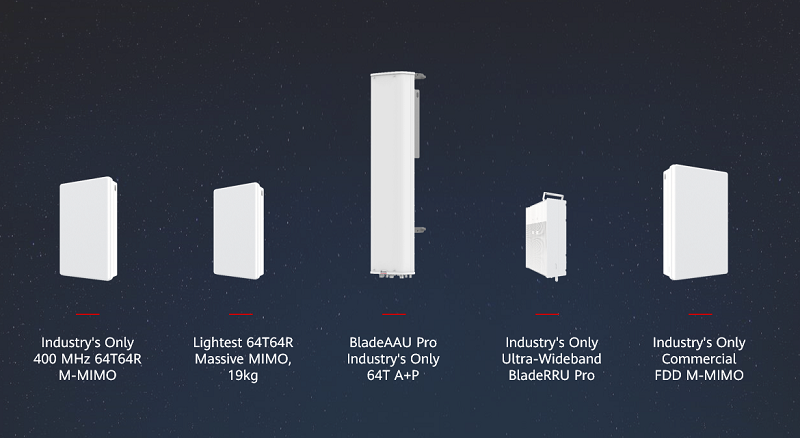
Huawei thus far has focused much more on networking than consumer – it’s important to caveat this by adding that MWC is as much, if not more, a networking show, in spite of all of the press that tends to focus on consumer device launches. The company launched a bunch of 5G networking hardware, including several MIMO products.

Speaking of networks, I totally forgot to include this bit from TechCrunch parent co (you know, for now). Verizon trotted out a bunch of robots with 5G branding. The company was making a point about the importance of cellular for future robotics communication.

Here’s CSO Rima Qureshi, quoted by Reuters, “5G will make it possible for robots to connect with other robots and devices of all kinds in a way that simply wasn’t possible before.”

Image Credits: Huawei

Let’s be honest, though, mostly robots make for cool stage fodder. From what I can tell, the Boston Dynamics-esque quadruped was this bot from Ghost Robotics, which Verizon also trotted out (well, it trotted itself out, I suppose) at CES in January:

Given the choice, would I have put on an in-person event in Barcelona in the summer of 2021? No. Nuh-uh. No way. Did the GSMA feel like they had a choice financially or otherwise? That’s a much more difficult question to answer. When you’re a company that runs on events and partnerships, even canceling a single big show is a shock to the system.

I’m going back and forth on whether I’ll be doing any more of these roundups as the show progresses through Thursday. Definitely if some more interesting stuff shows up, or if there’s like video of Elon hoverboarding through the sparsely populated convention center halls or something. But I’m not holding my breath.

Read more about Mobile World Congress 2021 on TechCrunch


29 Jun 2021

Daily Crunch: Language-learning app Duolingo translates strong revenues into IPO filing

To get a roundup of TechCrunch’s biggest and most important stories delivered to your inbox every day at 3 p.m. PDT, subscribe here.

Hello and welcome to Daily Crunch for June 29, 2021. Have you ever wanted to ditch civilization and move to the woods, but still be able to work? We have good news if that’s you. Below you’ll find lots more, including Facebook’s latest product offering and how one startup wants to save bees. Enjoy! — Alex

The TechCrunch Top 3

  • Duolingo is going public! Well-known edtech unicorn Duolingo is going public. TechCrunch has an overview of the IPO and a deeper dive into the company’s business health. Based on traffic to our coverage on the matter since last night, ya’ll are really into learning languages. Also make sure to check out the Duolingo EC-1.
  • Facebook launches newsletters: Say hello to Bulletin, Facebook’s new newsletter service. Competing with Substack, Twitter’s Revu and other services, Facebook signed up a Boomer-friendly list of initial authors including Malcolm Gladwell. The social giant has a history of testing in-house versions of products that are successful externally. We’ll have to wait and see if Bulletin manages to survive on its own merit.
  • SpaceX plans to spend billions on Starlink: According to Elon Musk, SpaceX is losing money on early Starlink connector kits. Starlink is the space company’s low-orbit satellite network that could bring about global internet connectivity. Per TechCrunch reporting of Musk’s comments, “SpaceX’s overall investment in the project could be between $5 billion-$10 billion initially and as much as $30 billion over time.” For the sake of freelancers everywhere, let’s hope the tech shakes out to match the investment.

Startups/VC

Up top today in our roundup of recent startup news is Beeflow. We’re putting it at the top of the list because (1) It’s about bees and (2) It’s called Beeflow. What’s not to love? Per Jordan Crook, the startup may have an answer to the decimation of the global bee population. And it might make money to boot.

Now, the rest of the news:

And I would be remiss to not mention that I covered venture capital rounds this morning from co-op and Arrows, along with news regarding Acceleprise’s rebrand.

How VCs can get the most out of co-investing alongside LPs

In a recent private equity survey, 80% of respondents said their co-investments with people outside traditional VC firms outperformed their PE fund investments.

Alternative investors are highly motivated, and because they’re seeking higher returns than are generally available in public markets, they are less daunted by risk. In return, they benefit from less expensive fee structures and develop close ties with VCs, enlarging the talent pool as they build investment skills.

These relationships have direct benefits for VCs as well, such as more flexibility with diversification and consolidated decision-making power.

“With the right deal structure, deal selection and deal investigation, co-investors can significantly increase their returns,” says C5 Capital Managing Partner William Kilmer, who wrote an Extra Crunch post for VCs considering an alternative path.

(Extra Crunch is our membership program, which helps founders and startup teams get ahead. You can sign up here.)

Big Tech Inc.

Turning from the smaller upstarts to the megagiants, it’s been a good week to be a Big Tech company. Facebook crossed the $1 trillion market cap threshold, though it dipped back under the magic number this afternoon. Here’s what else is going on from the Bigs:

  • Shopify cuts its cut to 0%: Shopify will charge zero for developers’ first million in revenue that they make on its application marketplace. The move fits into a larger trend of app stores lowering their cuts as Apple fights tooth and nail to avoid doing the same with its own application emporium. The Shopify news is probably more aimed at e-commerce rival Amazon than Apple, but the move still gently undercuts Cupertino’s argument that it deserves around a third of all commerce that happens on iOS.
  • AI developers are coming: News out today from Microsoft’s GitHub product is notable, with the sub-org announcing an AI-powered tool that “suggests code as you type.” GitHub teamed up with OpenAI to build the tool. For beginners, the coding service could prove to be super freaking neat.

TechCrunch Experts: Growth Marketing

Illustration montage based on education and knowledge in blue

Image Credits: SEAN GLADWELL (opens in a new window) / Getty Images

TechCrunch wants you to recommend growth marketers who have expertise in SEO, social, content writing and more! If you’re a growth marketer, pass this survey along to your clients; we’d like to hear about why they loved working with you.

If you’re curious about how these surveys are shaping our coverage, check out this interview Extra Crunch Managing Editor Eric Eldon did with Scott Tong, “The pandemic showed why product and brand design need to sit together.”

29 Jun 2021

Rimac Automobili founder Mate Rimac shares lessons from bootstrapping an EV company

Mate Rimac’s founder story has the makings of automotive folklore. He started Rimac Automobili in his garage in 2009 as a literal one-person operation that has grown to a company with more than 1,000 employees, supply contracts with automakers like Porsche and a new electric hypercar moving into production.

What might not be known is how close the company came to failing. “It has been such a wild ride,” Mate Rimac said during an interview at at the virtual TC Sessions: Mobility 2021 event. “The first seven years, we were like out of money and technically bankrupt all the time.”

The founder and CEO of Croatian electric hypercar and components developer Rimac Automobili joined TechCrunch on our virtual stage to talk about the company’s new Nevera vehicle, his interest in electric robotaxis and the prospect of an acquisition of Bugatti. Throughout the interview, he gave a candid account of some of the company’s lowest points, how he and the company survived and what other founders can learn from his experience.

“It was quite a ride.”

Today, Rimac Automobili is a household name in Croatia with plans to grow even larger. Rimac is currently building a headquarters and technology campus on a 49-acre site that is slated to be completed in 2023. It was a far more solitary experience the first few years of Rimac Automobili’s existence. Even when it gained recognition, the company came close to failing numerous times, Rimac said in the interview.

It has been such a wild ride. And like the first seven years, we were like out of money and technically bankrupt all the time.

We had situations where I can’t even start to explain what we survived. I set out this company 12 years ago, I was alone for two years. The first employee joined me in 2011. So it was really built from a garage.

29 Jun 2021

If you pay an emotional labor fee, Postdates will get your stuff from your ex

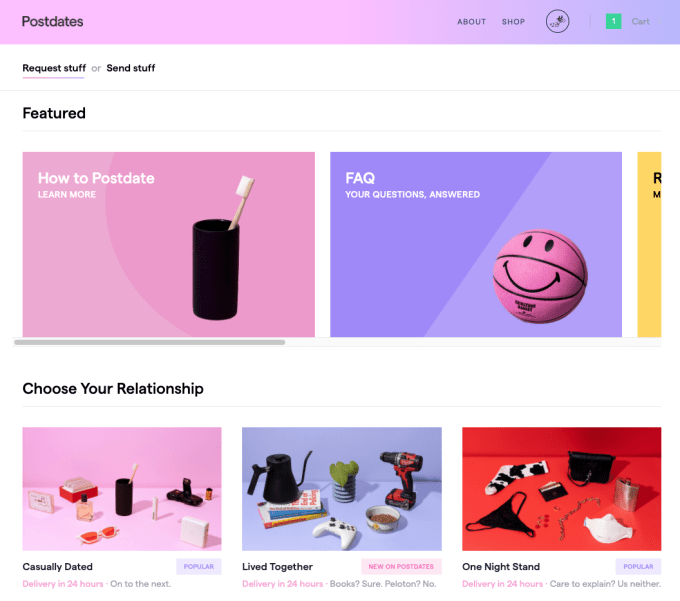
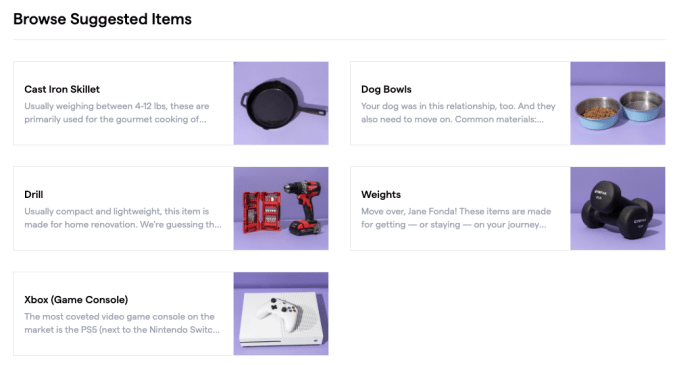
Yesterday, the team behind the parody Amazon Dating delivered us Postdates. It’s like Postmates, but for getting your stuff back from your ex.

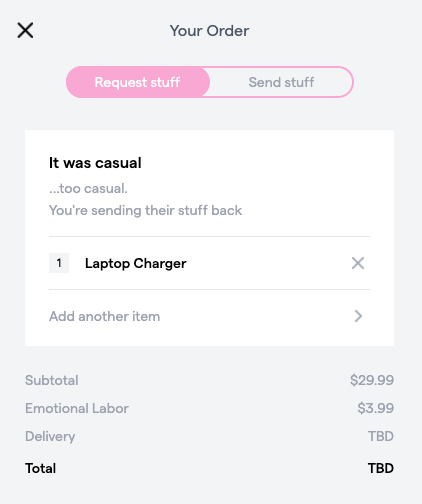
Postdates looks like the actual Postmates website – you can select a type of relationship (“casually dated,” “lived together,” “one night stand,” etc.) like it’s a type of restaurant. Then, you can choose from preset items to retrieve (concert tickets if you were friendzoned, family heirlooms if you were divorced) or add a custom item. Delivery starts at $25 in LA and $30 in NY, along with an additional emotional labor fee of $3.99. Yes, you can actually use this service if you’re in one of these two cities, but Postdates isn’t here to stay — it’s a pop-up business. Or, as Postdates “founder” Ani Acopian puts it, “It’s kind of like watching a ‘Black Mirror’ episode, but it’s your real life.”

You might remember Elon Musk’s failed comedy start-up/”intergalactic media empire” Thud, which aimed to create immersive digital experiences that blurred the lines between what’s real and fake. Or, you might not remember Thud, since it failed spectacularly and wasn’t very funny. Postdates struck the satire gold that Elon Musk dreamed of with Thud, only they did it without $2 million dollars in funding from one of the richest men in the world.

TechCrunch talked to conceptual artist Ani Acopian, producer Suzy Shinn, and product developer Brian Wagner to get the low-down on just how legit Postdates is.

TechCrunch: Why Postdates? How did the idea come about?

Suzy Shinn: At the start of quarantine when everything was falling apart, Ani and I made ScrubHub, like PornHub for hand washing. We raised $50,000 for charity.

Ani Acopian: I think we had this creative juice inside of us that we wanted to find an outlet for.

SS: Then, we had the Postdates idea, and we actually tried to get investors and artists to fund it, because we were like… This is going to cost something, we want to make it real and actually function. No one wanted anything to do with it, because they were like, “What’s the return?”

AA: And we were like, “Well, the return is that it’s a vibe.”

SS: No one wanted anything to do with us funding-wise, so we built it ourselves.

TC: So, you can actually use this?

AA: Yeah, we partnered with two local courier companies, Gourmet Runner in LA and Airpals in New York. We wanted to make sure we work with people that treat their workers right.

SS: You can put in a request, and the ex has to consent obviously and be like, “Yeah, I have this stuff for you, I’ll put it outside,” and our couriers have Postdates bags that we give to them. But legitimately, you can use it in both of those cities as long as you’re not sending a cat, or a child, or alcohol, or drugs, or something that won’t fit in a bag.

AA: We spent a lot of time on the workflow to make sure no addresses are shared, that everyone’s consenting to be involved, and we’re trying to keep it no-contact, so we’re asking people to put stuff on their door handle. You’re not charged until your ex accepts the order.

TC: You just launched yesterday, but have people actually been using the service so far?

Brian Wagner: We had some people who would post a screenshot in response to Ani’s tweet and be like, “Oh snap, I actually got Postdated by my ex!”

SS: There’s about 30 to 40 pending requests, and we’ve gotten a handful that just like, as of this morning, have been delivered successfully.

TC: Do you think this could be a viable business?

AA: Not everything needs to be a viable business. I would actually be… not surprised, but upset if this actually became a thing, because I don’t think the world needs that level of stuff, but I think we’re pretty much already there. All you can do is hold the mirror up.

TC: As satire, what are you trying to say with Postdates?

SS: I think in the tech world, it seems like all of these tech startups get crazy amounts of funding, and they spend so much money, and they take themselves so seriously. The three of us, with the help of our friends, were able to do this, and we didn’t need $13 million in funding or five years. But we were staying up until like 5 AM, and we were like, “Can we hire someone to help us?” but we were like, “No, we can’t pay.”

BW: Especially with the rise of the gig economy, we’ve seen some positives and some pretty serious negatives, especially during quarantine. It helps people get the things that they need, but also a lot of workers aren’t being paid fairly and don’t have health insurance. So there’s a sentiment a lot more often now that a lot of tech is redistributing labor, and you’re just paying for people to be moved around. So in a way, we’re sort of like… We’ve redistributed emotional labor here.

TC: There’s an emotional labor tax on the site, yeah.

BW: There’s a bit of poking fun of that, saying how far will we go in terms of actually moving labor along for money. Will people pay for someone else to deal with the emotional handling of a situation?

TC: How did Postdates build upon Amazon Dating?

AA: We’ve made two parody sites now, and we wanted to take that to the next level and make it experiential. It’s kind of like watching a Black Mirror episode, but it’s your real life.

SS: What is the literal price you will pay not to see someone? This is a real thing that happens all the time – my friends will be like, “I broke up with my girlfriend, I need you to go get my stuff,” and I’m like, “I don’t want to go get your stuff.”

AA: I don’t think we should outsource it, though.

TC: So you don’t think we should outsource it, but also, you made Postdates.

AA: I think that’s the whole…

TC: That’s the joke.

AA: Yeah.

TC: What does it say about startup culture to make a product that you don’t think should exist?

SS: Startups are so, so serious, there’s no humor in it, and they think it’s going to last forever. Well, we’re doing the opposite.  We’re going to make this last a couple of weeks for a limited time only, and then we’re gonna take it away. But we would love to keep doing these, making something where art meets tech meets entertainment.

BW: Companies and experiences can just be fun. They don’t have to be a billion dollar idea, they don’t have to be something that’s going to go on Shark Tank… Imagine us entering Shark Tank…


29 Jun 2021

GM’s newest startup aims squarely at the commercial EV market

Ford and GM’s century-old battle for market share is no longer restricted to gas- and diesel-powered passenger car, truck and SUV sales. The hottest market in the next decade is commercial and electric.

In this new race, the two companies are taking different strategies as they square off against each other — along with a growing list of EV startups — to win over as many delivery and fleet-vehicle customers as possible.

GM’s weapon is BrightDrop, a new startup incubated and launched at CES 2021 by Chairman and CEO Mary Barra. The venture boasts an ecosystem of EV hardware and logistical software products aimed squarely at fleet and delivery companies. GM’s interest in the space is far from merely exploratory; it anticipates that the market for delivery, including food and parcels in the United States, will be more than $850 billion by 2025.

For fleet managers, it comes down to the numbers on a spreadsheet, and thanks to incentives and lower maintenance costs associated with EVs, vans that run on electrons instead of dead dinosaurs make financial sense.

“Folks on the commercial side don’t really care about the technology — they care about the economics,” Brett Smith, director of technology at research firm CAR, told TechCrunch.

Electric vehicles might be more ecologically sound than traditional gas- or diesel-powered vehicles, but for fleet managers, it comes down to the numbers on a spreadsheet, and thanks to incentives and lower maintenance costs associated with EVs, vans that run on electrons instead of dead dinosaurs make financial sense.

29 Jun 2021

Facebook’s newsletter platform Bulletin is now live

The cool new thing on Facebook is for Mark Zuckerberg to drop product news in live audio rooms. So today, Zuckerberg took to his brand’s Clubhouse competitor to announce its next new thing: Bulletin, a newsletter platform.

Bulletin is built on a separate platform from Facebook — on its website, the FAQ states that this is to “enable creators to grow their audience in ways that are not exclusively dependent on the Facebook platform.” You don’t need a Facebook account to subscribe to a newsletter, but Bulletin relies on Facebook’s infrastructure, including the use of Facebook Pay to purchase premium subscriptions and join subscriber-only groups and live audio rooms.

Competitors like Substack take a “hands-off” approach to content moderation, allowing anyone to start a newsletter. But every writer currently on Facebook’s Bulletin was hand-picked to contribute. Still, Substack has received scrutiny for subsidizing anti-trans rhetoric through its controversial Substack Pro program, which commissioned particular writers to write on Substack. So, Bulletin won’t be immune to the issues that plague Substack despite its heavily curated model.

The initial slate of writers on Bulletin includes Malcom Gladwell, Mitch Albom, Erin Andrews, and Tan France — the FAQ also notes that its beta program is US-centric, with only two international writers at the moment (“We will look to include more international creators after our beta program launch,” Bulletin says.) Facebook is paying its writers up front for their contributions, and so far, doesn’t plan to take a cut of their profits. If writers choose to move off the platform, they will have the ability to take their subscriber lists with them.

29 Jun 2021

How VCs can get the most out of co-investing alongside LPs

It has rarely been easier for people looking to invest. Nontraditional investors, which include anyone outside of traditional VC firms investing in venture capital deals, are increasingly making their presence felt in the investing community.

McKinsey found that the value of co-investment deals has more than doubled to $104 billion from 2012 to 2018. And by some counts, there are as many as 1,600 “nontraditional” investors helping to fund venture capital deals in 2021.

The primary motivator for nontraditional investors is seeking better returns, and investing alongside VC funds is a great way to achieve that. A recent Preqin study shows co-investing funds significantly outperform traditional funds.

Research shows that 80% of investors found their co-investments outperforming private equity fund investments, with 46% outperforming by a margin of more than 5%. Investors also benefit from a generally less expensive fee structure compared to traditional private equity or VC funds.

When evaluating deals, keep in mind that most companies are not going to be the next tech unicorn, so set realistic views on exits.

Co-investors can also profit by sharing the investment risk, which benefits all investors and builds loyalty and trust. And because this kind of investing requires a hands-on approach, investors get the chance to work closely with top sponsors — the general partners (GPs) — to foster deeper relationships and gain a better understanding of the GPs’ investment strategies and deal review processes. For new investors, building these relationships is essential for strengthening their own investment skills in the long run.

Why VCs love alternative investors

Alternative investors aren’t the only ones who benefit from co-investing, it’s also a boon for GPs. They gain a broader array of funding options by partnering with alternative investors, and they can leverage their own capital more effectively with prospective investments.

VCs have other benefits too: While co-investing LPs remain passive in the business, the VC can use that voting power to preserve investor rights and consolidate decision-making. It also allows them to put more money to work in any company while staying within diversification limits.