Year: 2021

15 Jun 2021

Upflow raises $15 million to manage your outstanding invoices

French startup Upflow has raised a $15 million Series A round. The company wants to help you chase late payments. It optimizes how you collect payments from your customers in order to improve your cash-cycle.

Investors in today’s funding round include 9yards Capital, existing investor eFounders, as well as N26 co-founder Maximilian Tayenthal, Uber SVP of Delivery Pierre-Dimitri Gore-Coty, auxmoney co-founder and CEO Raffael Johnen.

People who run a business often tell you that getting paid is a consuming task. When you create an invoice, chances are your customer will wait a few weeks before paying you. Most companies end up with a backlog of outstanding invoices sitting in an Excel spreadsheet.

They keep an eye on their bank account to manually reconcile those payments. And, of course, they often have to send an email or call a customer to tell them that now is the time.

Upflow acts as the central repository to see all your invoices, track payments, communicate with your team and send reminders. But Upflow doesn’t want to replace your existing tools. Instead, the company has built integrations with popular business tools that you’re already using.

For instance, you can connect your Upflow account with QuickBooks, Xero, Netsuite, Chargebee and Stripe Billing. You can charge your clients from your existing invoicing platform. Upflow imports your invoices, clients and payments. When Upflow notices a late payment, you receive a notification and can start sending automated or personalized emails.

The startup also thinks current B2B payment methods are outdated. In the U.S., too many companies still rely on paper checks. In France, copying IBAN information from an email to your bank account can be cumbersome.

When you send an invoice using Upflow, customers get a link with several payment methods. You can connect your Upflow account with Stripe Payments to enable card payments for instance. And the startup is slowly building a network of companies that have used Upflow at some point. 1.5 million companies have interacted with the product — it represents over $1 billion in payments.

“We are on a mission to revolutionize the way that companies get paid. At Upflow, we provide a solution that adds connectivity and clarity to a company's payment and invoicing stack. Where systems were previously closed and disconnected, Upflow's platform enables smooth and clear processes,” co-founder and CEO Alexandre Louisy said in a statement.

With today’s funding round, the company plans to expand to the U.S. Upflow already has a few customers there, such as Lattice, Front and Adikteev, but it’s just a start. The startup will open an office in New York.

15 Jun 2021

Jaguar Land Rover to develop a Defender-like hydrogen fuel cell EV

Jaguar Land Rover is developing a hydrogen fuel cell vehicle based on the new Defender SUV and plans to begin testing the prototype next year.

The prototype program, known as Project Zeus, is part of JLR’s larger aim to only produce zero-tailpipe emissions vehicles by 20236. JLR has also made a commitment to have zero carbon emissions across its supply chain, products and operations by 2039.

Project Zeus is partially funded by the UK government-backed Advanced Propulsion Center. The automaker has also tapped AVL, Delta Motorsport, Marelli Automotive Systems and the UK Battery Industrialization Center to help develop the prototype. The testing program is designed to help engineers understand how a hydrogen powertrain can be developed that would meet the performance and capability (like towing and off roading) standards that Land Rover customers expect.

Fuel cells combine hydrogen and oxygen to produce electricity without combustion. The electricity generated from hydrogen is used to power an electric motor. Some automakers, researchers and policymakers have advocated for the technology because hydrogen-powered FCEVs can be refueled quickly, have a high-energy density and don’t lose as much range in cold temperatures. The combination means EVs that can travel longer distances.

Few fuel cell EVs, otherwise known as FCEVs, are on the market today in part because of a lack of refueling stations. The Toyota Mirai is one example.

Data from the International Energy Agency and recent commitments by automakers suggests that might be changing. Last month, BMW CEO Oliver Zipse said the automaker plans to produce a small number of hydrogen fuel-cell powered X5 SUVs next year.

The number of FCEVs in the world nearly doubled to 25,210 units in 2019 from the previous year, the latest data from the IEA shows. The United States has been the leader in sales, although there was a dip in 2019, followed by China, Japan and Korea.

Japan has been a leader on the infrastructure end as it aims to have 200,000 FCEVs on the road by 2025. The country had installed 113 stations as of 2019, nearly twice as many as the United States.

“We know hydrogen has a role to play in the future powertrain mix across the whole transport industry, and alongside battery electric vehicles, it offers another zero tailpipe emission solution for the specific capabilities and requirements of Jaguar Land Rover’s world class line-up of vehicles,” Ralph Clague, the head of hydrogen and fuel cells for Jaguar Land Rover said in a statement.

15 Jun 2021

Automotive marketplace Carro hits unicorn status with $360M Series C led by SoftBank Vision Fund 2

Carro, one of the largest automotive marketplaces in Southeast Asia, announced it has hit unicorn valuation after raising a $360 million Series C led by SoftBank Vision Fund 2. Other participants include insurance giant MSIG and Indonesian-based funds like EV Growth, Provident Growth and Indies Capital. About 90% of vehicles sold through Carro are secondhand, and it offers services that cover the entire lifecycle of a car, from maintenance to when it is broken down and recycled for parts.

Founded in 2015, Carro started as an online marketplace for cars, before expanding into more verticals. Co-founder and chief executive officer Aaron Tan told TechCrunch that, roughly speaking, the company’s operations are divided into three sections: wholesale, retail and fintech. Its wholesale business works with car dealers who want to purchase inventory, while its retail side sells to consumers. Its fintech operation offers products for both, including B2C car loans, auto insurance and B2B working capital loans.

Carro’s last funding announcement was in August 2019, when it said it had extended its Series B to $90 million. The company’s latest funding will be used to fund acquisitions, expand its financial services portfolio and develop its AI capabilities, which Carro uses to showcase cars online, develop pricing models and determine how much to charge insurance policyholders.

It also plans to expand retail services in its main markets: Indonesia, Thailand, Malaysia and Singapore. Carro currently employs about 1,000 people across the four countries and claims its revenue grew more than 2.5x during the financial year ending March 2021.

The COVID-19 pandemic helped Carro’s business because people wanted their own vehicles to avoid public transportation and became more receptive to shopping for cars online. Those factors also helped competitors like OLX Autos and Carsome fare well during the pandemic.

The adoption of electric vehicles across Southeast Asia has resulted in a new tailwind for Carro, because people who buy an EV usually want to sell off their combustion engine vehicles. Carro is currently talking to some of the largest electric vehicle countries in the world that want to launch in Southeast Asia.

“For every car someone typically buys in Southeast Asia, there’s always a trade-in. Where do cars go, right? We are a marketplace, but on a very high level, what we’re doing is reusing and recycling. That’s a big part in the environmental sustainability of the business, and something that sets us apart of other players in the region,” Tan said.

Cars typically stay in Carro’s inventory for less than 60 days. Its platform uses computer vision and sound technology to replicate the experience of inspecting a vehicle in-person. When someone clicks on a Carro listing, an AI bot automatically engages with them, providing more details about the cost of the car and answering questions. They also see a 360-degree view of the vehicle, its interior and can virtually start the engine to see how it sounds. Listings also provide information about defects and inspection reports.

Since many customers still want to get an in-person look before finalizing a purchase, Carro recently launched a beta product called Showroom Anywhere. Currently available in Singapore, it allows people to unlock Carro cars parked throughout the city, using QR codes, so they can inspect it at any time of the day, without a salesperson around. The company plans to add test driving to Showroom Anywhere.

“As a tech company, our job is to make sure we automate everything we can,” said Tan. “That’s the goal of the company and you can only assume that our cost structure and our revenue structure will get better along the years. We expect greater margin improvement and a lot more in cost reduction.”

Pricing is fixed, so shoppers don’t have to engage in haggling. Carro determines prices by using machine-learning models that look at details about a vehicle, including its make, model and mileage, and data from Carro’s transactions as well as market information (for example, how much of a particular vehicle is currently available for sale). Carro’s prices are typically in the middle of the market’s range.

Cars come with a three or seven-day moneyback guarantee and 30-day warranty. Once a customer decides to buy a car, they can opt to apply for loans and insurance through Carro’s fintech platform. Tan said Carro’s loan book is about five years old, almost as old as the startup itself, and is currently about $200 million.

Carro’s insurance is priced based on the policyholders driving behavior as tracked by sensors placed in their cars. This allows Carro to build a profile of how someone drives and the likelihood that they have an accident or other incident. For example, someone will get better pricing if they typically stick to speed limits.

“It sounds a bit futuristic,” said Tan. “But it’s something that’s been done in the United States for many years, like GEICO and a whole bunch of other insurers,” including Root Insurance, which recently went public.

Tan said MSIG’s investment in Carro is a “statement that we are really trying to triple down in insurance, because an insurer has so much linkage with what we do. The reason that MSIG is a good partner is that, like ourselves, they believe a lot in data and the difference in what we call ‘new age’ insurance, or data-driven insurance.”

Carro is also expanding its after-sale services, including Carro Care, in all four of its markets. Its after-sale services reach to the very end of a vehicle’s lifecycle and its customers include workshops around the world. For example, if a Toyota Corolla breaks down in Singapore, but its engine is still usable, it might be extracted and shipped to a repair shop in Nairobi, and the rest of its parts recycled.

“One thing I always ask in management meetings, is tell me where do cars go to die in Indonesia? Where do cars go to die in Thailand? There has to be a way, so if there is no way, we’re going to find a way,” said Tan.

In a statement, SoftBank Investment Advisers managing partner Greg Moon said, “Powered by AI, Carro’s technology platform provides consumers with full-stack services and transparency throughout the car ownership process. We are delighted to partner with Aaron and the Carro team to support their ambition to expand into new markets and use AI-powered technology to make the car buying process smarter, simpler and safer.”

14 Jun 2021

Daily Crunch: The Nubank EC-1

To get a roundup of TechCrunch’s biggest and most important stories delivered to your inbox every day at 3 p.m. PDT, subscribe here.

It’s Daily Crunch time for Monday, June 14. I will be standing in for Alexander Wilhelm while he’s off enjoying his time away from the news cycle — if I don’t have to report for jury duty.

Big news today! We launched the Nubank EC-1, an extensive look into one of the biggest startups in the world. More on this down below.

And have you heard that TechCrunch recently launched a new podcast? On “Found,” Darrell Etherington and Jordan Crook interview one early-stage startup founder each week about the ins and outs and ups and downs of founding a company. In the latest episode, the pair spoke to Cory Siskind, founder of Base Operations, which earlier this year raised $2.2 million in seed funding to capitalize on its recent launch of a street-level threat-mapping platform for use in supporting enterprise security operations. Subscribe to “Found” on Apple Podcasts, Spotify, Google Podcasts or the your podcast app of choice.

Henry

The TechCrunch Top 3

  • Mental models and multitasking enhancements: TechCrunch boss Matthew Panzarino got some time with Apple executives last week post-WWDC to talk about the company’s new iPadOS. Version 15 has a lot of expectations riding on it, not least of which is the new multitasking features.
  • You get a Google Workspace and you get a Google Workspace! The company announced today that Workspace, which has heretofore been known as G Suite, is open to everyone. Look for updates to all of your favorite Google products (Gmail, Calendar, Drive, Sheets, Slides, Meet, Chat, etc.) that might be jarring at first — until you forget what your Google life used to look like and welcome with open arms your new Google wrapping.
  • Stripe ID: Stripe launched Stripe Identity today. Companies can use the self-serve tool to verify user identities, while Stripe manages the customer data in an encrypted format using computer vision and machine learning to “read” and match up government IDs with live selfies. Developers can request access here, and Discord, Peerspace and Shippo are already in on the action.

Startups and VC

  • The Pill Club raises: The birth control prescription and delivery service announced it raised a $41.9 million Series B extension led by Base 10. The startup, helmed by former Uber executive Liz Meyerdirk, who took over as chief in January, has hit record revenues, crossing $100 million in annual run rate for the first time in its four-year history. Other investors in the round include GV and Shasta Ventures, as well as new additions Uber CEO Dara Khosrowshahi and Honey’s George Ruan.
  • Solving SaaS tax: Taxes are hard. Anrok exists to make them ever-so-slightly less painful for the SaaS companies out there making their way in the world. Anorak raised $4.3 million to offer specialized help to modern companies that need to navigate the tax complexities to doing business.
  • $6.8 million for fraud protection: Tel Aviv-based nSure AI raised the seed round to provide fraud detection for high-risk digital goods, such as electronic gift cards, airline tickets, software and games. The company’s AI’s risk engine leverages deep learning techniques to accurately identify fraudulent transactions.

How contrarian hires and a pitch deck started Nubank’s $30 billion fintech empire

Founded in 2013 and based in São Paulo, Brazil, Nubank serves more than 34 million customers, making it Latin America’s largest neobank.

Reporter Marcella McCarthy spoke to CEO David Velez to learn about his efforts to connect with consumers and overcome entrenched opposition from established players who were friendly with regulators.

In the first of a series of stories, she interviewed Velez about his early fundraising efforts. For a balanced perspective, she also spoke to early Nubank investors at Sequoia and Kaszek Ventures, Latin America’s largest venture fund, to find out why they funded the startup while it was still pre-product.

“There are people you come across in life that within the first hour of meeting with them, you know you want to work with them,” said Doug Leone, a global managing partner at Sequoia who’d recruited Velez after he graduated from grad school at Stanford.

Marcella also interviewed members of Nubank’s founding team to better understand why they decided to take a chance on a startup that faced such long odds of success.

“I left banking to make a fifth of my salary, and back then, about $5,000 in equity,” said Vitor Olivier, Nubank’s VP of operations and platforms.

“Financially, it didn’t really make sense, so I really had to believe that it was really going to work, and that it would be big.”

(Extra Crunch is our membership program, which helps founders and startup teams get ahead. You can sign up here.)

Big Tech Inc.

The Supreme Court has given LinkedIn another chance to stop a rival company from scraping personal information from users’ public profiles, a practice LinkedIn says should be illegal but one that could have broad ramifications for internet researchers and archivists.

Battery recycling startup Redwood Materials, which was founded by former Tesla CTO JB Straubel, has purchased 100 acres of land near the Gigafactory that Panasonic operates with Tesla in Sparks, Nevada. The company is trying to create a circular supply chain by collecting the scrap from consumer electronics companies and battery cell manufacturers, processing these discarded goods by extracting materials like cobalt, nickel and lithium that are typically mined, and then supplying those back to Panasonic and other customers.

The first and last all-virtual E3 gaming soiree kicked off today, with announcements from Microsoft, Square Enix and Ubisoft.

And rounding out today, we’ve got a review for you. Beats Studio Buds are a compact, noise-canceling and somewhat affordable alternative to AirPods.

TechCrunch Experts: Growth Marketing

Illustration montage based on education and knowledge in blue

Image Credits: SEAN GLADWELL (opens in a new window) / Getty Images

With the rollout of our Experts project, we’re excited by the increase of guest columns we’ve received within the growth marketing category. Today, we have a guest column from Hunter Jensen, “The demise of browser cookies could create a Golden Age of digital marketing.”

Have you recently worked with a growth marketer? We want to hear about your experience!

Fill out the survey here.

The answers to this survey will help shape our editorial coverage as we begin to dive into conversion optimization, social, paid ads and more! Find more details at techcrunch.com/experts.

TC Eventful

Are you looking for a platform to introduce your pre-Series A company to the world? If so, don’t miss out on your chance to exhibit in Startup Alley at Disrupt 2021, TechCrunch’s biggest virtual event happening September 21-23. If you’re selected, you’ll get a spot to do your elevator pitch along with a chance to be selected for Startup Battlefield or our brand-new Startup Alley+ program! We only have a few spots left, so make sure to get your application in ASAP before they’re all gone!

14 Jun 2021

How I Podcast: Left Handed Radio’s Anna Rubanova

The beauty of podcasting is that anyone can do it. It’s a rare medium that’s nearly as easy to make as it is to consume. And as such, no two people do it exactly the same way. There are a wealth of hardware and software solutions open to potential podcasters, so setups run the gamut from NPR studios to USB Skype rigs (the latter of which has become a kind of default during the current pandemic).

We’ve asked some of our favorite podcast hosts and producers to highlight their workflows — the equipment and software they use to get the job done. The list so far includes:

Science Vs’s Rose Rimler
Election Profit Makers’ David Rees
Welcome to Your Fantasy’s Eleanor Kagan
Articles of Interest’s Avery Trufelman
First Draft and Track Changes’ Sarah Enni
RiYL remote podcasting edition
Family Ghosts’ Sam Dingman
I’m Listening’s Anita Flores
Broken Record’s Justin Richmond
Criminal/This Is Love’s Lauren Spohrer
Jeffrey Cranor of Welcome to Night Vale
Jesse Thorn of Bullseye
Ben Lindbergh of Effectively Wild
My own podcast, RiYL

Image Credits: Anna Rubanova

This week, we talk to Anna Rubanova. A comedy writer-turned podcast producer, she’s worked on myriad podcasts, including “The Thrilling Adventure Hour” and “Election Profit Makers” (featuring recent How I Podcaster, David Rees). Rubanova serves as an executive producer at Forever Dog and has hosted programs for WNYC Studios and Stitcher Premium. She co-produces and hosts the narrative sketch comedy show “Left Handed Radio” with Adam Bozarth. 

I use my phone a lot. I used to write down ideas for sketches and would inevitably forget what made them good. “When I win the lottery, I’m gonna teach a fish how to smoke.” That’s in one of my notes and I have no idea what it’s referring to. With a voice memo, I can capture the feel of the bit immediately. The recording can serve as a jumping off point for a fully written sketch, maybe a prompt for improv. I might re-record it using a better mic or, screw it, use it as is. I go with whatever is funniest or, sometimes, good enough. You can always justify it later with context. With enough music, restoration or SFX, the worst-quality audio sounds intentional. Plus, there’s no point in doing something “correctly” in podcasting. It’s like trying to make the perfect sandwich. Anyone who thinks there’s one way to podcast or do radio or utilize two slices of bread is a fraud or a solipsist.

Image Credits: Anna Rubanova

Speaking of podcast perfection, Left Handed Radio is my everything. It’s a portfolio, creative outlet, comedy scrapbook and excuse to play with my best friend and partner in all things, Adam Bozarth. We make sketches, stream-of-consciousness monologues, anything that strikes us as funny or interesting.

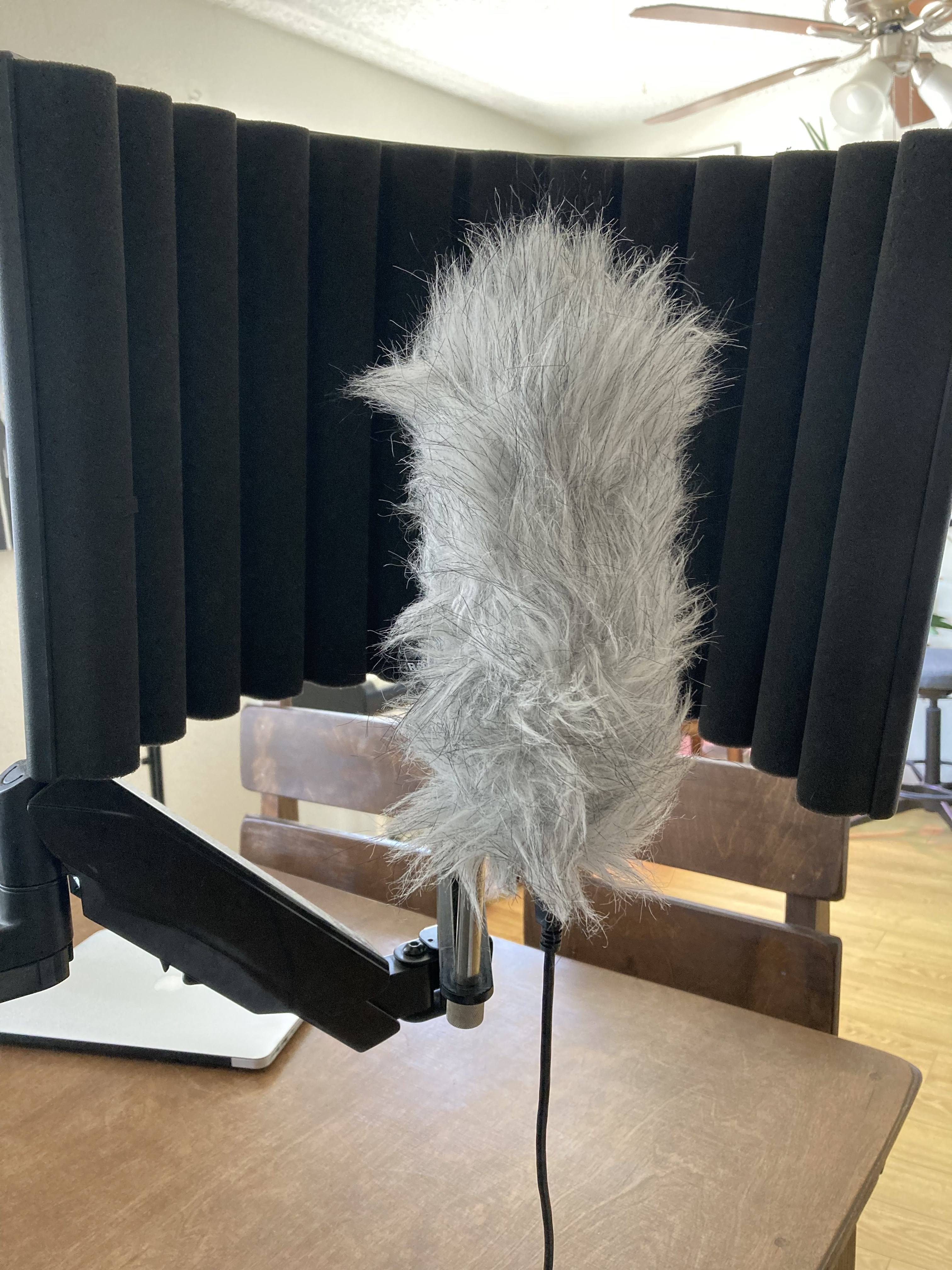
Over the last decade, we’ve accumulated a good deal of recording equipment. Nothing fancy: a couple of Zooms, two AudioTechnica 2020 USB mics, and a Rhode shotgun. Most of what we have was meant for DIY filmmaking. There was a post-YouTube short-form comedy boom about a decade ago. When all those branded content sites went down, we stopped messing with video and leaned harder into animation and podcasting. 

Image Credits: Anna Rubanova

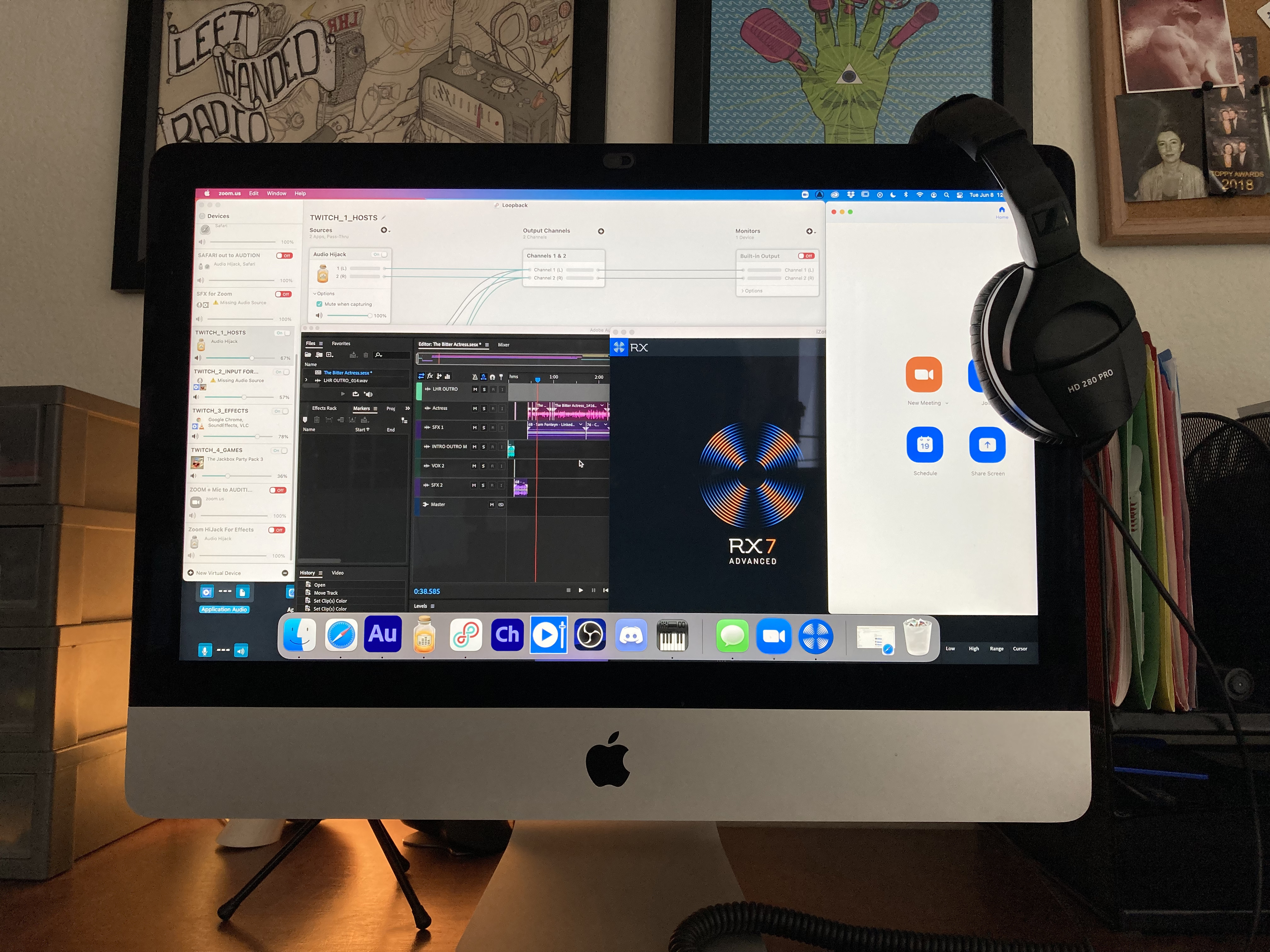
Narrative audio is my passion. Podcasting is my job. Like I said, we don’t collect equipment but, as producers of up to 12 shows at a time, we needed to invest in plug-ins and software. The easiest DAW for dialogue has to be Audition. Logic is great for building out soundscapes and, obviously, music. We record remote calls to Audition and mark edit points like we would in a studio. (Thank you, Loopback!) Two years ago, I dropped a whopping $1,000 on restoration software. In the pandemic, that software has saved me hours of work. When everyone is recording from home, literally anything can go wrong.

Gone are the days when clipping and plosives were our biggest concern. One time, a podcaster (i.e. someone with their own podcast) called into a show I was producing from a rooftop party. By the time I finished restoring the recording, nobody could tell. (Thank you, RX-7; I wish I could afford RX-8.) Plug-ins aren’t just useful, they can be delightful. We have one that can make audio sound like it’s coming from a loudspeaker underneath a woolen blanket. Have I found a good use for it? No, not yet. But I can imagine the possibilities.

14 Jun 2021

Google’s AirTable rival, Tables, graduates from beta test to become a Google Cloud product

Last fall, Google’s in-house incubator Area 120 introduced a new work-tracking tool called Tables, an AirTable rival that allows for tracking projects more efficiently using automation. Today, Google says Tables will officially “graduate” from Area 120 to become an official Google product by joining Google Cloud, which it expects to complete in the next year.

The Tables project was started by long-time Google employee, now Tables’ GM Tim Gleason, who spent 10 years at the company and many more before that in the tech industry. He said he was inspired to work on Tables because he always had a difficult time tracking projects, as teams shared notes and tasks across different documents, which quickly got out of date.

Instead of tracking those sorts of notes and tasks associated with a project across various documents that have to be manually updated by team members, Tables uses bots to help take on some of the administrative duties involved in guiding team members through a project — like scheduling recurring email reminders when tasks are overdue, messaging a chat room when new forms are received, moving tasks to other people’s work queues, or updating tasks when schedules are changed.

The team saw Tables as a potential solution for a variety of use cases, including of course project management, as well as I.T. operations, customer service tracking, CRM, recruiting, product development and more.
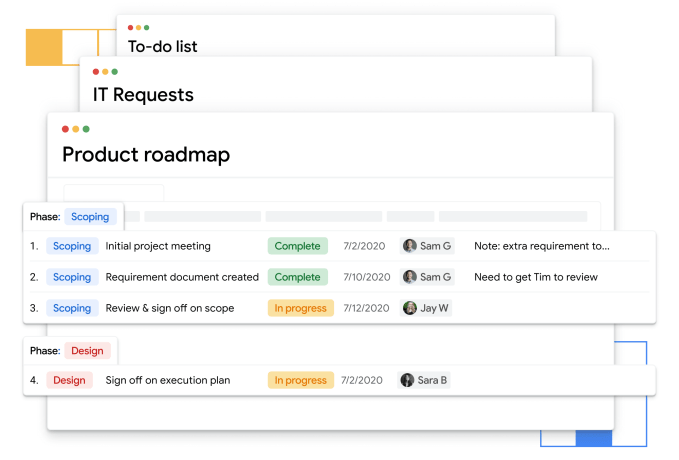
Image Credits: Google

The service was launched last September to test product market fit, Google says, and quickly found traction.

According to VP/GM and Head of Platform for Google Cloud, Amit Zavery, early customer feedback was positive and the team saw customers adopting the service for multiple projects — another strong signal for its potential growth. He declined to say how many customers were already using the service, however.

The pandemic also likely played a role in Tables’ adoption, Zavery noted.

“If you saw what happened COVID, I think work-tracking became a pretty big area of interest for many customers who we’re speaking to,” he says, explaining that everyone was trying to quickly digitize.

Popular use cases included inventory management, healthcare supply tracking, and use in mortgage lending workflows. However, the team found Tables was adopted across a variety of industries beyond these, as hoped. On average, customers would use Tables in a department with around 30 to 40 people, they found.

Most customers were abandoning more manual processes to use Tables instead, not coming from a rival service.

“Things were very fragmented in different documents or with different people, so using technologies like this really seems to have resonated very well,” Zavery says. “Now you had one central place for structured information you can access and do things on top of it versus trying to have 15 different sheets and figuring out how they are related because there’s no structure behind each of them.”

Another factor that prompted Tables’ adoption was how quickly people could be productive, thanks in part to its ability to integrate with existing data warehouses and other services. Currently, Tables supports Office 365, Microsoft Access, Google Sheets, Slack, Salesforce, Box and Dropbox, for example.

Tables was one of only a few Area 120 projects to launch with a paid business model, along with ticket seller Fundo, conversational ads platform AdLingo and Google’s recently launched Orion WiFi. During its beta, an individual could use Tables for free, with support for up to 100 tables and 1,000 rows. The paid plan was supposed to cost $10 per user per month, with support for up to 1,000 tables and 10,000 rows. This plan also included support for larger attachments, more actions and advanced history, sharing, forms, automation and views.

However, Google never began charging for its Paid tier during the beta, it says.

As Tables graduates into Google Cloud’s lineup, it will be integrated with Google’s no-code app building platform, AppSheet, which has a free tier, allowing the freemium model to continue. Users who want additional features will be able to upgrade to a premium plan. It will also be offered as a standalone product, for those who want that experience.

Google will leverage Workspace to get Tables in front of more users, as well.

“it’s going to be delivered through Workspace integration, because that’s a very large community of users who expect some similar kind of functionality,” Zavery says. “That will be a big differentiator, when you talk about the breadth of things we can do — because of having that community of users on Sheets, the things they do with Drive, and the data they collect — we can automatically add this and augment their experience.”
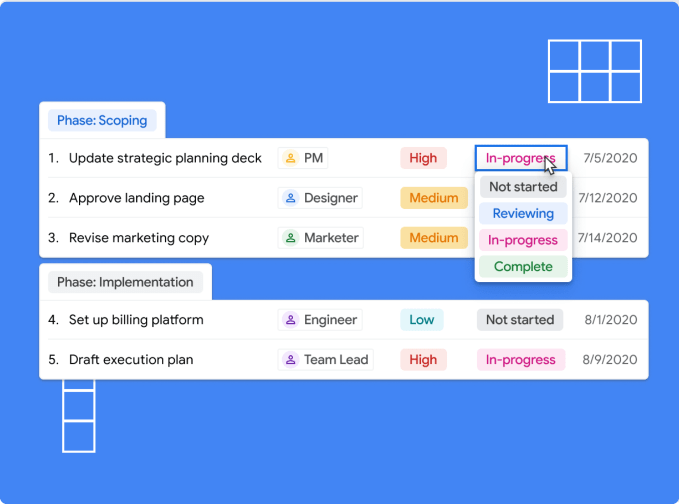
Image Credits: Google

The project taps into the growing interest in no-code, spreadsheet-powered database platforms — like AirTable, for example, which had closed on $185 million in Series D funding in the days before Tables’ release, valuing its business at $2.585 billion, post-money.

As Tables transitions to Google Cloud, the Tables beta version will remain free until a fully-supported Cloud product becomes available in the next year. At that point, users will migrate to the new service.

Over time, Tables plans to add more functionality as it ties in with AppSheet, to make using the service more seamless — so people don’t have to hop around from one product to another to accomplish tasks. It will also work to provide better ease of use, mobile support, and connectivity with more backend systems.

Official pricing hasn’t been finalized but shouldn’t be very different from the beta version.

14 Jun 2021

WordPress.com owner Automattic acquires journaling app Day One

Automattic is expanding its lineup of online writing platforms with its acquisition of Day One, a popular journaling app for Mac and Apple mobile devices. The app has been downloaded more than 15 million times since its March 2011 launch on the Mac and iTunes App Store, offering users a private place to share their thoughts. Since then, it’s been awarded the App Store Editor’s Choice, App of the Year, and the Apple Design Award, along with praise from various reviewers.

Deal terms were not immediately available. The companies were asked for comment.

The addition makes for an interesting expansion of Automattic’s now growing collection of online writing tools, which today include blogging platforms WordPress.com and Tumblr — the latter as of 2019, when Automattic took the aging social blogging network off parent company Verizon’s hands for a fraction of its earlier $1 billion acquisition price. (Verizon still owns TechCrunch, too…for now.)

Unlike WordPress and Tumblr, which tend to focus on publishing to a public audience, Day One’s focus has been on privacy. The app offers end-to-end encryption for all your journal entries, which can include text, media and even audio recordings. It has also offered advanced features like automatic backups, auto-import of Instagram posts, voice transcriptions, templates, rich text formatting, location history, optional printed books, as well as integrations with other platforms like Spotify, YouTube, Facebook, Twitter and more.

With its addition to Automattic, Day One will allow users to choose to publish select journal entries to WordPress.com and Tumblr, and soon, import content from either platform back into Day One, too. The app may also make sense as a way for existing Tumblr users to sync their private entries over to a more protected and backed up writing tool — instead of accidentally publishing them to their main blog.

Automattic, in an announcement, notes Day One CEO Paul Mayne will continue to lead the development of Day One following the acquisition. The team will also remain intact.

Meanwhile, in a blog post, Mayne hints at why he sold the app, noting the deal will allow Day One access to same technological, financial, and security benefits that help power WordPress.com and Tumblr.

“This is incredibly exciting news. For the past 10 years since I started Day One, I’ve worked to not only create the best digital journaling experience in the world, but one that will last,” shares Mayne. “By joining Automattic, I’m now more confident than ever that the preservation and longevity of Day One is sure,” he adds.

Mayne also noted there were no current plans to change the private nature of Day One, but the app would integrate with other Automattic products going forward, while continuing to sustain itself via a subscription model.

14 Jun 2021

Register to watch a livestream recording of the Equity podcast!

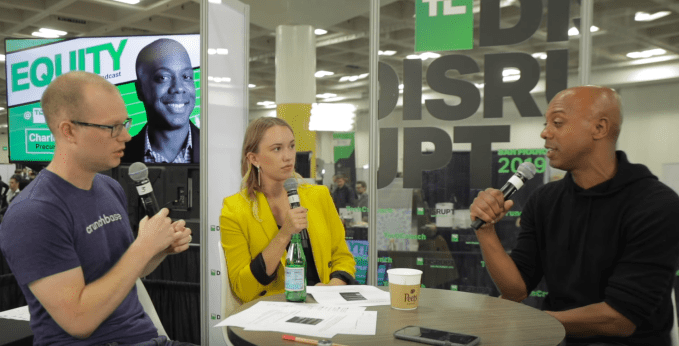
Throughout its four or so years of life, the Equity podcast crew has had the good fortune to record a few live shows. We sat on the small stage at TechCrunch Disrupt, for example, with Garry Tan one year, and Charles Hudson another. We’ve also ventured to other venues and events with varying levels of success.

But it’s 2021 and there are no IRL events coming up, so we’re bringing back the live show, but on Hopin. That means that no matter where you are, you can swing by, talk a little shit with us, troll Danny in the comments, and generally have a good time as we try to remember how to be charismatic.

And you will be able to see the show recorded before Chris and Grace cut out all the awkward mistakes, ums, pauses, and other shenanigans that you miss in the finished versions that we send out.

It’s free, of course, so click here to register.  If it goes well, we’ll probably get to do more. So, please do swing by if you are free. We’d love to see you.

More details:

  • June 24 at 2:00PM PT
  • Get your ticket HERE

Chat soon! — The Equity Team

14 Jun 2021

For vehicle safety, the future is now

Every day in the United States, more than 100 people die because of a car crash. Some are teenagers, like the daughter of writer Michael Lewis and Tabitha Soren, and her boyfriend, who died in a wrong-way crash. Some are well known, like Kevin Clark, who played the drummer in “School of Rock,” who was hit and killed by a driver while biking. Others are not household names, like Janell Katesigwa, who was killed by a drunk driver in Albuquerque, New Mexico, and left behind four children.

Something else happens every day, too: a lack of congressional urgency to require available technology to prevent the next tragedy.

Sadly, what is stopping advanced technology from preventing these deaths is business as usual in Washington, which means a lot of talk about saving lives, but little action.

Vehicle safety is based on using layers of protection that have led to a five-fold reduction in the occurrence of car crash deaths in the United States over the last 50 years.

Existing advanced vehicle safety technology, such as driver monitoring systems, automatic emergency braking and lane-departure warnings, can dramatically reduce crashes like the three described above — and the thousands of others that are a result of drunk, drugged, drowsy and distracted driving.

But only if the technology becomes standard equipment in new vehicles. When technology — underwritten by standards, bolstered by oversight and backstopped by accountability — can annually spare tens of thousands of families from tragedy, our federal government must act.

Over the coming weeks and months, Congress will debate the future of motor vehicles in the United States. The debate will be focused on renewing the Surface Transportation Reauthorization Act, which is also referred to as the “highway bill.”

But make no mistake: While issues such as the future of the gas tax and arcane parliamentary procedures will grab headlines, vital decisions will be made about whether the growing and preventable public health crisis of car crash deaths will be prioritized or once again considered non-essential.

Despite the estimated 38,680 highway fatalities last year, which represented a 7.2% increase over 2019, some federal policymakers have failed to focus on available remedies that would result in fewer funerals and a reduction in lifelong debilitating injuries.

Perhaps the delay is a result of too many in Congress who believe the only available solution is rushing unsupervised driverless vehicles into the marketplace. Even if a green light for mass driverless vehicle production were given today, it would be decades before they could make a significant impact on improving overall safety. This single-minded focus on a unicorn to fix all transportation issues misunderstands the technical challenges and misreads the public mood.

A recent AAA survey found 86% of respondents would not trust riding in driverless vehicles, while another found consumers do not feel comfortable sharing the road with them. The technology industry’s habit of beta-testing unproven software on the public, combined with car companies’ track record of delaying safety in exchange for profit, will not increase consumer trust of the safety, inclusivity and equity of driverless technology.

Vehicle safety is based on using layers of protection that have led to a five-fold reduction in the occurrence of car crash deaths in the United States over the last 50 years. Seatbelts and airbags protect you when you crash. Electronic stability control and anti-lock brakes help you avoid rolling over. Regulations provide minimum levels of performance and recalls serve as a backstop to provide oversight when there is a defect.

It is hard to remember, but there was once a time when dual braking systems, intended to provide a safe stop even in the event of a catastrophic failure of one braking system, were considered revolutionary. Now such a layer of protection is standard.

At a time when the promise of automated vehicle technology could make or break America’s place atop the automobile industry, many in Congress want to ignore history and cut away layers of protection to rush driverless vehicles into the marketplace. One Senate proposal creates a fast track for manufacturers to sell tens of thousands of automated vehicles based on a flimsy promise that their vehicle is as safe as the least safe vehicle meeting current minimum standards. No one should forget that the Ford Pinto met all the minimum standards when it was recalled for exploding upon impact when hit from behind. Driverless vehicles should be held to a higher standard than the minimum.

Congress has an opportunity to help build public trust in the safety of driverless technology by requiring existing innovations that will be the building blocks of driverless vehicles into cars right away, with immediate benefits. For example, in the future, automated vehicles will need driver monitoring systems to make smooth handoffs between machine and driver, automated braking to avoid crashes and lane-keeping technology to keep vehicles where they belong. Today these systems, when working correctly, can help limit crashes by assisting human drivers, just as someday these features may assist computer drivers. Using technology to save lives now does not preclude saving more lives later.

As Congress begins to actively debate the future of the automobile industry, there is a lot of talk about upgrading roads, encouraging electric battery-powered vehicles and accelerating the introduction of driverless cars. Yet, there is not nearly enough talk about what is needed to make us all safer sooner.

There have been a variety of reasonable bills introduced to help the U.S. catch up to the rest of the developed world when it comes to vehicle safety and safeguarding pedestrians. They include improving the safety of our back-seat passengers in crashes, better recall procedures, and more robust and transparent data collection, along with requiring advanced safety features now common around the world.

Unfortunately, we have a long way to go and no time to waste. The European Union, despite a larger population and an almost identical number of vehicles and land size, had under 19,000 crash deaths last year, less than half of the U.S. death toll. Further, the EU’s record-low vehicle-related deaths came without a single driverless vehicle on the road, but with robust consumer information and a regulatory scheme that mandates safety.

In the U.S., however, car manufacturers concerned about challenges from new market entrants — foreign and domestic — are lobbying for looser regulations and immunity from responsibility for automated vehicle crashes. Congress must push the industry to move quickly to protect lives before profits and stand behind their products when things inevitably go wrong. The best time to appropriately assign accountability regarding who will be held responsible if a car with a computer driver kills your loved ones, or a systemwide defect impacts an entire driverless fleet, is before the crash.

Moreover, history demonstrates that thoughtful requirements for all vehicles, crafted in a way to keep pace with major innovations in the automobile industry, have always been necessary to ensure vehicle safety is not reserved for the rich alone.

Federal legislation requiring objective performance standards based on data collected from driverless cars being tested on public streets can provide a path to this future. Yet Congress seems poised to do little, or nothing, once again. It is time for policy makers to reconcile the notion that the long-term viability of the driverless vehicle industry and keeping public roads safer now with incremental improvements, federal oversight and legal responsibility are not opposing ideas but necessary partners.

There is no question the U.S. can lead in the coming era of vehicle innovation while improving safety for all drivers, passengers and pedestrians. Success in this ambitious task will require moving forward quickly with existing safety technology and dispensing with the idea that innovations, safety and accountability are incompatible when, in fact, each is integral to the long-term success of the other.

14 Jun 2021

Waabi’s Raquel Urtasun explains why it was the right time to launch an AV technology startup

Raquel Urtasun, the former chief scientist at Uber ATG, is the founder and CEO of Waabi, an autonomous vehicle startup that came out of stealth mode last week. The Toronto-based company, which will focus on trucking, raised an impressive $83.5 million in a Series A round led by Khosla Ventures. 

Urtasun joined Mobility 2021 to talk about her new venture, the challenges facing the self-driving vehicle industry and how her approach to AI can be used to advance the commercialization of AVs.


Why did Urtasun decide to found her own company?

Urtasun, who is considered a pioneer in AI, led the R&D efforts as a chief scientist at Uber ATG, which was acquired by Aurora in December. Six months later, we have Waabi. The company’s mission is to take an AI-first approach to solving self-driving technology. 

I left Uber a little bit over three months ago to start this new company, Waabi, with the idea of having a different way of solving self-driving. This is a combination of my 20-year career in AI as well as more than 10 years in self-driving. Thinking about a new company was something that was always in my head. And the more that I was in the industry, the more that I started thinking about going away from the traditional approach and trying to have a diverse view of how to solve self-driving was actually the way to go. So that’s why I decided to do this company. (Timestamp: 1:21)