Year: 2021

10 Jun 2021

Microsoft plans to launch dedicated Xbox cloud gaming hardware

Microsoft will soon launch a dedicated device for game streaming, the company announced today. It’s also working with a number of TV manufacturers to build the Xbox experience right into their internet-connected screens and Microsoft plans to bring build cloud gaming to the PC Xbox app later this year, too, with a focus on play-before-you-buy scenarios.

It’s unclear what these new game streaming devices will look like. Microsoft didn’t provide any further details. But chances are, we’re talking about either a Chromecast-like streaming stick or a small Apple TV-like box. So far, we also don’t know which TV manufacturers it will partner with.

It’s no secret that Microsoft is bullish about cloud gaming. With Xbox Game Pass Ultimate, it’s already making it possible for its subscribers to play more than 100 console games on Android, streamed from the Azure cloud, for example. In a few weeks, it’ll open cloud gaming in the browser on Edge, Chrome and Safari, to all Xbox Game Pass Ultimate subscribers (it’s currently in limited beta). And it is bringing Game Pass Ultimate to Australia, Brazil, Mexico and Japan later this year, too.

In many ways, Microsoft is unbundling gaming from the hardware — similar to what Google is trying with Stadia (an effort that, so far, has fallen flat for Google) and Amazon with Luna. The major advantage Microsoft has here is a large library of popular games, something that’s mostly missing on competing services, with the exception of Nvidia’s GeForce Now platform — though that one has a different business model since its focus is not on a subscription but on allowing you to play the games you buy in third-party stores like Steam or the Epic store.

What Microsoft clearly wants to do is expand the overall Xbox ecosystem, even if that means it sells fewer dedicated high-powered consoles. The company likens this to the music industry’s transition to cloud-powered services backed by all-you-can-eat subscription models.

“We believe that games, that interactive entertainment, aren’t really about hardware and software. It’s not about pixels. It’s about people. Games bring people together,”
said Microsoft’s Xbox head Phil Spencer. “Games build bridges and forge bonds, generating mutual empathy among people all over the world. Joy and community -that’s why we’re here.”

It’s worth noting that Microsoft says it’s not doing away with dedicated hardware, though, and is already working on the next generation of its console hardware — but don’t expect a new Xbox console anytime soon.

10 Jun 2021

Can payday loans be made obsolete? With $15M more, Clair wants to find out

The world seems to move faster every year, and yet, nothing feels slower than the speed by which paychecks get distributed. In the United States, work conducted the day after a pay period will take two weeks just to process, with a check or direct deposit coming another week or two later. For the tens of millions of employees who live paycheck-to-paycheck, that multi-week delay can be the difference of making a rent check — or not.

A variety of startups have approached this problem with different solutions, and one of the newest and most compelling offerings is Clair.

Using its own base of capital, New York City-based Clair offers instant — and most importantly — free earned wage advances to workers by integrating into existing HR technology platforms. It works with both full-time employees and also gig workers, and it offers a suite of online and mobile apps for workers to make sense of their finances and ask for an earned wage advance.

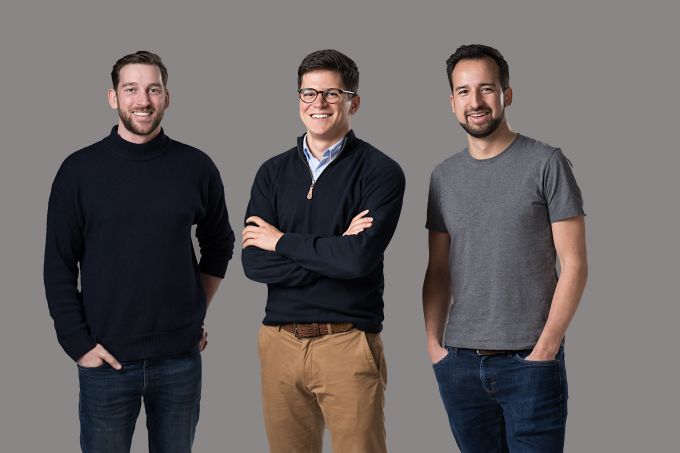
The company was founded in late 2019 by CEO Nico Simko, COO Alex Kostecki and CPO Erich Nussbaumer, and today, the company announced that it raised $15 million in Series A funding led by Kareem Zaki of Thrive Capital, who will join the company’s board of directors. Just a few months ago, Clair had announced a $4.5 million seed round led by Upfront Ventures, bringing its total funding to $19.5 million.

“Pay advance” or “earned wage advance” (there is a slight distinction) have been the Silicon Valley euphemism for payday loan, an industry that has been plagued with allegations of fraud, deceit and rapacious greed that have bilked workers out of their hard-earned paychecks through usurious interest rates.

What sets Clair apart is that its offering is free to workers. Since it connects directly into HR systems, the startup takes on significantly less financial risk than traditional payday lenders, who don’t have access to the payroll data that Clair is able to analyze.

For Simko, one of his goals is simply to see the elimination of the traditional industry entirely. “I have a payday lender just in front of my apartment in Brooklyn and there is a long line on the 25th of every month, and I am not going to stop until that line disappears,” he said. “Success for us is just to become the winner in earned wage access.”

He is Argentine-Swiss, and came to the States to attend Harvard, where he met Nussbaumer. He ended up working at J.P. Morgan focused on the payments market. He stayed in touch with Kostecki, whose families are good friends, and the Swiss trio decided to go after this problem, partly inspired by Uber’s instant pay feature that it introduced in 2016 and which proved wildly successful.

Clair founders Alex Kostecki, Nico Simko, Erich Nussbaumer. Image Credits: Clair

Instead of making money on interest rates, fees, or tips, Clair instead wants to be the bank and financial service provider of choice for workers. As I noted last week about Pinwheel, an API platform for payroll, owning the direct deposit relationship with a worker all but guarantees they will conduct the vast majority of their financial transactions through that particular bank account.

Clair offers free instant pay advances as a gateway to its other offerings, which include spending and savings accounts, a debit card, a virtual in-app debit card, and financial planning tools. Simko said, “Our business model is to give earned wage access free for people and then sign them up automatically for a digital bank, and then we make money the same way Chime makes money, which is interchange fees.”

In fact, he and the company believe in that model so much, it will actually pay human capital technology platforms like workforce management and payroll systems to integrate with Clair as an inducement. It offers a recurring revenue fee stream for HR tools based on the number of users who join Clair, regardless of how much those workers use the software. We are “really going down the thesis of embedded fintech,” Simko said. “Employees start spending money on their Clair card, and we distribute that back to our [HR tech] partners.”

Clair joins a number of other companies in this space, which is becoming ever more heated as the perceived opportunity in financial services remains high among investors. Last year, payroll platform Gusto announced that it would expand from purely payroll to a financial wellness platform, which is partially based on its instant earned wage advances or what it dubs Cashout. We’ve covered Even, which is one of the originals in this space with a major partnership with Walmart, as well as neobank Dave, which offers pay advance features with a tipping revenue model. Dave just announced a $4 billion valued SPAC with VPC Impact Acquisition Holdings III.

Nonetheless, Clair’s angle is differentiated as the race to lock in every person globally with new financial services heats up. Simko says he sees a gargantuan opportunity to be the “Alipay” of the United States, noting that unlike China with Alipay, Nubank in Brazil and increasingly Latin America, and N26 and Revolut in Europe, there is still an opportunity for a comprehensive neobank to take over the U.S. market.

With the new funding, the company will continue to expand its product offerings, exploring areas like health care and debt repayment. “I can give APR not based on their credit score but on their employer’s credit score, which is the multi-billion dollar idea here,” Simko said. The team is nominally hubbed in New York with roughly half of the 25 or so person team.

10 Jun 2021

Payments giant Stripe launches Stripe Tax to integrate sales tax calculations for 30+ countries

On the heels of acquiring sales tax specialist TaxJar in April, today Stripe is making another big move in the area of tax. The $95 billion payments behemoth is launching a new product called Stripe Tax, which will provide automatic, updated sales tax calculations (covering sales tax, VAT, and GST) and related accounting services to Stripe payments customers initially in some 30 countries and across the U.S.

Stripe Tax is a separate service from TaxJar, but the two are not unconnected: as Stripe Tax was being built out of Stripe’s offices in Dublin over the last several months, Stripe’s business lead for EMEA Matt Henderson told me that the team had identified TaxJar as a strong company in the field, and that ultimately led to M&A between them.

Sales tax — and specifically a more seamless way to deal with charging and tracking sales tax — is a painful issue for people doing business online. Digital and physical goods are taxed in over 130 countries, Stripe said, and within that there can be a huge amount of variation and compliance complexity, since codes get updated all the time, too. Mishandled sales tax, meanwhile, can result in pretty hefty fines, sometimes up to 30% interest on past-due amounts.

Unsurprisingly, a sales tax tool has been the most requested feature from Stripe’s customers, Henderson said, a request that presumably only got louder in the last year, as e-commerce and digital transactions went through the roof with Covid-19.

Arguably, that makes Stripe Tax one of the company’s more significant product launches, not to mention the first since announcing its monster funding round earlier this year.

Previously, Stripe customers would have resorted to using a third-party service (like TaxJar) to work out sales tax, or more typically those Stripe customers would have opted to limit the number of places they sold goods and services, in order to minimize the pain of dealing with multiple, complex, and usually quite localized tax codes.

Stripe said that a survey of its customers found that two-thirds of respondents said that the challenge of implementing sales tax actually limited their growth.

TaxJar has built a strong system for handling that, but the company — based out of Massachusetts — is primarily focused on the U.S. market, which has sales tax that is complicated enough (there are 11,000 different tax jurisdictions in the country).

That leaves a lot on the table for building out sales tax tools for the rest of the world: the wider geographical focus of Stripe Tax thus fills a particular geographical gap for the company, regardless of how well TaxJar and Stripe integrate over time.

There are some other differences worth noting between the two.

TaxJar came to Stripe’s attention with an established business — 15,000 customers at the time of the announcement. Stripe (wisely) bolted that on as a standalone business, so new and existing customers that use TaxJar can continue to use it as is. That is to say, at least for now, they do not need to be Stripe payments customers in order to use TaxJar, even if the integration between the two platforms will only improve over time.

Stripe Tax, on the other hand, is being built from the ground up as a product aimed specifically at increasing touchpoints and stickiness with Stripe customers specifically.

Stripe Tax provides real-time tax calculation based on customer location and product sold; transparent itemizing for customers; tax ID management in areas (like Europe) where business customers can provide their code and get a reverse charge on tax if they are under a certain turnover threshold themselves; and reconciliation and reporting across all transactions to make filing and remittance easier.

But, there is for now no way to use Stripe Tax outside of Stripe itself.

This could pose some problems for some customers — these days many of the strongest retailers will take an ‘omnichannel’ approach that might cover selling through marketplaces, selling through websites, selling through social media and more — and not all of those storefronts might be powered by Stripe. It will be worth watching whether future iterations of Stripe Tax can account for that.

“No one leaps out of bed in the morning excited to deal with taxes,” said John Collison, co-founder and president of Stripe in a statement. “For most businesses, managing tax compliance is a painful distraction. We simplify everything about calculating and collecting sales taxes, VAT, and GST, so our users can focus on building their businesses.”

Stripe’ most significant product launch prior to Stripe Tax — Stripe Treasury — underscores how the company is currently very focused on diversifying outside of their basic payments business and opening the platform to much wider, more scaled transactions. Treasury, which is still in invite-only mode, saw Stripe partner with established banks to provide a business banking service, providing a way for its customers to handle money that they generate from their Stripe-powered businesses.

The full country list where Stripe Tax is launching is Australia, Austria, Belgium, Bulgaria, Croatia, Cyprus, Czech Republic, Denmark, Estonia, Finland, France, Germany, Greece, Hungary, Ireland, Italy, Latvia, Lithuania, Luxembourg, Malta, New Zealand, the Netherlands, Norway, Poland, Portugal, Romania, Slovakia, Slovenia, Spain, Sweden, Switzerland, the United States, and the United Kingdom.

10 Jun 2021

New South African partnership gets $3M, launches telehealth product

For the early detection and treatment of health conditions, easy access to primary healthcare is crucial. Primary healthcare is best delivered by teams of primary care clinicians coordinating care between them. However, ubiquitous access to such care is scant across Sub-Saharan Africa.

There is a real opportunity for digital healthcare platforms to scale access to team-based care across the region. They can reduce the cost of quality care while improving health outcomes, reach patients in remote areas and reduce the pressure on the traditional medical support systems.

The pandemic has seen such platforms scale globally, and Africa is not exempt. A new platform (without a name yet) is launching out of South Africa and it wants to provide accessible quality care for Africans with its telehealth service. Today, it has closed a $3 million pre-Series A round to that end.

Yes, you’re wondering why the platform doesn’t have a name (I am too), but what’s interesting is the fact that a VC firm (Webrock Ventures) and two health tech companies (Healthforce.io and Doktor.se) joined forces to launch this new venture

Here’s summarized information on the trio.

Webrock Ventures is a Sweden-based investment company that employs a venture-building model. So essentially, the firm partners with tech companies in Sweden and combines its cash with the company’s business models to create portfolio businesses. It does this while maintaining a sizeable stake in the company.

Healthforce is a South Africa-based health tech company that tries to improve healthcare through multidisciplinary clinical teams. So far, it has set up nurses in over 450 clinics across the country while conducting more than 1 million nurse consultations. Healthforce also has a telemedicine play with over 110,000 consultations since launching the service last year.

As a Sweden-based telehealth company, Doktor.se allows patients to contact healthcare professionals through their smartphones across the whole spectrum of primary care. Most of its customers are in Europe, as well as in Latin America.

So why form a partnership to launch a telehealth product in South Africa with a plan for further roll-out in other African countries down the line?

Globally, telehealth investments have skyrocketed and increased by more than 50% since the start of the pandemic. With many of the fastest-growing economies globally, investors and companies (in this case, Webrock and Doktor.se) are now turning to Africa as a major growth region for such high-demand services.

South African telehealth

Saul Kornik (CEO & Co-Founder of Healthforce and CEO of the new venture)

Now, Doktor.se has two models for commercialising its telemedicine application. The first is to use its technology to personally deliver healthcare services. The second model licenses the core technology to third parties in markets in which Doktor.se has no intention of expanding. Doktor.se achieved this with Brazilian health tech startup ViBe Saúde (via Webrock), and last year, the platform had over 1.2 million patient consultations. It plans to do the same by licensing its technology to deliver care through Healthforce across Africa.

By forming a new partnership, a completely new opportunity is set up. Healthforce can leverage its current position to take core tech from Doktor.se to a new direct-to-patient market. In the background is Webrock, a willing investment machine set up to scale the platform.

The new venture will focus on the uninsured, B2C segment through a freemium-type offering. The platform offers on-demand and scheduled consultations with nurses, general practitioners and mental health professionals. It also provides chronic care management and will be integrated with Healthforce’s broader primary care offering.

Saul Kornik, co-founder and CEO at Healthforce, will resume a new role at the newly formed company. According to him, the partnership gives Healthforce an additional product to add to its healthcare product stack. In addition, it gives Doktor.se the ability to generate license fee revenue from a new market, while Webrock has an opportunity to invest in yet another large developing market.

“Webrock and Healthforce partnered to bring funding and strategic/operational capacity to this new pan-African direct-to-patient play, respectively,” he said to TechCrunch. “All existing independent operations will continue. However, under the NewCo, Healthforce as a major shareholder will expand its primary care product stack and Doktor.se will generate revenue off license fees earned.”

Sub-Saharan Africa has a healthcare market of about $90 billion. But health insurance coverage is in single-digit (percentage-wise) across countries in Sub-Saharan Africa except for South Africa with 16% coverage. Kornik says the three parties want to tackle a large portion of this challenge and are aligned about how the healthcare system in Africa could look if it were functioning optimally.

“This is a pure-play provider-of-healthcare venture. Through this pan-African venture, we will deliver high-quality healthcare at low cost to 75 million people through telemedicine, literally putting healthcare in the palm of their hands,” he said.

Partner at Webrock Ventures Joshin Raghubar and co-founder and CEO of Doktor, Martin Lindman, are enthusiastic about the opportunity Africa presents due to its large population and increasing smartphone penetration.

This new venture, which should hopefully have a name soon, is one of the few health tech platforms based in South Africa that have raised seven-figure sums in a fintech-dominated year. In February, hearX Group, a company that specializes in making hearing healthcare technologies, raised $8.3 million Series A to expand into the U.S. April saw Quro Medical close a $1.1 million seed round to scale its service that manages ill patients in the comfort of their homes. Judging by the spacing between each fundraise, we should see more from the country before the year runs out.

10 Jun 2021

AI startup Eightfold valued at $2.1B in SoftBank-led $220M funding

Eightfold AI, a startup which uses deep learning and artificial intelligence to help companies find, recruit and retain workers, said on Thursday it has raised $220 million in a new round as it looks to accelerate its growth.

SoftBank Vision Fund 2 led the Series E round of the five-year-old startup, which is now valued at $2.1 billion, up from $1 billion in Series E last October, Eightfold AI founder and chief executive Ashutosh Garg told TechCrunch in an interview.

Existing investors General Catalyst, Capital One Ventures, Foundation Capital, IVP and Lightspeed Venture Partners also participated in the new round, which brings the startup’s all-time raise to over $410 million.

The Mountain View-based startup provides its clients with a talent acquisition platform that helps them identify suitable candidates and import and filter thousands of resumes. One of Eightfold AI’s mission is to help companies reduce biases in their hirings, so it masks candidates’ personal information during evaluation.

“Instead of searching for a job, a candidate can upload their resume and the system will tell what is the most relevant job for that candidate in real-time,” explained Garg. “What this does is it reduces the drop-off rate. And our clients see more applications — and field more diverse applications.”

The startup, which has amassed clients in 25 countries, also enables employers to deploy the Eightfold platform internally and help employees discover job opportunities within their organization. “This has helped businesses almost double their internal mobility,” said Garg, who previously worked at Google.

“Powered by AI and machine learning, Eightfold’s platform provides global enterprises with a single solution for managing the entire talent lifecycle, including hiring, retaining, and growing a diverse global workforce,” said Deep Nishar, Senior Managing Partner at SoftBank Investment Advisers and who previously worked for nearly six years at LinkedIn. “We are pleased to partner with Ashutosh and the Eightfold team to support their ambition of transforming how enterprises manage talent and how people build their careers.”

This is a developing story. More to follow…

10 Jun 2021

Corporate services “super app” Osome lands $16M Series A

Osome, a startup that combines multiple corporate services for SMEs into one “super app,” has raised a $16 million Series A. The round included returning investors Target Global, AltaIR Capital and Phystech Ventures, and new backers S16VC and venture capitalist Peng T. Ong, who joined as an angel investor.

The Singapore-based startup’s last funding round was $3 million announced in November. Its Series A brings Osome’s total funding since it was founded in 2017 to $24.5 million. It now claims to be used by 6,000 companies in Singapore, the United Kingdom and Hong Kong, giving it $9.5 million in annual recurring revenue and 100% year-over-year revenue growth.

Its Series A will be used on international expansion and product integrations. Osome, which employs a total of 200 people, has seen fast adoption by e-commerce companies in particular, and plans to launch more products and apps for the sector over the next 18 months.

Co-founder and chief executive officer Victor Lysenko told TechCrunch that the company started “looking at the e-commerce segment some time ago, but wanted to be confident that our product can handle the increased complexity and transaction volume of e-commerce businesses before launching marketing. The pandemic has caused the e-commerce industry to grow significantly faster and that was also a factor for us.”

He added that Osome will add integrations with multiple e-commerce platforms and administrative services, with the goal of cutting hours out of the time e-commerce company owners spend on accounting each week.

Osome’s flagship product is online accounting services for SMEs, connecting companies with chartered accountants. It also offers corporate secretary services, including business registration, compliance and taxation. The platform uses machine learning tech to automate many tasks—for example, it categorizes, tags and stores documents, creates management reports and tax returns and files paperwork on time.

Lysenko said entrepreneurs on average spend 68% of their time dealing with back-office tasks, instead of strategizing their company’s goals. Osome is meant to reduce the burden of administrative work on small businesses and demand for its services grew during the pandemic as companies moved more of their operations online.

Singapore makes it relatively easy to incorporate businesses online, so several other startups in the same space are based there. These include Sleek, Lanturn and BlueMeg, all focused on automating accounting and other time-consuming tasks for SMEs.

In a statement about the funding, S16VC co-founder Aleks Shamis said, “I’ve done business with small and medium e-commerce in 10 countries and see the same inefficiencies in manual accounting across all of them. It is a real problem that will definitely be solved, and Osome is technologically and traction-wise among the few companies in the world in getting there.”


10 Jun 2021

Nexford University lands $10.8M pre-Series A to scale its flexible remote learning platform

Two profound problems face the higher education sector globally — affordability and relevance. Whether you live in Africa, Europe, or the U.S., a major reason why people don’t go to university or college or even drop out because they cannot afford tuition fees. On the other hand, relevance shows the huge gap between what traditional universities teach and what global employers actually look for. It’s not a secret that universities focus a bit too much on theory.

Over the past few years, there has been the emergence of a number of alternative credential providers trying to provide students with the necessary skills to earn and make a living. Nexford University is one of such platforms, and today, it has a closed $10.8 million pre-Series A funding round.

Dubai-based VC Global Ventures led the new round. Other investors include Future Africa’s new thematic fund (focused on education), angel investors, and family offices. Unnamed VCs from 10 countries, including the U.S., U.K., France, Dubai, Switzerland, Qatar, Nigeria, Egypt and Saudi Arabia, also took part.

To date, Nexford has raised $15.3 million, following the first tranche of $4.5 million in seed funding raised two years ago.

Fadl Al Tarzi launched Nexford University in 2019. The tech-enabled university is filling affordability and relevance gaps by providing access to quality and affordable education.

“That way, you get the best of both worlds,” CEO Al Tarzi said to TechCrunch. “You get practical skills that you can put to work immediately or for your future career while actively keeping a job. So the whole experience is designed as a learning as a service model.”

Nexford Unversity lets students study at their own pace. Once they apply and get admitted into either a degree program or a course program, they choose how fast or slow they want the program to be.

Nexford University

Fadl Al Tarzi (CEO, Nexford University)

The CEO says whatever students learn on the platform is directly applicable to their jobs. Currently, Nexford offers undergraduate degrees in business administration; 360° marketing; AI & automation; building a tech startup; business analytics; business in emerging markets; digital transformation; e-commerce; and product management. Its graduate degrees are business administration, advanced AI, e-commerce, hyperconnectivity, sustainability, and world business.

Nexford’s tuition structure is very different from traditional universities because it’s modelled monthly. Its accredited degrees cost between $3,000 to $4,000 paid in monthly instalments. In Nigeria, for instance, an MBA costs about $160 a month, while a bachelor degree costs $80 a month. But the catch for the monthly instalment structure means the faster a learner graduates, the less they pay.

What’s it like learning with Nexford University?

Nexford University doesn’t offer standardized and theoretical tests or assignments as most traditional universities do. Al Tarzi says the company employs what he calls a competency-based education model where students prove mastery by working on practical projects.

For instance, a student working on an accounting course will most likely need to create a P&L statement, analyze balance sheets and identify where the error is to correct it. The platform then gives the student different scenarios showing companies with different revenues and expense levels. The task? To analyse and extract certain ratios to help make sense of which company is profitable and the other unit economics involved.

Though Nexford plays in the edtech space, Al Tarzi doesn’t think the company is an edtech company. As a licensed and accredited online university, Nexford has a huge amount of automation across the organization and provides students with support from faculty and career advisors.

After offering degrees, Nexford puts on its placement hats by fixing its graduates with partner employers.

There’s a big shortage of jobs in Nigeria, and despite the high unemployment, it’s actually difficult to find extremely qualified entry-level graduates. So Nexford has carried out several partnerships where employers sponsor their employees or soon-to-be employees for upskilling and rescaling purposes.

An illustration is with Sterling Bank, a local bank in the country. Most Nigerian banks have yearly routines where they hire graduates and put them on weeks-long training programs. Sterling Bank employs any candidate it feels did great after the capital intensive (eight weeks in most cases) programs.

So what Nexford has done is to partner with Sterling to fund the tuition for high school leavers. When these students go through Nexford’s programs for the first year, they begin to get part-time placements at Sterling. Upon graduation, they get a job in the bank.

“That saves Sterling the training cost and our tuition fee is almost equal to the training that they provided for students. Also, students start paying back once they get placed, so it’s a win-win.”
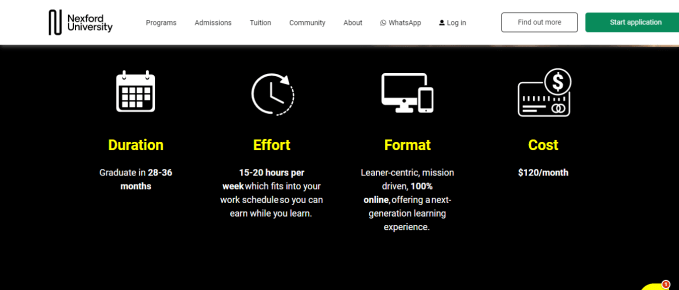
Nexford University has learners from 70 countries, with Nigeria its biggest market yet. Nexford also has blue-chip partnerships with Microsoft, LinkedIn Learning, and IBM to provide access to tools, courses and programmes to improve the learning experience.

One of the major gains of this learning experience is how it prepares people for remote jobs. Nexford is bullish on its virtual skills grid, where people will get jobs remotely regardless of their location on the platform.

“Across Sub Saharan Africa by the year 2026, there’s gonna be a shortage of about 100 million university seats as a result of huge growth in youth population not met by growth and supply. Even if you want to build universities fast, you wouldn’t be able to meet the demand. And that spirals down to the job market. We don’t think the local economy will produce enough jobs in Nigeria, for instance. But we want to enable people to get remote jobs across the world and not necessarily have to migrate.” 

Last year, Nexford’s revenues grew by 300%. This year, the company hopes to triple the size of its enrollment from last year, the CEO said.

Nexford is big on designing students’ curriculum based on analysis of what their employer needs. Al Tarzi tells me that the company always follow the Big Data approach, asking themselves, “how do we find out what employers worldwide are looking for and keep our curriculum alive and relevant?”

“We develop proprietary technology that enables us to analyze job vacancies as well as several other data sources; use AI to understand how those data sets and build a curriculum based on those findings. So, in short, we start with the end in mind,” he answers.

The company is keen on improving its technology regardless. It wants to analyse skills more accurately and automate more functions to enhance user experience. That’s what the funding will be used for in addition to fuelling its regional expansion plans (particularly in Asia) and investing in growth and product development. Per the latter, the online university says it will be launching partner programs with more employers globally to facilitate both placement and upskilling and rescaling. 

Merging both worlds of tech and the traditional university model is no easy feat. The former is about efficiency, user-centricity, product, among others. The latter embodies rigidity and continues to lag behind fast-paced innovation. And while there’s been a boom in edtech, most startups try to circumvent the industry’s bureaucracy by launching an app or a MOOC. Nexford’s model of running a degree-granting, licensed, accredited, and regulated university is more challenging but in it lies so much opportunity.

Iyin Aboyeji, Future Africa general partner CEO, understands this. It’s one reason why the company is the first investment out of Future Africa’s soon-to-be-launched fund focused on the future of learning and why he believes the company is a game-changer for higher education in Africa.

“During the pandemic, while many universities in Nigeria were shut down due to labour disputes, Nexford was already delivering an innovative and affordable new model of online higher education designed for a skills-based economy.”  

For general partner at Global Ventures Noor Sweid, Nexford University is redressing the mismatch between the supply of talent and the demands of today’s digital economy. “We are thrilled to partner with Fadl and the Nexford team on their journey toward expanding access to universal quality higher education in emerging markets,” she said.


10 Jun 2021

Yousign raises $36.6 million to build a European alternative to DocuSign

French startup Yousign has raised a $36.6 million Series A funding round (€30 million). Lead Edge Capital is leading the round and eFounders is investing once again in the company. Yousign, as the name suggests, is an e-signature provider that complies with European regulation on digital signatures.

While the company was originally founded in 2013, Yousign teamed up with startup studio eFounders in 2019. Following this deal, eFounders has become a key shareholders and a strategic partner.

Things have changed quite a lot since then as the e-signature market has grown tremendously. You may be familiar with DocuSign, Adobe Sign, SignNow, HelloSign and a bunch of other players. But none of them have been designed for the European market from the ground up.

Yousign wants to become the European alternative to these American companies. More specifically, the startup thinks it can convince small and medium companies that aren’t using an e-signature solution yet. Instead of asking DocuSign customers to switch, Yousign wants to convert new customers to e-signatures.

“Faced with American giants with large scopes and complex products, we have built a solution that is accessible and easy to use, allowing SMBs to sign their first documents within the hour, and not a month” Yousign co-founder and CEO Luc Pallavidino said in a statement.

Yousign is a certification authority and complies with eIDAS — a European framework for e-signatures. It means that signatures are legally binding and the service archives your documents in partnership with Arkhineo.

Like other e-signature services, you can create document templates, approval workflows and reminders. Yousign makes sure the right person is signing the document with strong authentication processes and all events are timestamped. It’s a SaaS product, which means you have to pay a subscription fee to access the service.

With today’s funding round, Yousign wants to reach 50,000 European SMBs by 2024 — it has 6,000 clients today. That would represent an annual recurring revenue of $85 million (€70 million). In 2020 alone, the company grew drastically from 35 to 120 employees. The startup now plans to hire 150 additional employees over the next 18 months.

10 Jun 2021

Tata Digital to acquire majority stake in online pharmacy 1mg

Tata Digital, the subsidiary of Tata Sons, said on Thursday it is acquiring a majority stake in digital health startup 1mg, the latest in a series of investments as the salt-to-steel Indian conglomerate enters the digital consumer space.

The firms didn’t share the financial details of the deal, but earlier local media reports suggest that Tata Digital is investing between $100 million to $110 million in the six-year-old Indian startup for 65% stake. A spokesperson for Tata Digital declined to comment.

According to insight firm Tracxn, 1mg had raised $156 million prior to Thursday’s announcement and was last valued at $242 million. This would suggest that Tata Digital is buying 1mg, which counts Bill & Melinda Gates Foundation and Sequoia Capital India among its investors, at a discount.

This is a developing story. More to follow…

10 Jun 2021

Dracula Technologies turns ambient light into energy with printed solar cells

A bat-shaped organic photovoltaic module from Dracula Technologies

A bat-shaped organic photovoltaic module from Dracula Technologies

Internet of Things devices are proliferating, making daily tasks more convenient for many people—but that comes at cost. The United Nations expects the amount of e-waste created globally to reach 52.2 million metric tons this year, and a sizable portion of that are dead batteries.

Dracula Technologies, a French startup that is currently exhibiting virtually at Computex, wants to help with its inkjet-printed organic photovoltaic (OPV, or organic solar cells) technology. Called LAYER (or Light As Your Energetic Response), Dracula Technologies’ OPV modules run indoors on natural or artificial ambient light, and can be used to power low-consumption indoor devices. Because they are printed and not made of silicon, the OPV modules’ shape is more customizable and, unlike many batteries, it does not use rare earths or heavy metals. Instead, the modules are created from carbon-based material.

In addition to being better for the environment, LAYER is also more economical—the company claims it can reduce the total cost of ownership by four times compared to batteries.

Dracula Technologies is currently working with manufacturers, including a partnership with Japanese semiconductor company Renesas Electronics and AND Technology Research (ANDtr) to create a self-powering, battery-less IoT device that can send messages through BLE to a mobile app.

Dracula Technologies was founded in 2011, after a project in collaboration with the CEA (Commissariat à l’énergie atomique et aux énergies alternatives, or the French Alternative Energies and Atomic Energy Commission), a public research organization. Chief executive officer Brice Cruchon saw the tech’s commercial potential and after six years of research and development, LAYER was launched through the Hello Tomorrow program for deep tech startups

So far, Dracula Technologies has raised a total of 4.4 million euros (about $5.4 million USD), including a 2 million euros round in 2016 from angel investors for a pilot line, and 2.4 million euros raised last year from MGI Digital and ISRA Cards, which Dracula Technologies is using to increase the production of its photovoltaic modules during its pre-industrialization stage. The company plans to move to its industrial phase in 2024, with the goal of producing millions of modules per year.

MGI Digital, a digital printing and finishing tech company, and ISRA Cards, which makes high-value electronic cards (like licenses or gift and loyalty cards), are Dracula Technologies’ industrial partners. It is also part of the Solar Impulse Foundation’s #1000 Solutions, a guide to green energy solutions that can be implemented on a large scale.