Year: 2021

04 Jun 2021

Facebook buys studio behind Roblox-like Crayta gaming platform

Facebook has been making plenty of one-off virtual reality studio acquisitions lately, but today the company announced that they’re buying something with wider ambitions — a Roblox-like game creation platform.

Facebook shared that they’re buying Unit 2 Games, which builds a platform called Crayta. Like some other platforms out there it builds on top of the Unreal Engine and gives users a more simple creation interface teamed with discovery and community features. Crayta has cornered its own niche pushing monetization paths like Battle Pass seasons giving the platform a more Fortnite-like vibe as well.

Unit 2 has been around for just over 3 years and Crayta launched just last July. Its audience has likely been limited by the studio’s deal to exclusively launch on Google’s cloud-streaming platform Stadia though it’s also available on the Epic Games Store as of March.

The title feels designed for the lightweight nature of cloud-gaming platforms with users able to share access to games just by linking other users and Facebook seems keen to use Crayta to push forward their own efforts in the gaming sphere.

“Crayta has maximized current cloud-streaming technology to make game creation more accessible and easy to use. We plan to integrate Crayta’s creation toolset into Facebook Gaming’s cloud platform to instantly deliver new experiences on Facebook,” Facebook Gaming VP Vivek Sharma wrote in an announcement post.

The entire team will be coming on as part of the acquisition, though financial terms of the deal weren’t shared.

04 Jun 2021

Facebook will reconsider Trump’s ban in two years

The clock is ticking on former President Donald Trump’s ban from Facebook, formerly indefinite and now for a period of two years, the maximum penalty under a newly revealed set of rules for suspending public figures. But when the time comes, the company will reevaluate the ban and make a decision then whether to end or extend it, rendering it indefinitely definite.

The ban of Trump in January was controversial in different ways to different groups, but the issue on which Facebook’s Oversight Board stuck as it chewed over the decision was that there was nothing in the company’s rules that supported an indefinite ban. Either remove him permanently, they said, or else put a definite limit to the suspension.

Facebook has chosen… neither, really. The two year limit on the ban is largely decorative, since the option to extend it is entirely Facebook’s prerogative, as VP of public affairs Nick Clegg writes:

At the end of this period, we will look to experts to assess whether the risk to public safety has receded. We will evaluate external factors, including instances of violence, restrictions on peaceful assembly and other markers of civil unrest. If we determine that there is still a serious risk to public safety, we will extend the restriction for a set period of time and continue to re-evaluate until that risk has receded.

When the suspension is eventually lifted, there will be a strict set of rapidly escalating sanctions that will be triggered if Mr. Trump commits further violations in future, up to and including permanent removal of his pages and accounts.

It sort of fulfills the recommendation of the Oversight Board, but truthfully Trump’s position is no less precarious than before. A ban that can be rescinded or extended whenever the company chooses is certainly “indefinite.”

That said the Facebook decision here does reach beyond the Trump situation. Essentially the Oversight Board suggested they need a rule that defines how they act in situations like Trump’s, so they’ve created a standard… of sorts.

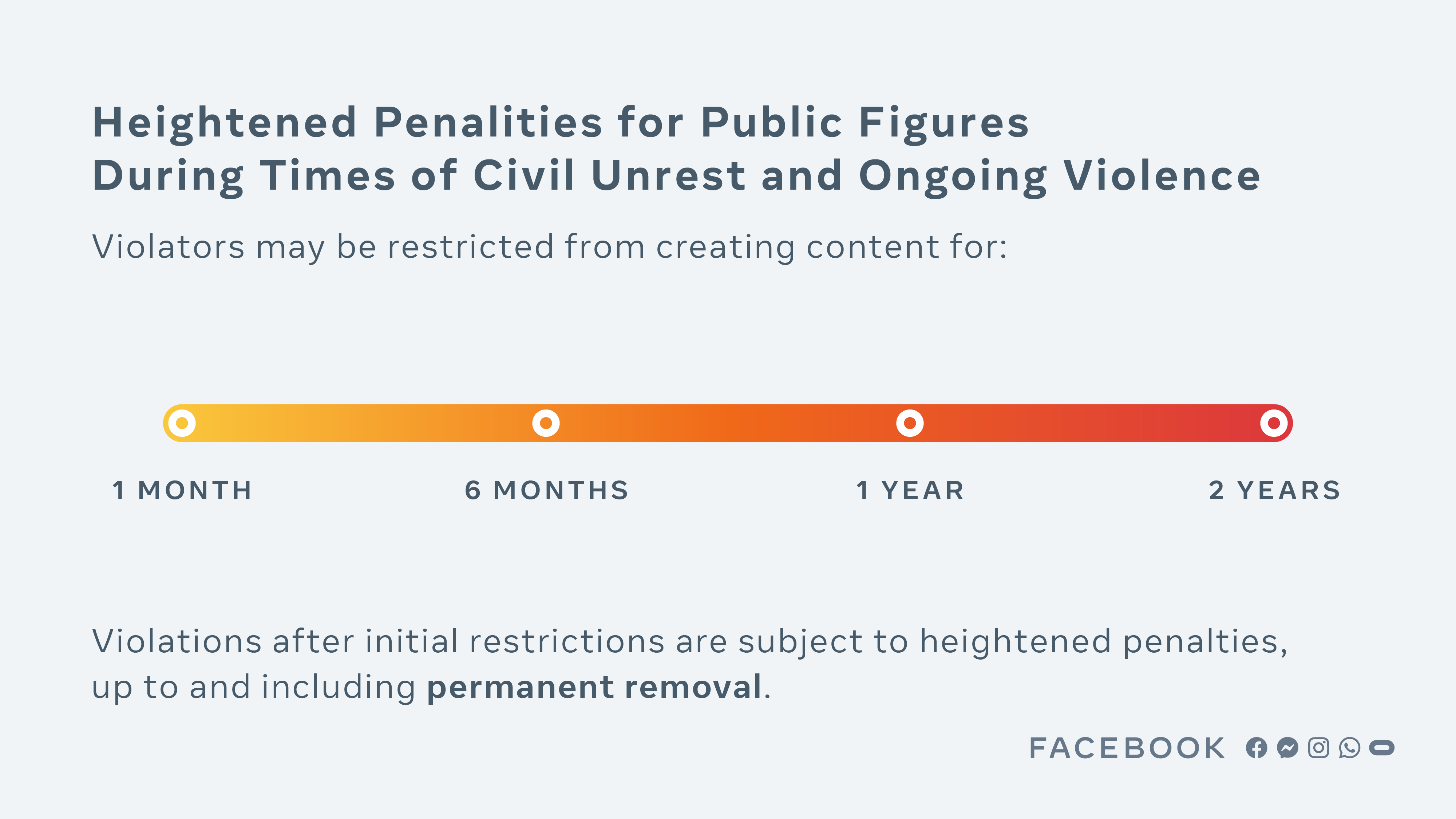
Diagram showing different lengths of bans for worse violations by public figures.

Image Credits: Facebook

This highly specific “enforcement protocol” is sort of like a visual representation of Facebook saying “we take this very seriously.” While it gives the impression of some kind of sentencing guidelines by which public figures will systematically be given an appropriate ban length, every aspect of the process is arbitrarily decided by Facebook.

What circumstances justify the use of these “heightened penalties”? What kind of violations qualify for bans? How is the severity decided? Who picks the duration of the ban? When that duration expires, can it simply be extended if “there is still a serious risk to public safety”? What are the “rapidly escalating sanctions” these public figures will face post-suspension? Are there time limits on making decisions? Will they be deliberated publicly?

It’s not that we must assume Facebook will be inconsistent or self-deal or make bad decisions on any of these questions and the many more that come to mind, exactly (though that is a real risk), but that this neither adds nor exposes any machinery of the Facebook moderation process during moments of crisis when we most need to see it working.

Despite the new official-looking punishment gradient and re-re-reiterated promise to be transparent, everything involved in what Facebook proposes seems just as obscure and arbitrary as the decision that led to Trump’s ban.

“We know that any penalty we apply — or choose not to apply — will be controversial,” writes Clegg. True, but while some people will be happy with some decisions and others angry, all are united in their desire to have the processes that lead to said penalties elucidated and adhered to. Today’s policy changes do not appear to accomplish that, regarding Trump or anyone else.

04 Jun 2021

Nigeria suspends Twitter operations, says platform ‘undermines its corporate existence’

The Nigerian government via its Ministry of Information and Culture today announced its decision to suspend the activities of social media platform Twitter in the country.

The statement which was made by Minister of Information and Culture, Lai Mohammed, and signed off by his media aide Segun Adeyemi could see telecoms in the country prevent Nigerians from using Twitter.

Here’s the statement issued by the ministry:

The Federal Government has suspended indefinitely the operations of the microblogging and social networking service Twitter in Nigeria. The Minister of Information and Culture, Alhaji Lai Mohammed, announced the suspension in a statement issued in Abuja on Friday, citing the presistent use of the platform for activities that are capable of undermining Nigeria’s corporate existence.

The Minister said the Federal Government has also directed the National Broadcasting Comission (NBC) to immediately commence the process of licensing all OTT and social media operations in Nigeria.”

Today’s announcement is a culmination of events that have happened this past week. Yesterday, Twitter deleted tweets and videos of President Muhammadu Buhari making threats to a sect called IPOB in the South-Eastern part of the country. The social media platform decided to take that course of action after several calls by Nigerians to take the tweets down. Following that decision, Mr Mohammed called out Twitter by saying the social media company was biased in its decision and raised suspicion about the platform’s intention in the country.

We have reached out to Twitter for comments.

This is a developing story…

04 Jun 2021

Tezlab CEO Ben Schippers to discuss the Tesla effect and the next wave of EV startups at TC Sessions: Mobility 2021

As Tesla sales have risen, interest in the company has exploded, prompting investment and interest in the automotive industry, as well as the startup world.

Tezlab, a free app that’s like a Fitbit for a Tesla vehicle, is just one example of the numerous startups that have sprung up in the past few years as electric vehicles have started to make the tiniest of dents in global sales. Now, as Ford, GM, Volvo, Hyundai along with newcomers Rivian, Fisker and others launch electric vehicles into the marketplace, more startups are sure to follow.

Ben Schippers, the co-founder and CEO of Tezlab, is one of two early-stage founders who will join us at TC Sessions: Mobility 2021 to talk about their startups and the opportunities cropping up in this emerging age of EVs. The six-person team behind TezLab was born out of HappyFunCorp, a software engineering shop that builds apps for mobile, web, wearables and Internet of Things devices for clients that include Amazon, Facebook and Twitter, as well as an array of startups.

HFC’s engineers, including Schippers, who also co-founded HFC, were attracted to Tesla  because of its techcentric approach and one important detail: the Tesla API endpoints are accessible to outsiders. The Tesla API is technically private. But it exists allowing the Tesla’s app to communicate with the cars to do things like read battery charge status and lock doors. When reverse-engineered, it’s possible for a third-party app to communicate directly with the API.

Schippers’ experience extends beyond scaling up Tezlab. Schippers consults and works with companies focused on technology and human interaction, with a sub-focus in EV.

The list of speakers at our 2021 event is growing by the day and includes Motional’s president and CEO Karl Iagnemma and Aurora co-founder and CEO Chris Urmson, who will discuss the past, present and future of AVs. On the electric front is Mate Rimac, the founder of Rimac Automobili, who will talk about scaling his startup from a one-man enterprise in a garage to more than 1,000 people and contracts with major automakers.

We also recently announced a panel dedicated to China’s robotaxi industry, featuring three female leaders from Chinese AV startups: AutoX’s COO Jewel Li, Huan Sun, general manager of Momenta Europe with Momenta, and WeRide’s VP of Finance Jennifer Li.

Other guests include, GM’s VP of Global Innovation Pam Fletcher, Scale AI CEO Alexandr Wang, Joby Aviation founder and CEO JoeBen Bevirt, investor and LinkedIn founder Reid Hoffman (whose special purpose acquisition company just merged with Joby), investors Clara Brenner of Urban Innovation Fund, Quin Garcia of Autotech Ventures and Rachel Holt of Construct Capital, and Zoox co-founder and CTO Jesse Levinson.

And we may even have one more surprise — a classic TechCrunch stealth company reveal to close the show.

Don’t wait to book your tickets to TC Sessions: Mobility as prices go up at our virtual door.

04 Jun 2021

Twitch introduces Animated Emotes for their 10th anniversary

Twitch announced today that they will release major updates to their Emotes this month to celebrate their 10th anniversary. These new features will include Animated Emotes, Follower Emotes, and a Library for Emotes. 

Since the origin of the live streaming platform for gamers, Emotes – Twitch’s version of emojis – have been a key component of Twitch culture. They’re micro memes, and images like Kappa, TriHard, and PogChamp have come to carry meaning in the greater gaming world, even off the Twitch platform. 

“Emotes are a language that transcends countries,” said Ivan Santana, Senior Director of Community Product at Twitch. “Anywhere you are in the world, they mean the same thing for us.”

The Amazon-owned platform regularly adds new global Emotes, which can be used on any streamer’s channel. Individual creators can make custom Emotes for their own community, which paying subscribers can use across the platform. But the ability to add animated gifs as Emotes is something that the community has been asking for since Santana can remember. 

“I’ve been at Twitch for four years, and it’s something people have been asking for since before I joined,” Santana told TechCrunch. “It’s certainly been a very, very long time.” 

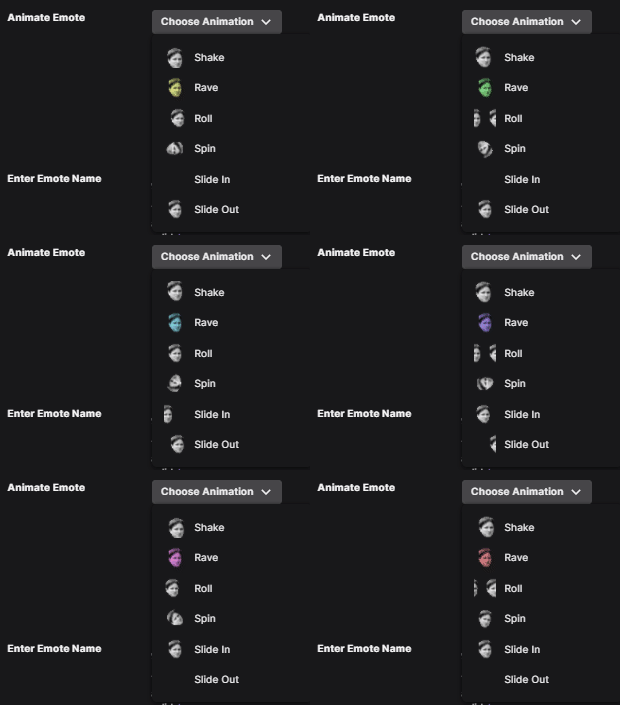
Streamers who lack animation skills need not worry. While the more tech-savvy among us can upload custom gifs, Twitch will provide six templates for streamers to choose from, which can animate their existing Emotes. These animations include Shake, Rave, Roll, Spin, Slide In, and Slide Out. Viewers who are sensitive to animations will be able to turn off the feature in their Chat Settings. 

Image Credits: Twitch

Twitch is also beta testing Follower Emotes, which will be available to select Partners and Affiliates. This feature creates a fun, free incentive for viewers to hit the follow button on a channel they might be checking out for the first time. When viewers follow a channel, they’ll be notified when the creator is streaming, which can lead to an eventual subscription. Twitch takes 50% of streamers’ subscription money, creating a valuable revenue stream for the company.

In Q1 of 2021, Twitch viewership hit an all-time high, growing 16.5% since the previous quarter. Twitch viewers watched 6.34 billion hours of content in Q1, making up 72.3% of the market share. That’s double the total hours watched on Twitch in Q1 of 2020. Facebook Gaming and YouTube Gaming earned 12.1% and 15.6% of viewership in the sector respectively. 

“For a long time, creators have been asking for better ways to attract and welcome new viewers into their channel,” said Santana. “The idea is generally to create a lot of excitement around that community, and more feelings ultimately of community.”

Creators with beta access will be able to upload up to five Emotes for their followers, but unlike Subscriber Emotes, followers won’t be able to use these across other channels. There’s no guarantee that Follower Emotes will be here to stay – Santana says it’s a feature Twitch is “experimenting” with – but if all goes well, the feature will roll out more widely later in the year.

Finally, the Library function will make it easier for creators to to swap Emotes in and out of subscription tiers without having to delete and reupload them each time. This builds upon an upgrade that launched in January, which centralized channel-specific icons into an Emotes tab on the Creator Dashboard. As usual, new Emotes have to be approved by Twitch before they’re put into use. The Library will roll out soon to all Partners and Affiliates, staggered over a few months to account for an expected increase in volume of new Emotes. 

“As Twitch has scaled, we now have millions of communities across many different cultures across the world,” Santana said. “We can hand over more of the controls of our Emote language to our community, and let them sort of evolve in a way that we never could imagine that ultimately serves them in their unique ways.”

Twitch teased that there’s more in the works to celebrate the platform’s 10th anniversary, including an official 10 Year celebration. 

04 Jun 2021

What to expect from WWDC 2021

All things considered, Apple put together a pretty slick all-virtual WWDC last year. Where other companies like Microsoft and Google have opted for a more live (or live-style) experience, the company was parading its execs through a series of smooth drone shots and slick transitions. And with the first year under its belt, it will be fun to see how the company outdoes itself.

As far as news goes, the WWDC keynote kickoff is always packed — and this year is no different. In fact, there’s a good chance that we could see even more. In addition to the standard developer-focused updates to iOS/iPadOS, watchOS, macOS, tvOS and the like, we could well see some new hardware dropping at the event.

As ever, we’ll be breaking the news live, and this time out, we’re bringing back the liveblog. So, you know, lots of different ways to follow along live. The event kicks off at 10AM PT/1PM ET on Monday, June 7.

Speaking of, you can also check out the YouTube livestream here:

As usual, iOS is the tentpole attraction here — if nothing else, because Apple sells more iPhones than anything else. That was certainly the case last year, when the company’s latest 5G devices provided much needed relief in an otherwise flagging mobile market.

At least right off the bat, iOS 15 doesn’t look like as radical an update as the latest version of Android. But a lot can happen between today and Monday morning. The top line issue (at least for now) seems to be updates to notifications. According to reports, the new version of the mobile operating system will offer customizable notifications based on status — meaning things like sleeping, working and driving.

The operating system is also believed to be getting a whole slew of new accessibility features.

Apple 2021 iPad Pro overview

Image Credits: Apple

Perhaps even bigger news is a long-awaited update to iPadOS 15. The dated software was a sticking point in our latest iPad Pro review, and it seems the company is finally making some key strides to further distance its tablet operating system from the mobile one. For most intents and purposes, the current execution is effectively a scaled-up version of iOS for the tablet.

Not a ton of details yet, but the home screen is reportedly set to get some major updates, including widgets. One imagines the company will be pushing to make better use of all that added real estate. It should also be getting some of the new iOS updates, including those new notifications and a big overhaul for iMessage.

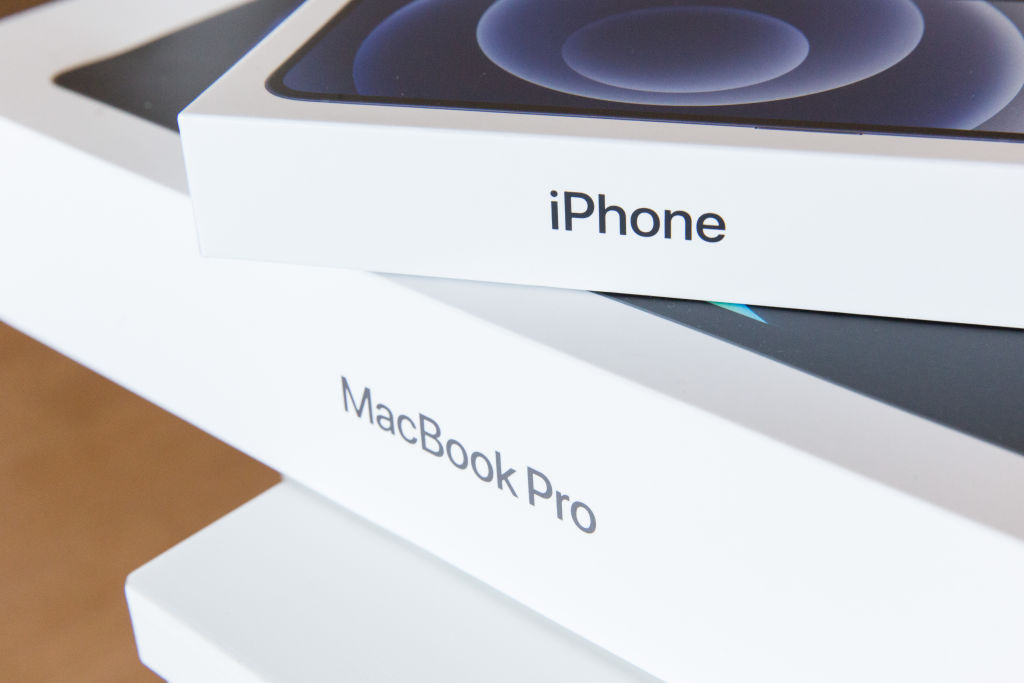
a new iPhone 12 package on top of a MacBook Pro package.

YOKOHAMA, KANAGAWA, JAPAN – 2020/10/31: In this photo illustration a new iPhone 12 package on top of a MacBook Pro package. (Photo Illustration by Stanislav Kogiku/SOPA Images/LightRocket via Getty Images)

After the big overhaul that was Big Sur, we’re expecting smaller waves from macOS 12. The big news here may be hardware. Rumors surround an update to Apple’s blazing-fast M1 chip. The M1X (as it’s currently being called) could well arrive alongside brand new 14- and 16-inch MacBook Pros, which would finally put a little sunlight between the high and low end of Apple’s laptop line.

Apple Watch Series 5

Image Credits: Brian Heater

Also, watchOS seems due for a big update, even if information is pretty scant so far. New health features are always a sure bet — especially now that Apple is competing with the newly combined Google and Fitbit (not to mention that recently announced assist from Samsung).

Then there’s homeOS, the most intriguing mystery of the bunch. Job listings have pointed to the mysterious operating system — that could have just been a typo (later changed to “HomePod” in the listing).

Image Credits: Apple

This being a rumor roundup, we’ll point the compelling possibility that it might be something larger — perhaps a more unifying home operating system designed to work with existing and forthcoming Apple home products. Perhaps something that integrates a bit more closely with tvOS. A longstanding rumor centers around a new Apple TV device, but so far we’ve not seen a lot of confirmation on that front.

Other rumors involve a new Mac Mini (though we just saw a refresh late last year). Rumors around Beats Studio Buds are enticing as well. After all, when LeBron is seen sporting your unannounced hardware, people are going to talk. Traditionally, however, Apple has opted to let the Beats team do its own announcements, saving these big events for its own self-branded audio products like AirPods.

read more about Apple's WWDC 2021 on TechCrunch

04 Jun 2021

Five excellent reasons to attend TC Early Stage 2021: Marketing & Fundraising

There’s no crying in baseball, and there are certainly no short cuts in building a successful startup. But, thanks to TC Early Stage 2021: Marketing and Fundraising on July 8-9, you don’t have to reinvent the freakin’ wheel.

This two-day bootcamp offers early-stage founders (pre-seed through Series A) access to the startup ecosystem’s leading experts and top investors. They’ll host a series of interactive q&a sessions focused on essential topics, like pitch development, fundraising, brand building, growth marketing and more. Take a peek at the agenda.

Here are just some of the many reasons to carve time out of your hectic schedule and attend this all-virtual event.

1. Because your contemporaries say so

Early Stage 2020 was a great opportunity to hear seasoned startup founders talking about their experiences and how they dealt with many of the same challenges I faced then and am going through now. It’s like a mini masterclass in entrepreneurship. — Ashley Barrington, founder, MarketPearl.

Sequoia Capital’s session, Start with Your Customer, looked at the benefits of storytelling and creating customer personas. I took the idea to my team and we’ve implemented storytelling to help onboard new customers. That one session alone has transformed my business. — Chloe Leaaetoa, founder, Socicraft.

2. Connect with community and opportunity

Founding a startup can be a frustrating and sometimes lonely affair. It helps to bounce ideas off other early founders who know exactly what you’re going through. You never know where those communal connections might lead, and a fat rolodex is always good for business.

Make ad hoc connections in our virtual platform’s chat feature. Want a more strategic tool? CrunchMatch, our AI-powered networking platform, simplifies finding and scheduling 1:1 meetings with the people who align with your business goals.

3. Bust out the breakout sessions

You’ll learn a ton about growing your business at interactive q&a sessions like these:

Iterating More Effectively with Feedback: A great product alone is not enough. To be successful, early-stage companies need to optimize all phases of the customer journey. This session will include tactics, best practices, and case studies on how to use customer feedback to understand customer needs, craft more compelling messaging and improve all phases of the customer experience.

Growth Hacking, Product Fit and Pricing: Superhuman’s Rahul Vohra shares strategies for early-stage founders on topics like hacking your way to product-market fit, driving user sign-ups without breaking the bank on paid ads, and identifying your product’s price point.

How to Determine Your Earned Media Strategy: Learn how to build an effective earned media strategy for your startup, building on Rebecca Reeve Henderson’s deep expertise developing effective communications programs for some of the top business software companies in the world. Earned media, aka the kind of exposure you get from a TechCrunch article, is a key element of any startup’s marketing strategy, but it’s also one of the trickiest things to get right. Rebecca has worked with companies ranging from Slack, to Shopify, to Zapier, to Canva and many more, helping craft effective earned media strategies in one of the most difficult areas of all: B2B SaaS.

And even more….

4. Pitch at TC Early Stage

Day two is all about the pitch-off. Ten early-stage startups will take the virtual stage and deliver their best five-minute pitch to a global audience of investors, TC editors, press and event attendees. A five-minute Q&A with the judges follows that pitch. Want a shot? Get moving because you need to apply here by June 7!

5. You can still save $100 (if you act fast)

TC Early Stage 2021: Marketing and Fundraising kicks off on July 8-9 and for all you early birds, you can save a cool Benjamin when you register before next Friday, June 11 at 11:59 pm (PT). So what are you waiting for? Register today!

Is your company interested in sponsoring or exhibiting at Early Stage 2021 – Marketing & Fundraising? Contact our sponsorship sales team by filling out this form.

04 Jun 2021

Emergence’s Lotti Siniscalco and Retail Zipline’s Melissa Wong will join us on Extra Crunch Live

For all that’s said about fundraising and working alongside investors, rarely do we get to see founders and their investors in candid conversation with one another. Extra Crunch Live is changing that. On the weekly live show, we sit down with founders and the VCs who funded them to talk about how they came together on the deal, what stood out about the other party that led to their commitment and how they operate today. We also (usually) take a walk through their early pitch decks to get a feel for how success starts.

On an upcoming episode of Extra Crunch Live, we’ll sit down with Emergence’s Lotti Siniscalco and Retail Zipline’s Melissa Wong to discuss all that and more. The event goes down on Wednesday, June 23 at 3 p.m. ET/noon PT. You can register to attend right here.

Siniscalco is a principal at Emergence Capital, investing in early-stage enterprise software companies. She currently serves on the board of directors at Whistic and High Alpha. Prior to Emergence, she was an investor in financial services and technology at Advent International, a PE firm, and led diligence for Ribbit Capital (also fintech focused) before that.

In other words, she’s an expert in fintech and can bring a wealth of wisdom to our conversation around fundraising and startup growth.

Melissa Wong, on the other hand, has spent 10 years in retail communications at Old Navy. It was here that she realized a problem that Zipline Retail, a retail communication and store execution platform, could solve and set out on her own venture.

Extra Crunch Live also features the ECL Pitch-off, where startups in the audience can virtually “raise their hand” to pitch their startup live on our stream. Our expert guests will give their feedback on each pitch. If you want to throw your hat in the ring, you have to show up.

Extra Crunch Live is accessible to everyone, but only Extra Crunch members can access the content on demand. We do these every week, so there are scores of episodes across a wide variety of startup sectors in the ECL Library. It’s but one of many reasons to become an Extra Crunch member. Join here.


04 Jun 2021

As buy-now-pay-later startups keep raising capital, a dive into Klarna, Afterpay and Affirm’s earnings

Venture capitalists continue to fund buy-now-pay-later (BNPL) startups, evidence of ongoing optimism regarding not only e-commerce, but the specific model for financing consumer purchases as well.

Evidence of continued investor confidence in the BNPL space cropped up several times in the second quarter. Divido, a startup that TechCrunch described as a “white-label [BNPL] platform for retail finance that integrates with e-commerce platforms,” raised $30 million. And Zilch raised $80 million for an “over-the-top” BNPL solution.


The Exchange explores startups, markets and money. 

Read it every morning on Extra Crunch or get The Exchange newsletter every Saturday.


Zilch is now worth $800 million.

There are other examples, but those will suffice to get us into the correct mindset for today’s work as we look back at data points regarding the financial performance of more mature BNPL tech companies. So, as in February when we were looking at Q4 2020 numbers, today we’re looking into the more recent performance of Klarna, Affirm and Afterpay.

Growth versus profitability

As startups scale, they focus a bit more on profitability. Super-early-stage startups aren’t often too worried about net margins, for example, as their revenues can be nascent and their costs rising as they staff up for a product launch or another similar event.

But as those same startups mature into unicorn territory, questions about their model’s profitability on a unit basis, operating cash burn and aggregate profitability will start to pop up. The Rule of 40 is a startup rubric for a reason.

And in the cases of Affirm and Afterpay, we’re in fact examining public companies. So we can safely care even more about their profitability than we might if they, like Klarna, were still waiting for an IPO.

For each, then, we’ll consider growth and profitability. Let’s start with Klarna:

Klarna’s latest data, dealing with Q1 2021, breaks down as follows:

  • Global GMV of $18.9 billion, +91% compared to the year-ago result.
04 Jun 2021

Facebook’s use of ad data triggers antitrust probes in UK and EU

Facebook is facing a fresh pair of antitrust probes in Europe.

The UK’s Competition and Markets Authority (CMA) and the EU’s Competition Commission both announced formal investigations into the social media giant’s operations today — with what’s likely to have been co-ordinated timing.

The competition regulators will scrutinize how Facebook uses data from advertising customers and users of its single sign-on tool — specifically looking at whether it uses this data as an unfair lever against competitors in markets such as classified ads.

The pair also said they will seek to work closely together as their independent investigations progress.

With the UK outside the European trading bloc (post-Brexit), the national competition watchdog has a freer rein to pursue investigations that may be similar to or overlap with antitrust probes the EU is also undertaking.

And the two Facebook investigations do appear similar on the surface — with both broadly focused on how Facebook uses advertising data. (Though outcomes could of course differ.)

The danger for Facebook, here, is that a higher dimension of scrutiny will be applied to its business as a result of dual regulatory action — with the opportunity for joint working and cross-referencing of its responses (not to mention a little investigative competition between the UK and the EU’s agencies).

The CMA said it’s looking at whether Facebook has gained an unfair advantage over competitors in providing services for online classified ads and online dating through how it gathers and uses certain data.

Specifically, the UK’s regulator said it’s concerned that Facebook might have gained an unfair advantage over competitors providing services for online classified ads and online dating.

Facebook plays in both spaces of course, via Facebook Marketplace and Facebook Dating respectively.

In a statement on its action, CMA CEO, Andrea Coscelli, said: “We intend to thoroughly investigate Facebook’s use of data to assess whether its business practices are giving it an unfair advantage in the online dating and classified ad sectors. Any such advantage can make it harder for competing firms to succeed, including new and smaller businesses, and may reduce customer choice.”

The European Commission’s investigation will — similarly — focus on whether Facebook violated the EU’s competition rules by using advertising data gathered from advertisers in order to compete with them in markets where it is active.

Although it only cites classified ads as its example of the neighbouring market of particular concern for its probe.

The EU’s probe has another element, though, as it said it’s also looking at whether Facebook ties its online classified ads service to its social network in breach of the bloc’s competition rules.

In a separate (national) action, Germany’s competition authority opened a similar probe into Facebook tying Oculus to use of a Facebook account at the end of last year. So Facebook now has multiple antitrust probes on its plate in Europe, adding to its woes from the massive states antitrust lawsuit filed against it on home turf also back in December 2020.

“When advertising their services on Facebook, companies, which also compete directly with Facebook, may provide it commercially valuable data. Facebook might then use this data in order to compete against the companies which provided it,” the Commission noted in a press release.

“This applies in particular to online classified ads providers, the platforms on which many European consumers buy and sell products. Online classified ads providers advertise their services on Facebook’s social network. At the same time, they compete with Facebook’s own online classified ads service, ‘Facebook Marketplace’.”

The Commission added that a preliminary investigation it already undertook has raised concerns Facebook is distorting the market for online classified ads services. It will now take an in-depth look in order to make a full judgement on whether the social media behemoth is breaking EU competition rules.

Commenting in a statement, EVP Margrethe Vestager, who also heads up competition policy for the bloc, added: “Facebook is used by almost 3 billion people on a monthly basis and almost 7 million firms advertise on Facebook in total. Facebook collects vast troves of data on the activities of users of its social network and beyond, enabling it to target specific customer groups. We will look in detail at whether this data gives Facebook an undue competitive advantage in particular on the online classified ads sector, where people buy and sell goods every day, and where Facebook also competes with companies from which it collects data. In today’s digital economy, data should not be used in ways that distort competition.”

Reached for comment on the latest European antitrust probes, Facebook sent us this statement:

“We are always developing new and better services to meet evolving demand from people who use Facebook. Marketplace and Dating offer people more choices and both products operate in a highly competitive environment with many large incumbents. We will continue to cooperate fully with the investigations to demonstrate that they are without merit.”

Up til now, Facebook has been a bit of a blind spot for the Commission’s competition authority — with multiple investigations and enforcements chalked up by the bloc against other tech giants, such as (most notably) Google and Amazon.

But Vestager’s Facebook ‘dry patch’ has now formally come to an end.

The CMA, meanwhile, is working on wider pro-competition regulatory reforms aimed squarely at tech giants like Facebook and Google under a UK plan to clip the wings of the adtech duopoly.