Year: 2021

01 Jun 2021

Kushki, an Ecuador-based fintech, raises $86M to build financial infrastructure in Latam

Just about every week there’s a blockbuster round coming out of South America, but in next door Central America, which mostly is less affluent, things have been more hush hush. However, Kushki, a Quito, Ecuador-based fintech, is bringing attention to the region with today’s announcement of a $86 million Series B and a $600 million valuation.

“We never thought that we would return home [from the U.S.] and build a company that was more valuable in Ecuador than we had built in the U.S.,” said Aron Schwarzkopf, CEO and co-founder of Kushki.

Schwarzkopf and his business partner, Sebastián Castro, had previously built and sold a fintech called Leaf in the U.S. in 2014. The two are originally from Ecuador but moved to Boston for college, where they met watching soccer.

Unlike many other fintechs in Latam that are out to help the unbanked, Kushki works behind the scenes building the tech infrastructure that companies like Nubank use to transfer money. Some of the functionalities they build enable both local and cross-border payment players in credit and debit cards, bank transfers, digital cash, mobile wallets, and other alternative payment methods.

“We realized there was a gigantic opportunity to democratize and create infrastructure to move money,” Schwarzkopf told TechCrunch.

The company, which was founded in 2017, already has operations in Mexico, Colombia, Ecuador, Peru, and Chile. The Series B will be used to accelerate growth and expand to Brazil and nine other markets in Central America.

Generally, expanding to Brazil is an expensive proposition, and therefore not a path that all companies can take, even though it can be an extremely profitable move if done right. Some of the challenges include the need to translate everything into Portuguese followed by the varying financial regulations.

That’s why Kushki’s approach has to be somewhat custom in each country.

“We focus on going into the markets and we basically rebuild an entire infrastructure, so we put everything into one API,” said Schwarzkopf.

Products similar to Kushki have been successful in other regions around the world, such as in India with Pine Labs, Africa with Flutterwave, and Checkout.com that now has 15 international offices.

To build all this infrastructure, Kushki, which means “cash” in a native Andes dialect, has raised a total of $100 million from SoftBank, an undisclosed global growth equity firm, as well as previous investors including DILA Capital, Kaszek Ventures, Clocktower Ventures, and Magma Partners.

“From now until 2060, people will need servers and ways to move money, and we knew that the existing payment infrastructure couldn’t support that,” said Schwarzkopf.

01 Jun 2021

EU’s COVID-19 ‘digital pass’ gateway system goes live

A technical system underpinning the European Union’s plan for a pan-EU ‘digital pass’ for verifying COVID-19 vaccination or test status across the region has gone live today, with a handful of EU Member States connected to the gateway and more expected to follow ahead of a July 1 full launch.

The idea for the EU’s COVID-19 digital certificate is to offer a single system for securely verifying EU citizens’ COVID-19 status — whether vaccination; a recent negative test; or proof of recovery from the virus — as they cross borders within the bloc to help facilitate safer travel.

The digital pass relies upon QR codes and digital signatures — verified using public key cryptography — to prevent falsification. Paper-based certificates can also be used by those who do have access to a device.

Member States that have passed technical tests and are ready to do so can start issuing and verifying certificates on a voluntary basis, the Commission said today — with seven countries (Bulgaria, Czechia, Denmark, Germany, Greece, Croatia and Poland) intending to do so at this point.

Other countries have decided to launch the EU Digital COVID Certificate only when all functions are deployed nationwide, it added. Further details about Member States’ status on activating the system are available via this webpage.

Since 10 May, 22 EU countries have tested the gateway successfully, according to the Commission, which wants maximum update of the system by 1 July — when the associated regulation will apply.

Although it’s allowed a “phasing-in period” of six weeks for the issuance of certificates for Member States that need additional time to get everything hooked up. That means it’s possible the tardiest implementations could happen when summer is all but over. (An earlier goal of EU lawmakers that everything would be up and running everywhere by June always looked ambitious.)

The Commission says no personal data is “exchanged or retained” during the COVID-19 digital certificate verification process, noting that the signature keys for the verification are stored on servers at a national level. These keys can be accessed — via the gateway — by national verification apps or systems all across the EU.

The Commission has also developed reference software and apps for the issuance, storage and verification of certificates — which it’s published on GitHub — to support the rollout by EU Member States. The Commission said 12 Member States have made use of this code so far.

National authorities in respective EU countries are in charge of issuing the COVID-19 digital certificate to individuals — with various potential routes for citizens to obtain one, such as from a COVID-19 test centre or from their local health authority or directly via a national eHealth portal.

Commenting on the gateway launch in a statement, Stella Kyriakides, the EU’s commissioner for health and food safety, urged Member States to get on and complete their implementations.

“The EU Digital COVID Certificate shows the value added of effective e-health solutions for our citizens,” she said. “It is important that during the coming weeks, all Member States fully finalise their national systems to issue, store and verify certificates, so the system is functioning in time for the holiday season. EU citizens are looking forward to travelling again, and they want to do so safely. Having an EU certificate is a crucial step on the way.”

Also touching on the COVID-19 digital certification launch today, Commission president, Ursula von der Leyen, said the system will only be in place for one year — presumably that’s assuming the pandemic is actually over by summer 2022.

“The EU certificate is a prime example of digital tools that represent our values,” she said, in a speech addressing the 2021 Digital Assembly. “The EU values privacy. No personal data will be exchanged or retained. The EU is inclusive. Whoever is not vaccinated, can get a digital certificate for test or recovery. Whoever does not have a smartphone, can get it on paper. With the certificate, we want to help people to move freely in times of pandemic. This is why it will only be in place for one year. Europe is a front-runner here and can set standards at the global level.”

In the speech, the Commission’s president also trailed another incoming digital proposal which she said would provide Europeans with a trusted online ID they could use to interact with regional governments and businesses without being forced to hand over more data than is strictly necessary.

“We want to offer to Europeans a new digital identity. An identity that ensures trust and protects users online. We are about to present our proposal,” she said. “It will allow everyone to control their identity online, and to interact with governments and businesses, across the EU. Nobody should be forced to give more data away, than is necessary for the purpose at hand. To book a hotel room online, no-one needs to know where I am from and who my friends are. With our proposal, we are offering an alternative to the models of big online platforms. We believe in a human-centred digital transition.”

01 Jun 2021

Truebill raises $45 million for its personal finance app

Personal finance startup Truebill has raised a $45 million Series D funding round led by Accel. This comes just a few months after the company raised a $17 million Series C. Overall, the startup has raised $85 million since its creation.

Existing investors Bessemer Venture Partners, Cota Capital and Eldridge Industries are also participating in today’s funding round.

Truebill offers several tools to help people living in the U.S. take control of their finances. One of the app’s key features is that you can track all your subscriptions in one place. Users can also cancel unwanted subscriptions. For cell phone and cable bills, Truebill can negotiate a discount for you.

More recently, the startup has been adding features to turn the app into a financial companion. You can see spending insights, create a healthy monthly budget and track it from the app, view your credit reports and more.

Truebill also lets you put some money aside automatically. The company analyzes your accounts to save some money when you have some money left.

Now, the company is working on a wealth management dashboard that centralizes all your assets and debt. Wealth management is a bit tedious as you need to connect to every single pocket of money otherwise you don’t see the full picture.

“More than 10,000 members sign up for Truebill every day seeking to better understand and improve their finances,” co-founder and CEO Haroon Mokhtarzada said in a statement. "With this new capital, we’re transforming Truebill into an all-in-one, holistic platform that makes it easy for members to not only manage subscriptions and spending but also optimize their savings and make informed decisions to improve their financial health. Truebill is rapidly becoming the most valuable financial membership for everyday consumers.”

As you can see, the startup is growing at a rapid pace. The user base has doubled from 1 million to 2 million users since November 2020. The company analyzes $40 billion in monthly transaction volume.

01 Jun 2021

Belvo, LatAm’s answer to Plaid, raises $43M to scale its API for financial services

Belvo, a Latin American startup which has built an open finance API platform, announced today it has raised $43 million in a Series A round of funding.

A mix of Silicon Valley and Latin American-based VC firms and angels participated in the financing including Future Positive, Kibo Ventures, FJ Labs, Kaszek, MAYA Capital, Venture Friends, Rappi co-founder and president Sebastián Mejía (Rappi), Harsh Sinha, CTO of Wise (formerly Transferwise) and Nubank CEO and founder David Vélez.

Citing Crunchbase data, Belvo believes the round represents the largest series A ever raised by a Latin American fintech. In May 2020, Belvo raised a $10 million seed round co-led by Silicon Valley’s Founders Fund and Argentina’s Kaszek.

Belvo aims to work with leading fintechs in Latin America, spanning across verticals like the neobanks, credit providers and personal finance products Latin Americans use every day.

The startup’s goal with its developer-first API platform that can be used to access and interpret end-user financial data is to build better, more efficient and more inclusive financial products in Latin America. Developers of popular neobank apps, credit providers and personal finance tools use Belvo’s API to connect bank accounts to their apps to unlock the power of open banking.

As TechCrunch Senior Editor Alex Wilhelm explained in this piece last year, Belvo might be considered similar to U.S.-based Plaid, but more attuned to the Latin American market so it can take in a more diverse set of data to better meet the needs of the various markets it serves. 

So while Belvo’s goals are “similar to the overarching goal[s] of Plaid,” co-founder and co-CEO Pablo Viguera told TechCrunch that Belvo is not merely building a banking API business hoping to connect apps to financial accounts. Instead, Belvo wants to build a finance API, which takes in more information than is normally collected by such systems. Latin America is massively underbanked and unbanked so the more data from more sources, the better.

“In essence, we’re pushing for similar outcomes [as Plaid] in terms of when you think about open banking or open finance,” Viguera said. “We’re working to democratize access to financial data and empower end users to port that data, and share that data with whoever they want.”

The company operates under the premise that just because a significant number of the region’s population is underbanked doesn’t mean that they aren’t still financially active. Belvo’s goal is to link all sorts of accounts together. For example, Viguera told TechCrunch that some gig-economy companies in Latin America are issuing their own cards that allow workers to cash out at small local shops. In time, all those transactions are data that could be linked up using Belvo, casting a far wider net than what we’re used to domestically.

The company’s work to connect banks and non-banks together is key to the company’s goal of allowing “any fintech or any developer to access and interpret user financial data,” according to Viguera.

Viguera and co-CEO Oriol Tintoré founded in May of 2019, and was part of Y Combinator’s Winter 2020 batch. Since launching its platform last year, the company says it has built a customer base of over 60 companies across Mexico, Brazil and Colombia, handling millions of monthly API calls. 

This is important because as Alex noted last year, similar to other players in the API-space, Belvo charges for each API call that its customers use (in this sense, it has a model similar to Twilio’s). 

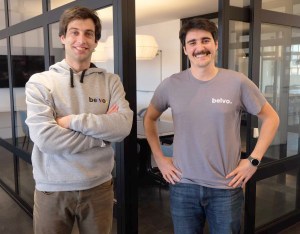
Image Credits: Co-founders and co-CEOs Oriol Tintore and Pablo Viguera / Belvo

Also, over the past year, Belvo says it expanded its API coverage to over 40 financial institutions, which gives companies the ability to connect to over 90% of personal and business bank accounts in LatAm, as well as to tax authorities (such as the SAT in Mexico) and gig economy platforms.

“Essentially we take unstructured financial data , which an individual might have outside of a bank such as integrations we have with gig economy platforms such as Uber and Rappi. We can take a driver’s information from their Uber app, which is kind of built like a bank app and turn it into meaningful bank-like info which third parties can leverage to make assessments as if it’s data coming from a bank,” Viguera explained.

The startup plans to use its new capital to scale its product offering, continue expanding its geographic footprint and double its current headcount of 70. Specifically, Belvo plans to hire more than 50 engineers in Mexico and Brazil by year’s end. It currently has offices in Mexico City, São Paulo, and Barcelona. The company also aims to  launch its bank-to-bank payment initiation offering in Mexico and Brazil.

Belvo currently operates in Mexico, Colombia and Brazil. 

But it’s seeing “a lot of opportunity” in other markets in Latin America, especially in Chile, Peru and Argentina, Viguera told TechCrunch. “In due course, we will look to pursue expansion there.” 

Fred Blackford, founding partner of Future Positive, believes Belvo represents a “truly transformational opportunity for the region’s financial sector.”

Nicolás Szekasy, co-founder and managing partner of Kaszek, noted that demand for financial services in Latin America is growing at an exponential rate .

“Belvo is developing the infrastructure that will enable both the larger institutions and the emerging generation of younger players to successfully deploy their solutions,” he said. “ Oriol, Pablo, and the Belvo team have been leading the development of a sophisticated platform that resolves very complex technical challenges, and the company’s exponential growth reflects how it is delivering a product that fits perfectly with the requirements of the market.” 

01 Jun 2021

Brazil’s idwall raises $38M for identity validation platform

Online fraud and identity theft is a global problem that has only been exacerbated with increased online transactions amid the COVID-19 pandemic. In particular, it is estimated that Brazilian companies lose over $41 billion due to fraud every year.

In an attempt to tackle this problem head on, Lincoln Ando and Raphael Melo started idwall in mid-2016. São Paulo-based idwall started as an automated background check solution and has since grown into a suite of data and identity validation and risk analysis products. For the consumer market, its “MeuID” app is aimed at users who want to change the way they identify themselves and share their data.

And now the Brazilian regtech has raised $38 million in a Series C round led by Endurance.

GGV Capital, monashees, Canary, Qualcomm Ventures, ONEVC, Peninsula and Norte also participated in the funding, bringing its total raised to nearly $50 million.

The company says it has grown 1,458% between 2017 and 2020, with average growth of 144% per year. Its more than 300 clients include 10 unicorns, two out of the three biggest banks in Brazil and companies such as iFood, Claro, Cielo, Loggi, Ebanx, QuintoAndar and OLX, among others.

Fintechs make up a significant portion of its client base, and in 2020, the company saw its revenue from clients in the financial industry alone climb by 588% compared to 2019.

Idwall uses machine learning and AI to automate the onboarding process via its face match, background check, risk analysis, ID validation and automated optical character recognition (OCR) offerings to help companies avoid fraud.

The company said its APIs verify personal documents and information by searching in public and private databases “quickly and pursuant to the compliance rules.” Idwall does all this by first validating that an ID is authentic. Then it works to ensure the person using it is actually the owner of the ID. And lastly, it runs a full background check. It claims it does all this in less than three minutes.

“We help them do all these onboarding processes in a safer, better and faster way,” said idwall co-founder and CEO Ando.

Over the years, idwall has generated more than 65 million data reports for its clients, a number that it says surged by 5,000 times between 2017 and 2020.Those reports, it claims, have helped its clients scale their operations, register more of their own clients and optimize compliance and KYC processes, as well as reduce fraud.

Image Credits: idwall

In general, the pandemic’s drive to digital led to a massive increase in the number of digital bank accounts, mobile payment services and also of companies adjusting to digital platforms and/or expanding their digital operations — leading to a boom in business for idwall.

“The more digitized companies become, the more client expectations grow — and market competition grows stronger,” Ando said. “Our mission is to always stay ahead of innovation in our market, and that’s why we invest so much in growth and in building the best possible team to develop our products.”

Part of that includes using its new capital to recruit more developers, strengthen its existing products and release new ones. Idwall plans to increase its headcount from its current 200 to about 300 over the next few months. The company is also examining the possibility of expanding outside of Brazil to all of Latin America. 

“Many of the identity validation and fraud problems faced in Brazil are seen in other Latin American countries as well,” Ando said. “Besides, places like Mexico and Colombia also have highly innovative companies pushing the envelope when it comes to identity and technology. We still have a lot to achieve in Brazil, but we see a big opportunity for us to take our mission even further.”

Still, in its home country, recent regulatory changes in Brazil in recent years have also led to an increase in demand for idwall’s offerings.

In addition, Brazil’s documentation databases are highly siloed, the company says, with each state having its own model for the most common identity document, the RG (“Registro Geral” or “General Registry”). Plus, each citizen can be issued a different RG document in each state.

“It’s undeniable how much digital onboarding and automated identity validation processes are fundamental for the Latin American market to reach as far as it has the potential to,” Ando said. “It’s extremely difficult to understand and validate identification and personal data in Brazil.”

Also, in general, the company has observed how weary Brazilians are of having to show their IDs for routine events. Idwall helps with that via its aforementioned “MeuID” solution, which stores in a single wallet all the documents necessary for the onboarding processes of fintechs, startups, office buildings and other businesses.

Its investors are, naturally, bullish.

Hans Tung, GGV Capital’s managing partner, describes idwall as a “one-of-a-kind” startup. 

“idwall is leading the discussions and innovations in Brazil regarding digital onboarding and identity validation,” he said. “And their B2C digital identity app MeuID could be the first true super-app in Latin America.”

GGV aims to invest in category leaders that are using technology to create positive impact for its users and for society, Tung added.

“The idwall founders are tackling a huge yet underserved problem in Brazil, and have led the company through terrific growth,” he said. “They have the ingredients to become the leading personal data platform in LatAm for the enterprise.”

Marcos Toledo, managing partner at Canary, notes that idwall was one of his firm’s first investments.

“Lincoln and Raphael’s abilities to build and scale a business solving a very relevant problem in Brazil have caught our attention,” he told TechCrunch. “Their culture, tech level and agility as a company also are very remarkable in the Brazilian market.”


01 Jun 2021

Gokada to launch ride-hailing service in two Nigerian cities as part of super app plans

When two of Indonesia’s biggest companies — ride-hailing company Gojek and e-commerce marketplace Tokopedia — joined forces as GoTo Group last month, a key highlight from the merger was that the last-mile delivery space is still a huge global trend.

In Nigeria, the e-commerce and last-mile delivery market is projected to be worth over $20 billion in the next five years. Big players like Jumia have considerable market share yet smaller platforms are increasingly carving out theirs. One of such is ride-hailing-turned-logistics company Gokada.

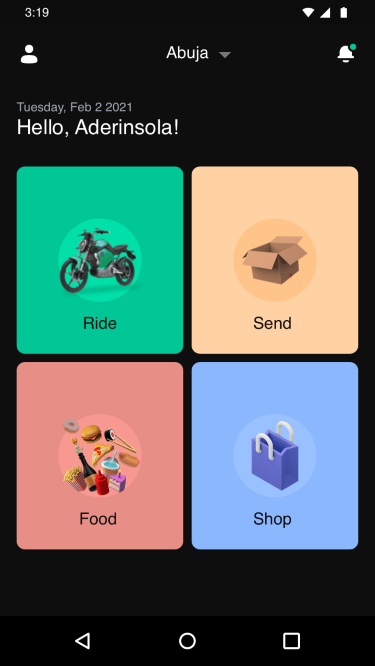
Gokada launched in 2018 as a ride-hailing company in Lagos, Nigeria. But in 2020, Gokada began offering logistics (Gsend) and food delivery services (GShop) after a ride-hailing ban by the Lagos State government affected its operations. Today, the company is combining all these services (which have operated independently in the past) into a single application.

“In September and October, we launched GShop which is the food delivery platform for Gokada. What we realized from our customers was that while they were using the Gsend and GShop separately, they came to us asking if we could put them together,” said Gokada CEO Nikhil Goel to TechCrunch. “So doing this is more like a transition from other things we were doing and making it easier for our customers to have all our services in one platform and create a super app.”

Gokada’s super app plans are coming off the back of an impressive year for the company despite a troubling first few months during the pandemic. As early as February, the company downsized and laid off more than half its staff after the ban on motorcycles in Lagos. It quickly pivoted to logistics and food delivery and hasn’t looked back.

This past year, Gokada has crossed over $100 million in annualized transaction value. It has also helped more than 30,000 merchants on its platform to execute over 1 million food delivery and e-commerce orders.

“Before Gokada ventured into ride-hailing in Lagos, people questioned us. When we entered the delivery space, it was the same question people asked. They said we didn’t have the experience. But today, if you look at it critically, we’ve changed this market in a different manner,” Goel said. 

Goel, who took over the reins at Gokada this March after founder Fahim Saleh tragically passed on, has been instrumental to the company’s impressive growth so far. Per information shared by Gokada, the company’s volume growth has increased 3x in the last six months while revenue increased 10x within the past year.

Gokada

Image Credits: Gokada

Before becoming CEO, Goel had three roles since joining the company in 2019 — VP of Rides, COO, and acting president. Previously, he also co-founded Indian edtech startup Classplus and worked as a general manager at Indian food delivery giant Zomato. His stint at Zomato and knowledge of the food-delivery and logistics space will be key to how Gokada pulls off its super app ambitions.

Although Gokada is only present in Lagos, the company is looking to launch its services across other cities including Abuja, Port Harcourt, Ibadan and Ogun. And not only will the super app allow Gokada customers in these cities to access food delivery, e-commerce (medicines and groceries among other supplies), and logistics, but they will be able to use ride-hailing services.

The company plans to start with neighbouring markets to Lagos — Ogun and Ibadan. In the latter, there’s already a ride-hailing platform in the form of SafeBoda. The company, which is present in Uganda and Nigeria, employs a super app model in the East African country but offers only ride-hailing services in Ibadan, the only Nigerian city where it operates.

For much of last year, SafeBoda has enjoyed dominance in the southwestern city but Gokada’s arrival, especially as it plans to offer other services, might threaten its commanding position.

“We started with its ride-hailing service in Lagos. We were mostly known as one of the pioneers of ride-hailing in Lagos before the ban. So far, we’ve not ventured outside Lagos, and the reason for that has been that we wanted to remain focused on our new business here. And it’s evident that when you move across Lagos, you will see our delivery bikes everywhere on the road. But ride-hailing will always stay with us wherever we go outside the city,” the CEO added. Gokada is in talks to secure operational licenses for ride-hailing but has already acquired a NIPOST licence to mitigate future risks on the regulatory front and allow them to operate courier logistics services across the country.

While services in a super app can differ from one platform to another, payments is the defining functionality that ties those offerings together. For now, Gokada only provides a subset of that which is a wallet feature and a debit card option to pay for these services. On why this is the case, Goel said: “Before many of these companies like Grab and Gojek got into payments, they were providing other services. The idea for a super app is to provide customers with different services under one umbrella to ease their lives. That’s what we’re doing but we’re open to a payments play in the future.”

Unlike other markets in Asia, Africa doesn’t have clear leaders in the super app race. Therefore, Gokada will join a growing list of platforms clamouring for supremacy in their respective markets, a spot OPay seemed to be gunning for before shutting down its non-fintech verticals last year to focus on its payment services. 

01 Jun 2021

Line launches digital banking platform in Indonesia

Line Corporation, best known for its messaging app, launched a digital banking platform in Indonesia today. This means Japan-based Line Corp. now offers banking services in three of its biggest overseas markets: Indonesia, Thailand and Taiwan.

Line Corp.’s Indonesian banking platform is the result of a partnership the company struck in 2018 with PT Bank KEB Hana Indonesia, a subsidiary of South Korea’s Hana ZBank. Line Corp. agreed to acquire 20% of PT Bank KEB Hana Indonesia, making it the bank’s second-largest shareholder, and said it would work on online banking services, including deposit accounts, microcredit products, and remittance and payment services.

According to a report by Momentum Works, downloads of digital banking apps in Indonesia grew 7% in 2020, with apps from established banks like BTPN Jenius, OCBC Nyala and Permata leading. But Momentum Works also observed that “many Indonesian digital bank users tend to download multiple digital bank applications and explore around,” so a dominant player hasn’t emerged yet. Major tech companies like Sea Group, Grab and Gojek are also working on their own neobank services.

Line introduced banking services to its Thai users last October, as part of a joint venture with Kasikorn Vision Company, a subsidiary of Kasikorn Bank. In Taiwan, its subsidiary Line Bank Taiwan was granted a banking license earlier this year by the Financial Supervisory Commission.

01 Jun 2021

Freight forwarder Sennder raises $80M at a $1B+ valuation

Freight forwarding — the process of organising how and where items will be shipped around the world, and specifically the technology that underpins that work — continues to be a huge area of the logistics market, not least because of the huge boom in e-commerce in the last year, and because of the Covid-19-mandated need to simply be more efficient in how things are being moved around. Today, one of the bigger players in that space is announcing more funding to capitalize on the opportunity.

Sennder, a digital freight forwarder that focuses on moving cargo around Europe (and specifically focusing on trucks and “full truck load”, FTL, freight forwarding), has raised $80 million in funding, at a valuation that the company confirms is now over $1 billion.

The Berlin-based startup has been on something of a funding tear this year. In January, it announced a $160 million round, and this $80 million is closing out its Series D. Baillie Gifford has led this latest Series D extension, with Hedosophia, Accel, Lakestar, HV Capital, Project A and Scania all participating in the previous part of the Series D.

The funding makes Sennder, which has now raised some $350 million, one of the most well-funded of the freight forwarders, but it’s a hot area at the moment. Another player out of Europe, Zencargo, picked up $42 million just last month. Other competitors include the likes of Flexport in the US.

Sennder is growing organically, but it’s also making some acquisitions to scale up — a mark not just of the activity in the market but also the fragmentation. In May, it acquired Cars&Cargo to give it a stronger presence in France and Benelux. Other companies that it has acquired have included Uber Freight Europe and Everoad in 2020, and it also operates a JV with Poste Italiane, Italy’s postal service. Altogether it now has eight hubs in Europe.

The plan will be to make more acquisitions of this kind, the company said, to expand a network that now covers 12,500 trucks that it says works with ten German DAX 30 and eleven Euro Stoxx 50 shippers and is expected to move more than 1 million truckloads in 2021.

“We are delighted to have carried our momentum from 2020 into 2021, having already made one acquisition and signed several strategic partnerships,” said David Nothacker, CEO and Co-Founder of sennder, in a statement. “We look to expand our European footprint, bringing more carriers and shippers onto the sennder platform, while expanding our digital offering – such as SaaS. Acquisitions and strategic partnerships are part of this strategy – the additional funds give us the flexibility to capitalize on the right opportunities. Baillie Gifford has backed a wave of revolutionary tech companies; their commitment to sennder is a vote of confidence in our team, technology, and business model.”

Stephen Paice, Co-manager, Baillie Gifford European Growth Trust PLC, added: “We are delighted to join the sennder team on its journey to disrupt Europe’s logistics industry. We strongly believe its technology has the potential to create tremendous value for stakeholders and society in an industry plagued with inefficiencies and needless CO2 emissions. What’s particularly impressive, beyond the progress shown so far, is the purpose-driven and entrepreneurial mind-set instilled within the company. This will no doubt be an important factor for long-term success.”

01 Jun 2021

Malt raises $97M at a $489M valuation for its freelance marketplace for developers

The world of professional services has long relied on contractors to fill in for assignments and projects that might not be a part of the course of daily work, but are essential work nonetheless. Today, a startup that’s built a marketplace to make it easier for freelance developers, designers and others with technical skills with those job opportunities is announcing a significant round of funding to expand its business.

Malt, which provides a way for developers, data scientists, designers, project managers and others working in related fields to connect with fixed-term job opportunities in their fields, has picked up €80 million ($97 million at today’s rates), money that the company plans to use to expand its business to more markets.

We understand from sources that the investment — led by Goldman Sachs Growth Equity and Eurazeo — values Malt at €400 million ($489 million).

Vincent Huguet, Malt’s CEO who co-founded the company with Hugo Lassiège and Jean-Baptiste Lemée, said in an interview that the funding in part will be used towards continuing to expand the company across Europe with a view to, longer term, also breaking into the U.S. In Europe, the company was founded in Paris, and it currently has operations in France (Paris, Lyon), Germany (Munich), and Spain (Madrid). The plan is to extend that to Benelux next, with the UK and Italy company after that.

The company has to date amassed 250,000 freelancers in its community, with 30,000 businesses tapping this pool to fill jobs. End customers include the likes of Unilever, Lufthansa, Bosch, BlaBla Car, L’Oreal and Allianz, and it also partners with traditional consultancies like McKinsey to help them source people for projects. Altogether the company has handled some €300 million in business since being founded in 2013.

These numbers, it seems, are just the tip of the iceberg. It’s estimated that there are some 6 million people in Europe working as freelancers today, and Malt estimates that the freelance consulting market is worth some €350 billion annually in the region.

Although recruitment for many parts of the economy has largely gone digital in the last two decades, Malt is tackling a part of the temp economy that has ironically held a strong offline presence.

“The most important thing is that we are a very open marketplace, an Airbnb-style search marketplace,” he said. “It’s all really based on our search engine. In a market that is very opaque, where offline and online players [those connecting technical workers with jobs] are protecting their bases, we have opened the information.” It also provides payment services and advanced solutions for some of its customers once people are engaged, he added.

“Freelancer” is a pretty loaded term in the tech world today — it could mean anything from a gig worker delivering food, driving you around or cleaning a house, from the plethora of people who work on fixed-term contracts, and soemtimes the implications are not great. Critics will say companies lean on the freelancer model in order to skirt around having to provide extensive benefits to those doing the jobs.

Malt is working in a somewhat different area, focusing on a gap in the market that has been around for a long while, finding people with specific, valued technical skills to fill in for project-based work, but has often been a tough one to crack for employers, Huguet said.

“We are going after those who charge a few hundred dollars per day and connecting them with mid- and large-sized companies,” said Huguet, who described Malt as very different from the likes of Fiverr, which also lets people find skilled workers but focuses on finding the lowest bidder for a job. “You search for a specific freelancer as the employer. You don’t post a specific task for freelancers to respond.” The average time of engagement is around three weeks but might be as long as three months, he said.

What has been interesting — and has definitely had an impact on how Malt has grown, and the investment it’s announcing today — is how much the working world has shifted in the last year and a half. Not only has Covid-19 changed how people work in offices — if they are working in offices at all anymore — but the rapidly changing circumstances have somewhat played into the idea of building out work strategy on more concrete short- and medium-term goals, with longer-term remaining a conditional. This fits the kind of jobs that Malt typically helps fill requirements for, and the changes also has meant more workers coming into Malt’s universe looking for work.

“What we can see already and predict in the next quarters is that we will be a post covid winner,” Huguet said. “People are now considering different options. The idea of a full-time employee was that when everyone was in office people knew how to work 9-6, and that’s what was expected. Now that people are working on projects, employers are more open to consultants. This plus the bigger hiring freezes helped us grow much faster. The market and the mindset have changed.”

Similarly, people who might have previously looked first for full-time employment are now feeling more secure putting their eggs into the freelance basket. “More than 90% of freelancers are joining us by choice,” he added.

What will be interesting is to see how and if companies like LinkedIn, which has been a strong player in professional recruitment, make more headway in this space, on the back of a launch of a freelancer marketplace earlier this year.

“We are watching what it’s doing, but we think it will be hard for them to do,” Huguet said. He pointed out that LinkedIn’s profiles today are dedicated to classic recruitment, so doing the matching for freelance is very different.

Regardless of how LinkedIn’s interest plays out, its activity there also points to a big opportunity, one big reason for why investors are backing Malt right now.

“Malt is at a pivotal time in its development. This new round of funding will allow the company to scale rapidly and drive even greater impact,” said Yann du Rusquec, a partner at Eurazeo. “We are excited to partner with Vincent and Alexandre—and offer the expertise of our Growth and Venture teams along with the depth of Eurazeo’s network in Europe—to drive Malt’s future success.”

“We are delighted to support Malt to build the leading freelance marketplace in Europe,” added Alexandre Flavier, executive director at Goldman Sachs Growth Equity. “Malt is at the forefront of the future of work, promoting agility, innovation, impact, freedom of choice, making freelancing simpler and more reliable. We are excited to partner with Malt’s founders, empower their community of highly skilled freelancers, and give companies access to the world’s best freelance talents.”

01 Jun 2021

European insurtech startup Wefox grabs $650 million at $3 billion valuation

German startup Wefox has raised a $650 million Series C funding round led by Target Global. Following this funding round, the company has reached a post-money valuation of $3 billion. Wefox is a digital insurer focused on personal insurance products, such as household insurance, motor insurance and personal liability insurance.

“It’s much more than we wanted to raise initially. It was a very fast process and essentially we were oversubscribed by 4x or so,” co-founder and CEO Julian Teicke (pictured left) told me.

In December 2019, the company reported a $1.65 billion valuation. And the company says today’s funding round is one of the largest Series C rounds of all time — and likely the largest Series C round for an insurtech company more specifically.

“Almost all of the big existing investors are participating,” Teicke said. OMERS Ventures, G Squared, Mountain Partners, Merian, Horizons Ventures, Eurazeo, Mubadala Capital, Salesforce Ventures, Speedinvest, CE Innovation Capital, GR Capital and Seedcamp are all participating once again in this Wefox founding round. New investors include FinTLV, Ace & Co, LGT and its affiliated impact investing platform Lightrock, Partners Group, EDBI, Jupiter and Decisive.

“Not only have we raised a super large amount but also in a very fast time. It took us a total of four weeks to get all commitments in,” co-founder an CFO Fabian Wesemann (pictured right) told me.

Wefox believes it can now iterate and generate more and more revenue as it scales — it just needs capital to reach the next level. “We’re tackling that $5.2 trillion industry that has been stuck in the pre-internet era. We nailed how to disrupt it in our core market,” Teicke said.

But what makes Wefox different from legacy insurance companies? Wefox isn’t a direct-to-consumer insurance company. Most insurance products are still sold by agents and the startup believes this isn’t going to change anytime soon.

That’s why Wefox has 700 agents selling Wefox products exclusively. It also partners with associate brokers — around 5,000 can distribute Wefox products.

“While the rest of the industry seems to say that human agents are dead, we think they’re more relevant than ever,” Teicke said.

In 2020 alone, the company generated $140 million in revenue. If you look at Wefox Insurance, the company’s insurance carrier, the company reported a profit for 2020. As for the group, “we’re going to show overall profitability by 2023,” Wesemann said.

That fast growth rate combined with a clear path to profitability means that Wefox has an ambitious roadmap. As a full-stack insurance company licensed in Lichtenstein, Wefox can passport its license to other European countries. The company is currently live in five markets right now and is working on expanding to Italy soon.

In addition to new markets, Wefox plans to sell new insurance products — property and casualty insurance, pet insurance, health insurance, life insurance… If you’re thinking about an insurance product, chances are Wefox is already working on it. “This year we’re launching around 20 new insurance products,” Teicke said.

While distribution is managed decentrally with local agents talking with local customers, insurance products are managed centrally. The startup prioritizes products by revenue potential and goes down the list one product at a time.

Finally, Wefox has ambitious plans when it comes to reducing administrative costs. The company has been investing in automation so that common processes are handled by an algorithm. Currently, 80% of its processes are handled automatically. It’s a never-ending process as you have to adapt your processes when you launch new products.

Wefox is also working on prevention. The company has put together an AI team in Paris to prevent bad things from happening in the first place. As always with insurance companies, it’s all about optimizing every layer and every step of the customer journey to build a product that stands out from what’s already out there.