Year: 2021

19 May 2021

Can Squarespace dodge the direct listing value trap?

It’s Squarespace direct listing day, and the SMB web hosting and design shop’s reference price has been set at $50 per share.

According to quick math from the IPO-watching group Renaissance Capital, Squarespace is worth $7.4 billion at that price, calculated using a fully diluted share count. The company’s new valuation is sharply under where Squarespace raised capital in March, when it added $300 million to its accounts at a $10.0 billion post-money valuation, according to Crunchbase data.


The Exchange explores startups, markets and money. 

Read it every morning on Extra Crunch or get The Exchange newsletter every Saturday.


The company’s reference price, however, is just that: a reference. It doesn’t mean that much. As we’ve seen from other notable direct listings, a company’s opening price does not necessarily align with its formal reference price. Until Squarespace opens, whether or not it will be valued at a discount to its final private price is unclear.

While the benefits of a direct listing are understood, the post-listing performance for well-known direct listings is less obvious. Indeed, Coinbase is currently under its reference price after starting its life as a public company at a far-richer figure, and Spotify’s share price is middling at best compared to its 2018-era direct listing reference price.

This morning, we’re going over Squarespace’s recently disclosed Q2 and full-2021 guidance. Then we’ll ask how its expectations compare to its reference price-defined pre-trading valuation. Finally, we’ll set some stakes in the ground regarding historical direct-listing results and what we might expect from the company as it adds a third set of data to our quiver.

This will be lots of fun, so let’s get into the numbers!

Squarespace’s Q2

Per Squarespace’s own reporting, it expects revenues between $186 million and $189 million in Q2 2021, which it calculates as a growth rate of between 24% and 26%. That pace of growth at its scale is perfectly acceptable for a company going public.

For all of 2021, Squarespace expects revenues of $764 million to $776 million, which works out to a very similar 23% to 25% growth rate.

In profit terms, Squarespace only shared its “non-GAAP unlevered free cash flow,” which is a technical thing I have no time to explain. But what matters is that the company expects some non-GAAP unlevered free cash flow in Q2 2021 ($10 million to $13 million), and lots more in all of 2021 ($100 million to $115 million).

19 May 2021

Women-led sports media startup The GIST raises $1M to challenge sports reporting norms

The three co-founders of The GIST are all themselves sports fans, but realized in 2018 that sports media in general left a lot to be desired when it comes to catering to audiences outside of the traditional, male-dominated stereoptyical sports audience. So they started a new kind of sports media enterprise, taking a risk on a very different kind of careers vs. their background in financial services in Toronto.

On the back of impressive 350% audience through 2020, c-founders Jacie DeHoop, Ellen Hyslop and Roslyn McLarty have now raises an initial $1 million round of seed funding, form investors including 3GP Capital, JDS Sports, August Group, Even Odds Investments, and Bettor Capital. The company also just got approved for a $350,000 loan from the Business Development Bank of Canada, bringing its total new funding across venture and state-backed credit incentives to $1.35 million.

“In the sports industry, as you probably are aware, less than 4% of coverage is on female athletes, and less than 14% of sports journalists are women,” explained McLarty, who is also The GIST’s head of finance, operations and growth. “It’s no wonder, as women, we don’t necessarily resonate with the the more traditional male-dominated sports media and the way that sports is represented. So we were finding it hard to be a part of that community sports can provide, and around the same time, we were seeing a trend of media companies developing these more authentic relationships with their audience, and building community and being built a little bit more ground up, and that being really effective.”

McLarty cites other media ventures including theSkimm, Morning Brew and The Hustle as examples of what her and her co-=foudners saw was working well in media. That approach, combined with what they saw as a massive potential untapped audience, led to the creation of The GIST, which because as a newsletter and has evolved into a news site, a podcast and more.

“We started with the purpose of making sports more accessible, inclusive, approachable and fun for a casual fan, or a female fan,” she said. “For anyone really, that hadn’t resonated with traditional sports media.”

I asked McLarty why her and her co-founders wanted to get into the media business specifically, given that their experience prior to that was on Bay Street, which is effectively Toronto’s equivalent of Wall Street. She admitted that it took the trio some time to find their footing, but that now the business has opened up a new and growing audience that basically wasn’t served previously, which is helping them win over advertisers and brand partnerships.

“I think we’ve discovered an audience that is really valuable, and there hasn’t really been a way for brand partners to engage with a female audience through sports,” she said. “So we’ve kind of found our niche, and have built really built things out and gotten to the point where we are today in a really lean lean way. The hard part was the initial investment in the audience to get it to the point where it is now, but once you hit that scale in the audience, the margins on the newsletter are obviously awesome for every additional person that we add on.”

The GIST’s partners include brands like the NBA, FanDuel, Red Bull and Adidas, to name a few, and it says its revenue is up over 1,000% this year vs. the year prior, on course to meet its goal of $1 million in total revenue for 2021. The company says it will be using the new funding to grow the team, including new hires on the content side, as well as additional headcount on the sales and operation teams, too.

19 May 2021

Ro acquires Modern Fertility in a reportedly $225 million deal

Ro, a digital elective care and telemedicine provider last valued at $5 billion, announced today that it has acquired Modern Fertility, a reproductive health company founded in 2017. While terms of the deal were not disclosed, Axios estimates it sold for $225 million in a majority-stock deal.

The company did not immediately respond to a request for comment, but this story will be updated with more information as it comes in.

Ro, also founded in 2017, has spent the past few years growing its business to be far more than its launched purpose: a solution for men with erectile dysfunction. It has since expanded into women’s health, smoking cessation, and treats over 20 conditions, including sexual health but also into weight loss and allergies. The acquisition of a business that focuses on women’s health will likely fit squarely into Rory, Ro’s women’s healthcare business that focuses on online visits, contact-free delivery and “healthcare without the waiting rooms.”

With the acquisition, Ro said that it is adding fertility testing and reproductive health to its women’s health suite of services. Plus, Modern Fertility co-founders Afton Vechery and Carly Leahy will lead that vertical for Ro.

Beyond the fact that this is one of the biggest exits for a women’s health company with a focus on reproductive disorders, today’s acquisition is important because it’s another step in a healthcare system that is built on an entirely “cash-pay, no insurance” model. Since inception, Ro has bet that the future of healthcare can be built on out-of-pocket expenses, and that consumers are willing to pay directly to access a doctor instead of going through the hurdles of traditional insurance. That, of course, comes with missing out on the currently insured, which is still a large subset of Americans.

However, if the deal goes as planned, Modern Fertility entering the Ro umbrella might make the overall business have yet another pitch to consumers to use its service. Consumers are lazy, and if you can give them one place to get all their services — maybe even starting with fertility — it becomes a stickier and stickier operation. Other companies such as Everlywell and Future Family have similarly proven the market out there for comprehensive fertility solutions.

Plus, you can see how today’s deal jibes well with Ro’s December 2020 acquisition of Workpath. Workpath is an in-home care API that allows Ro to create a vertically integrated primary care platform, so it can send professionals to a patient’s home or conduct diagnostic tests.

As far as acquisitions go for Ro, while last year was a broad bet on how to bring care services to others, this year is a new, niche bet on which care services will be most important to consumers going forward. Since Ro has raised nearly $900 million in venture capital raised to date, expect more in the M&A front as the months roll on by.

19 May 2021

Construction tech upstart Assignar adds a Fifth Wall with $20M Series B

Construction technology may not be the sexiest of industries, but it is one where tremendous opportunity lies — considering it has historically lagged in productivity. And, lags in productivity means project delays, which typically costs everyone involved more time and more money.

There are a number of larger players in the space (think Procore, PlanGrid and Autodesk) that are tackling the problems from the perspective of the general contractor. But when it comes to the subcontractors that are hired by the general contractor to do 95% of the work, the pickings are few and far between.

Enter Assignar, a cloud-based construction tech startup that was originally born in Australia and is now based in Denver, Colorado. Co-founder and CEO Sean McCreanor was a contractor himself for many years, and grew frustrated with the lack of offerings available to him. So, as in the case of many founders, he set out to create the technology he wished existed.

And today, Assignar has raised $20 million in a Series B funding round led by real estate tech-focused venture firm Fifth Wall. 

Existing backer Tola Capital and new investor Ironspring Ventures also put money in the round, which brings Assignar’s total raised since its 2014 inception to $31 million.

“I had 100 crews and workers out in the field, lots of heavy equipment and project work, and was running the entire business on spreadsheets and whiteboards,” McCreanor recalls. “With Assignar, we essentially help the office connect to the field and vice versa.”

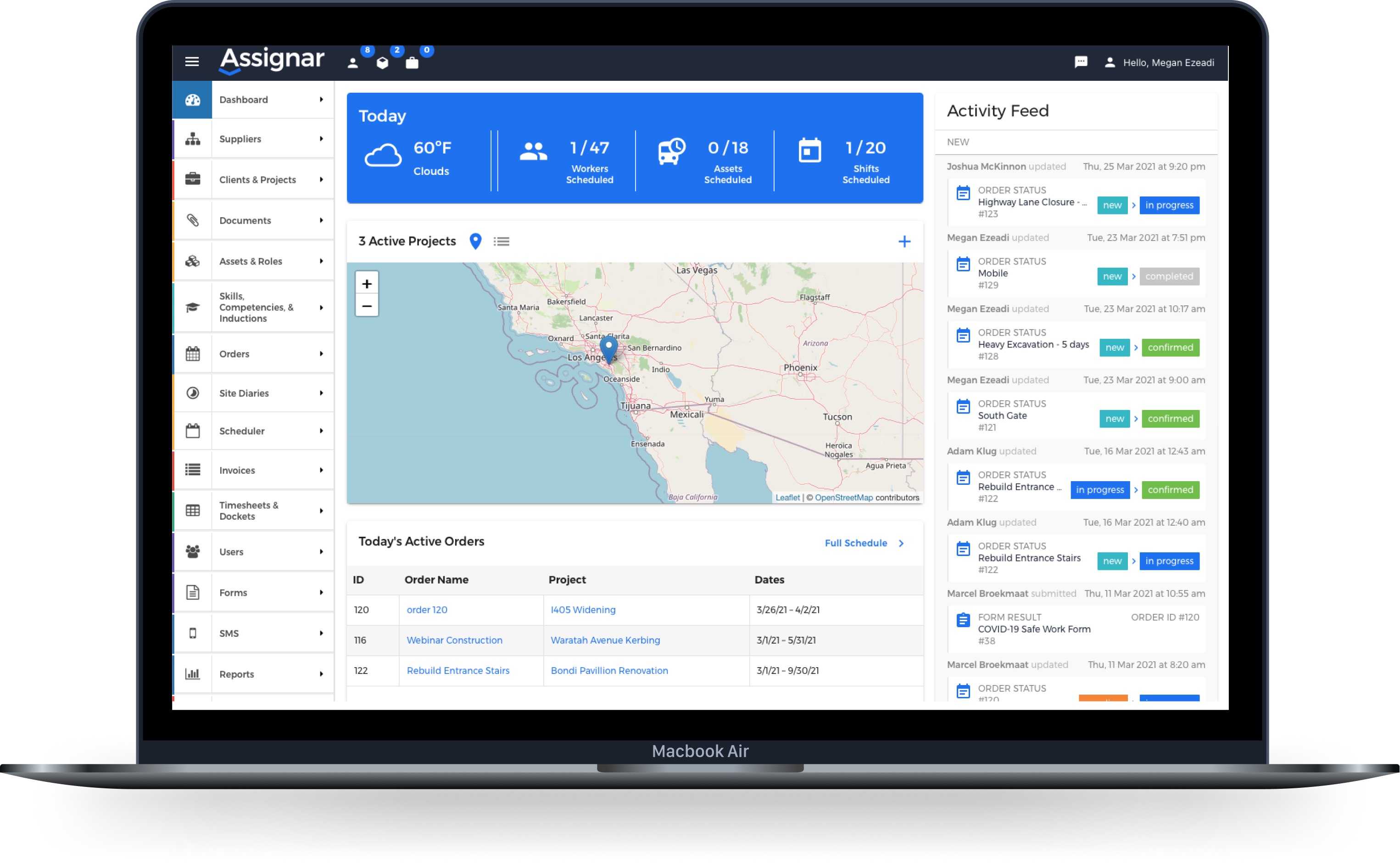
In a nutshell, Assignar’s operations platform is designed for use by “self-perform general and subcontractors” on public and private infrastructure projects. The company’s goal is to make the whole process smoother for large general contractors, developers and real estate owner-operators by providing a “real-time snapshot of granular field activity.”

Specifically, Assignar aims to streamline operations and schedules, track crews and equipment, and improve quality and safety, as well as measure and monitor productivity and progress with data on all projects. For example, it claims to be able to help match up the best crews and equipment for a specific job “more efficiently.”

The startup says it has hundreds of international customers working on multibillion-dollar projects in infrastructure, road, rail, heavy civil, utilities and other construction disciplines. Those customers range from specialist contractors with as few as five crews to multi-national, multibillion-dollar companies. Projects include things such as bridges and roads, for example.

Image Credits: Assignar

Assignar historically has “more than doubled” its revenue every year since inception and in 2020, saw revenue increase by 75%.

“We could have grown faster but wanted to manage cash flow,” McCreanor told TechCrunch.

Assignar’s focus is particularly significant these days considering that the Biden administration’s Infrastructure Bill is nearing agreement, likely signaling an investment in infrastructure for communities across the U.S. 

The heavy civil and horizontal construction industry has long lacked a well-designed and ubiquitous operations platform, according to Fifth Wall Partner Vik Chawla.

“Assignar’s cloud-based software offers a detailed view on when and where different types of field activities are being performed,” he said. “It streamlines communications between headquarters and the field, allows for a reduction in paperwork, and brings time and cost savings to an industry where much of the planning, tracking and reporting are still done by hand, in Excel or on white boards.”

Assignar plans to use its new capital to grow its business in North America (which currently makes up about 25% of its revenue) and double its 65-person team by hiring for roles across all departments. The company also plans to invest in R&D and product development to further build out its core platform. Among the features it’s planning to develop is a contractor hub and a schedule recommendation engine that McCreanor says will leverage data, AI and machine learning “to support planning and execution processes.”

19 May 2021

Ampere prepares to launch its first custom data center chips

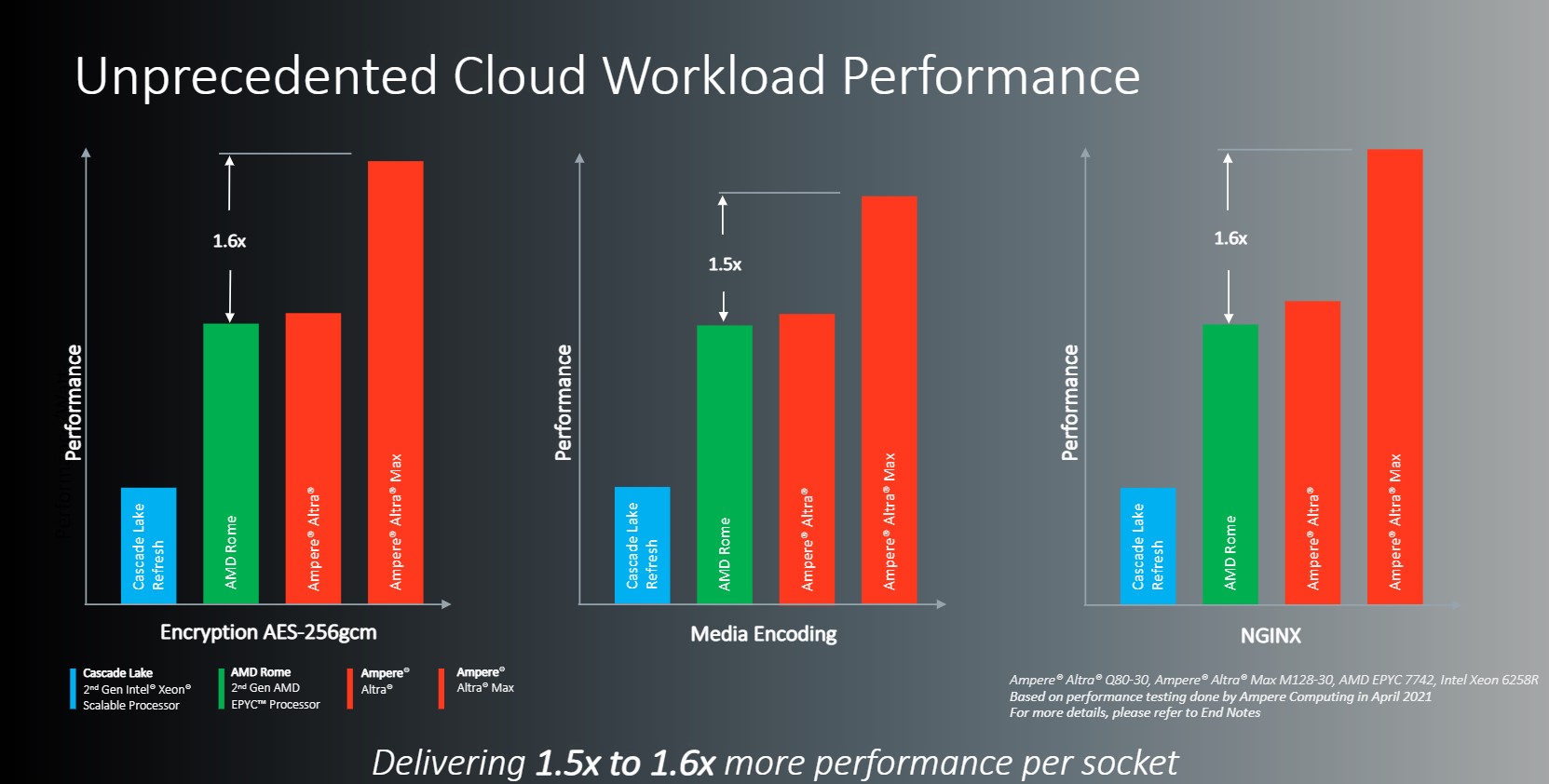
Ampere, the server startup that is betting on bringing Arm-based chips to the data center and edge, is hosting its annual media day today. With the 80-core Altara and 128-core Altra Max, the company already offers a platform that can rival and outperform those of competitors like Intel and AMD in many common scenarios — and Altra Max is now in production and shipping. Those chips are based on the standard ARM Neoverse N1 architecture, though. But now, it is about to launch its own custom  Ampere Cores, built on a 5nm process.

“Altra and Altra Max are based on the N1 core from Arm. We’re an architecture licensee as well as an IP licensee, so we’re going to talk about our own core [at our media day]: what we built, how we built it, why we built it,” Ampere CEO Renee James, who spent 26 years at Intel before founding Ampere, told me. “And what does a cloud-native processor look like? We like to think about it like you think about M1 for a PC from Apple, you would think about an Ampere Core for a cloud data center server.”

With the 128-core Altra Max, Ampere promises a chip that uses 50 percent less power per core compared to an AMD Rome CPU and performance gains of 1.6x for running the NGINX web server, for example. And all of those benchmarks look even better when compared to an Intel Cascade Lake Refresh CPU. AMD’s Rome launched in August 2019 and Intel’s Cascade Lake Scalable Performance Refresh CPU have been in the market since last Feburary.

“It’s all about developing that CPU that’s built for the cloud and making sure that we’re meeting the new — but not really not new anymore — but kind of the current and future needs of cloud-native workloads, that software development model, and that type of infrastructure deployment model,” Ampere’s CPO Jeff Wittich said. “Which for us really means developing a product that has high performance that’s very predictable across workloads across users and a very, very scalable platform for compute, memory, I/O, network, and that is very, very power efficient.”

Image Credits: Ampere

Wittich noted that Ampere had always planned to develop its own cores, in part because it offers a very specific product for a very specific use case. “We knew that from the start developing our own cores was going to be very, very important for us to innovate in the ways that we need to innovate,” he said. “I have to say the primary thing is that because we’re focused on cloud — and we’re not focused on a bunch of other markets, especially not client, and also not other markets, even within the server space — it means developing a core that’s specific to cloud is really important to us.”

Ampere’s cloud customers want certain built-in security features and manageability features for performance and power, for example. And as Wittich stressed, those have to be built in at the micro-architecture level to work properly (and this allows allow the company to optimize performance as well).

“We have to build our own cores to actually have a processor that does what the cloud wants,” he said. The Ampere Cores will, for example, feature high I/O memory bandwidth, for example, but optimized for cloud use cases, not high-performance computing use cases.

Image Credits: Ampere

James echoed this, noting that customers want these features and Ampere’s competitors will offer them. “The cloud business is pretty specific and the customers are very demanding,” she said. “So cadence is really important and we are competing against customers who have really very good products.”

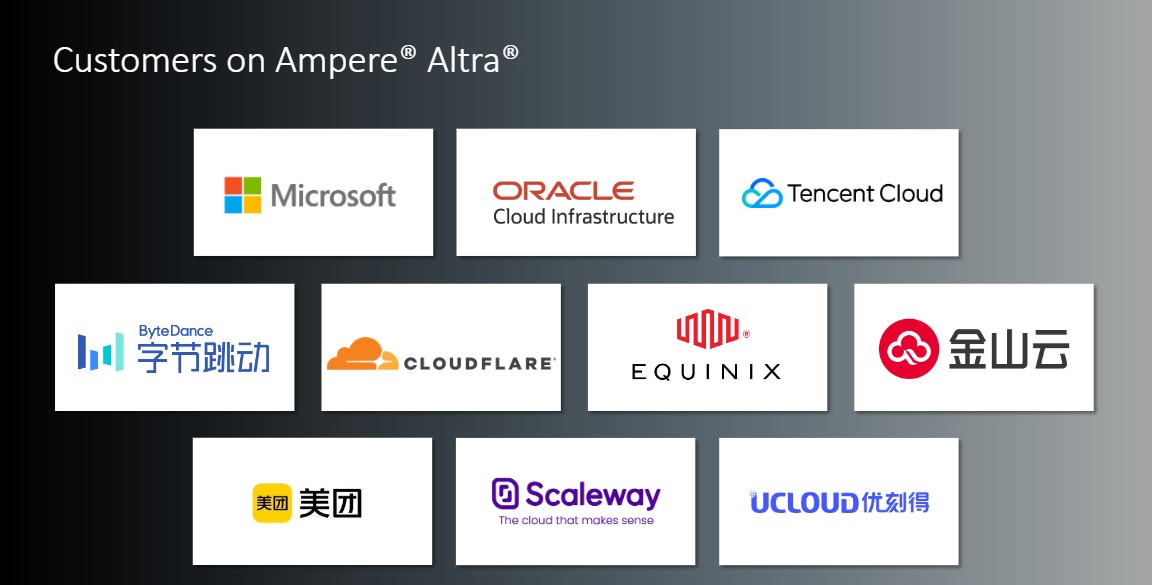
It seems like this strategy is working out well for Ampere, which will now counts the likes of Microsoft, Oracle and Tencent Cloud among its customers. Rumor has it that Microsoft is working on its own Arm-based chips as well, but interestingly, the company is also using Ampere’s media day to talk about how it is readying Azure for Altra.

19 May 2021

Spokn slurps out the BS in corporate internal comms and replaces it with audio storytelling

The podcasting world remains one of the most vibrant formats in media (and I am not just saying that since the Equity crew won a Webby yesterday for our not-that-humble podcast). Its openness, diversity, freedom, and ease-of-authoring has broadened the medium to all sorts of hosts on every subject imaginable.

We experience that dynamism and verve in our own audio listening, but then we start to tune into our company’s internal communications, and, well, you certainly don’t need sleeping pills to zone out. Top-down, formal, banal — corporate comms remains mired in a 1950s way of speaking that is completely out-of-sync with the millennials and Gen Z majority of workers who expect something actually worth watching and listening to.

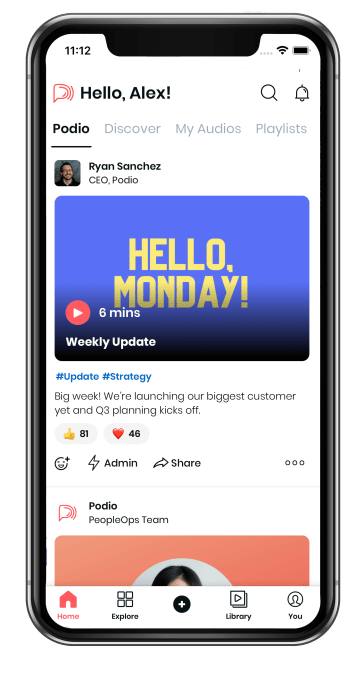
Spokn wants to make company-wide podcasting a must-listen event, not just for leaders to talk to their employees, but for every worker to have a voice and share their expertise and stories across their workplaces. Through its app, companies can deliver personalized podcast feeds on everything from a daily standup or weekly AMA to training and development content, all of which is secure and kept for internal use.

It’s an idea that has quickly attracted investor attention. The startup, which was part of Y Combinator’s most recent Winter 2021 batch, closed on a $4 million seed round two weeks before Demo Day led by Ann Bordetsky, a partner at NEA who joined earlier this year and previously served as COO of Rival. This is her first investment with the firm.

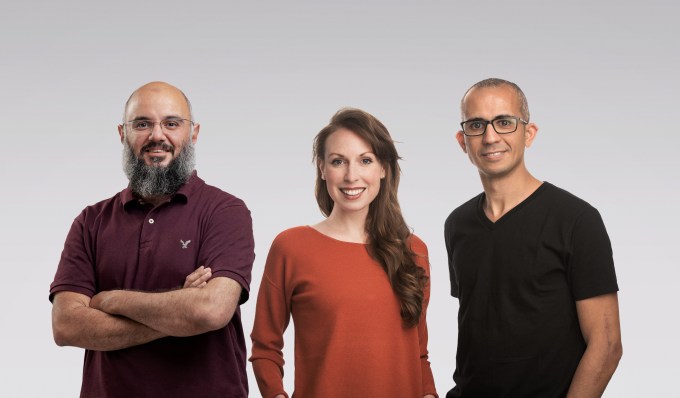
The company was founded by Fawzy Abu Seif, Mariel Davis and Mohammad Galal Eldeen. Abu Seif and Davis met each other in an Egyptian jazz club in November 2017, about a week after he had quit his job. They eventually came together not just as a couple — they got married in the fall of 2019 — but as business partners, linking up with Galal Eldeen and incorporating Spokn in April 2018.

Spokn’s Mohammad Galal Eldeen, Mariel Davis and Fawzy Abu Seif. Image Credits: Spokn

Spokn’s product evolved across three iterations. First, the team tried to create audio narrations of evergreen content at major publishers like The New York Times. The idea was to help publishers reuse their best content as a new revenue source while connecting more listeners into these brands. Getting publishers to commit was tough though. “The consumer app wasn’t doing that great, and we started hunting around the data to see if something was working,” Davis said.

What they found was that professional development podcasts were much more popular compared to other topics, and so they had an opportunity to re-jigger the product to focus on training and specifically target enterprises. The idea was “let’s empower companies with the same tools we had as a consumer company,” Abu Seif said.

Prior to Spokn, Davis had worked with an entrepreneur in the Middle East building out a social enterprise network focused on skills training, a role in which she handled internal communications. She saw just how little impact media like email made for employees, particularly in the distributed workforce she was attempting to engage. The new direction for Spokn was far more enticing.

The newly-married couple moved to New York City from Egypt and signed an apartment lease in early March 2020 — just as the COVID-19 pandemic spread widely in the region. We “multiplied the living expenses by 8-10x while doing the same Zoom calls we could make from there,” Abu Seif joked.

Eventually, the company realized that it could do much more than just training, and expanded into broader internal comms. “Async audio is a lot more personal than email,” Abu Seif said. This latest product iteration launched in November 2020, and included push notifications, an app for streaming, personalization features and analytics to allow companies to track what was working and what was not for employees.

Spokn’s app offers a personalized feed of company podcasts. Image Credits: Spokn

Perhaps most importantly, companies can tailor the access lists for individual podcasts to particular groups of people, such as senior execs, people managers, sales employees, or any other logical grouping. We “get a lot of inbound from companies that are trying to duct-tape solutions together,” Davis said. For Abu Seif, “all the tools that marketers have to engage consumers, we are empowering companies to engage with their employees.”

Despite the startup and product’s youth, it has attracted a quick following among companies, with customers including Podium, ShipBob, Cedar, Mixpanel, ServiceNow and Superhuman. Podium’s CEO, for example, records weekly podcasts that are shipping on Spokn, and apparently even installed a podcast studio near his office just to make it easier to produce his shows.

Podcasting inside companies fixes a lot of problems with traditional internal comms. First and foremost, it can create a deeper connection where email cannot. Audio can feel more personal than even video, and can also be played in the background. It’s also asynchronous unlike live video, allowing employees in different time zones to connect with key stories at an appropriate time.

Plus, employees can avoid all the fatigue that comes from being onscreen. “No one wants Zoom zombies,” Bordetsky of NEA said. “We need intuitive and asynchronous communication tools like Spokn to build connection and community in the workplace.” Her thesis for the investment is that “flexible, distributed work is here to stay and employee communication is at the heart of building a modern, virtual-first employee experience.”

Buyers of Spokn range from heads of people to sales teams, and the company is also focused on recruiting and retention as well. “Companies are pretty freaked out about retaining their great talent,” Davis said. Some companies are now sharing “stories with prospects even before their first day at the company.”

While the product is mostly used by leaders today, Spokn wants to expand that remit to employees talking with their peer colleagues, helping to build community in hybrid offices where it is harder than ever to make a connection with others.

Of course, companies can screw up podcasting just as much as they have screwed up every other medium to communicate like humans, and Davis says it’s become her full-time job to help them think through storytelling and how to connect better with their own employees. We “work to find the right storytellers in the company,” she said.

Outside NEA, other investors in the seed round included Reach Capital, Funders Club, Liquid2, Share Capital, SOMA Capital, Scribble VC and Hack VC.

19 May 2021

Twaice raised $26M to scale its battery analytics software

All batteries degrade over time. For automakers, fleet managers and other companies, the crux — and key to profitability — is knowing when they will.

But it’s surprisingly difficult to understand the health and status of a battery without extensive and expensive testing, which isn’t always possible once a battery is in a vehicle. German battery analytics software company Twaice has been taking aim at this problem since its founding in 2018, and it announced Wednesday that it has raised $26 million in Series B funding led by Chicago-based Energize Ventures. The company, which primarily works in the mobility and energy storage industries, now has a total financing of $45 million.

“We started Twaice with the focus on building a battery analytics platform which really covers the whole lifecycle of battery systems,” company co-founder Stephan Rohr told TechCrunch, including the development and operational phases. The company has launched tools that are suited for the design and development phase and when the battery is actually in a vehicle or energy storage system. Audi, Daimler and Hero Motors are some of its customers.

The company intends to use this fresh round of funding to expand its European commercial footprint and possibly into the United States. It also wants to build even more use cases on top of its analytics platform — for example, working with fleet providers, rather than only the manufacturers.

One of the company’s innovations is a concept of a “digital twin,” or a simulation model of the battery system that runs in Twaice’s cloud platform. The company continually updates the parameters of the “twin” so that it reflects the behavior of the actual battery, down to its thermal characteristics, electrical behavior and degradation. That means companies that operate a fleet of EV buses can monitor the state of the battery packs of each of their vehicles.

“It enables not just a focus on the current health of the battery system, but also it enables us to simulate and forecast the future,” Rohr said.

Twaice also offers solutions before the battery even enters the vehicle or energy storage system. “Battery design engineers use our simulations to reduce the testing effort [. . .] assess charging strategies, assess depth of discharge, assess different cell chemistries,” Rohr explained.

One major use case for Twaice’s software is for warranty tracking and safety risks. Using battery analytics OEMs can understand where exactly the battery failed, whether in the cell or the module, for example, and also gain valuable data on future warranty claims based on previous data. Warranties are huge risks for OEMs, Lennart Hinrichs, Twaice’s commercial director, explained to TechCrunch, in part because batteries are so complex and difficult to understand once they’re in a vehicle.

But having a grasp on the battery’s life could come in handy for consumers as well. Twaice has partnered with TÜV Rheinland, a testing and certification institute in Germany that’s working on EV resale in the private market. It could eventually lead the way to a standard assessment process for batteries on the resale market.

Once the battery is no longer suited for its first-life application, companies can use Twaice’s software to assess the remaining life and health of the battery system and determine whether it’s fit for a second-life purpose or if it should go straight to recycling.

Twaice’s previous funding round in March 2020 was led by early-stage venture capital firm Creandum, with additional participation from existing investors  UVC Partners, Cherry Ventures and Speedinvest.

19 May 2021

Britive grabs $10M Series A to build automated multi-cloud permissions tool

Britive, an early stage startup that is trying to bring privileged access control to a multi-cloud world, announced a $10 million Series A this morning. Crosslink Capital led the investment with participation from previous investors Upfront Ventures and One Way Ventures.

The company helps automate permissioning across multiple cloud vendors and software services, whether that involves a human or a machine seeking permission. In a world of increasing automation, it’s often a machine seeking access, and that makes permissioning all the more critical, says Britive co-founder and CEO Art Poghosyan.

“What we offer is an automated approach to access, [moving from] what we call statically granted access, which constantly gets added all the time […] to completely ‘just in time access’,” he said. That means that after you define a policy, it sets the ground rules for access, and grants it based on that policy for the time required, and nothing more, whether you’re a human or a machine.

In today’s complex development world that could take many forms including API keys and secrets. “Yes, sometimes those things are granted to a human actor like a DevOps engineer, but a lot of times it also needs to be granted — quote, unquote — to a Terraform script or to GitHub to go and build out application infrastructure or deploy an application,” he said.

The company currently has 40 employees, a number that Poghosyan expects to double in the next 12 months as he puts this capital to work. As a first generation Armenian immigrant, Poghosyan says that he takes diversity and inclusion extremely seriously as he hires more employees.

“We’ve always been committed — in this business and our previous startup — to providing equal opportunities to talented people, no matter what background they come from. I’m really proud that even as a small company — we’re 40 at the moment — we have more than 50% of our workforce, which comes from ethnic minority groups,” he said.

Britive, which is based in Los Angeles, launched in 2018 and brought its first product to market in 2019. The company raised a $5.4 million seed round last July, which it announced in September, making the total raised so far approximately $15.4 million.

19 May 2021

Review: Apple’s 2021 iPad Pro is great, again, but…

If you’ve lived in a few places in your life then you probably have experienced the feeling of moving into a nice new apartment or house — a blank canvas of rooms and spaces filled with possibility. Most times, unless you’ve got that money money, you then fill it up with all of your same, old dinged up furniture.

I have had this experience a bunch over the years. When I moved out of my parent’s house, every single piece of furniture I had was thrifted, rescued or gifted. A mash-mash of centuries and styles that was well lived in the day I got it. Even as I got married and even moved much of that same furniture came with. 

Eventually, much of it began to feel too out of place and we passed it on and carefully bought or made things that we felt represented our home and resonated with us. But there is still that odd piece, like that dinged up dutch modern coffee table, that we look at and remember the sticky cocktail clutter of karaoke nights in our 20’s and the —still sticky — kid’s snacks of our 30’s.

That’s where iPad is now. It’s a beautiful new monument to the engineering and hardware teams at Apple that continue to execute at an insane level year over year. But it’s filled with the still functional but feeling its age iPadOS software. And it’s getting more out of place by the day.

This writeup has to be about what Apple has currently shipped, of course. That’s what consumers are getting in the mail when they order one now. But, Apple’s Worldwide Developer’s Conference is coming in just a couple of weeks and I hope to basically review this iPad Pro all over again in a new light. 
Ironically, one of the biggest hardware upgrades for this model is going to elicit a relatively muted response in me here. The M1 chip is absolutely blistering. It delivers the same performance as the M1 MacBook Pro did in benchmark tests, making Apple’s lineup more a matter of form factor and use case than raw power. But last year’s model frankly still feels just as fast in almost all of the applications that I tested and certainly in all of my daily workflows.  

Yes, it’s super powerful and you’re getting the absolute latest in silicon, but upgraders won’t see any immediate difference. In some ways this is by design. In my interview last month with Apple’s John Ternus and Greg Joswiak about the iPad Pro they noted that the new unified processor strategy and the aggressively good display are about creating overhead that they hope developers will take advantage of.

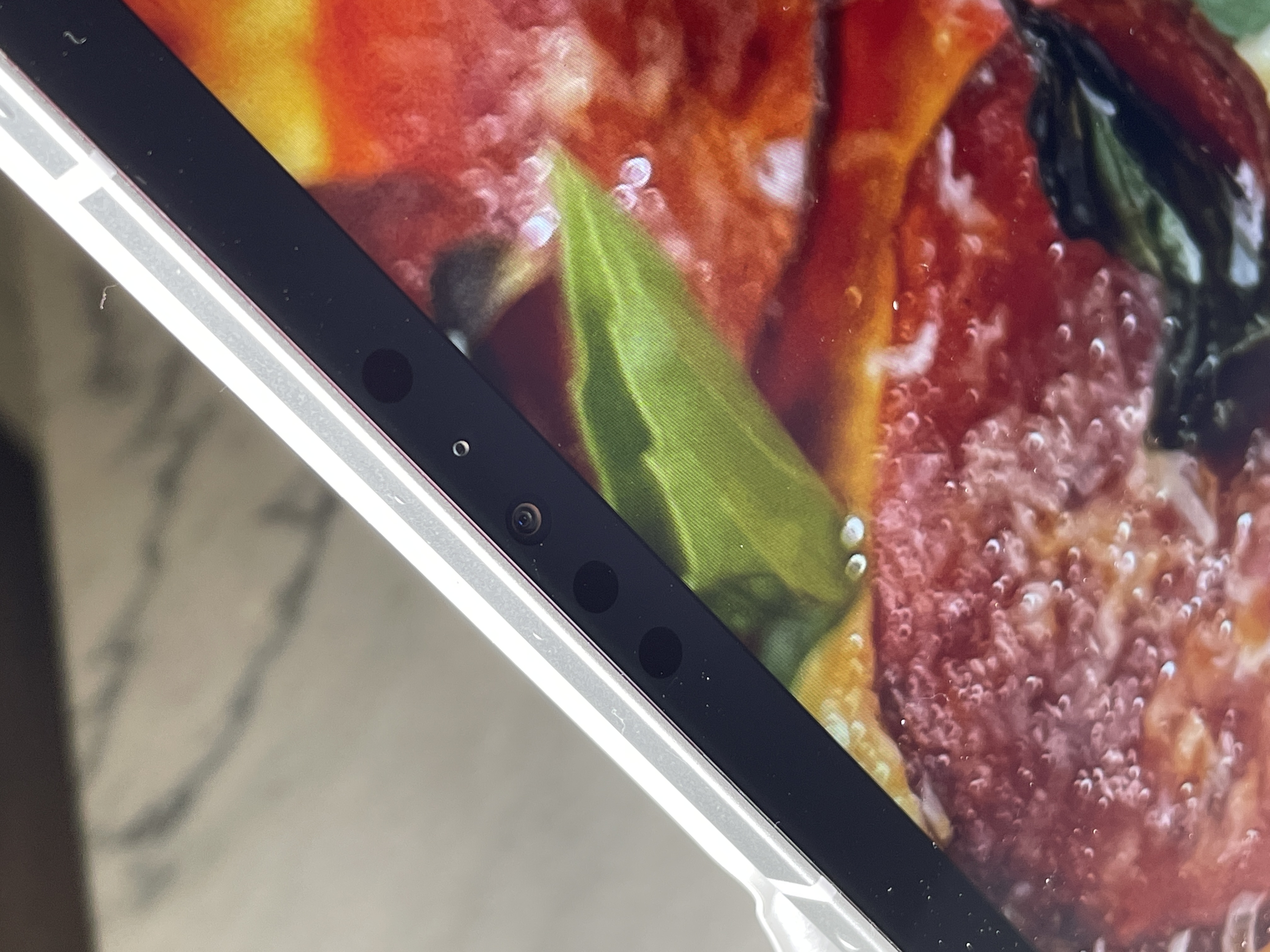
The new iPad Pro cameras are pretty fantastic, both front and back are now very usable and the new front camera especially benefits from an increase in resolution and new wide-angle optics. This wide angle makes video calling a bit more relaxed and doable on iPad Pro. 

That is coupled with Center Stage, Apple’s new ML-driven feature that automatically crops and centers your head and shoulders, following you around with a smooth and forgiving pan and zoom as you lean, stand and even move about a room within the view of the camera. The feature works by using machine learning frameworks to detect a person’s silhouette within the frame and then applies “camera moves” to that view as you shift in the frame. Unlike some other auto-zooming features, Center Stage feels like there is a virtual camera operator there helping you to frame yourself properly. It’s really clever and very nicely done — and it’s one of the biggest upgrades to iPad Pro usability this time around.

And yes, if you’re wondering, this does a lot to mitigate the camera placement issues on iPad Pro. The camera remains in the ‘top center’ of a vertically oriented iPad Pro, which means that it is on the ‘middle left’ of a horizontally oriented keyboard-bound setup. This has led to an awkwardness in iPad video calling. Center Stage doesn’t completely delete these issues, hand placement is still a problem at times, but it goes a long way to making it more usable. The new APIs will make this feature available to all video calling apps by the way, and there are also some slight improvements in multi-tasking which let you use multi-pane setups without blanking out your video call in the process of a Zoom.

I tested the external Thunderbolt connection with Apple’s Pro Display XDR and it works fine. The displays are very close in capability so, aside from the scaling, this arrangement could prove to be very useful for pros working in a pipeline with XDR displays for color correction purposes. The software limitation of the iPad Pro only supporting mirror mode is still in effect, alas, which makes the usability of this feature a bit suspect in most situations.

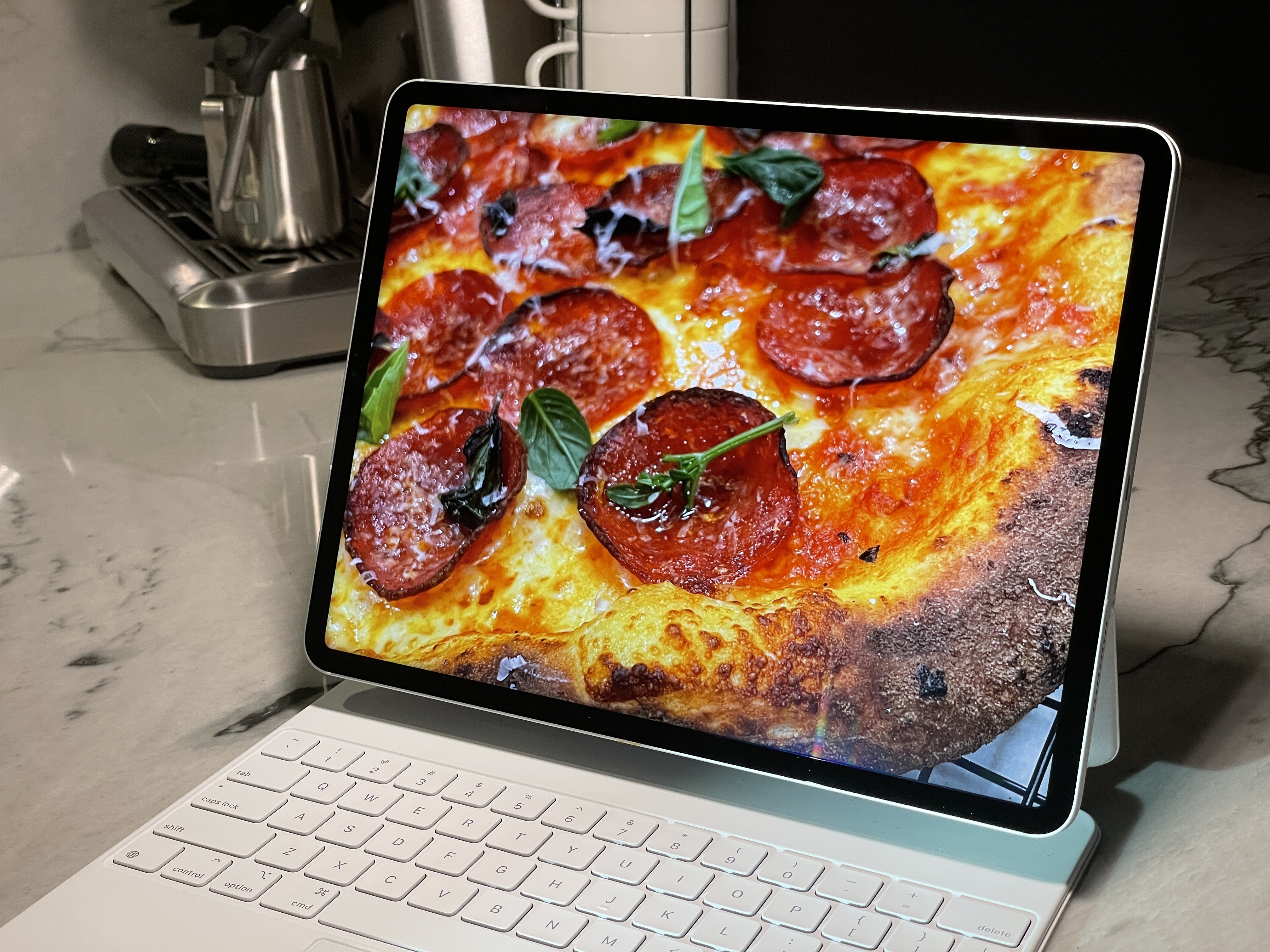
Speaking of the screen, the mini-LED driven Liquid Retina XDR display is probably the best display that’s ever shipped on a mobile computer. It’s just fantastic. The daily driving brightness is good, with an average of 600 nit max, but full screen HDR content like videos or photos allow the display to boom up to 1,000 nits average with a peak of 1,600 nits. This thing is b r i g h t. Daylight viewing of HDR content is massively improved. And this comes with inclusion of all of the standard stuff like the 120hz ProMotion features. 

The 10,000 mini-LEDs in the display allow for much more precise localization of blacks (because they can turn off completely) and less bloom (though extreme tests still show it). They also provide a noticeably better edge-to-edge uniformity in brightness and improved off-axis viewing of content on the screen. It’s just better in every way. Absolute gold standard display here.

Apple’s new Magic Keyboard works essentially exactly the same as the previous version, but it now comes in white. I’m also happy to report that if you have an existing one it works completely fine on the new iPad Pro models. There was some minor uproar because Apple noted that the dimensions of the two devices were not the same so the old keyboard may not fit perfectly. Rest assured that it’s essentially the same exact fit and the functionality is identical. The only time any of it is evident is if you close it and peer very, very carefully at the open end you’ll notice that there is about 1mm less clearance between the rim of the case and the edge of the iPad Pro. Apple probably felt that it was better to over-disclose than anything here but really, it’s not an issue.

The white color is fantastic looking, especially with the silver model of iPad Pro and its white antenna window accents. It’s very 2001 (even though Kubrik’s iPads were black). I would fully, 100% expect this thing to get marred and dingy though. There’s a warning on the box that ‘color may transfer’ and I would believe it. My demo unit has not sustained any noticeable markings yet but I would guess that it’s just a matter of time. 

The overall feel of the keyboard is still great, a really nice typing experience and great little piece of kit that should be factored into the price of purchase of any iPad Pro because it’s just essential.

The other side of this coin that isn’t so shiny is the iPad’s aging software. It’s just as good as it was when I wrote my review of the iPad Pro in 2020 — at which point my conclusions were ‘you can adapt to it but it could be better’. That was a year ago. As someone who has used it as my only portable machine for the last two and a half years I can tell you that this is a very long time to wait for a big leap forward in capability. 

I have a very simple ask for the iPad’s software. I want to feel the same energy vivacity and pure performance for the sake of peak performance that the hardware side exhibits. 

Apple’s iPad Pro hardware is performing like an athlete in peak physical condition that is out three lengths ahead. The M1 chip and mini-LED display are really untouchable – it is exhilarating to see this much excellence packed into one device.

Unfortunately the software can not cash those checks, leaving this iPad Pro to feel like a perfect house with the same old furniture.

Apple has done an incontestably incredible job with the 2021 iPad Pro’s hardware, but it needs to level the software up. As a ‘power’ user that lives on iPad Pro much of the year, I have grown used to my kludges and tic-affordances. But there needs to be some big time commitment to the iPad paradigm here. The pane-style interface currently has so many things to recommend it as a brutally fast, fluid way to work, but there is no follow through. There is no willingness to say ‘this is a new way of working and you will learn it.’ 

Too much of the iPad Pro’s current software leans into ‘affordance valley’. A place where users are still treated as if they aren’t capable of learning a touch-first way of working. Instead, these affordances actually do the opposite and stand in the way of progress.

This reminds me of the ‘reduce animations’ affordance circa the iOS 7 era. When Apple reinvented iOS it went way overboard in animations in order to make it super clear to the user what was happening when they were tapping around the new pane-based interface. Nothing was ‘slower’ hardware wise but the animated affordances they put in were tuned too far up and made it feel slower. Turning those animations off made the interface feel snappier and more useful almost instantly. 

Apple eventually got those animations under control by conceding that maybe people were indeed ready to be more advanced touch users. 

This is where the iPad Pro is currently and it’s the disparity that irks the most. This is one of the best computing hardware devices ever made, and you know it’s capable of so much more than it is currently being let do. Apple has always had an editorial point of view when it comes to software and I can appreciate that. But currently, it feels like that stance is far too conservative when it comes to iPad Pro.

That’s why I’m waiting for WWDC with bated breath. With this much high-level execution on the hardware side, you have to imagine that the time is ripe for Apple to really take the next leap forward with iPad software. When that happens and we get a solid view of Apple’s vision for the next wave of iPad work, I’ll come back to the table with another look.
19 May 2021

What has four wheels and loses money?

Hello and welcome back to Equity, TechCrunch’s venture capital-focused podcast, where we unpack the numbers behind the headlines.

This is our Wednesday show, where we niche down to a single topic and go deep. This time Natasha and Alex corralled TechCrunch transportation editor Kirsten Korosec to talk to us about the endless parade of EV SPACs, and more. Before we get into the show notes, you can follow Equity on Twitter here.

And, because we are proud, we won a Webby! Our show! How cool is that? Thank you for love listening, hate listening, all of it. We are so thankful.

Ok, here’s what we talked about:

  • Why is every electric vehicle company going public via a SPAC, and why is there so much potential fraud in the space? Kirsten has some notes on the matter, but it boils down to money in both cases.
  • The Bird-SPAC deal in all its glory. You can read Alex and Kirsten’s dive into the Bird investor deck here. We had questions like why was the shared scooter model ever considered viable, and, how did the company improve its economics during a pandemic? The SPAC world never, ever disappoints.
  • Of course, we couldn’t resist talking about the scooter barrage of news from years ago and how things have changed since.
  • We end with her latest scoop, a series of exits at Waymo, and what that means for the future of the autonomous vehicle company. Plus, we didn’t get to make a joke about it in the show but let’s just say: Waymo has a waymore to go before it has driverless tech all over the streets.
  • And one more thing: Kirsten gives a look at some of the speakers at our upcoming mobility event. Snag tickets here, and subscribe to her newsletter, The Station, for all things mobility every week.

And that’s that! We are back with our regular weekly news rundown Friday morning. Chat you all then!

Equity drops every Monday at 7:00 a.m. PST, Wednesday, and Friday morning at 7:00 a.m. PST, so subscribe to us on Apple PodcastsOvercastSpotify and all the casts.