Year: 2021

18 May 2021

May Mobility’s Edwin Olson and Nina Grooms Lee and Toyota AI Ventures’ Jim Adler on validating your startup idea

When a founder has a work history that includes the name of the parent company of one of their key investors, you probably assume that was one of the first deals to come together. Not so with May Mobility and Toyota AI Ventures, which connected for the company’s second seed round, after May went out and raised its original seed purely on the strength of its own ideas and proposed solutions.

That’s one of the many interesting things we learned from speaking to May Mobility co-founder and CEO Edwin Olson, as well as Chief Product Officer Nina Grooms Lee and Toyota AI Ventures founding partner Jim Adler on an episode of Extra Crunch Live.

Extra Crunch Live goes down every Wednesday at 3 p.m. EDT/noon PDT. Our next episode is with Sequoia’s Shaun Maguire and Vise’s Samir Vasavada, and you can check out the upcoming schedule right here.

Meanwhile, read on for highlights from our chat with Olson, Grooms Lee and Adler, and then stay tuned at the end for a recording of the full session, including our live pitch-off.

A different approach to corporate VC

One thing Adler brought up early in the chat is that Toyota AI Ventures likely takes a different approach than most traditional corporate VCs, which are often thought of as being more incentivized by strategic alignment than by venture-scale returns. Adler says the firm he founded within the automaker’s corporate umbrella actually does behave much more like a traditional VC in some ways than many would assume.

18 May 2021

Google partners with Shopify on online shopping expansion

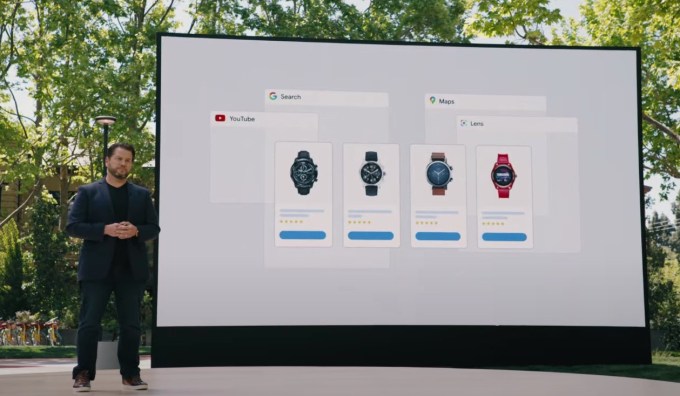
Google today announced it’s partnering with Shopify, giving the e-commerce platform’s over 1.7 million merchants the ability to reach consumers through Google Search and its other services. The integration will allow merchants to sign up in just a few clicks to have their products appear across Google’s 1 billion “shopping journeys” that take place every day through Search, Maps, Images, Lens and YouTube.

The company didn’t offer extensive details about the integration when it was announced during Google’s I/O Developer event this afternoon. But the news follows a series of updates to Google Shopping resulting from Amazon’s increased investment in its own advertising business, which threatens Google’s core ads business.

Google made its pitch to online advertisers today, describing how its so-called “Shopping Graph” would now begin to pull together information from across websites, price reviews, videos and product data pulled directly from brands and retailers, to help better inform online shoppers about where to find items, how well they were received, which merchant has the best price, and more.

This Shopping Graph can span across Google’s platforms, whether someone is discovering products through Google Search or even watching videos on YouTube, among other things.

Image Credits: Google I/O 2021

For example, when you now view screenshots of products in Google Photos, there will be a suggestion to search the photo using Google Lens, to help you find the item for sale. And Google announced earlier this year it was pilot-testing a new experience on YouTube that allows users to shop products they learn about from their favorite creators — a move to counteract the growing threats from TikTok and Facebook, and their own investments in e-commerce.

But before any of this Shopping Graph functionality can really work, Google needs consumers to find shopping for products via Google actually useful. That’s partly why Google made it free for merchants to sell their products across Google this past year — a change that Google says drove an 80% increase in merchants on Google, with the “vast majority” being small to medium-sized business.

That’s where the partnership with Shopify comes in, too. Though this integration doesn’t mean that every Shopify storefront will be included on Google — the merchants have to take an action to make that happen — it would be almost a no-brainer for them not to leverage the new option.

Shopify isn’t playing favorites when it comes to distribution, however. It’s integrated with other large platforms, too, including Facebook and TikTok. And it’s been working with Walmart to expand the retailer’s online marketplace, as well.

Investors seemed happy with the Shopify news this afternoon. Shortly after Google’s announcement, the stock popped 3.52%.

18 May 2021

With Android 12, Google will turn your smartphone into a car key

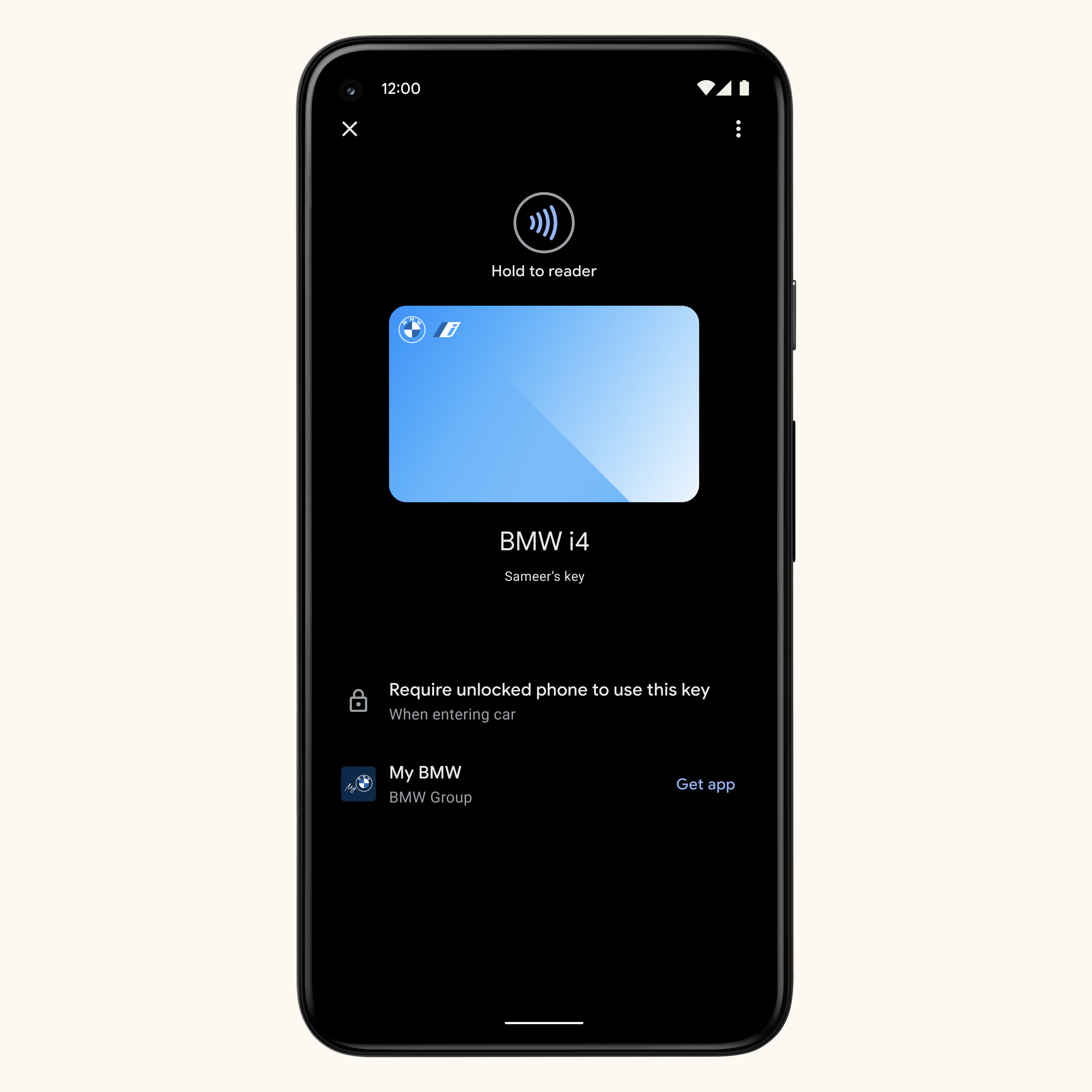
Google is working with BMW and other automakers to develop a digital key that will let car owners lock, unlock and start a vehicle from their Android smartphone, the company announced Tuesday during its 2021 Google I/O developer event.

The digital key is one many new features coming to Android 12, the latest version of the company’s mobile operating system. The digital car keys will become available on select Pixel and Samsung Galaxy phones later this year, according to Sameer Samat, VP of PM for Android & Google Play. The digital car key will be available in yet unnamed 2022 vehicle models, including ones made by BMW, and some 2021 models.

The digital key uses so-called Ultra Wideband (UWB) technology, a form of radio transmission for which the sensor can tell the direction of the signal, sort of like a tiny radar. This lets the antenna in your phone locate and identify objects equipped with UWB transmitters. By using UWB technology, the Android user will be able to lock and unlock their vehicle without taking their phone out. 
Google Android digital car key

Image Credits: Google

Consumers who own car models that have enabled NFC technology, or near-field communication, will be able unlock their car by tapping their phone against the door. The phone communicates with an NFC reader in the user’s car, which is typically located within the door handle. Google said users will also be able to securely and remotely share their car key with friends and family if they need to borrow the car.

The announcement follows a similar move made by Apple last year that allowed users to add a digital car key to their iPhone or Apple Watch. That feature, which was part of iOS 14, works over NFC and first became available in the 2021 BMW 5 Series.

A growing number of automakers have developed their own apps, which can also control certain functions such as remote locking and unlocking. The big benefit, in Google’s and likely Apple’s view, is that by offering the digital car key in its mobile operating system, users don’t have to download an app.

The intent is for a less clunky experience. And there’s a movement to make it even more seamless. The Car Connectivity Consortium, which Apple, Google, Samsung along with automakers BMW, GM, Honda, Hyundai and Volkswagen are members of, have spent the past several years creating an underlying agreement to make it easier to work in a seamless way and to standardize a digital key solution.

The development of the digital car key is just part of Google’s push to ensure the smartphone is the centerpiece of consumers’ lives. And it’s a goal that can’t be achieved without including vehicles.

“When purchasing a phone these days, we’re buying not only a phone, but also an entire ecosystem of devices that are all expected to work together — such as TVs, laptops, cars and wearables like smartwatches or fitness tracker, Google’s vp of engineering Erik Kay wrote in a blog post accompanying the announcement during the event. “In North America, the average person now has around eight connected devices, and by 2022, this is predicted to grow to 13 connected devices.”

Google said it is expanding its “fast pair” feature, which lets users pair their devices via Bluetooth with a single tap, to other products, including vehicles. To date, consumers have used “fast pair” more than 36 million times to connect their Android phones with Bluetooth accessories, including Sony, Microsoft, JBL, Philips, Google and many other popular brands, according to Kay.

The feature will be rolled out to more devices in the coming months, including Beats headphones as well as cars from BMW and Ford, Sameer Samat, VP of PM for Android & Google Play said during Google I/O.

 

18 May 2021

With Android 12, Google will turn your smartphone into a car key

Google is working with BMW and other automakers to develop a digital key that will let car owners lock, unlock and start a vehicle from their Android smartphone, the company announced Tuesday during its 2021 Google I/O developer event.

The digital key is one many new features coming to Android 12, the latest version of the company’s mobile operating system. The digital car keys will become available on select Pixel and Samsung Galaxy phones later this year, according to Sameer Samat, VP of PM for Android & Google Play. The digital car key will be available in yet unnamed 2022 vehicle models, including ones made by BMW, and some 2021 models.

The digital key uses so-called Ultra Wideband (UWB) technology, a form of radio transmission for which the sensor can tell the direction of the signal, sort of like a tiny radar. This lets the antenna in your phone locate and identify objects equipped with UWB transmitters. By using UWB technology, the Android user will be able to lock and unlock their vehicle without taking their phone out. 

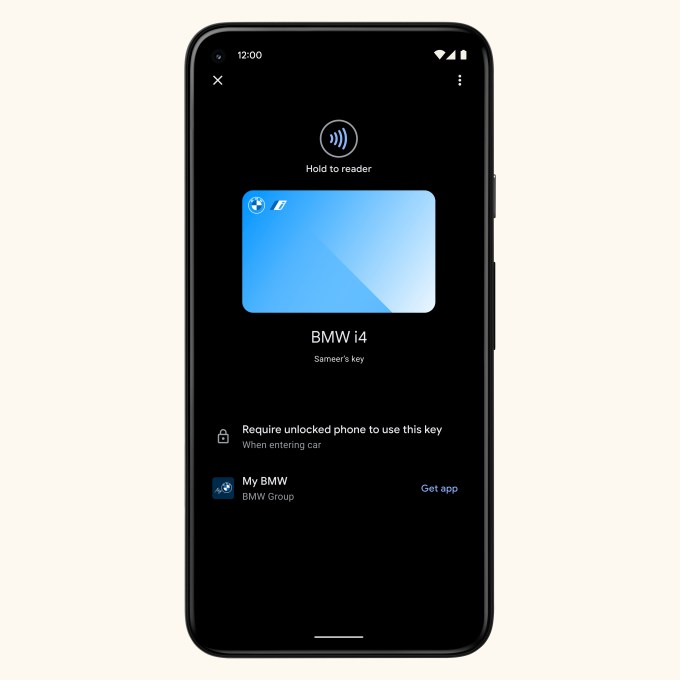
Google Android digital car key

Image Credits: Google

Consumers who own car models that have enabled NFC technology, or near-field communication, will be able unlock their car by tapping their phone against the door. The phone communicates with an NFC reader in the user’s car, which is typically located within the door handle. Google said users will also be able to securely and remotely share their car key with friends and family if they need to borrow the car.

The announcement follows a similar move made by Apple last year that allowed users to add a digital car key to their iPhone or Apple Watch. That feature, which was part of iOS 14, works over NFC and first became available in the 2021 BMW 5 Series.

A growing number of automakers have developed their own apps, which can also control certain functions such as remote locking and unlocking. The big benefit, in Google’s and likely Apple’s view, is that by offering the digital car key in its mobile operating system, users don’t have to download an app.

The intent is for a less clunky experience. And there’s a movement to make it even more seamless. The Car Connectivity Consortium, which Apple, Google, Samsung along with automakers BMW, GM, Honda, Hyundai and Volkswagen are members of, have spent the past several years creating an underlying agreement to make it easier to work in a seamless way and to standardize a digital key solution.

The development of the digital car key is just part of Google’s push to ensure the smartphone is the centerpiece of consumers’ lives. And it’s a goal that can’t be achieved without including vehicles.

“When purchasing a phone these days, we’re buying not only a phone, but also an entire ecosystem of devices that are all expected to work together — such as TVs, laptops, cars and wearables like smartwatches or fitness tracker, Google’s vp of engineering Erik Kay wrote in a blog post accompanying the announcement during the event. “In North America, the average person now has around eight connected devices, and by 2022, this is predicted to grow to 13 connected devices.”

Google said it is expanding its “fast pair” feature, which lets users pair their devices via Bluetooth with a single tap, to other products, including vehicles. To date, consumers have used “fast pair” more than 36 million times to connect their Android phones with Bluetooth accessories, including Sony, Microsoft, JBL, Philips, Google and many other popular brands, according to Kay.

The feature will be rolled out to more devices in the coming months, including Beats headphones as well as cars from BMW and Ford, Sameer Samat, VP of PM for Android & Google Play said during Google I/O.

 

18 May 2021

After closing Fitbit acquisition, Google is going big with Wear OS

For years, Wear OS has been, at best, something of a dark horse among Google operating systems. It’s certainly not for lack of partnership or investment, but for whatever reason, the company has never really stuck the landing with its wearable operating system.

It’s a category in which Apple has been utterly dominant for some time. Google has largely failed to chip away at that market, in spite of enlisting some of the biggest names in consumer electronics as partners. Figures from Strategy Analytics classify Wear OS among the “others” category.

Google’s strategy is, once again, the result of partnerships – or, more precisely, partnerships combined with acquisitions. At the top of the list is an “if you can’t beat ‘em, join em’” approach to Samsung’s longstanding preference for open-source Tizen. It seemed like one of the stranger plays in the category, but building out its own version of Tizen has proven a winning strategy for the company, which trails only Apple in the category.

During today’s I/O keynote, the company company revealed a new partnership with Samsung, “combining the best of Wear OS and Tizen.” We’re still waiting to see how that will play out, but it will be fascinating watching two big players combine forces to take on Apple. You come at the king, you best not miss, to quote a popular prestige television program. On the developer side, this seems to allude to the ability to create joint apps for both platforms, as third-party app selection has been a sticking point for both.

The other big change sheds some more light on precisely why the company was interested in Fitbit. Sure the company was a wearables leader that dominated fitness bands and eventually created its own solid smartwatches (courtesy of, among other things, its own acquisition of Pebble), but health is really the key here.

Health monitoring has become the dominant conversation around wearables in recent years, and Google’s acquisition seems to be, above all, about integrating that information. “[A] world-class health and fitness service from Fitbit is coming to the platform,” the company noted. Beyond adding Fitbit’s well-loved tracking features, the company will also be integrated Wear features into Google’s hardware, working to blur the line between the two companies.

Developing…

18 May 2021

After closing Fitbit acquisition, Google is going big with Wear OS

For years, Wear OS has been, at best, something of a dark horse among Google operating systems. It’s certainly not for lack of partnership or investment, but for whatever reason, the company has never really stuck the landing with its wearable operating system.

It’s a category in which Apple has been utterly dominant for some time. Google has largely failed to chip away at that market, in spite of enlisting some of the biggest names in consumer electronics as partners. Figures from Strategy Analytics classify Wear OS among the “others” category.

Google’s strategy is, once again, the result of partnerships – or, more precisely, partnerships combined with acquisitions. At the top of the list is an “if you can’t beat ‘em, join em’” approach to Samsung’s longstanding preference for open-source Tizen. It seemed like one of the stranger plays in the category, but building out its own version of Tizen has proven a winning strategy for the company, which trails only Apple in the category.

During today’s I/O keynote, the company company revealed a new partnership with Samsung, “combining the best of Wear OS and Tizen.” We’re still waiting to see how that will play out, but it will be fascinating watching two big players combine forces to take on Apple. You come at the king, you best not miss, to quote a popular prestige television program. On the developer side, this seems to allude to the ability to create joint apps for both platforms, as third-party app selection has been a sticking point for both.

The other big change sheds some more light on precisely why the company was interested in Fitbit. Sure the company was a wearables leader that dominated fitness bands and eventually created its own solid smartwatches (courtesy of, among other things, its own acquisition of Pebble), but health is really the key here.

Health monitoring has become the dominant conversation around wearables in recent years, and Google’s acquisition seems to be, above all, about integrating that information. “[A] world-class health and fitness service from Fitbit is coming to the platform,” the company noted. Beyond adding Fitbit’s well-loved tracking features, the company will also be integrated Wear features into Google’s hardware, working to blur the line between the two companies.

Developing…

18 May 2021

Google and Samsung are teaming up to take on Apple’s watchOS

With a long-standing history of working together on the mobile side, it’s always been a bit of surprise that Samsung hasn’t had much patience for Google’s wearables play. The hardware giant had flirted with Android Wear in the past, but for the last several years, it’s been invested in building out its own version of open-source operating system, Tizen.

Today, both companies announced a partnership featuring a “unified platform” between the two some time competitors. The goal of the deal is to essentially create a way for devs to build apps for both Wear OS and Tizen at once. The deal makes sense from that perspective. Third-party apps have been something of a sticking point for both companies.

Even more to the point, it’s an opportunity for two smaller players in the space to join forces and take on Apple, which has been utterly dominant in the smartwatch category, more or less since the first Apple Watch arrived.

Wear OS has already gone through a number of cycles, including a big rebrand from Android OS a while back, but nothing has really stuck over the years, leaving the wearable operating as something of an also-ran. For now, at least, this is far from a full-throated embrace of Wear OS on Samsung’s part and appears to be something more akin to an “the enemy of my enemy situation.” Along with developing a unified API, the companies are joining forces to pluck the best from each operating system, including longer battery life — perhaps the largest hurdle facing smartwatches at the moment.

Samsung added that the next version of the Galaxy Watch will be the first to leverage this partnership, but offered little additional information on the hardware front. I’d anticipate big news on the Wear OS front in the next year. If nothing else, the company’s acquisition of Google is a sign that it’s ready to go for broke with the platform.

18 May 2021

Google offers the best look yet at Android 12

The one-dozenth versions of Android has been something of an odd duck. The latest version of Google’s mobile operating was announced back in February, and a beta version is already available to developers. But up to now, we’ve known glancingly little about how the final version of Android 12 will actually look. Fittingly, the new version looks to be delivering one of the biggest design updates in recent memory. The news arrives as Google is announcing that there are now more than 3 billion Android devices currently in use.

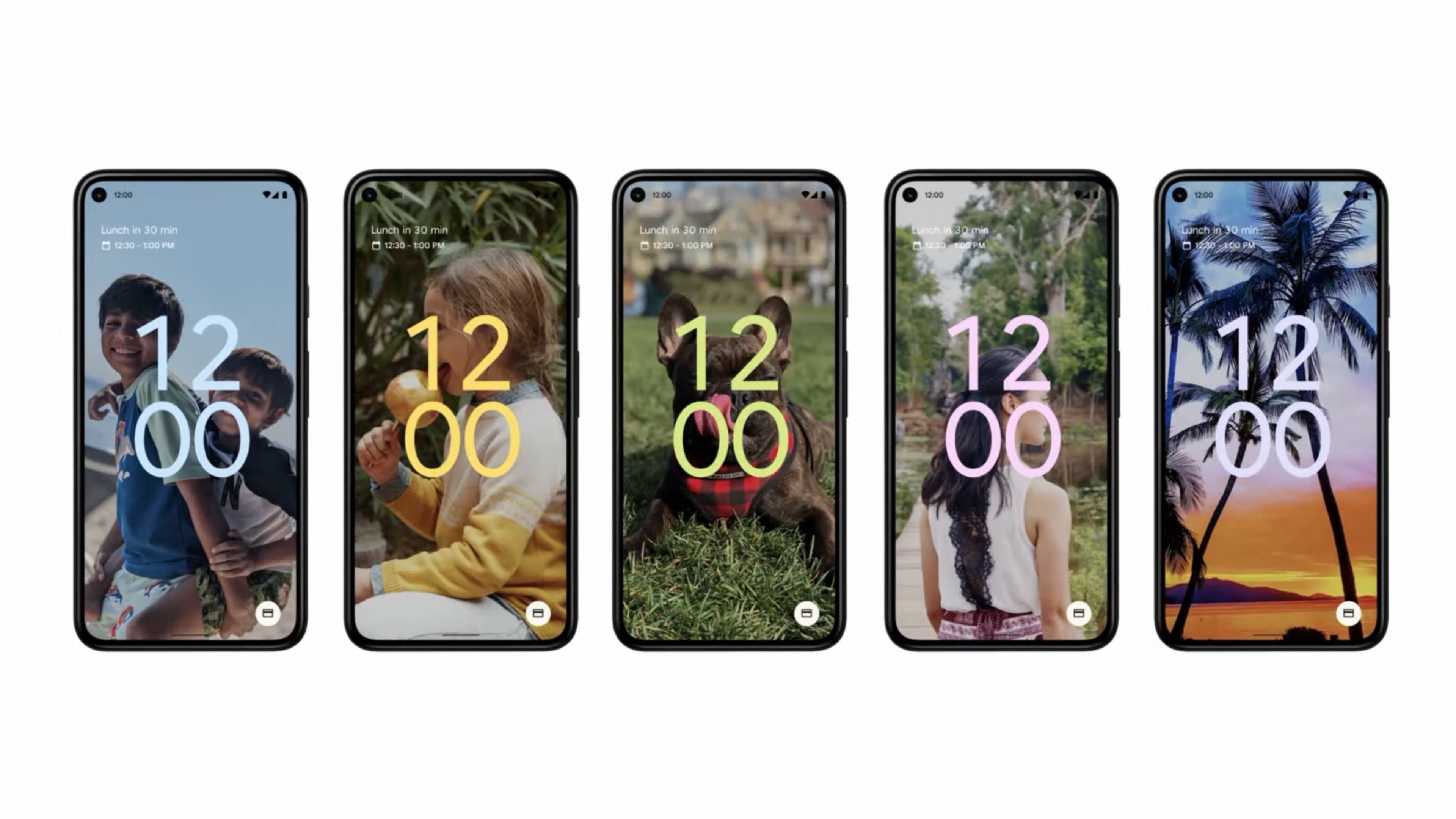
The company unveiled Material You, a new cross-platform adaptable UI designed to give users more control over how their operating systems work. Among other things, that means that the content can be tailored to different design languages on the phones themselves. The feature will arrive first on Pixel phones this fall and will roll out to additional devices from there.

custom palette settings on Android

Android 12 will be the first to get the redesigned UI and widgets, along with other design elements. The company is calling it “the biggest design change to Android in years.” The updates include across the board refreshes to things including the lock screen and wallpaper, which uses a variety of algorithms to offer an ever-adapting color palette. The operative word here seems to be “dynamic,” as different elements and widgets adapt to things like the time of day.

Along with ever-changing design, Google is also touting adapting security features with this latest update. The list includes new indicators for access to the microphone and camera — permissions that can be revoked directly from the operating system’s dashboard.

Developing…

18 May 2021

Android now powers 3B devices

Google’s Android operating system is now running on 3 billion active devices, Google announced at its (virtual) I/O developer conference today. In a briefing before today’s event, the company also noted that there were 250 million active tablets running Android last year, which is likely a larger number than some expected, but which explains Google’s increased focus on these large-screen devices at I/O this year.

Traditionally, Google shares new device stats at I/O, but since it canceled the event last year, we didn’t get an update for 2020. The most recent number Google provided was 2.5 billion active devices in May 2019. That was up from 2 billion devices in 2017, so at least for the time being, this growth rate of about 500 million new devices every two years continues to remain true.

In comparison, Apple in January announced that it has an install base of 1 billion iPhones and that there are now a total of 1.65 billion active devices in its ecosystem, up from 1.5 billion devices a year before (this last number includes all active Apple devices, though).

18 May 2021

Beta Technologies adds $368 million in Series A funding for its electric aviation ecosystem

Electric aviation startup Beta Technologies closed a $368 million Series A funding round on Tuesday, with investments from Amazon’s Climate Pledge Fund. The new capital is the second round of funding announced by the company this year, after the company raised $143 million in private capital in March.

The funding round was led by Fidelity Management & Research Company with undisclosed additions from Amazon’s Climate Pledge Fund, a $2 billion fund established in September 2019 to advance the development of sustainable technologies. The Climate Pledge fund has also made contributions toward electric vehicle manufacturer Rivian, battery recycler Redwood Materials and ZeroAvia, a hydrogen fuel cell aviation company.

The company’s valuation is now at $1.4 billion, CNBC reported, putting it in a small circle of electric vertical take-off and landing (eVTOL) companies to have achieved valuations at over a billion dollars.

Unlike developers Joby Aviation and Archer Aviation, who have each also achieved valuations over the billion-dollar mark, Beta is not primarily focused on air taxis. Instead, it’s been targeting defense applications, cargo delivery, and medical logistics, as well as building out its network of rapid-charging systems in the northeast U.S. Its debut aircraft, the ALIA-250c, was built to serve these various solutions by being capable of carrying six people or a pilot and 1,500 pounds.

The Vermont-based startup has already scored major partnerships in all of these industries, including with United Therapeutics to transport synthetic organs for human transplant; UPS, who purchased 10 ALIA aircraft with the option of buying 140 more; and the U.S. Air Force.

The company has not entirely ignored passenger transportation, however, announcing last month a partnership with Blade Urban Air Mobility for five aircraft to be delivered in 2024.

Beta was the first company to be awarded airworthiness approval from the U.S. Air Force. The company expects to sign a contract in June with the Air Force to allow access to Beta’s aircraft and flight simulators in Washington, D.C. and Springfield, Ohio. However, it still must achieve certification with the Federal Aviation Administration.

The funds will be used to refine the ALIA’s electric propulsion system and controls, as well as to build out manufacturing space, including expanding its footprint in Vermont on land at the Burlington International Airport, the company said in a news release Tuesday.