Year: 2021

17 May 2021

Want to double your rate of return? Seek counsel from experienced executives

Does it really take an average of seven to eight years for a successful startup to exit? What can early-stage founders do to accelerate outcomes?

We wanted to know if founding teams can execute faster with a higher degree of success if they’re able to take advantage of relevant executive expertise. After all, that’s the thesis we built our venture model around — we purposefully designed M13 so that early-stage founders get access to experienced executives they wouldn’t otherwise have the money to hire or the time to vet, onboard and manage.

Even if companies are doing everything right, they still reduce time to exit when they have multiple founders with prior relevant experience as a senior leader or operator.

We looked at years of data from hundreds of successful startups. As it turns out, the impact of relevant executive expertise is even greater than we had anticipated — to the tune of doubling the rate of return on a venture investment.

When it comes to measuring leadership experience, information about an individual executive’s experience — for example, how long they’ve been an exec — is publicly available. Unfortunately, there isn’t readily available structured data around a founding team’s seniority and how early the founders bring on people with more experience as an operator or leader.

To find out if leadership experience significantly impacts startups’ success, we analyzed nearly 800 executives at more than 200 companies that reached a sizable exit (greater than or equal to a $500 million valuation) via an IPO on a U.S. exchange or an exit via M&A from 2004-2019. About 70% of the companies in our dataset exited between 2016-2019, including notable IPOs like Spotify, Zoom, Uber and Peloton. We decided to exclude companies in the biotech/life sciences space because these companies follow a different growth trajectory than consumer tech and B2B tech and traditionally exit via IPO or M&A at a much earlier stage.

Here’s what our analysis of startups with successful exits revealed.

Of successful exits, the average actually is 7-8 years

While there are other intangible variables for startup success, the basic equation is the time and capital required to achieve an exit and the size of that exit.

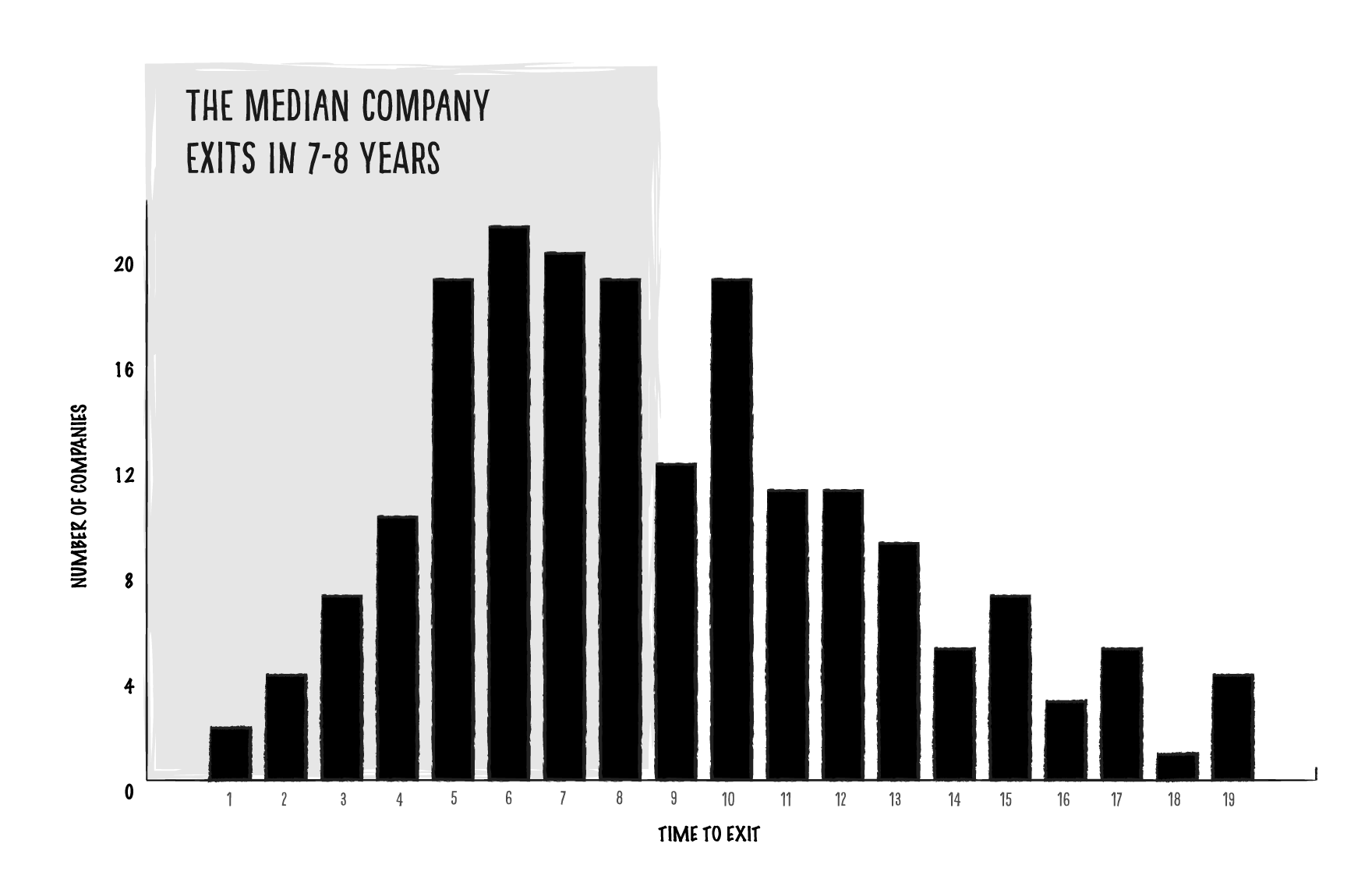
Our dataset validates the widely accepted statement that successful exits take about seven to eight years:

Image Credits: M13

But could a variable like relevant leadership experience actually accelerate the time to exit? We wondered: Beyond time and capital, are there any factors — like experience as a leader or operator — that can have an exponential impact on the exit outcome? And when is the right time for those human capital resources to be introduced to make that impact?

17 May 2021

Hardware hacker brings online multiplayer to the original Game Boy

Move over, Xbox and PlayStation. A new foe has appeared in the world of online multiplayer gaming! It’s the… uh, Game Boy. As in that unbreakable, gray, 4.19Mhz tank from 1989.

While the Game Boy has had a handful of locally multiplayer games since the beginning, using it meant physically connecting your Game Boy to another Game Boy via an accessory called the link cable. If you wanted to play some Nintendo with someone further than a few feet away… well, you’d just have to wait a few decades.

In a wildly impressive display of skill, hardware hacker stacksmashing has managed to reverse engineer the Game Boy’s link cable protocol and effectively trick it into working across the Internet. The Game Boy connects through the link cable hooked into a Raspberry Pi to a custom desktop client, which in turn pings an online game server that acts as the bridge between you and your opponent(s). The Game Boy thinks it’s talking to any other ol’ Game Boy, unaware of the fact that it’s actually communicating with a server that could be halfway around the world.

The first game they’ve got working? Tetris!


Getting any given game to work (imagine trading a Pokémon you caught in 1998 with someone across the Internet!) will require that game’s unique communication protocols to be reverse engineered, so it’s only Tetris for now. Fortunately, stacksmashing has opened up the source code for all the various components that have been built so far, so there’s something of a foundation to build upon. And because the whole thing is no fun without anyone to play with, there’s also a Discord channel just for finding others who’ve gone down this rabbit hole. There’s even a custom PCB in the works ($15, with pre-orders expected to ship by June) that’ll handle the connection between the link cable and the Raspberry Pi, removing the need for you to shred a link cable to expose its wires and make this work.

Stacksmashing also recently made headlines by cracking open and modifying Apple’s AirTags, as well as turning the Game Boy into a (hilariously underpowered) Bitcoin miner.

17 May 2021

Amount raises $99M at a $1B+ valuation to help banks better compete with fintechs

Amount, a company that provides technology to banks and financial institutions, has raised $99 million in a Series D funding round at a valuation of just over $1 billion.

WestCap, a growth equity firm founded by ex-Airbnb and Blackstone CFO Laurence Tosi, led the round. Hanaco Ventures, Goldman Sachs, Invus Opportunities and Barclays Principal Investments also participated.

Notably, the investment comes just over five months after Amount raised $86 million in a Series C round led by Goldman Sachs Growth at a valuation of $686 million. (The original raise was $81 million, but Barclays Principal Investments invested $5 million as part of a second close of the Series C round). And that round came just three months after the Chicago-based startup quietly raised $58 million in a Series B round in March. The latest funding brings Amount’s total capital raised to $243 million since it spun off from Avant — an online lender that has raised over $600 million in equity — in January of 2020.

So, what kind of technology does Amount provide? 

In simple terms, Amount’s mission is to help financial institutions “go digital in months — not years” and thus, better compete with fintech rivals. The company formed just before the pandemic hit. But as we have all seen, demand for the type of technology Amount has developed has only increased exponentially this year and last.

CEO Adam Hughes says Amount was spun out of Avant to provide enterprise software built specifically for the banking industry. It partners with banks and financial institutions to “rapidly digitize their financial infrastructure and compete in the retail lending and buy now, pay later sectors,” Hughes told TechCrunch.

Specifically, the 400-person company has built what it describes as “battle-tested” retail banking and point-of-sale technology that it claims accelerates digital transformation for financial institutions. The goal is to give those institutions a way to offer “a secure and seamless digital customer and merchant experience” that leverages Amount’s verification and analytics capabilities. 

Image Credits: Amount

HSBC, TD Bank, Regions, Banco Popular and Avant (of course) are among the 10 banks that use Amount’s technology in an effort to simplify their transition to digital financial services. Recently, Barclays US Consumer Bank became one of the first major banks to offer installment point-of-sale options, giving merchants the ability to “white label” POS payments under their own brand (using Amount’s technology).

The pandemic dramatically accelerated banks’ interest in further digitizing the retail lending experience and offering additional buy now, pay later financing options with the rise of e-commerce,” Hughes, former president and COO at Avant, told TechCrunch. “Banks are facing significant disruption risk from fintech competitors, so an Amount partnership can deliver a world-class digital experience with significant go-to-market advantages.”

Also, he points out, consumers’ digital expectations have changed as a result of the forced digital adoption during the pandemic, with bank branches and stores closing and more banking done and more goods and services being purchased online.

Amount delivers retail banking experiences via a variety of channels and a point-of-sale financing product suite, as well as features such as fraud prevention, verification, decisioning engines and account management.

Overall, Amount clients include financial institutions collectively managing nearly $2 trillion in U.S. assets and servicing more than 50 million U.S. customers, according to the company.

Hughes declined to provide any details regarding the company’s financials, saying only that Amount “performed well” as a standalone company in 2020 and that the company is expecting “significant” year-over-year revenue growth in 2021.

Amount plans to use its new capital to further accelerate R&D by investing in its technology and products. It also will be eyeing some acquisitions.

“We see a lot of interesting technology we could layer onto our platform to unlock new asset classes, and acquisition opportunities that would allow us to bring additional features to our platform,” Hughes told TechCrunch.

Avant itself made its first acquisition earlier this year when it picked up Zero Financial, news that TechCrunch covered here.

Kevin Marcus, partner at WestCap, said his firm invested in Amount based on the belief that banks and other financial institutions have “a point-in-time opportunity to democratize access to traditional financial products by accelerating modernization efforts.”

“Amount is the market leader in powering that change,” he said. “Through its best-in-class products, Amount enables financial institutions to enhance and elevate the banking experience for their end customers and maintain a key competitive advantage in the marketplace.”

17 May 2021

Volocopter debuts a bigger eVTOL aimed at the city-suburban commute

Germany electric aviation startup Volocopter revealed Monday a new electric vertical take-off and landing aircraft targeting the suburban-to-city commuter.

The four-seater VoloConnect is designed to have a range of 62 miles, making it well-suited for trips between the suburbs and the city, the company said. The aircraft design is a significant departure from the the VoloCity, the company’s first passenger eVTOL that is designed for shorter urban trips. The two-seat VoloCity, which has to be certified, has a 22-mile range.

VoloConnect’s longer range indicates that the company has its sights set on markets outside of major city centers, and that it is looking to more directly compete with rival eVTOL startups. VoloConnect’s aircraft specs are in line with that of competitors Archer Aviation and Wisk Aero, which each have eVTOL designs with an anticipated range of around 60 miles.

VoloConnect has a hybrid lift-and-push design, combining aspects of what one might typically see in a helicopter with a small aircraft. The vertical lift is facilitated by six propellors which sit parallel to the aircraft body and are connected by two wings. The push comes from two large fans on each side of the craft. Three wheels can retract into and out of the plane’s belly during take-off and landing.

The German-based startup said the new craft can reach a cruising speed of 112 mph (180 km/h) and a top speed of around 155 mph (250 km/h). It aims to achieve certification by 2026.

Electric aviation startups are all competing to be the first company to bring an aircraft to market. Even as Volocopter released this new design, the company is primarily focused on launching its air taxi service, which would use the smaller VoloCity aircraft, in Singapore by 2023. But before Volocopter’s aircraft can take to the skies, it will first need to achieve type certification with the European Union Aviation Safety Administration and in the case of Singapore, the relevant aviation authority there.

17 May 2021

Industrial automation startup Bright Machines hauls in $435M by going public via SPAC

Bright Machines is going public via a SPAC-led combination, it announced this morning. The transaction will see the 3-year-old company merge with SCVX, raising gross cash proceeds of $435 million in the process.

After the transaction is consummated, the startup will sport an anticipated equity valuation of $1.6 billion.

The Bright Machines news indicates that the great SPAC chill was not a deep freeze. And the transaction itself, in conjunction with the previously announced Desktop Metal blank-check deal, implies that there is space in the market for hardware startup liquidity via SPACs. Perhaps that will unlock more late-stage capital for hardware-focused upstarts.

Today we’re first looking at what Bright Machines does, and then the financial details that it shared as part of its news.

What’s Bright Machines?

Bright Machines is trying to solve a hard problem related to industrial automation by creating microfactories. This involves a complex mix of hardware, software and artificial intelligence. While robotics has been around in one form or another since the 1970s, for the most part, it has lacked real intelligence. Bright Machines wants to change that.

The company emerged in 2018 with a $179 million Series A, a hefty amount of cash for a young startup, but the company has a bold vision and such a vision takes extensive funding. What it’s trying to do is completely transform manufacturing using machine learning.

At the time of that funding, the company brought in former Autodesk co-CEO Amar Hanspal as CEO and former Autodesk founder and CEO Carl Bass to sit on the company board of directors. AutoDesk itself has been trying to transform design and manufacturing in recent years, so it was logical to bring these two experienced leaders into the fold.

The startup’s thesis is that instead of having what are essentially “unintelligent” robots, it wants to add computer vision and a heavy dose of sensors to bring a data-driven automation approach to the factory floor.

17 May 2021

Ankorstore raises another $102 million for its wholesale marketplace

French startup Ankorstore has raised a $102 million Series B funding round (€84 million). Tiger Global and Bain Capital Ventures are leading today’s funding round with existing investors Index Ventures, GFC, Alven and Aglaé also participating. This is a significant funding round as it comes just a few months after the company raised €25 million.

If you’re not familiar with Ankorstore, the company is building a wholesale marketplace for independent shop owners. You may have noticed some highly Instagrammable shops with a selection of random items, such as household supplies, maple syrup, candles, headbands, bath salts and stationery items.

Essentially, Ankorstore helps you source those items for shop owners. It lets you buy a ton of cutesy stuff and act as a curator for your customers. Even if you’re already working with brands directly, the startup offers some advantageous terms. In addition to buying from several brands at once, Ankorstore withdraws the money from your bank account 60 days after placing an order.

On the other side of the marketplace, brands get paid upon delivery. Even if you’re just getting started, the minimum first order is €100 per brand.

And metrics have been going up and to the right. There are now 5,000 brands on Ankorstore. 50,000 shops are buying stuff through the platform. And the best is likely ahead as stores begin to re-open across Europe and tourism picks up again.

Ankorstore is now live across 14 different markets. The majority of the company’s revenue comes from international markets — not its home market France. The company’s co-founder Nicolas Cohen mentions the U.K., Germany, the Netherlands and Sweden as growth markets.

The total addressable market is huge as the company has identified 800,000 independent shops across Europe that could potentially work with Ankorstore. And the success of other wholesale marketplaces, such as Faire, proves that this relatively new market is still largely untapped.

17 May 2021

Rocket Lab recovered the first stage from its failed May 15 launch, a silver lining for its reusability program

Rocket Lab may have experienced mission failure and total payload loss during the company’s 20th planned mission on May 15, but it wasn’t all bad news, the company said in an update Monday.

Importantly, the Electron rocket’s first stage – which contain nine Rutherford engines – performed as designed and did not contribute to the flight failure. Rocket Lab further said the first stage completed a successful ocean splashdown using a parachute and that the company was able to retrieve it, and bring it back to its production complex.

Rocket Lab was also testing a redesigned heat shield on this mission made out of stainless steel, rather than aluminum, and that also seemed to function well. Testing these reusability system elements was a secondary objective here, since the primary goal is always to deliver the payloads of paying customers, but ultimately reusability could be absolutely crucial to the company’s long-term business.

“The new heat shield debuted in this flight protected the stage from the intense heat and forces experienced while re-entering Earth’s atmosphere and the program took yet another major advancement towards reusability of the rocket,” the company said Monday.

This is great news for Rocket Lab’s reusability program, as the first stage and engines can be examined and evaluated for further reflight trials on future missions. The company still intends on conducting its third recovery mission later this year. Rocket Lab said it was leading flight review of the May 15 mission failure with the support of the Federal Aviation Administration and anticipates the full review to be complete in the coming weeks.

17 May 2021

With $21M in funding, Code Ocean aims to help researchers replicate data-heavy science

Every branch of science is increasingly reliant on big data sets and analysis, which means a growing confusion of formats and platforms — more than inconvenient, this can hinder the process of peer review and replication of research. Code Ocean hopes to make it easier for scientists to collaborate by making a flexible, shareable format and platform for any and all datasets and methods, and it has raised a total of $21M to build it out.

Certainly there’s an air of “Too many options? Try this one!” to this (and here’s the requisite relevant XKCD). But Code Ocean isn’t creating a competitor to successful tools like Jupyter or Gitlab or Docker — it’s more of a small-scale container platform that lets you wrap up all the necessary components of your data and analysis in an easily shared format, whatever platform they live on natively.

The trouble appears when you need to share what you’re doing with another researcher, whether they’re on the bench next to you or at a university across the country. It’s important for replication purposes that data analysis — just like any other scientific technique — be done exactly the same way. But there’s no guarantee that your colleague will use the same structures, formats, notation, labels, and so on.

That doesn’t mean it’s impossible to share your work, but it does add a lot of extra steps as would-be replicators or iterators check and double check that all the methods are the same, that the same versions of the same tools are being used in the same order, with the same settings, and so on. A tiny inconsistency can have major repercussions down the road.

Turns out this problem is similar in a way to how many cloud services are spun up. Software deployments can be as finicky as scientific experiments, and one solution to this is containers, which like tiny virtual machines include everything needed to accomplish a computing task, in a portable format compatible with many different setups. The idea is a natural one to transfer to the research world, where you can tie up the data, the software used, and the specific techniques and processes used to reach a given result all in one tidy package. That, at least, is the pitch Code Ocean offers for its platform and “Compute Capsules.”

Diagram showing how a "compute capsule" includes code, environment, and data.

Say you’re a microbiologist looking at the effectiveness of a promising compound on certain muscle cells. You’re working in R, writing in RStudio on a Ubuntu machine, and your data are such and such collected during an in vitro observation. While you would naturally declare all this when you publish, there’s no guarantee anyone has an Ubuntu laptop with a working Rstudio setup around, so even if you provide all the code it might be for nothing.

If however you put it on Code Ocean, like this, it makes all the relevant code available, and capable of being inspected and run unmodified with a click, or being fiddled with if a colleague is wondering about a certain piece. It works through a single link and web app, cross platform, and can even be embedded on a webpage like a document or video. (I’m going to try to do that below, but our backend is a little finicky. The capsule itself is here.)

More than that, though, the Compute Capsule can be repurposed by others with new data and modifications. Maybe the technique you put online is a general purpose RNA sequence analysis tool that works as long as you feed it properly formatted data, and that’s something others would have had to code from scratch in order to take advantage of some platforms.

Well, they can just clone your capsule, run it with their own data, and get their own results in addition to verifying your own. This can be done via the Code Ocean website or just by downloading a zip file of the whole thing and getting it running on their own computer, if they happen to have a compatible setup. A few more example capsules can be found here.

Screenshot of the Code Ocean workbench environment.

Image Credits: Code Ocean

This sort of cross-pollination of research techniques is as old as science, but modern data-heavy experimentation often ends up siloed because it can’t easily be shared and verified even though the code is technically available. That means other researchers move on, build their own thing, and further reinforce the silo system.

Right now there are about 2,000 public compute capsules on Code Ocean, most of which are associated with a published paper. Most have also been used by others, either to replicate or try something new, and some, like ultra-specific open source code libraries, have been used by thousands.

Naturally there are security concerns when working with proprietary or medically sensitive data, and the enterprise product allows the whole system to run on a private cloud platform. That way it would be more of an internal tool, and at major research institutions that in itself could be quite useful.

Code Ocean hopes that by being as inclusive as possible in terms of codebases, platforms, compute services and so on will make for a more collaborative environment at the cutting edge.

Clearly that ambition is shared by others, as the the company has raised $21M so far, $6M of which was in previously undisclosed investments and $15M in an A round announced today. The A round was led by Battery Ventures, with Digitalis Ventures, EBSCO, and Vaal Partners participating as well as numerous others.

The money will allow the company to further develop, scale, and promote its platform. With luck they’ll soon find themselves among the rarefied air often breathed by this sort of savvy SaaS — necessary, deeply integrated, and profitable.


 

17 May 2021

Canoo’s electric microbus will start under $35,000 when it comes to market next year

Los Angeles-based electric vehicle startup Canoo is bringing its first vehicle to market next year. The company said Monday its electric microbus-slash-van will be available to buy in 2022 at a base price of $34,750 before tax incentives or add-ons. It’s now taking preorders in the United States for the “lifestyle” vehicle, as well as for its round-top pickup truck and multi-purpose delivery van.

While Canoo did not release pricing for the other two vehicles, it did said that deliveries for the pickup and production for the delivery van are slated to start as early as 2023. Customers can reserve a model by placing a $100 deposit per vehicle with the company.

The lifestyle van will come in four trims, including base, premium, adventure and so-called Lifestyle Vehicle Delivery The adventure variant, which is the top trim and comes with more ground clearance and beefier profile, does not yet have a price. The base, delivery (not to be confused with the bigger multipurpose delivery van) and premium models will be priced up to $49,950, the company said. The company said the lifestyle van is expected to be able to produce 300 hp and 332 pound-feet of torque with 250 miles of battery range.

Canoo is taking a different route than many other electric vehicle manufacturers. The company’s trio of vehicles all have the same proprietary “skateboard” platform architecture that houses the batteries and electric drivetrain in a chassis that sits under the vehicle’s cabin. This contributes to a similar design language between the vehicles, which all have the same wide front windshield and relatively low profile.

The company is especially deviating from competitors with its electric pickup, which is scheduled to go into production in early 2023. As opposed to rivals Ford and Rivian, which are emphasizing size and power in their respective F-150 Lighting and R1T pickup trucks, Canoo’s is smaller and more playful-looking. The Rivian R1T clocks in at 218 inches long, while the Canoo truck will be 184 inches. Canoo is also claiming a battery range of 200+ miles, far less than the 300+ boasted by other EV truck manufacturers. None of these companies have posted what the range will be when towing.

Canoo has undergone many transformations since its founding as Evelozcity in 2017. It was rebranded as Canoo in 2019 and merged with special purpose acquisition company Hennessy Capital Acquisition Corp. last December with a market valuation of $2.4 billion.

This year has been a bit bumpier for the company. The news on Monday comes less than a month after the company announced the resignations of its co-founder and CEO Ulrich Kranz and its general counsel Andrew Wolstan. Earlier this year, the company also lost its chief financial officer Paul Balciunas and its head of powertrain development.

Canoo’s skateboard architecture caught the eye of automaker Hyundai Motor Group, which last February said it would jointly develop an EV with Canoo based on the skateboard design. But during an investor call in March, Tony Aquila, who took over as company CEO following Kranz’s departure, said the deal was all but dead.

17 May 2021

The battle for voice recognition inside vehicles is heating up

Once a fringe feature found only in luxury vehicles, voice recognition has moved into the mainstream as more automakers promise a seamless connection between your car, home and all the devices in between. The opportunity to reach consumers in their vehicles — and collect all that data — has automakers, tech giants like Amazon and Google, as well as investors scrambling for a share of the connected cars market.

But this is just the beginning. Voice recognition is expected to be an essential feature in future autonomous vehicles, which will see drivers ultimately surrendering the ability to control the car mechanically. Other applications for voice recognition are also emerging, including automated drones, two-wheelers and even air taxis.

The upshot? A market with significant growth potential and opportunities for investors and companies of all sizes.

The opportunity

The share of cars featuring in-car connected services, which voice recognition requires, grew to 45% in 2020 from 30% in 2018, and is expected to reach 60% by 2024, according to IHS Markit. Automakers keen to improve the consumer experience are driving that growth, said Kyle Davis, IHS Markit’s senior analyst for vehicle experience and connected car, noting that “one of the biggest aspects of the user experience is voice.”

Voice recognition is becoming more common, but that doesn’t mean the technology is always received well by consumers. J.D. Power surveys consistently show consumers complaining about voice recognition systems in vehicles, said John Scumniotales, director of products and design for Alexa Auto at Amazon. Scumniotales sees this as an opportunity to improve that experience with Alexa, and help Amazon gain an even larger foothold in the marketplace.

While there are clear giants in the voice recognition field, there won’t ever be one system or type of digital assistant in vehicles, according to Greg Basich, associate director of Strategy Analytics’ global automotive practice. “You’re going to see multiple systems,” Basich said. “So it’s definitely a growing space.”

Startups will have to contend with behemoths like Google and Amazon, Basich said, adding, “It’s a tough market if you’re a startup (…) You need to be doing something very new or very different.”

In his view, automakers prefer to work with larger, more established companies that can provide long-term support for the technology once it’s in the vehicle. Amazon’s Scumniotales agrees, as the big companies are at a huge advantage since it takes a significant amount of investment to build the technology and then to do it at the scale required for the automotive industry.

Yet, a closer look indicates there is not only room for a number of players, but automakers aren’t always placing their bets on the biggest companies.

The players

Partnerships between automakers and Amazon Alexa or Google get much of the buzz. However, Cerence, a publicly traded company spun off from Nuance Communications in October 2019, actually controls 87% of the embedded virtual personal assistant market, according to Davis.

“The space is pretty small and we’re the largest and most entrenched player in it,” Cerence CTO Prateek Kathpal said in a recent interview. He believes that his company is small enough to take risks, innovate and not be hamstrung by funding issues like a traditional startup.

In January, the company unveiled Cerence Drive, its new platform for mobility assistants that integrates cloud and embedded technologies to provide what it describes as a more seamless and accurate AI voice-recognition experience. The system can support more than 70 languages and can understand commands when vehicle occupants are speaking multiple languages at the same time. It also can comprehend complex, multi-step queries and commands like, “Find directions to Starbucks and also call my mom.”

Cerence has landed a number of customers over the years, including BMW, which has been using the company’s technology since 2000. Simon Euringer, head of personal assistants and voice interaction at BMW, is particularly impressed by Cerence’s hybrid system, which operates both via an embedded system and in the cloud, and provides answers through whichever of the two systems is quicker at the time.