Year: 2021

25 Apr 2021

Gardening startups like Neverland want to make every day Earth Day for the home gardener

Vera Kutsenko and Hayley Leibson have incredible tech pedigrees, but their latest venture involves as much digging in dirt as it does digging through lines of code.

The two women have founded Neverland, a startup for the home gardener that aims to be a marketplace connecting mom and pop gardening shops with the explosion of amateur horticulturalists that have sprung up since the pandemic began and everyone needed someone (or something) to talk to.

Gardening businesses were among the big winners during the pandemic, with sales at home and lawncare and gardening businesses shooting up 9% in 2020, according to data from the 200 year-old flower retailer, Breck’s.

It’s that surge in business, and the two co-founders own passion for home plants, that led to the launch of Neverland, the two founders said.

For both, it’s a change of pace. Kutsenko studied computer science at Cornell, worked at Facebook on the Internet.org initiative and led teams working on the mobile app at Uber. Meanwhile, Leibson founded LunchClub and served as that company’s chief operating officer.

Kutsenko and Leibson first connected through a women’s tech networking group in San Francisco and bonded over a shared love of plants. Leibson has roughly 24 plants in her apartment while Kutsenko had a plant nursery that she tended to herself.

“We really view the opportunity for Neverland to be the sustainability focused marketplace,” said Leibson. “The power of what we’re doing is we’re able to create a really consistent support network for the consumer.”

It’s a huge market. Kutsenko said that globally plant and gardening spending is roughly $52 billion and $28 billion of that market is indoor and outdoor gardening.

Using customer data, Neverland prompts users on how to optimize their gardens and horticulture activities based on their geography and what plants customers would want to grow. The company also looks to connect would-be green thumbed growers with companies in their region.

“The educational piece we’re pulling from is the USDA agricultural APIs,” said Kutsenko. “We take and translate the super science-y terms into language that [customers] would understand. We’re pulling this from existing government resources and aggregating it and making it accessible to folks.”

It was both the CVs of the founders and the overall size of the market that convinced investors to throw their financial weight behind the company — and it’s an impressive roster of consumer-focused and sustainability minded investors including: Obvious Ventures, Maveron, Kimbal Musk, and Y Combinator, which had Neverland in its most recent cohort. In all, Neverland managed to bring in $3 million for its marketplace and gardening community. 

And since everything starts with community, the company has managed to amass a healthy following on Instagram even before its scheduled launch this summer. Already 140,000 people follow Neverland’s posts. And the company has signed on 50 sellers in the Bay Area and beyond.


25 Apr 2021

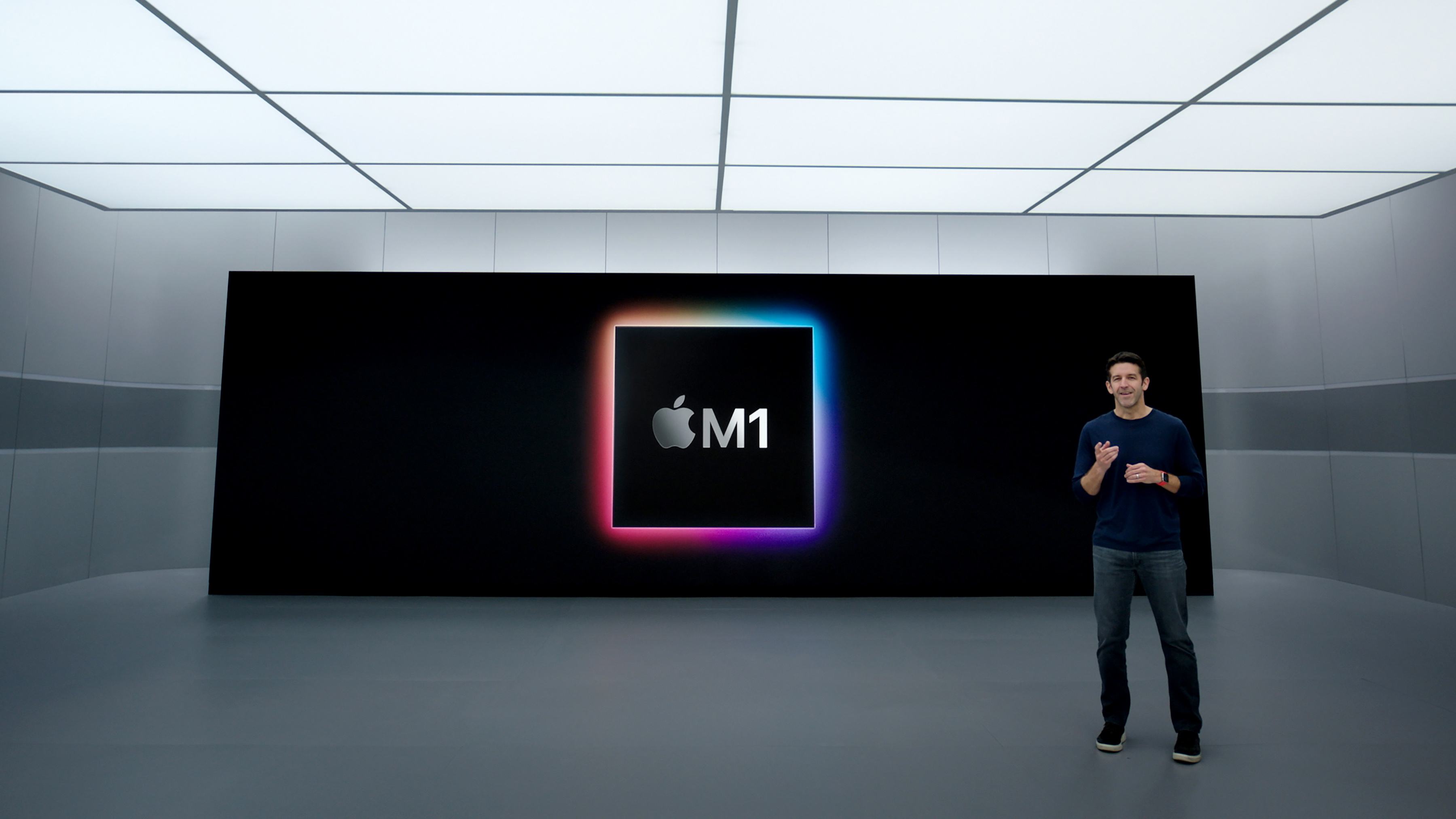
Interview: Apple executives on the 2021 iPad Pro, stunting with the M1 and creating headroom

When the third minute of Apple’s first product event of 2021 ticked over and they had already made 3 announcements we knew it was going to be a packed one. In a tight single hour this week, Apple launched a ton of new product including AirTags, new Apple Card family sharing, a new Apple TV, a new set of colorful iMacs, and a purple iPhone 12 shade.

Of the new devices announced, though, Apple’s new 12.9” iPad Pro is the most interesting from a market positioning perspective. 

This week I got a chance to speak to Apple Senior Vice President of Worldwide Marketing Greg Joswiak and Senior Vice President of Hardware Engineering John Ternus about this latest version of the iPad Pro and its place in the working universe of computing professionals. 

In many ways, this new iPad Pro is the equivalent of a sprinter being lengths ahead going into the last lap and just turning on the afterburners to put a undebatable distance between themselves and the rest of the pack. Last year’s model is still one of the best computers you can buy, with a densely packed offering of powerful computing tools, battery performance and portability. And this year gets upgrades in the M1 processor, RAM, storage speed, Thunderbolt connection, 5G radio, new ultra wide front camera and its Liquid Retina XDR display. 

This is a major bump even while the 2020 iPad Pro still dominates the field. And at the center of that is the display.

Apple has essentially ported its enormously good $5,000 Pro Display XDR down to a 12.9” touch version, with some slight improvements. But the specs are flat out incredible. 1,000 nit brightness peaking at 1,600 nits in HDR with 2,500 full array local dimming zones — compared to the Pro Display XDR’s 576 in a much larger scale.

Given that this year’s first product launch from Apple was virtual, the media again got no immediate hands on with the new devices introduced, including iPad Pro. This means that I have not yet seen the XDR display in action. Unfortunately, these specs are so good that estimating them without having seen the screen yet is akin to trying to visualize “a trillion” in your head. It’s intellectually possible but not really practical. 

It’s brighter than any Mac or iOS device not the market and could be a big game changing device for professionals working in HDR video and photography. But even still, this is a major investment to ship a micro-LED display in the millions or tens of millions of units with more density and brightness than any other display on the market. 

I ask both of them why there’s a need to do this doubling down on what is already one of the best portable displays ever made — if not one of the best displays period. 

“We’ve always tried to have the best display,” says Ternus. “We’re going from the best display on any device like this and making it even better, because that’s what we do and that’s why we, we love coming to work every day is to take that next big step.

“[With the] Pro Display XDR if you remember one thing we talked about was being able to have this display and this capability in more places in the work stream. Because traditionally there was just this one super expensive reference monitor at the end of the line. This is like the next extreme of that now you don’t even have to be in the studio anymore you can take it with you on the go and you can have that capability so from a, from a creative pro standpoint we think this is going to be huge.”

In my use of the Pro Display and my conversations with professionals about it one of the the common themes that I’ve heard is the reduction in overall workload due to the multiple points in the flow where color and image can be managed accurately to spec now. The general system in place puts a reference monitor very late in the production stage which can often lead to expensive and time consuming re-rendering or new color passes. Adding the Liquid Retina XDR display into the mix at an extremely low price point means that a lot more plot points on the production line suddenly get a lot closer to the right curve. 

One of the stronger answers on the ‘why the aggressive spec bump’ question comes later in our discussion but is worth mentioning in this context. The point, Joswiak says, is to offer headroom. Headroom for users and headroom for developers. 

“One of the things that iPad Pro has done as John [Ternus] has talked about is push the envelope. And by pushing the envelope that has created this space for developers to come in and fill it. When we created the very first iPad Pro, there was no Photoshop,” Joswiak notes. “There was no creative apps that could immediately use it. But now there’s so many you can’t count. Because we created that capability, we created that performance — and, by the way sold a fairly massive number of them — which is a pretty good combination for developers to then come in and say, I can take advantage of that. There’s enough customers here and there’s enough performance. I know how to use that. And that’s the same thing we do with each generation. We create more headroom to performance that developers will figure out how to use.

“The customer is in a great spot because they know they’re buying something that’s got some headroom and developers love it.”

The iPad Pro is now powered by the M1 chip — a move away from the A-series naming. And that processor part is identical (given similar memory configurations) to the one found in the iMac announced this week and MacBooks launched earlier this year.

“It’s the same part, it’s M1,” says Ternus. “iPad Pro has always had the best Apple silicon we make.”

“How crazy is it that you can take a chip that’s in a desktop, and drop it into an iPad,” says Joswiak. “I mean it’s just incredible to have that kind of performance at such amazing power efficiency. And then have all the technologies that come with it. To have the neural engine and ISP and Thunderbolt and all these amazing things that come with it, it’s just miles beyond what anybody else is doing.”

As the M1 was rolling out and I began running my testing, the power per watt aspects really became the story. That really is the big differentiator for M1. For decades, laptop users have been accustomed to saving any heavy or intense workloads for the times when their machines were plugged in due to power consumption. M1 is in the process of resetting those expectations for desktop class processors. In fact, Apple is offering not only the most powerful CPUs but also the most power-efficient CPUs on the market. And it’s doing it in a $700 Mac Mini, a $1,700 iMac and a $1,100 iPad Pro at the same time. It’s a pretty ridiculous display of stunting, but it’s also the product of more than a decade of work building its own architecture and silicon.

“Your battery life is defined by the capacity of your battery and the efficiency of your system right? So we’re always pushing really really hard on the system efficiency and obviously with M1, the team’s done a tremendous job with that. But the display as well. We designed a new mini LED for this display, focusing on efficiency and on package size, obviously, to really to be able to make sure that it could fit into the iPad experience with the iPad experience’s good battery life. 

“We weren’t going to compromise on that,” says Ternus.

One of the marquee features of the new iPad Pro is its 12MP ultra-wide camera with Center Stage. An auto-centering and cropping video feature designed to make FaceTime calling more human-centric, literally. It finds humans in the frame and centers their faces, keeping them in the frame even if they move, standing and stretching or leaning to the side. It also includes additional people in the frame automatically if they enter the range of the new ultra-wide 12MP front-facing camera. And yes, it also works with other apps like Zoom and Webex and there will be an API for it.

I’ve gotten to see it in action a bit more and I can say with surety that this will become an industry standard implementation of this kind of subject focusing. The crop mechanic is handled with taste, taking on the characteristics of a smooth zoom pulled by a steady hand rather than an abrupt cut to a smaller, closer framing. It really is like watching a TV show directed by an invisible machine learning engine. 

“This is one of the examples of some of our favorite stuff to do because of the way it marries the hardware and software right,” Ternus says. “So, sure it’s the camera but it’s also the SOC and and the algorithms associated with detecting the person and panning and zooming. There’s the kind of the taste aspect, right? Which is; how do we make something that feels good it doesn’t move too fast and doesn’t move too slow. That’s a lot of talented, creative people coming together and trying to find the thing that makes it Apple like.”

It also goes a long way to making the awkward horizontal camera placement when using the iPad Pro with Magic Keyboard. This has been a big drawback for using the iPad Pro as a portable video conferencing tool, something we’ve all been doing a lot of lately. I ask Ternus whether Center Stage was designed to mitigate this placement.

“Well, you can use iPad in any orientation right? So you’re going to have different experiences based on how you’re using it. But what’s amazing about this is that we can keep correcting the frame. What’s been really cool is that we’ve all been sitting around in these meetings all day long on video conferencing and it’s just nice to get up. This experience of just being able to stand up and kind of stretch and move around the room without walking away from the camera has been just absolutely game changing, it’s really cool.”

It’s worth noting that several other video sharing devices like the Portal and some video software like Teams already offer cropping-type follow features, but the user experience is everything when you’re shipping software like this to millions of people at once. It will be interesting to see how Center Stage stacks up agains the competition when we see it live. 

With the ongoing chatter about how the iPad Pro and Mac are converging from a feature-set perspective, I ask how they would you characterize an iPad Pro vs. a MacBook buyer? Joswiak is quick to respond to this one. 

“This is my favorite question because you know, you have one camp of people who believe that the iPad and the Mac are at war with one another right it’s one or the other to the death. And then you have others who are like, no, they’re bringing them together — they’re forcing them into one single platform and there’s a grand conspiracy here,” he says.

“They are at opposite ends of a thought spectrum and the reality is that neither is correct. We pride ourselves in the fact that we work really, really, really hard to have the best products in the respective categories. The Mac is the best personal computer, it just is. Customer satisfaction would indicate that is the case, by a longshot.”

Joswiak points out that the whole PC category is growing, which he says is nice to see. But he points out that Macs are way outgrowing PCs and doing ‘quite well’. He also notes that the iPad business is still outgrowing the tablets category (while still refusing to label the iPad a tablet). 

“And it’s also the case that it’s not an ‘either or’. The majority of our Mac customers have an iPad. That’s an awesome thing. They don’t have it because they’re replacing their Mac, it’s because they use the right tool at the right time.

What’s very cool about what [Ternus] and his team have done with iPad Pro is that they’ve created something where that’s still the case for creative professionals too — the hardest to please audience. They’ve given them a tool where they can be equally at home using the Mac for their professional making money with it kind of work, and now they can pick up an iPad Pro — and they have been for multiple generations now and do things that, again, are part of how they make money, part of their creative workflow flow,” says Joswiak. “And that test is exciting. it isn’t one or the other, both of them have a role for these people.”

Since converting over to an iPad Pro as my only portable computer, I’ve been thinking a lot about the multimodal aspects of professional work. And, clearly, Apple has as well given its launch of a Pro Workflows team back in 2018. Workflows have changed massively over the last decade, and obviously the iPhone and an iPad, with their popularization of the direct manipulation paradigm, have had everything to do with that. In the current world we’re in, we’re way past ‘what is this new thing’, and we’re even way past ‘oh cool, this feels normal’ and we’re well into ‘this feels vital, it feels necessary.’ 

Contrary to some people’s beliefs, we’re never thinking about what we should not do on an iPad because we don’t want to encroach on Mac or vice versa,” says Ternus. “Our focus is, what is the best way? What is the best iPad we can make what are the best Macs we can make. Some people are going to work across both of them, some people will kind of lean towards one because it better suits their needs and that’s, that’s all good.

If you follow along, you’ll know that Apple studiously refuses to enter into the iPad vs. Mac debate — and in fact likes to place the iPad in a special place in the market that exists unchallenged. Joswiak often says that he doesn’t even like to say the word tablet.

“There’s iPads and tablets, and tablets aren’t very good. iPads are great,” Joswiak says. “We’re always pushing the boundaries with iPad Pro, and that’s what you want leaders to do. Leaders are the ones that push the boundaries leaders are the ones that take this further than has ever been taken before and the XDR display is a great example of that. Who else would you expect to do that other than us. And then once you see it, and once you use it, you won’t wonder, you’ll be glad we did.”

Image Credits: Apple

25 Apr 2021

Gillmor Gang: FreeCoin

The current rave about newsletters and so-called or social audio is just the latest version of the story of podcasting. Take the idea that podcasting is experiencing a new wave of popularity and scaffolding. Are you sure? Apple is bent on turning the space into a subscription model, and we’re all going to twist again like we did last summer. Somehow I doubt it. The basic attraction for me is not paying for podcasts. Subscription startups may be an important step forward, but the heart of the matter is talent formation.

Back when they first started, the real charge was the ability to own the whole stack: writer, producer, editor, star, and marketer. Making money for this may have been a future goal, but right now the real power was in figuring out what might work without the intrusion of what people other than yourself thought about the product. Only if something made itself apparent was it necessary to address the needs and wants of the audience.

Luckily, that ruled out about ninety percent of the resulting wave of stuff. There were Ted talks, or what became Ted talks, well thought out verbal slide decks in an 8 minute payload that grabbed, shook, and exacted payment in credibility and validation of the expertise of the artist. Always lurking was the question of what day job the author was moonlighting from. Many self help business books emerged from this.

Then there were the professionals, the public radio folks who knew how to do this in their sleep but were looking for a role not dependent on grant writing or public liberal funding. Reporters who knew how to squeeze out a story, producers who mined their rolodex to fashion a conversation, screenwriters looking for momentum to bank a shot off studio executives to get a pilot or series starter commitment. Eventually this added up to enough successful podcasts to attract sponsorship support from audiobooks and publishing services. Scripted shows became farm clubs for independent talent aiming for the Big Show. This endured for 20 years.

Meanwhile, the Beatles transformed the music business from a vaudeville-like zero-sum game to a Renaissance of control over writing, performing, promoting, and touring. Aspiration was the fuel of the business model, obviating the need for incremental success in favor of explosive momentum and dominance of the media. Hair, boots, sex, striking fear in the hearts of parents and then politicians everywhere. Sgt. Pepper and Kubrick created a version of the future that made everything else pale by comparison. That it all crashed and burned was just one of the risks of what became the startup culture in Silicon Valley and Route 128.

In today’s world of NFTs and Decacorns, free still has a reason for believing. The old guard of the blogging world have reinvented themselves as Lone Rangers in the creator economy. Slap a badge on that podcast and hitch a ride on the promise of endless subscription growth, minus 10% per newsletter sub or 30% for the first year in the AppStore. It’s not the long tail, so what is it? To be sure, the world will endorse the talented solitary surfers, armed with MG Sieglerian talent for the suite spot of the tech zeitgeist, the revolutionary zeal of the breakthrough synthesists of the political, lyrical, and comic survivalists.

How will the media compensate for the loss of their gatekeeper status? For starters, the more the stampede accelerates, the bundlers will storm the economics with constructs that look very much like the magazines and social destinations they replace. As crypto enters the bloodstream, streaming will generate a new measure of success and equity for the artists. Free will still be the driver of the form, but transitional models like tip jars will migrate to social capital to be banked by investors betting on the future success of the talent.

Even this early, some things have to change. The no recording conceit is an artifact of the launch stage, soon to be jettisoned when the effort reaches escape velocity. Clubhouse gains much of its critical mass from who rather than how many are swarming; interesting combinations of speakers and listeners weigh more tellingly than the raw numbers of name guests and moderators. Live is important, but committing to the voice of the artist is a calculation of time, window of opportunity, relevance to the emotion and tenor of the times. And the competitive landscape for that attention spans so many of the medias being replaced or transformed by the application of free.

None of this means the newsletter and conversation startups won’t succeed. Subscribing gives us something to consume to justify the tithe, and most people who drop streaming subs replace them with another service. As these services proliferate, competition drives innovation and expansion into events and paradigm shifts like Netflix and SPACs. Witness TechCrunch, built on just the dynamics Substack and Revue-Twitter now make accessible to a new wave of Arringtons.

from the Gillmor Gang Newsletter

__________________

The Gillmor Gang — Frank Radice, Michael Markman, Keith Teare, Denis Pombriant, Brent Leary and Steve Gillmor. Recorded live Friday, April 16, 2021.

Produced and directed by Tina Chase Gillmor @tinagillmor

@fradice, @mickeleh, @denispombriant, @kteare, @brentleary, @stevegillmor, @gillmorgang

Subscribe to the new Gillmor Gang Newsletter and join the backchannel here on Telegram.

The Gillmor Gang on Facebook … and here’s our sister show G3 on Facebook.

24 Apr 2021

Building a creator-focused OS

Welcome back to The TechCrunch Exchange, a weekly startups-and-markets newsletter. It’s broadly based on the daily column that appears on Extra Crunch, but free, and made for your weekend reading. 

A week ago TechCrunch covered Pico’s $6.5 million funding round and described it as “a New York startup that helps online creators and media companies make money and manage their customer data.” The Exchange has also covered Pico before, most recently during a mid-2020 dive into the world of indie pubs and subscription media.

While our own Anthony Ha did an inimitable job covering the Pico round, I got on a Zoom call with the company, as well, as their new capital came with a relaunch of sorts that I wanted to better understand.

The Pico team walked me through what’s changed at their business by describing the historical progress of creative digital tooling. They said earlier eras in the space focused on content hosting and distribution. In the startup’s view, a new generation of creative-focused tooling will bring the market to an era in which content management systems, or CMSs — say, Substack or WordPress — will not own the center of tooling. Instead, monetization will.

That’s Pico’s bet, and so it’s building what it considers to be an operating system for the creator market. My gut read is that a creative digital world that centers around monetization sounds like one that is more lucrative than what preceding eras brought us.

Pico’s view is that regardless of where someone first builds their audience, they eventually go multi-SKU — or multi-platform, perhaps — so keeping a single, centralized register of customer data may prove critical.

The startup’s revamped service is a bit of a monetization tool, as before, along with a creator-focused CRM that sits atop your CMS or other digital output on any particular platform. So far customer growth at the company looks good, growing by about 5x in the last year. Let’s see how far Pico can ride its vision, and if it can help build out a middle class in the creator economy.

The grocery revolution will be IRL

Somewhat lost in our circles amid the hype regarding Instacart’s epic COVID period is the fact that most folks still go to stores to buy their fruit and veg, as our friends in the UK might say.

Grocers did not forget the fact. But their historically thin margins and rising competition for customer ownership in the Instacart era hasn’t left them too secure. How can they pursue a more digitally enabled strategy without outsourcing their customer relationship to a third party?

Swiftly might be part of the answer. The startup is building technology that may help grocery chains of all sizes go digital, take advantage of modern mobile technology, and generate more incomes via ads, while offering consumers more shopping options. Neat, yeah?

The startup has raised a little over $15 million to date, per Crunchbase data, but came back into our minds thanks to the launch of a deal with the Dollar Tree company, a consumer retailer that has around one zillion stores in America.

I’ve been aware of Swiftly for ages, having met its co-founder Henry Kim back when he was building Sneakpeeq, which later became Symphony Commerce. The latter company was eventually bought by Quantum Retail. But during my chats with Kim over the years in and around San Francisco, he consistently brought up the grocery market, a space he’d had experience in before building Symphony Commerce.

After hearing Kim hype up the possibilities for grocery and digital for a half decade or so, to see the company that came out of his hopes and planning land a major partner is fun.

Swiftly provides two main products, a retail system and a media service. The retail side of its business provides checkout services, loyalty programs, personalized offers and the like for mobile shoppers. And the media side allows IRL grocers to snag a bit of the consumer packaged goods (CPG) ad spend that they often miss out on, while looping in analytics to provide better attribution to the impact of ads sold.

I expect that Swiftly will raise more capital in the next few quarters now that it has a big, public deal out. More when we have it.

UiPath, SPACs, and a neat venture capital round

Over the past two weeks The Exchange has written quite a lot about the UiPath IPO. Probably too much. But to catch you up just in case, the company’s first IPO pricing range looked like a warning for late-stage investors as the resulting valuations were a bit lower than anticipated. Next the company raised that range, ameliorating if not eliminating our earlier concern. Then the company priced above its raised range, though still at a discount to its final private round. Then it gained ground after starting to trade, and its CFO was like, we did good.

To dig even more into the company’s private-public valuation saga, The Exchange asked B2B investor Dharmesh Thakker, a general partner at Battery Ventures, about his take on the company’s final private round in the context of it landing a bit higher than where the company eventually priced its IPO. Here’s what he had to say:

[T]here was smart money involved in that round. These are people who understand that material value creation happens 3-5 years post IPO, as we have seen with Twilio, Atlassian, MongoDB, Okta, and Crowdstrike who have increased value 5-10x post IPO.

Right now, UIPath has only 1% penetration at $608M revenue in a $60B automation market, and the urgency around intelligent process automation for repetitive tasks is only increasing post-COVID. Companies need help managing their costs with automation. So, as the company penetrates its target market and grows over time, UIPath will drive ongoing value, which pre-IPO and IPO stage investors realize. They will be patient.”

He’s bullish, in other words. A more acerbic take on the UiPath IPO came in from PitchBook analyst Brendan Burke. Here’s what he had to say about the company and its market:

RPA has scaled rapidly due to the demand for automation yet remains a limited solution that may lack durable value. Due to its reliance on custom scripts, we view RPA as a bridge technology to cloud-native AI automation that faces competitive risk from AI-native challengers. The future of enterprise automation is for front-line users to deploy cloud-native machine learning models that can adapt to dynamic data streams and make accurate decisions. UiPath’s implementations are not cloud-native and require third party integrations with around 75 AI model vendors for intelligent decision-making. Additionally, the company lists the ability to recruit AI engineers as a risk factor for the business. UiPath’s ability to expand across the AI value chain will be critical for its long-term prospects.

I include that remark as it can be, at times, hard to get actual negative commentary out of the broader analyst world, as people are so terrified of being rude.

Scooting along, there’s a new SPAC deal out this week that I wanted to flag for you: SmartRent is merging with Fifth Wall Acquisition Corp. I. SmartRent raised more than $100 million while private, according to Crunchbase data, from RET Ventures, Spark Capital and Bain Capital Ventures, among others.

So this particular SPAC deal, which puts a $2.2 billion equity valuation on SmartRent, is a material venture-backed exit. You can check its investor deck here. We care about the company as it appears to work in a similar space to Latch, which is also going out via a SPAC. Dueling OS companies for rental units? This should be fun. (More on Latch’s SPAC deal here.)

Finally for our main work today, HYPR raised $35 million this week. Among all the venture capital rounds that I wish I could have written about this week but didn’t get to, HYPR is up there because it promises a password-free future. And having just raised a Series C, it may have a shot at pulling it off. Please god, let it happen.

Various and sundry

I got to cover a few rounds raised by recent Y Combinator graduates this week, including Queenly and Albedo’s recent funding events. Check ‘em out.

Oh, and Afterpay’s recent earnings show that the buy-now-pay-later market is still growing like all hell,

Alex

24 Apr 2021

What the MasterClass effect means for edtech

MasterClass, which sells a subscription to celebrity-taught classes, sits on the cusp of entertainment and education. It offers virtual, yet aspirational learning: an online tennis class with Serena Williams, a cooking session with Gordon Ramsay. While there’s the off chance that an instructor might actually talk to you — it has happened before — the platform mostly just offers paywalled documentary-style content.

The vision has received attention. MasterClass is raising funding that would value it at $2.5 billion, as scooped by Axios and confirmed independently by a source to TechCrunch. But while MasterClass has found a sweet spot, can the success be replicated?

Investors certainly think so. Outlier, founded by MasterClass’ co-founder, closed a $30 million Series C this week, for affordable, digital college courses. The similarities between Outlier and its founder’s alma mater aren’t subtle: It’s literally trying to apply MasterClass’ high-quality videography to college classes. This comes a week after I wrote about a “MasterClass for Chess lovers” platform launched by former Chess World Champion Garry Kasparov.

Two back-to-back MasterClass copycats raising millions in venture capital makes me think about if the model can truly be verticalized and focused down into specific niches. After 2020 and the rise of Zoom University, we know edtech needs to be more engaging, but we don’t know the exact way to get there. Is it by creating micro-learning communities around shared loves? Is it about gamification? Aspirational learning has different incentives than for-credit learning. In order to be successful, Outlier needs to prove to universities it can use MasterClass magic for true outcomes that rival in-person lectures. It’s a harder, and more ambtious promise.

My riff aside, I turned to two edtech founders to understand how they see the MasterClass effect panning out, and to cross-check my gut reaction.

Taylor Nieman, the founder of language learning startup Toucan:

Although I do love how these models try to lean into this theme of “invisible learning” like we leverage with Toucan, it faces the same issues as so many other consumer products that try to steal time out of people’s very busy days. Constantly competing for time leads to terrible engagement metrics and very high churn. That leads me to question what true learning outcomes could occur from little to no usage of the product itself.

Amanda DoAmaral, the founder of Fiveable, a learning platform for high school students:

Masterclass is important for showing us why educational content should be treated more like entertainment. All of our bars for content quality is much higher now than it ever was before and I’m excited to see how that affects learning across the board.

For students, it’s about creating environments that support them holistically and giving them space to collaborate openly. It feels so obvious that these spaces should exist for young people, but we’ve lost sight of what students actually need. At my school, we built policies that assumed the worst in students. I want to flip that. Assume the best, be proactive to keep them safe, and create ways to react when we need to.

Anyways, that’s just some nuance to chew on during this fine day. In the rest of this newsletter, we will focus a lot on tactical advice for founders, from the money they raise to the peacock dance they might want to do one day. Make sure to follow me on Twitter @nmasc_ so we can talk during the week, too!

The peacock dance

You know when male peacocks fan their feathers to court a lover? That, but for startups trying to get acquired. As one of our many rabbit holes on Equity this week, we talk about Discord walking away from a Microsoft deal, and if that deal ever existed in the first place or if it was just a way to drum up investor excitement in the audio gaming platform.

Here’s what to know: Discord is reportedly pursuing an IPO after walking away from talks with multiple companies that were looking to acquire the audio gaming giant.

Discord aside, the consolidation environment continues to be hot for some sectors.

Four business people used ropes to tighten their money bags, economic austerity, reduced income, economic crisis

Image Credits: VectorInspiration / Getty Images

Even venture capital knows that the future isn’t simply venture capital

Clearbanc, a Toronto-based fintech startup that gives non-dilutive financing to businesses, has rebranded alongside a $100 million financing that valued it at $2 billion. Now rebranded as Clearco, the startup wants to be more than just a capital provider, but a services provider, too.

Here’s what to know: The startup has been on a tear of product development for the past year, launching services such as valuation calculators or runway tools. It’s a step away from what Clearbanc originally flexed: the 20-minute term sheet and rapid-fire investment. I talk about some of the levers at play in my piece:

Many of Clearco’s newest products are still in their infancy, but the potential success of the startup could nearly be tied to the general growth of startups looking for alternatives to venture capital when financing their startups. Similar to how AngelList’s growth is neatly tied to the growth of emerging fund managers, Clearco’s growth is cleanly related to the growth of founders who see financing as beyond a seed check from Y Combinator.

abstract human brain made out of dollar bills isolated on white background

Abstract human brain made out of dollar bills isolated on white background. Image Credits: Iaremenko / Getty Images

Don’t market your opportunity away

Keeping on the theme of tactical advice for founders, let’s move onto talking about marketing. Tim Parkin, president of Parkin Consulting, explained how startup founders can use marketing as a tool to stand out in the noisy environment. Differentiation has never been harder, but also more imperative.

Here’s what to know: Parkin outlines four ways that martech will shift in 2021, strapped with anecdotes and a nod to the importance of investing in influencers.

Red ball on curved light blue paper, blue background. Image Credits: PM Images / Getty Images

Around TechCrunch

Your humble yet favorite startup podcast, Equity, got nominated for a Webby! Me and the team need your help to win, so please vote for us here. Your support means a ton.

This newsletter will always be free, but if you do want to support me, feel free to use code STARTUPSWEEKLY for 25% off a subscription to Extra Crunch.

Across the site

Seen on TechCrunch

The rise of the next Coinbase, thanks to Coinbase

Attack of the robotic SPACs

Tiger Global backs Indian crypto startup at over $500M valuation

This is your brain on Zoom

Early Coinbase backer Garry Tan is keeping the ‘vast majority’ of his shares because of this deal

Seen on Extra Crunch

Dear Sophie: How can I get my startup off the ground and visit the US?

How to pivot your startup, save cash and maintain trust with investors and customers

How startups can ensure CCPA and GDPR compliance in 2021

As UiPath closes above its final private valuation, CFO Ashim Gupta discusses his company’s path to market

European VC soars in Q1

zoom glitch

Image Credits: TechCrunch

Thanks for reading along today and everyday. Sending love to my readers in India and everyone around the world that is facing yet another deadly surge of this horrible disease. I’m rooting for you.

N

24 Apr 2021

The SEC should do more to make startup equity compensation transparent

Imagine that you get a job offer at your dream company. You start to negotiate the contract and everything sounds great except for one detail — your future employer refuses to say in what currency your salary would be paid. It could be U.S. dollars, euros, or perhaps Japanese yen, and you are expected to take a leap of faith and hope for fair pay. It sounds absurd, but this is exactly how the startup equity compensation market currently operates.

The typical scenario is that employers offer a number of stock options or restricted stock units (RSUs) as part of an offer letter, but do not mention the company’s total number of shares. Without this piece of information, employees cannot know whether their grants represent a 0.1% ownership stake, 0.01%, or any other percentage. Employees can ask for this information, but the employer is not required to provide it, and many startups simply don’t.

But that’s not the end of it. Due to lack of proper disclosure requirements, employees are completely oblivious to the most salient form of startup valuation information — data describing the firm’s capitalization table and aggregate liquidation preferences (which determine, in case the company is sold, how much money will be paid to investors before employees receive any payout). By not accounting for the debt-like properties of venture capital financing, employees tend to overestimate the value of their equity grants. This is especially relevant to employees of unicorn companies because the type of terms that are common in late-stage financing have a dramatic and often misleading impact on the value of the company’s common stock.

What have regulators done to fix this? Not much. Under the current regulation, the vast majority of startups are exempted from providing any information to their employees other than a copy of the options plan itself. A small percentage of startups that issue their employees more than $10 million worth of securities over a year period are required to provide additional disclosures including updated financial statements (two years of consolidated balance sheets, income statements, cash flows, and changes in stockholders’ equity). These disclosures are likely to contain sensitive information about the startup but are only remotely related to the question of valuation that employees want answered. The company’s most recent fair market valuation and the description of the employee’s anticipated payout across various exit scenarios would convey far more useful information.

The problem with the current regulation is not merely that it provides employees with either too much or too little information—it is both and more. As the lyrics of Johnny Mathis and Deniece Williams’ song go, it is “too much, too little, too late.” The regulation mandates the disclosure of too much irrelevant and potentially harmful information, too little material information, and the disclosure is delivered in a timeframe that does not permit efficient decision-making by employees (only after the employee has joined the company).

This situation is unhealthy not only for employees themselves but also for the high-tech labor market as a whole. Talent is a scarce resource that companies of all sizes depend on. Lack of information impedes competition and slows down the flow of employees to better, more promising, opportunities. In the long run, employees’ informational disadvantage can erode the value of equity incentives and make it all the more difficult for startups to compete for talent.

In an article I published in the Columbia Business Law Review, titled, “Making Disclosure Work for Startup Employees,” I argue that these problems have a relatively easy fix. Startups that issues over 10% of any class of shares to at least 100 employees should be required to disclose employees’ individual payout according an exit waterfall analysis.

Waterfall analysis describes the breakdown of cash flow distribution arrangements. In the case of startup finance, this analysis assumes that the company’s equity is sold and the proceeds are allocated in a “waterfall” down the different equity classes of shares, according to their respective liquidation preferences, until the common stockholders finally receive the residual claim, if any exists. While the information the model contains can be extremely complicated, the output is not. A waterfall model can render a graph where for each possible “exit valuation” plotted on the x-axis, the employee’s individualized “payout” is indicated on the y-axis. With the help of a cap table management platform, it is as simple as pressing a few mouse clicks.

This visual representation will allow employees to understand how much they stand to gain across a range of exit values even if they don’t understand the math and legal jargon that operate in the background. Armed with this information, employees would not need the traditional forms of disclosures now mandated by Rule 701, and startups could be relieved of the risk that the information contained in their financial statements would fall into the wrong hands. Critically, I also argue that employees should receive this information as part of the offer letter – before they choose whether to accept a job opportunity that includes an equity compensation component. 

Earlier this year, the SEC released proposed revisions to Rule 701. The proposal includes many developments – among them the introduction of an alternative to the disclosure of financial statements. For startups that hit the threshold of issuing employees over $10 million worth of securities, the proposal allows choosing between disclosing financial statements and providing an independent valuation report of the securities’ fair market value. According to the proposal, the latter should be determined by an independent appraisal consistent with the rules and regulations under Internal Revenue Code Section 409A.

This is a step in the right direction — fair market valuation is far more useful to employees than the firm’s financial statements. However, the disclosure of a 409A valuation in and of itself is just not enough. It is a well-known secret in Silicon Valley that 409A valuations are highly inaccurate. Because the appraisal firm wishes to maintain a long-lasting business relationship with the company, and given that the valuation is based on information provided by the management team and is subject to board approval, the startup maintains nearly full control over the result. Therefore, the company’s 409A valuation has informational value only when it includes the waterfall analysis that was used to generate the outcome. Moreover, the SEC’s proposal still allows the vast majority of startups (as long as they avoid the $10 million threshold) to offer equity grants without providing any meaningful disclosures.  

For over 30 years, the SEC has almost completely deregulated startup equity compensation in order to accommodate the ever growing need of startups to rely on equity in the war for talent. However, the SEC has and still is paying little attention to the other side of the employment equation—employees’ need for information regarding the value of their equity compensation. The time is ripe to revisit the protection of employees in their investor capacity under the securities regulatory regime.

24 Apr 2021

How one founder partnered with NASA to make tires puncture-proof and more sustainable

This week’s episode of Found features The SMART Tire Company co-founder and CEO Earl Cole, a one-time Survivor champion whose startup is working with NASA to commercialize some of its space-age tech. Cole won a NASA startup competition seeking entrepreneurs to work with its scientists and researchers on applications of innovations it created for space exploration that could work right here on Earth, helping people while also forming the basis for a commercially-viable business.

For Cole, that resulted in The SMART Tire Company, a venture that’s using tech NASA developed to create more durable, puncture-proof tires to equip future rovers. NASA turned to shape memory alloys (SMAs), which is a type of metal that can be flexed or bent, but that also has elastic properties to return to its original shape, to handle the unique task of building a tire that wouldn’t require inflation, but that would be able to handle rocky Martian terrain with aplomb. Cole’s startup is using the same technology to tackle the more than $100 billion tire industry — starting with bike tires, but eventually moving on to address other kinds of vehicles as well.

We talked to Cole about the process of working with NASA, including its challenges and what the agency has to offer in terms of unique access to cutting-edge technology. He also shared his perspective on entrepreneurship from decades of experience, including difficulties with traditional VC and access to funding, and why he chose to initially raise money for his own startup through newly-available equity crowdsourcing. Cole also told us about why being a Survivor champ (and the first unanimous winner) provides crucial lessons for not only being a founder, but also running a company and being an effective leader, too.

We had a great time chatting with Cole, and we hope you have just as much fun listening. And of course, we’d love if you can subscribe to Found in Apple Podcasts, on Spotify, on Google Podcasts or in your podcast app of choice. Please leave us a review and let us know what you think, or send us directed feedback either on Twitter or via email. Come back next week for yet another great conversation with a founder all about their own unique experience of startup life.

24 Apr 2021

India orders Twitter to take down tweets critical of its coronavirus handling

Twitter has taken down dozens of tweets in India, some of which were critical of New Delhi’s handling of the coronavirus, to comply with an emergency order from the Indian government.

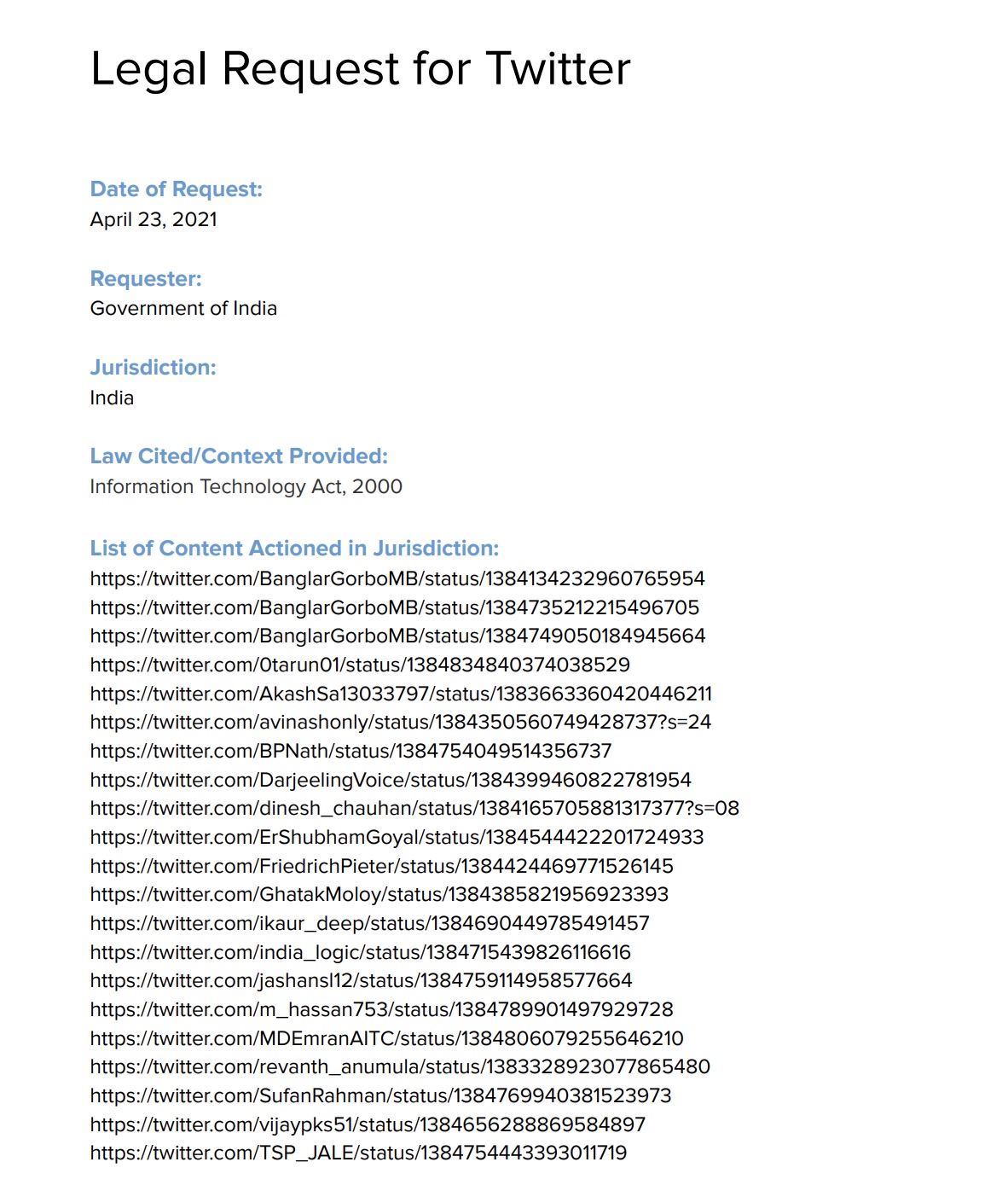
New Delhi made an emergency order to Twitter to censor over 50 tweets in the country, Twitter disclosed on Lumen database. The social network has complied with the request, and hidden the tweets only to users in India.

TechCrunch has learned that Twitter is not the only platform affected by the new order.

India, which has also previously ordered Twitter to take down some tweets and accounts critical of its policies and threatened jail time to employees in the event of non-compliance, comes as the country reports a record of over 330,000 new covid cases a day, the worst by any country. News reports suggest that even this number is underreported.

Amid a collapse of the nation’s health infrastructure, Twitter has become a rare beam of hope as people crowdsource data and help one another find medicines and oxygen cylinders.

A copy of one of Indian government’s orders disclosed by Twitter. (Lumen Database)

Medianama, which first reported on New Delhi’s new order, said among those whose tweets have been censored in India include Revanth Reddy (a Member of Parliament), Moloy Ghatak (a minister in West Bengal), Vineet Kumar Singh (actor) filmmakers Vinod Kapri and Avinash Das.

In a statement, a Twitter spokesperson said, “When we receive a valid legal request, we review it under both the Twitter Rules and local law. If the content violates Twitter’s Rules, the content will be removed from the service. If it is determined to be illegal in a particular jurisdiction, but not in violation of the Twitter Rules, we may withhold access to the content in India only. In all cases, we notify the account holder directly so they’re aware that we’ve received a legal order pertaining to the account.”

“We notify the user(s) by sending a message to the email address associated with the account(s), if available. Read more about our Legal request FAQs.  The legal requests that we receive are detailed in the bianual Twitter Transparency Report, and requests to withhold content are published on Lumen.”

24 Apr 2021

Solving the security challenges of public cloud

Experts believe the data-lake market will hit a massive $31.5 billion in the next six years, a prediction that has led to much concern among large enterprises. Why? Well, an increase in data lakes equals an increase in public cloud consumption — which leads to a soaring amount of notifications, alerts and security events.

Around 56% of enterprise organizations handle more than 1,000 security alerts every day and 70% of IT professionals have seen the volume of alerts double in the past five years, according to a 2020 Dark Reading report that cited research by Sumo Logic. In fact, many in the ONUG community are on the order of 1 million events per second. Yes, per second, which is in the range of tens of peta events per year.

Now that we are operating in a digitally transformed world, that number only continues to rise, leaving many enterprise IT leaders scrambling to handle these events and asking themselves if there’s a better way.

Why isn’t there a standardized approach for dealing with security of the public cloud — something so fundamental now to the operation of our society?

Compounding matters is the lack of a unified framework for dealing with public cloud security. End users and cloud consumers are forced to deal with increased spend on security infrastructure such as SIEMs, SOAR, security data lakes, tools, maintenance and staff — if they can find them — to operate with an “adequate” security posture.

Public cloud isn’t going away, and neither is the increase in data and security concerns. But enterprise leaders shouldn’t have to continue scrambling to solve these problems. We live in a highly standardized world. Standard operating processes exist for the simplest of tasks, such as elementary school student drop-offs and checking out a company car. But why isn’t there a standardized approach for dealing with security of the public cloud — something so fundamental now to the operation of our society?

The ONUG Collaborative had the same question. Security leaders from organizations such as FedEx, Raytheon Technologies, Fidelity, Cigna, Goldman Sachs and others came together to establish the Cloud Security Notification Framework. The goal is to create consistency in how cloud providers report security events, alerts and alarms, so end users receive improved visibility and governance of their data.

Here’s a closer look at the security challenges with public cloud and how CSNF aims to address the issues through a unified framework.

The root of the problem

A few key challenges are sparking the increased number of security alerts in the public cloud:

  1. Rapid digital transformation sparked by COVID-19.
  2. An expanded network edge created by the modern, work-from-home environment.
  3. An increase in the type of security attacks.

The first two challenges go hand in hand. In March of last year, when companies were forced to shut down their offices and shift operations and employees to a remote environment, the wall between cyber threats and safety came crashing down. This wasn’t a huge issue for organizations already operating remotely, but for major enterprises the pain points quickly boiled to the surface.

Numerous leaders have shared with me how security was outweighed by speed. Keeping everything up and running was prioritized over governance. Each employee effectively held a piece of the company’s network edge in their home office. Without basic governance controls in place or training to teach employees how to spot phishing or other threats, the door was left wide open for attacks.

In 2020, the FBI reported its cyber division was receiving nearly 4,000 complaints per day about security incidents, a 400% increase from pre-pandemic figures.

Another security issue is the growing intelligence of cybercriminals. The Dark Reading report said 67% of IT leaders claim a core challenge is a constant change in the type of security threats that must be managed. Cybercriminals are smarter than ever. Phishing emails, entrance through IoT devices and various other avenues have been exploited to tap into an organization’s network. IT teams are constantly forced to adapt and spend valuable hours focused on deciphering what is a concern and what’s not.

Without a unified framework in place, the volume of incidents will spiral out of control.

Where CSNF comes into play

CSNF will prove beneficial for cloud providers and IT consumers alike. Security platforms often require integration timelines to wrap in all data from siloed sources, including asset inventory, vulnerability assessments, IDS products and past security notifications. These timelines can be expensive and inefficient.

But with a standardized framework like CSNF, the integration process for past notifications is pared down and contextual processes are improved for the entire ecosystem, efficiently reducing spend and saving SecOps and DevSecOps teams time to focus on more strategic tasks like security posture assessment, developing new products and improving existing solutions.

Here’s a closer look at the benefits a standardized approach can create for all parties:

  • End users: CSNF can streamline operations for enterprise cloud consumers, like IT teams, and allows improved visibility and greater control over the security posture of their data. This enhanced sense of protection from improved cloud governance benefits all individuals.
  • Cloud providers: CSNF can eliminate the barrier to entry currently prohibiting an enterprise consumer from using additional services from a specific cloud provider by freeing up added security resources. Also, improved end-user cloud governance encourages more cloud consumption from businesses, increasing provider revenue and providing confidence that their data will be secure.
  • Cloud vendors: Cloud vendors that provide SaaS solutions are spending more on engineering resources to deal with increased security notifications. But with a standardized framework in place, these additional resources would no longer be necessary. Instead of spending money on such specific needs along with labor, vendors could refocus core staff on improving operations and products such as user dashboards and applications.

Working together, all groups can effectively reduce friction from security alerts and create a controlled cloud environment for years to come.

What’s next?

CSNF is in the building phase. Cloud consumers have banded together to compile requirements, and consumers continue to provide guidance as a prototype is established. The cloud providers are now in the process of building the key component of CSNF, its Decorator, which provides an open-source multicloud security reporting translation service.

The pandemic created many changes in our world, including new security challenges in the public cloud. Reducing IT noise must be a priority to continue operating with solid governance and efficiency, as it enhances a sense of security, eliminates the need for increased resources and allows for more cloud consumption. ONUG is working to ensure that the industry stays a step ahead of security events in an era of rapid digital transformation.

24 Apr 2021

This Week in Apps: An Apple event, more Clubhouse clones and an app store antitrust hearing

Welcome back to This Week in Apps, the weekly TechCrunch series that recaps the latest in mobile OS news, mobile applications and the overall app economy. The app industry is as hot as ever, with a record 218 billion downloads and $143 billion in global consumer spend in 2020.

Consumers last year also spent 3.5 trillion minutes using apps on Android devices alone. And in the U.S., app usage surged ahead of the time spent watching live TV. Currently, the average American watches 3.7 hours of live TV per day, but now spends four hours per day on their mobile devices.

Apps aren’t just a way to pass idle hours — they’re also a big business. In 2019, mobile-first companies had a combined $544 billion valuation, 6.5x higher than those without a mobile focus. In 2020, investors poured $73 billion in capital into mobile companies — a figure that’s up 27% year-over-year.

This week we’re diving into the juicy bits from the app store antitrust hearing, rounding up the Apple Spring Loaded event and looking at all the new Clubhouse rivals, including Facebook’s, among other things.

This Week in Apps will soon be a newsletter! Sign up here: techcrunch.com/newsletters

Top Stories

Apple Spring Loaded

Image Credits: Apple / Apple

Apple this week held a big spring event where it announced a number of new products, including a new lineup of colorful M1-powered iMacs and M1-powered iPad Pros, a next-gen Apple TV 4K with a way less terrible Siri remote (buttons, hooray!), a very pretty purple iPhone 12 and 12 mini, its long-awaited UWB lost item finder AirTag, Apple Card Family and a new Podcasts app with a paid subscription option for creators.

The new iPad Pro, which brings a 50% performance increase over the previous Pro model, has a ton of upgrade specs, including Thunderbolt and USB 4 support, up to 2TB of storage and 16GB of RAM, and a “Liquid Retina XDR” display on the 12.9-inch model that will make it ideal for creative pursuits involving photography, video and even AR. But now it’s time for iPadOS to catch up — and that may be in store with iPadOS 15, which will reportedly at least have an upgraded Home Screen but hopefully more.

Apple didn’t bother to offer a real launch date for iOS 14.5, although we know it’s next week thanks to Apple’s reminders about getting ready for ATT.

The launch of AirTag, meanwhile, played right into the other big Apple event this week: a Senate antitrust hearing over App Stores.

Apple and Google defend the app store business model in antitrust hearing

This week’s hearing brought three chief Apple critics to testify: Tile, Match and Spotify. The companies argued that the app stores’ hold on the ecosystem was too tight.

They’re not allowed to tell their customers inside their own app how to purchase a subscription to their services outside the App Store, where they could keep 100% of the revenues, they said. And, they argued, these IAP “taxes” have to be passed along to the consumer, leading to higher prices. In Spotify’s case, this puts them at a disadvantage when having to compete against a direct rival, like Apple Music, which doesn’t have the same impediment.

The companies also argued how little power they had to fight against any changes enacted by the platform makers. Tile’s General Counsel Kirsten Daru noted that her company’s relationship with Apple used to be symbiotic, saying Apple “sold our devices in their retail stores, and they even featured us on stage at their Worldwide Developer conference in 2018. But that all changed when Apple decided that it wanted to take over this category,” she said. “If Apple turned on us, it can turn on anyone.”

Spotify spoke of the times Apple threatened to pull it from the App Store over rule violations. And how Apple told Spotify it couldn’t email customers to tell them how they could upgrade via its website instead of through IAP. Apple, meanwhile, defended its position equating it to coming in a Verizon store to advertise that the new iPhone was available for sale down the street at an Apple Store. “No retailer is going to allow us to do that,” Apple’s Chief Compliance Officer Kyle Andeer argued.

Match talked about app rejections and Apple dictating how it can run its business. It said it wanted to verify IDs for a dating app in Taiwan and Apple wouldn’t allow this. Match also mentioned an app rejection that kept it from releasing its LGBTGQ+ safety update for two months. (But we’ve learned that Apple’s rejection was not related to the LGBTQ+ feature itself.)

Match Chief Legal Officer & Secretary Jared Sine also threw out a pretty big bomb when it alerted lawmakers to the fact that they received a call the night before their testimony. Google wanted to know why Match’s testimony appeared to differ from what it said during earnings, he said. (On the earnings call, Match said they believed they could work through the issues of Google’s 30% tax.) Google’s Senior Director Public Policy & Government Relations Wilson White said “it sounds as if some business development folks who are working on commercial conversations” called Match and that Google doesn’t “view that as a threat…we would never threaten our partners.”

Tile argues for a level playing field

Immediately after launching its lost item finder AirTag, Apple had to defend its product against antitrust claims made by Tile. From what we’ve seen, there are mixed feelings out there as to whether Tile has a case. Tile carved out a market for lost item finders and has many years’ worth of a head start on Apple. Some say it wouldn’t have to worry about Apple if it had continued to innovate. After all, just look at the AirTag hardware design and the clever way it guides you to a lost item with directional arrows.

But Tile points out there were areas where it believes Apple didn’t level the playing field.

Tile has asked since 2019 for access to the U1 chip for UWB (ultra wideband) access, like AirTag has, so it can roll out its own UWB device. But Apple only this month, April 2021, announced a draft specification for chipset manufacturers that will arrive later this spring (AFTER AirTag debuts) which will allow third-party device makers to take advantage of ultra wideband technology in U1-equipped Apple devices.

And while Apple opened up Find My to third-parties — a move it’s using to fend of antitrust claims — that means Tile wouldn’t be able to continue its direct relationship with its customers through its own iOS app, if it made the switch. As to what other details that Find My agreement forces upon developers, Tile couldn’t say. When pressed by lawmakers in the antitrust hearing this week, Tile’s Daru said she couldn’t talk about it, because Apple makes companies sign an NDA. Apple CCO Andeer declined to allow Daru to answer questions about the nature of the agreement for the purpose of the hearing either.

Tile had several other grievances as well, like how its app had to ask permission to do things like track location or run in the background or use Bluetooth, when Apple’s Find My did not.

They took away one of our critical permissions, which requires our customers to go deep, deep, deep into their settings to turn Tile on. Find my, by contrast, is on by default…when you set up your operating system. And in order to turn it off you have to go deep into your Settings and actually enter a password. Apple also started serving prompts with that same update to our users — once they figured out how to turn Tile on, they started serving these prompts encouraging them to turn Tile off. But they didn’t serve up those prompts for Find My. Our Bluetooth network — of course, people need to opt in to the Bluetooth network; I think that’s great. We are complete supporters of consumer transparency. But the Find my Bluetooth network in the new Find My app is on by default. And then with these AirTags, as I discussed, we have the UWB issue, which I won’t repeat. But there’s something else. It’s called..they call the ‘magic onboarding flow.’ To connect your AirPods or your AirTags with your phone, you don’t even have to open the Find My app. You just put them near. But that magic flow isn’t available to third-parties like Tile.

Apple questioned about the problem with App Store subscription scams

During the hearing, Apple was also specifically pressed on its failure to police app store scams. The tech giant has argued that one of the reasons it requires developers to pay App Store commissions is to help Apple fight marketplace fraud and protect consumers. But developers claim Apple is doing very little to stop obvious scams that are now raking in millions and impacting consumer trust in the overall subscription economy, as well as in their own legitimate, subscription-based businesses.

One developer in particular, Kosta Eleftheriou, has made it his mission to highlight some of the most egregious scams on the App Store. Functioning as a one-man bunco squad, Eleftheriou regularly tweets out examples of apps that are leveraging fake reviews to promote their harmful businesses. Georgia’s Senator Ossoff asked why we had to rely on independent reports (presumably referring to these efforts by Kosta) to route out scams? Apple defended itself by saying security was a cat-and-mouse game and consumers were refunded when scammed.

Apple and Google questioned on use of app store data

Finally, an interesting line of questioning put to Apple and Google asked the companies if they had an internal firewall between sharing data gleaned from their app stores with their own product development teams working on other initiatives. Apple’s answer left room for doubt. Andeer initially responded that Apple has separate teams, which was clearly not what Senator Blumenthal wanted to know. After the Senator clarified what a “data firewall” was, Apple’s response was “we have controls in place.” ?

Weekly News

Platforms: Apple

The App Store will be adding a second advertising slot in its Suggested Apps section on the Search page, the FT reports. The slot was previously spotted during testing and may arrive by the end of the month. The advantage of this slot is that it will allow developers to advertise to all users who end up on that tab, not just those who have already performed a search.

Tell me you’re launching iOS 14.5 on April 26 without telling me you’re launching iOS 14.5 on April 26. Apple says all apps must use the AppTrackingTransparency framework to request the user’s permission to track them or to access their device’s advertising identifier as of…you guessed it…April 26, 2021. Apple hasn’t officially announced the iOS 14.5 launch date, but this indicates the launch will likely be on April 26 or perhaps the following day.

Apple alerts developers that, starting April 26, iPhone and iPad apps must be built with Xcode 12 and the iOS 14 SDK or later. Watch apps will need to be built with Xcode 12 and the watchOS 7 SDK or later.

A Bloomberg report claims iOS 15 and iPadOS 15 will bring a number of changes, including an updated Lock Screen, a redesigned iPad Home Screen, additional privacy protections, and tools for setting notifications or automatic replies based on their status (driving, working, sleeping, etc.). The update is expected to be announced at this year’s WWDC on June 7.

Apple extended the waiver on IAPs for apps offering paid online group events instead of in-person events due to the pandemic. The waiver now continues through the end of 2021.

Platforms: Google

Google released Android 12’s third developer preview this week — the last one before Android 12 goes live. The highlights in this release included the ability for developers to provide new haptic feedback experiences in their apps and new app launch animations where they can customize the splash screen with their own branding.

Google this week touted its technologies that keep its Play Store safe. It says Google Play Protect scanned over 100 billion installed apps for malware each day in 2020. Its machine-learning detection capabilities and app review process stopped over 962,000 policy-violating apps from being published and it banned 119,000 spammy or malicious apps. It also increased focus on SDK enforcement, which impacts security and privacy violations.

Fintech

PayPal will launch a local wallet in China focused on cross-border payments. The U.S. company in January became the first foreign firm to have 100% ownership of a payments platform in China. The app will not compete with local players like Alipay or WeChat Pay for domestic payments.

Google Pay added its privacy nutrition label to its iOS app. The app’s references to third-party advertising are due to its “Explore” tab where users find merchant offers they can add to their card, which is optional. The app’s personalization features are off by default and, when turned on, are used to surface relevant merchant offers within Google Pay only.

Social Networking
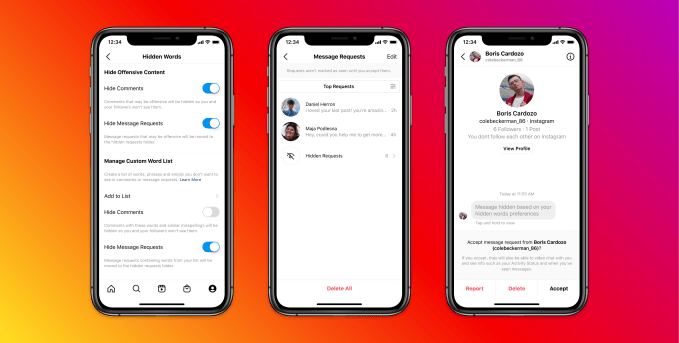
Instagram launched new tools that will filter out abusive DMs based on keywords and emojis used and to proactively block people, even on new accounts. The blocking account feature is going live globally in the next few weeks, and the feature to filter out abusive DMs will start rolling out in the U.K., France, Germany, Ireland, Canada, Australia and New Zealand in a few weeks, with more countries to follow.

Instagram is now testing ads in its TikTok rival, Reels. The ads can be up to 30 seconds long and may resemble Story ads. But you’ll be able to like and comment on Reels ads, just like you can on TikTok. Parent company Facebook also rolled out “sticker ads” for Stories.

Apple confirmed that Parler will be allowed to return to the App Store, after Parler proposed updates to its app, content and moderation practices that would adhere to Apple’s guidelines. The companies have been in talks following Parler’s ban from the App Store after the Capitol attack. Parler Interim CEO Mark Meckler, on Fox News, referred to the changes it had to make as “censorship.” He said Google had also reached out but the company is less concerned with making amends there as the app can be sideloaded on Android devices.

Twitter began testing “Professional Profiles” for businesses. The new profiles let businesses showcase their website, address, hours, map and more, in a new “About” section under the Following/Followers count on their profiles.

Twitter also rolled out the ability to tweet 4K pictures on iOS and Android to all users. The feature was previously in testing.

A former children’s commissioner for England, Anne Longfield, has filed a case against TikTok over its collection of children’s data. The suit alleges TikTok is violating EU and U.K. children’s data protection laws by processing the information gathered from children without parental consent.

Nextdoor launched a new feature that will alert users if it appears they’re about to post something racist. The feature works by examining words and phrases, like “all lives matter,” that are hurtful to people of color. The app doesn’t prevent users from posting, but will slow them down and ask them to reconsider.

Facebook reminds developers that Apple’s ATT (App Tracking Transparency) will be rolling out next week with the new version of iOS, and shared its resources on how to “minimize disruptions to your business and clients.”

Wattpad social reading community announced it has now paid authors over $1 million as part of its now two-year old Paid Stories program. Today, over 550 writers and 750 stories are a part of the program. Users have also spent more than half a billion minutes reading Wattpad Paid Stories.

Design

Alongside the launch of its whiteboarding tool, Figma released a more fully featured version of its mobile app into beta testing.

Messaging

A Bloomberg report claims that Apple will be working to add more social features to iMessage in an upcoming release of iOS to better compete with WhatsApp. The report didn’t offer any indication about what those features may be.

Facebook partnered with the Academy of Motion Picture Arts and Sciences for the 93rd Oscars to give fans a way to engage in real-time, interactive experiences across its platforms. One of these will include a live Messenger Room which will stream the broadcast and exclusive live interviews with winners, engage in activities like trivia, and more. The room will be live starting at 8 PM ET on Sunday April 25. Messenger will also include AR backgrounds for the event.

Clubhouse & Clones

Reddit this week unveiled its Clubhouse Rival, Reddit Talk. The design hasn’t deviated much from Clubhouse’s experience — where speakers sit at the top of the screen in a stage area of sorts, and listeners appear below — all with rounded profile icons, as well as tools to react or raise a hand to ask to speak. However, Reddit Talk will initially live within subreddits, where a community’s moderators will be the only ones able to start a talk for the time being.
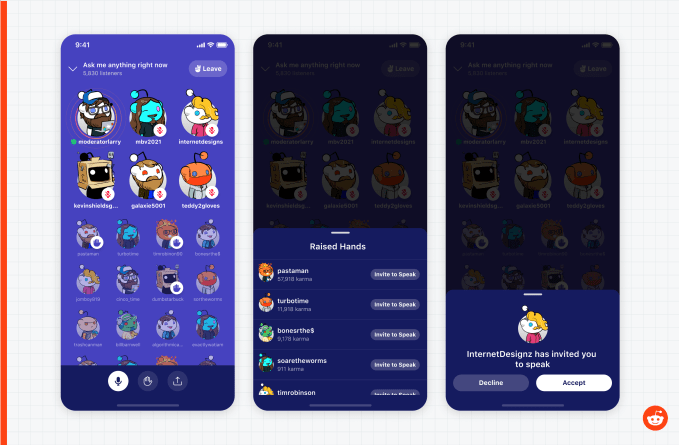
Image Credits: Reddit

Clubhouse downloads dropped 72% last month, going from 9.6 million in February to 2.7 million in March, an indication the app, now valued at $4 billion thanks to its fundraise this week, could be losing some momentum as competitors arrive and the world begins to re-open.

A Clubhouse bug let people lurk in rooms invisibly, Wired reports. The “ghosts” could hide in rooms and even disrupt them, while moderators were unable to mute them. Clubhouse said it has fixed the problem.

Facebook announced its suite of audio products this week, including its Clubhouse clone featuring Live Audio Rooms across Facebook and Messenger. The Live Audio Rooms will initially be available in Groups and to public figures and experts. The company also unveiled Spotify integrations for music and podcasts and an audio-only TikTok rival Soundbites, which seems a lot like the startup Cappuccino’s app, its CTO noticed.

Gaming

Discord and Microsoft are no longer having takeover talks. Bloomberg and The WSJ reported. Discord rejected a $12 billion bid for its service that allows gamers (and others) to communicate via text, video and voice. Other companies have been talking to Discord, too, including Twitter, with some discussions valuing Discord between $15 billion-$18 billion.

The Xbox Cloud Gaming beta began rolling out to iOS and PC this week to Game Pass Ultimate users, sending out invites to a limited number of users in the 22 supported countries, and scaling it up over time. Although Apple announced a carve-out that would allow cloud gaming platforms to offer their games through its App Store by making each game an individual app, linked to a main app with IAP, Microsoft has instead chosen to operate its experience through the Safari web browser.

Health & Fitness
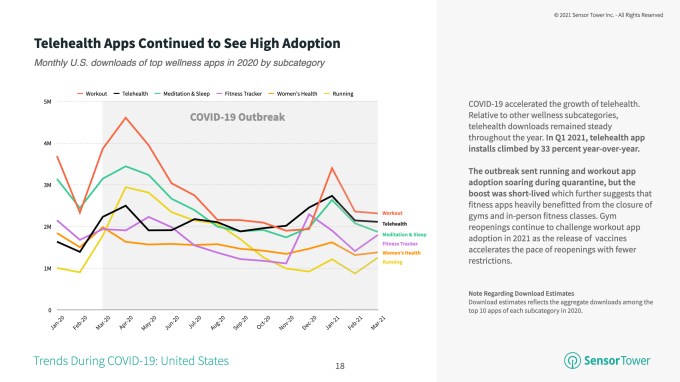
Image Credits: Sensor Tower

The top 10 telehealth apps in the U.S. saw their first-time installs climb 33% Y/Y to 7 million in Q1 2021, reported Sensor Tower. MyChart led the subcategory, reaching a record 1.1 million downloads in January — likely thanks to it becoming a tool for booking vaccine appointments.

Travel & Transportation

TripAdvisor is preparing to launch a subscription service in advance of a post-pandemic return to travel. The company expects the new product, TripAdvisor Plus, will grow to generate more than $1 billion per year for the service that will offer consumers discounts on hotels, experiences and more. The service is expected to arrive in the U.S. in June.

Ride-hailing app Gett inked a deal with Curb Mobility to integrate the latter’s some 50,000 yellow taxis into Gett’s app, which will now cover some 65 cities across the U.S. The deal does not involve any investment between Gett and Curb.

Utilities

Apple Maps looks to be adding user reviews and photos in the U.S., after first launching the feature in select markets, including the U.K. A brief shot from Apple’s event this week showed the feature in action.

Security

Secure messaging app Signal reverse engineered Cellebrite’s hacking kit after the cell phone hacking company said it had figured out how to access the Signal app. In the process of doing so, Signal found several vulnerabilities in Cellebrite’s kit. It also implied the team would make changes to Signal to make it more difficult to hack.

Facebook said it took action against two separate groups of hackers in Palestine — a network linked to the Preventive Security Service (PSS) and a threat actor known as Arid Viper. The groups were engaged in cyber espionage activities in Palestine and other nations.

Researchers found that popular running apps — including Strava, Runkeeper, MapMyRun, Nike Run Club and Runtastic — don’t use basic security measures to prevent hackers from breaking in or health and fitness data spilling out.

Developer Kosta Eleftheriou has been hunting down App Store scam apps, after his own app became a victim to Apple’s failures to police misleading apps with fake reviews. One of his more recent discoveries was particularly interesting: he found a crypto casino hidden inside what otherwise looked like a silly kids’ game. The app was removed from the App Store shortly after he tweeted about it.

Funding and M&A

Clubhouse closed an undisclosed round of Series C funding, valuing the business at $4 billion, or triple its earlier valuation. The round was led by Andrew Chen of Andreessen Horowitz, with participation from DST Global, Tiger Global and Elad Gil.

Kandji raised $60 million in a Series B for its solution that helps onboard and update Apple devices to support remote workforces. Felicis Ventures led the round. The company now has 100 employees.

Amsterdam-based Bux raised $80 million for its European Robinhood rival that lets people invest in shares and ETFs without paying commissions. The startup now has around 500,000 users across part of Europe using its main app and two others, including a Bux Crypto app. The round was co-led by Prosus Ventures and Tencent.

Leo AR raised $3 million in seed funding led by Great Oaks Ventures for its app that capitalizes on ARKit to create 3D AR objects. The startup claims its users have now created more than 8 million videos with AR objects to date.

Per Diem raised $2.3 million in seed funding led by Two Sigma Ventures for its service that lets anyone build their own subscription business with shipping and delivery — like Amazon Prime.

Social app IRL is reportedly in talks to raise more than $50 million at a $1 billion valuation, or 10x the size of its last round, according to The Information. The app quickly pivoted from “in real life” events to digital ones during the pandemic.

French startup Alan raised $220 million in funding led by Coatue at a $1.67 billion valuation for its health insurance and healthcare superapp available across web, iOS and Android.

Mobile gaming company AppLovin, which holds about a 1% share of the $189 billion global mobile gaming market, closed down 18.5% on its first day of trading on the Nasdaq. Shares were at $65.20, with a market cap of around $23 billion. The firm also owns app distribution and marketing company Adjust.

French startup BlaBlaCar raised $115 million to build an all-in-one travel app. The round was led by existing investor VNV Global. The company also added a bus marketplace with the acquisition of Ouibus and an online bus ticketing platform with the acquisition of Busfor.

Till Financial raised $5 million from a range of investors, including Melinda Gates’ fund, for its kids’ finance app meant to help them learn how to save and invest.

San Francisco-based Oath Care raised $2 million in seed funding for its subscription-based mobile app focused on improving the lives of new mothers by pairing them with healthcare specialists and moderators who can guide them in chats and video calls.

Downloads

Popl
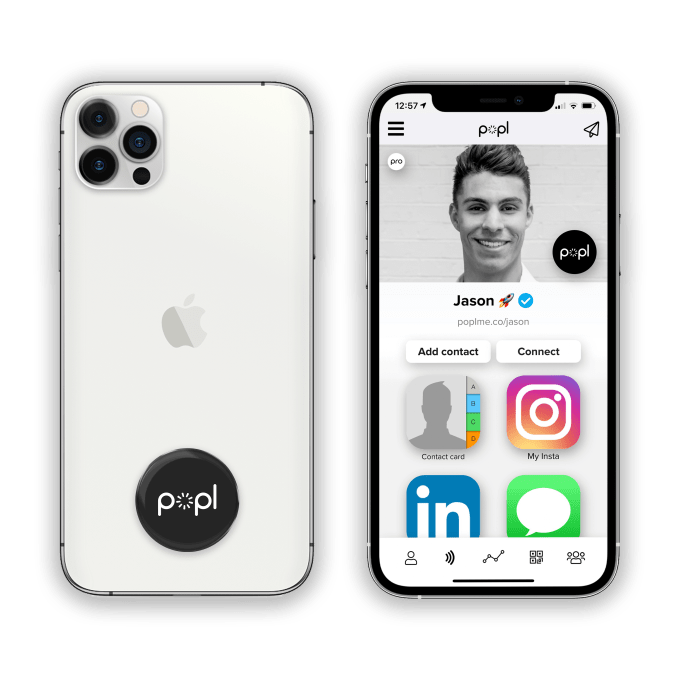
Image Credits: Popl

This combination NFC tag (available as a phone sticker, wristband or keychain dongle) works alongside a mobile app to help you quickly share your contact info with people you meet in real life. When phone are close, the NFC enables the handoff the data as quickly as an Apple Pay transaction. In the Popl app, meanwhile, you can customize which data you want to share with others — including your contact info, social profiles, website links, etc. — all via an easy-to-use interface. Like some business card apps in the past, you can flip between a personal profile and a business profile in Popl in order to share the appropriate information when out networking.

Yak Tack
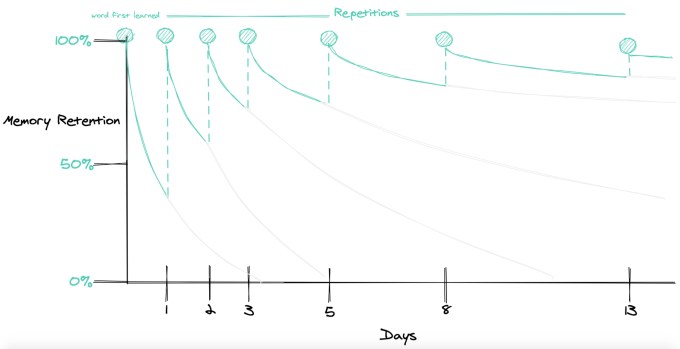
Image Credits: YakTack

Wordsmiths will like Yak Tack’s simple app, reviewed here by TechCrunch, that help users remember new words using a system it calls “tacking.” When you find a word you want to remember, you use the app to look it up then “tack” it to start the system of repetition that helps combat forgetting. The words are sent via push notifications at a specific intervals so you can read their definitions again.