Year: 2021

21 Sep 2021

Here are beta version details of Call of Duty: Vanguard

The much-anticipated World War II game, Call of Duty: Vanguard, is slated to be released on November 5. The details of its beta version have been announced.

According to reports, the version was supposed to be brought down on September 20, but the date was extended by two days.

The available maps in the beta version are Hotel Royal, Gavutu, Red Star and Eagle’s Nest.

The modes include Champion Hill, Team Deathmatch, Domination, Kill Confirmed
Patrol along with Search and Destroy.

Earlier, the developers at Sledgehammer have made changes to resolve the visual complaints.

As far as the sound tunings are concerned, the weapons and walking noise have seen changes. This results in players being able to listen to the footsteps of the enemies clearly.

Read More: Call of Duty: Vanguard captures horrors of Second World War

A new feature introduced in the game is Combat Pacing. It allows the players to choose the intensity of their matches. It has three types.

  1. Tactical: It caters to franchise fans that are familiar with the timing. It is always played between teams of six players each.
  2. Assault: Players will get enough breathing space along with many targets to kill. The number of players is between 20 to 28.
  3. Blitz: It is the most intense level of the feature.

The game will capture the horrors of World War II.

The game will be published by Activision. It is a production of Sledgehammer Games, Treyarch, Raven Software, Beenox, High Moon Studios.

It will be available for PlayStation 4, PlayStation 5, Xbox One, Xbox Series X and Series S and Microsoft Windows.

The post Here are beta version details of Call of Duty: Vanguard appeared first on ARY NEWS.


from ScienceTechnology – ARY NEWS https://ift.tt/3Cy7mkV https://ift.tt/eA8V8J
21 Sep 2021

Docs startup Almanac raises $34 million from Tiger as remote work shift hardens

As companies continue to delay their returns to the office and find temporary remote work policies becoming permanent, the startups building tooling for remote work-first cultures are finding a seemingly endless supply of customers.

“Companies are finding the shift to remote work is not a one-time aberration due to Covid,” Almanac CEO Adam Nathan tells TechCrunch. “Over the past several months we’ve seen pretty explosive revenue growth.”

Almanac, which builds a doc editor that takes feature cues like version control from developer platforms like Github, has been seizing on the shift to remote work, onboarding new customers through its open source office document library Core while pushing features that allow for easier onboarding like an online company handbook builder.

In the past couple years, timelines between funding rounds have been shrinking for fast-growing startups. Almanac announced its $9 million seed round earlier this year led by Floodgate, now they’re taking the wraps off of a $34 million Series A led by the pandemic’s most prolific startup investment powerhouse — Tiger Global. Floodgate again participated in the raise, alongside General Catalyst and a host of angels.

The company wants its collaborative doc editor to be the way more companies fully embrace online productivity software, leaving local-first document editors in the dust. While Alphabet’s G Suite is a rising presence in the office productivity suite world, Microsoft Office is still the market’s dominant force.

“We see ourselves as a generational challenger to Microsoft Office,” Nathan says. “It’s not only an old product, but it’s totally outmoded for what we do to today.”

While investors have backed plenty of startups based on pandemic era trends that have already seemed to fizzle out, the growing shift away from office culture or even hybrid culture towards full remote work has only grown more apparent as employees place a premium on jobs with flexible remote policies.

Major tech companies like Facebook have found themselves gradually adjusting policies towards full-remote work for staff that can do their jobs remotely. Meanwhile, Apple’s more aggressive return-to-office plan has prompted a rare outpouring of public and private criticism from employees at the company. Nathan only expects this divide to accelerate as more companies come tor grips with the shifting reality.

“I personally don’t believe that hybrid is a thing,” he says. “You have to pick a side, you’re either office culture or ‘cloud culture.’”

21 Sep 2021

GM details the motors that will power its electric Hummer and other EVs

General Motors has spent a lot of time recently talking up the capabilities of its upcoming Ultium battery technology but has said significantly less so about the motors those cells will power. That changed on Tuesday when the company detailed its new Ultium Drive motors. With today’s announcement, the series consists of three different models: a 180 kW front-drive model, a 255 kW rear- and front-drive variant and a 62 kW all-wheel drive assist motor. The first two models are permanent magnet motors GM designed in such a way so as to try and reduce its dependence on heavy rare metals.

The company didn’t speak to the specific torque and power density characters of each motor but claimed they should deliver “excellent” performance on those fronts. It also revealed the 2022 Hummer EV will feature three of the 255 kW models. GM claims they will enable the vehicle to produce a combined 11,500 ft/lb of torque and accelerate from zero to 60 miles per hour in approximately three seconds.

GM says its engineers designed the motors with scalability in mind. Each one can be made using similar tools and manufacturing techniques. It also found a way to integrate components like the power inverter directly into the motors, a feat the company said should reduce costs and simplify manufacturing.

Editor’s note: This article originally appeared on Engadget.

21 Sep 2021

Seth Rogen explains how Houseplant promotes cannabis without breaking the rules

I was annoying Seth Rogen. We had just started the interview, and while he politely answered my questions, he was growing tired of talking about his celebrity status. He was more interested in discussing how the company he co-founded is succeeding by overcoming countless regulatory hurdles. To him, that success has little to do with the Seth Rogen brand.

“It’s not like I’m a real celebrity. It’s not like Chris Evans is behind this,” Rogen said, laughing. “On the grand scale, celebrities are very low on the pecking order. I don’t even know if I am a celebrity since I haven’t been in a Marvel movie.”

I spoke with Rogen, CEO Mike Mohr, and Chief Commerce Officer Haneen Davies at TechCrunch Disrupt. Houseplant launched in March with two product categories: ‘House,’ as in, home goods, and ‘Plant,’ as in weed. One is highly regulated by the federal government and social media companies, and the other is not.

“We approached [building the brand] in a way that nobody else has,” Davies said. “I think the merger of house and plant is what’s going to help us establish a brand name that goes beyond the limiting restrictions you have to abide by to communicate cannabis.”

21 Sep 2021

US sanctions cryptocurrency exchange over ties to ‘ransomware attacks’

The United States imposed sanctions Tuesday on cryptocurrency exchange SUEX for its ties to ransomware attackers, as Washington seeks to crack down on digital crime.

The move comes after hacks and data breaches that have targeted a major US oil pipeline, a meatpacking company and the Microsoft Exchange email system, as well as ransomware attacks hitting various sectors.

The US Treasury Department did not say if SUEX was implicated in any of those incidents, but noted that 40 percent of the exchange’s known transaction history was linked to “illicit actors.”

“Some virtual currency exchanges are exploited by malicious actors, but others, as is the case with SUEX, facilitate illicit activities for their own illicit gains,” the Treasury Department’s statement said.

As a result of the sanctions, any assets of the platform under US jurisdiction are now blocked and Americans are barred from using SUEX.

The United States in July offered $10 million rewards for information on online extortionists abroad as it stepped up efforts to halt a sharp rise in ransomware attacks.

This year has seen a slew of prominent ransomware attacks which have disrupted a US pipeline, a meat processor and the software firm Kaseya — affecting 1,500 businesses, many of them far from the limelight.

Some $350 million was paid to malicious cyber actors last year, a spike of 300 percent from 2019, according to the Department of Homeland Security.

US officials say that many of the attacks originate in Russia although they have debated to what extent there is state involvement. Russia denies responsibility.

The post US sanctions cryptocurrency exchange over ties to ‘ransomware attacks’ appeared first on ARY NEWS.


from ScienceTechnology – ARY NEWS https://ift.tt/3ApMCLA https://ift.tt/eA8V8J
21 Sep 2021

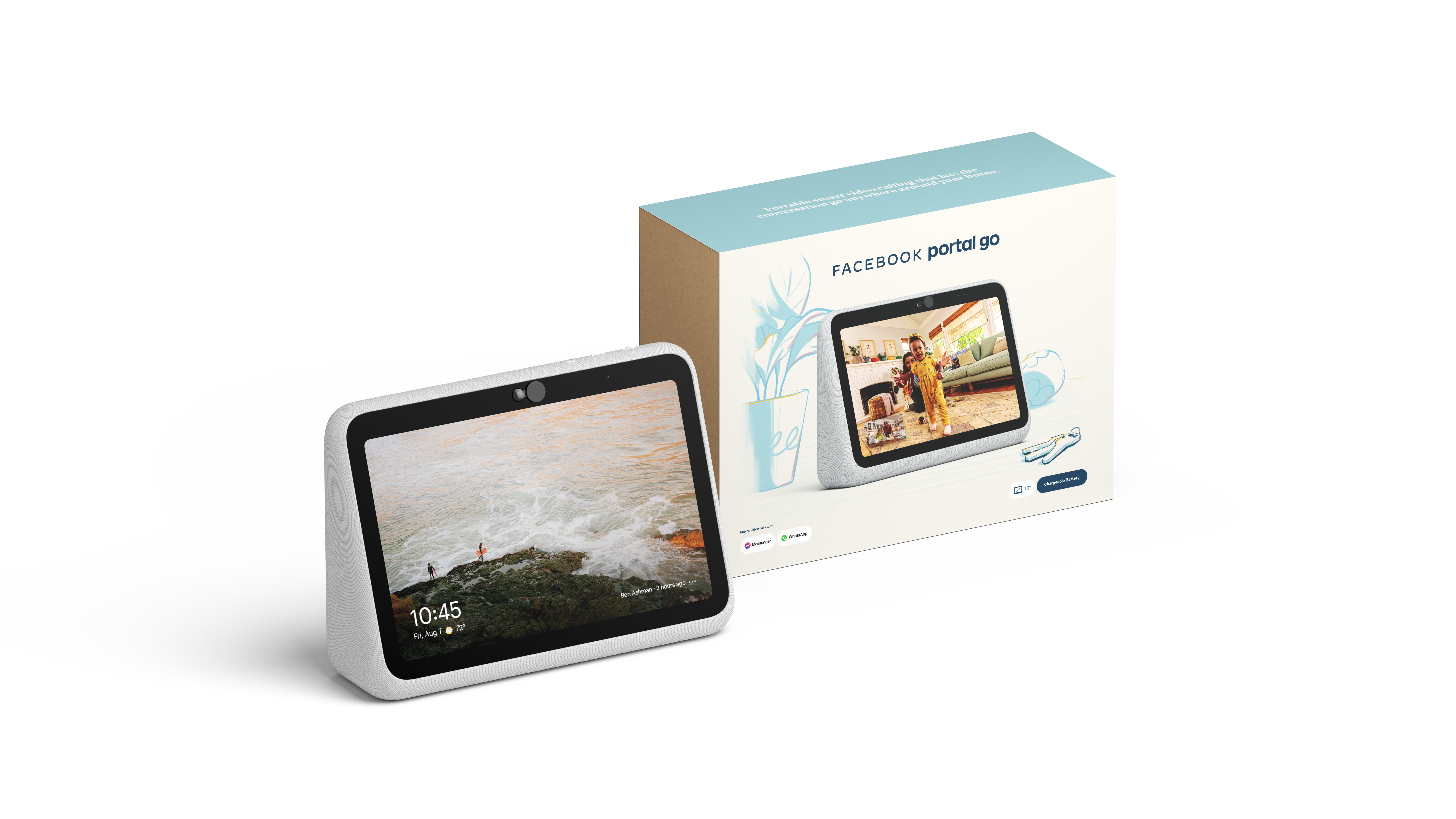
Facebook adds a battery-powered smart screen to the Portal line

The Portal line has always been a kind of odd duck in the world of smart screens. Facebook’s most significant contribution to the category is almost certainly Smart Camera, which uses AI to track a subject and pan and zoom accordingly to keep them in frame. It was the first big line to bring the clever feature to market, though Google, Amazon and even Apple have since offered their own takes on the category.

Portal’s other primary appeal (versus a Nest or Echo) is its integration with Facebook’s own software like Messenger and WhatsApp. Beyond that, the line has struggled to differentiate itself from Amazon and Google’s head start in the world of connected home hardware and smart assistants.

Image Credits: Facebook

Today’s news brings an interesting new layer to the conversation, with the arrival of the Portal Go, a battery-powered portal smart screen. The 10-inch device sports a handle on the back for quick gripping and a battery that promises five hours of standard usage and up to 14 hours of music playback with the screen off (there’s currently no specific battery-saving mode).

It’s a clever addition to the line. We are, no doubt, pushing further into tablet territory here, but I’ve felt the impulse to pick up and bring my Nest Home into the other room more than once. Your mileage will vary.

Image Credits: Facebook

I haven’t seen the thing in person yet, but I do dig the design. It’s got rounded edges around some big black bezels and a fabric-covered backing that’s been all the rage in the smart home category for several years now. The Go is propped up in a wedged design, with two front-facing speakers and a rear-facing woofer.

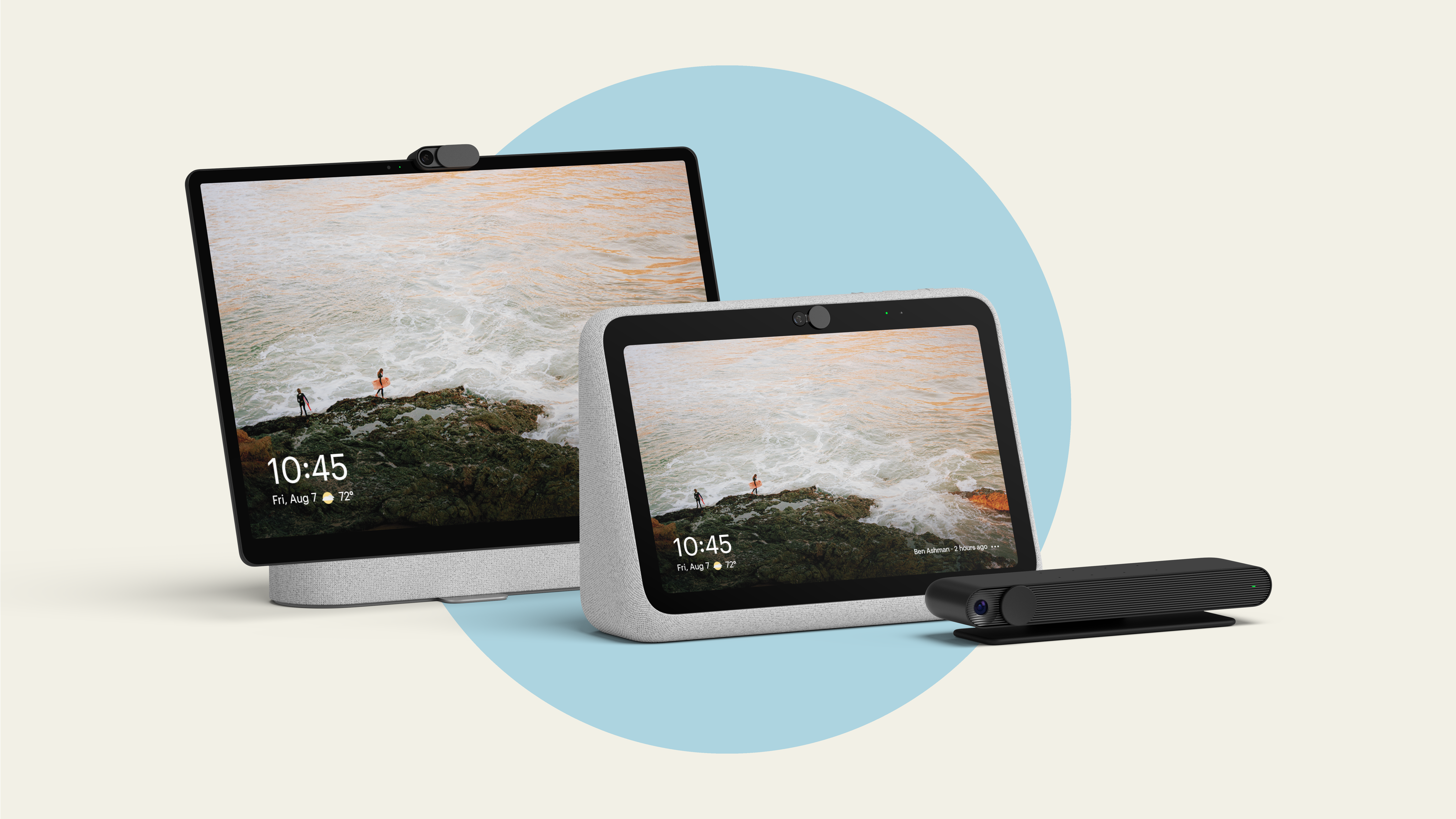
It’s got an ultrawide front-facing 12-megapixel camera that does the aforementioned smart panning, along a with a physical lens cover for privacy. The screen can also be titled up and down for an optimized viewing angle. The system doesn’t currently support far-field technology for a multiple speaker setup, which could complicate things as you move it around the house.

There’s also a new version of the Portal+, which features the same camera setup, coupled with a thin 14-inch tiltable display that can view up to 25 people at a time on a Zoom call. The Portal Go runs $199, while the new Portal+ is $349. Both devices are available for preorder today and start shipping October 19.

Image Credits: Facebook

Today’s news also finds Faceboook launching Portal for Business, aimed at positioning the smart screens as teleconferencing products. Per a release:

With Portal for Business, SMBs will be able to create and manage Facebook Work Accounts for their teams. This is a new account type that allows businesses to use their own company email addresses to set up Portal. These Work Accounts will also provide access to other popular Facebook work products in the coming year.

Using Portal Device Manger, IT departments can set up and remotely wipe employee machines. The system is available now as a closed beta.

21 Sep 2021

Roblox to add opt-in age verification for players and developers

Roblox is introducing an optional age verification for its users that will combine an ID check with a selfie scan. While the system will not be needed to play most Roblox games, it will be required for those who want to gain early access to Roblox’s upcoming voice chat features when they roll out later this fall. Additionally, the company says developers will be able to create new experiences that will rely on identity verification in the future.

The verification system is an acknowledgment that many of Roblox’s core users are aging up. The company said earlier this month, when introducing its new “Spatial Voice” feature, that 50% of its users are now over the age of 13. It’s also seeing the most explosive growth among the 17 to 24-year old demographic.

Spatial Voice, which will allow Roblox gamers to have real voice conversations while in games, will initially be made available to a group of 5,000 developers, all 13 and older, who will be able to test voice chat in a custom-built Roblox community space. The rollout to Roblox’s wider user base will proceed slowly, as it will require new moderation tools and safety features to be built in parallel, the company had said. Age verification is now one of those tools.

Image Credits: Roblox

Age Verification will come in two stages.

First, using the app, Roblox users will scan an ID card, driver’s license, passport or other government ID. The company says it won’t store the raw ID document data. Instead, an anonymized value is generated, which allows Roblox to verify the identity without risking exposure of the user’s real identity. Roblox matches the data on the document to a library of thousands of global document types to determine it’s legitimate. After scanning, the user will take a selfie to verify they are a living individual as opposed to uploaded a selfie image — something that could be automated to trick the system. The selfie is then matched to the person on the document. The process takes a few seconds after the image is snapped, Roblox says.

It’s fairly common for identity verification to be offered on social platforms, as an optional tool. Facebook, for example, may ask users to verify their identity to use its payments or donations services or to have their profile or Page verified. Twitter may also ask for an ID to verify accounts. Tinder recently made its own ID verification available to members, as well.

However, in Roblox’s case, verification will become more common as it’s tied to access to newer voice-enabled games and experiences down the road. Roblox hasn’t yet said what, if any, alternatvie methods of verifying age for voice chat it may later employ.

The company notes that developers and creators will be able to use verification as a signal of trust when looking for collaborators, too — the verified status, in this case, may hold the same sort of clout that it does elsewhere in social media. On this front, Roblox this summer launched a Talent Hub, where users can look for jobs within the Roblox developer community.

Age verification is rolling out gradually, starting today, and will reach all users over the next few weeks. The opt-in feature will be globally available to everyone 13 years old or older in over 180 countries on both desktop and mobile.

“Age Verification marks a big milestone in our long-term vision of building a trusted, fun, and civil platform for everyone,” noted Roblox Senior Product Manager, Chris Aston Chen, in an announcement. “As part of that vision, we will continue to work on seamless ways to verify a user’s age, always respecting a user’s privacy. Over time, we’ll continue to introduce new and innovative ways for users to easily and securely maintain and protect their identity on the Roblox platform, unlock new and immersive social capabilities, and build and enjoy amazing experiences together,” Chen added.


 

21 Sep 2021

Marketplace platform Mirakl raises $555 million at $3.5 billion valuation

French startup Mirakl has closed a new Series E funding round of $555 million. Following this round, the company is now valued at $3.5 billion. Mirakl helps you launch a marketplace on your online store for your end customers or for your B2B clients. It’s a software-as-a-service marketplace, meaning that Mirakl manages the marketplace for you.

Silver Lake is leading the investment with existing investors 83North, Elaia Partners, Felix Capital and Permira also participating. With today’s funding round, Mirakl is experiencing a sharp valuation bump as the company closed a $300 million funding round at a $1.5 billion valuation last year.

Some of Mirakl’s clients include ABB, Accor, Airbus Helicopters, Carrefour, Express, Leroy Merlin, The Kroger Co and Toyota Material Handling.

Chances are you’re already familiar with marketplaces on online stores. If the e-commerce brand doesn’t have the item you’re looking for, they might be recommending some third-party sellers. You can buy the item from this third-party seller directly on the store you’re using. Mirakl helps you add a marketplace to your site.

On some online stores, marketplace transactions have overtaken in-house transactions. It’s a lucrative shift as e-commerce companies don’t own the inventory of third-party sellers. It frees up some capital to increase reach and online sales.

And that trend isn’t limited to consumer-facing online stores. B2B marketplaces are emerging. For instance, car manufacturers rely on many different suppliers. They could all list parts directly on a marketplace so that repair shops can easily find the right part to fix a car.

When you add a marketplace component, you switch from a one-to-many model to a many-to-many model. It means that you have to make sure that you’re taking advantage of your marketplace by partnering with the right third-party sellers. As a third-party seller, it also means that you need to list your products on as many marketplaces as possible.

That’s why the company has also built something called Mirakl Connect. The startup positions itself as a center piece of the marketplace ecosystem by connecting online stores with sellers. Mirakl customers can use Mirakl Connect to find third-party sellers. And third-party sellers can more easily list their products on Mirakl-compatible marketplaces.

With today’s funding round, Mirakl plans to increase the size of its engineering team. It’ll add 350 engineers on top of its team of 500. Similarly, the customer success team will double in size. In other words, things are going well for Mirakl, so let’s invest.

Image Credits: Mirakl

21 Sep 2021

Mercedes-Benz prices its flagship EQS electric vehicle below the S Class

The Mercedes-Benz has priced the flagship EQS electric vehicle more than $8,700 below its gas-powered S-Class counterpart, a strategic move by the German automaker aiming to ensure a successful rollout of the luxury EV in North America.

The EQS, which will arrive in U.S. dealerships in fall 2021, will start at $103,360, including the $1,050 destination charge. The federal tax credit will provide another $7,500 off of the sticker price.

Mercedes-Benz will start with two models: the EQS 450+ and the EQS 580 4MATIC, which has a higher base price of $120,160. These two variants will be offered in three trims — the top is appropriately called Pinnacle — pushing that price point as high as 126,360, including the $1,050 destination charge.

Mercedes’s decision to price the EQS below the S Class, which starts at $$112,150 (including destination charge), illustrates the stakes at play here. The S-Class has long been the company’s storied and luxurious flagship sedan. Mercedes, which earlier this year outlined a €40 billion ($47 billion) plan to become an electric-only automaker by the end of the decade, needs to either convert old S Class owners to the EQS or bring in a new slate of buyers.

The 2022 Mercedes-Benz exudes ultra-luxury, as expected. But it’s also loaded with tech, including a 56-inch hyperscreen, monster HEPA air filter and the software that intuitively learns the driver’s wants and needs. There is even a new fragrance called No.6 MOOD Linen and is described as “carried by the green note of a fig and linen.”

Mercedes is betting that the tech, coupled with performance, design and the price will attract buyers. As TechCrunch has noted before, this is a high-stakes game for Mercedes. The German automaker is banking on a successful rollout of the EQS in North America that will erase any memory of its troubled — and now nixed — launch of the EQC crossover in the United States.

21 Sep 2021

For BioNTech, the COVID-19 vaccine was simply the opening act

BioNTech’s founding story dates back to the late 1990s, when CEO and co-founder Uğur Şahin, his wife and co-founder Özlem Türeci, and the rest of the seven-person founding team began their research.

Focused specifically on an area dubbed “New Technologies,” mRNA stood out as one area with tremendous potential to deliver the team’s ultimate goal: Developing treatments personalized to an individual and their specific ailments, rather than the traditional approach of finding a solution that happens to work generally at the population level.

Şahin, along with Mayfield venture partner Ursheet Parikh, joined us at TechCrunch Disrupt 2021 to discuss the COVID-19 vaccine, his long journey as a founder, what it takes to build a biotech platform company, and what’s coming next from BioNTech and the technologies it’s developing to help prevent other outbreaks and treat today’s deadliest diseases.

“At that time, mRNA was not potent enough,” Şahin recalled. “It was just a weak molecule. But the idea was great, so we invested many years in an academic setting to improve that. And in 2006, we realized ‘Wow, this is now working. Okay, it’s time to initiate a company’.”