Year: 2021

15 Apr 2021

Cloud kitchen startup JustKitchen to go public on the TSX Venture Exchange

JustKitchen, a cloud kitchen startup, will start trading on the Toronto Stock Exchange (TSX) Venture Exchange on Thursday morning. It is doing a direct listing of its common shares, having already raised $8 million at a $30 million valuation.

The company says this makes it one of the first—if not the first—cloud kitchen company to go public in North America. While JustKitchen launched operations last year in Taiwan, it is incorporated in Canada, with plans to expand into Hong Kong, Singapore, the Philippines and the United States. TSX Venture is a board on the Toronto Stock Exchange for emerging companies, including startups, that can move to the main board once they reach certain thresholds depending on industry.

“It’s a really convenient way to get into the market and with the ghost kitchen industry in particular, it’s early stage and there’s a lot of runway,” co-founder and chief executive officer Jason Chen told TechCrunch. “We felt there really was a need to get going as quickly as we could and really get out into the market.”

Participants in JustKitchen’s IPO rounds included returning investor SparkLabs Taipei (JustKitchen took part in its accelerator program last year), investment institutions and retail clients from Toronto. More than half of JustKitchen’s issued and outstanding shares are owned by its executives, board directors and employees, Chen said.

One of the reasons JustKitchen decided to list on TSX Venture Exchange is Chen’s close ties to the Canadian capital markets, where he worked as an investment banker before moving to Taiwan to launch the startup. A couple of JustKitchen’s board members are also active in the Canadian capital markets, including Darren Devine, a member of TSX Venture Exchange’s Local Advisory Committee.

These factors made listing on the board a natural choice for JustKitchen, Chen told TechCrunch. Other reasons included ability to automatically graduate to the main TSX board once companies pass certain thresholds, including market cap and net profitability, and the ease of doing dual listings in other countries. Just Kitchen is also preparing to list its common shares on the OTCQB exchange in the U.S. and the Frankfurt Stock Exchange in Germany.

15 Apr 2021

Lingoda, an on-demand online language school with live instructors and Zoom classrooms, raises $67M

A startup out of Berlin that’s built and grown a successful online language learning platform based around live teachers and virtual classrooms is announcing some funding today to continue expanding its business.

Lingoda, which connects students who want to learn a language — currently English, Spanish, French or German — with native-speaking teachers who run thousands of 24/7 live, immersion classes across a range of language levels, has picked up $67 million (€57 million). CEO Michael Shangkuan said the funding will be used both to continue enhancing its tech platform — with more tools for teachers and asynchronous supplementary material — and to widen its footprint in markets further afield such as the U.S.

The company already currently has some 70,000 students, 1,400 teachers and runs more than 450,000 classes each year covering some 2,000 lessons. Its revenue run rate is at 10x that of a year ago, and its customer base in that time grew 200% with students across 200 countries, so it is not a stranger to scaling as it doubles down on the model.

“We want the whole world to be learning languages,” Shangkuan said. “That is our vision.”

The funding is coming from a single investor, Summit Parnters, and the valuation is not being disclosed. Founded in 2015 by two brothers — Fabian and Felix Wunderlich (now respectively CFO and head of sales) — Lingoda had only raised around $15 million before now, a mark of the company being pretty capital efficient. “We only run classes that are profitable,” said Shangkuan (who is from the US, New Jersey specifically) in an interview. That being said, he added, “We can’t answer if we are profitable, but we’re not hugely unprofitable.” The market for language learning globally is around $50 billion so it’s a big opportunity despite the crowds of competition.

A lot of the innovation in edtech in recent times has been focused around automated tools to help people learn better in virtual environments, technology built with scale, better analytics or knowledge acquisition in mind.

So it’s interesting to come across edtech startups that may be using some of these same tools — the whole of Lingoda is based on Zoom, which it uses to run all of its classes online — but are fundamentally also retaining one of the more traditional aspects of learning, humans teaching other humans.

This is very much by design, Shangkuan said. At first, the idea was to disrupt in-person language schools, but if the startup had ever considered how and if it would pivot to more automated classes and cut the teachers out of the equation, it decided that it wasn’t worth it.

Shangkuan — himself a language enthusiast who moved himself to Germany specifically to immerse himself in a new country and language, from where he then proceeded to look for a job — noted that feedback from its students showed a strong inclination and preference for human teachers, with 97% saying that language learning in the Lingoda format has been more effective for them than the wave of language apps (which include the likes of Duolingo, Memrise, Busuu, Babbel, Rosetta and many more).

“For me as an entrepreneur trying to provide a great product, that is the bellwether, and why we are focused on delivering on our original vision,” he said, “one in which it does take teachers and real quality experiences and being able to repeat that online.” Indeed, it’s not the only tech startup that’s identified this model: VIPKid out of China and a number of others have also based their learning around live teachers.

There are a number of reasons for why human learning may be more suitable for language acquisition — starting with the fact that language is a living knowledge and so learning to speak it requires a pretty fundamental level of engagement from the learner. Added to that is the fact that the language is almost never spoken in life in the same way that it is in textbooks (or apps) so hearing from a range of people speaking the language, as you do with the Lingoda format, which is not focused on matching a student with a single instructor (there is no Peloton-style following around instructors here), works very well.

On the subject of the teachers, it’s an interesting format that taps a little into the concept of the gig economy, although it’s not the same as being employed as a delivery driver or cleaner. Lingoda notes that teachers set their own schedules and call classes themselves, rather than being ordered into them. (Students can request a teaching level if they want it, and it can take between a day and a week for it to materialise, typically with 1-5 students per class, but a teacher needs to step up to take it when its been requested.) This format makes it fall into more standardized language learning labor models.

“We closely mirror the business model of traditional (brick and mortar) in-person language schools, where teachers work part time in compliance with local laws and have the flexibility to schedule their own classes,” a spokesperson said. “The main difference is that our model brings in-person classes online, but we are still following the same local guidelines.”

Lingoda’s growth is coming at an interesting moment in the world of online education, which has been one of the big juggernauts of the last year. Schools shutting down in-person learning, people spending more time at home, and the need for many of us to feel like we are doing something at a time of so many restrictions have all driven people to spend time learning online have all driven edtech companies to expand, and the technology that’s being used for the purpose to continue evolving.

To be clear, Lingoda has been around for years and was not hatched out of pandemic conditions: many of the learners that it has attracted are those who might have otherwise attended an in-person language class run by one of the many smaller schools you might come across in a typical city (London has hundreds of them), learning because they are planning to relocate or study abroad, or because people have newly arrived in a country and need to learn the language to get by, or they have to learn it for work.

But what’s been interesting in this last year is how services created for one kind of environment have been taken up in our “new normal.” The classes that Lingoda offers become a promise of a moment when we will be able to visit more places again, and hopefully order coffees, argue about jaywalkers, and chat with strangers here and there a little more easily.

“The language learning market is increasingly shifting to online offerings that provide consumers with a more convenient, flexible and cost-effective way to improve their foreign language skills,” said Matthias Allgaier, MD at Summit Partners, in a statement. “We believe Lingoda has developed one of the most comprehensive and effective online language learning solutions globally and is positioned to benefit from the ongoing and accelerating trend of digitization in education. We are thrilled to partner with the entire Lingoda team, and we are excited about the future for this business.” Allgaier is joining Lingoda’s board with this round.


15 Apr 2021

Lingoda, an on-demand online language school with live instructors and Zoom classrooms, raises $67M

A startup out of Berlin that’s built and grown a successful online language learning platform based around live teachers and virtual classrooms is announcing some funding today to continue expanding its business.

Lingoda, which connects students who want to learn a language — currently English, Spanish, French or German — with native-speaking teachers who run thousands of 24/7 live, immersion classes across a range of language levels, has picked up $67 million (€57 million). CEO Michael Shangkuan said the funding will be used both to continue enhancing its tech platform — with more tools for teachers and asynchronous supplementary material — and to widen its footprint in markets further afield such as the U.S.

The company already currently has some 70,000 students, 1,400 teachers and runs more than 450,000 classes each year covering some 2,000 lessons. Its revenue run rate is at 10x that of a year ago, and its customer base in that time grew 200% with students across 200 countries, so it is not a stranger to scaling as it doubles down on the model.

“We want the whole world to be learning languages,” Shangkuan said. “That is our vision.”

The funding is coming from a single investor, Summit Parnters, and the valuation is not being disclosed. Founded in 2015 by two brothers — Fabian and Felix Wunderlich (now respectively CFO and head of sales) — Lingoda had only raised around $15 million before now, a mark of the company being pretty capital efficient. “We only run classes that are profitable,” said Shangkuan (who is from the US, New Jersey specifically) in an interview. That being said, he added, “We can’t answer if we are profitable, but we’re not hugely unprofitable.” The market for language learning globally is around $50 billion so it’s a big opportunity despite the crowds of competition.

A lot of the innovation in edtech in recent times has been focused around automated tools to help people learn better in virtual environments, technology built with scale, better analytics or knowledge acquisition in mind.

So it’s interesting to come across edtech startups that may be using some of these same tools — the whole of Lingoda is based on Zoom, which it uses to run all of its classes online — but are fundamentally also retaining one of the more traditional aspects of learning, humans teaching other humans.

This is very much by design, Shangkuan said. At first, the idea was to disrupt in-person language schools, but if the startup had ever considered how and if it would pivot to more automated classes and cut the teachers out of the equation, it decided that it wasn’t worth it.

Shangkuan — himself a language enthusiast who moved himself to Germany specifically to immerse himself in a new country and language, from where he then proceeded to look for a job — noted that feedback from its students showed a strong inclination and preference for human teachers, with 97% saying that language learning in the Lingoda format has been more effective for them than the wave of language apps (which include the likes of Duolingo, Memrise, Busuu, Babbel, Rosetta and many more).

“For me as an entrepreneur trying to provide a great product, that is the bellwether, and why we are focused on delivering on our original vision,” he said, “one in which it does take teachers and real quality experiences and being able to repeat that online.” Indeed, it’s not the only tech startup that’s identified this model: VIPKid out of China and a number of others have also based their learning around live teachers.

There are a number of reasons for why human learning may be more suitable for language acquisition — starting with the fact that language is a living knowledge and so learning to speak it requires a pretty fundamental level of engagement from the learner. Added to that is the fact that the language is almost never spoken in life in the same way that it is in textbooks (or apps) so hearing from a range of people speaking the language, as you do with the Lingoda format, which is not focused on matching a student with a single instructor (there is no Peloton-style following around instructors here), works very well.

On the subject of the teachers, it’s an interesting format that taps a little into the concept of the gig economy, although it’s not the same as being employed as a delivery driver or cleaner. Lingoda notes that teachers set their own schedules and call classes themselves, rather than being ordered into them. (Students can request a teaching level if they want it, and it can take between a day and a week for it to materialise, typically with 1-5 students per class, but a teacher needs to step up to take it when its been requested.) This format makes it fall into more standardized language learning labor models.

“We closely mirror the business model of traditional (brick and mortar) in-person language schools, where teachers work part time in compliance with local laws and have the flexibility to schedule their own classes,” a spokesperson said. “The main difference is that our model brings in-person classes online, but we are still following the same local guidelines.”

Lingoda’s growth is coming at an interesting moment in the world of online education, which has been one of the big juggernauts of the last year. Schools shutting down in-person learning, people spending more time at home, and the need for many of us to feel like we are doing something at a time of so many restrictions have all driven people to spend time learning online have all driven edtech companies to expand, and the technology that’s being used for the purpose to continue evolving.

To be clear, Lingoda has been around for years and was not hatched out of pandemic conditions: many of the learners that it has attracted are those who might have otherwise attended an in-person language class run by one of the many smaller schools you might come across in a typical city (London has hundreds of them), learning because they are planning to relocate or study abroad, or because people have newly arrived in a country and need to learn the language to get by, or they have to learn it for work.

But what’s been interesting in this last year is how services created for one kind of environment have been taken up in our “new normal.” The classes that Lingoda offers become a promise of a moment when we will be able to visit more places again, and hopefully order coffees, argue about jaywalkers, and chat with strangers here and there a little more easily.

“The language learning market is increasingly shifting to online offerings that provide consumers with a more convenient, flexible and cost-effective way to improve their foreign language skills,” said Matthias Allgaier, MD at Summit Partners, in a statement. “We believe Lingoda has developed one of the most comprehensive and effective online language learning solutions globally and is positioned to benefit from the ongoing and accelerating trend of digitization in education. We are thrilled to partner with the entire Lingoda team, and we are excited about the future for this business.” Allgaier is joining Lingoda’s board with this round.
15 Apr 2021

Challenger bank N26 to offer insurance products

Fintech startup N26 is launching N26 Insurance as it plans to offer insurance products that you can access from the company’s mobile app and website. The first insurance product is a smartphone insurance plan for German customers.

But the startup doesn’t plan to stop there. N26 says it is also working on private liability insurance, home insurance, life insurance, pet insurance and coverage for bikes, electronics and large purchases.

The idea is that you’ll be able to purchase coverage, manage your plans and initiate claims within the N26 app. As N26 already has your personal information, it should be easier to sign up to a new insurance product through N26 compared to creating a new account in a separate app.

The challenger bank isn’t becoming an insurtech company overnight. Instead, it is partnering with other companies, such as Simplesurance, for those products.

“The big thing we’re doing in Q1 and Q2 is a big focus on the marketplace,” co-founder and CEO Valentin Stalf told me a few months ago. “Early on we always tried to integrate the full experience.”

N26 Insurance is the first release of this new API-driven strategy. Partners will be able to integrate their products on their own and N26 will make it easy to share KYC files (‘know your customer’), transfer money between N26 and partners, etc.

“Most fintech startups are super low frequency,” Stalf said. He mentioned mortgage as one financial product that you set up once and never touch again. These companies have high customer acquisition costs, so N26 can help on that front. For instance, if you purchase a bike online, N26 could recommend a bike insurance product after your purchase.

As for phone insurance launching today, prices will vary depending on your phone. If you spent a lot of money on your phone, your insurance plan is going to be more expensive. N26 lets you opt for annual plans to save a bit of money.

Phone insurance also contributes to the freemium strategy of N26. The company offers free and paid accounts that start at €4.90 per month. The most expensive plan, N26 Metal, costs €16.90 per month and includes phone insurance.

Some customers who might want to insure their phone might be tempted to switch to N26 Metal to insure their phone and get more features, such as travel insurance.

N26 started revamping its plans in November 2020 by introducing a new mid-tier plan called N26 You. In Germany, N26 no longer sends you a plastic debit card if you create a free account. You have to pay €4.90 per month.

Offering new products in the app and pushing users toward paid subscriptions should definitely help N26 when it comes to profitability. The startup has grown tremendously over the past few years and the company is focused on consolidating the business as much as possible now.

15 Apr 2021

Challenger bank N26 to offer insurance products

Fintech startup N26 is launching N26 Insurance as it plans to offer insurance products that you can access from the company’s mobile app and website. The first insurance product is a smartphone insurance plan for German customers.

But the startup doesn’t plan to stop there. N26 says it is also working on private liability insurance, home insurance, life insurance, pet insurance and coverage for bikes, electronics and large purchases.

The idea is that you’ll be able to purchase coverage, manage your plans and initiate claims within the N26 app. As N26 already has your personal information, it should be easier to sign up to a new insurance product through N26 compared to creating a new account in a separate app.

The challenger bank isn’t becoming an insurtech company overnight. Instead, it is partnering with other companies, such as Simplesurance, for those products.

“The big thing we’re doing in Q1 and Q2 is a big focus on the marketplace,” co-founder and CEO Valentin Stalf told me a few months ago. “Early on we always tried to integrate the full experience.”

N26 Insurance is the first release of this new API-driven strategy. Partners will be able to integrate their products on their own and N26 will make it easy to share KYC files (‘know your customer’), transfer money between N26 and partners, etc.

“Most fintech startups are super low frequency,” Stalf said. He mentioned mortgage as one financial product that you set up once and never touch again. These companies have high customer acquisition costs, so N26 can help on that front. For instance, if you purchase a bike online, N26 could recommend a bike insurance product after your purchase.

As for phone insurance launching today, prices will vary depending on your phone. If you spent a lot of money on your phone, your insurance plan is going to be more expensive. N26 lets you opt for annual plans to save a bit of money.

Phone insurance also contributes to the freemium strategy of N26. The company offers free and paid accounts that start at €4.90 per month. The most expensive plan, N26 Metal, costs €16.90 per month and includes phone insurance.

Some customers who might want to insure their phone might be tempted to switch to N26 Metal to insure their phone and get more features, such as travel insurance.

N26 started revamping its plans in November 2020 by introducing a new mid-tier plan called N26 You. In Germany, N26 no longer sends you a plastic debit card if you create a free account. You have to pay €4.90 per month.

Offering new products in the app and pushing users toward paid subscriptions should definitely help N26 when it comes to profitability. The startup has grown tremendously over the past few years and the company is focused on consolidating the business as much as possible now.

15 Apr 2021

Atrium, which help sales managers more easily see who is (or isn’t) crushing it, just raised $13.5 million

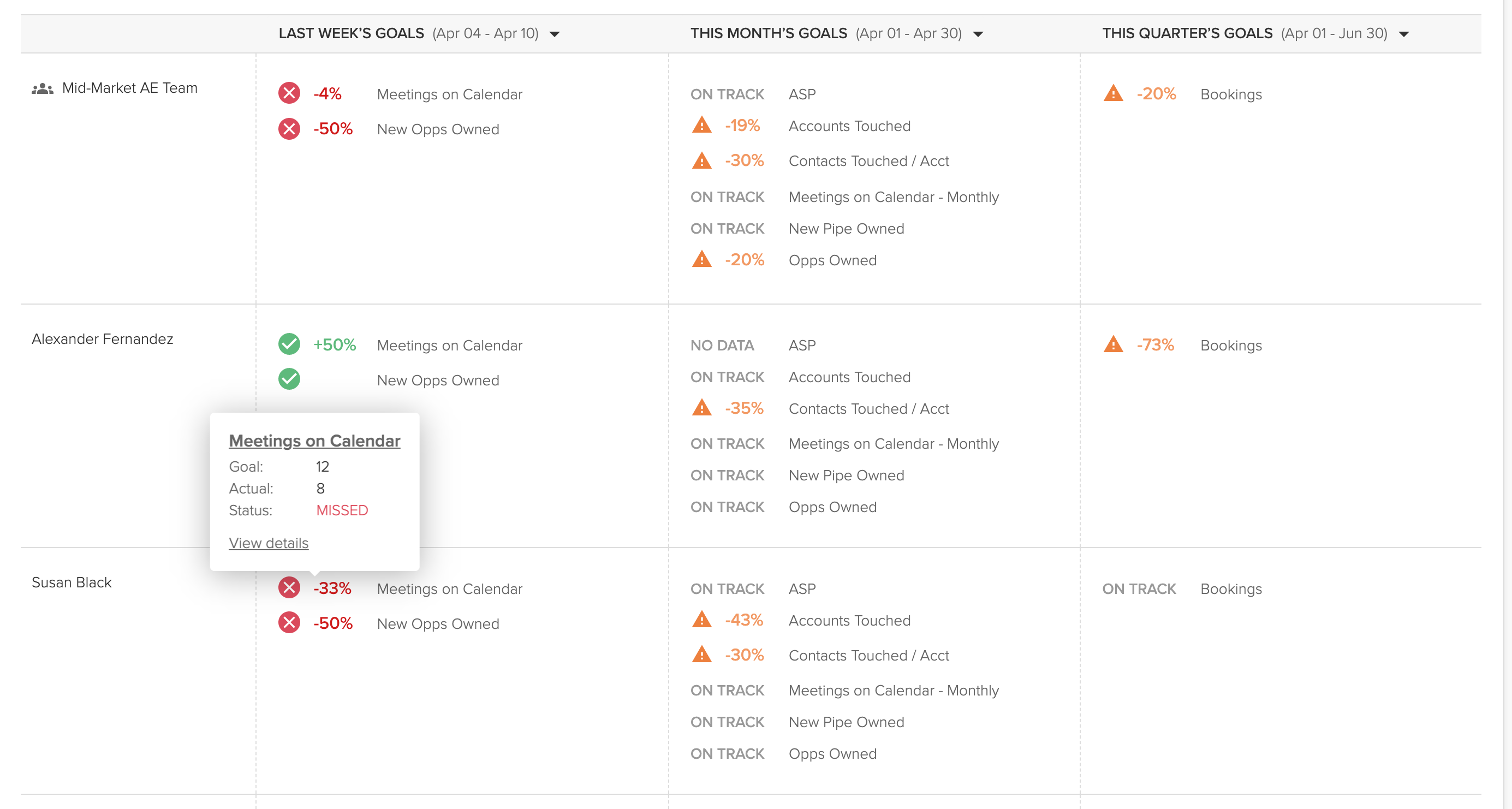
There’s no shortage of data-driven sales management tools in the market. Naturally, Atrium, a five-year-old, San Francisco-based company cofounded by serial entrepreneur Pete Kazanjy, says it does a far better job of empowering sales managers to improve their team’s performance. How? By giving them easy, digestible, real-time insights into who on their team is outperforming, who is on track to reach his or her goals, and who is losing momentum and in what areas so that potential issues don’t spiral into major problems.

Atrium has convinced investors of its merits. Though Kazanjy candidly offers that an earlier version of the software “was not phenomenal,” its current product line-up just prompted Bonfire Ventures, Bullpen Capital, CRV and First Round Capital to provide the 30-person company with $13.5 million in seed funding so it can more aggressively grow its reach inside of organizations, both big and small. (It already counts roughly 100 companies as customers, including SalesLoft, Clearbit, and SaasOptics.)

As for what Atrium is selling exactly, it’s the continuous monitoring of dozens of key performance indicators like bookings, average selling prices, the number of customer-facing meetings a rep has had in any given week and the length of deal cycles. The idea is to provide managers a clear view into their teams so that when something is off or, conversely, when it’s going better than planned, those same managers can drive positive behavior change.

Perhaps as important, Atrium says it provides automated root-cause analytics via anomaly detection with additional filters to uncover why someone’s performance may be peaking or dipping.  Consider: if someone is doing particularly well, other team members might want to emulate the behaviors that are fueling that success.

The cost of all that monitoring costs $5,000 per year smaller outfits and much more than that for some of Atrium’s bigger customers.

The findings are also delivered to managers where they live, which is via their email and Slack channels, though there’s a web app, too.

As with many software tools, the need for what Atrium makes really began to explode as companies abruptly saw their workforces scatter because of pandemic lockdowns. “The importance of data-driven sales management only only accelerated [in a world] where all of a sudden, managers can’t really tell themselves a story of like, ‘Yeah, I know what’s going on with my team because I can see them right from across the sales floor,'” notes Kazanjy.

He has some personal insight into the issue. Atrium’s own team is largely based in San Francisco, but because it’s also more distributed than before COVID-19 struck the U.S., the company is using its own software, as well as selling it.

Kazanjy previously cofounded TalentBin, a talent search engine that allowed technical recruiters and hiring managers to find passive candidates and which was acquired by Monster in 2014.

He also recently authored a book called Founding Sales, which bills itself as an “early-stage, go-to-market handbook.”

Kazanjy’s background is actually in product management and product marketing, but like a lot of founders, when he launched his last company, the looming question quickly became: who is going to sell this stuff?

Kazanjy quickly realized the answer was himself, in the process becoming TalentBin’s first sales rep, then its first sales manager.

It’s how he learned modern sales and data-driven sales management, deciding afterward to write about the missteps he’d made —  and the solutions he struck on — so people “won’t make the same mistakes.”

15 Apr 2021

Atrium, which help sales managers more easily see who is (or isn’t) crushing it, just raised $13.5 million

There’s no shortage of data-driven sales management tools in the market. Naturally, Atrium, a five-year-old, San Francisco-based company cofounded by serial entrepreneur Pete Kazanjy, says it does a far better job of empowering sales managers to improve their team’s performance. How? By giving them easy, digestible, real-time insights into who on their team is outperforming, who is on track to reach his or her goals, and who is losing momentum and in what areas so that potential issues don’t spiral into major problems.

Atrium has convinced investors of its merits. Though Kazanjy candidly offers that an earlier version of the software “was not phenomenal,” its current product line-up just prompted Bonfire Ventures, Bullpen Capital, CRV and First Round Capital to provide the 30-person company with $13.5 million in seed funding so it can more aggressively grow its reach inside of organizations, both big and small. (It already counts roughly 100 companies as customers, including SalesLoft, Clearbit, and SaasOptics.)

As for what Atrium is selling exactly, it’s the continuous monitoring of dozens of key performance indicators like bookings, average selling prices, the number of customer-facing meetings a rep has had in any given week and the length of deal cycles. The idea is to provide managers a clear view into their teams so that when something is off or, conversely, when it’s going better than planned, those same managers can drive positive behavior change.

Perhaps as important, Atrium says it provides automated root-cause analytics via anomaly detection with additional filters to uncover why someone’s performance may be peaking or dipping.  Consider: if someone is doing particularly well, other team members might want to emulate the behaviors that are fueling that success.

The cost of all that monitoring costs $5,000 per year smaller outfits and much more than that for some of Atrium’s bigger customers.

The findings are also delivered to managers where they live, which is via their email and Slack channels, though there’s a web app, too.

As with many software tools, the need for what Atrium makes really began to explode as companies abruptly saw their workforces scatter because of pandemic lockdowns. “The importance of data-driven sales management only only accelerated [in a world] where all of a sudden, managers can’t really tell themselves a story of like, ‘Yeah, I know what’s going on with my team because I can see them right from across the sales floor,'” notes Kazanjy.

He has some personal insight into the issue. Atrium’s own team is largely based in San Francisco, but because it’s also more distributed than before COVID-19 struck the U.S., the company is using its own software, as well as selling it.

Kazanjy previously cofounded TalentBin, a talent search engine that allowed technical recruiters and hiring managers to find passive candidates and which was acquired by Monster in 2014.

He also recently authored a book called Founding Sales, which bills itself as an “early-stage, go-to-market handbook.”

Kazanjy’s background is actually in product management and product marketing, but like a lot of founders, when he launched his last company, the looming question quickly became: who is going to sell this stuff?

Kazanjy quickly realized the answer was himself, in the process becoming TalentBin’s first sales rep, then its first sales manager.

It’s how he learned modern sales and data-driven sales management, deciding afterward to write about the missteps he’d made —  and the solutions he struck on — so people “won’t make the same mistakes.”

14 Apr 2021

Daily Crunch: Coinbase goes public

Coinbase makes an impressive public debut, Dell spins out VMware and Ford announces a new hands-free driving system. This is your Daily Crunch for April 14, 2021.

The big story: Coinbase goes public

Cryptocurrency exchange Coinbase went public today via direct listing at an opening price of $381 per share, climbing to nearly $430 before closing at $328.28 (giving the company a market capitalization of $85.8 billion).

The listing is a major milestone for the cryptocurrency world (with various crypto prices soaring today as well), though there’s at least a tiny bit of irony in the fact that this success comes via the traditional stock market.

The tech giants

Dell is spinning out VMware in a deal expected to generate over $9B for the company — Dell acquired VMware as part of the massive $58 billion EMC acquisition in 2015.

Google’s FeedBurner moves to a new infrastructure but loses its email subscription service — Since its acquisition in 2007, FeedBurner lingered in an odd kind of limbo.

Instagram’s new test lets you choose if you want to hide ‘Likes,’ Facebook test to follow — The app has been experimenting with hiding Likes since 2019.

Startups, funding and venture capital

Astranis raises $250M at a $1.4B valuation for smaller, cheaper geostationary communications satellites — While a lot of other companies are looking to build satellite constellations in low-Earth orbit, Astranis is focused on the GEO band, where the large legacy communications satellites currently operate.

MIT startup Pickle raises $5.75M for its package-picking robot — The robot’s name is Dill.

Outschool is the newest edtech unicorn — The new funding values Outschool at $1.3 billion, around four times higher than its roughly $320 million valuation set less than a year ago.

Advice and analysis from Extra Crunch

How to pivot your startup, save cash and maintain trust with investors and customers — Olive CEO Sean Lane explains a painful process.

Alexa von Tobel outlines how founders should manage personal finances — Von Tobel laid out the steps you can take to stay out of debt, build credit and accumulate wealth through investments to ensure you have financial peace of mind as you start a company.

Inside the US’ epic first-quarter venture capital results — Funding in the United States nearly doubled compared to the same quarter of 2020, according to PitchBook.

(Extra Crunch is our membership program, which helps founders and startup teams get ahead. You can sign up here.)

Everything else

Ford takes aim at Tesla, GM with its new hands-free driving system — Ford will debut its new hands-free driving feature on the 2021 F-150 pickup truck and certain 2021 Mustang Mach-E models through a software update later this year.

Kroger launches its first Ocado-powered ‘shed’, a massive, robot-filled fulfillment center in Ohio — Built with a giant grid along the floor, “the shed”, as Ocado calls its warehouses, will feature some 1,000 robots alongside 400 human employees.

The Daily Crunch is TechCrunch’s roundup of our biggest and most important stories. If you’d like to get this delivered to your inbox every day at around 3pm Pacific, you can subscribe here.

14 Apr 2021

Creator monetization and CRM startup Pico raises $6.5M

Pico, a New York startup that helps online creators and media companies make money and manage their customer data, announced today that it has launched an upgraded platform and raised $6.5 million in new funding.

In a statement, the startup’s co-founder and CEO Nick Chen said Pico helps creators with their two biggest problems — “how to make money more easily and how to get to know your audience better” — while also giving them control over their two most important assets, namely “your brand and the relationship to your audience.”

The company provides a long list of different tools, including landing pages, pop-ups to collect email addresses, paid newsletters, subscription paywalls, tiered membership programs, recurring and one-time donations and video revenue tools. With version 2.0, the company says it’s bringing all these features together with a unified data structure, so that customers can see “who is paying for what content and where they came from” in one dashboard.

Via email, co-founder and President Jason Bade (pictured above with Chen) pointed to “the power of our CRM to help creators understand their audience” as the most significant upgrade, suggesting that this “makes Pico the operating system for the creator economy.”

Pico

Image Credits: Pico

“A creator can’t scale a business without the proper tools,” Bade continued. “Take email capture, that is the first step in audience development. But what next? You need data and a CRM to handle it. 2.0 upgrades every part of Pico to rearchitect it for the scalability and extensibility that the creator economy demands.”

Pico also it will be launching an API soon to support integrations with different parts of the platform.

Apparently, the company has seen its customer count increase nearly 5x in the past year, with customers including The Colorado Sun, Defector Media and The Generalist. And it recently recruited Rodolphe Ködderitzsch (who held a number of roles at YouTube, including global head of partner sales) as its chief revenue officer.

The new funding was led by Ann Lai at Bullpen Capital and brings Pico’s total funding to $10 million. Other investors include Precursor Ventures, Stripe, BloombergBeta and Village Global.


14 Apr 2021

Hear how to raise big funding (and use it well) from FirstMark’s Rick Heitzmann and Orchard’s Court Cunningham

Orchard, founded in 2017, was relatively early to the proptech industry. The company, originally called Perch, focused on dual-trackers, which are folks who are both buying and selling a home simultaneously. FirstMark Capital led both the Series A and the Series B funding rounds for Orchard, doubling down on the real estate platform.

It goes without saying, we’re absolutely thrilled to have FirstMark Capital Managing Partner Rick Heitzmann and Orchard CEO Court Cunningham join us on an upcoming episode of Extra Crunch Live. The event takes place on May 5 at 3pm ET/noon PT. Register here.

Orchard has raised more than $350 million, including a $200 miilion+ debt financing. Alongside running a full brokerage company for dual-tracking home buyers and sellers, it also offers title and mortgage services. But what’s most interesting about the vertically integrated company is the innovation it’s doing around the consumer experience. Namely, Orchard is taking an entirely new approach to home searching, which has been incredibly stagnant despite the rush to digitize the process by major tech players.

Orchard allows consumers to get ML-driven recommendations based on homes they’ve already liked, and search by different rooms in the house. For example, perhaps the backyard or the kitchen is the most important part of the house — Orchard lets you default to that pic when browsing listings.

Meanwhile, Rick Heitzmann founded FirstMark Capital all the way back in 2008. He’s led investments in companies including Pinterest, Airbnb, StubHub, Tapad, DraftKings, Riot Games, Ro, Discord, Carta and more.

On Extra Crunch Live, we’ll talk more about what Heitzmann looks for in a founder, what he sees in Cunningham and the future of proptech, why Cunningham chose FirstMark and even take a walk through Orchard’s early pitch deck.

We’ll also look at pitch decks submitted by the audience, giving you the chance to hear directly from a founder and investor how they consume funding decks, what works and what doesn’t. If you want to submit your deck to be featured in a future episode of ECL, hit up this link.

It’s gonna be a blast.

As a reminder, anyone can attend Extra Crunch Live, but on-demand access to the content is reserved strictly for Extra Crunch members. You can join Extra Crunch here.