Year: 2021

14 Apr 2021

Check out the tech leaders joining us on Extra Crunch Live in May

Extra Crunch Live, our weekly event series that connects founders with tech leaders, is really picking up speed. Recently, we had a conversation with Accel’s Dan Levine and Scale’s Alexandr Wang about how sometimes, unconventional VC deals are the best deals.

We’ve also taken a walk through early decks from companies like Poshmark, Steady and Justworks.

But we’re only getting started. We have an amazing lineup of speakers hanging out with us in May.

As a reminder, Extra Crunch Live goes down every Wednesday at 3pm ET/noon PT and is open to anyone who wants to join. We talk to investor/founder duos about how their deals came together, including the challenges, and usually take a look at their original decks. We also look at pitch decks submitted by audience members and our guests give their live feedback. If that sounds like something you’d be into, you can submit your deck using this form.

One other note: On-demand access to this content is reserved for Extra Crunch members (who also get unfettered access to loads of premium content like market maps, investor surveys, EC-1s and more). If you’ve been on the fence about joining Extra Crunch, just do it.

So without any further ado, let me tell you a little bit about our May lineup.

Extra Crunch Live: FirstMark Capital and Orchard

May 5 – 3pm ET/noon PT

Court Cunningham launched Orchard (formerly Perch) in 2017 and turned it into one of the brightest stars in the universe of prop tech. The company has raised more than $350 million to rethink the way people buy and sell homes (simultaneously). Rick Heitzmann, managing partner at FirstMark Capital, led the company’s Series A, adding to a long list of ultimately successful early-stage companies that Heitzman has bet on. Hear this duo talk about the growth of prop tech, how they came together on that Series A deal and what’s next in the world of startup venture.

Register here.


Extra Crunch Live: Toyota AI Ventures and May Mobility

May 12 – 3pm ET/noon PT

The mobility industry has evolved rapidly in the last decade. On Extra Crunch Live, we’re lucky to be joined by Toyota AI Ventures’ Jim Adler and May Mobility’s Nina Grooms Lee and Edwin Olson. We’ll talk about how Toyota AI Ventures led May’s seed round, and how May went on to raise more than $80 million. Adler, Lee and Olson will also give their live feedback on decks submitted by the audience.

Register here.


Extra Crunch Live: Sequoia and Vise

May 19 – 3pm ET/noon PT

Shaun Maguire, partner at Sequoia, has been on both sides of the table, as an entrepreneur and investor. His portfolio includes Stripe, Opendoor, IonQ, SpinLaunch, Lambda School, Dandelion Energy, Clutter and Vise. Samir Vasavada co-founded Vise in 2016 to bring AI to financial advisors and has raised more than $60 million. Hear these two discuss how the fintech landscape is evolving, how to successfully raise funding in fintech and how they overcome challenges together.

Register here.


Extra Crunch Live: Bessemer and Toast

May 26 – 3pm ET/noon PT

Kent Bennett has invested in companies like Blue Apron, Bevi and Toast, among others. It wouldn’t be an overstatement to say he’s an expert in retail and hospitality tech. Aman Narang founded Toast in 2011 and the restaurant POS service has raised more than $900 million. Hear these two discuss how they came together for Toast’s Series B deal and how they work together today.

Register here.

14 Apr 2021

Dear Sophie: How can I get an H-1B without the lottery?

Here’s another edition of “Dear Sophie,” the advice column that answers immigration-related questions about working at technology companies.

“Your questions are vital to the spread of knowledge that allows people all over the world to rise above borders and pursue their dreams,” says Sophie Alcorn, a Silicon Valley immigration attorney. “Whether you’re in people ops, a founder or seeking a job in Silicon Valley, I would love to answer your questions in my next column.”

Extra Crunch members receive access to weekly “Dear Sophie” columns; use promo code ALCORN to purchase a one- or two-year subscription for 50% off.


Dear Sophie:

For the past few years, our company has put very promising candidates into the annual H-1B lottery. None of them have been selected — and none of them meet the requirements for other work visas like an O-1A.

We lost out again in this year’s H-1B lottery. Are there any other ways we can obtain H-1Bs for our team members?

— Soldiering On in Sunnyvale

Dear Soldiering:

Thank you for your timely question — you are not alone! Many employers face the same frustration given that the number of H-1B visas the government issues each year is capped at 85,000, while typically more than twice that number are sought by employers annually.

At my Silicon Valley immigration law firm, we’ve been delighted for the opportunity to collaborate with the nonprofit Open Avenues Foundation to support private companies with a Plan B: a cap-exempt, concurrent H-1B for their employees, without needing to go through the H-1B lottery.

It’s a timely, predictable solution that supports teams whether the beneficiary is currently outside or inside the United States.

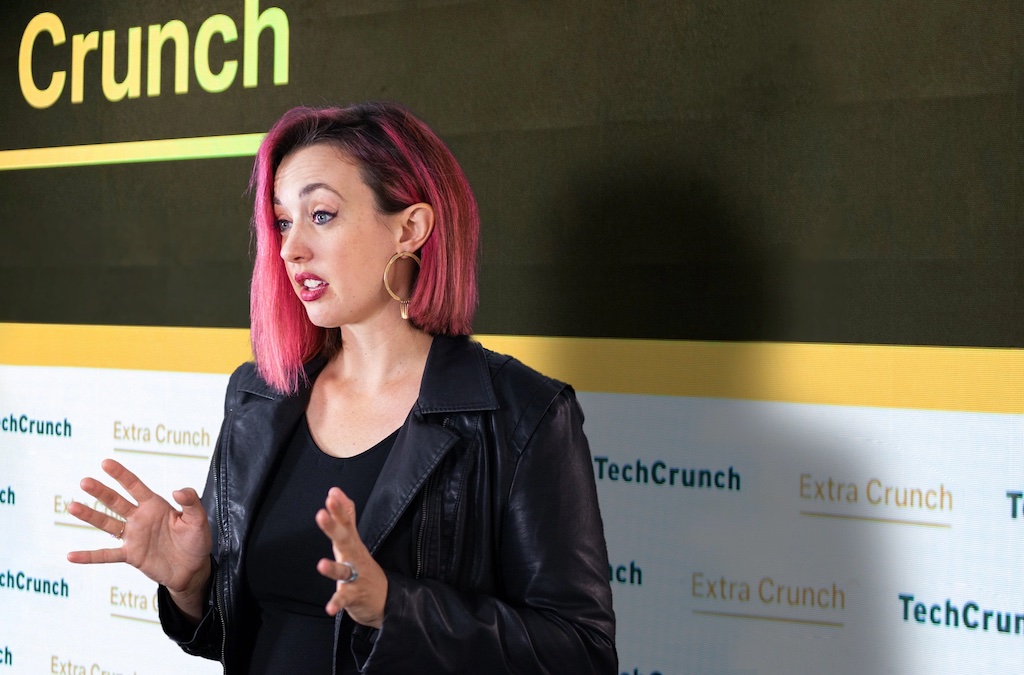
A composite image of immigration law attorney Sophie Alcorn in front of a background with a TechCrunch logo.

Image Credits: Joanna Buniak / Sophie Alcorn (opens in a new window)

I recently interviewed Danielle Goldman, co-founder and executive director of Open Avenues, on my podcast. Through the Global Talent Fellowship program, the foundation offers a unique solution for employers like you to have a Plan B for H-1Bs: It’s possible to obtain an H-1B visa for an existing or prospective employee without going through the H-1B lottery process — or the randomness and timing restrictions that come with it. Goldman refers to the program as “innovation within legislation.”

So how does that work? Well, first off, you should know that four categories of employers are exempt from the annual H-1B lottery, meaning they can apply for an H-1B visa at any time of year and their pool of H-1B visas is not capped. The four categories of employers that are eligible for cap-exempt H-1Bs include:

14 Apr 2021

Toyota taps Apex.AI for its autonomous vehicle operating system

Automakers shifting to all-electric and tech-laden vehicles have discovered that software — and more aptly software that is free of bugs and can be updated wirelessly — has become a consistent speed bump on the road to attracting customers. It is an issue that plagued Volkswagen’s launch of its all-electric VW ID.3, the 2022 Volvo XC40 Recharge and the Ford Mustang Mach-E. 

Apex.AI, a startup founded by Bosch veterans and automated systems engineers Jan Becker and Dejan Pangercic, has spent four years rewriting the robot operating system that will give automakers the tools to integrate software within the vehicle and make sure all the applications run reliably. Now, freshly armed with a safety certification that validates its software development kit (SDK) is sophisticated enough to be used in production vehicles, Apex.AI has landed Toyota and Japanese tech startup Tier IV as partners.

Toyota’s Woven Planet Group is integrating the Apex.OS SDK into its own vehicle development platform, called Arene. The Apex SDK will handle the safety-critical applications and aims to speed up autonomous software development and ultimately bring it to production vehicles. In a separate deal announced Wednesday, Tier IV, a startup in Japan known as the original creator of open-source software for autonomous driving, called Autoware, said it will use Apex.AI’s software stack for safety-critical autonomous systems.

“A trend that has become obvious in the past year, is in order to beat Tesla, car companies are aiming for what they call a software-defined vehicle,” Becker said in a recent interview. Automakers are moving away from distributing 100 electric control units (computers) throughout a vehicle and instead are having just a few high-performance computers with all the functions being implemented by the software, Becker explained.

That shift might mean hundreds or even thousands of software developers might be working on one vehicle. “And that really only works if they are all using the same interface, and not in silos,” Becker said. “And this is exactly what this SDK now enables. So it’s the first time, with Apex.OS that there’s this common abstraction layer or SDK, which can address practically all functions in a vehicle.”

Apex’s toolkit has attracted the attention of private and strategic investors. In 2018, the company raised a Series A round of $15.5 million. Since then, the company has taken strategic investment from Airbus, JLR’s InMotion Ventures, Toyota and Volvo Group. Becker wouldn’t disclose the amounts of those investments, but noted the company is now raising for a Series B.

The roots of Apex.OS are the open-source Robot Operating System known as ROS that is commonly used for R&D projects and the development of autonomous vehicles. Apex’s aim was to rewrite the code to handle functional safety and real-time processing. The SDK was recently certified by TÜV NORD for functional safety. This means the technology is verified for use in production vehicles.

It was a longstanding belief that open-source code was not certifiable, according to Becker. The company spent a year working on the certification.

“If a software crash happens on your laptop it’s inconvenient, but if software crashes in any safety-critical function of a vehicle it can be catastrophic,” Becker said. “This is why we set out to write reliable software that protects against system crashes or operation failures. The certification proves we accomplished our goal as our software targets failure rates so low that they cannot be expressed statistically.”

14 Apr 2021

Gay dating site Manhunt hacked, thousands of accounts stolen

Manhunt, a gay dating app that claims to have 6 million male members, has confirmed it was hit by a data breach in February after a hacker gained access to the company’s accounts database.

In a notice filed with the Washington attorney general’s office, Manhunt said the hacker “gained access to a database that stored account credentials for Manhunt users,” and “downloaded the usernames, email addresses and passwords for a subset of our users in early February 2021.

The notice did not say how the passwords were scrambled, if at all, to prevent them from being read by humans. Passwords scrambled using weak algorithms can sometimes be decoded into plain text, allowing malicious hackers to break into their accounts.

Following the breach, Manhunt force-reset account passwords began alerting users in mid-March. Manhunt did not say what percentage of its users had their data stolen or how the data breach happened, but said that more than 7,700 Washington state residents were affected.

The company’s attorneys did not reply to an email requesting comment.

But questions remain about how Manhunt handled the breach. In March, the company tweeted that, “At this time, all Manhunt users are required to update their password to ensure it meets the updated password requirements.” The tweet did not say that user accounts had been stolen.

Manhunt was launched in 2001 by Online-Buddies Inc., which also offered gay dating app Jack’d before it was sold to Perry Street in 2019 for an undisclosed sum. Just months before the sale, Jack’d had a security lapse that exposed users’ private photos and location data.

Dating sites store some of the most sensitive information on their users, and are frequently a target of malicious hackers. In 2015, Ashley Madison, a dating site that encouraged users to have an affair, was hacked, exposing names, and postal and email addresses. Several people died by suicide after the stolen data was posted online. A year later, dating site AdultFriendFinder was hacked, exposing more than 400 million user accounts.

In 2018, same-sex dating app Grindr made headlines for sharing users’ HIV status with data analytics firms.

In other cases, poor security — in some cases none at all — led to data spills involving some of the most sensitive data. In 2019, Rela, a popular dating app for gay and queer women in China, left a server unsecured with no password, allowing anyone to access sensitive data — including sexual orientation and geolocation — on more than 5 million app users. Months later, Jewish dating app JCrush exposed around 200,000 user records.

Read more: 


Know something, say something. Send tips securely over Signal and WhatsApp to +1 646-755-8849. You can also send files or documents using our SecureDrop. Learn more

14 Apr 2021

Amazon’s latest Echo Buds are a shameless Apple knock-off

This is Amazon’s latest hardware product: The redesigned Alexa earbuds. TechCrunch covered the announcement here, where the specs and capabilities are listed. I’m sure they work fine, too, but the case design is a blatant rip-off of Apple’s AirPod Pros.

This is just lazy.

Amazon has a long history of selling and promoting lookalikes, copycats, and clones of other products. Likewise, the retailer sued third-party sellers for doing the same thing. Amazon also has been accused of investing in companies and later producing clones of the products. In 2020 CEO Jeff Bezos testified on this subject in front of a congressional hearing where he couldn’t guarantee the company would end this process. Often the products Amazon copies come from small startups without the resources to fight a giant like Amazon.

Last month California-based Peak Design took to YouTube to protest Amazon’s unabashed copy of one of Peak’s top products. As Peak points out, Amazon’s take is a cheap knockoff made from lower quality materials and without Peak Design’s ethical manufacturing. The video quickly went viral, amassing over 4.5 million hits and highlighting Amazon’s shady practices.

For the latest Echo Buds, Amazon copied a market leader instead of a small startup. To recap, Amazon, a company worth over a trillion dollars, just released a product that looks essentially identical to a top-selling product from Apple, a company worth 2 trillion dollars.

The Echo Buds are much less expensive than Apple’s $250 AirPod Pros, too. The standard Echo Buds costs $100, and the version with wireless charging runs $120. It’s important to note the wireless buds themselves do not look like AirPods. Amazon only copied the ubiquitous AirPod Pro case.

The consumer is the loser here. With more resources than many countries, Amazon can produce world-class products, yet it decided to copy a rival’s market-leading product. In the end, it’s easier (and cheaper) to follow trends than become a trendsetter.


Peak Design takes on Amazon

14 Apr 2021

I can’t believe it’s not meat! Mycelium meat replacement company aims for summer launch of first products

Meati, a company turning mycelium (the structural fibers of fungi) into healthier meat replacements for consumers, is prepping for a big summer rollout.

Co-founder Tyler Huggins expects to have the first samples of its whole-cut steak and chicken products in select restaurants around the country — along with their first commercial product, a jerky strip.

For Huggins, the product launch is another step on a long road toward broad commercial adoption of functional fungi foods as a better-for-you alternative to traditional meats.

“Use this as a conversation starter. About 2 ounces of this gives you 50% of your protein; 50% of your fiber; and half of your daily zinc. There really is nothing that can compare to this product in terms of nutritionals,” Huggins said. 

And moving from meat to mushrooms is a better option for the planet.

Meati expects to turn on its pilot plant this summer and is joining a movement among mushroom fans that includes milk replacements, from Perfect Day, more meat replacements from Atlast, and leather substitutes from Ecovative and MycoWorks.

“We’re definitely all in this together,” said Huggins of the other mob of mycelium-based tech companies bringing products to market.

However, not all mycelium is created equally, Huggins said. Meati has what Huggins said was a unique way of growing its funguses (not a real word) that “keep it in its most happy state.” That means peak nutritional content and peak growth efficiency, according to the company.

For Huggins, whose parents own a bison ranch and who grew up in cattle country, the goal is not to replace a t-bone or a ribeye, but the cuts of meat and chicken that find their ways into a burrito supreme or other quick serve meat cuts.

Rendering of Meati mushroom meats in a Banh Mi. Image Credit: Meati

“Head to head with that kind of cut, we win,” Huggins said. “I’d rather pick a fight there now and buy ourselves some time. I don’t think we’re going to go super high-end to start.”

That said, the company’s cap table of investors already includes some pretty heady culinary company. Acre Venture Partners (which counts Sam Kass — President Barack Obama’s Senior Policy Advisor for Nutrition Policy, Executive Director for First Lady Michelle Obama’s Let’s Move! campaign, and an Assistant Chef in the White House — among its partnership) is an investor. So is Chicago’s fine dining temple, Alinea.

But Huggins wants Meati to be an everyday type of meat replacement product. “I want to make sure that people think this is an every day protein,” Huggins said.

Meati thinks its future meat replacements will be cost competitive with conventional beef and chicken, but to whet consumers’ appetites, the company is starting with jerky.

“Meati’s delicious jerky,” said Huggins. “It provides this blank canvas. We’ll start with these beef jerky like flavors. But I want to come out of the gate and say that we’re mycelium jerky.”

The company currently has 30 people on staff led by Huggins and fo-founder Justin Whiteley. The two men initially started working on Meati as a battery replacement. Based on their research (Huggins with mycelium and Whiteley with advanced batteries) the two men received a grant for a mycelium-based electrode for lithium ion batteries.

“We were trying to tweak the chemical composition of the mycelium to make a better battery. What we found was that we were making something nutritious and edible,” said Huggins.

Also… the battery companies didn’t want it.

Now, backed by $28 million from Acre, Prelude Ventures, Congruent Ventures and Tao Capital, Meati is ready to go to market. The company also has access to debt capital to build out its vast network of mycelium growing facilities. It’s just raised a $18 million debt round from Trinity and Silicon Valley Bank.

“Two years ago … most companies in this space … there wasn’t this ability to take on debt to put steel in the ground,” said Huggins. “It’s an exciting time to be in food tech given that you can raise VC funding and there’s this ready available market for debt financing. You’ll start seeing faster and more rapid development because of it.”

Meati co-founders Tyler Huggins and Justin Whiteley. Image Credit: Meati

14 Apr 2021

Inside the US’ epic first-quarter venture capital results

It’s no surprise that the venture capital market was incredibly active in the United States during the first quarter of 2021, but precisely how strong has only recently become clear. This morning, we’re digging into the data.

According to a report from PitchBook, venture capitalists unleashed a wave of capital in the first three months of the year. So much, in fact, that funding in the United States nearly doubled compared to the same quarter of 2020.

We’ll dig into specific numbers and trends regarding aggregate venture capital results in a moment, but what stood out the most while digesting the Q1 dataset was how strong VC results appeared across different states; a solo late-stage boom the quarter was not.

Seed deal volume appeared strong and early-stage venture capital activity could reach new highs in 2021, but late-stage venture capital activity in the United States is already setting records in both deal count and invested dollars.


The Exchange explores startups, markets and money.

Read it every morning on Extra Crunch or get The Exchange newsletter every Saturday.


We’ll parse the headline numbers and then dive into seed and super late-stage data with the help of Sarah Kunst of Cleo Capital, Jenny Lefcourt of Freestyle Capital, Iris Choi of Floodgate and Laela Sturdy of CapitalG.

With their help, we’ll contextualize the numbers and weave anecdotal observations into what the charts and graphs tell us. Especially in the case of seed data, which is famously laggy, added context is crucial. Let’s go!

A Q1 overview

According to PitchBook’s report, some 3,987 venture capital rounds were closed in the United States during Q1 2021. Those deals were worth $69 billion, a figure up nearly 93% from 2020’s first-quarter results.

In broad strokes, the United States had a crushing venture capital start to the new year, pandemic be damned. That is especially true when we consider 2020’s full-year figures. Last year, venture capitalists deployed some $166 billion into U.S.-based startups across 12,546 rounds. In contrast, if the first quarter’s pace was maintained during the rest of 2021, the United States would see around 16,000 rounds worth around $280 billion.

Of course, we cannot see the future, so those projections are merely shared to underscore how active the first quarter proved to be; we’ll have to wait for at least another quarter’s data to confidently predict full-year records for 2021.

Powering the rapid start to the venture capital year was a holistic boom: Seed deal volume is forecasted to have set a multi-year high, perhaps matching the historically strong Q2 2018 period. Early-stage venture capital during Q1 2021 was also robust, with $14.5 billion deployed across 1,170 rounds. Both numbers set a pace for fresh records in 2021.

And then there was late-stage dealmaking, which soared in the first quarter. In 2020, late-stage venture capital deals were worth $111.4 billion raised from 3,504 rounds. In the first quarter of 2021, some $51.9 billion was invested into late-stage startups across 1,291 deals.

Valuations and round sizes continued to rise across the board. If there was a better time to raise a big whack of venture capital as a U.S.-based startup, we cannot recall it. And the data seems to scream that the good times are now as good, or gooder, than ever.

14 Apr 2021

Astranis raises $250M at a $1.4B valuation for smaller, cheaper geostationary communications satellites

Space startup Astranis has raised a $250 million Series C round to provide it with a capital injection to help scale manufacturing of its unique MicroGEO satellites — geostationary communications satellites that are much smaller than the typical massive, expensive spacecraft used in that orbital band to provide communications and connectivity to specific points on Earth.

The Astranis Series C was led by BlackRock-managed funds, and includes participation from a host of new investors including Baillie Gifford, Fidelity, Koch Strategic Platforms and more. Existing investors including Andreessen Horowitz, Venrock, and more also chipped in, with the raise valuing the company at $1.4 billion post-money.

This brings the total funding raised by Astranis to over $350 million, including both equity and debt financing. Astranis got started only in 2016, and was part of the YC Winter 2016 cohort. While a lot of other companies are looking to build satellite constellations in low-Earth orbit to provide low-cost broadband on Earth, Astranis, led by co-founder and CEO John Gedmark, is focused on the GEO band, where the large legacy communications satellites currently operate, orbiting the Earth at a fixed position and providing connectivity to a set area on Earth.

Gedmark has told me previously that the company’s offering is very different from the LEO constellations being put up and operated by companies including SpaceX, because they’re essentially a much more targeted, nimble solution that works with existing ground infrastructure. Customers who have a specific regional need for connectivity can get Astranis to put one one up at a greatly reduced cost compared to a traditional GEO communications satellite, and do so to replace or upgrade aging existing satellite network infrastructure, for example.

It’s worth noting that BlackRock, which led this round, has also been a key participant in the PIPE components of high-profile space startup SPACs like launcher company Astra’s. Not saying that’s the exit plan this round is setting up, but definitely something to think about.

14 Apr 2021

Creatively raises $5M to help creative professionals showcase and find work

Creatively — a startup that helps designers, photographers, illustrators and other creative professionals showcase their work and find their next job — is announcing that it has raised in $5 million.

Founded by Stacey Bendet (founder and CEO of fashion company Alicia + Olivia) and Joe Indriolo (who also serves as Creatively’s chief product officer), the startup launched last May.

At the time, CEO Greg Gittrich emphasized the customizability of its creative portfolios, allowing each user to showcase their work in different ways. Potential employers, meanwhile, post creative jobs, and after a job has been completed on the platform, it can become the next piece in the artist’s portfolio.

The startup says there are now more than 125,000 creatives on the platform, while 650 companies (including HBO, Tom Ford, SKIMS, Nickelodeon, Ro, CNN and The Gap) have used it to recruit.

Gittrich told me via email that he’s been surprised by “the breadth of talent and variety of disciplines” on the platform, which includes “photographers like Emmanuel Sanchez Monsalve and Derrick Ofosu Boateng, creative directors like Kameron Mack and Eric Alexander Franklin, illustrators and animators like Tara Jacoby and Mulan Fu, visual artists like King Kesia and Bryane Broadie, and designers like KidSuper and Aziza-Abdullah Nicole.” He also pointed to the popularity of the free Creatively Classes.

“We originally envisioned Classes as a one-time virtual event for October,” Gittrich said. “But the number of sign-ups and the engagement for the first slate of instructors was so overwhelming that we made Classes into a monthly series. All the classes are taught by experienced creatives in our community and they’re designed to give our community the skills, mentorship and inspiration they need to succeed.”

The seed round was led by Link Ventures. (Previous investors include Michael Eisner’s Tornante Company and Shari Redstone’s Advancit Capital.) This investment also connects Creatively to the firm’s incubator Cogo Labs, which will help the startup grow revenue and lower customer acquisition costs.

In a statement, Link Ventures Managing Director Lisa Dolan described Creatively as “LinkedIn for the creative world.”

“Today’s job market needs Creatively,” she continued. “Businesses are looking to recruit creatives directly, but lack the network and resources to find qualified, diverse talent. Creatively changes that. Their growth in less than a year is very impressive, and we’re excited to be a part of the team.”

14 Apr 2021

PlexTrac raises $10M Series A round for its collaboration-centric security platform

PlexTrac, a Boise, ID-based security service that aims to provide a unified workflow automation platform for red and blue teams, today announced that it has raised a $10 million Series A funding round led by Noro-Moseley Partners and Madrona Venture Group. StageDot0 ventures also participated in this round, which the company plans to use to build out its team and grow its platform.

With this new round, the company, which was founded in 2018, has now raised a total of $11 million, with StageDot0 leading its 2019 seed round.

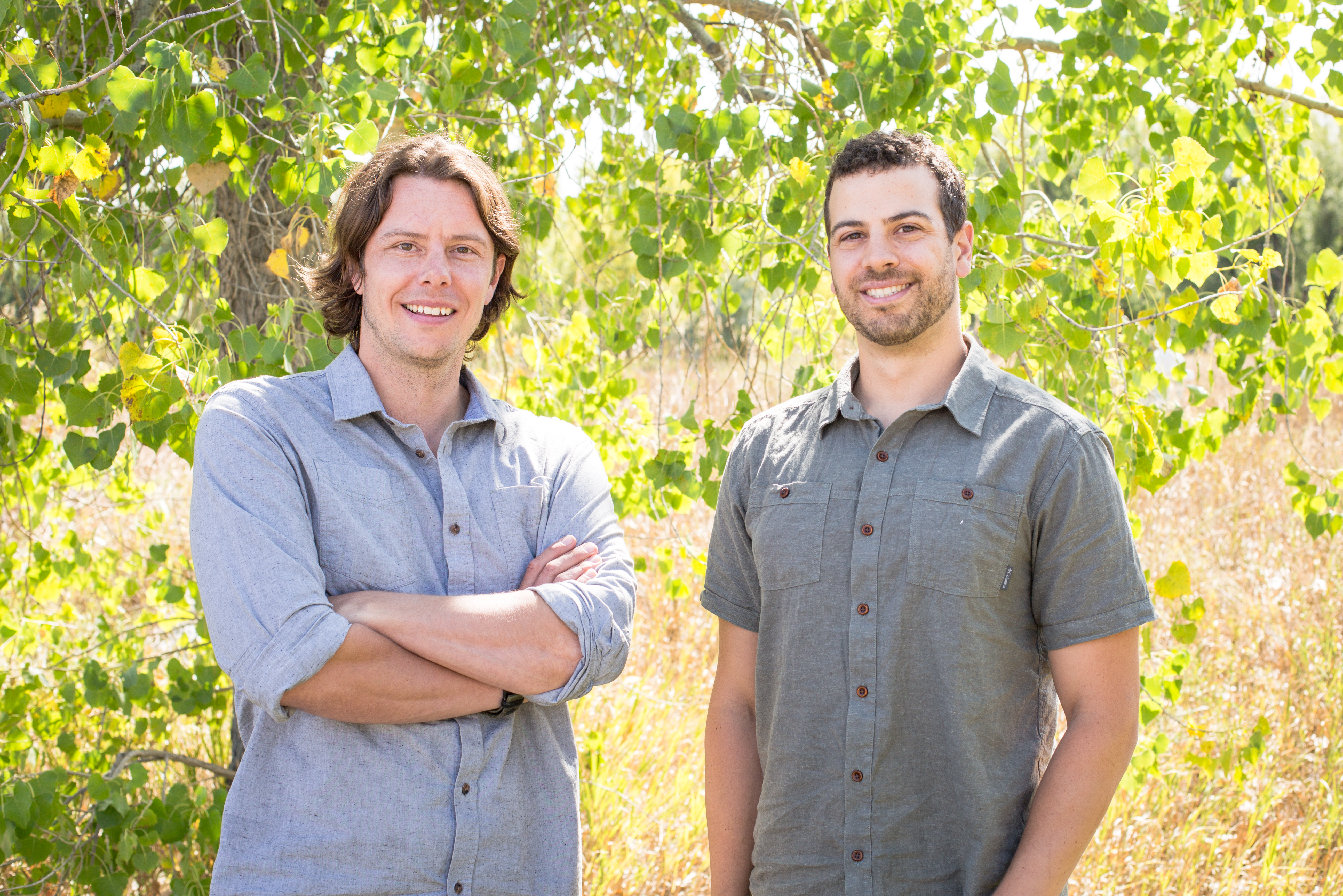
PlexTrac CEO and President Dan DeCloss

PlexTrac CEO and President Dan DeCloss

“I have been on both sides of the fence, the specialist who comes in and does the assessment, produces that 300-page report and then comes back a year later to find that some of the critical issues had not been addressed at all.  And not because the organization didn’t want to but because it was lost in that report,” PlexTrac CEO and President Dan DeCloss said. “These are some of the most critical findings for an entity from a risk perspective. By making it collaborative, both red and blue teams are united on the same goal we all share, to protect the network and assets.”

With an extensive career in security that included time as a penetration tester for Veracode and the Mayo Clinic, as well as senior information security advisor for Anthem, among other roles, DeCloss has quite a bit of first-hand experience that led him to found PlexTrac. Specifically, he believes that it’s important to break down the wall between offense-focused red teams and defense-centric blue teams.

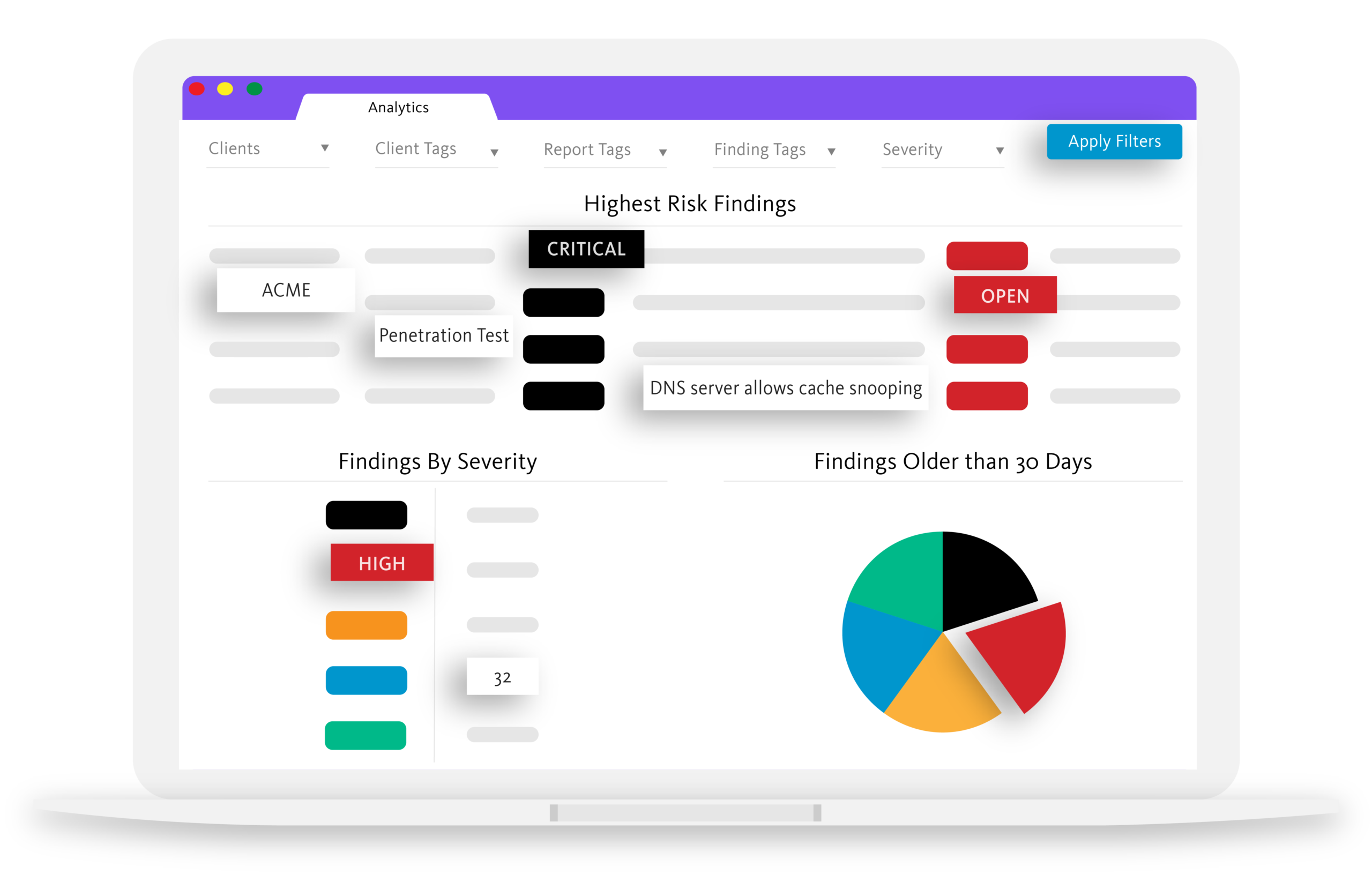
Image Credits: PlexTrac


“Historically there has been more of the cloak and dagger relationship but those walls are breaking down– and rightfully so, there isn’t that much of that mentality today– people recognize they are on the same mission whether they are internal security team or an external team,” he said. “With the PlexTrac platform the red and blue teams have a better view into the other teams’ tactics and techniques – and it makes the whole process into an educational exercise for everyone.”

At its core, PlexTrac makes it easier for security teams to produce their reports — and hence free them up to actually focus on ‘real’ security work. To do so, the service integrates with most of the popular scanners like Qualys, and Veracode, but also tools like ServiceNow and Jira in order to help teams coordinate their workflows. All the data flows into real-time reports that then help teams monitor their security posture. The service also features a dedicated tool, WriteupsDB, for managing reusable write-ups to help teams deliver consistent reports for a variety of audiences.

“Current tools for planning, executing, and reporting on security testing workflows are either nonexistent (manual reporting, spreadsheets, documents, etc…) or exist as largely incomplete features of legacy platforms,” Madrona’s S. Somasegar and Chris Picardo write in today’s announcement. “The pain point for security teams is real and PlexTrac is able to streamline their workflows, save time, and greatly improve output quality. These teams are on the leading edge of attempting to find and exploit vulnerabilities (red teams) and defend and/or eliminate threats (blue teams).”