Year: 2021

08 Apr 2021

Comet announces $13M Series A for ML model building tool

There’s been a lot of investment in machine learning startups recently as companies try to push the notion into a wider variety of endeavors. Comet, a company that helps customers iterate on models in an experimentation process designed to eventually reach production, announced a $13 million Series A today.

Scale Venture Partners led the round with help from existing investors Trilogy Equity Partners and Two Sigma Ventures. The startup has raised almost $20 million, according to Crunchbase data.

Investors saw a company that has grown revenue over 500% over the last year, says Gideon Mendels, co-founder and CEO. “Things have been working very well for us. On the product side, we’ve continued to double down on what we call experimentation management where we are really tracking these models — data that came into them, the hyper parameters and helping teams to debug and understand what’s going on with their models,” he said.

In addition to the funding, the company is also announcing an expansion of the platform to follow the models into post production with a product they are calling Comet Model Production Monitoring (MPM).

“The model production monitoring product essentially focuses on models post production. The original product was more around how multiple offline experiments are modeled during training, while MPM is focused on these models once they hit production for the first time,” Mendels explained.

Andy Vitus, partner at investor Scale Venture Partners, sees model lifecycle management tooling like Comet’s as a developing market. “Machine learning and AI will drive the future of enterprise software, and ensuring that organizations have full visibility and control of a model’s life cycle will be imperative to it,” Vitus said in a statement

As the company grows, it’s opening a new engineering hub in Israel in addition to its office in NYC. While these offices are closed for now, Mendels says that they will have a hybrid office when the pandemic ebbs.

“Moving forward we are planning to have an office in New York City and another office in Tel Aviv. But we’re not going to require anyone to work from the office if they choose not to, or, they can come in a couple days a week. And we’re still going to support hires from around the world.”

08 Apr 2021

Omada Health launches the Omada Insights Lab to help improve healthcare outcomes

Omada Health, one of the U.S.’s original virtual healthcare providers, today announced the creation of the Omada Insights Lab.

“The Insights Lab is an approach to product development that leverages multidisciplinary teams to rapidly look at what does and does not work in a digital care setting and then scale those tools within the company,” Sean Duffy, co-founder and CEO, told TechCrunch.

Omada offers care management for diabetes, musculoskeletal issues, preventative health, hypertension, and behavioral health. Its main differentiator from other virtual healthcare providers is the amount of handholding it offers to its patients, which in turn has shown to deliver better health outcomes. Through the Insights Lab, it plans to share insights to help improve care outcomes across the industry.

“A shared sense of commitment with an Omada care professional increases the likelihood of a better outcome by 250%,” Duffy said.

One tactic Omada uses to keep patients on track is the “nudge.”

Like your Apple watch that tells you when to stand up or breathe, the Omada app can remind its diabetes patients to have a meal and to measure their blood sugar, for example. If you’re thinking, “Yeah, but I often ignore my Apple watch,” you’re not alone. The company has also noticed that passive nudges aren’t as successful as a comprehensive and proactive approach to care, especially one that involves human interaction. As a result, the Omada doctors have made changes to their care delivery.

Omada co-founder and CEO Sean Duffy

Here’s an example: the Lab wanted to find out how to help their diabetes prevention patients lose weight – being overweight is a key indicator of developing diabetes. They looked at the automated nudges, reminders to track meals, mealtime push notifications, and engagement with the care team.

While all of the approaches made it more likely that people would track their meals – an important task that helps patients stay on track with their diets – only one drove increases in weight loss: engagement with the care team. They found that patients who interact with their care team or community in the first week of the program are 24% more likely to achieve their health goals and patients who message their care teams are twice as likely to achieve positive health outcomes.

Consequentially, Duffy said, “It’s not just engagement that matters, it’s the type of engagement.”

Omada took these insights and reduced the use of nudges and implemented ways for the care team to interact with the patients more.

While Omada is already using the more than a billion data points it’s recorded from 450,000 members in the company’s 10 years of business to improve its own tools, with the launch of the Lab, the company also plans to share the data and strategies with the broader medical community through content on its website and other outlets.

Because the company is only virtual, it prides itself on the amount – and quality – of its data.

“It’s so hard to measure small details in in-person settings, but with digital, you can measure everything,” Duffy said. “Everything people are doing in the app are connected to meaningful outcomes,” he added. 


08 Apr 2021

Omada Health launches the Omada Insights Lab to help improve healthcare outcomes

Omada Health, one of the U.S.’s original virtual healthcare providers, today announced the creation of the Omada Insights Lab.

“The Insights Lab is an approach to product development that leverages multidisciplinary teams to rapidly look at what does and does not work in a digital care setting and then scale those tools within the company,” Sean Duffy, co-founder and CEO, told TechCrunch.

Omada offers care management for diabetes, musculoskeletal issues, preventative health, hypertension, and behavioral health. Its main differentiator from other virtual healthcare providers is the amount of handholding it offers to its patients, which in turn has shown to deliver better health outcomes. Through the Insights Lab, it plans to share insights to help improve care outcomes across the industry.

“A shared sense of commitment with an Omada care professional increases the likelihood of a better outcome by 250%,” Duffy said.

One tactic Omada uses to keep patients on track is the “nudge.”

Like your Apple watch that tells you when to stand up or breathe, the Omada app can remind its diabetes patients to have a meal and to measure their blood sugar, for example. If you’re thinking, “Yeah, but I often ignore my Apple watch,” you’re not alone. The company has also noticed that passive nudges aren’t as successful as a comprehensive and proactive approach to care, especially one that involves human interaction. As a result, the Omada doctors have made changes to their care delivery.

Omada co-founder and CEO Sean Duffy

Here’s an example: the Lab wanted to find out how to help their diabetes prevention patients lose weight – being overweight is a key indicator of developing diabetes. They looked at the automated nudges, reminders to track meals, mealtime push notifications, and engagement with the care team.

While all of the approaches made it more likely that people would track their meals – an important task that helps patients stay on track with their diets – only one drove increases in weight loss: engagement with the care team. They found that patients who interact with their care team or community in the first week of the program are 24% more likely to achieve their health goals and patients who message their care teams are twice as likely to achieve positive health outcomes.

Consequentially, Duffy said, “It’s not just engagement that matters, it’s the type of engagement.”

Omada took these insights and reduced the use of nudges and implemented ways for the care team to interact with the patients more.

While Omada is already using the more than a billion data points it’s recorded from 450,000 members in the company’s 10 years of business to improve its own tools, with the launch of the Lab, the company also plans to share the data and strategies with the broader medical community through content on its website and other outlets.

Because the company is only virtual, it prides itself on the amount – and quality – of its data.

“It’s so hard to measure small details in in-person settings, but with digital, you can measure everything,” Duffy said. “Everything people are doing in the app are connected to meaningful outcomes,” he added. 


08 Apr 2021

Verizon and Honda want to use 5G and edge computing to make driving safer

Honda and Verizon are researching how 5G and mobile edge computing might improve safety for today’s connected vehicles and the future’s autonomous ones. 

The two companies, which announced the partnership Thursday, are piloting different safety scenarios at the University of Michigan’s Mcity, a test bed for connected and autonomous vehicles. The aim of the venture is to study how 5G connectivity coupled with edge computing could allow for faster communication between cars, pedestrians and infrastructure. The upshot: faster communication could allow cars to avoid collisions and hazards and find safer routes. [TechCrunch is owned by Verizon Media, which is itself owned by Verizon]

The 5G testing is in its preliminary research phase and Honda doesn’t intend to implement this new technology as a product feature just yet. The companies do have plans to test 5G-enabled vehicles on public roads in at least four cities this year, according to Brian Peebles, Verizon’s senior manager of technology development and one of the leads on the project.  

This partnership builds off of Honda’s onboard SAFE SWARM AI technology, which the automaker began developing in 2017. That technology uses Cellular Vehicle-to-Everything, or C-V2X communication, which does what the name implies and lets vehicles communicate with other road users.

We’ve seen similar tech before with Dedicated Short Range Communications which requires cell towers to communicate between vehicles. V2X and 5G have the advantage of being able to communicate device-to-device, not to mention endorsement by the FCC.

“Traditionally, with V2X, the cars talk to each other,” Dr. Ehsan Moradi Pari, research group lead at Honda’s advanced technology research division told TechCrunch. “They provide their information, like their location, speed and other sensor information, and the car does a threat assessment, like whether I’m going to collide with another car. What this [5G and MEC] technology offers is that we all provide our information to the network, and the network tells me if there is a potential for an accident or not.”

Honda and Verizon’s premise is that the technology can handle communication far faster than a car’s computer. Instead of relying on a car’s less capable computer to do the work, information generated from connected cars, people and infrastructure is sent up into the 5G network. The computations are then done at the edge of network (meaning not in the cloud) in real time.

The payoff: a car relying on sensors and software might be able to understand a driver is about to hit something and hit the breaks, but the MEC can almost see into the future by checking out and communicating what’s happening farther down the road. 

One of the safety scenarios that Verizon and Honda tested was a red light runner. Using data from smart cameras, MEC and V2X software they were able to detect the vehicle running a red light and send a visual warning message to other vehicles approaching the intersection. They tested similar scenarios to warn drivers or vehicles about a pedestrian obscured by a building and an oncoming emergency vehicle whose sirens are drowned out by the car’s loud music. 

“Ensuring real-time communication among all road users will play a critical role in an automated driving environment,” said Pari. “Through these connected safety technologies, we can develop vehicle systems that detect potential dangerous situations in real time to warn the driver or automated system.”

While this initial research stage involves making human-driven vehicles safer, the Honda-Verizon partnership might eventually lay the groundwork for the use of 5G in future autonomous vehicles. If testing proves out, connected vehicles would be safer and could lead to a more efficient network that smooths out traffic congestion and reduces air pollution. 

“We’re primarily doing this to promote vehicle safety and human safety,” Peebles told TechCrunch. “There are over 42,000 people a year in the United States alone that are killed in automobile accidents, and another two million are injured. Technology is becoming more crucial as we undergo an evolution of human drivers, so as that transition happens, we need to do it in a safe and orchestrated manner, such that everything is working together.”

Autonomous vehicles being tested on public roads today don’t require 5G or edge computing. While autonomous vehicle companies are eyeing what might be possible with 5G, the vehicles they’re developing are based on present-day technology.

There are headwinds to this 5G-MEC combination. This level of interconnectivity only works if there are sensors on every highway and every intersection. Many 5G-enabled vehicles and devices will be able to communicate with one another, but they can only communicate with pedestrians or infrastructure if smart cameras are clocking them and sharing that info with the network. And sensors are not perfect.

That would require a huge infrastructure investment as well as public acceptance and cooperation with states, cities and localities to install all of the necessary sensors. However, one might look to China as a use case. The country has a national policy to move rapidly over to a 5G network, and many Chinese autonomous driving companies are finding this type of connectivity and computational power essential to development.

08 Apr 2021

Norwegian corporate training startup Attensi raises $26M from NYC’s Lugard Road, DX Ventures

Corporate training startup Attensi — which originally emerged out of Oslo, Norway — has raised $26 million from New York-based Lugard Road Capital, DX Ventures (a VC fund backed by Delivery Hero), and existing shareholder Viking Venture. The new funding will be used to expand in North America and Europe.

Attensi uses a ‘gamified approach to corporate training, putting employees into 3D simulations of their workplace and work processes. Its competitors include companies like GoSkills, Mindflash SAP Litmos Skilljar.

With the pandemic shifting all office work to remote, digital training platforms like this stand to benefit.

This is also yet another recent example of how US VCs are ‘going hunting’ for startups in Europe, putting pressure on local VCs.

Attensi co-founder and co-CEO, Trond Aas said in a statement: “With gamified simulation training, we have combined the best of workplace psychology with our expertise in simulations and gamification to create a new category of training solutions.”

The company claims it’s experienced a 63% CAGR in annual recurring revenue. Its clients include Daimler Mercedes Benz, Circle K, Equinor, BCG, and ASDA.

Doug Friedman, a partner at Lugard Road Capital, said: “We could not be more excited to be investing in the Attensi team as they work to forever change and improve corporate learning and development through their Attensi solutions.”

08 Apr 2021

KKR hands Box a $500M lifeline

Box announced this morning that private equity firm KKR is investing $500 million in the company, a move that could help the struggling cloud content management vendor get out from under pressure from activist investor Starboard Value.

The company plans to use the proceeds in what’s called a “dutch auction” style sale to buy back shares from certain investors for the price determined by the auction, an activity that should take place after the company announces its next earnings report in May. This would presumably involve buying out Starboard, which took a 7.5% stake in the company in 2019.

Last month Reuters reported that Starboard could be looking to take over a majority of the board seats when the company board meets in June. That could have set them up to take some action, most likely forcing a sale.

While it’s not clear what will happen now, it seems likely that with this cash, they will be able to stave off action from Starboard, and with KKR in the picture be able to take a longer term view. Box CEO Aaron Levie sees the move as a vote of confidence from KKR in Box’s approach.

“KKR is one of the world’s leading technology investors with a deep understanding of our market and a proven track record of partnering successfully with companies to create value and drive growth. With their support, we will be even better positioned to build on Box’s leadership in cloud content management as we continue to deliver value for our customers around the world,” Levie said in a statement.

Under the terms of the deal, John Park, Head of Americas Technology Private Equity at KKR, will be joining the Box board of directors. The company also announced that independent board member Bethany Mayer will be appointed chairman of the board, effective on May 1st.

Earlier this year, the company bought e-signature startup SignRequest, which could help open up a new set of workflows for the company as it tries to expand its market. With KKR’s backing, it’s not unreasonable to expect that Box, which is cash flow positive, could be taking additional steps to expand the platform in the future.

Box stock was down over 8% premarket, a signal that perhaps Wall Street isn’t thrilled with the announcement, but the cash influx should give Box some breathing room to reset and push forward.

08 Apr 2021

Alyce, an AI-based personalised corporate gifting startup, raises $30M

Swag has a long and patchy history in the world of business. For every hip pair of plaid socks, there are five t-shirts you may never wear, an itchy scarf, a notepad your kids might use, and an ugly mug; and most of all, likely thousands of dollars and lots of time invested to make those presents a reality. Now, a startup that has built a service to rethink the concept behind corporate gifts and make them more effective is today announcing a round of funding to continue expanding its business — and one sign that it may be on to something is its progress so far.

Alyce, a Boston startup that has built an AI platform that plugs into various other apps that you might use to interact and track your relationships with others in your working life — sales prospects, business partners, colleagues — and then uses the information to personalise gift recommendations for those people, has raised $30 million, a Series B that it will be using to continue building out its platform, signing up more users, and hiring more people for its team.

This round is being led by General Catalyst, with Boston Seed Capital, Golden Ventures, Manifest, Morningside and Victress Captial — all previous backers — also participating.

Alyce says that it has grown 300% year-over-year between 2019 and 2020, tackling a corporate gifting and promotional items industry that ASI Market Research estimates is worth around $24.7 billion annually. Its customers today include Adobe’s Marketo, G2, Lenovo, Wex, Invision, DialPad, GrubHub, and 6Sense.

And, as with so many other apps and services that aim at productivity and people management, Alyce notes that this year of working remotely — which has tested many a relationship and job function, led to massive floods of digital activity (the screen is where everything gets played out now), and frankly burned a lot of us out — has given it also a new kind of relevance.

“As everyone was flooded with spam last year unsubscribing soared,” Greg Segall, founder and CEO of Alyce, said in a statement. “When a prospect opts out, that’s forever. It’s clear that both brands and customers crave the same thing – a much more purposeful and relatable way to engage.”

Alyce’s contribution to more quality engagement comes in the form of AI-fueled personalization. Linking up with the other tools people typically use to track their communications with people — they include Marketo, Salesforce, Vidyard and Google’s email and calendar apps — the system has been built with some algorithms that constructs some details about the preferences and tastes of the intended gift recipient. It then uses that to come up with a list of items that might appeal to that person from a wider list that it has compiled, with some 10,000 items in all. These can also include more traditional corporate swag items like those socks or mugs. Then, instead of sending an actual gift, “Swag Select”, as Alyce’s service is called, sends a gift code that lets the person redeem with its own choice from a personalised, more narrowed-down list of items.

Alyce itself doesn’t actually hold or distribute the presents: it connects up with third parties that send these out.

Yes, you might argue that a lot of this sounds actually very impersonal — the gift giver is not directly involved in the selection or sending of a present at all, which instead is “selected” by way of AI — essentially, a variation of the personalization and recommendation technology that has been built to serve ads, suggest products to you on e-commerce sites, and more.

But on the other hand, it’s an interesting solution to the problem of trying to figure out what to get someone, which can be a challenge when you really know a person, and even harder when you don’t, while at the same time helping to create and fulfill a gesture that, at the end of the day, is about being thoughtful of them, not really the gift itself. (You could also argue, I think, that since the gift lists are based on a person’s observations about the recipient, there is in fact some personal touches here, even if they have been run through an algorithmic mill before getting to you.)

And, at the end of the day, the aim of these gifts is to say “thank you”, or “please buy more printer paper from me” — not “I’m sorry for being rude to you at dinner last night.” Although… if this works as it should, maybe there might well be an opportunity to extending the model to more use cases, for example brands looking for ways to change up their direct mail marketing campaigns, or yes, people who want to patch things up after a spat.

Notably, for General Catalyst, its interested indeed in the bigger gifting category, pointing to the potential of how this service could be scaled in the future.

“At General Catalyst, we are proud to lead the latest round of funding for Alyce as the company has reimagined the gifting category with technology and impact. The ability to deliver products and experiences that both the giver and recipient feel good about is incredibly powerful,” said Larry Bohn, Managing Director at General Catalyst, in a statement.


08 Apr 2021

As working out goes virtual, Moxie raises $6.3M Seed+ round led by Resolute Ventures

With the pandemic sending the planet indoors to workout, the at-home fitness market has boomed. It was only in October last year that three-year-old Future closed $24 million in Series B and Playbook (streaming for personal trainers) raised $9.3 million in a Series A. Into this market launched Moxie, a platform that allowed fitness instructors to broadcast live and recorded classes, access licensed music playlists and deploy a CRM and payment tools. Classes range from $5-$25 and various subscriptions and packages are offered.

Moxie has now raised a $6.3M ‘Seed+’ funding round led by Resolute Ventures with participation from Bessemer Ventures, Greycroft Ventures, Gokul Rajaram, and additional investors. With the $2.1M Seed round from last October, that means Moxie has now raised a total of $8.4M.

With the funding, Moxie now plans to better optimize the user experience with a curated selection of top Moxie classes; new tools that help connect users to instructors; and the ability to preview classes before attending.

The company claims to have experienced “exponential growth” because of its convenience in the pandemic era, with 8,000 classes and 1 million class-minutes completed in March. Moxie’s independent instructors set their own schedules and prices, and get to keep 85% of what they earn on the platform.

The company will also now launch ‘Moxie Benefits’ in partnership with Stride Health, provide instructors with access to health insurance, dental and vision plans, life insurance, and other benefits.

Also planned is ‘Moxie Teams’, enabling groups of instructors to join together to form small businesses on the platform, not unlike the way some Uber drivers form teams.

Jason Goldberg, CEO and founder said in a statement: “Moxie was born during the pandemic alongside thousands of independent fitness instructors who were forced out of gyms and studios and suddenly had to become entrepreneurs and navigate the new frontier of virtual fitness. Now we are seeing widespread adoption of online fitness into people’s lives, and Moxie’s growth proves that these shifts in consumer behavior have staying power. We know that 89% of Moxie users plan to continue virtual workouts post COVID — they love the convenience.”

Resolute Ventures Partner & Co-Founder Raanan Bar-Cohen said: “Our investment theory has always been to identify entrepreneurial founders solving for today’s problems. With Moxie, we saw an experienced operator in Jason, with a product that solved for the issues that instructors and consumers had experienced in the shift to online fitness, as well as a clear roadmap for continued success.”

So why has Moxie managed to cleave to the new virtual workout culture? Goldburg tells me it’s down to a range of factors.

For starters, it’s a two-sided fitness marketplace that has live interactive group fitness classes, unlike VOD apps, and, crucially, unlike Peloton. Additionally, any instructor can teach on Moxie, rather than wait to be picked as a ‘star’ by Peloton. Since 90% of classes are live group fitness classes, they are effectively replacing yoga studios and HIIT classes, rather than personal training. He says many top instructors are now earning $6-figures on the platform.

Certainly, Moxie has managed to capitalize on the fact that while gyms are closed, it’s easy to do virtual classes. Will they still stick around when the pandemic is over? Presumably many will find it more convenient than schlepping to the gym and less intimidating than joining classes in person. Additionally, users can switch classes as easily as switching TV channels.

As Goldberg told me via email: “Covid forced everyone to try virtual fitness for the first time. Guess what? People found it more convenient and more connected than going to offline gyms. And guess what? Peloton is not for everyone.”

08 Apr 2021

Index closes $200 million dedicated seed fund to intensify multi-stage thesis

The once quiet world of seed investing became frenetic a few years ago as dedicated seed funds and angel networks increased in scale and velocity. That environment has now crescendoed into the present world of the seed capital hurricane: funds galore, solo capitalists splurging streams of rolling-capital dollars wherever they can find a cap table crevice, crowdfunding cash sloshing around — and in the eye of the storm are the founders looking to just snag a term sheet for their companies and get back to work.

Into that maelstrom comes Index Ventures, which today announced the close and launch of a new $200 million dedicated seed investing vehicle it’s dubbed Index Origin. The fund’s name pays homage to the firm’s long-standing commitment to seed and first-check investing, where it has backed companies as diverse as Robinhood, Figma, Deliveroo and Wise (aka the rebranded TransferWise) at the seed state.

“Our view is that seed investing is truly the essence of venture capital,” said Nina Achadjian, a partner at Index who joined in early 2020. “It’s when you as an investor have to take the biggest leap of faith.”

She noted that the firm “in the last 18 months, I think we’ve made over almost 35 seed investments.” The new Index Origin fund would be a ramp up in terms of volume.

There’s extreme competition for cap tables at the earliest stages of startups today, and Index is focusing on a few offerings to maximize its sales pitch to founders.

The first emphasizes flexibility. Achadjian noted that there has been a sort of a devil’s bargain for founders on which type of funds to take at the seed stage. “Do you want a dedicated seed fund who is phenomenal at what they do, or do you want a multi-stage fund that might not have seed-specific resources but they can do a quick follow up [round],” she asked rhetorically. “There hasn’t really been the right product in the market to help founders have the best of both worlds, and so that was kind of our inspiration for Index Origin.”

Fitting its multi-stage thesis, all Index partners can write seed checks out of the new fund and they can invest in any vertical of interest to them in any geography (primarily the United States and Europe although it’s not explicitly limited to those markets). Achadjian noted that since the firm can potentially double down on later-stage rounds, the fund is more flexible in working with other firms, angels, and the whole coterie of funders at the seed stage.

That solves the capital component. As for providing more dedicated resources for seed founders, Index is offering a trilogy of programs to make it easier to scale businesses. They include a “First Hires” program designed to help with early hires at startups; an Early Adopter Network to help companies connect with potential design customers to find and accelerate product-market fit; and finally, The Index Network, an expert network of specialists (think DevOps, SalesOps, or technical architecture) that startup founders can consult on when they run into roadblocks. These programs and the seed fund writ large will have a dedicated team to help find and grow seed-stage companies.

“Our philosophy has been: we never say it’s too early for Index,” Achadjian said.

Part of the impetus for these new programs is the diverging mix of founders that have started companies in recent years. “We’ve actually found that a lot of founders, they used to have technical backgrounds, but in the last couple of years, it’s shifted to more business-background founders,” she said. That has meant helping these founders find technical talent and building up a network of technical expertise to help them grow.

Secondly, Index wants to increase the diversity of founders in its investment pipeline. “That’s another driver for why we wanted to do seed, because it gives us a broader access to the very, very top of funnel,” Achadjian explained. “I think if you want to make an impact for diversity, that’s actually the stage where you can make the biggest impact.”

Index’s approach matches that of Sequoia, which announced earlier this year that it raised $195 million for a seed fund, also focused on the U.S. and Europe. Most other firms in the multi-stage investing game tuck seed bets inside their early-stage funds, rather than creating standalone investing vehicles. With potentially dozens of checks to write in the coming months, expect to see Index bring even more activity into the white-hot seed market.

08 Apr 2021

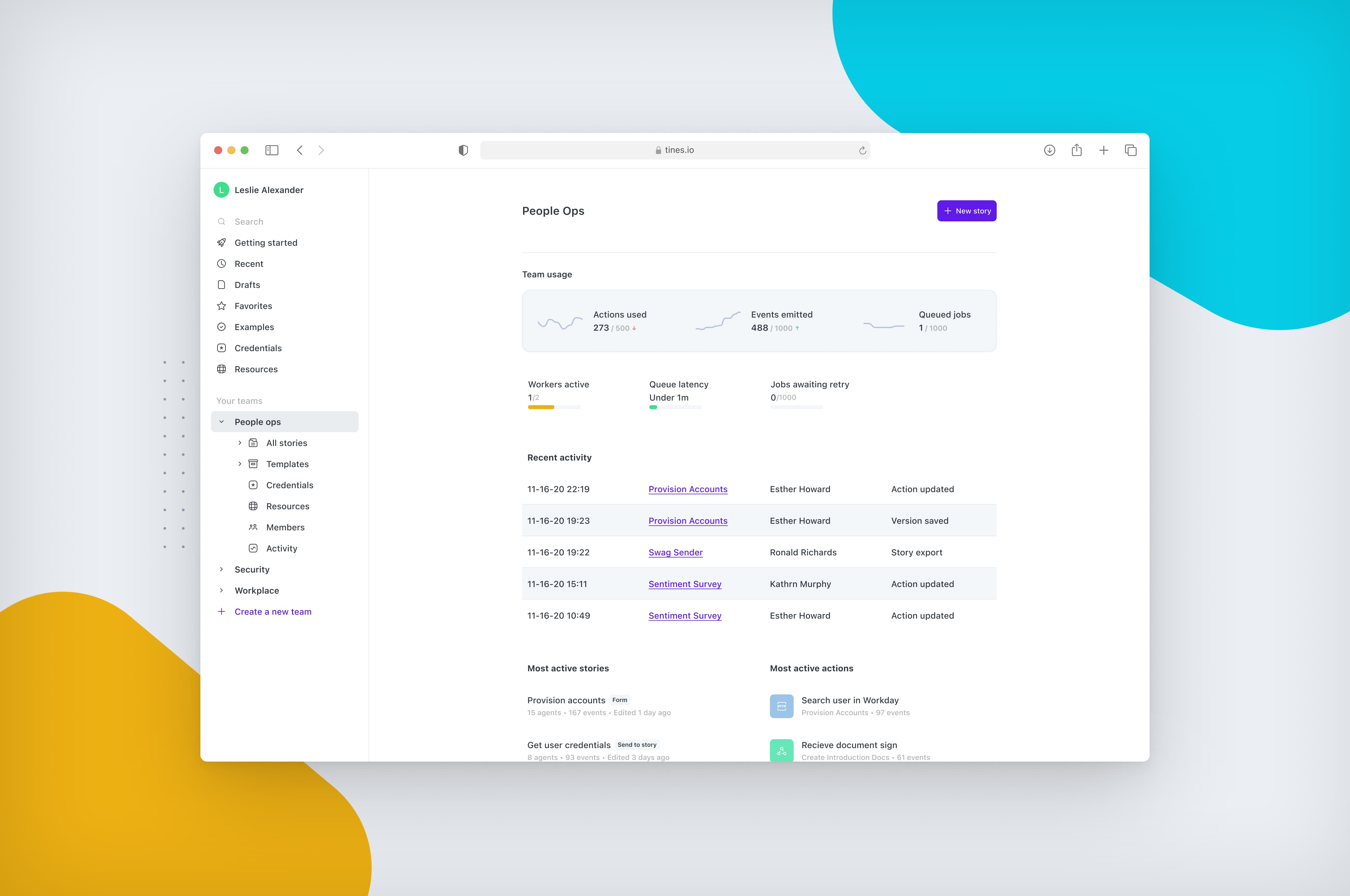
Tines raises $26M Series B for its no-code security automation platform

Tines, a no-code automation platform co-founded by two senior cybersecurity operators, today announced that it has raised a $26 million Series B funding round led by Addition. Existing investors Accel and Blossom Capital participated in this round, which also includes strategic investments from CrowdStrike and Silicon Valley CISO Investments. After this round, which brings the total funding in the company to $41.1 million, Tines is now valued at $300 million.

Given that Tines co-founders Eoin Hinchy and Thomas Kinsella were both in senior security roles at DocuSign before they left to start their own company in 2018, it’s maybe no surprise that the company’s platform launched with a strong focus on security operations. As such, it combines security orchestration and robotic process automation with a low-code/no-code user interface.

“Tines is on a mission to allow frontline employees to focus on more business-critical tasks and improve their wellbeing by reducing the burden of ‘busy work’ by helping automate any manual workflow and making existing teams more efficient, effective, and engaged,” the company notes in today’s announcement.

The idea here is to free analysts from spending time on routine repetitive tasks and allow them to focus on those areas where they can have the most impact. The tools features pre-configured integrations with a variety of business and security tools, but for more sophisticated users, it also features the ability to hook into virtually any API.

Image Credits: Tines

The company argues that even non-technical employees should be able to learn the ins and outs of its platform within about three hours (sidenote: it’s nice to see a no-code platform acknowledge that users will actually need to spend some time with it before they can become productive).

“If software is eating the world, automation is eating the enterprise,” Hinchy said. “Yet, the majority of progress in this space still requires non-technical teams to depend on software engineers to implement their automation. Other platforms are generally either too hard to use, not flexible enough or not sufficiently robust for mission-critical workflows like cybersecurity. Tines empowers enterprise teams to automate any of their own manual workloads independently, making their jobs more rewarding while simultaneously delivering enormous value for their organizations.”

Current Tines customers include the likes of Box, Canva, OpenTable and Sophos.

The company, which was founded in Dublin, Ireland and recently opened an office in Boston, plans to use the new funding to double its 18-person team in order to support its product growth.

“Tines has quickly established itself as a market leader in enterprise automation,” said Lee Fixel, founder of Addition. “We look forward to supporting Eoin and the Tines team as they continue to scale the business and enhance their product — which is beloved by their unmatched customer base.”

Image Credits: Tines