Year: 2021

20 Sep 2021

GM to replace battery modules in recalled Chevy Bolt EVs starting next month

General Motors said Monday it will replace battery modules in recalled Chevrolet Bolt EV and Bolt EUV vehicles as soon as next month now that supplier LG Chem has restarted production of cells at two Michigan factories.

Replacement modules, which are made up of lithium-ion battery cells, will begin shipping to dealers as soon as mid-October, the company said. Chevy Bolt EV owners will be able to bring their vehicles to the dealership, where the old modules will be swapped out for new ones.

GM halted production of Chevy Bolt EV and EUVs in August due to a battery pack shortage related to the widespread safety recall of the two electric vehicles. The production downtime has been extended twice since then. Battery packs in EVs are comprised of modules.

The recall, which includes all Chevy Bolt EV and EUV models made since 2017, was issued after the automaker discovered two manufacturing defects in the battery cell — a torn anode tab and folded separator — that could increase the risk of fire. The fire risk prompted GM to recommend Bolt owners set the vehicle to a 90% state of charge limitation, avoid depleting the battery below 70 miles of range and charge the vehicle more frequently. GM still recommends owners park their Bolt EV and EUVs outside immediately after charging and to not leave vehicles charging indoors overnight.

LG has new manufacturing processes in place and has worked with GM to improve its quality assurance programs to provide confidence in its batteries moving forward. GM said the battery supplier will institute these new processes in other facilities that supply cells to the automaker.

Doug Parks, GM’s executive vice president of global product development, purchasing and supply chain, noted in a statement that resuming battery module production is a first step. However, GM’s Chevy Bolt EV problem is not entirely solved. The company must complete the replacement process for all recalled Bolts and assuage owners that the vehicles are safe to charge and park.

GM is counting on new advanced diagnostic software package to help. The company said it will launch the software package, which will need to be installed by dealers, in the next 60 days. The diagnostic software is designed to detect specific abnormalities that might indicate a damaged battery in Bolt EVs and EUVs by monitoring the battery performance.

The software will alert customers of any anomalies, according to GM, which said customers will be able to return to a 100 percent state of charge once all diagnostic processes are complete.

GM, which aims to add 30 new EVs to its global lineup by 2030, also must secure the battery cells it needs to power these vehicles. LG is its primary and longtime partner in this endeavor. Parks said GM will “continue to work aggressively with LG to obtain additional battery supply.

20 Sep 2021

iOS 15 adds all the little features that were missing

The release of iOS 15 should be a major event for mobile operating systems. And yet, this year, there’s no breakthrough feature or overarching theme that makes this release stand out. Apple has focused on quality-of-life updates as well as new features for its own apps.

The result is a solid update that is not going to be controversial. Some people are going to take advantage of the new Focus feature. They’ll spend a lot of time customizing their phone to make it as personal as possible. Other people are just going to miss or dismiss the new features.

This year’s update is also a bit different because you don’t have to update to iOS 15. If you’re fine with iOS 14, Apple won’t force you to make the jump to iOS 15. You’ll still receive security patches. Some people will simply dismiss iOS 15 altogether.

It seems like a small change but it actually says a lot about the current state of iOS. Apple considers iOS as a mature platform. Just like you don’t have to update your Mac to the latest version of macOS if you don’t want to, you can now update at your own pace.

iOS should also be considered as a mature platform for app developers. iOS 15 adoption will be slower than usual as people won’t necessarily update to iOS 15 right away. Apps should potentially work on older iOS versions for longer.

Of course, users will ‘update’ to a new version of iOS when they buy a new iPhone and replace their old iPhone. But Apple has And people who pre-ordered the iPhone 13 will get iOS 15.
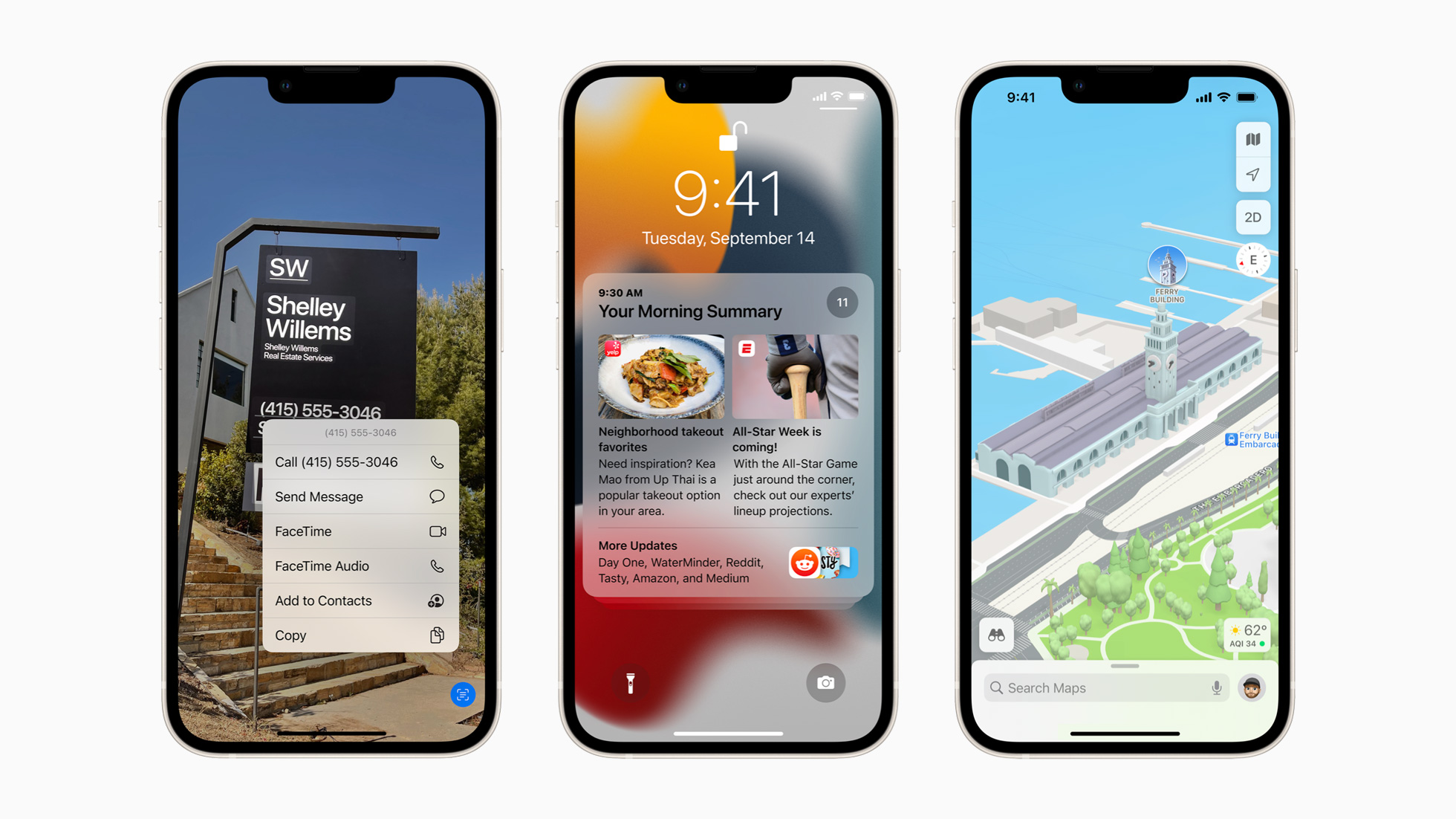
Image Credits: Apple

Focusing on you instead of your phone

One of the biggest change in iOS 15 is the ability to change your Focus from Control Center. It’s a surprisingly powerful feature with a lot of options and tweaks. I would say it doesn’t feel like an Apple feature.

But it’s definitely one of the most interesting features of iOS 15. Chances are you spend a lot of time with your phone and your device requires a lot of attention from you. With this new feature, it reverses the balance and puts you back in charge.

‘Do Not Disturb’ users are already quite familiar with the idea that you can silence notifications when you don’t want them. If you want to keep using ‘moon mode’ with iOS 15, you don’t have to change anything.

But you can now create additional Focuses. By default, Apple suggests a few Focuses — Work, Sleep, Driving, Fitness, Gaming, Mindfulness, Personal and Reading. Each Focus is customizable to your needs and you can create new Focuses from scratch.

When you turn on a specific Focus, it basically blocks notifications by default. You can then add people and apps so that notifications from those people and apps still go through. App developers can also mark a notification as time sensitive so that it always goes through. I hope they won’t abuse that feature.

There are three more settings that you can activate. First, you can optionally share that your notifications are currently silenced in Messages and compatible third-party apps. Second, you can hide home screen pages altogether. Third, you can hide notifications from the lock screen and hide badges from the home screen.

Focus gets particularly interesting when you realize that you can couple specific Focuses with automation features. For instance, you can automatically turn on ‘Sleep’ at night or you can automatically turn on ‘Work’ when you arrive at work.

Power users will also have a lot of fun setting up a Focus and pairing it with a Shortcut. For instance, you could use Shortcuts to open the Clock app when you turn on Sleep mode. You get it, this new feature has a lot of depth and beta users have just started scratching the surface.
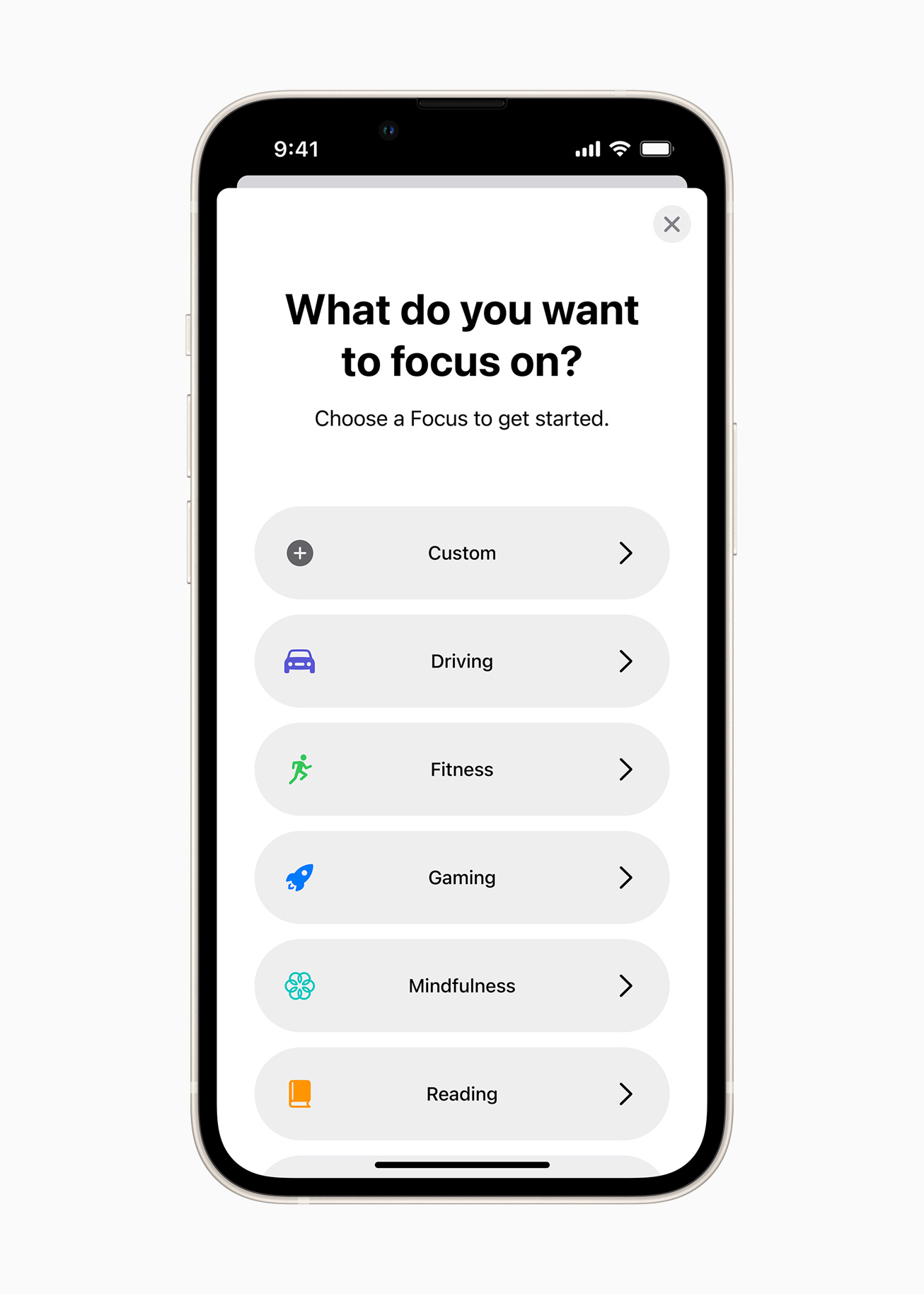
Image Credits: Apple

Update all apps

With iOS 15, Apple has improved nearly all the default apps. Some additions are definitely nice improvements. Others have been a bit more controversial.

Let’s start with the controversial one, Safari’s design has been updated. But what you saw at WWDC in June doesn’t look at all like what’s shipping today. Essentially, Apple has listened to feedback and changed the user interface of its web browser during the summer.

By default, the address bar is now at the bottom of the screen, right above the row of buttons that let you open bookmarks, share the current page or go to the previous page. I think it works better. But if you really don’t want the address bar at the bottom, you can move it back to the top of the screen.

Other than that, Safari changes are all good improvements. For instance, the browser now supports traditional web extensions. It’s going to be interesting to see if popular Google Chrome extensions eventually come to Safari. Another nice new feature is the ability to create tab groups and find your tab groups from your other devices.

FaceTime has become a versatile video-conferencing service. You can now create links, share them with friends and add them to calendar invites. For the first time, people who don’t own an Apple device will be able to join FaceTime calls from a web browser. There’s also a new Zoom view… I mean, grid view.

Unfortunately, the big new FaceTime feature is not ready for prime time just yet. SharePlay, the feature that lets you sync audio and video playback with your friends, is going to be released later this Fall.

The Weather app has also been redesigned. It is now packed with a lot more information, such as precipitation maps, next-hour precipitation notifications and a new UV index. It has become a solid alternative to third-party weather apps. I still use Snowflake but differences are smaller and smaller.

Messages is now better integrated with other Apple apps. Whenever someone sends you an article, a photo album, a podcast or a song, you’ll see those recommendations in Apple’s other apps — Apple News, Photos, Apple Podcasts, Apple Music, etc. Once again, this is a nice addition in my testings but it’s not going to change the way you use your phone.

Apple Maps is getting better and better, especially if you live in San Francisco. If you haven’t used it in a few years, I encourage you to try it again. It’s now a solid alternative to Google Maps.

Some cities, such as San Francisco, Los Angeles, New York and London, are receiving new detailed maps with 3D buildings, bus lanes, sidewalks and more. It feels like navigating a video game given how detailed it is. The app has also been redesigned with new place cards, a new driving user interface and settings in the app.

Photos is also receiving a bunch of improvements. Every year, the company is refining Memories. I’m not sure a ton of people are using this feature, but it’s better than before. There are now more information if you swipe on a photo as well, such as the shutter speed and lens that were used.

But the biggest change to your photo library is that you can now search for text in your photo. iOS is scanning your photos to find text and save it for Spotlight searches.

Similarly, you can now point your camera at text and select text from there. It is incredibly convenient if you’re looking for the restaurant address on the menu and want to share it with a friend or if you’re traveling and you want to translate some text.
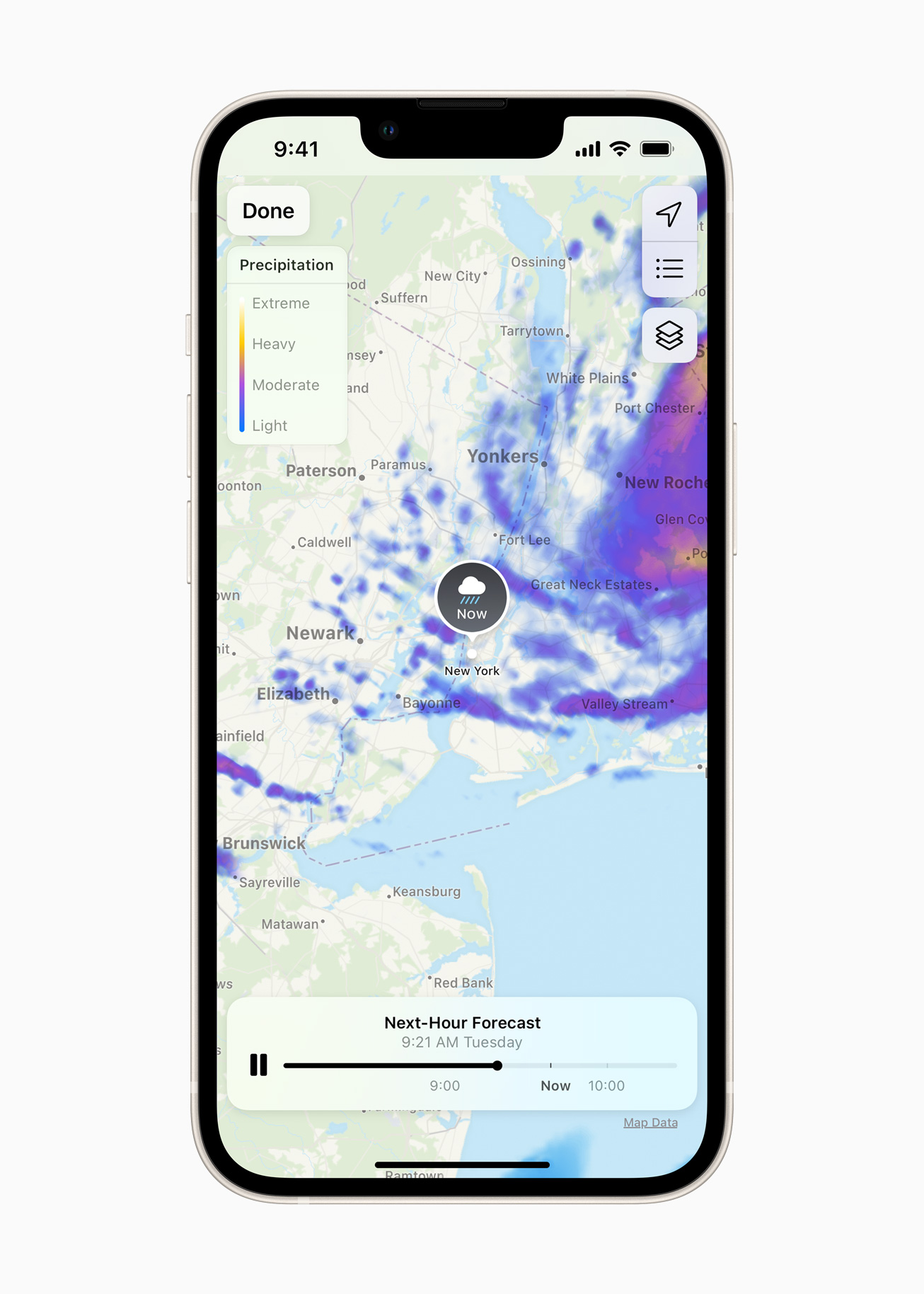
Image Credits: Apple

Tips and tricks

There are a ton of small changes that make iOS 15 better than iOS 14. Let me list some of them:

  • If you have a compatible home key, hotel key, office key or ID card, you can now add all of those to the Wallet app.
  • You can share some health data with someone else. It can be useful if you’re living far away from your loved ones or if you want to update your healthcare team.
  • If you pay for iCloud, you’re now an iCloud+ users. In addition to storage, you get additional features. iCloud Private Relay, which is available as a beta feature, lets you browse the web with increased privacy. Hide My Email lets you create randomly generated email addresses to create new accounts around the web.
  • Similarly, if your family is using iCloud for their email addresses, you can now set up a personal domain name and set it up in iCloud.
  • iOS uses on-device speech recognition, which means that you can dictate text much faster.
  • But that’s not all, iOS processes some Siri requests on your device directly, which means that you can start a timer, set an alarm or change the music instantly. It has changed the way I use Siri.
  • You can add an account recovery contact in case you get locked out of your iCloud account. This is important to convince more people to use two-factor authentication.
  • Talking about two-factor authentication, Apple’s built-in password manager called ‘Passwords’ can now save 2FA details and auto-fill 2FA fields. It works pretty much like 2FA in 1Password.
  • You can set up a legacy person for your Apple ID. I encourage you to look at that feature carefully. I’ve talked with several persons who couldn’t get their loved one’s photos after they passed away because Apple couldn’t just hand out the photos.
  • Apple has added tags to Reminders and Notes. You can also @-mention people in Notes.

As you can see, the list of changes in iOS 15 is quite long. But it’s up to you to decide whether you want to update to iOS 15. When Apple added cut, copy and paste with iPhone OS 3, it was an obvious decision. I personally like the new features and it was worth updating. And I hope this review can help you decide whether to update or not.


20 Sep 2021

Near Space Labs closes $13M Series A to send more Earth imaging robots to the stratosphere

The decreasing cost of launch and a slew of other tech innovations have brought about a renaissance in geospatial intelligence, with multiple startups aiming to capture higher-quality and more frequent images of Earth than have ever before been available.

Most of these startups, however, are focused on using satellites to collect data. Not so for Near Space Labs, a four-year-old company that instead aims to gather geospatial intelligence from the stratosphere, using small autonomous wind-powered robots attached to weather balloons. The company has named its platform “Swifty,” and each one is capable of reaching altitudes between 60,000 and 85,000 feet and capturing 400-1,000 square kilometers of imagery per flight.

The company was founded in 2017 by Rema Matevosyan, Ignasi Lluch, and Albert Caubet. Matevosyan, who is an applied mathematician by training and previously worked as a programmer, did her Masters in Moscow. There, she started doing research in systems engineering for aerospace systems and also flew weather balloons to test aerospace hardware. “It clicked that we can fly balloons commercially and deliver a much better experience to customers than from any other alternative,” she told TechCrunch in a recent interview.

Four years after launch, the company has closed a $13 million Series A round led by Crosslink Capital, with participation from Toyota Ventures and existing investors Leadout Capital and Wireframe Ventures. Near Space Labs also announced that Crosslink partner Phil Boyer has joined its board.

Near Space, which is headquartered in Brooklyn and Barcelona, Spain, is primarily focused on urbanized areas where change happens very rapidly. The robotic devices that attach to the balloons are manufactured at the company’s workshop in Brooklyn, which are then shipped to launch sites across the country. The company’s CTO and chief engineer are both based in Barcelona, so the hardware R&D takes place over there, Matevosyan explained.

The company currently has eight Swifies in operation. It sells the data it collects and has developed an API through which customers can access the data via a subscription model. The company doesn’t need to have specific launch sites – Matevosyan said Swifties can launch from “anywhere at any time” – but the company does work in concert with the Federal Aviation Administration and air traffic control.

The main value proposition of the Swifty as opposed to the satellite, according to Matevosyan, is the resolution: from the stratosphere, the company can collect “resolutions that are 50 times better than what you would get from a satellite,” she said. “We are able to provide persistent and near real-time coverage of areas of interest that change very quickly, including large metro areas.” Plus, she said Near Space can iterate it’s technology quickly using Swifties’ “plug-and-play” model, whereas it’s not so easy to add a new sensor to a satellite fleet that’s already in orbit.

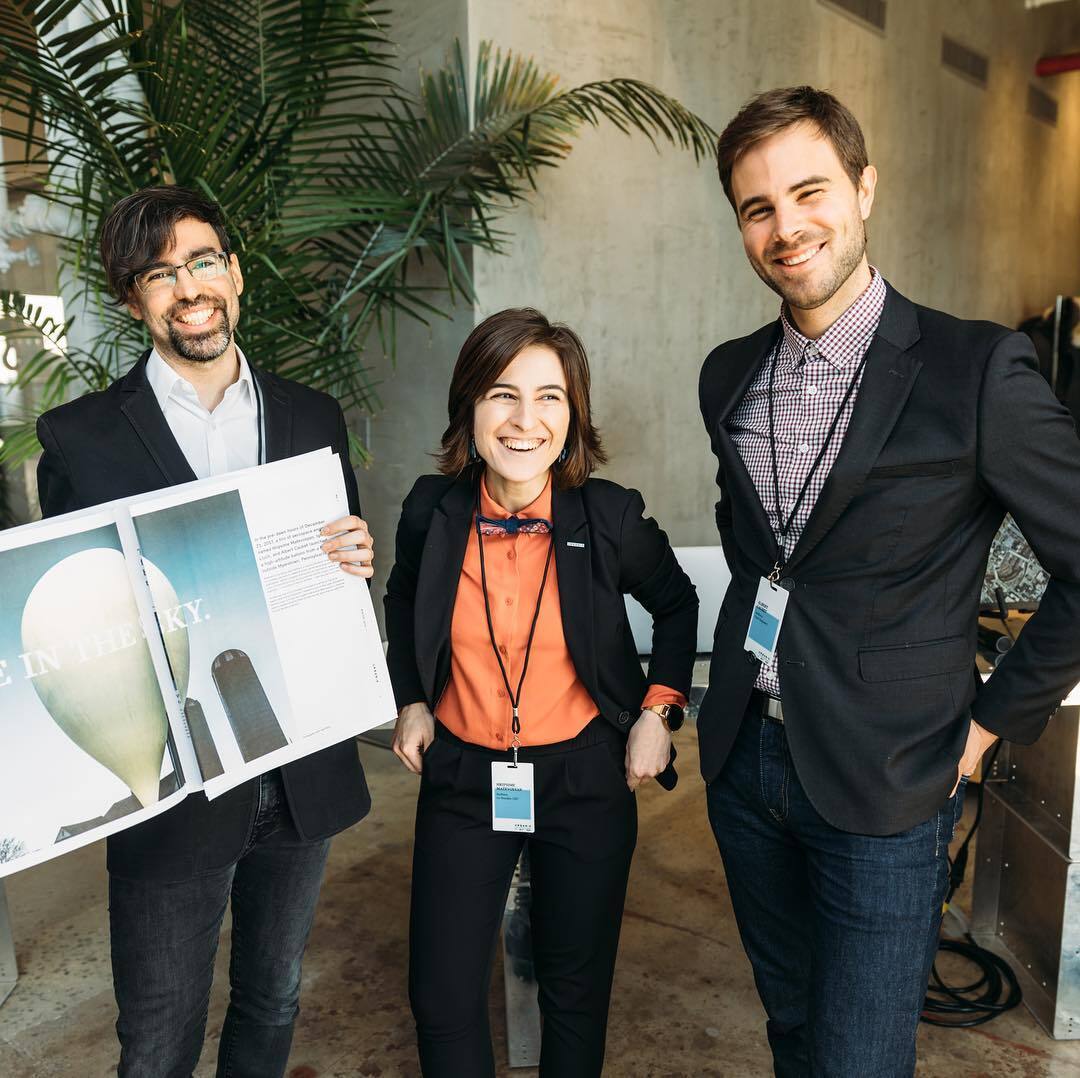
Near Space Labs founders (from left): Ignasi Lluch, Rema Matevosyan and Albert Caubet Image Credits: Near Space Labs (opens in a new window)

Near Space has booked more than 540 flights through 2022. While customers pay for the flights, the data generated from each trip is non-exclusive, so the data can be sold again and again. Looking ahead, the company will be using the funds to expand its geographical footprint and bring on a bunch of new hires. The goal, according to Matevosyan, is to democratize access to geospatial intelligence – not just for customers, but on the developer side, too. “We believe in diverse, equal, and inclusive opportunities in aerospace and Earth imaging,” she said.

20 Sep 2021

Near Space Labs closes $13M Series A to send more Earth imaging robots to the stratosphere

The decreasing cost of launch and a slew of other tech innovations have brought about a renaissance in geospatial intelligence, with multiple startups aiming to capture higher-quality and more frequent images of Earth than have ever before been available.

Most of these startups, however, are focused on using satellites to collect data. Not so for Near Space Labs, a four-year-old company that instead aims to gather geospatial intelligence from the stratosphere, using small autonomous wind-powered robots attached to weather balloons. The company has named its platform “Swifty,” and each one is capable of reaching altitudes between 60,000 and 85,000 feet and capturing 400-1,000 square kilometers of imagery per flight.

The company was founded in 2017 by Rema Matevosyan, Ignasi Lluch, and Albert Caubet. Matevosyan, who is an applied mathematician by training and previously worked as a programmer, did her Masters in Moscow. There, she started doing research in systems engineering for aerospace systems and also flew weather balloons to test aerospace hardware. “It clicked that we can fly balloons commercially and deliver a much better experience to customers than from any other alternative,” she told TechCrunch in a recent interview.

Four years after launch, the company has closed a $13 million Series A round led by Crosslink Capital, with participation from Toyota Ventures and existing investors Leadout Capital and Wireframe Ventures. Near Space Labs also announced that Crosslink partner Phil Boyer has joined its board.

Near Space, which is headquartered in Brooklyn and Barcelona, Spain, is primarily focused on urbanized areas where change happens very rapidly. The robotic devices that attach to the balloons are manufactured at the company’s workshop in Brooklyn, which are then shipped to launch sites across the country. The company’s CTO and chief engineer are both based in Barcelona, so the hardware R&D takes place over there, Matevosyan explained.

The company currently has eight Swifies in operation. It sells the data it collects and has developed an API through which customers can access the data via a subscription model. The company doesn’t need to have specific launch sites – Matevosyan said Swifties can launch from “anywhere at any time” – but the company does work in concert with the Federal Aviation Administration and air traffic control.

The main value proposition of the Swifty as opposed to the satellite, according to Matevosyan, is the resolution: from the stratosphere, the company can collect “resolutions that are 50 times better than what you would get from a satellite,” she said. “We are able to provide persistent and near real-time coverage of areas of interest that change very quickly, including large metro areas.” Plus, she said Near Space can iterate it’s technology quickly using Swifties’ “plug-and-play” model, whereas it’s not so easy to add a new sensor to a satellite fleet that’s already in orbit.

Near Space Labs founders (from left): Ignasi Lluch, Rema Matevosyan and Albert Caubet Image Credits: Near Space Labs (opens in a new window)

Near Space has booked more than 540 flights through 2022. While customers pay for the flights, the data generated from each trip is non-exclusive, so the data can be sold again and again. Looking ahead, the company will be using the funds to expand its geographical footprint and bring on a bunch of new hires. The goal, according to Matevosyan, is to democratize access to geospatial intelligence – not just for customers, but on the developer side, too. “We believe in diverse, equal, and inclusive opportunities in aerospace and Earth imaging,” she said.

20 Sep 2021

Carmichael Roberts, Sean O’Sullivan will share insights into climate tech and investing at Disrupt

The effects of a warming planet, from frequent and extreme flooding to hurricanes and drought, has prompted activists and governments to take action. It’s also spurred a growing number of entrepreneurs to launch technology startups focused on the mitigation of greenhouse gas emissions.

At the center of this activity are the venture capitalists deciding which startup — and tech — has the best chance to decarbonize the planet while providing returns. Unlike other categories, climate tech is particularly complex because it spans so many different industries. Investors might be meeting with a founder trying to develop a plant-based fabric on a Monday and one who claims to have developed cutting-edge carbon capture technology on Tuesday.

TechCrunch is excited to announce that Carmichael Roberts, who co‐leads the investment committee at Breakthrough Energy Ventures, and Sean O’Sullivan, managing general partner at SOSV, will join me on our virtual stage at TechCrunch Disrupt 2021. The virtual conference kicks off September 21 and runs through September 23.

Roberts and O’Sullivan will dig into what climate tech means — and what it doesn’t — their investing approach, the hottest and most promising technology within this sector and the risk of not getting it right.

The pair have the expertise to weigh in. Roberts is also co-founder and managing partner of Material Impact, a fund that builds resilient technology companies developing products to solve real‐world problems using innovative materials. Before he became an investor, Roberts  co‐founded several ventures, in which he served as president and CEO or chairman. He also worked in business development at GelTex Pharmaceuticals, acquired by Genzyme for $1.3 billion, and in new product and business development at Dow Chemical (formerly Union Carbide Corporation).

Before Sullivan joined SOSV, one of the most active venture investors in the world, he founded MapInfo. The company grew to a $200 million revenue public company with more than 1,000 employees, and popularized street mapping on computers. He also founded NetCentric, is credited as the co-creator of the term “cloud computing” and co-founded Dial2Do.

The panel is just one of many investment-focused discussions we’ll be having at Disrupt 2021. But as moderator, this is the one I look most forward to!

20 Sep 2021

Carmichael Roberts, Sean O’Sullivan will share insights into climate tech and investing at Disrupt

The effects of a warming planet, from frequent and extreme flooding to hurricanes and drought, has prompted activists and governments to take action. It’s also spurred a growing number of entrepreneurs to launch technology startups focused on the mitigation of greenhouse gas emissions.

At the center of this activity are the venture capitalists deciding which startup — and tech — has the best chance to decarbonize the planet while providing returns. Unlike other categories, climate tech is particularly complex because it spans so many different industries. Investors might be meeting with a founder trying to develop a plant-based fabric on a Monday and one who claims to have developed cutting-edge carbon capture technology on Tuesday.

TechCrunch is excited to announce that Carmichael Roberts, who co‐leads the investment committee at Breakthrough Energy Ventures, and Sean O’Sullivan, managing general partner at SOSV, will join me on our virtual stage at TechCrunch Disrupt 2021. The virtual conference kicks off September 21 and runs through September 23.

Roberts and O’Sullivan will dig into what climate tech means — and what it doesn’t — their investing approach, the hottest and most promising technology within this sector and the risk of not getting it right.

The pair have the expertise to weigh in. Roberts is also co-founder and managing partner of Material Impact, a fund that builds resilient technology companies developing products to solve real‐world problems using innovative materials. Before he became an investor, Roberts  co‐founded several ventures, in which he served as president and CEO or chairman. He also worked in business development at GelTex Pharmaceuticals, acquired by Genzyme for $1.3 billion, and in new product and business development at Dow Chemical (formerly Union Carbide Corporation).

Before Sullivan joined SOSV, one of the most active venture investors in the world, he founded MapInfo. The company grew to a $200 million revenue public company with more than 1,000 employees, and popularized street mapping on computers. He also founded NetCentric, is credited as the co-creator of the term “cloud computing” and co-founded Dial2Do.

The panel is just one of many investment-focused discussions we’ll be having at Disrupt 2021. But as moderator, this is the one I look most forward to!

20 Sep 2021

Fivetran hauls in $565M on $5.6B valuation, acquires competitor HVR for $700M

Fivetran, the data connectivity startup, had a big day today. For starters it announced a $565 million investment on $5.6 billion valuation, but it didn’t stop there. It also announced its second acquisition this year, snagging HVR, a data integration competitor that had raised over $50M, for $700 million in cash and stock.

The company last raised a $100 million Series C on a $1.2 billion valuation, increasing the valuation by over 5x. As with that Series C, Andreessen Horowitz was back leading the round with participation from other double dippers General Catalyst, CEAS Investments, Matrix Partners and other unnamed firms or individuals. New investors ICONIQ Capital, D1 Capital Partners and YC Continuity also came along for the ride. The company reports it has now raised $730 million.

The HVR acquisition represents a hefty investment for the startup, grabbing a company for a price that is almost equal to all the money it has raised to date, but it provides a way to expand its market quickly by buying a competitor. Earlier this year Fivetran acquired Teleport Data as it continues to add functionality and customers via acquisition.

“The acquisition — a cash and stock deal valued at $700 million — strengthens Fivetran’s market position as one of the data integration leaders for all industries and all customer types,” the company said in a statement.

While that may smack of corporate marketing speak, there is some truth to it, as pulling data from multiple sources, sometimes in siloed legacy systems is a huge challenge for companies and both Fivetran and HVR have developed tools to provide the pipes to connect various data sources and put it to work across a business.

Data is central to a number of modern enterprise practices including customer experience management, which takes advantage of customer data to deliver customized experiences based on what you know about them, and data is the main fuel for machine learning models, which use it to understand and learn how a process works. Fivetran and HVR provide the nuts and bolts infrastructure to move the data around to where it’s needed, connecting to various applications like Salesforce, Box or Airtable, databases like Postgres SQL or data repositories like Snowflake or Databricks.

Whether bigger is better remains to be seen, but Fivetran is betting that it will be in this case as it makes its way along the startup journey. The transaction has been approved by both company’s boards. The deal is still subject to standard regulatory approval, but Fivetran is expecting it to close in October

20 Sep 2021

Disrupt 2021 kicks off tomorrow

Time to carbo-load, startup fans. Tomorrow we kick off the opportunity marathon that is TechCrunch Disrupt 2021, and we can’t wait to see it all unfold! Considering the amount of programming available over the next three days, you might appreciate some expert guidance. No worries — we’ve got you covered.

Make the Disrupt Desk your first destination. That’s where you’ll find TechCrunch editors highlighting just some of the must-not-miss moments on Day One. Here’s a fine example. Get your first look at some of the companies competing in Startup Battlefield. Companies like Dropbox, Vurb, Mint and many more got their start as Startup Battlefield competitors. Catch the next generation in this always-epic pitch throw-down.

Here’s a tiny taste of what’s on tap tomorrow on the Disrupt Stage, the Extra Crunch Stage and in our special breakout sessions. Consult the Disrupt agenda for exact times.

Disrupt Stage

Saving the World

COVID-19 changed everything. It not only threatened our individual health and well-being, but it also shook industries and economies across the globe. And the same could be said about the COVID-19 vaccines. Hear from BioNTech cofounder and CEO, Ugur Sahin on the process of rapidly developing the world’s most sought-after vaccine, alongside Pfizer, and the long-term potential of mRNA-based therapies. Ursheet Parikh of Mayfield Fund will join Sahin to discuss what’s next for startups in this rapidly evolving industry.

Extra Crunch Stage

How to Ditch Traditional Fundraising

In 2021, venture capital has never been more plentiful, but some founders still can’t break into networks or have found that traditional fundraising isn’t the best route for their business. Fortunately, alternative fundraising techniques are gathering steam as founders find paths to raise cash that diverge from the startup success stories of the past. Join the discussion with Pipe’s Harry Hurst, Accel’s and Clearco’s Michele Romanow.

Breakout Session

Demo Derby — How startups are disrupting the status quo with innovative data analytics, AI and modern app development

Startups need to move quickly and focus limited resources on areas where they can differentiate. In this fast-paced session, learn from startups and Google experts how you can leverage Google technologies to serve customers better and get to market more quickly. In a series of short demos, see how innovative startups and Google experts have used Google compute, storage, networking and AI technologies to “disrupt” the status quo.

Any last-minute decision makers out there? You can still buy a full Disrupt 2021 pass right here but hurry because prices increase tonight at 11:59pm PT! Or if you’re just looking for a taste of Disrupt – get access to all of the Breakout Sessions and the expo for free TODAY ONLY HERE.

There you have it. A quick way to tap into the first day of Disrupt 2021. Go forth and discover opportunities that can take your business forward to the next level and beyond. We can’t wait to see where Disrupt takes you!

20 Sep 2021

Freshworks’ valuation could crest $10B in upcoming IPO

Earlier today, TechCrunch examined the new IPO price range for Toast. The U.S. software-and-fintech company moved its valuation materially higher in anticipation of pricing tomorrow after the bell and trading on Wednesday. It was not alone in doing so.

Freshworks is also targeting a higher IPO price range, it disclosed today in a fresh SEC filing. The customer service-focused software firm now expects to charge between $32 and $34 per share in its debut, up from the $28 to $32 per-share range that it initially disclosed.

Doing some back-of-the-envelope math, Freshworks’ IPO valuation could just pass the $10 billion mark, calculated on a fully diluted basis. Its simple IPO valuations, while rising, are lower than that figure.

Mathing that out, Freshworks expects to have 284,283,200 shares outstanding when public, inclusive of its underwriters’ option, but not inclusive of vested shares present in RSUs or options. At its new IPO price range, Freshworks would be worth between $9.1 billion and $9.7 billion.

20 Sep 2021

Toast raises IPO price range, providing a Monday bump to fintech valuations

U.S. technology unicorn Toast filed a new S-1 document this morning detailing a higher IPO price range for its shares. The more expensive range indicates that Toast may be worth more in its debut than it initially expected, a bullish sign for technology companies more broadly.

Toast’s rising valuation may provide a boon to two different sub-sectors of technology: software and fintech. The restaurant-focused Toast sells software on a recurring basis (SaaS) to restaurants while also providing financial technology solutions. And while it is best known as a software company that dabbles in hardware, Boston-based Toast generates the bulk of its aggregate top line from financial services.

Software revenues are valuable thanks to their high margins and recurring structure. Toast’s financial-services revenues, by contrast, are largely transaction-based and sport lower gross margins. The company’s IPO price, then, could help the private markets more fairly price startups offering their own blend of software-and-fintech incomes.

The so-called “vertical SaaS” model, in which startups build software tailored to one particular industry or another, has become a somewhat two-part business effort; many startups today are pursuing both the sale of software along with fintech revenues. Toast’s IPO, then, could operate as a bellwether of sorts for a host of startups.

To see Toast raise its range, therefore, got our eyebrows up. Let’s talk money.

Toast’s new IPO range

From a previous range of $30 to $33, Toast now expects to price its IPO between $34 and $36.

Toast now expects its IPO price to clear its previous upper-end guidance at the low end of its new range. That’s bullish — and indicative of a thus-far receptive market for the company’s equity.