Year: 2021

03 Mar 2021

Minu, a Mexico City-based, pay-on-demand startup, lands a $14M Series A

Many of the startups raising capital in Mexico are focused on financial inclusion, aiming to level the playing field in a country that is largely unbanked and has a burgeoning middle class.

One such company, minu, a Mexico City-based, pay-on-demand startup, announced Wednesday that it has raised $14 million in a Series A round of funding led by FinTech Collective.

New investors VEF, XYZ Ventures, and FJ Labs, as well as DocuSign founder Tom Gonser and Gusto CFO Mike Dinsdale also participated in the financing. Existing backers QED, Next Billion Ventures, and Village Global also put more money in the company. 

The financing — which included $2.5 million in debt from Banco Sabadell Mexico — brings minu’s total raised since its 2019 inception to a total of $20 million. 

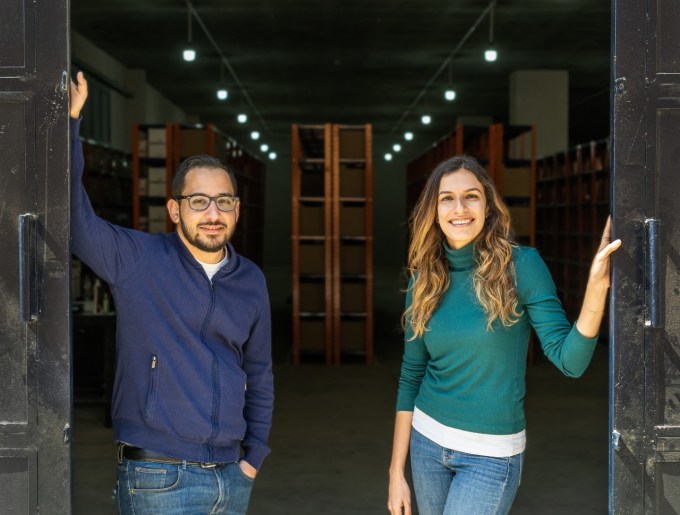
Co-founders Nima Pourshasb, Rafa Niell, and Paolo Rizzi were driven to build out a pay on demand offering in Mexico.

“We really think the lack of financial health is one of the key drivers slowing the potential and productivity of Mexican society,” Pourshasb said.

Minu aims to solve the employee liquidity gap between paychecks in an effort to help people see reduced financial stress and avoid expensive loans. The company offers 24×7 instant access to employees’ earned wages for a $2 fixed withdrawal fee.

Today, minu has over 100 large enterprise clients including TotalPlay, Telefonica, Scotiabank, OfficeMax, Rappi, Adecco, Manpower, Cap Gemini, and public sector clients such as the Electoral Institute of the State of Mexico. It saw its transaction volume and revenue grow by 18 times in 2020, albeit from a small base. The company declined to reveal hard revenue figures.

Minu operates under the premise that the liquidity gap is profound in Mexican society. An estimated 70% of workers live from paycheck to paycheck with average wages of $550/month, noted Pourshasb. And only 37% of Mexicans over 15 years old have a bank account, according to recent World Bank stats.

“Some people are continuously getting loans — at very high interest rates —  to cover recurring expenses such as food and transport,” Pourshasb said.

Minu’s first product offers instant, 24-7 access to earned wages.

“This is money that is already earned,” Pourshasb said. “Our users have an app to see how much is available and if they need those funds, they can instantly receive them.” 

The company’s distribution model is B2B so it works alongside large enterprises to offer access to the wages as a benefit for employees. Businesses are attracted to that model, Pourshasb explained, because they don’t have to pay for it or change their payroll process.

“We integrate with payroll so the process is automated and there’s no added work for them,” he added. “It also doesn’t affect cash flows. These are upfront funds so if someone withdraws money, it gets deducted from payroll.”

Some employers do subsidize the cost of the transaction fee for employees.

Looking ahead, minu says it will use its fresh capital to boost its headcount of 60 as well as expanding its offering to include financial education, savings, smart spend and insurance products. The company also plans to expand outside of Mexico.

Carlos Alonso Torras, who leads Latin America investing for New York-based FinTech Collective, believes that minu leverages “a strong combination of an exceptional founding team and auspicious macro trends.”

“We see the company’s current product as the basis for a platform that will offer an array of necessary financial products to a very underserved demographic,” he wrote via email. “Minu is already creating a moat vis a vis competitors via deep integrations, high client satisfaction and a broadening financial wellness offering. As the early mover in a market whose characteristics are conducive to the success of pay on demand, the immediate growth potential is remarkable, and Minu is uniquely positioned to excel.”

The investment marks the firm’s fifth in Mexico. Overall, FinTech Collective says it seeks and backs entrepreneurs “who are rewiring how money flows through the world.”

“Due to COVID, we are seeing a pandemic stricken world where hundreds of millions of people are facing greater financial instability, and we believe that fintech has a vital role to play in accelerating the emergence of a spending middle class underserved by traditional financial systems,” Torras added. 

Fintechs in Mexico have been busy. Last week, Stori raised a $32.5 million Series B round with the goal of “becoming Mexico’s leading credit card issuer for the rising middle class.”

Also in February, Flink raised $12 million in a Series A led by Silicon Valley-based venture capital firm Accel.


 

03 Mar 2021

Oscar Health prices IPO at $39 and secures a $9.5B valuation

Late last night Oscar Health, a tech-enabled medical insurance provider, priced its IPO at $39 per share. The final price came in $1 per share above its raised IPO guidance; Oscar Health had originally targeted a $32-$34 per-share IPO price.

Some 37,041,026 shares were sold at $39, including 36,391,946 offered by the company itself. Not counting shares reserved for the company’s underwriters — more on those here — Oscar Health found at least $1.44 billion worth of demand for its equity at $39 apiece. More than 98% of the funds from the aggregate share sale went to the company’s accounts.

For backers Thrive Capital, Founders Fund, Formation 8, CapitalG, Fidelity, Alphabet, Coatue, Tiger Global and others, the day is a financial coup.

But just how well did the company’s private backers do? To know that, we have to calculate what the company is worth at $39 per share. Oscar sold more shares in its debut than its final S-1/A filing expected, making its ensuing share count slightly tedious to calculate. However, the company’s simple IPO valuation appears to be just over $7.92 billion at its IPO price. IPO investing group Renaissance Capital calculates the company’s fully-diluted valuation, a figure that counts some additional shares, including that have been earned through options that have yet to be exercised, for example, at $9.5 billion.

Oscar Health’s IPO has been a success from several perspectives. From a fundraising viewpoint, the company raised more than it may have initially expected to, comparing its final price point against its initial range. From a valuation perspective, the company is now worth a multiple of its last-known private valuation, some $3.2 billion set during its 2018 Series G, per PitchBook data. The company did raise more private capital between that round and its IPO, but we lack valuation figures for those deals.

The company will begin trading this morning in a notable test for insurtech, and the sub-niche of medical insurtech. TechCrunch’s prior notes on the company’s IPO valuation aside, the bidding public have repriced Oscar Health. Now let’s see what the company will manage once it truly begins to float.

03 Mar 2021

Identiq, a privacy-friendly fraud prevention startup, secures $47M at Series A

Israeli fraud prevention startup Identiq has raised $47 million at Series A as the company eyes international growth, driven in large part by the spike in online spending during the pandemic.

The round was led by Insight Partners and Entrée Capital, with participation from Amdocs, Sony Innovation Fund by IGV, as well as existing investors Vertex Ventures Israel, Oryzn Capital, and Slow Ventures.

Fraud prevention is big business, which is slated to be worth $145 billion by 2026, ballooning by eightfold in size compared to 2018. But it’s a data hungry industry, fraught with security and privacy risks, having to rely on sharing enormous sets of consumer data in order to learn who legitimate customers are in order to weed out the fraudsters, and therefore.

Identiq takes a different, more privacy-friendly approach to fraud prevention, without having to share a customer’s data with a third-party.

“Before now, the only way companies could solve this problem was by exposing the data they were given by the user to a third party data provider for validation, creating huge privacy problems,” Identiq’s chief executive Itay Levy told TechCrunch. “We solved this by allowing these companies to validate that the data they’ve been given matches the data of other companies that already know and trust the user, without sharing any sensitive information at all.”

When an Identiq customer — such as an online store — sees a new customer for the first time, the store can ask other stores in Identiq’s network if they know or trust that new customer. This peer-to-peer network uses cryptography to help online stores anonymously vet new customers to help weed out bad actors, like fraudsters and scammers, without needing to collect private user data.

So far, the company says it already counts Fortune 500 companies as customers.

Identiq said it plans to use the $47 million raise to hire and grow the company’s workforce, and aims to scale up its support for its international customers.

03 Mar 2021

Zynga acquires Echtra, maker of Torchlight 3, to double down on RPG games

Games company Zynga has been on an acquisition tear the last several years to beef up its activity in particular in mobile and casual-puzzle games, spending over $3 billion to pick up a range of startups across Europe (specifically Turkey and Finland) in the process. Today, however, it’s taking a turn towards more immersive, highly graphic cross-platform experiences. The company has announced that it is acquiring San Francisco’s Echtra Games, the role-playing game publisher behind Torchlight III, which is available on Steam, XBox One, PS4 and Nintendo Switch.

The team will be working on releasing a new title in partnership with Zynga’s NaturalMotion studio, the company said. No other details on that were released for now.

Financial terms of the deal were not disclosed. It’s also not clear who backed Echtra, if anyone.

But Echtra is in some ways a classic example of a gaming startup built out of a burning idea, rather than cold, calculated moneymaking — perhaps the best kind of company you can have.

Max Schaefer, the co-founder and CEO, had previously been at Runic Games, the developer of the original Torchlight series, as well as Diablo and others. Runic was shuttered by its owner, Perfect World, and so in 2016, Shaefer went on to form a new company, Echtra, with some of his Runic colleagues and others in the industry because he saw more life left in the franchise.

The plan will be to bring on Echtra’s team and expertise both to continue building the franchise and to more generally help Zynga build out more of a footprint in cross-platform games, and also gaming technology, in particular around tools built on Unreal Engine, the platform of choice at the moment for RPG and other immersive applications.

“Max and his team at Echtra Games are responsible for some of the most legendary game properties ever created, and they are experts in the action RPG genre and cross-platform development.  I’m excited to welcome the Echtra Games team into the Zynga family,” said Frank Gibeau, Chief Executive Officer of Zynga, in a statement. “This acquisition will be instrumental in growing our iconic licenses and brands from mobile to PCs and consoles, while helping to further expand Zynga’s total addressable market.”

“Echtra Games is delighted to be joining the Zynga family,” added Max Schaefer. “We share Zynga’s vision that cross-platform play is an essential part of the future of RPGs and interactive entertainment and are eager to apply our vast experience and talents to this effort.”

Gaming has been one of the bright spots in the last year — no surprise, since people are spending so much more time indoors and at home because of the pandemic. Zynga, as a consequence of that, has also been on a roll in recent times, with its fourth quarter earnings, released last month, beating analyst expectations. Its revenues of $616 million are the highest ever quarterly bookings posted by the company. Acquisitions are major part of its strategy these days, the company said at the time.

Going for more immersive RPG titles outside of mobile is an ambitious and potentially more expensive undertaking and is a very notable swerve away from the company’s acquisitions in recent years, which have included a majority stake in Turkey’s Rollic for $228 million, Peak for $2.1 billion, 80% of Small Giant Games for $718 million; and Gram Games for $299 million.

03 Mar 2021

Netflix to release 41 original Indian shows and movies this year

Netflix said on Wednesday it will roll out 41 Indian films and shows this year, its biggest annual roster of Indian content to date, as the American giant makes further push to win subscribers in the world’s second largest internet market.

The streaming giant, which committed to spending about $420 million on locally produced Indian content in 2019 and 2020, is this year spending significantly more on the new Indian catalog, which is three times larger than the past two years combined.

The new titles feature high-profile Indian actors and producers including Madhuri Dixit, Karan Johar, Manoj Bajpayee, R. Madhavan, Raveena Tandon, Neena Gupta, and Dhanush.

The new roster includes “Bombay Begums,” which follows stories of five women across generations wrestling with desire, ethics, and personal crises, “Decoupled,” a comedy by writer Manu Joseph on India and marriage, and a second season of Emmy-winning drama “Delhi Crime.”

Also in the list are comedy specials that have become immensely popular on streaming services in India. Netflix said comedians including Sumukhi Suresh, Aakaash Gupta, Rahul Dua, and Prashasti Singh — all of whom have participated in comedy shows by Amazon Prime Video — will have shows on the streaming service this year.

Kota Factory, a show that debuted on YouTube about a group of students preparing to compete to get into the prestigious engineering colleges, will premier its second season on Netflix. The Viral Fever, the producer of the show, had collaborated with Indian edtech startup Unacademy, for the first season of the show.

Dice Media’s “Little Things”, which also began its life as native advertisement for a few firms but has since grown into its own show, is getting a fourth season this year.

“Our upcoming lineup features more variety and diversity than we have seen before. From the biggest films and series, to gripping documentaries and reality, and bold comedy formats. We are taking our next big leap in India to bring you more than 40 powerful and irresistible stories from all corners of the country,” said Monika Shergill, Vice President of Content at Netflix India.

“This is just a taste of the films and series to come. We are so excited to share these rich and diverse stories from the best and brightest creators and talent from India to the world,” said Shergill.

R. Madhavan and Surveen Chawla in a still from Netflix’s upcoming show “Decoupled.” (Netflix)

Netflix’s growing catalog in India comes as Bollywood, which churns out more movies than any other film industry, struggles to deliver big hits as theatres across the country report low footfall amid the coronavirus pandemic.

Last year, the Indian film industry began releasing several movies directly on streaming services after some pushback from several key players.

Karan Johar said at Netflix’s virtual press conference today that streaming services have attained the level of scale in India that the next “Kuch Kuch Hota Hai” — one of the biggest blockbuster films in India, and also one produced by Johar — can release directly on Netflix.

Thanks to the availability of some of the world’s cheapest mobile data and proliferation of low-cost Android smartphones, more than half a billion Indians came online in the past decade, much of it in the last five years.

YouTube reaches more than 450 million internet users in India, TechCrunch reported in January. (India’s IT Minister Ravi Shankar Prasad corroborated the figure at a press conference last month.) Disney’s Hotstar has amassed over 30 million paying subscribers in India. Media consulting firm MPA estimates that Netflix has about 5 million subscribers in India, a figure that has grown in recent years as the streaming service inked a deal with India’s largest telecom operator Jio Platforms.

Netflix’s growing focus on India also comes at a time when New Delhi is getting more involved with the nature of content on on-demand streaming services. Until now Amazon Prime Video and other streaming services have operated in India without having to worry too much about the nature of their content. But that’s changing, according to new rules announced by India last week.

“The category classification of a content will take into account the potentially offensive impact of a film on matters such as caste, race, gender, religion, disability or sexuality that may arise in a wide range of works, and the classification decision will take account of the strength or impact of their inclusion,” the new rules state.

Amazon issued a rare apology to viewers in India on Tuesday after some people — including lawmakers with governing Bhartiya Janata Party — objected to some scenes from its political mini-series “Tandav.” Netflix, itself, has faced some heat, too. A police case was filed against two top executives of Netflix, including Shergill, after some people objected to scenes of the show “A Suitable Boy.”

03 Mar 2021

Firms backed by Robert Downey Jr. and Bill Gates have funded an electric motor company that slashes energy consumption

Sometimes the smallest innovations can have the biggest impacts on the world’s efforts to stop global climate change. Arguably, one of the biggest contributors in the fight against climate change to date has been the switch to the humble LED light, which has slashed hundreds of millions of tons of carbon dioxide emissions simply by reducing energy consumption in buildings.

And now firms backed by Robert Downey Jr. and Bill Gates are joining investors like Amazon and iPod inventor Tony Fadell to pour money into a company called Turntide Technologies that believes it has the next great innovation in the world’s efforts to slow global climate change — a better electric motor.

It’s not as flashy as an arc reactor, but like light bulbs, motors are a ubiquitous and wholly unglamorous technology that have been operating basically the same way since the nineteenth century. And, like the light bulb, they’re due for an upgrade.

“Turntide’s technology and approach to restoring  our planet will directly reduce energy consumption,” said Steve Levin, the co-founder (along with Downey Jr. ) of FootPrint Coalition Ventures

The operation of buildings is responsible for 40% of CO2 emissions worldwide, Turntide noted in a statement. And, according to the U.S. Department of Energy (DOE), one-third of energy used in commercial buildings is wasted. Smart building technology adds an intelligent layer to eliminate this waste and inefficiency by automatically controlling lighting, air conditioning, heating, ventilation and other essential systems and Turntide’s electric motors can add additional savings.

That’s why investors have put over $100 million into Turntide in just the last six months.

PARIS, FRANCE – JUNE 16: Tony Fadell Inventor of the iPod and Founder and former CEO of Nest attends a conference during Viva Technology at Parc des Expositions Porte de Versailles on June 16, 2017 in Paris, France. Viva Technology is a fair that brings together, for the second year, major groups and startups around all the themes of innovation. (Photo by Christophe Morin/IP3/Getty Images)

The company, led by chief executive and chairman Ryan Morris is commercializing technology that was developed initially at the Illinois Institute of Technology.

Turntide’s basic innovation is a software controlled motor, or switch reluctance motor, that uses precise pulses of energy instead of a constant flow of electricity. “In a conventional motor you are continuously driving current into the motor whatever speed you want to run it at,” Morris said. “We’re pulsing in precise amounts of current just at the times when you need the torque… It’s software defined hardware.” 

The technology spent eleven years under development, in part because the computing power didn’t exist to make the system work, according to Morris.

Morris was initially part of an investment firm called Meson Capital that acquired the technology back in 2013, and it was another four years of development before the motors were actually able to function in pilots, he said. The company spent the last three years developing the commercialization strategy and proving the value in its initial market — retrofitting the heating ventilation and cooling systems in buildings that are the main factor in the built environment’s 28% contribution to carbon dioxide emissions that are leading to global climate change.

“Our mission is to replace all of the motors in the world,” Morris said.

He estimates that the technology is applicable to 95% of where electric motors are used today, but the initial focus will be on smart buildings because it’s the easiest place to start and can have some of the largest immediate impact on energy usage. 

The carbon impact of what we’re doing is pretty massive,” Morris told me last year. “The average energy reduction [in buildings] has been a 64% reduction. If we can replace all the motors in buildings in the US that’s the carbon equivalent of adding over 300 million tons of carbon sequestration per year.”

That’s why Downey Jr.’s Footprint Coalition, and Bill Gates’ Breakthrough Energy Ventures and the real estate and construction focused venture firm Fifth Wall Ventures have joined the Amazon Climate Fund, Tony Fadell’s Future Shape, BMW’s iVentures fund and a host of other investors in backing the company.

The company has raised roughly $180 million in financing including the disclosure today of an $80 million investment round, which closed in October.

Buildings are clearly the current focus for Turntide, which only yesterday announced the acquisition of a small Santa Barbara, Calif.-based building management software developer called Riptide IO. But there’s also an application in another massive industry — electric vehicles.

“Two years from now we will definitely be in electric vehicles,” Morris said. 

“Our technology has huge advantages for the electric vehicle industry. There’s no rare earth minerals. Every EV uses rare earth minerals to get better performance of their electric motors,” he continued. “They’re expensive, destructive to mine and China controls 95 percent of the global supply chain for them. We do not use any exotic materials, rare earth minerals or magnets.. We’re replacing that with very advanced software and computation. It’s the first time Moore’s law applies to the motor.”

03 Mar 2021

Dooly closes on $20M for AI-based tools to help salespeople with their busywork

Robotic process automation has taken the enterprise world by storm, by providing a set of tools for those doing repetitive, volume-based tasks to use software to remove some of that labor to let those people focus on more complicated tasks. Today a startup that’s taken some of that ethos and is applying it to more individualized work — that of salespeople — is announcing some funding.

Dooly, a Vancouver, Canada-based startup that has built a set of AI-based tools that automate the busywork that goes into updating data in their sales software, and namely Salesforce — has picked up $20 million in funding to build out its business, which to date has picked up a number of customers among the sales teams of enterprise-focused software companies. They include Intercom, Contentful, Vidyard, BigCommerce, Liftoff and CrowdRiff.

Its aim is to make sales software more useful for salespeople by eliminating the work that goes into inputting data into those systems.

“Really they’ve just created a mountain of virtual filing cabinets,” Kris Hartvigsen, Dooly’s founder and CEO, said in an emailed interview with me. “Filing cabinets just wait for drawers to be opened — or in the case of enterprise software, reports to be pulled and data to be input. We know people are capturing information across the business and our job is to make sure that the people and systems across the business have a better, faster, more far-reaching way of staying informed.”

The funding is being announced today, but it was actually raised in two tranches that had not previously been disclosed. A $3.3 million seed round was led by boldstart ventures and also included BoxGroup. Its $17 million Series A, meanwhile, was led by Addition, with boldstart and BoxGroup again participating, along with Battery Ventures, Mantis (representing musicians The Chainsmokers), and SV Angel.

Alongside the VCs, there are a number of interesting strategic individual investors, too. Daniel Dines and Brandon Deer of UIPath (the RPA connection clearly is not one that I’m imagining!); Allison Pickens, the ex-COO Gainsight; Zander Lurie of SurveyMonkey); Jay Simons, ex-CEO of Atlassian); Harry Stebbings, and other unnamed investors are all also involved. Ed Sim of Boldstart is joining Dooly’s board of directors with this announcement.

The challenge that Dooly has been built to solve is that while there are a lot of tools out there now to help salespeople source leads, manage the progress of their sales, give them advice and other helpful material to supplement their charm and the basic strength of a product, manage customers once they’ve signed on, and so on, all of them still require something important to work: a time commitment from salespeople to keep them updated with information. Ironically, the more tools to help them that are built, the more time salespeople need to spend feeding them data.

Even more ironically, one of the big daddies of the problem — the somewhat overweight Salesforce — has published figures (cited by Dooly) that say salespeople spend just 34% of their time selling. The rest (minus trips to get coffee to stay caffeinated) seems to be about data entry.

The idea with Dooly is that you turn it on, connect it to what you are using — starting with Salesforce — and Dooly lets you make notes which it then organises and puts into the right places in the rest of your apps.

“When a salesperson starts using Dooly, the ‘aha moment’ is pretty immediate,” Hartvigsen said. “Whether they want to do quick pipeline edits or push their notes to Salesforce, we don’t ask the user to learn any new patterns they aren’t familiar with, we just automate a bunch of things they hate doing, often comparing those traditional chores to clerical work.” For example, he notes, when they sync a note, Dooly automatically updates any Salesforce with any contacts found in the meeting, update fields, add in to-do’s, log activities, push messages to the appropriate internal stakeholders on Slack, all in the same motion.

The product currently also integrates with Slack, G-Cal, and G-Drive, because, Hartvigsen said, “we see this as an area where there is the most immediate friction and an area that was in need of disruption.” He added that the plans is to add more integrations over time. “We see need to expand the solutions that anchor to our connected workspace, with our near-term focus being the systems that touch revenue teams,” he said.

The design of Dooly seems to be about investing a little in order to save more. On average people are using Dooly between 2.5 and 5 hours each week, but Hartvigsen claims that right now the system helps people make up for more hours each week in lost productivity. Its pricing starts at $25 per user per month, going up depending on features and use.

There are quite literally thousands of products out in the market today, and among them hundreds of strong ones, being built to help salespeople with different aspects of getting their jobs done. I’ve written about quite a few of them, and I’ve actually asked companies about whether they are tackling the very issue that Dooly has identified and is trying to fix.

They weren’t, but that doesn’t mean that they won’t. Chief among them are companies like UiPath and Salesforce, which sit on different sides of this problem and could well move into it as they keep growing. (Having UiPath as a backer by way of its founders means there is a relationship there, which is interesting.)

In the meantime, there have been some other interesting innovations using AI to improve the sales process, with companies like Pipedrive, Clari, Seismic, Chorus.ai and Gong all using natural language, machine learning, and big data analytics (itself helped by AI) to improve how sales get done.

“The first thing we noticed when we met the Dooly team was the thoughtful design first approach to product that engendered tons of customer love. This love was inherent not only on popular ratings sites like G2 Crowd but also in the individual usage and viral adoption throughout companies with only one initial user,” said Ed Sim, Founder and Managing Partner at boldstart ventures in a statement. “Dooly is revolutionizing the note-taking experience for customer facing end users from sales to customer success to product.”

“Dooly is relentlessly focused on building a user-first experience for its customers to seamlessly create workflows and unlock new revenue opportunities,” said Lee Fixel, Founder of Addition, added. “We are thrilled to support Dooly as it continues to scale and enhance the sales function for more businesses.”

03 Mar 2021

Flextock is a YC-backed e-commerce fulfillment provider for Africa and the Middle East

When merchants launch their e-commerce businesses, they can easily manage the end-to-end operations in the early stages. But as they begin to grow, managing their own operations, from warehousing and logistics to delivery and cash collection, can become difficult. This can prevent them from scaling effectively despite having a steady inflow of demand.

Now, there’s a need to offload some of this workload. This is where e-commerce fulfillment services come in handy.

Today, Flextock, one such company providing this service to businesses and consumers in Egypt, is announcing that it is part of Y Combinator’s Winter 2021 batch. Founded by Mohamed Mossaad and Enas Siam in September 2020, the Egyptian company launched in stealth this January.

According to COO Siam, the founders noticed that as e-commerce activities in the Middle East and North African regions accelerated due to the pandemic, merchants were left overwhelmed with the volume of orders they received.

“We saw it as an opportunity to build a tech-enabled platform to be able to help anyone that wanted to grow their own independent brand or store,” she told TechCrunch. “We wanted them to focus on their products and marketing while leaving the supply chain and logistics bit to us, which we do through our end-to-end proprietary software.”

Mossaad, the company’s CEO, describes Flextock as a tech-enabled fulfillment provider. When merchants sign up to the platform, they send their products to one of the company’s fulfillment centers. Flextock takes the whole catalog and tags the products for tracking purposes. Then, integration is made between Flextock and any online store they use, be it Shopify, WooCommerce, Wix and Odoo, among others

As orders are made, Flextock packages and ships the products from the fulfillment center to the customers. Flextock doesn’t own any delivery vehicles, so to achieve this, the company partners with existing logistics companies in Egypt. This model has helped the startup to create a marketplace for different last-mile delivery companies in the country.

Image Credits: Flextock

There’s also a dashboard for these merchants to track each order, get more visibility into their shipping process and know how well their products sell.

Flextock makes money on a per-order basis. That means the merchants on the platform pay a flat fee that changes with respect to the volume of products moved.

Mossaad says that since the company beta launched in January with more than 20 businesses, it has been growing 50% week on week. It has also completed over 300,000 orders across 28 cities in the country.

According to the CEO, Flextock is the first end-to-end fulfillment service in Egypt. And in a market that will likely see more competition in the next couple of years, Mossaad thinks Flextock has the opportunity to become the market leader.

Behind this rationale is that the six-month-old startup is backed by Y Combinator and has also raised $850,000 which is just the first part of its million-dollar pre-seed round that will close sometime this year.

“We were able to very quickly get the acceptance of YC given the size of the opportunity we are focused on. We believe that commerce is expected to change in the Middle East and Africa, and Flextock is going to be at the forefront of powering this next generation of commerce,” he said.

The founders combine a wealth of corporate experience and a strong track record of scaling tech startups in the MENA region.

L-R: Mohamed Mossaad (CEO) and Enas Siam (COO)

Siam started her career managing supply operations at Nestle across the Middle East and North Africa. Later, she became the General Manager of Careem Bus, a mass-transit service and Uber subsidiary, where she helped build the product from scratch and grew it to 150,000 monthly rides in a year.

Mossaad, on the other hand, has worked on multiple turnarounds across different African countries during his time at Bain & Company. He joined Egyptian online food delivery platform, Elmenus, as Chief Strategy Officer. He helped scale the company’s revenues 5x in less than a year and was instrumental to its $8 million Series B round.

The CEO says Flextock has its sights on other African and Middle Eastern markets — specifically Saudi Arabia — and the plan is to provide its services to over 1 million businesses in these regions over the next decade.

“We are on a mission to enable more than 1 million merchants in Africa and the Middle East to sell online without carrying out the hassle of running their own operations. We are well-positioned to do that, and hopefully, we will be able to achieve that in a record time.”

03 Mar 2021

China’s cosmetics startup Yatsen to buy 35-year-old skincare brand Eve Lom

In China’s cosmetics world, where foreign brands were historically revered, indigenous startups are increasingly winning over Gen-Z consumers with cheaper, more localized options. One of the rising stars is the direct-to-consumer brand Perfect Diary, which is owned by five-year-old startup Yatsen.

Yatsen impressed the capital market with a $617 million initial public offering on NYSE in November. Its flagship brand Perfect Diary consistently ranks among the top makeup brands by online sales next to giants like L’Oreal and Shiseido. Now the company is plotting another big move as it set out to buy Eve Lom, a 35-year-old skincare brand owned by British private equity firm, Manzanita Capital.

On Wednesday, Yatsen, named after the father of modern China, Sun Yat-sen, announced it has entered into a definitive agreement to acquire Eve Lom, which is known for its cleanser. The deal is expected to close within the next few weeks and Manzanita will retain a minority stake in the business and serve as a strategic partner.

The size of the deal wasn’t disclosed but Bloomberg reported in February that Manzanita was looking to sell Eve Lom for as much as $200 million.

Perfect Diary rose to prominence in China by partnering with influencers who reviewed the brand’s lipsticks, eyeshadow palettes, foundation and other products on Chinese social commerce platforms like Xiaohongshu. It took advantage of its vicinity to China’s abundant cosmetics and packaging suppliers, many of whom also work with top international brands. The strategies have allowed Perfect Diary to offer affordable prices without compromising quality, and earn it the moniker, “Xiaomi for cosmetics.”

Growth has skyrocketed at Yatsen since its founding. Its gross sales more than quadrupled to 3.5 billion yuan ($540 million) in 2019 from 2018, thanks to an effective e-commerce strategy. But losses also ballooned. The company recorded a net loss of 1.16 billion yuan ($170 million) in the nine months ended September 2020, compared to a net income of 29.1 million yuan in the year before.

Yatsen has been on the hunt for potential acquisitions to diversify its product portfolio, as it noted in its prospectus. Through the Eve Lom marriage, the company hopes to “enrich our global brand-building capabilities and product offerings,” said Jinfeng Huang, founder and CEO of Yatsen in the announcement.

Yatsen has already embarked on international expansion, landing in Southeast Asia first where it is selling on e-commerce sites like Shopee. It said in the prospectus that it plans on “selectively cooperating with local partners to accelerate our international expansion and localize our product offerings.” In the competitive and entrenched makeup world, Yatsen’s overseas expedition is definitely a curious one to watch.

03 Mar 2021

‘Flying taxi’ startup Volocopter picks up another $241M, says service is now two years out

In a year where mass transit on airplanes, trains and buses has had lower traveler numbers in the wake of the Covid-19 pandemic, one of the startups hoping to pioneer a totally new approach to getting individuals from A to B — flying taxis — has raised some significant funding.

Volocopter, a startup out of southern Germany (Bruchsal, specifically) that has been building and testing electric VTOL (vertical take-off and landing) aircraft, has picked up €200 million (about $241 million) in a Series D round of funding. Alongside its aircraft, Volocopter has also been building a business case in which its vessels will be used in a taxi-style fleet in urban areas. CEO Florian Reuter tells us that live services are now two years out for the two vehicle models it has been developing.

“We are actually expecting to certify our VoloCity in around two years and start commercial air taxi operations right after,” he said. “Paris and Singapore are in pole position [as the first cities], where Paris wants to get have electric air taxis established for the 2024 Olympics. With our VoloDrone we expect first commercial flights even earlier than with our VoloCity.”

To date, Volocopter has shown off its craft in flights in Helsinki, Stuttgart, Dubai, and over Singapore’s Marina Bay. In addition to Europe and Asia, it also wants to launch services in the U.S..

For some context, this is basically on track with what the company had previously projected: in 2019 — when Volocopter raised an initial $55 million in funding for its Series C (finally closed out at €87 million, around $94 million) — the company said it was three years away from service.

This latest (oversubscribed) Series D includes investments from a mix of financial and strategic backers. Funds managed by BlackRock; global infrastructure company Atlantia S.p.A.; Avala Capital; automotive parts behemoth Continental AG; Japan’s NTT via its venture capital arm; Tokyo Century, a Japanese leasing company; multiple family offices are all new investors, among others. Volocopter also said that all of its existing investors — that list includes Geely, Daimler, DB Schenker, Intel Capital, btov Partners, Team Europe, and Klocke Holding and more — also contributed to the round.

If that sounds like a big list, it’s somewhat intentional, as the task of what Volocopter is complex and requires a wide ecosystem of other players, said Rene Griemens, the company’s CFO.

“Getting urban air mobility off the ground requires a full ecosystem that we are developing right now. Many of our strategic partners will support us on different aspects of the supply chain, scaling components, entering markets, improving operations amongst others. Most of them know certain aspects of our business model really well (eg. Japan Airlines for aviation, Atlantia for infrastructure),” he said. “Their investment is a reflection of their excitement about Volocopter as a leader in building the entire ecosystem of UAM, thereby giving credibility and comfort for purely financial investors.”

He added that many of these companies have a very “hands-on partnership” with Volocopter. “DB Schenker, for example, is rolling out leading-edge heavily-load electric logistics drones together with us around the globe.”

The company has now raised nearly $390 million. We’re asking for an updated valuation, but for some context, PitchBook data estimates its valuation now at $624 million.

Founded in 2011, Volocopter has now been working on its idea — distinctive for its very wide circular design that sits where the rotor on a helicopter would be — for a whole decade, and in many regards it’s the classic idea of a moonshot in action.

It has yet to make any money, and the product that it’s building to do so is very groundbreaking — flying into completely unchartered territory, so to speak — and therefore ultimately untested. It’s not the only one working on “flying taxi” concepts — there are other very well-capitalised companies like Lilum, Joby Aviation, Kitty Hawk and eHang.

However, all of these have faced various hurdles ranging from investor lawsuits to mothballed projects, crashes and divestments (Joby scooped up Elevate last year as Uber stepped away from costly moonshots), and none of them are flying commercially yet. With Volocopter (as with the others), investors have taken a long-term bet here on a concept and a team it believes can deliver.

For now, the company says that technology is no longer the barrier, and neither it seems are regulators, who are, in the pandemic, more focused on considering new approaches to old problems to improve efficiency and acknowledge that we might have to do things a little differently from now on, in the wake of the pandemic.

In the case of VTOL craft, the promise has always been that they could bypass a lot of the issues with street congestion in urban areas, and provide a more environmental alternative to gas-guzzling, present-day transportation modes.

The challenge, on the other hand, has been determining the safety both of completely new devices, and also of the traffic and other systems that they would operate under. With the idea being that ultimately these craft would be autonomous, that adds another complex twist.

Interestingly, regulators in different markets that might have been more skeptical of new concepts seem to be more open to considering them differently now with the pandemic at hand. (This has played out in other arenas, too, such as the electric scooter market in the UK, which saw a bump in activity after regulators long skeptical gave them a provisional nod last year, citing the need for more individualised transportation options in a pandemic-hit country.)

“There aren’t any major hurdles anymore in terms of the technology as such,” said Retuer. “It is now all about execution. EASA has defined what is necessary to get electric air taxis certified to the highest safety level in aviation. We have the best technology in the market to certify to EASA’s high safety standards and will keep our heads down to finalize the few remaining steps to certification.”

In contrast, he said the other challenges that remain are those of any highly technical startup: “Our largest challenge right now is talent acquisition,” he said. “We are looking for the best talents worldwide and growing our team quickly now, so that we can accelerate on the technical and market development sides. Especially in the markets where we will open early routes, such as Paris, Singapore, China and Japan, we are going full speed in preparing everything necessary from digital infrastructure to landing sites, city approvals and more.”