Year: 2021

17 Feb 2021

Yard Stick provides measurement technology to combat climate change

The solution to the world’s climate change problems could be under our feet, as soil has the potential to store more than three times the amount of carbon in the atmosphere But about 45% of the Earth’s soil is used for agriculture, and most farmland has lost up to 30% of its carbon from unsustainable land management practices.

To turn agricultural land into a thriving carbon sink, farmers need to be able to manage it by shifting to regenerative agriculture practices like reducing tillage, planting cover crops and increasing crop rotations and biodiversity. But you can’t manage something until you can measure it, and that’s where Yard Stick comes in. 

“Soil sequestration can be a really powerful carbon removal technology,” said Chris Tolles, CEO of Yard Stick. “But only if we’ve got really high-quality science and technology helping us measure it.”

Quantifying regenerative agriculture is a challenge, and measuring soil carbon is no exception. The traditional method, dry combustion, requires a lot of leg work. Scientists trudge across acres of land digging up soil samples and mail them thousands of miles to a lab where another scientist burns the soil to calculate the carbon. 

“That is not scalable for obvious reasons,” Tolles said. “We need a measurement technology that can release that bottleneck.” 

Yard Stick hopes to be that technology — a hand-held soil probe to measure carbon soil levels onsite. The Massachusetts-based startup was founded out of the Soil Health Institute using a $3.25 million grant from the U.S. Department of Energy’s Advanced Research Projects Agency-Energy program. This funding exists to specifically help pro-social technology solutions come to market.   

Four soil experts — Dr. Christine Morgan, chief scientific officer of the Soil Health Institute; Kevin Meissner, a mechanical/electrical engineer who was previously the co-founder/CTO of carbon removal startup Charm Industrial; associate professor at the University of Nebraska, Yufeng Ge; and Alex McBratney from the University of Sydney — combined their research and expertise to create a probe that uses spectral analysis, resistance sensors, machine learning and agricultural statistics to measure and calculate the amount of carbon in an area of soil. Tolles is tasked with bringing the product out of the academic world and into the commercial market. 

The probe is attached to a hand-held drill. The small camera on its tip is tuned to capture the specific wavelengths reflected off of organic carbon using VisNIR spectrometry. Resistance sensors use the force needed to drill the probe into the ground to calculate the density of the soil. With those two inputs, plus a few complicated algorithms and statistical analyses, Yard Stick can calculate the amount of carbon in the ground without ever digging up a sample and mailing it to a lab to be burned.
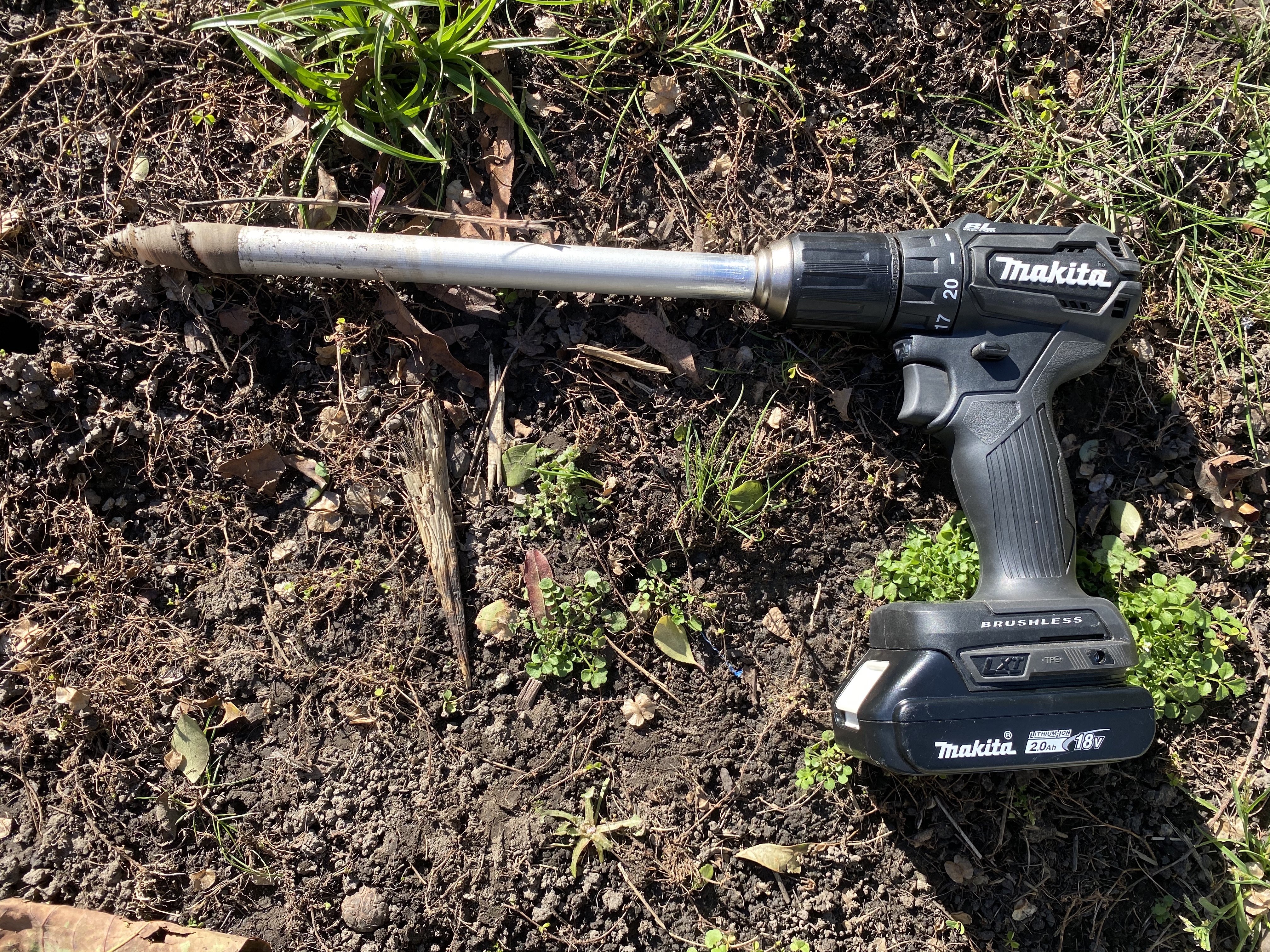
Soil measurement tool by Yard stick lying on ground

Image Credits: Yard Stick

“One, we can take samples way faster. Number two, the cost is dramatically lower,” Tolles said. “And what that means, three, you’ll get a more accurate measurement of your carbon stock because our technology is so much cheaper and easier, that you can dramatically increase your sampling density.”

Yard Stick is currently working with a few large food companies engaged in regenerative agriculture pilot programs with farms across the United States. Yard Stick doesn’t plan to sell directly to farms. Instead, it works with project developers like these companies. Yard Stick is using these connections to verify its probe is as reliable as the traditional gold standard of carbon soil measuring and to introduce its product and service to farmers. Yard Stick plans to sell a data measurement service, not the hardware itself. 

“None of our customers want to own a spectrometer,” Tolles said. “They don’t know what to do with one even if we made it idiot simple.” 

Yard Stick sends its people out to take the measurements and then provides reports to farmers and other stakeholders that put the data in context, charging per acre. At some point Tolles hopes the device will be simple enough that anyone with a bit of training can use the probe so the number of Yard Stick employees isn’t a rate-limiting factor.

By 2022, Yard Stick hopes to be measuring 200,000 acres using a few thousand probes.

With more data and just as importantly more data sharing, we can begin to turn the ship around on climate change. But data is a sensitive business to be in. 

“We want to acknowledge the limitations of late-stage capitalist worldviews, which don’t often incentivize sharing,” Tolles said. “There’s a real tragic risk here that the information is so valuable that everybody wants to keep it to themselves and the benefits of soil carbon marketplaces only accrue to the same giant industrial agricultural corporations that have had it for so long.”

A few other early-stage companies are also trying to bust open the market for soil carbon, including LaserAg, which works in laboratories instead of in the fields, and CloudAgronomics, which uses satellites for remote measurement of soil health. But Yard Stick’s main competitor is every farm out there that isn’t measuring and managing their carbon stores, which, according to Tolles, is 99.9% of farms.

“Our mission is to avoid catastrophic climate change,” Tolles said. “So I think we’re inclined to be very pro-competitor.” 
 

17 Feb 2021

Crypto wallet and exchange company Blockchain.com raises $120 million

Blockchain.com has announced that it has raised a $120 million funding round. The company develops a popular cryptocurrency wallet as well as an exchange, an explorer and more.

Moore Strategic Ventures, Kyle Bass, Access Industries, Rovida Advisors, Lightspeed Venture Partners, GV, Lakestar, Eldridge and other unnamed investors participated in today’s funding round. Overall, the company has raised more than $190 million since its creation.

Originally named Blockchain.info, the company started off as a blockchain explorer. An explorer lets you enter the hash of any transaction that occurs on the bitcoin blockchain to get more information about the amount, fees, number of confirmations as well as the wallet addresses of the sender and the receiver. Over time, explorers started adding support for more blockchains and more types of data.

Blockchain.com then built an open-source bitcoin wallet — it now supports more cryptocurrencies and stablecoins. The company’s wallet is a noncustodial wallet, which means that you’re in control of your private keys. Other noncustodial wallets include Coinbase Wallet, Argent, ZenGo, etc.

Many crypto users choose to buy bitcoins on an exchange and leave them on the exchange account. In that case, you don’t control the wallet as the exchange takes care of keeping your crypto assets safe for you. Custodial wallets include Coinbase.com, Binance, Kraken, etc.

There are some advantages and disadvantages with each solution. If an exchange gets hacked or somebody gets your login information through phishing, your assets aren’t safe on a custodial wallet.

If you lose your private key, you can’t access your noncustodial wallet. Blockchain.com and other noncustodial wallet providers have found ways to mitigate the risk of losing access to your wallet by backing up some information.

More recently, Blockchain.com has launched its own exchange so that wallet users can trade assets more easily. It now also offers services to institutional investors so that they can get started with cryptocurrencies. Services include order executions, custody, lending, OTC transactions, etc.

Blockchain.com has also shared some metrics. People have created 65 million wallets on the company’s website or using the mobile apps. Since 2012, 28% of bitcoin transactions have been sent or received by a Blockchain.com-managed wallet.

17 Feb 2021

Dear Sophie: Tips for filing for a green card for my soon-to-be spouse

Here’s another edition of “Dear Sophie,” the advice column that answers immigration-related questions about working at technology companies.

“Your questions are vital to the spread of knowledge that allows people all over the world to rise above borders and pursue their dreams,” says Sophie Alcorn, a Silicon Valley immigration attorney. “Whether you’re in people ops, a founder or seeking a job in Silicon Valley, I would love to answer your questions in my next column.”

Extra Crunch members receive access to weekly “Dear Sophie” columns; use promo code ALCORN to purchase a one- or two-year subscription for 50% off.


Dear Sophie:

My fiancé is in the U.S. on an H-1B visa, which is set to expire in about a year and a half.

We were originally planning to marry last year, but both he and I want to have a ceremony and party with our families and friends, so we decided to hold off until the pandemic ends. I’m a U.S. citizen and plan to sponsor my fiancé for a green card.

How long does it typically take to get a green card for a spouse? Any tips you can share?

— Sweetheart in San Francisco

Dear Sweetheart:

Congratulations! It’s so wonderful to hear you’re planning to take the next step with your beloved. I understand wanting to wait to have a big wedding and party. However, to avoid the risk that your husband-to-be will have to leave the U.S., I recommend that you get married in a civil ceremony as soon as possible and immediately file for a green card.

Be sure to check out the podcast that my law partner, Anita Koumriqian and I posted on the ins and outs of applying for a fiancé visa (if your fiancé is living outside of the U.S.) or a marriage-based green card.

If your husband has already been sponsored for a green card by his employer and he’s only waiting for his priority date to become current, his employer might be able to renew his H-1B visa beyond six years, which would mean he won’t have to leave the U.S. while he waits for either green card to come through. Keep in mind that due to COVID-19 restrictions and an increase in filings, U.S. Citizenship and Immigration Services (USCIS) is facing significant delays in processing all immigration cases. Currently, USCIS may take more than a year to process marriage-based green card petitions.

To answer your second question, here are my tips for getting a marriage-based green card for your soon-to-be husband:

Ask for employer support

Given that your fiancé’s employer could benefit by retaining him without going through (or needing to complete) the lengthier and more costly process for an employer-sponsored green card, your fiancé should ask his company to cover the legal and filing costs for the marriage-based green card. Your fiancé’s employer will also probably still have to submit an H-1B visa renewal on his behalf.

For a good-faith marriage, marriage-based green cards generally are quicker, less document-intensive and less expensive than getting an employer-sponsored green card. If your fiancé is from India or China, he would face a substantially longer wait for an employee-based green card due to the annual numerical and per-country caps.

There are no numerical or per-country caps on marriage-based green cards for immediate relatives. Because of this, you will be able to file Form I-130 (Petition for Alien Relative), which establishes your relationship to your spouse, and Form I-485 (Application to Register Permanent Residence or Adjust Status) for the green card at the same time (concurrent filing).

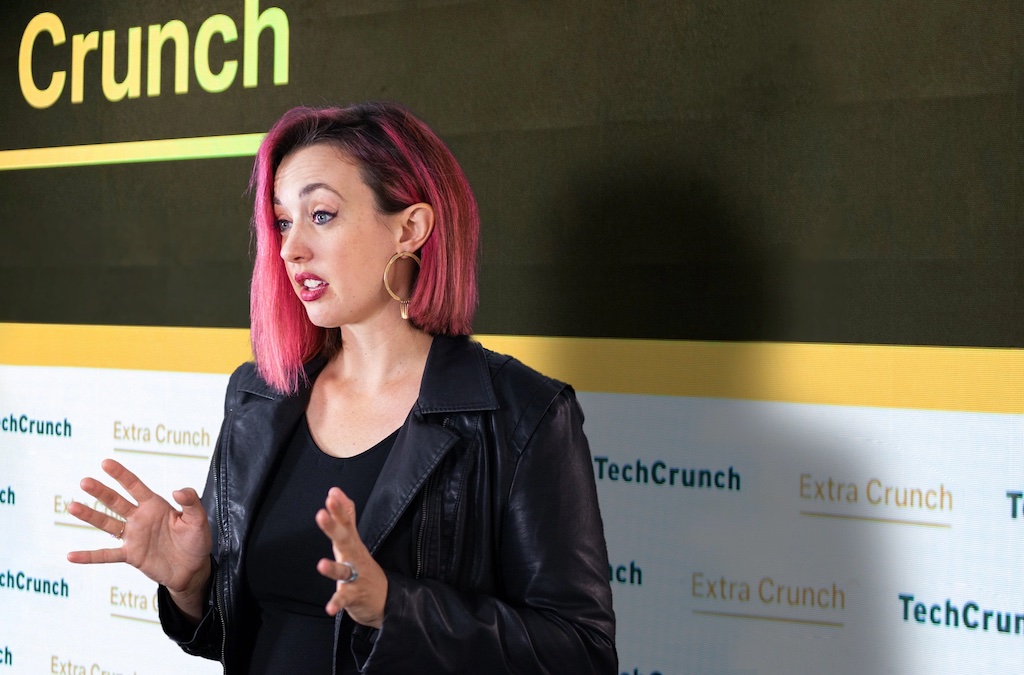
A composite image of immigration law attorney Sophie Alcorn in front of a background with a TechCrunch logo.

Image Credits: Joanna Buniak / Sophie Alcorn (opens in a new window)

Hire an immigration attorney

Filing a petition to sponsor a spouse for a green card sounds straightforward, but it requires more than just filling out the appropriate forms. Many couples come to us after going it alone and running into problems or getting denied.

17 Feb 2021

Microsoft’s Dapr open-source project to help developers build cloud-native apps hits 1.0

Dapr, the Microsoft-incubated open-source project that aims to make it easier for developers to build event-driven, distributed cloud-native applications, hit its 1.0 milestone today, signifying the project’s readiness for production use cases. Microsoft launched the Distributed Application Runtime (that’s what “Dapr” stand for) back in October 2019. Since then, the project released 14 updates and the community launched integrations with virtually all major cloud providers, including Azure, AWS, Alibaba and Google Cloud.

The goal for Dapr, Microsoft Azure CTO Mark Russinovich told me, was to democratize cloud-native development for enterprise developers.

“When we go look at what enterprise developers are being asked to do — they’ve traditionally been doing client, server, web plus database-type applications,” he noted. “But now, we’re asking them to containerize and to create microservices that scale out and have no-downtime updates — and they’ve got to integrate with all these cloud services. And many enterprises are, on top of that, asking them to make apps that are portable across on-premises environments as well as cloud environments or even be able to move between clouds. So just tons of complexity has been thrown at them that’s not specific to or not relevant to the business problems they’re trying to solve.”

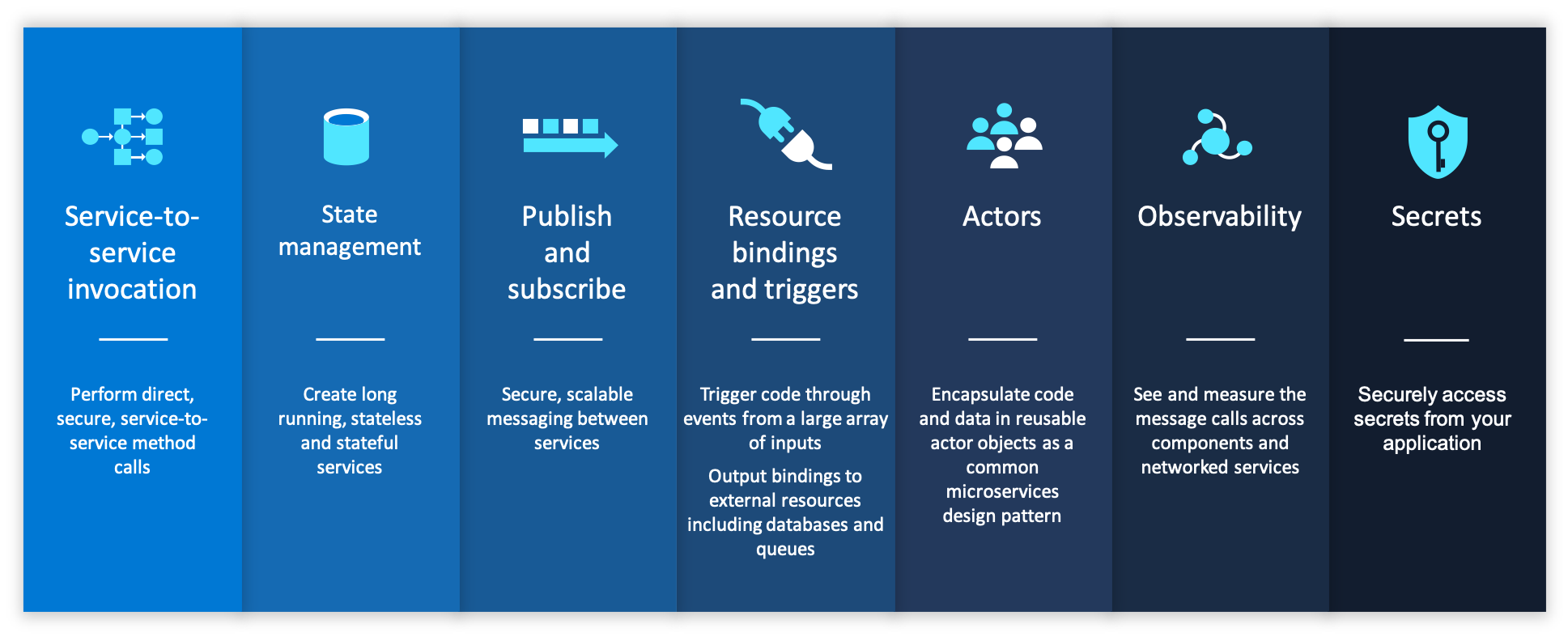
And a lot of the development involves re-inventing the wheel to make their applications reliably talk to various other services. The idea behind Dapr is to give developers a single runtime that, out of the box, provides the tools that developers need to build event-driven microservices. Among other things, Dapr provides various building blocks for things like service-to-service communications, state management, pub/sub and secrets management.

Image Credits: Dapr

“The goal with Dapr was: let’s take care of all of the mundane work of writing one of these cloud-native distributed, highly available, scalable, secure cloud services, away from the developers so they can focus on their code. And actually, we took lessons from serverless, from Functions-as-a-Service where with, for example Azure Functions, it’s event-driven, they focus on their business logic and then things like the bindings that come with Azure Functions take care of connecting with other services,” Russinovich said.

He also noted that another goal here was to do away with language-specific models and to create a programming model that can be leveraged from any language. Enterprises, after all, tend to use multiple languages in their existing code, and a lot of them are now looking at how to best modernize their existing applications — without throwing out all of their current code.

As Russinovich noted, the project now has more than 700 contributors outside of Microsoft (though the core commuters are largely from Microsoft) and a number of businesses started using it in production before the 1.0 release. One of the larger cloud providers that is already using it is Alibaba. “Alibaba Cloud has really fallen in love with Dapr and is leveraging it heavily,” he said. Other organizations that have contributed to Dapr include HashiCorp and early users like ZEISS, Ignition Group and New Relic.

And while it may seem a bit odd for a cloud provider to be happy that its competitors are using its innovations already, Russinovich noted that this was exactly the plan and that the team hopes to bring Dapr into a foundation soon.

“We’ve been on a path to open governance for several months and the goal is to get this into a foundation. […] The goal is opening this up. It’s not a Microsoft thing. It’s an industry thing,” he said — but he wasn’t quite ready to say to which foundation the team is talking.


17 Feb 2021

With software markets getting bigger, will more VCs bet on competing startups?

This morning I covered three funding rounds. One dealt with the no-code/low-code space, another focused on the OKR software market and the last dealt with a company in the consumer investing space. Worth a combined $420 million, the investments made for a contentedly busy morning.

But they also got me thinking about startup niches and competition. Back in the days when inside rounds were bad, SPACs were jokes and crypto a fever dream, there was lots of noise about investors who declined to place competing bets in any particular startup market.


The Exchange explores startups, markets and money. Read it every morning on Extra Crunch, or get The Exchange newsletter every Saturday.


This rule of thumb still holds up today, but we need to update it. The general sentiment that investors shouldn’t back competing companies is still on display, as we saw Sequoia walk away from a check it put into Finix after it became clear that the smaller company was too competitive with Stripe, another portfolio company.

But as startups get more broad and stay private longer, the space into which VCs can invest may narrow — especially if they have a big winner that stays private while building both horizontally and vertically (like Stripe, for example).

Does that mean Sequoia can’t invest elsewhere in fintech? No, but it does limit their investing playing field.

Which is dumb as hell. Nothing that Sequoia could invest in today is really going to slow Stripe’s IPO, unless the company decides to not go public for a half-decade. Which would be lunacy, even for today’s live-at-home-with-the-parents startup culture that leans toward staying private over going public.

17 Feb 2021

Grafana Labs launches observability stack for enterprise customers

Grafana Labs has created an open-source observability trifecta that includes Prometheus for monitoring, Loki for logging and Tempo for tracing. Today, the company announced it was releasing enterprise versions of these open-source projects in a unified stack designed specifically for the needs of large companies.

Company CEO Raj Dutt says that this product is really aimed at the largest companies in the world, who crave control over their software. “We’re really going after at-scale users who want a cutting-edge observability platform based on these leading open-source projects. And we are adding a lot of feature differentiation in the enterprise version along with 24/7 support from the experts, from the people who have actually created software,” he said.

Among those features is a set of plug-ins that lets these large customers pull data into the platform from leading enterprise software companies, including Splunk, New Relic, MongoDB and Snowflake. The Enterprise Stack also provides enhanced authentication and security.

Dutt calls this product self-managed to contrast it with the managed cloud versions of the product the company already has been offering for some time. “We have two main products, Grafana Cloud and now Grafana Enterprise Stack. Grafana Cloud is our hosted deployment model, and the Grafana Enterprise Stack is essentially licensed software that customers are free to run however they want, whether that’s on prem, in a colocation company like Equinix or on the cloud vendor of their choice,” Dutt explained.

They can also mix and match their deployments across the cloud or on-prem in a hybrid style, and the large enterprise customers that the company is going after with this product should like that flexibility. “It also allows them to hybridize their deployments, so they may decide to use the cloud for metrics, but their logs contain a lot of sensitive information [and they want to deploy that on prem]. And since it’s a composable stack, they may have a hybrid deployment that’s partly in the cloud and partly on prem,” he said.

When you combine this new enterprise version with the managed cloud version that already exists, it gives Grafana another potentially large revenue source. The open-source products act as a driver, giving Grafana a way into these companies, and Dutt says they know of more than 700,000 instances of the open-source products in use across the world.

While the open-source business model usually only turns a fraction of these users into paying customers, having numbers like this gives the company a huge head start and it’s gotten the attention of investors. The company has already raised over $75 million, including a $24 million Series A 2019 and a $50 million Series B in 2020.

17 Feb 2021

Spectral raises $6.2M for its DevSecOps service

Tel Aviv-based Spectral is bringing its new DevSecOps code scanner out of stealth today and announcing a $6.2 million funding round. The startup’s programming language-agnostic service aims to automated code security development teams to help them detect potential security issues in their codebases and logs, for example. Those issues could be hardcoded API keys and other credentials, but also security misconfiguration and shadow IT assets.

The four-person founding team has a deep background in building AI, monitoring and security tools. CEO Dotan Nahum was a Chief Architect at Klarna and Conduit (now Como, though you may remember Conduit from its infamous toolbar that was later spun off), and the CTO at Como and HiredScore, for example. Other founders worked on building monitoring tools at Elastic and HP and on security at Akamai. As Nahum told me, the idea for Spectral came to him and co-founder and COO Idan Didi during their shared time at mobile application build Conduit/Como.

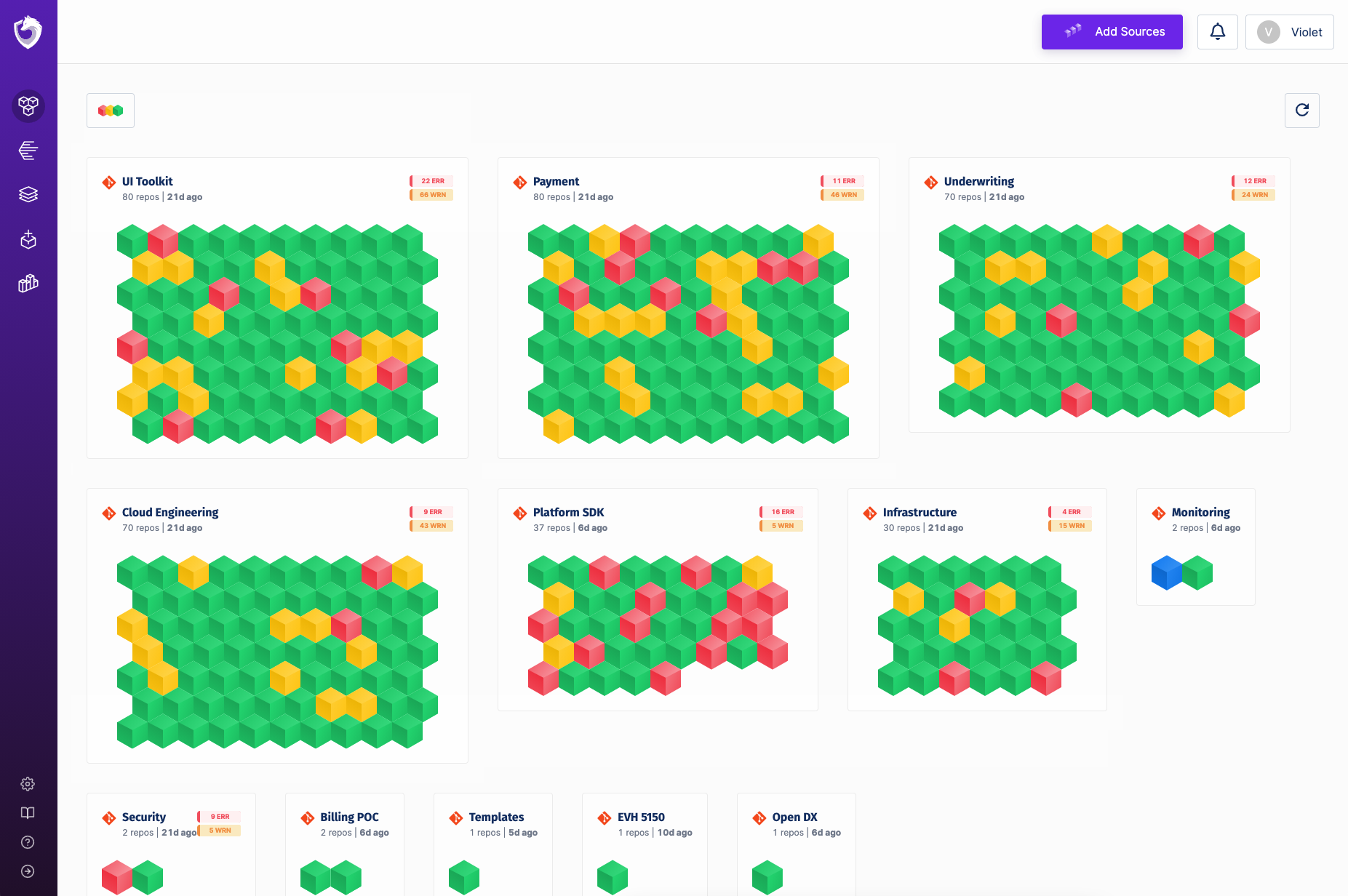
Image Credits: Spectral

“We basically stored certificates for every client that we had, so we could submit their apps to the various marketplaces,” Nahum told me of his experience at Counduit/Como. “That certificate really proves that you are who you are and it’s super sensitive. And at each point at these companies, I really didn’t have the right tools to actually make sure that we’re storing, handling, detecting [this information] and making sure that it doesn’t leak anywhere.”

Nahum decided to quit his current job and started to build a prototype to see if he could build a tool that could solve this problem (and his work on this prototype quickly discovered an issue at Slack). And as enterprises move from on-premises software to the cloud and to microservices and DevOps, the need for better DevSecOps tools is only increasing.

“The emphasis is to create a great developer experience,” Nahum noted. “Because that’s where we started from. We didn’t start as a top down cyber tool. We started as a modest DevOps friendly, developer-friendly tool.”

Image Credits: Spectral

One interesting aspect of Spectral’s approach, which uses a machine learning model to detect these breaches across programming languages, is that it also scans public-facing systems. On the backend, Spectral integrates with tools like Travis, Jenkins, CircleCI, Webpack, Gatsby and Netlify, but it can also monitor Slack, npm, maven and log providers — tools that most companies don’t really think about when they think about threat modeling.

“Our solution prevents security breaches on a daily basis,” said Spectral co-founder and COO Idan Didi. “The pain points we’re addressing resonate strongly across every company developing software, because as they evolve from own-code to glue-code to no-code approaches they allow their developers to gain more speed, but they also add on significant amounts of risk. Spectral lets developers be more productive while keeping the company secure.”

The company was founded in mid-2020, but it already has about 15 employees and counts a number of large publicly-listed companies among its customers.

17 Feb 2021

TigerGraph raises $105M Series C for its enterprise graph database

TigerGraph, a well-funded enterprise startup that provides a graph database and analytics platform, today announced that it has raised a $105 million Series C funding round. The round was led by Tiger Global and brings the company’s total funding to over $170 million.

“TigerGraph is leading the paradigm shift in connecting and analyzing data via scalable and native graph technology with pre-connected entities versus the traditional way of joining large tables with rows and columns,” said TigerGraph founder and CEO, Yu Xu. “This funding will allow us to expand our offering and bring it to many more markets, enabling more customers to realize the benefits of graph analytics and AI.”

Current TigerGraph customers include the likes of Amgen, Citrix, Intuit, Jaguar Land Rover and UnitedHealth Group. Using a SQL-like query language (GSQL), these customers can use the company’s services to store and quickly query their graph databases. At the core of its offerings is the TigerGraphDB database and analytics platform, but the company also offers a hosted service, TigerGraph Cloud, with pay-as-you-go pricing, hosted either on AWS or Azure. With GraphStudio, the company also offers a graphical UI for creating data models and visually analyzing them.

The promise for the company’s database services is that they can scale to tens of terabytes of data with billions of edges. Its customers use the technology for a wide variety of use cases, including fraud detection, customer 360, IoT, AI and machine learning.

Like so many other companies in this space, TigerGraph is facing some tailwind thanks to the fact that many enterprises have accelerated their digital transformation projects during the pandemic.

“Over the last 12 months with the COVID-19 pandemic, companies have embraced digital transformation at a faster pace driving an urgent need to find new insights about their customers, products, services, and suppliers,” the company explains in today’s announcement. “Graph technology connects these domains from the relational databases, offering the opportunity to shrink development cycles for data preparation, improve data quality, identify new insights such as similarity patterns to deliver the next best action recommendation.”

17 Feb 2021

Fictiv nabs $35M to build out the ‘AWS of hardware manufacturing’

Hardware may indeed be hard, but a startup that’s built a platform that might help buck that idea by making hardware a little easier to produce has announced some more funding to continue building out its platform.

Fictiv, which positions itself as the “AWS of hardware” — providing a platform for those needing to produce some hardware, giving them a place to design, price and order those pieces and eventually get them from one place to another — has raised $35 million.

Fictiv will be using the money to continue building out its platform and the supply chain that underpins its business, which the startup describes as a “Digital Manufacturing Ecosystem.”

Dave Evans, the CEO and founder, said that the focus of the company has been and will continue to be not mass-produced items but prototypes and other objects that are specialized and by their nature not aimed at mass markets, such as particular medical devices.

“We are focused on 1,000 to 10,000,” he said in an interview, which he said was a challenging number of produce as these kinds of jobs fall short of seeing bigger economies of scale, but are still too big to be considered small and inexpensive. “This is the range where most products still die.”

The round — a Series D — is coming from a mix of strategic and financial investors. Led by 40 North Ventures, it also includes Honeywell, Sumitomo Mitsui Banking Corp., Adit Ventures and M20 (Microsoft’s strategic investment arm), as well as past backers Accel, G2VP and Bill Gates.

The funding brings the total raised by Fictiv to $92 million. Its valuation is not being disclosed.

Fictiv last raised money nearly two years ago — a $33 million round in early 2019 — and the interim years have well and truly tested the business concept that he envisioned when first establishing the startup.

Even before the pandemic, “we had no idea what the trade wars between the U.S. and China would do,” he said. Quite abruptly, the supply chain got completely “crunched, with everything shut down” in China over those tariff disputes.

Fictiv’s fix was to shift manufacturing to other parts of Asia such as India, and to the U.S. That, in turn, ended up helping the company when the first wave of COVID-19 hit, initially in China.

Then came the global outbreak, and Fictiv found itself shifting yet again as plants shut down in the countries where it had recently opened.

Then, with trade issues cooled down, Fictiv again reignited relationships and operations in China, where COVID had been contained early, to continue working there.

“I guess we were just in the right places at the right time,” he said.

The startup made its name early on with building prototypes for tech companies neighboring it in the Bay Area, startups build VR and other gadgets, with services that included injection molding, CNC machining, 3D printing and urethane casting, with customers using cloud-based software to design and order parts, which then were routed by Fictiv to the plants best suited to make them.

These days, while that business continues, Fictiv is also working with very large global multinationals on their efforts with smaller-scale manufacturing, products that are either new or unable to be tooled as efficiently in their existing factories.

Work that it does for Honeywell, for example, includes mostly hardware for its aerospace division. Medical devices and robotics are two other big areas for the company currently, it said.

Fictiv is not the only company eyeing up this opportunity. Others that have been building marketplaces that either directly compete with what Fictiv has built, or targets other aspects of the chain such as marketplaces for design, or marketplaces for factories to connect with designers, or materials designers include Geomiq in England, Carbon (which is also backed by 40 North), Fathom in Oakland, Kreatize in Germany, Plethora (backed by the likes of GV and Founders Fund), and Xometry (which also recently raised a significant round).

Evans and his investors are careful not to describe what they do as specifically industrial technology to keep the focus on the bigger opportunities with digital transformation and of course the kinds of applications one might have for the platform that Fictiv has built.

“Industrial tech is a misnomer. I think of this as digital transformation, cloud-based SaaS and AI,” said Marianne Wu, a managing director at 40 North Ventures. “The baggage of industrial tech tells you everything about the opportunity.”

Fictiv’s pitch is that by taking on the supply-chain management of producing hardware for a business, it can produce hardware using its platform in a week, a process that might have previously taken three months to complete, which can mean lower costs and more efficiency.

“And when you speed up development, you see more products getting introduced,” he said.

There is still a lot of work to be done, however. One of the big sticking points in manufacturing has been the carbon footprint that it creates in production, and also in terms of the resulting goods that are produced.

That will likely become even more of an issue, if the Biden administration follows through on its own commitments to reduce emissions and to lean more on companies to follow through for those ends.

Evans is all too aware of that issue and accepts that manufacturing may be one of the hardest to shift.

“Sustainability and manufacturing are not synonymous,” he admits. And while materials and manufacturing will take longer to evolve, for now, he said the focus has been on how to implement better private and public and carbon credits programs. He envisions a better market for carbon credits, he said, with Fictiv doing its part with the launch of its own tool for measuring this.

“Sustainability is ripe for disruption, and we hope to have the first carbon-neutral shipping program, giving customers better choice for more sustainability. It’s on the shoulders of companies like us to drive this.”

17 Feb 2021

Peak AI nabs $21M for a platform to help non-tech companies make AI-based decisions

One of the biggest challenges for organizations in modern times is deciding where, when and how to use the advances of technology, when the organizations are not technology companies themselves. Today, a startup out of Manchester, England, is announcing some funding for a platform that it believes can help.

Peak AI, which has built technology that it says can help enterprises — specifically those that work with physical products such as retailers, consumer goods companies and manufacturing organizations — make better, AI-based evaluations and decisions, has closed a round of $21 million.

The Series B is being led by Oxx, with participation from past investors MMC Ventures and Praetura Ventures, as well as new backer Arete. It has raised $43 million to date and is not disclosing its valuation.

Richard Potter, the CEO who co-founded the company with Atul Sharma and David Leitch, said that the funding will be used to continue expanding the functionality of its platform, adding offices in the U.S. and India, and growing its customer base.

Its list of clients today is an impressive one, including the retailer PrettyLittleThing, KFC, PepsiCo, Marshalls and Speedy Hire.

As Potter describes it, Peak identified its opportunity early on. It was founded in 2014, a time non-tech enterprises were just starting to grasp how the concept of AI could apply to their businesses but felt it was out of their reach.

Indeed, the larger landscape for AI services at that time was primarily one focused on technology companies, specifically companies like Google, Amazon and Apple that were building AI products to power their own services, and often snapping up the most interesting talent in the field as it manifested through smaller startups and universities.

Peak’s basic premise was to build AI not as a business goal for itself but as a business service. Its platform sits within an organization and ingests any data source that a company might wish to feed into it.

While initial integration needs technical know-how — either at the company itself or via a systems integrator — using Peak day-to-day can be done by both technical and non-technical workers.

Peak says it can help answer a variety of questions that those people might have, such as how much of an item to produce, and where to ship it, based on a complex mix of sales data; how to manage stock better; or when to ramp up or ramp down headcount in a warehouse. The platform can also be used to help companies with marketing and advertising, figuring out how to better target campaigns to the right audiences, and so on.

Peak is not the first company that has seized on the concept of using a “general” AI to give non-tech organizations the same kinds of superpowers that the likes of big tech now use in their own businesses everyday.

Sometimes the ambition has outstripped the returns, however.

Witness Element AI, a highly-touted startup backed by a long list of top-shelf strategic and financial investors to build, essentially, an AI services business for non-tech companies to use as they might these days use Accenture. It never quite got there, though, and was acquired by ServiceNow last year at a devalued price of $500 million, the customer deals it had were wound down, and the tech was integrated into the bigger company’s stack.

Other efforts within hugely successful tech companies have not fared that well either.

“Einstein’s features are essentially useless, and you can quote me on that,” said Potter of Salesforce’s in-house CRM AI business. “Because it is too generic, it doesn’t predict anything useful.”

And that is perhaps the crux of why Peak AI is working for now: it has remained focused for now on a limited number of segments of the market, in particular those with physical objects as the end product, giving the AI that it has built a more targeted end point. In other words, it’s “general” but only for specific industries.

And it claims that this is paying off. Peak’s customers have reported a 5% increase in total company revenues, a doubling of return on advertising spend, a 12% reduction in inventory holdings and a 5% reduction in supply chain costs, according to the company (although it doesn’t specify which companies, which products or anything that points to who or what is being described).

“Richard and the excellent Peak team have a compelling vision to optimize entire businesses through Decision Intelligence and they’re delivering real-world benefits to a raft of household name customers already,” said Richard Anton, a general partner at Oxx, in a statement. “The pandemic has meant digitization is no longer a choice; it’s a requirement. Peak has made it easier for businesses to get started and see rapid results from AI-enabled decision making. We are delighted to support Peak on their way to becoming the category-defining global leader in Decision Intelligence.” Anton is joining the board with this round.