Year: 2021

16 Sep 2021

Tanso nabs $1.9M pre-seed to help industrial manufacturers do sustainability reporting

The climate crisis is creating massive demand for data capture as industries grapple with how to decarbonize. Put simply, you can’t cut your carbon emissions if don’t know what they are in the first place.

This need to gather data is a big opportunity for startups — and a wave of early companies have already been founded to try to plug the sustainability data gap, through things like APIs to assess emissions for carbon offsetting (which in turn has led to other startups trying to tackle the data gap around offsetting projects…).

One thing is clear: Requirements for sustainability reporting are only going to get broader and deeper from here on in.

Munich-based Tanso is an early stage startup (founded this year) that’s building software to support sustainability reporting for a particular sector (industrial manufacturers) — with the goal of creating a data management system that can automate data capture and sustainability reporting geared towards the specific needs of the sector.

The startup says it decided to focus on industrial manufacturing because it’s both an emissions-heavy sector and underserved with supportive digital tech vs many other industries.

The founders met during their studies at universities in Munich and Zurich — where they’d been researching the assessment of organizational climate impact. Their collective expertise crystalized into the realization of a business opportunity to build a data management system for a notoriously polluting sector that’s facing a mandate to change.

In the coming years, European regulations will expand sustainability reporting requirements — with the EU’s ‘Green Deal’ plan setting an overarching goal of Europe becoming the first “climate-neutral” continent by 2050.

Specific (existing) reporting requirements within the bloc include the EU Corporate Sustainability Reporting Directive (CSRD), which will apply to more than 50,000 companies — requiring they report on their sustainability metrics, starting in 2023.

The UK (now outside the EU) already introduced some reporting requirements for domestic companies, under the Streamlined Energy and Carbon Reporting (SECR) regulation, which has applied since 2019 and applies to over 12,000 businesses in the UK in varying degrees of detail depending on the size of the company.

So there is a clear direction of travel in the region requiring businesses to gather and report sustainability data.

Tanso has just closed a $1.9 million pre-seed raise with the aim of getting its data management support software to market in time for an expected surge in demand as sustainability regulations like CSRD start to bite.

The raise is led by German early stage b2b fund UVC Partners, with participation from Picus Capital, Possible Ventures, and a number of business angels.

Tanso is still in the R&D/product development phase, with co-founder Gyri Reiersen telling TechCrunch it’s currently working with a number of manufacturers to “figure out the sweet spot” for automating data gathering so it can come to market with a scalable product offering. She says the team raised a relatively large pre-seed exactly to see it through until it’s got something fit to launch (it’s hoping to have something “solid, verified and scalable” by the end of 2022, per Reiersen).

The goal for the product is a single platform that gathers and holds all the customer’s sustainability data and can automate the generation of reports to meet regulatory requirements — including auditing.

From 2025, Reiersen points out that CSRD reporting needs to be “auditable”, meaning that you have to have “some form of transparency and traceability”; and also that the “correctness” of sustainability reporting will be a C-Suite responsibility. So that must concentrate boardroom minds.

“Going beyond that it’s all about how can you use this data and the insights that the data gives you to make predictions and models going forward for how should we develop our products? What makes sense to do going forward to make?” she adds.

“What we’re prototyping currently is to streamline the workflow of information gathering,” Reiersen also tells us, discussing the product dev process. “Also to have really good, fundamental user-flow for the users to use our product. And then doing the deep dives on integrations over time.”

She says the challenge is finding the trade-off between usability and “digging into the data”. “For us it’s very important to have a scalable product, especially having it fully scalable from 2023 when the CSRD are started because then there will be desperation on the market. Companies will need to have something,” she adds.

“We need to have these solutions… that take one step in the right direction for all companies and not just have a couple of carbon neutral companies… So for us it’s more about finding the productizable use-cases in the beginning to make this a scalable product.”

But she also warns over a proliferation of overly “shallow” offerings in the space — driven by marketing-led ‘greenwashing’ (and bogus carbon offsetting) rather than a genuine desire to correctly identify the problem and course-correct which is what’s actually needed for humanity to avert climate disaster.

Reiersen adds that she got really interested in this space through her university work researching the overestimation of carbon offsets through deep learning.

“There is such a need for accountability and making sure that the product that is being developed actually do their job correctly. Because it’s so easy to just have a black box and trust it. We can’t afford having systems that overestimate or underestimate. It needs to be accurate and it needs to be validated,” she says.

“Going forward accuracy will mean more and more and then you need to access the ‘real data’ and not just ‘guestimations’,” she predicts. “And that’s where we see that of course we need to be very front-end/UX-friendly, and making it easy for people to enter the right data and have a very user-friendly, usable product and that people are guided through the process of gathering the right data… but also over time really focusing on how do you integrate and get access to the data at the data-base level?”

 

16 Sep 2021

A16z in talks to back CoinSwitch Kuber in first India investment

A16z is inching closer to making its first investment in a startup in India, the world’s second largest internet market that has produced over two dozen unicorns this year.

The Menlo Park-headquartered firm is in final stages of conversations to invest in Indian crypto trading startup CoinSwitch Kuber, three sources familiar with the matter told TechCrunch. The proposed deal values the Bangalore-based firm at $1.9 billion, two sources said. Coinbase is also investing in the new round, one of the sources said.

CoinSwitch Kuber was valued at over $500 million in a round in April this year when it raised $25 million from Tiger Global. If the deal with A16z materializes, it will be CoinSwitch Kuber’s third financing round this year.

TechCrunch reported last week that CoinSwitch Kuber was in talks to raise its Series C funding at up to $2 billion valuation. The report, which didn’t identify a lead investor, noted that the Indian startup had engaged with Andreessen Horowitz and Coinbase in recent weeks.

Usual caveats apply: terms of the proposed deal may change or the talks may not result in a deal. The author reported some details about the deal on Wednesday.

The startup declined to comment. Coinbase and A16z as well as existing investors Tiger Global and Sequoia Capital India did not respond to requests for comment.

The investment talks come at a time when CoinSwitch Kuber has more than doubled its user base in recent months — even as local authorities push back against crypto assets. Its eponymous app had over 10 million users in India last month, up from about 4 million in April this year, the startup said in a newspaper advertisement over the weekend.

A handful of crypto startups in India have demonstrated fast-pace growth in recent years — while impressively keeping their CAC very low — as millions of millennials in the South Asian nation kickstart their investment journeys. Several funds including those with big presence in India such as Accel, Lightspeed, WEH and Kalaari recently began working on their thesis to back crypto startups, TechCrunch reported earlier.

B Capital backed CoinDCX, a rival of CoinSwitch Kuber that has amassed 3.5 million users, last month in a $90 million round that valued CoinDCX at about $1.1 billion.

Policymakers in India have been debating on the status of digital currencies in the South Asian market for several years. India’s central bank, Reserve Bank of India, has expressed concerns about private virtual currencies though it is planning to run trial programs of its first digital currency as soon as December.

About 27 Indian startups have become a unicorn this year, up from 11 last year, as several high-profile investors — and global peers of Andreessen Horowitz — such as Tiger Global and Coatue have increased the pace of their investments in the South Asian market. Apna announced earlier on Thursday that it had raised $100 million in a round led by Tiger Global at $1.1 billion valuation, becoming the youngest Indian firm to attain the unicorn status.

Groww, an investment app for millennials, is in talks to raise a new financing round that would value it at $3 billion, TechCrunch reported on Wednesday. The startup has engaged with Coatue in recent days, the report said.

16 Sep 2021

Liveblocks is an API that lets you add real-time collaboration to your product

Meet Liveblocks, a startup that has been working on a set of APIs so that it’s easier to build a collaborative product. Essentially, it lets you create multiplayer experiences on the web or in your app.

The company started with a live presence state API. If you integrate this API in your product, it means that you can show when somebody joins a page, a project or a document by displaying an avatar in a corner. You can also share the position of everyone’s cursor, text selection or content selection in real time.

Liveblocks is currently testing in private beta a live storage API. This is going to be a key feature as it is going to let multiple people view and edit the same data in real-time. For example, you can use it to develop a Google Docs competitor or if you want to add a whiteboard tool to your service.

The service works across multiple browsers and devices. Behind the scenes, the company uses a WebSocket connection for real-time communication. Pricing depends on the number of simultaneous connections that you expect around the same room, document, experience.

“Guillaume Salles and I decided to work together on a browser-based collaborative presentation/video tool. After months of iteration, we realized that we were spending a majority of our time figuring out how to handle the real‑time collaboration aspect of things, instead of focusing on the core mechanics of the tool,” co-founder and CEO Steven Fabre told me.

“We tried existing solutions, but none really stacked up for what we were trying to do so we decided to build our own. That's when it clicked and we decided to drop the presentation/video tool to ‘productify’ the APIs we had built for ourselves so any team could use them to build performant real-time collaborative products,” he added.

The company raised a $1.4 million pre-seed round during the summer. Investors include Boldstart, Seedcamp, Meta fund, Logic & Rhythm, Ian Storm Taylor, Max Stoiber, Moritz Plassnig, Badrul Farooqi and Anthony DiMare.

Right now, the Liveblocks team is just the two founders. With this funding round, the company plans to hire some engineers and launch its live storage API.

Liveblocks’ main advantage is that it’s a high-level API. Ably, a startup I’ve covered recently, focuses more on the low-level aspect of the problem. A React front-end developer can read the documentation and integrate Liveblocks in its product. You don’t have to understand how the infrastructure layer actually works to get started.

16 Sep 2021

Skello raises $47.3 million for its employee scheduling tool

French startup Skello has raised a $47.3 million funding round (€40 million). The company has been working on a software-as-a-service tool that lets you manage the work schedule of your company. What makes it special is that Skello automatically takes into account local labor laws and collective agreements.

Partech is leading today’s funding round. Existing investors XAnge and Aglaé Ventures are also participating. The startup had previously raised a €300,000 seed round and a €6 million Series A round in 2018.

Skello works with companies across many industries, such as retail, hospitality, pharmacies, bakeries, gyms, escape games and more. And many of them were simply using Microsoft Excel to manage their schedule.

By using Skello, you get an online service that works for both managers and employees. On the manager side, you can view who is working and when. You can assign employees to fill some gaps.

For employees, they can also connect to the platform to see their own schedule. Employees can also say when they are unavailable and request time off. And when something unexpected comes up, employees can trade shifts.

“We really want to put employees at the center of the product,” co-founder and CEO Quitterie Mathelin-Moreaux told me. “They have a mobile app and the idea is to make the work schedule as collaborative as possible in order to allocate resources as efficiently as possible and increase team retention.”

At every step of the scheduling process, Skello manages legal requirements. For instance, Skello remembers mandatory weekly rest periods. The platform knows that your employees can’t work across a long time range. And Skello can count overtime hours, holiday hours, Sunday shifts, etc.

When you’re approaching the end of the month, Skello can generate a report with everyone’s timesheet. You can integrate Skello directly with your payroll tool to make this process a bit less tedious as well.

Skello is currently used across 7,000 points of sale. Now, the company wants to expand to more European countries and increase the size of the team from 150 employees to 300 employees by 2022.

16 Sep 2021

Online events platform Delegate Connect gets $10M AUD led by AirTree

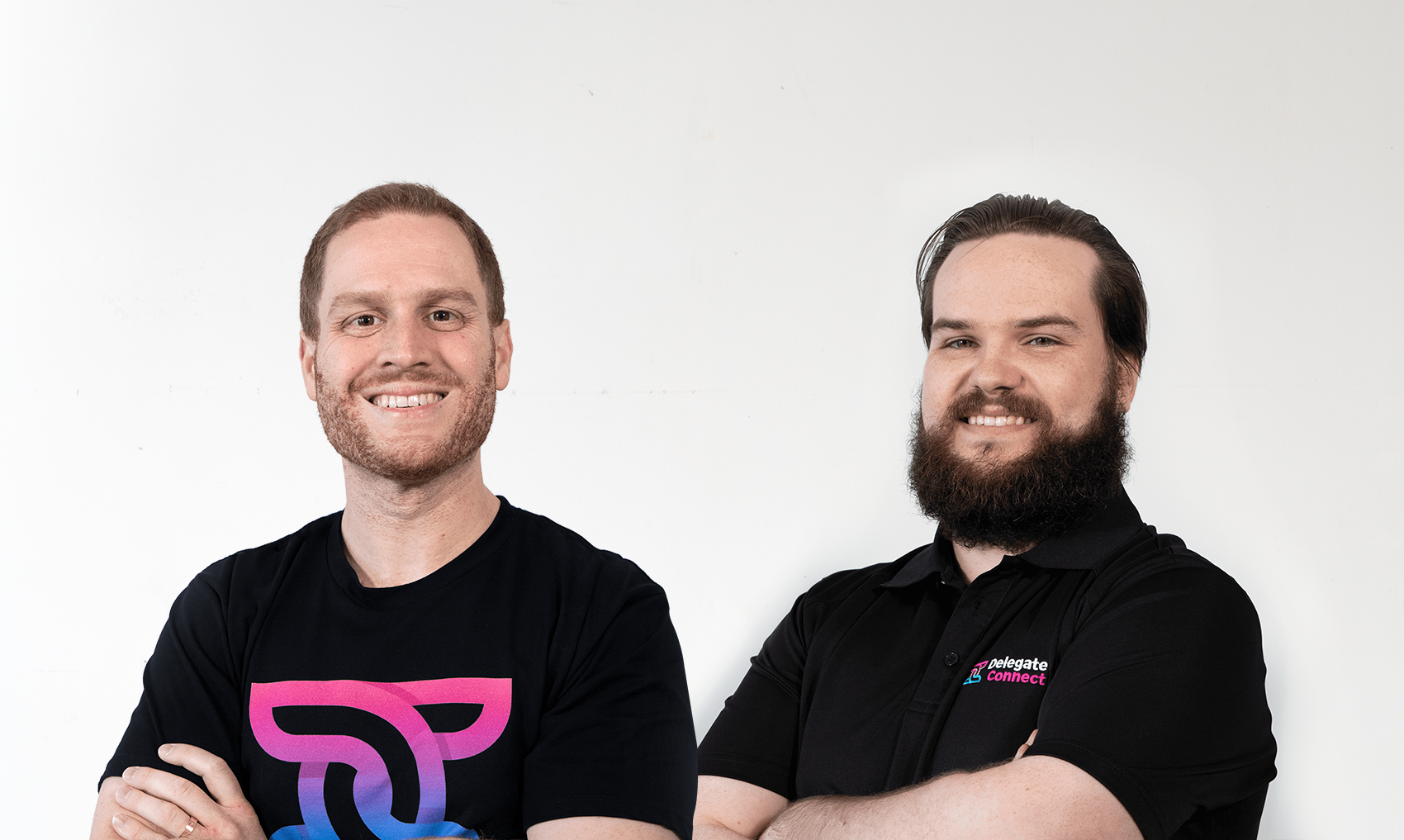
Delegate Connect founders Jordan Walsh and Jacob Thomas

Delegate Connect founders Jordan Walsh and Jacob Thomas

Delegate Connect is the latest virtual/hybrid events platform to land funding. The Melbourne-based startup announced today it has raised $10 million AUD (about $7.3 million USD) in seed funding led by AirTree Ventures, which wrote Delegate Connect the biggest seed check in the fund’s history so far. Other participants included Skip Capital, TEN13 and Australian startup founders like LinkTree’s Alex Zaccaria and Go1’s Andrew Barnes.

The capital will be used to build Delegate Connect’s teams in Melbourne, London and Norway, which enable it to handle events around the world, increasing headcount from 45 to more than 100 by December. It also plans to open a United States-based office soon.

Founded in 2017 and bootstrapped until its seed round, Delegate Connect’s business grew during the COVID-19 pandemic, like many other virtual event platforms. Its clients have included the Edinburgh TV Festival, Sportsbet, the World Dental Congress and the World Library and Information Congress. Some of the sectors Delegate Connect focuses on include medical, pharmaceutical and industry associations.

Delegate Connect was created after co-founders Jordan Walsh and Jacob Thomas started a technical production and events business, and looked for a “technology platform that could do everything we needed at a large-scale event, including registration, live-streaming, hosting video-on-demand and integrate seamlessly with the venues.” They decided to build their own, initially as an internal tool. Then during a trip to India in 2019 to work on a symposium, the two realized that there was a wider need for their platform.

“[We] had a lightbulb moment where we thought ‘we are solving a genuine problem here.’ One of the world’s biggest technology companies was flying us to Mumbai to use our system (which wasn’t even built properly) to deliver the technical assets of their event!” Walsh told TechCrunch in an email.

The two finished building the platform at the end of 2019 and launched it in January 2020.

Walsh and Thomas were interested in hybrid events even before COVID-19.

“Hybrid events have been around for along time, especially in the medical, pharmaceutical and associations sectors,” said Walsh. “Before COVID, they typically involved someone broadcasting a live stream from the venue, recording it and then hosting it on-demand after the event. These are all fundamentals of the platform we’ve built, and we’re obsessed with creating a platform that expands the hybrid event experience to do so much more than live streaming and video on demand.”

Some features created for the medical and pharmaceutical sectors include the ability to log hours spent viewing educational or scientific content, which is useful for delegates who are attending events to earn professional development points (CPD), abstract submissions, content-restricted registrations and the ability to run concurrent streams.

Tracking professional development points is a major selling point in particular, since “this is typically super complex technically for clients, and we solve this for them by working out how they accredit, build it in, track it and then process the accreditation,” said Walsh.

If you’ve attended a lot of online events over the past year and a half, you are probably wondering how Delegate Connect is different from platforms like Hopin (which was used for TechCrunch Disrupt last year), Bizzabo, MeetingPlay or Cvent.

One of its main differentiators is that it was built with specific target audiences (medical, pharmaceutical, associations and international congresses) in mind, and plans to launch a self-service platform for them. Delegate Connect is also completely customizable, so events can use it as a white-label solution.

“Ease of use is central to the UX,” Walsh said. “For example, we have full content restrictions through our registration portal, allowing people to register for sessions, days, themes and streams. We can restrict sponsors form seeing other sponsor booths and ensure that content can’t be shared (e.g. if a pharmaceutical company can’t share info with non-pharmacists, we can restrict this) as well as allow certain delegates to view only some content if needed.”

The delta variant and resurgence of COVID-19 has forced many organizers to turn in-person events into online ones. Walsh said Delegate Connect has handled many last-minute requests and can do so in a matter of hours. For example, in August, the startup was working on a medical conference originally slated to run as a hybrid event from a venue in Japan with thousands of delegates. Just before it was supposed to start, however, the organizers told Delegate Connect that they needed to switch to fully virtual event.

“We can do this easily because the platform doesn’t change. It’s versatile, no matter the delivery method,” said Walsh. “Delegates just need to log in on the day and engage with the content just like they would if they were at the event.”

16 Sep 2021

Gillmor Gang: Off the Wall

Most of us count the golden age of Michael Jackson’s career with the Quincy Jones produced global smashes of Thriller and Bad. Fueled by the stream of videos and multi-single releases (5 on Bad), the records dominated the charts, radio, and MTV. But the real breakthrough came just before with Jackson’s first solo record Off the Wall.

Born in the thrall of the Disco Era, it wasn’t hip, a surrender to the feel of funk meets MGM. But in the mountains around Woodstock, we couldn’t pry this record off the turntable. Today, with a simple voice command to Siri, the mists evaporate and with them the pandemic, working, working, working day and night, the melting years. And the bass. My God but it drives us to Living Life off the wall.

Permission is what we’re given. We need it. No matter what lies in store for us, the grooves capture the essence of our future, unlock our hopes and dreams, our intuition. Can we dare to think this way, the blend of vocals, horns, percussion, and the coursing basses? A Stevie Wonder track recharges the battery. The record fades out quietly, priming the pump for Side One.

Today we lost a nightclub comedian, as Norm MacDonald called himself in a YouTube clip. Like the best of them, his comedy spooled out of him like a 50’s cop show, methodical and faux stupid. You could see his genius in the faces of the funny people who had him on their shows — Letterman, Leno, Conan, an agonizingly hilarious Dennis Miller on his foul-mouthed HBO cable show. Talk about off the wall.

Miller defined this most selfish of dark arts, the joy of being funnier in the presence of funny. In a time of excruciating not funny, these strange warriors tilt with the vagaries of the laugh. MacDonald’s careful construction of his sleight of word was all the richer for his seemingly aimless pursuit of the sweet spot, where the punchline is so McGuffin-like for its inevitability.

As the world slowly recovers its focus, Apple has released a new iPhone that can adjust reality after the fact, Knowing this feat is not possible to recover what and who we’ve lost, I’m so grateful for the time we’ve had with these greats and their great moments. When the traveler reached the top of the mountain and asked the wise man for the secret of life, he replied, “Could you give me a sec, I’m on the phone.”

the latest Gillmor Gang Newsletter

__________________

The Gillmor Gang — Frank Radice, Michael Markman, Keith Teare, Denis Pombriant, Brent Leary and Steve Gillmor. Recorded live Friday, August 27, 2021.

Produced and directed by Tina Chase Gillmor @tinagillmor

@fradice, @mickeleh, @denispombriant, @kteare, @brentleary, @stevegillmor, @gillmorgang

Subscribe to the new Gillmor Gang Newsletter and join the backchannel here on Telegram.

The Gillmor Gang on Facebook … and here’s our sister show G3 on Facebook.

16 Sep 2021

Vietnam-based CoderSchool gets $2.6M pre-Series A to scale online course platform

CoderSchool, a Ho Chi Minh City, Vietnam-based online coding school startup, announced today $2.6 million in pre-Series A funding to scale up its online coding school platform.

This round was led by Monk’s Hill Ventures, with participation from returning seed investors Iterative, XA Network and iSeed Ventures. CoderSchool raised a seed round led by TRIVE Ventures in 2018.

CoderSchool will use the funding to accelerate its online teaching platform growth and technology infrastructure expansion for the company’s technical education programs that guarantee employment upon graduation.

The company, founded in 2015 by Charles Lee and Harley Trung, who previously worked as software engineers, pivoted from offline to online in early 2020 to bring high-quality technical training to everyone, everywhere. After switching to a fully online learning program, the company recorded 100% quarter-over-quarter (QoQ) growth in fully online enrollment, it said in a statement.

“Coding is the future. At CoderSchool, we believe everyone in Southeast Asia deserves a chance to be part of that future,” the company co-founder and CEO Lee said.

In Vietnam, the demand for IT talent is dramatically increasing by 47% a year, while supply is only increasing by 8% year-on-year.

“The need for strong engineers and developers in Southeast Asia has never been as pertinent as it is today with the growth of tech companies and digital businesses,” said Michele Daoud, partner of Monk’s Hill Ventures. “We have been impressed by the team’s focus on setting the standard for coding education in the region. We are excited to partner with CoderSchool to provide both opportunity and access to the millions of aspiring students in Vietnam.”

Given the strong engineer demand in Vietnam, the domestic market size is estimated between $100 million – $200 million, and still increasing every year, according to Lee. CoderSchool has been focusing on Vietnam for the last six years, but plans to enter the global market following the next round, Lee said, without providing exact timetable.

CoderSchool, which offers full-stack web development, machine learning and data sciences courses at a lower cost, has trained more than 2,000 alumni up to date, and recorded over 80% job placement rate for full-time graduates, getting jobs at companies such as BOSCHE, Microsoft, Lazada, Shopee, FE Credit, FPT Software, Sendo, Tiki and Momo.

“After having taught over 2,000 students, we’ve been able to refine our [coding education] content. We rewrote our full-stack web development course — from Ruby, Phyton to JavaScript — in two years, and added new machine learning and data science courses to our program,” Lee told TechCrunch.

CorderSchool’s online program enables students to interact with instructors and classmates before, during and after scheduled class sessions with its human-driven learning strategy. CoderSchool currently has 15 instructional staff, and plans to hire 35 additional instructors by Q4 2022.

CoderSchool’s data analytics has improved individual student performance while also allowing CoderSchool to increase its classroom size at scale, reaching a peak of 107 enrollments in a data science class.

16 Sep 2021

TikTok is hiding a viral challenge that has kids stealing their school’s soap dispensers

It’s back to school season and on TikTok, that means students are inexplicably stealing everything that isn’t bolted down.

The latest TikTok trend to generally wreak social havoc sees students pulling off “devious licks” — small-scale heists of everything from soap dispensers, Covid test kits and hand sanitizer to high value items like classroom tech.

The videos are set to an edited version of Lil B’s “Ski Ski BasedGod,” which had appeared in around 100,000 videos on TikTok by Monday, according to Mashable, with the tag #deviouslick collecting more than 175 million views.

TikTok cracked down on Wednesday, limiting search results for the viral stunt, removing videos with the tag and encouraging users to “please be kind” to teachers.

“We expect our community to stay safe and create responsibly, and we do not allow content that promotes or enables criminal activities,” a TikTok spokesperson told TechCrunch. “We are removing this content and redirecting hashtags and search results to our Community Guidelines to discourage such behavior.”

While it’s hard to know which videos are staged and which are legitimate, the trend is real enough to have teachers and parents across the country stressed out. At a middle school in Las Vegas, school administrators report students swiping speed limit signs, fire alarms, soap dispensers and classroom projectors. And in Portland, Oregon at least one high school saw an entire building’s worth of soap dispensers go missing — not a great start to another school year in the throes of a global pandemic.

16 Sep 2021

Inspiration4 crew, meet outer space: SpaceX’s first all-civilian mission launches to orbit

The first all-civilian crew in history has made it to space.

The Inspiration4 crew took off from NASA’s Kennedy Space Center in Florida at 8:04 EST PM, commencing the first space mission in human history featuring zero trained astronauts.

The reusable first-stage of the Falcon 9 rocket executed two burns in its journey back to Earth, landing vertically on a SpaceX drone ship around 9-and-a-half minutes after launch. Dragon separated from the second stage at 8:16 EST PM.

Second stage separation. Image Credits: SpaceX (opens in a new window)

The four-person crew will be spending time in orbit in a SpaceX Crew Dragon capsule, which was affixed to a Falcon 9 rocket. (It’s the second journey for this particular Dragon and the third journey for the Falcon 9 first stage.) They’ll ascend to an altitude of around 575 kilometers – the highest that any humans have gone since the last Hubble telescope servicing mission in 2009. That altitude is above the current orbit of the Hubble and the International Space Station, so they’ll be flying over every other human in space, too.

The crew will be going around the earth around 15 times each day they’re in space. While they’re up there, they’ll be able to view outer space from a transparent observation dome “cupola” that was affixed to Crew Dragon’s the nose cone especially for this flight. It’s the largest continuous window to ever be in space. It won’t all be space tourism, however; the Inspiration4 is also ferrying a number of science experiments to orbit, including research to learn more about the impact of spaceflight on the human body. The research subjects will be themselves: the crew collect biomedical data and biological samples from themselves before, during and after the flight.

Nowadays, no private space mission is complete without a requisite billionaire, and Inspiration4 has one of those, too: the mission commander and man who fronted the bill, Jared Isaacman, who earned his fortune from his payment processing company Shift4 Payments. It must be said, however, that the remaining crew members, while clearly extremely talented and uncommonly brave, are refreshingly normal. They include physician assistant Hayley Arceneaux; geoscientist and science education doctorate Sian Proctor; and Lockheed Martin engineer Chris Sembroski.

The Inspiration4 crew admiring the Falcon 9 rocket on Launch Pad 39A. Image Credits: SpaceX (opens in a new window)

The mission will be raising money for St. Jude Research Hospital (Sembroski was selected from nearly 72,000 donations to the St. Jude fundraising campaign). The crew aimed to raise $200 million in total; $100 million was donated by Isaacman and the mission far exceeded its goal prior to launch, hitting nearly $300 million at the time of launch.

To prepare for the mission, which is significantly longer than any other recent spaceflight featuring civilians, the crew undertook hundreds of hours of training, including 12- and 30-hour flight simulations in a replica Dragon capsule and climbing Washington State’s Mount Rainier in May.

SpaceX CEO Elon Musk was at Kennedy Space Center to see the crew off, and in true Muskian style the crew also travelled to the launch tower in two Model Xs (wearing custom SpaceX spacesuits). While NASA’s involvement in the mission was relatively nominal, beyond providing some services and equipment worth around $1 million, the agency has played a key role in bringing SpaceX to the place of supremacy it is today. SpaceX was awarded $2.6 billion from NASA in 2014 to develop Crew Dragon, under its Commercial Crew program.

It’s a major milestone for SpaceX, the largest and most profitable launch company in the world. This launch is also notably different than those undertaken by Jeff Bezos and Richard Branson in recent months – though I know the similarities are compelling –because the crew will be going higher and for longer than the Blue Origin or Virgin Galactic missions. But all three companies have a goal of making spaceflight “evolve toward an airline-like model,” as SpaceX senior director of human spaceflight Benji Reed put it yesterday.

“Ultimately, we want to we want to make life multiplanetary, and that means putting millions of people in space,” he said. “The long-term vision is that spaceflight becomes airline-like like you buy a ticket and you go.”

Even this year, SpaceX will be conducting more crewed missions (though none with an all-civilian crew). A Falcon 9 will be ferrying astronauts to ISS later this year, and at the beginning of next year will be the first commercial Axiom mission, also to the space station. “The Dragon manifest is getting busier by the moment,” he added.

If all goes as planned, we’ll be seeing the Inspiration4 crew in three days, when they’ll splash down back to Earth in either the Gulf or the Atlantic Ocean off the coast of Florida. Weather is critical here, too: “We look at not only the launch weather but we have to look at the return weather […] when we come home in just three or four days from now,” Reed explained during a starry-eyed (no pun intended) press briefing Tuesday.

While the crew is in orbit, you can listen to a curated playlist by Inspiration4’s very own Sembroski (who plans to play a ukulele in space).

15 Sep 2021

Goldman says $2.2B purchase of BNPL provider GreenSky will help expand Marcus

This morning, Goldman Sachs announced plans to acquire B2B2C lender GreenSky in a deal worth $2.24 billion. The acquisition, which is still subject to regulatory approval and is expected to close in the fourth quarter of 2020 or the first quarter of 2021, is positioned to bolster the firm’s consumer business and offer new products and new ways to attract consumers to its Marcus by Goldman Sachs brand of finance products.

Goldman launched Marcus five years ago as a consumer-focused brand in part to compete with a growing set of fintech startups, neobanks, and online trading platforms that have sprung up over the last decade. While it has attracted 8 million users since launch — putting it ahead of many so-called challenger banks — Marcus still trails Chime and Robinhood among banking and trading apps (at least among number of users).

But with the purchase of GreenSky, it’s hoping to add another way to pull consumers into its Marcus funnel.

GreenSky operates a platform that facilitates loans for big-ticket items like home improvement projects or elective dental or medical procedures. It enables brands like Home Depot, as well as medical and dental practices, to offer installment loans to customers at the point of sale, thereby increasing sales and conversions for its clients. GreenSky then sells off those loans to a number of banks and other lending partners.

The deal could be seen as a way for Goldman to buy its way into the “buy now, pay later” trend, offering Marcus users additional ways to finance their purchases. That market has taken off lately, as evidenced by Square’s acquisition of Afterpay, PayPal’s acquisition of Paidy, and Amazon striking a deal to offer BNPL financing through Affirm.

But according to Stephanie Cohen, the global co-head of Consumer & Wealth Management at Goldman Sachs, the acquisition is as much about bringing GreenSky’s customers into the Marcus ecosystem. She also believes that by bringing GreenSky into Goldman Sachs and lending off its balance sheet, there’s no limit to the scale at which it can grow.

That said, don’t expect Goldman or Marcus to begin offering BNPL lending for everyday shopping anytime soon, as Cohen says GreenSky is attractive in part due to the big-ticket nature of home improvement lending.

To learn more about the firm’s plans, we spoke with Cohen about the deal and asked how GreenSky fits in with Marcus and the rest of Goldman’s business. The full interview, slightly edited for length and clarity, is below.