Year: 2021

02 Feb 2021

Tesla recalls 135,000 vehicles over touchscreen failures

Own a Tesla Model S or Model X? It might have a recall, and it’s serious.

Tesla today issued one of its largest recalls to date, covering roughly 135,000 Model S and Model X. The touchscreen is the concern.

According to the National Highway Traffic Safety Administration (NHTSA), the touchscreen in these vehicles can fail when a memory chips runs out of storage capacity, which can cause a host of failures, including affecting turn signals and defrosters, and the rearview camera. This failure can also affect Tesla’s self-driving Autopilot functionality.

The NHTSA explained the department’s findings to Tesla in a mid-January letter. According to NHTSA’s Office of Defects Investigation (ODI), the affected vehicle’s memory chips are to blame. The 8GB chip eventually wears out, and the only remedy is a replacement, the letter says.

According to the WSJ, Tesla disagrees that the issue is a failure, though the automaker is recalling a select amount of vehicles to investigate the issue.

“It is economically, if not technologically, infeasible to expect that such components can or should be designed to last the vehicle’s entire useful life,” Tesla said in the letter.

The vehicles covered by the recall include Model S sedans built between 2012 and 2018 and Model X vehicles made between 2016 and 2018. The affected vehicles are equipped with NVIDIA Tegra 3 computing platforms and an 8GB eMMC NAND flash memory device.

02 Feb 2021

Uber is buying alcohol delivery service, Drizly for $1.1B

Uber today announced plans to acquire alcohol delivery service Drizly. The approximately $1.1 billion deal includes stock and cash and is expected to close in the first half of the year. The plan will build Drizly’s marketplace directly into the Uber Eats app, though the company notes that it will maintain Drizly as a standalone app offering as well, for the time being.

Certainly there’s a marketplace fit here. Uber provides the underlying ride hailing and delivery technologies, while Drizly can help the company expand Uber Eats into an even more potentially lucrative service.

“[CEO Cory Rellas] and his amazing team have built Drizly into an incredible success story, profitably growing gross bookings more than 300 percent year-over-year,” Uber CEO Dara Khosrowshahi said in a release. “By bringing Drizly into the Uber family, we can accelerate that trajectory by exposing Drizly to the Uber audience and expanding its geographic presence into our global footprint in the years ahead.”

Uber says it expects around 90% of the payment to Drizly stockholders to be made in Uber stock, with the remainder coming via cash. The deal will be is pending standard regulatory approval.

Developing…

02 Feb 2021

Divvy Homes secures $110M Series C to help renters become homeowners

Despite all the headaches that come with it, homeownership is still the American dream for many.

Divvy Homes – a startup that is out to help more people realize that dream by buying a house and renting it back to them while they build equity – has just closed on $110 million in Series C funding. Tiger Global Management led the round, which also saw participation from a slew of other investors including GGV Capital, Moore Specialty Credit, JAWS Ventures, and existing backers such as a16z. The latest financing brings Divvy’s total debt and equity raised since its 2017 inception to over $500 million with about one-third of that raised in equity and two-thirds in debt.

The startup last raised $43 million in Series B funding from the likes of Affirm CEO Max Levchin and homebuilder Lennar (via its venture arm), among others. In fact, Divvy – which was co-founded by Adena Hefets, Nick Clark and Alex Klarfeld.  – was incubated in Levchin’s startup studio HVF.

Mortgage rates dropped to historic laws in 2020, driven by the COVID-19 pandemic. Instead of making it easier to buy a home, many banks actually tightened underwriting requirements for approvals, said Divvy CEO Hefets. So while lenders were busier than ever, much of that volume was driven by people who already owned homes refinancing with the lower rates.

Like most companies, Divvy was initially unsure as to how the pandemic would impact its business. But as the year went on – and the whole world spent more time at home than ever, the company only saw increased demand.

“We actually paused home buying for March and April and just kind of stood still waiting to see what would happen to the world,” Hefets said. “And when it felt like the world became stable again, we said, ‘Okay, let’s get back out there.’ ”

Divvy Homes CEO and co-founder Adena Hefets

Ultimately, over the course of 2020, Divvy expanded operations from 8 to 16 total markets and financed five times as many homes as it had in pre-pandemic times. It also worked with its existing customers by offering flexibility and rent relief in  the way of waived late fees and flexible payment scheduling, for example.

“Mortgages were harder to get yet we were seeing this mad rush of people who wanted to move out of multifamily and downtown areas,” Hefets recalls. “So while traditional financing dried up, we saw a really good tailwind for our business.”

Divvy declined to disclose the valuation at which this round was raised but Hefets said it was “very highly oversubscribed.”

Rent to own

So how does Divvy work?

Divvy claims to be different from other real estate tech companies in that it aims to digitize “the archaic, data-heavy processes buyers encounter along the way.” It works with renters who want to become homeowners by buying the home they want and renting it back to them for three years “while [they build] the savings needed to own it themselves.”

Rather than buy homes and look for renters, the company does the opposite. Customers pick out a home and Divvy purchases it on their behalf with the renter contributing an initial 1-2 percent of the home value. They move in at closing, and pay one monthly amount. Part of that money is a “market-rate” rent and about 25 percent goes toward building up their savings in the house so they can put a down payment (estimated at 10 percent value of the home) on to purchase from Divvy later. The renters can choose to cash out their equity or purchase the home before the three years are up, if they choose. They also have the option to re-up their contract if needed, to take a bit longer to save up for a larger down payment.

Divvy  started buying homes in the first half of 2018 and so far, the company is seeing nearly half of those renters buying back the homes.

“Even the most experienced players in the space, maybe have low single-digit buyback rates so it’s definitely quite a bit higher than what the rest of the industry is seeing,” Hefets told TechCrunch.

When it first started out, the prices of the homes it bought averaged around $140,000 to $150,000. Now the average home prices are more like just over $200,000, she said.

While Divvy’s mission involves wanting to make homeownership more accessible, Hefets points out that it’s a lucrative business model as well.

“The number of people who fall outside of the traditional mortgage box is growing,” she added, with more people struggling to be able to purchase a home.

Investor POV

Andreessen Horowitz General Partner Alex Rampell led the first investment in Divvy. He recognizes that from the consumer perspective, it’s difficult to be able to save for a down payment “when you’re throwing away money on rent every month.”

“A huge number of people want to become homeowners but just can’t,” he said.

Rampel also appreciates that its model is not as speculative as the typical investor approach of first buying a home and then renting it out.

“So they’re not spending the first nine months after purchasing a home looking for a tenant,” he said. “They’re not speculating on an empty house and worrying what happens if they buy a home and can’t rent it out.”

For Tiger Global Partner Scott Shleifer, what Divvy has accomplished is “phenomenal.”

“Over the next ten years we believe they could help over one hundred thousand families become financially responsible homeowners,” he said in a written statement.

Looking ahead, Divvy plans to use its fresh capital in part to expand to more markets with the lofty goal of serving more than 70 million Americans in over 20 markets by year’s end beyond cities such as Atlanta, Denver, Dallas and Tampa. The 80-person company also plans to take its offering a step further by launching ancillary product offerings to take buyers throughout the home buying journey. It already helps customers through title & escrow, inspections, negotiating and repairs. But ultimately, Divvy wants to “create a complete end-to-end experience” from providing realtors to serving as a lender, according to Hefets.

“That’s our bigger vision,” she said. “We’re not there yet.”

02 Feb 2021

Adobe expands Acrobat Web, adds PDF text and image editing

For the longest time, Acrobat was Adobe’s flagship desktop app for working with — and especially editing — PDFs. In recent years, the company launched Acrobat on the web, but it was never quite as fully featured as the desktop version, and one capability a lot of users were looking for, editing text and images in PDFs, remained a desktop-only feature. That’s changing. With its latest update to Acrobat on the web, Adobe is bringing exactly this ability to its online service.

“[Acrobat Web] is strategically important to us because we have more and more people working in the browser,” Todd Gerber, Adobe’s VP for Document Cloud, told me. “Their day begins by logging into whether it’s G Suite or Microsoft Office 365. And so we want to be in all the surfaces where people are doing their work.” The team first launched the ability to create and convert PDFs, but as Gerber noted, it took a while to get to the point where being able to edit PDFs in a performant and real-time way was possible. “We could have done it earlier, but it wouldn’t have been up to the standards of being fast, nimble and quality.” He specifically noted that working with fonts was one of the more difficult problems the team faced in bringing this capability online.

He also noted that even though we tend to think of PDF as an Adobe format, it is an open standard and lots of third-party tools can create PDFs. That large ecosystem, with the potential for variations between implementations, also makes it more difficult to offer editing capabilities for Adobe.

With today’s launch, Adobe is also introducing a couple of additional browser-based features: protecting PDFs, splitting them into two and merging multiple PDFs. In addition, after working with Google last year to offer a handful of Acrobat shortcuts using the .new domain, Adobe is now launching a set of new shortcuts like EditPDF.new. The company plans to roll out more of these over the course of the next year.

In total, Adobe says, the company saw about 10 million clicks on its existing shortcuts, which just goes to show how many people try to convert or sign PDFs every day.

As Gerber noted, a lot of potential users don’t necessarily think of Acrobat first. Instead, what they want to do is compress a PDF or convert it. Acrobat Web and the .new domains help the company bring a new audience to the platform, he believes. “It’s unlocking a new audience for us that didn’t initially think of Adobe. They think about PDFs, they think about what they need to do with them,” he said. “So it’s allowing us to expand our customer base by being relevant in the way that they’re looking to discover and ultimately transact. Our journey with Acrobat web actually started with that notion: let’s go after the non-branded searches.”

Adobe, of course, funnels to the Acrobat desktop app all branded searches where users are explicitly looking for Acrobat, but for the more casual user, it brings them to Acrobat Web where they can easily perform whatever action they came for without even signing up for the service.

02 Feb 2021

Omnispace raises $60M to fuse satellites and 5G into one ubiquitous network

5G has been on a tear the last few years as wireless operators and smartphone manufacturers have made a marketing push touting higher bandwidth and lower latency for users. Yet, for all the attention that 5G gets from consumers, some of the most important new applications for the next-generation wireless technology are actually on the enterprise side. The canonical example is self-driving cars, which will presumably rely on a combination of edge computing, low latency and high bandwidth in order to work.

Yet, there are far more applications that are perhaps even more interesting and more readily deployable today than AVs. On farms, connectivity can help with managing equipment, monitoring livestock, and analyzing water usage to optimize plant growth. Logistics companies need to monitor global supply chains, tracking shipping containers as they wend their way around the world from port to port.

There’s just one problem: 5G wireless is hard to implement in rural areas where base stations are unprofitable to deploy and therefore few and far between. On the oceans of course, there are no wireless base stations at all.

DC-based Omnispace wants to offer ubiquitous 5G-compliant connectivity for enterprise users using a hybrid of wireless ground technology and satellites. The idea is that by integrating these two different modes — terrestrial and space — into one cohesive package, end users like agriculture and logistics companies wouldn’t have to transition their IoT connectivity between different types of technologies in order to secure the promise of 5G.

Today, the company announced a $60 million equity investment led by Joshua Pack of Fortress Investment Group, who serves as the burgeoning firm’s head of credit investing and also co-leads one of the firm’s SPACs, Fortress Value Acquisition. Existing investors Columbia Capital, Greenspring Associates, TDF Ventures and Telcom Ventures also participated in the round.

Omnispace started in 2012 as a holding company for wireless spectrum assets, particularly around the 2Ghz “S band” spectrum, which were purchased from the remnants of ICO Global, a satellite-based provider that had previously gone into bankruptcy. CEO Ram Viswanathan, who joined Omnispace in early 2016, said that the company started looking at how to use a technology layer to integrate its various assets together, eventually identifying an opportunity around global 5G connectivity with specific applications in IoT.

“The 5G rollout is going to be gated by the scope and rollout of mobile operators,” Viswanathan said. “Neither all of the landmass or customers are going to be covered” using traditional ground-based wireless technology. “Satellite’s main utility is really extending the reach of the network into more remote and rural areas.”

Viswanathan has spent decades in the satellite and wireless market, most recently as the co-founder of Devas Multimedia, an India-focused connectivity startup that has been embroiled in a long-running legal spat with the government there over the cancelation of the firm’s satellite launch, with U.S. courts recently ordering a government-affiliated commercialization business to pay Devas $1.2 billion in compensation.

While there is perhaps an easy comparable with SpaceX’s Starlink project, Omnispace is not focused on the consumer broadband market, but rather enterprise and IoT use cases. Furthermore, Omnispace is a hybrid network using a mix of different technologies, whereas Starlink is focused only on space deployment.

Omnispace is using its new capital from Fortress to flesh out its services and finish up pilot trials with some mobile operators and prepare the network for commercial usage starting in 2023, with the network ready in 2022. Viswanathan said that “our aim is to provide the service globally” with “a footprint that covers everywhere.”

Omnispace has contracted with Thales Alenia, part of the French space and defense conglomerate Thales Group, to execute on its space strategy. On the terrestrial side, it is tying together its spectrum assets and piloting with several mobile operators to bring out a cohesive solution, with early strength in Asia-Pacific and Latin America.

02 Feb 2021

Folx Health raises $25 million for virtual clinical offerings and care for the LGBTQIA+ community

Folx Health is leveraging the explosion of virtual care services to offer greater access to healthcare focused on the needs of the LGBTQIA+ community, and has raised $25 million in new funding to help it grow.

It’s part of a revolution in care that’s targeting the needs of specific communities with access to physicians that understand those needs. And it’s all made possible by virtual interactions.

“We have a good sense of the nature of the need and the depth of the pain in the community,” said A.G. Breitenstein, the founder and chief executive of Folx Health. “As a non-binary lesbian and healthcare industry veteran, I have seen and experienced firsthand just how broken the current system is for the queer and trans community,”

Breitenstein said Folx would be using the cash to try and expand to all fifty states and increase the available products and services the healthcare company would look to make available to the queer and trans community.

“Whether it’s HRT, PrEP, sexual health or family creation, health care is essential for us to be who we are. It’s about time we build a platform for ourselves, so Queer and Trans people feel seen, heard, and celebrated,” she said in a statement. 

That was one reason why Bessemer Venture Partners leapt at the chance to lead the new financing round for Folx, according to Morgan Cheatham, an investor out of Bessemer’s New York office. The other was the size of the market.

“At a high level, 2% of the population identify as transgender,” said Cheatham. “At that math, when we looked at that, we were able to see a multibillion dollar market opportunity not just to provide [hormone replacement therapy], but to provide a healthcare destination for this community.”

Telescoping out to the opportunity to provide care to the LGBTQ community broadly, when that population represents about 10% to 20% of the population is a “deca-billion opportunity,” said Cheatham.

Breitenstein envisions offering family planning services, broad primary care, and sexual health and wellness care in addition to the hormone therapies that the company currently offers.

Folx joins a cohort of companies tackling health issues specifically for the LGBTQIA+ community which include the mental healthcare service, Violet; Included Health, an employee benefit service; and Plume, which focuses on care for the transgender community.

“We believed in the vision and the approach that she’s taking. She’s building a healthcare experience that is celebratory and dignified rather than one that pathologizing healthcare,” said Cheatham. 

For Bessemer and Cheatham, the investment speaks to broader opportunities to identify specific populations that need care tailored to their specific experience. That includes companies like Spora Health and Live Chair Health, which focus on providing healthcare specifically to people of color.

“Our individual identities whether it be socioeconomic status, race, gender… All of these things inform how we interface with the medical industrial complex,” Cheatham said.

Previous investors Define Ventures and Polaris Venture Partners will also participate in the round, which follows quickly on the heels of Folx’s launch from stealth in December 2020. 

For its patients, Folx Health is offering Hormone Replacement Therapy (HRT: testosterone or estrogen) with monthly plans starting at $59 a month. Folx Health will also begin releasing its sexual health and wellness offerings starting with Erectile Dysfunction (ED) treatment, soon to be followed by at-home STI Testing and Treatment, all customized for the specifics of Queer and Trans bodies, the company said. 

The services will include unlimited on-demand clinical support with at-home lab testing (for most plans) and home-delivered medications (costs may vary based on medication). The company’s services are now available in California, Connecticut, Delaware, Florida, Illinois, Massachusetts, North Carolina, New York, Texas, Virginia, and Washington.

The company is also launching a Folx Library, which will serve as a content hub and resource for Queer and Trans health, written by Folx clinicians and its broader community.

“Our partnership with Folx is a historical moment. It’s challenging to articulate how transformative Folx is for our community. We do so mindful of the brilliant and brave Queer and Trans people who fought for this moment to happen,” said Cheatham in a statement.

02 Feb 2021

Buy now, pay later to be regulated in the UK

Following a government review, the U.K.’s financial services regulator will instructed to regulate the buy now, pay later industry made popular by companies such as Klarna, and AfterPay (known as Clearpay in the U.K.).

A further consultation with the industry is underway and then, when parliamentary time allows, new laws regulating buy now, pay later will be passed.

This will see the Financial Conduct Authority (FCA) asked to bring in stricter controls for interest-free buy now, pay later agreements, including firms being asked to undertake more comprehensive affordability checks before lending, and ensuring customers are treated fairly, “particularly those who are vulnerable or struggling with repayments”. Until now, because the industry has been unregulated since it falls outside of other interest-bearing credit products, such as credit cards, consumers have been left with little formal recourse when things go wrong.

“Many consumers do not view interest-free buy-now-pay-later as a form of credit, so do not apply the same level of scrutiny, and checks undertaken by providers tend to focus on the risk for the firm rather than how affordable it is for the customer,” says the U.K. Treasury.

The review, undertaken by the FCA’s Christopher Woolar, also rightfully highlights the issue of credit checks and the lack of visibility between lenders. “Although the average transaction tends to be relatively low, shoppers can take out multiple agreements with different providers – and the Review finds it would be relatively easy to accrue around £1,000 of debt that credit reference agencies and mainstream lenders cannot see,” notes the Treasury.

The review also estimates that buy now, pay later in the U.K. is worth £2.7 billion ($3.7 billion), with 5 million people USING buy now, pay later since the pandemic-induced boom in online shopping, with many already in arrears from other forms of credit.

Up until now, interest-free buy now, pay later offered by retailers has fallen outside of U.K. regulation designed to protect consumers from credit-based financial products, something Alice Tapper, a financial campaigner in the U.K. who last June started the #regulateBuyNowPayLater campaign, previously told me is “a classic case of regulation not keeping up with tech giants”.

“The consumer credit act, written back in the 1970s was not drafted with algorithms and split-second lending decisions in mind,” she explained. “What this means in practice is zero consumer protection. Consumers are given no information about risk at the point of purchase or in ads. No mention of debt collection or responsible spending. This is particularly concerning for young and vulnerable consumers, who may have no prior experience of using credit products.”

Meanwhile, Klarna, for example, has always maintained it isn’t against further regulation per se. The devil, of course, will be in the detail, which is still being worked out. “I think good regulation that’s written in a meaningful way could make sense,” Klarna CEO and co-founder Sebastian Siemiatkowski told me late last year. “We’re not against it at any point, as long as it makes sense, as long as it’s equal for all players in the market.”

02 Feb 2021

Holded, an ‘ERP for small businesses’, raised €15M from Elaia, Lakestar, Nauta and Seedrocket

Holded, a platform billing itself as an ERP aimed at small businesses, has raised a €15M Series B funding round led by VC firm Elaia, together with Lakestar, Nauta Capital and Seedrocket.

Holded says it gives small business access to ERP-style planning across invoicing, accounting, sales, project management, inventory management and HR, in one dashboard. It’s attracted 80,000 customers to date. The money will be used to grow its technology and business teams. Its product is also used by accounting firms to digitalize their businesses and become value-added resellers. It will now open an office in Paris.

In a statement co-founder, Javi Fondevil said: “We knew the idea of centralizing all your business in one place was very powerful and the only reason why nobody did it before was that it’s extremely hard to design an intuitive self-serve ERP for Small Businesses.”

Pauline Roux, Partner at Elaia, said: “We strongly believe that the opportunity ahead to build solutions for small businesses is massive. In the case of ERPs, solutions tend to be very complex modular products and, as Small Businesses don’t have independent departments, they need an integrated and very intuitive solution. Most of the new ERPs are just doing the same as the incumbents but in the cloud. Holded developed the first ERP we have seen without modules, long implementation times or consultants needed, they’ve really changed the whole experience.” 

The ERP startup space is hotting-up. In January Xentral, a German startup that develops enterprise resource planning software covering a variety of back-office functions for the average online small business, picked up a Series A of $20 million.

02 Feb 2021

Soon Boston Dynamics’ Spot will be remotely opening doors anywhere

There’s something difficult to reconcile watching Spot walk up a flight of stairs in some industrial setting. After years of watching viral videos of Boston Dynamics robots perform aesthetically impressive feats, there’s a banality in the quadruped performing those dull, dirty and dangerous tasks that roboticist love to talk about.

But six and half months after the company opened Spot up for sale (and more than 400 sold, per BD), companies have been deploying the advanced piece of machinery in some downright dreary settings. Yesterday morning, I had the opportunity to pilot the robot around one of them, from the comfort of my own desk.

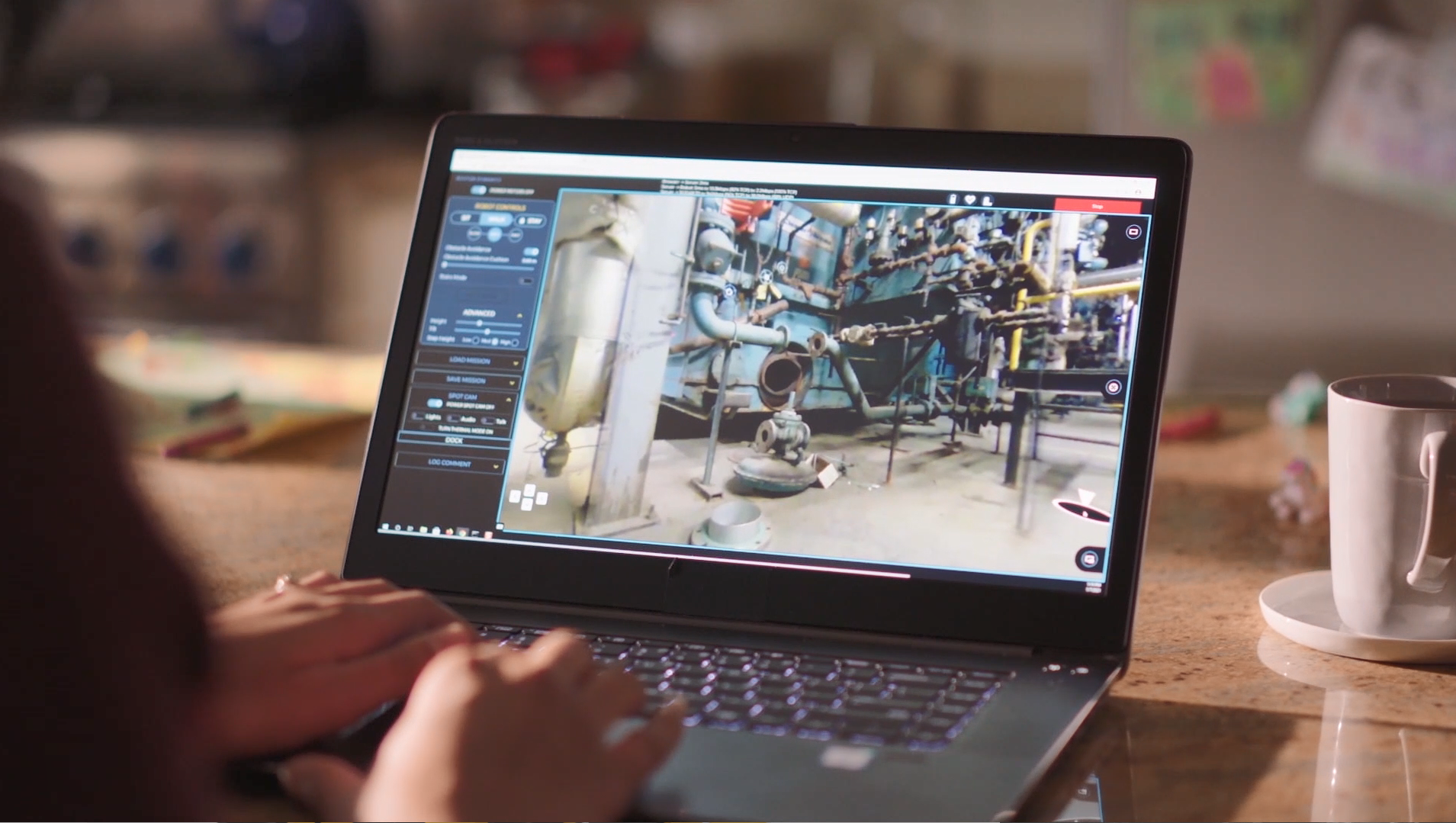
This week the Hyundai-owned robotics pioneer is introducing Scout, a browser-based interface for remotely controlling the robot. The arrival will also be joined by a self-charging “Enterprise” edition of the robot and the already announced Spot Arm. All of the new hardware is available starting today through Boston Dynamics’ site (it’s one of those “call for a quote” pricing deals), though Scout will also be compatible with any version of the robot.

Image Credits: Boston Dynamics

That said, the company is recommending it be paired with the self-docking Enterprise version. After all, the robot runs about 90 minutes on a charge, so if you’re intending to use it to monitor a situation without people present, that’s probably the way to go.

I’ve driven Spot around a few times in person — and like those, there’s a bit of a learning curve here. Boston Dynamics estimates it will take around 15 minutes to get you fully up to speed, but after a minute or two, I was able to send the robot up and down a flight of stairs at BD HQ. There are, thankfully, a whole bunch of cameras and other sensors built into the $75,000 robot to help you avoid doing something really stupid.

Image Credits: Boston Dynamics

The system will work with Bluetooth gaming controllers, but for my demo, I was stuck with the keyboard. There’s a basic WASD control scheme that should be familiar if you’ve done any PC gaming. The arrow keys, meanwhile, can be used to switch between four cameras, giving you a view from all sides. There are a number of additional views, including a terrain mode that gives you a kind of top-down rendered view of the robot. That’s probably the best way to view all of the immediate obstacles — or better still, you can do a picture in picture to get views at once.

I found myself using “click to go” a lot, as well. It essentially works the way it sounds: You click on a point on the ground and Spot walks toward it. The feature is designed primarily for those with connection issues — imagine, say, you’ve got poor Spot deployed on some oil rig somewhere.

“[W]e have a power plant customer who had a possible equipment failure. They were able to use the robot to repeatedly inspect something that, if it failed could have been dangerous to a human inspector,” Spot’s Chief Engineer Zack Jackowski told TechCrunch. “So they logged in, checked on this pipe repeatedly and were able to avoid an expensive shut down.”

Image Credits: Boston Dynamics

There’s also a “stair mode” that positions the robot for walking up and down stairs. The feature needs to be manually toggled on and off, though the robot should be able to walk up a flight of stairs in normal mode (I did this in my demo, and didn’t appear to give anyone on staff a heart attack). For the time being, the functionality is limited to line of sight. Jackowski adds, “We have all sorts of crazy plans to extend that to building scale, but the first thing we want to get out there is line of vision.”

In addition to a new docking connector on the Robot’s bum, the Enterprise version will also sport an enhanced CPU and improved wireless connectivity. It will ship either as a bundle with the dock or solo.

Sadly, we weren’t able to take the new arm out for a spin, but Jackowski did offer some detail on that functionality, noting, “you issue the arm commands, like ‘move your hand here’ or ‘pick up this object’ or ‘turn this valve,’ and the robot’s actually smart enough to figure out, ‘hey, if I’m going to turn that valve, I need to stand over here, I need to shift my weight like this, I need to figure out how to keep the right part of my wrist limp to accommodate how that valve moves.’ ”

02 Feb 2021

Rocket startup Astra is going public vis SPAC

Rocket launch company Astra, which just reached space this past December with a test launch from Alaska, will be going public on the NASDAQ via a merger with a special purpose acquisition company (SPAC) called Holicity. The recent SPAC craze has already extended to the New Space sector, and Virgin Galactic was among the in this wave of a new path to public listing, so there is precedent for space launch in particular, but Astra will be the first to list on the NASDAQ.

The terms of the deal will result in an anticipated $500 million in cash for Astra, from a combined $300 million held by Holicity in trust and a $300 million injection via a PIPE (private investment in public equity) from funds under management by BlackRock. The arrangement sets a pro forma enterprise valuation of Astra at around $2.1 billion – that valuation of the company minus the $500 million in cash the SPAC merger brings in. Astra expects it to complete by the second quarter of this year, after which the company will trade under the ticker ‘ASTR.’

Astra manufactures its own rockets, which are designed to carry small orbital payloads, at a facility in Alameda, California. Thus far, it has then shipped its launch vehicles to Kodiak, Alaska for flight – requiring just a handful of people on the ground at the actual spaceport to mount and launch the rocket, with the majority of the team overseeing the flight operating remotely out of a mission control facility back in California. The company’s model focuses on high output production of relatively inexpensive rockets, which can be responsively shipped and launched virtually anywhere depending on needs.

With its successful test in December, Astra achieved a pay-off of years of quiet work building and iterating its launch model. The startup was originally pursuing a DARPA-funded competition to achieve rapid response launch capabilities, but that contest expired with the prize unclaimed. The successful test in December still proved out the viability of Astra’s model – though it fell slightly short of achieving orbital velocity for actual payload delivery. The company said that this was a relatively easy remaining issue to fix, wholly manageable via software tweaks, and it intends to deliver its first commercial satellites beginning this summer.

Ultimately, Astra aims to be launching payloads on a daily cadency by 2025, and in a blog post accompanying the SPAC news, Astra founder and CEO Chris Kemp said that it’s also intent on “building a platform of space services” that implies ambitions beyond its work today on rockets.