Year: 2021

22 Jan 2021

Pinterest launches an AR-powered Try-on experience for eyeshadow

Pinterest is expanding its virtual makeup try-on capabilities with today’s launch of a new augmented reality feature that allows online shoppers to virtually try on new eyeshadow. Initially, Pinterest is allowing try-on with 4,000 shades from brands like Lancome, YSL, Urban Decay, and NYX Cosmetics.

The feature leverages Pinterest’s existing Lens visual search technology, its skin tone ranges feature, and computer-vision powered recommendations, the company says. We also understand Pinterest is incorporating elements from data partner ModiFace, including digitization parameters that ensure the products recognized are mapped to ModiFace’s database for higher-quality rendering.

This not Pinterest’s first virtual makeup feature. The company had previously launched an AR try-on experience for lipstick a year ago, which has now grown to include 10,000 shades, discoverable from 48 million beauty pins from brands like Estée Lauder, bareMinerals, Neutrogena, NARS, Cle de Peau, Thrive Causemetics, NYX Professional Makeup, YSL Beauté, Lancôme, and Urban Decay. Retailers, including Kohl’s, have also used AR try-on to reach consumers.

With the newly launched eyeshadow try-on, users can filter the product search results by factors like color, price range, and brand. if they find something they like, they can then purchase it immediately, save it to a board, or browse a “more like this” section to find more Pins offering similar shades.

video of AR eyeshadow effect

Image Credits: Pinterest

The expansion to eyeshadow means users can now experiment with more of a full makeup look, rather than just try on individual shades. There’s a toggle that lets users switch between lipstick and eyeshadow to try on multiple products at once, Pinterest says.

AR-powered virtual makeup experiences have been growing in popularity over the years, thanks in part to AR beauty apps  like ModiFace’ YouCam MakeupSephora’s Virtual ArtistUlta’s GLAMLab and others. L’Oréal has also offered Live Try-On on its website, and partnered with Facebook to bring virtual makeup to the site. Target’s online Beauty Studio also offers virtual makeup.

More recently, Google entered the AR virtual makeup space, initially with the launch of a more limited feature on YouTube that allowed some beauty influencers to incorporate an AR try-on experience for products in their videos. In December 2020, however, Google more fully embraced AR try-on with the launch of virtual makeup try-on within Google Search, also in partnership with ModiFace.

But Pinterest’s expansion to eyeshadow means it’s once again ahead of Google when it comes to visual search technology and virtual makeup. Not only does it offer more lipstick shades than Google, it now also offers eyeshadow try-on.

Pinterest says the AR try-on feature is being made available for free to brands who want to create visual shopping experiences and reach customers earlier in their decision-making process. The company says it continues to generate revenue through ads, including shopping ads, and not by monetizing its AR features or doing any revenue share on the try-ons that turn into sales.

“As we make Pinterest more shoppable through products like AR Try on, the platform becomes more engaging and actionable to Pinners, which can result in increases in usage and click-through of ads,” a spokesperson explains. “Organic features like Try on and ingestion of catalogs to create Product Pins can oftentimes complement a paid strategy where brands drive traffic across the site,” they noted.

The support for eyeshadow try-on is timely. Some beauty brand sales have been depressed by the pandemic, and particularly lipsticks, since it makes no sense to use lip color when your face is under a mask. Instead, current beauty trends have shifted to highlighting the eyes, with bright and bold colors for eyeshadow shades, the wild floating eyeliner look, large false lashes, and more — trends that are also designed to look good when filmed for social media posts, of course.

Pinterest says it has indications that its AR features are converting undecided shoppers to customers. In 2020, Pinterest found that users would try-on an average of 6 lipstick shades once they began the AR try-on experience, and then were 5 times more likely to show purchase intent on try-on compared with standard Pins.

The new eyeshadow try-on is live starting today using the Lens camera in the Pinterest app for iOS and Android.

22 Jan 2021

Google refreshes its mobile search experience

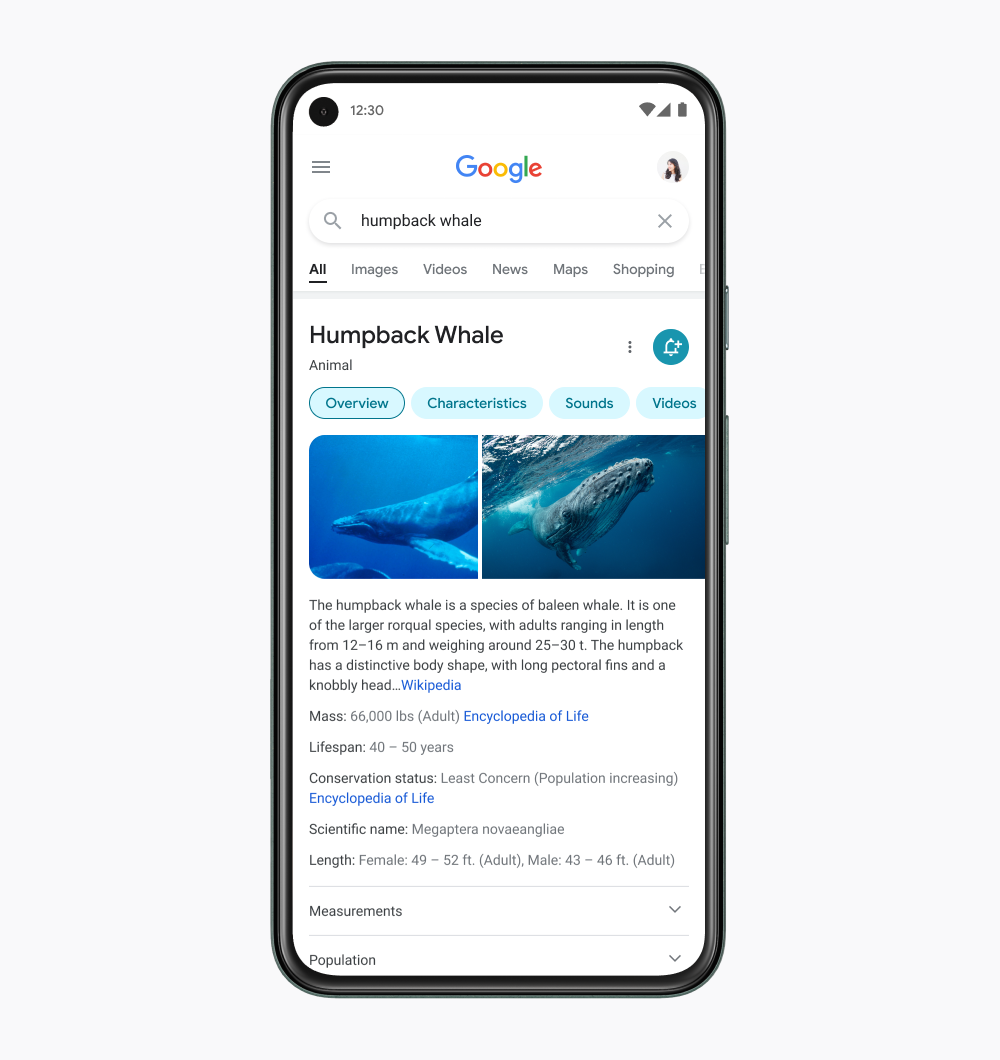
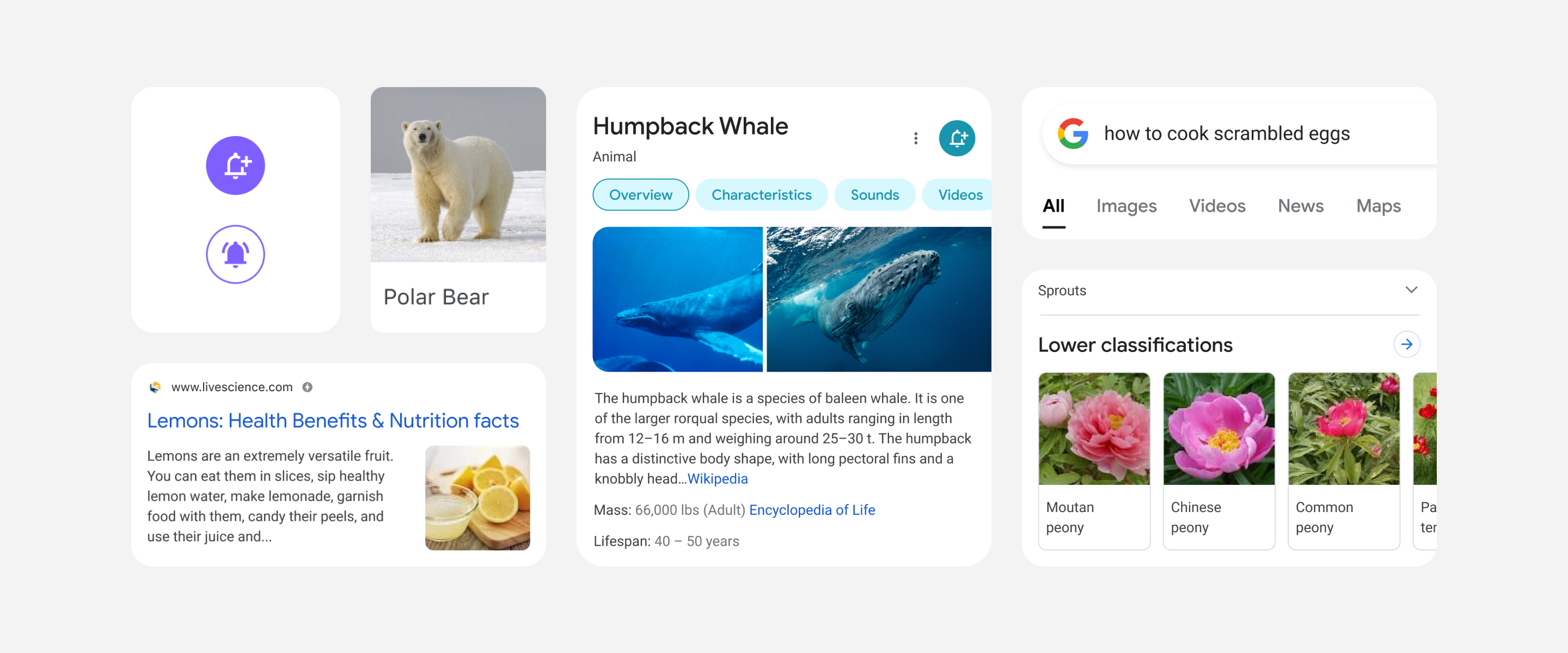
Google today announced a subtle but welcome refresh of its mobile search experience. The idea here is to provide easier to read search results and a more modern look with a simpler, edge-to-edge design.

From what we’ve seen so far, this is not a radically different look, but the rounded and slightly shaded boxes around individual search results have been replaced with straight lines, for example, while in other places, Google has specifically added more roundness. You’ll find changes to the circles around the search bar and some tweaks to the Google logo. “We believe it feels more approachable, friendly, and human,” a Google spokesperson told me. There’s a bit more whitespace in places, too, as well as new splashes of color that are meant to help separate and emphasize certain parts of the page.

Image Credits: Google

“Rethinking the visual design for something like Search is really complex,” Google designer Aileen Cheng said in today’s announcement. “That’s especially true given how much Google Search has evolved. We’re not just organizing the web’s information, but all the world’s information. We started with organizing web pages, but now there’s so much diversity in the types of content and information we have to help make sense of.”

Image Credits: Google

Google is also extending its use of the Google Sans font, which you are probably already quite familiar with thanks to its use in Gmail and Android. “Bringing consistency to when and how we use fonts in Search was important, too, which also helps people parse information more efficiently,” Aileen writes.

In many ways, today’s refresh is a continuation of the work Google did with its mobile search refresh in 2019. At that time, the emphasis, too, was on making it easier for users to scan down the page by adding site icons and other new visual elements to the page. The work of making search results pages more readable is clearly never done.

For the most part, though, comparing the new and old design, the changes are small. This isn’t some major redesign but we’re talking about minor tweaks that the designers surely obsessed over but that the users may not even really notice. Now if Google had made it significantly easier to distinguish ads from the content you are actually looking for, that would’ve been something.

Image Credits: Google

22 Jan 2021

Sounding Board raises cash as startups wake up to executive coaching

In an unprecedented work environment defined by distributed teams and virtual-only communication, two co-founders think their 2018 bet reigns truer than ever: mentors need mentorship, too.

Christine Tao and Lori Mazan, the brains behind Sounding Board, want to train any leader within an organization to be a better leader. The San Francisco startup connects anyone from first-time managers to C-suite executives with coaches through a marketplace.

Revenue has doubled or tripled every year since 2016, which the company says hovers in the “multi-millions” range. But in the wake of the coronavirus pandemic, Sounding Board has seen demand for its platform grow even more. Quarterly bookings have increased 3.4 times from Q2 2020, and in the last five months, monthly revenue has doubled.

On the heels of this growth, the co-founders say that Sounding Board’s next step as a startup is to grow beyond coaching services and into a platform that can show leaders how those newfound skills are impacting business development. The new product is meant to serve as a hub and roadmap where a participant and coach can track insights, progress and behaviors.

Within the platform, a user can schedule sessions with a coach, get matched to someone, as well as look at resources and complete tasks assigned to them. Beyond that, there is a feature that allows the coach and the manager to measure goals on an ongoing basis, similar to OKR-related software.

“The content is great, but unless you can apply that content, it’s not very useful,” Mazan said. “So this coaching is a way to help people apply the insights and the learning they’ve gotten from some kind of content and really utilize that in the workplace.”

The new product takes the monthly in-person summit that your organization used to call executive coaching and turns it into a living, breathing part of a manager’s workflow.

Beyond helping its users have a better temperature check on their progress, the product will help Sounding Board scale its services. Now any tutor on Sounding Board has more ways into a user’s mind and workflow, so every call isn’t synchronous and can be managed more evenly.

The co-founders see their long-term differentiation living in this feature. Anyone can create a marketplace, but it takes seamless, easy-to-use tech to track the effectiveness of what happens post-coaching.

Tao admits that the startup isn’t for everyone. Sounding Board has seen early adoption around enterprise companies that are in a late-stage, hyper-growth mindset heading toward an IPO. That level of maturity is a sweet spot for a third-party such as them to come in and scale leaders across teams. Customers include VMware, Uber, Plaid, Chime and Dropbox.

That said, within organizations, 60% of Sounding Board’s users are first-time managers, 30% are middle-tier and 10% are C-suite. The co-founders think these numbers indicate a broader demand for mentorship beyond what their competitors offer, which often sticks to C-suite life coach territory or stress management.

“Everyone is starting to realize that we’re going to have to offer coaching broader than just in the C-suite, and sometimes they don’t really know what that means,” said Mazan.

The realization, along with COVID-19 tailwinds, has helped Sounding Board attract new millions in venture capital. The startup tells TechCrunch that it has raised a $13.1 million Series A led by Canaan Partners. Other investors include Correlation Ventures, Bloomberg Beta, Precursor Ventures, as well as Degreed founder David Blake and Kevin Johnson, the former CEO of Udemy.

22 Jan 2021

How VCs invested in Asia and Europe in 2020

Wrapping our look at how the venture capital asset class invested in 2020, today we’re taking a peek at Europe’s impressive year, and Asia’s slightly less invigorating set of results. (We’re speaking soon with folks who may have data on African VC activity in 2020; if those bear out, we’ll do a final entry in our series concerning the continent.)

After digging into the United States’ broader venture capital results from last year with an extra eye on fintech and unicorn investing, at least one trend was clear: venture capital is getting later and larger (as expected).

Record dollar amounts were being invested, but across falling deal volume. More money and fewer rounds meant larger rounds, often going to the late and super-late stage startups in the market.

Unicorns are feasting, in other words, while some younger startups struggle to raise capital.


The Exchange explores startups, markets and money. Read it every morning on Extra Crunch, or get The Exchange newsletter every Saturday.


There have been some encouraging signs of seed activity, mind, but full-year data made it clear that in America, the more mature startups had the best of it.

But what about the rest of the world? After parsing KPMG data concerning both how VCs invested in Europe (here) and Asia (here) last year, there are clear echoes. But not entire reproductions.

Let’s discuss key data points from the two reports. This will be illustrative, brief and painless. Into the data!

European VCs: Rich, but not evenly distributed

Compared to historical investment levels, KPMG’s European VC report describes a venture capital scene at its peak. Q4 2020 saw $14.3 billion invested into EU startups across 1,192 deals, the highest dollar amount charted and a modest besting of the previous record set in Q3 2020.

However, despite impressive investment totals, the number of deals that the money was spread over proved lackluster.

The Q4 2020 deal count was the lowest on record since the continent’s deal peak in Q1 2019. Squinting at the provided chart, it appears that deal volume in Europe has fallen from around 2,200 in that peak quarter, to Q4’s fewer than 1,200 deals.

22 Jan 2021

MotoRefi raises $10M to keep pedal on auto refinancing growth

A month before the COVID-19 pandemic had spread to North America, auto fintech startup MotoRefi — newly armed with nearly $9 million in venture capital — was preparing to bring its refinancing platform to the masses.

CEO Kevin Bennett, and the investors behind the company, saw the opportunity to service Americans who collectively hold $1.2 trillion in auto loans. What they didn’t anticipate was the sudden uptick in demand fueled by COVID-19 and the uncertainty and chaos that the pandemic created.

MotoRefi, which was born out of QED Investors in 2017, developed an auto refinancing platform that handles the entire process, including finding the best rates,  paying off the old lender and re-titling the vehicle. The company has benefitted from the convergence of two trends sparked by COVID-19 that has turbocharged its business: an accelerated adoption of fintech across the economy and growing attention towards personal finance. 

Now, investors are pouring more money into the startup to help it make the most of the spike in demand for auto refinancing.

MotoRefi said Friday it has raised $10 million in a round led by Moderne Ventures. Liza Benson, a partner at Moderne Venture, will join the board.

“Many people are looking around saying how can they save money?” Bennett said, commenting on the events of the past year. “And while auto refinance historically is in a relatively low awareness category of personal finance, that interest has really grown and accelerated through 2020.”

For instance, Google searches for auto refinance increased about 40% in 2020 over the previous year, he added.

The company said its revenue rose by sixfold, its workforce tripled to more than 150 people and the number of lenders on its platform doubled over the past year. MotoRefi said it refinanced more than $250 million of auto loans in 2020.

“We actually weren’t planning on raising twice in a year,” Bennett said. “But the growth had been pretty noticeable from the investor standpoint in the market.”

That new capital will be used to hire more employees and expand its offerings, according to Bennett, who noted that MotoRefi now operates in 42 states and Washington DC.

MotoRefi has raised more than $24 million to date. The company raised last February $8.6 million in a Series A funding round. That round, which would later grow to $9.4 million, was co-led by Accomplice and Link Ventures. Motley Fool Ventures, CMFG Ventures (part of CUNA Mutual Group) and Gaingels also participated in the round. The Series A round followed $4.7 million in seed funding that MotoRefi announced in March 2019.

22 Jan 2021

Dashlane taps JD Sherman, ex-Hubspot COO, as new CEO, as co-founder Emmanuel Schalit steps aside

Our reliance on internet-based services is at an all-time high these days, and that’s brought a new focus on how well we are protected when we go online. Today comes some news from one of the bigger companies working in the area of password security, which points how business is shifting for the companies providing these tools.

Emmanuel Schalit, the co-founder of popular password manager Dashlane, is stepping down as CEO of the startup. He is being replaced by JD Sherman, the former COO of Hubspot, as Dashlane makes plans to move more aggressively to court more business users.

“This is about thinking about its next leg of our scaling strategy, more B2B monetization after being strong in B2C,” Sherman said in an interview, praising his predecessor’s growth of the consumer business and noting his realization that “B2B was not his forte.”

Sherman’s career focus, in contrast, has been all about B2B. Before his eight years at Hubspot, he was the CFO of Akamai (which, as a CDN, also had security as a focus, albeit in a completely different way), and before that IBM.

Since accepting the offer, Sherman (pictured right) has been quietly working with Schalit to get up to speed and will be taking over formally at the start of February.

Sherman is based out of Boston and will eventually commute to Dashlane’s HQ in New York: eventually, because everyone is remote-working at the moment, with Sherman himself getting hired in a virtual process.

The changing of the guard comes at an interesting time for the startup. Dashlane now has 15 million users, up from 10 million+ in 2019. That was the same year that Dashlane announced two significant rounds of funding just six weeks apart from each other: first a $30 million round (which appeared to have some debt as part of it), then a $110 million Series D that valued the company at just over $500 million. Its backers include the likes of Sequoia, Bessemer, FirstMark, Rho Ventures and consumer credit reporting giant TransUnion.

Sherman would not talk about current valuation, nor where the company is currently standing regarding its next financial steps, except to say that it’s in a good place and to provide the smallest of hints of an IPO on the horizon.

“The Series D was a healthy round for a subscription business,” he said. “Right now, cashflow is solid and we have the funding we need for our growth, so there is no urgent plan to raise money. When we do, we’ll see if it is an IPO round” — that is, the last round before an IPO — “or not. To me, it’s all about growing the business.”

My guess: that valuation has gone up, given the boost in user numbers, the growth of its enterprise business and the huge shifts in the market in the last year that have put a spotlight on companies that are making using the internet safer. (Also, note that Logmein, which owns competitor LastPass, was picked up by PE firms for about $4.3 billion in a deal that completed last year.)

Dashlane was founded focused primarily on providing password management tools for consumers. These still account for the majority of its users, but the Series D funding was in part to fuel a bigger push into the business market, and to generally get on the radar of more people.

The expansion into business users was a natural move in more ways than one. First, the consumer service is designed as a freemium offering, while businesses provide a more steady and guaranteed revenue stream. Second, there is a natural progression that comes from being a happy consumer user: you might want to have the same service for your online work life, too. That remains the strategy for Sherman, who

“The plan is to have two sides to the business,” he said, using the well-worn consumer-to-business analogy of a flywheel to describe how it will work: “The more who use it, more businesses will start to adopt it and get comfortable with using a password manager.”

That strategy is lately getting a major fillip, in the form of the massive boost in online activity in the past year.

Activities like taking care of all your shopping, entertainment, social and work-related needs have all moved online in the last year, pushed into the virtual sphere by the emergence and persistent presence of the easily contagious and dangerous Covid-19 virus.

Some of that shift has worked out better than many thought it would, and now, some believe that even when the pandemic does get under control, a lot of us will still be using the internet to get all of those things done on a regular basis.

But while I’ve heard a lot of industry people describe that situation as “the genie is out of the bottle”, perhaps a more fitting expression might be that Pandora’s box has been opened. That is to say, the increased online usage has created an alarmingly large opportunity for malicious hacking, security breaches and misuse of our online identities.

This consequently has a pretty direct link back to Dashlane.

Password protection is one of the most important elements of keeping yourself and your information safe online, with, weak, stolen and reused passwords some of the biggest causes of security breaches both for consumers and businesses (by some estimates, you can track 80-90% of all security breaches back to password issues).

Beyond that, not least because of all the breaches we’ve now seen, the current market has become much more concerned about privacy and security (a trend manifesting in all kinds of ways), and that has bred a lot more awareness and appetite for the kinds of tools that Dashlane, and other companies that enable better online security, provide.

There will likely continue to be developments in the technology to both suss out bad actors and block them in their tracks when they do try to enter networks, and the technology sold to organizations to keep their and their customers’ information in the cloud in more secure ways will also be improved. But above and beyond all that, password managers are likely to continue to play a role in the mix.

Password managers may not always be a perfect solution — there have been a few cases of breaches over the years, and while they have not been in recent times, security researchers at the University of York in May 2020 identified vulnerabilities that could potentially be exploited — but they remain a relatively easy option for end users themselves to be more proactive in protecting their identities specifically by building a better way to guard their passwords. (Among all that, it’s also worth pointing out that Dashlane has never had a breach in its 10+ years of operations.)

And there are a number of routes to providing password management, including efforts from platform players themselves and more direct Dashlane competitors like 1Password and LastPass. Notably, some of the efforts to bridge some of that together, such as the “OpenYolo” project spearheaded by Google and Dashlane, have stalled over the years, in part because of the complexity of implementing it with other existing managers.

But even within that fragmented, competitive and (still at times) vulnerable market, Dashlane still has a lot of opportunities for growth.

“The business is strong and growing,” Sherman said. “The craziness around Covid and remote networking have raised the profile of password management and security in general. It’s a more difficult environment, but there is a tailwind there.”

22 Jan 2021

Blobr, the ‘no-code’ company turning APIs into products, raises €1.2M pre-seed

Blobr, a Paris-based startup operating in the no-code space with tech to make it easier for companies to expose and monetise their existing APIs, has raised €1.2 million in pre-seed funding.

The round is led by pan-European pre-seed and seed investor Seedcamp, with participation from New Wave, Kima, and various angel investors. Blobr is also the first company to take investment from New Wave — the new European venture capital firm co-founded by Pia d’Iribarne and Jean de la Rochebrochard — since the VC confirmed it had closed $56 million in deployable capital from an all-star lineup of investors, including Iliad’s Xavier Niel, Benchmark’s Peter Fenton, and Tony Fadell of Apple fame.

Blobr, founded by Alexandre Airvault (CEO) and Alexandre Mai (CTO), is aiming to become the default “business and product layer” for APIs. This idea is to enable product and business people to manage and monetize a company’s application programming interfaces without technical knowledge or the need fo use up more internal engineering resources. And by doing so, the startup believes we’ll see much more innovative use of APIs as commercial data and functionality is made accessible by more third parties to build on top.

“We believe companies should stop thinking of APIs as mere pipes and start building them as products to unleash their power,” says Airvault. “This means APIs should be priced, customized and managed with a user-oriented mindset and not only a tech one”.

To make this a reality, Blobr is designed to empower product and business owners to “make data-sharing a profitable model,” while reducing their dependence on tech. “I believe this approach is what will drive the data exchanges to the next level,” he explains.

Blobr’s no code technology offers quite a lot of functionality already. From one existing internal API, you can filter confidential information or GDPR related data; it’s also possible to deliver different API output depending on customer segmentation so you only expose the data that’s needed; and API usage can be linked to usage based business models or a monthly subscription in Stripe.

Airvault says the startup’s main competitors include API management solutions from Google, IBM, Axway, and Mulesoft. “Those platforms are tailored for internal APIs but are not thought of and optimized to manage APIs as products. They are tailored for technical people whereas Blobr as a no code solution is built from scratch for product and business people to avoid technical people to be involved in the equation,” he adds.

22 Jan 2021

Google threatens to close its search engine in Australia as it lobbies against digital news code

Google has threatened to close its search engine in Australia — as it dials up its lobbying against draft legislation that is intended to force it to pay news publishers for reuse of their content.

Facebook would also be subject to the law. And has previously said it would ban news from being shared on its products owing if the law was brought in, as well as claiming it’s reduced its investment in the country as a result of the legislative threat.

“The principle of unrestricted linking between websites is fundamental to Search. Coupled with the unmanageable financial and operational risk if this version of the Code were to become law it would give us no real choice but to stop making Google Search available in Australia,” Google warned today.

Last August the tech giant took another pot-shot at the proposal, warning that the quality of its products in the country could suffer and might stop being free if the government proceeded with a push to make the tech giants share ad revenue with media businesses.

Since last summer Google appears to have changed lobbying tack — apparently giving up its attempt to derail the law entirely in favor of trying to reshape it to minimize the financial impact.

Its latest bit of lobbying is focused on trying to eject the most harmful elements (as it sees it) of the draft legislation — while also pushing its News Showcase program, which it hastily spun up last year, as an alternative model for payments to publishers that it would prefer becomes the vehicle for remittances under the Code.

The draft legislation for Australia’s digital news Code which is currently before the parliament includes a controversial requirement that tech giants, Google and Facebook, pay publishers for linking to their content — not merely for displaying snippets of text.

Yet Google has warned Australia that making it pay for “links and snippets” would break how the Internet works.

In a statement to the Senate Economics Committee today, its VP for Australia and New Zealand, Mel Silva, said: “This provision in the Code would set an untenable precedent for our business, and the digital economy. It’s not compatible with how search engines work, or how the internet works, and this is not just Google’s view — it has been cited in many of the submissions received by this Inquiry.

“The principle of unrestricted linking between websites is fundamental to Search. Coupled with the unmanageable financial and operational risk if this version of the Code were to become law it would give us no real choice but to stop making Google Search available in Australia.”

Google is certainly not alone in crying foul over a proposal to require payments for links.

Sir Tim Berners-Lee, inventor of the world wide web, has warned that the draft legislation “risks breaching a fundamental principle of the web by requiring payment for linking between certain content online”, among other alarmed submissions to the committee.

In written testimony he goes on:

“Before search engines were effective on the web, following links from one page to another was the only way of finding material. Search engines make that process far more effective, but they can only do so by using the link structure of the web as their principal input. So links are fundamental to the web.

“As I understand it, the proposed code seeks to require selected digital platforms to have to negotiate and possibly pay to make links to news content from a particular group of news providers.

“Requiring a charge for a link on the web blocks an important aspect of the value of web content. To my knowledge, there is no current example of legally requiring payments for links to other content. The ability to link freely — meaning without limitations regarding the content of the linked site and without monetary fees — is fundamental to how the web operates, how it has flourished till present, and how it will continue to grow in decades to come.”

However it’s notable that Berners-Lee’s submission does not mention snippets. Not once. It’s all about links.

Meanwhile Google has just reached an agreement with publishers in France — which they say covers payment for snippets of content.

In the EU, the tech giant is subject to an already reformed copyright directive that extended a neighbouring right for news content to cover reuse of snippets of text. Although the directive does not cover links or “very short extracts”.

In France, Google says it’s only paying for content “beyond links and very short extracts”. But it hasn’t said anything about snippets in that context.

French publishers argue the EU law clearly does cover the not-so-short text snippets that Google typically shows in its News aggregator — pointing out that the directive states the exception should not be interpreted in a way that impacts the effectiveness of neighboring rights. So Google looks like it would have a big French fight on its hands if it tried to deny payments for snippets.

But there’s still everything to play for in Australia. Hence, down under, Google is trying to conflate what are really two separate and distinct issues (payment for links vs payment for snippets) — in the hopes of reducing the financial impact vs what’s already baked into EU law. (Although it’s only been actively enforced in France so far, which is ahead of other EU countries in transposing the directive into national law).

In Australia, Google is also heavily pushing for the Code to “designate News Showcase” (aka the program it launched once the legal writing was on the wall about paying publishers) — lobbying for that to be the vehicle whereby it can reach “commercial agreements to pay Australian news publishers for value”.

Of course a commercial negotiation process is preferable (and familiar) to the tech giant vs being bound by the Code’s proposed “final offer arbitration model” — which Google attacks as having “biased criteria”, and claims subjects it to “unmanageable financial and operational risk”.

“If this is replaced with standard commercial arbitration based on comparable deals, this would incentivise good faith negotiations and ensure we’re held accountable by robust dispute resolution,” Silva also argues.

A third provision the tech giant is really keen gets removed from the current draft requires it to give publishers notification ahead of changes to its algorithms which could affect how their content is discovered.

“The algorithm notification provision could be adjusted to require only reasonable notice about significant actionable changes to Google’s algorithm, to make sure publishers are able to respond to changes that affect them,” it suggests on that.

It’s certainly interesting to consider how, over a few years, Google’s position has moved from ‘we’ll never pay for news’ — pre- any relevant legislation — to ‘please let us pay for licensing news through our proprietary licensing program’ once the EU had passed a directive now being very actively enforced in France (with the help of competition law) and also with Australia moving toward inking a similar law.

Turns out legislation can be a real tech giant mind-changer.

Of course the idea of making anyone pay to link to content online is obviously a terrible idea — and should be dropped.

But if that bit of the draft is a negotiating tactic by Australians lawmakers to get Google to accept that it will have to pay publishers something then it appears to be winning one.

And while Google’s threat to close down its search engine might sound ‘full on’, as Silva suggests, when you consider how many alternative search engines exist it’s hardly the threat it once was.

Especially as plenty of alternative search engines are a lot less abusive toward users’ privacy.

22 Jan 2021

‘Slow dating’ app Once is acquired by Dating Group for $18M as it seeks to expand its portfolio

Five-year-old ‘slow dating’ app Once has been acquired by the Dating Group, one of the largest companies in the dating world, for $18 million in cash and stock. Dating Group has 73 million registered users across a range of portfolio fatting apps including Dating.com.

Clémentine Lalande, co-founder and CEO of Once, will continue leading the company under a 2-year agreement. Fellow Co-founder Jean Meyer retained a stake in the company after departing two years ago.

Once has 9 million users on its platform, while the startup also garnered a further one million from a spin-out app it later launched called Pickable.

Once is as a dating app that uses matching algorithms to deliver just one match per day to each user. It pitched itself as an alternative to the frenetically-paced apps such as Tinder and Bumble. Indeed, Bumble revealed last week that two in five people of those it surveyed are taking longer to get to know someone as a result of pandemic lockdowns. And 38% Bumble users admit that it had made them want something more serious. So Once had a ready market.

Each pair on the Once app has 24 hours of each other’s attention and can continue chatting if they “like” each other. The AI looks at the account’s info, dating preferences and previous history in order to find the best possible match. Users can also rate each particular profile to let the AI better understand their taste.

In a statement, Lalande said: “I am thrilled to join the Dating Group today, both because of their proven focus on post-swiping dating alternatives, and to leverage the huge synergies between Once and Dating Group. In such a concentrated and competitive market having a large partner will allow us to augment our reach and accelerate geographical expansion”.

Bill Alena, chief investment officer at Dating Group said: “We strongly believe in the concept of AI and making quality matches. We see a huge potential in integrating Once into our portfolio. We’re excited to have Clémentine join Dating Group, she and her team have built a fascinating product and with this acquisition, Dating Group expands deeper into the Western European market.”

Dating Group has offices in seven countries and a team of more than 500 professionals with more than 73 million registered users across the entire portfolio. Its brands include Dating.com, DateMyAge, Dil Mil, Cherish, Tubit, AnastasiaDate, ChinaLove.

22 Jan 2021

Cloudflare introduces free digital waiting rooms for any organizations distributing COVID-19 vaccines

Web infrastructure company Cloudflare is releasing a new tool today that aims to provide a way for health agencies and organizations globally tasked with rolling out COVID-19 vaccines to maintain a fair, equitable and transparent digital queue – completely free of charge. The company’s ‘Project Fair Shot’ initiative will make its new Cloudflare Waiting Room offering free to any organization that qualifies, essentially providing a way from future vaccine recipients to register and gain access to a clear and constantly-updated view of where they are in line to receive the preventative treatment.

“The wife of one of Cloudflare’s executives in our Austin was trying to register her parents for the COVID-19 vaccine program there,” explained Cloudflare CEO Matthew Prince via email. “The registration site kept crashing. She said to her husband: why doesn’t Cloudflare build a queuing feature to help vaccine sites? As it happened, we had exactly such a feature under development and scheduled to be launched in early February.”

After realizing the urgency of the need for something like this tool to help alleviate the many infrastructure challenges that come up when you’re trying to vaccinate a global population against a viral threat as quickly as possible, Cloudflare changed their release timetable and devoted additional resources to the project.

“We talked to the team about moving up the scheduled launch of our Waiting Room feature,” Prince added. “They worked around the clock because they recognized how important helping with vaccine delivery was. These are the sorts of projects that really drive our team: when we can use our technical expertise and infrastructure to solve problems with broad, positive impact.”

On the technical side, Cloudflare Waiting Room is simple to implement, according to the company, and can be added to any registration website built on the company’s existing content delivery network without any engineering or coding knowledge required. Visitors to the site can register and will receive a confirmation that they’re in line, and then will receive a follow-up directing them to a sign-up page for the organization administering their vaccine when it’s their turn. Further configuration options allow Waiting Room operators to offer wait time estimates to registrants, as well as provide additional alerts when their turn is nearing (though that functionality is coming in a future update).

As Prince mentioned, Waiting Room was already on Cloudflare’s project roadmap, and was actually intended for other high-demand, limited supply allocation items: Think must-have concert tickets, or the latest hot sneaker release. But the Fair Shot program will provide it totally free to those organizations that need it, whereas that would’ve been a commercial product. Interested parties can sign up at Cloudflare’s registration page to get on the waitlist for availability.

“With Project Fair Shot we stand ready to help ensure everyone who is eligible can get equitable access to the COVID-19 vaccines and we, along with the rest of humanity, look forward to putting this disease behind us,” Prince explained.