Year: 2021

21 Jan 2021

Instacart is eliminating the jobs of unionized workers

Instacart plans to lay off nearly 2,000 of its workers, including the ten workers from the Kroger-owned Mariano’s who unionized early last year, Vice reports. These workers are responsible for in-store shopping and packing of groceries.

According to Vice, ten of the workers affected unionized with the United Food and Commercial Workers Local 1546 in Skokie, Illinois. However, they have yet to negotiate a contract with Instacart, according to Vice. Instacart notified the union of the planned changes earlier this week. In the letter, Instacart said it planned to stop using in-store shoppers at Kroger-owned stores, which includes the Mariano’s store in Skokie, in Q1 and Q2 of this year, but no earlier than mid-March.

Currently, Instacart says it’s working to place the impacted employees with jobs at retailers or place them at other grocery stores that still rely on Instacart shoppers. In total, Instacart said about 1,800 employees will be affected by these changes. Those laid off will receive separation packages, according to Instacart. But according to UFCW, Instacart will provide between $250 to $750 to the workers they let go.

Instacart referenced the potential layoffs in a blog post earlier this week in a post about new pickup retailer model. In it, Instacart said it would wind down some of its in-store operations at some retail locations to switch to what it’s calling Partner Pick. Through Partner Pick, instead of relying on Instacart shoppers to pick and pack groceries, retailers will rely on their own workforces with the help of Instacart’s technology.

“As a result of some grocers transitioning to a Partner Pick model, we’ll be winding down our in-store operations at select retailer locations over the coming months,” an Instacart spokesperson said in a statement to TechCrunch. “We know this is an incredibly challenging time for many as we move through the COVID-19 crisis, and we’re doing everything we can to support in-store shoppers through this transition. This includes transferring impacted shoppers to other retailer locations where we have Instacart in-store shopper roles open, working closely with our retail partners to hire impacted shoppers for roles they’re looking to fill, and providing shoppers with transition assistance as they explore new work opportunities. We’re also providing all impacted shoppers with separation packages based on their tenure with Instacart.”

This all comes as Instacart is gearing up to go public. In November, Reuters reported Instacart picked Goldman Sachs to lead its IPO at a $30 billion valuation. That would be a big jump from the $17.7 post-money valuation Instacart secured in October with a new $200 million funding round.

In a statement, UFCW International President Marc Perrone called these workers a lifeline during the COVID-19 pandemic and called on Instacart to stop these plans to fire them.

“Instacart firing the only unionized workers at the company and destroying the jobs of nearly 2,000 dedicated frontline workers in the middle of this public health crisis, is simply wrong,” he said. “As the union for Instacart grocery workers in the Chicago area and grocery workers nationwide, UFCW is calling on Instacart to immediately halt these plans and to put the health of their customers first by protecting the jobs of these brave essential workers at a time when our communities need them most.”

21 Jan 2021

Spotify announces an exclusive podcast deal with filmmaker Ava DuVernay

Spotify continues to enlist big names for its podcasting efforts. The latest: Filmmaker Ava DuVernay and her arts collective Array.

DuVernay has directed theatrically-released films including “Selma” and “A Wrinkle in Time,” but she also made “13th” and “When They See Us” for Netflix, and she’s been an eloquent proponent for streaming as a more accessible way of telling her stories.

Spotify says that through this multi-year partnership, Array will be creating exclusive scripted and unscripted programming for the streaming audio platform. For these productions, it will be working with Gimlet, the podcast network that Spotify acquired in 2019.

“Recognizing the undeniable power of voice and sound, I’m thrilled to extend ARRAY’s storytelling into the realm of podcasts,” DuVernay said in a statement. “The opportunity to work with [Gimlet’s head of content] Lydia Polgreen and her passionate team drew us to Spotify as a home for our audio narratives and we couldn’t be more excited to begin this new creative journey.”

In addition to acquiring Gimlet, Spotify has also signed exclusive podcast deals with Barack and Michelle Obama, Joe Rogan and Prince Harry and Meghan Markle.

21 Jan 2021

Decrypted: With more SolarWinds fallout, Biden picks his cybersecurity team

All change in the capital as the Biden administration takes charge, and thankfully without a hitch (or violence) after the attempted insurrection two weeks earlier.

In this week’s Decrypted, we look at the ongoing fallout from the SolarWinds breach and who the incoming president wants to lead the path to recovery. Plus, the news in brief.


THE BIG PICTURE

Google says SolarWinds exposure “limited,” more breaches confirmed

The cyberattack against SolarWinds, an ongoing espionage campaign already blamed on Russia, claimed the U.S. Bureau of Labor Statistics as another federal victim this week. The attack also hit cybersecurity company Malwarebytes, the company’s chief executive confirmed. Marcin Kleczynski said in a blog post that attackers gained access to a “limited” number of internal company emails. It was the same attackers as SolarWinds but using a different intrusion route. It’s now the third security company known to have been targeted by the same Russian hackers after a successful intrusion at FireEye and an unsuccessful attempt at CrowdStrike.

21 Jan 2021

Facebook’s Oversight Board will review the decision to suspend Trump

Facebook announced Thursday that its newly-established external policy review group will take on one of the company’s most consequential acts: the decision to suspend former President Trump.

On January 7, Facebook suspended Trump’s account indefinitely. That decision followed the president’s actions the day prior, when he incited a violent mob that stormed the U.S. Capitol, leaving American democracy on a razor’s edge and a nation already deep in crisis even more shaken.

Facebook VP of Global Affairs and Communications Nick Clegg called the circumstances around Trump’s suspension an “unprecedented set of events which called for unprecedented action” and explained why the Oversight Board would review the case.

“Our decision to suspend then-President Trump’s access was taken in extraordinary circumstances: a US president actively fomenting a violent insurrection designed to thwart the peaceful transition of power; five people killed; legislators fleeing the seat of democracy,” Clegg said in a blog post.

“This has never happened before — and we hope it will never happen again.”

In its own statement on taking the case, the Oversight Board explained that a five member panel will evaluate the case soon with a decision planned within 90 days. Once that smaller group reaches its conclusions on how to handle Trump’s Facebook status — and, potentially, future cases involving world leaders — the decision will require approval from the majority of the board’s members. After that, the pace picks up a bit and Facebook will have one week to implement the board’s final decision.

Facebook likes to say that the board is independent, but in spite of having the autonomy to make “binding” case-by-case decisions, the board grew out of Facebook itself. The company appointed the board’s four original co-chairs and those members went on to expand the group into a twenty-member body.

As we’ve previously reported, the mechanics of the board bias its activity toward Facebook content taken down — not the stuff that stays up, which generally creates larger headaches for the company and society at large. Facebook has responded to this critique, noting that while the board may initially focus on reviewing takedowns, content still up on the platforms will be part of the project’s scope “as quickly as possible.”

Given some of the criticism around the group, the Trump case is a big moment for how impactful the board’s decisions will really wind up being. If it were to overturn Facebook’s decision, that decision would likely kick up a new firestorm of interest around Trump’s Facebook account, even as the former president recedes from the public eye.

The most interesting bit about the process is that it will allow the former president’s account admins to appeal his own case. If they do so, the board will review a “user statement” arguing why Trump’s account should be reinstated.

Facebook’s external decision making body is meant as a kind of “supreme court” for the company’s own policy making. It doesn’t really move quickly or respond in the moment, but instead seeks to establish precedents that can lend insight to future policy cases. While the per-case decisions are binding, whether the broader precedents it creates will impact Facebook’s future policy decisions remains to be seen.

21 Jan 2021

Bodyguard is a mobile app that hides toxic content on social platforms

If you’re somewhat famous on various social networks, chances are you are exposed to hate speech in your replies or in your comments. French startup Bodyguard recently launched its app and service in English so that it can hide toxic content from your eyes. It has been available in French for a few years and the company has attracted 50,000 users so far.

“We have developed a technology that detects hate speech on the internet with a 90 to 95% accuracy and only 2% of false positive,” founder and CEO Charles Cohen told me.

The company has started with a mobile app that anyone can use. After you download the app and connect the app with your favorite social networks, you choose the level of moderation. There are several categories, such as insults, body shaming, moral harassment, sexual harassment, racism and homophobia. You can select whether it’s a low priority or a top priority for each category.

After that, you don’t have to open the app again. Bodyguard scans replies and comments from its servers and makes a decision whether something is OK or not OK. For instance, it can hide comments, mute users, block users, etc. When you open Instagram or Twitter again, it’s like those hateful comments never existed.

The app currently supports Twitter, YouTube, Instagram and Twitch. Unfortunately, it can’t process content on Snapchat and TikTok due to API limitations.

Behind the scenes, most moderation services rely heavily on machine learning or keyword-based moderation. Bodyguard has chosen a different approach. It algorithmically cleans up a comment and tries to analyze the content of a comment contextually. It can determine whether a comment is offensive to you, to a third-party person, to a group of persons, etc.

More recently, the startup has launched a B2B product. Other companies can use a Bodyguard-powered API to moderate comments in real time on their social platforms or in their own apps. The company charges its customers using a traditional software-as-a-service approach.

21 Jan 2021

Why you should add TechCrunch Early Stage 2021 to your must-attend list

As 2020 fades into the rearview mirror of history (huzzah!), it’s time to map out strategies to transform your early-stage startup dream into reality. If there’s one thing every early founder needs it’s information, and you’ll find it in abundance at TechCrunch Early Stage 2021.

Introduced last year — and one of the most popular events in TechCrunch history — TC Early Stage provides new startup founders (pre-seed through Series A) access to top experts to help them develop and strengthen their core entrepreneurial skills.

We’re talking everything from legal issues, fundraising, marketing, growth, product-market fit, tech stack, recruiting, pitch deck teardowns and more. Think of it as a condensed accelerator experience packed with workshops and highly interactive Q&As.

This conference was so popular that we’re hosting two virtual TC Early Stage events this year. Early Stage part one (April 1-2) and Early Stage part two (July 8-9). Even better, each event stands on its own merit with different topics, content, speakers and perspectives. Attend both to double your knowledge, double your networking, double your opportunities.

We might be biased, but we’re not the only people raving about TC Early Stage. Listen to what these early-stage founders said about TC Early Stage 2020.

“I recommend going to Early Stage. The virtual aspect helps in terms of scheduling, it offers community-building through networking and it gives early stage founders a framework for navigating the startup ecosystem. This is the stage where founders need more support, especially if they haven’t done this before.” — Ashley Barrington, founder, MarketPearl.

“Sequoia Capital’s session, Start with Your Customer, looked at the benefits of storytelling and creating customer personas. I took the idea to my team, we identified seven different user types for our product, and we’ve implemented storytelling to help onboard new customers. That one session alone has transformed my business.” — Chloe Leaaetoa, founder, Socicraft.

“Early Stage 2020 provided a rich, bootcamp experience with premier founders, VCs and startup community experts. If you’re beginning to build a startup, it’s an efficient way to advance your knowledge across key startup topics.” — Katia Paramonova, founder and CEO of Centrly.

Here’s the skinny on passes. Founder passes for either April or July event cost $199. Investors and startup enthusiasts can purchase Innovator passes for $299. Note: Early bird pricing ends Feb 27 and May 1, respectively.

Pro Tip: Save more when you buy a dual-event pass. Attend both Early Stage events for just $299 (Founder) or $349 (Innovator). Remember: The events feature different speakers, topics and content.

Don’t miss this unparalleled, interactive opportunity to learn best startup practices from leading experts, investors and successful founders. Mark your calendar and buy your Early Stage passes today!

Is your company interested in sponsoring or exhibiting at Early Stage 2021 – Operations & Fundraising? Contact our sponsorship sales team by filling out this form.

21 Jan 2021

These are the 20 companies presenting at Alchemist Accelerator’s 26th Demo Day today


The enterprise-focused Alchemist Accelerator is hosting its 26th Demo Day today, with twenty companies expected to debut.

This is Alchemist’s third Demo Day to be fully virtual due to the ongoing pandemic. Alchemist Accelerator Director Ravi Belani tells me that this virtual format has thus far “outperformed the in person Demo Day format,” with Alchemist’s internal data indicating that follow-up meetings have increased by around 20%.

Want to watch along with the presentations? They’re scheduled to start at 10:30 am Pacific, and you can find a livestream here.

Meanwhile, here’s a list of all twenty companies in the order they’re expected to present, along with a bit about what they’re working on based on what’s publicly available:

G-71: A system that helps prevent and track leaks by automatically marking company documents “in a way that is invisible to the naked eye.”

Tazi.ai: A platform meant to help businesses apply machine learning to their own data to make decisions with things like retail demand prediction, or customer churn prediction.

Impruver: A platform for rolling out and analyzing the effectiveness of “continuous improvement” strategies.

Vardo: Monitors Jira and aims to predict when a project will be delayed based on a model of how each team works.

Image Credits: Seasony

Seasony: Building a robot to automate tasks involved in vertical farming operations, such as transporting plants to the appropriate section of a farm as they grow.

EcoSync: A retrofittable solution meant to help avoid heating empty rooms in older buildings (think colleges, office buildings, etc.). Ties into your existing room scheduling system, but they’ve also built a WiFi-based occupancy sensor.

BestPlace: AI tools for retail chain optimization, meant to help businesses figure out the best location for a store or the best mix of products to sell there.

Kwali: Automated quality control for food franchises. Their example is a pizza place using cameras to check if each pizza is being made to specifications (Correct ingredients? Are ingredients evenly distributed? How thick is the crust? etc.)

BigOmics Analytics: A “self-service analytics platform” for biologists to better understand and analyze their omics data.

FotoNow: AI system for detecting mistakes/defects in manufacturing, using cameras to detect things like scratches, dents, or missing parts as components move through a facility

Predictive Wear: Smart, non-invasive wearables meant to detect dehydration in athletes, flagging it for said athletes and their coaches before it’s an issue.

Raxel: A telematics SDK for teams building apps that involve cars, scooters, etc, providing tools for analyzing driver safety, efficiency, location tracking, and flagging any accidents.

Rebolet: A service meant to optimize the process of reselling your store’s returned/overstock items. You send them your returns, they analyze the condition of an item, then either sell, donate, or recycle them.

Image Credits: UVL

UVL Robotics: Drones purpose-built to help businesses track and count the inventory in their warehouses.

AutoCloud: A reimagined interface for monitoring and identifying outages on services like AWS, Google Cloud, and Azure.

SmallTalk: AI-based tool meant to assess the language proficiency of a potential hire

Sensegrass: A “soil intelligence” platform that uses smart sensors, satellite data, and public data to help optimize crop yield.

PostureHealth: Camera-based posture correction for individuals and companies

Apis Cor: 3d printed buildings, including one the company says is already the largest 3d printed building in the world.

Via.delivery: A network of brick-and-mortar stores willing to act as local pickup locations for your shipments. They say they currently have roughly 15,000 locations across 12 time zones.

21 Jan 2021

Walking Duck is a digital news startup trying to find middle ground in U.S. politics

Can any news organization bridge the separate realities that the left and right seem to occupy in U.S. politics? A new startup with the odd-yet-memorable name Walking Duck is going to try.

Walking Duck (an inversion of a “lame duck” president and a reference to the duck test) was founded by journalist Mark Halperin, as well as Paul and Audra Wilke, who are also backing it with their PR firm Upright Position Communications.

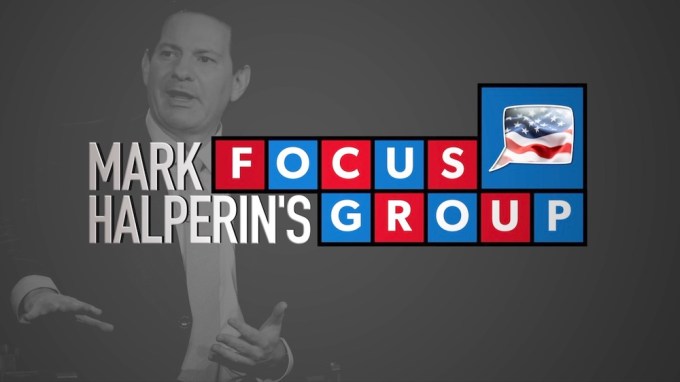
While the startup is producing a variety of content and events, including virtual town halls, there are three main pieces to the Walking Duck strategy — the Walking Duck website, which aggregates news from other publications, usually focused on a few key stories for the day, with additional commentary; plus Halperin’s newsletter Wide World of News and his Newsmax show Mark Halperin’s Focus Group.

Halperin also serves as Walking Duck’s managing editor, and he said that he and the Wilkes have a shared vision for a publication that’s different from “the partisan media,” where “everything is cast through the lens of the red tribe or the blue tribe.”

And yes, aggregation is a key part of that vision, not just allowing the startup to cover national news with a relatively small team of five (for now), but also to offer different perspectives. In fact, Halperin argued that any news organization that’s being honest will admit that it’s doing aggregation.

Mark Halperin's Focus Group

Image Credits: Walking Duck

“Even if you have a big scoop about something, people want to know: What’s the reaction to the scoop, how is that scoop being treated elsewhere?” he said. “Aggregation can be smarter and faster and less ideological than exists in a lot of places. You can aggregate for everyone where you and elevate smart over angry.”

In my conversation with Halperin and Paul Wilke (Walking Duck’s CEO), I suggested that the “both sides” approach (which other new publications are also touting) has its limitations: When you’ve got a (now former) president seeking to undermine an election that he lost, and when his supporters violently storming the Capitol, simply presenting two sides of an argument as if they were equally valid seems insufficient, to put it mildly.

“We don’t always try to show both sides, accuracy matters,” Wilke said. Similarly, Halperin said that it’s less about making sure there’s a 50-50 balance, and more about avoiding the limitations of a partisan lens. As an example, he argued that liberal outlets demonized former FBI director James Comey after his memo may have cost Hillary Clinton the 2016 election, then reversed course and valorized him after  President Trump fired him.

“I think he should be covered on the individual incidents in a way that’s consistent,” Halperin said.

All of that might sound incongruous from a journalist with a show on Newsmax — which, far from being a center-of-the-road network, has attracted an audience by being more pro-Trump and more willing to spread election misinformation than Fox News. But Halperin and Wilke said that by creating a show that brings four Trump voters and four Biden voters (not professional pundits) from across the country together over Zoom and attempting to find common ground, they’re exposing conservative viewers to new points of view — and they’d be happy to do the same for liberals if the show was on MSNBC.

“Just go to any cable news network and try to find a show that’s to Trump voters and talking to Biden voters,” Halperin said. “We’re dong it every week. That’s the essence of trying to grapple with how do these two groups talk to each other.”

Halperin does have an existing relationship with Newsmax, which came after he lost his contracts at more mainstream networks following numerous accusations of sexual harassment.

When I brought this up in my initial email correspondence with Wilke, he said, “[Mark’s] history is firmly in his past. He’s expressed remorse, been through counseling and has publicly (and privately) apologized to his victims, and they have … accepted his apologies. Additionally, Upright (my other company) is a PR firm that has more women than men, and we’re bringing some of them over to Walking Duck, and we discussed this issue with them and made sure they felt comfortable and knew that a safe workplace was a priority.”

I also brought this up on our call, and Halperin said, “I recognize the expectations that people have. I’ve just continued to do my best to be a good colleague and a good professional. If people are willing to let me work I appreciate the opportunities, but it’s up to them.”

21 Jan 2021

A.I.-powered transcription service Otter.ai can now record from Google Meet

Otter.ai, the A.I.-powered voice transcription service which already integrates with Zoom for recording online meetings and webinars, is today bringing its service to Google Meet’s over 100 million users. However, in this case, Otter.ai will provide its live, interactive transcripts and video captions by way of a Chrome web browser extension.

Once installed, a “Live Notes” panel will launch directly in the Chrome web browser during Google Meet calls, where it appears on the side of the Google Meet interface. The panel can be moved around and scrolled through as the meeting is underway.

Here, users can view the live transcript of the online meeting, as it occurs. They can also adjust the text size, then save and share the audio transcripts when the meeting has wrapped.

The company says the feature helps businesses cut down on miscommunication, particularly for non-native English speakers who may have trouble understanding the spoken word. It also offers a more accessible way for engaging with live meeting content.

And because the transcriptions can be shared after the fact, people who missed the meeting can still be looped in to catch up — an increasing need in the remote work era of the pandemic, where home and parenting responsibilities can often distract users from their daily tasks.

The transcripts themselves can also be edited after the fact by adding images and highlights, and they can be searched by keywords, as with any Otter.ai transcription.

In addition, users can access the company’s Live Captions feature that supports custom vocabulary. Otter points out that there are other live captioning options already available for Google Meet, but the difference here is that Otter’s system creates a collaborative transcript when the meeting ends. Other systems, meanwhile, tend to just offer live captions during the meeting itself.

To use the new feature, Chrome users will need to install the Otter.ai Chrome extension from the Chrome Web Store, then sign in to their Otter.ai account. The new feature is available to all Otter.ai customers, including those on Basic, Pro and Business plans.

Otter in the past leveraged its earlier Zoom integration to push more users from free plans to paid tiers, and will likely do the same with the new Google Meet support. The company’s paid plans offer the ability to record more minutes per month, and include a range of additional features like the ability to import audio and video for transcription, a variety of export options, advanced search features, Dropbox sync, added security measures, and more.

The company has seen its business increase due to the COVID-19 pandemic and the accompanying shift to online meetings. Last April, Otter said it had transcribed over 25 million meetings, and its revenue run rated had doubled compared with the end of 2019.

21 Jan 2021

8 VCs agree: behavioral support and remote visits make digital health a strong bet for 2021

In TechCrunch investor surveys of years past, we’ve seen a big focus on fixing what’s broken or bringing the infrastructure into the modern era. But the world has dramatically changed since the beginning of the COVID-19 pandemic.

More of us saw our doctor on video than ever before in 2020 — reaching a 300-fold increase in telehealth visits. It was the year healthcare finally moved fully into the digital space with data management solutions as well. And, though those digital visits have fallen slightly from the beginning of the pandemic, it doesn’t look like people want to go back to the way things were in the foreseeable future.

Now we’re onto the next phase where more people will be getting vaccinated, more of us will likely start to return to the office towards the end of the year, and there’s now a slew of new tech solutions to the issues 2020 presented. If you are investment-minded, as so many of our TechCrunch readers are, you will likely see a lot of potential in this space in 2021.

So we asked some of our favorite health tech VCs from The TechCrunch List where we are headed in the next year, what they’re most excited about and where they might be investing their dollars next. We asked each of them the same six questions, and each provided similar thoughts, but different approaches. Their responses have been edited for space and clarity:


Bryan Roberts and Bob Kocker, partners, Venrock

Do you see more consumer demand for digital services? How does this trend affect what you are looking to invest in for 2021?
The pandemic certainly intensified pressure on the legacy, fee-for-service, activity-based healthcare system since volumes dried up for several months. People were scared to go to the doctor and doctors who are only paid when they see patients saw their revenue evaporate overnight. Telemedicine offered some revenue salvation fee-for-service healthcare but it was impossible to do as many tests and procedures so they have by and large, since summer 2020, reverted back to in-person as much as possible for increased revenue capture.

On the other hand, value-based providers were, in the short term, more insulated as they are paid based on typical levels of utilization. Not surprisingly, COVID-19 has motivated more providers to embrace value-based care because it offers much more stable cash flows and does not depend on the tyranny of cramming more patients into the daily schedule.

With value-based care, the incentives are strongly aligned for more, and continued, tech-enabled virtual care since it is more profitable for those clinicians when they detect diseases earlier and take action to avoid hospitalizations. The beauty of virtual and tech-enabled care is that it can be delivered more frequently and group visits can be facilitated easily, with multiple specialists or people supporting a patient, to improve coordination and speed of action. Also, much more data can be brought to bear to make these interactions higher quality. Imagine how much better blood pressure is controlled when a doctor has not just the in-office reading but also all of the daily readings, or diabetic control when it is informed by all the data from a patient’s continuous glucose monitor, or post-surgical care when a surgeon can review daily pictures of the surgical site.

The enormity of the opportunity to make healthcare more productive and recession-proof growth from our aging population will attract more entrepreneurs and more capital to healthcare IT.

Digital health funding broke records in 2020, with investors pouring in over $10 billion in the first three quarters and a jump in deals overall, compared to the previous year. Do you see that trend continuing as we move back to offices and out of this pandemic or do you think this was a blip due to special circumstances?

We think growth in healthcare IT has been and will continue to be, driven by (1) better businesses and business models via aligned economic incentives and information and (2) some big wins in the space via Teladoc-Livongo merger and JD Health IPO — so both sides of the supply (great businesses) — demand (investor interest) equation. For payers, many healthcare providers and patients, it is in their interest to adopt more cost-effective approaches for care delivery and to access new data to derive insights and remove arbitrages. These prerequisites are strongly aligned in favor of more healthcare IT company formation, rapid growth and successful exits.

While people may spend more time receiving in-person HC in the future than today, we think the rapid adoption of virtual care in 2020 coupled with ever-stronger incentives for the healthcare system to emulate consumer technology usability and the never-ending imperative of improving affordability, will continue to drive demand for startups. We also think that downward cost pressures will drive demand for technology to replace fax-machine-era, labor-first administrative processes too.

What do you think are the biggest trends to look out for in the digital healthcare industry this next year, given we are likely toward the end of the year to see more workers return to the office and everyone resuming activities as they did before this pandemic hit?

We think that telehealth will become the “Intel Inside” for many of the full stack healthcare IT businesses — Medicare Advantage payers, navigation companies, virtual pharmacies, virtual primary care practices — and that patients will continue to embrace telehealth. As a result, payers will increasingly redesign how insurance benefits work to encourage every patient to start with a telehealth visit every time. In many cases, telehealth will be able to fully resolve the problem and if not, guide the patient, along with the relevant data, to the best next step in care. This will improve responsiveness and reduce costs. We do think that brick-and-mortar players will lag behind since they continue to have strong incentives for in-person care and procedures to cover their large fixed costs.

COVID-19 has also made inescapable the inadequacy of behavioral healthcare in America. We have observed this firsthand through our investment in Lyra Health, which experienced dramatic growth in 2020. We think greater access to behavioral health, better coordination of behavioral health and primary care, better use of medications and tech-enabled care for more complex behavioral health conditions are all large opportunities.

We also foresee virtual care growing in more specialty care areas as patients demand more convenient ways to access specialist expertise and value-based primary care doctors desire more rapid and cost-effective ways to co-manage patients.

How will the Biden administration possibly affect your funding strategy in the digital health field now that there’s a change of the guard?

Economic incentives to lower healthcare cost growth and the desire to use information and data to find arbitrages and insights are as aligned as ever. Remember, the law driving the adoption of new payment models is MACRA, which passed the Senate in a bipartisan 92-8 vote in 2015. This implies an uninterrupted effort to drive the adoption of value-based care in Medicare, Medicare Advantage and Medicaid. A Biden administration will also continue efforts to create more interoperable data systems and support telehealth adoption.

A Biden administration also reduces uncertainty around the permanence of the Affordable Care Act (ACA). They instead will focus their efforts on expanding coverage through enhanced subsidies to buy insurance, more marketing of ACA plans, greater support for e-broker enrollment and strong incentives for states to expand Medicaid. And we do not think Medicare for All will be seriously considered by a ~50/50 Senate, although it will likely be spoken about periodically and loudly by the far left.

What’s the biggest category in your mind for digital health this next year? Why is that?

“Technology-enabled, virtual-everything” as the initial journey in healthcare, until you need to visit a facility because in-person is necessary. In 2020, we witnessed about a decade of user adoption compressed into six months as COVID-19 made it scary, or even impossible, to access in-person healthcare. Nearly every clinician in America, and at about half of the population, conducted a virtual healthcare visit in 2020. What happened? Patients liked it. Clinicians found virtual visits useful. And going forward we think that most care will incorporate aspects of virtual care, asynchronous communication and in-person encounters only when a procedure is needed. As importantly, payers found these approaches to be more cost-effective since care was delivered more rapidly and with only the most necessary diagnostics tests ordered.

Finally, are there any rising startups in your portfolio we should keep our eyes on at TechCrunch? 

We have two portfolio companies that may be very compelling candidates:  Suki and NewCo Health.

Suki has created a virtual medical assistant that acts as a voice user interface for electronic health records, enabling a doctor to write their clinical notes, enter orders, view information and exchange data with other providers dramatically and more efficiently. They have launched primary care and specialist doctors across dozens of health systems in 2020.

NewCo Health is a startup trying to democratize access to world-class cancer outcomes. Starting initially in Asia, they are tech-enabling the diagnosis, treatment planning and care management processes for cancer patients, connecting expert clinicians to every cancer case.