Year: 2021

21 Jan 2021

Soci raises $80M for its localized marketing platform

Soci, a startup focused on what it calls “localized marketing,” is announcing that it has raised $80 million in Series D funding.

National and global companies like Ace Hardware, Anytime Fitness, The Hertz Corporation and Nekter Juice Bar use Soci (pronounced soh-shee) to coordinate individual stores as they promote themselves through search, social media, review platforms and ad campaigns. Soci said that in 2020, it brought on more than 100 new customers, representing nearly 30,000 new locations.

Co-founder and CEO Afif Khoury told me that the pandemic was a crucial moment for the platform, with so many businesses “scrambling to find a real solution to connect with local audiences.”

One of the key advantages to Soci’s approach, Khoury said, is to allow the national marketing team to share content and assets so that each location stays true to the “national corporate personality,” while also allowing each location to express  a “local personality.” During the pandemic, businesses could share basic information about “who’s open, who’s not” while also “commiserating and expressing the humanity that’s often missing element from marketing nationally.”

“The result there was businesses that had to close, when they had their grand reopenings, people wanted to support that business,” he said. “It created a sort of bond that hopefully lasts forever.”

Khoury also emphasized that Soci has built a comprehensive platform that businesses can use to manage all their localized marketing, because “nobody wants to have seven different logins to seven different systems, especially at the local level.”

The new funding, he said, will allow Soci to make the platform even more comprehensive, both through acquisitions and integrations: “We want to connect into the CRM, the point-of-sale, the rewards program and take all that data and marry that to our search, social, reviews data to start to build a profile on a customer.”

Soci has now raised a total of $110 million. The Series D was led by JMI Equity, with participation from Ankona Capital, Seismic CEO Doug Winter and Khoury himself.

“All signs point to an equally difficult first few months of this year for restaurants and other businesses dependent on their communities,” said JMI’s Suken Vakil in a statement. “This means there will be a continued need for localized marketing campaigns that align with national brand values but also provide for community-specific messaging. SOCi’s multi-location functionality positions it as a market leader that currently stands far beyond its competitors as the must-have platform solution for multi-location franchises/brands.”

21 Jan 2021

Apple said to be working a high-priced standalone VR headset as debut mixed reality product

Apple is reportedly working on developing a high-end virtual reality headset for a potential sales debut in 2022, per a new Bloomberg report. The headset would include its own built-in processors and power supply, and could feature a chip even more powerful than the M1 Apple Silicon processor that the company currently ships on its MacBook Air and 13-inch MacBook Pro, according to the report’s sources.

As is typical for a report this far out from a target launch date, Bloomberg offers a caveat that these plans could be changed or cancelled altogether. Apple undoubtedly kills a lot of its projects before they ever see the light of day, even in cases where they include a lot of time and capital investment. And the headset will reportedly cost even more than some of the current higher-priced VR headset offerings on the market, which can range up to nearly $1,000, with the intent of selling it initially as a low-volume niche device aimed at specialist customers – kind of like the Mac Pro and Pro Display XDR that Apple currently sells.

The headset will reportedly focus mostly on VR, but will also include some augmented reality features, in a limited capacity, for overlaying visuals on real world views fed in by external cameras. This differs from prior reports that suggested Apple was pursuing consumer AR smart glasses as its likely first headset product in the mixed reality category for consumer distribution. Bloomberg reports that while this VR headset is at a late prototype stage of development, its AR glasses are much earlier in the design process and could follow the VR headset introduction by at least a year or more.

The strategy here appears to be creating a high-tech, high-performance and high-priced device that will only ever sell in small volume, but that will help it begin to develop efficiencies and lower the production costs of technologies involved, in order to pave the way for more mass-market devices later.

The report suggests the product could be roughly the same size as the Oculus Quest, with a fabric exterior to help reduce weight. The external cameras could also be used for environment and hand tracking, and there is the possibility that it will debut with its own App Store designed for VR content.

Virtual reality is still a nascent category even as measured by the most successful products currently available in the market, the Oculus Quest and the PlayStation VR. But Facebook at least seems to see a lot of long-term value in continuing to invest in and iterate its VR product, and Apple’s view could be similar. The company has already put a lot of focus and technical development effort into AR on the iPhone, and CEO Tim Cook has expressed a lot of optimism about AR’s future in a number of interviews.

21 Jan 2021

Creative Fabrica, a platform for digital crafting resources, lands $7 million Series A

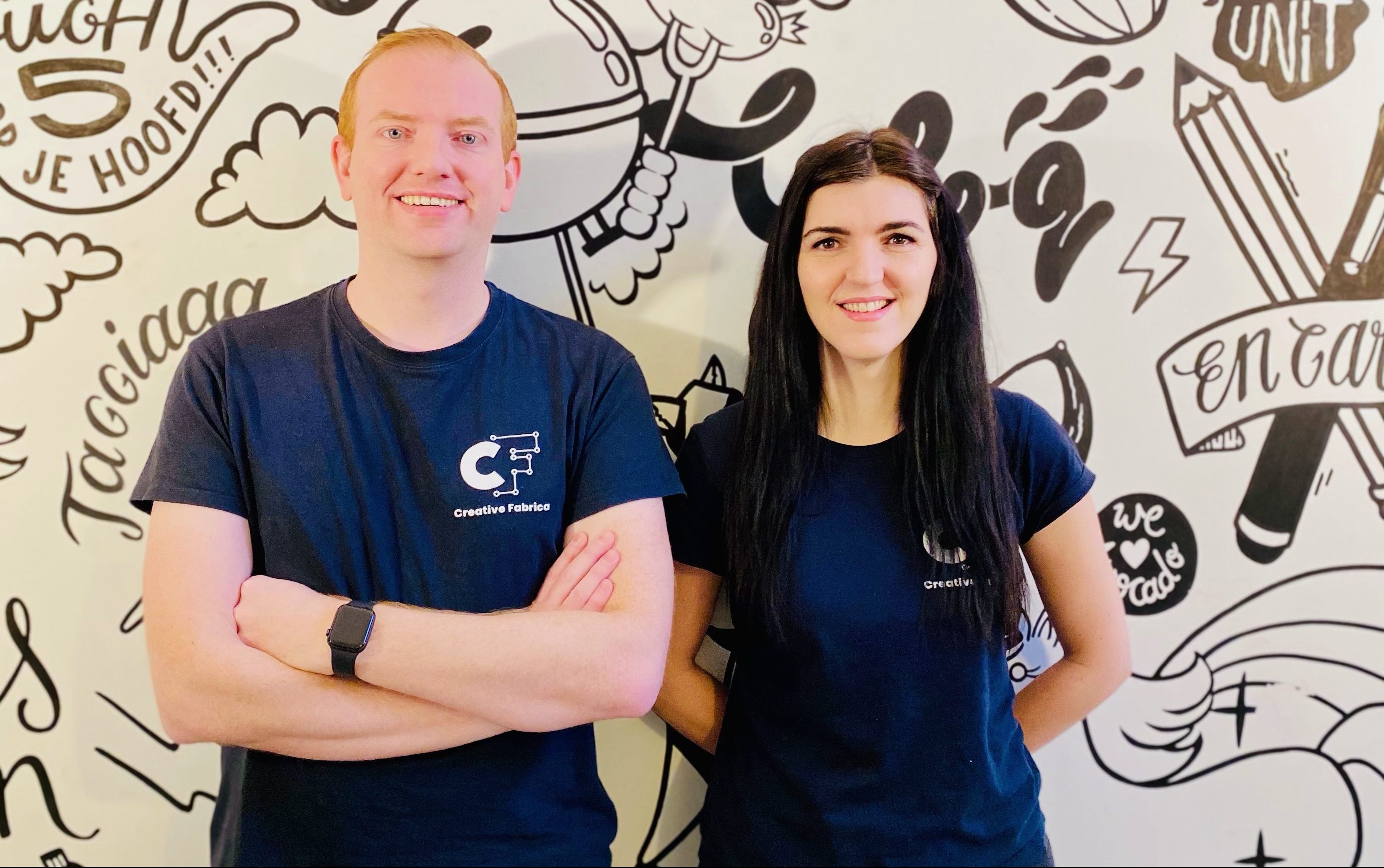
Roemie Hillenaar and Anca Stefan, the co-founders of Creative Fabrica

Roemie Hillenaar and Anca Stefan, the co-founders of Creative Fabrica

Creative Fabrica is best known as a marketplace for digital files, like fonts, graphics and machine embroidery designs, created for crafters. Now the Amsterdam-based startup is planning to expand into new verticals, including yarn crafts and projects for kids, with a $7 million Series A round led by Felix Capital. FJ Labs and returning investor Peak Capital also participated.

The new funding brings Creative Fabrica’s total raised to about $7.6 million, including its 2019 seed round.

Before launching Creative Fabrica in 2016, co-founders Anca Stefan and Roemie Hillenaar ran a digital agency. The startup was created to make finding digital files for creative projects easier. It started as a marketplace, but now also includes a showcase for finished projects, tools for creating fonts and word art, and a subscription service called the Craft Club. The company currently claims more than one million users around the world, with about 60% located in the United States and 20% in the United Kingdom, Canada and Australia.

Creative Fabrica’s sellers make money in a couple of ways. If their digital assets are purchased individually, they get 50% of revenue. Files downloaded through the subscription service are assigned points, with creators receiving revenue at the end of the subscription period based on the number of points they accumulate.

Hillenaar, the company’s chief executive officer, told TechCrunch that Creative Fabrica launches new verticals based on what they see users sharing on their platform. For example, its designs are often used for die-cutting, and it recently launched POD (print on demand) files and digital embroidery verticals based on user interest.

Many of the files sold on Creative Fabrica include a commercial license and about 35% of its users actively sell the crafts they make. There are several other marketplaces that offers digital downloads for crafters and designers, including Etsy and Creative Market. Hillenaar said Creative Fabrica’s automated curation gives it more control over copyright infringement than Etsy, which means its users have more assurance that they can sell things made with its files without running into issues. While Creative Market also sells fonts, vector graphics and other files, it is mostly targeted toward publishers and website designers. Creative Fabrica’s focus on crafters means it files are designed to work with home equipment like Silhouette, a die-cutting machine.

Creative Fabrica also focuses on the entire creative process of a crafter or the “full funnel,” Hillenaar added. For example, someone who wants to make decorations for a birthday party can look through projects shared to the platform for inspiration, download digital materials and then start crafting using Creative Fabrica’s tutorials. Since many of Creative Fabrica’s crafts involve equipment like desktop die-cutting machines or sewing and embroidery machines, the platform offers a series of comprehensive tutorials to help crafters get started.

As Creative Fabrica expands into verticals like yarn crafts (it already offers knitting and crochet patterns) and kids projects, it’ll compete more directly with site likes Ravelry, which many yarn crafters rely on for patterns and services like Kiwi Crate that supply materials and instructions for children. Hillenaar said Creative Fabrica’s value proposition is focusing on the many people who take part in several different kinds of crafts.

According to a report from the Association for Creative Industries, about 63% of American households are involved with some form of craft. Out of that number, most partake in multiple kinds of projects.

“Somebody who is knitting is also likely to do die-cutting or woodworking, or another type of craft,” he said. “We believe that with our holistic view on this market we can cater to your whole creative crafting side instead of focusing on just one niche.”

21 Jan 2021

Google inks agreement in France on paying publishers for news reuse

Google has reached an agreement with an association of French publishers over how it will be pay for reuse of snippets of their content. This is a result of application of a ‘neighbouring right’ for news which was transposed into national law following a pan-EU copyright reform agreed back in 2019.

The tech giant had sought to evade paying French publishers for use of content snippets in its news aggregation and search products by no longer displaying them in the country.

But in April last year the French competition watchdog quashed its attempt to avoid payments, using an urgent procedure known as interim measures — deeming Google’s unilateral withdrawal of snippets to be unfair and damaging to the press sector, and likely to constitute an abuse of a dominant market position.

A few months later Google lost an appeal against the watchdog’s injunction ordering it to negotiate to pay for reuse of snippets — leaving it little choice but to sit at the table with French publishers and talk payment.

L’Alliance de la Presse d’Information Générale (APIG), which represents the interests of around 300 political and general information press titles in France, announced the framework agreement today, writing that it sets the terms of negotiation with its members for Google’s reuse of their content.

In a statement, Pierre Louette, CEO of Groupe Les Echos – Le Parisien, and president of L’Alliance, said: “After long months of negotiations, this agreement is an important milestone, which marks the effective recognition of the neighboring rights of press publishers and the beginning of their remuneration by digital platforms for the use of their online publications.”

Google has also put out a blog post — lauding what it said is a “major step forward” after months of negotiations with French publishers.

The agreement “establishes a framework within which Google will negotiate individual licensing agreements with IPG certified publishers within APIG’s membership, while reflecting the principles of the law”, it said.

IPG certification refers to a status that online media organizations in France can gain if they meet certain quality standards, such as having at least one professional journalist on staff and having a main purpose of creating permanent and continuous content that provides political and general information of interest to a wide and varied audience.

“These agreements will cover publishers’ neighboring rights, and allow for participation in News Showcase, a new licencing program recently launched by Google to provide readers access to enriched content,” Google added, making reference to a news partnership program it announced last year — which it said would have an initial $1BN investment.

Google has not confirmed how much money will be distributed to publishers in France solely under the agreed framework over content reuse which is directly linked to the neighbouring right.

And the News Showcase program which Google spun up quickly last year looks conveniently designed to help it obfuscate the value of individual payments it may be legally required to make to publishers for reusing their content.

The tech giant told us it is in conversations with publishers in many countries to negotiate agreements for News Showcase — a program that is not limited to the EU.

It also said earlier investments announced with publishers under Showcase come as it anticipates legal regimes that may exist once the EU’s copyright directive is implemented in other countries, adding that it will evaluate laws as and when they are introduced.

(NB: France was among the first EU countries to the punch to transpose the copyright directive; application of the neighbouring right will expand across the bloc as other Member States bake the directive into national law.)

On the French agreements specifically, Google said they are for its News Showcase but are also inclusive of the publisher’s neighboring rights, after we asked about the separation between payments that will be made under the French framework and Google’s News Showcase. So about as clear as mud, then.

The tech giant did tell us it has reached individual agreements with a handful of French publishers so far, including (major national newspaper titles) Le Monde, Le Figaro and Libération.

It added that payments will go direct to publishers and terms will not be disclosed — noting they are strictly confidential. It also said these individual deals with publishers take account of the neighbouring right framework but also reflect individual publisher needs and differences.

On criteria for payments for neighbouring rights, Google’s blog post states: “The remuneration that is included in these licensing agreements is based on criteria such as the publisher’s contribution to political and general information (IPG certified publishers), the daily volume of publications, and its monthly internet traffic.”

On this, Google also told us it is focused on IPG publishers because the French law is too (it pointed to a line of the law that states: “The amount of this remuneration takes into account elements such as human, material and financial investments made by publishers and press agencies, the contribution to press publications to political and general information and the importance of use of press publications by online public communication services.”)

But it added that its door remains open to discussion with other non APIG publishers.

We also reached out to L’Alliance with questions and will update this report with any response.

Although individual payments to publishers under the French framework are not being disclosed the agreement looks like a major win for Europe’s press sector — which had lobbied extensively to extend copyright to news snippets via the EU’s controversial copyright reform.

Some individual EU Member States — including Germany and Spain — previously attempted to get Google to pay publishers by baking similar copyright provisions into national law. But in those instances Google either forced publishers to give it their snippets for free (by playing traffic-hungry publishers off against each other) or shut down Google News entirely. So some payment is clearly better than nada.

That said, with details of the terms of individual deals not disclosed — and no clarity over exactly how remunerations will be calculated — there’s a lot that remains murky over Google paying for news reuse.

Neither Google nor L’Alliance have said how much money will be distributed in total under the French agreement to covered publishers. 

Another issue we’re curious about is how the framework will protect publishers from changes to Google’s search algorithms that could have a negative impact on traffic to their sites.

This seems important given that monthly traffic is one of the criteria being used to determine payment. (And it’s not hard to find examples of such negative search ‘blips’.)

It also looks clear that the more publishers Google can attract into its ‘News Showcase’ program, the more options Google will have for displaying news snippets in its products — and therefore at a price it has more power to set.

So the longer term impact of the application of the EU’s copyright directive on publisher revenues — and, indeed, how it might influence the quality of online journalism that Google accelerates into Internet users’ eyeballs — remains to be seen.

The French competition watchdog’s investigation also remains ongoing. Google said it continues to engage with that probe.

In 2019 the national watchdog slapped Google with a €150 million fine for abusing its dominant position in the online search advertising market — sanctioning it for “opaque and difficult to understand” operating rules for its ad platform, Google Ads, and for applying them in “an unfair and random manner.”

While, last October, the US Justice Department filed an antitrust suit against Google — alleging that the company is “unlawfully maintaining monopolies in the markets for general search services, search advertising, and general search text advertising”.

The UK’s competition watchdog has also raised concerns about the ad market dominance of Google and Facebook, asking for views on breaking up Google back in 2019. The UK government has since said it will establish a pro-competition regulator to put limits on big tech.

21 Jan 2021

Israel’s startup ecosystem powers ahead, amid a year of change

Released in 2011 “Start-up Nation: The Story of Israel’s Economic Miracle” was a book that laid claim to the idea that Israel was an unusual type of country. It had produced and was poised to produce, an enormous number of technology startups, given its relatively small size. The moniker became so ubiquitous, both at home and abroad, that “Israel Startup Nation” is now the name of the country’s professional cycling team.

But it’s been hard to argue against this position in the last ten years, as the country powered ahead, famously producing ground-breaking startups like Waze, which was eventually picked up by Google for over $1 billion in 2013. Waze’s 100 employees received about $1.2 million on average, the largest payout to employees in Israeli high tech at the time, and the exit created a pool of new entrepreneurs and angel investors ever since.

Israel’s heady mix of questioning culture, tradition of national military service, higher education, the widespread use of English, appetite for risk and team spirit makes for a fertile place for fast-moving companies to appear.

And while Israel doesn’t have a Silicon Valley, it named its high-tech cluster “Silicon Wadi” (‘wadi’ means dry desert river bed in Arabic and colloquial Hebrew).

Much of Israel’s high-tech industry has emerged from former members of the country’s elite military intelligence units such as the Unit 8200 Intelligence division. From age 13 Israel’s students are exposed to advanced computing studies, and the cultural push to go into tech is strong. Traditional professions attract low salaries compared to software professionals.

Israel’s startups industry began emerging in the late 19080s and early 1990s. A significant event came with acquisitor by AOL of the the ICQ messaging system developed by Mirabilis. The Yozma Programme (Hebrew for “initiative”) from the government, in 1993, was seminal: It offered attractive tax incentives to foreign VCs in Israel and promised to double any investment with funds from the government. This came decades ahead of most western governments.

It wasn’t long before venture capital firms started up and major tech companies like Microsoft, Google and Samsung have R&D centers and accelerators located in the country.

So how are they doing?

At the start of 2020, Israeli startups and technology companies were looking back on a good 2019. Over the last decade, startup funding for Israeli entrepreneurs had increased by 400%. In 2019 there was a 30% increase in startup funding and a 102% increase in M&A activity. The country was experiencing a 6-year upward funding trend. And in 2019 Bay Area investors put $1.4 billion into Israeli companies.

By the end of last year, the annual Israeli Tech Review 2020 showed that Israeli tech firms had raised a record $9.93 billion in 2020, up 27% year on year, in 578 transactions – but M&A deals had plunged.

Israeli startups closed out December 2020 by raising $768 million in funding. In December 2018 that figure was $230 million, in 2019 it was just under $200 million.

Late-stage companies drew in $8.33 billion, from $6.51 billion in 2019, and there were 20 deals over $100 million totaling $3.26 billion, compared to 18 totaling $2.62 billion in 2019.

Top IPOs among startups were Lemonade, an AI-based insurance firm, on the New York Stock Exchange; and life sciences firm Nanox which raised $165 million on the Nasdaq.

The winners in 2020 were cybersecurity, fintech and internet of things, with food tech cooing on strong. But while the country has become famous for its cybersecurity startups, AI now accounts for nearly half of all investments into Israeli startups. That said, every sector is experiencing growth. Investors are also now favoring companies that speak to the Covid-era, such as cybersecurity, ecommerce and remote technologies for work and healthcare.

There are currently over 30 tech companies in Israel that are valued over $1 Billion. And four startups passed the $1 billion valuation just last year: mobile game developer Moon Active; Cato Networks, a cloud-based enterprise security platform; Ride-hailing app developer Gett got $100 million ahead of its rumored IPO; and behavioral biometrics startup BioCatch.

And there was a reminder that Israel can produce truly ‘magical’ tech: Tel Aviv battery storage firm StorDot raised money from Samsung Ventures and Russian billionaire Roman Abramovich for its battery which can fully charge a motor scooter in five minutes.

Unfortunately, the coronavirus pandemic put a break on mergers and acquisitions in 2020, as the world economy closed down.

M&A was just $7.8 billion in 93 deals, compared to over $14.2 billion in 143 M&A deals in 2019. RestAR was acquired by American giant Unity; CloudEssence was acquired by a U.S. cyber company; and Kenshoo acquired Signals Analytics.

And in 2020, Israeli companies made 121 funding deals on the Tel Aviv Stock Exchange and global capital markets, raising a total of $6.55 billion, compared to $1.95 billion raised in capital markets in Israel and abroad in 2019, as IPOs became an attractive exit alternative.

However, early-round investments (Seed + A Rounds) slowed due to pandemic uncertainty, but picked-up again towards the end of the year. As in other countries in ‘Covid 2020’, VC tended to focus on existing portfolio companies.

Covid brought unexpected upsides: Israeli startups, usually facing longs flight to Europe or the US to raise larger rounds of funding, suddenly found that Zoom was bringing investors to them.

Israeli startups adapted extremely well in the Covid era and that doesn’t look like changing. Startup Snapshot found that 55% startups profiled had changed (or considered changing) their product due to Covid-19. Meanwhile, remote-working – which comes naturally to Israeli entrepreneurs – is ‘flattening’ the world, giving a great advantage to normally distant startup ecosystems like Israel’s.

Via Transportation raised $400 million in Q1. Next Insurance raised $250 million in Q3. Seven exit transactions with over the $500 million mark happened in Q1–Q3/2020, compared to 10 for all of 2019. These included Checkmarx for $1.1 billion and Moovit, also for a billion.

There are three main hubs for the Israeli tech scene, in order of size: Tel Aviv, Herzliya and Jerusalem.

Jerusalem’s economy and therefore startup scene suffered after the second Intifada (the Palestinian uprising that began in late September 2000 and ended around 2005). But today the city is far more stable, and is therefore attracting an increasing number of startups. And let’s not forget visual recognition company Mobileye, now worth $9.11 billion (£7 billion), came from Jerusalem.

Israel’s government is very supportive of it’s high-tech economy. When it noticed seed-stage startups were flagging, the Israel Innovation Authority (IIA) announced the launch of a new funding program to help seed-stage and early-stage startups, earmarking NIS 80 million ($25 million) for the project.

This will offer participating companies grants worth 40 percent of an investment round up to $1.1 million and 50 percent of a total investment round for startups in the country or whose founders come from under-represented communities – Arab-Israeli, ultra-Orthodox, and women – in the high-tech industry.

Investments in Israeli seed-stage startups decreased both absolutely and as a percentage of total investments in Israeli startups (to 6% from 11%). However, the decline may also be a function of large tech firms setting up incubation hubs to cut up and absorb talent.

Another notable aspect of Israel’s startups scene is its, sometimes halting, attempt to engage with its Arab Israeli population. Arab Israelis account for 20% of Israel’s population but are hugely underrepresented in the tech sector. The Hybrid Programme is designed to address this disparity.

It, and others like it, this are a reminder that Israel is geographically in the Middle East. Since the recent normalization pact between Israel and the UAE, relations with Arab states have begun to thaw. Indeed, Over 50,000 Israelis have visited the United Arab Emirates since the agreement.

In late November, Dubai-based DIFC FinTech Hive—the biggest financial innovation hub in the Middle East—signed a milestone agreement with Israel’s Fintech-Aviv. Both entities will now work together to facilitate the cross-border exchange of knowledge and business between Israel and the United Arab Emirates.

Perhaps it’s a sign that Israel is becoming more at ease with its place in the region? Certainly, both Israel’s tech scene and the Arab world’s is set to benefit from these more cordial relations.

Our Israel survey is here.

21 Jan 2021

Financial forecasting startup Springbox AI launches its apps and raises $2M

Springbox AI, an AI-powered financial forecasting application designed to replace financial market investment service and aimed at the average financial markets trader, has launched on iOS and Android.

It’s been built by a team of founders who previously worked at Deutsche Bank, Credit Suisse, UBS, and BNP Paribas. It’s so far raised $2M in funding from private investors in Europe.

The app costs $49 a month, and includes a range of tools including market forecasting; live market screening of stocks, forex, and futures markets; and trading news.

Springbox AI Co-Founder Kassem Lahham said: “Most brokers focus their marketing by selling investors the dream or the myth of easy-money, resulting in 96% of self-traders losing money and quitting. Using Springbox AI traders will have access to an app that will help them succeed, focused on the data.”

Springbox competes with trading apps like eToro, but eToro focuses on social trading and following a strong investor from the community. Springbox is designed for slightly more sophisticated traders, say the founders.

21 Jan 2021

Raspberry Pi Foundation launches $4 microcontroller with custom chip

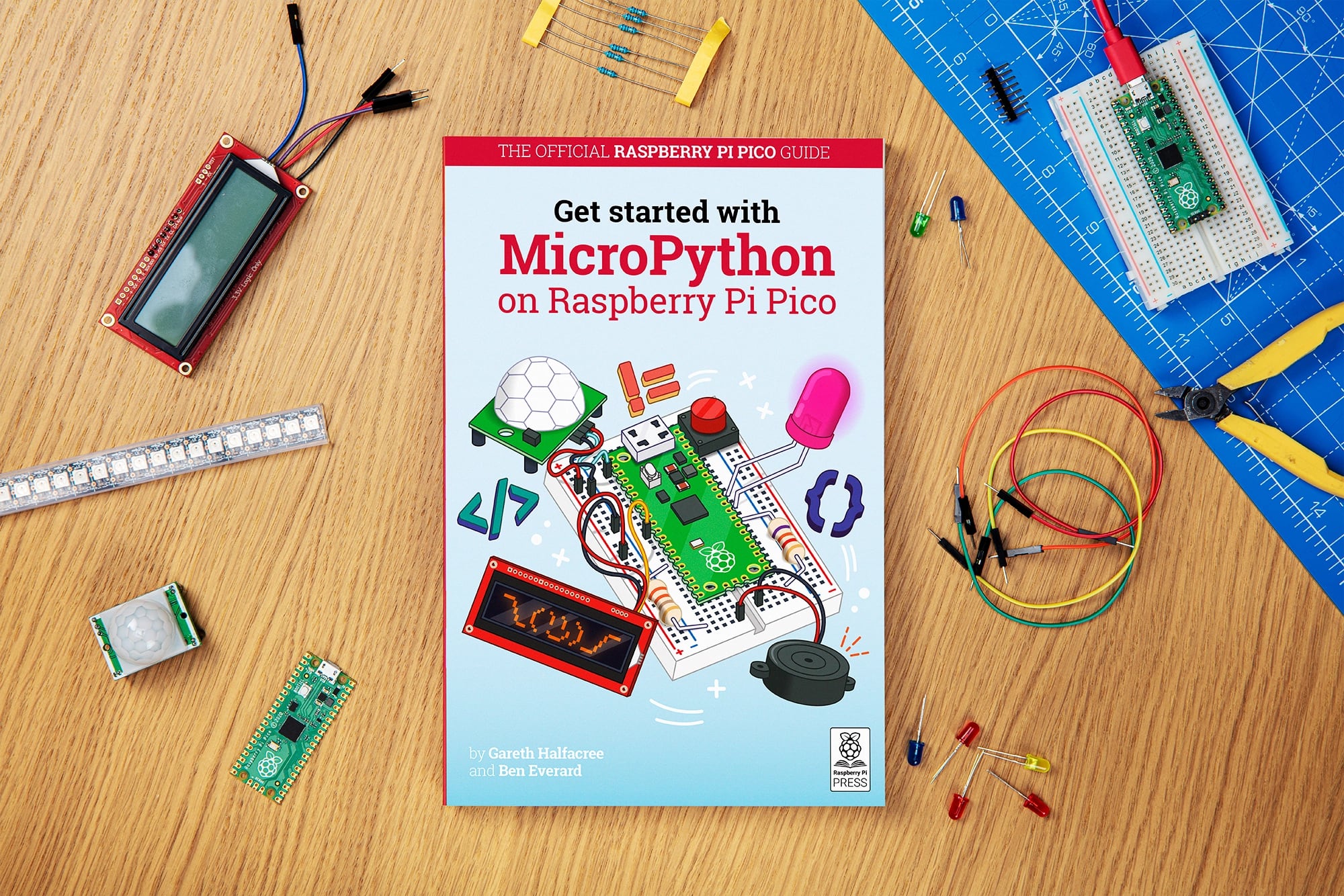
Meet the Raspberry Pi Pico, a tiny little microcontroller that lets you build hardware projects with some code running on the microcontroller. Even more interesting, the Raspberry Pi Foundation is using its own RP2040 chip, which means that the foundation is now making its own silicon.

If you’re not familiar with microcontrollers, those devices let you control other parts or other devices. You might think that you can already do this kind of stuff with a regular Raspberry Pi. But microcontrollers are specifically designed to interact with other things.

They’re cheap, they’re small and they draw very little power. You can start developing your project with a breadboard to avoid soldering. You can pair it with a small battery and it can run for weeks or even months. Unlike computers, microcontrollers don’t run traditional operating systems. Your code runs directly on the chip.

Like other microcontrollers, the Raspberry Pi Pico has dozens of input and output pins on the sides of the device. Those pins are important as they act as the interface with other components. For instance, you can make your microcontroller interact with an LED light, get data from various sensors, show some information on a display, etc.

The Raspberry Pi Pico uses the RP2040 chip. It has a dual-core Arm processor (running at 133MHz), 264KB of RAM, 26 GPIO pins including 3 analog inputs, a micro-USB port and a temperature sensor. It doesn’t come with Wi-Fi or Bluetooth. And it costs $4.

If you want to run something on the Raspberry Pi Pico, it’s quite easy. You plug your device to your computer using the micro-USB port. You boot up the Raspberry Pi Pico while pressing the button. The device will appear on your computer as an external drive.

In addition to C, you can use MicroPython as your development language. It’s a Python-inspired language for microcontrollers. The Raspberry Pi Foundation has written a ton of documentation and a datasheet for the Pico.

Interestingly, the Raspberry Pi Foundation wants to let others benefit from its own chip design. It has reached out to Adafruit, Arduino, Pimoroni and Sparkfun so that they can build their own boards using the RP2040 chip. There will be an entire ecosystem of RP2040-powered devices.

This is an interesting move for the Raspberry Pi Foundation as it can go down this path and iterate on its own chip design with more powerful variants. It provides two main advantages — the ability to control exactly what to put on board, and price.

Image Credits: Raspberry Pi Foundation

21 Jan 2021

Porsche and Axel Springer increase investment into their APX accelerator to €55M

Berlin-based early-stage fund APX today announced that its two investors, European publisher Axel Springer and sports car maker Porsche, have increased their investment in the fund to a total of €55 million.

With this, APX, which launched in 2018, is now able to deploy up to €500,000 in pre-Series A seed funding per company. That’s up from up to €100,000 when the fund launched. So far, the group has invested in more than 70 companies and plans to increase this number to close to 200 by 2022.

When APX launched, the fund didn’t disclose the total investment from Porsche and Axel Springer. Today, the team said that the new investment “more than doubles APX’s total amount for investing in new and current companies.” APX also stressed that the total volume of the fund is now “at least” €55 million, in part because the investors can always allocate additional funding for outliers.

In addition to the new funding, APX also today announced that it is doing away with its 100-day accelerator program and instead opting for a long-term commitment to its companies, including participation in future rounds.

“We will try and invest into 50 or more companies this year — and we were at 35 last year. So this is quite some growth,” APX founding managing director (and folk music aficionado) Henric Hungerhoff told me. “We think that our deal flow systems and our entire operations are settled in well enough that we can have quality founders in our portfolio. That’s our goal — and that might even increase to 70 the year after. […] We see really nice synergies or network effects within our portfolio, with founders helping other founders and learning from each other.”

Image Credits: APX

Hungerhoff tells me that the team is quite confident in its ability now to identify quality deal flows. The team is using a data-driven approach. And while it leverages its own network and that of its founders, it has also set up a scout program at leading European universities to identify potential founders, for example.

As APX founding managing director, and the former CEO of Axel Springer’s Plug and Play accelerator, Jörg Rheinboldt noted, APX never asks its founders to pitch. Instead, the team has multiple conversations with them about the product they want to build, how they came up with the idea — and how it changed over time.

“And then, we do multiple things simultaneously,” Rheinboldt said. “One is, we look at team dynamics. How do the founders interact? We also stress them a little bit — in a friendly way — where someone asks very fast questions, or we focus a little bit on one person and see how the others rescue them. We want to know about the team dynamics and then we want to understand the strategy, how we can help them best?”

The idea here is to be able to invest quickly. In addition, though, with the new funding, the team isn’t just able to invest into more companies but also invest more into the individual companies.

Image Credits: APX

“We want to invest deeper per startup at a very early stage,” Hungerhoff said. “So far, […] our typical approach was a non-dilution, pro-rata follow-on strategy with most of our portfolio companies. And this is something we want to pledge in the future. Looking at the past, 100% of the times in equity rounds, we do the pro-rata follow-on or more, but now, we have developed a strategy that we will, for the fastest-moving of fastest-growing companies, we want to deploy significantly more cash in a very early phase, which means an amount of up to €500,000.”

What the team saw was that the companies in its portfolio would raise a small pre-seed round from APX and other investors, with APX typically taking a 5% stake in the startup. Most founders would then go on and raise extended pre-seed or seed rounds soon thereafter.

“We more felt like we missed out when we saw these companies raising really nice financing rounds and we did our investment,” Rheinbolt said. “We felt very good that we can do a pro-rata investment. but we looked at each other and said: we knew this, we knew that they would do this 12 weeks ago. We could have given them a check and maybe the round would have been done in eight weeks and maybe [our stake] wouldn’t be 5% but 7%.”

Given this new focus on supporting startups throughout their lifecycle, it’s no surprise that APX did away with the 100-day program as well. But the team still expects to be quite hands-on. With a growing network, though, the partners also expect that founders will be able to learn from each other, too. “We now see the value that is coming from this,” Hungerhoff said. For example, a team that we’ve invested in two months ago, they’re now thinking about the angel round. They can actually get the best advice on this — or just experienced sharing — from another team, rather than talking to Jörg who did this maybe 30 years ago — no offense.”

The team also spends a lot of time thinking about its community, which now includes founders from 20 countries. The COVID pandemic has obviously moved most of the interactions online. Before COVID, APX often hosted events in its offices, which helped create the kind of serendipity that often leads to new ideas and connections. Looking ahead, the team still believes that there is a lot of value in having face-to-face meetings, but at the same time, maybe not every company needs to move to Berlin and instead visit for a few days every now and then.

Bonus: Here is Hungerhoff’s latest album with St. Beaufort.

21 Jan 2021

Softr scores $2.2M seed for its no-code website and web app platform powered by Airtable

No-code — software that lets you accomplish tasks that previously required coding skills — is an increasingly hot space, even if the basic premise has been promised and not fully realised for many years. Related to this are companies like Airtable, which attempt to make building relational databases and interrogating them as easy as creating a spreadsheet. Now Softr, a startup out of Berlin, wants to push the no-code concept further by making it easy to build websites on top of Airtable without the need to write code.

Recently soft launched on Product Hunt, today the young company is disclosing $2.2 million in seed funding, having previously been bootstrapped by its two Armenian founders, CEO Mariam Hakobyan and CTO Artur Mkrtchyan. Leading the round is Atlantic Labs, along with Philipp Moehring (Tiny.VC) and founders from GitHub, SumUp, Zeitgold, EyeEm and Rows.

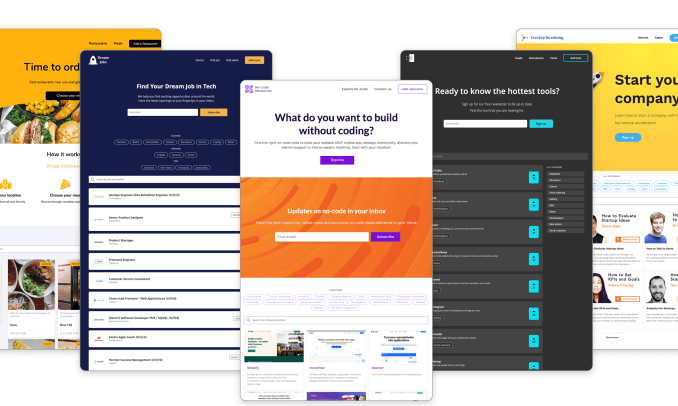
Started in 2019, Softr has built a no-code platform to enable anybody to build websites and web apps based on data housed in Airtable. The idea is to let Airtable do the database grunt work, combined with Softr’s relatively flexible but template-driven approach to website and web app creation.

Softr’s Hakobyan explains that out of the box the startup offers templates for anything from a simple marketing website to web apps for an e-commerce store, job board, marketplace and more. Those applications can include functionality like user authentication, gated content, payments, upvoting, and commenting etc.

“Softr has zero learning curve and can literally be used by anyone without a tech background, as it abstracts away all the technical aspects and focuses the user on product building and content, rather than technology,” she explains. “Softr uses Airtable as the database, as it makes it easy creating and sharing relational databases, without having to learn SQL or scripting. Airtable has gotten pretty popular in the last few years and is used not only by individuals but also Fortune 500 companies”.

Image Credits: Softr

To that end, Hakobyan says Softr’s magic is that it uses the concept of “pre-built building blocks” (listings, user accounts, payments etc) and business logic to handle most of the heavy lifting on behalf of the website creator. “When using blocks and templates.. ., 70% of the work is already done for the user,” she explains.

In addition, Softr connects to popular services like Stripe, Paypal, Mailchimp, Zapier, Integromat, Hotjar, Google Analytics, Hubspot, Drift and others.

Softr is currently used by “several thousands of makers and startups”. Examples of applications that customers have built on Softr include a language learning school with membership, a baby-sitters booking marketplace, and a community with gated content and online courses.

Armed with capital, Softr plans to expand its customer base to non-tech functions of SMBs to help them build internal tooling, such as employee directories, product inventories, real estate listings etc., and to automate manual processes.

21 Jan 2021

Eight Roads Ventures Europe shifts its gears towards diversity, appointing Lucile Cornet to Partner

The world of European VC can post another win for diversity this week as Lucile Cornet is appointed Partner with Eight Roads Ventures Europe, a firm focusing on startups in Europe and Israel. Cornet is its first female Partner. Eight Roads is backed by Fidelity and has over $6 billion assets under management globally.

Cornet will be focusing on the software and fintech sectors and previously led a number of investments for the firm, having risen from Associate to Partner within five years. It’s an out of the ordinary career trajectory when VC is notorious for having a ‘no succession’ culture, unless partners effectively buy into funds.

Cornet commented: “I am hugely optimistic about what is to come for European technology entrepreneurs. We are seeing more and more amazing founders and innovative businesses across the whole European region with ambitions and abilities to become global champions, and I look forward to helping them scale up.”

Speaking with TechCrunch, Cornet added: “I feel so, so fortunate because I think we’ve been living during a once in a lifetime transformation in general in tech and also in Europe. To build some of those companies, and just be part of the ecosystem has been fantastic. I know how much more exciting things are going to be in the next couple of years.”

Cornet previously led investments into Spendesk, the Paris-based spend management platform; Thinksurance, the Frankfurt-based B2B insurtech; and Compte-Nickel, one of the first European neobanks which was successfully acquired by BNP Paribas in 2017. She also sits on the boards of VIU Eyewear, OTA Insight and Fuse Universal.

France-born Cornet’s previous career includes investment banking, Summit Partners, and she joined Eight Roads Ventures in 2015. She was a ‘rising star’ at the GP Bullhound Investor of the Year Awards 2020.

Commenting, Davor Hebel, managing partner at Eight Roads Ventures Europe, said: “We are delighted with Lucile’s success so far at Eight Roads. She has made a huge impact in Europe and globally since joining the firm. She has a tremendous work ethic and drive… identifying the best European companies and helping them scale into global winners. Her promotion also speaks to our desire to continue to develop our best investment talent and promote from within.”

Speaking to me in an interview Hebel added: “We always believed in a slightly different approach and we say when we hire people, even from the start, we want them to have judgment, and we want them to have that presence when they meet entrepreneurs. So it was always part of the model for us to say, we might not hire many people, but we really want them to have the potential to grow and stay with us and have the path and the potential to do so.”

In 2020, Eight Roads Ventures Europe invested in Cazoo, Otrium, Spendesk, Odaseva and most recently Tibber, completed eight follow-on investments and exited Rimilia. The firm also saw its portfolio company AppsFlyer reach a $2 billion valuation.