Year: 2021

20 Jan 2021

Dear Sophie: What are Biden’s immigration changes?

Here’s another edition of “Dear Sophie,” the advice column that answers immigration-related questions about working at technology companies.

“Your questions are vital to the spread of knowledge that allows people all over the world to rise above borders and pursue their dreams,” says Sophie Alcorn, a Silicon Valley immigration attorney. “Whether you’re in people ops, a founder or seeking a job in Silicon Valley, I would love to answer your questions in my next column.”

Extra Crunch members receive access to weekly “Dear Sophie” columns; use promo code ALCORN to purchase a one- or two-year subscription for 50% off.


Dear Sophie:

I work in HR for a tech firm. I understand that Biden is rolling out a new immigration plan today.

What is your sense as to how the new administration will change business, corporate and startup founder immigration to the U.S.?

—Free in Fremont

Dear Free:

Today is a historic day. The pace of change is accelerating now, especially in Washington. At the time of this writing, Biden is expected to imminently launch a new legislative proposal for comprehensive immigration reform. As the world sits back and watches, we are focusing great collective attention on upgrading our political, sociological and technological structures so that each human has the chance to succeed.

One of the things I adore about my practice of supporting international professionals with U.S. immigration is bearing witness to the process of individual transformation; it is an honor to support people in their personal journey from living in a world of effects to becoming the cause.

The immediate focus of the proposed legislation is centered around a solution for Dreamers (who are in the U.S. without documentation) as well as supporting the rights of refugees and asylum-seekers and children. For more of my recent thoughts on this topic, check out my recent podcast explaining many of the changes. The draft bill is expected to span hundreds of pages, so please follow this Dear Sophie column for more updates as I track and explore the details, especially related to tech immigration.

Innovation will be supported by many new immigration opportunities coming into greater focus. Biden’s campaign platform celebrated how “Immigrants are essential to the strength of our country and the U.S. economy.” The Biden team has prioritized immigration as a key focus within COVID, with an immediate goal of rewriting most Trump-era rules. For context, Trump issued more than 400 immigration-related executive orders and proclamations during his term.

H-1Bs: Although H-1Bs have been in the news a lot regarding new wage rules changing the order of the lottery and litigation, the lottery is still happening this spring, and if you want to sponsor candidates, the time to act is now, regardless of what is happening in Washington. If your company is planning on sponsoring individuals for an H-1B visa — whether they’re already living in the U.S. or are living abroad — I suggest that you continue to prepare for the upcoming H-1B registration period.

20 Jan 2021

TikTok’s new Q&A feature lets creators respond to fan questions using text or video

TikTok is testing a new video Q&A feature that allows creators to more directly respond to their audience’s questions with either text or video answers, the company confirmed to TechCrunch. The feature works across both video and livestreams (TikTok LIVE), but is currently only available to select creators who have opted into the test, we understand.

Q&A’s have become a top way creators engage fans on social media, and have proven to be particularly popular in places like Instagram Stories and in other social apps like Snapchat-integrated YOLO, or even in smaller startups.

On TikTok, however, Q&A’s are now a big part of the commenting experience, as many creators respond to individual comments by publishing a new video that explains their answer in more detail than a short, text comment could. Sometimes these answers are meant to clarify or add context, while other times creators will take on their bullies and trolls with their video responses. As a result, the TikTok comment section has grown to play a larger role in shaping TikTok trends and culture.

Q&A’s are also a key means for creators to engage with fans when live streaming. But it can be difficult for creators to keep up with a flood of questions and comments through the current live chat interface.

Seeing how creators were already using Q&A’s with their fans is how the idea for the new feature came about. Much like the existing “reply to comments with video” feature, the Q&A option lets creators directly respond to their audience questions. Where available, users will be able to designate their comments as questions by tapping the Q&A button in a video’s comment field, or they can submit questions directly through the Q&A link on the creator’s profile page.

For creators, the feature simplifies the process of responding to questions, as it lets them view all their fans’ questions in one place.

There’s no limit to the number of questions that a creator can receive, though they don’t have to reply to each one.

The feature was first spotted by social media consultant Matt Navarra, who posted screenshots of what the feature looks like in action, including how it appears on users’ profiles.

During the test, the new Q&A feature is only being made available to creators with public Creator Accounts that have over 10,000 followers and who have opted into the feature within their Settings, TikTok confirmed to TechCrunch. Participants in the test today include some safelisted creators from TikTok’s Creative Learning Fund program, announced last year, among others.

TikTok says the Q&A feature is currently in testing globally, and it aims to roll out it to more users with Creator Accounts in the weeks ahead.

20 Jan 2021

Remote workers are greener, but their tech still has a real carbon cost

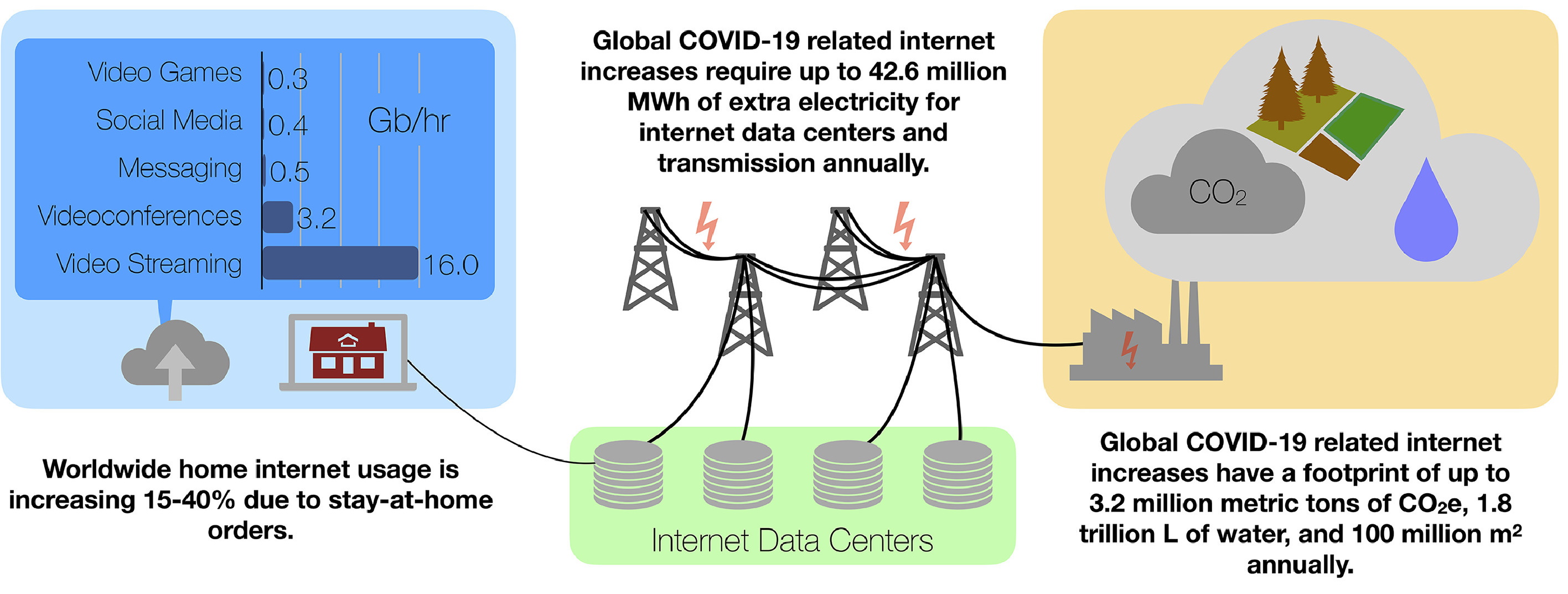
The massive shift to remote work due to COVID-19 has resulted in a huge reduction in emissions from vehicles and other sources, but it comes with costs of its own. A new study puts tentative carbon costs on the connectivity and data infrastructure that make working from home possible — and gives you an excuse to leave the camera off.

The researchers, from Perdue, Yale, and MIT, attempted to analyze the carbon, land, and water costs of internet infrastructure.

“In order to build a sustainable digital world, it is imperative to carefully assess the environmental footprints of the Internet and identify the individual and collective actions that most affect its growth,” they write in the paper’s introduction.

Using a single metric is too reductive, they argue: carbon emissions are a useful metric, but it’s also important to track the sources of the power, the water cost (derived from what’s needed to cool and operate datacenters), and the theoretical “land cost” needed to produce the product. If it sounds a little hand-wavy, that’s because any estimate along these lines is.

“In any calculation of this type at this global scale, you need to make a lot of assumptions and a lot of the data that you need are missing,” said lead study author, Yale’s Kaveh Madani, in an email to TechCrunch. “But it is a good start and best we could do using the available data.” (Madani noted that a lack of transparency in the industry, rather than a lack of statistical and scientific rigor, is the greater hindrance to the study’s accuracy.)

An example of their findings is that an hour of HD video streaming produces up to 440 grams of Carbon Dioxide emissions — up to 1,000g for YouTube or 160g for Zoom and video conferencing due differing video quality. For comparison, the EPA says a modern car produces 8,887 grams per gallon of gas. If you’re taking an hour of video meetings a day instead of commuting 20 miles to work, you’re definitely in the green, as it were, by an order of magnitude or more.

Chart showing costs of digital services in carbon emissions

Image Credits: Madani et al

But no one is arguing that the work from home shift or increase in digital consumption is a bad thing. “Of course, a virtual meeting is better for the environment than driving to a meeting location, but we can still do better,” said Madani.

The issue is more that we think of moving bits around as having marginal environmental cost — after all, it’s bits being flipped or sent along fiber, right? Yes, but it’s also powered by enormous datacenters, transmission infrastructure, and of course the wasteful eternal cycle of replacing our devices — though that last one doesn’t figure into the paper’s estimates.

If we don’t know the costs of our choices, we can’t make them in an informed way, the researchers warn.

“Banking systems tell you the positive environmental impact of going paperless, but no one tells you the benefit of turning off your camera or reducing your streaming quality. So without your consent, these platforms are increasing your environmental footprint,” Madani said in a Perdue news release.

Leaving your camera off for a call you don’t need to be visible for makes for a small — but not trivial — savings in carbon emissions. Similarly, lowering the quality on your streaming show from HD to SD could save almost 90 percent of the energy used to transmit it (though of course your TV and speakers won’t draw any less power).

That doomscrolling habit, already a problem, seems even worse when you think that every flick of the thumb indirectly leads to a puff of hot, gross air out of a datacenter somewhere and a slight uptick in the air conditioning bill. Social media in general doesn’t use as much data as HD streaming, but the rise of video-focused networks like TikTok means they could soon catch up.

Madani explained that, puff pieces writing misleading summaries of their research aside, the study does not prescribe any simple remedies like turning off your camera. Sure, you can and should, he argues, but the change we should be looking for is systemic, not individual. What are the chances millions of people will independently and regularly decide to turn off their cameras or lower the streaming quality from 4K to 720p? Pretty low.

But on the other hand, if the costs of these services are made clear, as Madani and his team attempt to do in a preliminary way, perhaps pressure can be applied to the companies in question to make changes on the infrastructure side that save more energy in a day with an improved algorithm than 50 million people would with conscious decisions that they faintly resent.

“Consumers deserve to know more about what is happening. People currently don’t know what is going on when they press the Enter button on their computers. When they don’t know, we can’t expect them to change behavior,” Madani said. “[Policy makers] should step in, raise concerns about this sector, try to regulate it, force increased transparency, impose pollution taxes and develop incentive mechanisms if they do not want to see another unsustainable, uncontrollable sector in the future.”

The change to digital has created some amazing efficiencies and reduced or eliminated many wasteful practices, but in the process it has introduced new ones. That’s just how progress works — you hope the new problems are better than the old ones.

The study was published in the journal Resources, Conservation, and Recylcling.

20 Jan 2021

Miami-based Ironhack raises $20 million for its coding bootcamps as demand for coders continues

Ironhack, a company offering programming bootcamps across Europe and North and South America, has raised $20 million in its latest round of funding.

The Miami-based company with locations in Amsterdam, Barcelona, Berlin, Lisbon, Madrid, Mexico City, Miami, Paris and Sao Paulo said it will use the money to build out more virtual offerings to compliment the company’s campuses.

Over the next five years, 13 million jobs will be added to the tech industry in the U.S., according to Ironhack co-founder Ariel Quiñones. That’s in addition to another 20 million jobs that Quiñones expects to come from the growth of the technology sector in the EU.

Ironhack isn’t the only bootcamp to benefit from this growth. Last year, Lambda School raised $74 million for its coding education program.

Ironhack’s raised its latest round from Endeavor Catalyst, a fund that invests in entrepreneurs from emerging and underserved markets; Lumos Capital, which was formed by investors with a long history in education technology; Creas Capital, a Spanish impact investment firm; and Brighteye, a European edtech investor.

Prices for the company’s classes vary by country. In the U.S. an Ironhack bootcamp costs $12,000, while that figure is more like $3,000 for classes in Mexico City.

The company offers classes in subjects ranging from web development to UX/UI design and data analytics to cybersecurity, according to a statement. 

“We believe that practical skills training, a supportive global community and career development programs can give everyone, regardless of their education or employment history, the ability to write their stories through technology,” said Ariel Quiñones, co-founder of Ironhack.

Since its launch in 2013, the company has graduated more than 8,000 students, with a job placement rate of 89%, according to data collected as of July 2020. Companies who have employed Ironhack graudates include Capgemini, Siemens, and Santander, the company said.


20 Jan 2021

Hello, Extra Crunch community!

First and foremost, thank you for subscribing to Extra Crunch.

I hope you feel like you’ve been getting value from the content our writers and guest contributors are creating, the events we’re producing and the podcasts we’re … podding. You truly are a member of our team.

It’s time to kick it up a notch

I began my career as an avid TechCrunch reader and remained one even when I joined as a writer, when I left to work on other things and now that I’ve returned to focus on better serving our community.

I know what it’s like to write, read and share the news of the day but my favorite part has always been spending time hanging out with some of you at events and gatherings. Unfortunately, the global predicament we’re in now with COVID-19 means we haven’t been able to connect in the ways that we’re used to.

We’re adapting

We’re going to be trying out some new things around here with the Extra Crunch staff front and center, as well as turning your feedback into action more than ever. As a subscriber, we quite literally work for you and want to make sure you’re getting your money’s worth, as it were.

I’ve been chatting with some of the folks in our community and I’d love to talk to you, too. Nothing fancy, just 5-10 minutes of your time to hear more about what you want to see from us and get some feedback on what we’ve been doing so far.

These are just some of the things we’re discussing behind the scenes to bring all of you even more value:

  • Discord server
  • Virtual meetups
  • Monthly workshops
  • Chats with writers
  • New perks

If you would be so kind as to take a minute or two to fill out this form, I’ll drop you a note and hopefully we can have a chat about the future of the Extra Crunch community before we formally roll out some of the ideas we’re cooking up.

Thank you again for your support. We’re looking forward to hanging out with you more, even if it’s just online for a little while longer.

20 Jan 2021

White House, dark mode: Biden admin refreshes Presidency’s website, vows accessibility

WhiteHouse.gov, the official website for all Presidential actions and efforts, is among the first things to be changed up under the freshly inaugurated President Biden. A fashionable dark mode appeared, a large text toggle for straining eyes, and the webmaster has committed to making the whole site conform to the latest accessibility guidelines.

The look isn’t so very different from the previous administration’s site — they’re both fairly modern and minimal experiences, with big photos up front and tidy lists of priorities and announcements once you drill down into a category.

Animation showing dark and light modes on whitehouse.gov

Image Credits: White House

But one big design change implemented by the new administration that many will appreciate is the inclusion of a dark mode, or high contrast mode, and a large type toggle.

Dark modes have been around forever, but became de rigeur when Apple implemented its own system-wide versions on iOS and macOS a while back. It’s just easier on the eyes in many ways, and at any rate it’s nice to give users options.

The WhiteHouse.gov dark mode changes the headline type from a patriotic blue to an eye-friendly off-white, with links a calming Dijon. Even the White House logo itself goes from a dark blue background to full black with a white border. It’s all very tasteful, and if anything seems like a low contrast mode, not high.

The large type mode does what it says, making everything considerably bigger and easier to tap or click. The toggles, it must be said, are a bit over-prominent, but they’ll probably tweak that soon.

More important is the pledge in the accessibility section:

This commitment to accessibility for all begins with this site and our efforts to ensure all functionality and all content is accessible to all Americans.

Our ongoing accessibility effort works towards conforming to the Web Content Accessibility Guidelines (WCAG) version 2.1, level AA criteria.

The WCAG guidelines are a set of best practices for designing a website so that its content can be easily accessed by people who use screen readers, need captions for audio, or can’t use a mouse or touchscreen easily. The guidelines aren’t particularly hard to meet, but as many have pointed out, it’s harder to retrofit a website to be accessible than to design it for accessibility from the start.

One thing I noticed was that many of the photos on the White House website have alt text or visible captions attached — these help visually impaired visitors understand what’s in an image. Here’s an example:

Screenshot showing the alt text of a photo of VP Kamala Harris and her family

Image Credits: White House


Normally that alt text would be read out by a screen reader when it got to the image, but it’s generally not made visible.

Unless the metadata was stripped from the previous administration’s site (it’s archived here), none of the photos I checked had text descriptions there, so this is a big improvement. Unfortunately some photos (like the big header photo on the front page) don’t have descriptions, something that should probably be remedied.

Accessibility in other places will mean prompt inclusion of plaintext versions of governance items and announcements (versus PDFs or other documents), captions on official videos and other media, and as the team notes, lots of little improvements that make the site better for everyone who visits.

It’s a small thing in a way, compared with the changes expected to accompany the new administration, but small things tend to pile up and become big things.

20 Jan 2021

Monzo founder Tom Blomfield is departing the challenger bank and says he’s ‘struggled’ during the pandemic

Monzo founder Tom Blomfield is departing the U.K. challenger bank entirely at the end of the month, staff were informed earlier today.

Blomfield held the role of CEO until May last year when he assumed the newly created title of president and resigned from the Monzo board. However, having been given the time and space to consider his long-term future at the bank he helped create 6 years ago, and with a refreshed executive team now in place, he says it is time to “hand over the baton”.

In a brief but candid telephone interview, Blomfield also revealed that, as well as being unhappy during the last couple of years as CEO when the company scaled well beyond a “scrappy startup,” the pandemic and subsequent lockdowns exasperated pressures placed on his own mental well-being. “I’m very happy to talk about what’s gone on with me, because I don’t think people do it enough,” he says.

“I stopped enjoying my role probably about two years ago… as we grew from a scrappy startup that was iterating and building stuff people really love, into a really important U.K. bank. I’m not saying that one is better than the other, just that the things I enjoy in life is working with small groups of passionate people to start and grow stuff from scratch, and create something customers love. And I think that’s a really valuable skill but also taking on a bank that’s three, four, five million customers and turning it into a ten or twenty million customer bank and getting to profitability and IPOing it, I think those are huge exciting challenges, just honestly not ones that I found that I was interested in or particularly good at”.

In early 2019 after realising he was “doing too much and not enjoying it,” Blomfield began talking to Monzo investor Eileen Burbidge of Passion Capital, and Monzo Chair Gary Hoffman, about changing roles and how he needed more help. Then, he says, “Covid just exasperated things,” a period when Monzo also had to cut staff, shutter its Las Vegas office and raise bridge funding in a highly publicised down round.

“I think [for] a lot of people in the world — and you and I have spoken about this — going through a pandemic, going through lockdown and the isolation involved in that has an impact on people’s mental health,” says Blomfield. “I don’t think I was any different, so I was really struggling. I had a really, really supportive exec team around me and a really supportive set of investors on board and I was really grateful that when I put my hand up and said, ‘I need help,’ they were super receptive to that”.

Blomfield also comes clean about his role as president, a title that was intended as a way to provide the time and space for him to get well and figure out if he would return to longer-term to Monzo or depart entirely. Contrary to rumours, Blomfield says he wasn’t pushed out by investors. Instead, the Monzo board actually put pressure on him to remain as CEO longer than he wanted or perhaps should have (a version of events corroborated by my own sources). “When I took that president role, it was not certain one way or another what would happen,” Blomfield says, apologising in case I felt I was misled when I reported the news.

(The truth is, within weeks of running that news piece, I knew it was far from certain Blomfield would ever return, with multiple sources, including people close to and worried about Blomfield, confiding in me how burned out the Monzo founder was. As weeks turned into months and following additional sourcing, I had enough information to write a follow up story much earlier but chose to wait until a formal decision was taken).

TechCrunch’s Steve O’Hear interviewing Monzo’s Tom Blomfield

Meanwhile, Blomfield describes his resignation as a Monzo employee as “bitter-sweet,” and is keen to praise what the Monzo team has already achieved, including since his much reduced involvement. “I think the team has done phenomenally well over the last year or so in really difficult circumstances,” he says. In particular, he cites Monzo’s new CEO TS Anil as doing a “phenomenal” job, while describing Sujata Bhatia, who joined as COO last year, as “an absolute machine, a real operator”.

To that end, Monzo now has almost 5 million customers, up from 1.3 million in 2019. Monzo’s total weekly revenue is now 30% higher than pre-pandemic, helped no doubt by over 100,000 paid subscribers across Monzo Plus and Premium in the last five months (sources tell me the company surpassed £2 million in weekly revenue in December for the first time in its history). Albeit at a lower valuation, the challenger bank also raised £125 million from new and existing investors during the pandemic.

Blomfield also says that Anil and Bhatia and other members of the Monzo executive team have specific skills related to scaling and managing a bank approaching 5 million customers that he simply doesn’t. And even if he did, he has learned the hard way that there are aspects of running a large company that not everyone enjoys.

“Going from a CEO where you’re front and centre dealing with all of the different pressures every day to a much lighter role is a huge huge weight off my shoulders and has given me the time and space to recover,” he adds. “I’m now feeling pretty great. I’m enjoying life again”.

As for what’s next for Blomfield, he says he wants to “chill out” for a bit and perhaps take a holiday. He’s also finishing his vaccination training so that he can volunteer to help deliver the U.K.’s national COVID-19 vaccination rollout. A recent tweet by Blomfield about a side project also led to speculation that he has begun a new venture. Not true, says Blomfield, telling me it was a 5 day project designed to get back into coding and play with a robotic 2D printer. And while he’s very much left Monzo, he says he’ll continue cheering the company on from the outside.

20 Jan 2021

EU chief warns over ‘unfiltered’ hate speech and calls for Biden to back rules for big tech

In a speech to the European Parliament today marking the inauguration of US president Joe Biden, the president of the European Commission has called for Europe and the US to join forces on regulating tech giants, warning of the risks of “unfiltered” hate speech and disinformation being weaponized to attack and undermine democracies.

Ursula von der Leyen pointed to the shock storming of the US capital earlier this month by supporters of outgoing president Donald Trump as an example of how wild claims being spread and amplified online can have tangible real-world consequences, including for democratic institutions.

“Just a few days ago, several hundred [Trump supporters] stormed the Capitol in Washington, the heart of American democracy. The television images of that event shocked us all. That is what happens when words incite action,” she said. “That is what happens when hate speech and fake news spread like wildfire through digital media. They become a danger to democracy.”

European institutions are also being targeted with “hate and contempt for our democracy spreading unfiltered through social media to millions of people”, she warned, pointing to similarly disturbing attacks that have taken place in the region in recent years. Such as an attempt by right-wing extremists in Germany to storm the Reichstag building last summer and the 2016 murder of UK politician, Jo Cox, by a fascist extremist.

“Of course, the storming of the [US] Capitol was different. But in Europe, too, there are people who feel disadvantaged and are very angry,” she said, suggesting feelings of exclusion and injustice can make people vulnerable to believing the “rampant” conspiracy theories that platforms have allowed to circulate freely online, and which she characterized as “often a confused mixture of completely absurd fantasies”.

“We must make sure that messages of hate and fake news can no longer be spread unchecked,” she added, reiterating the case for regulating social media by pressing the case for imposing “democratic limits on the untrammelled and uncontrolled political power of the Internet giants”.

The European Commission has already set out its blueprint for overhauling the region’s digital rulebook when it unveiled the draft Digital Services Act and Digital Markets Act last month. Although it won’t be including hard legal limits on disinformation in the package — preferring to continue with a voluntary, but beefed up code of conduct for content that falls into a grey area where it may be harmful but isn’t actually illegal.

von der Leyen said the aim for the regulations is to ensure “if something is illegal offline it must also be illegal online”. The Commission has also said the tech policy package is about forcing platforms to take more responsibility for the content they spread and monetize.

But it’s not yet clear how the proposed laws will ultimately tackle the tricky issue of how assessments are made to remove (or reinstate) speech; and whether platforms will continue to make those judgements (under a regulator’s guidance and watchful eye), or whether they end up entirely independent of platform control.

What the Commission has suggested is closer to the former but the proposal has to go through the EU’s co-legislative process — so such details are likely to be debated and could be amended prior to adoption into law.

“We want the platforms to be transparent about how their algorithms work. We cannot accept a situation where decisions that have a wide-ranging impact on our democracy are being made by computer programs without any human supervision,” von der Leyen went on. “And we want it laid down clearly that internet companies take responsibility for the content they disseminate.”

She also reiterated the concern expressed in recent days about the unilateral actions taken by tech giants to close down Trump’s megaphone — echoing comments by political leaders across Europe earlier this month who dubbed the display of raw platform power, from companies like Twitter, as ‘problematic’; and said it must result in regulatory consequences for tech giants.  

“No matter how right it may have been for Twitter to switch off Donald Trump’s account five minutes after midnight, such serious interference with freedom of expression should be based on laws and not on company rules,” she said, adding: “It should be based on decisions of politicians and parliaments and not of Silicon Valley managers.”

In the speech, the EU president also expressed hope that the Biden administration will be inclined to arc toward Europe’s agenda on digital regulation — as part of the anticipated post-Trump reboot of EU-US relations.

The Commission recently adopted a new transatlantic agenda in which it laid out a number of policy areas it hopes for joint-working with the US — with tech governance key among the areas of hoped for policy cooperation.

von der Leyen reiterated the idea that a joint Trade and Technology Council could be “a first step” toward the EU and US fashioning a “digital economy rulebook that is valid worldwide”.

“It is in this digital field that Europe has so much to offer the new government in Washington,” she suggested. “The path we have taken in Europe can be an example for approaches at international level. As has long been the case with the General Data Protection Regulation.

“Together we could create a digital economy rulebook that is valid worldwide: From data protection and privacy to the security of technical infrastructure. A body of rules based on our values: human rights and pluralism, inclusion and protection of privacy.”

While there’s evidently a keen appetite in the EU to reset US relations post-Trump, it remains to be seen how much of a policy reboot the Biden administration will usher in vis-a-vis big tech.

He has not been as vocal a critic of platform giants as other Democratic challengers for the presidency. And the Obama administration, which he of course served in, had very cosy ties to Silicon Valley.

Concerns have also been raised in recent days about Biden’s potential picks for a key appointment at the justice office — in light of antitrust probes of big tech vs the prospective appointees’ deep links to tech giants and/or promotion of historical mergers. So it hardly looks like a model for a full and clean reset.

While the tricky issue of pro-privacy reform of US surveillance laws — which EU commissioners have warned will be needed to resolve the legal uncertainty clouding data transfers from the region to the US (and which tech giants themselves have largely avoided in their own lobbying) — seems likely to need legislation from Congress, rather than being a change that could be driven solely by the Biden administration.

The chances of the incoming president being inclined to champion such a relatively wonky tech-policy issue when he has so much else in his ‘needs urgent attention’ in-tray also seem relatively slim. But even slender odds can look promising after the Trump era.  

20 Jan 2021

Joe Biden’s new gig

After serving as Obama-Biden campaign manager and White House Deputy Chief of Staff and now living in San Francisco and working with the tech sector, I am hopeful about the Biden-Harris administration’s ability to put in place smart policies and regulatory stability to further unleash the industry’s vast potential — not to mention the effect their calm and measured leadership could have on our greater economy.

However, with new leadership comes new perspectives on many of the most critical issues facing Silicon Valley. While the bonds between the innovation economy and the Obama-Biden Administration resulted in national prosperity, the tech sector is now intertwined in nearly every facet of American life.

The resulting tension means the new Administration will take its role as regulator seriously and investors and businesses alike should not overlook how quickly President Biden will move on policy – especially as it relates to the future of work and getting the U.S. economy back on track.

There’s no question the gig companies had a banner year in 2020. Even with ride-hailing usage down dramatically, the strength of meal, grocery and just about everything else delivered combined with the victory in California of Proposition 22 has driven up market caps and positioned many startups for going public. Yet, while the West Coast may be feeling emboldened, the Beltway has another trajectory in mind.

Congress has been working on gig worker classification legislation named the PRO Act for months. The bill closely mirrors the maligned California Assembly Bill 5 that Proposition 22 mostly reversed. It’s broadly supported by labor and could see some traction this year. Labor is already working hard to line up support from the various Congressional coalitions, and at the same time gig economy companies are gearing up to fight it with their unlimited resources.

The question is – what will President Biden do? Long ago he voiced his support for AB 5 and laid out plans to solve worker misclassification during the campaign, but he’s also hiring and appointing staff to the Administration deeply experienced in tech. President Biden has been governing longer than most startup founders have been alive, he’s a master at understanding forces in Washington and how to reach a compromise. He knows that what’s rarely discussed during legislative debate is how the law will actually be implemented.

We shouldn’t be surprised if the Biden Administration convenes the Department of Labor and the industry to determine how companies actually enact worker protections.

Despite most bills being thousands of pages, they’re rarely prescriptive. Those details are left up to agencies. President Biden has oversight of the Department of Labor, which, if the PRO Act is passed, will be responsible for its implementation.

We shouldn’t be surprised if the Biden Administration convenes the Department of Labor and the industry to determine how companies actually enact worker protections. President Biden’s nominee for Labor Secretary, Boston Mayor Marty Walsh, while a staunch supporter of labor, is also well regarded by the business sector as someone they can work with and reach a compromise.

We just have to look to the states to understand why this outcome is so plausible. The gig companies already have Proposition 22 type campaigns underway in six states and are running legislation in a half dozen more. By the end of 2021 there will be law on the books codifying worker protections in nearly a third of the country, modeled on Proposition 22.

This kind of momentum is hard to ignore and labor knows it. Although labor is aligned in its support of the PRO Act, the alignment becomes blurry when considering state action. For example, many northeastern states have had a thriving black car and taxi industry for decades.

This means Labor’s position on gig laws in New York and New Jersey are quite different than places like Washington State or Illinois where gig workers are still relatively new and the ink is drying on regulations supported by Uber and Lyft just a few years ago. Labor is aligned as much as they can be and enough to support the PRO Act, but there isn’t a national movement and that leaves room for compromise.

This is all good news for the tech sector. It’s a fantasy to think that regulation wouldn’t eventually come to protect the very workers who power the gig economy. And that’s a good thing – tech has a moral responsibility to do right by its workers. However, those regulations shouldn’t and won’t be imposed on tech. Rather it will take weeks and months of campaigns and bills winding their way through the states and Congress, culminating with negotiations and compromises.

Or maybe even years of renewed regulatory processes. All of which will be overseen by a new President who has witnessed first-hand over his career how innovation can help the nation grow and recover.

After four years of Trump’s stubborn denialism, magic thinking and economic harm, Biden will promote policy rigor, public spiritedness and private sector ingenuity to work together for innovative solutions. It will be hard work and I promise you it won’t be pretty, but we should expect the dawn of a new era of U.S. tech-driven dynamism.

20 Jan 2021

Joe Biden’s new gig

After serving as Obama-Biden campaign manager and White House Deputy Chief of Staff and now living in San Francisco and working with the tech sector, I am hopeful about the Biden-Harris administration’s ability to put in place smart policies and regulatory stability to further unleash the industry’s vast potential — not to mention the effect their calm and measured leadership could have on our greater economy.

However, with new leadership comes new perspectives on many of the most critical issues facing Silicon Valley. While the bonds between the innovation economy and the Obama-Biden Administration resulted in national prosperity, the tech sector is now intertwined in nearly every facet of American life.

The resulting tension means the new Administration will take its role as regulator seriously and investors and businesses alike should not overlook how quickly President Biden will move on policy – especially as it relates to the future of work and getting the U.S. economy back on track.

There’s no question the gig companies had a banner year in 2020. Even with ride-hailing usage down dramatically, the strength of meal, grocery and just about everything else delivered combined with the victory in California of Proposition 22 has driven up market caps and positioned many startups for going public. Yet, while the West Coast may be feeling emboldened, the Beltway has another trajectory in mind.

Congress has been working on gig worker classification legislation named the PRO Act for months. The bill closely mirrors the maligned California Assembly Bill 5 that Proposition 22 mostly reversed. It’s broadly supported by labor and could see some traction this year. Labor is already working hard to line up support from the various Congressional coalitions, and at the same time gig economy companies are gearing up to fight it with their unlimited resources.

The question is – what will President Biden do? Long ago he voiced his support for AB 5 and laid out plans to solve worker misclassification during the campaign, but he’s also hiring and appointing staff to the Administration deeply experienced in tech. President Biden has been governing longer than most startup founders have been alive, he’s a master at understanding forces in Washington and how to reach a compromise. He knows that what’s rarely discussed during legislative debate is how the law will actually be implemented.

We shouldn’t be surprised if the Biden Administration convenes the Department of Labor and the industry to determine how companies actually enact worker protections.

Despite most bills being thousands of pages, they’re rarely prescriptive. Those details are left up to agencies. President Biden has oversight of the Department of Labor, which, if the PRO Act is passed, will be responsible for its implementation.

We shouldn’t be surprised if the Biden Administration convenes the Department of Labor and the industry to determine how companies actually enact worker protections. President Biden’s nominee for Labor Secretary, Boston Mayor Marty Walsh, while a staunch supporter of labor, is also well regarded by the business sector as someone they can work with and reach a compromise.

We just have to look to the states to understand why this outcome is so plausible. The gig companies already have Proposition 22 type campaigns underway in six states and are running legislation in a half dozen more. By the end of 2021 there will be law on the books codifying worker protections in nearly a third of the country, modeled on Proposition 22.

This kind of momentum is hard to ignore and labor knows it. Although labor is aligned in its support of the PRO Act, the alignment becomes blurry when considering state action. For example, many northeastern states have had a thriving black car and taxi industry for decades.

This means Labor’s position on gig laws in New York and New Jersey are quite different than places like Washington State or Illinois where gig workers are still relatively new and the ink is drying on regulations supported by Uber and Lyft just a few years ago. Labor is aligned as much as they can be and enough to support the PRO Act, but there isn’t a national movement and that leaves room for compromise.

This is all good news for the tech sector. It’s a fantasy to think that regulation wouldn’t eventually come to protect the very workers who power the gig economy. And that’s a good thing – tech has a moral responsibility to do right by its workers. However, those regulations shouldn’t and won’t be imposed on tech. Rather it will take weeks and months of campaigns and bills winding their way through the states and Congress, culminating with negotiations and compromises.

Or maybe even years of renewed regulatory processes. All of which will be overseen by a new President who has witnessed first-hand over his career how innovation can help the nation grow and recover.

After four years of Trump’s stubborn denialism, magic thinking and economic harm, Biden will promote policy rigor, public spiritedness and private sector ingenuity to work together for innovative solutions. It will be hard work and I promise you it won’t be pretty, but we should expect the dawn of a new era of U.S. tech-driven dynamism.