
Year: 2021

15 Jan 2021

Coinbase commits to a “better customer experience” following complaints

Coinbase has a problem. As interest in bitcoin has soared along with its price, the popular cryptocurrency exchange has found itself the target of a growing spate of angry customers who haven’t been able to access customer service.

A quick look at Twitter tells the story. As ranted one upset user of the service just earlier today: “Multiple issues over the last month which cost me $$$ several open cases and 0% response?? When are you going to help me or is it easier to just forget. This wont be so easy when your publicly traded. Will be following up with [SEC] soon.”

There are many (many) similar complaints to be found.

In the interest of full disclosure, this editor asked the company this week for more insight into its customer service operations after emailing its support staff more than a half dozen times and tweeting once over 10 days, and receiving no response. (I bought one unit of Ether in 2018 on the platform and wanted to access my account, which I’d been locked out of nearly two years ago.)

To its credit, Coinbase today issued a statement, promising to do better. Its VP of customer success, Casper Sorenson, wrote on the company’s blog that Coinbase is “committing to a better customer experience during this time of heightened interest in the cryptoeconomy,”  The company says it is adding more people to its team; adding more self-service options (there are startling few); expanding its “help center”, and launching a new educational site, Coinbase Learn, “as a one-stop-shop for first timers, experienced investors, and everyone in between.”

Most meaningful perhaps, Coinbase says that in the coming months, it will begin offering live messaging with Coinbase representatives, which is not currently an option. Indeed, Coinbase does not offer live support of any kind. A help support phone line is only available to users wanting to freeze their accounts, and it is automated.  (The flip side of its slow customer response times may tie to the apparent seriousness with which Coinbase, which works closely with regulated banks, takes security issues.)

Still, the company will have to do far more for its increasingly mainstream users as a publicly traded outfit, both because regulators will undoubtedly take a greater interest in its unhappy customers and because it will otherwise lose existing and potential clients to rivals, of which there are a growing array, from the international payment giant PayPal, which is now seeing record daily cryptocurrency trading, to investment brokers like Robinhood. (Another increasingly popular option: digital asset managers like Grayscale whose trusts are publicly traded over the counter.)

More attention to the issue appears overdue. While Coinbase has presumably been dealing with a surge in complaints that corresponds with the volatility of Bitcoin’s ups and downs, customer service has been an ongoing issue for the nearly nine-year-old, San Francisco outfit, which filed its confidential form with the SEC in December to go public and says it has 35 million users in more than 100 countries.

In 2018, Mashable obtained 134 pages of complaints filed to the SEC and the California Department of Business Oversight following a five-month FOIA process,  and the picture that emerged was “not of a responsible actor in the cryptocurrency space opening the market to new investors, but rather a company overwhelmed by and underprepared for its own success,” the outlet reported at the time.

Asked today, among other things, how Coinbase’s processes have since changed, how many of its more than 1,100 employees are focused on customer support, and whether the outfit could share its latest customer numbers, Coinbase, currently in its SEC-mandated quiet period, declined to comment.
15 Jan 2021

15 steps to fundraising a new VC or private equity fund

Launching is easy; fundraising is harder.

I’ve been fortunate to be a partner at two different VC firms over the past nine years, and we’ve grown AUM 10x both times.

Based on my experience, taking the 15 steps below will help build the core of a high-performing fundraising and investor relations function.

1. Build the firm as much as possible before soliciting LPs

The more baked you are, the more investable you are. The best possible move is to invest in and warehouse some special purpose vehicles that fit your strategy. However, that may distract you from the larger goal of raising a fund, not just a special purpose vehicle.

The next best move is to build your core team, e.g., recruit an advisory board, venture partners and EIRs. Lastly, gather feedback. Yohei Nakajima, founder of Untapped.vc, said, “Before pitching LPs and building my firm, I talked with over 50 people I knew to get feedback.”

2. Set up a basic marketing toolkit: Deck, website and social media

It’s virtually mandatory to develop a detailed, data-backed deck and ideally a video pitch. Your materials should ideally meet the expectations of the Institutional Limited Partners Association, even if you’re not targeting institutions. Keep these documents constantly up to date, so all team members are aligned on key numbers, e.g., total dollars raised so far. You’ll look unprofessional if you’re not coordinated.

Fundamentally, almost no one invests based on a deck; they want to talk with the people. However, a high-credibility deck opens the door to a meeting where you then have the chance to sell yourself.

Note that limited partners view formatting as a proxy for professionalism. It’s worth investing a little money in a graphic designer who can design a consistent website, business card, logo and presentation templates.

Richard Dukas, CEO, Dukas Linden Public Relations, said, “If you don’t have a website and have no material online presence, you likely won’t get past the first hurdle with potential investors.”

When you’re fundraising, you’re selling a luxury good. The less widely marketed your fund, the more valuable it is perceived to be. For example, one LP told me she prefers to receive customized emails from fund principals, as opposed to a bulk-mailed quarterly update. An extreme example of this are venture capitalists who don’t even bother with a website, e.g., Benchmark and Thrive Capital. They are the equivalent of a nightclub with an unmarked door, but other investors will need to shape up their social media tech stack.

3. Make your online profile data-driven and internally consistent

All team members should have internally consistent and professional profiles on Linkedin at a minimum and typically also on Twitter, Facebook and/or other platforms you use. In particular, highlight the metrics by which you measured your past activities: size of exit, number of people you managed, budget you were responsible for, etc.

4. Set up a data room with a completed due diligence questionnaire

Among the most important information to include: details on return history, legal documents, fund organization chart, portfolio construction model, portfolio company one-pagers, key personnel resumes and case studies of past investments. We are using Digify to manage this.

5. Prepare FAQs for prospective LPs

You will inevitably receive a wide range of one-off questions from potential LPs. Make sure to compile all your answers in a single document so that you can recycle and refine these answers.

15 Jan 2021

Lessons from Top Hat’s acquisition spree

Top Hat, a startup that digitizes textbooks and turns them into an interactive experience for college students, announced on Wednesday that it has acquired yet another business: Fountainhead Press. The acquisition marks Top Hat’s third scoop of a publishing company in the past 12 months.

Consolidation is going to be huge in the next few years for edtech, as bigger players raise enough financing (and gain profits) to be able to afford other businesses.

Top Hat’s whole business proposition is a subtweet to Zoom University: It wants to make learning an active, online experience and completely digital. That focus has let them reach 3.5 million students and thousands of universities. With a new acquisition, Top Hat is bringing more content into its fold, and with it, more customers who need a better solution to a dusty textbook.

I caught up with Top Hat CEO and founder Mike Silagadze to understand what has triggered this string of content acquisitions. While the M&A isn’t tech-focused, we can learn about how a well-funded edtech startup is navigating the early innings of 2021.

We’ll talk about the shift from offline to online, edtech’s consolidation environment and why the “sell to Pearson or bust” mindset might officially be out the door for the sector.

Offline to online

15 Jan 2021

Group Nine’s SPAC goes public

Group Nine Media revealed last month that it was forming a SPAC (short for special purpose acquisition corporation) in order to raise money for acquitions.

The company has now moved forward with those plans, announcing last night that it had priced the SPAC’s IPO $10 at per unit, to raise a total of $200 million. It’s now trading on NASDAQ under the ticker symbol GNACU; as of 2:53pm Eastern shares were up 6.55%. (Eventually, the Class A common stock will be listed as GNAC and warrants will be listed separately as GNACW.) The offering is expected to close on January 20.

The acquisition corporation, like Group Nine itself, is led by CEO Ben Lerer (pictured above). Imagination Capital Partner Richard D. Parsons and Reddit Chief Operating Officer Jen Wong are also on the board of directors.

Group Nine was formed in 2016 with backing from Discovery, merging Thrillist, NowThis, The Dodo and Seeker. It subsequently acquired PopSugar, with co-founder Brian Sugar becoming president of both Group Nine and now Group Nine Acquisition Corp.

SPACs, also known as blank check corporations, have become an increasingly popular way for companies to raise money from the public markets. In its initial filing, Group Nine said it would use the funding “for the purpose of effecting a merger, capital stock exchange, asset acquisition, stock purchase, reorganization or similar business combination.”

15 Jan 2021

Apple is extending Apple TV+ trials again

If you’ve got an Apple TV+ trial that’s set to expire sometime between now and June, good news: you’re getting some free bonus time.

Apple TV+ first launched in November of 2019, alongside a one-year free trial for anyone buying a new iPhone, iPad, iPod touch, Apple TV, or Mac. As those initial trials approached their end, Apple voluntarily extended them out to February of 2021. Now they’re extending them once again.

As first reported by 9to5Mac, any trial that previously would’ve expired from February to June of 2021 will now expire in July instead. We have confirmed these plans with Apple.

Users should expect to get an email about the extension in the coming weeks. If you’re already paying for AppleTV+ or have it as part of an Apple One bundle, meanwhile, you’ll be getting a $4.99 per month credit until the end of June.

If you haven’t already, take this as an opportunity to blast through Ted Lasso, which is probably the most charming thing anyone has made for TV in a decade. Central Park is also great, though it has yet to hook me in quite the same way as Loren Bouchard’s other series (Bob’s Burgers, Home Movies).

15 Jan 2021

Desktop Metal buys fellow 3D printing company EnvisionTEC for $300M

Desktop Metal this morning announced its intention to purchase fellow 3D printing company EnvisionTEC. Founded in Germany in 2002, EnvisionTEC specializes in photopolymer additive manufacturing, putting its technology in more direct competition with the likes of 3D printing darling Carbon than Desktop Metal’s own existing portfolio.

The deal follows Desktop Metal’s push to go public last August as part of a growing trend of SPAC mergers. Prior to this, the company had raised no shortage of its own funds, with a rapid ascent into unicorn status on the wake of $430 million in investments. It’s spending $300 million to acquire EnvisionTEC through a combination of cash and stock.

There’s a lot of potential for Desktop Metal to grow here. EnvisionTEC has the underlying technology with the ability to print in more than 190 materials, and Desktop Metal has the resources to help scale that tech beyond what the German company has been able to build thus far.

It’s clear that dental is a pretty huge piece of this puzzle. It’s among the clearest and most immediate use cases for this sort of mass volume 3D printing — and, indeed, the company already sports around 1,000 customers in dental, including companies like Smile Direct Club. Amid the COVID-19 pandemic, the company effectively tripled its Envision One dental shipments over the previous year.

“It’s used for everything from restorations to same-day, full arch implants,” Desktop Metal CEO Ric Fulop tells TechCrunch. “Usually when you get a denture, you’ve got to wait three weeks for denture implants. This is the first time you’ve got a solution that can do it in the same day. And it’s affordable.”

Per a press release issued in the wake of the news, other existing customers include Ford and Hasbro. Fulop says the company will continue to operate as its own division after the acquisition, which is expected to close this quarter.

“We’ll be able to leverage their channel,” the executive says. “We look forward to expanding on that capability and using our channel to give them more tools to have a full solution that spans from metal to composites to biomaterials and now photopolymer printing.”

15 Jan 2021

Desktop Metal buys fellow 3D printing company EnvisionTEC for $300M

Desktop Metal this morning announced its intention to purchase fellow 3D printing company EnvisionTEC. Founded in Germany in 2002, EnvisionTEC specializes in photopolymer additive manufacturing, putting its technology in more direct competition with the likes of 3D printing darling Carbon than Desktop Metal’s own existing portfolio.

The deal follows Desktop Metal’s push to go public last August as part of a growing trend of SPAC mergers. Prior to this, the company had raised no shortage of its own funds, with a rapid ascent into unicorn status on the wake of $430 million in investments. It’s spending $300 million to acquire EnvisionTEC through a combination of cash and stock.

There’s a lot of potential for Desktop Metal to grow here. EnvisionTEC has the underlying technology with the ability to print in more than 190 materials, and Desktop Metal has the resources to help scale that tech beyond what the German company has been able to build thus far.

It’s clear that dental is a pretty huge piece of this puzzle. It’s among the clearest and most immediate use cases for this sort of mass volume 3D printing — and, indeed, the company already sports around 1,000 customers in dental, including companies like Smile Direct Club. Amid the COVID-19 pandemic, the company effectively tripled its Envision One dental shipments over the previous year.

“It’s used for everything from restorations to same-day, full arch implants,” Desktop Metal CEO Ric Fulop tells TechCrunch. “Usually when you get a denture, you’ve got to wait three weeks for denture implants. This is the first time you’ve got a solution that can do it in the same day. And it’s affordable.”

Per a press release issued in the wake of the news, other existing customers include Ford and Hasbro. Fulop says the company will continue to operate as its own division after the acquisition, which is expected to close this quarter.

“We’ll be able to leverage their channel,” the executive says. “We look forward to expanding on that capability and using our channel to give them more tools to have a full solution that spans from metal to composites to biomaterials and now photopolymer printing.”

15 Jan 2021

WhatsApp delays enforcement of privacy terms by 3 months, following backlash

WhatsApp said on Friday that it won’t enforce its new data-sharing policy to users until May 15, weeks after news about the new terms created confusion among its users, exposed the Facebook-app to a potential lawsuit, launched a nationwide investigation, and led of its loyal fans to explore alternative messaging apps.

“We’re now moving back the date on which people will be asked to review and accept the terms. No one will have their account suspended or deleted on February 8. We’re also going to do a lot more to clear up the misinformation around how privacy and security works on WhatsApp. We’ll then go to people gradually to review the policy at their own pace before new business options are available on May 15,” the firm said in a blog post.

The messaging app, which serves more than two billion users, said it was delaying the enforcement of the new terms, which it first unveiled last year, over “confusion” it has created worldwide.

More to follow…


15 Jan 2021

Twilio CEO Jeff Lawson says wisdom lies with your developers

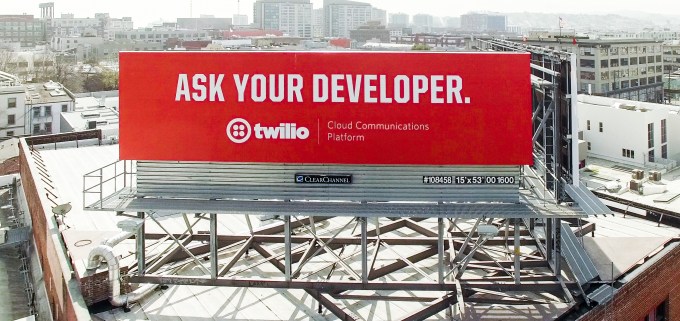
Twilio CEO Jeff Lawson knows a thing or two about unleashing developers. His company has garnered a market cap of almost $60 billion by creating a set of tools to make it easy for programmers to insert a whole host of communications functionality into an application with a couple of lines of code. Given that background, perhaps it shouldn’t come as a surprise that Lawson has written a book called “Ask Your Developer,” which hit the stores this week.

Lawson’s basic philosophy is that if you can build it, you should.

Lawson’s basic philosophy in the book is that if you can build it, you should. In every company, there is build versus buy calculus that goes into every software decision. Lawson believes deeply that there is incredible power in building yourself instead of purchasing something off the shelf. By using components like the ones from his company, and many others delivering specialized types functionality via API, you can build what your customers need instead of just buying what the vendors are giving you.

While Lawson recognizes this isn’t always possible, he says that by asking your developers, you can begin to learn when it makes sense to build and when it doesn’t. These discussions should stem from customer problems and companies should seek digital solutions with the input of the developer group.

Building great customer experiences

Lawson posits that you can build a better customer experience because you understand your customers so much more  acutely than a generic vendor ever could. “Basically, what you see happening across nearly every industry is that the companies that are able to listen to their customers and hear what the customers need and then build really great digital products and experiences — well, they tend to win the hearts, minds and wallets of their customers,” Lawson told me in an interview about the book this week.

Billboard for book Ask your Developer by Jeff Lawson, CEO of Twilio

Image Credits: Twilio (image has been cropped)

He says that this has caused a shift in how companies perceive IT departments. They have gone from cost centers that provision laptops and buy HR software to something more valuable, helping produce digital products that have a direct impact on the business’s bottom line.

He uses banking as an example in the book. It used to be you judged a bank by a set of criteria like how nice the lobby was, if the tellers were friendly and if they gave your kid a free lollipop. Today, that’s all changed and it’s all about the quality of the mobile app.

“Nowadays your bank is a mobile app and you like your bank if the software is fast, if it is bug free and if they regularly update it with new features and functionality that makes your life better [ … ]. And that same transformation has been happening in nearly every industry and so when you think about it, you can’t buy differentiation if every bank just bought the same mobile app from some vendor and just off the shelf deployed it,” he said.

15 Jan 2021

Tracy Chou launches Block Party to combat online harassment and abuse

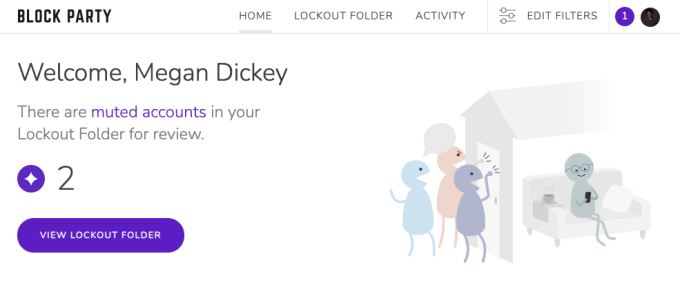
Block Party, an anti-harassment startup that aims to help folks feel safer on social media founded by Tracy Chou, launched today. Currently only available for Twitter, Block Party helps people filter out the content they don’t want to see and into what Block Party calls the Lockout Folder. That’s where all of the filtered-out content lives in the event you want to review it later.

“We think it’s important to still acknowledge that these people exist,” Chou told me.

If you pretend like it doesn’t exist, you might miss out on useful information or genuine connections.

“There’s a lot of good stuff that would get lost there,” she said. “There is a reason we use public platforms like Twitter.”

On the more negative side, she said, you still may need to check periodically to see if there’s someone threatening your physical safety.

Helpers play a big part of the Block Party experience. You can grant a trusted helper access to your Lockout Folder to let you know if there’s anything useful in there, or to simply block the trolls.

“It’s a lot easier for someone else to help you process it and flag something that is a concern,” she said. “It’s nice to be able to share that burden. The current design of most of these platforms is to put the burden of dealing with it solely on the person who’s being abused.”

The Lockout Folder also serves as a record-keeping tool in the event you need to present evidence of your harassment to a company, a lawyer or someone else.

Image Credits: Screenshot/Block Party

“It’s really about trying to make peoples lives easier,” Chou said. “It’s just so painful to have to see the abuse again when you’re filing the report.”

Block Party emerged from Chou’s own experiences working at platform companies like Facebook and Quora, as well as her experience as an outspoken advocate for diversity and inclusion in tech. At Quora, the block button was one of the first things she built after being harassed on the platform, Chou told me.

“There’s that perspective of having been on the inside and seeing how product and engineering teams work,” Chou said. “But also being a DEI activist and seeing how lack of representation on teams has impacted product decisions for the worst.”

Although Block Party is only available for Twitter users, the goal is to add other platforms and help folks address harassers that target them across multiple platforms. Block Party is currently free but plans to introduce subscription tiers. Still, Chou said she envisions the free version always existing.

To date, Block Party has raised a little less than $1.5 million in funding. Its lead pre-seed round was led by Charles Hudson of Precursor Ventures. Other investors include Alexia Bonatsos, Ellen Pao, Alex Stamos and others.