Year: 2021

15 Jan 2021

Everlywell raises $75M from HealthQuest Capital following its recent $175M Series D round

At-home health testing kit startup Everlywell has raised $75 million, following the close of the $175 million Series D it announced in December. The new funding comes from HealthQuest Capital, and sees the fund’s founder and managing partners Dr. Garheng Kong join the company’s board of directors. The new funding is a secondary sale, with proceeds used to provide liquidity to existing investors rather than further diluting shares, so the startup’s $1.3 billion valuation from December still holds.

HealthQuest Capital’s investment portfolio has a heavy focus on commercialization of diagnostics businesses, and the company’s parent obviously has a board network of partners including hospitals, and healthcare payers, both of which are going to be very strategically useful to Everlywell as it looks to scale its business on the enterprise side.

Austin-based Everlywell develops at-home testing kits for a range of health concerns, including thyroid issues, allergies and food sensitivity. The company also added a COVID-19 home collection test kit in 2020, and that has resulted in a lot of growth – both from the COVID test itself, and for its other range of products, according to Everlywell CEO and founder Julia Cheek, who I spoke to in December for the Series D raise.

Having HealthQuest’s venture arm on board as a partner could help it take its direct-to-consumer business and further develop a complementary enterprise operation. The company already works with employers and health plans, but this should definitely help accelerate that aspect of its business as it looks towards more growth in 2021 and beyond.

15 Jan 2021

Crossbeam raises $25M to back startups built on ‘platform economies’

While many venture capitalists might hope to fund the next Amazon or Shopify, Crossbeam is a new firm focused on backing the startups built on top of these platforms. And it recently closed its $25 million first fund.

We’ve written about well-funded startups like SellerX, Perch and Heroes that acquire and grow Amazon businesses, and Crossbeam General Partner Ali Hamed similarly pointed to Amazon to illustrate the scale of the opportunity. Noting that third-party sales on Amazon reached $200 billion in 2019, Hamed said, “There’s going to be 100 winners in this space.”

He added that the firm isn’t just focused on Amazon — he also cited Thumbtack, Spotify and Shopify as “platform economies” where Crossbeam could invest, and he elaborated on this point in a Medium post published last fall:

Rather than own FB shares, we’d rather own Instagram accounts. Rather than owning Amazon stock, we’d rather own a bunch of third-party selling merchants. And rather than owning Google stock, we’d rather own YouTube libraries.

Why? Because all the tailwinds that make those stocks interesting to own are, in part, shared by the commercial actors on their platforms. And yet capital markets largely haven’t flowed into those spaces yet. Many traditional funds are not set up to finance these platform constituents. On top of that, many of the economic ecosystems on these platforms are newly mature, and so there are not pre-existing models to figure out how to value each asset.

Hamed and General Partner Saveet Singh are also partners at CoVenture, a firm that originally took equity in exchange for technical services, but is now more focused on providing debt to startups. He described Crossbeam as a joint venture between CoVenture, Moelis Asset Management and Fenway Summer, with CoVenture offering additional debt funding to Crossbeam’s equity investments when it makes sense.

When asked about the risk to startups of trying to build businesses on a single platform, Hamed said that in some cases, it may make sense to build an audience on one platform and then expand and diversify — but it will depend on the platform. The key question, he argued, is, “Does the platform make money for you, on your behalf?”

“If you expand into other platforms, some ‘help you earn money’ and some don’t,” Hamed added via email. “YouTube does, because it seeks ad revenue on your behalf, and splits the ad revenue with you. On Instagram, they don’t (Insta doesn’t share ad rev with creators except in very rare cases) … so the ‘awesomeness’ of each platform very much depends on that.”

Even before closing its first fund, Crossbeam has made six investments including digital media company Wave.tv, litigation financing company Litty, on-demand poof-of-service startup Proof and Acquco, which acquires third-party Amazon sellers.

15 Jan 2021

Apple said to be planning new 14- and 16-inch MacBook Pros with MagSafe and Apple processors

Apple has planned new upgraded MacBook Pros for launch “later this year” according to a new report from Bloomberg. These new models would come in both 14-inch and 16-inch sizes, with new and improved Apple Silicon processors like those that Apple debuted on the new MacBook Air and 13-inch MacBook Pro model late last year. They would also see the return of Apple’s MagSafe charger, a magnetic dedicated charging port that would replace USB-C for power, and they could potentially do away with the Touch Bar, the small strip of OLED display built in to the keyboard on modern MacBook Pros.

Bloomberg’s report suggests that these MacBook Pro models will have processors with more cores and better graphics capabilities than the existing M1 chips that power Apple’s current notebooks with in-house silicon, and that they’ll also have displays with brighter panels that offer higher contrast. Physically, they’ll resemble existing notebooks, according to the report’s sources, but they’ll see the return of MagSafe, the dedicated magnetic charging interface that Apple used prior to switching power delivery over to USB-C on its laptops.

MagSafe had the advantage of easily disconnecting in case of anyone accidentally tripping across the power cord while plugged in, without yanking the computer with it. It also meant that it kept all data ports free for accessories. Bloomberg says that the revitalized MagSafe for new notebooks will also offer faster charging vs. USB-C, in addition to those other benefits.

As for the Touch Bar, it has been a topic of debate since its introduction. Pro users in particular seem to dislike the interface option, especially because it replaces a row of dedicated physical keys that could be useful in professional workflows. The report claims that Apple has “tested versions that remove the Touch Bar,” so it seems less clear that Apple will finally unring that particular bell, but I personally know a lot of people who would be excited if that does come to pass.

Finally, Bloomberg says Apple is also planning a new redesigned MacBook Air. That was updated most recently just a couple of months ago, and the report says it’ll only follow “long after” these new MacBook Pros, so it seems unlikely to arrive in 2021.

15 Jan 2021

Want a job in tech? Flockjay pitches its sales training service as an on-ramp to tech careers

“Most people don’t even know that a job in tech sales is even a possibility,” says Shaan Hathiramani, the founder and chief executive of Flockjay, a company offering a tech sales training curriculum to the masses.

Hathiramani sees his startup as an onramp to the tech industry for legions of workers who have the skillsets to work in tech, but lack the network to see themselves in the business. Just like coding bootcamps have enabled thousands to get jobs as programmers in the tech business, Flockjay can get talented people who had never considered a job in tech into the industry.

The company, which had previously raised $3 million from investors including Serena Williams and Will Smith, along with tech industry luminaries like Microsoft chairman John Thompson; Airtable head of sales Liat Bycel; Gmail inventor Paul Buchheit; and former Netflix CPO Tom Willerer, has just raised new capital to expand its business in a time when accelerated onramps to new jobs have never been more important.

The healthcare response to the ongoing COVID-19 epidemic, which has closed businesses and torn through the American economy. The unemployment rate in the country sits at 6.4% and the nation lost 140,000 jobs again in December — with all of those job losses coming from women.

A former financier with the multi-billion dollar investment firm, Citadel, Hathiramani sees Flockjay, and the business of tech sales as a way for a number of people to transform their lives.

“We provide a premier sales academy,” Hathiramani said. “It costs zero dollars if you take the course and don’t get a job and costs 10% of your income for the first year if you do get a job. That nets out to 6 or 7K.”

A few hundred students have gone through the program so far, Hathiramani said, and the goal is to train 1,000 people over the course of 2021. The average income of a student before they go through Flockjay’s training program is $30,000 to $35,000 typically, Hathiramani said.

Upon graduation, those students can expect to make between $75,000 and $85,000, he said.

Increasing access among those students who have not necessarily been exposed to the tech world is critical for what Hathiramani wants to do with his sales bootcamp.
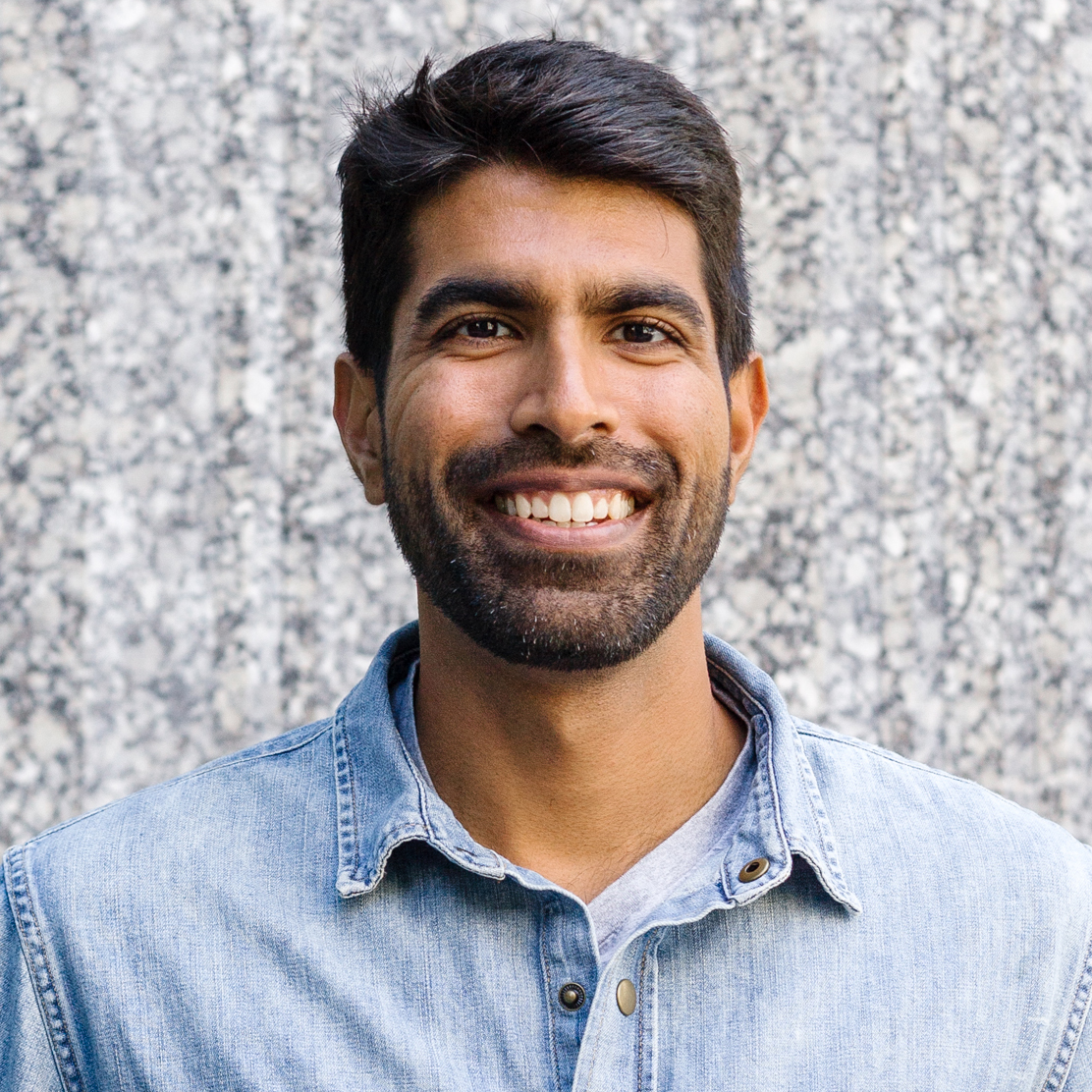
Flockjay founder Shaan Hathiramani. Image Credit: Flockjay

The entrepreneur said roughly 40% of students don’t have a four-year college degree; half of the students identify as female or non-binary, and half of the company’s students identify as Black or hispanic. About 80% of the company’s students find a job within the first six months of graduation.

These are students like Elise Cox, a former Bojangles’ manager and Flockjay graduate, who moved from Georgia to Denver to be a sales tech representative for Gusto. Tripling her salary from $13 an hour in the food service industry to a salaried position with wages and benefits.

“I enjoy being able to generate revenue for the company,” Cox, a 41-year-old grandmother, whose five-year plans include a sales leadership role, told Fast Company two years ago. “The revenue is the lifeblood of the company and being part of the team gives me sense of fulfillment.”

Partnerships with Opportunity@Work, Hidden Genius Project, Peninsula Bridge, and TechHire Oakland, help to ensure a diverse pool of applicants and a more diverse workforce for the tech industry — where diversity is still a huge problem.

As Hathiramani looks to take his company from training a couple of hundred students to over a thousand, the founder has raised new cash from previous investors including Lightspeed, Coatue, and Y Combinator, and new investors like eVentures, Salesforce Ventures, along with the Impact America Fund, Cleo Capital and Gabrielle Union.

For the New Jersey-born entrepreneur, Flockjay was a way to give back to a community that he knew intimately. After his family settled in New Jersey after immigrating to the United States, Hathiramani went first to Horace Mann on a scholarship and then attended Harvard before getting his job at Citadel.

Even while he was working at the pinnacle of the financial services world he started non-profits like the Big Shoulders Fund and taught financial literacy.

After a while, he moved to the Bay Area to begin plotting a way to merge his twin interests in education and financial inclusion.

“That led to me spending a year helping startups for free and trying to understand their problems with hiring and training” said Hathiramani. “It helped me surface this economic waste in plain sight. There were all these people talking to customers and they were spending three months on the job learning the job and they didn’t want to do the job or they weren’t very good at it.”

Tech salesforces were a point of entry in the system that almost anyone could access, if they could get in through the door, Hathiramani said. Flockjay wants to be the key to opening the door.

So, the company now has $11 million in new funding to bring its sales training bootcamp to a larger audience. Hathiramani also wants to make the bootcamp model more of a community with continuous development after a student completes the program. “I view education as a membership and not a transaction,” he said. “We focus on continuous learning and continuous up-skilling.”

Part of that is the flywheel of building up networks in a manner similar to YCombinator, the accelerator program from which Flockjay graduated in 2019.

“We went through YC to learn… how they manufacture the privilege in the world that they have afforded,” said Hathiramani. “How do you take some of that and provide it to someone who is starting their careers in tech. You get better at your job the more connections you have. As we accelerate the alumni piece… they can draw on other alums that they’re selling into.”


 

15 Jan 2021

Amazon’s newest product lets companies build their own Alexa assistant

Amazon is selling access to the underlying technology stack of Alexa to let companies — starting with Fiat Chrysler Automobiles — build their own intelligent assistants with unique voices, skills and wake words.

The new Alexa Custom Assistant product, which was announced Friday, can coexist and cooperate with the Alexa assistant. Theoretically, this means an automaker could choose to use the custom assistant to interact with drivers on specific products and services tied to the vehicle as well as integrate the Alexa voice assistant for other needs. For instance, if a driver asks Alexa to roll down a car window, the request will be routed to the brand’s assistant, Amazon explained. If a customer asks the brand’s assistant to play an audio book, the request will be routed to Alexa.

Yes, that means your next car could have two Alexas.

Fiat Chrysler Automobiles will be the first Alexa Custom Assistant customer. An FCA-branded intelligent assistant is being built for integration in select vehicle models, according to Amazon.

Amazon’s pitch isn’t just to automakers, however. The e-commerce giant said it can be used to build intelligent assistants into mobile applications, smart properties, video games and consumer electronics. The Alexa Custom Assistant is based on the Alexa technology stack. The custom wake words are created with the same process used for developing the Alexa wake word. Amazon will give companies access to Alexa’s voice science experts to help guide them through the recording process and develop the voice using advanced machine learning algorithms. Developers also have access to Alexa’s pre-built capabilities such as communications, local search, traffic, and navigation, to further accelerate time to market.

The aim of this new product, Amazon says, is to give companies an efficient and cost-effective way of delivering an intelligent assistant to its customers. The path of building an intelligent AI-based assistant is complex, typically involves long development cycles, and requires resources to build it from scratch and maintain over time, Amazon argues.

Of course, it’s also another way to ensure Alexa is in more devices, even if it goes by another name.

15 Jan 2021

A security researcher commandeered a country’s expired top-level domain to save it from hackers

In mid-October, a little-known but critically important domain name for one country’s internet space began to expire.

The domain — scpt-network.com — was one of two nameservers for the .cd country code top-level domain, assigned to the Democratic Republic of Congo. If it fell into the wrong hands, an attacker could redirect millions of unknowing internet users to rogue websites of their choosing.

Clearly, a domain of such importance wasn’t supposed to expire; someone in the Congolese government probably forgot to pay for its renewal. Luckily, expired domains don’t disappear immediately. Instead, the clock started on a grace period for its government owners to buy back the domain before it was sold to someone else.

By chance, Fredrik Almroth, a security researcher and co-founder of cybersecurity startup Detectify, was already looking at nameservers of country code top-level domains (or ccTLDs), the two-letter suffixes at the end of regional web addresses, like .fr for France or .uk for the United Kingdom. When he found this critical domain name was about to expire, Almroth began to monitor it, assuming someone in the Congolese government would pay to reclaim the domain.

But nobody ever did.

By the end of December, the clock was almost up and the domain was about to fall off the internet. Within minutes of the domain becoming available, Almroth quickly snapped it up to prevent anyone else from taking it over — because, as he told TechCrunch, “the implications are kind of huge.”

It’s rare but not unheard of for a top-level domain to expire.

In 2017, security researcher Matthew Bryant took over the nameservers of the .io top-level domain, assigned to the British Indian Ocean Territory. But malicious hackers have also shown interest in targeting top-level domains hack into companies and governments that use the same country-based domain suffix.

Read more on TechCrunch

Taking over a nameserver is not supposed to be an easy task because they are a vital part of how the internet works.

Every time you visit a website your device relies on a nameserver to convert a web address in your browser to the machine-readable address that tells your device where on the internet to find the site you’re looking for. Some liken nameservers to the phone directory of the internet. Sometimes your browser looks no further than its own cache for the answer, and sometimes it has to ask the nearest nameserver for the answer. But the nameservers that control top-level domains are considered authoritative and know where to look without having to ask another nameserver.

With control of an authoritative nameserver, malicious hackers could run man-in-the-middle attacks to silently intercept and redirect internet users going to legitimate sites to malicious webpages.

These kinds of attacks have been used in sophisticated espionage campaigns aimed at cloning websites to trick victims into handing over their passwords, which hackers use to get access to company networks to steal information.

Worse, Almroth said with control of the nameserver it was possible to obtain valid SSL (HTTPS) certificates, allowing for an attacker to intercept encrypted web traffic or any email mailbox for any .cd domain, he said. To the untrained eye, a successful attacker could redirect victims to a spoofed website and they would be none the wiser.

“If you can abuse the validation schemes used to issue certificates, you can undermine the SSL of any domain under .cd as well,” Almroth said. “The capabilities of being in such a privileged position is scary.”

Almroth ended up sitting on the domain for about a week as he tried to figure out a way to hand it back. By this point the domain had been inactive for two months already and nothing had catastrophically broken. At most, websites with a .cd domain might have taken slightly longer to load.

Since the remaining nameserver was running normally, Almroth kept the domain offline so that whenever an internet user tried to access a domain that relied on the nameserver under his control, it would automatically timeout and pass the request to the remaining nameserver.

In the end, the Congolese government didn’t bother asking for the domain back. It spun up an entirely new but similarly named domain — scpt-network.net — to replace the one now in Almroth’s possession.

We reached out to the Congolese authorities for comment but did not hear back.

ICANN, the international non-profit organization responsible for internet address allocation, said country code top-level domains are operated by their respective countries and its role is “very limited,” a spokesperson said.

For its part, ICANN encouraged countries to follow best practices and to use DNSSEC, a cryptographically more secure technology that makes it nearly impossible to serve up spoofed websites. One network security engineer who asked not to be named as they were not authorized to speak to the media questioned whether DNSSEC would be effective at all against a top-level domain hijack.

At least in this case, it’s nothing a calendar reminder can’t solve.

15 Jan 2021

How Twitter is handling the 2021 US presidential transition

Twitter has set out its plans for US Inauguration Day 2021, next Wednesday, January 20, when president-elect Joe Biden will be sworn into office as the 46th US president and vice president-elect Kamala Harris will become VP.

“This year, multiple challenging circumstances will require that most people experience this historic ceremony virtually,” the social media firm writes in a blog post detailing how it will handle the transition of power on its platform as the Trump administration departs office.

“As Twitter will serve as both a venue for people to watch and talk about this political event, and play a key role in facilitating the transfer of official government communication channels, we want to be transparent and clear about what people should expect to see on the platform.”

The inauguration will of course be livestreamed via Twitter by multiple accounts (such as news outlets), as well as the official inauguration accounts, @JCCIC and @BidenInaugural.

Twitter will also be streaming the ceremony via its US Elections Hub, where it says it will share curated Moments, Lists and accounts to follow as well.

Once sworn into office, Biden and Harris will gain control of the @POTUS and @VP Twitter accounts. Other accounts that will transition to the new administration on the day include @WhiteHouse, @FLOTUS and @PressSec.

Twitter has also confirmed that Harris’ husband, Douglas Emhoff, will use a new official account — called @SecondGentleman. (It’s not clear why not ‘SGOTUS’; aside from, well, the unloveliness of the acronym.) 

As it did when president Obama left office, Twitter will transfer the current institutional accounts of the Trump administration to the National Archives and Records Administration (Nara) — meaning the outgoing administration’s tweets and account history will remain publicly available (with account usernames updated to reflect their archived status, e.g. @POTUS will be archived as @POTUS45).

However Trump’s personal account, which he frequently used as a political cudgel, yelling in ALL CAPS and/or spewing his customary self-pitying tweets, has already been wiped from public view after Twitter took the decision to permanently ban him last week for repeat violations of its rules of conduct. So there’s likely to be a major gap in Nara’s Trump archive.

Since late last year we’ve known the transitioning @POTUS and institutional accounts will not automatically retain followers from the prior administration. But Twitter still hasn’t confirmed why.

Today it just reiterated that the current (33.3M) followers of @POTUS and the other official accounts will receive a notification about the archival process which will include the “option” to follow the new holders of the accounts.

That’s another notable change from 2017 when Trump inherited the ~14M followers of president Obama’s @POTUS. Biden will instead have to start his presidential tweeting from scratch.

Given the chaotic events in the US capital last week, when supporters of the outgoing president broke through police lines to cause mayhem on the hill and in the House, there’s every reason for tech platforms to approach the 2021 transition with trepidation, lest their tools get used to livestream another historic insurrection (or worse).

Since then Trump has also continued to maintain his false claim that the election was stolen through voter fraud.

Although he avoided any new direct reference to this big lie when he circumvented Twitter’s ban on his personal account earlier this week, by posting a new video of himself speaking on the official @WhiteHouse account.

In the video he decried the “incursion at the US capital”, as he put it; claimed that he “unequivocally condemns the violence that we saw last week”; and called for unity. But Twitter has put tight limits on what Trump can say on its platform without having his posts removed (as well limiting him to the official @POTUS channel). So he remains on a very tight speech leash.

In the video Trump limits his verbal attacks to a few remarks — about what he describes as “the unprecedented assault on free speech we have seen in recent days” — dubbing tech platforms’ censorship “wrong” and “dangerous”, and adding that “what is needed now is for us to listen to one another, not to silence one another”.

There’s a lot going on here but it should not escape notice that Trump’s seeming contrition and quasi-concession and his very-last-minute calls for unity have only come when he actively feels power draining away from him.

Most notably, his call for unity has only come after powerful tech platforms acted to shut off his hate-megaphone — ending the years of special dispensation they granted Trump to ride roughshod over democratic convention and tear up the civic rulebook.

It’s very interesting to speculate how different the 2021 US inauguration might look and feel if platforms like Twitter had consistently enforced their rules against Trump from the get-go.

Instead we’re stuck in all sorts of lockdown, counting the days til Biden takes office — and above all hoping for a smooth transition of power.

So Twitter CEO Jack Dorsey is quite right when he said this week that Twitter has failed to promote healthy conversation. His company ignored warnings about online toxicity for years. And Trump is, in no small part, the divisive product of that. 

In a brief section of Twitter’s transition handling blog post, entitled “protecting the public conversation”, the company refers back to a post from earlier this week where it set out steps it’s taking to try to prevent its platform from being used to “incite violence, organize attacks, and share deliberately misleading information about the election outcome”.

Including permanently suspending ~70,000 accounts it said were primarily dedicated to sharing content related to the QAnon conspiracy theory; aggressively beefing up its civic integrity policy; and applying interaction limits on labeled tweets plus blocking violative keywords from appearing in Trends and search.

“These efforts, including our open lines of communication with law enforcement, will continue through the inauguration and will adapt as needed if circumstances change in real-time,” it adds.

15 Jan 2021

OneWeb picks up $1.4B more from SoftBank and Hughes to help fund its first satellite fleet

After a troubled year that saw broadband satellite operator OneWeb file for bankruptcy, get rescue finance from the UK government and Bharti, and then emerge out of that with a launch of part of its fleet last month, the London-based company today announced a another $1.4 billion in funding — money that it says will be enough to (finally) get the rest of its first-generation fleet of 648 satellites off the ground.

The 36 new satellites OneWeb launched in December brought the total number in orbit to 110 satellites, so there are still more than 500 left to launch.

SoftBank Group Corp. and Hughes Network Systems are providing the financing, the company said. The news comes about a month after OneWeb launched 36 satellites, its third launch to put more of its fleet into orbit. At the time, its executive chairman Sunil Bharti Mittal said that it was on track to raise $400 million — so this represents a more-than threefold increase on that amount.

“OneWeb’s mission is to connect everyone, everywhere. We have made rapid progress to re-start the business since emerging from Chapter 11 in November,” said Neil Masterson, CEO of OneWeb, in a statement. “We welcome the investments by SoftBank and Hughes as further proof of progress towards delivering our goal.”

SoftBank and Hughes are both past backers and partners in OneWeb, so this is something of an insurance policy to make sure that its previous investment doesn’t go completely to waste. (At least some of it has already been written down: SoftBank years ago posted an eye-watering loss of $24 billion due in part to that OneWeb bet.)

Hughes, meanwhile, invests via its parent company EchoStar and inked a deal with the company way back in 2017 to build the terrestrial infrastructure that would work with OneWeb’s satellites. Deals, building and rollouts in the world of satellite technology play out over a number of years, and often face delays, so being three years out — or even more — on seeing any fruits from that deal is not hugely surprising.

OneWeb acknowledged the long-time connection between the investors and confirmed that the ground network is still being built by Hughes.

“We are delighted to welcome the investment from SoftBank and Hughes. Both are deeply familiar with our business, share our vision for the future, and their commitment allows us to capitalise on the significant growth opportunity ahead for OneWeb,” said Mittal in a statement. “We gain from their experience and capabilities, as we deliver a unique LEO network for the world.”

Originally, Hughes had planned for the first services to start running in 2019 — although that was when OneWeb and its fleet of LEO (low-earth orbit) satellites was still a very shiny idea, backed by $1.7 billion in venture funding.

The company’s original idea was always great but (no pun intended) also something of a moonshot: LEO satellites have already been proven to be a strong and useful complement to terrestrial networks for providing broadband connectivity to more remote areas that couldn’t be reached in other ways. The idea with OneWeb was to make that service something useful and used by a much bigger group of on-the-ground users, with the promise being 400Mbps for everyone.

While broadband usage has certainly exploded in the interim, what OneWeb perhaps didn’t bank on was that those building non-satellite systems for providing connectivity would also be progressing in their network advances; nor how long it might take, or the financing needed, to get its fleet off the ground on the timelines it was promising.

These days, OneWeb says that growing ubiquity of 5G, Internet of Things and connectivity needs overall still present a strong use case for its approach — which it says “includes a network of global gateway stations and a range of user terminals for different customer markets capable of delivering affordable, fast, high-bandwidth and low-latency communications services.”

Secretary of State, BEIS, The Rt. Hon. Kwasi Kwarteng, said in a statement: “Our investment in OneWeb is part of our continued commitment to the UK’s space sector, putting Britain at the forefront of the latest technological advances. Today’s investment brings the company one step closer to delivering its mission to provide global broadband connectivity for people, businesses and governments, while potentially unlocking new research, development and manufacturing opportunities in the UK.”

SoftBank is getting a seat on OneWeb’s board with this deal.

“We are excited to support OneWeb as it increases capacity and accelerates towards commercialisation,” said Masayoshi Son, Representative Director, Corporate Officer, Chairman & CEO of SoftBank, in a statement. “We are thrilled to continue our partnership with Bharti, the UK Government and Hughes to help OneWeb deliver on its mission to transform internet access around the world.”

Pradman Kaul, President of Hughes, added: “OneWeb continues to inspire the industry and attract the best players in the business to come together to bring its LEO constellation to fruition. The investments made today by Hughes and SoftBank will help realise the full potential of OneWeb in connecting enterprise, government and mobility customers, especially with multi-transport services that complement our own geostationary offerings in meeting and accelerating demand for broadband around the world.”

15 Jan 2021

Trump Administration adds Xiaomi to military blacklist

Chinese smartphone maker Xiaomi is the latest to be added to the Trump Administration’s military blacklist. On Thursday, the Department of Defense added nine more companies to its list of alleged Chinese military companies, including Xiaomi, the world’s third-largest smartphone maker as of Q3 last year.

More to come…

14 Jan 2021

A theory about the current IPO market

As expected, shares of Poshmark exploded this morning, blasting over 130% higher in afternoon trading from the company’s above-range IPO price of $42. The enormous and noisy debut of Poshmark comes a day after Affirm, another IPO, was treated similarly by the public markets.

Both explosive debuts were preceded by huge December debuts from C3.ai, Doordash and Airbnb. It seems today that any venture-backed company that can claim some sort of tech mantle is being treated to a strong IPO pricing run and a huge first-day result.

This is, of course, annoying to some people. Namely, certain elements of the venture capital community who would prefer to keep all outsized gains in their own pockets. But, no matter. You might be wondering what is going on. Let’s talk about it.

Here’s how you get a 130% first-day IPO pop

TechCrunch has covered the IPO window as closely as we can over the last few years. And the late-stage venture capital markets, along with the changing value of tech stocks and the huge boom in consumer (retail) investing.

Based on my participation in as much of that reporting as I could take part in here’s how you get a 130% first-day IPO pop in a company that has actually been around long enough for investors to math-out reasonable growth and profit expectations for the future:

  1. Exist in a climate of near-zero interest rates. This leads to super-cheap money, bonds being shit and no one wanting to hold cash. Lots of dollars go into more speculative assets, like stocks. And lots of money goes into exotic investments, like venture capital funds.