Year: 2021

11 Jan 2021

Flexible VC: A new model for startups targeting profitability

Of the Inc. 5000 companies, only 6.5% raised money from VCs and 7.7% raised from angels. Where else can fast-growing companies get funding?

More and more startups are pursuing revenue-based VCs, but it’s not a good fit for everyone. A new category of investors has emerged offering a hybrid between VC and revenue-based investment (RBI), which we call “flexible VC.”

From RBI, flexible VCs borrow the ability to reap meaningful returns without demanding founders build for an exit. From traditional equity VC, flexible VC borrows the option to pursue and reap the rewards of an outsized exit. Every flexible VC structure allows founders to access immediate risk capital while preserving exit, growth trajectory and ownership optionality.

Before raising capital, we encourage founders to dig into the nuances between different flexible VC structures.

Our categorization is not a technical one. Rather, we want to accommodate the wide variety of instruments currently offered by flexible VC investors, detailed below. As two fund managers employing flexible VC, we think it is a healthy addition to the ecosystem and will yield more predictable and stable healthy returns for investors.

Flexible VC 101: Equity meets revenue share

This is currently the most common investment structure: The flexible VC investor purchases either equity ownership, or a convertible right to equity, and a right to regularly scheduled payments based on a percentage of revenues.

By tying payments to actual revenues, founders and investors remain aligned around the company’s real-time performance, good or bad.

“Too often, investment structures force the management team to make decisions between misaligned growth and investment (return) objectives. This structure allows for alignment on the front end, and real-time flexibility for performance metrics,” says Samira Salman, a family office investor and advisor.

Payments are commonly delayed for a grace period of 12-36 months. John Berger, director of Operations and Impact Solutions at Toniic, observed that this has clear investor benefits: “The grace period became a feature because it benefits investors in regions like the U.S. where there can be tax differences between short- and long-term gains. It has moved from its origins as a tax benefit and can be viewed as a feature that benefits founders.” After the grace period, the return payments begin, often lasting until a return cap is hit, such as 2-5 times the original investment.

To account for these revenue share payments, the investor’s ownership (or convertible right to ownership) is simultaneously reduced. Once the return cap is reached, the investor is typically left with a residual stake — a fraction of the pre-revenue share ownership. At any point, should the founder wish to pursue a traditional equity VC round, or get bought, the revenue share is paused, and the investor’s then-current ownership converts to equate to a traditional equity VC investor.

Flexible VC 102: Variations

Flexible VCs have created structures based on other company performance metrics than revenues, such as profits or founder salaries. These different company performance metrics provide a slight variation in how the investor and founder relationship is defined. For example, profit-sharing structures ensure payments do not begin until the company is profitable, though likely delaying returns to the investor and complicating payment calculations.

Similarly, when flexible VC structures are based off of the founder’s own compensation (often via salary or dividends), investors are specifically tying their returns to the financial success of the founder. This translates less directly to company performance compared to a revenue or profit share, but offers uniquely personal alignment. These variations in founder alignment allow flexible VCs to specialize in the types of companies they work with.

The state of flexible VC

In all these cases, capital is provided to fuel forecasted growth without creating a commitment to a particular vision for future funding rounds, exit goals and associated blitzscaling. The founder retains full control over whether they want to optimize for hypergrowth (usually at the expense of profitability) or for organic, profitable growth. Flexible VC opens up a new risk capital option for bootstrappers, minorities, family-owned and countless other founder segments left out by the traditional funding landscape.

A range of small VCs are deploying with flexible VC structures, but we believe the total amount of AUM deployed with this strategy is well under $50 million. Similar to the explosion of seed funds in the past decade, we (and some limited partners too) believe these Flexible VCs are on the forefront of what will become a major segment of the venture ecosystem.

We detail below the major categories of VC:

Funder category Equity ownership Returns primarily based on  Composition of returns Example VC
Equity VC Yes, typically preferred equity.

15%-20% sold per round. On average, founders own just 43% of equity by Series B, declining thereafter.

The value ascribed by subsequent investors (in a secondary); buyers (acquisition); or the public markets (IPO). Volatile, uncapped. Andressen Horowitz, ff Venture Capital, HOF Capital, Sequoia.
Flexible VC: Revenue-based Yes, nonvoting common shares (if converted).

5%-20% initial stake, with 50%-90% of this redeemable.

Gross revenues (generally 2%-8%). 2x-5x return cap + path to uncapped equity returns. Capacity Capital, Greater Colorado Venture Fund, Indie.VC, Reformation Partners, UP Fund, Versatile VC.
Flexible VC: Compensation-based Yes, via conversion rights at a valuation cap. “Founder earnings” (Founder salaries + dividends + retained earnings). 2x-5x return cap + path to uncapped equity returns. Chisos.
Flexible VC: Blended Return Yes, via conversion rights at a valuation cap. Profits, founder salaries, and/or dividends declared. Typically ~3x+ return cap + path to uncapped equity returns. Discretionary dividends and salary share built in. Collab Capital, Earnest Capital, TinySeed.
Revenue-share investing No. Gross revenues (generally 2%-8%). 1.35x-2.2x return cap. Novel Growth Partners, Lighter Capital, Rev Up, Corl.

Flexible VC versus other venture capital models

Flexible VC investors offer founders some of the same advantages as equity VCs:

  • Aligned incentives. Whether it is a breakout success or complete failure and loss of capital, investors are along for the ride. When the company hits potholes, flexible VC investors usually don’t have the nuclear options of firing management and/or doing a recapitalization. Their only option is to work with management to try to fix the problems.
  • Few strings attached. Founders have autonomy to spend the funds in whatever way they like.
  • Long-term alignment. Many flexible VCs retain a small residual stake in the company after the return cap is reached, driving alignment well beyond the horizon of the revenue share, similar to the long-term orientation of equity VC.
  • Seed-stage compatible. Like traditional equity VC investors, flexible VCs accommodate early-stage investment risk within their portfolios better than a traditional RBI funder.
  • Eligible for favorable treatment under qualified small business stock exemption, if structured as equity. This applies if the investment converts into common stock; details are beyond this essay’s scope.

Flexible VCs also offer investors some of the same advantages as RBI:

  • Clear return expectations. The return cap is a stated multiple of the investment, typically 2x-5x.
  • Early liquidity. Equity VC is a “get rich slow” business. Flexible VC creates early liquidity that can be either reinvested or distributed to LPs.
  • Improved financial management. All parties want the company to be able to afford the payment obligations and, ideally, deliver a quick return. As a result, unfounded hockey-stick graphs and unicorn promises give way to financial fluency, realistic expectations, frank conversations about what a business can credibly achieve and transparency.
  • Profitability is prioritized. The revenue that is going to grow the company immediately is the same revenue that is going to get investors to their return cap. If the company is profitable, the revenue share becomes increasingly affordable. This drives an earlier focus on profitability than is typical for a company backed by traditional equity VC.
  • Founder retains control. Flexible VCs typically purchase nonvoting common stock, if they purchase stock (one even assigns their voting rights to the founders). This keeps the founder in the driver’s seat of the company.
  • Attractive to women and underrepresented founders. See Why Are Revenue-Based Investors Investing in Women & Diverse Entrepreneurs?

Flexible VC also offers some unique advantages:

  • Straightforward equity interface. If an equity round is needed to fund breakout growth beyond what the flexible VC funds, the mechanics of including a flexible VC in an equity VC round are predetermined and simple.
  • Prepared for blitzscaling, but neither required nor expected. Blitzscaling typically means prioritizing user growth over revenue growth and revenue growth over profitability. Tim O’Reilly, CEO, O’Reilly Media, argues, “Blitzscaling isn’t really a recipe for success but rather survivorship bias masquerading as a strategy.” With flexible VC, not every company is expected to achieve breakout growth, but that possibility is accounted for up front.
  • Particular application in impact capital. Our research has found that impact investors appear to be particularly interested in flexible VC. An impact investor typically needs some economic return to function, but doesn’t necessarily want the company as a whole to exit, given exits often have a negative impact on the company’s founding mission. Flexible VC allows impact VCs to thread this needle.

That said, nothing is cost-free. The unique disadvantages of flexible VC include:
11 Jan 2021

Sneaker enthusiast group SoleSavy raises $2M, setting the stage for a community-driven commerce boom

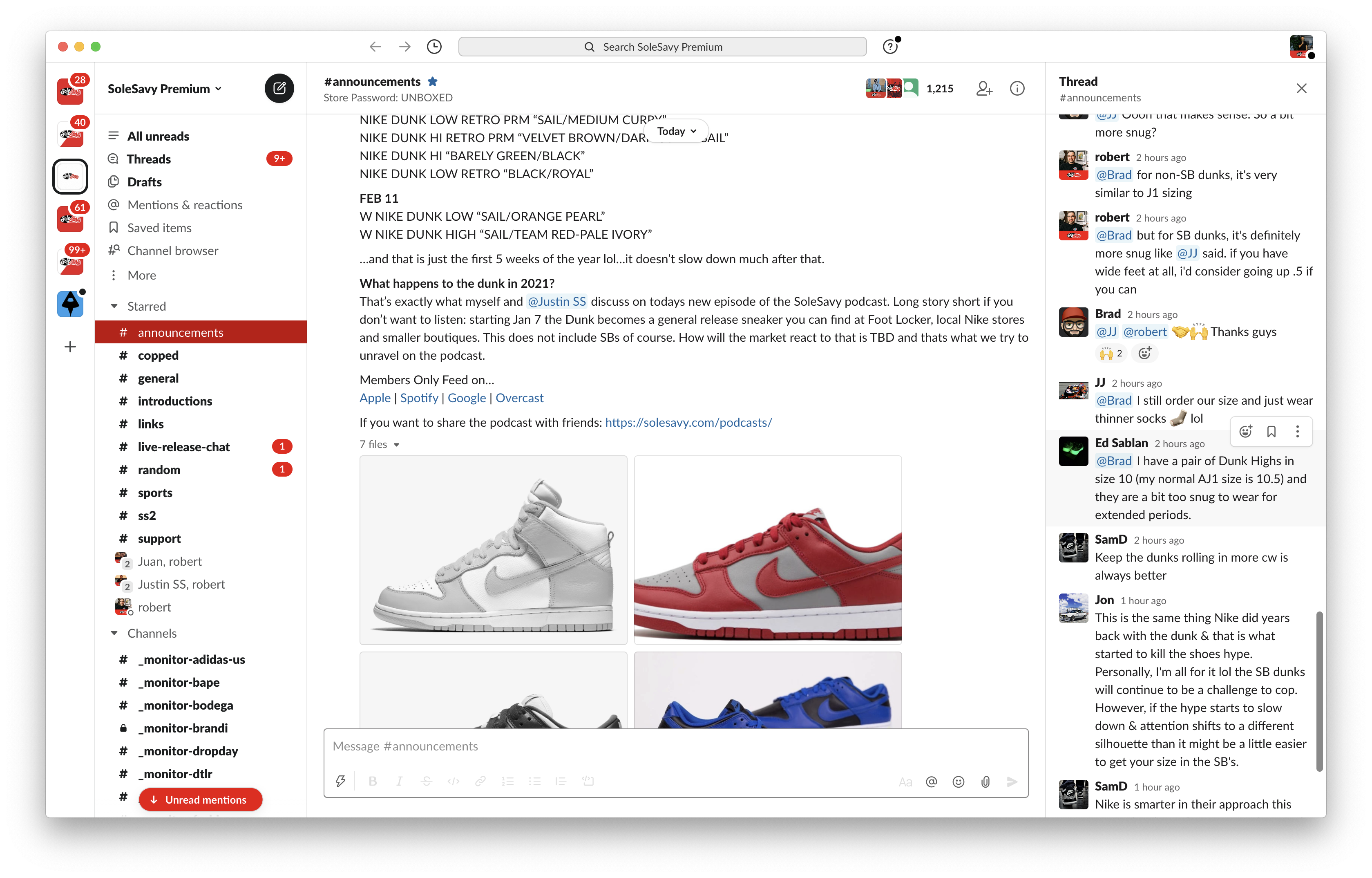
SoleSavy, a community built around buying hot sneakers and related items that are increasingly hard to acquire at retail, raised $2M in a round that closed late last year. SoleSavy is a group of communities that is currently mostly hosted on Slack. 

SoleSavy’s co-founders Dejan Pralica and Justin Dusanj founded the company in 2018 as a paid community for collectors and enthusiasts seeking pairs that were getting snapped up by bots or resellers. Pralica previously co-founded Kicks Deals, a sneaker shipping site focused on less than retail pricing and Dusanj is the former Director of Operations at New Age Sports, a Nike retailer. 

SoleSavy’s $2M party raise includes investment from Panache Ventures, Jason Calacanis’ LAUNCH, Turner Novak, Ben Narasin, Morning Brew’s Alex Liberman and Austin Rief, Tiny Capital, Wesley Pentz (yes, Diplo), Matthew Hauri aka Yung Gravy, Ryan Holmes, Roham Gharegozlou and Bedrock Capital.

SoleSavy has built an engaged community (several communities, really) around the ebb and flow of the sneakerhead consumer universe (SCU). I just coined that, by the way, please make it a thing. The SCU is an interesting place filled with fascinating characters and behaviors. Every once in a while it pokes its head into the mainstream, whether via a documentary, a hot shoe release or a stron-garm robbery attempt. In 2021, I believe that we will see more of this world breaking out of its box into the larger consumer consciousness. 

The trends that are leading us to this place are varied, but some of them have been front and center during the pandemic, as a decade’s worth of consumer behavioral change has occurred in the space of a few months. You only have to look at how hard it was to get a PS5 or Xbox One X or a GPU for the holiday season, and how many services, Twitter accounts and monitor groups rose up to try to help people do that to see what the future of shopping looks like. 

I joked about not being able to buy butter without a bot, but it’s not far from the truth — nearly every category of goods has had its own shortages over the last year. But the mother of all limited goods category for decades now has been sneakers. 

Every release is hotly anticipated and eagerly purchased by people looking for the latest shoe. The massive increase in interest in the sneaker as the marquee desirable item and the unwillingness of the biggest manufacturers to lose the hype halo has led to each drop being harder to get than the last. Second-market startups like StockX and GOAT have sprung up to facilitate those who don’t mind paying 30%-200% premiums on each release. 

The solution for many lies in the countless ‘cook groups’ that help buyers anticipate demand and stock for each drop and plan to purchase them on release date. 

SoleSavy’s function is ostensibly to do just that: help regular enthusiasts to strategize and execute the release day cop. But beyond that, Pralica says that the group has come to be about the community of people around those shoes more than the purchase itself. 

SoleSavy is at its heart a slack group (a series of groups actually that act as cohorts, leading people through the tiers of community that the team has built) with rooms that help people to understand what’s happening in sneakers, get the releases and commiserate around the culture. Pralica says that they’ve built that community out slowly (the waitlist for the group grows by 400 people per day) in order to maintain a positive atmosphere and to properly onboard new people to the group. They also have an app that drives push notifications and a podcast. 

That positive community vibe is what Pralica says is SoleSavy’s long-term focus and differentiating factor that keeps the 4,000 members across the US and Canada interacting with the group on a nearly daily basis.

I’ve been in a dozen or so different groups focused on buying large quantities of each release to re-sell over the years and many of them are, at best, rowdy and at worst toxic. That’s an environment that SoleSavy wanted to stay away from, says Pralica. Instead, SoleSavy tries to court those who want to buy and wear the shoes, trade them and yes, maybe even resell personal pairs eventually to obtain and wear another grail.

Though cook groups have been the ‘core’ of the Discord and Slack-based communities in the sneaker world, other iterations have been booming too. Entrepreneurial communities based in the same hustle principles like Tyler Blake’s In This Economy and fanbase-focused groups around popular streamers top the Disboard. And bets on social token outfits like Zora are also focused on community as the glue that holds together a user base. 

Community is the future of all commerce, whether you’re looking for a specific product (see the huge PS5 monitors) or want to steep yourself in a particular universe of product interest (the SCU). The trends that I’ve been seeing all point to 2021 being the year that community-driven purchasing breaks out of the underbelly of fandom and becomes officially “a thing”.

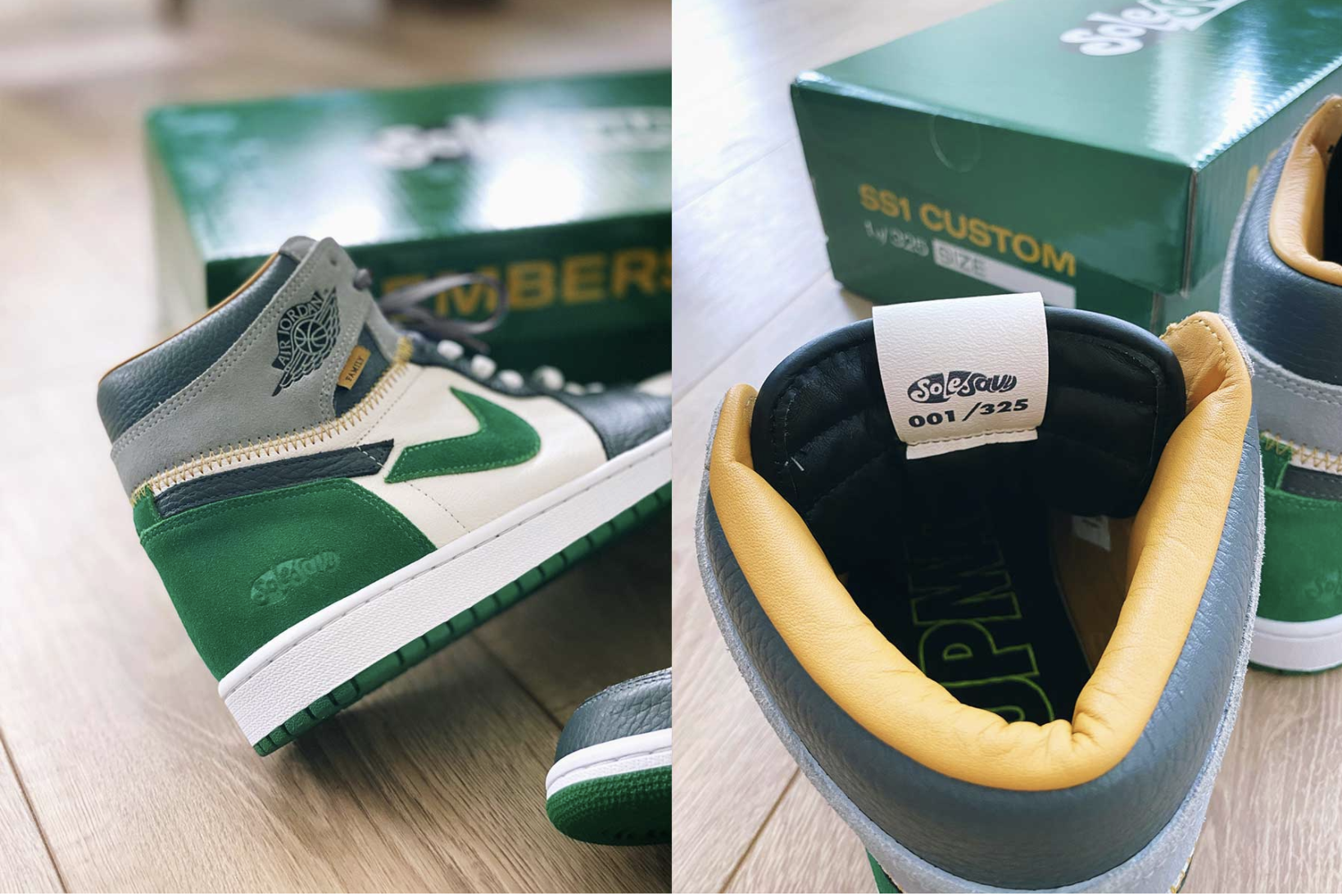
SoleSavy has been experimenting with a variety of ways to keep the community knit going including live chats, get togethers and even a handsome custom community-designed Jordan 1. These efforts have driven the previously bootstrapped company to some impressive early numbers. Pralica says that SoleSavy is currently profitable, with $1.5M ARR on $33 monthly subscriptions plus affiliate revenue and that their DAUs are at 90% — an engagement number that would make any retailer salivate. 

Though the funding closed (very) late last year I thought that this would be a great kick off story for the year ahead. Though SoleSavy seems to have a really compelling story and a great growth curve, I think they’re at the tip of a very large trend, one that we will see continue to build throughout the year. 


11 Jan 2021

Ubiquiti says customer data may have been accessed in data breach

Ubiquiti, one of the biggest sellers of networking gear including routers, webcams and mesh networks, has alerted its customers to a data breach.

In a short email to customers on Monday, the tech company said it became aware of unauthorized access to its systems hosted by a third-party cloud provider. Ubiquiti didn’t name the cloud company, when the breach happened, or what caused the security incident. A company spokesperson did not respond to requests for comment.

But the company confirmed that it “cannot be certain” that customer data had not been exposed.

“This data may include your name, email address, and the one-way encrypted password to your account,” said the email to customers. “The data may also include your address and phone number if you have provided that to us.”

Although the email says passwords are scrambled, the company says users should update their passwords and also enable two-factor authentication, which makes it harder for hackers from taking the stolen passwords and using them to break into accounts.

Ubiquiti account users can remotely access and manage their routers and devices from the web.

The networking company quickly followed its email with a post on its community pages confirming that the email was authentic, after several complained that the email sent to customers included typos.

11 Jan 2021

Vuzix’s new microLED-powered smart glasses will arrive this summer

Less than a full day into CES 2021, and it seems that smart glasses are very much shaping up as a trend. I wrote about a pair of AR glasses from Lenovo aimed at business applications yesterday, and a few other companies have popped up in the meantime, with various levels of “smartness” included.

Vuzix’s latest models are still several months away, but they seem to be one of the more promising we’ve seen at the show thus far. The company is best known for its business-focused solutions — that, after all, is where all the money is — at least until someone offers a really profound breakthrough in the consumer category.

These probably aren’t that (if I had to guess, I’d look more closely at offerings from bigger consumer electronics companies), but they do seem like a step in the right direction, in terms of an offering that bakes augmented reality into a presentable form factor. It seems like AR glasses that look like regular eyeglasses is the right hook here. There are clearly differentiating factors here, but the next-gen glasses look a lot closer to standard eyewear than what we’ve seen in the past.

That’s due in no small part to a partnership with Jade Bird Display, which will help commercialize the Chinese company’s microLED tech. Jade Bird describes it thusly:

JBD offers active matrix inorganic microLED display chips and panels with wavelength ranging from UV to visible to IR. The pixel pitch ranges from 400 dpi to 10,000 dpi with a varity of resolutions. With high brightness, high EQE, high reliability, these panels are ideal for AR, VR, HUD, projector, weapon sights, 3D printing, microscope, etc.

The module, which projects a monochrome stereoscopic image, is roughly the size of a pencil eraser, according to Vuzix’s description. The company says the glasses will be available in a number of configurations, including Wi-Fi and optional LTE. All will feature stereo speakers and noise-canceling mics.

No word on price, but Vuzix says they should hit the market this summer.

11 Jan 2021

Snap acquires location data startup StreetCred

Snapchat’s parent company Snap has acquired StreetCred, a New York City startup building a platform for location data.

Snap confirmed the news to TechCrunch and said the acquisition will result in four StreetCred team members — including co-founders Randy Meech and Diana Shkolnikov — joining the company, where they’ll be working on map- and location-related products.

A big component of that strategy is the Snap Map, which allows users to view public snaps from a given area and to share their location with friends. Last summer, the Snap Map was added to Snapchat’s main navigation bar, and the company announced that the product was reaching 200 million users every month.

At the same time, Snapchat has been adding other products that tie into a user’s locations, such as Local Lenses, which allow developers to create geography-specific augmented reality lenses that interact with physical locations.

Meech and Shkolnikov should be bringing plenty of mapping experience to Snap — Meech was formerly CEO at Samsung’s open mapping subsidiary Mapzen, and before that the senior vice president of local and mapping products at TechCrunch’s parent company AOL (subsequently rebranded as Verizon Media). Shkolnikov, meanwhile, is the former engineering director at Mapzen.

StreetCred had raised $1 million in seed funding from Bowery Capital and Notation Capital. When I spoke to Meech in 2018, he said his goal was to “open up and decentralize” location data by building a blockchain-based marketplace where users are rewarded for helping to collect that data.

While the financial terms of the acquisition were not disclosed, the existing StreetCred platform will be shut down as part of the deal.

11 Jan 2021

Saildrone launches a 72-foot autonomous seabed-mapping boat

Mapping the ocean’s floor is a surprisingly vital enterprise, which helps with a range of activities including shipping, coastal protection, and deep-sea resource gathering. It’s also a very costly and time-consuming activity, which can be demanding and dangerous for those involved. Saildrone is a startup focused on building out autonomous exploratory vessels that can do lots of mapping, while making very little impact on the environment in which they operate, and without requiring any crew on board at all.

Saildrone’s newest robotic ocean explorer is the Surveyor, its largest vessel at 72-feet long. The Surveyor can spend up to 12 months at a stretch out at sea, and draws its power from wind (hence the large sail-like structure, which is not actually used like the sail on a sailboat) and the sun (via the solar panels dotting its above-water surfaces). Its sensor instrumentation includes sonar that can map down to 7,000 meters (around 22,000 feet). That’s not quite as deep as some of the deepest parts of the world’s oceans, but it’s plenty deep enough to cover the average depth of around 12,100 feet.

As Saildrone notes, we’ve only actually mapped around 20% of the Earth’s oceans to date – meaning we know less about it than we do the surface of Mars or the Moon. Saildrone has already been contributing to better understanding this last great frontier with its 23-foot Explorer model, which has already accumulated 500,000 nautical miles of travel on its autonomous sea voyages. The larger vessel will help not only with seafloor mapping, but also with a new DNA sample collection effort using sensors developed the University of New Hampshire and the Monterey Bay Aquarium Research Institute, to better understand the genetic makeup of various lifeforms that occupy the water column in more parts of the sea.

11 Jan 2021

Mobileye is bringing its autonomous vehicle test fleets to at least four more cities in 2021

Mobileye, a subsidiary of Intel, is scaling up its autonomous vehicle program and plans to launch test fleets in at least four more cities over the next several months, including Detroit, Paris Shanghai and Tokyo.

Mobileye president and CEO Amnon Shashua said Monday during the virtual 2021 CES tech trade show that if the company can receive regulatory approval it will also begin testing on public roads in New York City.

The expansion announcement, along with details about a new lidar System on Chip product that is under development and will come to market in 2025, illustrates Mobileye’s ambitions to commercialize automated vehicle technology.

The selection of the cities and countries is based on two factors: customers and the regulatory environment, according to Jack Weast, a senior principal engineer at Intel and the Vice President of Automated Vehicle Standards at Mobileye.

“That’s why we put our cars in the U.S. in Detroit, rather than Silicon Valley because all major OEMs are in Detroit,” Weast said in an interview Monday, adding that Peugeot Renault are in Paris and Toyota and Nissan are in Japan. “The selection of the cities had a lot to do with putting the vehicles near our customers so that they would all have the opportunity to experience the technology firsthand because we expect our OEM customers to continue to be an important part of our business going forward even, even as we supply a complete self driving system.”

A test fleet is already on the road in Detroit, according to the company. Mobileye launched its first test fleet in Jerusalem in 2018 and added one in Munich in 2020.

Mobileye is taking a three-pronged strategy to developing and deploying automated vehicle technology that combines a full self-driving stack — that includes redundant sensing subsystems based on camera, radar and lidar technology— with its REM mapping system and a rules-based Responsibility-Sensitive Safety (RSS) driving policy. Mobileye’s REM mapping system essentially crowdsources data by tapping into nearly 1 million vehicles equipped with its tech to build high-definition maps that can be used to support in ADAS and autonomous driving systems. Shashua said Mobileye’s technology can now map the world automatically with nearly 8 million kilometers tracked daily and nearly 1 billion kilometers completed to date. 

This strategy will allow the company to efficiently launch and operate commercial robotaxi services as well as bring the technology to consumer passenger vehicles by 2025, Shashua said Monday.

Mobileye has long dominated a specific niche in the automotive world as a developer of computer vision sensor systems that help prevent collisions. In 2018, the company expanded its focus beyond being a mere supplier to becoming a robotaxi operator; now it’s aiming to bring autonomous vehicle technology to passenger cars by augmenting its computer vision technology with the new lidar SoC it is developing with Intel.

Mobileye has already partnered with Luminar to supply lidar for its robotaxis. However, Mobileye revealed more about the lidar SoC that it says will be ready for passenger vehicles by 2025. Shashua nor Weast would say if it planned to end its partnership with Luminar once its own lidar SoC is ready for the market.

The lidar, which will use Intel’s specialized silicon photonics fab, is notable because Mobileye is known for its camera-based technology. And yet it’s not backing away from that camera-first approach. Shashua explained Mobileye believes the best technological and business approach is to develop a camera-first system and use the lidar and radar as add-ons for redundancy.

“The idea is that you have this camera subsystem,” Shashua said. “Since it’s camera based, it’s at a consumer price level. So now you have scalable thinking. And this scalable thinking is really the cure for sustaining for a long time until level four becomes ubiquitous.”

Shashua pointed to its long-term high-volume agreement for advanced driver-assistance systems with Geely Auto as an example of how a camera-first approach could later be adapted. The lidar and radar can be added on to support greater automation capabilities once the market is ready.

11 Jan 2021

Healthvana’s digital COVID-19 vaccination records are about communication, not passports for the immune

As the vaccination campaign to counter COVID-19 gets underway (albeit with a rocky start), a number of companies are attempting to support its rollout in a variety of ways. Healthvana, a health tech startup that began with a specific focus on providing patient information digitally for individuals living with HIV, is helping Los Angeles County roll-out mobile vaccination records for COVID-19 using Apple’s Wallet technology. A cursory appraisal of the implementation of this tech might lead one to believe it’s about providing individuals with easy proof of vaccination – but the tech, and Healthvana, are focused on informing individuals to ensure they participate in their own healthcare programs, not providing an immunity pass.

“I generally consider most of healthcare to look and feel like Windows 95,” Healthvana CEO and founder Ramin Bastani. “We look and feel like Instagram . Why is that important? Because patients can engage in things they understand, it’s easier for them to communicate in the way they’re used to communicating, and that ends up leading them better health outcomes.”

Bastani points out that they began the company by focusing this approach to patient education and communication on HIV, and demonstrated that using their software led to patients being 7.4 times more likely to show up for their next follow-up appointment vs. patients who received follow-up information and appointment notices via traditional methods. The company has built their tooling and their approach around not only producing better health for individuals, but also on reducing costs for healthcare providers by eliminating the need for a lot of the work that goes into clearing up misunderstandings, and essentially hounding patients to follow-up, which can significantly dig into clinician and care staff hours.

“We’re actually also reducing the cost to healthcare providers, because you don’t have 1,000 people calling you asking what are their results, and saying ‘I don’t understand, I can’t log in, I don’t know what it means to be SARS nonreactive,’ or all those things we address through simplicity,” Bastain said. “That’s made a huge difference. Overall, I think the key to all healthcare is going to be to be able to get patients to pay attention, and take action to things around their health.”

That’s the goal of Healthvana’s partnership with LA County on COVID-19 immunization records, too – taking vitally important action to ensure the successful rollout of its vaccination program. All approved COVID-19 vaccines to date require a two-course treatment, including one initial inoculation followed by a booster to be administered sometime later. Keeping LA county residents informed about their COVID-19 inoculation, and when they’re due for a second dose, is the primary purpose of the partnership, and benefits from Healthvana’s experience in improving patient follow-up activities. But the app is also providing users with information about COVID-19 care, and, most usefully, prevention and ways to slow the spread.

While Bastani stresses that Healthvana is, in the end, just “the last mile” for message delivery, and that there are many other layers involved in determining the right steps for proper care and prevention, the way in which they provide actionable info has already proven a big boon to one key measure: contact tracing. In select municipalities, Healthvana will also prompt users who’ve tested positive to anonymously notify close contacts directly from their device, which will provide those individuals with both free testing options and information resources.

“Just us doing this in the greater Los Angeles area for less than two months, 12,000+ people have been notified that they’ve been exposed,” Bastani said. “Each of them likely lives with other people and families – this is how you can help slow the spread.”

Contrast that with the relatively slow uptake of the exposure notification tools built into iOS and Android devices via recent software updates provided by Google and Apple working in a rare collaboration. While the technology that underlies it is sound, and focused on user privacy, its usage numbers thus far are far from earthshaking; only 388 people have sent alerts through Virginia’s app based on the exposure notification framework in three months since its launch, for instance.

Healthvana’s focus on timely and relevant delivery of information, offered to users in ways they’re mostly likely to understand and engage with, is already showing its ability to have an impact on COVID-19 and its community transmission. The startup is already in talks to launch similar programs elsewhere in the country, and that could help improve national vaccination outcomes, and how people handle COVID-19 once they have it, too.

11 Jan 2021

Following riots, alternative social apps and private messengers top the app stores

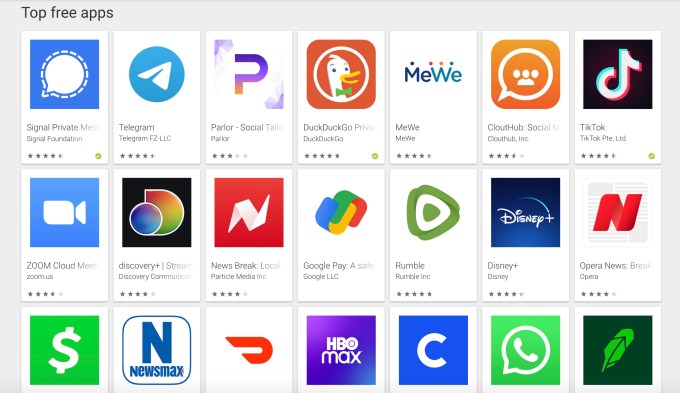
Alternative social media apps including MeWe, CloutHub and other privacy-focused rivals to big tech, are topping the app stores following Trump’s ban from mainstream social platforms like Facebook and Twitter and the more recent removal of conservative social app Parler from both the App Store and Google Play. In the days since the Parler ban, “free speech”-favoring social networks are seeing notable numbers of new downloads at a quick pace, data shows.

Next-generation social network MeWe, founded in May 2012, is one of those that’s seeing the largest bump in new installs.

The app has been steadily growing in the days since the U.S. Presidential Elections and the related increases in moderation of misinformation by larger platforms like Facebook and Twitter. Mainstream social networks enforced their policies and even created new ones to moderate content shared by Trump and his allies — including their baseless claims of election fraud that have not be substantiated by U.S. courts, despite dozens of lawsuits.

To date, MeWe has seen over 16 million global lifetime installs, according data from app intelligence firm Apptopia. However, since Wednesday of last week, the app has been downloaded nearly 200,000 times worldwide. A majority of those new downloads are coming from U.S. users, who accounted for nearly 143,000 installs.

Largely, those users came to MeWe following Parler’s ban from app stores. Apple gave Parler the boot late on Saturday, and MeWe popped in the charts as a result. Saturday through Sunday alone, MeWe gained 110,200+ new installs in the U.S.

The company told us it has seen 1 million new members sign up in the last 72 hours and now adds over 20,000 new members per hour.

Because app stores’ Top Charts reflect not just total downloads but also the velocity of those new installs, MeWe has gained a position in the top 10 very quickly due to recent trends.

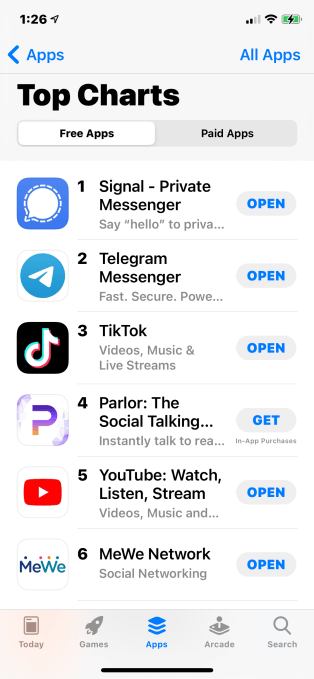
As of Sunday, MeWe ranked No. 7 in the U.S. App Store’s Top Overall free charts. It’s already moving up today.

This is remarkable growth for the alternative social app, given that as recently as October the app was not ranked on the App Store’s Top Charts at all. (Being unranked means that the app is so far down on the charts, it’s lower than rank No. 1,500 — so its rank is basically untrackable.) MeWe did, however, chart in the Social Networking category at some points during this time.

Image Credits: App Store screenshot

Another app benefitting from recent events, including the Parler ban, is the relative newcomer, CloutHub.

The app was launched in January 2019 and claims to be a social network for “social, civic, and political networking” with a free speech angle. Its website says it wants to give “everyone a platform to have their voice heard.”

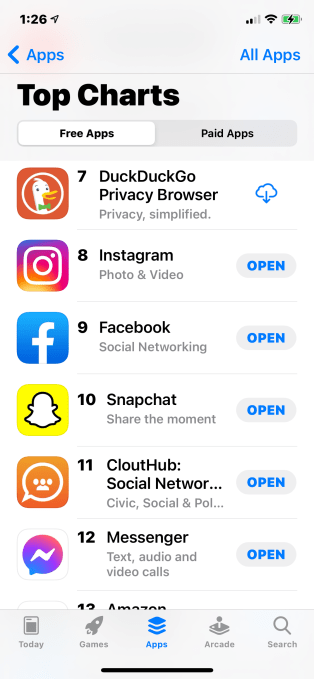
To date, CloutHub has seen just 255,000 total lifetime installs, but 31,000+ of these have come over the past week — or more specifically, since Wednesday. (CloutHub may be struggling with the surge of new users, as we found sign-ups and logins are often timing out). The app as of now ranks No. 11 on the U.S. App Store.

Image Credits: App Store screenshot

Two other apps that have moved into the top charts are cases of mistaken identity.

As Mashable recently reported, an app called “Parlor” is being mistaken for the now-banned “Parler” app. Its report cited Sensor Tower data that said “Parlor” has seen as many as 40,000 downloads in December alone.

Apptopia says the social chat app, founded in May 2011, has seen 8.6 million lifetime global installs. But from Wednesday through Sunday, it gained 115,846 new users — many who were likely looking for “Parler.” Of those, 99,220+ arrived on either Saturday or Sunday, just as the Parler ban was beginning to roll out. Even though Apple didn’t take action on Parler until later on Saturday, users may have come across “Parlor” by searching for it by this alternative spelling.

As of Sunday, “Parlor” became the No. 4 Top App Overall on iOS in the U.S.

Meanwhile, an app called “Gab News” — which is actually just a local news app for the Georgetown area — is also gaining ground. This is because it’s mistaken for the long since banned app “Gab,” which ex-Parler users are suggesting as an alternative. Apple had declined to host Gab back in 2016, citing its pornographic content and later, due to its policies against hosting apps that include hate speech. Though Gab was able to launch on Google Play in 2017, the app was quickly removed from there as well, also for hate speech.

“Gab News,” however, is currently ranking No. 44 on the App Store’s Top Free Apps Chart in the U.S., as of the time of writing. (Download data was not immediately available.)

Then there is Rumble, a conservative alternative to YouTube. The app has gained 2.4 million total global installs since its January 2020 launch, per Apptopia’s estimates. Since Wednesday, that included 91,916 new downloads, 73,700+ of which were in the U.S. It has also climbed to No. 78 on the U.S. App Store, up from No. 1,484 on December 19, 2020.

The Parler ban is not the only thing triggering these shifts, to be clear.

There’s also a general backlash underway against big tech, which many on both sides feel have become too powerful.

Governments have been examining the business models and practices of companies like Apple, Google, Amazon, and Facebook over the past year in markets around the world with an eye on antitrust action. Facebook and Google are also being scrutinized by users for their privacy practices — especially as Apple is now forcing companies to add privacy labels to all apps that disclose what they do with user data.

As a result, some people were turning to alternative networking apps not just because they’re conservative, but because they valued privacy. As a result, encrypted messaging apps like Signal and Telegram are booming in recent days, as is the privacy-focused search engine, DuckDuckGo, a Google.com alternative.

These apps have also picked up steam over the past week. Signal is now No. 1 on the U.S. App Store, Telegram is No. 2, and DuckDuckGo is No. 8. This is rapid growth. Around mid-October 2020, these apps were ranked No. 618, 79, and 715, respectively, Apptopia says.

That said, it’s also worth noting that some users may be seeking out private messaging platforms in the wake of the U.S. Capitol riots, now that the FBI has begun to arrest insurgents. Signal has gained nearly 325,000 new installs since Thursday and Telegram gained 330,600+, for example.

This rapid shift to alternative social and messaging networks is indication of how difficult it may be in the weeks ahead for app stores to enforce their policies. Though the platforms typically crack down on apps hosting hate speech and those allowing incitement of violence, they tend to move slowly than the crowd downloading the next alternative app.

In the meantime, the apps that become popular may struggle with moderation. We’ve already come across examples of both extreme hate speech and calls for assassination on MeWe, for instance. even though the company’s public statements say it investigates and removes this sort of content. (MeWe has been asked to comment).

It’s unclear what the future for these free speech, alternative apps may hold, as platform providers such as Amazon (AWS) are now also declining to host them, and payment providers, like Stripe, which just cut ties with the Trump campaign, may decline to process future online payments. That could leave the networks to ultimately scramble for private funding to build their own infrastructure and stay afloat, as well as to seek out alternative distribution systems, like the web or even sideloading, to reach their users.


11 Jan 2021

Parler sues Amazon, leveling far-fetched antitrust allegations

Parler has sued Amazon after the beleaguered conservative social media site was expelled from AWS, filing a fanciful complaint alleging the internet giant took it out for political reasons — and in an antitrust conspiracy to benefit Twitter. But its own allegations, including breach of contract, are belied by evidence they supply alongside the suit.

In the lawsuit, filed today in the U.S. Western District Court, Parler complains that “AWS’s decision to effectively terminate Parler’s account is apparently motivated by political animus. It is also apparently designed to reduce competition in the microblogging services market to the benefit of Twitter.”

Regarding the “political animus” it is difficult to speak to Parler’s reasoning, since that argument is supported nowhere in the suit — it simply is never referred to again.

There is the suggestion that Amazon has shown more tolerance for offending content on Twitter than on Parler, but this isn’t well substantiated. For instance, the suit notes that “Hang Mike Pence” trended on Friday the 8th, without noting that much of this volume was, as any user of Twitter can see by searching, people decrying this phrase as having been chanted by the rioters in the Capitol two days prior.

By way of contrast, one Parler post cited by Amazon says that “we need to start systematicly [sic] assasinating [sic] #liberal leaders, liberal activists, #blm leaders and supporters,” and so on. As TechCrunch has been monitoring Parler conversations, we can say that this is far from an isolated example of this rhetoric.

The antitrust argument suggests a conspiracy by Amazon to protect and advance the interests of Twitter. Specifically, the argument is that because Twitter is a major customer of AWS, and Parler is a threat to Twitter, Amazon wanted to take Parler out of the picture.

Given the context of Parler’s looming threat to Twitter and the fact that the Twitter ban might not long muzzle the President if he switched to Parler, potentially bringing tens of millions of followers with him, AWS moved to shut down Parler.

This argument is not convincing for several reasons, but the most obvious one is that Parler was at the time also an AWS customer. If people are going to one customer to another, why would Amazon care at all, let alone enough to interfere to the point of legal and ethical dubiety?

The lawsuit also accuses Amazon of leaking the email communicating Parler’s imminent suspension to reporters before it was sent to administrators at the site. (It also says that Amazon “sought to defame” Parler, though defamation is not part of the legal complaint. Parler seems to be using this term rather loosely.)

Lastly Parler says Amazon is in breach of contract, having not given the 30 days warning stipulated in the terms of service. The exception is if a “material breach remains uncured for a period of 30 days” after notice. As Parler explains it:

On January 8, 2021, AWS brought concerns to Parler about user content that encouraged violence. Parler addressed them, and then AWS said it was “okay” with Parler.

The next day, January 9, 2021, AWS brought more “bad” content to Parler and Parler took down all of that content by the evening.

Thus, there was no uncured material breach of the Agreement for 30 days, as required for termination.

But in the email attached as evidence to the lawsuit — literally exhibit A — Amazon makes it clear the issues have been ongoing for longer than that (emphasis added):

Over the past several weeks, we’ve reported 98 examples to Parler of posts that clearly encourage and incite violence… You remove some violent content when contacted by us or others, but not always with urgency… It’s clear that Parler does not have an effective process to comply with the AWS terms of service.

You can read the rest of the letter here, but it’s obvious that Amazon is not simply saying that a few days of violations are the cause of Parler’s being kicked off the service.

Parler asks a judge for a Temporary Restraining Order that would restore its access to AWS services while the rest of the case is argued, and for damages to be specified at trial.

TechCrunch has asked Amazon for comment and will update this post if we hear back. Meanwhile you can read the full complaint below:

Parler v Amazon by TechCrunch on Scribd