Year: 2021

11 Jan 2021

Alula, a platform for cancer caregivers, patients and survivors, raises $2.2 million

According to the National Cancer Institute, some 1.8 million people are diagnosed with cancer each year in the U.S. alone. Factor in the friends, family and loved ones of those patients, and the number of people affected by this disease can boggle the mind.

Liya Shuster understands this struggle all too well. After her mother was diagnosed with early-stage breast cancer, she herself was diagnosed with a rare form of non-Hodgkin lymphoma, transitioning from caregiver to patient to survivor. Her experience led her to start Alula, a platform for those fighting cancer, that launches officially today.

Alongside its launch, Alula is also announcing that it closed a $2.2 million seed round from BBG Ventures, Metrodora Ventures, Thrive Capital, Village Global, Homebrew, Shrug Capital, Basement Ventures, Company Ventures, K5 Global, K50 Ventures, and several angels.

Despite the sheer number of people affected by cancer and cancer treatment, there aren’t many resources out there to help them understand what to expect.

“A lot of people are researching scattered parts of the internet for various elements of product recommendations, ways to communicate ways to raise money for your treatment, ways to understand how to tell people or to announce to your boss that you have treatment,” said Shuster. “It is not in a singular place, it is not organized in a radically honest way. It’s hard to understand who to trust.”

Alula is a multi-pillared platform that, in the words of Shuster, takes a radically honest approach to preparing its users for everything they’ll go through during their treatment. That includes products they’ll need to deal with the treatment process, communication tools to help coordinate support, and content to encourage and support patients on their journey.

Shuster explained that her oncologists and doctors prepared her for some of the after effects of her treatment, like losing her hair, but couldn’t recommend a good place to purchase a wig, for example. So Alula has built out a marketplace with products that have been recommended by patients, and guided by an advisory board of medical experts. It includes personalized registries and ‘cancer survival kits’ that are categorized by the type of treatment a patient is going through.

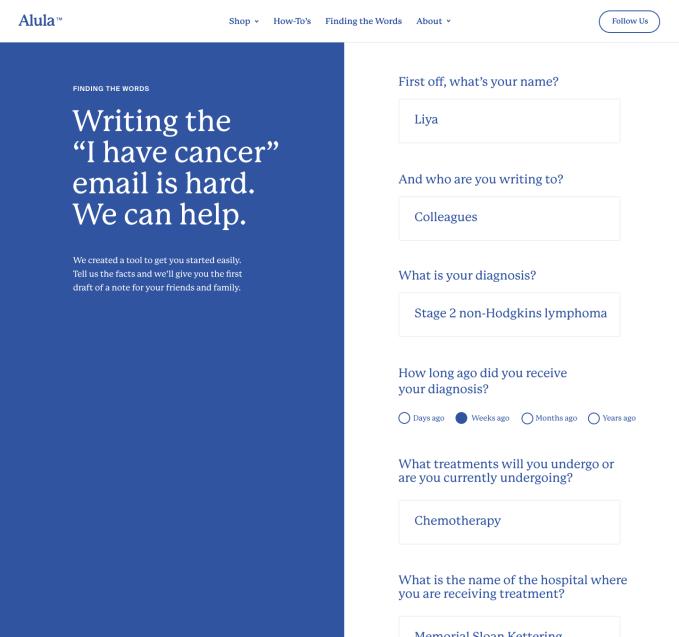
Alula also provides communication tools to users. Many people use email to share the news of their cancer diagnosis with their friends and family. It’s often the most difficult email a person has ever had to write, says the company, and Alula guides them through that process with customizable templates. Alula also provides shareable treatment calendars to help coordinate a ride to treatment or organizing people to sit with patients at treatment, etc.

Image Credits: Alula

The truth is that the cancer journey is never really over. There is always something new to be prepared for and understand.

“I am continuously surprised how the after effects persist and are new,” explained Shuster. “I’m currently struggling with medically induced menopause, at the tender age of 32. I just recently got diagnosed with radiation fibrosis in my chest and back, which is the stiffening of my muscles from my radiation, and I am seeing a cardiologist because one of the chemo drugs that I needed was cardiotoxic.”

To address this, the company is also building out a library of content to help patients and caregivers navigate the difficult process. This type of information is usually only found through conversations with other cancer patients during treatment, and Alula is looking to centralize and organize that content for its users.

Right now, the business model is focused on affiliate fees that come from the marketplace, but Shuster explained that Alula is looking to start buying products wholesale that it can retail.

Today, Shuster is not only celebrating the launch of Alula, but of her three-year cancerversary and nearly two years of being in remission.

11 Jan 2021

Alula, a platform for cancer caregivers, patients and survivors, raises $2.2 million

According to the National Cancer Institute, some 1.8 million people are diagnosed with cancer each year in the U.S. alone. Factor in the friends, family and loved ones of those patients, and the number of people affected by this disease can boggle the mind.

Liya Shuster understands this struggle all too well. After her mother was diagnosed with early-stage breast cancer, she herself was diagnosed with a rare form of non-Hodgkin lymphoma, transitioning from caregiver to patient to survivor. Her experience led her to start Alula, a platform for those fighting cancer, that launches officially today.

Alongside its launch, Alula is also announcing that it closed a $2.2 million seed round from BBG Ventures, Metrodora Ventures, Thrive Capital, Village Global, Homebrew, Shrug Capital, Basement Ventures, Company Ventures, K5 Global, K50 Ventures, and several angels.

Despite the sheer number of people affected by cancer and cancer treatment, there aren’t many resources out there to help them understand what to expect.

“A lot of people are researching scattered parts of the internet for various elements of product recommendations, ways to communicate ways to raise money for your treatment, ways to understand how to tell people or to announce to your boss that you have treatment,” said Shuster. “It is not in a singular place, it is not organized in a radically honest way. It’s hard to understand who to trust.”

Alula is a multi-pillared platform that, in the words of Shuster, takes a radically honest approach to preparing its users for everything they’ll go through during their treatment. That includes products they’ll need to deal with the treatment process, communication tools to help coordinate support, and content to encourage and support patients on their journey.

Shuster explained that her oncologists and doctors prepared her for some of the after effects of her treatment, like losing her hair, but couldn’t recommend a good place to purchase a wig, for example. So Alula has built out a marketplace with products that have been recommended by patients, and guided by an advisory board of medical experts. It includes personalized registries and ‘cancer survival kits’ that are categorized by the type of treatment a patient is going through.

Alula also provides communication tools to users. Many people use email to share the news of their cancer diagnosis with their friends and family. It’s often the most difficult email a person has ever had to write, says the company, and Alula guides them through that process with customizable templates. Alula also provides shareable treatment calendars to help coordinate a ride to treatment or organizing people to sit with patients at treatment, etc.

Image Credits: Alula

The truth is that the cancer journey is never really over. There is always something new to be prepared for and understand.

“I am continuously surprised how the after effects persist and are new,” explained Shuster. “I’m currently struggling with medically induced menopause, at the tender age of 32. I just recently got diagnosed with radiation fibrosis in my chest and back, which is the stiffening of my muscles from my radiation, and I am seeing a cardiologist because one of the chemo drugs that I needed was cardiotoxic.”

To address this, the company is also building out a library of content to help patients and caregivers navigate the difficult process. This type of information is usually only found through conversations with other cancer patients during treatment, and Alula is looking to centralize and organize that content for its users.

Right now, the business model is focused on affiliate fees that come from the marketplace, but Shuster explained that Alula is looking to start buying products wholesale that it can retail.

Today, Shuster is not only celebrating the launch of Alula, but of her three-year cancerversary and nearly two years of being in remission.

11 Jan 2021

Alula, a platform for cancer caregivers, patients and survivors, raises $2.2 million

According to the National Cancer Institute, some 1.8 million people are diagnosed with cancer each year in the U.S. alone. Factor in the friends, family and loved ones of those patients, and the number of people affected by this disease can boggle the mind.

Liya Shuster understands this struggle all too well. After her mother was diagnosed with early-stage breast cancer, she herself was diagnosed with a rare form of non-Hodgkin lymphoma, transitioning from caregiver to patient to survivor. Her experience led her to start Alula, a platform for those fighting cancer, that launches officially today.

Alongside its launch, Alula is also announcing that it closed a $2.2 million seed round from BBG Ventures, Metrodora Ventures, Thrive Capital, Village Global, Homebrew, Shrug Capital, Basement Ventures, Company Ventures, K5 Global, K50 Ventures, and several angels.

Despite the sheer number of people affected by cancer and cancer treatment, there aren’t many resources out there to help them understand what to expect.

“A lot of people are researching scattered parts of the internet for various elements of product recommendations, ways to communicate ways to raise money for your treatment, ways to understand how to tell people or to announce to your boss that you have treatment,” said Shuster. “It is not in a singular place, it is not organized in a radically honest way. It’s hard to understand who to trust.”

Alula is a multi-pillared platform that, in the words of Shuster, takes a radically honest approach to preparing its users for everything they’ll go through during their treatment. That includes products they’ll need to deal with the treatment process, communication tools to help coordinate support, and content to encourage and support patients on their journey.

Shuster explained that her oncologists and doctors prepared her for some of the after effects of her treatment, like losing her hair, but couldn’t recommend a good place to purchase a wig, for example. So Alula has built out a marketplace with products that have been recommended by patients, and guided by an advisory board of medical experts. It includes personalized registries and ‘cancer survival kits’ that are categorized by the type of treatment a patient is going through.

Alula also provides communication tools to users. Many people use email to share the news of their cancer diagnosis with their friends and family. It’s often the most difficult email a person has ever had to write, says the company, and Alula guides them through that process with customizable templates. Alula also provides shareable treatment calendars to help coordinate a ride to treatment or organizing people to sit with patients at treatment, etc.

Image Credits: Alula

The truth is that the cancer journey is never really over. There is always something new to be prepared for and understand.

“I am continuously surprised how the after effects persist and are new,” explained Shuster. “I’m currently struggling with medically induced menopause, at the tender age of 32. I just recently got diagnosed with radiation fibrosis in my chest and back, which is the stiffening of my muscles from my radiation, and I am seeing a cardiologist because one of the chemo drugs that I needed was cardiotoxic.”

To address this, the company is also building out a library of content to help patients and caregivers navigate the difficult process. This type of information is usually only found through conversations with other cancer patients during treatment, and Alula is looking to centralize and organize that content for its users.

Right now, the business model is focused on affiliate fees that come from the marketplace, but Shuster explained that Alula is looking to start buying products wholesale that it can retail.

Today, Shuster is not only celebrating the launch of Alula, but of her three-year cancerversary and nearly two years of being in remission.

11 Jan 2021

Google Stadia and Nvidia GeForce Now are coming to LG TVs

LG spent a good chunk of its CES press conference talking about its lineup of TVs for 2021. You can expect bigger, slimmer and brighter TVs. I’m not going to list the specifications of new models. But there are a few new features that are worth mentioning.

LG doesn’t use Android TV for the operating system. Instead, the company has its own operating system called webOS. App developers have to release specific versions of their apps for LG’s smart TVs. And the company announced that Google Stadia and Nvidia GeForce Now are coming to LG 2021 TVs.

Google’s cloud gaming service will arrive first in the coming months. It won’t be available everywhere as Stadia is only available in a handful of countries. But if you live in a country where Stadia is available, you will be able to unplug your Chromecast to access Stadia.

Stadia works a bit like a console that runs in the cloud. You can buy games and run them in a data center near you. The video feed is streamed directly to your screen and your gamepad controls are relayed to the server.

As for Nvidia’s cloud gaming service, it is coming later this year. This service is a bit different as you can take advantage of your Steam, Epic Games, GOG or Ubisoft Connect libraries.

Nvidia has favored its own set-top box in the past with a GeForce Now app on the Nvidia Shield TV. Recently, the Android app has been updated with support for more devices, and it looks like it’s expanding beyond Android TV with webOS support.

LG also announced that it is updating webOS with a brand new interface this year. The overlay menu at the bottom of the screen has been replaced with a full screen menu. You’ll be able to find your favorite apps, access live TV and get some content recommendations — and, yes, there will be ads.

If you’re playing games, there will be a new game menu to access the most relevant settings. For instance, you’ll be able to switch from one TV profile to another from that menu depending on the type of games that you’re playing (FPS, racing games, etc.). It sounds pretty useless to me as you mostly want to reduce latency as much as possible with any genre. You’ll also be able to turn on G-Sync and FreeSync if you’re using a compatible device.

When it comes to new OLED TVs, there are the entry-line A1 models with old processors, the C1 models with support for modern game consoles thanks to variable refresh rate, low latency, etc. At the top of the lineup, the G1 models come in three different sizes (77 inches, 65 inches and 55 inches).

Image Credits: LG

11 Jan 2021

Microsoft’s latest business-focused Surface is focused on remote work

As CES starts in earnest today, I anticipate we’ll be seeing a lot of hardware focused on remote work. PC sales saw a nice spike last year, even as smartphone sales continued to slip. There was a lot of adapting that needed to be done, moving from offices to virtual work places, and now we’re beginning to see the fruits of that push from hardware makers.

The new Surface Pro 7+ certainly seems to fit the bill. I’m still hesitant to recommend a convertible with a keyboard case as a primary productivity device, but people do seem increasingly willing to move in that direction.

Image Credits: Microsoft

Top line features include optional LTE and faster processing (up to 2.1x per Microsoft’s numbers) via an 11th Gen Intel Core processor. That’s paired with up to 32GB of RAM and 1TB of storage. There’s a 1080p front-facing webcam for video conferences and a quartet of mics.

Ports include one full-size USB-A and that pesky Surface connector and, unfortunately, only a single USB-C. Microsoft seems pretty committed to that last bit, to its detriment. The device should get up to 15 hours of battery on a charge — which isn’t exceptional, but isn’t bad either.

It starts at $899 for the Wi-Fi version and $1,149 for LTE. Pre-order starts today and it will ship next week. Speaking of shipping, the already announced Surface Hub 2S 85 whiteboard is finally set to do just that next month in “select markets.”

11 Jan 2021

UBTech launches UV light disinfecting robots

UBTech is the massively funding Chinese robotics company you’ve (probably) never heard of. If you’re familiar at all with the brand here in the States, it’s likely for its STEM or other robotic toys, including a Star Wars Storm Trooper robot from a few years back (my own first exposure to the company). But with around $940 million in funding, it seems the sky’s the limit, in terms of product expansion.

Among its announcements at CES today is the arrival of line of UV-C disinfecting robots. The need is certainly clear, following the events of the past 12 months. In fact, UBTech isn’t even the first company to introduce a UV robot for the show – that distinction falls to LG, which is set to offer its own solution this year.

And like LG, UBTech has already begun piloting its tech. The State of Delaware’s Department of Education has deployed models in a number of locations. The company is producing a few different models of Adibot – including rolling and stationary versions. They’re available for purchase starting this week, with financing plans starting at $15 a day.

As the company notes, while the need for such functionality has been at top of mind during the COVID-19 pandemic, it certainly doesn’t start or end with that specific virus. Epidemiologists have warned that this particular strain most likely won’t be the last major pandemic of our lifetimes.

11 Jan 2021

Moderna is developing three new mRNA-based vaccines for seasonal flu, HIV and Nipah virus

Moderna, the biotech company behind one of the two mRNA-based vaccines currently being rolled out globally to stem the tide of COVID-19, has announced that it will purse development programs around three new vaccine candidates in 2021. These include potential vaccines for HIV, seasonal flu and the Nipah virus. Moderna’s development and clinical trial of its COVID-19 vaccine is among the fastest in history, and thus far its results have been very promising, buoying hopes for the efficacy of other preventative treatments being generated using this technology which is new to human clinical use.

An mRNA vaccine differs from typical, historical vaccines because it involves providing a person with just a set of instructions on how to build specific proteins that will trigger a body’s natural defenses. The mRNA instructions, which are temporary and do not affect a person’s actual DNA, simply prompt the body’s cells to produce proteins that mirror those used by a virus to attach to and infect cells. The independent proteins are then fought off by a person’s natural immune response, which provides a lasting lesson in how to fight off any future proteins that match that profile, including those which help viruses attach to and infect people.

Moderna’s new programs will target not only seasonal flu, but also a combinatory vaccine that could target both the regular flu and SARS-CoV-2, the virus that leads to COVID-19. The HIV candidate, which is developed in collaboration with both the AIDS Vaccine Initiative and the Bill and Melinda Gates Foundation, is expected to enter into Phase 1 trials this year, as will the flue face. Nipah virus is a highly lethal illness that can cause respiratory and neurological symptoms, and which is particularly a threat in India, Bangladesh, Malaysia and Singapore.

mRNA-based vaccines have long held potential for future vaccine development, in part because of their flexibility and programmability, and in part because they don’t use any active or dormant virus, which reduces their risks in terms of causing any direct infections up front. The COVID-19 pandemic spurred significant investment and regulatory/health and safety investment into the technology, paving the way for its use in other areas, including these new vaccine candidate trials by Moderna.

11 Jan 2021

Europe seizes on social media’s purging of Trump to bang the drum for regulation

Big tech’s decision to pull the plug on president Donald Trump’s presence on their platforms, following his supporters’ attack on the US capital last week, has been seized on in Europe as proof — if proof were needed — that laws have not kept pace with tech market power and platform giants must face consequences over the content they amplify and monetize.

Writing in Politico, the European Commission’s internal market commissioner, Thierry Breton, dubs the 6/1 strike at the heart of the US political establishment as social media’s ‘9/11’ moment — aka, the day the whole world woke up to the real-world impact of unchecked online hate and lies.

Since then Trump has been booted from a number of digital services, and the conservative social media app Parler has also been ejected from the App Store and Google Play over a failure to moderate violent threats, after Trump supporters flocked to the app in the wake of Facebook’s and Twitter’s crackdown.

At the time of writing, Parler is also poised to be booted by its hosting provider AWS, while Stripe has reportedly pulled the plug on Trump’s ability to use its payment tools to fleece supporters. (Although when this reporter asked in November whether Trump was breaching its TOC by using its payment tools for his ‘election defense fund’ Stripe ignored TechCrunch’s emails…)

“If there was anyone out there who still doubted that online platforms have become systemic actors in our societies and democracies, last week’s events on Capitol Hill is their answer. What happens online doesn’t just stay online: It has — and even exacerbates — consequences ‘in real life’ too,” Breton writes.

“Last week’s insurrection marked the culminating point of years of hate speech, incitement to violence, disinformation and destabilization strategies that were allowed to spread without restraint over well-known social networks. The unrest in Washington is proof that a powerful yet unregulated digital space — reminiscent of the Wild West — has a profound impact on the very foundations of our modern democracies.”

The Europe Commission proposed a major update to the rules for digital services and platform giants in December, when it laid out the Digital Services Act (DSA) and Digital Markets Act — saying it’s time to level the regulatory playing field by ensuing content and activity that’s illegal offline is similarly sanctioned online.

The Commission’s proposal also seeks to address the market power of tech giants with proposals for additional oversight and extra rules for the largest platforms that have the potential to cause the greatest societal harm.

Unsurprisingly, then, Breton has seized on the chaotic scenes in Washington to push this already-formed tech policy plan — with his eye on a domestic audience of European governments and elected members of the European Parliament whose support is needed to pass the legislation and reboot the region’s digital rules.

“The fact that a CEO can pull the plug on POTUS’s loudspeaker without any checks and balances is perplexing. It is not only confirmation of the power of these platforms, but it also displays deep weaknesses in the way our society is organized in the digital space,” he warns.

“These last few days have made it more obvious than ever that we cannot just stand by idly and rely on these platforms’ good will or artful interpretation of the law. We need to set the rules of the game and organize the digital space with clear rights, obligations and safeguards. We need to restore trust in the digital space. It is a matter of survival for our democracies in the 21st century.”

The DSA will force social media to clean up its act on content and avoid the risk of arbitrary decision-making by giving platforms “clear obligations and responsibilities to comply with these laws, granting public authorities more enforcement powers and ensuring that all users’ fundamental rights are safeguarded”, Breton goes on to argue.

The commissioner also addresses US lawmakers directly — calling for Europe and the US to join forces on Internet regulation and engage in talks aimed at establishing what he describes as “globally coherent principles”, suggesting the DSA as a starting point for discussions. So he’s not wasting the opportunity of #MAGA-induced chaos to push a geopolitical agenda for EU tech policy too.

Last month the Commission signalled a desire to work with the incoming Biden administration on a common approach to tech governance, saying it hoped US counterparts would work with to shape global standards for technologies like AI and to force big tech to be more responsible, among other areas. And recent events in Washington do seem to be playing into that hand — although it remains to be seen how the incoming Biden administration will approach regulating big tech.

“The DSA, which has been carefully designed to answer all of the above considerations at the level of our Continent, can help pave the way for a new global approach to online platforms — one that serves the general interest of our societies. By setting a standard and clarifying the rules, it has the potential to become a paramount democratic reform serving generations to come,” Breton concludes.

Twitter’s decision to (finally) pull the plug on Trump also caught the eye of UK minister Matt Hancock, the former  secretary of state for the digital brief (now the health secretary). Speaking to the BBC this weekend, he suggested the unilateral decision “raises questions” about how big tech is regulated that would result in “consequences”.

“The scenes, clearly encouraged by President Trump — the scenes at the Capitol — were terrible — and I was very sad to see that because American democracy is such a proud thing. But there’s something else that has changed, which is that social media platforms are making editorial decisions now. That’s clear because they’re choosing who should and shouldn’t have a voice on their platform,” he told the Andrew Marr program.

The BBC reports that Hancock also told Sky News Twitter’s ban on Trump means social media platforms are taking editorial decisions — which he said “raises questions about their editorial judgements and the way that they’re regulated”.

Hancock’s remarks are noteworthy because back in 2018, during his time as digital minister, he said the government would legislate to introduce a statutory code of conduct on social media platforms forcing them to act against online abuse.

More than two years’ later, the UK’s safety-focused plan to regulate the Internet is still yet to be put before parliament — but late last year ministers committed to introducing an Online Safety Bill this year. 

Under the plan, the UK’s media regulator, Ofcom, will gain new powers to oversee tech platforms — including the ability to levy fines for non-compliance with a safety-focused duty of care of up to 10% of a company’s annual turnover.

The proposal covers a wide range of digital services, not just social media. Larger platforms are also slated to have the greatest responsibility for moderating content and activity. And — at least in its current form — the proposed law is intended to apply not just to content that’s illegal under UK law but also the fuzzier category of ‘harmful’ content.

That’s something the European Commission proposal has steered clear of — with more subjective issues like disinformation set to be tackled via a beefed-up (but still voluntary) code of practice, instead of being baked into digital services legislation. So online speech looks set to be one area of looming regulatory divergence in Europe, with the UK now outside the bloc.

Last year, the government said larger social media platforms — such as Facebook, TikTok, Instagram and Twitter — are likely to “need to assess the risk of legal content or activity on their services with ‘a reasonably foreseeable risk of causing significant physical or psychological harm to adults’” under the forthcoming Online Safety Bill.

“They will then need to make clear what type of ‘legal but harmful’ content is acceptable on their platforms in their terms and conditions and enforce this transparently and consistently,” it added, suggesting the UK will in fact legislate to force platforms to make ‘editorial’ decisions.

The consequences Hancock thus suggests are coming for tech platforms look rather akin to the ‘editorial’ decisions they have been making in recent days.

Albeit, the uncomfortable difference he seems to have been articulating is between tech platforms that have massive unilateral power to silence the US president at a stroke and at a point of their own choosing vs tech platforms being made to comply with a pre-defined rules-based order set by legislators and regulators.

11 Jan 2021

The Station: the 2021 predictions issue, part two

The Station is a weekly newsletter dedicated to all things transportation. Sign up here — just click The Station — to receive it every Sunday in your inbox

Hi friends and new readers, welcome back to The Station, a newsletter dedicated to all the present and future ways people and packages move from Point A to Point B.

Last week, I provided some of my predictions for 2021 focused on autonomous vehicle technology and electric vehicles. I’ll weigh in today with a few predictions about the rest of the “future of transportation” sector, including ride-hailing, on-demand delivery and in-car tech.

Email me at kirsten.korosec@techcrunch.com to share thoughts, criticisms, offer up opinions or tips. You can also send a direct message to me at Twitter — @kirstenkorosec.

Alrighty, here’s the remaining predictions for the 2021.

Delivery the-station-delivery

On-demand delivery will continue to grow even as consumers return to physical stores, which will put pressure on the logistics ecosystem. The retailers that have the best success will be the ones that have locked in multiple channels to get their “goods” to the consumer.

Big retailers and even smaller local stores have come to understand that their physical location has become an extended part of the supply chain. Startups that have developed platforms to make it easier to manage inventory and get it to the consumer will continue to pop up.

Meanwhile, the increase in demand for delivery will encourage giants like Amazon and Walmart invest in technological solutions to meet their needs. This might include partnering with or acquiring startups. (This goes beyond interests in longer term efforts like autonomous vehicle delivery).

Delivery apps such as Uber Eats, DoorDash and Instacart will face increased scrutiny for use of gig economy workers as well as whether businesses benefit from using them. This may very well spawn local businesses to find their own in-house solutions. Demand will rise for digital tools that help optimize delivery fleets and platforms designed to help companies gets goods to consumers without relying on Uber, DoorDash and others.

Restaurant groups will pull together to offer delivery hubs from ghost kitchens, a prediction that mirrors one shared with me from Khaled Naim, the CEO last mile delivery management software startup Onfleet. I believe local stores will make the same efforts. 

I expect more pitches from companies hawking curbside management tools and subscription delivery platforms.

On the ride-hailing front, shuttle companies like Via will continue to grow (despite concerns about sharing rides) and make acquisitions to round out their current offerings. Via will continue to sell its platform to cities as opposed to standing up more of its own operations. Via handles booking, routing, passenger and vehicle assignment and identification, customer experience and fleet management. And it will likely look for ways to broaden its services to become more appealing.

In-car tech

Some of the trends that started two years ago will continue to play out. Automakers are increasing the size and display resolution of infotainment screens in its vehicles. Sadly, only a handful will unlock the more important piece of the infotainment system: the user interface.

Two announcements this past week — one from holographic startup Envisics and the other from Mercedes — hint at what’s to come in 2021.

Mercedes unveiled January 7 its next-generation MBUX Hyperscreen, which features a 56-inch curved screen that runs the length of the dashboard. The MBUX Hyperscreen will be optional in the 2022 Mercedes EQS, the flagship sedan under the automaker’s electric EQ brand.
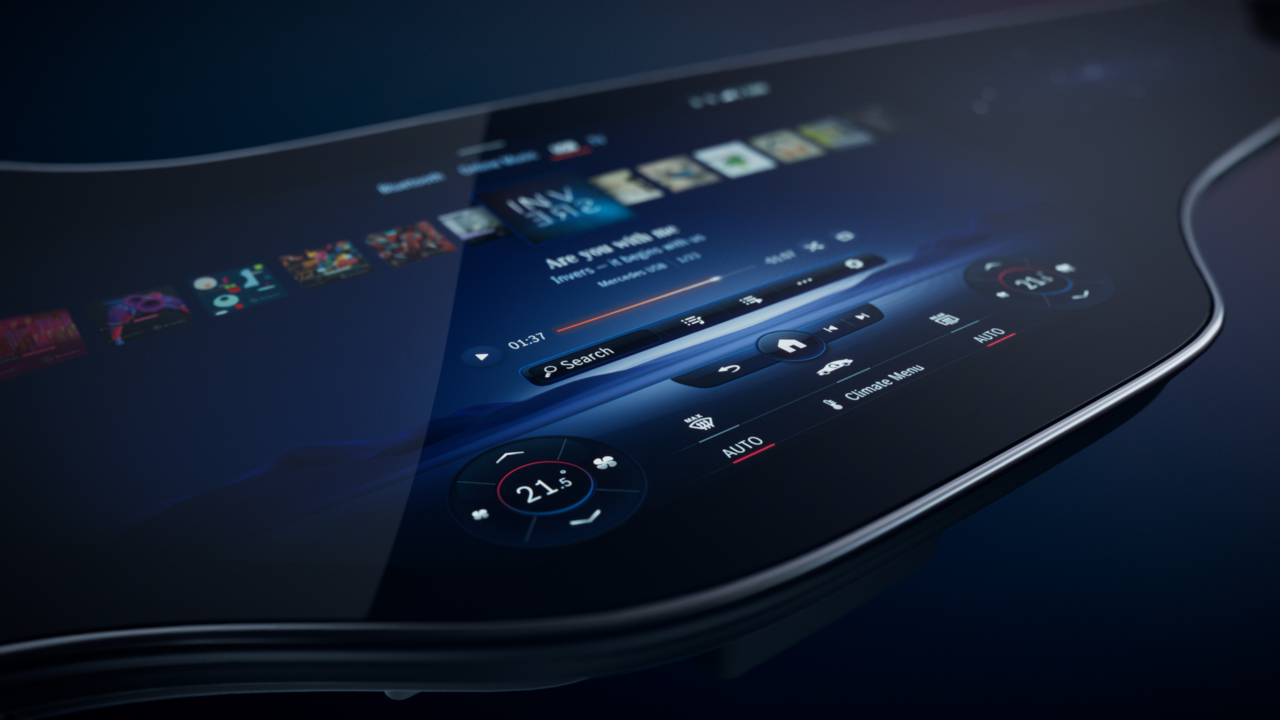
Mercedes-EQ. MBUX Hyperscreen

Mercedes-EQ. MBUX Hyperscreen

I’m interested and maybe even encouraged (I have yet to test it) in the UI. Mercedes chose to put information on charging, entertainment, phone, navigation, social media, connectivity and massage — yes massage — right up front on the screen. This means no scrolling through menus or using the voice assistant to locate these options.

The system’s software, which will learn the patterns of the driver, will prompt the user, removing any need to go deeper into the sub-menu. The navigation map is always visible in the center and located just below it are the controls for the phone and entertainment — or the feature that best suits the specific situation, according to the automaker.

Meanwhile, Envisics announced a partnership with Panasonic Automotive Systems to jointly develop and commercialize a new generation of head-up displays for cars, trucks and SUVs.

Envisics’ technology allows for head-up displays to have higher resolution, wide color gamut and large images that can be overlaid upon reality. The technology can also project information at multiple distances simultaneously. The company’s founder Jamieson Christmas told me that in the short term this will provide relatively simple augmented reality applications like navigation, highlighting the lane you’re supposed to be in and some safety applications.
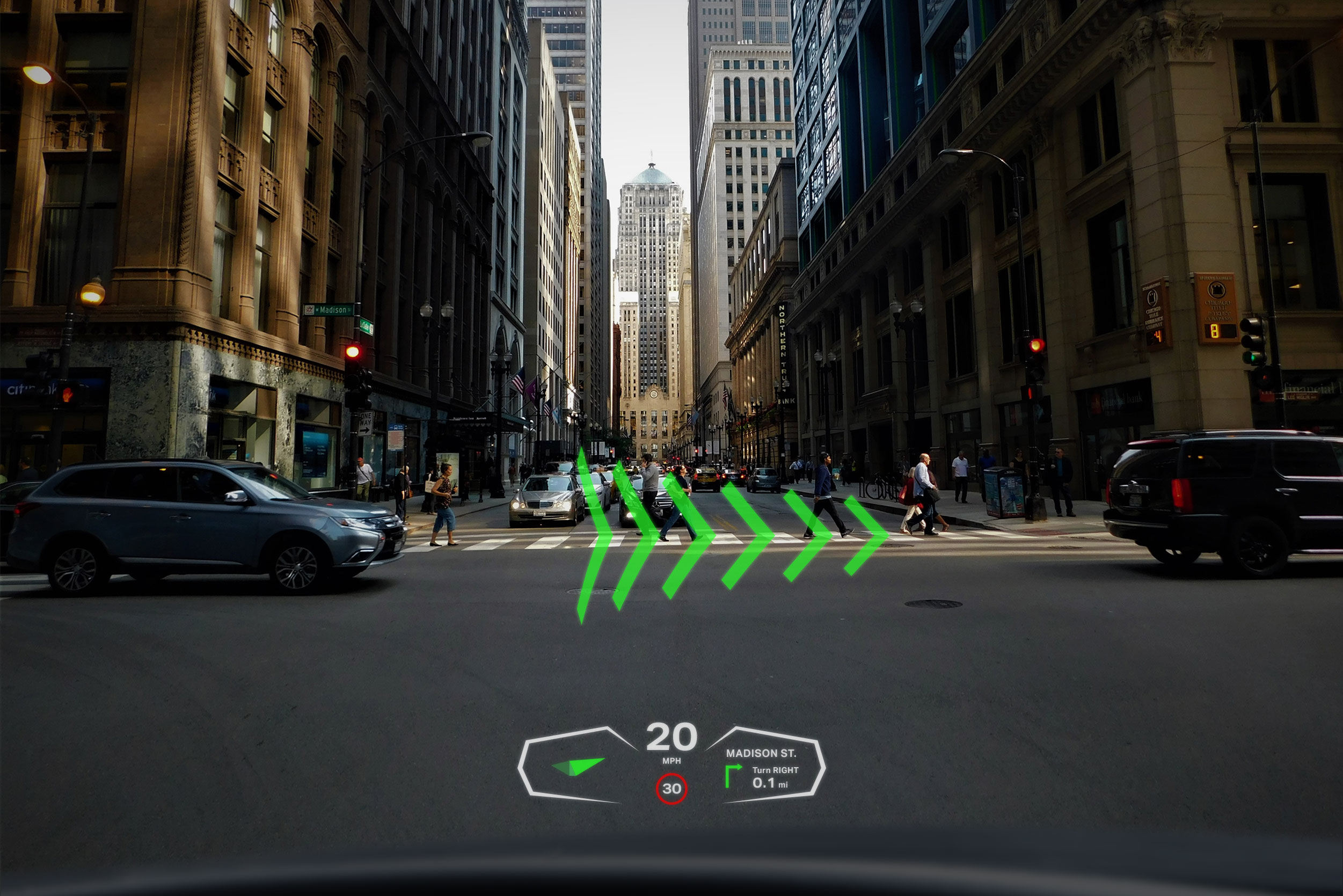
Envisics Navigation

Image Credits: Envisics

“But as you look forward into things like autonomous driving it unlocks a whole realm of other opportunities like entertainment and video conferencing,” he said.

Finally, I expect more chatter and maybe even deployments of driver monitoring systems as automakers roll out more advanced driver assistance systems that allow for “hands-free” operations in certain conditions.

I want to stress however, that having a DMS is only part of the solution. The safe operation of an advanced driver assistance system comes down to how well the driver understands the features and can easily see or hear when they’re on and off. A number of vehicle models, with the regular ol’ less “advanced versions of ADAS, already fail at properly communicating to drivers when features are on and off. My hope for 2021 and beyond is that there’s an effort to improve this shortfall.

For those who missed last week’s predictions, here is my recap on AVs and EVs.

the station autonomous vehicles1

Autonomous vehicles

The wave of consolidation that began in 2020 will continue this year, leaving fewer players that are aiming to commercialize autonomous vehicle technology in three distinct areas: robotaxis, trucking and delivery.

In 2020, Starsky Robotics shut down, Uber sold its self-driving subsidiary to Aurora and autonomous delivery startup Nuro acquired Ike Robotics. This evolution is not yet complete.

I’ll be paying attention to the activities of all the big AV players including Cruise, Motional, Waymo and Zoox. I’m particularly interested in how Aurora will handle absorbing Uber ATG into its operations. I’m also watching for progress at Argo AI, which has spent the past several months integrating VW’s self-driving subsidiary Autonomous Intelligent Driving (AID) into its operations.

I expect big moves by the often-overlooked Voyage, including new partnerships and driverless operations.

Autonomous delivery will see the most investment, consolidation and commercialization activity in 2021. This won’t be the year when autonomous delivery becomes ubiquitous. But expect more pilot programs in urban, and even suburban and rural areas as companies try to figure out what environment and form factor — sidewalk bots, purpose-built vehicles that operate on roads or drones — produces the best economics.

New regionally focused entrants will pop up in 2021 and drone delivery companies will expand to larger geofenced areas.

I’m also curious to see what becomes of Postmates’ autonomous robot now that Uber has completed its acquisition of the on-demand delivery company.
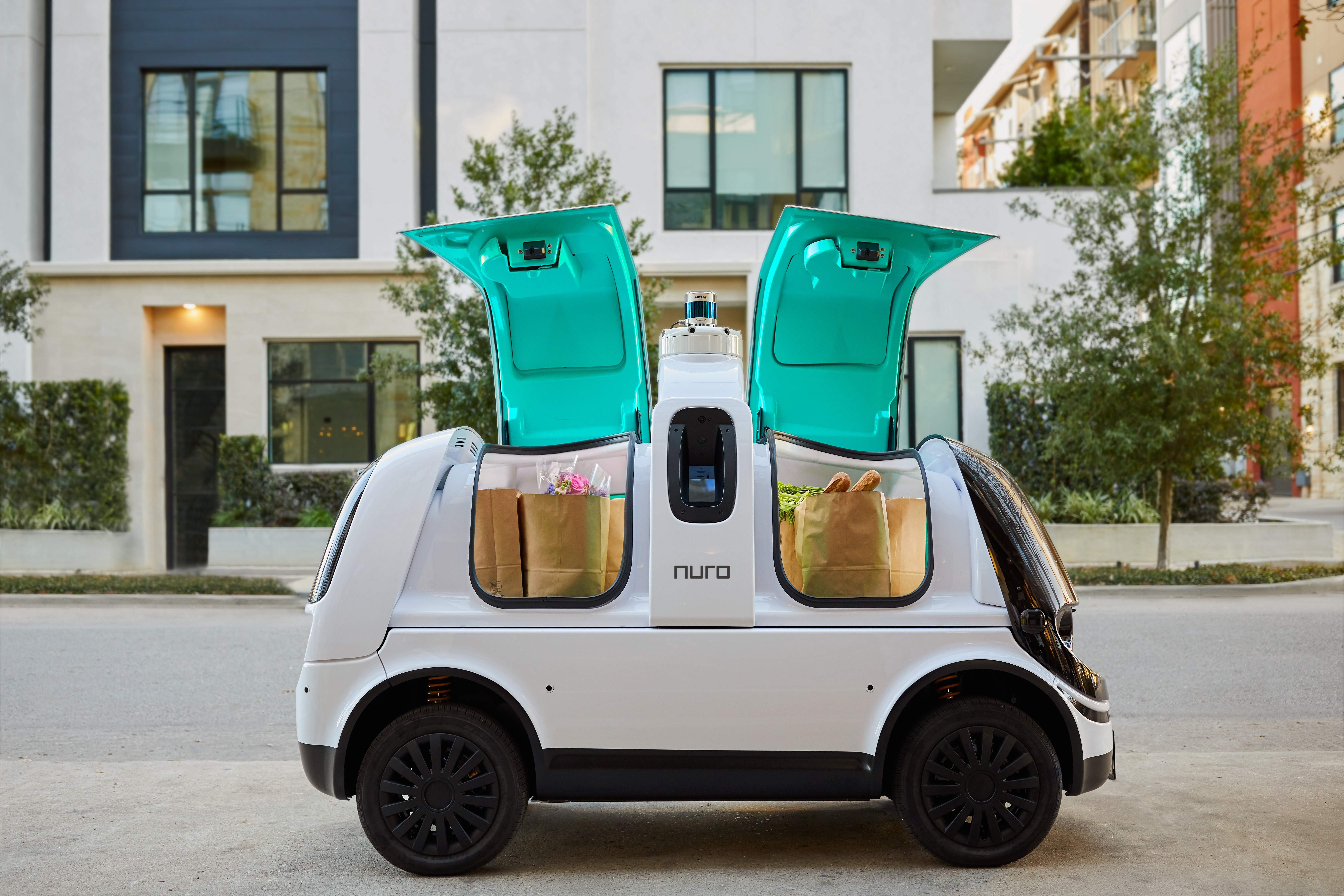
Nuro R2 delivery bot

Nuro’s second-generation R2 delivery robot. Image credit: Nuro

Companies pursuing autonomous trucking are going to learn that long-haul logistics are more difficult and expensive than previously thought. While companies will continue to focus on Class 8 trucks that can operate without a human, expect greater activity in the so-called middle-mile logistics market. This is an area that startup Gatik AI has targeted with some successful results.

The middle-mile market, in which autonomous trucks run frequent trips from large distribution centers to local retailers, will become increasingly important as consumers continue to order groceries and other goods online. Amazon, Walmart and Kroger are just a few of the large and deep-pocketed companies keenly interested in finding faster and cheaper ways to move goods. Expect more investments and even acquisitions from big retailers.

Autonomous vehicle regulations in the United States will shift in 2021 due to the new Biden Administration. The changes won’t happen immediately; there will be far more activity in 2022 and beyond. But there will be change nonetheless.

The Trump Administration has taken a light touch to autonomous vehicle development and deployment, choosing to stick with voluntary guidelines instead of creating new mandatory rules. For instance, last month the National Highway Traffic Safety Administration posted a notice that clarified AV policy and seemed to make the path to deployment much easier. (Read the details in my Dec. 21 newsletter)

President-elect Joe Biden nominated former Democratic presidential candidate Pete Buttigieg as the next Secretary of Transportation, a Cabinet position that will have him overseeing the Federal Highway Administration and NHTSA among other roles. The expectation is that Buttigieg will lead the charge (ahem) for electric charging infrastructure. What’s less clear is how he and the Biden Administration will approach automated vehicle technology and the advanced driver assistance systems found in today’s modern vehicles.

The Alliance for Automotive Innovation, the automotive industry group, released its four-year plan last month for how it wants the federal government to act. The group made 14 recommendations that includes reforming regulations to allow for AV deployment at scale. Expect the Alliance for Automotive Innovation to push for a national AV pilot program and a new vehicle class for AVs.

Electric vehicles

the station electric vehicles1

Image Credits: Bryce Durbin

A bevy of new electric vehicles from startups and legacy automakers will arrive in 2021. The Lucid Air, Rivian R1T and R1S, Audi Q4 etron and Nissan Ariya will come to market, while production ramps up for the Ford Mustang Mach-E and VW ID.4 .

In the latter half of the year, we should also see a few electric pickups from Lordstown Motors and the first deliveries of the BMW iX and the GMC Hummer EV.  I don’t expect the Tesla Cybertruck to appear until the very end of 2021, if not 2022.

In the U.S., I’ll be watching for policy changes at the federal level that might encourage more consumers to make the switch to electric vehicles. According to Politico, there is $40 billion in unused Energy Department loan authority that was awarded under the 2009 stimulus. These funds could become central piece of the incoming Biden Administration’s climate and infrastructure plan. While those loans will likely go towards energy storage and other infrastructure, it’s worth noting that former Michigan Gov. Jennifer Granholm will be heading up the DOE. Granholm was directly involved in the Obama Administration’s bailout of the U.S. auto industry during the Great Recession.

Electric bikes, mopeds, scooters and even skateboards will continue to grow in 2021 as consumers look for means of getting around town without buying a car or using personal transit.

That doesn’t mean every ebike or scooter company will prosper. Some shared electric scooter companies have struggled in 2020 or shut down altogether. Others are switching to subscription -based models. Expect the tinkering to continue.


11 Jan 2021

Vision Fund backs Chinese fitness app Keep in $360 million round

As Chinese fitness class provider Keep continues to diversify its offerings to include Peloton-like bikes, health-conscious snacks among other things, it’s bringing in new investors to fund its ambitions.

On Monday, Keep said it has recently closed a Series F financing round of $360 million led by SoftBank Vision Fund. Hillhouse Capital and Coatue Management participated in the round, as well as existing investors GGV Capital, Tencent, 5Y Capital, Jeneration Capital and Bertelsmann Asia Investments.

The latest fundraise values the six-year-old startup at about $2 billion post-money, people with knowledge told TechCrunch. Keep said it currently has no plans to go public, a company spokesperson told TechCrunch.

Keep started out in 2014 by providing at-home workout videos and signed up 100 million users within three years. As of late, it has served over 300 million users, the company claims. It has over time fostered an ecosystem of fitness influencers who give live classes to students via videos, and now runs a team of course designers, streaming coaches and operational staff dedicated to its video streaming business.

The company said its main revenue driver is membership fees from the 10 million users who receive personalized services. It’s also expanding its consumer product line. Last year, for instance, the firm introduced an internet-connected stationary bike that comes with video instructions like Peloton . It’s also rolled out apparel, treadmills and smart wristbands.

The company launched foreign versions of its Keep app in 2018 as it took aim at the overseas home fitness market. It was posting diligently on Western social networks including Instagram, Facebook and Twitter up until the spring of 2019.

According to Keep, the purpose of the latest funding is to let it continue doing what it has focused on in recent years: improving services and products for users and serving fitness professionals against a backdrop of the Chinese government’s campaign for “national fitness.”

“We believe fitness has become an indispensable part of Chinese people’s everyday life as their income rises and health awareness grows,” said Eric Chen, managing partner at SoftBank Vision Fund .