Year: 2021

13 Sep 2021

Pandemic’s shift to remote wellness helps Numan raise $40M Series B led by White Star

Numan, the European subscription service covering erectile dysfunction (ED) and men’s wellness/health needs more generally, has raised $40 million in a Series B funding round led by White Star Capital, with participation from existing investors Novator, Vostok New Global, Anthemis Exponential, Colle Capital, and new investor Hanwha Group. The new round will be used to fuel expansion.

Numan’s current roster of services cover ED, premature ejaculation, hair loss, gut and lung health, and nutritional deficiencies. But they can also do blood tests for general health needs which don’t require in-person appointments.

Post-pandemic, the digitization of health and wellness continues apace. Had we not had a pandemic, vitamins, and the like, delivered through the letterbox, would almost certainly have continued to grow steadily as a business. But with the pandemic, businesses that can speak to our health needs remotely have exploded.

Who would have considered taking a blood test remotely a ‘normal thing’ two years ago? Now it’s practically required. Into this space, wellness companies have uncovered an extremely lucrative nexus of trends: an aging male population with a desire to remain sexually active, increasing awareness of their own health, the convenience of subscription, and the imperative of the pandemic to keep things remote has proven to be a powerful combination of forces.

Numan is not alone in this space. Roman and Hims, for example, are two big players in the US. The open door Numan is pushing against is more this wider movement around male health, which men themselves are becoming more open to. As well as growing organically, Numan has also made two strategic acquisitions of companies in the UK and Sweden to expand its footprint. It’s likely this new round will lead to similar strategic plays.

With sexual health a tricky subject for men, digital services are stepping in to mitigate any embarrassment around having to sit in front of the family GP. Numan is also regulated by the Care Quality Commission as a registered healthcare provider, giving it a further stamp of approval.

Numan claims men now prefer its model to in-person healthcare meetings. In its own survey of 800 subscribers, 88% said that using the service has improved their confidence, while 68% say that using Numan has also improved their relationships, and over half said the effects of the pandemic had given them a more positive impression of using digital healthcare.

In a statement Sokratis Papafloratos, CEO & founder, Numan said: “This funding is a significant milestone on our journey to help millions of men be healthier. White Star Capital is one of the best investors in our space, and I’m delighted to be working together along with a wider team of brilliant investors.”

Speaking to me over a call, Papafloratos added that despite there being a lot of competition in the space “this is not a winner-takes-all-market. We have 25 languages on the team so we understand the market, patients, regulation, we understand it more in-depth than many competitors.”

Eric Martineau-Fortin, Founder and Managing Partner, White Star Capital: “Men’s health has been under-served by traditional services and needs innovative businesses to break down barriers and ensure taboos don’t prevent men from being happy and healthy. Numan’s digital offering helps men take charge of their health discreetly and decisively. We’re incredibly excited by Sokratis and his team, and look forward to working with them as they grow.”

13 Sep 2021

Egyptian startup Capiter raises $33M to expand B2B e-commerce platform across MENA

Funding startups that help manufacturers and sellers distribute products and merchants access them on a single platform keeps increasing across Africa.

Today, Cairo-based B2B e-commerce startup Capiter continues that trend by raising a $33 million Series A round.

The investment was co-led by Quona Capital and MSA Capital. Other participating investors include Savola, Shorooq Partners, Foundation Ventures, Accion Venture Lab, and Derayah Ventures.

Capiter was launched in July 2020 by Mahmoud Nouh and Ahmed Nouh. Speaking with TechCrunch, CEO Mahmoud Nouh says Capiter solves problems around reach and insights for suppliers and manufacturers.

Many of the manufacturers in Egypt today do not have the right infrastructure of the supply chain in place to reach merchants. Nouh says that manufacturers can only reach 30% of merchants in the market, but with Capiter, that number goes up between 80% to 100%.

Also, a large portion of the manufacturers’ end trade happens via traditional channels where there is basically no transparency over data or market insights.

Using machine learning, Capiter says it helps these manufacturers gain critical insights into the markets they serve, the products they sell, and how they fair with competition.

Then for merchants, Capiter attends to three problems. The first is the inconvenience merchants have to deal with engaging several suppliers to find the right product. The second is transparency which involves some back and forth between merchants and manufacturers on pricing. The third is that merchants often have little or no access to working capital to get the right product and the right time.

With Capiter, merchants can order products from FMCGs and wholesalers while the company delivers them. Capiter also provides fair pricing and matching techniques that showcases a wide range of inventory for merchants.

Then it affords working capital to them to buy more products even when they are strapped with cash. Capiter partners with local banks in Egypt and the Central Bank to perform this.

Capiter has over 12 merchant types on its platform, including mom-and-pop stores, hotels, restaurants, cafes, electronic shops, supermarkets, grocery shops, and catering companies, each with its own customized solutions.

“We’re able to get the data from the products they buy. So we offer them the best solution on what they should sell, at what time and peak seasons, including when are the offerings happening. All of these are customized solutions that we offer,” said Mahmoud Nouh.

Capiter

The Capiter app

The company’s revenues are derived from little margins on the products bought from manufacturers and sold to merchants. Then on rebates for the suppliers and commission from the working capital provided to merchants. Capiter also makes money from providing market insights and data services to manufacturers and FMCGs.

Typically B2B e-commerce platforms operate either asset-light, inventory-heavy models. Nouh tells me that Capiter chose to use a hybrid model — making deliveries without owning any trucks to ensure scalability and owning inventory, especially for high turnover products helping the company with high availability and better pricing.

“This way has enabled us to scale the business in a very fast manner and at the same time, efficiently and reliably. Regarding warehouses and trucks, we don’t own them; we rent them. We deal with third-party logistics for transportation and we manage them.”

Over 50,000 merchants and 1,000 sellers use Capiter. According to CEO Nouh, the company has provided up to 6,000 SKUs. He also adds that the company is targeting an annualized revenue of $1 billion by next year.

“We’re on a very good trajectory for achieving this,” he added. “In terms of team members, we have a team of more than 1000 people at the moment, including in warehouses, delivery, etc. So we’ve seen good traction across all board,” he answered when asked about Capiter’s traction.

Quona Capital, the co-lead investor in this round, is known to have made some B2B e-commerce bets over the past years, for instance, Kenya’s Sokowatch. The investment in Capiter adds to the firm’s portfolio in that regard and a growing presence in the MENA region being its first check made in Egypt.

In a statement, Quona co-founder and managing partner Monica Brand Engel said, “Capiter’s embedded finance model, combined with its expertise and strong user engagement, can have a dramatic impact on the financial lives of SMEs, helping them optimize their income which helps communities to thrive.”

“SME supply chain inefficiencies are massive throughout the Middle East. We believe the key blocker is the lack of working capital in the system. Capiter has built an asset-light way to aggregate retailers and suppliers and facilitate credit into the system through a comprehensive multi-product offering such as commerce, credit financing, digital payments, bookkeeping and inventory management for SMEs, leveraging on the ecosystem built by the local banks and financial institutions.” adds Ben Harburg, partner at MSA Capital, a global VC that has invested in fintechs like Nubank and Klarna.

According to Ahmed Nouh, the company’s COO, Capiter will expand into new verticals like agriculture and pharmaceutical offerings.

The co-founder brings experience from the shipping and logistics space. Both he and Mahmoud are serial entrepreneurs. The latter’s journey is quite prominent, having worked in the mobility space as the co-founder and COO of Egyptian ride-hailing company SWVL. The company recently announced a potential SPAC deal valuing it at $1.5 billion and is one of the few African startups breeding a tech mafia. Ahmed Sabbah, another co-founder of the company, now runs early-stage fintech startup Telda.

Capiter has attracted a global team that brings together the expertise from companies like Careem and Flipkart needed to achieve the company’s targets, said Mahmoud.

He adds that the team, alongside the provision of financial services via partnerships with banks and its hybrid model, is how the company stands out in a competitive market, including the likes of Fatura, Bosta, and MaxAB.

Following this investment, the company plans to expand vertically (in terms of the buyer type) and geographically within the next year.

“We want to serve every single SME in the MENA region and expanding inside Egypt and globally.” He adds that Savola Group, one of its investors and the largest investor for FMCG products in the MENA region, will prove pivotal to this growth. Capiter also plans to diversify its financial services offerings to include payments. 

13 Sep 2021

The Station: Apple car shakeup, how Sept. 11 changed travel, and a pledge from airlines

The Station is a weekly newsletter dedicated to all things transportation. Sign up here — just click The Station — to receive it every weekend in your inbox.

Hi readers: Welcome to The Station, your central hub for all past, present and future means of moving people and packages from Point A to Point B.

Twenty years and one week ago, I was riding the monorail system at the Newark airport and pointed to the twin skyscrapers looming in the distance. “I can’t believe you’ve never been to the top of the World Trade Center,” I said to my then fiancé and now husband. Days later, I would walk into a restaurant in a Slovenian town and see a report on the TV about a plane crashing into one of those towers. Like so many of us, we spent the rest of that day watching the news and wondering what would happen next.

In all, four aircraft were hijacked the morning of September 11, two of which crashed into the World Trade Center, one into the Pentagon and the fourth in a field in Pennsylvania. In all, 2,996 people were killed.

The September 11 terrorist attacks triggered a series of events that would change the world forever, including how we move about it. My September 6, 2001 flight to Newark and then onto to Europe was the last time I would experience what now seems unimaginable: getting to an airport less than 45 minutes before my plane took off.

My trip home from Europe provided a forecast of what air travel would look and feel like, although some measures like when we were separately interviewed two different times prior to boarding, ended up being temporary.

Within months of my arrival home, passenger screening and security at airports would be handled by a new federal agency called the Transportation Security Administration. Security wasn’t the only aspect of air travel that changed.

The airline industry experienced skyrocketing losses that sparked a wave of cost-cutting, new fees for travelers and consolidation. According to the GAO, the U.S. airline industry lost $23 billion between 2001 and 2003 and some of the nation’s biggest airlines including USAir and United Airlines filed for bankruptcy.

The airline industry would suffer financial losses during the Great Recession of 2008, causing more bankruptcies and consolidation. Today, most domestic flights are controlled by four airlines: American, Delta, Southwest and United.

After recovering and stringing together a few years of profitability, the airline industry (and how we travel) would get hit again: this time from the COVID-19 pandemic.

p.s. Thanks to co-worker and cybersecurity editor Zack Whittaker for the photo (featured as the main image for the post) he snapped yesterday.

As always, you can email me at kirsten.korosec@techcrunch.com to share thoughts, criticisms, opinions or tips. You also can send a direct message to me at Twitter — @kirstenkorosec.

Micromobbin’

We’ve talked before about the possibilities of shared micromobility to help cities create more equitable and accessible transit ecosystems. Shared operators have expanded this idea to support activism.

Agencies and operators provided free or discounted trips for demonstrators to get to events, according to the North American Bikeshare and Scootershare Association’s 2020 report on the state of the shared micromobility industry, Many even donated or fundraised for racial justice nonprofits.

Not only are they aiding the fight on the ground, the report also shows that nearly three-quarters of all operators stated that diversity was a part of every hiring decision, and 69 percent reported that women and POC are represented at all levels of the organization.

Operator update

Lime is back in Oakland with 500 scooters and plans to scale up to 1,000 over the coming weeks. The company pulled out of the city last year during the pandemic. This time, it’s focusing on “Communities of Concern” as designated by the city, and will deploy half its fleet to these neighborhoods that have been traditionally underserved by transportation.

Tier is hooking up with Irish computer vision startup Luna. Tier is adding Luna’s cameras and smart city technology to its shared e-scooter fleets across Europe and the Middle East. To handle the increase in work, Luna is hiring 15 new staffers to cover computer vision/AI, hardware, IoT and project management roles in Ireland. Interestingly, the partnership comes from an Ireland trade mission to Germany to better understand how the two countries could work together within the e-mobility and automotive industry. Luna just recently launched a pilot with Voi in England, and Ford-backed micromobility operator Spin is slowly pushing out Drover AI’s similar tech on scooters in the United States.

Speaking of Voi, the Swedish company is working with the UK government’s Kickstart Scheme to help create jobs for people ages 16 to 24 years old on Universal Credit who are at risk of long term unemployment. Voi is recruiting 25 young people across the country to work as Warehouse Operatives and Fleet Specialists. The young ones will be ensured a job for at least six months and will hopefully learn a thing or two about a growing transport industry.

Bird has tweaked its branding. It recently announced its scooters and bikes will now be made in “Electric Sky” blue, as opposed to its black, white and silver color scheme. The color evokes eco-friendly transportation, clear skies and cheerful days. It’s reminiscent of Revel’s blue mopeds and Swapfiets’ bikes.

Taking liberties with the term “micromobility”

Chinese EV maker Xpeng says it’s going to make a robot unicorn for children to ride. The quadruped will navigate multiple types of terrain, recognize objects and provide “emotional interaction.” The robot pulls from Xpeng’s experiences with AI and automated driving development. The rendering looks cute and soft, for a metal beast, but the horn could be a bit longer IMO. Bonus: it’s not creepy-looking like Xiaomi’s robot dog.

Dutch startup Squad Mobility has introduced details for its small, low-cost electric city car that’s equipped with solar panels which drip feed the battery throughout the day. The company hopes to come out with a prototype for the solar-assisted quadricycle by October this year and begin deliveries by the end of next year. While it would be a fun passenger vehicle for city folks, the end game is to get in good with one of the car-sharing or shared micromobility operators and sell fleets of the Squad car for shared use.

At the Munich Motor Show, BMW revealed a couple of electric bike concepts that look pretty wicked. The Motorrad Vision AMBY looks like a motorcycle, but is probably more along the class of off-road motorbike, complete with fat tires and a seat-to-footrest ratio that brings to mind all the shredding that can be had. The i Vision AMBY is more of a traditional road e-bike, but maybe one that’s inspired by Back to the Future, such is its retrofuturistic vibe and, I’ll say it, postal service-beige frame.

ADAS in scooters

The desire to keep shared electric scooters off sidewalks has driven the development of advanced technology in the micromobility industry. Once the province of geofencing, scooter companies are so eager to get a leg up on the competition that they’re now implementing technology similar to advanced driver assistance systems usually found in cars. Check out my story in Extra Crunch that digs into this trend.

Micromobility America event

The folks who write our other favorite micromobility newsletter are going to be hosting a micromobility event in the SF Bay Area. On September 23, a range of experts, founders, investors and builders will be sharing top insights about the world of lightweight electric vehicles and their potential to disrupt transportation, including:
Brazilian racing driver Lucas Di Grassi, American entrepreneur and former presidential candidate Andrew Yang, senior writer at Wired Lauren Goode, analyst and founder of the term “micromobility” Horace Dediu

Register now, if you still can. Space is limited.

— Rebecca Bellan

Deal of the week

money the station

Investors continue to sink money into ride-hailing companies. Cao Cao Mobility, the ride-hailing unit of Chinese automaker Geely Automobile Holdings, is the latest example.

The company raised $589 million (RMB 3.8 billion) in a Series B round led by Suzhou Xiangcheng Financial Holding Group, an investment company backed by the Xiangcheng district government of Suzhou. Suzhou High-Speed Rail New City Group and three other state-controlled enterprises also participated.

The raise brings the company’s total funding to around $773.2 million (RMB 5 billion).

As TechCrunch reporter Rebecca Bellan notes, Cao Cao is positioned for further growth and a larger market share, as long as the Chinese government believes the company is operating fairly. Its competitors Didi Global and Amap have come under increased government scrutiny that has hurt their business, while giving Cao Cao a boost.

A cybersecurity investigation prompted the Chinese government to temporarily remove Didi Global from Chinese app stores. As a result, Cao Cao, which is currently available in 62 cities in China, saw ride volume increase 32% in July.

Other deals that got my attention this week …

Accure, the Aachen, Germany-based battery safety software company raised $8 million in a Series A round led by Blue Bear Capital. Capnamic Ventures and 42CAP also participated.

BP Ventures, the investing arm of oil and gas giant BP, made a €10 million ($11.9 million) investment in Ryd, a German in-car digital payments provider. The funds will be used to help Ryd expand its service into international markets and build out its offering.

Delhivery, the Indian logistics firm, courted Lee Fixel’s Addition as an investor before its expected IPO in the next two quarters: The Gurgaon-headquartered firm disclosed in a regulatory filing that Addition invested $76.4 million in the startup as part of a Series I round. Delihivery hasn’t disclosed the total raise or other investors.

Delimobil, the Russian car sharing company, has chosen banks to organize its IPO listing and is seeking to raise around $ 350 million, Reuters reported.

Skydweller Aero, the U.S.-Spanish aerospace startup, received an additional $8 million in oversubscribed funding led by Leonardo S.p.A, Marlinspike Capital and Advection Growth Capital. The funds were added to its Series A round, which had previously reached $32 million. The company said it has also partnered with Palantir Technologies to use its Foundry analytics platform to process information at-scale and onboard the aircraft designed for telecommunications, government operations and emergency services.

Tritium Holdings, the Australian developer of DC fast-charging technology for electric vehicles, raised A$40 million  ($29.4 million) from the investment arm of Cigna.

WattE, a company trying to develop a network of truck stops and run a fleet of 12,000 electric trucks to share, will receive a $5 million grant from the California Energy Commission. The grant is for the construction of the state’s first electric truck stop. The company also recently closed a $6 million Series A round led by Canon Equity.

A little bird

blinky cat bird green

I hear things. But I’m not selfish. Let me share what the little birds are telling me.

You likely spotted the widespread coverage, including by TechCrunch, that Ford Motor hired Doug Field, the engineering executive who was VP of Apple’s special projects team and its secret, not-very-secret car program.

Field, who also once worked as senior vice president of engineering at Tesla, was named as Ford’s chief advanced technology and embedded systems officer. Soon after the news broke, reports came out that Kevin Lynch, who led development on the Apple Watch, had taken over Field’s role on the car project.

All of this had TC readers wondering (at least according to my DMs and emails) whether Apple’s car program was at risk. I reached out to some folks and one source told me that Apple employees were in Korea meeting with battery manufacturers as early as last week, which suggests that the game is on. You might recall, The Korea Times reported back in early August a team from Apple was visiting battery manufacturers LG Chem, SK, and Hanwha as part of “early talks.”

It seems those talks are still happening.

Policy corner

the-station-delivery

Welcome back to policy corner! Big news out of the aviation industry this week, as major airlines pledged to make 3 billion gallons of “sustainable aviation fuel” available to aircraft carriers by 2030, in line with a federal goal of reducing aviation emissions by 20% by the start of the next decade.

The announcement was made by industry group Airlines for America (A4A), whose members include United Airlines, Delta, American Airlines and Southwest. The group had previously set a target of 2 billion gallons by 2030 back in March. (Also yesterday, United made a separate announcement that it would purchase 1.5 billion gallons of SAF from startup Alder Fuels, pending certain conditions are met. Check out my story on the deal here.

A4A stressed the importance of federal action to support the development of SAF, including a “blender” tax credit for SAF mixed with conventional fuel and public-private research partnerships into SAF tech.

But this would be just the beginning, if President Joe Biden has his say; his administration wants a “fully zero-carbon aviation sector by 2050,” according to a White House fact sheet released Thursday. Aviation accounts for 11% of the country’s transportation-related emissions, the fact sheet says. Plus, while 3 billion gallons of fuel certainly sounds like a lot, a United spokesperson told TechCrunch that the airline consumes around 4 billion annually, and the White House says demand overall could be as high as 35 billion gallons per year by 2050.

To meet that demand, Biden said he is seeking that SAF incentives be included in the $3.5 trillion spending bill currently being debated by Congress, including a tax credit and $4.3 billion earmarked for funding SAF projects.

It’s important to note two things: one, as it currently stands, SAF is more expensive than conventional jet fuel, itself a considerable cost for airlines. Two, the above goals on behalf of the airlines are non-binding, voluntary agreements. Taken together, that means (in my humble opinion) that a tax incentive or something like it will be necessary for SAF to achieve cost parity with conventional fuel — and for airlines to actually adopt it.


The other policy items that caught my eye this week come from the great state of New York. The first is out of New York City, which set a target to install 40,000 public Level 2 chargers and 6,000 DC fast chargers by 2030. This buildout, outlined in the Department of Transportation’s EV plan, will be necessary for the city to reach its target of being fully carbon neutral by 2050.

Finally, the New York State House signed a bill into law requiring all passenger vehicles sold in-state to be zero-emission by 2035, making it the second state (after California) to introduce a set deadline to phase out internal combustion engine cars. It’s hard to know whether this is the start of a sea change in state policy or whether NY and California are anomalies, but I can see this type of legislation becoming more popular in the coming years.

— Aria Alamalhodaei

Notable news and other tidbits

Autonomous vehicles

Anthony Levandowski, the controversial and presidentially pardoned autonomous vehicle technology engineer, sat down with The Information for an interview that included details about his company’s pivot from big rigs to dump trucks.

Aurora co-founder Sterling Anderson laid out the autonomous vehicle company’s development process in a blog post this week. Aurora collaborated with half a dozen OEMs and has integrated its self-driving system into eight distinct vehicle platforms. Anderson wrote that the outcome “is a highly refined Driver-vehicle interface and a structured process for the design, development, and launch of vehicles designed for it that we call the Aurora Driver Development Program.” Side note: Aurora has made its Pittsburgh office its official headquarters.

Intel subsidiary Mobileye and rental car giant Sixt SE announced plans to launch a robotaxi service in Munich next year. As I noted in my article, the robotaxi service will leverage all of Intel’s, and more specifically Mobileye’s, assets that have been in development or purchased in recent years, including the $900 million acquisition in 2020 of Moovit, an Israeli startup that analyzes urban traffic patterns and provides transportation recommendations with a focus on public transit.

Through the partnership, riders will be able to access the robotaxi service via the Moovit app. The service will also be offered through Sixt’s mobility ONE app, which gives customers the ability to hail a ride, rent, share or subscribe to vehicles. Caveat: this won’t be a large-scale service in the beginning; it will start small and operate similarly to other early rider programs first modeled by nuTonomy and Waymo.

WeRide, a Chinese autonomous vehicle technology company, unveiled its first cargo van. The company said it will work with Chinese automobile manufacturer Jiangling Motors and Chinese express delivery company ZTO Express to commercialize its first self-driving van at scale. The “robovans” will be based on JMC’s battery electric vehicle model with a fully redundant vehicle platform, combined with WeRide’s full-stack software and hardware autonomous driving (AD) solutions.

Electric vehicles (and batteries)

GM extended a shutdown at its Orion Assembly Plant by another two weeks due to a battery pack shortage related to the widespread Chevrolet Bolt EV and Bolt EUV safety recall. GM said the extended downtime at the Orion plant will last through September 20. Orion Assembly Plant in Michigan has been shut down since August 23.

Ford has hired six senior-level executives to its newly minted commercial vehicles and services business unit as the automaker prepares to bring to market the E-Transit cargo van and the F-150 Lightning Pro pickup truck — two electric vehicles it’s betting will become commercial customers’ new workhorses.

Sila Nanotechnologies’ next-generation battery technology made its commercial product debut in the new Whoop fitness tracker, a milestone that caps a decade of research and development by the Silicon Valley startup. This matters because Sila Nano has joint battery ventures with BMW and Daimler to produce batteries containing the company’s silicon-anode technology, with the goal of going to market in the automotive industry by 2025.

Solid Power, a battery developer backed by Ford and BMW, is preparing to start pilot production of its solid state batteries early next year. A new production facility will be dedicated to manufacturing a sulfide-based solid electrolyte material and pilot production of its commercial-grade, 100 ampere battery cells. Those pouch cells are expected to go to Ford and BMW for automotive testing in early 2022.

Meet Squad Mobility and learn about its vision of the perfect urban vehicle. Here’s a hint: it’s small, cheap, electric and includes solar.

Tesla set the official record for electric vehicles at Nürburgring with a Tesla “Model S Plaid,” that driven by Andreas Simonsen circumnavigated the 20.8-kilometre. (12.9-mile) Nordschleife loop in 7:35.579, according to a statement from the motorsports complex.

Toyota Motor said it will oppose a proposal by Democrats in the U.S. House of Representatives to give union-made electric vehicles in the United States an additional $4,500 tax incentive, Reuters reported. The company said the proposal discriminates “against American autoworkers based on their choice not to unionize.”

Volta Trucks, a full-electric commercial vehicle manufacturer, said its first vehicles will be manufactured in Steyr, Austria, by Steyr Automotive, formerly MAN Truck and Bus Austria.

Delivery and sharing

DoorDash, Caviar, Grubhub, Seamless, Postmates and Uber Eats have sued the City of New York over a law that would permanently limit the amount of commissions the apps can charge restaurants to use their services. The companies are seeking an injunction that would prevent the city from enforcing the legislation, unspecified monetary damages and a jury trial.

Plentywaka co-founder and CEO Onyeka Akumah was interviewed by TechCrunch as part of its ongoing founders Q&A series.

Misc. stuff

Hyundai Motor Group laid out its hydrogen strategy, announcing it will provide hydrogen fuel cell versions for all its commercial vehicles by 2028. Hyundai’s goal is to achieve cost competitiveness comparable to that of EV batteries by 2030. The company also shared details about its high-performance, rear-wheel drive hydrogen sports car, the Vision FK, with a targeted range of 373 miles. Hyundai did not share when the vehicle would go into production.

GM unveiled the 2022 Chevrolet Silverado, a full-sized pickup truck that received a major technology upgrade, including its hands-free Super Cruise advanced driver assistance system and an infotainment system with embedded Google services, as well as an overhauled interior.

David Zipper wrote a piece for Slate examining the growing problem of infotainment systems.

13 Sep 2021

Commercetools raises $140M at a $1.9B valuation as ‘headless’ commerce continues to boom

E-commerce these days is now a major part of every retailer’s strategy, so technology builders and platforms that are helping them compete better on digital screens are seeing a huge boost in business. In the latest turn, Commercetools — a provider of e-commerce APIs that larger retailers can use to build customized payment, check-out, social commerce, marketplace and other services — has closed $140 million in funding, a Series C that CEO Dirk Hoerig has confirmed to me values the company at $1.9 billion. 

The funding is being led by Accel, with previous investors Insight Partners and REWE Group also participating. Munich, Germany-based Commercetools spun out of REWE — a giant German retailer, and also a customer — and announced $145 million in investment led by Insight in October 2019.

This latest round represents a huge hike on its valuation since then, when Commercetools was valued at around $300 million.

Part of the reason for the big bump, of course, has been the wave of interest in digital transactions from shopping online. E-commerce was already growing at a steady pace before 2020, by some estimates representing more than half of all commerce transactions. The Covid-19 pandemic turbo-charged that proportion, with many retailers switching exclusively to internet sales, and consumers stuck at home happy to shop with a click.

While companies like Shopify have addressed the needs of smaller retailers, providing them with an alternative or complement to listing on third-party marketplaces like Amazon’s, Commercetools has built its business around catering to larger retailers and the many specific, large-scale needs and investment budgets that they may have for building their digital commerce solutions.

It provides some 300 APIs today around some nine “buckets” of services, and a wide network of integration partners, Hoerig said, and powers some $10 billion of sales annually for its customers, which include the likes of Audi, AT&T, Danone, Tiffany & Co., John Lewis and many others.

“Our main focus is the retailer with more than $100 million in gross merchandise value,” Hoerig said. “This is when it becomes interesting.” But he added that the force of market growth is such that Commercetools is also seeing a lot of business from smaller companies that are simply needing more functionality to address their fast growth. “So we also sometimes have customers that start at $5 million in GMV and quickly go to $50 million. With that scale, they also have specific requirements, so the lines get a bit blurry.” (And that also explains why investors are so interested: there is a lot of evidence of the market growing and growing; and by capturing smaller retailers on big trajectories, that represents a lot more scale for Commercetools.)

Hoerig is sometimes credited with being the person who first coined the term “headless commerce”, which basically means APIs that can be used by a company, or its team of strategists, developers and designers, to build their own customized check-out and other purchasing experiences, rather than fitting these into templates provided by the tech company powering the checkout.

But as the API economy has continued to grow, and the world of non-tech companies that use tech continues to mature, that has taking on a mass-market appeal, and so Commercetools is far from being the only one in this area. In addition to Shopify (which has its own version targeting larger businesses, Shopify Plus), others include SprykerSwellFabricChord and Shogun.

Commercetools will be using the funding both to continue organically expanding its business, but also to make some acquisitions to bolt on new customers, and new technology, tapping into some of the scaling and consolidation that is taking place across e-commerce as a whole. What will be interesting to see is where consolidation will happen, and which startups will be raising money to scale on their own: right now there is a lot of enthusiasm around the space because it is so buoyant, and that will spell more money being funneled to more startups.

Case in point: when I first got wind of this funding round, Commercetools told me it was in the middle of a deal to acquire a company. In the end, that company decided to stay independent and take some more investment to try to grow on its own. Hoerig said it’s now pursuing another target.

Indeed, that is also the bigger force that has brought Commercetools to where it is today.

“The chance to invest in a fast-growing, innovative commerce platform was one we could not pass up,” said Ping Li, the partner at Accel who led on this deal, said in a statement. “Commercetools provides e-commerce enterprises the technology necessary to capture revenue in the rapidly growing global e-commerce market.”

13 Sep 2021

Chinese crackdown on tech giants threatens its cloud market growth

As Chinese tech companies come under regulatory scrutiny at home, concerns and pressures are escalating among investors and domestic tech companies including China’s four big cloud companies, BATH (Baidu AI, Alibaba Cloud, Tencent Cloud and Huawei Cloud), according to an analyst report.

Despite a series of antitrust and internet-related regulation crackdowns, the four leading cloud companies have been growing steadily. As the current scrutiny is not particularly focused on the cloud sector and the demand for digital transformation, artificial intelligence and smart industries remains firm, China’s cloud infrastructure market size mounted to $6.6 billion, which is an increase of 54% compared with the previous year, in the second quarter of 2021.

Nonetheless, share prices of three of them–Baidu, Alibaba and Tencent– have fallen between 18% and 30% over the last 6 month, which could make investors cautious on betting on the Chinese tech companies.

“Chinese tech companies could always rely on their local market, especially when access to lucrative Western markets was blocked. But increasing domestic regulatory pressures over the past nine months have been a frustrating headwind for those companies that have seen their cloud businesses grow significantly over the past years,” said Canalys Vice President Alex Smith.

The four big cloud titans dominate the Chinese cloud market, accounting for 80% of total cloud spending. Alibaba Cloud maintained its frontrunner status with a 33.8% market share, in the second quarter of this year. Huawei, which had 19.3% of China’s market size in 2Q21, is the one that has avoided regulatory measures so far.

“Huawei is an infrastructure and device company that also happens to have developed a strong cloud business. When it comes to cloud infrastructure, we focus on the BATH companies, not just BAT. Huawei is in a strong position to drive growth, particularly in the public sector where it has a good standing and long-term relationship with the government,” Canalys Chief Analyst Matthew Ball said.

While Chinese regulators intensify scrutiny of its technology companies, the crackdowns wreak havoc on its own markets and the shares of China-based companies.

Beijing passed the Data Security Law in June that started to go into effect early September for protecting critical data related to national security and issued draft guidelines on regulating the algorithms companies, targeting ByteDance, Alibaba Group, Tencent and DiDi and others, in late August.

13 Sep 2021

Skyline Furniture: Kids’ Chairs That You Will Love

Do you want to purchase a chair for your child? Have you been searching and yet can’t seem to find anything that would perfectly fit your kid’s needs and preferences? Don’t worry! Skyline Furniture offers a wide variety of options that will surely tickle and please your kid.

From bean bags, rockers, rocking chairs, swivel chairs, recliners to even movie theatre seats for kids – Skyline Furniture offers great deals on all of these. However, if your child’s favorite hangout is the dining table with you guys, then you can go ahead and pick up a matching chair that will match their taste.

If you are thinking of a formal dining chair, you should go for a Windsor adjustable height folding stool. Its arms are flared, and it has a mahogany frame that will surely match the rest of your furniture. It is fully upholstered as well as its cushion is padded with foam that has been dacron wrapped to make your child even more comfortable.

In this article, you will learn more about the brand and why it is so popular before we show you the most popular kids’ chairs from Skyline Furniture. Maybe your next chair for kids come from Skyline Furniture?

About Skyline Furniture

Skyline Furniture is one of the top furniture retailers for a reason. They offer a wide variety of styles and price points all in one place. You can find everything from contemporary to casual in wood, leather, fabric, metal and even upholstery there.

You can also find kids’ chairs that will perfectly match your home’s interior. From Windsor, adjustable height folding stool chairs for your formal dining room to rocking chairs, swivel chairs and recliners for relaxing with your little one. If you want a chair that will suit your child’s tastes, Skyline Furniture has got you covered!

Did we mention that they also sell fantastic patio furniture? So if you are looking to spruce up your outdoor area, you should check out their products.

Skyline Furniture has been a trusted brand in the furniture industry for decades, and they continue to serve customers not only with high-quality but also affordable products.

Why Skyline Furniture is So Popular

So what makes Skyline Furniture so popular? Well, for one, they only sell the best. With the many products that they offer, you can be sure that all of them are made with the finest materials and passed thorough quality checks before reaching your home. They make use of cutting edge tools and machines to ensure that their products meet a high standard.

To make things easier for their customers, they have a dedicated team of customer support representatives who answer any questions or concerns. You can give them a call or visit their website (https://skylinefurnituremfg.com/) if you want to know more about their products and services.

The 5 Most Popular Kids’ Chairs from Skyline Furniture

Now let’s go ahead and take a quick look at the most popular kids’ chairs from Skyline Furniture. We will provide you with descriptions, pros, cons, and customer reviews of each one so that you can make an informed decision on which product to pick for your little ones.

1. Skyline Kids Armless Chair

Skyline Kids Armless Chair

If you want a kids’ armless chair, then this is the best choice you can go for. It has a simple yet contemporary design that will perfectly match your kid’s room or playroom.

The Skyline Kids Armless Chair is engineered wood with a mahogany finish, and PU cushioned seat and backrest. Its padding is fully upholstered with dacron wrapped foam that has been kiln-dried to make it reliable and comfortable.

Its seat is covered with vinyl for easy cleaning, while you can easily wipe down its PU fabric as well. The chair also provides excellent back support thanks to the curved edges of its high-density foam padding. And if you want to keep it from rolling, then you can simply adjust its front casters.

ASIN: B00KFPD5LQ

Buy on Amazon.com

2. Skyline Furniture Kids Chair, Pattern, One size

2. Skyline Furniture Kids Chair, Pattern, One size

If you want a chair that’s perfect for your little one, then this is the best choice. It comes with a flat-pack design, so it will be easy to carry and set up. Its seat has a round edge which provides better comfort compared to other chairs out there.

The Skyline Furniture Kids Chair, Pattern, One size is made from solid wood with a maple finish and polyester upholstery. It has a fully padded seat and backrest to provide comfort even when your little one sits on it for an extended period.

It also features rubber caps at the bottom of its legs to prevent it from scratching your floor, while its bentwood design makes it sturdy enough to endure children’s activities without breaking or tipping over.

This kids’ chair is the perfect choice for your playroom, reading nook or even your child’s bedroom. It can easily match any colour scheme you have at home, and it will make a great addition to different areas of your house where you want to sit down with your little one.

If you want a stylish kids’ chair that will last for years, this is the perfect pick. It has a solid build, and it comes with a 4-year warranty from the manufacturer and complimentary white glove delivery.

ASIN: B079Z88M6S

Buy on Amazon.com

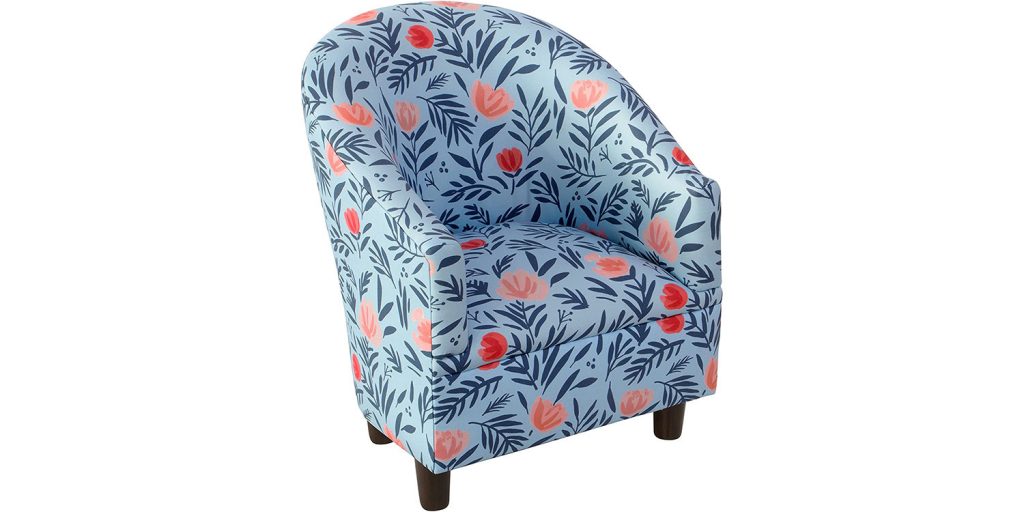
3. Skyline Furniture Kids Chair, Pink, One size

Skyline Furniture Kids Chair, Pink, One size

This is the perfect kids’ chair if you want something that can stand up to your child’s rough and tough playtime. It’s made from solid wood and polyester fabric so it will definitely last for years.

Its seat and backrest are fully padded with dacron wrapped foam which provides comfort even when your little one spends countless hours sitting on it while drawing and reading.

The Skyline Furniture Kids Chair, Pink, One size has a fully upholstered seat and backrest that is perfect for keeping your kid comfortable and happy. It also features 4 caster wheels to prevent it from tipping over while its bentwood legs provide better stability to the whole chair.

Its seat and backrest are upholstered with polyester fabric that is easy to clean. You can simply wipe it down when your little one spills something on it or spills food and drinks on the chair. It’s best used in playrooms, but you can place it anywhere in the house such as your child’s bedroom and living room.

It’s perfect for your daughter’s bedroom or playroom because it comes in different colors; you can pick the pink one, purple one or even the green one depending on their room décor. Its simple design makes it great for all kids’ rooms and playrooms, while its solid build makes it a reliable addition that will last for years.

This kids’ chair is easy to move around because it has smooth-rolling casters, and you can also adjust its height when your kid grows taller. It’s a great addition for your playroom, bedroom or even your living room where you want to spend quality time with your child playing board games and watching movies together.

ASIN: B079Z3M2KK

Buy on Amazon.com

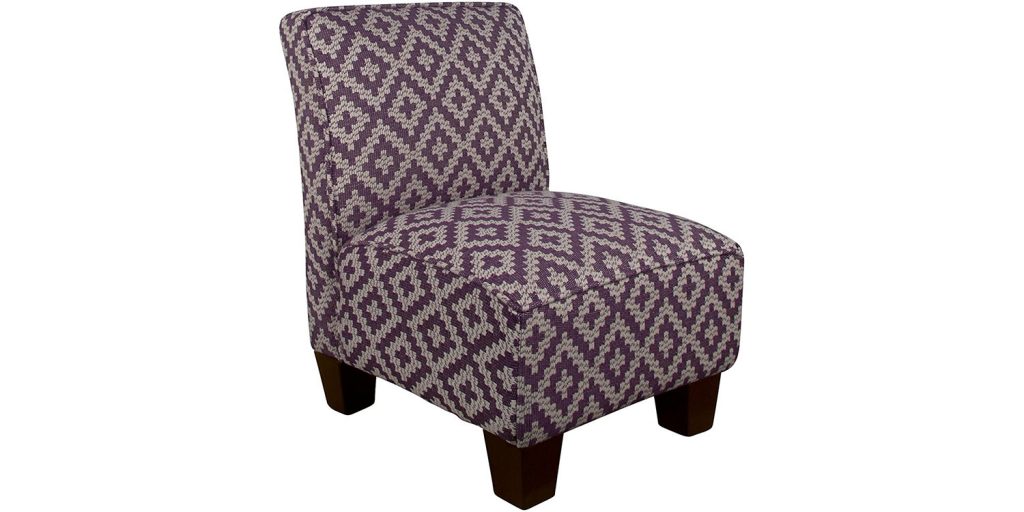
4. Skyline Kids Armless Chair, Broadway Purple

Skyline Kids Armless Chair, Broadway Purple

This is the best kids’ furniture that you will find out there because it’s made from solid wood and high-density foam for better comfort. And not only that, but your little one will love this chair, even more, thanks to its fun design. You can choose between different colors because Skyline Furniture Kids Armless Chair, Broadway Purple, One size is available in purple, pink and green.

It comes with a fully upholstered seat and backrest that is padded with dacron wrapped foam for superior comfort. What’s more, it’s built with bentwood legs to make the whole chair sturdier while its casters provide ease of movement around your home.

This kids’ armchair is a stylish addition for your child’s bedroom or playroom because of its cool design. It won’t take up too much space in the room and your little one will love playing on it while eating snacks with their friends.

It’s going to be a great addition to any home with kids as it cleans easily just by wiping it down. And when you’re not using it, simply fold the entire chair and store it until the next time you need it.

Its solid construction will ensure that your kid’s chair will last for years, while its simple design makes it perfect for any room in your house – from bedrooms to playrooms and even living rooms. Your kid will appreciate this great chair even more once they find out that you got it for them as a surprise.

You can easily keep it clean because of its fully upholstered seat and backrest that only requires cleaning with a damp cloth if your little one spills something on it or just gets their snack all over the place.

ASIN: B00KFPD6EM

Buy on Amazon.com

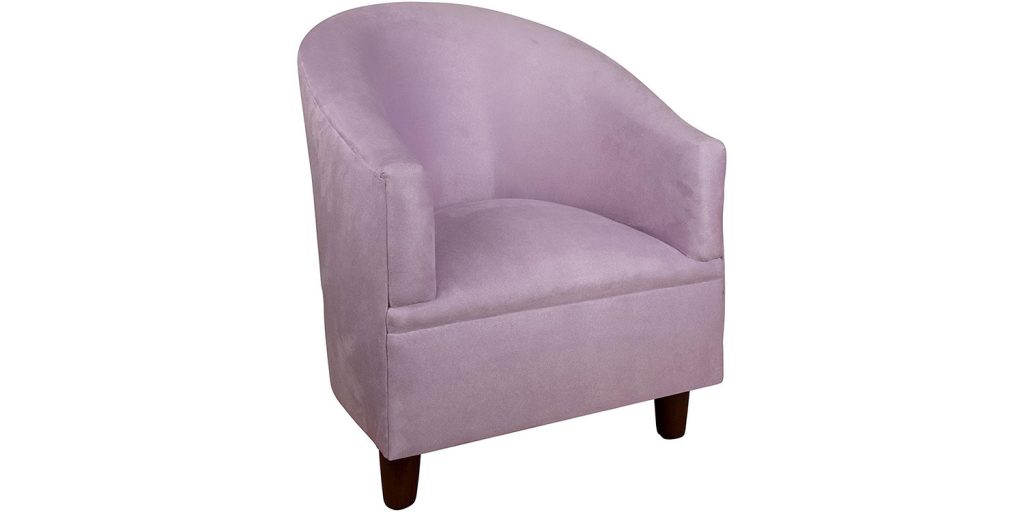
5. Skyline Kids Tub Chair, Premier Lilac

5. Skyline Kids Tub Chair, Premier Lilac

If you’re looking for a kids’ armchair that will offer maximum comfort, then the Skyline Kids Tub Chair, Premier Lilac, is a great choice. It’s upholstered in plush white fabric, and its seat is filled with high-density foam to provide your kid with extra comfort while sitting on it.

It has been built from solid wood to ensure that it will last for years while its bentwood legs provide stability and support.

This kids’ tub chair is an excellent addition to your little one’s bedroom or playroom because of its vibrant, fun design. They’ll love having their favorite TV show playing in the background while relaxing on this armchair.

It’s the perfect place for your kid to enjoy their snacks and drinks with friends because it has smooth-rolling casters that make this armchair easy to move around. You can also adjust its height depending on your child’s size.

Made from solid wood, you can rest assured that the Skyline Kids Tub Chair, Premier Lilac, is an excellent addition to your child’s playroom.

It doesn’t take up too much space in the room, so you can easily keep it there even if you have limited floor space, but its wheels will allow you to move it around when needed. You can also fold the chair flat when you’re not using it and just keep it in a corner until the next time you need to entertain your little one.

It has been built with bentwood legs to ensure that this kids’ armchair is sturdy even if your child jumps on it while playing. Its high-density foam provides extra comfort for your kid.

ASIN: B00KFPD4AI

Buy on Amazon.com

The post Skyline Furniture: Kids’ Chairs That You Will Love appeared first on Comfy Bummy.

13 Sep 2021

Billogram, provider of a payments platform specifically for recurring billing, raises $45M

Payments made a huge shift to digital platforms during the Covid-19 pandemic — purchasing moved online for many consumers and businesses; and a large proportion of those continuing to buy and sell in-person went cash-free. Today a startup that has been focusing on one specific aspect of payments — recurring billing — is announcing a round of funding to capitalize on that growth with expansion of its own. Billogram, which has built a platform for third parties to build and handle any kind of recurring payments (not one-off purchases), has closed a round of $45 million.

The funding is coming from a single investor, Partech, and will be used to help the Stockholm-based startup expand from its current base in Sweden to six more markets, Jonas Suijkerbuijk, Billogram’s CEO and founder, said in an interview, to cover more of Germany (where it’s already active now), Norway, Finland, Ireland, France, Spain, and Italy.

The company got its start working with SMBs in 2011 but pivoted some years later to working with larger enterprises, which make up the majority of its business today. Suijkerbuijk said that in 2020, signed deals went up by 300%, and the first half of 2021 grew 50% more on top of that. Its users include utilities like Skanska Energi and broadband company Ownit, and others like remote healthcare company Kry, businesses that take invoice and take monthly payments from their customers.

While there has been a lot of attention around how companies like Apple and Google are handling subscriptions and payments in apps, what Billogram focuses on is a different beast, and much more complex: it’s more integrated into the business providing services, and it may involve different services, and the fees can vary over every billing period. It’s for this reason that, in fact, even big companies in the realm of digital payments, like Stripe, which might even already have products that can help manage subscriptions on their platforms, partner with companies like Billogram to build the experiences to manage their more involved kinds of payment services.

I should point out here that Suijkerbuijk told me that Stripe recently became a partner of Billograms, which is very interesting… but he also added that a number of the big payments companies have talked to Billogram. He also confirmed that currently Stripe is not an investor in the company. “We have a very good relationship,” he said.

It’s not surprising to see Stripe and others wanting to more in the area of more complex, recurring billing services. Researchers estimate that the market size (revenues and services) for subscription and recurring billing will be close to $6 billion this year, with that number ballooning to well over $10 billion by 2025. And indeed, the effort to make a payment or any kind of transaction will continue to be a point of friction in the world of commerce, so any kinds of systems that bring technology to bear to make that easier and something that consumers or businesses will do without thinking about it, will be valuable, and will likely grow in dominance. (It’s why the more basic subscription services, such as Prime membership or a Netflix subscription, or a cloud storage account, are such winners.)

Within that very big pie, Suijkerbuijk noted that rather than the Apples and Googles of the world, the kinds of businesses that Billogram currently competes against are those that are addressing the same thornier end of the payments spectrum that Billogram is. These include a wide swathe of incumbent companies that do a lot of their business in areas like debt collection, and other specialists like Scaleworks-backed Chargify — which itself got a big investment injection earlier this year from Battery Ventures, which put $150 million into both it and another billing provider, SaaSOptics, in April.

The former group of competitors are not currently a threat to Billogram, he added.

“Debt collecting agencies are big on invoicing, but no one — not their customers, nor their customers’ customers — loves them, so they are great competitors to have,” Suijkerbuijk joked.

This also means that Billogram is not likely to move into debt collection itself as it continues to expand. Instead, he said, the focus will be on building out more tools to make the invoicing and payments experience better and less painful to customers. That will likely include more moves into customer service and generally improving the overall billing experience — something we have seen become a bigger area also during the pandemic, as companies realized that they needed to address non-payments in a different way from how their used to, given world events and the impact they were having on individuals.

“We are excited to partner with Jonas and the team at Billogram.” says Omri Benayoun, General Partner at Partech, in a statement. “Having spotted a gap in the market, they have quietly built the most advanced platform for large B2C enterprises looking to integrate billing, payment, and collection in one single solution. In our discussion with leading utilities, telecom, e-health, and all other clients across Europe, we realized how valuable Billogram was for them in order to engage with their end-users through a top-notch billing and payment experience. The outstanding commercial traction demonstrated by Billogram has further cemented our conviction, and we can’t wait to support the team in bringing their solution to many more customers in Europe and beyond!”

13 Sep 2021

8 Reading Chairs Your Kids Will Love

Reading chairs are wonderful pieces of furniture that provide a special place for reading, watching TV, playing games and much more. When your child grows older they will use it as a desk chair or lounge chair in their room. When they are little, the best way to make them enjoy reading is by making them comfortable with a cosy spot where they can enjoy their book in peace.

Reading chairs are great for the bedroom or living room, so you can use them in different areas of your house. Some children prefer to be enclosed when they read and others like to sit up high with enough space around them. The perfect chair will help your child enjoy reading more easily and you can find many types that are suitable for several years of use.

Although there are many types of reading chairs available, like bean bag chairs, swings and hammocks, we will focus on more traditional models made to fit all rooms.

We have put together a list of the 8 most comfortable and nice-looking reading chairs out there to help you decide on the best kids’ reading chair for your family.

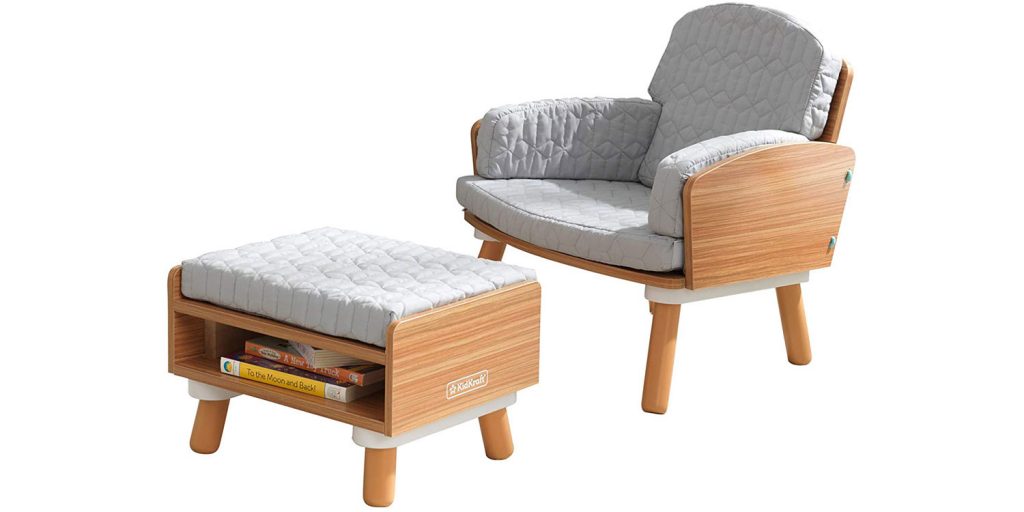
1. KidKraft Mid-Century Kid Upholstered Reading Chair & Ottoman with Storage

This is a stylish reading chair with an armrest, so your kid can cuddle up in it and enjoy their book. The bright fabric provides a great contrast with the dark wood base and it has an ottoman for extra comfort.

It is perfect to use in any room of the house because of its classic style and will work in the living room, bedroom or study. The KidKraft Mid-Century Kid Upholstered Reading Chair is made of sturdy materials to last for years and the cushions are removable so you can wash them in your washing machine at home.

It has a storage compartment with locks so it doesn’t pop open when your child leans back on it.

ASIN: B07ZV51MMM

Buy on Amazon.com

2. Melissa & Doug Denim Fabric Child’s Armchair

Melissa & Doug is a popular brand in the furniture industry and this armchair for kids is no exception when it comes to quality. It has been designed to provide comfort with its soft and durable denim fabric and rounded edges on the arms of the chair.

The foam fill ensures that your kid will be comfortable while reading or listening to stories and it comes with a slipcover for easy cleaning.

The kid’s armchair is great to use in the bedroom or playroom and has an average weight of 15 pounds, so it isn’t easily tipped over by kids. The best thing about the Melissa & Doug Denim Fabric Child’s Armchair is that it can be used by several kids in the same family, so everyone can enjoy it.

ASIN: B071H85C5F

Buy on Amazon.com

3. Keet Roundy Children’s Chair Microsuede

The Keet Roundy Children’s Chair is the perfect reading chair for both girls and boys. It has a mesh back and seat covered with soft microsuede fabrics to ensure your little one’s comfort, while the armrest provides additional support when they need it most.

It is very easy to clean thanks to its removable slipcover and it comes in 9 different colors, so you can choose the one that matches your house decor.

The Keet Roundy Children’s Chair is a simple model with rounded edges to provide safety for your kid’s arms, but it has some decorative stitching on the back for extra style. Depending on the age of your child, this chair can be used as a desk chair or lounge chair and it is great for kids aged 2 to 8.

ASIN: B07K57DH67

Buy on Amazon.com

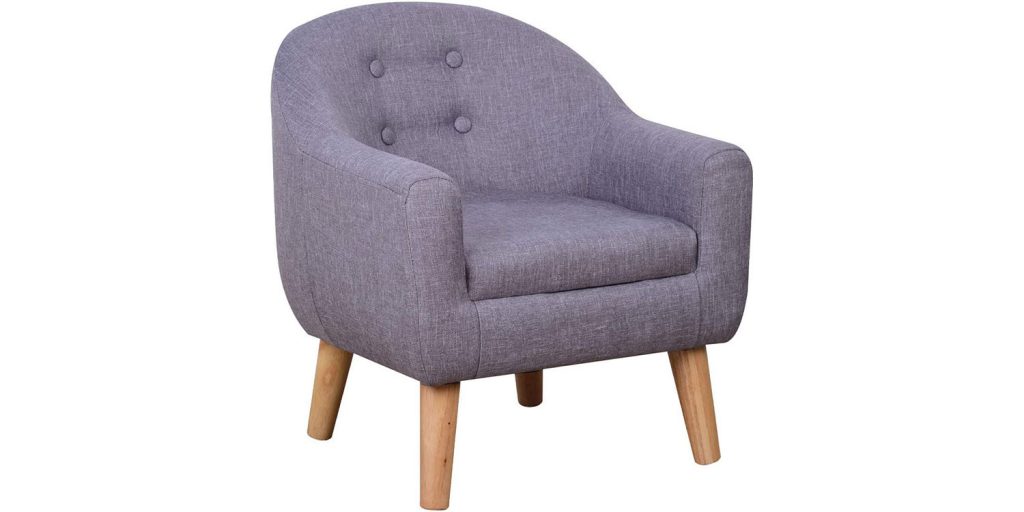
4. Single Linen Fabric Kids Armchair, Toddler Sofa and Couch with Wooden Legs

This armchair for kids is both stylish and comfortable, so your little one will love it. It has a straight back with soft cushions to provide support when they read or play games on their tablet.

The wooden legs of the chair are great for durability and stability while the removable slipcover can be used in the washing machine at home to keep it clean.

The Single Linen Fabric Kids Armchair, Sofa and Couch is a great choice for the living room because of its neutral style and it can be used by kids aged 2 to 8 years. It won’t take much space in your house as well, because it has a slim profile that measures only 21 inches wide.

ASIN: B07HRL95CY

Buy on Amazon.com

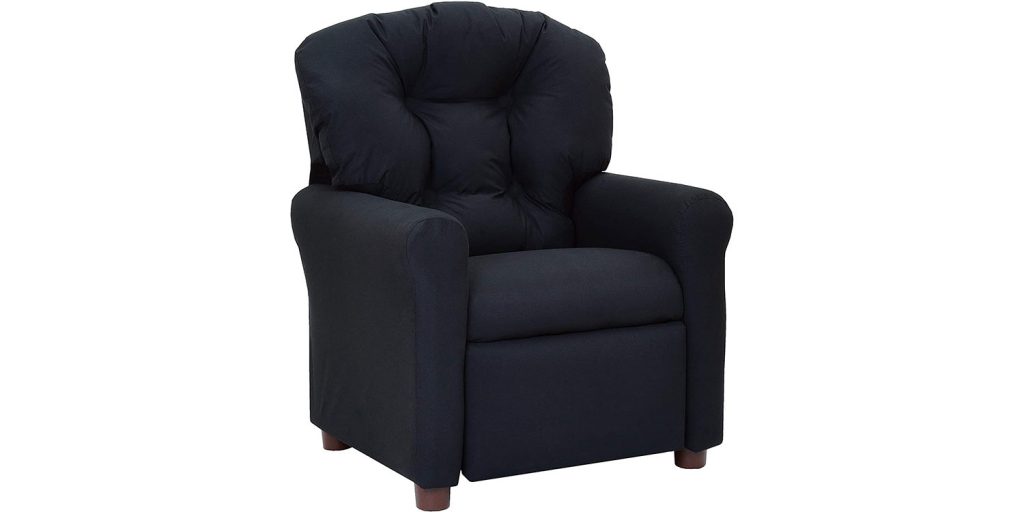
5. THE CREW FURNITURE Traditional Kids Chair, Small

This is a traditional reading chair for kids made of hardwood with a comfortable upholstered seat and backrest. The wooden frame ensures that the chair will be sturdy enough to hold your little one, while the dark espresso finish gives it style.

It has an average weight of 13 pounds so it won’t tip over easily and comes fully assembled, so you can place it in your kid’s bedroom or playroom right away.

The cushion is removable and machine washable for convenience and the synthetic leather fabric doesn’t stain as easy as real leather does. The legs of this kids armchair are also protected with non-marking caps to avoid scratches on the floor.

ASIN: B006CRE9PW

Buy on Amazon.com

6. Amazon Basics Swivel Foam Lounge Chair

This kids’ armchair is suitable for teenagers and it has a stylish design that will surely impress your guests.

It can swivel to 360 degrees as well as recline and the arms of the chair are at just the right height for your kid’s comfort.

The Amazon Basics Swivel Foam Lounge Chair has a weight capacity of 250 pounds and it has been tested to ensure that it doesn’t tip over easily, so your kid’s safety is guaranteed.

The armchair can be used as a lounge chair or reading chair and the seat features extra padding for comfort. It comes with synthetic leather upholstery that is easy to clean and this kids’ armchair has an average weight of 18 pounds.

ASIN: B07Q2PGH2P

Buy on Amazon.com

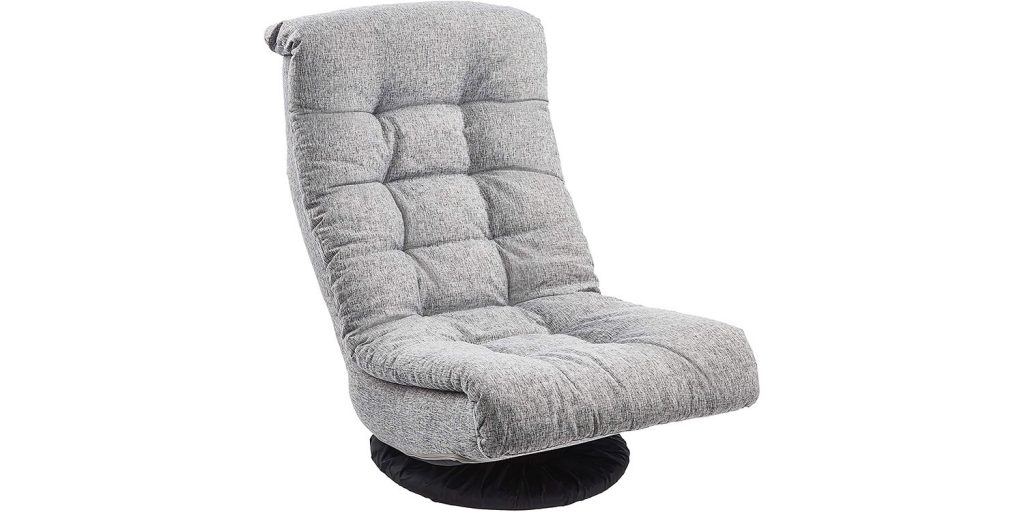
7. HollyHOME Modern Fabric Lazy Chair

If you’re looking for a nice reading chair for teenagers, the HollyHOME Modern Fabric Lazy Chair is a great choice.

It has an ergonomic design with a seat shape that provides support to your kid’s lower back and it is very easy to assemble without tools.

The armchair can swivel 360 degrees as well as recline and it has a weight capacity of 100 pounds.

The armchair itself weighs only 15 pounds and it comes with durable synthetic leather upholstery that is easy to wipe clean. The wide base makes sure that your kid’s feet won’t touch the floor when they relax, but the back of this kids’ chair isn’t high enough for lazing around.

ASIN: B07SGDH2Z6

Buy on Amazon.com

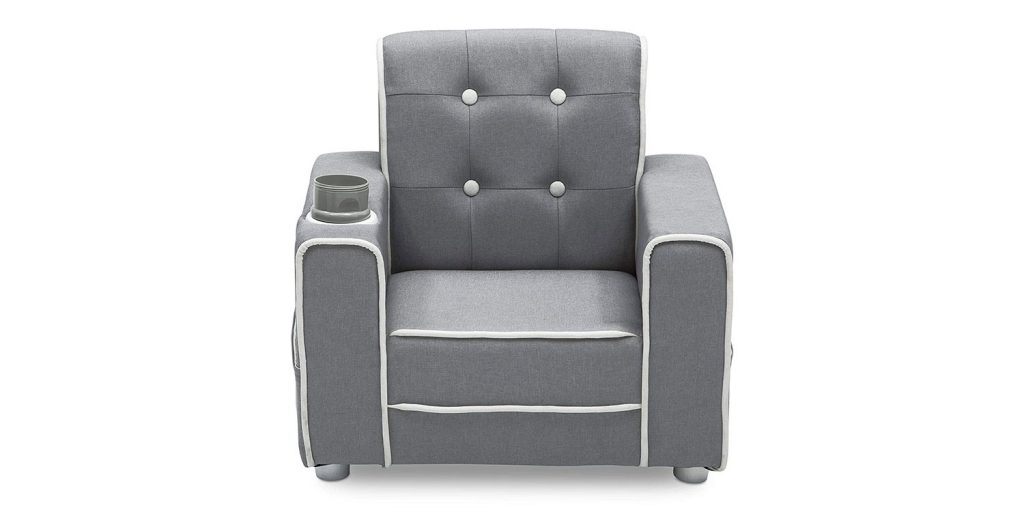
8. Delta Children Chelsea Kids Upholstered Chair with Cup Holder

If you need a simple and functional kids’ armchair for your living room, the Delta Children Chelsea Kids Upholstered Chair with Cup Holder is a great choice.

This chair can hold up to 110 pounds of weight and it has an attached cup holder as well as a padded seat and backrest for extra comfort. The dark grey color of the chair is stylish and it will match any decor.

The Delta Children Chelsea Kids Upholstered Chair has a narrow profile that takes little space in your living room, while the armrests can be adjusted so your kid’s arms won’t get tired. The slipcover of this kids’ lounge chair for the bedroom or playroom can also be removed and cleaned in the washing machine.

ASIN: B07JV8DVGF

Buy on Amazon.com

Summary

I am sure that your kid will love to read or play with Lego on any of these comfy kids’ armchairs! This 8 reading chairs for kids has a nice design and it suits the bedroom, living room as well as other spaces in your home like the family room. They can be swivelled, reclined and adjusted so they will be pretty comfortable for your kids. The foam lounge chair is also easy to clean and dust-proof!

The post 8 Reading Chairs Your Kids Will Love appeared first on Comfy Bummy.

13 Sep 2021

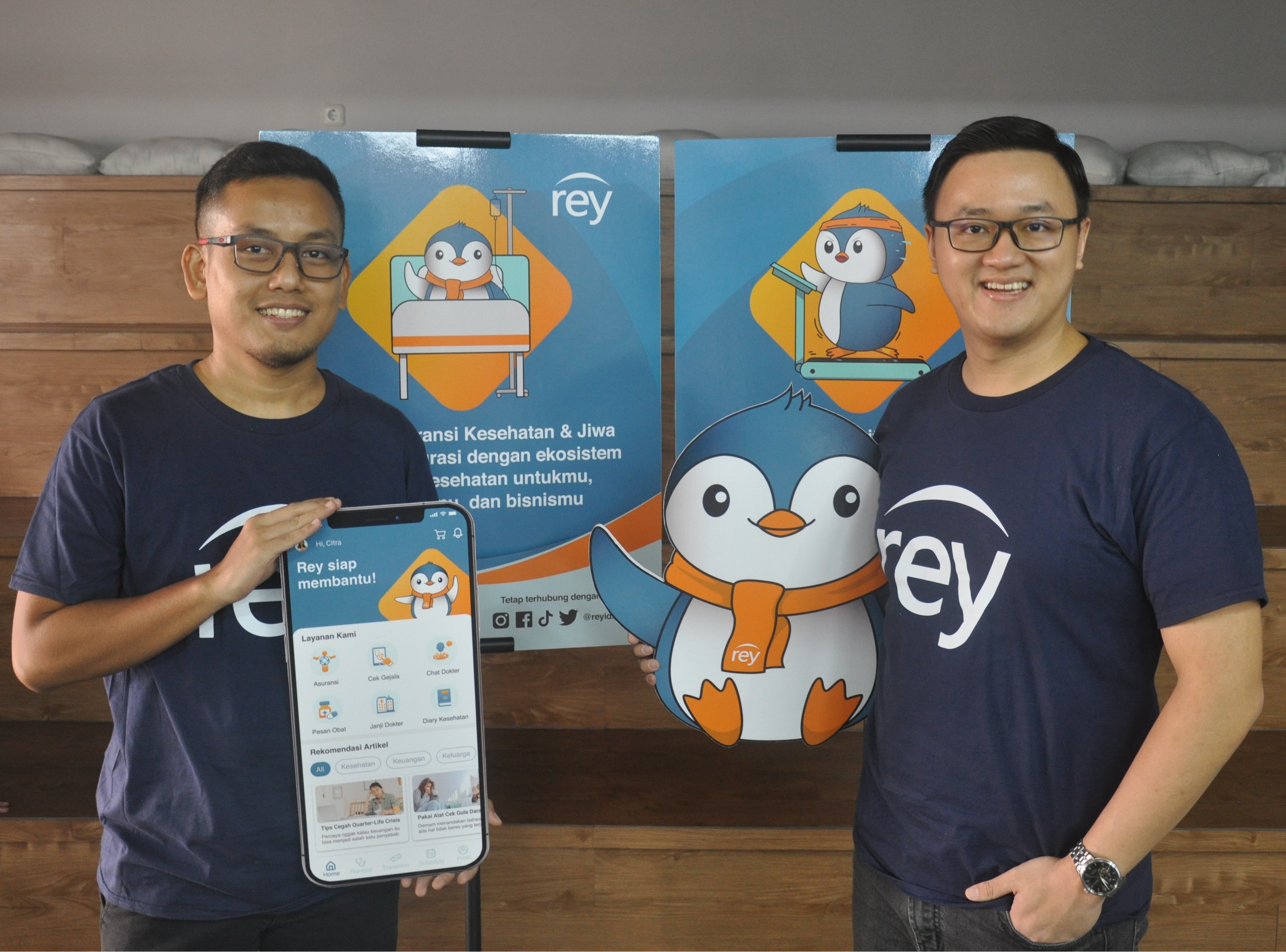
Indonesia-based Rey Assurance launches its holistic approach to insurance with $1M in funding

Rey Assurance co-founders Bobby Siagian and Evan Tanotogono

Rey Assurance co-founders Bobby Siagian and Evan Tanotogono

Health insurance is the kind of thing people usually only think about only when they need it. Otherwise, their policies are just paperwork in their files or cards in their wallet. Indonesian insurtech Rey Assurance is taking a new approach. Once someone becomes a member, they also get access to a platform of health services, including AI-based self-assessment tools, 24/7 telemedicine consultations for no added fee and pharmacy deliveries. The startup is launching out of stealth today, having already raised $1 million in pre-seed funding from the Trans-Pacific Technology Fund (TPTF). 

Rey was founded this year by Evan Tanotogono, former head of digital channel at Sequis, one of Indonesia largest insurers, and Bobby Siagian, who held lead engineering roles at companies including Tokopedia and Sea Group. They are joined by insurance industry veteran David Nugrho as their chief business officer. 

They created Rey to address the low penetration of life and health insurance in Indonesia. “When you look at the root causes and pain points, you are looking at problems that are systemic here,” Tanotogono said. These include low awareness, expensive distribution channels like agents and telemarketing, high premiums and complicated policies.

“People feel like the product is really complex, the process is difficult and they don’t get the best value for the money. It’s been that way for many, many years,” he told TechCrunch. “We believe that we cannot just go into the market and digitize part of the value chain.”

Plans start from about $4 USD per month and are available for individual or groups, like families, and small businesses. Rey’s wellness ecosystem was created to give customers more value for their money, and help differentiate it from other companies in Indonesia’s growing insurtech industry. Some other startups that have recently raised funding include Lifepal, PasarPolis and Qoala.

“Right now, if you look at insurance in Indonesia, if the premium is high, maybe 80% or 90% of that is used for the distribution channel. Now if we optimize something for digital distribution, then we can reduce the price and use the rest for the wellness features,” Tanotogono added. 

TPTF managing partner Glenn Kline told TechCrunch that Rey’s founding team was “really the driver” for its investment. “We felt these people really know where the pain points are and they understand clearly how not to try to change the legacy system, but create a whole new platform from the very beginning, where the core value proposition is an integrated solution that is simple and hassle-free.” 

Instead of doing the underwriting themselves, Rey works with insurance partners to design proprietary policies. The goal is to have an onboarding process that is completely online and only takes about five minutes, and a mostly cashless claim and reimbursement system through Rey’s payment cards. If its payment card can’t be used at healthcare provider, claims can be submitted by uploading receipt photos to the app. 

Tanotogono said this is much faster than traditional insurance providers, which can take up to 14 working days to reimburse a claim, and made possible with Rey’s proprietary claim adjudication technology. 

Rey’s wellness ecosystem currently covers primary care services, including chats and video calls with medical providers. In the future, it plans to add specialists to the platforms.

Customers can also link their health wearables for incentives. For example, if they hit certain step or activity goals, they get rewards like discounts or shopping vouchers. Rey’s long-term plan is to link wearables more deeply to its insurance policies, using data to personalize policies and premiums.

13 Sep 2021

Southeast Asia-focused Jungle Ventures announces $225M first close for its fourth fund

A group photo of Jungle Ventures' team:(From left to right) Jungle Ventures’ founding partner Amit Anand, managing partner David Gowdey and founding partner Anurag Srivastava

(From left to right) Jungle Ventures’ founding partner Amit Anand, managing partner David Gowdey and founding partner Anurag Srivastava

Southeast Asia’s funding boom is set to continue, with Jungle Ventures announcing today the $225 million first close of its fourth fund. Fund IV started raising in mid-May and is targeting a total of $350 million.

The majority of its limited partners are returning from previous funds, and include Temasek Holdings, IFC (which put $25 million in Fund IV), DEG and Asian and global family offices. The firm says this makes Fund IV the largest fund across all early-stage funds in Southeast Asia this year.

Founded in 2012, Jungle Ventures launched with a $10 million debut fund. Then in 2016, it announced a $100 million second fund, followed in 2019 by its $240 million third fund.

Fund IV fits in with Jungle Ventures’ pace of raising a new fund every 2.5 to 3 years, founding partner Amit Anand told TechCrunch. It also happens to come at a time when the region is getting more attention—and capital.

“If you look at Southeast Asia, where we are today, the ecosystem has been in the works for a long time. We started the journey back in 2012. We’re one of the oldest funds in the region and we haven’t seen as good a time as today to be in the tech ecosystem in Southeast Asia,” he said.

“Opportunity and talent were always obvious in the region, and I think capital has followed. But the recent exit announcements, whether acquisitions or the domestic and global IPOs, in many ways has completed the picture of Southeast Asia and made it a lot more attractive to everyone,” Anand added.

Jungle Ventures takes a concentrated approach and tends to invest in about 12 to 13 companies per fund. It’s relatively stage-agnostic, writing seed to Series B checks and builds long-term partnerships with many of its investments. The firm has invested in every round of several companies, including buy now, pay later startup Kredivo.

This approach has worked out well, said Anand. Companies from its 2016 Fund II include unicorns FinAccel and Moglist, and it is paying about 7x on the fund today. “A similar pattern is emerging out of the 2019 vintage,” he added, which includes investments like beauty e-commerce platform Sociolla and KiotVet, the largest point-of-sale and store management system for small retailers in Vietnam.

Fund IV will write checks ranging from about $1 million, to $15 million for Series B funds, and participate in follow-on rounds, too.

“We typically invest in a company when it has a little bit of a product-market fit in its home market, and then we can help regionalize the business,” Anand said. “This could be at seed, it could be A, it could be at B, it doesn’t matter to us.”

Jungle Ventures’ limited partners also do a significant amount of co-investments; in the last three to four years, LPs have invested close to $400 million in its portfolio startups.

In terms of sectors, Anand is particularly excited about social commerce. “I think social commerce is going to eclipse e-commerce by a huge margin in a market like Southeast Asia. Southeast Asia is not just a story about the metro cities, it’s a story about multiple Tier 2, Tier 3 cities across different islands, different geographies. It’s also a geography where the social fabric is deeply engrained within communities.”

Jungle Ventures’ social commerce investments include Evermos, which sells halal and Sharia-compliant goods through agents to their communities.

The firm focuses primarily on Southeast Asia, but it also makes investments in India.

“The cross pollination of talent and ideas, learning and capital between Southeast Asia and India is very strong,” Anand said. “Southeast Asia, even though the ecosystem is growing a lot, the tech talent here in the region is still emerging, whereas India is a great source of tech talent, and we’ve enabled a lot of our portfolio companies to leverage that by opening up tech hubs in India.”

He added that “the focus for Indian investments is to help them expand to Southeast Asia as well and capture this opportunity, too.” One example from Jungle Ventures’ portfolio is interior design platform Livspace, which was founded in India, expanded in Singapore and will enter other Southeast Asia markets.